Memoirs of Madras Madrasa

Chennai, TAMIL NADU :

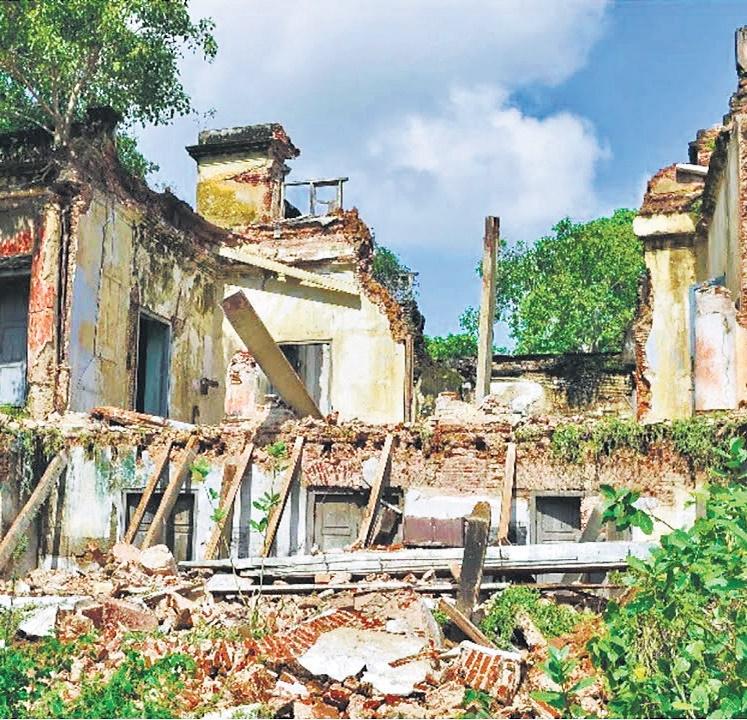
Behind the crumbling facade of the Government Madrasa-e-Azam Higher Secondary School, there is a rich history of academics, and tales of friendship.
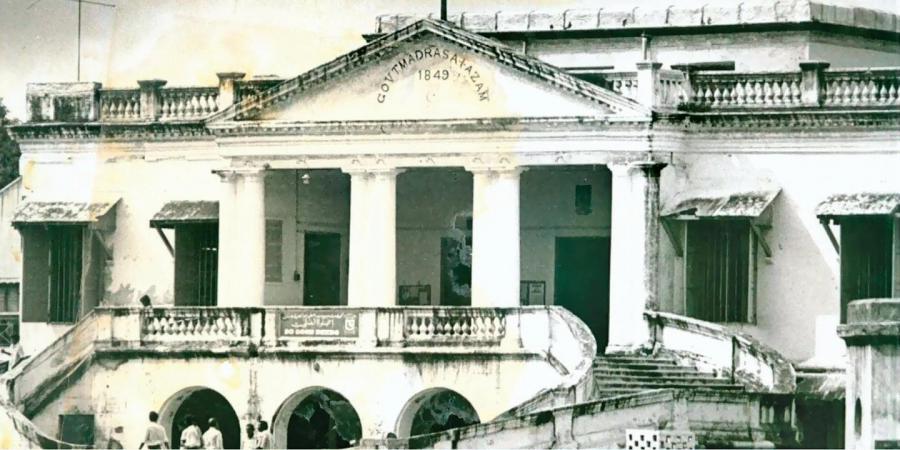
The majestic doublewinding staircases that lead to the splendid balcony and upper deck; the steps to the headmaster’s office on the first floor and the huge plaque outside the room, with the history of the structure chiselled on it; the jamun trees in the backyard and the numerous other trees dotting the campus, under which I spent several afternoons — I have fond memories of my school.

Looking at the grandeur of the structure and the greenery, I often used to ponder ‘The seeds for these trees were planted over a century ago…’ It used to feel surreal, it still does. But unfortunately, these very trees are taking over the structure now,” says Sharfu Khan, an alumnus of the Government Madrasa-e-Azam Higher Secondary School, who was also the SSLC topper of the institution in 1992.

The 200-odd-year-old magnificent campus — with a Madras terrace, tiled verandahs, and semicircular arches — spread over 15 acres in the heart of Chennai, used to have over 4,000 students on its rolls. But today, barely 200 schoolboys study at the campus, which was initially owned by Colah Singanna Chetty, a dubash. Since 1816, the building has been acquired by many prominent individuals including Edward Samuel Moorat, an Armenian millionaire; Ghulam Ghouse Khan, the last of the titular Nawabs, after whose death in 1855, the property was passed on to Azim Un Nissa Begum, the nikah wife of the Nawab. According to historian Sriram V, the property, though owned by her, was rented by the principal wife of the Nawab, Khair Un Nissa and became the social epicentre of the Muslim aristocracy in Madras.

“This was where luminaries such as Sir Syed Ahmed Khan, founder of the Aligarh Muslim University, and His Exalted Highness Mir Mahbub Ali Khan Bahadur, the Nizam of Hyderabad, stayed when they visited Madras,” he writes, in When Mercy Seasons Justice, a book on jurist Habibullah Badsha, a prominent alumnus of the school. Today, the historic estate, with corporate offices, heritage buildings like the Taj Connemara and Spencer Plaza, and the buzzing traffic necklacing its perimeter, bears a deserted look, is crumbling under the thick foliage and yet, is resiliently waiting to be restored to its former glory. “Our school used to be the exam centre for schools in and around Triplicane and Mount Road.

Several hockey and sports tournaments used to take place here. It’s been over two decades since I graduated from there, but the memories are still fresh. I very recently became acquainted with an old friend, a batchmate from the Madrasa and we are hoping to pay a visit to the school or at least what’s left of it once the COVID-19 situation eases,” shares Sharfu.
A modern transformation

When the British took control of all the properties of the Nawab, Edward Balfour, an agent of the East India Company in the court of the Nawab of Carnatic, persuaded the Nawab to transform the family’s Madrasa into a modern school. He suggested it could be called the Madrasa-e-Azam, after his father Nawab Azam Jah, who had first favoured a proposal by Balfour. “As early as 1846, the first proposal was sent to the government regarding the starting of a school for the orphaned children of Carnatic territories. The proposal materialised, and the school was soon started.

At that time, there were only three teachers,” says Ashmitha Athreya of Madras Inherited, about the institution, which until 1849 was functioning at Chepauk, before moving to its current premises. Historians Kombai Anwar and Venkatesh Ramakrishnan, while sharing glimpses of the structure’s early glory, also note that much before Muslim institutions in north India took up modern education, this school introduced the study of English, Tamil and Telugu besides Arabic, Persian and Urdu. Abdul Jabbar Suhail, son of Habibullah Badsha recalling the anecdotes shared by his father about his days at the Madrasa, tells us that his father “had an enriching experience at the school.

My father studied at the Madrasa-e-Azam during the 1940s, at the time of World War II. For someone who until then had studied in an Anglo-Indian establishment, the change was stark. But, on the persuasion of his maternal grandfather, he enrolled at the Madrasa. Despite there being issues like inadequate staff members, I remember my father telling me that he had a good time there.

He did very well in school. And as far as sports was concerned, the school was a powerhouse and produced stalwarts including Muneer Sait, Abdul Jabbar, Badiuddin and Mohamed Ghouse. Muneer even went on to represent India in the Olympics in hockey. Father was in touch with most of his friends from school till his final days…he loved the place,” he shares.

Mohammud Karim, Zeeshan Bismil, Basha Shareef and several other alumni, who are now spread across the globe, tell CE that they miss the campus for all that it has given them. “A common thread of sadness has now tied us together. After the 1970s, I never visited the school. I didn’t know of its condition. Recently, I came across a few pictures and I was crushed to look at its current plight. I hope the government takes steps to preserve the building,” shares 67-year-old Karim, who currently lives in the US.

An appeal

In 2017, if the government had had its way, the collapsing building, would have perhaps hosted grand weddings at its age-old premises instead of conducting classes. But thanks to the voice of the city’s heritage enthusiasts and alumni, a division bench of the Madras High Court announced that the building shall not be demolished until further orders. But with growing apathy and neglect, its future remains uncertain. In an appeal to the government, Prince of Arcot, Nawab Mohammed Abdul Ali tells CE, “The Madrasa- e-Azam was founded by my ancestors for the primary purpose of providing education to children from Muslim communities and other minority communities.

After it was handed over to the British, from being an exclusive Urdu medium school, it also included English in its curriculum. Over the decades, the quality of education and the standard has been very minimal. Several parts of the structure have collapsed and as a result, the student strength has also alarmingly dwindled. As the Prince of Arcot, the direct descendent of the founders of the Madrasa, I appeal to the government to hand over the management and administration to us.

I do not ask for the ownership but only the administration wherein, under the Prince of Arcot endowments, we can take care of the structure, and provide quality education. We will not only keep the legacy of our ancestors alive but will also be enabling the conservation of the original vision and mission of the Madrasa — to provide education,” he says.

SLICE OF HISTORY

  1. Balfour, the government agent at Chepauk, and Garstin, his predecessor, framed the rules for the administration of the school. With the establishment of the school, the Nawab also had in mind a secular education that would help the Muslims to secure employment in government service.
  2. The main aim of establishing the school was that it would be a means of encouragement to the students to educate themselves and be fully qualified and competent for getting their livelihood by being employed in public offices, after obtaining certificates of proficiency at a final public exam.
  3. The Diwan Khana of Firuz Hussain Khan Bahadur, principal-agent of the Begum Khair Un Nissa, became the residence of the school principal.
  4. A mosque was built on the campus in 1909. In the same compound, the Government Mohammedan College was set up in 1919.

Source: Madras Inherited and ‘When Mercy Seasons Justice’

source: http://www.newindianexpress.com / The New Indian Express / Home> Cities> Chennai / by Roshne Balasubramanian / Express News Service / August 05th, 2020
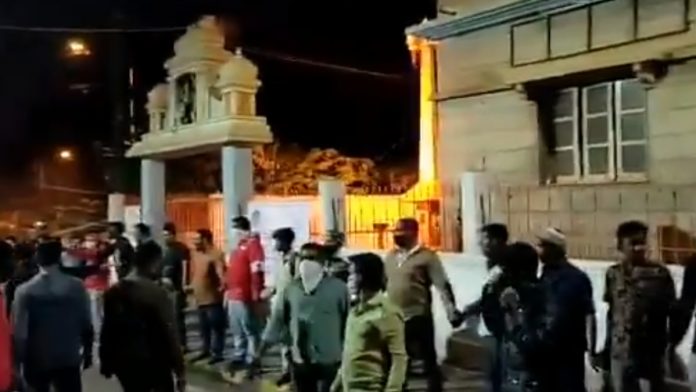
‘We live as brothers, sisters’ — Muslims form human chain to save temple amid Bengaluru riots

Bengaluru, KARNATAKA :

Muslims formed the human chain to show they are ‘here for all’, but, at the same time, say they cannot tolerate insult to Prophet Mohammed and are seeking justice for it.

Muslims form human chain to save a temple from rioters in Bengaluru | Videograb | Twitter

Bengaluru:

A viral video showing Muslim youth forming a human chain to guard a temple during the violence that erupted in Bengaluru Tuesday night has emerged on social media.

The video shows young men holding hands and ensuring that rioters didn’t attack the temple located in Pulakeshinagar.

______________

@ANI@ANI#WATCH Karnataka:

A group of Muslim youth gathered and formed a human chain around a temple in DJ Halli police station limits of Bengaluru city late last night, to protect it from arsonists after violence erupted in the area. (Video source: DJ Halli local)

____________________

In the video, one can hear people appealing to the protesters and saying — “For God’s sake… Please stay away from here.”

Two areas, D.J. Halli and K.G. Halli, in the Pulakeshinagar limits of Bengaluru saw widespread violence as an angry mob went on a rampage to protest against a Facebook post, allegedly put up by P. Naveen, nephew of Pulakeshinagar MLA Akhanda Srinivasa Murthy of the Congress.

Three people were killed and as many grievously injured after the Bengaluru Police opened fire to control the riots.

“We have formed this chain to show how we are here for all, but again we do not accept those who are trying to force RSS ideologies on people,” said one of the men who formed the human chain.

“We all live as brothers and sisters. We do not have anything against any religion. We are not fighting against any individual or any caste or community. We are only seeking justice as the nephew of MLA Srinivas Murthy has insulted our Nabi (Prophet Mohammed). We can not tolerate that.

“This has happened several times earlier. We respect this temple, we respect Hindus. But we are fighting against those who have extremist views against us,” he added.

A local vendor, Yasir, whose family has been running a grocery store for three generations in the D.J. Halli area, said: “It (the post) hurt our sentiments, but we condemn those who resorted to burning vehicles and attacking others.”

Meanwhile, police said Naveen has been arrested. This apart, 160 people have been arrested for indulging in arson.

Rizwan Arshad, MLA of Shivajinagar, which is adjacent to Pulakeshinagar, told ThePrint he was proud to see such acts of kindness.

“We are so proud of our brothers, who think of such acts of kindness even during such testing times. They told me that they stand for peace and unity, and they will try and ensure such incidents do not recur,” he added.

Congress MP Shashi Tharoor tweeted that the rioters should not be equated with an entire community.

“Those who incited and perpetrated the #bangaloreriots must be found, arrested & given exemplary punishment. But they are not to be equated with an entire community any more than thugs & vigilantes represent all Hindus. This also happened in Bangalore.”

________________-
Shashi Tharoor@ShashiTharoor

Those who incited and perpetrated the #bangaloreriots must be found, arrested & given exemplary punishment. But they are not to be equated with an entire community any more than thugs & vigilantes represent all Hindus. This also happened in Bangalore:

___________________

𝗠𝘂𝗵𝗮𝗺𝗺𝗮𝗱 𝗡𝘂𝗮𝗺𝗺𝗶𝗿 

💞

 ( نُعَمِّرْ )@iam_nuammirThat’s the beauty of India Muslims created human chain to guard a Temple in #Bengaluru during violence. Stay calm make peace #BengaluruViolence https://twitter.com/ZakiyakINC/status/1293284847687880704video/1

___________________

source: http://www.theprint.in / The Print / Home> India / by Rohini Swamy / August 12th, 2020

Long-lost 19th-century travelogue sheds new light on Indian ruler’s historic Hajj

Bhopal, MADHYA PRADESH :

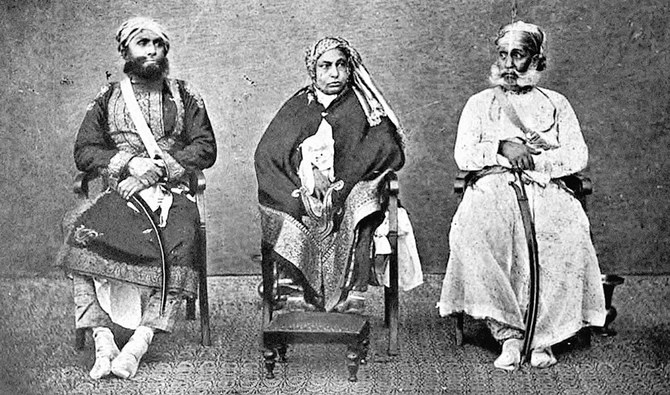
Sikandar Begum with her prime minister, left, and second minister. The photo was published in “A Pilgrimage to Mecca” (1870). (The Asiatic Society of Bombay via AN)
  • One of the most interesting aspects of Sikandar Begum’s account is her open criticism of Ottoman governance in Makkah
  • Imprecise library records obscured access to the original Urdu manuscript for decades

Warsaw :

History recently came to life in a manuscript with royal stamps discovered in the archives of SOAS University of London. The historic find? A tantalizing insight into the journey of the first ruler from the Indian subcontinent to set out for Hajj.

In November 1863, the ruler of the princely state of Bhopal, Sikandar Begum, began the sacred pilgrimage many other sovereigns of her time could not make for fear of losing power — in the 19th century, sea travel from India to Makkah meant long months of absence from the throne. Unlike them, Sikandar was safe. Her Hajj included a mission to compile a travelogue for those who guaranteed her reign.

Bhopal had gained independence from the declining Mughal Empire under Dost Mohammad Khan, a Pashtun warrior who, in the early 18th century, founded the Muslim state in today’s Madhya Pradesh. Under British rule, for more than a century the country was led by four women. Sikandar, who ruled from 1844 to 1868, was the most reform-oriented of them. She reorganized the army, appointed a consultative assembly and invested in free education for girls. She was also the first Indian ruler to replace Persian with vernacular Urdu as the official language.

In late January, SOAS librarians came across a title recorded in their archives’ catalogue as “‘Journal of a trip to Mecca’ by Skandar Baigam, Ra’isah’ of Bhopal. Bound manuscript in Urdu. Written at the suggestion of Major-General Sir Henry Marion Durand, 1883.”

“I was really intrigued that such a beautifully bound-in-silk manuscript with obvious royal stamps in its colophon could be linked to such an opaque and short library record,” SOAS Special Collections curator Dominique Akhoun-Schwarb told Arab News.

“It quickly became obvious that there was a bit more story and depth behind the note ‘written at the suggestion of Major-General Sir Henry Durand,’ when the author was a queen herself, a pioneer, since she was the first Indian ruler to have performed the Hajj and authored an account of her pilgrimage.”

The imprecise note had for decades obscured access to the text for researchers. A deformed transliteration of Sikandar’s name had compounded the issue.

Until the chance discovery a few months ago, all scholarship on the Bhopal ruler’s pilgrimage had to rely on two translations of the text as the original Urdu version had been missing for some 150 years. One was the abridgment of Sikandar’s account in Persian, compiled by her daughter, Shah Jahan Begum. The other one, “A Pilgrimage to Mecca, was an English translation by Emma Laura Willoughby-Osborne, wife of a British political agent in Bhopal, which was published in 1870, two years after Sikandar’s death. The two texts are quite different.

In the English version, Sikandar quotes a letter she received from Durand, the British colonial administrator mentioned in the SOAS record, and his wife: “He was anxious to hear what my impressions of Arabia generally, and of Mecca, in particular, might be. I replied that when I returned to Bhopal from the pilgrimage, I would comply with their request, and the present narrative is the result of that promise.”

The letter is nowhere to be found in the Persian text.

A preliminary reading by Arab News of the Urdu manuscript, which has been digitized by SOAS, reveals that Durand’s letter is mentioned in the very first pages of the text. The correspondence and accuracy of other parts, however, are not immediately obvious.

In the preface to “A Pilgrimage to Mecca,” Osborne said that the Urdu manuscript consisted of “rough notes” demanding some arrangement. According to Dr. Piotr Bachtin, from the Department of Iranian Studies of the University of Warsaw, who studied female pilgrimage of the era and translated the Persian version of Sikandar’s account, the English translator’s note immediately raises questions regarding Osborne’s interference in the text.

Osborne’s assurance that the only license she had allowed herself had been the “occasional transposition of a paragraph” seems to be an understatement. It appears that the text was heavily edited. Bachtin suggested that Sikandar might have been a “reporter” entrusted with a specific task and became an “incidental informer” in the service of the British Empire.

The most interesting aspect of the travelogue, which the manuscript may verify, was Sikandar’s political involvement with and open criticism of Ottoman governance in Makkah. One of the most prominent instances of Sikandar’s criticism is the following:

“The Sultan of Turkey gives thirty lakhs of rupees a year for the expenses incurred in keeping up the holy places at Mecca and Medina. But there is neither cleanliness in the city, nor are there any good arrangements made within the precincts of the shrines,” Sikandar wrote, adding that had the money been given to her, she would have made arrangements for a state of order and cleanliness. “I, in a few days, would effect a complete reformation!”

Sikandar’s political commentary is completely missing from the Persian version of her text. “Only in the English translation did she openly criticize both the Pasha and the Sharif of Makkah, going as far as to say that she would have managed Makkah better herself!” Bachtin said, “However, we must remember that her book was commissioned by Sir Henry Marion Durand. For me, this paradoxical dynamic is particularly interesting.”

With the original manuscript now available to researchers, further study should soon reveal how much of the Hajj account was informed by the colonial circumstances Sikandar faced at home, and to what extent it was guided by her own ambitions to be a modern and reformist Muslim ruler.

source: http://www.arabnews.com /Arab News / Home> Latest News> Middle East / by Natalia Laskowska / August 02nd, 2020

Rahat Indori’s death an ‘unquantifiable loss’, says Gulzar

MADHYA PRADESH :

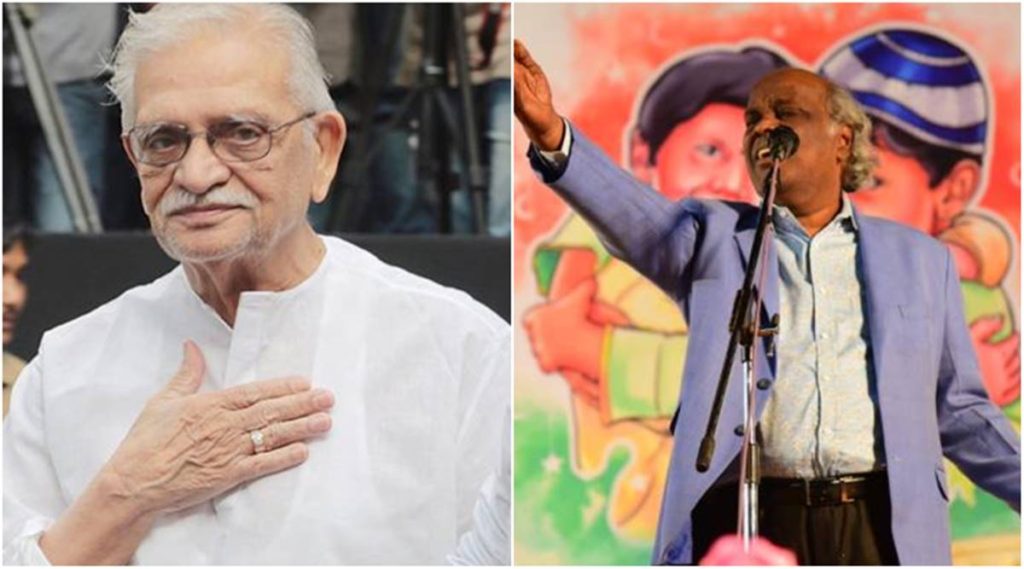
Gulzar said Rahat Indori was in total rapport with the new generation and times.


Legendary poet Rahat Indori passed away on Tuesday. (Photo: Express Archive, Rahat Indori/Twitter)

Noted lyricist-poet Gulzar said the death of Urdu poet Rahat Indori, who passed away following a heart attack on Tuesday, is a loss which cannot be quantified.

Indori, 70, was admitted to a hospital on Tuesday morning in Indore after he tested positive for COVID-19.

“It is an unquantifiable loss. He was one of a kind. It’s as if somebody has left a void in our Urdu mushairas which can never be filled. Woh jagah ko khali kar ke chale gaye. It is not a big loss, it is a total loss,” he told PTI.

He remembered Indori as someone who would steal the thunder at mushairas (poetry symposium).

“Wo toh lutera tha mushairon ka. A happy-go-lucky man who was the ‘jaan’ (soul) of mushairas,” Gulzar said.

Gulzar said Indori was in total rapport with the new generation and times.

“He was very relevant. People of all ages used to wait for his turn at mushairas. One mostly comes across romantic shers in mushairas, but all his work that he read was about the sociopolitical and contemporary climate,” he added.

Asked when he last spoke to Indori, the 85-year-old legendary lyricist said it is difficult to recollect, but it seems as if they spoke just the other day.

Gulzar said his friend, filmmaker Vidhu Vinod Chopra, who worked with Indori on Mission Kashmir, would often tell him about work, including his songs Bumbro and Dhuaan Dhuaan on the 2000 film.

“I would love it and talk to him (Indori). Jab bhi koi aacha sher sunn liya, phone kar liya, daad de di (Whenever I would hear a good sher by him, I’d call him up to congratulate him),” he remembered.

With a 50-year career in poetry, Indori was known for the lyrics of songs like Dekh Le from Chopra’s Munnabhai MBBS ”(2003), Chori Chori Jab Nazrein Mili from Kareeb (1998), and Koi Jaye to Le Aaye from Ghatak (1996 ), and Neend Churai Meri from Ishq (1997). His lyrics were used in 11 Bollywood films.

source: http://www.indianexpress.com / The Indian Express / Home> Entertainment> Bollywood / by PTI, Mumbai / August 12th, 2020

Delhi Constable who cracked IAS exam is reminding Internet of Imran Ansari from ‘Paatal Lok’

Azampur Dehpa Village,UTTAR PRADESH /NEW DELHI :

The UPSC announced the result of the civil services examination 2019.

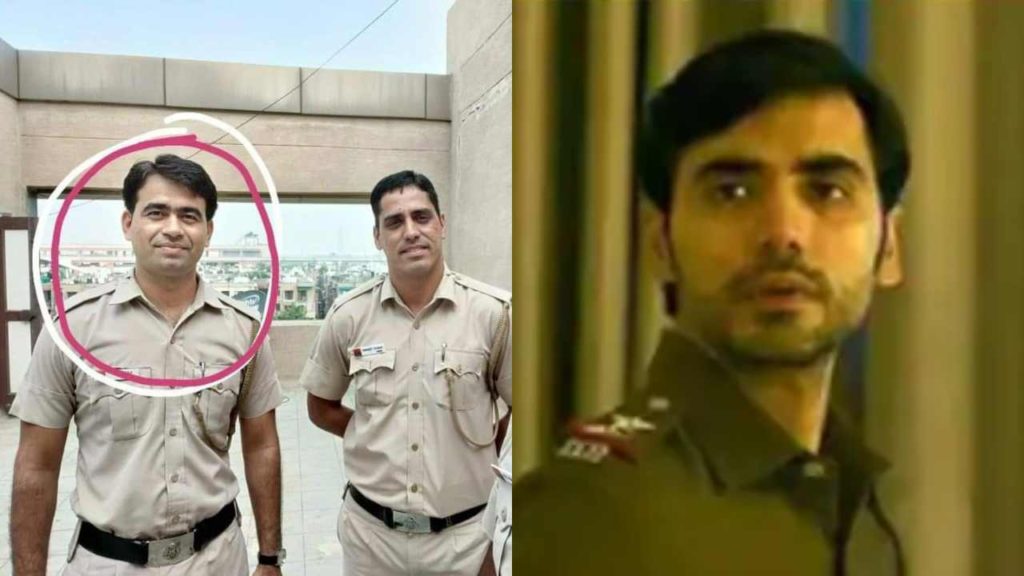
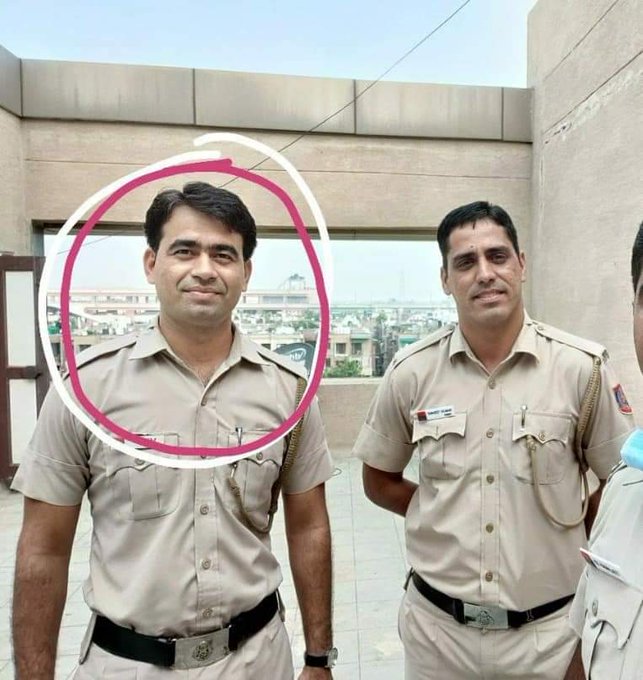
The netizens came across the case of reel-meets-real, as a police officer from Delhi has been going viral on social as the the real-life counterpart of the fictitious Imran Ansari from the Netflix series ‘Paatal Lok’.

Constable Firoz Alam works for Delhi Police and much like the handsome, upright and talented Ansari in the Anushka Sharma produced show, Alam has cleared the UPSC examination with 646 rank, as per an update posted by a journalist on Twitter.

The UPSC announced the result of the civil services examination 2019. While Pradeep Singh has topped the exams, Jatin Kishore and Pratibha Verma got the second and third rank, respectively.

But images of Alam have nevertheless been doing the rounds on social media, thanks to his similarity to the character of Ansari, who was also a Delhi Police constable who wanted to become a civil servant and was thus studying to pass the UPSC examination.

_____________

Twitter :

Saurabh Trivedi @saurabh3vedi

A real life Imran Ansari from #paatallok – He is Firoz Alam, a #DelhiPolice constable posted with PCR unit. He has secured AIR 645 in #UPSC2019.

3:41 PM . Aug 04, 2020 / 5,6K / 725 people are Tweeting about this

____________________

Alam is not the only one to make news on social media after the results of UPSC were announced.

A candidate by the name of Rahul Modi – an amalgamation of the names of PM Narendra Modi and his nemesis Congress leader Rahul Gandhi- secured the 420 rank, causing much hilarity on social media.

source: http://www.newsd.in / Newsd.in / Home> Trending / by Newsd / August 05th, 2020

Funeral services on Friday for Munsif Daily editor Lateef Mohammed Khan

Chicago, USA / Hyderabad, TELANGANA :

Khan Lateef Mohammed Khan, center, the editor-in-chief of the Munsif Daily, passed away Aug. 6 in Chicago. (Courtesy of Syed Ullah)

Lateef Mohammed Khan, who spent his life defending Urdu through journalism, books and lectures, died Aug. 6 at a local Chicago hospital. The 80-year-old worked in journalism for more than three decades, getting his start at the Munsif Daily, an Urdu language newspaper.

The Munsif Daily is an Urdu language newspaper published from Hyderabad in India. Its editor-in-chief was Khan Lateef Khan till yesterday. The Munsif Daily Is the largest circulated Urdu newspaper in South Asia. The paper was owned by Mahmood Ansari, when Masood Ansari fell seriously ill, the newspaper was sold to Khan Lateef Khan in 1996, who became editor-in-chief. He started the first Urdu satellite TV channel in India.

He was chairman of the Sultan ul Uloom Education Society. Khan was known for bringing in a revolutionary change in Urdu publications in the city by reintroducing the Munsif newspaper in color print 23 years ago.

Ali Khan, president and founder of Urdu Semaj Chicago, shared his condolences and said, “He was a legend in our community and a very genuine, gracious man in person and an acclaimed columnist. Sad to hear of his passing away today. This is a total loss for the whole community.”

Many renowned personalities including Dr. Qutub Uddin, Iftekhar Shareef, Azeem Quadeer, Saleem Abdul Rehman, Ishaan Ahmed, Kaleem Hasan, Omer Haqqani and many others paid tribute to his service.

Khan’s funeral services will be at the Muslim Community Center in Chicago after Friday prayers. He will be buried in Chicago.

source: http://www.dailyherald.com / Daily Herald / Home / by Syed Ullah / August 07th, 2020

Indian Islamic Chamber of Commerce and Bureau (IICCB) Launched To Provide Opportunities To Muslim Businesses

The Indian Islamic Chamber of Commerce and Bureau (IICCB) was launched on Thursday to provide support to Muslim businesses and entrepreneurs with resources, mentorship, networking and finance.

IICCB is a business chamber registered under The Indian Trust Act and is headquartered in Bangalore, with chapters in multiple states across India and in countries like the US, UK, Saudi Arabia, UAE and Canada.

The chamber aims to create a body of freelancers, SME’s, MSME’s, large corporates, professionals, consultants, start-ups, small entrepreneurs and to offer an industry-wide exchange of business ideas, exchange of opportunities, collaborations/partnerships, trade, investments, exchange of services, project funding, agent sourcing, overseas business expansion, rising funds, provide consultation, freelancing services & other advisory services to its members, according to Mr. K.M. Noorul Ameen, founder and patron the organisation.

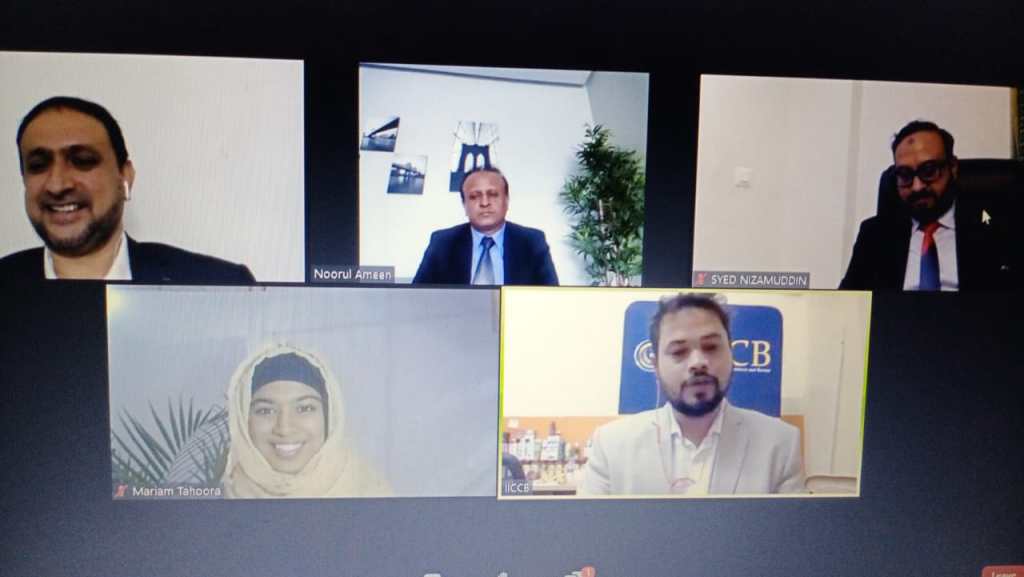
Considering the ongoing coronavirus pandemic, it was a virtual launch with over 400 attendees belonging to different backgrounds ensuring diversity.

The launch was led by Mr. Noorul Ameen who spoke at length about IICCB and its mission.

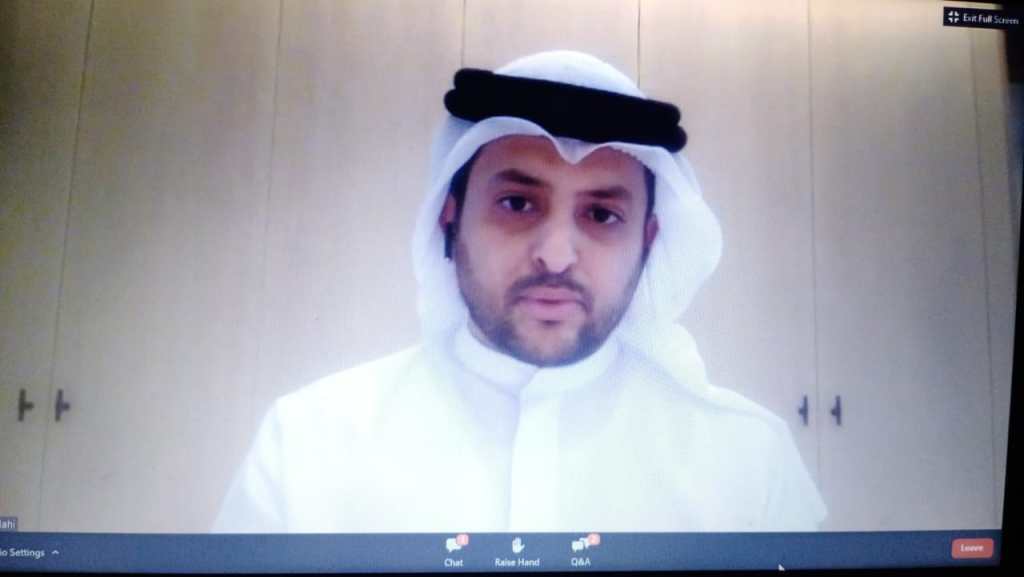
Ahmed Sultan Bin Harib Al Falahi, UAE Commercial Attaché to India.

Ahmad Sultan Bin Harib Alfalahi, UAE’s Commercial Attaché to India was the Guest of Honour for the event who expressed hope that the presence of a business chamber like IICCB in India will further enhance ties between India and UAE.

IICCB also aims to create awareness of business opportunities and promote ideas for national and international collaboration among its members.

The organisation is taking in registrations for new members on its website.

source: http://www.thecognate.com / The Cognate / Home> Business / by The Cognate News Desk / July 30th, 2020

How the hand mirrors the mind

Bengaluru, KARNATAKA :

Different strokes: Rafiullah Baig of the Handwriting Institute of India in Yediyur can pinpoint key personality traits based on handwriting. Photo: Karan Ananth   |

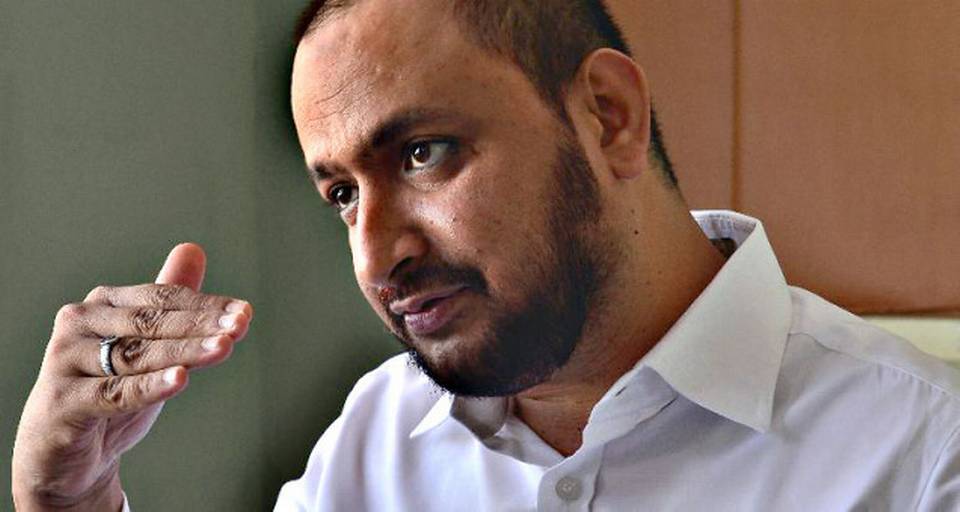
With only a handwritten paragraph before him, Rafiullah Baig can tell you all about your key personality traits in just about ten minutes.

The words mean little to Baig, founder-president of the Handwriting Institute of India at Yediyur; he finds meaning in the pressure applied while writing, the size of alphabets, the slant, the variation and where a person starts and ends the stroke.

“It is an established science — a branch of psychology called graphology where the handwriting is analysed to gain insight into the subconscious,” said Baig.

Personality types

“The pressure of your writing is a direct indication of the intensity of your emotions. Writing of small size generally signifies a reserved and focused personality. Big writing is an indication of a vibrant personality. A leftward slant is a sign of an introvert. Straight letters indicate logical and analytical behaviour and a rightward slant indicates an emotional personality,” explained Baig.

Further, each letter is linked to a trait. “For example, crossing the ‘t’ at a lower level indicates low self esteem and a high ‘t’ bar indicates high self-esteem,” he said.

He then pulled out handwriting samples of Sir M. Visvesvaraya, Thomas Alva Edison, Mother Teresa and Albert Einstein to point out where they crossed their ‘t’s while writing — right on top.

“The letter ‘t’ alone could give you 22 different interpretations,” he added.

Like the body, alphabets can be divided into three categories: the upper, the middle and the lower. Letters ‘l’ and ‘t’ have upward strokes corresponding to the upper part of the body while ‘y’ and ‘p’ have lower strokes; ‘m’ and ‘o’ fall in the middle order.

It is after years of practice that Baig can judge a piece of writing and talk at length about the person who wrote it. Apart from a basic function of personality assessment, the science, he explained, could also be used in therapy, crime investigation, recruitment and health. “The kind of therapy differs with different age groups. We help children write clearly, legibly and fast. With adults, the focus is on personality development.” Psychiatrists, Baig explained, work closely with handwriting analysts to influence, change, and heal illnesses of the mind. “But what we cannot understand from the writing is sex, age, right or left handedness and it cannot treat a disease completely,” he added.

Prescriptions and personality

So why do doctors have such bad handwriting? Largely illegible and unreadable are doctors’ prescriptions but Baig said it was a misconception that they write illegibly.

“We were wondering the same and did research that involved close to 3,000 doctors. The writing on the prescription is unreadable because first, the names of drugs and their spellings are unknown and second, doctors would like to keep the name of a drug secret to prevent misuse,” he said. “Outside of their profession, doctors write very artistically.”

source: http://www.thehindu.com / The Hindu / Home> News> Cities> Benglauru / by Archana Nathan / April 18th, 2012

This college dropout from Bengaluru is showing more than 35k students the path to success

Bengaluru, KARNATAKA :

From government school teacher to life coach, Arif has come a long way while training thousands of students in Bengaluru.We trace his journey.

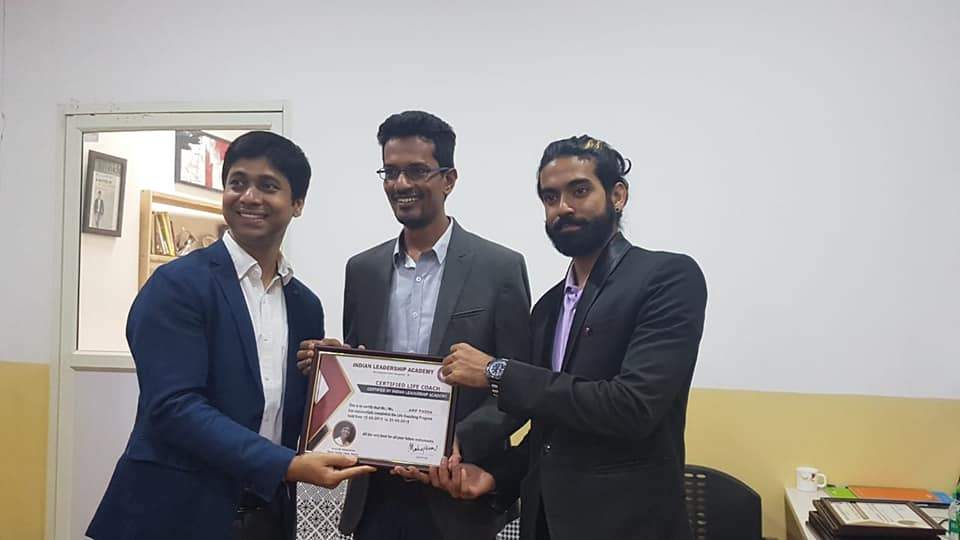
Arif Pasha certified by International Life Coach, Kaushik Mahapatra (pic: Arif Pasha)

A few years ago, when Arif Pasha had to drop out of BCom, he never imagined that he would become a life coach who trained students in soft skills, language and academics. Coming from a humble background, he was forced to drop out due to financial constraints. He later received training to become a medical transcriptionist and joined a multinational company. “My work involved converting all the voice notes sent by selected doctors in the US into transcripts. I earned a handsome salary but my interest was in guiding many young students like myself. One day, when I passed by a government school in Koramangala, I asked the principal if I could volunteer as a teacher. The principal readily agreed. After that, I slowly lost interest in my job, so, I decided to quit and take up teaching full-time,” says Arif.

Though his income was quite low and barely enough to make ends meet, Arif didn’t mind as he quickly became the students’ favourite teacher. “I discovered that innovation was missing in their education. Hence, I would spend two hours on the internet every day to learn innovative ideas to teach children. For example, all my lessons would be in the form of stories and real-life examples. I also do not use a stick while teaching children and it gave me good results in terms of response from students. Soon, even other teachers gave up using the stick,” says Arif, adding, “During my tenure in a government school, I was awarded as an outstanding teacher. The school had got good results in the final exams and they were happy with my efforts.” 

Dream Merchant: Arif has trained over 35,000 students till date on the methods of achieving their goals 

With that, Arif quickly realised that it was time for him to do more for students than just teach them. That’s when he remembered some of the soft skills he learnt during his corporate days — setting goals, planning time and working to achieve them. He then joined Arham Faraaz Leadership Academy in Bengaluru to groom his speaking skills, body language and storytelling skills, and after the completion of his training, he confidently approached a few schools to conduct goal setting sessions for students. 

Narrating the story of his very first session, he says, “In 2010, I charged only `10 for each student. With a broken laptop in hand and a few students in class, I started speaking to them. During these sessions, I would explain to students why they have to attend school and what education can fetch them.” And where is Arif now? “As my work gained recognition, an educational institute in Mumbai gave me a boost to travel from Kashmir to Kanyakumari and work with different schools. Today, I have covered over 35,000 students across India in private as well as government schools. This year, my goal is to help and motivate 5,000 students. By 2025, my aim is to help 5 lakh students achieve their dreams.”

Arif says that these life coaching sessions help students transform themselves and they ultimately start performing well in academics. For example, last year, when he was working with the Rajeev Gandhi Public School in Bengaluru, he came across a girl who was not doing well in her studies and she feared facing the Board exams. Through various sessions of counselling, drawing study plans and helping her realise her potential, she was able to score 86 per cent in her class X exams. What better instance can one state to prove that his sessions have served their purpose?

His smart goal: Arif aims to train five lakh students by the year 2025

Arif has even trained under international speaker and author Syed Habeeb, who wrote the book The Warrior Within You. “I worked as a language trainer in a school called LifeBridge Finishing School. We helped engineering students present themselves in their interview and get placed. It was a 21-day residential training programme. On average, every third day, I conducted sessions to train students and teachers. Currently, I am training under Uday Kumar who is a Limited Liability Partnership coach. Aside from this, I am certified by the Indian Leadership Academy by Koushik Mahapatra as a Life Skills Coach and an LLP practitioner,” states Arif who is the founder and CEO of Live Your Dreams. His friend Abdul Afsar Baig handles the operations of the company.

Apart from training students and motivating them, Arif is specialised in training teachers and parents too. He explains, “During my sessions, I found out that many students are interested in achieving their goals but sometimes, their teachers and parents don’t cooperate. This brings down their motivation level. I designed a programme for seven days which includes training students, helping teachers draw their lesson plans, employing innovative skills of teaching, adopting technology to gel with the present generation and lending a ear to what students have to say. Meanwhile, parents play a key role in this as they learn about their children’s dreams and how they can help in achieving them.”

Here are a few tips that Arif gives students 

No matter what people around you say, one should not stop thinking if they want to become a doctor, engineer, IAS officer, astronaut, singer or artist 

Thinking alone won’t help. One should have strong will power and commitment to plan and work accordingly

Always tell yourself that you can do it instead of you can’t

Convert everything that you study into an image so that you don’t forget easily.

source: http://www.edexlive.com / EDEX / Home> People> Life Coach / by Rashmi Patil , Edex Live / July 20th, 2019

Civil Services Exams: Muslim candidates maintain success level

44 Muslims figure among the 829 successful candidates.

Civil Services Exams: Muslim candidates maintain success level

Bengaluru: 

The UPSC results were declared on Tuesday (August 4) and 829 candidates were selected for the top civil services across the nation. Of the 829 successful, 44 are stated to be Muslims. Reports have however put the figure of successful Muslim candidates between 42 and 45. Of the total, 180 will be joining the Indian Administrative Services (IAS); 24 will be going for Indian Foreign Services (IFS) and 150 will be taken into the Indian Police Service (IPS).

The Residential Coaching Academy (RCA) under the Jamia Millia Islamia has claimed that 30 of its candidates were successful. Fourteen of them are Muslims. Twenty five of them were residing at the Academy while another five received the coaching while residing outside the campus. The Zakat Foundation of India has claimed that 27 candidates were successful. Of these 23 are Muslims. Six candidates coached by the Jamia Hamdard are among the successful ones. Of these two are Muslims. Last year, there were 28 Muslims among the 759 successful candidates.

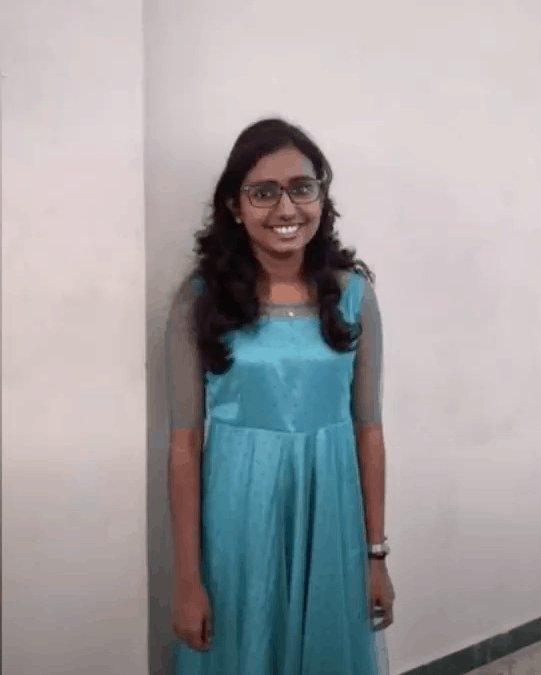
However, the results are disappointing from the angle of toppers. Only a single Muslim candidate, Safna Nazruddeen from Kerala has been awarded 45th rank. There is no other Muslim candidate among the top hundred. Jamia press released claimed that out of the 30 of its selected candidates, six are expected to get IAS, eight are likely to get IPS and remaining candidates will get IRS, Audit & Account services, IRTS and other allied services of Group-A. Six of the 30 candidates are girls. The RCA’s performance has dipped this year. Last year Junaid Ahmed emerged as the third rank-holder in the UPSC competitive exams.  The RCA has so far produced 230 civil servants for the topmost bureaucracy. Besides, 285 of its trained candidates have been selected for various other Central and State Government services such as Reserve Bank of India, scheduled banks, Jammu & Kashmir State services etc.

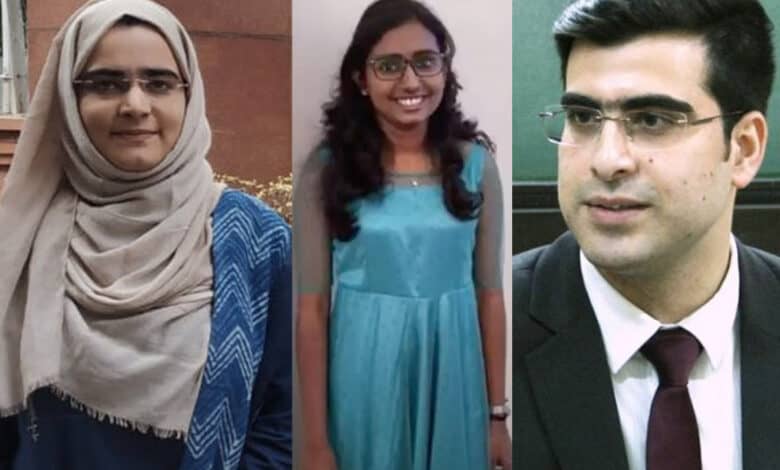
Safna Nazruddeen

The Muslim representation took a dip in 2018 when only 29 Muslims figured among 759 successful candidates. In 2017, there were 44 Muslims among 990 cleared for the services. It was in 2016 that the representation began showing upward trend with success of 50 Muslim candidates that year. Of the 50, ten figured among the top hundred. Since then the proportion of Muslims in the UPSC exams has hovered around 5%, a twofold increase from 2.5% for several decades. This is owing to concerted efforts by some institutions, notably Jamia Millia Islamia’s RCA, Zakat Foundation of India, Jamia Hamdard and the Central Haj Committee, Mumbai. However, majority of the successful Muslims this year are from southern States, although 60% of India’s Muslims live in Uttar Pradesh, Bihar, West Bengal and Assam (and their splinter states). This is where attention needs to be focused and efforts should be taken to improve standard of coaching in schools and colleges where the majority of Muslim students head.

Among the successful candidates is Dr. Asrar Ahmed Kichloo, a 27-year old doctor from Dodda district of Jammu. He is one among the 14 who cracked the Civil Services exam this year from the State. He completed his MBBS from GMC in Jammu. He is son of a Veterinarian mother and a father who is a retired official from the Animal Husbandry Department in the State.

Dr. Asrar Ahmed Kichloo

Kichloo told the media that he decided to go for Civil Services after he saw a man from a rural area in Jammu had applied cowdung on his wounds. He found to his horror that patients in rural areas in the State had to travel 24 hours to reach the doorsteps of a hospital and therefore resort to superstitious practices or approach quacks. Incidentally, a Muslim girl, Nadia Beig also figures among those who were successful from the State. Nadia hails from Ramhal village in Kupwara district of the State. At 23, she is the youngest to crack the UPSC. An Economics Honours graduate from Jamia Millia, Nadia had tried for the Civil Services for the second time. She took coaching at the RCA. 

Nadia Beig

List of successful Muslim candidates for UPSC Result-2019

S. No.NameRank
1Safna Nazarudeen45
2Shaikh Mohd Zaib Zakir153
3Jithin Rahman176
4Rumaiza Fathima R V185
5Nongjai Mohd Ali Akram Shah188
6Samir Ahmad193
7Suthan Abdullah209
8Sofia*241
9Asrar Ahmad Kichloo248
10Noorul Quamer252
11Ajmal Shahzad Aliyar Rawther254
12Farman Ahmad Khan258
13Mohd Shafiq292
14Sufiyan Ahmed303
15Azharuddin Zahiruddin Quazi315
16Asif Yousuf Tantray328
17Ahmad Belal Anwar332
18Nadia Beig350
19Ashik Ali P I367
20S Mohammed Yakub385
21Shahul Hameed A388
22Shaheen C396
23Md Shabbir Alam403
24Aftab Rasool412
25Shiyaz K M422
26Ahamed Ashik O S460
27Mohammad Nadeemuddin461
28Syed Zahed Ali476
29Mohammed Danish K487
30Md Qamaruddin Khan511
31Maaz Akhter529
32Hassan Usaid N A542
33Mohammad Aaquib579
34Rehan Khatri596
35C Sameer Raja*603
36Faisal Khan611
37Saifullah623
38Sabzar Ahmad Ganie628
39Majid Iqbal Khan638
40Firoj Alam645
41Ruheena Tufail Khan718
42Rayeas Hussain747
43Mohammed Nawas Sharaf Uddin778
44Shaik Shoeb823
45Syed Junaid Aadil

M.A. Siraj is a senior journalist based in Bengaluru 

source: http://www.siasat.com / The Siasat Daily / Home> Featured News / by M.A. Siraj / August 05th, 2020