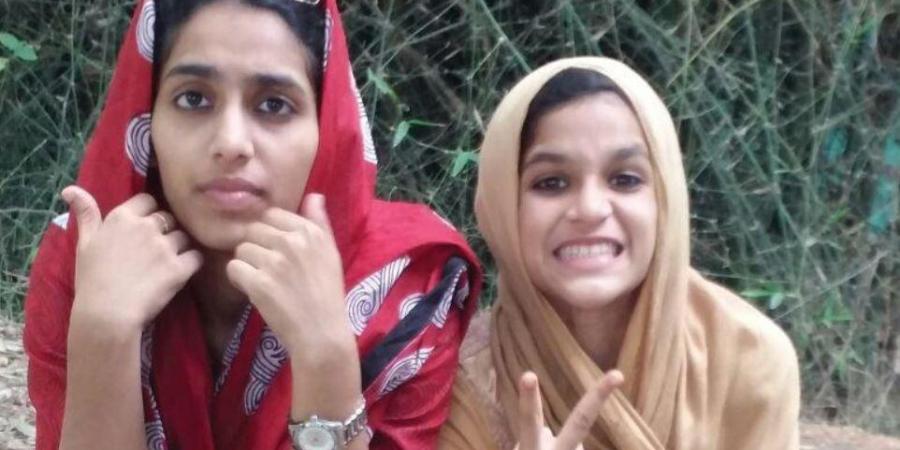
Her father K A Abootty died amid a prolonged legal battle to get justice for the death of his elder daughter Shamna.
Shamna and Shifa
Kochi :
Shifa Thasneem, the sister of Shamna Thasneem, the medical student who lost her life three years ago allegedly due to medical negligence, passed the SSLC examinations with A+ in all subjects.
The exam results were declared on Tuesday. Shifa’s success comes against all odds. Her father K A Abootty died amid a prolonged legal battle to get justice for the death of his elder daughter Shamna.
Shamna lost her life due to the medical negligence, allegedly, by her own teachers at the Ernakulam Medical College.
P K Shereefa, Shifa’s mother who is now fighting for justice, had sent a legal notice to the state chief secretary a year ago demanding compensation of Rs 1 crore for the death of her daughter.
Shifa is among the 3,406 students who secured full A+ from Ernakulam district.
source: http://www.newindianexpress.com / The New Indian Express / Home> Good News / by Express News Service / July 01st, 2020
Karad Village (Malappuram District) , KERALA / Doha, QATAR :
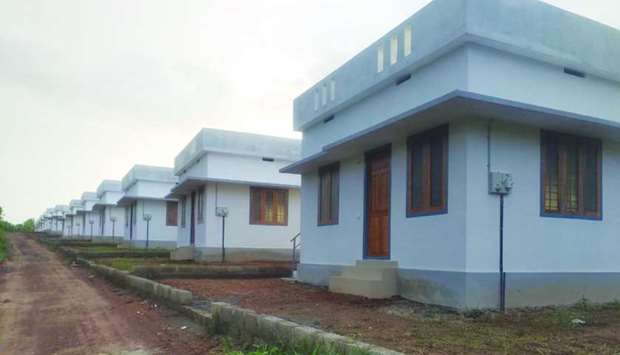
Some of the houses constructed on land donated by Iqbal.
It was a day of immense joy and fulfillment for Qatar-based Indian businessman Ahammed Iqbal who donated 1.5 acres of land in his native place to build houses for 15 families left homeless by floods last year.
Karad, a village in Malappuram district of the southern state of Kerala, Sunday witnessed a function where the families received the keys to their new homes.
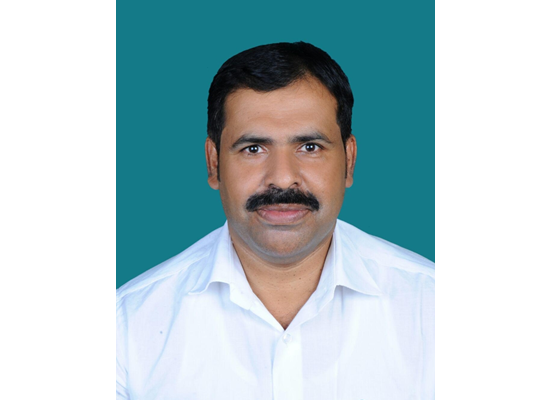
Ahammed Iqbal
“The smiles of gratitude gave me a feeling of delight. I am glad that I could uplift some flood victims from despair to happiness,” Iqbal told Gulf Times.
After the land was handed over to the district administration, the 15 houses were built with funds contributed by M P Ramachandran, chairman of Mumbai-based Jyothy Laboratories Ltd.
Iqbal recalled that the district administration had received several applications from many families whose houses were washed away in the deluge. The beneficiaries were selected after scrutiny and drawing lots.
Most of the beneficiaries came from Kavalappara village that was wiped out by a massive landslide and flash floods on the night of August 8 last year. The natural calamity claimed 48 lives while leaving hundreds homeless.
Iqbal, who was in Qatar during the deluge, approached the Kerala district administration expressing his readiness to extend a helping hand to the victims.
On behalf of Iqbal, his friend Mujeebu Rahman handed over the documents to the district administration.
“I simply wanted to do my part for the victims and stand with my people during the tough times. I have sufficient land and my religion allows me to take only three pieces of cloth when I depart,” he said, adding that his parents very often inspire him to help landless people.
Kerala’s Higher Education Minister K T Jaleel and magician Gopinath Muthukad handed over the keys to the beneficiaries.
source: http://www.gulf-times.com / Gulf Times / Home / by Shafeeq Alingal / June 28th, 2020
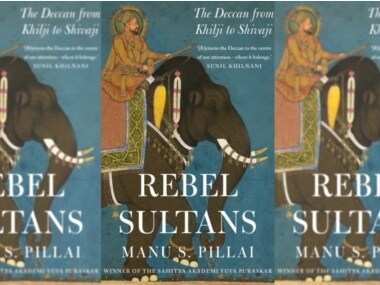
In Rebel Sultans, Manu S Pillai traces the history of the Deccan from the end of the 13th century to the dawn of the 18th, punctuated by tales of drama, betrayal and murder.
Editor’s note: The Deccan, miles away from the empire of the Mughals, was eyed with envy by rulers such as Aurangzeb, so much so that it is said to have contributed to his downfall. Its kingdoms had much to offer; in their courts were Persians and Marathas, in their ranks were African nobles, and in their treasuries were gold and fortunes.
In Rebel Sultans, Manu S Pillai traces the history of the Deccan from the end of the 13th century to the dawn of the 18th. He tells the story of the Vijayanagar empire, the court of the Bahmani kings, and the Rebel sultans — punctuated by drama, betrayal and murder. The book features characters such as Malik Ambar, Chand Bibi and Krishnadeva Raya, and is published by Juggernaut Books.
The hero of the Deccan had skin the colour of coal. Emperors snarled at him from afar, while enemies at home rattled in fear when he marched into their neighbourhoods. Many were those who despised him, but many more still were the masses who discerned in him a champion. His story was certainly unusual, though he was neither the first of his people to serve in the Deccan, nor extraordinary in his antecedents. And yet he emerged as the strongest of them all, reigning indeed as king in all but name. ‘He has a stern Roman face,’ wrote one traveller, ‘and is tall and strong of stature’ though his ‘white glassy eyes’, it was added, ‘do not become him.’ His charities were legendary, as was the valour of the men who pledged themselves to his service. When at last he died, not on the battlefield but secure in a formidable fortress, the Mughals admitted that this enemy was ‘an able man. In warfare, in command, in sound judgment, and in administration he had no rival or equal… He kept down the turbulent spirits of [the Deccan], and maintained his exalted position to the end of his life, and closed his career in honour. History,’ the obituary concludes, ‘records no other instance of an Abyssinian slave arriving at such eminence.’ It was high praise, coming as it did from the imperial court, where two generations of emperors revealed nothing but spite for the man called Malik Ambar.
The Deccan, as we know, had long attracted foreigners to its shores, offering them wealth and a future in these eastern lands. Persians arrived, as did Arabs and Central Asians. Some graduated to princely ranks, while others soared to gratifying aristocratic heights. But among the legions of men absorbed by the Bahmanis and their heirs were also Africans who came primarily from the land we now call Ethiopia. And they too would thrive in the Deccan far above the stations where they began their lives. Some were associated with tales of treachery – Mahmud Gawan’s confidant, who struck his seal on the forgery that delivered him his death warrant, was a habshi (an African) as was his executioner. When Yusuf Adil Shah died, one of the regents who ruled in the name of his son was a black man from Ethiopia – the latter was stabbed to death for displacing Westerners and favouring the Sunni faith. When years later Chand Bibi was imprisoned, her liberator who briefly stood at the forefront in Bijapur was a habshi, as was the man Ibrahim Adil Shah II rejected after eight years of living under his guard. In Ahmadnagar, during the wars of succession in the 1590s, one ruler, whose reign lasted less than a year, found himself without support from his nobles because his mother was ‘a negress’, though when Chand Bibi was besieged by the Mughals, the man who led Bijapur’s and Golconda’s troops to her rescue was also a habshi called Suhail Khan. And many years later, on the eve of the final Mughal conquest of the Deccan, in Bijapur once again would rise a habshi exercising as a short-lived vizier the full and tragic authority of power.
The habshis had almost all of them begun their careers as slaves. And there certainly was a thriving market for men from Ethiopia in the courts and demesnes of the east. Writing as early as the 14th century, Ibn Batuta reports how habshis were ‘guarantors of safety’ for ships sailing in the Indian Ocean, with such fearsome reputations that ‘let there be but one of them on a ship and it will be avoided by… pirates’. Centuries later a Portuguese missionary noted how ‘all the country of Arabia, Persia, Egypt, and Greece are full of slaves’ who made for ‘great warriors’. In India too, this was true. The favour and affection shown by Raziya Sultan in the 1230s to Jamal al-Din Yakut, an Abyssinian warrior, provoked a rebellion and contributed to her brutal murder in Delhi at the close of that decade. At the end of the 14th century, a habshi servant of the Delhi Sultans had established a near-sovereign state in Jaunpur, in present-day Uttar Pradesh, which sustained itself till 1479. Firoz Shah Bahmani in the early 15th century had habshis in his harem, while in that same century a 1487 coup by Africans in the court of the ruler of Bengal led to the rise of a short-lived ‘Habshi Dynasty’ hundreds of miles away, on the other side of the Indian subcontinent. The exquisite Siddi Saiyyed Mosque in Ahmedabad was built by a habshi in 1572, and generations later the Mughal emperor Aurangzeb would appoint the African lord of the fortress of Janjira his naval commander, allocating to him an annual grant of 400,000 rupees to maintain the imperial fleet. In the old quarter of Delhi there is even an area by the name of Phatak Habash Khan, named, evidently, after a habshi courtier who bid farewell to the Deccan, embracing the cause of the Mughal emperor.
While these are episodes that stand out, where Africans from humble origins arrived at positions of honour and power (and sometimes infamy), the beginning of their journeys on this path were never happy. The habshis were often taken as children and sold at a price to be transported abroad. Ethiopia, at the time, was called Abyssinia in the trading world, and the very word ‘habshi’ is a derivation denoting the origins of these slaves. Malik Ambar, too, emerged from this commercial exchange of human goods. Born around 1548 into the Oromo tribe, he was captured as a boy and sold to an Arab for 20 gold ducats. In Baghdad he passed, temporarily, into the hands of another owner, who then sold him to the man who would bring him to India – and to his destiny. It was this master who educated him, though by now he had renounced his name, Chapu, and converted to Islam. ‘Whether he assumed a Muslim identity at the time as an act of genuine faith or simply as a practical matter of assimilation is not known.’ But it certainly helped him in his life ahead, to share faith with the powerful kings and noblemen of the east, in whose service lay his ascent.
Around 1571, now in his early 20s, Ambar, as he was known, arrived in the Deccan where his long-time master sold him to the peshwa (chief minister) of Ahmadnagar. The sale itself was not unusual – though his master had brought him up, the ‘bottom-line was never in dispute: Ambar was property’ and not ‘an heir or son’. However, the man who had just purchased the slave must have opened Ambar’s eyes to a world of possibilities, for the peshwa was himself black and had arrived in the Deccan under similar circumstances. He would, in due course, be assassinated, but to Ambar it must have been clear that in India it was possible to rise beyond slavery and to come into great power and wealth – he himself was merely one of a thousand habshis the peshwa possessed.
Rebel Sultans by Manu S Pillai is published by Juggernaut Books
source: http://www.firstpost.com / FirstPost / Home>Living News / by Manu S Pillai / June 21st, 2018
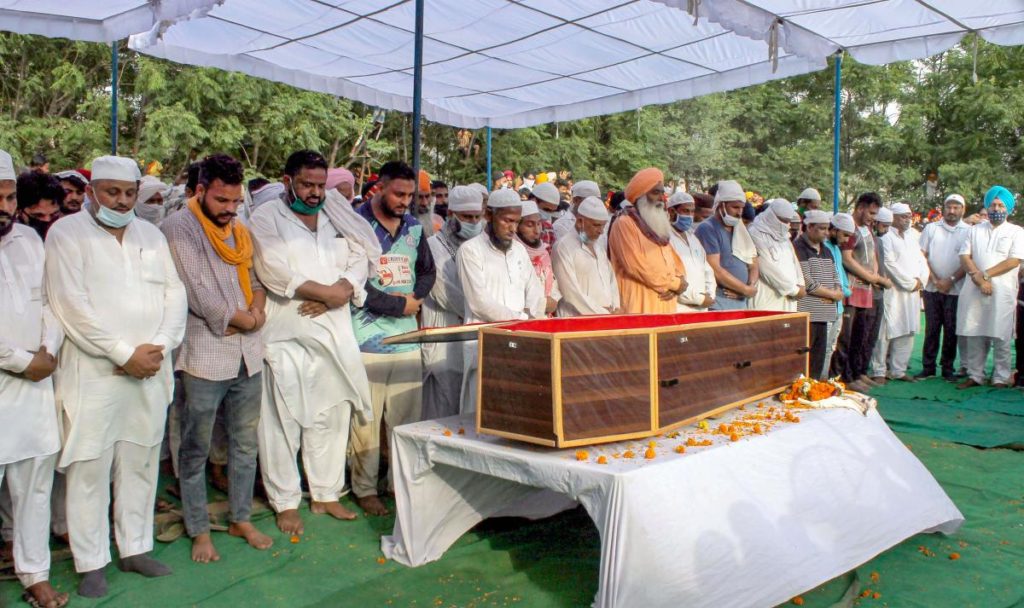
Kins and villagers pay tribute near the mortal remains of martyr Lance Naik Saleem Khan who died after his boat capsized while doing rescue work in Ladakh’s Shyok river, at Mardanheri village in Patiala, Saturday, June 27, 2020. / Credit: PTI
The mortal remains of Lance Naik Saleem Khan, who lost his life in the line of duty in Ladakh, were laid to rest at his native village of Mardaheri in Punjab’s Patiala district with full military honours on Saturday. He was 24.
Deployed with the Bengal Engineer Group, Khan became a battle casualty on June 25 while patrolling at a river close to the LAC (Line of Actual Control) in Ladakh sector, said a government release here.
Punjab Chief Minister Amarinder Singh on Saturday announced ex-gratia compensation of Rs 50 lakh, along with a government job to a family member of Khan.
“Saddened to hear about the demise of Lance Naik Saleem Khan in Ladakh. He belonged to Mardaheri village in Patiala district. My sincere condolences to his family. The nation salutes the brave soldier. Jai Hind!,” Singh said in his tweet.
Scores of people bid a tearful adieu to the soldier. Slogans of ‘Saleem Khan Amar Rahe’, ‘Bharat Mata Ki Jai’ rent the air when his body, wrapped in the Tricolour, reached his native village.
Villagers showered flower petals on the military vehicle when the mortal remains of Khan were being brought to his native place.
Khan’s family members were inconsolable when the body arrived. They also saluted him for the last time.
Khan had joined the Army in February 2014.
He is survived by his mother, brother and a sister.
His father Mangal Deen had also served in the Army and passed away 18 years ago.
Punjab Cabinet Minister Sadhu Singh Dharamsot along with senior officials from the Army, police and civil administration and other political leaders paid their last respects to the soldier.
source: http://www.deccanherald.com / Deccan Herald / Home> National> North and Central / by PTI, Chandigarh / June 27th, 2020
He has helped over 7,000 workers return home in Birbhum and over a lakh stranded workers get food
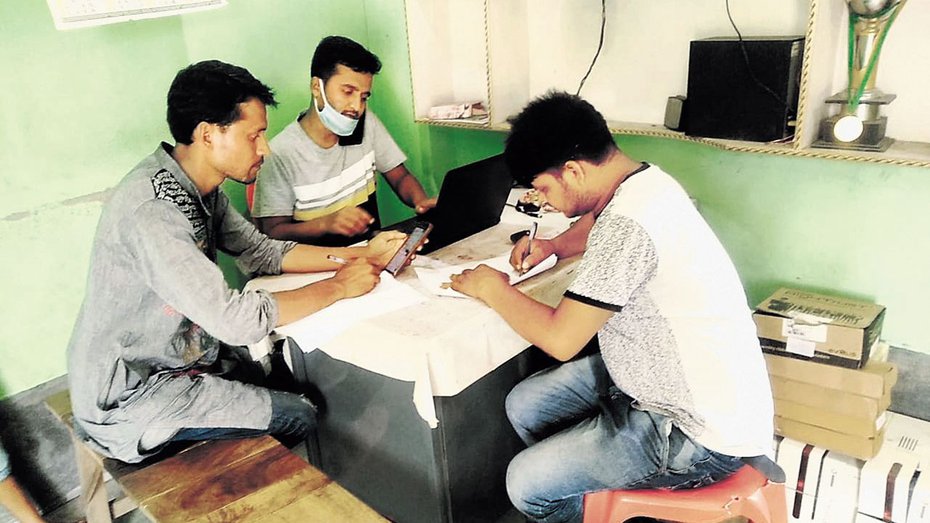
IT professional Sadekul Islam (in front of the laptop, wearing a mask) and his friends at work in Birbhum’s Muraroi / Telegraph picture
Armed with a laptop and a mobile hotspot, an IT professional from Birbhum claims to have helped over one lakh migrant workers during the Covid-19-induced lockdown.
Sadekul Islam, 28, who works in an IT firm in Calcutta, had to return home in Birbhum’s Muraroi during the lockdown.
With help from friends Mohammed Noor Alam and Nasiruddin Ansari in Muraroi, Sadekul set up a network of contacts — mainly phone numbers and email ids of government officials — on his laptop that he said helped over 7,000 workers return home in Birbhum and over a lakh stranded workers get food.
Sadekul said the idea of forming a database of officials came to him when he saw villagers thronging post offices and Aadhaar centres last year in the wake of the amended citizenship law to rectify their documents. “I thought it would be simpler if people knew whom to contact,” he said. His expanding database of officials proved helpful when Covid-19 struck.
From April, Sadekul and his friends started identifying stranded workers from their area and contacting government officials for help.
Sadekul said his contacts ranged from the “panchayat to the PMO”. “The system works,” he said. “Kerala officials were the most helpful.”
Worker Saribul Sheikh, home in Muraroi, said Sadekul arranged food for him and four others when they were “virtually starving in Chennai”.
Muraroi is located along the Birbhum-Murshidabad-Jharkhand border. Many youths work as construction labourers and masons in states such as Kerala, Maharashtra and Tamil Nadu.
“We liaised with officials in Bengal as well as in states where we knew youths from Muraroi were stranded. We gathered information on other places where youths were stranded with insufficient food and contacted officials there,” he said. “Fortunately, it worked out well for everyone.”
Minakshi Bhattacharya, a PhD research scholar from Santiniketan’s Visva-Bharati, was so impressed by Sadekul’s “ingenuity” that she contacted him this week for a study of his initiative.
Sadekul added that times had changed. “One can contact the whole world sitting at home. Only thing is one needs to know whom to call.”
source: http://www.telegraphindia.com / TheTelegraph, online edition / Home> West Bengal / by Snehamoy Chakraborty in Bolpur (Birbhum) / June 26th, 2020
The Bengaluru-based Dr. Majeed Foundation, a non-profit institution has contributed ₹10 crore to PM CARES Fund, to help combat the widespread outbreak of COVID-19, according to a press release. The Foundation was set up by Muhammed Majeed, Founder and Chairman of Sami-Sabinsa Group.
It contributed ₹2 crore to the Karnataka State Disaster Management Authority.
The Foundation has been actively supporting people in distress, by ramping up its community outreach programmes to reach out to the poor and vulnerable communities. It helped those who have been most affected by the pandemic in Bengaluru and Hyderabad and provided them with essential food items, protective equipment, hand sanitizers and health supplements.
source: http://www.thehindu.com / The Hindu / Home> News> State> Karnataka / by Special Correspondent / Bengaluru – June 19th, 2020
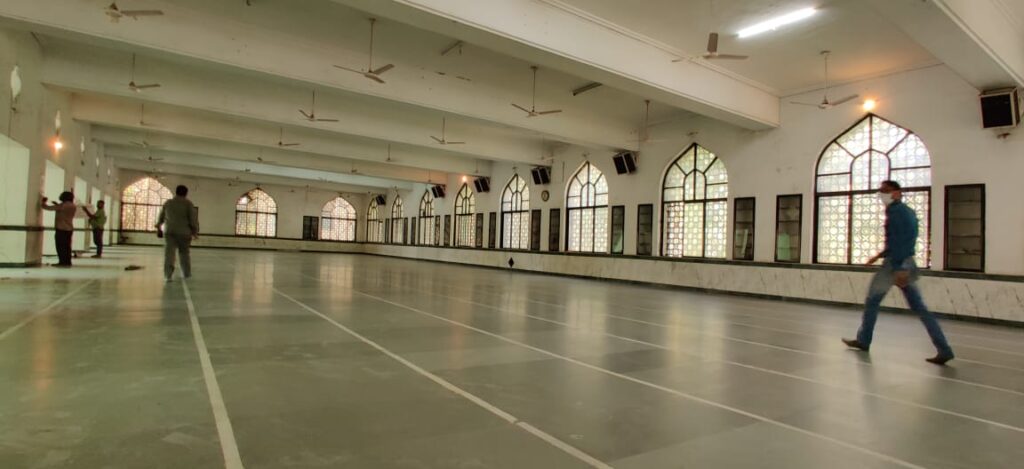
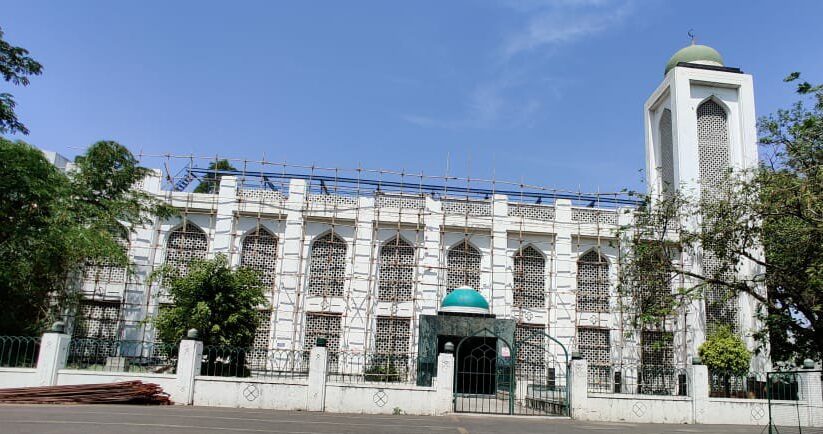
The Azam campus masjid, which is one of the biggest in Pune, will be used as quarantine centre for Coronavirus COVID19 patients. The management of the mosque and Pune district administration has joined hands for the same.
Given the increasing prevalence of corona infection in the central suburbs of Pune, the management had indicated its readiness to hand over the premises of the Azam campus located in Camp area, which is adjacent to Bhavani Peth, Nana Peth, where most of the patients have been detected, to the administration for quarantine of suspected patients.
Dr PA Inamdar, president of Haji Gulam Mohammed Azam Education Trust, “After getting approval from the administration, we started preparation and have readied the floor. We will also provide food to people housed at the mosque. Corona is an international crisis and as a responsible citizen, we are ready to fulfil our duty as an organization in the government’s efforts to address it. It is time to lend our resources to the government.”
The management of Azam Campus had indicated its readiness to provide 9,000 square feet of space on the first floor of the place of worship with all electricity, fans, toilets and parking facilities. In a letter to the district collector, Inamdar said that he was ready to provide breakfast, meals, to the police and government officials as well as the patients.
There are 30 educational institutions of Maharashtra Cosmopolitan Education (MCE) society in Azam Campus and it is spread over 24 acres. One of them already has a mosque. The first floor of the mosque has a 9,000-square-foot hall-like floor. It can be converted into a quarantine ward. Schools and colleges in the educational buildings here are currently closed. The management is proposing to provide more space when needed, informed Dr Inamdar.
At present, 25 doctors of Unani Medical College on the campus and their five ambulances are serving patients in the central (Peth) areas of Pune. Also, Azam Campus has so far distributed groceries worth over Rs 25 lakh to the needy. Dr Inamdar has also appealed Muslims to perform prayers (namaz) at home without going to mosques during the holy month of Ramadan (Ramzan).
Azam Campus Masjid Pune
Due to the Coronavirus outbreak, all establishment including schools, colleges, shops, offices etc are closed across the country. Only essential commodities shops are allowed to function. In Pune, the number of Coronavirus positive patients has reached 800 and 56 of them have died while 122 have been cured till now.
source: http://www.punekarnews.in / Punekar News / Home> Pune / April 23rd, 2020
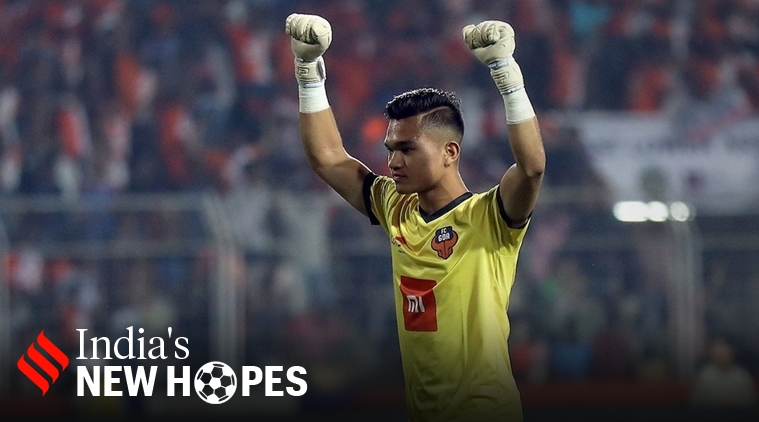
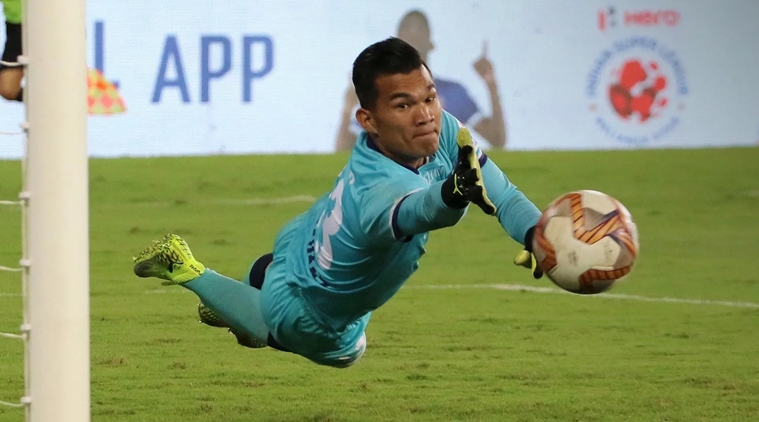
Shaking off initial hiccups in his career, Mohammad Nawaz is slowly but surely becoming a household name in India having helped FC Goa win the ISL League Winners Shield last season.
Mohammad Nawaz kept four clean sheets in his maiden ISL season in 2018/19. (Source: ISL)
With the restart of the domestic season weeks away, The Indian Express looks into the up-and-coming stars of tomorrow in ‘India’s New Hopes’.
What happens when a player’s professional debut is marred with a brain-fade leading to an opposition goal? More often than not, the debutant’s self-confidence shatters and he loses his nerves. Not Mohammad Nawaz though.
When FC Goa’s leading man between the sticks made his Indian Super League (ISL) debut against NorthEast United in October 2018, he had cost his team a goal — Federico Gallego had scored into an empty goal after Nawaz had handled the ball some 25 yards away from goal. “Honestly, I never considered what happened in Guwahati as a mistake. On the pitch itself, I had decided that I would focus on the next minute and learn from that experience,” Nawaz recollects while talking with indianexpress.com over phone from Imphal.
Already a backbone of the Gaurs’ setup and a holder of the ISL League Winners Shield, Nawaz’s meteoric rise can be credited to his unflinching attitude in the face of adversity. Before his debut-debacle in the ISL, the Manipuri suffered heartbreak in 2016 when he was left out of India’s U17 World Cup squad.
“When I was in the AIFF Elite Academy, I had one goal — to make the U17 World Cup squad, but I wasn’t selected in the end. But I didn’t let that setback affect me, as I signed for FC Goa in January 2018,” said the 20-year-old.
“Initially, I kept my head down, and then, after six months, the head coach [Sergio Lobera] came up to me and had a talk with me. I was surprised that he picked me for my debut, as there were two senior goalkeepers — [Laxmikant] Katti-bhai and [Lalthuammawia] Ralte-bhai — but he believed in me,” continued Nawaz, who had made a mark playing in the Goa Pro League in early 2018.
Mohammad Nawaz’s 2019/20 statistics. (Source: ISL)
Nawaz is set to make history by being the first Indian goalkeeper to play in the AFC Champions League next season, but he didn’t always intend to don the gloves.
“After watching my cousin, Mohammad Yasir [who plays for Hyderabad FC now], in training back in my childhood, I got into the sport. I used to play as a forward in the beginning, but when I was around eight years old, things changed. I played as a goalkeeper for my local club, YOSC (Youth Organisation Social Club), in one tournament as they didn’t have one,” he reminisced.
“Then, in 2010, I went for a district trial. Since there were only three goalkeepers in contention, my uncle told me to apply as a goalkeeper. I did just that, because in the end, I just wanted to have fun playing the game. From there, I was selected for Manipur and played in Kolkata in 2012. Then I got selected for the national team at the U13 level and I was recruited by the AIFF Elite Academy in 2013.”
Although he ended up as a goalkeeper by accident, Nawaz has fit the role like a glove. At 5’9″, Nawaz is not exactly of the imposing goalkeeping specimen, but there’s more than what meets the eye. Aside from being able to throw himself like a missile to effectively stop venomous volleys in their tracks, he has his ambipedal feet on which he can rely on.
“I believe passing is a very essential trait for a goalkeeper. At FC Goa, most of the attacks start from the back and since I have experience playing as an outfield player, choosing the right pass comes easily to me. Sometimes, it’s very scary, but a good sweeper-keeper should always be able to deal with tension,” said the 2000-born who tries to emulate the likes of Manuel Neuer and Ederson.
No other goalkeeper had a higher passing accuracy than Mohammad Nawaz last season. (Source: ISL)
Ever since the lockdown, Nawaz has been cooped up inside his Imphal house with his father, who works as a driver, and his mother, who is an anganwadi worker.
“I’m getting to spend some quality time with my parents because of the lockdown, but it has hampered my fitness. As soon as Ramadan ended, I started training. Lately, I have been playing with some youth players in the mornings, doing some drills with them, and in the evening, I have been hitting the gym,” he said.
“From time to time, I also play a lot of gully-cricket,” Nawaz continued. “I am not a wicketkeeper though… I can do my fair share of both batting and bowling.”
Having helped his team to the top of the table, play in an ISL final, and qualify for the continent’s premier club competition within the space of just two years, the accidental goalkeeper from Manipur is slowly but surely becoming a household name in the country.
Even after all that, Nawaz’s ambition knows no bounds. “Next season, my goal is to win the ISL Golden Glove. But more importantly, I will continue working hard to finally break into the senior national team this year itself.”
source: http://www.indianexpress.com / The Indian Express / Home> Sports> Football / by Debkalpa Banerjee / June 21st, 2020
First free community chartered flights benefit 395 Indians stranded in UAE due to COVID-19
South Indian superstar Mammootty in Dubai, / earlier.Image Credit: Virendra Saklani/Gulf News
Dubai:
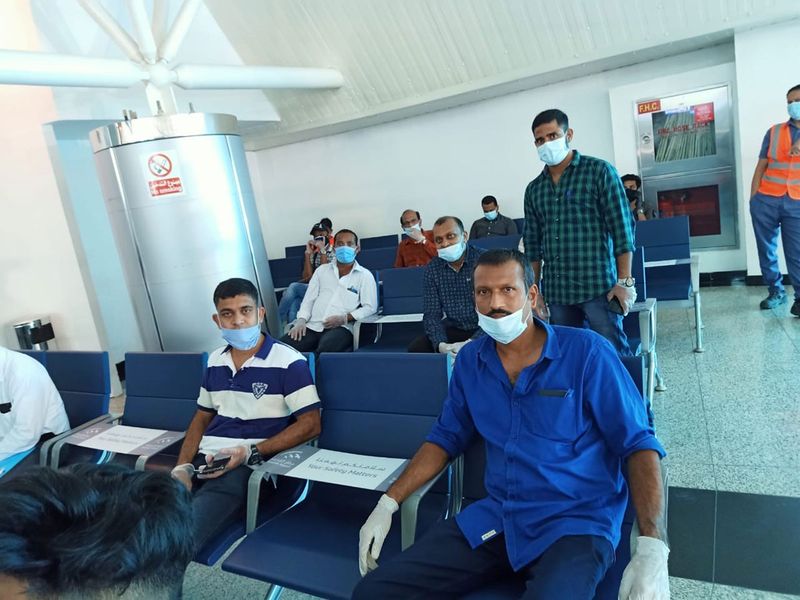
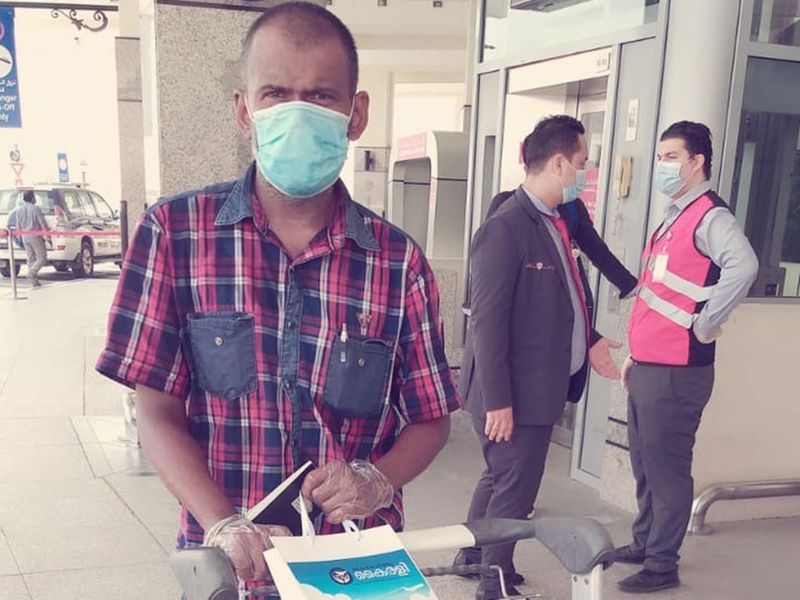
For the first time, two free community chartered flights repatriated 395 stranded Indians in the UAE to their hometowns in Kerala today.
While one flight was organised by Malayalam TV channel Kairali TV, under the leadership of its chairman superstar Mammootty, the other one was sponsored by the community group Overseas Malayali Association (Orma).
Kairali TV flew 215 stranded Malayalis home on an Air Arabia flight from Sharjah to Thiruvananthapuram at 6pm today, said E.M. Ashraf, the channel’s Middle East director for news and programmes. “Under the COVID-19 relief programme Kaikorthu Kairali, we had announced 1,000 free flight tickets to Keralites stranded in the Gulf countries. While we had given away some tickets to deserving candidates, we decided to also charter some flights from the UAE,” he told Gulf News on Sunday morning.
At least four free chartered flights are being planned for repatriation from the UAE with the contribution of several community members, businessmen and actors apart from Mammootty.
“We have also received the support from community groups in the UAE such as the Indian Social Centre in Ajman and MAS in Sharjah for organising today’s flight,” said Ashraf.
He said the channel had invited applications from the most deserving members of the community and a committee shortlisted the passengers from stranded visit visa holders, those who lost jobs, elderly patients and the like.
First from Dubai
While several community organisations in the UAE have chartered flights to repatriate stranded Indians, with some offering free tickets and subsidised fares, the first free chartered flight for repatriation by any Indian community group was the one arranged by Orma from Dubai to Kannur on Sunday.
Also on Sunday, a GoAir flight flew home 180 stranded Malayalis hailing from various districts of Kerala, said N.K. Kunhammed, a coordinator of the flight and a delegate of the Loka Kerala Sabha (LKS), a global body of expatriate Malayalis.
He said priority was given to stranded labourers, part-time maids, visit visa holders, pregnant women and families in distress.
Rajan Mahe, an invitee of LKS, who also coordinated the flight, said the group had been trying to arrange free chartered flights for some weeks under the initiative ‘Fly with Orma Care’.
“With the support of the Indian Consulate in Dubai, and the offices of the Kerala chief minister and Assembly speaker, we finally managed to make all the arrangements,” Mahe added.
He said the state government would facilitate the transportation of the repatriated passengers to their respective districts once they land in Kannur International Airport.
“We have arranged dinner for them through the Kannur local administration. If there are people who need further help to reach home from there, we will arrange that also,” he added.
Vipul, the Consul General of India in Dubai, appreciated the charity initiatives.
“I understand that both of these are free chartered flights that will be of great help to the community, especially in this hard economic times due to the COVID-19 pandemic,” Vipul said, appreciating the efforts of all those who had contributed to sponsor the tickets for distressed Indians.
Distressed passengers express gratitude
Distressed and stranded Indians who got a chance to fly home for free on Sunday’s chartered flights expressed their gratitude towards those who had organised these flights.
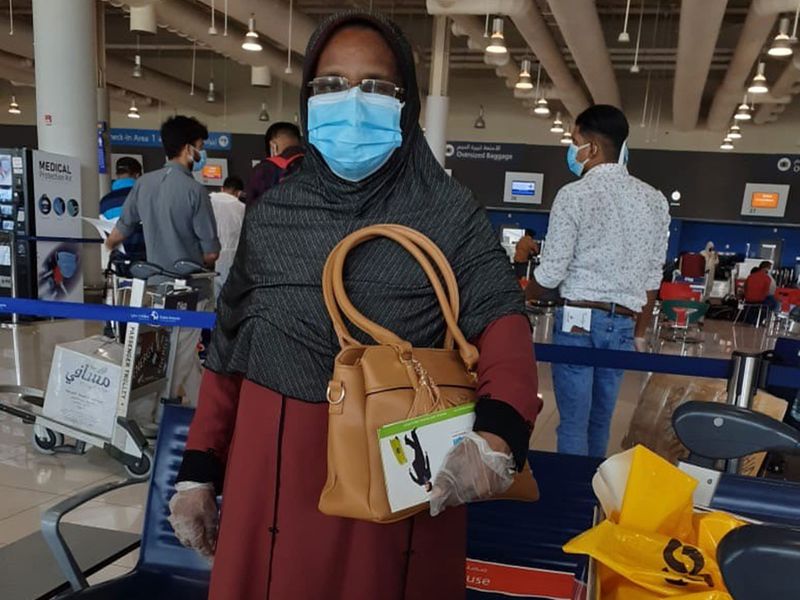
Sahira Beevi / Image Credit: Supplied
Sahira Beevi, who had come to Dubai after her son had fractured his leg, following a fall at a worksite, was among the stranded visit visa holders who were were being flown home by Orma.
“I struggled a lot because my son had already lost his job and was facing Dh30,000 in overstay fines. I had approached many associations for help. It was one Ansari and Orma members who helped us,” she told Gulf News.
“I am thankful to Orma for sending me home. I hope they will help repatriate my son also. He will be able to fly only when his condition improves a bit. He will try for repatriation along with my niece, who had also lost her job and came back on visit visa.”
She also thanked Emirates Companies House for presenting her a ‘Gulf Gift Box’ containing goodies that the company was gifting to returning expatriates.
Two other passengers on the same flight were Nafeesa Kutty and her daughter-in-law Majida Farsana, who had come on visit visas five months ago.
“She came looking for a job and I tagged along. But we didn’t expect the situation to change so fast. She didn’t get any job and my son’s salary was cut. Finally, we have to go back like this. We are thankful to Orma for helping us fly home for free,” she said.’
Gineesh Oliyil and colleagues / Image Credit: Supplied
Gineesh Oliyil, an employee of a four-star hotel in Sharjah, and six of his colleagues who have been left unpaid for three months, were among the lucky passengers on the Kairali flight.
“We served people quarantined in the hotel for a month. But, the hotel was shut in April and we have not been paid since then. We were only provided two meals per day.”
He said the members of MAS Sharjah supported them with food kits and also helped them register for the free chartered flight arranged by Kairali TV.
“We somehow wanted to reach home in these uncertain circumstances. We are grateful to MAS Sharjah and Kairali TV for helping us. The free chartered flight is a great initiative that is benefitting many distressed people like us. This is the first time we are hearing about such an initiative and I hope they will fly home more distressed people, including our remaining colleagues.”
Saravan KH / Image Credit: Supplied
Another passenger on the same flight was Saravanan K.H. He said he was hospitalised for a month after he had a fall in the washroom of his labour accommodation.
“Doctors said my brain was affected due to the head injury and I needed help to move around. It was Shameer from my native place who helped me after I got discharged, at a time when nobody dared take care of a patient.”
He said he had approached many groups to fly home for further treatment and physiotherapy. “Finally, Shameer managed to register me on the Kairali flight and their help has come as a big boon for me,” said Saravanan.
source: http://www.gulfnews.com / Gulf News / Home> UAE / by Sajila Saseendran, Senior Reporter / June 21st, 2020