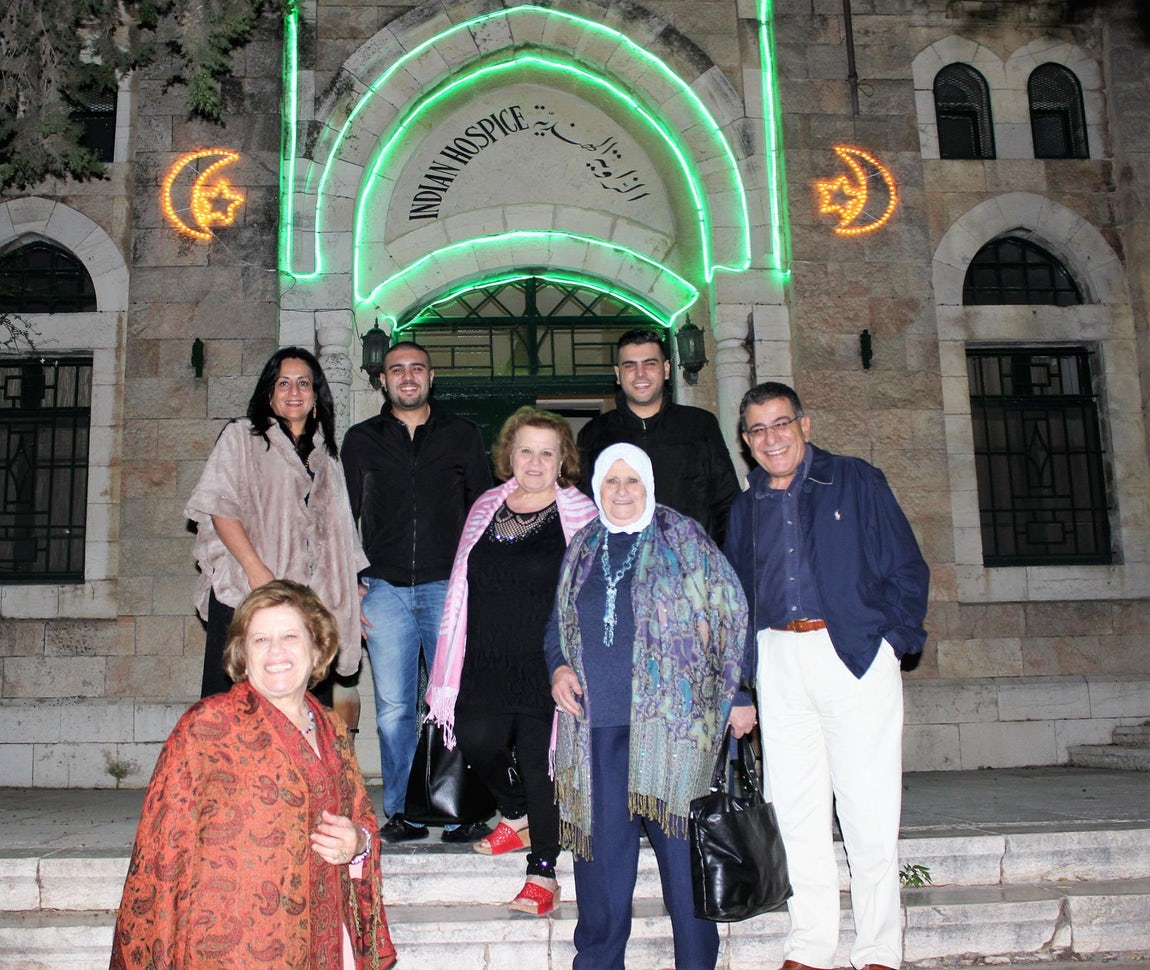
The Ansari family in front of their house in Jerusalem. (Photo Courtesy: Facebook/The Indian Hospice)
Did you know that there is a corner of Jerusalem that has a distinct Indian stamp to it and its various residents wear their Indian origin like a medal?
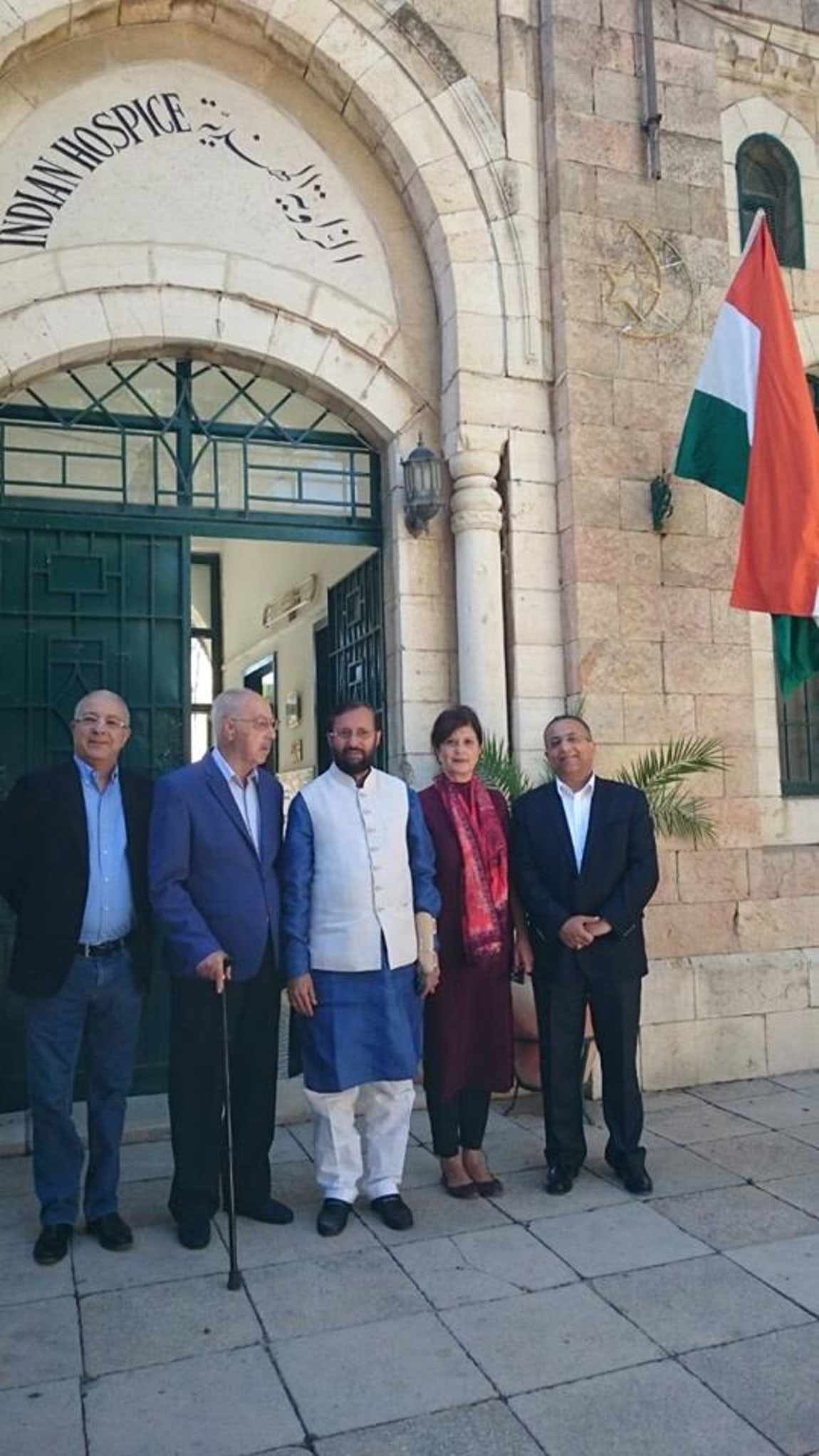
Next to the Al-Aqsa mosque in the city there is the Indian Hospice in Jerusalem. The hospice is managed by the Ansari family and has a centuries-old connect to India.
The Indian Hospice in Jerusalem. (Photo Courtesy: Facebook/The Indian Hospice)
Indian pilgrims to the “holy city” of Jerusalem, can stay at the ‘Indian Hospice’ and pay homage to the Indian Sufi saint Baba Faridudding of Shakar Ganj, who visited the place 800 years ago.
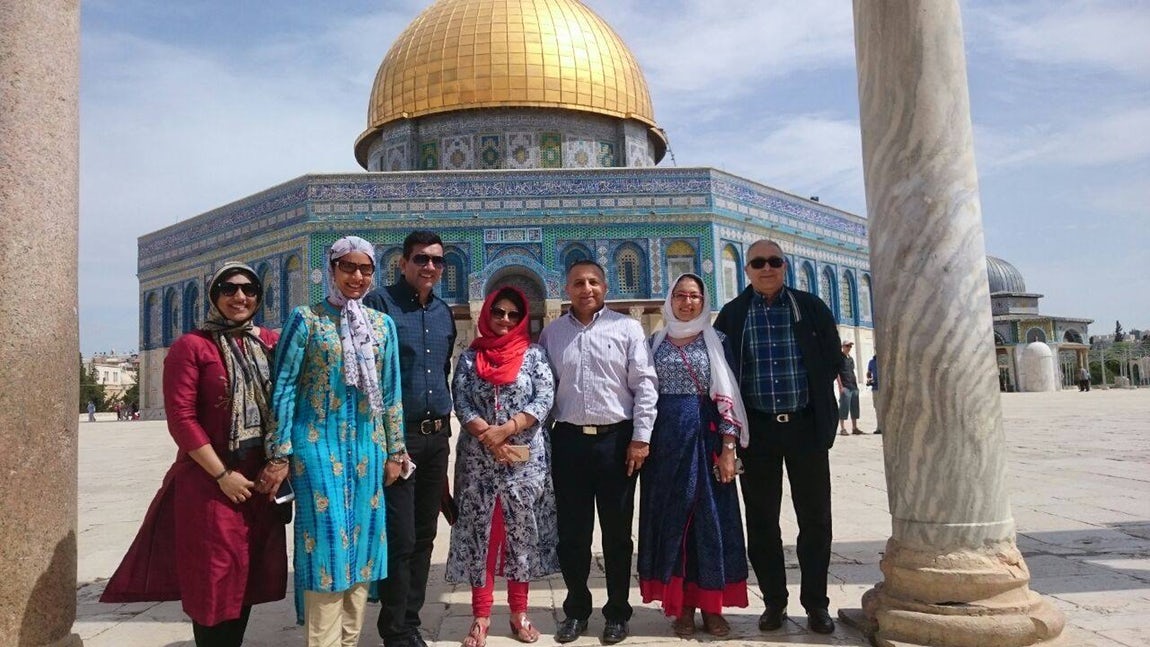
Seen here, celebrated Indian chef Samjeev Kapoor at the Al-Aqsa mosque in Jerusalem. (Photo Courtesy: Facebook/The Indian Hospice)
The Indian Connection Through Baba Farid
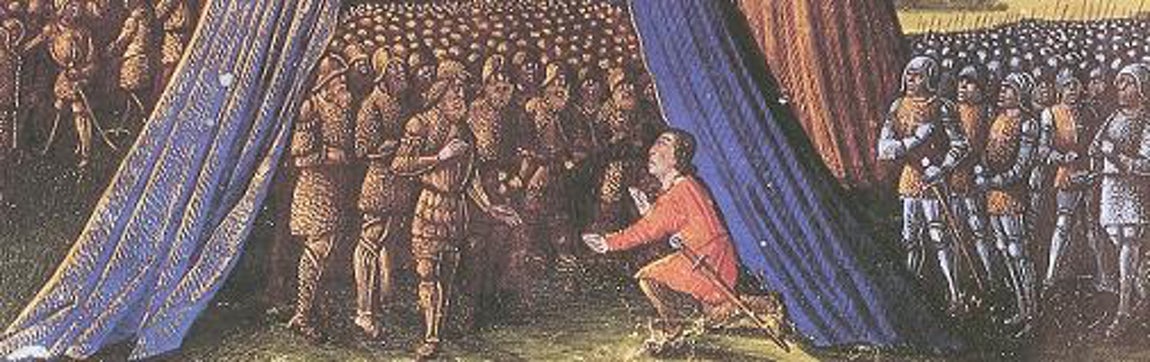
The year is 1200, a little over a decade after the armies of Saladin had forced the Christian Crusaders out of Jerusalem. And an Indian Sufi saint from Punjab named Baba Fariduddin of Shakar Ganj travels to the war torn city.
The victory of Saladin against the Crusaders. Balian of Ibelin surrendering the city of Jerusalem to Saladin, from Les Passages faits Outremer par les Français contre les Turcs et autres Sarrasins et Maures outremarins, c. 1490. (Photo Courtesy: Wikipedia)
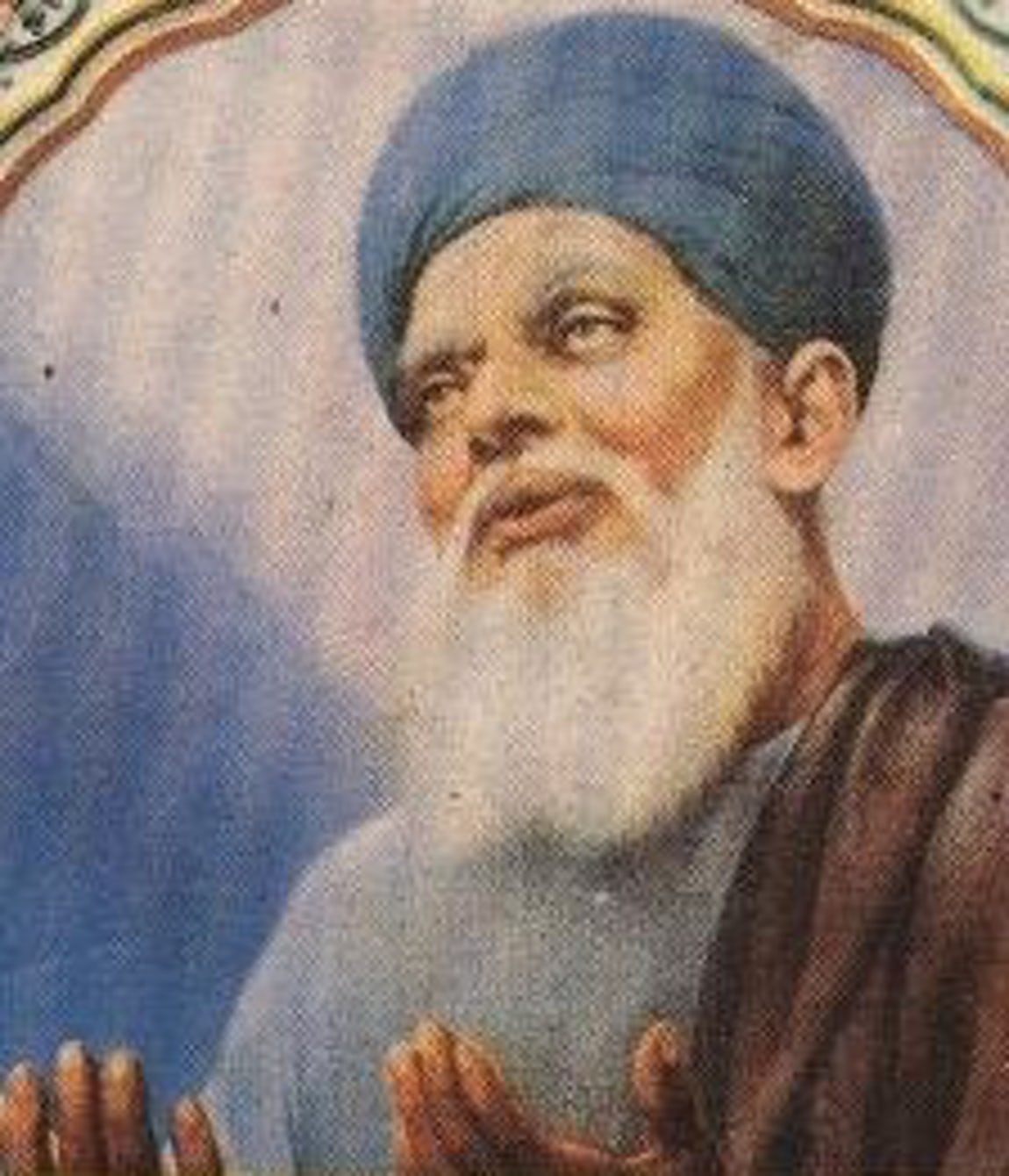
Sufi saint Baba Farid (Photo Courtesy: Seeker of Sacred Knowledge)
It is said that Baba Farid swept the stone floors around al-Aqsa mosque as a mark of devotion. He is also known to have taken up fasting in the silence of a cave nearby.
Long after he went back to India, Muslims from the sub-continent who passed Jerusalem on their way to Mecca stopped at this spot in memory of Baba Farid. It became a sort of temporary residence for the pilgrims.
Ansaris Deputed To Care For Baba Farid’s Legacy
In early 1920s, Jerusalem’s Supreme Muslim Council requested the leaders of the Khilafat Movement of British-ruled India to nominate someone to care for the hospice. The Khilafat leaders honoured the request of the Supreme Council then headed by Arab nationalist Mohammed Amin Al-Husseini. That is how in 1924 Sheikh Nazir Hasan Ansari – who was also part of the Khilafat Movement – was chosen to go to Jerusalem to take charge of the hospice.
Sheikh Nazir Hasan Ansari (Photo Courtesy: Facebook/The Indian Hospice)
Sheikh Munir Ansari who now heads the place, seen here as a boy. (Photo Courtesy: Facebook/The Indian Hospice)
His son Sheikh Munir Ansari now heads the place. The two have during their respective years as administrator of the hospice, persuaded the rulers of several Indian Muslim states, including Hyderabad, to make contributions for the upkeep of the hospice. Munir’s son Nazeer proudly explains the glorious history of the place.
Not only pilgrims, but Indians from all walks of life who visit Israel like to meet the Ansaris. They are amazed by the way the Ansaris care for that piece of India in the land of Arab-Jewish confluence. Past visitors include famous journalists, presidents, Indian politicians, celebrities and commoners.
The Ansaris have been gracious hosts to many Indian journalists. Seen in this picture, among other journalists is Suhasini Haider of The Hindu. (Photo Courtesy: Facebook/The Indian Hospice)
Union HRD Minister Prakash Javadekar at The Indian Hospice. (Photo Courtesy: Facebook/The Indian Hospice)
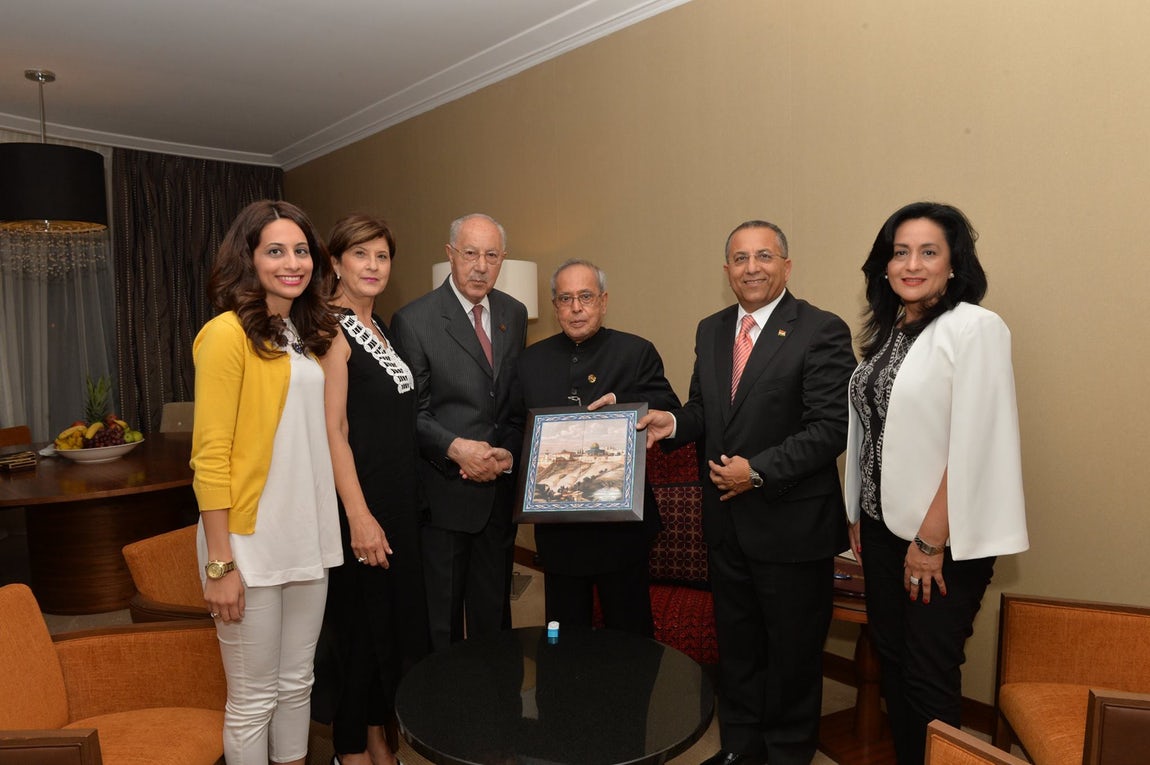
President Pranab Mukherjee too visited The Indian Hospice in Jerusalem. (Photo Courtesy: Facebook/The Indian Hospice)
The Ansaris value the responsibility that comes with the inheritance of the heritage. Their FB page says:
Maintaining and protecting an Indian institution in Jerusalem’s old city is no easy task. But Sheikh Munir has accomplished the impossible with delicate diplomacy and extreme tact.
The Indian Hospice
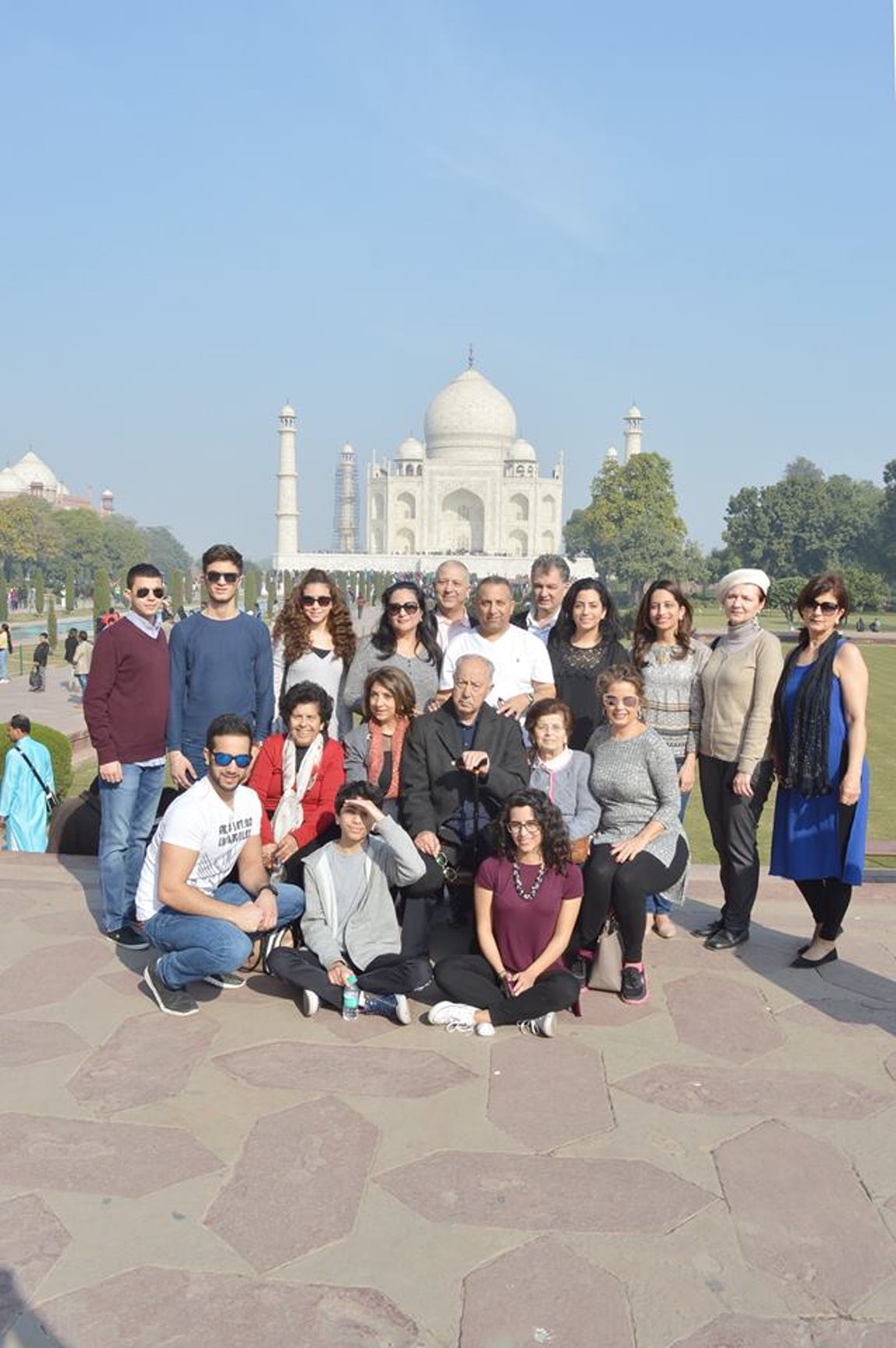
The Ansaris on a visit to India. (Photo Courtesy: Facebook/The Indian Hospice)
The Ansari family has been a steady presence in Jerusalem ever since and they all still carry Indian passports.
source: http://www.thequint.com / The Quint / Home> News Videos / by Kirti Phadtatre Pandey / July o4th,2017
Sir Syed Ahmad Khan dedicated his life for the Hindu-Muslim unity in the country and worked all his life for the educational upliftment of the community and for the strengthening of a pluralistic society of a modern India. He stressed on making education a medium to transform people into good human beings.
The Aligarh Muslim University (AMU) represents the secular Ganga-Jamuna culture and the AMU community is committed to preserve this identity of this great seat of learning. Sir Syed avoided too much emphasis on religious subjects in his writings, focusing instead on promoting modern education.
As we know, the AMU is an academic institution of international importance offering more than 300 courses in both traditional and modern branches of education. Academic excellence and cultural ethos of AMU needs to be projected and propagated worldwide more effectively in a positive way. In the fast changing technological world, the role of media has become very important in disseminating the information to have a maximum reach.The supreme interest of Sir Syed’s life was education in its widest sense. He wanted to create a scientific temperament among the Muslims and to make the modern knowledge of science available to them. He championed the cause of modern education at a time when all the Indians in general and Indian Muslims in particular considered it a sin to get modern education and that too through English language. He began establishing schools, at Muradabad in 1858 and Ghazipur in 1863.
A more ambitious undertaking was the foundation of the Scientific Society, which published translations of many educational texts and issued a bilingual journal in Urdu and English. It was for the use of all citizens; they were jointly operated by the Hindus and Muslims. In the late 1860s, there occurred some developments that were challenges to his activities.
In 1867, he was transferred to Varanasi, a city on the Ganga with great religious significance for Hindus. At about the same time, a movement started in the city to replace Urdu, the language spoken by the Muslims, with Hindi. This movement and the attempts to substitute Hindi for Urdu publications of the Scientific Society convinced Syed that he should do something.
Thus during a visit to England (1869-70), he prepared plans for a great educational institution — a “Muslim Cambridge.” On his return, he set up a committee for the purpose and also started an influential journal, Tahzib al-Akhlaq (Social Reform), for the uplift and reforms of the Muslims. A Muslim school was established at Aligarh in May 1875, and after his retirement in 1876, Sir Syed dedicated himself to make it a college.
To carry the legacy of the great reformer, the AMU has got a dynamic and intellectual person as vice chancellor in the form of Prof Tariq Mansoor, who had been associated with the university for more than three decades. Mansoor has been the principal of the J N Medical College since 2013. He had been the secretary of the University Games Committee for about seven years.
Besides being the president of the Association of Surgeons, he has been a member of the Medical Council of India (MCI) since 2015 and that of the AMU Executive Council for 12 years. Mansoor is a recipient of the senior surgical award from the Association of Surgeons of India. He is also given credit for the overall development of Jawaharlal Nehru Medical College. He served as an advisor in the Union Public Service Commission and as an assessor for the MCI.
Mansoor, in his vision, posted on the University’s website clearly stated that he will implement “Sir Syed’s vision of imparting modern education and will be focusing on “preparing students to qualify in competitive exams for central services, armed forces, IITs, IIMs and leading industries. We will also aim to produce top professionals in medicine, engineering, law, management, sciences and humanities”.
Appeal to alumniIt is unique and very positive to have a team of highly intellectual and academicians of repute to run the University. It is important for the progress of an academic institution that it should run by the academicians of high repute.
In an open letter to the AMU alumni who are holding important positions in different organisations worldwide, the vice chancellor has made an appeal to them to contribute both academically and financially.
To me, this is a very good move and initiative that will certainly help the students in getting employment in national and international market. Alumni support will also help in developing the infrastructural facilities of high standard as we have seen the contribution by Frank Islam, an AMU alumnus based in the US.The way newly appointed vice chancellor has taken the initiatives so far clearly shows his vision and plan for the betterment of the university. However, it would be more interesting to see his efforts in days to come. His biggest challenge would be maintaining the law and order situation in the campus. His long association with AMU would certainly be helpful in understanding the dynamics of the campus and in maintaining the law and order situation.
However, I would suggest that the VC should have an IPS officer on deputation basis as proctor of the University with power to handle the law and order situation independently. Another issue he may face would be regionalism and groupism in the campus but I am happy to mention that he already stated clearly in his vision that he will eliminate factionalism and groupism from the campus. It is high time for the AMU community to support the vice chancellor in making the University as one of the best in the country.
(The writer, a linguist, teaches at Washington University in St Louis, USA)
source: http://www.deccanherald.com / Deccan Herald / Home> Panorama / by M.J. Warsi / July 03rd, 2017
It’s indeed possible for sports personalities to workout, while fasting for Ramadan.
Shaik Khalid
Is it possible to stay fit, while fasting for 30 consecutive days, and train as hard as any other day, during the holy month of Ramadan?
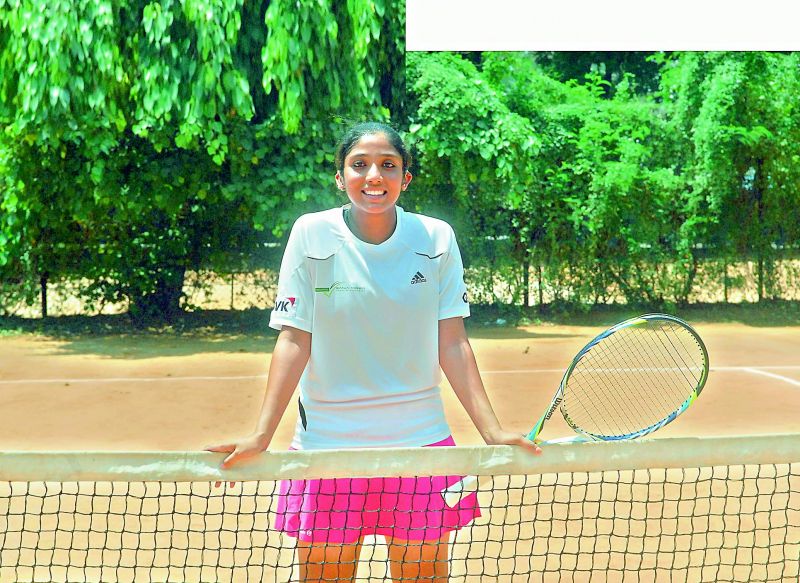
Yes, there are people from the sports fraternity in the city who are balancing their religious sentiments and fitness with equal élan. “The month of Ramadan started as usual with me fasting with my family members. But, now that I am travelling from China to India to attend a coaching camp, I will have to see my schedule and then decide if I can fast or not. I am keeping an open mind, if I can I will or else not,” says 18-year-old Shaik Jafreen, who had represented India and won various International Deaf Tennis Championships. She is now prepping up for her next big assignment — the Deaf Olympics — to be held in Turkey in July.
Syeda Falak
Syeda Falak (popularly known as the Golden Girl of Hyderabad) who has created a name for herself in Karate globally, says, “Usually I alternate the time of training and fasting during Ramadan. Either I workout before breaking the fast, that is early morning, or after breaking the fast with a few dates. It’s not advisable to work out after eating a lot as you will fall sick for sure. So, it is better to munch on some dates and finish a light workout and then eat properly.”
Shaik Jafreen
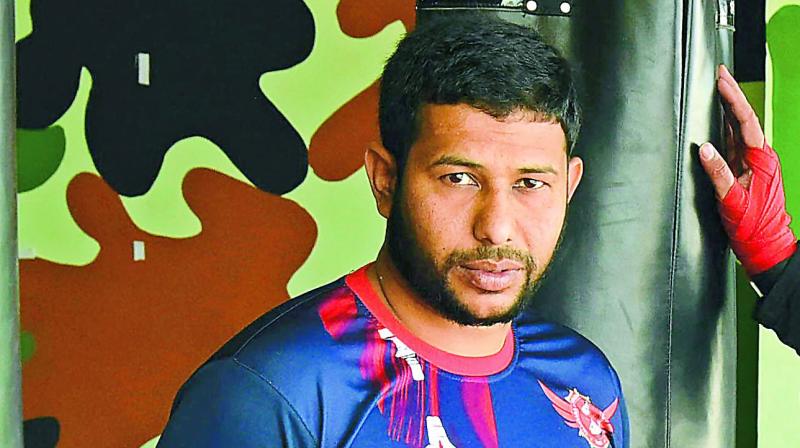
For Syeda, a proper diet and rest is of importance, as workout sessions during Ramadan can tire people out easily. Agreeing with her is Shaik Khalid, the General Secretary of Telangana Association of Mixed Martial Arts (TAMMA) and a coach for many aspiring fighters. He says, “During these 30 days, our training schedule changes. We don’t train during the day, and instead, do it from 10 pm to midnight. But again, following a proper diet is very important in our field and to recover from the effects of fasting, we eat a lot of dates and fruits and only then train.”
source: http://www.deccanchronicle.com / Deccan Chronicle / Home> Lifestyle, Viral and Trending / by Reshmi Chakravorty, Deccan Chronicle / June 02nd, 2017
THE HAVELI of Kale Sahib is no more but the ahata (compound) still exists, and what a slum it has become since 1847 when Ghalib lived there after his release from prison for debt default! The poet quipped that after being freed by Gore (the British) he had been “imprisoned” by Kale. Kale Sahib was a highly venerated man. Whether he got this name because of his complexion is not known, but it is quite likely that the saint was not as fair as Ghalib. The Moghul emperor was among his devotees and so were Ghalib and his family. As a matter of fact, Ghalib’s sister-in-law, Bunyiadi Begum gifted the ahata to Kale Sahib and the name stuck.
Kale Sahib was a practical minded saint who refused to perform miracles just to please his devotees. He counselled them to pray fervently, pointing out at the same time that in 90 per cent cases prayers went unanswered. But there were instances when he did help people out of their difficulties. He once admonished a man from whom he had driven out an evil spirit that if he went back to his sinful ways he would again become possessed and then even miracles might not help. Apparently Kale Sahib did not have to exorcise him again.
Situated in the Ballimaran area of Delhi, Ahata Kale Sahib forms part of the locality founded by a Persian, Qasim Khan, who first settled down in Lahore about the year 1750 and was befriended by the Governor of Punjab, Moinul Mulk. When Ahmed Shah Abdali invaded Punjab, Moinul Mulk resisted him and was killed. His widow, Mughlai Begum then became the virtual ruler and made Qasim Khan her chief adviser. There were insinuations, but then which young widow is safe from wagging tongues if she befriends a man?
Qasim Khan later came to the court of Shah Alam where he was accepted as a nobleman. The place in which he lived is known to this day as Gali Qasim Jan. Qasim Khan’s son, Faizullah Beg built the ahata. But how Buniyadi Begum came to possess it is not clear.
Congested mohalla
Ahata Kale Sahib now is a congested mohalla. Few of its residents remember Kale Sahib. But the ahata is in the news generally, for whenever BSES resorts to power cuts, Ahata Kale Sahib is as much affected as distant Janakpuri. In fact one finds this link between what was once Asia’s biggest colony and one of the dirtiest amusing. After Ghalib’s joke about Gore and Kale this should surely take the cake for it would have tickled the poet too. But he is long dead and gone.. But one has the feeling that he couldn’t be resting peacefully in Nizamuddin for he was essentially a man of the walled city of Delhi whose charms began and ended within its confines.
The charms are still reflected in a slight difference in speech, the flavour of the kababs and the taste of the water from Hare Bhare Sahib. The breeze that springs from the Jamuna goes past the Red Fort, negotiates the many arches of the Jama Masjid and merges with the smell of the motia and chameli sold at the crossroads before cooling the courtyards of the houses in the narrow gullies.
Ghalib liked to move about in this area of which the Kashmere and Delhi gates were the two extremities, with the fort being the hub and centre and the mosque the cultural bastion of the city. Yes, of course, Ghalib always had a soft corner for Agra, because he was born there and passed his boyhood in Kala Mahal from which the Taj looks just like a building in the next locality.
But his heart had been won over by Shahjehanabad. From Ballimaran to Jama Masjid the walk was long enough via Chandni Chowk. Sometimes one could meet Mir Ashiq who came from the opposite direction and went back to his kucha via Ballimaran. Was the tilt of his cap different from that of the residents of Nizamuddin? People noticed such traits and developed their pet notions.
For a man of such intense likes and dislikes as Ghalib, his grave in Nizamuddin is out of the milieu in which he flourished. It is a small enclosure though beautiful in its own way where sparrows make love in the afternoon. The illiterate take it for another shrine where obeisance must be paid, and budding poets hope to imbibe some of the virtues of the great “shair”.
An old man who sometimes steals up to the mausoleum feels that even a blank page touching the “mazar” would instantly be graced with a ghazal. He has never seen it happen, nor would we surely, but such feelings are the stuff legends are made of.
R.V.SMITH
source: http://www.thehindu.com / The Hindu / Home> MetroPlus Delhi / by R V Smith / Monday – November 29th, 2004
Actress Sadia Siddiqui can’t stop beaming. Why? The actress, who plays Priyanka in ‘Satrangi Sasural’, will have her brother Farhaan join the show soon.
The Siddiqui siblings will be seen together for the first time on the screen.
Farhaan, who has dabbled in theatre, films and serials, will be paired opposite actress Resham Tipnis. His character, Raunak Punjabi will be younger to Resham in the show.
Says the actor, “Sadia is one of the main reasons I took up the offer. It’s going to be exciting shooting with her. I look up to her. We never got the opportunity to work together as I was doing my things — theatre and travelling. Besides, I was sceptical of TV because of its erratic schedule and unpredictable nature. But she felt that I was apt for the role that was offered to me, and I took it up.”
The actor says that Sadia is a protective sister and likes to cocoon him. He says, “She treats me like a baby brother and often starts mothering me, which can get a little annoying (laughs). But I learn a lot from her.”
While he hasn’t worked with his sister before, the actor has featured with Resham in the play. Coincidentally, the two played spouses and he, the younger husband in it. “Fortunately, we will not have to work hard on our chemistry as we are comfortable with each other,” says he.
source: http://www.timesofindia.indiatimes.com / The Times of India / News Home> TV> News / by Neha Maheshwri / TNN / May 30th, 2015
File photo of Nuzhat Parween. Image courtesy: Facebook/Nuzhat Parween
Although unlikely, Parween could play a part in the playing eleven, with Verma’s own international credentials being far from well established.
Nuzhat Parween played most of her cricket for Madhya Pradesh, which (like the name suggests) falls in the central zone. Also in the central zone are the Indian Railways, the food-chain bosses of Indian women’s cricket. So when it comes to picking the central zone team, there are only a handful of slots left for players from other teams.
In the 2014-15 season, Parween booked one of those slots, more as a second wicketkeeper than a batter. Only after central zone secured their place at the top of the table did Parween get a game, the last of the tournament. Coming in to bat at number three, in what would be her first and last opportunity, against a good bowling side, Parween scored a hundred on inter-zonal debut, mixing dour defence with flashes of aggression.*
How many of you have heard of Singrauli? It is a small town as far from the centre of Madhya Pradesh as you can imagine. Parween’s father has worked there for more than 20 years, in the public sector coal industry as a dozer operator. Parween’s mother runs both a boutique and her home from there. And it is there that Parween was raised as the middle child of a “humble family in a humble town”.
Parween was a willing hostage to one sport or the other all her childhood. Like so many Indian children, after school, she would dump her bag at home and head straight to the nearby stadium, where she first tried her hand at athletics. After she grew tired of long jump, javelin throw, and 100-metre dash, she began a dalliance with football. The youngest by far, and the only girl among the local boys, she became so much a part of their evening games that she was often entrusted with the charge of their only football overnight.
“Our parents would get a bit angry, especially when she would come home late in the evening from practice,” said her older sister Nemat. “But the next day she just stuck to the same schedule.”
Even though football was (and remains) close to Parween’s heart, she discovered cricket around the same time she saw that football would not take her far. Introduced to the gentleman’s game by a female friend, she started wicket-keeping and batting in local tennis ball tournaments. Her affinity at the sport was soon apparent, and it precipitated three big decisions in the Parween household.
The first was a change of school for Parween, and this was tricky, because Parween’s parents were quite clear that she could only continue sports as long as she did not neglect her studies.
“She was always a good student as well, and ended up getting 93 percent in her 12th”, said her brother Amir Sohail, oldest of the siblings. With her brother’s support, her parents took the decision to look for a school that would allow her more flexibility and had good sports facilities.
It took two changes of school, the second to a well-known private school – a big financial step for the family – to bring Parween the opportunities she needed. She was invited for Madhya Pradesh Cricket Association trials, and started climbing her way up the age group ladder.
Then came the family’s second big decision. “Facilities in Singrauli were not good, there were hardly any proper pitches, and hardly had people to play with”, said Amir. “So we decided that she would go to Rewa, and she developed professionally there.” Parween would stay in a hostel at Rewa, which was five hours away from Singrauli, where she had better facilities to train. And all the while, she was pursuing her degree in commerce.
The path paved by hard work led her to the century in the inter-zonals in 2015, and it made people sit up and take notice. When Western Railway advertised an opening for a wicketkeeper the same year, Parween was the one who made the cut. In the biggest decision of all, Parween accepted the position offered to her and moved to Mumbai.
“There was a big decision-making process at home”, said Amir, “because it meant she would have to put her studies on hold. We asked her what she wanted to do then (and) she said her heart was in sports. She could continue with distance education.”*
Since joining Western Railway, and being picked in the Indian Railways squad, Parween’s opportunities at the senior level have dried up. In the 2015-16 season (representing Madhya Pradesh), she finished on top of the dismissals chart in the one day competition, with 12 scalps behind the stumps. But in 2016-17 (representing Railways), she did not get to play a single game in the 2016-17 season, since the Railways team also featured India’s regular wicket-keeper Sushma Verma.
She got her only opportunity in the season for India U-19 in the Challenger Trophy, and there it was her glovework that pressed her case. An incredible stumping of Mithali Raj off a ball that turned and bounced sharply, helped her make a push for the Indian T20 team, despite next to no runs and hardly any senior level experience in the season to her credit. She made her T20I debut last year, against West Indies at home.
After making the Asia Cup T20 squad, she was excluded from the ODI team that went to Sri Lanka for the ICC Women’s World Cup Qualifiers. But when the selectors preferred to go in with two wicketkeepers for the World Cup, she was drafted in for her biggest tournament.
Although unlikely, she could play a part in the playing eleven, with Verma’s own international credentials being far from well established. Even before she sets foot on English soil, she is in a potentially tricky situation. Once again, any chance she gets could easily be her last.
But then Parween is used to taking the few opportunities she gets.
source: http://www.firstpost.com / Firs tPost / Home> First Cricket> News / by Snehal Pradhan / June 19th, 2017
Akshay, the youngest jockey, with his aunt Manjula | Photo Credit: G.P. Sampath Kumar
From waste pickers to transgender rights activists and slum children, know the RJs of Bengaluru’s first community radio station
Sunday morning saw an eclectic gathering of radio jockeys — transgenders, people living with HIV, auto drivers, the differently-abled, domestic help, waste pickers, and animal welfare activists — come together to celebrate a decade of Radio Active CR 90.4 Mhz, Bengaluru’s first community radio station.
For this diverse group of citizens, who are often marginalised, the community radio has given them a platform to air their views. Most significantly, it has given them the confidence to live with dignity and demand for equal rights.
Salma and Siddique Pasha, waste pickers from Nayandahalli, host two shows – the daily show, Kasa Shramika Parisara Rakshaka, and a weekly Dastaan-e-Nayandahalli, documenting the stories of recyclers in the area. “The shows have given us a platform to connect with others in the community. To reach out to listeners in various slums we do shows in multiple languages — Kannada, Urdu, Tamil, and Bengali,” said Mr. Pasha.
Senior solid waste management expert N.S. Ramakanth has begun a new show called Trash Talk in English and Kannada.
Shiv Kumar, an auto driver, was first interviewed by the radio station for being awarded by the city police for his honesty in 2010. But soon he became an RJ and has since hosted multiple shows for auto drivers. He also has a show where he interviews unknown achievers and unsung heroes.
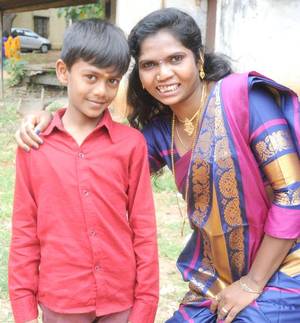
Akshay, 11, the youngest jockey, also sees a big draw with his show Chinnara Chilipili where he has been documenting traditional games along with storytelling sessions by other children. When asked how he greets his listeners, Akshay went into the RJ mode and said, “Welcome to the city’s first community radio Radio Active 90.4. We will now play games that our grandparents and parents used to play.” He produces the show with the help of his aunt Manjula along with 40 other children in the slums of Dasarahalli.
The channel has a strong programming on transgender rights with five shows, all hosted by members of the community. One popular show is Jeeva Diary, hosted by Uma which is presented as a diary of her life and its travails. “We get a good response and have got several calls from listeners who are shocked to listen to the discrimination and humiliation we face as young people in schools and at work,” she said.
Radio Active has also turned out to be a platform for the northeast community in the city to organise and voice themselves. Urmila Chanam, from Mizoram, who now hosts the show North East ki Awaz, said that the 2012 exodus of northeast community from the city set them into legal aid activism in the community.
“But the attacks on the community members never came down. So we have now started the radio show to have our voice heard. While we started featuring northeast food, fashion shows, and festivals, the show has also helped us intervene on behalf of a few victims of sexual abuse from the community,” he said.
source: http://www.thehindu.com / The Hindu / Home> News> Cities> Bengaluru / June 26th, 2017
Nahid Afrin, a Borgeet student of Nrityanjali Kala Niketan, here has brought glory to the State by entering the Top Nine in the ongoing reality show programme ‘Indian Idol Junior’ telecast by Sony TV.
The elder daughter of Fatema Ansari and Anowar Ansari of Biswanath Chariali, she has already earned accolades with her melodious voice in the stages at different places of the State and can sing in different languages including Assamese, Hindi and Bengali with the same fervour.
Dr Lohit Sharma, managing director, Nrityanjali Kala Niketan informed this correspondent that Nahid had been exhibiting good performances in music since her childhood and she possesses a bright future.
Nahid, a Visharad Part 2 student in classical music under Bhatkhande Kala Kendra has been able to draw the attraction of the judges in the reality show and even Bollywood superstar Salman Khan had showered her blessings and good wishes upon her in the programme recently.
Now all she wants from the people of Assam is good wishes and votes in her favour.
source: http://www.assamtribune.com / The Assam Tribune / Home / by Hiranya Borthakur / Guwahati – July 24th, 2015
Of the total 1,099 successful candidates in the final list of the Union Public Service Commission (UPSC) examinations, 50 Muslims have made it to this year’s result, with Bilal Mohiud Din Bhat from Kashmir bagging the tenth rank. The number of Muslim candidates is higher than last few years.
In 2016, 36 Muslims had cleared the exams, while the number stood at 38 in 2015, 34 in 2014 and 30 in 2013.
Along with Bilal, nine Muslims have made it to the top 100 ranks. Those in top 50 include: Muzammil Khan (22), Sheikh Tanveer Asif (25), Hamna Mariyam (28), Zaffar Iqbal (39) and Rizwanbasha Shaikh (48). Seventeen Muslims feature in the Top 500.
The selected UPSC candidates are recommended for various government posts which include Indian Foreign Service (IFS), Indian Administrative Service (IAS), Indian Police Service (IPS) and several other allied services.
Although Muslims comprise 13.4% of total population, they are dismally represented in the top government services, often due to lack of education and unavailability of resources. They account for about 2% in the civil services.
The Union Public Service Commission (UPSC) declared the final result of the 2016 civil services examinations on Wednesday evening. Like previous years, this year too a woman, Nandani KR, has topped the exam. Others in the top five are Anmol Sher Singh, Gopala Krishna, Sauyma Pandey and Abhilash Mishra.
Successful Muslim Candidates for UPSC Result-16
S.No.
Name
Ranks
1.
BILAL MOHI UD DIN BHAT
10
2.
MUZAMMIL KHAN
22
3.
SHAIKH TANVEER ASIF
25
4.
HAMNA MARIYAM B A
28
5.
ZAFFAR IQBAL
39
6.
RIZWANBASHA SHAIK
48
7.
SHEIK ABDUL RAHAMAN S
62
8.
ARIF AHSAN
74
9.
SYEED FAKHRUDIN HAMID
86
10.
BISMA QAZI
115
11.
SUHAIL QASIM MIR
125
12.
S M QASIM ABIDI
177
13.
RAZEEM K
191
14.
GAUSH ALAM
206
15.
NAHAS ALI
359
16.
MD ADIL ASHRAF
435
17.
PATHAN ADEEB DAULAT KHAN
450
18.
SAQIB YOUSUF
472
19.
HASEEN ZAHERA RIZVI
509
20.
JABEEN FATHIMA J
525
21.
ANAM SIDDIQUI
538
22.
SHEIKH SAMI UR RAHMAN
554
23.
MOHAMMAD ARSHAD
556
24.
MINHAJ UDDIN NIZAMI
584
25.
SHAIK SHAHABAAZ HANOOR
603
26.
INABAT KHALIQ
604
27.
FAISAL JAVAID
610
28.
HARIS BIN ZAMAN
646
29.
IRAJ RAJA
674
30.
EZAZ AHMED
697
31.
EHJAS ASLAM S
704
32.
REHNA R
735
33.
MANER NASIR IQBAL
753
34.
ABDUL RAHEEM A
755
35.
NASEEF ABDUL KADER
781
36.
MUHAMMED SHABEER K
805
37.
ANAYAT ALI CHOWDHARY
808
38.
DANISH AGASTAM
814
39.
JABBAR
822
40.
TASLEEM AHMED
827
41.
SHARDUL
828
42.
MD MUSTAQUE
836
43.
RENA JAMIL
882
44.
SHUHAIB T
885
45.
SHAHANSHA K S
897
46.
MUHAMMED HANEEF
898
47.
MD SARFARAZ ALAM
904
48.
MD SARFARAJ ALAM
1028
49.
SAJAD BASHIR
1042
50.
AMIR BASHIR
1087
51.
UMMUL KHER
420
source: http://www.twocircles.net / Two Circles.net / Home> Indian Muslim> Lead Story> Youth / by Raqib Hameed Naik , TwoCircles.net / New Delhi – May 31st, 2017
Cricketers congratulate Mohammad Kaif on crossing 10,000 first-class runs
Kaif is still scoring runs in the domestic circuit
A solid middle-order batsman and a live-wire on the field, Mohammad Kaif still holds a special place in the hearts of Team India fans, despite last playing an international match over a decade back. He continues to ply his trade at the domestic level, captaining Chattisgarh in the Ranji Trophy. He recently completed a personal milestone in his career, going past 10,000 first-class runs.
In 178 matches, he averages 39.84, with 19 centuries to his credit. He featured in a total of 125 ODIs and 13 Tests for the national side in a career that extended from 2000-2006. He was also part of the 2003 World Cup team. He played a stellar role in the finals of the 2002 NatWest series, steering India home with an unbeaten 87. He came into the limelight when he captained the Indian U-19 team to victory in 2000.
In 2014, he jumped into the political bandwagon, joining the Indian National Congress ahead of the Loksabha elections.
Cricketers took to Twitter to congratulate the 35-year old on reaching the landmark.
source: http://www.sportskeeda.com / SportsKeeda.com / Home> Cricket> First Class Cricket / by Aadya Sharma @aadyasharma20 / October 10th, 2016