Kickboxing Contest : Bangalore lad knocks out opponent in just 6 seconds to win Gold Medal in State-Level Kickboxing contest

Bengaluru, KARNATAKA :

Mahmood Shariff Zain took part in a full-contact 74-kg bout in Mysore

Bangalore:

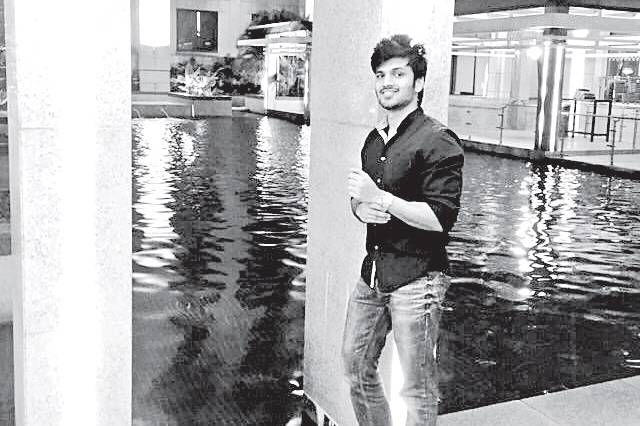
Mahmood Shariff Zain, a student at Dayananda Sagar College here, has won the gold medal in the Karnataka State-level Kickboxing Championship 2015-15.

He knocked out his opponent in just six seconds in the full-contact 74-kg bout held at Annaporna Complex, 2ndFloor, 1st Stage, Hebbal, Mysore, on March 27.

Mahmood Shariff Zain with the gold medal and certificate.

Zain, a resident of BTM Layout, trains at the Indian Combat Sports Academy located at 55, 2nd Floor, Bannerghatta main road, UCO Bank building, Bangalore-560076.

The win promises to be a stepping stone to a bright career in a sport that is mostly played to beat stress and get back in shape.

Those who wish to contact Zain and congratulate him can call +91 95917 99217.

Mumtaz Begum elected Mayor

Bangalore,  KARNATAKA :

Lakshminarayana elected Deputy Mayor; BJP candidates lose by huge margins

______________________________________________________________

  • Mumtaz Begum is the first Muslim Mayor
  • JD(S) and JD(U) abstain from voting
  • Ms. Begum defeated Nagaratna Nagaraj by 37 votes
  • Lakshminarayana polled 58 votes as against 22 by L. Srinivas
  • ________________________________________________________


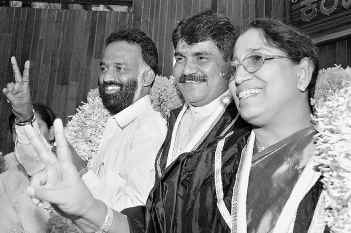
VICTORIOUS: Out-going Mayor Narayanaswamy (centre) with newly-elected Mayor Mumtaz Begum (right) and Deputy Mayor M. Lakshminarayana in Bangalore on Tuesday. — Photo: V. Sreenivasa Murthy

Bangalore :

With the Congress deciding on the candidate for the post of Mayor two days in advance, Mumtaz Begum was elected 43rd Mayor of Bangalore on Tuesday. She is the first Muslim Mayor and the fourth woman Mayor.

M. Lakshminarayana, who represents Gali Anjaneyaswamy Temple ward in Binnypet Assembly constituency, was elected 44th Deputy Mayor. His candidature was finalised on Tuesday, as there was a keen contest between Mr. Lakshminarayana and Audugodi corporator K.B. Mohan for the post.

Chaos prevailed in the Bangalore Mahanagara Palike (BMP) Council even before the elections were held. The Congress nominees, who were certain of donning the coveted mantles, were busy posing for photographs even before the official announcement.

Though the elections were held in the presence of the entire Opposition — the Janata Dal (Secular) and the Bharatiya Janata Party — the Janata Dal (Secular) members abstained from voting like in the past. As soon as the meeting began, the Opposition members objected to the elections being conducted despite some organisations approaching the court seeking a change in the reservation category.

“How can you hold the elections when the matter is in the court? What if the court orders a change in the category?” the members led by Kachakaranahalli corporator Padmanabha Reddy asked.

This apart, the election proceedings were delayed by over 40 minutes as the Opposition members alleged that the ruling Congress had violated the Karnataka Municipal Corporations (KMC) Act by not notifying the election of members to the Bangalore Development Authority (BDA), Library Authority and other organisations along with the Mayoral elections. The members calmed down after the Mayor justified that the court had not stayed the elections.

The BJP fielded the Sampangiramnagar corporator Nagaratna Nagaraj and the Padmanabhanagar corporator L. Srinivas, against the Congress nominees for both the posts. But they were defeated by huge margins. Ms. Begum defeated her rival by a margin of 37 votes. She bagged 58 votes while Ms. Nagaratna secured 21. Mr. Lakshminarayana polled 58 votes as against 22 by Mr. Srinivas.

Ms. Begum (46) a graduate, representing Shivajinagar in north Bangalore is a third-time corporator. She was elected 25th Deputy Mayor in 1984 when she was in the erstwhile Janata Party. She joined the Congress in 1988 and was elected corporator in 1990 for the second time. In the present BMP Council, she has headed the Standing Committee on Appeals in 2001 and was also member of the Standing Committee on Education and Social Justice in 2003. She represented the BMP in the Bangalore Development Authority (BDA) from 1992 to 1995. She has worked as the general secretary of the Karnataka Pradesh Congress Committee, Mahila Wing (1991-1995), president of Shivajinagar Block Congress Committee (1993-1997), general secretary of Bangalore City District Congress Committee (1995-1997), general secretary of KPCC (1997-2002) and executive committee member, KPCC (2002-2005).

Mr. Lakshminarayana (46) belongs to the Vokkaliga community. He represents the Gali Anjenayaswamy Temple ward for the second consecutive time. He is the 44th Deputy Mayor as there were two Deputy Mayors in 1965. After D.Thamayya’s death, C. Bhaskaran was elected Deputy Mayor then.

Both the candidates filed their nomination papers earlier in the day and the elections were conducted from 11.40 a.m. onwards. Unlike in the past, the Mayoral elections went on without the usual “drama” (convincing members to withdraw in the last minute, as there were no rebels) in the BMP Council hall.

source: http://www.thehindu.com / The Hindu / Online edition / Home> Karnataka / Wednesday – November 30th, 2015

City MMA Fighters Bag Medals at National Championship

Mysuru, KARNATAKA :

Subrahmanya Sumanth clinches Light Heavy Weight Title

Seen in the picture are (from left) Mohammed Zulkarnain, M.R. Darshan, Alan Fernandes, Vice-President of AIMMAA, Head Coach Kru. Vikram, Prasad Gaitonde, General Secretary of AMMAK, S. Lohith, Subrahmanya Sumanth and Mari John.

Mysuru :

Five Mixed Martial Arts (MMA) Fighters attached to Academy of Martial Science (AMS), representing Mysore Muaythai Trust and trained by internationally-accredited coach Kru. Vikram of AMS have won one title, three Silver and one Bronze medal respectively at the Bangalore Open National Amateur MMA Championships held at Fitness Time MMA Gym in Bengaluru recently.

The Championship was sanctioned by All India Mixed Martial Arts Association (AIMMAA) and hosted by the Association of Mixed Martial Arts of Karnataka (AMMAK).

Results: M.R. Darshan (Flyweight) Silver Medal; S. Lohith (Featherweight) Bronze Medal; Mari John (Welterweight) Silver Medal; Subrahmanya Sumanth (Light Heavy Weight Champion) and Mohammed Zulkarnain (Heavyweight) Silver Medal.

source: http://www.starofmysore.com / Star of Mysore / Home> Sports News / June 02nd, 2016

How to be your own boss at 19

Hyderabad, TELANGANA :

NabhaanTELAN02jun2016

HYDERABAD:

It has once been said, “Follow your own heart, not the world”. To achieve something in life, and to make your mark in the world, you have to have to courage to face the odds and follow your dreams. Here’s someone, from our very own city, who had the courage to follow what his heart said, and has made his dreams come true, at such a young age.

Meet Nabhan Mahmood, a young entrepreneur and the CEO of Iron Threads. The firm in Banjara Hills, deals with clothing and apparel solutions whilst also managing sporting arenas and facilities.

The clothing line manages customised and retail merchandise, ranging from college, corporate to individual orders. He established his very own company when he was 19 in November 2014. Through the past two years, he has successfully made his company an international brand name, signing contracts with Hyderabad Cricket Association, Platinum Motor Cars Detroit, Telangana Basketball, Telangana Hockey, and New York University (NYU) Football, to name a few. Graduated from Amity University, Delhi, this young entrepreneur is presently pursuing Law from Osmania University, Hyderabad.

So what inspired him to start Iron Threads at such a young age? “I was intent on making a difference in my own life and in the lives of those around me. Being an entrepreneur was the most plausible and exciting route to accomplish that. I dreamed of being my own boss.”

He thanks his parents let him venture into something like this at such a young age. “I started my company on a shoestring budget – from the savings I had made from winning football tournaments. My parents initially assumed it was a source of added pocket money so they did not oppose it. As time passed, when they saw that my venture was growing rapidly and that my grades weren’t suffering from my added work load, they too became comfortable with the idea of me going ahead with this venture.”

Other than deciding to work for yourself, what was the single most important decision that contributed to his success? Nabhan says, “The decision to invest my savings in my own venture rather than a mutual fund. It kept me in charge of my money and investments and gave me the drive to use it as tactfully as I could.”

Currently he hires people whenever he needs. “Otherwise, I’m a one-man army,” he adds.

Everyone looks back and wish they had done things differently. If he could time travel back to day one of his start-up and have 15 minutes with his former self, what would you tell yourself? “I’d tell myself to find multiple options of transport of consignment sooner. This would help me avoid dependence on any one agency, as the workload gets too cumbersome for any one agency to handle efficiently and on time.”

“Business has taught me that you’ll only be to achieve the things you’re willing to suffer for and that fear is a phenomenal source of motivation to chase your goals,” he says.”

“It is also okay to be different from your peers. In fact, it is necessary to be different if you want to shape your life according to your ideals and achieve stellar success that would give meaning to your time and efforts. Anyone can be ordinary just as anyone can be special- a disciplined work ethic and passion and fearless approach is what separates those who dream from those who achieve those dreams.”

His mantra is what Walt Disney once said, “If you can dream it, you can do it.”

source: http://www.newindianexpress.com / The New Indian Express / Home> Cities> Hyderabad / by Drishika Adhiya / June 01st, 2016

Mustafa emerges Runner-Up in AITA U10 Tournament

Mysuru, KARNATAKA :

MustafaBF01jun2016

Mysuru :

City’s Mustafa M. Raja, a student of Nagara Tennis Academy, emerged as the runner-up in the AITA 10 and Under Tennis Tournament held at KSLTA Stadium in Benglauru recently,

9-year-old Mustafa showed grit and determination to continue playing his matches despite sustaining injuries in both his legs.

He overcame the pain to reach yet another finals where he lost to Jason in a close encounter lasting almost two hours which went to the third deciding set.

Jason won the finals with the score of 4,3; 3,4 and 1,4.

source: http://www.starofmysore.com / Star of Mysore / Home> Sports News / May 31st, 2016

Young UP bureaucrats scripting change, garnering goodwill

Lucknow, UTTAR PRADESH  :

Lucknow  (IANS)  :

A young ‘collector saheb’ sipping piping hot coffee and munching ‘laiyya-chana’ at a chaupal with wide-eyed villagers, a young woman IAS official cradling infants at an Aanganwadi centre, a district magistrate riding pillion on a motorbike to check open defecation at a Varanasi village.

Dispelling the myth that bureaucrats are only meant for office comforts, a band of young officials in Uttar Pradesh is scripting a new chapter wherein not only are the people being benefited but the state’s tainted bureaucracy is also getting a long due makeover.

Perahaps taking a leaf out of the ‘chai-pe-charcha’ campaign that Prime Minister Narendra Modi used to the hilt for political success in the 2014 Lok Sabha polls, Gonda district magistrate Ashutosh Niranjan has kicked off a ‘coffee with collector’ wherein he randomly selects a village panchayat, drives in with his officials for a cup of coffee and problems of the village are discussed and settled then and there!

The first edition of the event was held recently in the Paraspur development block at the panchayat of Mijhaura where, over steaming cups of coffee, village head Vipin Kumar Singh, the lekhpal (revenue official) and the panchayat secretary deliberated upon a host of issues ranging from roads to potable water to power supply.

It was also decided that the gram pradhans would very soon host a similar meeting over lunch with the lekhpal, panchayat secretary, beat constable and other grassroot-level workers. “The idea is to strengthen the panchayat system and setttle many issues like land disputes at the grassroot level,” Niranjan told IANS.

Varanasi district magistrate Vijay Karan Anand is setting a similar example wherein many-a-time he hitches a motorbike ride to reach far-flung locations to “catch up with reality”. Only recently, he rode pillion at 5 in the morning to physically check issues like cleanliness, the power situation and sewerage.

He found the situation in neighbourhoods like Dayanagar Malin Basti and Sigra “pathetic” and was quick to order immediate course correction. He has also been visiting villages very early in the morning to dissuade people from open defecation.

“It is amazing to see such officials; it is a reassuring feeling,” said Vivek Singh, who works with a telecom company in Varanasi.

Moradabad district magistrate Zuhair Bin Sageer has done some exemplary developmental work in the villages. Not only did he step out of the confines of his air-conditioned office but was also instrumental in creating a mobile application for monitoring work in what are designated Lohia villages, where affordable housing is being developed for the poor.

Kinjal Singh, the district magistrate of Faizabad, is still remembered for her good work during her previous stint in Lakhimpur Kheri, wherein she not only got special sheds made as dining areas for school children for their mid-day meals but also initiated a process to assimilate the marginalized Tharu tribe into the mainstream.

Pilibhit district magistrate Masoom Ali Asgar has almost cleared the high-profile political constituency of encroachments. He is also credited with beautifying the tiger reserve here.

Suhaas LY, the district magistrate of Azamgarh, the parliamentary constituency of Samajwadi Party (SP) chief Mulayam Singh Yadav, has scriped a unique method of beautifying the city, its roundabouts and major roads. Through the PPP model, the young bureaucrat has ensured beautification and lighting up of all the city’s major intersections.

Lucknow district magistrate Raj Shekhar is also creating waves. From ensuring restaurants are freed of child labour to clearing a whopping 1,000 acres of encroached government land, Shekhar is also known for his modest style and easy accessibility.

“We all have been assigned a job by the government and we are just doing it to the best of our abilities,” Shekhar told IANS.

(Mohit Dubey can be contacted at mohit.d@ians.in)–   IANS /   md/vm/tb

source: http://www.timesofindia.indiatimes.com / The Times of India

Begum Hazrat Mahal: The Pari Who Became a Revolutionary


BegumHazratMPOs01jun2016

Awadh(Lucknow), UTTAR PRADESH :

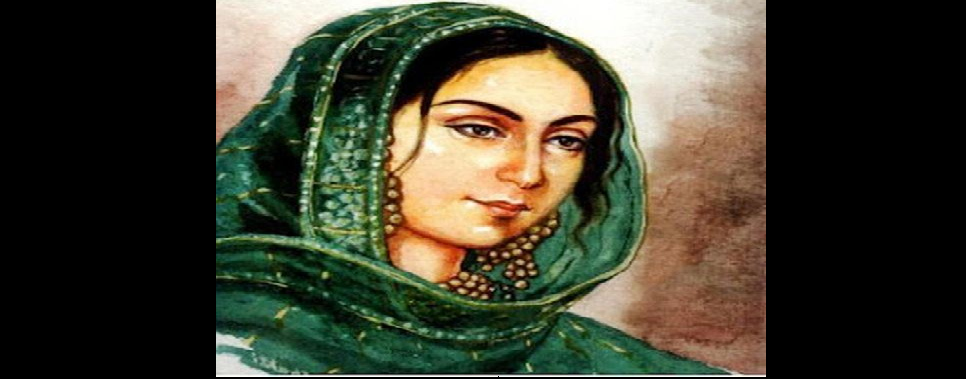
June, in particular is a good month to remember Begum Hazrat Mahal who led the first war of independence against the British in Lucknow. This Begum of Avadh had defied British forces of the East India Company in the great uprising of 1857.

She was one of the nine divorced women of Wajid Ali Shah, Lucknow’s last ruler.

“When the king left Lucknow on 13 March 1856 he took with him as well as his mother, three of his wives including Khas Mahal and Akhtar Mahal. An unknown number of wives were left behind in Lucknow as well as nine divorced women including Hazrat Mahal and her young son,” writes Rosie Llewellyn-Jones in The Last King in India.

Begum Hazrat Mahal took charge of the city despite her divorce from the king and her supporters included Raja Jailal Singh, a former Nizam of Azamgarh. It was Raja Jailal who fed support to the rebellion from the suburbs around Lucknow.

The other supporter defending Lucknow was Nana Sahib, a Maratha soldier and childhood friend of Rani Lakshmibai. Nana Sahib led the revolt against the British in Kanpur. Like Begum Hazrat Mahal he too retreated to Nepal after the British regained Lucknow in 1858.

Wajid Ali Shah was forced to leave Lucknow for exile in Calcutta, by the British. Lucknow was one of the most bitterly contested cities during this first war of independence against the British.

Between the exile of Wajid Ali Shah in March 1856 and the first war of independence in June 1857, Lucknow was defended by Begum Hazrat Mahal and she ruled as regent for 10 months. Her 12 year old son Birjis Qadr was crowned in the Baradari at Qaiserbagh, the palace built by his father.

After the British overpowered the freedom fighters, Begum Hazrat Mahal refused a pension and continued gorilla attacks on British military centers till November 1859. She spent the rest of her life in Kathmandu, Nepal and was buried there in 1879.

It may be recalled that fighting broke out at the end of June in 1857 against the British after soldiers mostly from the Avadh region heard that their mild mannered ruler was unceremoniously stripped of his throne and his kingdom by the British on grounds of mismanagement. Their first reaction was one of disbelief. Their second reaction was of anger. soldiers in different parts of north India took up arms and in Lucknow laid siege to the city’s British Residency where English and Anglo Indian inhabitants were hiding for four and a half months between July and November 1857.

But before Begum Hazrat Mahal transformed into a revolutionary she was a fairy. It may be recalled that apart from official wives and temporary wives there was yet another category of women, the pari or fairy who was often taken on as a temporary wife if the king found her pleasing and talented. The fairies were certainly an innovation of Wajid Ali Shah, poet prince and were recruited from the lower classes, including courtesans who lived mainly in Chowk, in the old city.

These women were not educated but after tuitions some of them acquired sophistication. Some fairies went on to become expert singers or dancers while others proved to be good for nothing.

Begum Hazrat Mahal’s maiden name was Muhammadi Khanum, and she was born in Faizabad. Her father was a slave called Umber owned by a Ghulam Hossein Ali Khan. Her mother was a Muslim mistress of Umber. A courtesan by profession, Muhammadi was taken into the royal harem after being sold by her parents.

She was later promoted to a fairy and was called Mahak Pari by the king. She became a begum after being accepted as a royal concubine of Wajid Ali Shah and the title Hazrat Mahal was given to her after the birth of their son, Birjis Qadr.

For some time Wajid Ali Shah was completely smitten by Hazrat Mahal. writing many poems for the dusky beauty.

Soon the king moved on to other women but in 1845 when he learned that Mahak Pari was pregnant, he immediately put her into purdah and gave her the title of Iftikhar-un-nisa or pride of all women.

Now this beautiful fairy, brave freedom fighter and pride of all women is immortalised in a documentary film directed by Mohiuddin Mirza and produced by the Films Division that was screened in the city by Lucknow Expressions Society in the presence of Kaukab Qadr Meerza, great grandson of Begum Hazrat Mahal and Manzilat Fatima, the warrior queen’s great great grand daughter.

“The aim is to never forget how the entire city had united under the leadership of Begum Hazrat Mahal to stand up against the British irrespective of religious and gender differences,” said an organiser of the event.

source: http://www.thecitizen.in / The Citizen / Home / by Mehru Jaffer / Monday – May 30th, 2016

Film on Begum brings Avadh’s queen to life

Lucknow:

It will be a royal evening for Lucknow coming Monday when in the company of the last Queen of Awadh, Begum Hazrat Mahal, the city will come face to face with its past. In the 137th death anniversary year of the Queen, an unsung hero of the first war of Independence of 1857, a documentary on her will be screened on May 30.

Claimed to be the first ever film on the Queen, the 26-minute documentary has been directed by national award-winning director Mohi-ud-Din Mirza. Commissioned by the Films Division, the film will be screened by the Lucknow Expressions Society along with the UP Tourism department. Prince Kaukab Qader Meerza, great grandson of the Queen, will also be coming to Lucknow from Kolkata for the day.

The screening comes with an aim to enlighten people about the sacrifices of the freedom fighter for the motherland. Documenting the history of Begum Hazrat Mahal as also including her direct descendants, it shows the Queen in her role as one of the first women revolutionaries in India’s independence struggle.

“It is for the first time that a film has been made on my great great grandmother who is someone that we have grown looking up to,” said Manzilat Khan, a direct descendant of King Wajid Ali Shah and Begum Hazrat Mahal. Khan will also be in the city on the day. It was after King Wajid Ali Shah was exiled to Matiaburj in Kolkata that the Queen fought valiantly against the British troops annexing Awadh, defeating them in Alambagh. She later took refuge in Nepal where she died on April 7, 1879.

“At the time when the independence of women was just a notion, she had a vision for the country’s freedom from the British. She chose to fight and take it on herself. Not many know about her struggle and the film will rightfully do that,” added Khan.

source: http://www.timesofindia.indiatimes.com / The Times of India / News Home> City> Lucknow / TNN / May 26th, 2016

SNACK TRACK – Meaty bites of goodness

Bengaluru, KARNATAKA :

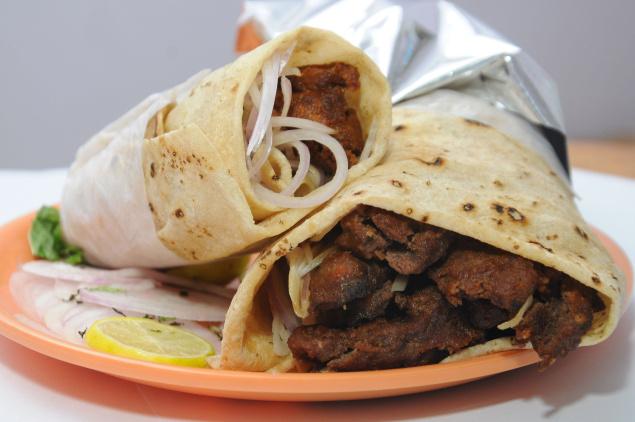
Fanoos' beef roll PHOTO: SUDHAKARA JAIN
Fanoos’ beef roll PHOTO: SUDHAKARA JAIN

The legendary beef sheekh kabab rolls of Fanoos is one of Bengaluru’s most sought-after rolls

The air sizzles with the smell of grilled meat, the heat from the tandoors is warm, yet not suffocating, and the crowd that has gathered remained calm, yet excited and hungry as they wait patiently to bite into goodness.

The roomali rotis are spread on clean, slick steel counters, the steaming hot meat piled onto them, the chopped onions and lime juice thrown in and the rolls are deftly wrapped in tissue paper and handed over to eager customers. Welcome to Fanoos – the destination for the one of Bengaluru’s tastiest rolls.

The bustling Johnson Market area in Richmond Town is the abode of one the city’s most spectacular roll joints.

The heavy traffic on the Hosur Road, the melee of people in the market area and the jostling crowds pouring in to buy their choicest rolls from the counters does not deter Bengaluru’s foodies from making sure they get what they come for – the legendary beef kabab rolls of Fanoos.

While the joint also serves chicken and mutton variants, it’s the beef rolls that are to die for. Coming in a range of sizes from the humble single roll to the enormous mogambo roll, Fanoos is the place meat lovers swear by.

What started in 1975 as a small footpath kabab joint by the late Ajaz Hussain is now a booming empire in Bengaluru. Taken over by his three sons after his death, Ajaz’s motto of serving only the finest for his extended family of customers is still kept strongly alive. Shakir Hussain and his two elder brothers firmly believe in keeping their father’s legacy alive and left their studies to keep the establishment running. “It was our dad who introduced the concept of sheek kababs from a recipe he modified from his mother. Even the terms like jumbo, mumbo, Rambo and sambo for the size of the rolls were coined by him. As the next generation, we brothers came up with the next size of rolls called mogambo,” says Shakir.

He adds: “It’s not just about food in Fanoos. We have many stories here. We have friends who come here to meet up after several years. It is also a place for lovers to meet. This is the perfect combination of food, friendship and fun with our extended family of customers.”

Musician James Prabhakar says he and his band spend their Sundays every week after practice at Fanoos. “It’s almost a tradition for us and our default buys here are the sheek kabab rolls. The green apple sodas from the Madeena Stores opposite to Fanoos are an added bonus that makes it a complete meal. Fanoos also serves as a place for us to catch up with friends and chill out amid the smell of sizzling, mouth-watering meat.”

The Iranian cuisine joint customised for Bengaluru also serves shawarmas, veg rolls and a variety of other flavours and even the popular Haleem during Ramzan, but nothing comes close to their beef sheek kabab rolls priced between Rs. 45 to Rs. 185 depending on size.

So what are you waiting for? Head over and dig in.

source: http://www.thehindu.com / The Hindu / Home> News> Cities> Bengaluru / by Allan Moses Rodricks / Bengaluru – May 30th, 2016

The waza from the Valley

Jammu & Kashmir :

BashirMPOs31may2016

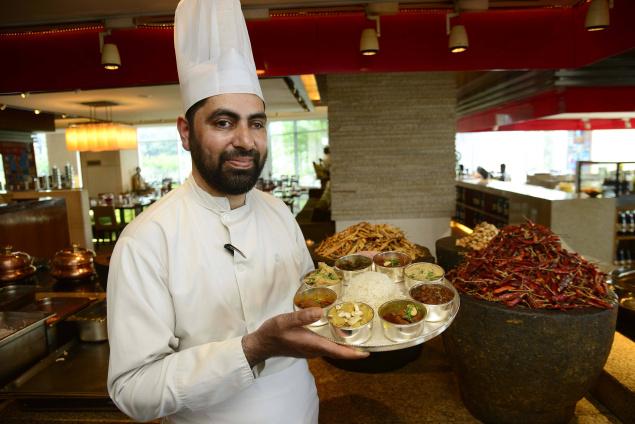
Bashir Ahmad Concha on how to dish out the traditional multi-course and meat-rich Kashmiri wazwan

Ask most visiting chefs about their tryst with South Indian flavours and they’d wax eloquent about their love for the crunch of a crispy dosa. But not waza (traditional Kashmiri chef) Bashir Ahmad Choncha. He’s more likely to scowl and say, “The flavours are too unfamiliar.” For, compared to our fluffy idlis, rich coconut chutney and spicy sambar, his familiar food — the spicy and salty lahbi kebab, rich curd-based nadru yakhni and melt-in-the-mouth minced mutton ball in creamy gushtaba — feels decidedly different. Yet, the wazwan is a treat for anyone curious about the possibilities of the unfamiliar.

The wazwan, considered the pride of Kashmiri cuisine, is rich, to say the least. It is made during special occasions, and traditionally served in a large plate that’s shared by four. Most dishes are curd-based and all of them are made with liberal amounts of ghee. To top it off, the spread is meat-heavy. Mutton, mostly, as most Kashmiri Muslims prefer that. The chef’s favourite is the tabak maaz, a mutton appetiser that’s deep fried in ghee. “What can I say? Most people in Kashmir are rich and they want to eat rich food too,” laughs waza Bashir, even as he insists that the ghee will only make one strong, not fat.

The most challenging dishes to make, he says, are the light and spicy rista and the heavy yogurt-based gushtaba, for which the meat needs to be pounded by hand for half an hour. The vegetables have a distinct flavour, as do the spices from the region. It is for this reason that the waza says he brought 400 kg of ingredients for the ten-day Kashmiri Wazwan food festival at Spice Haat, Hyatt Regency.

Waza Bashir learnt his culinary flair from his father, chef Noor Mohammad Choncha, by watching him cook eversince he was eight years old. “My father would have never allowed me to become a waza if he were alive. He never wanted me to come into the family business.” But when his father passed away, Bashir took over the kitchen at 25. For the last 20 years, he has been at the helm of things at ‘Concha Foods’, a restaurant in Srinagar and also, a manufacturing outfit that packages and exports spices from the valley. “There’s a big market for Kashmiri cuisine. Every month, 1,000 kg of tin-packed rista and gushtaba are exported to places around India, the United States and Gulf countries.”

His fame in the packaged food business soon saw him plate up flavours from the valley at food festivals in Bangalore, Pune, Chandigarh and other places.

However, he says, wazas taking the road is rare. Even though his father had close to 1,000 students, most of them have set up their own restaurants in Kashmir. “The wazwan is a big business in Kashmir. A typical Kashmiri indulges in the wazwan about once a week. One plate is priced at Rs. 2,500 even in a small shop. It’s a very exotic spread. So it’s very rare that people leave the valley to make wazwan.”

Kashmiri Food Festival at Spice Haat is open for dinner till May 29. There’s a Buffet is priced at Rs.1,550, vegetarian thali at Rs. 1,000 and non-vegetarian thali at Rs. 1,200, (exclusive of taxes), to choose from. For details, call 61001234.

source: http://www.thehindu.com / The Hindu / Home> Features> MetroPlus> Food / Raveena Joseph / May 23rd, 2016