Ace tennis player Sania Mirza scripted history on Sunday by clinching the second Grand Slam of the year after she won the women’s doubles US Open title with Swiss partner Martina Hingis at Flushing Meadows in New York.
Here are the ten things to know about Sania’s illustrious career:
# Sania Mirza has title at all Grand Slams – Wimbledon (2015 – Doubles), US Open (2014 – Mixed doubles), US Open (2015 – doubles), French Open (2012 – Mixed doubles) and Australian Open (2009 – Mixed doubles).
# Sania Mirza was conferred with the prestigious Rajiv Gandhi Khel Ratna award last month. Sania became the second tennis player to receive the country’s highest sporting honour after Leander Paes.
# The pair of Sania Mirza and Martina Hingis is ranked Numero Uno in the world and they were the top seeds at the 2015 US Open. This is their second Grand Slam of the year after Wimbledon Championship.
# Sania Mirza had become India’s first woman player to win a Grand Slam when she won the Australian Open with compatriot Mahesh Bhupathi in 2009.
# The 28-year-old Sania Mirza won her first women’s doubles Major title 12 years after turning professional.
# It was 12 years ago, in 2003, when as a 16-year-old Sania became the first Indian girl to win a Grand Slam when she triumphed in the doubles’ event at Wimbledon, partnering Alisa Kleybanova of Russia.
# Sania Mirza has also won a total of 14 medals, including 6 golds, at three major multi-sport events, namely the Asian Games, the Commonwealth Games and the Afro-Asian Games.
# Sania Mirza is the highest ranked female player ever from India, reaching World No. 27 in singles in 2007 but a major wrist injury forced her to give up her singles career and focus on the doubles circuit.
# Sania Mirza was awarded the Arjuna award in 2004 while in 2006 she was awarded a Padma Shri, India’s fourth highest honour for her achievements as a tennis player.
# Sania Mirza is the first South Asian Woman to be appointed as a Goodwill Ambassador of UN Women, in the organization’s history, for South Asia.
source: http://www.timesofindia.indiatimes.com / The Times of India / News Home> Sports> Tennis> US Open 2015 / TNN / September 13th, 2015
Scholar Audrey Truschke says we should not make the error of attributing Mughal emperor Aurangzeb’s lack of interest in Sanskrit to his alleged bigotry
In an email interview, Audrey Truschke, Mellon postdoctoral fellow in the Department of Religious Studies at Stanford University, shares with Anuradha Raman the experiences of writing her book, Culture of Encounters: Sanskrit at the Mughal Court, to be published in February 2016, and argues forcefully in favour of acknowledging diversity in India.
The present Bharatiya Janata Party government believes Mughals are not part of India’s history. Your book is about how Sanskrit, sought to be made mainstream by the government, flourished under the Mughals. How do we reconcile the two?
We don’t reconcile the two perspectives. Rather, we ask two key questions. One, who is on firmer historical ground in their claims? Two, what are the political reasons for the BJP wanting to erase the Mughals (or at least most of the Mughals) from India’s past? The bulk of my work concerns the honest excavation of history. The Mughals are a significant part of Indian history, and Sanskrit is a significant part of the story of the Mughal empire. Those facts may be inconvenient for the BJP and others, but as a historian I do not temper my investigation of the past in deference to present-day concerns. However, I realise that history matters in the present, perhaps especially in modern South Asia. One present-day implication of my work is to point up the flimsy basis of the BJP’s version of India’s past.
In an ironical way, as the present government fights to push Sanskrit into mainstream discourse, your work concentrates on the Mughals, whom the BJP dislikes, and their engagement with Sanskrit.
The BJP only wants a certain version of Sanskrit in the mainstream. They no doubt love Kalidasa, but I cannot imagine the BJP endorsing students to read the Sanskrit accounts of the Mughals written by Jains in the 16th and 17th centuries. India has a great treasure in its Sanskrit tradition, but that treasure is not only classical poetry and the Indian epics, but also the immense diversity of Sanskrit literature.
Who were the Mughal rulers under whom there was active exchange of Sanskrit and Persian ideas, in your account?
Sanskrit flourished in the royal Mughal court primarily under three emperors: Akbar, Jahangir, and Shah Jahan.
Aurangzeb. Photo: CC 3.0 SA
However, we should not make the error of attributing Aurangzeb’s lack of interest in Sanskrit to his alleged bigotry. Aurangzeb is a severely misunderstood historical figure who has suffered perhaps more than any of the other Mughal rulers from present-day biases. There are two main reasons why Sanskrit ceased to be a major part of Mughal imperial life during Aurangzeb’s rule. One, during the 17th century, Sanskrit was slowly giving way to Hindi. This was a wider literary shift in the subcontinent, and even under Shah Jahan we begin to see imperial attention directed towards Hindi-language intellectuals at the expense of Sanskrit. Aurangzeb’s reign simply happen to coincide with the waning of Sanskrit and the rise of literary Hindi.
Second, as most Indians know, Aurangzeb beat out Dara Shikoh for the Mughal throne. Dara Shikoh had been engaged in a series of cross-cultural exchanges involving Sanskrit during the 1640s and 1650s. Thus, from Aurangzeb’s perspective, breaking Mughal ties with the Sanskrit cultural world was a way to distinguish his idioms of rule from those of the previous heir apparent. In short, Aurangzeb decided to move away from what little remained of the Mughal interest in Sanskrit as a political decision, rather than as a cultural or religious judgment.
“Dara Shikoh had been engaged in a series of cross-cultural exchanges involving Sanskrit during the 1640s and 1650s.” Painting shows the marriage procession of Shikoh. Photo: Wikimedia Commons, Source: National Museum, Delhi
As a side note, let me clarify that while Akbar inaugurated Mughal engagements with Sanskrit, he did so for slightly different reasons than many people think. Akbar’s reputation is that he was open-minded and tolerant, almost a protosecular figure. This can be a misleading characterisation. Akbar was interested in Sanskrit for its political valence in his empire, not as some personal religious quest. Akbar also had no qualms about harshly judging perspectives that he viewed as beyond the pale. A good example is that he questioned Jain thinkers about whether they were monotheists because to be otherwise would mean being evicted from the Mughal court (Jains assured him that they believed in God).
What was the interaction between the Mughal elites and Brahmin Hindus and Jain religious groups like?
Brahmans, for example, assisted with Mughal translations of Sanskrit texts into Persian. The method was that Brahmans would read the Sanskrit text, verbally translate it into Hindi (their shared language with the Mughals), and then the Mughals would write down the translation in Persian. Jains and Brahmans alike assisted the Mughals with astrology. Brahmans cast Sanskrit-based horoscopes for the Mughal royal family. On at least one occasion, Jains performed a ceremony to counteract an astrological curse on Jahangir’s newborn daughter. My forthcoming book, Culture of Encounters, devotes an entire chapter to reconstructing the social history of links between Mughal elites and Brahmans/Jains.
You argue that the ideology underpinning violence — such as what took place in the 2002 pogrom, in which more than 1,000 Muslims died, or the current intolerance towards them — erases Mughal history and writes religious conflicts into Indian history where there was none, thereby justifying modern religious intolerance. Is it correct to then deduce that there was no religious conflict in the court of the Mughals?
No. First, there was plenty of violence in Mughal India. Violence and conflict are enduring features of the human experience and I would never suggest otherwise. Even under Akbar, violence was commonplace. A far trickier question, however, is, how much Mughal-led violence was religious-based or motivated by religious conflicts? Generally, the Mughals acted violently towards political foes (whether they were Rajput, Muslim, Hindu, or otherwise was irrelevant). It is very difficult for many modern people to accept that violence in pre-modern India was rarely religiously motivated. In this sense, pre-colonial India looked very different than pre-modern Europe, for example. But we lack historical evidence that the Mughals attacked religious foes. On the contrary, some scholars have even suggested that modern “Western” ideas about religious toleration were, in part, inspired by what early European travellers witnessed in the Mughal Empire.
That said, there were limited instances when the Mughals persecuted specific individuals over religious differences. A good example is that Akbar sent a few of the Muslim ulama on hajj to Mecca, which meant that they were effectively exiled from the court. Some of these ulama were murdered on their way out of India.
Is there a problem with a Marxist interpretation of history as is being argued now by the BJP government?
Marxist history is limiting, in my opinion. This strain of thought tends to emphasise social class and economic factors in determining historical trajectories. Modern historians have a much wider range of approaches at their disposal that better situate us to understand other aspects of the past.
Mughal history is such a contentious part of history in the Hindu nationalist imagination. How do you propose to shed light, and create space for a scholarly engagement with the period? It also comes at a time when there is a wave of revisionism in India.
My approach is that of a historian. I seek primary sources from numerous languages and archives, read deeply in secondary scholarship, and attempt to reconstruct the most accurate vision of pre-colonial India possible. My work has plenty of present-day implications, but those come secondary and explicitly after the serious historical work. This approach is unappealing to many in modern India (and across the world). It is painstaking, requires specialist knowledge, can be slow, and often leads to nuanced conclusions. But there are also plenty of people, non-academics, who view what is going on in modern India with scepticism. For those who want it, my work offers a historically sound foundation for challenging modern political efforts to revise the past.
What are the dangers of rewriting history?
So far as the dangers of rewriting history and subscribing to narrow interpretations of specific texts, there are many risks. One is that we risk rising intolerance going forward, something already witnessed on both popular and elite levels in 21st century India. Another risk is that we cheapen the past. India has a glorious history and one of the richest literary inheritances of any place on earth — it would be unfortunate to constrict our minds to the point where we can no longer appreciate these treasures.
You argue that “a more divisive interpretation of the relationship between the Mughals and Hindus actually developed during the colonial period from 1757 to 1947”, a legacy that the present Modi government appears to have inherited. But while the British positioned themselves as neutral saviours, who will emerge as the neutral saviours now?
In the BJP vision, I believe that the new saviour is the BJP itself and affiliated Hindu nationalist groups that will restore India to its proper, true nature as a land for Hindus. This is an appealing ideology for many people, which is part of what makes it so dangerous. I maintain that India’s greatness is found in its astonishing diversity, not some invented, anachronistic, monolithic Hindu past. Part of the sad irony of the BJP’s emphasis on rewriting Indian history is precisely that India has a deep and compelling history, which so many seem intent to ignore.
ndanu@ thehindu.co.in
source: http://www.thehindu.com / The Hindu / Home> Opinion> Interview / by Anuradha Raman / September 14th, 2015
N P Moideen, the veteran congress leader and former MLA, passed away after prolonged illness here on Friday. He was 75. He is survived by wife and four children.
Moideen represented Beypore constituency in the fifth and sixth Kerala assembly. Moideen, son of freedom fighter N P Abu and brother of noted playwright N P Mohammad, started his political career with the Kerala Students Union (KSU).
Later, he became KSU state vice-president before serving as the Youth Congress Kozhikode treasurer and district general secretary.
Moideen was first elected to the state assembly in 1977. His second term was in 1982.
source: http://www.newindianexpress.com / The New Indian Express / Home> States> Kerala / by Express News Service / September 12th, 2015
Nostalgia: APJ Abdul Kalam with Dinesh Keskar during his 2009 visit to Boeing’s Seattle plant – PICTURE COURTESY: BOEING
Aircraft manufacturer’s Dinesh Keskar recalls the late President’s visit to Seattle in 2009
The sudden demise of former President APJ Abdul Kalam on July 27, left people mourning in India. Over 12,000km away in Seattle too, a pall of gloom descend on Boeing’s manufacturing plant, where the former President had charmed and impressed the employees during his visit in 2009. Later Dinesh Keskar, Senior Vice-President, Asia-Pacific and India, Boeing Aeroplanes called Kalam “a friend of a lot of people, including Boeing.”
During the 2009 visit, the former President had shown an interest in meeting Joe Sutter, the man who designed the double-decker aircraft, the Boeing 747, which is popularly known as the Jumbo Jet. “The former President knew of him (Sutter) and wanted to meet him,” recalls Keskar.
The 2009 visit to the Seattle plant was Kalam’s first to the Boeing’s manufacturing facility. The 88-year-old Sutter, often called the Father of the 747, was there. The two had a 20-minute meeting which Keskar too attended. “The former President wondered how Sutter had come up with the idea of the upper deck. Kalam also asked Sutter about the support he had in designing the Boeing 747,” Keskar recalled. Perhaps Kalam, who was involved with the Light Combat Aircraft project, was hoping to replicate the same in India. The Missile Man also gave a lecture to an audience that included scientists and top technologists during the Seattle visit. Kalam, however, was not just interested in the Jumbo Jet. During his visit he also got a first-hand feel of the first Boeing 787 aircraft, the long-range, wide-body, twin-engine jet airliner . The 787 aircraft that Kalam saw in Seattle was the first of the 27 aircraft that are joining the Air India fleet.
Kalam was impressed with the aircraft, particularly its wings. The crystal model of an aeroplane that Boeing presented Kalam to commemorate the visit is still displayed in Delhi.
Bengaluru days
Kalam’s relationship with Boeing did not end at Seattle. He also visited the Boeing research centre in Bengaluru. Keskar says that the former President spent over three hours talking to the 15 people present, inquiring about their work. Many of the people were picked from the National Aeronautics Lab, where Kalam was the Chairman of the organisation’s research council.
It was during this visit that Kalam said that one of the things Boeing must do is to get India into the aeroplane market. “He was obviously very interested in getting Boeing to do something in India in terms of building an aeroplane in India. We are still working on smaller pieces of that. We have not gone to the stage of the aeroplane but that was his vision,” Keskar added.
source: http://www.thehindubusinessline.com / Business Line / Home> Specials> Flight Plan> Off Radar / by Ashwinin Phadnis / August 25th, 2015
How an adversity turned into an opportunity for Rajasthan’s Meo community farmers
They were never fisherfolk and had no idea how a net was cast. Living for generations in the landlocked Kaman block of Rajasthan, the farmers of Jeeraheda village only knew how to sow and harvest their grain. So, when in the late 1980s, water from the Gurgaon canal, which runs through Haryana and Rajasthan, began to slowly seep into their agricultural land and cause serious water-logging, they threw up their hands in despair.
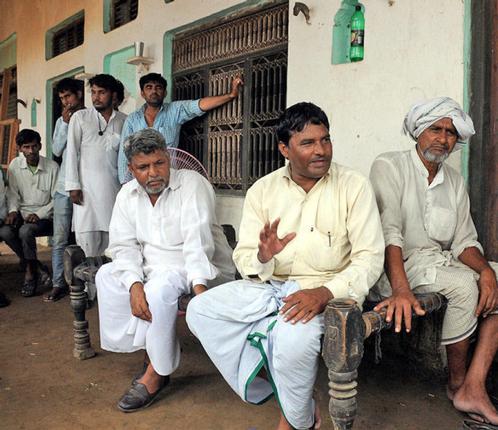
The 240 families of the Meo Muslim community, which has its homes and farms along the canal adjoining the Haryana border, knew that growing a crop on these tracts was no longer possible. “We tried in vain for many years to make use of this land, but nothing at all would sprout. It would get inundated with water,” recalls 53-year-old farmer Aas Mohammad.
The flooding also meant the farmers had less acreage to cultivate and were unable to meet their food needs, leave alone store grain for a rainy day or sell it. Already left outside the mainstream of development and traditionally backward, the community found the going tough.
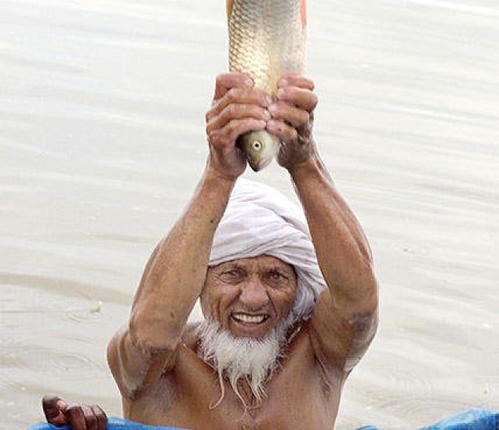
Teach a village to fish Aas Mohammad and his family draw in their fish catch at their field-turned-pond. Some of the fish will be sold to markets and some transferred to another farmer’s pond as fish seed KAMAL NARANG
All of a sudden, however, their fortunes turned for the better. “In the last 15 years there has been a lot of change. Our luck began when we introduced fish seed into the gram panchayat talab (large pond) and found it yielding good results. It grew into good-sized adult fish,” says farmer Khurshid, who is now the President of the Gram Vikas Samiti. Lupin Human Welfare and Research Foundation, which has been working on development projects here, advised the farmers to dig up the water-logged fields, transform them into talabs and introduce fish species for sale in cities.
There was no looking back after that. Khurshid says his village today has 55 such talabs in the 40-50 acres that is unfit for cultivation. Dull-blue waters and bright-blue fishing nets have become a part of the landscape, interspersed with green fields. “Our fish harvest brings us returns every day,” he says, naming the popular sweet-water species Rohu and Katla as the mainstay of their business along with the smaller mirgal, and common and grass carb.
Every day, 2-3 vehicles arrive in Jeeraheda village to cart away 5-6 quintals of fish each for markets across the State border in Gurgaon and Delhi. “We don’t have to go anywhere, our market comes to us… we do brisk business from 6-9am. We weigh the catch, fix the price and sell to the best buyer. This happens across all the four villages along the canal that have taken up fisheries,” says a satisfied Mohammad.
Kaman block alone has around 200 ponds with fish rearing. “Bharatpur district, of which we are a part, is producing 1,500 tonnes of fish and provides livelihood to 2,000 fish-farmers,” says Tarachand, Lupin’s Kaman block co-ordinator. He provides a back-of-the-envelope calculation of the profits earned by the farmers. “They spend around ?50,000 annually on seed, feed, cleaning, nutrition and so on for atalab the size of an acre. The output is about 40 quintals of fish. Per hectare, they earn ?3.5 lakh a year.”
“A problem was turned into a potential,” explains Dr Swati Samvatsar, Lupin’s Chief Programme Manager. To keep fish-farming alive and encourage the farmers, the organisation started a fish-seed hatchery in the Nineties with a capacity of one crore fry seeds; it supplied various fish species to the farmers at a no-profit, no-loss basis.
The houses are now concrete and every family has accident insurance
“Today, some farmers make their own seeds and provide them to others,” says Samvatsar. The results are there for all to see. The houses are now concrete and every family has accident insurance.
Unfortunately, however, prosperity and food security have not erased overwhelming social and cultural problems. Only a few girls go to school. “Women have their own role to play. They do not help in the fishery business. Instead they tend to the buffaloes, the home, the children… and to themselves,” Khurshid argues vehemently.
The good fortune has also meant that young boys in the village have become more complacent. Only a few have attempted to secure college degrees or turn to other professions. “The younger generation is more adept at swimming, fishing and growing the fisheries business,” admits Samvatsar.
SHER MOHAMMAD Fish-farmer in Kaman block. Even the youngsters in the village know each and every detail about fish cultivation
Says 74-year-old Sher Mohammad, obviously proud of the training the young ones have been given, “They know each and every detail about fish cultivation.”
Fourteen-year-old Rahees sums it up as he plunges joyfully into the blue water to join the others in retrieving the submerged fishing net, “We study when we feel like it.”
(The writer travelled to Rajasthan at the invitation of Lupin Human Welfare and Research Foundation)
source: http://www.thehindubusinessline.com / Business Line / Home> Specials> India Interiors / by Preeti Mehra / September 11th, 2015
India’s tennis star Sania Mirza bagged her second consecutive Grand Slam title of the season, and fifth overall, as she won the US Open women’s doubles with Swiss partner Martina Hingis on Sunday.
The top-seeded Indo-Swiss team outplayed the fourth seed team of Casey Dellacqua and Yaroslava Shvedova 6-3, 6-3 in the final, which never rose to great heights.
Sania’s win capped off a memorable US Open for Indians as Leander Paes had won the mixed doubles trophy with Hingis on Friday, in a repeat show of the Wimbledon.
Kazakshtan’s Shvedova and Australia’s Dellacqua struggled to hold serve, making it too easy for Sania and Hingis. The contest was over in just 70 minutes as the top seeds asserted themselves.
Sania’s ground-strokes from the back of the court and Hingis’ agility at the net was too good for their rivals.
It was Sania and Hingis’ second major title in a row, having won the Wimbledon championships earlier this season.
Sania now has five Grand Slam titles in her collection. She won three Mixed Doubles trophies, the last one coming at this very venue with Bruno Soares in 2014.
In an extraordinary season, Hingis has won five Grand Slam titles this season, taking her overall number to 20. She won three titles with Paes and two with Sania.
“It’s a great year for us. Already been a great year, became world number one. We were a solid team and were in with a chance in all Slams. We are happy to come through. I won mixed doubles here last year, great to come back and win this,” Sania said after her win.
An elated Hingis said, “from the start we hit it off. Our games complement each other. Sania won her first Wimbledon, for me it is bonus. I volley better than what I used to. (in her singles days)”
Shvedova committed a double fault in the second game at 30-all to give top seeds a break point and then a superb return from Sania brought another opportunity but the fourth seeds saved both chances.
The top seeds did not have to wait much for next chance as they broke Dellacqua at love to take a 3-1 lead. But the advantage slipped soon as Sania was broken in the fifth.
Shvedova, who is getting married on Tuesday, surrendered her serve one more time, letting Sania and Hingis just walk away with the set.
Shvedova was far from the player she is as she was down by three break points in the very first game of the second set. Top seeds grabbed the opportunity and consolidated lead with a solid hold.
Sania fired two stunning service winners on Dellacqua’s serve as the Australian was broken at love in the seventh game. Hingis hit an overhead volley winner on the first match point after Shvedova’s double fault at 40-all.
source: http://www.timesofindia.indiatimes.com / The Times of India / News Home> Sports> Tennis > US Open 2015 / PTI / September 13th, 2015
American researcher Celia Bell delves into the works of Hyderabad’s Urdu poets Mah Laqa Bai Chanda and Luft-un-Nisa Imtiyaz
At a time when Urdu language is losing patronage among native speakers, it seems to strike a chord elsewhere. Its poetic form in particular has many followers both within and outside the country. Interestingly, in the land of Uncle Sam too Urdu is making waves, and not just out of curiosity.
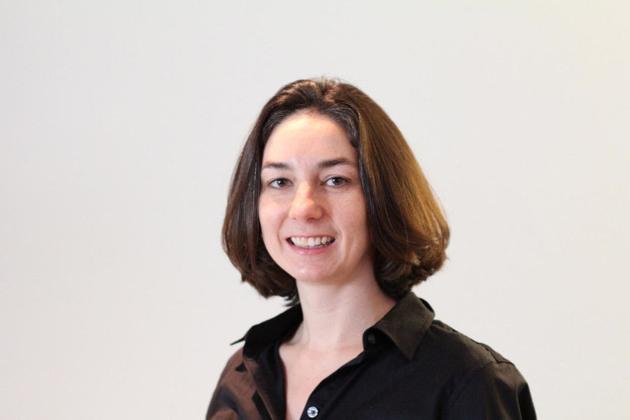
Celia Bell, a student of Columbia University, is a case in point. Charmed by the musical quality of the language, she has come all the way from New York to Hyderabad to do research on two women Urdu poets of the 18th century, poets that Hyderabadis themselves have almost forgotten. She has chosen little known poets like Mah Laqa Bai Chanda and Luft-un-Nisa Imtiyaz for her research. Their works have not generated much critical appreciation and this is precisely the reason why Bell would like to explore them.
Maha Laqa Bai was the first women poet with a diwan (published works) of her own. A woman of great beauty, she was a courtesan during the reign of Nizam II and III. Luft-un-Nisa was also a sahibaan-e-diwan poetess with a rich collection of ghazals and masnavis. She wrote under the penname ‘Imtiyaz’.
During the last one month she is here, Bell’s mission has stirred quite a bit of interest and is drawing quiet admiration among Urdu circles. “It is interesting to take up studies on writers on whom not many have researched. I hope I will be able to throw fresh light on these poetesses,” she remarks.
Bell plans to explore the ‘gendered voices’ in the poetry of Mah Laqa Bai and Luft-un-Nisa. She will also delve into the technical elements of their works and their impact on Deccani literature. This project will be of immense help to Bell who wants to do Ph.D on contemporary literature and South Asian Studies. She is in India as part of the Fulbright-Nehru Student Research Programme.
But why in the world she has chosen Urdu literature for research? “I am much drawn to Urdu. It is a sweet language. The best part is its poetry which casts a spell,” says the 24-year-old who is quite familiar with the language by virtue of having studied Hindi at the undergraduate level.
“Main padh sakti hoon, bol sakti hoon aur likh sakti hoon (I can read, speak and write),” she says in Americanised accent. But she feels shy of speaking in Urdu for fear of committing mistakes. “That’s why I am conversing with you in English,” she laughs.
Bell is all appreciation for Dr Habeeb Nisar, her research guide at the University of Hyderabad. The University is her host institution during her nine-month long project work. A self driven resercher, Bell has been poring over books in libraries and has found little time to explore the nawabi city. She is looking forward to the trek to Maula Ali to look up the mausoleum of Mah Laqa Bai.
Who are her favourite Urdu poets? Mirza Ghalib, Iqbal and Faiz – she reels out the names. But she is more fond of Ghalib whom she considers the Shakespeare of Urdu. She backs her claim by reciting this famous couplet of Ghalib:
Baske hoon Ghalib aseeri main bhi aatishe zere pa
Mue aatish deedah, hai halqa meri zanjeer ka
(Whereas, even in bondage, there is fire under my feet Ghalib
The chain that binds me is merely curls of singed hair)
She further recites verses from the works of Faiz Ahmed Faiz –
Ye daagh daagh ujaala, ye shab-gazidar sahr
Ye wo sahr to nahin jiski aarzu lekar
Chale the yaar ke mil jaiegi kahin na khain
(The stain-tainted light, this night-bitten dawn
That we were waiting for, this is not that morning
This is not the morning, in whose yearning
We had set out full of hope that we will surly find)
Bell took to writing early in her life. A good number of her short stories in English have appeared in New York Times Magazine and literary journals like Five Points and Bomb Magazine. Will she write in Urdu too? She only flashes a big smile by way of answer.
source: http://www.thehindu.com / The Hindu / Home> Features> MetroPlus> Society / by J.S. Ifthekhar / Hyderabad – September 13th, 2015
Najim Arshad, who rose to fame after winning the Idea Star Singer title in its second season, married Thesni Thaha in Punalur, Kerala on Sunday.
The wedding reception is scheduled at 6 pm in Thiruvananthapuram later in the day. Another reception will be organised for celebrities and other guests on 17 September in Kochi.
Najim’s wife Thesni aka Kiki completed her BDS course in Bangalore. The two met each other through a friend in January 2014 and the marriage was extended for nearly one-and-a-half-year to let Thesni complete her studies.
The duo had got engaged on 16 April in a private ceremony attended by some close friends and families of the couple.
Najim, 29, has made a mark in the industry by rendering his voice for many popular songs in Malayalam, Tamil and Hindi films.
source: http://www.ibtimes.com / International Business Times / Home> News> Entertainment> Celebrity / by Anu James / September 11th, 2015