‘Glad that Carnatic Land is Open to Hindustani Music’

Nazim Hussain on the tabla with Pandit S Ballesh on the shehnai

Nazim Hussain, one of the sons of Shehnai exponent Bismillah Khan, is among the renowned tabla players in the country. Recently, for a tribute to his father in Chennai organised by Tansen Academy of Music, the tabla artiste visited the city.

Nazim Hussain, who has trained in playing the tabla since his childhood, solely to accompany his father in his performances, has also played the instrument for films, a major one among them being Sanaadi Appanna – a film considered to be a Kannada adaptation of Thillana Mohanambal. He has played in various concerts at Benares, Mumbai, Bengaluru and Chennai as well. The tabla maestro recounts his experiences to City Express.

First Experience

I have visited the city several times. However, I haven’t kept a track of the number of times. The first time I came here was when I was 16 or 17 years old. It was a Sangeet Sammelan – a gathering of artistes of high calibre such as Pandit Bade Ghulam Ali and Vilayat Khan. I had performed alongside my father, who was playing the Shehnai at the concert. It was a rare and different experience.

Go-to places

Since I usually visit only when there are concerts, I barely step out to see places other than sabhas. However, sometimes I make it a point to visit the Saibaba Temple in Saligramam, because that is near my friend S Ballesh’s residence, where I visit each time I come to Chennai. I meditate there; the space gives me serene vibrations. I also visit the Parthasarathy temple in Triplicane sometimes.

Experiences with Tamil film musicians and Chennai audience

I have played some minor bits for Tamil films, but to recount something memorable, I should mention my recording experience in 1976 in Chennai, I think it was Sanaadi Appanna only. We had recorded in Gemini and Prasad studios for nine days in Chennai along with 100 other musicians. The music director was G K Venkatesh. Ilaiyaraaja was on the keyboard then.

One thing I must mention about the city as such, is the openness of people to Hindustani music. Although deep-rooted in Carnatic music, I like the way they appreciate Hindustani artistes as well.

Carnatic music and musicians

I was brought up listening to Hindustani music, so it was quite a shift being exposed to Carnatic music while on my visits to Chennai. Yes, the style gives more importance to structure and calculations, but one cannot help but marvel at the genius of the artistes. I personally admire the work of L Subrahmanyam for his skill. When he plays the violin, the notes produced elevate the spirit of the singer. The other singer I look up to is Balamuralikrishna.

Future visits to Chennai

There is a dearth of classically-trained tabla players here and I would be more than happy to come down and teach.

source: http://www.newindianexpress.com / The New Indian Express / Home> Cities> Chennai / by Aparna Desikan / April 13th, 2015
In the company of writers

NisarAhmedMPOs13apr2015

This photograph was taken in 1984 when the renowned Kannada poet, Prof KS Nisar Ahmed, was the president of  Karnataka Sahitya Academy. A felicitation function had been arranged for Masthi Venkatesha Iyengar, the  Kannada writer who had bagged the prestigious ‘Jnanapeetha Award’ for that year. 

It was a memorable  function in which many prominent writers  had participated. After the function, some of the close friends of Nisar Ahmed, including myself, gathered to congratulate him on arranging the function in a fitting manner. It was then that this photograph was taken.

Nisar Ahmed had started writing poetry in Kannada when he was studying MSc in Geology at the Central College  in the fifties. His poetry had caught the attention of his teacher and Kannada scholar GP Rajarathnam. He happened to read and correct his poetry and got it printed in the magazine of the Kannada Sangha of Central College. Later, poetry became his forte and he brought out one poetry collection after another.

He wrote prose too and translated two of Shakespeare’s plays. But he is recognised as a poet mainly as he has been writing poetry through all the literary movements of Kannada.Though his mother tongue is not Kannada, he has been writing in Kannada only.

Nisar Ahmed had also told the literary critics that he does not need any concession just because his mother tongue is not Kannada. He is also known as ‘Nithyostava Poet because his lyrics appeared in the first cassette of modern Kannada poetry under the same title. Since then, Nisar Ahmed has been a household name as one of the most popular among contemporary Kannada poets.

He was the president of the Karnataka Sahitya Academy between 1984 and 1987 and launched several programmes to take literature to the common people. In order to encourage young writers, many workshops were organised and lectures by eminent writers were arranged. He also organised a literary programme in every district and taluk head quarters and involved the local writers and the people  in creating awareness about the current literary trends. He started the English edition of the Academy’s quarterly journal ‘Aniketana’.

It was devoted to the English translation of Kannada literary pieces. Thus, it enabled the non-Kannada readers also to get an understanding of Kannada literature through translations. I remember that he had organised a seminar as the president of the Academy in Kanakapura of Bangalore Rural District in 1986 on the last quarter century of modern Kannada poetry in which stalwarts of Kannada literary world including Prof M Gopala Krishna Adiga, Prof  LS Seshagiri Rao, Dr Ramachandra Sharma, Dr Kamala Hampana had participated.

In the evening, there was a poets’ meet under the chairmanship of poet Dr Pu Thi Narasimhachar. It is worth mentioning that the seminar was attended by the people of Kanakapura in large numbers and actively participated in the interaction with the speakers of the seminar.

This photograph assumes importance for another reason. Two writers of yesteryears, namely the late Prof VM Inamdar and Prof Venugopala Soraba, are present in it.

source: http://www.deccanherald.com / Deccan Herald / Home> Supplements> MetroLife / by Prof. M S Raghunath / DHNS – April 06th, 2015

Congress leader Ghulam Rasool Kar takes his last breath

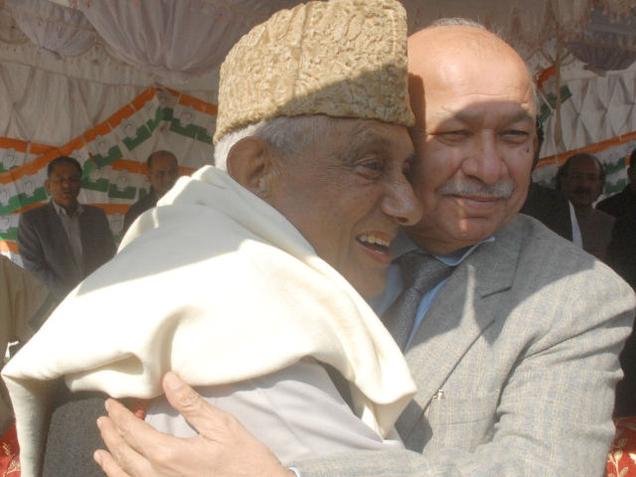
Former union minister Sushil Kumar Shinde (right) with veteran Congress leader Ghulam Rasool Kar at a rally. File photo / The Hindu

Kar became a member of the Jammu and Kashmir Constituent Assembly in 1951.

Veteran Congress leader and former minister Ghulam Rasool Kar, who was a member of the Constituent Assembly in 1951, died here on Friday after brief illness. He was 96.

A noted Parliamentarian, Kar, who hails from Sopore town in North Kashmir, breathed his last at SKIMS Hospital, his family said. He is survived by his second wife, two sons and two daughters.

Kar became a member of the Jammu and Kashmir Constituent Assembly in 1951 and the Jammu and Kashmir Legislative Assembly in 1957.

He served as a minister in the state government from 1965 to 1971 and 1972 to 1975. He was nominated as a member of Rajya Sabha in 1984 and elected to the Lok Sabha from North Kashmir Baramulla constituency in 1996.

He has also served as Jammu and Kashmir Pradesh Congress Committee President.

Senior National Conference leaders Farooq Abdullah and Omar Abdullah expressed grief over the death of the veteran leader.

source: http://www.thehindu.com / The Hindu / Home> News> National> Other States / PTI / Srinagar – April 10th, 2015

LC Mourns Demise of Ghulam Rasool Kar

Srinagar :

The State Legislative Council Friday condoled the demise of veteran politician of the State Ghulam Rasool Kar who passed away in the wee hours today.

According to an official statement, Minister for Education Naeem Akthar moved the resolution to mourn the death of senior Political leader Ghulam Rasool Kar. Various members of the House including Ghulam Nabi Monga, Zaffar Iqbal Manhas, Sajad Ahmad Kichloo, Muzaffar Ahmad Parray and Dr. Bashir Ahmad Veeri spoke and shed light on the political career of Mr. Kar. They also expressed solidarity with the bereaved family and prayed for eternal peace to the departed to the soul.

Acting Chairman, Legislative Council, Jahangir Hussain Mir described late Kar as one of the tallest political leaders of the State who was responsible in transforming the political thought in the past years, the statement informed. The Legislators said that it was due to tireless efforts of people like Mr. Kar that masses of the Valley generated interest in politics and political activities of the State.

The House also observed 2 minute silence as a mark of respect to the departed leader, it added.

source: http://www.kashmirlife.net / Kashmir Life / Home> Latest News / KL Report / Friday – April 10th, 2015

Championship series National Tennis : City’s Iftikhar wins U-16 singles title

City’s tennis player Sheikh Mohammad Iftikhar is seen with the U-16 boys singles winners trophy he won in the Championship Series National Tennis Tournament held at Trivandrum yesterday.

Trivandrum:

City’s upcoming tennis player Sheikh Mohammad Iftikhar taking part in the Championship Series AITA National Level U-16 Tennis Tournament at the Trivandrum Tennis Club from Mar.28 to Apr. 3 at Trivandrum on Friday, won the boys U-16 singles title.

Eighth seeded Sheikh Mohammad Iftikhar representing Karnataka beat G.S. Sanjay of Kerala 6-1, 6-0 in the final. In the semi-finals, Iftikhar beat J.Nitin of Kerala 6-2, 6-1. In the quarter-finals, Iftikhar beat Karnataka’s Harshit Shankar 6-2, 6-2. In the pre-quarterfinals Iftikhar got the better of Deepak Kumar of Tamil Nadu 6-3, 6-2. In the first round, Iftikhar beat Tamil Nadu’s Ajay Subash 6-0, 6-4.

source: http://www.starofmysore.com / Star of Mysore / Home> Sports News / Saturday – April 04th, 2015

Dr. Kalam optimistic of permanent cure to diabetes in three years

Like pacemaker, a Bionic Pancreas device for diabetics by 2017

Mysuru :

Former President Dr. A.P.J. Abdul Kalam said that a permanent cure would be found to diabetes in three years.

Speaking at the recently held valedictory of Sri Jayachamarajendra College of Engineering (SJCE) Golden Jubilee celebrations here, the former President hailed the stem cell research by Harvard University which led to the production of insulin secreting beta cells in the pancreas.

He said it was one of the breakthroughs in modern day science.

Dr. Kalam said that scientists had successfully managed to produce insulin generating beta cell, which could provide permanent cure for diabetes that has troubled majority of population across the world.

He also added that studies were still on to know the reasons for the pancreatic cells to stop producing insulin.

Types of Diabetes

Type 1 diabetes (formerly called juvenile-onset or insulin-dependent diabetes), accounts for 5 to 10 out of 100 people who have diabetes. In type 1 diabetes, the body’s immune system destroys the cells that release insulin, eventually eliminating insulin production from the body. Without insulin, cells cannot absorb sugar (glucose), which they need to produce energy.

Type 2 diabetes (formerly called adult-onset or non-insulin-dependent diabetes) can develop at any age. It most commonly becomes apparent during adulthood. But type 2 diabetes in children is rising.

Type 2 diabetes accounts for the vast majority of people who have diabetes — 90 to 95 out of 100 people. In type 2 diabetes, the body isn’t able to use insulin the right way. This is called insulin resistance. As type 2 diabetes gets worse, the pancreas may make less and less insulin. This is called insulin deficiency.

US device to overcome diabetes

Ed Damiano, a professor of biomedical engineering at Boston University, has made it his mission to build a portable, wearable Bionic Pancreas, a device he hopes to have on the market as early as 2017, when David, his son, is set to go off to college.

David was diagnosed for Type 1 diabetes when he was two-months-old by Dr. Toby Milgrome, his mother.

source: http://www.starofmysore.com / Star of Mysore / Home> General News / Friday – April 03rd, 2015

Feisty Hashimpura women script their own destiny

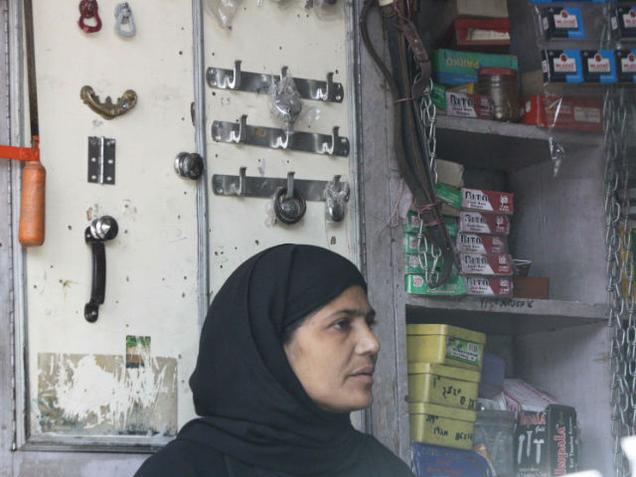
HashimpuraMPOs07apr2015

The Hashimpura massacre left a whole group of aggrieved women “victims” of state injustice

For several years, residents of Meerut found it rather odd to see a Muslim woman in a black scarf running a hardware shop on the Hashimpura main road. Little did they know that it was only the massacre of 1987 that led Anjum, a shy housewife then in her early twenties, to be transformed into a sharp businesswoman who is known in the vicinity as “hardware wali Anjum.”

The 42 who were killed in cold blood by the Provincial Armed Constabulary on May 22, 1987, included Mohammad Jameel, her father-in-law, an employee with the Meerut Municipal Corporation, who was the main breadwinner of the house and his youngest Naseem. Unable to bear the death of his father and younger brother, Mohammad Saleem, her husband committed suicide the same year, leaving her alone to take care of three children.

For Anjum, who was just four years into her marriage then, it was not an easy decision to make. Like any other Muslim woman in Hashimpura she had never stepped out of her in-laws’ house.

“Seeing my husband commit suicide left me broke from within. Finding me without any male in my family, my in-laws attempted to encroach on my husband’s shop and the rest of the property,” says Anjum while dealing with customers in between the conversation.

“But I had to take a decision. And it was not an easy decision to make,” says the woman in her early forties. Her education till graduation from Ismail Girls College in Meerut, came in handy when she had to don the role of a business woman.

Anjum, the owner of “Janta hardware store,” is not alone in this. The Hashimpura massacre left a whole group of aggrieved women “victims” of state injustice but many of them decided to instead become the controllers of their destiny.Women of as many as 42 families who lost their men to the bullets of the PAC decided to defy the stereotypes about Muslim women as docile homemakers and started working to survive. The society where the idea of working woman used to be a social taboo soon witnessed a large number of houses having women in the role of breadwinners and financial guardians. In the process, Hashimpura also became the only area in Meerut with the largest number of working women.

In the immediate aftermath of the massacre the task of running 42 homes was an overpowering challenge before the Committee for Justice for Victims of the Hashimpura Massacre, a group of the survivors and family members of those killed in the massacre.

“It was a big tragedy we were faced with — the fact that 42 families lost their breadwinners. The biggest priority for us was to ensure survival of these families,” says Zulfiqar Nasir who had deceived the bullets of the PAC while remembering how the Army had herded all the “young and productive” men of Hashimpura into the truck on the fateful Friday, May 22, 1987, only to kill 42 of them in cold blood.

Zaibun Nisa, who was one of those women who started working after she lost her husband Iqbal in the massacre, in order to run the family of three, recalls, “So, the Hashimpura Justice Committee decided that women can go out and work. There was resistance from the rest of the Muslim society in Meerut but we didn’t care because we had seen the biggest tragedies of our lives and our priority was to survive.”

Naseem Bano recounts to this correspondent how she was into her early twenties when the deaths of Siraj, then 23 year old, her only brother in the massacre, left her father a “dead man.”

“My father, who used to sell bangles, couldn’t bear the tragedy of seeing his young son getting killed. After his death, I had three young sisters to take care of. I started teaching Urdu in the local senior secondary school,” says Ms. Bano whose husband left her when she started working.

“All of us, the man-cum-women of our respective houses, became in a sense sisters. Seeing so many of our sisters in difficult circumstances also became a source of inspiration and determination that all of us have to work and survive,” she narrates while supervising the construction of her house.

Inspired by the stories of courage and strength of women in Hashimpura, Mohammad Naeem one of the survivors of PAC’s bullets, is hell bent that all of his daughters are not only educated but receive higher education. His eldest daughter Nuris Parveen is doing M. Phil. in Social Work from Mahatma Gandhi Hindi University in Wardha. Seeing his commitment, V.N. Rai, a retired IPS officer and former Vice-Chancellor of the university, had a few years ago, decided to facilitate her education.

source: http://www.thehindu.com / The Hindu / Home> News> National> Other States / by Mohammad Ali / Meerut – April 07th, 2015

Visionaries narrate success stories

Kanpur :

The Entrepreneurship Cell of IIT-Kanpur organised TEDx on Saturday. In this event, seven visionaries and performers from different fields narrated their stories before the audience both from IIT-Kanpur and the city.

The event started with a formal inauguration by IIT-K director Indranil Manna and Prof B V Phani. The first talk was given by Ad-man Abhijit Avasthi, followed by Amit Deshpal, a graduate from IIT-Madras in 2008 and joined the private equity arm of World Bank. Inspired by Tagore’s and Tolstoy’s thoughts on education, he quit his job a year later to start a learning space for children.

He spent nearly three years travelling around the country learning from different places and tried to understand meaning of education beyond formal schooling.

Talks were also delivered by renowned pantomime artist Padma Shri Niranjan Goswami and Anand Patwardhan, a critically acclaimed and socio-political documentary film-maker and activist. Other speakers were Irfan Alam, a social entrepreneur based in Patna working towards organising and empowering rickshaw-pullers through his organisation Sammaan, Aabid Surti, National Award winning author, artist and playwright-turned-environmentalist, Dipendra Manocha, founder of Saksham Trust that works towards developing communication devices for the visually impaired. The organisers of TEDx said that these talks may seed the notion of entrepreneurial zeal in individuals to think differently and act smartly. Many entrepreneurs and well-known people of the city attended the programme.

source: http://www.timesofindia.indiatimes.com / The Times of India / Home> City> Kanpur / TNN / March 29th, 2015

Katheria pushes for Agra’s less known monuments

Agra :

Agra is a home to around 100 centrally protected monuments. Most tourists, however, visit only the Taj Mahal, Agra Fort and the nearby Fathehpur Sikri. Union minister of state in the Human Resources Ministry and Agra MP Ramshankar Katheria has now sought that the Centre take steps to promote Agra’s less popular tourist destinations, so that those arriving in the city are also encouraged to stay longer.

Among the lesser known monuments are the tomb of Mariam-uz-Jamani, Rajput princess who married Mughal emperor Akbar and mother of Jahangir. The structure in which the tomb was laid was built originally by Sikandar Lodi in the late 15th century; the tomb was laid in it by 1623, and a crypt was made below the central compartment by the Mughals, who substantially remodelled the structure.

The Roman Catholic cemetery in the Civil Lines area, considered among the oldest Christian cemeteries in north India, is also a little-visited spot of tourist interest. Many early European adventurers and travellers have been laid to rest here. Many of the gravestones date back to the 17th century.

Chini ka Rauza (chini refers to the colourful tiles; rauza is a funerary monument) is the tomb of Allama Afzal Khan Mullah, who served as prime minister in the court of Shah Jahan. It dates back to the year 1635. The building represents a milestone in Indo-Persian architecture, and is the first building in India to have the glazed tiles that give it its name.

Kanch Mahal at Sikandra, near Akbar’s tomb, was used, some historians say, as a hunting lodge by Jahangir. This monument too is not very well known to visitors to the city.

Just five km from the Taj is Ram Bagh, the oldest of Mughal gardens in India – laid by the founder of the dynasty, Babur. This garden too does not see as many visitors as it might, if it were better promoted.

Mehtab Bagh, an integral part of the gardens around the Taj, also sees few visitors. The Chhatri of Raja Jaswant Singh – which some claim is the only monument built by a Hindu in Agra in the time of Mughal rule – is also a neglected monument.

Katheria pointed out that the website of the Archaeological Survey of India (ASI) does not offer descriptions of the lesser known monuments. Information and photographs of these too should be uploaded, the minister said, in a letter to Union tourism minister Mahesh Sharma.

Sources said Katheria was raising this issue as Mahesh Sharma is set to visit Agra on April 8.

Rajiv Tiwari, president of the Federation of Travel Agencies, said, “Many less known monuments are dilapidated, many have become a den for anti-social activities. Travel agents cannot risk allowing guests to include them in their itinerary.”

source: http://www.timesofindia.indiatimes.com / The Times of India / Home> City> Agra / by Aditya Dev, TNN / April 04th, 2015

Where Cricketers are Made

Santosh Kumar during a training session | t p sooraj

Thiruvananthapuram :

It was an untiring journey that began in 1983. C Santhosh Kumar, who was a college boy then, decided to start a club, Sussex Cricket Academy, that could help young and budding cricketers in Kozhikode. All of them in his group were inexperienced players who were just 14 years old.

The journey never ceased and it went on despite all hardships, producing players in various age groups, who went on to represent the state, and the club turning out to be a team to reckon with by winning various championships.

But, behind all these, it was the effort of Santhosh that single-handedly steered the club, despite all the hardships that he faced, to give back something to the sport and those who loved it. Dedicating his life to the game, he decided to forgo a married life that he felt, would place some restrictions on his life.

Though many played and never turned back to him, he never regretted or got disappointed as his sole aim has been to produce quality players who can learn the basics of cricket and build a strong foundation upon which they can grow.

“I was just 19 years old and still studying in college when the decision to start the club was formulated. It was intense passion for the game that made me switch from football to cricket,” he says.

It was interesting in those days, as he had very little knowledge of the game or the rules. Watching television, understanding the game and listening to commentaries helped in the initial days, he recalls.

In the later years, it was sheer experience on and off the ground. Many tournaments were won and the club went on to help players who  regularly came to the club and some others who joined the tournament and went on to play for the state, he says. Santhosh, who is still going strong, feels that Kozhikode can produce world class players, provided that officials governing the District Cricket Association keep their differences aside and work towards the development of the game by supporting the clubs and developing infrastructure in the district.

It was never easy for him to operate the club. Running the club with his own funds and finding a ground to keep the net practice alive was something difficult. Despite switching to various grounds to keep the practice going, he was never disappointed. Finally, help came from the management of Malabar Christian College, which helped him by providing space to support the game and players, he says.

He laments that the district lacks even a good ground and facilities for conducting matches. “Lack of ground and good facilities in the district is quite a stumbling block for the players and if more players are to be produced, better facilities should be arranged,” he opines.

For him the sole aim is not position or recognition, but the sheer commitment to give back something to the game of cricket by producing quality players. The journey continues as he feels proud speaking about the players who contributed to the development of the club.

Rohan and Sabin Pasha, who are representing the state under-19 team, have high regards for Santhosh, who has moulded them from their young age. “We are never discouraged and are allowed to play our game. But he never hesitates to tell us where we go wrong after every game,” says Rohan.

“His approach is very cool. He insists that we  think more about the game and the technical aspects than the fancy and charm around it,” says Sabin, attributing his success in the state level to Santhosh’s support and encouragement.

source: http://www.newindianexpress.com / The New Indian Express / Home> Cities> Thiruvananthapuram / C.P. Sajit / April 06th, 2015