Begum Akhtar’s legacy to be honoured by UP government

Lucknow :

To mark the birth centenary of ghazal queen Begum Akhtar, Uttar Pradesh government has directed its cultural department to take forward its four proposals that stand to bring back Begum to our times.

The government will rename two roads after her — one in Lucknow and the other in Faizabad, her birthplace. An award in her name is set to be christened, while the house in Faizabad, where she was born, would be restored.

While the directive had come in over a month now, the house in Faizabad is yet to be acquired and converted into a museum of her relics. With the present owners of the house unwilling to part with the property, the district administration is focussing on an alternative land or building in Faizabad to replenish the musical genius of Mallika-e-Ghazal, said a senior officer.

The draft for the award in Begum’s memory has been set, ready to be sent to the cabinet, after which it will be finalized and given the green signal.

The road around her residence after marriage with Barrister Ishtiaq Ahmed Abbasi, on Fawn Brake Avenue in Lucknow and the one around her maternal home ‘Mushtari ka Makaan’ in Faizabad are the two proposed to be renamed after Begum Akhtar. The municipal corporations of the respective cities have been directed in this regard, awaiting the final work to be taken up, said joint director, culture department, Anuradha Goel.

source: http://www.timesofindia.indiatimes.com / The Times of India / Home> City> Lucknow / TNN / October 30th, 2014

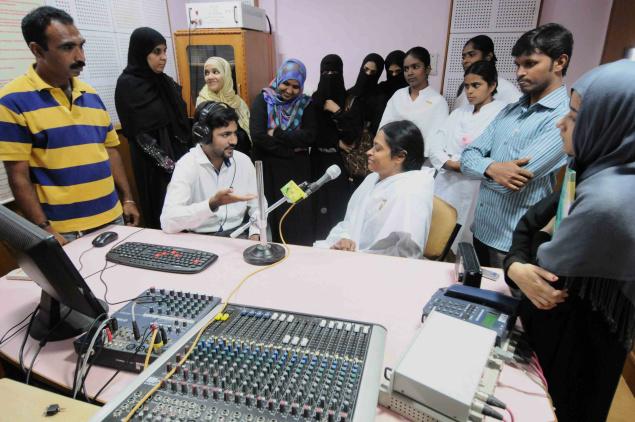
Go live on radio, make a difference

Deccan Radio station manager Zahed Farooqui providing a live interview experience to Radio Jockey trainees at the Siasat daily's office. - Photo: Mohammed Yousuf
Deccan Radio station manager Zahed Farooqui providing a live interview experience to Radio Jockey trainees at the Siasat daily’s office. – Photo: Mohammed Yousuf

Community station Deccan Radio 107.8 FM runs eight-hour social programmes

While we tune in to FM radio stations to listen to our favourite songs and talk shows, the concept of community radios is something that is yet to catch up in the city. And to encourage it and give ordinary people a platform to discuss social issues, Deccan Radio 107.8 FM has begun providing free training to its first batch of students from Monday.

“There is no age bar or qualification required for those interested in enrolling for the training programme. It will benefit those who are interested in participating in social activities,” said Zahed Farooqui, station manager of Deccan Radio 107.8 FM. The programme covers recording, editing, interview techniques and also provides an opportunity to go live on radio.

With a frequency spread across a radius of one kilometre, the radio station also encourages the contribution of local community members. Presently, the station runs eight-hour social programmes, comprising different types of radio shows everyday from 8 a.m. to 12 p.m. and from 4 p.m. to 8 p.m. daily.

“Last time, we conducted a programme for only journalism students, but this time it’s open for everyone,” he mentioned, and further stated that the batch would consist of 50 students. “If more people come forward, we will start more batches. Also, after the course, if we think the students are competent enough to work with us, we hire them,” he added.

source: http://www.thehindu.com / The Hindu / Home> News> Cities> Hyderabad / by Yunus Y. Lasania / Hyderabad – October 28th, 2014

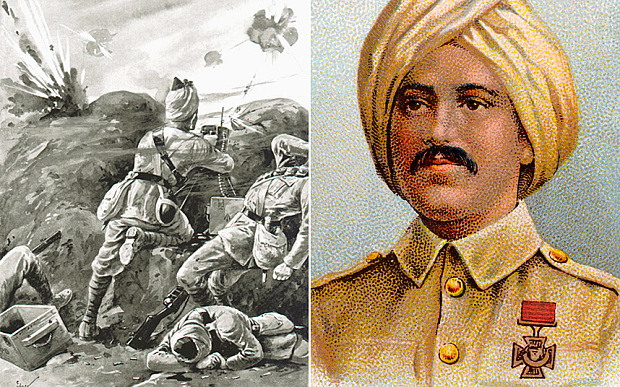
First Muslim to be awarded Victoria Cross needs recognition, say former Army chiefs

Khudadad Khan, the first Muslim soldier to be awarded the Victoria Cross, should be more widely recognised, say two former heads of the Army 

Sepoy Khudadad Khan was awarded the Victoria Cross during World War One Photo: GETTY

by Edward Malnick

Two former heads of the Army have called for greater recognition of the first Muslim soldier to be awarded the Victoria Cross, in a move intended as a “riposte” to the “sickening extremism” of Isil militants.

General Lord Dannatt and General Lord Richards lead a group of peers, MPs, historians and religious leaders who say children should be told about the role played by Muslim troops in the First World War.

In a letter to The Telegraph they say that the actions of Sepoy Khudadad Khan in a battle at Ypres 100 years ago on Friday“exemplified the courage” of many who served in the war.

The knowledge of his role, together with that of the other 400,000 Muslims who fought alongside British troops, is vital to “fully understand the multi-ethnic Britain that we are today”, they add.

British Future, the think tank behind the letter, believes that the commemoration of Sepoy Khan and the other Muslim soldiers will act as a rebuttal to Isil extremists. It has been claimed that more than twice as many British Muslims have travelled to Syria to fight alongside jihadists than are serving in the Armed Forces.

Dilwar Hussain, a Muslim academic and one of the signatories of the letter, said: “The quiet dignity of our commemoration of Khudadad Khan’s bravery and service is perhaps the most powerful riposte we could possibly send to the sickening extremism of Isil.”

Other signatories include Lord Ashdown, the formal Liberal Democrats leader, Sir Hew Strachan, the military historian, Baroness Warsi, the former Coalition minister and Sughra Ahmed, president of the Islamic Society of Britain.

“We wish today to highlight one man whose service exemplified the courage of many who served in the First World War,” they write.

They describe how on October 31 1914 Sepoy Khan, who was later promoted to the rank of subedar, fought off a German advance at Ypres, helping to protect two vital ports used to supply British troops with food and ammunition from England. He was one of 1.2 million men from the Indian Army who fought for the Allies in the war.

On Friday Lord Ahmad, the communities minister, will unveil a commemorative stone which will be laid at the National Memorial Arboretum in his honour.

He said: “In honouring the courage of Khudadad Khan we not only remember our shared history, we are also cherish the long tradition of Muslims fighting bravely alongside British soldiers, for a just cause in the service of this country.”

source: http://www.telegraph.co.uk / The Telegraph / Home> History> World War One / by Edward Malnick / October 31st, 2014

Why Firoza Came To Be Known As Mulund Ki Cyclewali

An inspirational story of a girl from a middle class family in Mumbai, who defied all odds to follow her passion – cycling!

On December 6, 1992, when all eyes in the country were set on Ayodhya, 21-year-old Firoza, born and brought up in Mulund area of Mumbai, had only one goal in her mind – to participate in the first cyclothon of her life.

Her mother did not believe her daughter would even be able to complete the cyclothon, let alone stand fourth in it. She had strong reasons to dismiss Firoza’s dream. The cyclothon was a professional event consisting of a 7.5-km run, followed by 30-km cycling, and then another 7.5-km run. Her daughter had no training to participate in such an event. Worse, Firoza did not even have a t-shirt and track pant to take part in the cyclothon.

“I was determined to participate in the cyclothon. Hence, I borrowed a t-shirt and track pant from a neighbour’s son, Firoz Kazi, who was thrice my size. Wearing an over-sized t-shirt, I folded the track pant at least eight times, and left home with Atlas Concorde road bike, which I had borrowed from our newspaper vendor, Mandar Joshi. Being an amateur cyclist, I did not even carry a water bottle with me. During the cyclothon, I felt dehydrated, but managed to not only complete it, but also stand fourth in it. My mother could not believe when I told her the cyclothon result,” narrates Firoza, who is now 43 years old and lives with her 12-year-old son in Juhu area of Mumbai.
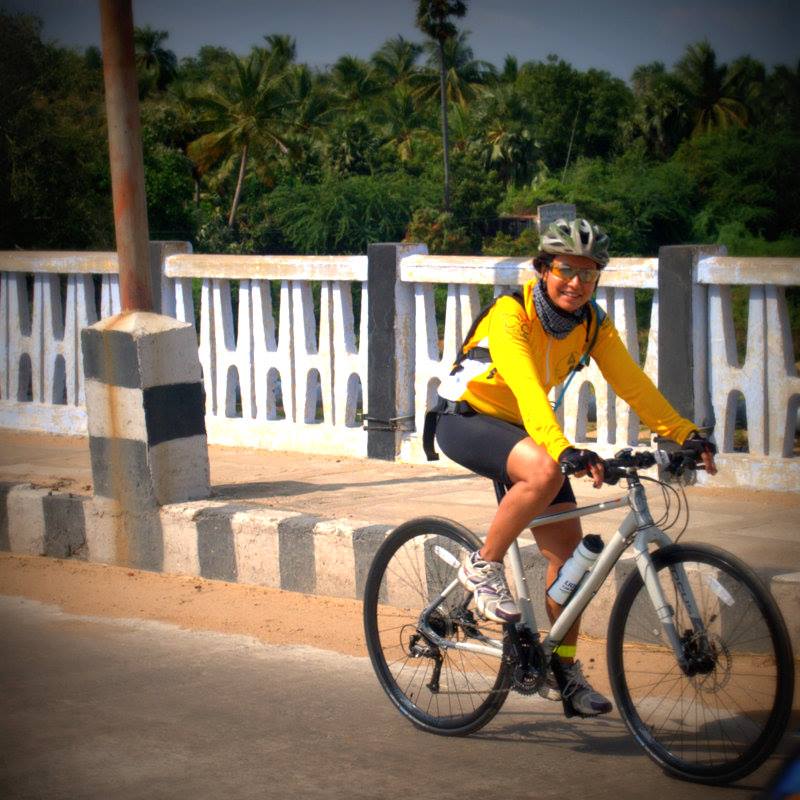
Firoza01MPOs31oct2014 Today, Firoza (better known as Fizzy), is a prominent figure in the cyclist community of the country. Three months ago, she, along with Piyush Shah, launched ‘The Smart Commute – Cycle2Work’ project in Mumbai, which saw people ditch their cars and instead cycle to work. Last September, she became the first Indian woman to complete 200 km [Mulund to Igatpuri and back] in 13 hours on a folding cycle.

Early years

Firoza was born on April 29, 1971 in a middle class Muslim family. Her father, a mistry with Mazgaon dock, was not well-educated and had limited finances. Being the second girl child, Firoza’s birth did not bring any cheer to the family.

Till about eight years of age, Firoza had no connection with a bicycle. Then, one fine day, her mother decided that the second daughter must learn to cycle to be useful to the household. So, a boy named Azim Kazi, who lived in the same colony (Mazgaon Dock Company, Vishwakarma Nagar in Mulund) as Firoza’s family, was requested to teach cycling to the eight-year old. Firoza learnt cycling within a day. And soon, it became Firoza’s duty to run errands for her mother.

Since resources were limited, Firoza’s father could not buy her a cycle. She was daily given 50 paisa to rent a bicycle for 30-minutes. During this half an hour, Firoza did all the market work for her mother. “I instantly fell in love with cycling and used to look for opportunities to hire a cycle. Whether it was buying vegetables or stationery or visiting the laundry, all tasks were accomplished on a cycle,” reminisces Firoza, who by then also had a younger brother, Esmail.

Firoza02MPOs31oct2014

Firoza gets a bicycle

By the time Firoza was a teenager, she had a cycle of her own – a second-hand bicycle gifted by her chacha (father’s younger brother). However, the financial situation at home was not too good. So, Firoza, while still in junior college, started giving private tuition to other students in and around her colony. She was only sixteen. “Every evening, I used to take out my cycle and visit different households to give tuition. This way I cycled regularly and also earned some money,” says Firoza. She clearly remembers those days of the month when she was menstruating and had to cycle long distances for the tuitions. She could not afford sanitary napkins and had to make do with a cloth piece, which led to rashes and extreme discomfort during cycling. But, she did not give up on either the tuition or the cycling.

A large share of the money earned through tuition was handed over to her mother for household expenses, and a small amount Firoza saved for herself. Soon, she had enough savings to buy a brand new bicycle – BSA Street Cat. Around the same time, she also became famous as Mulund-ki-cyclewali, as she was possibly the only girl in her late teens who was regularly spotted cycling in that area.

Roadblocks

Post schooling, Firoza joined Mulund College of Commerce to pursue B.Com. Again, she was the only girl to cycle to college. Predictably, a lot of boys in the college got interested in her. But then came a turning point in her life. Since her elder sister was entering marriageable age, maulavis started visiting her parents and telling them to put a stop to Firoza’s cycling. Her mother was warned that too much cycling would rob her daughter of any future prospect of bearing a child. Also, it would come in the way of getting a good alliance for the elder daughter.

Overnight, due to societal pressure, Firoza’s mother banned her from wearing jeans. Salwar-kameez and dupatta became the new dress code. “It all came to me as a shock, but I was adamant about not giving up cycling. So, I started cycling in salwar-kameez and dupatta. The latter posed a great risk while cycling,” narrates Firoza.

After finishing with her studies, Firoza joined Godrej as a sales and marketing person. While she worked during the day, her evenings were still spent cycling. However, none of her colleagues were aware of her passion for cycling. In early 1990s, cyclists were not respected and cycling was associated with poor people, such as dabbawallas and newspaper vendors.

From Godrej, Firoza moved to Business India, Tata Press Yellow Pages, Motorola, and Mid Day. She continued working in the field of marketing. Meanwhile, her parents decided to sell their Mulund flat and shift to Mumbra, a predominantly Muslim area in Thane, after the ghastly Hindu-Muslim riots of 1993. In May 1996, much against the wishes of her family, Firoza married a Kerala Hindu boy named Suresh, who had his own travel business. Post wedding, she moved in with Suresh to Juhu, while her mother sold off Firoza’s cycle without informing her.

Marriage changed Firoza’s life. She got busy with managing the household and strengthening her career, and cycling took a backseat. In 2002, her son Ishaan was born. The next couple of years were spent raising her son and building her advertising business.
Firoza03MPOs31oct2014

 A new beginning

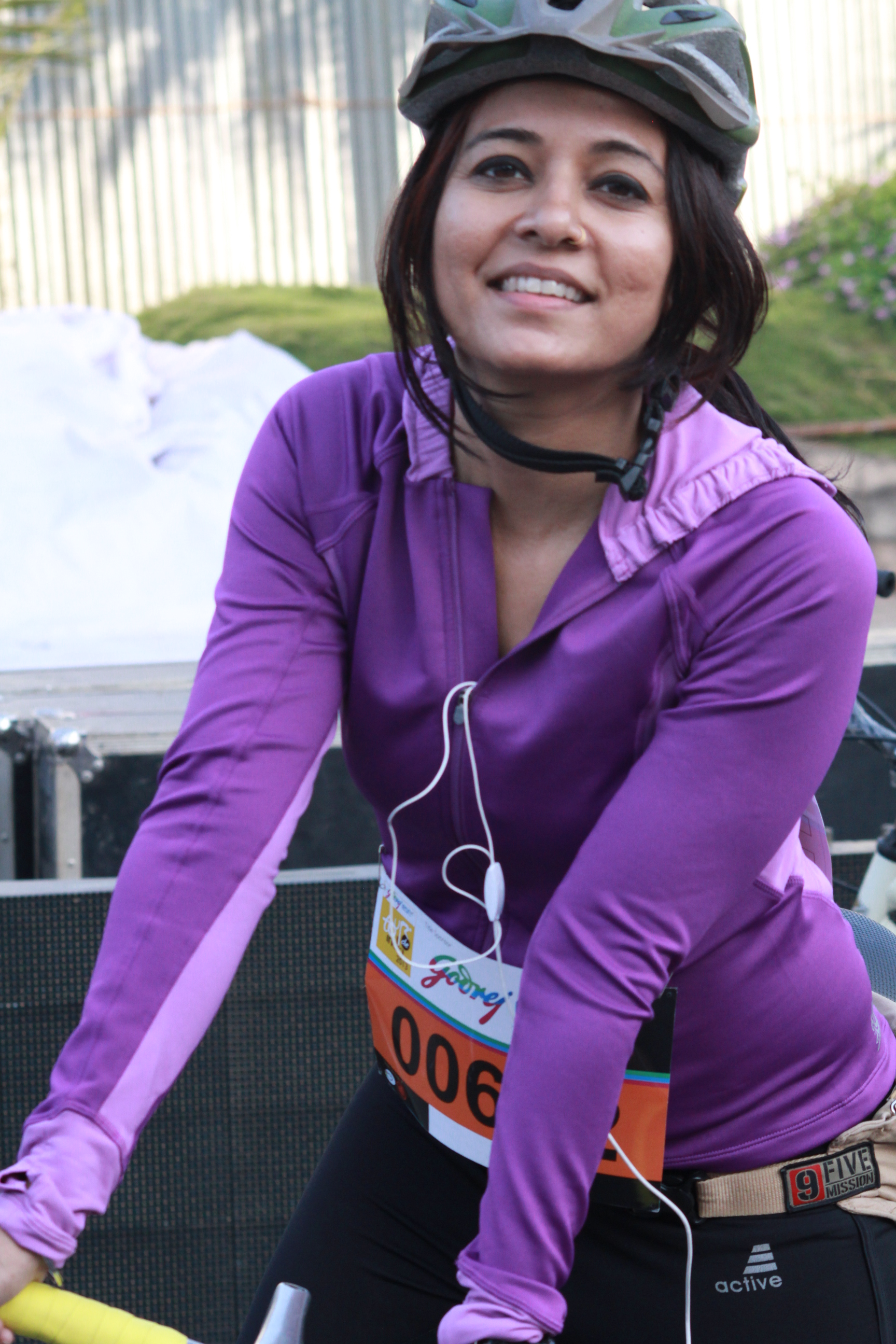
In 2010, Firoza came to know about Salman Khan’s much publicised ‘Being Human Mumbai Cyclothon’. With great interest she read that over 6,000 cyclists were expected to participate in the event, which was to take place on the swanky Bandra-Worli sealink. She decided not to miss this opportunity of going back to cycling. But, there was a basic hurdle. She had no cycle!

“I decided to buy a cycle and met a few dealers. Whereas most women invest in gold, I decided to invest in a good cycle and bought Trek 7100 for Rs 21,000, way beyond my budget,” says Firoza, who participated in Mumbai Cyclothon 2010 and started a new inning of cycling in her life.

Since then, there has been no looking back. The 2010 event provided a much-needed platform to Firoza to connect with professional cyclists, dealers and brands who sponsor cycling events. In the last five years, Firoza has earned the respect of cyclists across India.

She has won several accolades for her efforts. She regularly participates in various cycling events and recently kick-started a unique Cycle2Work project in Mumbai. The aim of this green mobility project is to promote cycling as an alternate mode of transport and encourage Mumbaikars to cycle to work. For Firoza, all this is just a beginning. “But I have promises to keep, and miles to go before I sleep,” she adds.

source: http://www.thebetterindia.com / The Better India / Home> Mumbai / by Nidhi Jamwal / October 15th, 2014
City Team Wins State Throwball Championship

The men’s team of Mysore District Throwball Association, won the title in the State Throwball Championship conducted by Karnataka State Throwball Association at Bangalore recently.

(standing from left) Nayaz, Madhu, Jassim, Shivraj, Supreeth, Purushotham, Pawan; (sitting from left) Hemanth (Captain), Harshith, B. Bharath, Vinay, Srinivas, Manjunath (Manager) and Sam Peter (Coach).

source: http://www.starofmysore.com / Star of Mysore / Home> Sports News  / Saturday ,  October 25th, 2014

Karnataka’s Athletic Team for Nationals Announced

Bangalore :

Karnataka Athletics Association has named a 25-member team (12 men and 13 women) for the 54th National Open Athletic Championship to be held in New Delhi from Nov. 2 to 5.

Men:

N. Vaishak (100M, 4x100M relay); G.N. Bopanna (100, 200, 4x100M relay); Salman Abbas (200, 4x100M relay), Jayaprakash C. Shetty (400, 4×400 relay); Jagadish Chandra (400M hurdles, 4×400 relay); Supreeth Raj (high jump); Chetan B (high jump); Bastin Joseph (400 hurdles, 4×400 relay); M.K. Sumanth (110M hurdles, 4×100 relay); Vishwambar (400, 800, 4×400 relay); Sunish Babu (200, 4×100 relay); Abhishek N. Shetty (Decathlon).

Women:

H.M. Jyothi (100, 200, 4×100 relay); G.K. Vijayakumari (200, 400, 4×400 relay); Ashwini Akkunji (400, 400 hurdles, 4×400 relay); M. Arpitha (400 hurdles, 4×400 relay); Meghana Shetty (100 hurdles, 4×100 relay); Pragna S. Prakash (100 hurdles, 4×100 relay); Sini A. Markose (800, 1500, 4×400 relay); Joylinem Lobo (triple jump); Sahana Kumari (high jump); M.G. Padmini (100, 200, 4×100 relay); Bhuvi Shankar (100, 4×100 relay); G.M. Aishwarya (long jump); Khyati S. Vakharia (pole vault).Team manager: M. Laxman.

source: http://www.starofmysore.com / Star of Mysore / Home> Sports News  / Saturday ,  October 25th, 2014

Know the magic of ‘four’ in Charminar

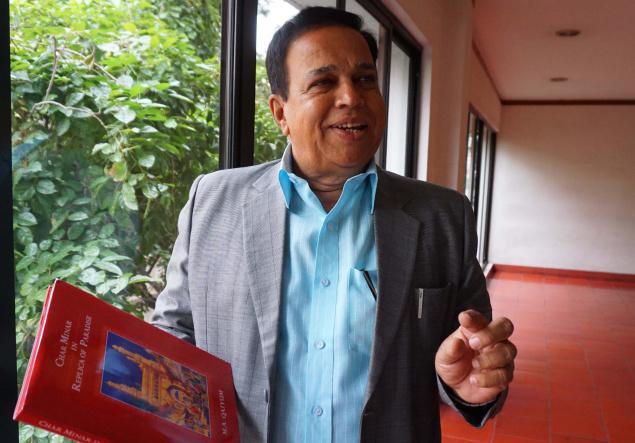
M.A. Qaiyum, historian, with his new book "Charminar in Replica of Paradise" Photo: Satyanarayana Gola / The Hindu
M.A. Qaiyum, historian, with his new book “Charminar in Replica of Paradise” Photo: Satyanarayana Gola / The Hindu

Do you know that great geometric combinations and mathematical reasoning has gone into the construction of Charminar? Visitors are usually astounded by the beauty of the 16 century monument, but not many know how the number ‘char’ (four) and its multiples figure in the designing of the structure. In at least 22 spots the magic of four dazzles.

Of course, the main Minars and arches are four. So are the small arches decorated on each side of the main arch. The number of galleries built in each Minar at different level is four. Again each Minar is divided into four parts. The supporting arches (big petals) to galleries and main dome in each Minar are four. The number of entrance arches built in four directions to enter the Minar is also four. And it was the fourth Qutb Shahi king, Mohd. Quli Qutb Shah, who built the Charminar!

There are also effigies of pigeon, parrot, squirrel and peacock in the delicate stucco work of Charminar. Mind-boggling, isn’t it? If your curiosity is aroused, don’t mind. You can now find all about Charminar, the little known and not so well-known things, in the new book on the monument authored by M.A. Qaiyum, retired deputy director, Department of Archaeology and Museums.

The book titled “Charminar in Replica of Paradise” is, perhaps, the first publication devoted entirely to the legendary Qutb Shahi masterpiece.

“So beautiful, so old and so complete”. One is compelled to repeat this comment of a western traveller after going through the 220-page book. The 190 multi colour photos, illustrations and paintings on real art paper make it a collector’s item.

Mr. Qaiyum traces the 400 years of journey from Qutub Minar to Charminar (1192-1591 AD). He throws light on monuments all over the world which sport Minars to explain the concept of minarets. For instance, there are references with pictures of the first Turkish mosque with four Minars built between 1569-75, the Qaismi Mosque with four minarets built in Iranian architects in Baghdad, the four Minars on the main entrance gate of Emperor Akbar’s mausoleum in Agra. Not just this. The book contains pictures of spiral minaret (Iraq), square minaret (Morocco), cylindrical minaret (Afghanistan).

Mr. Qaiyum discusses in detail the Paradise gardens and their significance in Persian life and culture. A well laid out garden is a symbol of happiness and prosperity. The ‘Char Bagh’ or four garden pattern was introduced in India by the first Mughal king, Babar. This concept was also followed when Charminar was constructed. “In later years the gardens and parks gave way to streets and houses and few know that Hyderabad once had a virtual garden of Paradise”, says Mr. Qaiyum. He can be reached on phone 8978877448.

source: http://www.thehindu.com / The Hindu / Home> News> Cities> Hyderabad / by J.S. Ifthekhar / Hyderabad – October 28th, 2014

Sania’s sacrifice pays off

Tennis star Sania Mirza with the gold and bronze medals she won in the recent Incheon Asian Games, in Hyderabad on Monday. Photo: V.V. Subrahmanyam / The Hindu

Three-time Grand Slam winner Sania Mirza says it took a small sacrifice to play for India at the recent Asian Games. She had to skip the Wuhan Open, which meant losing 900 ranking points.

“But, at the end of it all, I am glad that we (tennis players) contributed to the medals tally. There is no better feeling than representing your country in such a prestigious event,” remarked Sania after her return home on Monday with a mixed doubles gold and bronze in the women’s doubles event.

“I was aware that if I skipped the Wuhan Open, it would mean losing points after having qualified for the challenging WTA Tour finals featuring the top eight players in the world — in both singles and doubles.

“Yet, I was confident of staying in that elite group and I have been proved right,” said a smiling Sania as she looked back at a satisfying last three months, having won the US Open mixed doubles title, Tokyo Open women’s doubles title, two medals at the Asian Games and last weekend’s runner-up finish in the Beijing Open. Significantly, Sania also officially announced that she would be partnering Chinese Su-Wei Hsieh on the women’s doubles circuit from next January.

“It was a call that Cara Black and I had to take. I feel that by playing in a couple of tournaments with Hsieh, we can adjust to the demands of the circuit.

“Being a top doubles player herself, Hsieh should be aware of the challenges ahead. The ultimate goal is to win another Grand Slam title,” Sania said.

Biggest challenge

What was the biggest challenge to be continuously at her peak?

“I just try to stay positive without thinking too much about the results. If you are in a position to give more than 100 per cent, the results are bound to follow.

“It is difficult to predict what will be the outcome of the WTA Tour finals, more so because it is a knockout format. Let us just wait and see how things shape up,” said Sania.

Reflecting on the Asian Games, where she had to strike up combinations in women’s doubles and mixed doubles, Sania recalled that being the senior player she had to take the lead.

“It was all about ensuring the mood was upbeat and not to invite pressure by thinking too much. The focus was just on training hard and playing to our potential,” she said.

“I feel that Saketh (Myneni) is a better player than his current ranking indicates. His forehand is brilliant, and I told him in a lighter vein that if he doesn’t break into the top 50 within a year, he would face the music,” Sania said.

About her goals, she said: “Another Grand Slam title and then the journey to the 2016 Rio Olympics. That is one medal I would love to win before I think of quitting the sport. I think I have the game and the grit to keep going. All I need is a little bit of luck to stay free from injuries,” Sania signed off.

source: http://www.thehindu.com / The Hindu / Home> Sport> Tennis / by V.V. Subrahmanyam / Hyderabad – October 06th, 2014

Cara-Sania win doubles title at WTA Finals

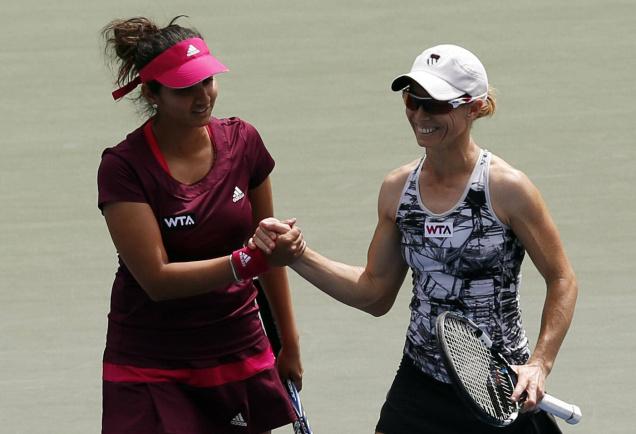
Cara Black of Zimbabwe (R) and Sania Mirza. File photo. / Reuters

Cara Black and Sania Mirza cruised to the doubles title at the WTA Finals with an authoritative 6-1, 6-0 win over defending champions Peng Shuai and Hsieh Su-Wei on Sunday.

For Black, it was the third time she had won the doubles crown at the WTA Finals, while for Mirza it was her first victory at the season-ending championships.

It was a surprisingly one-sided final, given Peng and Hsieh entered the match with a 12—0 record in doubles finals, including this year’s French Open and Wimbledon in 2013.

The winning pair received $500,000 in prize money.

source: http://www.thehindu.com / The Hindu / Home> Sport> Tennis / AP / Singapore – October 26th, 2014

Tipu’s watchtower under attack by visitors

Mangalore  :

It was meant to be a watchtower to contain enemies, but today the 224-year-old monument constructed by Tipu Sultan at Sultan Bathery is under attack from within: visitors scribbling messages on its walls and throwing garbage, including liquor bottles, all around.

The monument has fallen on hard times and been subject to vandalism as there’s no attendant to guard it. Besides, the Archaeological Survey of India’s foreman at Karkala visits the monument just once a fortnight.

The watchtower, constructed in 1784, is the favourite haunt of star-crossed lovers from the city and students of various colleges. The monument is 4km from the city and is located on the banks of the scenic Gurupur River where visitors can have the spectacular view of the Thannir Bavi and Bengre and the vast expanse of the Arabian Sea. Sultan Battery, the watch tower, is said to have been built to contain the entry of enemy battleships to the Gurupur river. The watchtower looks like a mini fortress with several musket holes for mounting guns all around.

While vulgar messages being scribbled by miscreants on the walls has been a problem for long, now many use the spot to binge. Beer bottles, cake wrappers, empty plastic bottles and bags lying around reveal what the monument is being used for in the absence of an attendant there.

ASI Karkala sub-circle foreman YB Bhajantri pleads helplessness. “The attendant posted there has been transferred to Barkur (Udupi district). The ASI gives Rs 4,500 per month for maintenance, which is hardly sufficient. I come once in 20 days, get labourers and clean up the monument structure and its surroundings,” he said.

He said rains had prevented him from visiting the monument recently and he has been informed of the grass growth and the rubbish strewn at the monument. He said that by this month-end he would get the place cleaned up again.

source: http://www.timesofindia.indiatimes.com / The Times of India / Home> City> Mangalore / by Stanley Pinto, TNN / October 20th, 2014