BIHAR / DELHI :

New Delhi :
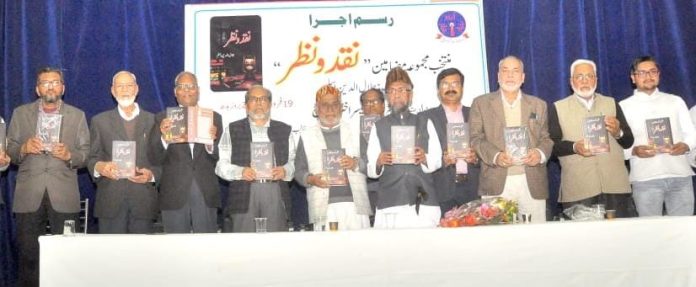
The 19th Memorial lecture commemorating the esteemed Urdu journalist Mahfoozur Rahman was held at the Ghalib Academy in Nizamuddin, Delhi. Mahfoozur Rahman, a distinguished journalist from India, was among the eminent Muslim journalists who passed away on February 6, 2010. Every year, one or two such memorial lectures are organized to honour his invaluable contributions.
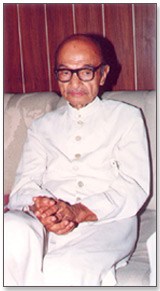
This year’s lecture centred on the theme: “Syed Shahabuddin’s National and Milli Services.” Urdu journalist Wafa Azmi of Rashtriya Sahara newspaper, Delhi, delivered a meticulously prepared discourse on this subject. He emphasized that amidst those dedicated to religion, politics, culture, journalism, and social service, the late Syed Shahabuddin remains a prominent ambassador and distinguished IFS officer. Azmi underscored that omitting his name from discussions would be a disservice not only to him but also to society at large.
Wafa Azmi shared that Shahabuddin was born on November 4, 1935, near Gaya in Bihar—though some accounts suggest Ranchi as his birthplace. After completing his early education locally, he moved to Patna for higher studies, earning an MSc from Patna University. He also served there as a faculty member for a few years. During this period, he prepared for the Union Public Service Commission exams, qualified, and secured a high rank in the Indian Foreign Service (IFS).
His diplomatic career began as Deputy Consul General in New York. Over the years, Shahabuddin represented India in various countries, serving as an ambassador and diplomat. In 1978, he voluntarily retired from diplomatic service and ventured into Indian politics to address national issues.
Dr. Zafarul-Islam Khan a senior journalist, scholar and author shared his long-standing association with Shahabuddin, recalling that he was brought into the national fold by him. Initially a journalist, Shahabuddin invited him to participate in the All India Muslim Majlis-e-Mashawarat, where he was soon appointed General Secretary and later President. Dr. Zafarul-Islam praised Shahabuddin’s deep trust in him, both professionally and personally.
He recounted a personal experience from a 2003 trip to Kashmir with Shahabuddin, where sharing a room revealed his inner greatness—his early morning Fajr prayer and recitation of the Quran. Dr. Zafarul-Islam also highlighted Shahabuddin’s unwavering commitment to Indian constitutional principles, always insisting that all actions be within the framework of the Constitution, which he regarded as a sufficient safeguard of rights.
Furthermore, he mentioned that Shahabuddin launched the English-language magazine “Muslim India,” which he published from 1980 to 2000. In 2002, Shahabuddin asked him to resume publication, which he did for two years before halting due to financial constraints. Later, Shahabuddin revived the magazine, which continued to be published for several more years.
Dr. Zafarul-Islam lamented that although “Muslim India” was a quality publication, its readership remained limited, and it often operated at a loss. Despite this, it featured valuable discussions on Muslim and national issues. He revealed that he had compiled Shahabuddin’s editorials into two volumes, which are soon to be published and have been personally proofread by him. He also shared plans to publish a comprehensive volume of all Shahabuddin’s writings.
He clarified that Syed Shahabuddin was not a populist leader—a view reinforced after the demolition of the Babri Masjid. Moreover, Dr. Zafarul-Islam recounted Shahabuddin telling him that the idea of boycotting January 26, the Republic Day or wearing black bands was not his but originated from Azam Khan, and that Shahabuddin was compelled to accept it.
Senior journalist Masoom Moradabadi highlighted Shahabuddin’s heroic role during the Shah Bano case, when the Indian Muslim Personal Law Board launched the largest post-independence movement among Muslims, with Shahabuddin’s speeches drawing crowds in the hundreds of thousands.
Prof. Naseer Ahmad Khan, a close associate of Shahabuddin, expressed regret that despite his stature as a respected leader across educated circles and among the masses, only a modest funeral was held—attended by a few officials from Jamaat-e-Islami Hind, the Muslim League, and other organizations. He contrasted this with the funeral of Maulana Muhammad Ahmad Samar, which saw an estimated two to 2.5 lakh mourners, highlighting society’s oversight of Shahabuddin’s immense contributions.
Father Solomon George, the guest of honour, remarked that the stories and media reports about Shahabuddin barely scratch the surface of his efforts in social welfare and minority rights. As a fellow minority, he emphasized the importance of reflecting on why minority leaders often become vulnerable at critical moments, especially in today’s India.
Mr. Nisar Khan moderated the event, which was attended by notable Urdu personalities and presided over by retired Professor Abdul Haq of Delhi University, an esteemed scholar of Urdu and Persian literature.
In his presidential address, Professor Abdul Haq expressed his gratitude for the opportunity to participate in this gathering. He extended heartfelt congratulations to Shahabuddin, recalling his first meeting with him during Chandrashekhar’s tenure as Prime Minister. He reminisced that Shahabuddin was then a shining star in Muslim politics, actively listening to the Prime Minister’s serious discussions on the Babri Masjid issue.
This event served as a fitting tribute to a truly remarkable leader who left an indelible mark on society through his dedicated service and unwavering principles.
source: http://www.indiatomorrow.net / India Tomorrow / Home> Politics> Society / by Zillur Rahman Haider / December 02nd, 2025