Tag Archives: Indian Muslim Scientist

Meet Khadija Kanwal Khanum Capturing Solar Energy

INDIA :

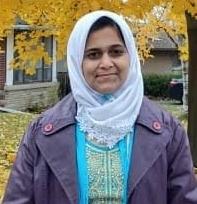
Khadija Kanwal Khanam

his is the first part of the series called-Scientist Says-where we would be presenting research works of young scientists in various fields.

Khadija Kanwal Khanum has done her PhD and Postdoctoral fellow from Indian Institute of Science (IISc), Bengaluru, India (2010-2018). Presently, she is a postdoctoral fellow at the University of Waterloo, Waterloo, Canada. She shares with Rashida Bakait of India Tomorrow, her significant studies and research on “Solar Cells’’.

Q. What was the topic of your research at IISc and a brief explanation about the same?

Ans. The broad topic of my doctoral and postdoctoral research at Indian Institute of science, Bengaluru, was fabrication, characterization and analyses of organic and hybrid photovoltaics (solar cells) to enhance the solar cell’s device performances. Specifically, the title of my doctoral thesis was “Morphological Architecturing of electroactive materials in organic electronics”. In this research, organic and organic-inorganic (hybrid) semiconductor/electroactive materials are used, instead of inorganic semiconductor materials/silicon to fabricate the solar cells. The organic and hybrid materials compare to the inorganic materials/ silicon counterparts are lab synthesized materials with ability to easily tailor the band gap (as semiconductors), and require less energy during their solar cell fabrication hence cost-effective. However, these organic and hybrid solar cells have till now reported, less power conversion efficiency, PCE (>25%) and are less stable in environment and therefore, require extensive research before their wide commercialization.

 Q. What was the aim behind your research?

Ans. In this research, a different fabrication procedure was used called Electro-spinning, in order to enhance the light absorption as well as increase the charge (electron-hole) separation in the solar device, thereby increasing its PCE.

 Q. What kind of new aspects were highlighted in your research?

Ans. The highlighting parts of the research were 1).The active layer of the solar cell which is generally in a thin film form was modified to fiber and various other forms such as network (Khanum and Ramamurthy, 2016), photonic (Khanum et al., 2017), two and three-dimensional triangles (Khanum and Ramamurthy, 2018) and spike-spheres (Khanum et al., 2015) structures using electrospinning/ electrospraying method. 2). The modified active layers assisted in improving the solar devices’ light absorption by 19 – 31% and PCE by 23 – 68%.

Q. When did you begin and complete your research?

Ans. I joined IISc as a doctoral student, in Aug 2010 and subsequently took few advance and elective courses in polymer science and technology, nanotechnology, vacuum systems, sensors and material characterization for one year, in order to gain knowledge and understanding of the above subjects, which helped me in my research. I started my research sometime around June 2011, submitted my doctoral thesis in July 2015, defended the thesis in July 2016, and continued the research as research associate and postdoctoral fellow till Mar 2018.

 Q. What kind of challenges you faced?

Ans. Since organic electroactive materials used in this research are conjugated small molecules and polymers possessing, low molecular weight than conventional polymers hence, fiber formation using electrospinning was difficult. Therefore, lot of optimization of the electrospinning process parameters and modifications of the organic and hybrid materials used such as; preparation time, concentration and solvent used had to be meticulously carried out, during solar cells fabrication. Additionally, maintaining inert atmosphere both, during fabrication and characterization of solar cells required lot of patience and cautions, making this study iterative and time-consuming. For instance, it took almost two years in this study, to obtain first few successful solar cell devices.

Q. Any scholarships or awards for research?

Ans. For my PhD and postdoctoral research, major part of the funding was received as scholarship from Ministry of Human Resource Development (MHRD) and Institute (IISC) research associate fund while during last 15 months; I received scholarship from my Ph.D and Postdoctoral advisor from his project grant. I received few awards and grants to present the research work in various international conferences; Manish Narayan memorial award from Department of Materials Engineering, IISc in 2014, Indian Institute of Science support and grant in 2014 and 2015, Department of Science and Technology (DST) young scientist in 2016 and International Workshop on Advanced Materials (IWAM), Ras Al Khaimah, UAE travel grant in 2016 and 2018.

Q. How do you think your research would be beneficial to industry/ society?

Ans. Energy from sun that strikes the earth in a year is enormous, precisely equals to 3 x 1024 J, or about 10, 000 times more than current global energy consumption. Covering 0.1% of the earth’s surface with 10% efficiency solar cells would suffice the energy demand of the whole world (Siddiki et al., 2010). Therefore, my research of improving the light absorption and PCE of organic and hybrid solar cells through morphological architecturing would be one of the smart tools that can be used to trap and utilize the renewable and sustainable energy resource (solar energy).

Q. What was the conclusion of your research?

Ans. In conclusion, in this research `Electrospinning Processing Technique’ is evaluated as one of the novel processing techniques for morphology patterning, leading to improvements in structural, optical and opto-electrical properties of organic and hybrid electroactive materials. Further these electroactive materials based on morphological patterning were also evaluated as organic solar cells with 19 – 31% increment in light/ optical absorption and 23 – 68% enhancement in PCE (Khanum and Ramamurthy, 2016; Khanum et al., 2017; Khanum and Ramamurthy, 2018).

 Q. How do you think your research can be carried forward?

Ans. The research could be extended in studying the life stability and field performance of these solar cells. The research could also be extended by using electrospinning processing technique to generate more morphological structures than studied in this research (mentioned in Q3’s reply) and evaluate their properties in the field of photovoltaics/solar devices. The already generated morphological structures such as network, photonic, two and three-dimensional triangles and spike-spheres structures are made up of organic electroactive materials and can be explored in the field of sensors and medical applications as in drug delivery and as tissue scaffolds, therefore the feasibility in these areas could also be one of the future direction.

Q. Can you brief us about your current research?

Ans. Yes, my research at University of Waterloo, Canada is on nanocomposites materials employed in power industry. As the World’s energy demand seems to be all time high and increasing, the focus of research is now more on renewable and sustainable energy. The power industry needless to mention, acts as a bridge between all types of energy generation and the consumers. In my present work, the importance of nanocomposites materials and its processing with respect to power industry are researched. Nanocomposites are remarkable class of materials, consisting of various types of nanofillers which act as reinforcement in the matrix and thus enhance the desired properties. These nanomaterials have to be dispersed homogeneously in the matrix to gain optimized effects and therefore require special processing tools. Therefore, in this research, processing of various polymer nanocomposites of silicone filled with Silica and Alumina fillers are studied.

Q. Apart from your main research topic, would you like to list any other work you collaborated and worked on?

Ans. Yes, besides fabrication, characterization and analyses of organic and hybrid solar cells, I collaborated and worked on few other interesting topics such as– Developed silk and melanin nanofibers mats for the bio-application such as scaffolds for tissue engineering, evaluated the effectiveness of non-water based cleaning mechanisms for photovoltaic (PV) systems. Studied the influence of dust density and composition on performance of PV systems using Infrared (IR) radiation and assessed magnetic materials and their integration in fibre reinforced polymer composites for structural applications.

source: http://www.indiatomorrow.net / India Tomorrow / Home> Education / by Rashida Bakhait, India Tomorrow / March 17th, 2021
Dr. Ahamed Irshad: Developing Hydrogen Fuel and High Energy Batteries For Green Vehicles

Kerala, INDIA / Los Angeles, USA :

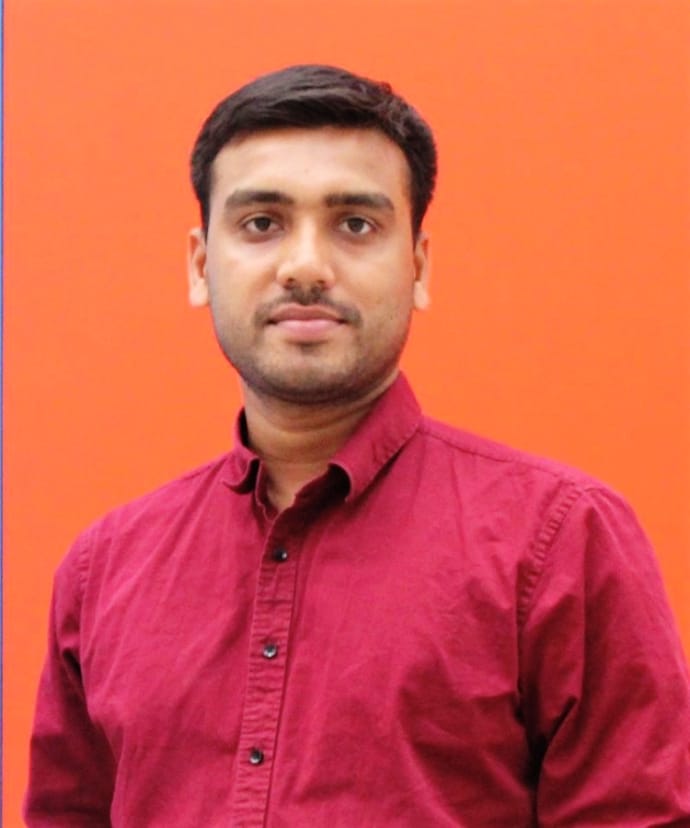
Dr. Ahamed Irshad.

This is the fifth part of the series called `Scientist Says’ where we bring for our readers the significant and commendable research works of young scientists.

Dr. Ahamed Irshad is a research associate in the department of chemistry, University of Southern California, Los Angeles. He has been associated with National Science Foundation, US Army, and Department of Energy on various battery projects. He has authored several articles in international journals published by American Chemical Society, Royal Society of Chemistry and Electrochemical Society. He served as the topic editor for Journal of Energy and Power Technology, and reviewer for international journals. He is also a recipient of Cottrell scholar award, Bristol-Myers-Squibb fellowship, Dr. J. C. Gosh medal, and Indian Academy of Science award. He shares some of his significant research works with Rashida Bakait of India Tomorrow.

Q. Please briefly explain your research.

Ans: My research interest is on developing novel materials for electrochemical energy conversion and storage devices. The research area can be broadly classified into two: (i) hydrogen fuel production from water and (ii) high energy batteries for electric vehicles.

The first project on hydrogen fuel was carried out during my PhD at Indian Institute of Science, Bangalore. Hydrogen is considered as a fuel for the future. While burning petrol or diesel release huge amount of greenhouse gases, the only by-product of hydrogen fuel is water. Currently, hydrogen is produced from methane by steam-methane reforming. This method also produces CO2 and hence cannot be counted as a green method. My research topic was on utilizing carbon free, inexpensive, and abundant water (H2O) molecules as the hydrogen source and use electricity to split water. The process requires energy close to 237 kJ mol-1 or theoretical voltage of 1.23 V. However, practical voltage is as high as  1.8-2 V due to sluggish kinetics. This limits the efficiency to 65-70 % and necessitates expensive catalysts such as IrO2 or RuO2. My research goal was to design and develop highly active, low-cost, and stable cobalt and nickel-based catalysts to improve the efficiency. The use of inexpensive catalysts would also reduce the overall cost and make hydrogen an attractive fuel.

The battery research was done in collaboration with US Army and Department of Energy at University of Southern California, Los Angeles. There is a growing demand for high energy batteries for electric vehicles. Current lithium-ion battery (LIB) technology has limited range (200-300 miles) and high cost of $130/kWh. In addition, LIBs use toxic cobalt-based materials. In recent years, lithium sulfur (Li-S) batteries have emerged as a promising substitute to LIBs due to its five times high energy density.  In addition, sulfur is earth abundant and less expensive. Commercialization of Li-S batteries is still hindered by its inability to charge/discharge quickly for several cycles. This has been attributed to high internal resistance and dissolution of soluble polysulfides. We proposed an electrode design with different carbons to reduce the resistance and developed an interlayer to improve the cyclability.

Q. What was the objective of your research?

Ans: Although water electrolysis is used to produce high purity hydrogen, its widespread deployment is impeded by the high cost. My goal was to develop cost-effective and robust catalysts based on nickel and cobalt instead of expensive platinum (Pt), ruthenium (Ru), and iridium (Ir) . I also wanted to investigate the key factors that affect the stability and activity. Similarly, Li-S battery technology has a high potential to replace LIBs(Lithium batteries). My primary objective was to identify the fundamental origin of the high internal resistance in Li-S batteries using a technique called electrochemical impedance spectroscopy. It was also intended to develop an advanced electrode structure to reduce the resistance that would allow to charge and discharge battery fast. Then again, we proposed a novel interlayer to stop soluble polysulfides diffusing from cathode to anode.

Q. What were the new findings of your research?

Ans: We prepared a series of novel materials such as cobalt-phosphate, cobalt-acetate, manganese-phosphate, etc. for water electrolysis. Our electrochemical quartz crystal microbalance studies suggested that the cobalt-phosphate catalysts are not stable at high voltage. In addition, the catalyst deposition was slow due to poor solubility of Co2+ in phosphate. We proposed the catalyst preparation from an acetate solution because the solubility of Co2+ in acetate is high and a large quantity of materials can be prepared in a short time. Cobalt-acetate also exhibited higher activity than cobalt-phosphate. In the case of Li-S battery, we used electrochemical impedance spectroscopy to probe the internal resistance. Our studies indicated that the high resistance originate from poor interparticle contact and sluggish battery reaction kinetics. When we added high surface area carbon, battery performed much better than before due to improved interparticle contact and high number of reaction sites. Adding an interlayer between electrodes stopped diffusion of soluble polysulfides. As a result of advanced cathode design and additional layer, our Li-S battery could be charged and discharged quickly for several cycles.

Q. What kind of challenges did you face?

Ans: The ideal catalyst should have high activity, stability, and preferably made of earth abundant, inexpensive, and non-toxic materials. It was a great challenge to incorporate all the features in a single material. For instance, cobalt-phosphate was very active but not stable. Low-cost manganese-phosphate didn’t show any catalytic activity or stability whereas highly expensive iridium-phosphate exhibited highest activity. Among all the materials tested, we identified cobalt-acetate as the most promising catalyst that showed high activity, stability, and relatively low cost. In the case of Li-S (Lithium-Sulfur) battery testing, identifying the key factors affecting the battery performance was a bit challenging. Impedance spectroscopy aided us to isolate a few factors that affected battery performance significantly. Fabrication of electrodes with different compositions and optimizing the electrode design was a herculean task.

Q. Any scholarship or award for research.

Ans: The battery project was financially supported by various federal and private agencies such as National Science Foundation, US Army, Department of Energy, and a battery startup called STAQ Energy. I was awarded the prestigious Cottrell award by the US National Science Foundation (NSF) and Research Corporation in 2020. I am also a recipient of Dr. J. C. Gosh gold medal in Physical Chemistry and Bristol-Myers-Squibb fellowship. The Council of Scientific and Industrial Research (CSIR), India, provided me fellowship for five years during my PhD. I also received Indian Academy of Science fellowship.

Q. How do you think your research would be beneficial to the society or industry?

Ans: There is a gradual increase in the CO2 and other greenhouse gases in the atmosphere. The transport sector contributes almost 30 % of the greenhouse gases. Moreover, the petrol and diesel price keep increasing every day, and these fuels will run out soon. It is the time to look for clean fuel like hydrogen. My research findings on low-cost catalysts will reduce the hydrogen fuel price and improve the efficiency of electrolyzer. It is also possible to interface the electrolyzer with solar panel or wind turbine to store renewable energy. Similarly, high energy batteries are essential for electric vehicles and portable applications. Our results on Li-S batteries will advance the battery technology beyond lithium-ion battery and reduce the weight and cost of car batteries. The use of high energy batteries will increase the driving range as well. These batteries will be useful for drones and other aerial vehicles also.

Q. When did you begin and complete your research? 

Ans: I have been doing battery research since I joined USC in 2017. My PhD started in 2011 and I submitted thesis in 2016. During five years of PhD, I entirely focused on developing catalyst for hydrogen production.

Q. Any other new research you are working on now?

Ans: Currently, I am investigating materials for fluoride-ion battery. In this case, the negatively charged fluoride ions are the charge carriers instead of positively charged lithium ions in lithium-ion battery. This is a new concept that has not been well explored. Another project is on alkaline batteries that are suitable for large scale stationary energy storage. I also continue to work on Li-S batteries for electric vehicles.

Q. How do you think your research can be carried forward further?

Ans: We have an extensive collaboration with scientists and research groups across the world. Currently, we are trying to utilize the technology and skills from different groups to understand the detailed molecular and crystal structure of the catalyst. This would allow us to establish structure-property relationship in these catalysts and investigate the fundamental reaction mechanism. We also communicated with battery companies and federal agencies to examine the feasibility of commercialization of our battery technology.

Q. Tips and suggestions for the budding scientists.

Ans: Career as a scientist is challenging yet a very rewarding experience. To be successful, you need to nurture scientific curiosity, creativity, deep passion, and perseverance. Always make sure that you learn the basic concepts thoroughly and keep yourself updated with scientific literature. Use the early years’ research career to learn as many techniques as possible that will help to tackle many scientific problems in future. Don’t hesitate to expose yourself to different ways of thinking by discussing ideas with peers, gaining experience in different research groups, and creating a network of friends. Communication is also important. You should learn to give presentations and write papers to share your research outputs with others. Just like in any other career, life as a scientist will have many ups and downs, but it’s your choice to scream or enjoy the journey.

source:http://www.indiatomorrow.net / India Tomorrow / Home> Education> Featured / by Rashida Bakait, IndiaTomorrow.net / April 16th, 2021