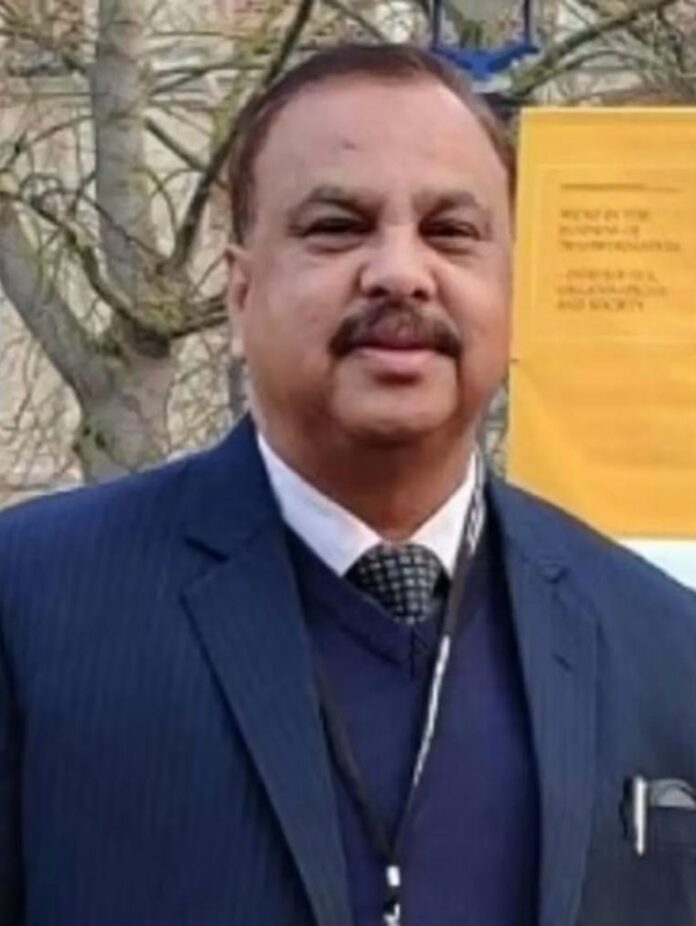
Professor Mohammad Mobin, Department of Applied Chemistry, Faculty of Engineering and Technology, Aligarh Muslim University (AMU), has been conferred the prestigious Professor B.P. Verma Memorial Award for 2025 by the Indian Chemical Society (ICS), recognising his contributions to research, development and innovation in Chemical Sciences and Engineering.
The honour marks a significant achievement in Professor Mobin’s academic career and reflects his sustained efforts towards advancing scientific research and translating innovation into meaningful technological and societal applications.
In a communication dated August 14, 2026, Prof. G. D. Yadav, President, Indian Chemical Society, conveyed the Society’s appreciation of Professor Mobin’s distinguished professional accomplishments, which have enhanced the stature of Chemical Sciences and Engineering and contributed to the advancement of Indian chemical and allied industries and society.
As part of the recognition, Professor Mobin has been invited to deliver the Professor B.P. Verma Memorial Award Endowment Lecture at the 63rd Annual Convention of Chemists (ACC 2026) of the Indian Chemical Society from December 14–16 at Graphic Era University, Dehradun.
Professor Mobin is presently serving as Vice Chancellor of Cluster University of Srinagar on deputation from AMU. His academic and research contributions span Chemical Sciences and Engineering, with particular emphasis on Materials and Corrosion, research innovation and technological development.
The Indian Chemical Society, one of India’s leading professional bodies in chemical sciences, has played a vital role in promoting chemical research, technology and industry while fostering collaboration among academia, research institutions and industry.
The Professor B.P. Verma Memorial Award adds another distinguished recognition to Professor Mobin’s achievements and brings pride to AMU and the wider academic and scientific community.
source: http://www.indiaeducationdiary.in / India Education Diary / Home> Educational News> University News / by iednewsdesk / August 17th, 2026
Two of South Africa’s internationally recognised, Indian-origin scientists were among the 38 people awarded the country’s highest civilian awards in recognition of their outstanding contributions toward public health.
Professor Salim Abdool Karim and Professor Keertan Dheda, were formally awarded the prestigious Order of Mapungubwe by President Cyril Ramaphosa at Pretoria.
This specific order recognises South African citizens who have achieved excellence and exceptional accomplishment to the direct benefit of South Africa and the global community.
The citation for Karim, who was awarded the Order of Mapungubwe in Gold, honours his monumental contributions to medical science and public health, particularly his groundbreaking research into HIV/Aids and tuberculosis (TB) epidemiology, and his exceptional leadership in national health policy development.
source: http://www.dailypioneer.com / The Pioneer / Home / by Fakir Hussain / May 21st, 2026
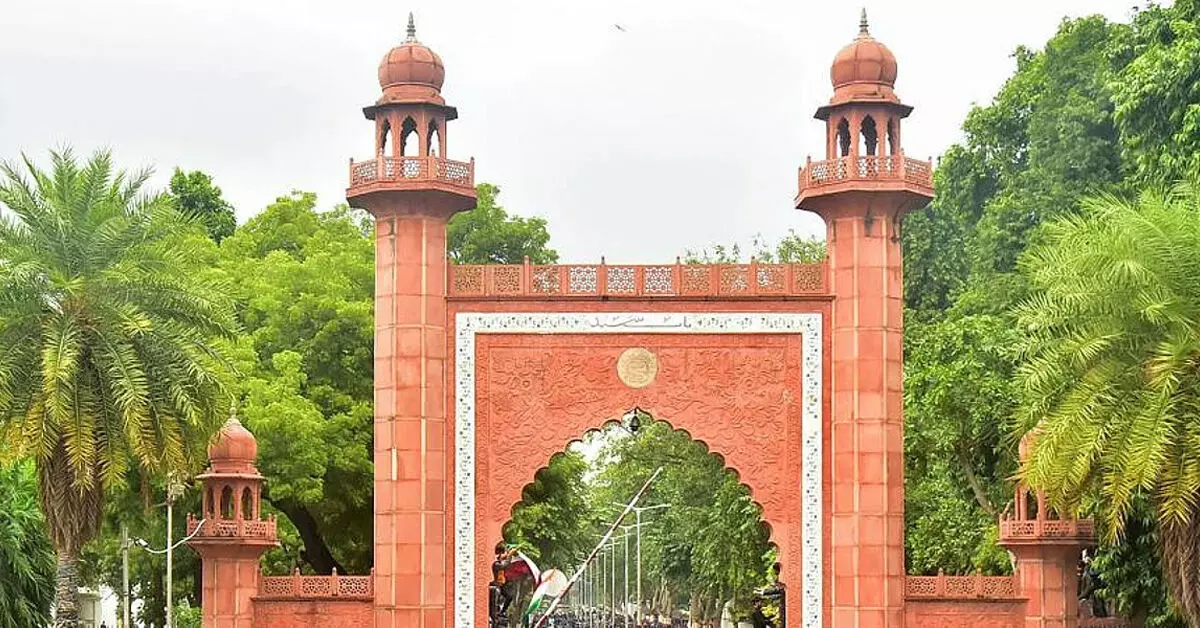
Researchers at the Interdisciplinary Biotechnology Unit of Aligarh Muslim University have identified a new multidrug-resistant bacterial genome in wastewater flowing through Aligarh city, raising concerns over the growing threat of antibiotic resistance in densely populated urban areas.
The findings, published in the April edition of the scientific journal ‘Molecular Biology Reports’, are based on a long-term study by a team of scientists led by Asad Ullah Khan, Shamsi Khalid and Absar Talat, who have been tracking the evolution of antibiotic resistance genes (ARGs) for over a decade.
According to the study, genome sequencing of a bacterial isolate, identified as ‘AK 633’ from a major city drain revealed the presence of a rare “mosaic plasmid” carrying the NDM-7 gene, which is associated with resistance to multiple antibiotics.
In microbiology, plasmids are small DNA molecules inside bacteria that can transfer genetic material, including drug-resistance traits, from one bacterium to another. A “mosaic plasmid” refers to a plasmid formed through genetic recombination, enabling it to carry resistance traits from different bacterial sources.
The researchers said the NDM-7 gene belongs to the New Delhi Metallo-beta-lactamase (NDM) family of resistance genes, which make bacteria resistant even to “last-resort antibiotics” such as carbapenems that are often used when other antibiotics fail.
The study noted that the sequencing of AK 633 pointed to the role of the plasmid ‘p1550’ in the possible global spread of high-risk antibiotic-resistant bacterial clones.
Talking to PTI, researcher Asad Ullah Khan said the findings underscore the urgent need for a wider national surveillance and awareness programme to monitor and contain the growing menace of drug-resistant bacterial genomes.
He said antibiotic resistance has emerged as a major public health challenge worldwide and pointed to untreated waste disposal, particularly hospital waste, and poor drainage management as important contributing factors.
Khan also stressed the need for vigilance during drain-cleaning operations in urban areas.
“Very often after drains are cleaned, the sludge is left on the roadside for long periods instead of being immediately removed. Such practices can contribute to the spread of resistant organisms,” he said.
According to the researchers, genotypic analysis — the study of the genetic composition of bacterial isolates — is essential to understand how resistance genes spread between bacteria in community and hospital settings.
Khan said at least 94 variants of NDM genes have so far been identified globally, many of which are increasingly being found both in hospitals and in the community.
“These are among the main causes of resistance against last-resort antibiotics,” he said.
The researchers noted that while similar work is being carried out in a limited number of laboratories in India, a much larger scientific and public health effort is needed to combat the growing threat posed by multidrug-resistant bacterial genomes.
source: http://www.english.varthabharati.in / Vartha Bharati / Home> India / by Musthafa / May 20th, 2026
* On the list are 14 Muslim zoologists and scientists
* To date, India has identified 102,718 animal species
* Work is underway to discover new species in ecosystems
* 15 million living species still to be discovered
THE Kolkata-headquartered Zoological Survey of India (ZSI), whose scientists and field staff are engaged in exploring, naming, describing, classifying, and documenting animals from all over the world’s most populous country, has a miserably low number of Muslims – 23 – on its rolls that has a total of 591 officers, administration and field staffers, according to Mohammed Abdul Mannan’s new book, At the Bottom of the Ladder: State Of The Indian Muslims – https://www.amazon.in/dp/B0GF1Q9R25. The book quantifies Muslim presence in 150 key organisations, including Union ministries, departments, and organisations.
The Muslim scientists and zoologists at the ZSI are – Sarfraz Ul Islam Kazmi, Shaikh Rehnuma Sultana, Mohammed Hafiz, Imran Alam, Shabnam Nizamuddin Ansari, Jalil Ahmed, Mohammed Rasmanjani Ali, Anjum Nasreen Rizvi, Rifat Hussain Raina, Jafer Palat, Mohammed Ethtesham Ul Hassan, Ruqiya Bano, and K Bakh Mollah. There are seven Field Assistants from the largest minority community.
Among 82 ZSI scientists are two Muslims – Dr M E Hassan, a Scientist ‘E’ at the Gangetic Plains Regional Centre in Patna, and S R Sultana, Assistant Zoologist at the Freshwater Biology Regional Centre in Hyderabad. Among 98 officials at 15 Regional Centres, eight are Muslims, including two NRCs in Dehradun – Dr. Anjum Nasreen Rizvi, a scientist in Nematology, Helminthology and Molecular Systematics, and Dr S I Kazmi, a scientist in Hymenoptera. The Western Regional Centre in Pune’s four staff members include Dr Muhamed Jafer Palot, a scientist in animal taxonomy with a special interest in birds, reptiles, and butterflies. Dr Anjum Rizvi is the Managing Editor of the Journal of Indian Zoology.
The 108-year-old organisation has been working to understand and investigate the faunal diversity for scientific use and equitable sharing of the benefits of animal resources of the country. Formed in July 1916, it conducts surveys, exploration, and research that lead to the advancement of zoological knowledge. ZSI originated from the establishment of the Zoological Section of the Indian Museum at Calcutta in 1875.
It gradually expanded in terms of its manpower and research programme. Today, India is among the 17 mega-diversity countries of the world, with four biodiversity hotspots, including the Western Ghats/Sri Lanka, Indo-Burma, and the Himalayas. Currently, there are about 1.7 million living species described from all over the world, and another 15 million species are waiting to be discovered. To date, India has been able to describe 102,718 species of animals, and work continues to discover and explain new species, especially from the lower invertebrate groups occurring in various ecosystems. Also, the status of the higher group of animals is studied before their habitats disappeared on the planet Earth.
The country’s custodian of the animal resources has broadened its work in line with the Articles of the UN Convention on Biological Diversity (UNCBD), a multilateral treaty focused on conserving biodiversity, promoting its sustainable use, and ensuring the fair and equitable sharing of benefits from genetic resources. As many as 157 countries signed it, like the United Nations Framework Convention on Climate Change (UNFCCC) and the United Nations Convention to Combat Desertification (UNCCD), at the UN Conference on Environment and Development in Rio de Janeiro in 1992. The CBD now has 196 countries as signatories, including India.
To take the agenda further up, India also enacted the Biological Diversity Act in 2002 to implement the provisions of CBD, which covers biodiversity at all levels: ecosystems, species, and genetic resources. To support the implementation of its objectives, two internationally binding agreements were adopted within the framework of the CBD. The Cartagena Protocol, adopted in 2000 and entered into force three years later, regulates the transboundary movement of living modified organisms (LMOs).
The Nagoya Protocol, adopted in 2010 in Japan and entered into force four years later, establishes a legally-binding framework for access to genetic resources and the fair and equitable sharing of the benefits arising from their use. Experts say considerably less is done to assess the degree and value of biodiversity without knowing the species involved. The ecosystem’s health also cannot be monitored without recognizing the presence of the individual organisms crucial for the indication of ecological processes.
The ZSI has made extensive surveys across the country, and a large number of specimens have been collected. Of these collections, only about 65 percent have been taxonomically studied. These include the major groups of vertebrates. The organization provides information and vital data for the in-situ conservation of various species in different ecosystems, both within and outside the protected areas. The ZSI provides regular services with regard to permissible limits of legal trading of faunal resources or derivatives thereof, monitoring services on population status of commercially important species, and providing inputs for underutilised, culturable species, both from terrestrial and aquatic systems.
A part of the Union Ministry of Environment, Forest and Climate Change, it also undertakes Environmental Impact Assessment (EIA) with special reference to ecology and wildlife. Zoological surveys worldwide are crucial for understanding and managing biodiversity. These surveys involve various methods to collect data on animal populations, behaviour, and habitats, including field observations, monitoring programs, and advanced techniques like DNA analysis and satellite tracking.
There are about 1.7 million living species described from all over the world and another 15 million species are waiting to be discovered. Based on the largest dataset to date, the global Living Planet Index (LPI) shows an average 73 percent decline in monitored wildlife populations between 1970 and 2020. It reports that there has been a large average decline across more than 34,000 animal populations. In 2024, ZSI set up a pilot project to use eDNA (environmental DNA) to study and monitor wildlife.
Data analysis of the 2010-2020 decade reveals that a total of 4,112 species — 2,800 new species and 1,312 new records in 2020, India added 557 new species to its fauna, which included 407 new species and 150 new records, according to a document by the ZSI. The number of faunal species in India has climbed to 1,02,718 species with the discovery of the new species. There is no definitive, universally agreed-upon number for the total number of animal species in the world.
Estimates range from three million to 100 million. However, the most common estimates fall between seven and 10 million. About 1.5 million animal species have been formally described and named by scientists. The ZSI publishes the Red Data Book on Indian Animals, which was first published in 1983 and is similar to the Red Data Book published by the International Union for Conservation of Nature (IUCN), the world’s largest and most diverse environmental network known for producing authoritative reports, standards, and tools for conservation.
Ather Siddiqi was a researcher of eminence in his field and his research has been nationally and internationally recognised in the scientific world.
Professor Ather H. Siddiqi was born on December 29, 1931, in Saharanpur, Uttar Pradesh. He attained his early education at the Govt. High School, Saharanpur and obtained the degrees of B.Sc. (1950) and M.Sc. (1953) from A.M.U. Topping the university in Science and Zoology, he received two gold medals. He did his PhD in 1956 under the supervision of Professor Babar Mirza from Aligarh Muslim University.
Ather Siddiqi joined the Department of Zoology as a lecturer in 1953. After three years, he joined Purdue University, USA and completed another doctorate in 1958. He became a reader in 1961 and was appointed as a professor in 1977. Prof. Siddiqi also taught at universities in Nigeria and Libya and returned to India in 1980. He served as the Chairman of the Department of Zoology (1985-88) and as the President of the Indian Society for Parasitology. He also served as the Dean of the Faculty of Life Science in 1988-89, finally retiring from his services in 1994.
His scientific work on helminth taxonomy was published by the New York Academy of Sciences in the form of an exhaustive monograph. Despite that, he received his basic training in classical zoology in the early sixties. Later on, he switched to experimental work in parasitology. Ather Siddiqi was a researcher of eminence in his field and his research is nationally and internationally recognised in the scientific world.
Siddiqi’s Immersion in Urdu Writing
Apart from research articles, his popular writing in Urdu started in the 1980s. His first article in Urdu appeared on the life and scientific contribution of his mentor Professor Babar Mirza in the Quarterly “Fikr-o-Nazar” (January 1987). He published two articles in the early years of “Tehzib-ul-Akhlaq”, Aligarh: ‘Ilm-ul-Hayatiat ke Isatiza se Khitab’ (December 1987), ‘Mohammad Babar Mirza-Apnay Chaman ka Aik Deedawar’ (August 1989).
After his retirement in 1994, he devoted himself completely to Urdu writing. His lengthy article, ‘Mashriq say bezar na Maghrib say Hazar Kar’ narrateing the scientific and cultural activities of European countries was serialised in January 2005-June 2006 issues of “Tehzib-ul-Akhlaq”.
Similarly, his Urdu travelogue ‘Saat Haftay Inglistan Main’ (Seven Weeks in England) was published in the June and July 2006 issues of “Tehzib-ul-Akhlaq”. It carried interesting information regarding the scientific and cultural development of England.
His article based on his visit to Spain ‘Undlus Ka Shandaar Mazi’ (The Bright Past of Spain) discussed the scientific and cultural development of medieval Spain.
Ather Siddiqi along with Syed Zillur Rahman, contributed a chapter, ‘Aligarh Muslim University: Development and Progress of Science Teaching and Research, 1877-1947’ in Science and Modern India: An Institutional History, c. 1784-1947 (ed. Uma Das Gupta), Centre for Studies in Civilisation published in 1999.
A Glimpse into his Published Works
He is regularly contributing a literary column ‘Hairat Sarai Ke Kahania’ to “Tehzib-ul-Akhlaq” which consists of the translation of interesting short stories taken from the internet.
Recently, his popular science articles ‘Parasitism: Aik Dilchasp Tareeq Zindagi’ (Parasitism is an Interesting Way of Life) and ‘Yek khuliya Tufailiati Beenariyan’ (Unicell parasitic diseases) appeared in the February 2022 and February 2023 issue, respectively, of the Urdu monthly ‘Aajkal’, Delhi.
After retirement, Ather Siddiqi devoted himself to Urdu writing and authored, translated and edited dozens of books. The names of some of his books are: ‘Kiya aur meri Hayat Kiya’, ‘Lizzat Aabla Pai’, ‘Nishat Aabla Pai’, ‘Hairat Sarai ke Kahaniyan’ (Vol. 1, 2, 3, 4). In 2022, he published “Rah wa Rasam Aashnai”, his last book. He also rendered Retd IAS officer Musa Raza’s book, “Land of Regrets: Kashmir”, in Urdu as “Kashmir Sarzamin Pashemani”.
Ather Siddiqi was one of the best teachers, an internationally acclaimed Zoologist, and a passionate Urdu writer. And above all, he was a wonderful human being. He passed away on 8th November, 2023, in Delhi at the age of 92 years due to old age illness.
References:
Tehzib-ul-Akhlaq, Aligarh (various issues) Science and Modern India: An Institutional History, c. 1784-1947 (ed. Uma Das Gupta), Centre for Studies in Civilisation, New Delhi, 1999.
source: http://www.heritagetimes.in / Heritage Times / Home / by Dr Asad Faisal Farooqui
Mohd Zeeshan, a PMRF and doctoral researcher at Department of Chemistry, AMU, has earned national recognition as one of the Top 40 PMRF scholars across India for his exemplary contributions to cutting-edge research in CO₂ fixation
Aligarh:
Mohd Zeeshan, a Prime Minister’s Research Fellow (PMRF) and doctoral researcher at the Department of Chemistry, Aligarh Muslim University (AMU), has earned national recognition as one of the Top 40 PMRF scholars across India for his exemplary contributions to cutting-edge research in carbon dioxide (CO₂) fixation.
Zeeshan’s research is centred on the development of heteroatom-functionalised linkers and metal–organic framework (MOF)-based materials for CO₂ capture and wastewater remediation. The selection was based on the national impact of his work, which combines experimental innovation with real-world applicability, addressing pressing environmental challenges.
His research has been conducted under the mentorship of Dr. M. Shahid, a noted scientist with over 170 publications.
Zeeshan acknowledged the constant academic and moral support of Professor Zeba N. Siddiqui, Chairperson of the Department of Chemistry, who congratulated him on receiving this prestigious honour. He also thanked Professor Aasim Zafar, PMRF Coordinator at AMU, for his dedicated mentorship, proactive engagement, and seamless coordination.
Zeeshan has authored 13 peer-reviewed research papers published in leading international journals, including Dalton Transactions and CrystEngComm (Royal Society of Chemistry), and Coordination Chemistry Reviews (Elsevier), with impact factors reaching up to 20.3. He has also contributed two book chapters, holds a granted patent, and has received multiple accolades for best poster and oral presentations at national and international conferences.
In recognition of his achievements, Zeeshan has been invited by the Ministry of Education, Government of India, for a high-level interaction with senior officials, where he will represent AMU and share insights on enhancing the PMRF scheme.
source: http://www.radiancenews.com / Radiance News / Home> Latest News / by Radiance News Bureau / June 21st, 2025
Chenibari Village (Darang District) , ASSAM / ITALY :
Dr. Ruhul Amin Hazarika
A young scientist from a small village Chenibari in the Darang district of Assam has brought laurels to the country in global medical research. Dr. Ruhul Amin Hazarika has been appointed as a research scientist at the prestigious University of Calabria in Italy, where he will conduct research on cancer detection and diagnosis with the help of artificial intelligence (AI) and will assist in teaching.
Dr. Ruhul Amin Hazarika is the son of Bashiruddin Ahmed Hazarika and Rabia Khatun, residents of Chenibari village. He received his early education from local Assamese-medium government schools and after matriculation moved to Mangaldoi for further studies.
After passing 12th in Science from Mangaldoi Government Higher Secondary School, he obtained B.Tech, M.Tech, and PhD degrees from North Eastern Hills University (NEHU), Shillong. Due to his hard work and dedication, today he has secured such an achievement which is a matter of pride for the entire state and country.
His main area of research in Italy is to develop AI-based cancer detection systems. This technology can prove helpful in the early detection of cancer and can revolutionize medical science at the global level.
Dr Hazarika believes, “Medium of education and social status are not barriers if the hard work and dedication is genuine.”
He himself studied in Assamese medium government schools from primary to 12th standard and then achieved this position by obtaining a PhD from government universities.
After completing his education, Dr. Ruhul Amin worked as an Associate Professor at Manipal University, Bangalore, where, observing his research work and technical expertise, he received a research invitation from the Italian University.
This achievement of Dr. Hazarika is not just an inspirational message for his family or village but also for the students of Assam and India who dream of touching heights despite limited resources and difficult circumstances.
“With hard work and determination, any obstacle can be overcome. If I can do it, anyone can,” said Dr. Ruhul Amin Hazarika.
His achievement not only strengthens India’s role in the field of medicine and technology but also shows that boundaries cannot stop talent.
source: http://www.awazthevoice.in / Awaz, The Voice / Home> Stories / by Ashad Ali, Mangaldoi / April 2Oth, 2025
It is the story of a young boy who once wanted to take his parents to the moon. However, for Sabir Alam, the journey from a small village in Bihar to the one in which he was associated with ISRO’s Chandrayan Mission 3, Moon was a destiny chiselled with grit.
Sabir Ali’s story began in the Chhoghra village in Katihar district, 350 km from Patna, Bihar. Son of a primary school teacher from Seemanchal – one of India’s most underdeveloped regions – this young boy turned his limitations into challenges and life happened to him.
Sabir’s father, Harun Rashid, knew the value of a good education but often wondered how to make his son rise in life with his meagre earnings. “With my limited earnings and the struggle to secure quality education for him, it was a challenging journey,” Harun says.
Sabir Alam having chai
Sabir joined his father’s school, where learning was born from passion rather than resources.
When Sabir cracked the Jawahar Navodaya Vidyalaya (JNV) entrance exam, it was a monumental moment. JNV was a lifeline, offering free education to talented students from rural areas.
He joined the JNV in Kolasi, Katihar, and after his 10th-grade exams in 2012, he shifted to JNV, Puducherry.
Sabir also enrolled in a coaching program run by Avanti, an NGO in collaboration with Tata Motors, to prepare students for competitive exams like IIT–JEE, the gateway to some of India’s most prestigious engineering institutions.
He graduated with a B.Tech in aerospace engineering from the Indian Institute of Space Science and Technology (IIST) in 2018 and then joined the Indian Space Research Organisation (ISRO) at the Vikram Sarabhai Space Centre, Thiruvananthapuram, Kerala.
Sabir Alam with fellow scientists celebrating the launch of Chandrayaan-3
Then came the day that would forever etch Sabir’s name in history. On August 23, 2023, when India made its historic landing on the moon’s South Pole as part of the Chandrayaan-3 mission, Sabir stood among the brightest minds who made it possible.
The moment was both joyous and emotional for his family.
“It was like Eid for us,” says Harun Rashid. “People gathered at our house to congratulate us and shower blessings. It felt natural as a young man from a region often associated with poverty and underdevelopment contributed to the country’s successful lunar mission,” he says with palpable pride and happiness.
Son of the soil : Sabir Alam in his field in the village
Though his mother, a homemaker, may not fully grasp the enormity of the achievement, she stood in quiet pride, holding back her tears. “As a mother, I cannot put my emotions into words. All I know is that my son has made not just Seemanchal but the entire country proud,” she says, her voice trembling with love and joy.
For the family, Sabir’s rise was not about wealth. “There was no financial investment in his schooling,” his mother said.
Sabir’s education was sustained by the values of hard work, sacrifice, and scholarships. The JNV provided the crucial foundation, and scholarships allowed Sabir to scale the mountain that seemed insurmountable to so many.
Did Sabir’s mother ever imagine he would join ISRO or contribute to such a prestigious national mission? I asked her. “I always knew he would succeed,” she said. “He often joked during his visits home that he would take us to the moon one day.”
Sabir Alam showing a model of the lander at the surface of the moon to his son at ISRO center
Mumtaz Naiyer, a scientist based in the United Kingdom, shares a unique bond with Sabir. Hailing from the same region, he always acknowledged Sabir’s abilities. “Sabir has always been extraordinary. He stands out from other youth in Seemanchal because of his approach, temperament, and determination to learn and succeed. Thanks to Sabir, we, the Surjapuri-speaking (local dialect of the region) people, Seemanchalis and Biharis, are now part of history,” Naiyer says.
“This will certainly inspire the youth of this underdeveloped region to dream big,” Naiyer adds. “I also want to thank Sabir’s parents, as their son has brought immense pride to Seemanchal.”
Yet, despite all his achievements, Sabir has never seen himself as someone extraordinary. In a post on Facebook’s page ‘Humans of Seemanchal’ he wrote, “Honestly, I do not feel that I have achieved anything extraordinary or made any significant breakthrough in my field. I do not need to talk much about Seemanchal – its literacy rate already tells its story. I was just fortunate to find a way around the high cost of education.”
For Sabir, it was never about the prestige of joining ISRO. It is simply a milestone. “There are numerous challenges for those from backward areas, but with dedication, hard work, willpower, and, most importantly, awareness, you can overcome them,” he advises.
source: http://www.awazthevoice.in / Awaz, The Voice / Home> Stories / by Tarique Anwar, New Delhi / February 13th, 2025
Prof. (Dr.) Mohammad Rihan, a senior faculty member of AMU, has been appointed Chairperson of BIS Solar Energy Panel
Aligarh:
In a significant development for India’s renewable energy sector, Prof. (Dr.) Mohammad Rihan, a senior faculty member of Aligarh Muslim University (AMU), has been appointed as the Chairperson of the Solar Photovoltaic Energy Systems Sectional Committee (ETD 28) under the Bureau of Indian Standards (BIS).
Prof. Rihan, who previously served as the Member In-charge of Electricity at AMU, is currently on deputation as the Director General of the National Institute of Solar Energy (NISE), an autonomous body under the Ministry of New and Renewable Energy. His appointment is expected to bolster India’s efforts in standardising and advancing solar energy technologies.
The ETD 28 Committee, operating under the Electrotechnical Division Council of BIS, is tasked with developing national standards for photovoltaic systems, encompassing everything from solar energy conversion to electrical system integration. Prof. Rihan’s leadership is anticipated to play a pivotal role in ensuring the reliability, efficiency, and sustainability of India’s solar energy initiatives.
Prof. Rihan’s distinguished career includes roles as Vice Chairperson of the ExCom IEEE UP Section and the IET Delhi Local Network. He has also contributed as a Visiting Scientist at NISE. With his expertise, Prof. Rihan is expected to drive innovation and accelerate India’s transition towards a renewable energy future.
This appointment highlights the growing recognition of academic contributions to India’s renewable energy mission and reinforces AMU’s reputation as a hub of academic excellence in science and technology.
source: http://www.radiancenews.com / Radiance News / Home> Education> Focus> Science & Technology / by Radiance News Bureau / December 07th, 2024
Jamia Millia Islamia’s Professor Mohammad Zahid Ashraf has been honoured with prestigious Indian Council of Medical Research (ICMR) award for research on oxygen regulation.
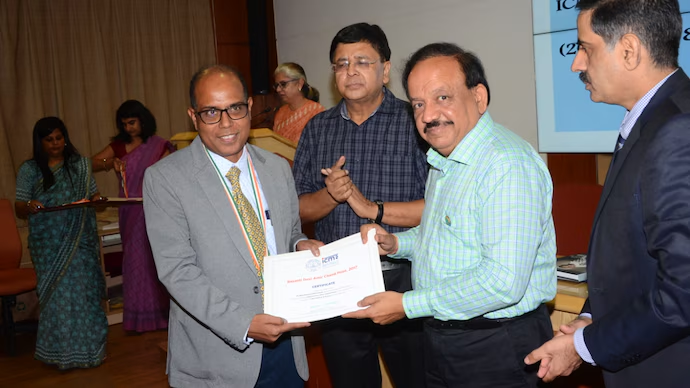
Prof. Mohammad Zahid Ashraf receives Basanti Devi Amir Chand Prize, an award instituted by Indian Council of Medical Research (ICMR).
Mohammad Zahid Ashraf, professor in the Department of Biotechnology, Jamia Millia Islamia(JMI) has been awarded the prestigious Basanti Devi Amir Chand Prize, an award instituted by Indian Council of Medical Research (ICMR). The prize was given by Union Health Minister, Harsh Vardhan yesterday in recognition of Prof. Ashraf’s research excellence.
Basanti Devi Amir Chand Prize is one of the earliest instituted awards of the ICMR in the year 1953 for the significant research contributions in the field of biomedical sciences.
What was Prof Ashraf’s research famous for?
Prof. Ashraf’s lab has been instrumental in understanding the role of low oxygen due to high altitude in the development of cardiovascular disorders including blood clotting.
The significance of research of cellular reactions in response to low oxygen could be analyzed from the fact that this year’s Nobel Prize committee for physiology or medicine recognized the potential of the discovery of how cells sense and adapt to oxygen availability and jointly awarded the three scientists for their landmark discoveries in this field. Oxygen is required for the process of oxidation that produces energy. Therefore, its short supply might result in lung damage, brain dysfunction, heart problems and many more.
” Prof. Ashraf’s research has provided an insight into the role of oxygen-regulated mechanisms behind blood clotting disorders and demonstrated the detrimental effects of low oxygen availability at high altitude.
About Mohammad Zahid Ashraf
Dr Ashraf is Fellow of both National Academy of Sciences and the Indian Academy of Sciences. He is also the recipient of prestigious DBT’s S Ramachandran-National Biosciences Award 2018. He is currently holding the position of Director (Academics) in the university.
Prior to his joining at JMI, he was Head of Genomics Division at Defence Institute of Physiology and Allied Sciences (DIPAS), Defence Research and Development Organization (DRDO), Delhi.
source: http://www.indiatoday.in / India Today / Home> News> Education> Today> News / by India Today Web Desk / October 17th, 2019