Tag Archives: Khwaja Ahmad Abbas

Less known Muslim Women Freedom Fighters

INDIA :

Sultana Saleem was one of the officers of Azad Hind Fauj, or INA, of Subhas Chandra Bose.
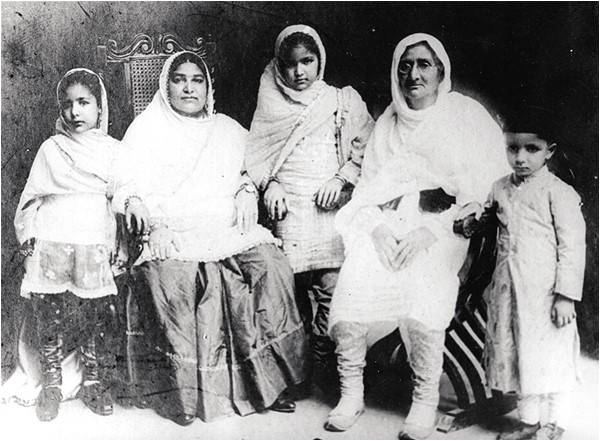
It is a concise compilation of a few of less known Muslim women who took part in the Indian Freedom Struggle. 

Begum Mahboob Fatima: On 13 April 1932, two women were arrested at Chandni Chowk in Delhi by the police for commemorating the anniversary of the massacre at Jallianwala Bagh. These two were Begum Mahboob Fatima and Satyawati. On 21 April 1932, Begum Mahboob was sentenced for six months of Rigorous Imprisonment and Rupees 50 of fine. With this she became the first Muslim woman to have been sentenced during the freedom struggle in Delhi.

Sultana Saleem: Sultana Saleem was one of the officers of Azad Hind Fauj, or INA, of Subhas Chandra Bose. Her husband Colonel Saleem, whom she met during the war, also served the INA and Sultana was an officer of Rani Jhansi Regiment. Sultana reached India as part of the first contingent of captured soldiers of Rani of Jhansi Regiment in February 1946. The Indian Express reported on 22 February 1946, “Mrs Sleem felt that there was only one country for her- Hindusthan – and only one nation – Hindustani. She did not believe in either communalism or provincialism. It was the oneness of India that appealed to her most. In East Asia, she said there was no consciousness at all of religious or provincial differences and no untouchability problem. She believed that if India had freedom her many problems could be solved without much difficulty.”

Asghuri Begum: In 1857, when somewhere else Rani of Jhansi and Begum Hazrat Mahal were fighting against the colonial army of the English East India Company, in Muzaffarnagar and Shamli, peasant women had organised themselves in armed bands. The leader was Asghuri Begum. The region had been liberated by the Indian revolutionaries where the women contingent was being led by Asghuri. When Major Sawyer conquered Thana Bhawan, a town in Shamli, in October 1857, Asghuri was also captured. British troops tied her to a pole at a public place and set fire to her alive. 

Nishat-un-Nisa: “I appeal to the youth of this country that they sit at the feet of this goddess (Nishat un Nisa Begum) to learn the lessons of independence and perseverance.” These were the words of famous Urdu poet Pandit Brij Narayan Chakbast. Nishat was the first Muslim woman to address a Congress Session and that too without a purdah. Hasrat Mohani, who coined Inquilab Zinadabad, was her husband. Nishat attended the public political meetings without her husband. She wrote articles, led delegations to Viceroy, participated in strikes and was the first woman to move a resolution for complete independence at a Congress session.

Saadat Bano: Saadat Bano whose husband Saifuddin Kitchlew is known as the hero of Jallianwala Bagh was a writer, poet and political activist much before her marriage. She wrote extensively for women rights, patriotism and education. It is a well known fact that people gathered at Jallianwala on 13 April 1919 to protest the arrest of Saifuddin but it is often overlooked that they came to listen to a public address by Saadat. Saifuddin was in jail but Saadat did not sit at home in those times. She used to address meetings, meet political leaders, attend Congress sessions, write in papers and take part in All India Women Conference activities. She was considered orator par excellence.

Amjadi Begum: How important a person would be if Gandhi himself wrote in one of his articles that this ‘brave woman’ led the ‘fundraising campaigns’ from the front ? Almost no history student in India knows Amjadi Begum. They know her as the wife of Maulana Muhammad Ali Jauhar. Gandhi in one of his articles wondered whether she could teach her husband the art of public oratory, where one impressed upon the hearts of the audience in a few words. She is believed to have single handedly led the fundraising campaigns and managed affairs of Jamia Millia Islamia when her husband was in prison.

Moondar:  Rani of Jhansi’s movement had an important Muslim woman, viz. Moondar. She was a close aide and assisted her during battles. Robert Hamilton, agent of Governor General to Central India, informed the British government on 30 October 1858, “Rani was riding a horse. There was another Muslim woman riding with her, who used to be her servant as well as companion since many years. Both fell down from the horse with the bullet wounds simultaneously.” Another British officer John Venables Sturt claimed that the body recovered by the British was not of Rani but Moondar’s. 

Nani Hakko: Nani Hakko was a jolaha (weaver) woman from Panipat who was impressed by Mahatma Gandhi’s idea of boycott and swadeshi. The she first heard him, Hakko started weaving her own shroud. She willed to be buried in a khadi shroud. When someone asked her what she was weaving, she would reply, ““I am weaving a kafan (shroud) for myself”. 

Hakko left this world only the day after completing this khaddar ka kafan. She asked people to bury her in this handwoven shroud (khaddar ka kafan) and boycotted the foreign made cloth even in her death. According to Khwaja Ahmad Abbas, she was the first person to have been buried in khaddar ka kafan as a result of Gandhi’s call to charkha. Khwaja wrote, “she was the first one to be buried in a khaddar ka kafan — a patriot unto death!”

source: http://www.heritagetimes.in / Heritage Times / Home / by Saquib Salim / March 08th, 2025
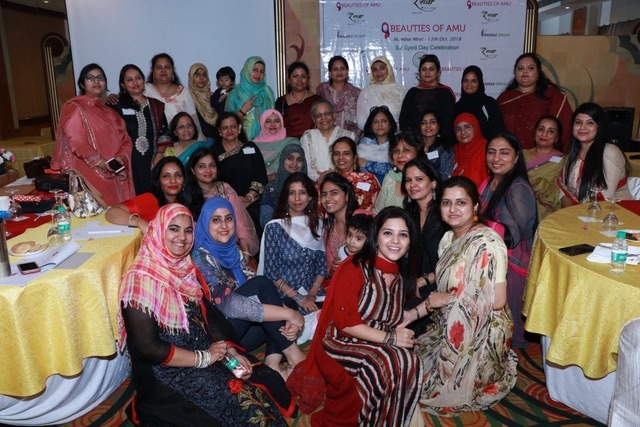
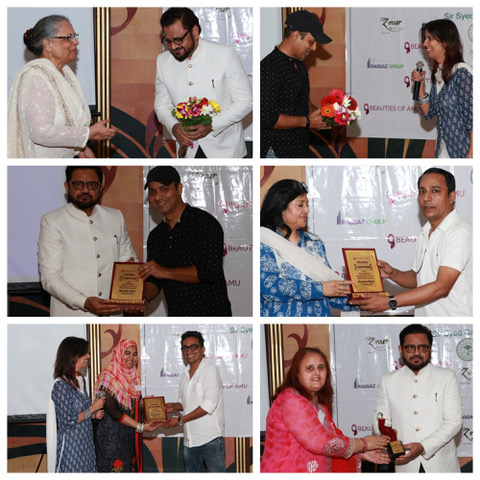
Mumbai : Felicitation of AMU Achievers by Beauties of AMU

Mumbai, MAHARASHTRA :

Mumbai :

The Aligarh Muslim University Alumni Group formed by female community of this iconic citadel of modern education, known as Beauties of AMU held its Mumbai Meet  towards the Sir Syed Day celebrations on 13th October at Hotel Marine Plaza, Mumbai.

Noted philanthropist, business giant and AMU alumni, Raees Ahmad, MD, Rassaz Group was the Guest of Honour at the event. Faridoon Shehryar, a well known Bollywood journalist was among the AMU stars which illuminated the galaxy of AMU achievers at the event. Faraz Haider, director of War Chhod Na Yaar fame attended the meet in capacity of another AMU stars while famous lyricist Arafat Mehmood stole the show with his magical spell of beautiful words in perfect sync with the event.

The event saw a huge turnout including personalities from all walks of life who build up the social circuit of Mumbai.

Sir Syed lived briefly in the city which now boasts of being the financial capital of India, hence it is imperative to take the message to this very city which had alumni association focussing on male alumni.

Since it couldn’t offer much space to the female alumni based in the city for the nostalgic networking over chai. Beauties of AMU took the plunge and brought them all on the same page, allowing them their own space for discussing and dealing with issues of societal concerns.

At the event Mrs Farrukh Sayyeda highlighted the importance of space for women. She said it’s good to be ‘Mrs Somebody’ but anything that gives you self identity is rather more important and brings self-satisfaction. This identity is not necessarily connected to financial income, added Mrs Farrukh (former principal).

Extending the thoughts, Mr Rais Ahmed (Guest of Honor) talked about the role of Sir Syed in Women Empowerment.

Mumbai is more popularly known for the Indian film industry which has considerable contribution from Aligarh, such as Khwaja Ahmad Abbas, Saeed Jafri, Javed Akhtar, Surekha Sikri, Naseeruddin Shah, Dilip Tahil and to name recent additions, there are Anubhav Sinha, Faraz Haider, Faridoon Sheheryaar and Arafat Mehmood.

Alumni of AMU are front runners in every industry in every corner of the country and the world as well, whether it is Frank Islam of USA, who was the member of Barack Obama’s contingent to deliberate with Muslim world, being a key figure in the economy of USA or the pharma giant Cipla’s founder Khalid Hameed, who has served humanity in Africa so well that nobody would ever find an example like it.

Aligarh has come out of its cocoon with the first and second generations and prepares its next generations following the footsteps of Ismat Chugtai and Qurratulain Haider.

Beauties of AMU is playing the catalyst in this inferno which would reassure the paying back to the great institution of Aligarh, which has contributed largely for the cause of nation building.

Felicitation for AMU Achievers in Bollywood

  1. Faridoon Shahryar- An award winning journalist and known face as an anchor for popular chat show Talking Film, Mr Faridoon was felicitated for his achievements. He participated in event with exuded fervor reminiscing his AMU days with a mention of jumping walls and taste of fritters
  2. Mehmood Arafat- Inspired by his father who is a well known trade unionist, political figure, writer and a popular poet of west Bengal, Mr Arafat is a popular Bollywood Lyricist. His famous work includes songs from Loveyatri, Half Girlfriend, Heartless, Housefull 3, Welcome Back, Sarabjit, Kis kis ko pyar Karen, Machine, Jalebi etc. Mehmood Arafat relived the AMU days by reciting a poem filled with complete nostalgia of AMU, Abdullah Hall, Shamshad Market , Kennedy Hall
  3. Faraz Haider is a well known director of war na chod yaar and Nanu ki Jaanu movie fame attended the event and filled the vibes with laughter and fun by recalling an incident where he got a chance to visit Abdullah Hall

Beauties of AMU(BOA)  is a social welfare organization formed by female alumni of Aligarh Muslim University that functions to spread awareness about education and empowerment of women of all sections of society.

Started off as a Facebook group in 2017, by Iram Raza, a graduate of Department of Mass Communication, Aligarh Muslim University, Aligarh, this group has done meets in 3 cities (New Delhi, Lucknow, Aligarh) so far and the Mumbai Meet Up towards Sir Syed Day was a part of the reunion initiative of the group in the time span of 1 year.

The organization now plans to hold similar events in other parts of country for reuniting the female alumni of the university living in those cities, spreading out the message of goodness and universality.

BOA has been organizing meet-ups in different cities of India for the female alumni who haven’t been included in the old boys associations, providing them a platform to meet and greet and share happiness and nostalgia of their days at Aligarh furthering the reunions to social causes.

BOA has been instrumental in organising several events that contributed well to the cause of social welfare in general and AMU alumni in particular, that makes it stand apart from other alumni associations concerned with AMU.

source: http://www.muslimmirror.com / Muslim Mirror / Home> Exclusive Reports> Indian Muslim / by Faisal Hasan / October 18th, 202

Man who lived dangerously

Panipat, PUNJAB / Mumbai, MAHARASHTRA :

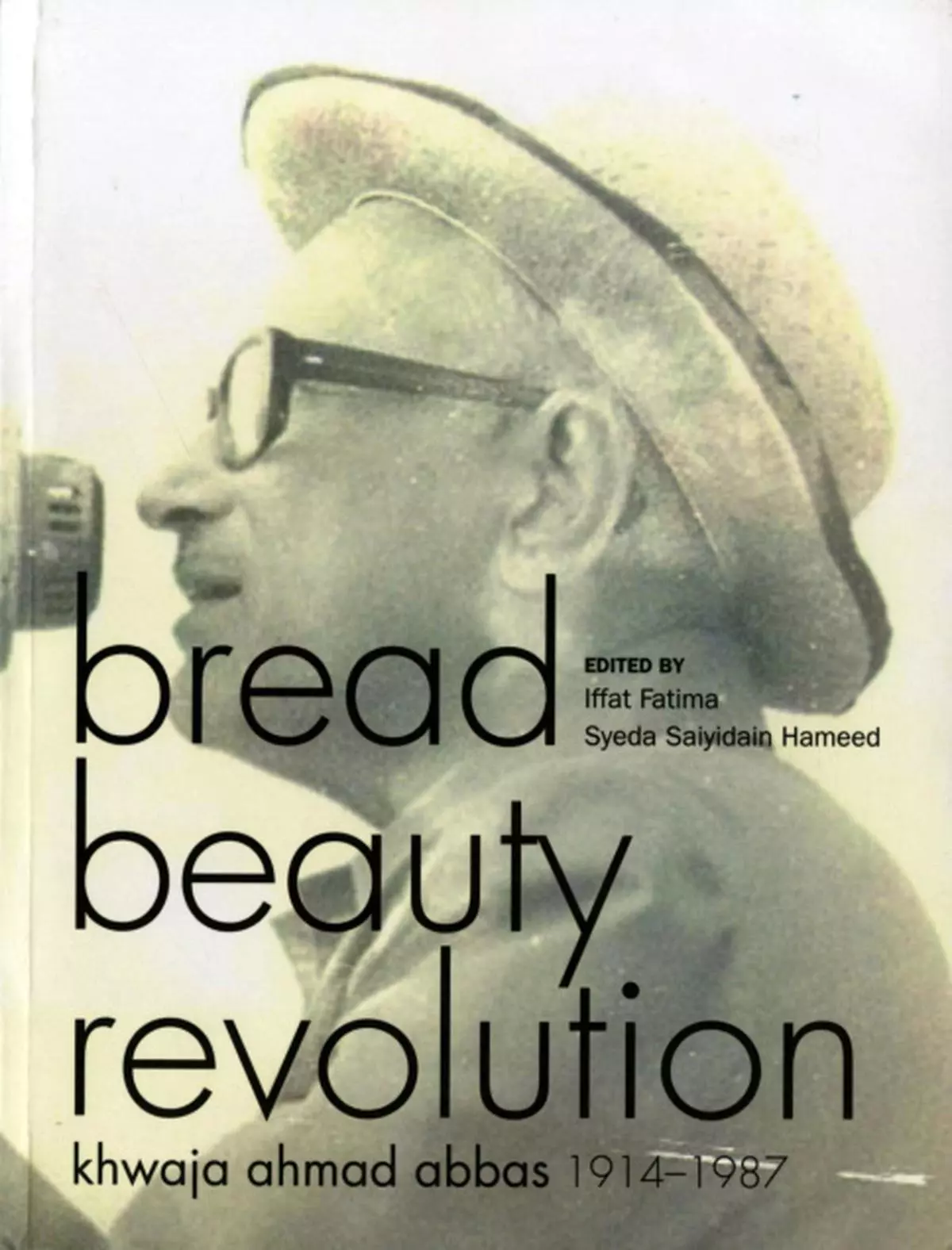
This commemorative volume is a timely and necessary reminder of the greatness of an extraordinary writer, film-maker and social commentator.

FL19 BK ABBAS 1

KHWAJA Ahmad Abbas wore many hats and distinguished himself in each of the roles he chose. As a pioneer of progressive cinema, a consummate writer of short stories and novels that depicted the human condition and a committed journalist whose Last Page column acquired legendary status, he blazed new trails and fashioned his own path.

Abbas was an important figure from a critical past. His body of work deserves to be studied and his life remembered by millennials and generations to come.

This commemorative volume, a celebration of the man on the occasion of his 100th birth anniversary, arrives as a reminder of the humanism that characterised his life and work. Lavishly produced and deftly edited by Iffat Fatima, an independent filmmaker from Kashmir, and Syeda Saiyidain Hameed, the social and women’s rights activist, educationist and writer, this book from the Khwaja Ahmad Abbas Memorial Trust provides invaluable insights into his mind and personality.

A man of many talents 

Despite his many talents, or likely because of them, Abbas could never be boxed into any creative category. And he was well aware of it. As Syeda Saiyidain Hameed informs the readers in her marvellous introduction to the compendium, Abbas himself would often ask his readers: “Who am I? Writers say I am a journalist; journalists say I am a film-maker; film-makers say I write short stories.” The editors of this volume, who recognised that the only way to appreciate Abbas fully is to study him in totality, have paid a perfect tribute to his oeuvre by dividing the volume into 10 sections that feature selections from his writings, focus on his cinema through his interviews and conversations, talk about his beginnings and early life and adventures, and reveal the man behind the mighty pen through reminiscences and tributes by actors and associates.

The nature of the public adulation of Abbas also kept changing over the decades during which he was active. For one generation he was the man who collaborated with Raj Kapoor to unveil some of the finest examples of high-quality mainstream Indian cinema, such as Awara and Shree 420 , while another celebrated him as the writer of powerful and poignant stories such as Sardarji , a lamentation of the violence and mayhem the country witnessed in the wake of Partition. And much before Independence, his was a significant voice writing about the marginalised sections of society. Abbas slipped in and out of the many roles he had chosen to play with a rare finesse, much like a thespian.

Abbas was fortunate to have inherited a long tradition of intellectualism and reformist ideals from both sides of the family. His mother’s grandfather, Maulana Altaf Husain Hali, was a poet who used verse as a tool against social evils and as an instrument of reform within the Muslim community. Abbas began carrying forward the torch early on, even as a college student, when he published Aligarh Opinion , a handwritten weekly newspaper that he personally peddled on a bicycle.

This was the start of his life in journalism which would eventually see him pen one of the longest-running columns in the history of news in Blitz , a weekly tabloid founded by R.K. Karanjia.

Reading the compendium is like taking a train journey back in time, to a world far removed from the present. Be it Abbas’ harrowing first-person account of what he saw in Calcutta (now Kolkata) during the Bengal Famine—which inspired him to make the groundbreaking film Dharti ke Lal (1945)—or his active involvement with the Indian People’s Theatre Association (IPTA), his cinematic endeavours or his first meeting with Jawaharlal Nehru, the reader is taken on a walk-through of events, institutions and happenings that are now the staple of history textbooks.

A particularly striking example is his narration of the celebratory procession of people in Bombay (now Mumbai) on August 15, 1947, where he was one among the hundreds of thousands rejoicing in their new-found status as citizens of a free country.

“It was an inspiring sight to see a famous poet like Josh Malihabadi, a film celebrity like Prithviraj Kapoor with his film star son Raj, a dancer of international fame like Zohra Sehgal, and a front-rank writer like Krishan Chander, singing and dancing in the streets to celebrate this happy occasion….Today, they had come in the midst of the people, as singers of their songs, not to sing about the people, but to sing with the people; not to dance a symbolic representation of life on the stage, but to dance the dance of freedom with the people in the streets.”

The collection also offers a peek into his personal life; his own accounts of life as a newly married man and the banter between him and his wife Mujji (Mujtabai Khatoon) are straight out of the myriad Muslim socials that Bollywood was famous for a long time ago. The scenes from his marriage tragically culminate in the death of his wife.

Describing the day his wife died in an elegiac memorial, elegant yet heart-breaking, Abbas says: “It looked like her—but it was not her. For that life that was always bubbling with intelligence and compassion was no longer in her. I collapsed near the bed where she lay inert. It was not her—but something resembling her—like the lifeless photograph of a beloved person. When I returned after burying her I walked alone and knew that henceforth I would have to get used to walking alone.”

Pathbreaking cinematic efforts 

Although acclaimed for his association with Raj Kapoor and, of course, for introducing Amitabh Bachchan to the silver screen in Saat Hindustani , Abbas deserves a special chapter in the history of Indian cinema for his breathtaking corpus of work that saw him don the mantles of producer, director and screenwriter at once and also established him as a pioneer whose films broke new ground. He took on challenging issues and translated his thoughts on to the screen, with varying degrees of success.

Only a man ahead of his times could make a film like Hamara Ghar (1964), a film about a group of children marooned on an island where the protagonist is a motherless Dalit boy.

As Ahmer Nadeem Anwer, who played the lead role of Sonu at the age of 10, says in an essay on the film: “It is this boy who embodies the defiance of those who shall not accept their exclusion from education, work, self-respect—or even recreation and pleasure.” The film, along with several others, is testimony to Abbas’ willingness to take risks and make the cinema that he wanted to make.

Collaboration with Raj Kapoor 

Abbas liked to describe himself as a communicator. “I want to communicate my ideas, my impulses, my ideologies to other people. That is my basic interest in writing, in films and in drama.”

It is a moot point which vehicle of communication served his purpose best, but one could not make a better choice than his cinematic collaborations with Raj Kapoor, especially from the early days of the showman’s career, such as his directorial debut, Awara , Shree 420 and Jagte Raho .

These films manifest the distilled brilliance of a mind that displays an unparalleled skill in weaving riveting stories for the big screen. His phenomenal grasp of the medium and Raj Kapoor’s showmanship resulted in timeless classics.

Abbas himself considered Awara to be the best of his collaborations with Raj Kapoor.

It is another story that the two would later go on to make Mera Naam Joker , which Raj Kapoor considered his magnum opus but viewers thought otherwise.

The monumental failure of the film devastated him, driving him into debt and depression, and it was Abbas who helped him bounce back by writing the iconic teenage romance called Bobby , which turned out to be Raj Kapoor’s biggest blockbuster.

Nehru: A love story 

It was love at first sight, as Abbas confesses, recollecting the first time he saw Jawaharlal Nehru, at the Aligarh railway station. The essay about the entire episode is a fascinating recollection of an awestruck student meeting his idol in flesh and blood and the resulting conversation, which culminates in Nehru signing his autograph book with the message: “Live dangerously.” Abbas certainly seemed to have taken it to heart, as his life demonstrated. He lived dangerously all his life, always true to himself and never wavering from his convictions, never hesitating to helm a project even at the risk of grave financial loss.

He firmly stood up for what he thought was right and did not shy away from opposing what he felt was wrong, irrespective of ideology.

His ability to introspect and accept criticism separated him from other giants of the screen or the world of letters of his time.

In his tribute, Amitabh Bachchan writes: “Mamu Jaan’s [Abbas] socialism was not just restrained to the books or columns he read, believed and wrote about. He practised it too in the way he lived and conducted his life, and in the way he made his films. I was a newcomer in the illustrious star cast of Saat Hindustani , but his treatment to all was universal. In his eyes we were all equals, and we were treated with the sameness that he followed and believed in.”

source: http://www.frontline.thehindu.com / Frontline / Home> Books / February 03rd, 2016

Ahmad Abbas: The man who gave us Amitabh Bachchan

Panipat, HARYANA / Mumbai, MAHARASHTRA :

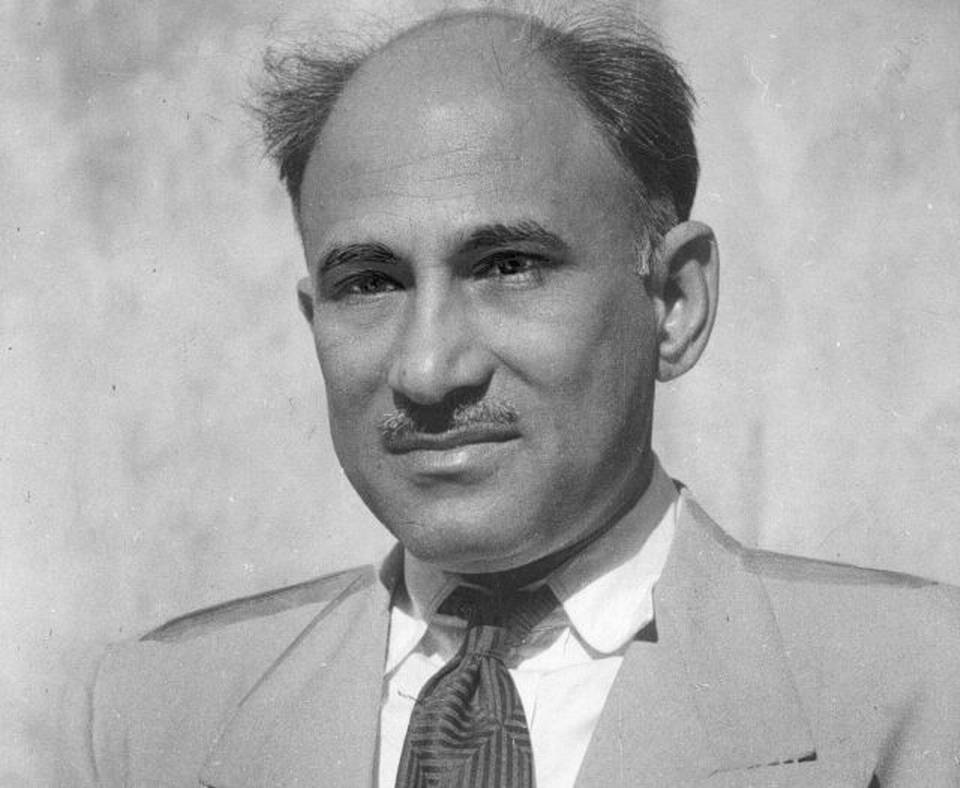
Mr. Khwaja Ahmad Abbas, well-known film critic, script writer and producer. | Photo Credit: THE HINDU ARCHIVES

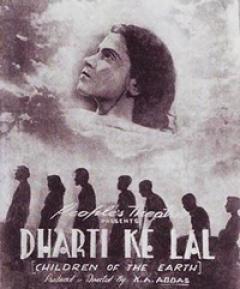
On the occasion of writer-filmmaker Khwaja Ahmad Abbas’s 102nd birth anniversary that fell earlier this week, some reflections on his first movie Dharti Ke Lal, a film that was not available for public viewing until about a year back…

The name Khwaja Ahmad Abbas, whose 102nd birth anniversary passed by this week with nary a mention of him in mainstream media, rings a bell in the mind of an average cinephile primarily for two reasons. The first is as the story/screenplay writer for Raj Kapoor’s cinema; and the second is as the filmmaker who introduced the star of the millennium, Amitabh Bachchan, to Hindi films. His directorial output, comprising 14 feature films and numerous short films and documentaries, is either ignored or overlooked.

This year is special for someone who wants to get introduced to Abbas’s cinema — heavily influenced by the art of Soviet filmmakers like Sergei Eisenstein and Vsevolod Pudovkin — as it marks seven decades since his first film, Dharti Ke Lal (Sons of the Soil) was released. It was a unique experiment by the Indian People’s Theatre Association (IPTA), co-founded by Abbas, at film-making and an early example of Indian film industry’s tryst with social realism. This was the realism of the kind that would be seen later in the films of Satyajit Ray, Bimal Roy and Mrinal Sen.

The tale of a peasant family’s struggles during the British-authored Bengal famine of 1943 during World War-II, the film was a combined adaptation of three literary works — Bijon Bhattacharya’s Bengali play Nabanna; a Hindustani play Antim Abhilasha; and Krishan Chander’s short story Annadata.

KAabbas02MPOs27sept2019

Dharti Ke Lal can also be considered a part of an Abbas trilogy (emphasis mine) of 1946. The three films — the other two being Dr. Kotnis Ki Amar Kahani and Neecha Nagar, both written by him — presented three different ways in which he expressed the idealism of a common man in pre-Independence India. Dr. Kotnis Ki Amar Kahani, a biopic on Dr. Dwarkanath Kotnis, was based on Abbas’s story, And One Did Not Come Back. It showed a young doctor, inspired by Pandit Jawaharlal Nehru’s call to serve the wounded Chinese during the Sino-Japanese War, staking his career to serve the dispossessed masses in a distant country. This was a primer into Abbas’s early-day internationalism.

Neecha Nagar by Chetan Anand, about a nonviolent rebellion by residents from a decrepit shantytown, shows an educated youngster Balraj (Rafiq Tanwar) motivating and organising the masses to speak up against Sarkar (Rafi Peer), the municipality head. Abbas’s desire to lift the urban subaltern to a state of peaceful revolution found expression through the screenplay of the movie.

https://www.youtube.com/watch?v=VLv5Nb4M534&feature=player_embedded

Neecha Nagar – Part 1 of 10 – Cannes Awarded Indian Classical Movie 

source: http://www.youtube.com

Dharti Ke Lal, with a young peasant Niranjan (played by Balraj Sahni) in the lead role, was much more explicit than Neecha Nagar in advocating for independence and self-rule. It is set in Ameenpur, a village in pre-Partition Bengal, is slowly coming to grips with India’s struggle for independence. Through references to Saare Jahan Se Achcha, with Ravi Shankar’s music playing in the background, Abbas introduces a nationalist tenor into the film.

The first half, where the family of Samaddar, the village pradhan (head) and his son, Niranjan, tries to live a happy, agrarian life within their means, is an early-day attempt at realistically portraying the village life. This is celluloid portrayal of the kind of society people got introduced to through Munshi Premchand’s novels like Godan and short stories like Panch Parameshwar. Tropes like the affinity of the villagers toward their land and the affection they show toward their cattle and cow are straight out of a Premchand short story.

The second half, where Samaddar’s family is forced to migrate to Calcutta is Abbas’s attempt to see the city through the prism of a humble peasant. The scarcity created by the famine; the apathy of the rich in the city; and the simmering Hindu-Muslim animosity combine to create absolute misery in the lives of the economic migrants. They further encounter indifference as they are forced to beg. Finally, following the end of famine, they are forced to return to their village where they mobilise themselves into a group and practise saajhe ki kheti (collective farming).

Coming back to the Abbas trilogy part, while Dr. Kotnis Ki Amar Kahaani and Neecha Nagar were inspired by Nehru’s vision of an enlightened urban India, Dharti Ke Lal seeks to emphasise Gandhian ethos of seeking comfort in the village life.

In terms of aesthetic merits, Dharti Ke Lal ranks equal to the likes of Do Bigha Zameen made in the next decade. The affection with which the camera views the villagers as it takes their close-ups makes the characters and their situations relatable. Just notice the sense of wonder on the faces of the family members in the 10th minute as they welcome the clouds, emphasising the love-hate relationship a farmer enjoys with the monsoons. The poignancy of the moment is accentuated by an alaap, with a flute playing in the background. This surely reminded me of joy in the face of villagers of Champaren in Lagaan as they anticipate the rains on seeing the clouds, expressed through the ghanan-ghanan song.

source: http://www.youtube.com

In a radio interview quoted in an audio tribute, Abbas expressed a sense of pride when he says that Dharti Ke Lal is the only film that was ‘socialist’ when it comes to the production process. He says none of the members was paid less than Rs.200 or more than Rs.400. His socialist ideals and life-long belief in upliftment of the downtrodden — his commitment to idealism made journalist Vinod Mehta compare him to historian Eric Hobsbawm — kept informing his writing and his film-making.

source: http://www.youtube.com

His production company, named ‘Naya Sansaar’ (A New World) was his way of voicing his message of empowerment as he made films like Shahar Aur Sapna, Do Boond Paani and Saat Hindustani. Most of them were commercial disasters and some of them look didactic from a 2016 viewpoint. However, if there is one film that has remained relevant, both in terms of its art and its content, it is Dharti Ke Lal.

source: http://www.thehindu.com / The Hindu / Home> Cinema / by Hari Narayan / June 11th, 2016