Tag Archives: Mohammed Ayazuddin Patel – Heritage Collector and Artist – Kalaburagi – Karnataka

Calligraphy and a message deep within

Vijayapura (formerly Bijapur) / Kalaburagi (Gulbarga), KARNATAKA :

Around 40 artists from all faiths are on a campaign to preserve the Islamic art, and build communal harmony
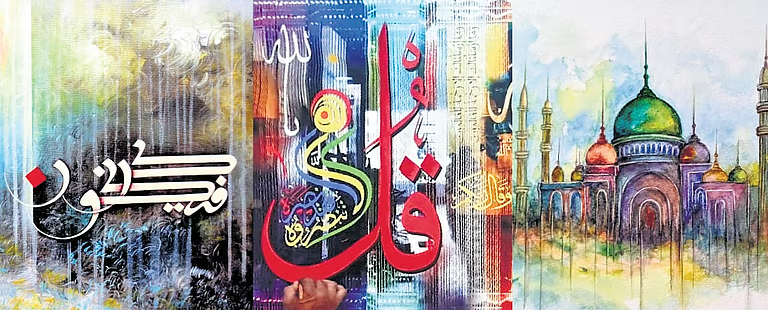
Calligraphy paintings created by various artists

Vijayapura :

When veteran artist Dr Subbayya Neela was invited to join a campaign to spread communal harmony through the ancient but fading art of Islamic calligraphy, he could not hide his delight. For him, the idea was not merely about preserving an art form, but about exploring the potential of art to transcend barriers of faith and culture.

“I have always believed that art knows no religion or boundaries. Art has the power to touch the hearts of people across communities. That is why, when I was approached to contribute to this unique initiative, I immediately agreed. I prepared a few pieces of Arabic calligraphy that were later exhibited in different places as part of the campaign,” recalled Dr Neela.

Among his works was a calligraphic representation of the Arabic phrase ‘Allahu Akbar’, which means ‘God is Great’. “I was given the liberty to interpret the phrase through my own artistic imagination, while maintaining the sanctity of the verse. It was both a responsibility and a joy,” he said.

Dr Neela is among 40 artists from across Karnataka, both Hindus and Muslims, who have joined this movement that began in Kalaburagi in 2020. The campaign was conceived not only to preserve Islamic calligraphy, which has been steadily losing ground, but also to foster unity at a time when society is fractured along communal lines.
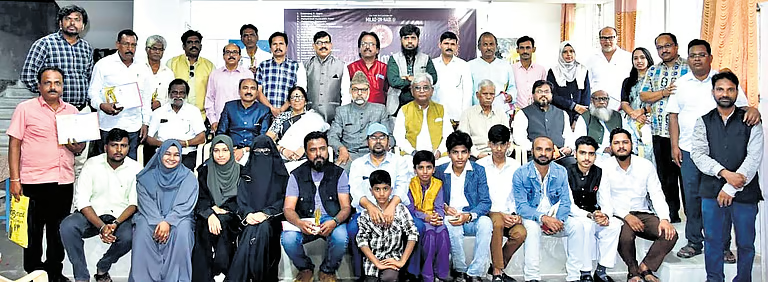
The group of artists who joined the campaign

The Initiative

It was the brainchild of noted artist Mohammed Ayazuddin Patel, a veteran painter from Kalaburagi and recipient of the Lalit Kala Akademi Award. “When hatred and intolerance seemed to be gaining ground in society, we felt the need to bring people together. We thought of reviving Arabic and Islamic calligraphy because it embodies both artistic beauty and deep spiritual messages. At the same time, it offered us a platform to involve artists of all faiths to work together for harmony,” he explained.

Ayazuddin was soon joined by another respected artist, Rehman Patel, and together they expanded the circle of participants. What started with around 15 artists, junior and senior, has now grown into a diverse collective of 40, half of whom are Hindus. These artists work closely with their Muslim counterparts to ensure accuracy in Arabic writing, while retaining artistic freedom.

The campaign, in many ways, draws inspiration from the history of the Deccan itself. Rehman Patel points out that after the decline of the Chalukyan dynasty, many local artisans and craftsmen found themselves unemployed. With the arrival of Muslim rulers in the region, particularly in erstwhile Bijapur and Gulbarga, these artisans were drawn into projects that fused Persian and Turkish influences with local Indian traditions.

“The architecture of that time was a collaboration. While designs came from foreign artists, the actual construction was executed by local Hindu craftsmen. The result was Indo-Persian art, a blend of Indian and Islamic architecture that still stands testament to cultural harmony,” he said. Arabic and Islamic calligraphy flourished during this period, adorning monuments and manuscripts, but over the centuries, as tastes and practices changed, the art form began to fade. “Our campaign is an attempt to not only revive this vanishing tradition but also to remind people of the harmony that once defined this land,” he added.

Preserving sacredness

A key aspect is the selection of verses from the Quran. The organizers have been deliberate in choosing verses that emphasize unity, peace and brotherhood, values that are not confined to one faith but resonate universally. “The artists are given complete freedom to use their imagination while ensuring that calligraphy remains the focal point. We guide them on the technicalities of Arabic script, but artistic interpretation is entirely theirs,” explained Ayazuddin. “This way, we safeguard the sacredness of the verses while allowing creativity to flourish.”

For many Hindu artists like Basavaraj Totad and Rajani Talwar who are involved in it, it has been a learning experience. Working with Arabic characters is not easy, and ensuring accuracy requires constant collaboration. Yet, this very collaboration has built bonds of trust and friendship. “It is heartening to see artists from different backgrounds sit together, discuss and create something so meaningful,” said Ashok Hiremath, an artist from Bidar.

To showcase their work and reach a wider audience, the collective has organized exhibitions, usually coinciding with Id-Milad, the birth anniversary of Prophet Mohammed. So far, five exhibitions have been held, each drawing large crowds from different faiths. “The response has been overwhelming,” Ayazuddin said. “We have seen people from all communities attend and appreciate the art. Many told us that such initiatives give them hope that religious harmony is still alive in our society, and voices of hate and division are not as strong as they seem.”

The exhibitions are not limited to calligraphy, but also feature paintings and photographs of ancient monuments from the Deccan region, tying the campaign to the cultural and architectural heritage of Karnataka. “This serves two purposes. It connects people with their shared history, and encourages them to protect and preserve monuments that are our national heritage,” said Rehman Patel.

Messages beyond borders

For the participating artists, the project is as much about personal conviction as it is about art. Dr Neela believes the messages of peace from saints and prophets have universal appeal. “Prophet Mohammed spread the message of peace, which can be accepted by anyone, anywhere in the world,” he said.

“If art can be used as a language of unity, it should not remain confined to one place. Art has always been a reflection of society. If society is fractured, art can heal and unite. That is what we are trying to do through this campaign,” Ayazuddin said.

source: http://www.newindianexpress.com / The New Indian Express / Home> Good News / by Firoz Rozindar / September 14th, 2025
Kalaburagi artist for Jordan

Kalaburagi, KARNATAKA :

Kalaburagi-based artist Mohammed Ayazuddin Patel will participate in a three-day International Art Festival titled Colours of the World organised in collaboration with Amman Greater Municipality and SMD Foundation at Ras Al Ain Art Gallery, Amman in Jordan.

The festival will be inaugurated under the patronage of Anwar Halim, Ambassador of India in Oman, on Saturday. 

Artists from the U.S., Jordan, Canada, Taiwan, India and other countries are taking part in the art festival.

Mr. Patel will display his digital painting works based on Indian culture.

source: http://www.thehindu.com / The Hindu / Home> News> National> Karnataka / by Staff Reporter / Kalaburagi – March 02nd, 2022

Deccan’s heritage on display

Kalaburagi (formerly Gulbarga), KARNATAKA :

Ayaz01MPOs27sept2019

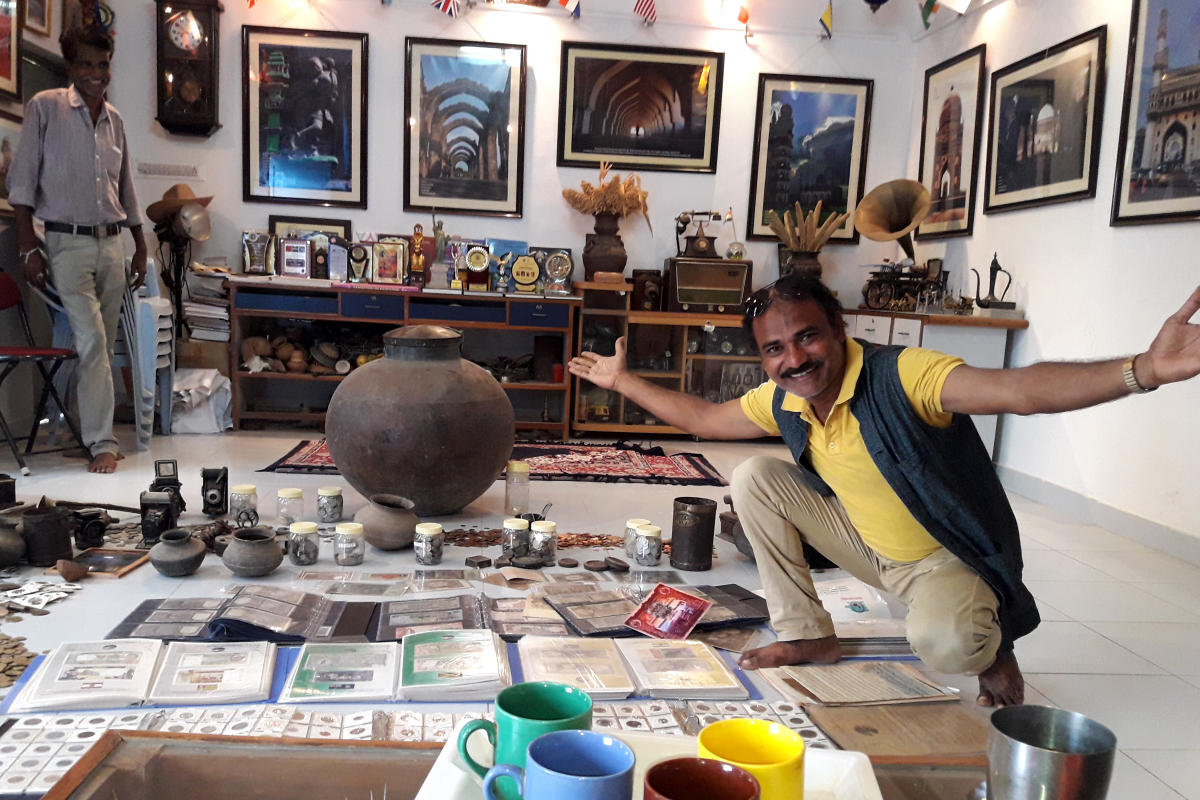
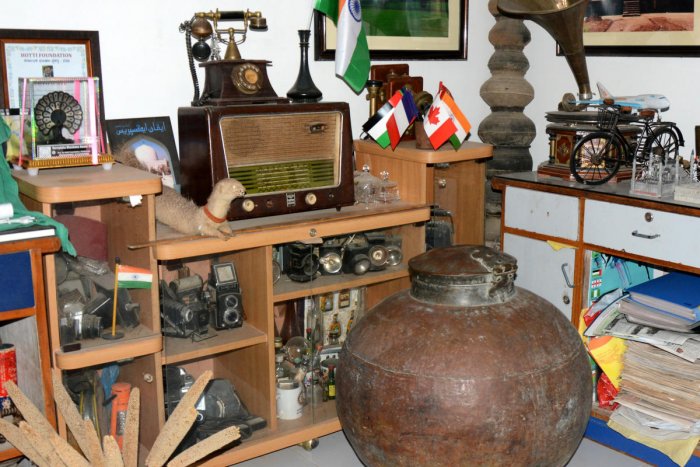
From coins to paper currency, books, radio, telephone, gramophone and old cameras, one can find a wide variety of antiquities at Ayaz Art Gallery in Kalaburagi. Detailed information about each item exhibited here makes this collection a heritage enthusiasts’ favourite. The credit for developing this intriguing collection goes to Mohammed Ayazuddin Patel, who is a photographer by profession.

After the completion of his education, Patel worked abroad for six years. In the meantime, he developed an interest in Deccan’s heritage. As a professional photographer, he has extensively documented the region’s ruined monuments.

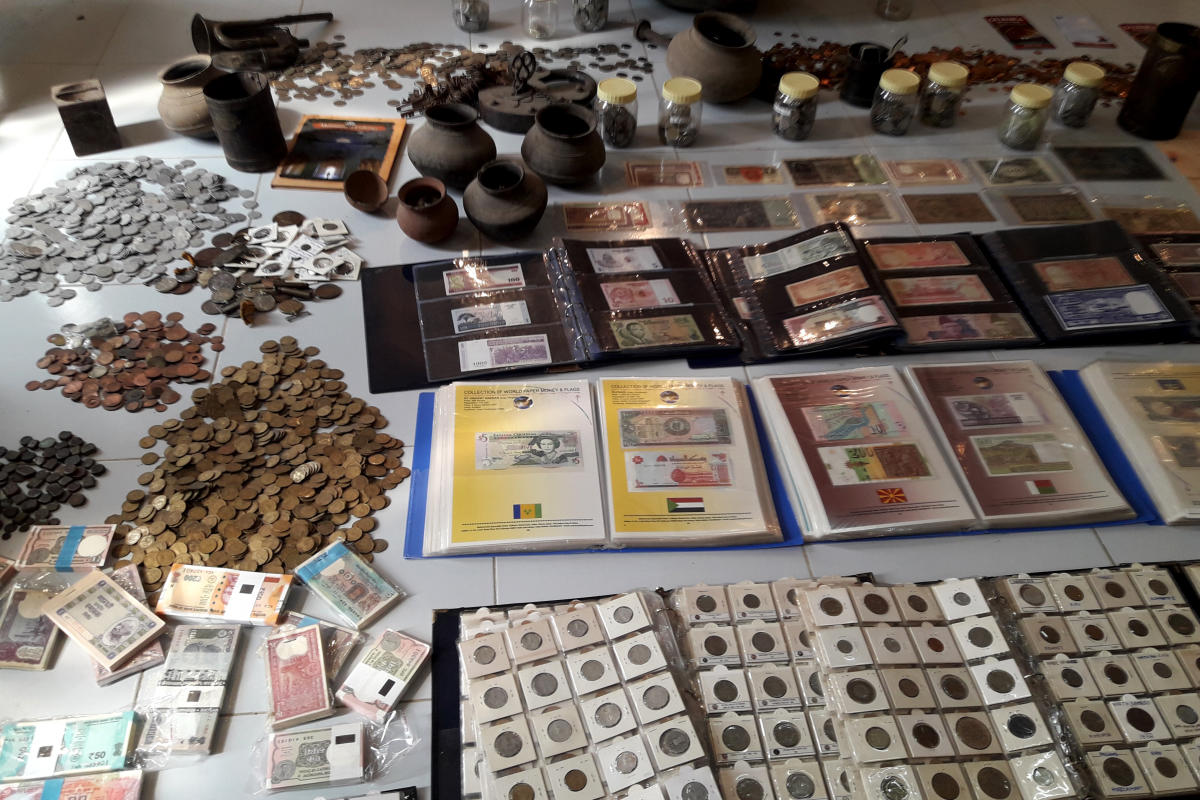
Collection of coins and currency at Ayaz Art Gallery in Kalaburagi.

Patel has collected the antiquities from various places, urban and rural. There are instances of him finding value in an item that others would discard as scrap. Apart from objects, he also has a good collection of rare books published during the British and Nizam rule. Some of them are printed at Oxford Press.

Coins and currency form a major part of the collection. The coins from Satavahana, Rashtrakuta, Chalukya, Hoysala, Nagas, Gandhara, Khilji, Lodhi, Tughluq, Mughals, Bahmani, Wadiyar, Kalachuri, Tipu, Qutb Shahi, Nizam Shahi, Adil Shahi, Barid Shahi,  Imad Shahi, Malwa, Kashmiri, British, and present coins and notes of Indian government are available with him.

Being an artist, he has exhibited the collection aesthetically, with all the details like the currency name, country, capital of country and country’s population on display. Presently, he is having about 275 countries currency notes in his collection which can be treated as the largest collection in Karnataka.

Many research scholars visit his art gallery to get information about the region’s history and heritage.

He has travelled to 26 countries to present the cultural beauty of the Hyderabad Karnataka region. While returning, he picks each country’s flag. Such flags are displayed neatly at the gallery.

Apart from this, he has exhibited his work of digital art, attended seminars, art camps and got honours for the same. Some of the unique pieces found in the gallery include an old lantern used in the ship; an ink bottle of 1855 AD used for fountain pens ; metal locks from Bahmani to Nizam period and terracotta plates and bowls of Nizam period.

Property and other agreement bonds written in Arabic, Parsi, Halegannada, Sanskrit and other languages find a place in his collection. The stamp papers of Jodhpur State and Bikaner State, Jaora State under the of Iftikhar Ali Khan Bahadur, Bhopal and Burma Government both, British India, Travancore and Dewas State, Rajgarh State, Government of Madras, Government of Mysore and Indian non judicial paper are in his collection.

After practicing photography for many years, he started digital art using his photos that portray the heritage of Hyderabad Karnataka.

Mohammed Ayazuddin Patel

He acknowledges the support extended by his parents. His mother used to collect coins and antiquities as a hobby. And his father, Mohammed Khaja Naveed Patel, was a Munsi and was an expert of history. “Kalaburagi has a rich history and heritage.  It is everyone’s responsibility to collect and preserve these objects,” Ayazuddin says.

source: http://www.deccanherald.com / Deccan Herald / Home> Spectrum> Spectrum Statescan / by Rehaman Patel / August 17th, 2019

The last Nizam’s indelible imprint on Kalaburagi

Hyderabad / Kalaburagi (formerly Gulbarga) , KARNATAKA :

AiyaneShahiMPOs17sept2019

The city has many structures built during the time of Nizam Mir Osman Ali Khan Bahadur

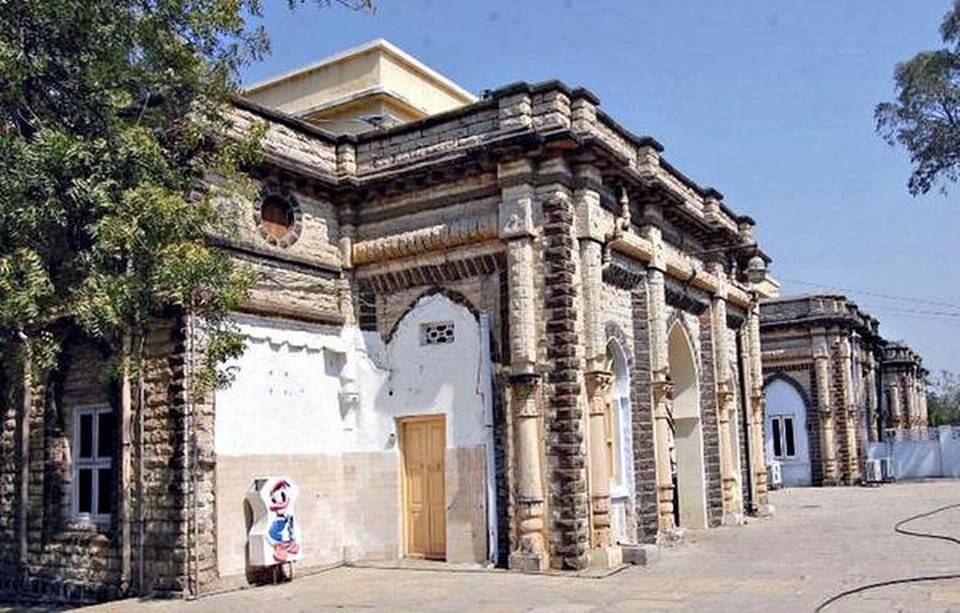
A kilometre away from Kalaburagi railway station is Aiwan-e-Shahi, a magnificent stone structure built in early 19th Century. For political leaders and bureaucrats visiting the city, it’s the most preferred accommodation.

Kalaburagi has several such architectural remnants of the times of the Nizam rule, uniquely Indo-Islamic in style, and still in use. Nizam Mir Osman Ali Khan Bahadur, the last monarch, who ruled the province between 1911 and 1948, stayed in Aiwan-e-Shahi when he visited the city and is today a government guest house. The Nizam used to travel in his own train from Hyderabad to reach the palace in Kalaburagi and a special railway track was laid up to the entrance of the complex for the purpose.

Like most buildings constructed during the Nizam’s rule, the Aiwan-e-Shahi portrays a rich and imposing architecture synthesising medieval and modern styles. It is constructed using local white stones, popularly known as Shahabad stones, abundantly available in the surrounding area. The front view of the palace was greatly inspired by Gothic style architecture.

Kalaburagi-based heritage collector and artiste Mohammed Ayazuddin Patel has copies of some rare photograph of Nizam. In one of them, he is the Nizam is seen playing tennis outside the Aiwan-e-Shahi palace complex. His train is also visible in the background. The picture was said to have been taken by Raja Deen Dayal, the official photographer at the Nizam’s court.

The Nizam, known as the architect of modern Hyderabad, left an impression on Kalaburagi too. The building now houses the tahsildar office, zilla panchayat and central library. The entrance arch gate of Vikas Bhavan, the mini Vidhana Soudha that has the district administrative complex and one of the entrances of Mahbub Gushan Garden in the heart of the city were built during his time. There are several private houses across the city that were built for the families of Deshpande, Deshmukh, Mali Patil, Police Patil, Jamadar, Mansafdar, Pattedar, Inamdar, Jagirdar, Kulkarni, Hawaldar – the official and administrative titles given by the Nizam.

“At least, the Aiwan-e-Shahi should be included in the protected monuments and converted into a museum to showcase the region’s cultural past,” says Rehaman Patel, Kalaburagi-based researcher and artiste. According to him, the Nizam had expanded public spaces such as parks, lakes, town hall, and gardens in the city engaging several engineers. Mahbub Sagar (now called Sharnbasweshwar lake) and Mahbub Gulshan Garden continued to be used by the public. The town hall is used by the Kalaburagi City Municipal Corporation as a conference hall.

The Filter Bed built for providing pure water to the residents continues to supply drinking water to parts of the city. The Mahbub Shahi Kapda Mill that produced high-quality cloth and supplied it not just to various cities across India, but to other countries as well, was in operation till the 1980s. The Nizam had also established Asif Gunj School and MPHS school, the oldest educational institutions of the city.

“In the early 1930s, he formed the Hyderabad Aero Club and built Begumpet Airport for his Deccan Airways, one of the earliest airlines in British India. He had the distinction of employing, perhaps, the world’s first woman commercial pilot, Captain Prema Mathur, during the late 1940s. The other airport built in Bidar in 1942 is now used by the Indian Air Force to train its pilots. The Nizam was also credited for renovating several monuments belong to Buddhists, Jains, Chalukyas, and Bahmanis. The renovation and excavation of the caves of Ajanta and Ellora was undertaken with the funds of the Nizam government and supervised by then archaeology director Ghulam Yazdani,” Mr. Rehaman said.

source: http://www.thehindu.com / The Hindu / Home> News> States> Karnataka / by Kumar Buradikatti / Kalaburagi – September 16th, 2019