Tag Archives: Muslims of India

‘Madinah’: Handwritten Urdu newspaper that spoke from Bijnor to subcontinent

Bijnor (former Northwest United Provinces) – presently (Moradabad Division), UTTAR PRADESH :
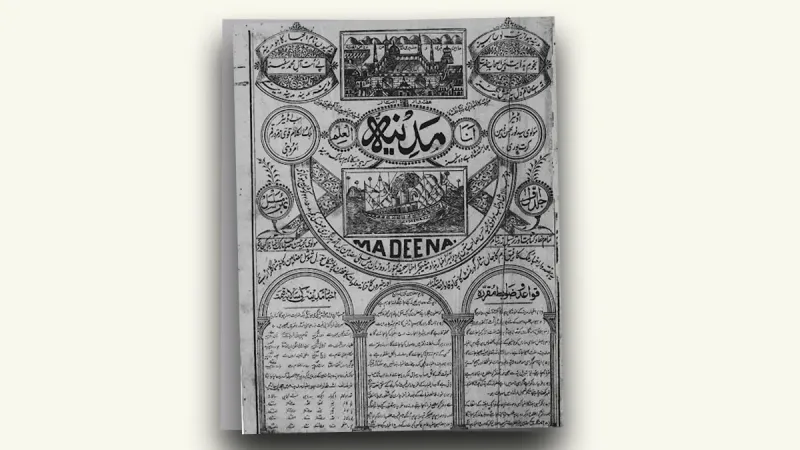
Started as a local bi-weekly newspaper, Madinah soon commanded a massive subcontinent-wide circulation. While most newspapers at the time focused on major colonial urban centres such as Lahore, Delhi or Calcutta, Madinah instrumentalised its place of inception—Bijnor—as a political shield.

‘Madinah,’ a bi-weekly newspaper founded in 1912 by Mohammad Majeed Hasan, began in his courtyard in the small qasbah of Bijnor in the Northwest United Provinces (present-day Uttar Pradesh). Its inception is later recounted in a dream narrative published in Madinah’s silver jubilee edition in 1939, which describes how Hasan dreamt of “a bright moon shining in the sky, being eclipsed by another moon appearing from behind and drifting away from it, becoming brighter as the dream continued.”

Hasan had been working as a journalist in Lahore while also preparing for a career as a judge. He is said to have had the dream shortly after abandoning his training and returning to Bijnor to continue working for the family newspaper Sahifa, whose modest readership had already begun to dwindle. Hasan later interpreted the dream as a sign that he should start his own newspaper, symbolised by a new shining moon.
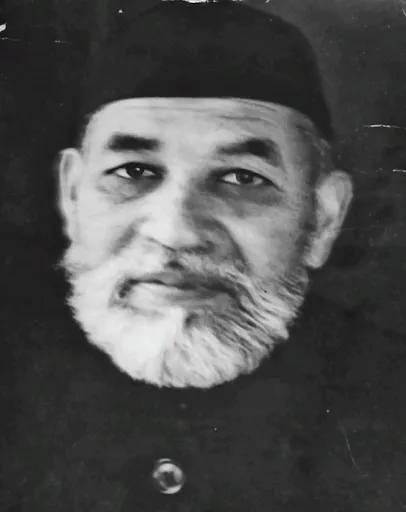
Hasan’s first wife, Muhtarma Kaneez Fatimah, whose altruistic nature and firm belief in his venture compelled her to help him start the paper, sold her jewellery to support it. She later proved to be an intelligent and capable assistant in the newspaper’s production, despite being unable to read or write.

It was she who inspired the newspaper to include a separate women’s section named Akhbar-i-Nisvan on one of its last pages. The section frequently appeared during the newspaper’s first three years, from 1912 to 1915, and was intended to serve the interests of Muslim women by including editorials and creative pieces written by both men and women.

Soon, the paper had distinctly identified itself among its audience by creating a space for Muslim women, with a special focus on mothers, to discuss their issues through genres such as poetry and fiction.

The unlikely epicentre: importance of the Qasbah

Started as a local bi-weekly newspaper, Madinah soon commanded a massive subcontinent-wide circulation. While most newspapers at the time focused on major colonial urban centres such as Lahore, Delhi or Calcutta, Madinah instrumentalised its place of inception—Bijnor—as a political shield. In the same year as Madinah’s inception, Maulana Azad, at the age of 23, started the paper Al-Hilal in Calcutta, which was lauded among the Muslim elite and others for its publishing style and genre, soon reaching a pinnacle of readership.

In contrast, Madinah’s unique approach, which embraced the values of the gentry while also appealing to a broad readership beyond the traditional urban elite, distinguished the paper from the incessant urban cynicism that was becoming a prevalent theme throughout the landscape of production. Due to better readership and the greater availability of resources in urban areas, similar endeavours to Madinah redirected themselves to these spaces.

In its founding years, Madinah also addressed British officials, adopting varying strategic and bargaining stances against surveillance and strict government policies through explicit deference to colonial authorities. For instance, Hasan, the proprietor of the newspaper, cited the Ijazat (permission) of the Magistrate and Collector of Bijnor in its inaugural issue. This attentiveness to British intelligence provided the necessary immunity required for the functioning of the newspaper, unlike Azad’s Al-Hilal, which came under heavy scrutiny from the colonial government and had to cease publication by the end of 1914.

Newspapers in urban centres, such as Awadh Akhbar, persisted in their efforts to speak to a broad audience delineated more by language and culture than by religion, while papers such as Madinah reinforced an already rich discursive tradition surrounding religion and identity in the social crevices known as qasbahs (small towns). They also engaged with contested political themes debated by scholars and leaders, including the shaping of early narratives of separatism and communalism among Indian Muslims.

The success of Madinah can be attributed to the spatio-temporal advantages of the qasbah, which can be defined as a place of bureaucratic and market significance where a Muslim minority or majority lived alongside populations from other communities, alongside an influential enclave of intellectual vivacity and economic and political importance for Muslims. Scholar M. Raisur Rahman described qasbahs as “an alternative site for contestation with strong autonomous networks of culture, literature and religion”, while simultaneously defining them as a ‘unique space’ and a ‘microcosm of larger idealized national life’.

These spaces have been significantly important sites in the history of South Asian culture, shaping identities and literary traditions while remaining distinct from the typologies of urban environments, where modernity had already seeped through the sutures of cultural exchanges with the outside world.

Madinah and its role in politics

The political trajectory of Madinah transformed profoundly during the period of World War I, following the Balkan Wars. The paper broadened its purview by juxtaposing the localised ethos and culture of the qasbah with larger international crises, particularly the imminent dismantling of the Ottoman Empire. 

Navigating the intricacies of a contested political landscape, Madinah supposedly guarded a global Islamic consciousness through its promotion of the Khilafat Movement and its shared affiliation with Jamiat Ulema-e-Hind. Consequently, its support for the Indian National Congress and its anti-separatist stance against Jinnah became apparent, aligning with Jamiat’s idea of Composite Nationalism, as Madinah continued to anchor itself in the secular, anti-colonial bedrock of Urdu journalism.

According to scholar Gyanendra Pandey, Madinah served as a vital barometer of Muslim public opinion across this shifting timescape. Driven by the ideological synergy of Hindu-Muslim unity during the Non-Cooperation and Khilafat movements, the publication commanded an astounding peak circulation of 12,500 copies by 1922. However, this radical nationalism invited severe repercussions from the colonial state, notably resulting in the paper being banned in Punjab following its courageous and explicit reporting on the 1919 Jallianwala Bagh massacre. Following the ban, the paper was relaunched in August 1919 under a new name—Yasrab (Madinah in Arabic)—as an act of strategic defiance against the colonial government, with a couplet from Iqbal:

Khāk-i Yasrab az do ‘ālam khūshtar ast,
Ā’e khunak shahre ke ānjā dilbar ast

(The dust of Madinah is better than both worlds,
How wonderful is the city where the beloved is.)

As the landscape of production became increasingly fragmented by communal cynicism and the mass political momentum of the early 1920s waned, the paper witnessed a decline in readership, with circulation dipping to 6,500 in 1927 and further to 6,000 by 1931.

Despite this dwindling circulation, Madinah remained a formidable and persistent critic of communal separatism throughout the 1930s and 1940s. Engaging with the contested political themes of the era, the paper sought to dismantle the early narratives of the All-India Muslim League. Pandey highlights a remarkably bold editorial from the 1930s that dismissed the League as being “neither dead nor alive”, asserting that its existence was confined merely to “the brain and mind of Mr. Jinnah”. 

By 1942, the newspaper had effectively transformed into an open town hall, enabling ordinary citizens to debate and largely resist the looming Pakistan movement from within the landscape of the qasbah.

The script and scripture

The prevalent Urdu script, Nastaliq, which had been used throughout South Asia for centuries and was imported from Persia, featured intricate details, ornamentation and a complex structural form forged through the meticulous amalgamation of the Naskh and Ta’liq calligraphic traditions. It became the most recognisable Urdu script and developed strong cultural and ideological ties with the Urdu language. However, due to the rise of globalisation and the growing demand to produce literature for the public, it became increasingly difficult to produce works in the script lithographically on a mass scale. By the end of the 1970s, Nastaliq began to advance with the help of Mirza Jamil Ahmad, who created more than 20,000 combinations to bring the script into the digital world under the name Noori Nastaliq.

By the time the digitisation process began, Madinah was already out of business, shutting down its press with its last issue in 1976. During the seven decades that the paper survived, its editors had no keys to the press and no screens to reflect upon. Instead, the issues of Madinah were produced solely by hand, by calligraphers and artists alike.

The Urdu script Nastaliq had been established as the standard for almost every copy of the holy book Quran in South Asia since the Mughal period. By the time Madinah began using the same script as its standard, it already carried connotations of purity, holiness and divinity within the cultural landscape. Combined with the organic practice of producing it by hand rather than by machine, the paper was considered by its readers to embody a deliberate resistance against illegitimate mechanisation and the rising industrialisation of the subcontinent, curating a new political discourse based on the cultural symbolism of the script.

By using and retaining lithographic practices in an era when other papers were increasingly relying on mechanical typography for efficiency, Nastaliq was perceived as a tactile and handcrafted discipline that preserved the inherent spirit of prose, shielding the paper’s contributions from the mechanical and indifferent processes of Western print capitalism.

The inevitable descent

By the 1940s, Madinah had begun engaging in intense print debates with the supporters and proponents of pro-Muslim League newspapers and writers, arguing in a polemical fashion that religion could not be the sole determinant of a nation’s survival. Despite the paper’s persistent efforts to resist the pro-League and separatist stance, it witnessed the partition of the Indian subcontinent into two parts. The social capital of Madinah was on the verge of collapse, as the paper saw affluent members of the Muslim community, who had constantly contributed to its production and editorials, leave for the other side of the border.

The Language Act of 1951 became a huge blow to the publishing house of Madinah, as Hindi was soon adopted as the state language in Uttar Pradesh, mandating officials and government offices to maintain all data in Hindi and extensively replacing Urdu in institutions under the newly formed Indian government. Although the apparent marginalisation of the paper’s foundational language and the loss of its social capital were significant blows in the paper’s history, they were unable to overshadow its continuing legacy.

Madinah, managing to survive, remained a prominent, albeit ageing, symbol of pre-Partition nationalist Muslim political identity, advocating for the preservation of Urdu heritage amid the growing socio-political shifts in Uttar Pradesh. At the same time, it continued to struggle against declining circulation as newer, faster-printed typographic dailies overtook the market. Its reports on the Indo-Pakistani War of 1971 and the creation of Bangladesh vindicated the paper’s historical assertion that religion alone could not hold a nation together, while it also continued reporting on rising communal tensions in the country.

The prodigious endeavour was about to culminate in the years following the Indo-Pakistani War. Near the end of its operational life, the paper’s traditional lithographic format and qasbah roots struggled to attract younger, urbanised readers. The deteriorating health of Hasan finally caught up with him, leading to his death in 1972. The handling of the newspaper remained in the hands of Hasan’s family until its last editor, Syed Hasan, finally ceased publication, quietly closing the press in 1975.

References

  • Jones, J. (2023). Megan Eaton Robb: Print and the Urdu Public: Muslims, Newspapers, and Urban Life in Colonial India. New York: Oxford University Press, 2021; pp. xi + 247. Journal of Religious History, 47, 151–153. https://doi.org/10.1111/1467-9809.12917
  • Abduhu, G. R. (1973). The Educational Ideas of Maulana Abul Kalam Azad. Sterling Publishers.
  • Rahman, M. Raisur. (2014). “Beyond Centre-Periphery: Qasbahs and Muslim Life in South Asia.” South Asian History and Culture, 5, 163–178. https://doi.org/10.1080/19472498.2014.883762.
  • Eaton Robb, M. (2016). “Women’s Voices, Men’s Lives: Masculinity in a North Indian Urdu Newspaper.” Modern Asian Studies. https://doi.org/10.1017/S0026749X15000335
  • Pandey, G. (1978). The Ascendancy of the Congress in Uttar Pradesh, 1926–34: A Study in Imperfect Mobilization. Oxford University Press.

source: http://www.maktoobmedia.com / Maktoob Media / Home> Features /by Mohammad Azim / August 30th, 2026
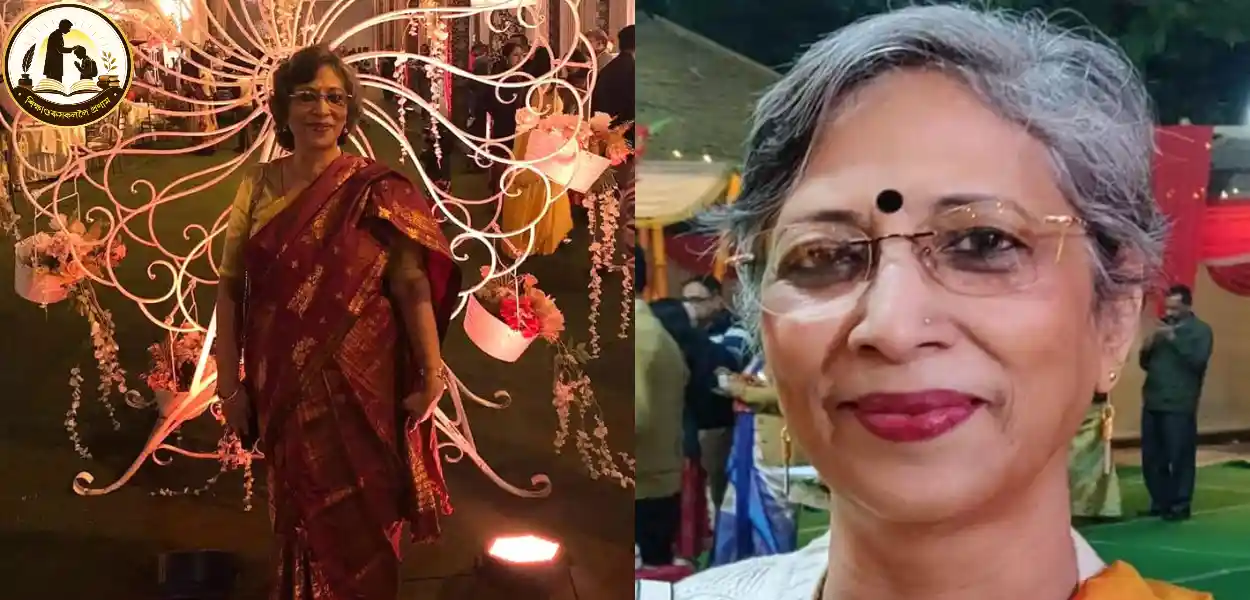
Shehnaz Rahman gives up lucrative legal practise for love of classroom

Guwahati, ASSAM :

Shehnaz Rahman

Shehnaz Rahman, a senior advocate from Guwahati who once fought legal battles in the court room has taken to full time teaching. While her legal career gave her an identity, it was in teaching that she found her life’s purpose.

For Shehnaz Rahman, lecturer at the Bishnuram Medhi Government Law College in Panjabari, Guwahati, teaching is not merely a job but an integral part of her existence. Life led her to the courtroom and placed the law books in her hands; yet, she eventually returned to teaching to seek fulfilment of her sense of belonging.

For her, teaching is not just a chapter in her professional life; it is a call of the heart.

Shehnaz Rahman says even as a child, she had wanted to be a teacher. After completing her honours graduation in political science from Cotton College (now Cotton University), she enrolled at Delhi University and completed her doctorate.

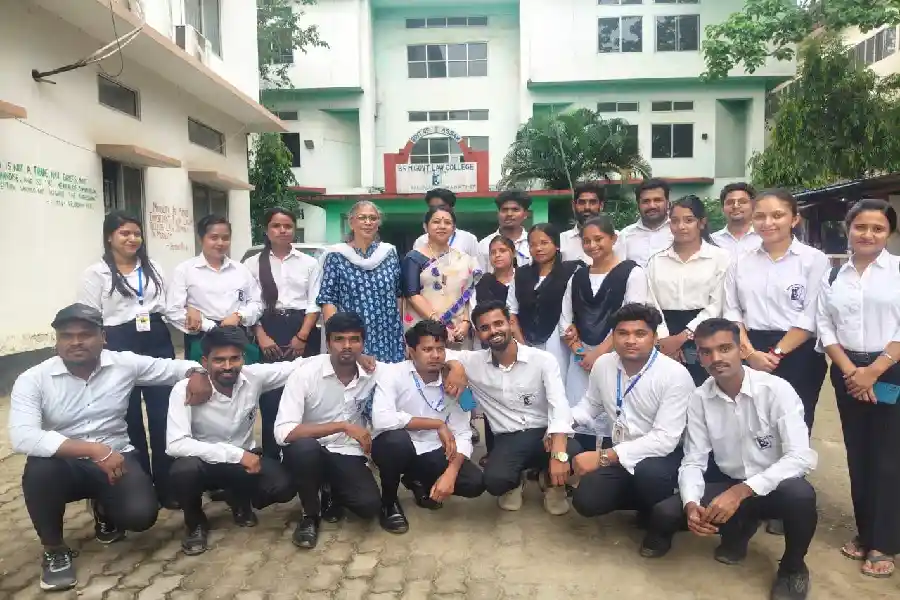
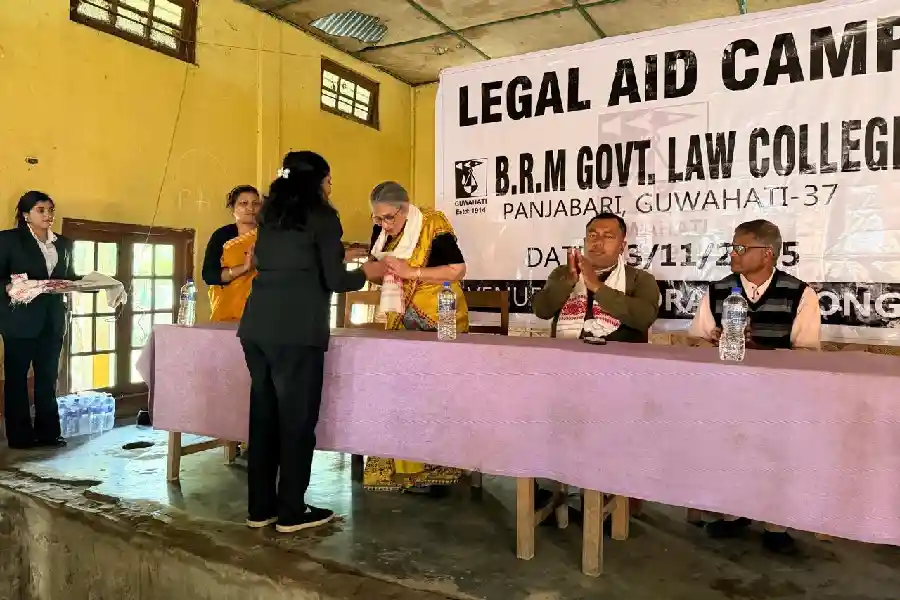
Shehnaz Rahman , lecturer and senior advocate of Bishnuram Medhi Government Law College  at a function 

The primary purpose of earning her doctorate was to enable her to adopt teaching as a profession in the future. During that period, Shehnaz also obtained her law degree.

However, life does not always follow a planned course. Due to the lack of teaching opportunities during her doctoral studies, she began practicing law in court. Gradually, Shehnaz established herself in the legal profession. Yet, even amidst the demanding job of a advocate, she had kept her dream of becoming a teacher alive.

In a conversation with Awaz-The Voice, Shehnaz Rahman said: “In 1988, I had the opportunity to work as a part-time lecturer at B Barooah College. Shortly after, the then principal of the Government Law College located in Panbazar at that time, Mr Haren Kalita, invited me to teach as a guest lecturer. As soon as I got this opportunity, I accepted his invitation without a second thought. That is how my new journey began. From guest lecturer to part-time lecturer, and finally, in 1995, I joined the Government Law College as a full-time guest lecturer.”

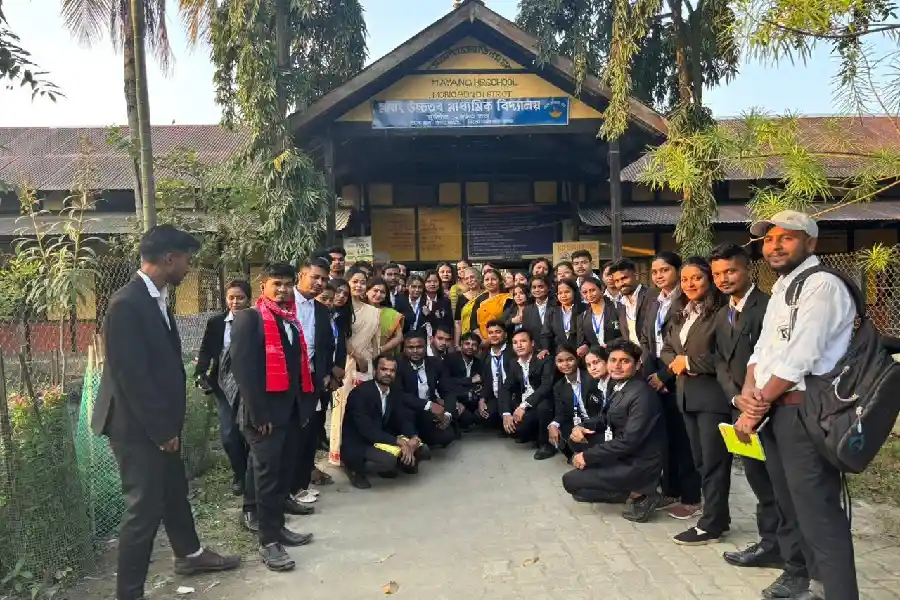
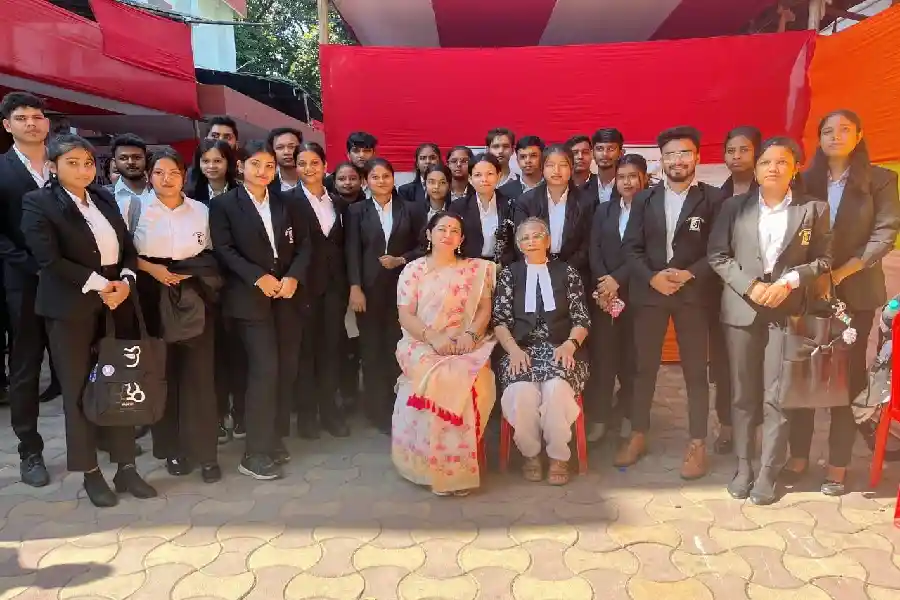
Lecturer and Senior Advocate  Shehnaz Rahman with the students 

Balancing her legal practice in court during the day and teaching in the evening, Shehnaz realised that she was doing well as an advocate, her heart pinned for a role as a teacher.

She said, “The legal profession has its own appeal, but the satisfaction I derive from teaching is entirely different. Gradually, I understood that I could never give up teaching.”

This dual experience of teaching and legal practice shaped Shehnaz Rahman into a unique educator. With her courtroom experience, she has been able to introduce students to the world beyond textbooks.

Through court visits, legal awareness camps, practical learning or real-life case management experience, she explained all these aspects to students based on her own experiences. She says, “Students understand the subject more deeply when they engage with real-life situations rather than just reading from books.”

Lecturer and Senior Advocate  Shehnaz Rahman with the students 

However, the most emotional chapter of Shehnaz Rahman’s relationship with teaching lies hidden in a very difficult period of her personal life. While she was serving as a government advocate for the Meghalaya government, her husband suddenly passed away following a cardiac arrest. Within just an hour, Shehnaz’s life seemed to change completely.

She was deeply shattered. It was then that teaching seemed to bring her back to life. Gradually, going to the classroom, talking with students, listening to their questions and teaching them helped ease her sorrow and unrest.

She felt that teaching had become a mental strength for her.

Shehnaz said, “After my husband’s death, I was mentally devastated. But the work of teaching gave me the courage to live like a mother, a healer, a friend and a family member, and it helped me. Among the students, I could forget my sorrow for some time. This gave me new inspiration and enthusiasm to live. It provided new strength to face life. That is why I also call teaching a kind of therapy of my life.”

Today, many of Shehnaz Rahman’s students are lawyers, judicial officers and professionals in various fields. She said, “When any former student comes to me in court and says, ‘Madam, I was your student,’ the pride and satisfaction I feel at that moment cannot be compared to any professional success.”

Shehnaz Rahman believes that a teacher’s true success is not reflected in their own position or personal achievements, but in the success of their students.

“I always advise the new generation of law students to work honestly and with dedication.

Lecturer and Senior Advocate  Shehnaz Rahman with the students 

Shehnaz Rahman says that there is no substitute for fundamental books, laws, research and analysis in this era of digital resources. Therefore, both teachers and students must keep enriching themselves with new knowledge in tune with the times.

She does not support complete dependence on technology. That is why, the habit of reading, thinking and working independently should never be abandoned. She encourages students to read books, research journals and primary laws, to conduct research, to write themselves and to improve their skills in preparing legal documents. In her view, we must adopt new technology, but technology can never be a substitute for fundamental knowledge, reading, and analysis.

Shehnaz Rahman says she will never give up teaching.

She said, “For me, whether I will teach or not? This is not a question. Because I have already made my decision. Now the question is, where and how I will continue teaching. If tomorrow I cannot continue working at this college, I will still not give up teaching. I will continue teaching through training centers, private universities, law universities or any other medium. In whatever way I can, wherever I can, I will keep teaching students.”

The legal profession has given Shehnaz Rahman experience, identity, and professional success. But teaching has given her something even more valuable — ‘life’s purpose’. When life had deeply broken her, teaching helped her stand up again. And when the strength to move life forward was diminishing, she gained a new strength to live from among her students. That is why Shehnaz Rahman’s life can perhaps be summarised in one sentence: The court taught her law, but the classroom taught her life.

source: http://www.awazthevoice.in / Awaz, The Voice / Home> Stories / by Munni Begum, Guwahati / September 01st, 2026

Mysuru gave me political platform: Rizwan Arshad

Mysuru / Bengaluru, KARNATAKA :

Mysuru: 

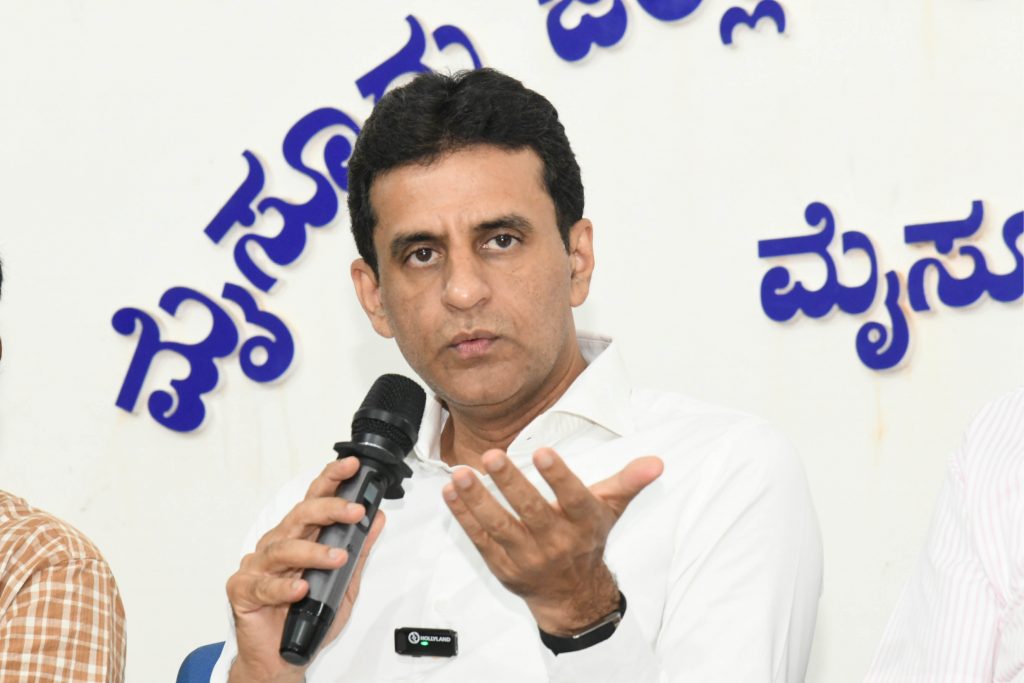
Stating that Mysuru is his native place and that he spent his student days in the city, Minister for Food and Civil Supplies Rizwan Arshad said Mysuru had provided him a platform for his political foray.

He recalled that senior journalists, including Star of Mysore and Mysuru Mithra Founder-Editor late Dr. K.B. Ganapathy, had encouraged him during his early political career.

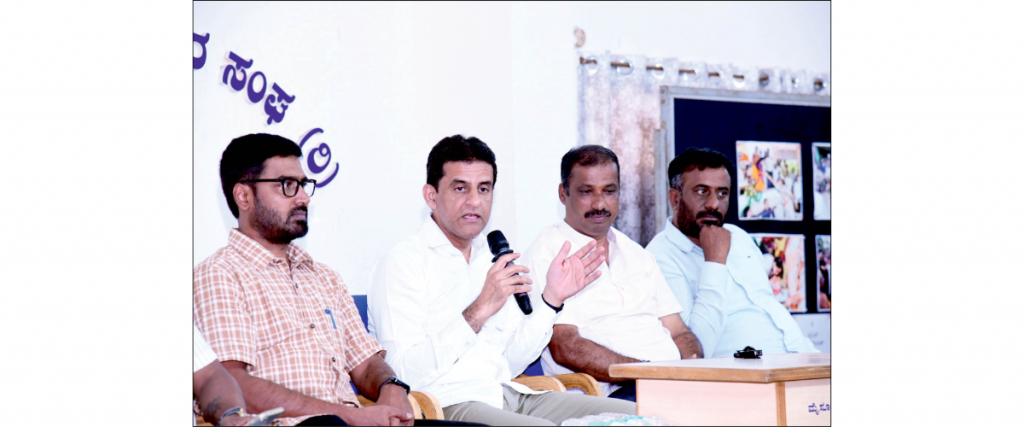
He was speaking at ‘Meet the Press’ programme organised by Mysuru District Journalists Association (MDJA) at its premises on Thyagaraja Road this morning.

“Mysuru is a special city and I have now got an opportunity to serve the people of the State as a Minister. Though power is not eternal, the things we do while holding responsible positions matter much in society. I left Mysuru for Bengaluru seeking greener pastures in politics and succeeded, becoming an MLA from Shivajinagar twice. I now have an opportunity to serve as a Minister and will serve the people of Mysuru to the best of my ability,” he said.

Commenting on his Ministry, Rizwan said as many as 4.5 lakh ration cards had been cancelled, of which 55,000 were now under review. He noted that strict measures had been taken to prevent the black marketing of ration articles, especially rice.

Asserting that modern technology would be used to prevent pilferage and theft of ration articles, he said the Department had launched a drive to install CCTV cameras at all godowns.

The Minister said major reforms would be introduced in his Department. He also said biometric-related issues would be rectified to ensure fair distribution.

Welcoming the RSS Chief Mohan Bhagwat’s recent statement on communal harmony at an event in New York, Arshad said he believed that Bhagwat’s statement was more about changing the organisation’s image than bringing about real change.

Strongly condemning the ‘purification’ of the spot where AICC President Mallikarjun Kharge addressed a gathering at Haldwani in Uttarakhand, he said it was a classic example of untouchability still existing in the country.

Rizwan Arshad was honoured by the MDJA on the occasion. MDJA President K. Deepak, senior journalist T. Gururaj, former MDJA President C.K. Mahendra, MDJA office-bearers and others were present.

source: http://www.starofmysore.com / Star of Mysore / Home> News / September 02nd, 2026

Dr. Zaki Ahmad Siddiqui Takes Charge of RRIUM, New Delhi

NEW DELHI :

Senior Unani physician, researcher and administrator with nearly three decades of experience assumes new responsibility

New Delhi:

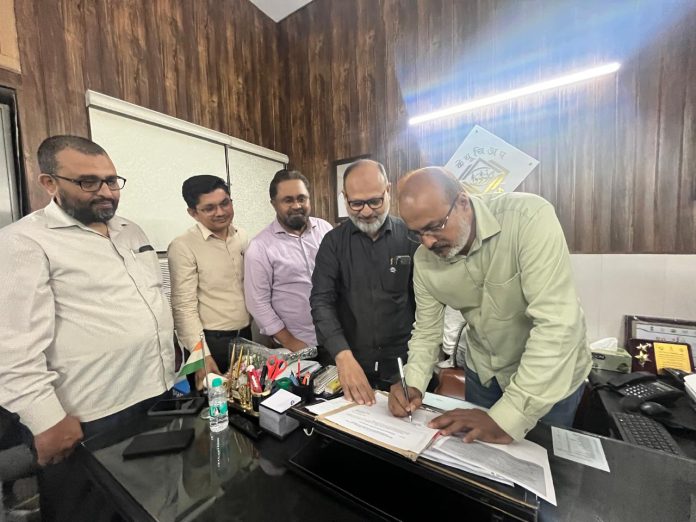
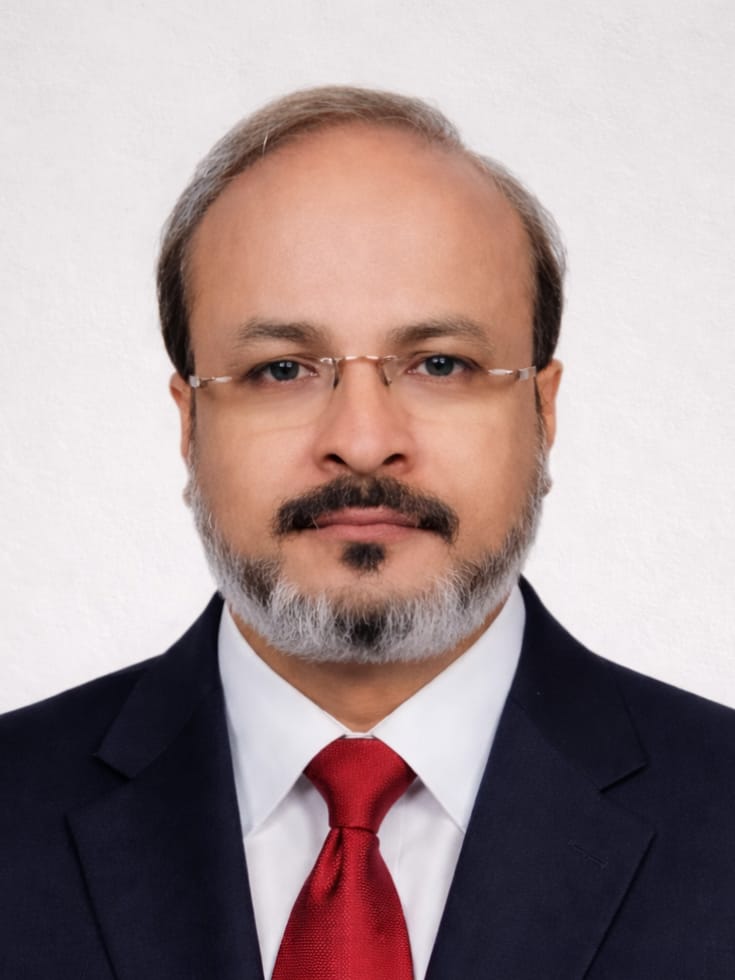
Following the retirement of Dr. Ziaul Haq Siddiqui, Dr. Zaki Ahmad Siddiqui has taken charge of the Regional Research Institute of Unani Medicine (RRIUM), New Delhi, under the Central Council for Research in Unani Medicine (CCRUM), Ministry of Ayush, Government of India.

All senior officers and staff of the institute, were present on the occasion. Dr. Zia’s long and dedicated services were acknowledged, while Dr. Zaki Ahmad Siddiqui was congratulated and extended best wishes on assuming his new responsibility.

Dr. Zaki Ahmad Siddiqui is a senior Unani physician, researcher and administrator with nearly three decades of experience in clinical research, drug standardisation, policy implementation and institutional administration in the AYUSH sector. He obtained his BUMS from A & U Tibbia College, University of Delhi, and MD (Moalijat) from Jamia Tibbia, Deoband.

Dr. Zaki began his professional career in 1996 as a Research Officer with CCRUM. During his nearly three decades of service, he has held various important responsibilities in research, clinical services, policy and administration. A significant part of his career, around 20 years, was spent at CCRUM Headquarters and the Ministry of AYUSH, where he handled important responsibilities relating to research, policy, administration and regulatory matters.

During his tenure in the Education Policy Section of the Ministry of AYUSH, he was associated with important policy and administrative matters concerning Ayurveda, Siddha and Unani medical colleges.

From 2020 to 2022, Dr. Siddiqui served as In-charge of the Drug Standardisation Research Unit (DSRU), CCRUM, New Delhi, where he contributed to strengthening research and activities related to the standardisation of Unani medicines.

From 2022 to 2025, he headed the Unani Medical Centre at Safdarjung Hospital, New Delhi, contributing to the delivery and strengthening of Unani clinical services in a major tertiary-care hospital.

In December 2025, Dr. Siddiqui was promoted to the post of Deputy Director and was entrusted with the responsibility of RRIUM, Mumbai. Subsequently, in April 2026, he was assigned the responsibility of Assistant Director, Hakim Ajmal Khan Institute for Literary & Historical Research in Unani Medicine (HAKILHRUM), New Delhi.

With his extensive experience in clinical care, research, drug standardisation and institutional administration, Dr. Siddiqui’s new responsibility at RRIUM, New Delhi is expected to further strengthen the institute’s research activities, Unani clinical services, drug standardisation and administrative functioning.

source: http://www.radiancenews.com / Radiance News / Home> Latest News> Report / by Radiance News Bureau / August 31st, 2026

Karimi Library Mumbai Restores Rare Urdu and Persian Translations of Hindu Scriptures

Mumbai, MAHARASHTRA :

Mumbai:

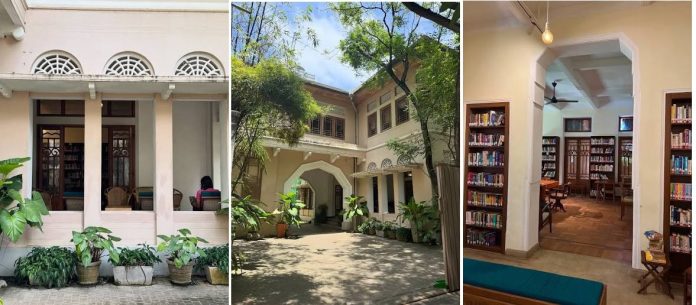
Inside a century-old building overlooking the streets of south Mumbai, a quiet effort is underway to save rare Persian and Urdu translations of Indian scriptures, the last surviving records of the country’s multi-cultural past.

The Karimi Library, housed within the 152-year-old Anjuman-I-Islam institute near the iconic Chhatrapati Shivaji Maharaj Terminus, has launched a restoration drive to rescue more than 32 sacred Hindu texts. These include the Mahabharat, Ramayan, Bhagavad Gita, and Shiv Puran, all printed between 1867 and 1896.

The library was established in 1898 after merchant Kazi Abdul Karimi Porbandari donated 4,500 valuable texts, and it was named after him. Padma Shri Dr Zahir Kazi, president of Anjuman-I-Islam, founded by Badruddin Tyabji in 1874, shared this history while speaking about the ongoing project.

The archive holds books, manuscripts, and newspapers in Sanskrit, English, Urdu, Persian, Marathi, Pashto, and Arabic, covering history, philosophy, theology, literature, and geography. It also features rare newspapers dating back to 1875, including the Jaipur Gazette, Ambala Gazette, and Cairo’s Al Kaira, alongside royal decrees from Mughal Emperor Aurangzeb.

“The books have become old and pages brittle. They need to be treated with special chemicals to weed out fungus and pests. Books that are not in good shape are pasted with special paper for preservation,” Kazi said.

A team of experts is handling the digitisation process, with pages being uploaded to Anjuman-I-Islam’s cloud account.

“These books reflect so much of tolerance. It is an eye-opener for Indians that the country’s heritage is very much there in this library,” Kazi said.

Library in-charge Mohammad Ghalib Mulla confirmed that more than 100,000 book pages and 70,000 pages from newspapers and periodicals have been digitised, leaving only 2,250 pages to complete the archiving project.

“The newspapers give details about the initial days of the freedom struggle, the social and political situation of those times, how journalism was, pro and anti-British,” Mulla said.

Several freedom fighters were part of Anjuman-I-Islam’s management, and the library witnessed many of their meetings, according to Kazi.

The library building is also undergoing renovation, with efforts to retain its original look and feel. “We intend to reopen the restored library by October 2, subject to completion of work. We also plan to host many national and international events in this library,” Kazi said.

source: http://www.radiancenews.com / Radiance News / Home> Uncategorized / by Radiance News Bureau / August 31st, 2026

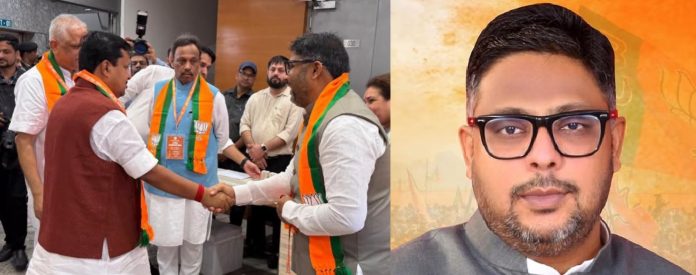
From Father’s Blows to BJP’s Top Muslim Face: The Remarkable Rise of Kunwar Basit Ali

Kaastha Village (Meerut), UTTAR PRADESH :

New Delhi:

When Kunwar Basit Ali decided to join the Bharatiya Janata Party in 2011, he did not face resistance from political opponents alone. His own father beat him with shoes and a stick. Fifteen years later, Basit Ali stands as the National President of BJP’s Minority Morcha, the party’s most prominent Muslim face at the national level.

Basit Ali grew up in Kaastha Baddha, a small village in Meerut, Uttar Pradesh. His father, Hamid Ali, was the village head and an active member of the Bahujan Samaj Party. When a local newspaper reported that Basit had formally joined the BJP, his father read the news and flew into a rage. He beat his son with his shoes. That was only the beginning.

During the 2012 Uttar Pradesh assembly election campaign, Basit Ali was taking part in a road show with BJP leader Jai Pal Singh in the Kithore constituency. Both were standing on the same campaign vehicle when Hamid Ali spotted his son campaigning in the market. He pulled Basit off the vehicle and beat him with a stick in full public view.

Basit Ali fled the scene. Later that day, he returned home and told his father plainly that he would not leave the BJP under any circumstances. After that conversation, Hamid Ali never raised the matter again. He also quietly distanced himself from the BSP.

The hostility did not come from family alone. Muslim community members questioned his choice at every step. Relatives stayed silent. Neighbours watched with cold disapproval. Opposition parties labelled him and others like him a political shield. Yet Basit Ali continued to work at the grassroots level, going door to door, holding community gatherings, and connecting with ordinary people.

His organisational record is detailed. He started as a district co-media in-charge, then became the district president of the Minority Morcha in 2012. He also served as regional coordinator of the Muslim Rashtriya Manch. In 2014, he organised a special prayer programme in Meerut asking the Muslim community to support Narendra Modi’s prime ministerial campaign, which brought him wider attention. On the first day of BJP’s membership drive that same year, he enrolled more than 2,500 Muslims in Meerut alone.

The Uttar Pradesh government later appointed him as a member of the State Urdu Academy. He promoted yoga in madrasas and worked to extend government welfare schemes to underserved Muslim communities. He was subsequently appointed state president of UP’s BJP Minority Morcha.

BJP National President Nitin Naveen has now elevated Basit Ali to the post of National President of the BJP Minority Morcha.

source: http://www.radiancenews.com / Radiance News / Home> Latest News> Report / by Radiance News Bureau / August 27th, 2026

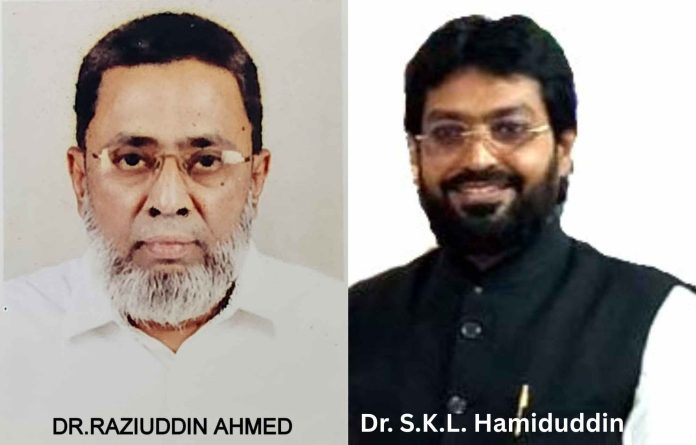
All India Unani Tibbi Congress Tamil Nadu Reorganised, Dr. Raziuddin Ahmed Elected State President

TAMILNADU :

Chennai:

The All India Unani Tibbi Congress (AIUTC) Tamil Nadu has announced its reorganisation with the aim of making the organisation more active. Professor Mushtaq Ahmed expressed happiness while approving all the elected office-bearers of the AIUTC Tamil Nadu, and hoped that the current team would carry out its duties well, keeping in view the aims and objectives of the Tibbi Congress.

It may be noted that, apart from Dr. Raziuddin Ahmed as State President and Dr. S.K.L. Hamiduddin as General Secretary of the AIUTC Tamil Nadu, Dr. Rafiuddin was elected Vice President, Hakim Nasiruddin Ahmed as Provincial Convener, and Dr. Imtiaz Basha as Secretary.

source: http://www.radiancenews.com / Radiance News / Home> Latest News>Report / by Radiance News Bureau / August 27th, 2026

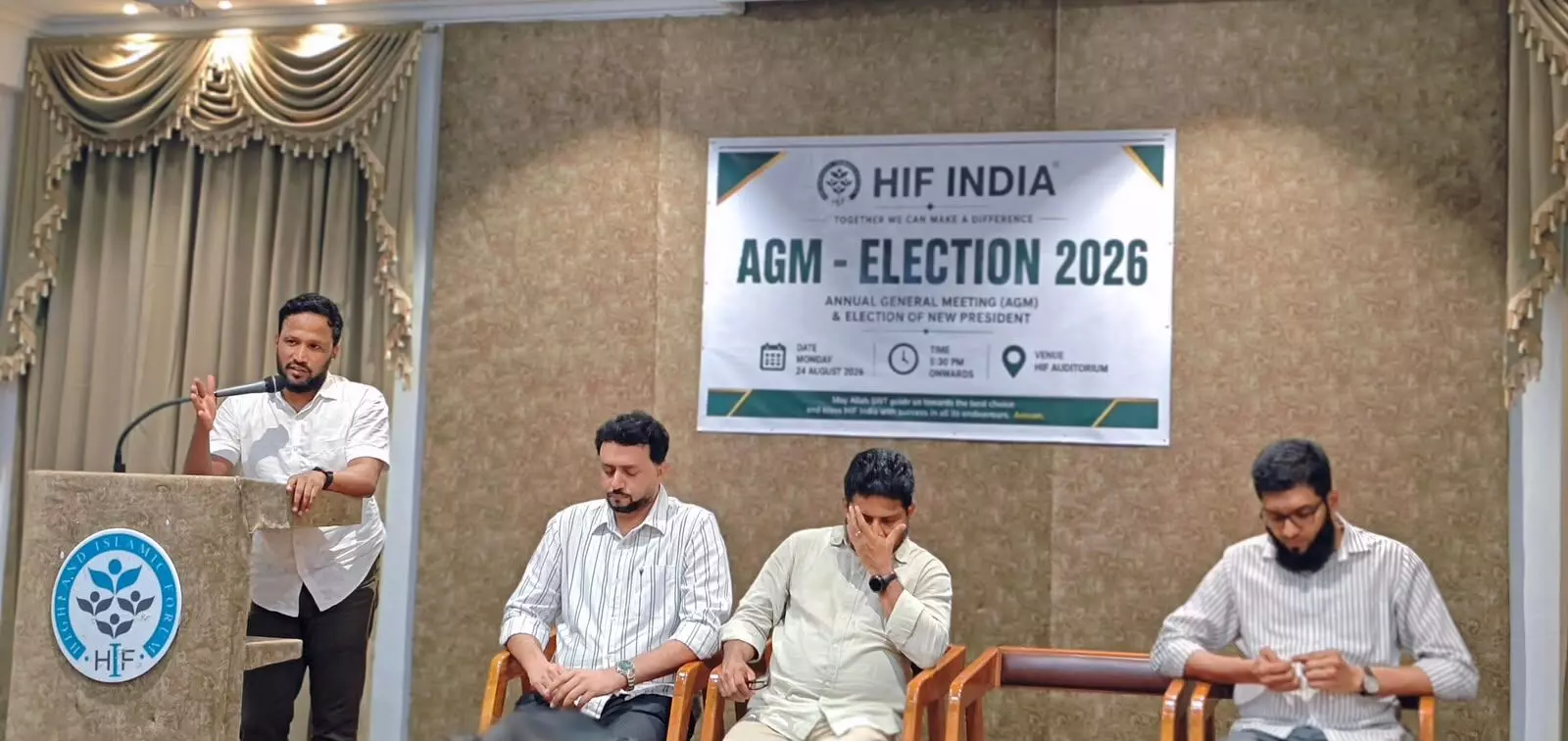
Highland Islamic Forum elects Rizwan Pandeshwar as new president

Mangaluru, KARNATAKA :

Rizwan Pandeshwar

Mangaluru:

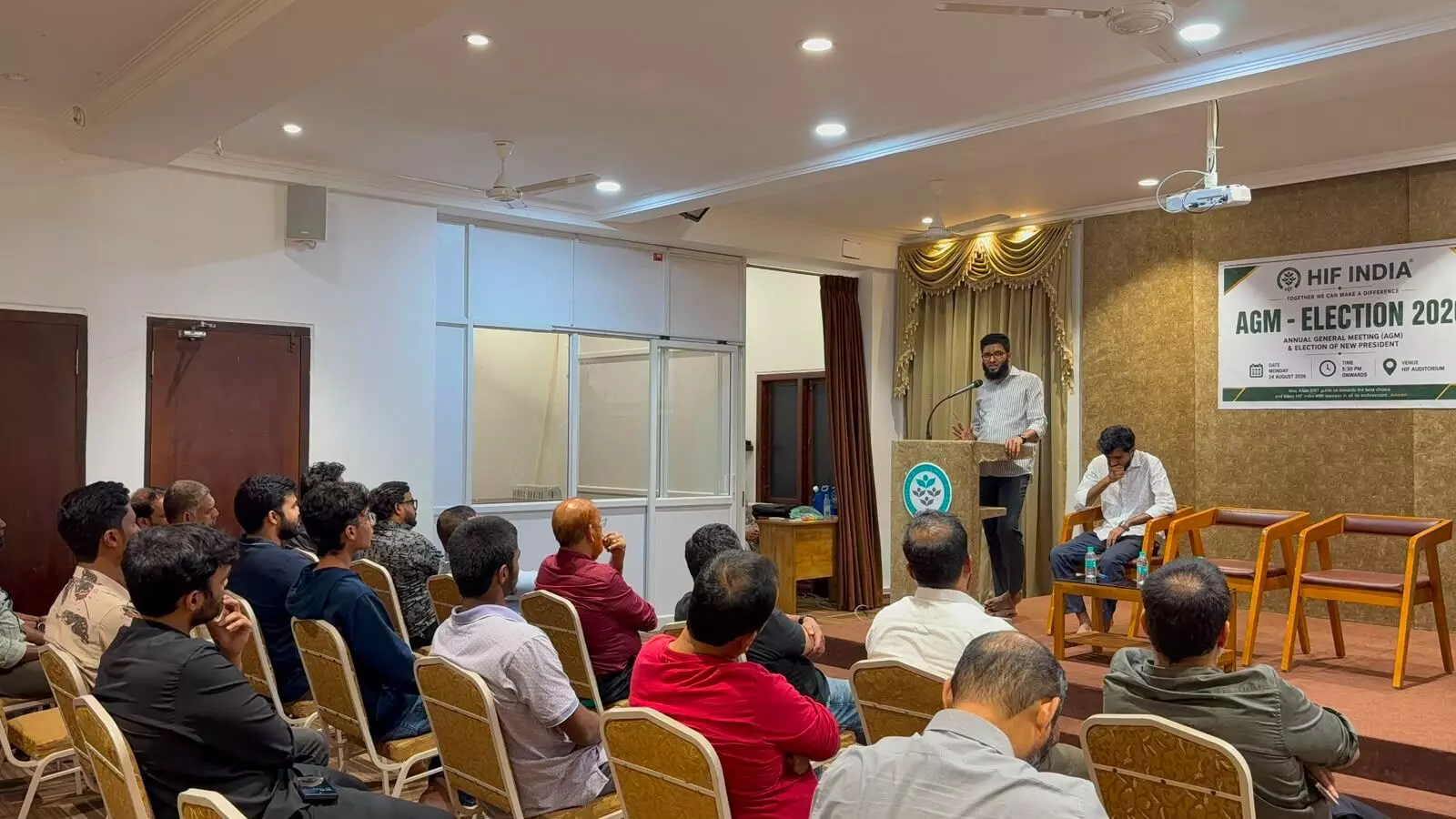
The Annual General Meeting (AGM) of the Highland Islamic Forum (HIF) was held at the organisation’s head office in Mangaluru, marking the completion of Adil Parvez’s three-year term as president and the election of a new leadership team.

Members actively participated in the AGM, with voting held as part of the leadership election process.

Janab Mohammed Kunhi attended the programme as the guest speaker. Br. Shuhaib, former president of the HIF Qatar Wing, was also present.

During the meeting, members appreciated Adil Parvez for his leadership and contributions to the organisation during his three-year tenure.

Following the voting, Rizwan Pandeshwar was elected as the new president of the Highland Islamic Forum, while Bilal Raif was selected as secretary.

Members expressed confidence in the new leadership and wished them a successful tenure.

The meeting also highlighted the importance of unity, cooperation and collective responsibility in strengthening the organisation and continuing its community-oriented activities.

The AGM concluded with members pledging their support to the new leadership and expressing their commitment to taking the Highland Islamic Forum forward with renewed energy and dedication.

source: http://www.english.varthabharati.in / Vartha Bharati / Home> Karavali / by Vartha Bharati / August 24th, 2026

Prestige International School & Pre-University College receives Karnataka Educational Award

Mangaluru, KARNATAKA :

Mangaluru:

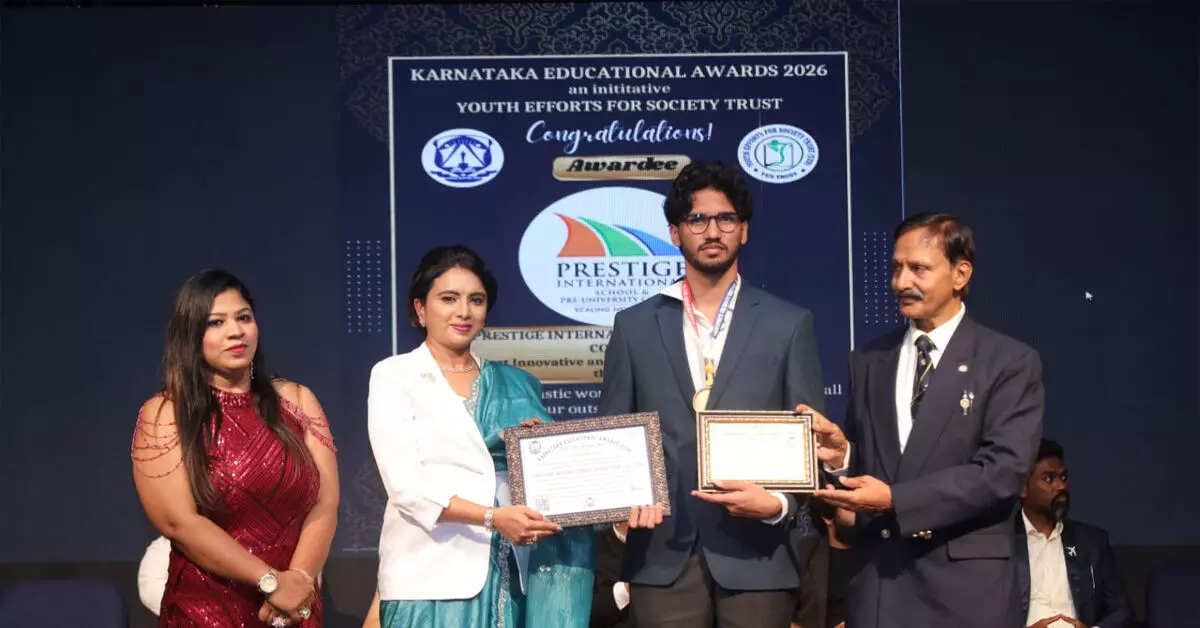
Prestige International School & Pre-University College, Mangaluru, has been honoured with the Best Innovative and Creative Institution of the Year award at the Karnataka Educational Awards 2026.

The award recognises the institution’s efforts in promoting innovation, creativity and excellence in education.

The institution described the recognition as a proud milestone in its journey of providing quality education and shaping the future of students.

source: http://www.english.varthabharati.in / Vartha Bharati / Home> Karavali / by Vartha Bharati / August 25th, 2026

Read: Affan Ansari on Studying Abroad, Scholarships and Global Ambitions

Mumbai, MAHARASHTRA :

In an exclusive interview, Political Science and International Relations Graduate Affan Ansari discusses his journey from studying Science in India to pursuing Higher Education in Turkey and Europe, the realities of studying abroad, scholarships and financial planning, community engagement, and his ambition to build a career in peacebuilding, conflict resolution and international security.

Q.1. Affan, please introduce yourself. Tell us about your educational background and your journey so far.

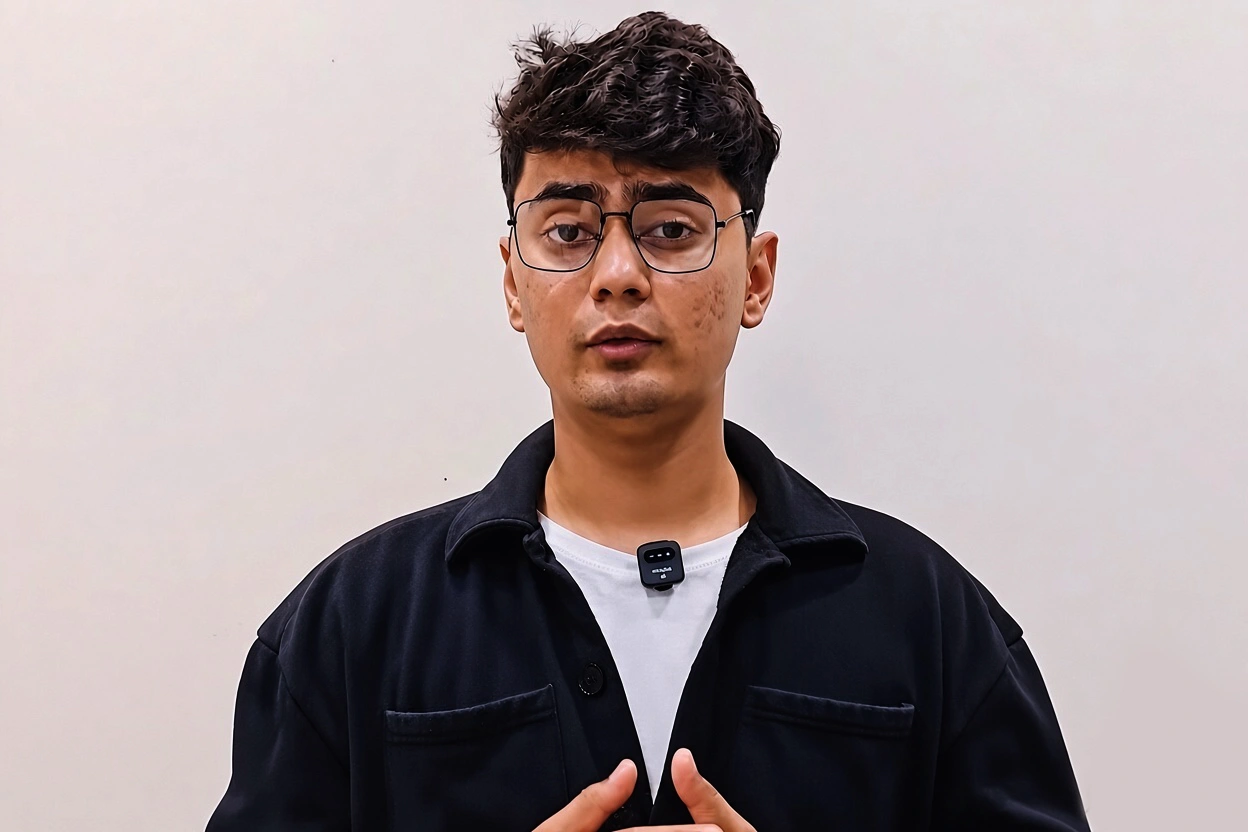
Affan Ansari: My name is Affan Ansari. I come from a middle-class family in Mumbai and living my dream to study abroad. I am a graduate in Political Science & International Relations from Turkey, and Research fellow at the Social Sciences Lab MENA, which is situated in Estonia, Europe (SSL-MENA).

I completed my schooling at Anza High School, Byculla and then my Junior College education at Maharashtra College of Arts, Science and Commerce. 

After Junior College, I took a different path. I moved to Turkey and completed my Bachelor’s degree in Political Science and International Relations from Istanbul Sabahattin Zaim University. During my undergraduate studies, I also got the opportunity to spend a semester at the University of Wrocław in Poland through the Erasmus exchange programme.

My journey was not simply about obtaining a foreign degree. For me, it was about stepping outside my city and comfort zone, meeting people from different cultures and understanding the world more closely.

Today, I have received Master’s offers from two highly ranked universities in the UK, a leading university in Poland, public universities in Germany, as well as two universities in Turkey.

Q.2. Students who take Science in India generally move towards Engineering or Medicine. Why did you choose Political Science and International Relations?

Affan: The irony is that I studied Science, but it was a virus that made me realise my real interest was in the world beyond Science.

For me, the journey from Science to Social Science was a struggle between social expectations and my own interests and ambitions. In India, when a student performs well in Science, there is naturally a push towards Engineering or Medicine. I too chose Science largely because of family and social expectations.

But the two years of the COVID lockdown became a turning point. I began to understand what globalisation really meant. A virus that emerged in China could affect almost every country in the world. I became fascinated by the role of the WHO, how different governments responded to the crisis, and how decisions taken in one part of the world could have consequences far beyond its borders. It changed the way I looked at the world, from a local perspective to a global one.

That was when I realised that my real interests lay in Political Science, International Relations, geopolitics, and understanding different societies and political systems around the world. So, moving from Science to Social Science was not really a change of direction. It was a realisation of the direction I actually wanted to take. 

Q.3. Students generally target the USA, UK, Canada or Australia. Why did you choose Turkey?

Affan: Turkey was primarily a combination of affordability and opportunity for me.

My parents had wanted me to study in Turkey after Class 9 because of the scholarship opportunities available there. At that time, I was not ready to move abroad, so I completed my Junior College education in India.

Later, we came to know about the Turkish Government’s Türkiye Scholarships programme. I applied, but because of the intense competition, I was not selected for the government scholarship.

However, I did not give up. I independently applied to Turkish universities and received a 50 per cent scholarship from Istanbul Sabahattin Zaim University. For my family, this made the cost of my education financially manageable.

The university’s Erasmus students exchange and scholarship programme was another important factor. Through Erasmus, I got the opportunity to spend a semester in Europe and study in Poland. 

My message to students is simple: do not choose a country simply because it is popular. Look at the university, tuition fees, living costs, scholarships, visa rules, course quality, post-study opportunities and, most importantly, your own career goals and family budget.

Q.4. Many parents believe that studying abroad is very expensive and only highly intelligent or wealthy students can afford it. What would you say?

Affan: Studying abroad is not only for the rich or exceptionally brilliant; with the right information, early planning and the right choice of country and university, it can be achievable for many students.

I think one of the biggest barriers is not always money, but a lack of information. Many families assume that studying abroad means going to the UK, USA, Canada or Australia, where costs can be very high. But there are also comparatively affordable options across Europe, including public universities in Germany and opportunities in countries such as Italy, France, Poland and Czech Republic.

Of course, costs, admission rules and scholarships vary by university and programme, so students should always verify information through official sources.

My most important advice is: do not wait until Class 11 or 12 to start thinking about studying abroad. Planning can begin much earlier, even at school level. If a student starts planning three or four years in advance, there is enough time to prepare for language requirements, entrance tests, scholarships and finances.

Q.5. If a middle-class family wants to send its child abroad, how should it plan?

Affan: If you want to study abroad tomorrow, start building your profile today, because your CV begins in school, not after graduation.

I look at it in three stages.

  • First, school: Build strong English skills and, if possible, learn a foreign language. Participate in Olympiads, sports, cultural activities and competitions, and keep a record of your achievements and certificates.
  • Second, Junior College: Maintain a strong academic record and start understanding requirements such as IELTS, TOEFL, SAT or programme-specific entrance tests. Also get involved in volunteering and community work. Universities look beyond marks.
  • Third, graduation: If you are planning a Master’s abroad, identify your target programmes early and prepare for requirements such as IELTS, TOEFL, GRE, GMAT or other relevant assessments. If Germany is your target, check the exact requirements of each programme, including whether an additional assessment is required.

Most importantly, do not think of your profile as marks alone. Internships, volunteering, research, competitions, leadership and meaningful extracurricular activities can all make a difference.

So my advice is simple: start early, explore your interests and build a profile that tells universities who you are, not just what your marks are.

Q.6. Are very high marks necessary for studying abroad?

Affan: Your marks may decide which doors open first, but they do not decide how far you can go.

High marks certainly provide an advantage, especially for competitive scholarships, but marks are not everything. Every university has a different admission system. Some focus heavily on academic grades, while others also consider entrance tests, motivation letters, work experience, extracurricular activities and the overall profile of the student.

So, if a student has average marks, they should not assume that studying abroad is out of reach.

Average marks do not mean average ambition.

The key is to understand your strengths, research universities carefully and apply to programmes where your overall profile gives you a realistic chance of admission.

Q.7. Which fields currently offer better scholarship and career opportunities abroad?

Affan: Don’t choose a career because the world says it has jobs; choose where your interest, ability and future opportunity meet.

The fields offering scholarships and career opportunities change with countries and economies, so I would not advise students to blindly follow one particular trend.

Technology-related fields such as AI, cybersecurity, data science and software, along with engineering and renewable energy, continue to offer opportunities. Healthcare is another major sector, not only for doctors but also for nurses, physiotherapists, laboratory professionals and other specialists.

However, students also need to consider licensing, qualification recognition and language requirements in their chosen country.

So instead of asking only, “Which field has the most jobs?”, students should ask three questions: What am I interested in? What am I good at? And what opportunities will this field offer in the future?

When interest, ability and opportunity come together, you are much more likely to build a career that lasts.

Q.8. What would you say about scholarships and education loans?

Affan: The biggest scholarship advantage is not just good marks, it is starting early and knowing where to look.

There are merit-based, need-based and government-funded scholarships. Some of the most generous opportunities I know include TürkiyeBurslari Scholarships, DAAD in Germany and Erasmus Mundus in Europe, along with Eiffel Scholarships in France, Stipendium Hungaricum in Hungary and Swedish Institute scholarships. 

In Telangana, the Chief Minister’s Overseas Scholarship Scheme for Minorities also provides substantial financial assistance to eligible students.

My advice is to start researching scholarships early and look beyond marks. Academic performance, extracurricular activities, volunteering, leadership and your overall profile can all matter. 

A full scholarship is ideal, but even a partial scholarship can make a big difference. In my case, a 50% university scholarship helped make my education in Turkey financially possible.

And if you consider an education loan, calculate the total cost and repayment burden carefully. Studying abroad should not put a family under unsustainable financial pressure.

Q.9. Can students work part-time abroad and manage their expenses?

Affan: Yes, you can work part-time abroad, but you should never go abroad depending on a part-time job to fund your education.

Many countries allow international students to work part-time, but the rules vary by country, visa and programme and can change over time. So students should always check the official rules applicable to their visa.

From my own experience, I would strongly recommend having a realistic financial plan for tuition and initial living expenses before going abroad. Part-time work should be additional support, not the primary source of funding.

At the same time, working part-time can provide financial independence, discipline and valuable international work experience.

So, work part-time to support your education, not to make your education possible. 

Q.10. What has been the biggest challenge for you as a student abroad?

Affan: The hardest part of studying abroad was not being away from home, it was learning how to stand on my own when home was thousands of kilometres away.

Living abroad meant managing academics, finances, a new culture and everyday decisions on my own. There were moments of loneliness and stress, but the most difficult moment was the earthquake in Istanbul. I was afraid, I felt very alone, and suddenly lectures and exams moved online. Everything felt completely upside down.

But that experience also changed me. I gathered the courage to step outside myself and started volunteering with NGOs. It taught me that when life becomes difficult, you can either withdraw or find a way to contribute.

Later, studying in Turkey and spending a semester in Poland exposed me to students from different countries and completely different perspectives. I travelled across 10 EU countries, met young people from many cultures and learned to navigate the world independently.

Looking back, the biggest lesson was that studying abroad did not just educate me academically. It taught me how to be independent, resilient and comfortable even when I was far away from home. 

Q.11. Affan, what is your dream? What do you want to do in the future?

Affan: I don’t just want a job at the United Nations. I want to be part of the global conversations that can prevent wars and build peace.

My dream is to become an International Civil Servant, specialising in Peacebuilding, Conflict Resolution and International Security, and eventually work with the United Nations.

We live in a world of wars, geopolitical tensions and changing alliances. At the same time, the Global South is demanding a stronger voice in global decision-making. As an Indian, I want to be part of that change.

There is a saying in politics and diplomacy: “If you are not at the table, you are on the menu.” I want to be at the table.

I want to use my education and career not simply for a prestigious position, but to contribute to peace, diplomacy and solutions for people affected by conflict and instability.

For me, an international career is not about having a title. It is about having a voice where decisions that shape our world are made.

Q.12. What is your final message to middle-class students and parents in Mumbai and India?

Affan: Foreign education does not begin at the airport. It begins with a dream, a plan and a decision your family can afford. 

To parents, I would say: don’t push your children into a field simply because society considers it successful. Look at their ability, interests and future opportunities together.

And to students: don’t choose foreign education because of the glamorous life you see on Instagram. Going abroad is not a holiday. It is a responsibility.

If you genuinely want to study abroad, start early. Explore scholarships and affordable universities, prepare for language and entrance requirements, understand visa rules and, most importantly, make sure the decision is financially sustainable for your family.

An ordinary student from a middle-class family in Mumbai or anywhere in India can begin an extraordinary journey.

Dream big, but calculate carefully. Plan early, verify everything and never let your financial circumstances stop you from exploring your possibilities.

Because the first step towards foreign education is not the airport. It is planning.

Q.13. You are studying abroad yourself. What are you doing for your community in Mumbai?

Affan: For me, education is meaningful only when you can use what you learn to make someone else’s journey easier.

Since 2021, I have been associated with Kawish’s Community Education & Student Mentorship Programme and Madni High School. Whenever I return to Mumbai, I spend time mentoring students, helping them with English and academics, and guiding those who aspire to study abroad.

After completing my graduation, I also spent time in Mumbai working with my father and uncle during the Special Intensive Revision (SIR) of electoral rolls, helping with voter mapping and assisting people with their SIR forms. That experience gave me a very different kind of understanding of how democracy works at the grassroots level.

I have also volunteered with the IHH Humanitarian Foundation, including relief work following the 2023 earthquake in Turkey, and was involved in COVID-19 and leprosy relief activities in 2020.

I know how difficult it can be to find the right information and guidance. If I have gained knowledge through my own journey, I believe I have a responsibility to share it.

These experiences have taught me one simple lesson:

Education should not only change your own life. It should give you the ability and responsibility to contribute to your community and society.

[Falak Ather Faizee is an Intern at ummid.com.] 

source: http://www.ummid.com / Ummid.com / Home> Education & Career / by Falak Ather Faizee / August 22nd, 2026