Tag Archives: Muslims of Malerkotla – Punjab

How one act of defiance in Mughal India cemented Sikh-Muslim ties in Punjab’s Malerkotla

Malerkotla, PUNJAB :

Muslim-majority Malerkotla has been declared as the 23rd district of the state, with the Punjab government fulfilling a decade-long demand of its residents.
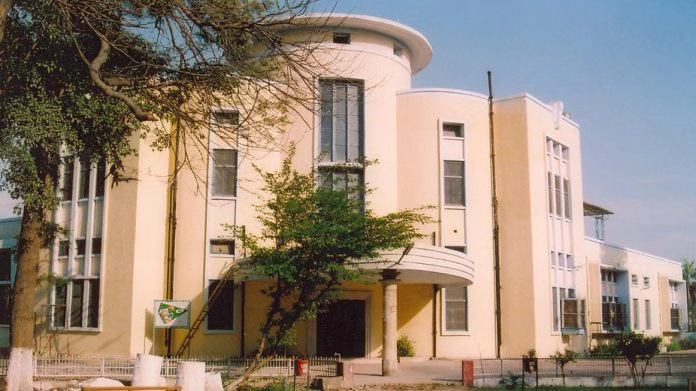
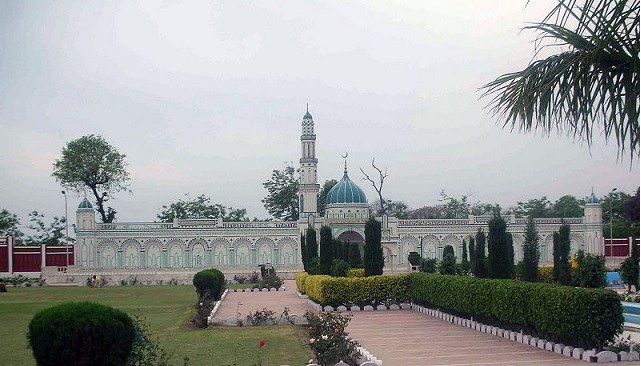
The government college in Malerkotla | Wikimedia commons

Chandigarh: 

On the occasion of Eid-ul-Fitr Friday, Punjab Chief Minister Captain Amarinder Singh declared the Muslim-majority Malerkotla as the 23rd district of the state, while announcing a slew of projects for the development of the historic city.

The move fulfils an at least decade-old demand in Malerkotla and a promise that the ruling Congress had made in its manifesto ahead of the 2017 assembly elections.

Punjab’s decision, however, hasn’t gone down well with the BJP, particularly Uttar Pradesh Chief Minister Yogi Adityanath.

Adityanath tweeted Saturday that the move was “proof of the Congress’ divisive politics”.

“Any distinction on the basis of religion is contrary to the basic spirit of the Constitution of India,” the Uttar Pradesh CM said. “Presently, the formation of Malerkotla (Punjab) is a reflection of the divisive policy of the Congress.”

Tarun Chugh, the BJP’s national secretary from Punjab, weighed in, saying the decision was clearly “communal” and that it was for the first time in the history of Punjab that an administrative decision was taken to further communal interests.

None of these charges, however, will find any resonance in Punjab, where Sikhs and Malerkotla’s Muslims share historically harmonious ties. So entrenched is this solidarity, that the Muslim-majority region saw no violence even as the rest of Punjab went up in flames during Partition in 1947.

The Punjab chief minister even alluded to this while responding to his UP counterpart.

“What does he (Yogi Adityanath) know of Punjab’s ethos or the history of Malerkotla, whose relationship with Sikhism and its Gurus is known to every Punjabi? And what does he understand of the Indian Constitution, which is being brazenly trampled every day by his own government in UP?” Amarinder asked in a statement issued Saturday evening.

A 300-year-old legacy

Punjab Sikhs’ reverence for the Muslims of Malerkotla dates back chiefly to one singular event in history.

According to Anna Bigelow, associate professor of Islamic Studies in the Department of Religious Studies at Stanford University, the Nawab of Malerkotla, Sher Muhammad Khan, had in 1705 opposed the death penalty handed out to nine-year-old Baba Zorawar Singh and seven-year-old Baba Fateh Singh — the sons of Guru Gobind Singh, the 10th Sikh Guru.

Bigelow, who has researched Malerkotla’s history, writes that despite Khan’s protests, the then Mughal governor of Sirhind, Wazir Khan, bricked alive the two children.

The Malerkotla nawab’s defiance, referred to as “ha da naara (cry for justice), however, earned him the respect and adoration of Sikhs.

“Guru Gobind Singhji blessed Sher Muhammad Khan and ever since Malerkotla has become an icon of Sikh-Muslim brotherhood,” said the Shiromani Akali Dal (SAD) general secretary Dr Daljeet Singh Cheema. “Even during Partition, this town remained completely peaceful.”

The new district will also have a government medical college in the name of Nawab Sher Muhammad Khan.

The Opposition SAD has backed Chief Minister Amarinder, with Cheema issuing a statement  that Adityanath’s tweet was in bad taste and symbolic of his complete lack of historical knowledge about Malerkotla town and its significance for Sikhs.

“Malerkotla town is a unique example of Sikh-Muslim communal harmony that has lasted for over 300 years,” Cheema said.

A Muslim-majority region

Malerkotla was part of a jagir of several villages that the then Delhi Sultan Behlol Lodhi granted as dowry to the Afghani Sufi Saint Sheikh Sadruddin-i-Jahan (also called Haider Sheikh) in 1454.

According to Bigelow, the original settlement was called “Maler” and it remains the name of the neighbourhood surrounding the Sheikh’s tomb.

Following the advent of Mughal rule in India, the descendants of the Sheikh became the nawabs of Malerkotla.

Bigelow writes that Kotla came to be in 1657 when Mughal emperor Aurangzeb granted permission to Bayazid Khan, the first ruler of Malerkotla, to build a fortified city.

Bigelow also states that during British rule, Malerkotla was as turbulent as the other smaller principalities of the time, marked by infighting and ever-changing loyalties. The last ruler of Malerkotla was Nawab Iftikhar Ali Khan.

During Partition in 1947, Malerkotla remained absolutely peaceful and when the princely state merged with India, Iftikhar Ali Khan was its first chief minister.

Malerkotla was later merged with other princely states of the region to form the Patiala and East Punjab States Union (PEPSU). During the reorganisation of states in 1956, Malerkotla became a part of Punjab.

Modern-day Malerkotla

With almost 70 per cent of its population comprising Muslims, the Malerkotla assembly constituency has always been represented by a Muslim.

Nawab Iftikhar Ali Khan served as MLA twice while his second wife Begum Yusuf Zamani and fourth wife Begum Sajida were legislators as well. All of them were part of the Congress party.

The Malerkotla seat has, in the last few decades, been alternating between the Congress and the Akali Dal.

Razia Sultana, the current Congress MLA from Malerkotla, is representing the constituency for the third time (2002, 2007 and 2017). She is the wife of former Punjab DGP Mohammad Mustafa. In 2012, however, Farsana Alam, the wife of another IPS officer, Izhar Alam, was elected as the Akali MLA from here.

The constituency’s politics has not been without its intrigue. In 1981, the last nawab divorced Sajida Begum. She then went on to marry Anwar Ahmed Khan of the Shiromani Akali Dal, against whom she had fought multiple elections.

The nawab died in 1982 and Sajida Begum in 2006. The legacy of the last nawab continues as an ugly family litigation for property and palaces.

On Friday, Chief Minister Amarinder Singh, himself the scion of the Patiala royal family, recalled his ties to the last nawab of Malerkotla, whom he fondly called Chachaji (Uncle) and who he said lovingly addressed him Bhateej (nephew).

Amarinder also said he had written to the Aga Khan Foundation to undertake conservation and restoration of Mubarak Manzil Palace, occupied by Begum Sahiba Munawwar ul-Nisa, the wife of the last nawab.

The Punjab government, the chief minister said, has acquired the Mubarak Manzil Palace, adding that “its restoration and upkeep would be a fitting tribute to the nawabs of Malerkotla”.

A decade-long demand

The demand for district-hood is not new.

Malerkotla falls on the Ludhiana-Sangrur road and is part of Sangrur district. It’s almost equidistant from the district headquarters of Ludhiana and Sangrur and for every administrative work residents had to go to Sangrur, which is over 40 km away.

The town is full of small steel units and is specially known for manufacturing badges and uniforms.

The Congress’ manifesto had also promised district status for Malerkotla.

According to the government’s order Friday, the subdivisions of Malerkotla and Ahmedgarh, as well as the sub-tehsil of Amargarh, would be included in the newly-created district. The process of bringing villages under the jurisdiction of Malerkotla district would begin later, after the conclusion of the census operations, the order said.

The chief minister has also directed the Sangrur deputy commissioner to find a suitable building to immediately start the functioning of the district administration office. The deputy commissioner for the newly-carved district would be appointed soon.

(Edited by Arun Prashanth)

source: http://www.theprint.in / The Print / Home> India / by Chitleen K Sethi / May 16th, 2021
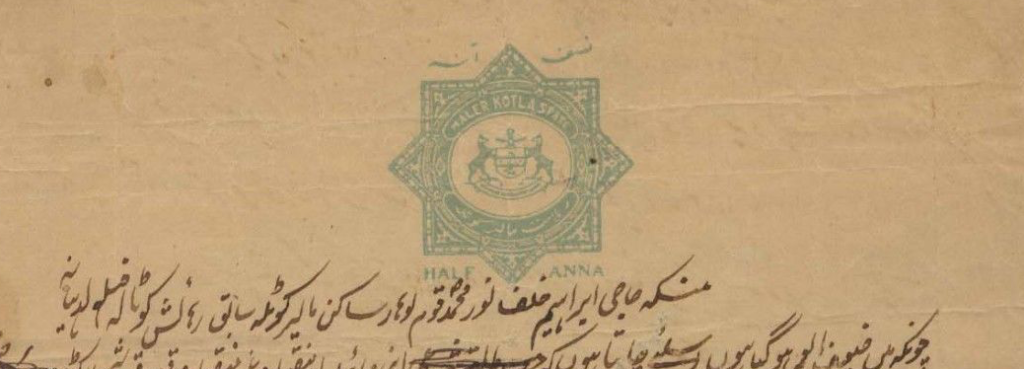
Malerkotla, Where Tolerance is a Way of Life

Malerkotla, PUNJAB :

In the darkest hour of partition, when the whole of East Punjab was engulfed in a frenzy of communal violence, the town remained calm. And has stayed that way ever since.

Idgah, Malerkotla: a remembered history of co-existence. Credit: Mohd. Imran, GNU license

Ten years ago, my wife Amarinder and I moved to Bathinda, her home town, to manage a rural school started by her family. For me, a Tamil speaking person originally from Bangalore, it marked a sea change of place and culture. As I gradually acquainted myself with the new rhythms of everyday life in present-day Punjab, I came across sights such as abandoned monuments and ruins battling undergrowth and living Sufi dargahs (shrines) that spoke of the past in an intriguing manner.

It was the shrines that first caught my attention. During my travels in Punjab, I noticed Sufi shrines frequented by people from all communities, the famous Haji Ratan Dargah in Bathinda being one such example. If asked about any dargah dotting the local landscape, people would refer to its past and say that the Muslims who had looked after it originally had all left. In Bathinda itself, of the two schools that were well known before partition – the Khalsa School and Islamia School – the latter no longer exists, for the city has a minuscule Muslim population. In the erstwhile princely state of Kapurthala, the regal Moorish Mosque built in 1930 by Jagatjit Singh for his Muslim subjects – 60 % of the population then – is mostly deserted except for the odd tourist.

The overall demographic of Punjab in the pre- and post-partition period is revealing: Muslims comprise 1.9% of Punjab’s population today in contrast to 51% in undivided Punjab. The Muslim families that one came across in several villages of rural Punjab weren’t usually locals but migrants from Uttar Pradesh or Bihar.  My curiosity about Punjabi Muslims remained unabated.

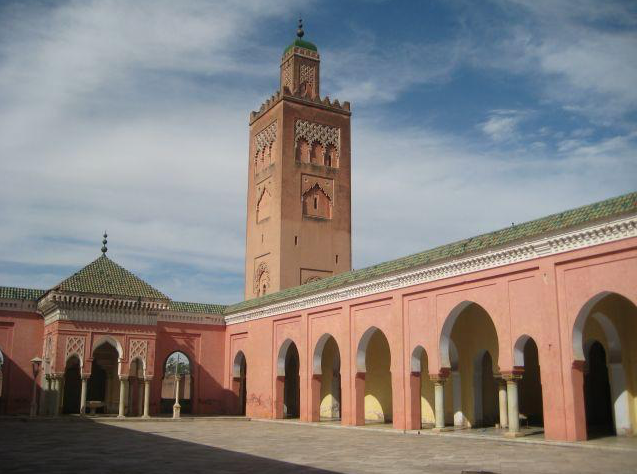
The inner courtyard of the Moorish Mosque, Kapurthala. Credit: Wikimapia

It was during a discussion with my wife’s late grandfather that I first heard the name of Malerkotla – Punjab’s only ‘Muslim pocket’ as he put it, located in Sangrur District. A princely state before Independence, in fact the only  Muslim ruled state in erstwhile East Punjab, it was now the sole Muslim majority city in Punjab, he said. And then he told me something that left me stunned: In the darkest hour of partition, when the whole of East Punjab, including the princely states of Nabha, Jind and Patiala, was engulfed in a frenzy of communal violence, Malerkotla remained calm. Not just that, it became a life-saving refuge for Muslims on their way to Pakistan. Anybody I spoke to on this topic echoed the same sentiment.

Around that time I happened to watch Ajay Bhardwaj’s Punjabi documentary, Rabba Hun Ki Kariye (Thus Departed Our Neighbours), based on the memories of the partition generation. In the film, a resident of Malerkotla recounts how Muslims were chased by mobs till the borders of the state and no further, as if something stopped them from crossing the line.

What I gleaned from conversations, articles and scholarly writings was that even after independence, during several critical flash points in the history of the state and the nation, such as during the years of militancy in Punjab or the Ramjanambhoomi movement leading to the Babri Masjid demolition, Malerkotla remained committed to the spirit of communal harmony that has been a defining aspect of its history. An aspect all communities choose to remember as part of their local history, folk memory  and heritage.

Not that this place has been in an eternally idyllic state. As scholar Anna Bigelow notes in an illuminating paper, the conditions that provide fodder for social conflict and make communities “riot-prone” in South Asia have existed in Malerkotla as well, be it flash points  between religious groups or economic and political rivalries between communities. The difference, she emphasises, lies in the proactive intent of  “local authorities and residents to make the unique history of the town a symbolically significant resource for community building and pluralism in the present.”

Living in times of increasing intolerance for the notion of pluralism, this aspect struck me as being of immense importance. Among the myriad strands that make up local histories and folk memory, some are positive and create common ground, while others are  contentious. That the communities of a particular place should choose to recognise their shared history of mutual cooperation as their biggest strength and work towards resolving conflicts in the interests of mutual co-existence was incredible.

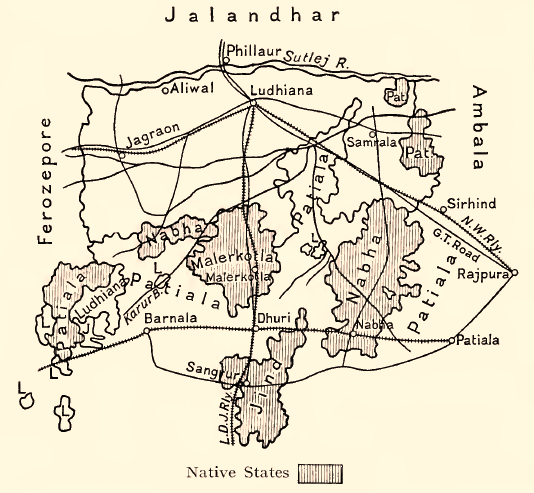
A 1911 map of Ludhiana District showing Malerkotla and the neighbouring princely states.  Credit: Government of India

Unravelling the 500 year old skein of Malerkotla, ruled by nawabs of Afghan Pathan descent, was an instructive exercise. In 1454, the Maler settlement was granted to the Sufi saint Shaikh Sadruddin Sadar-i-Jahan, commonly known as Haider Shaikh, by the Lodis who preceded the Mughals in Delhi. The princely state of Malerkotla (the fortress city) came into being in 1657 when Haider Shaikh’s descendant, Bayzid Khan was given the title of nawab by the Mughals.

Thereafter, the fortunes of the tiny princely state kept see-sawing as it went through a series of alignments and realignments in a time of shifting politics common to the region in the 18th century – local kingdoms fought each other repeatedly in different permutations, sometimes on the say-so of more powerful powers, be it the Mughals, Marathas, invaders such as Ahmad Shah Abdali, or Maharaja Ranjit Singh. With the gradual waning of Mughal power after Aurangzeb, the nawabs sought to assert their independence – in the mid-18th century they supported Ahmad Shah Abdali. During the time of Ranjit Singh (1799 – 1839), they allied  with the Sikh kingdoms of Nabha, Jind and Patiala to stay out of his grasp, ultimately accepting British protection in 1809. In January 1872, during the Kuka rebellion by the Namdharis, who were opposed to the British, 69 members of the sect, including some women and children, were strapped to a cannon and blown away on the orders of the British Resident. The nawab of the day was still a minor.

As independence brought British rule to an end and partition became a reality, Malerkotla, the sole Muslim ruled state in erstwhile East Punjab, found itself in a vulnerable position. Yet it survived virtually intact.

The most common explanation given by locals and people across Punjab is the role played by Malerkotla’s celebrated ruler, Nawab Sher Mohammad Khan (1672-1712), during a significant period of Sikh history. It was a time when the increasing following commanded by the Sikh gurus posed a serious challenge to Mughal authority. Although the nawab supported the Mughals in their campaigns against the Sikh gurus, he protested the decision of the Mughal governor to brick alive two sons of Guru Gobind Singh who were captured in Sirhind in 1705. In the nawab’s eyes, it was  an un-Islamic act to punish the children when the battle was  against their father.

Though this nuanced and principled stand fell on deaf ears, Malerkotla came to command a special place in the hearts of Sikhs.  In the popular imagination, Guru Gobind Singh’s blessings ensured that the princely state remained virtually untouched by the communal violence that engulfed the neighbouring Sikh kingdoms. The protective power of saints across denominations, including figures such as Haider Shaikh, is also cited as one of the reasons for its good fortune.

Bigelow adds that the enlightened policies pursued by the Nawabs at critical junctures fostered the spirit of harmony and co-existence in the kingdom. For example, when Bayzid Khan established the foundation of Malerkotla, he summoned a Chishti Sufi saint, Shah Fazl, and a Bairagi Hindu saint, Baba Atma Ram, to bless the site, thereby declaring his faith in pluralism.

Nawab Sher Mohammad Institute of Advanced Studies in Urdu, Persian and Arabic, started in 1988. Credit: Abdur Punjabi/Wikimedia Commons, CC BY-SA 3.0

The princely state is a thing of the past, but Malerkotla continues to be in a league of its own even in democratic India (at the time of independence, it had a population of 85,000 in an area of 432 sq km). The fact that it has survived in its present demographic form is an indicator that the spirit of co-existence is still alive: as per the 2011 Census, Muslims, a minority in India and a tiny minority in Punjab, comprise 68% of the city’s population of 1.35 lakh; Hindus, the majority community across India, are placed at 20%, while Sikhs, who comprise the majority in Punjab, are only 10%.  The current MLA, Farzana Alam (Akali Dal), has the distinction of being Punjab’s first non-Punjabi state legislator (she is originally from Uttar Pradesh).

Punjab has witnessed communal conflicts between Hindus and Muslims, and Sikhs and Muslims as well as between Hindus and Sikhs in more recent times during the days of militancy. Malerkotla has not been entirely free of flash points arising out of these  developments.What sets it apart is that the focus of local authorities and community leaders at all times has been not only to defuse the situation but to approach it in a way as to foster greater solidarity, in keeping with its heritage.

Over a period of time, integrative practices like communal celebration of festivals, visits to each other’s sacred sites and mixed residential localities and joint businesses have helped immensely. Heritage organisations too have done their best to keep alive the memory of the city’s plural traditions.  Bigelow cites two examples to illustrate how incidents threatening to upset the peace have been contained: In the aftermath of the Babri Masjid demolition in 1992, some Muslim youths vandalised a Hindu temple and Jain Sabha hall. Local Muslim leaders promptly checked them; some Muslims came forward to pay for the damage, while the Muslim MLA ensured that funds from the state were used for the complete restoration of the damaged buildings. The local Hindus too opted to work with local peace committees. The final message that was sent out was that there was no place for such acts in Malerkotla.

In the other incident, the destruction of the Bamiyan Buddhas by the Taliban in 2000 led to several anti-Muslim actions – in one place the Quran was burnt, at another place pig meat was hurled into a mosque. To protest the Bamiyan Buddhas’ destruction and the local acts against Muslims, the Hindus, Muslims and Sikhs went on a general strike for a day. Says Bigelow, a potentially divisive issue was “transformed into an act of symbolic  solidarity against a variety of injustices.”

In the ultimate analysis much of the credit goes to the general population which has proved to be far wiser than it is sometimes perceived to be. The lived reality of Punjab’s sole Muslim-majority city, echoing aspects of a Punjabiyat that once exemplified the region, is a pointer to the fact that pluralism is the strongest weave for a democracy like India, and the strongest antidote to the intolerance of majoritarianism.

Karthik Venkatesh runs a rural school in Bathinda, Punjab

source: http://www.thewire.in / The Wire / Home> Culture / by Karthik Venkatesh / January 16th, 2016