In the two volumes of ‘Asar-us-Sanadid’, Sir Sayyid combined anecdotes with rigorous measurements and descriptions.
IntroducingAsar-us-Sanadid
by Rana Safvi
Asar-us-Sanadid by Sir Sayyid Ahmad Khan is an important book for many reasons. It was the first time that a book on this scale describing Delhi’s monuments had been written. The first volume was published in 1847 and a second volume in 1854. Though both had the same name and were about Delhi, they were very differently written. The first was an anecdotal description of the buildings, while the second took a more scientific approach with historical references, and the dimensions of the monuments.
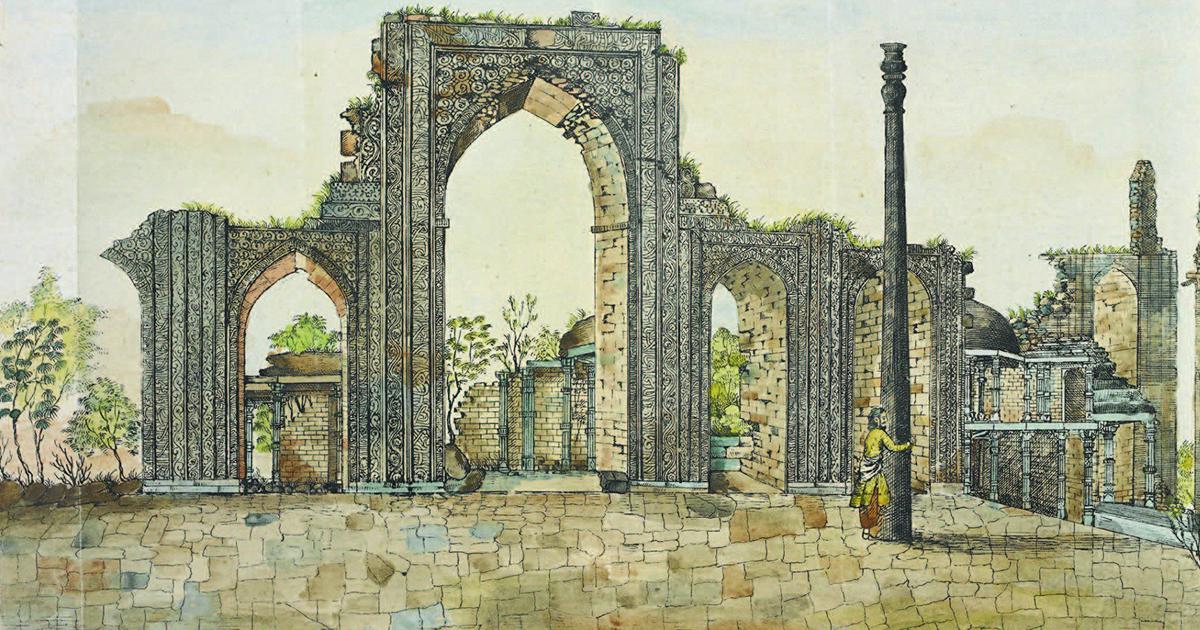
It was also the first time in India, that a book had lithographically produced illustrations. As many as 130 illustrations of Delhi’s monuments were drawn by Faiz Ali Khan and Mirza Shahrukh Beg. The drawings were probably based on rough sketches provided by Sayyid Ahmad Khan himself. He made many sketches – a fact he mentions in the book – and also copied the inscriptions on each of the monuments, often at great risk to life and limb, as in the case of the Qutub Minar, where he hung down from the top of the minaret in a basket held by ropes. It was the first time that inscriptions on the buildings were noted down.
Asar-us-Sanadid is an invaluable work. Both editions – Asar-1 and Asar-2 (published in 1847 and 1854, respectively) – were written before the Uprising of 1857. As is well known, much of Shahjahanabad changed during and in the aftermath of the events of 1857. The British broke down many structures to make governance easier and there was massive restructuring, in particular, of the Red Fort.
Later, when Lutyens’ Delhi was being built, many more changes were brought about, not to mention the changes that are still taking place today. Thus, in his descriptions of the buildings and monuments of Delhi prior to 1857, Sayyid Ahmad Khan gives us a glimpse of lost glory. For students of history and heritage this is where its greatest importance lies.
The partition and transfer of population in 1947 meant that the landscape of medieval Delhi was changed further. Today urban development has resulted in encroachment and destruction or alteration of many more monuments.
Mehrauli is the first documented city of Delhi and it was from here that the Tomaras, Chauhan and early Delhi Sultans ruled. As it was a hilly and wooded area it become a favourite of the Mughals too, with the last two emperors shifting here during the monsoons. The last Mughal building is the Zafar Mahal, situated in Mehrauli, which was the royal residence during those months.
A unique festival called Phool Waalon ki Sair was also celebrated in the monsoons under the last two Mughal emperors.
The excerpt below describes some of the buildings in Mehrauli.
The Bagh e Nazir is now Ashoka Mission. According to some monks I spoke to there, the family of Nazir Roz Afsun fared very badly in the riots which took place during the partition of India in 1947, and the lone survivor, a young boy, migrated to Pakistan.
In 1948 Prime Minister Jawaharlal Nehru gave the land as a gift to the famous Cambodian monk Dharmvara Mahathera on behalf of the Indian state for the purpose of opening a Buddhist institute. It was he who founded the Ashoka mission there. It is now the Official Buddhist Mission in Delhi, known as Ashoka Mission.
The Hauz e Shamsi is a poor reflection of what it was, and though the pavilions of the Jharna still stand forlorn, they are desolate. The water is a dirty and stagnant pool and gone are the diving competitions or sliding stones. The mango orchard has disappeared and there are only residences in the area. One can only thank Sir Sayyed for a glimpse into that era when emperors and their consort picnicked here.
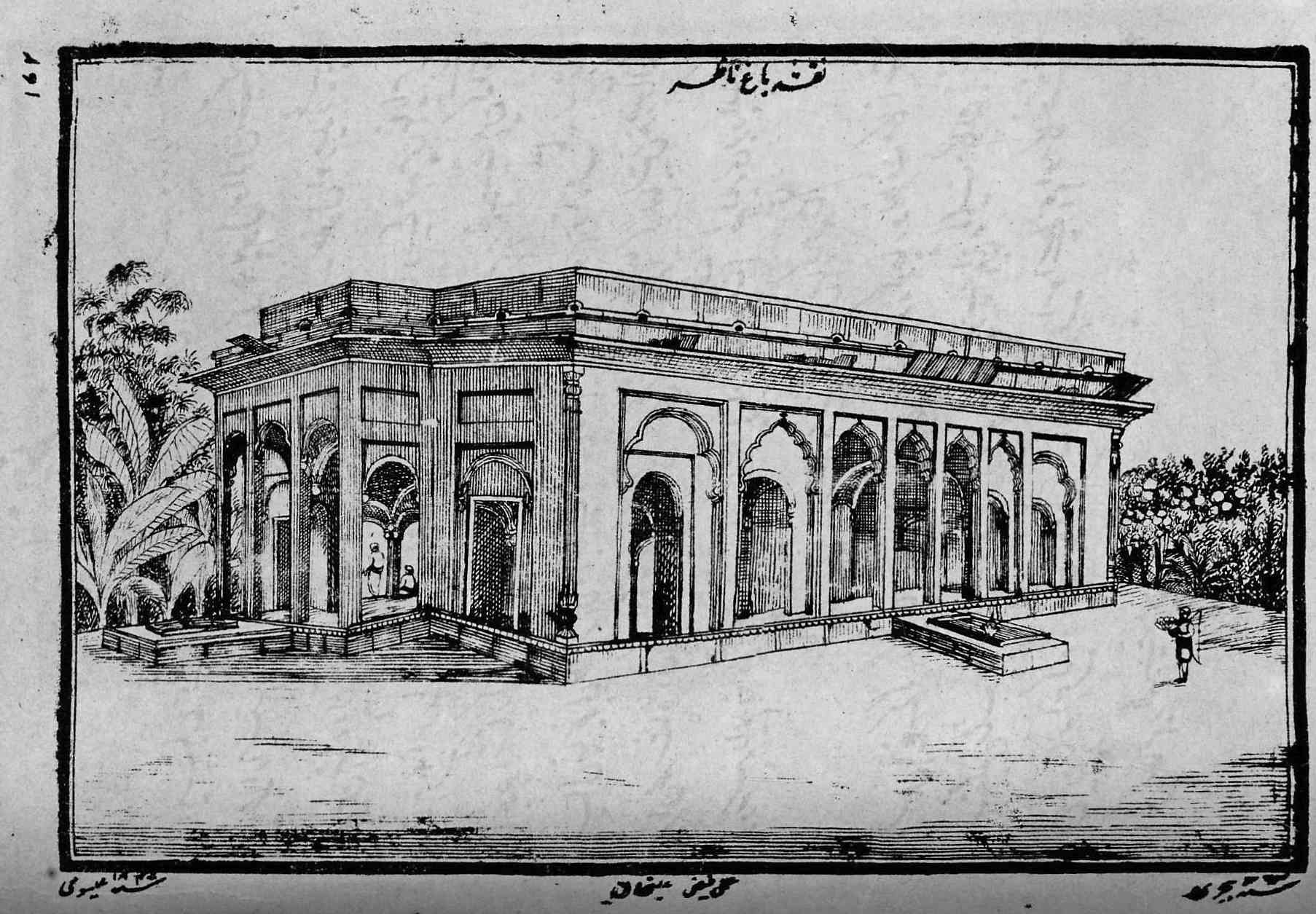
Bagh-E-Nazir
This is a beautiful, attractive, verdant and luxuriant garden near the waterfall of Qutub Sahib [in the Mehrauli area]. It is still very well maintained, with blooming flowers and green trees. The buildings around it are still intact and thousands of people come here during the Phool Walo’n ki Sair procession, to enjoy its beauty. The spectacle is as entertaining as though one were at a fair. This garden was built by Nazir Roz Afzun during the reign of Muhammad Shah Badshah. I will write down the verses inscribed on the entrance as they give the date of the construction and name of the builder:
By the orders of Muhammad Shah Adil,
Whose head bears the sacred crown.
He founded this garden near [the shrine and tomb of] Qutub Sahib,
And has adorned it with the flowers of paradise.
It should remain green till the Day of Judgment,
By the Grace of the Holy Quran.
The year of its construction,
Was found to be the blessed date,
AH 1116 in the thirty-first regnal year of Muhammad Shah.
Bagh-e-Nazir | Courtesy: National Archives of India, New Delhi
A wall surrounds the garden and there are red sandstone buildings of great attraction built all around, within the wall. There is one building in the middle of the garden that is the biggest and best of all the buildings there. Thus I am attaching its sketch here.
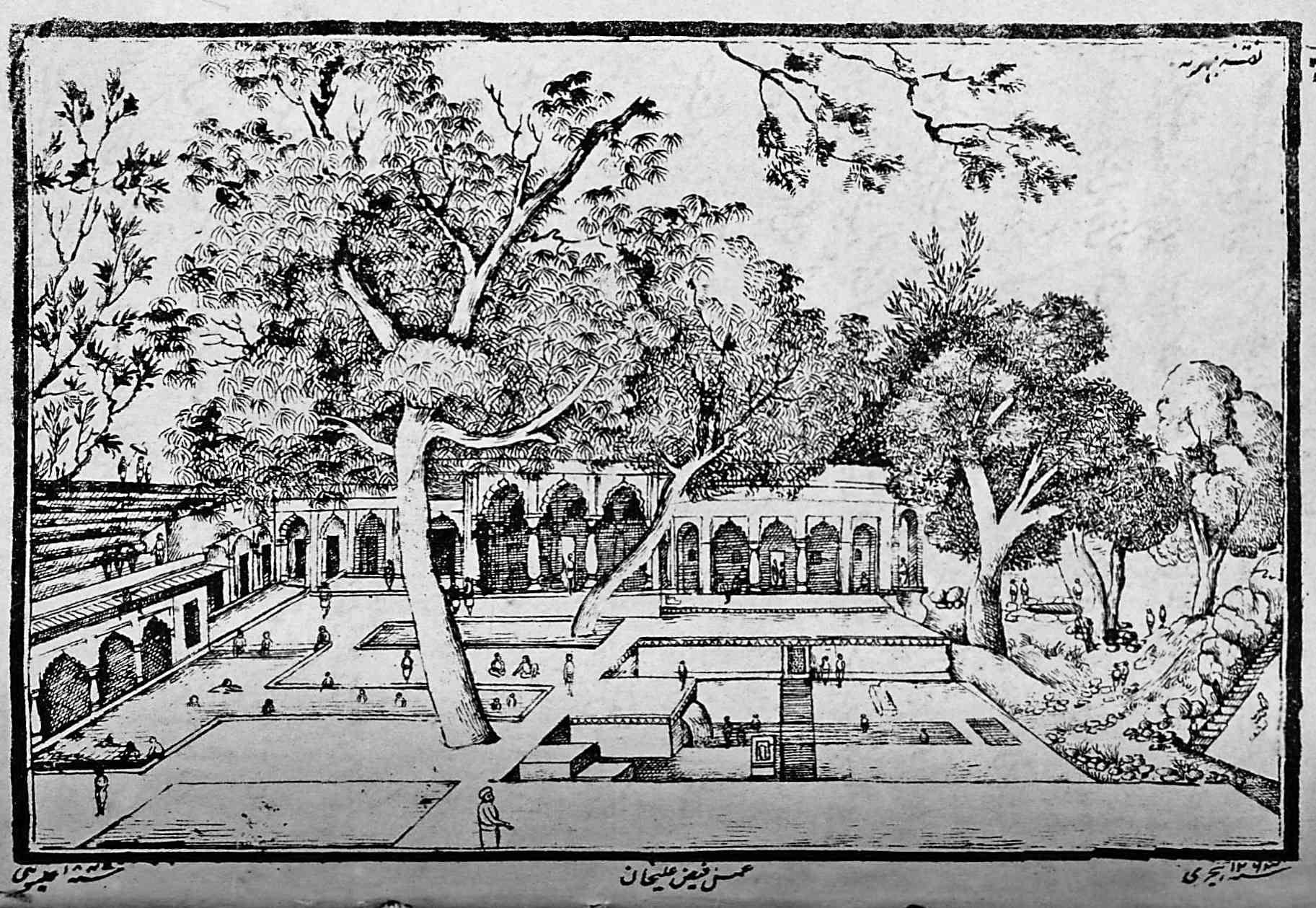
Jharna This is a place for recreation and pleasure; it is exotic and unearthly, elegant and refined, interesting and delightful, happiness-bestowing and heart-pleasing. Qutub Sahib’s waterfall [jharna] is famous for its verdant green trees and reminds one of heaven. Initially, Sultan Firoz Shah had constructed a dam here and the wall of the waterfall is that dam. It is still intact.
He had diverted the excess water of Hauz-e-Shamsi reservoir into Naulakh canal [nala] towards the moats of Tughlaqabad Fort. After some years however, the fort was abandoned and water stopped going to that area. The excess water from the Hauz-e-Shamsi then started flowing into the jungles from this dam and was wasted. Nawab Ghazi-ud-Din Khan Firoz Jung built a tank, water channels, and chutes for the water to flow through. The waterfall is an awesome spectacle and pleases the heart, causing the spectator to involuntarily exclaim in delight. There are various buildings around this waterfall which I will describe here.
Jharna | Courtesy National Archives of India, New Delhi
Pavilion on the western side On the western side, adjoining the wall of the dam stands a pavilion at an elevation of 11 feet and 5 inches. It has three arches, and the waterfall cascades down on it. There is an attractive tank in front of it, into which people jump from the roof of this building. During the Phool Walo’n ki Sair festivities people diving into this tank and swimming in it, make for a huge spectacle. They use various diving styles including somersaulting into the water, they also make a pyramid by climbing onto the shoulders of men standing below until the man at the top of the pyramid reaches tree-branch height. Then those at the bottom dive into the tank and all those on their shoulders plunge into the tank. This is called a “tree dive” [darakht kakudna] or a “wild growth dive” [jhad-jhankar ka kudna].
There are thirteen small water pipes under the roof of this building and water from the waterfall flows down through these, via the pavilion, and into the tank. There is a 3.2-feet wide water chute inside the pavilion which falls from a height of 4.3 feet into the tank. There are niches built under the chute in the pavilion wall, and water flows over lighted lamps that are placed within the niches.
This 25-feet square tank has an opening of 1.7 feet for water to flow into it and is 7.6 feet deep. There is a 22 feet long, 6 feet wide and 3.6 feet deep water-channel, which flows out of this tank in a 5.6 feet cascade and is joined by two smaller cascades from the north and south. There are beautifully carved stone chutes [salami pathar] measuring 3 feet 7 inches, to receive the cascade. The water winds its way down the carvings on the chute creating a mesmerising effect.
The water channel in front of this pavilion is 26 feet long, 6 feet wide and 2 feet deep, while the water channel in front of the smaller cascades is 15.3 feet wide, 2.9 feet wide and 8 feet deep. All the water collects at this point and flows into the jungle. The waterfall passes over all these pavilions and the water channel, and in reality it is a truly spellbinding sight. The sound of the flowing water mingles with the singing of the nightingale, the chirping of doves, peacocks dancing and the sounds of merriment of finely attired men and women. It is a mesmerizing scene, which could put Raja Indra’s assembly in the shade.
Pavilion on the northern side There is a very attractive double pavilion on this side. Muin-ud-Din Muhammad Akbar Shah Badshah built the double pavilion in his reign, around three years ago. These are the most attractive buildings in the place.
Pavilion on the southern side There is a three-arched pavilion in this area, with two smaller pavilions on its sides which gives it the impression of being five arched. In addition to this there are two doors next to it, thus making it seven arched. This pavilion was built around 50 years ago in the reign of Shah Alam by Shahji’s brother, whose name was Sayyid Muhammad.
Pavilion on the eastern side There are only mountains on this side and no buildings, but Muhammad Shah Badshah built a stone slide [phisalna pathar] 18 feet 3 inches long and 7 feet 7 inches wide.
The mango orchard There are many mango trees in this area. People tie swings to the branches and have fun swinging on them. Numerous dancing and singing girls gather here to enjoy themselves. In short, this place is magical and the mind boggles at its attractions. There is also a grave here with the following verse inscribed on it:
Abid who was wise, learned, pious and man of intellect,
Was martyred by a dishonest robber.
The invisible crier told me the chronogram of his death,
The soul of Abid, the martyr entered paradise [in] AH 1209.
Hauz-E-Shamsi This reservoir [hauz] was one of a kind. Sultan Shams-ud-Din Altamash built it during his reign and that is why it is famous as Hauz-e-Shamsi. Once upon a time this reservoir was made of red sandstone but now all the stone has been torn off and it is just a simple reservoir and that’s why people call it Qutub Sahib’s reservoir, while some still call it Hauz-e-Shamsi. The water from here feeds the waterfall and also fed the moats of Tughlaqabad in olden days.
It is difficult to imagine there is a reservoir of this size on the face of earth. It is spread across 276 bighas [a land measurement] and its water reaches eight provinces [subahs]! The pavilion has been built around the mark of a hoof which people call the hoofprint of the Prophet’s celestial steed Buraq, but to me it seems a made-up story. God alone knows the truth.
Auliya Masjid On the eastern side of the Hauz-e-Shamsi is a platform and on it another smaller platform about a gaz or so with a small wall. According to legend, Hazrat Khwaja Qutb-ud-Din Bakhtiyar Kaki and other Sufi saints undertook their spiritual retreat/penance [chillah] on it. They built the mosque with their own hands, bringing baskets [of mud from the reservoir] and that’s why it is called Auliya [The Saint’s] Mosque. Now people have plastered it with mortar and lime.
Excerpted with permission from Asar-us-Sanadid, Sayyid Ahmad Khan, translated and edited by Rana Safvi, Tulika Books.
source: http://www.scroll.in / Scroll.in / Home> Book Excerpt / by Sayyid Ahmed Khan & Rana Safvi / August 31st, 2018
Lessons in conservation at the Sibtainabad Imambara
As a young girl, when I was studying in Lucknow, I would often go to Hazratganj to buy storybooks. Browsing through the collection in the market and buying a book would be the highlight of every week. I only had my eyes on the bookshops and never on the name of the market or the dilapidated gateway, which had once been impressive but now looked the worse for wear.
Even on subsequent trips as an adult, I never bothered to think about it till the day a Lucknow-based heritage activist and lawyer, Syed Mohammad Haider Rizvi, invited me to speak at an inter-faith assembly in Sibtainabad Imambara.
As a devout follower of Imam Hussain, I had visited almost every Imambara in Lucknow for the majlis, or assemblies, to commemorate his sacrifice, but never this one. I wondered why I hadn’t even know it existed. I soon found out.
Origin of the Imambara
Amjad Ali Shah was the fourth Nawab of Awadh and ruled from 1842 to 1847. Since he had a religious bent of mind, as a child he learnt Islamic values of faith and piety. His piety as a ruler earned him the sobriquet of Hazrat. The famous Hazratganj of Lucknow is named after him and that’s the area where he chose to build an Imambara which would also house his mausoleum.
It was started in 1847 and completed after his death by his son Nawab Wajid Ali Shah. It was named Sibtainabad as the two Shia imams Hasan and Hussain (grandsons of the Prophet) are known collectively as Sibtain.
When I entered, I found myself inside a huge open area from where I could see a compound with a beautiful Imambara, a congregation hall for assemblies where Imam Hussain is mourned.
The Imambara architecture comprises a main hall (with additional halls depending on the size) where the mourners gather, a raised shahnasheen (platform) where the taziyas and alams (replicas of the shrine of Imam Hussain and his standard) are kept. A pulpit would be kept on one side for the speakers who would speak of the tragedy of Karbala.
The reason I had never been to this Imambara when I was living in Lucknow soon became clear. Once a beautiful Imambara covered with fine carpets, silk curtains, priceless art treasures and exquisite chandeliers, it was vandalised in 1857 during the First War of Independence. Nawab Amjad Ali Khan lay buried here in a vault under the central hall, forgotten by all.
It was even used as a church by the British officers till 1860, while the Christ Church was being built, and Lord Canning attended a service in the building.
In 1919, it was declared a protected monument by the Archaeological Survey of India (ASI). Despite this, it was sold by one Sultan Bahadur in 1921, who claimed to be a descendant of Nawab Amjad Ali Khan, to the Lucknow Improvement Trust (LIT). The LIT, in turn, allotted the surrounding land for residential purposes. The Imambara fell into disuse and disrepair.
The main Imambara post-1947 was used as a workshop and storehouse for furniture as well as by the government census office. A motor workshop had sprung up outside.
In 2008, Rizvi was appointed the joint mutawalli by the Shia Waqf Board and he started the long fight to free it from encroachment and illegal occupation. He took recourse to judicial avenues and slowly, with the help of Right to Information applications and public interest litigations, he succeeded. Then came the task of restoration, which was undertaken by the ASI.
The splendour inside
The approach to the Imambara is through the gateway and into an open space which gives way to an enclosed court. The Imambara stands on a high platform and its arched façade looks very impressive, with its delicate floral stucco and stained glass doors. The inner walls, which had got blackened with neglect and abuse, have been lovingly restored, and its green and white paintings and stucco work are exquisite. The roof and “its beams, which formed a vault over the grave of the late king, had collapsed in a heap of rubble,” according to a 1945 report. It once again supports beautiful glass chandeliers.
A recurring motif on the archways inside the halls is a painting of the Prophet’s celestial steed, the ‘buraq’, that carried him to heaven on the night of ascension. The master mason, Ansaruddin, traced out the designs and restored the paintings and stucco work very carefully.
Preservation of our heritage is our fundamental duty as it is an important source of history of the era in which these buildings were built. If other ‘lost monuments’ received such dedicated and methodical renovation, they could also be rehabilitated and restored to us.
source: http://www.thehindu.com / The Hindu / Home> Opinion> Columns / by Rana Safvi / November 26th, 2017
Zauq and Ghalib took digs at each other through a sehra penned for a prince’s wedding and the Red Fort reverberated with this clash of titans.
The sehra, or prothalamion, (song to celebrate a wedding) is now a vanishing genre. I remember while I was growing up that almost all nikahs would have a sehra read by a relative with poetic aspirations, after the ceremony.
Though sehras are supposed to be in praise of the groom and a prayer for his wedded life, these would be witty and laudatory at the same time, usually a humorous dig at all relatives. A copy of this would then be distributed to the wedding guests.
Sehras fall into the category of nazms and have to be in meter.
The most famous sehra, of course, is the one penned by Mirza Ghalib (1797-1869) for a royal wedding, in which he took a dig at the emperor’s Ustad, Sheikh Ibrahim Zauq (1788/9-1854).
Zauq and Ghalib were contemporaries in Delhi, and their rivalry was legendary. Zauq had been given the title of Khaqani e Hind and drew a nominal salary of Rs 4 per month. The respect and position that he gained as a result was immense. It also gave him free access to the Qila e Moalla (Red Fort).
This was a constant thorn in the side of Mirza Ghalib, who felt he was better and deserved a royal position too. Thus, he never let go of any chance to score poetic points over his rival.
One such chance came at the last grand Mughal wedding, on April 2, 1852 – that of Jawan Bakht, Badshah Bahadur Shah Zafar’s son by his favourite and youngest wife Zeenat Mahal, to Nawab Shah Zamani Begum.
Begum Zeenat Mahal asked Ghalib to write a ‘sehra’ for her son’s wedding. The honour should have gone to Sheikh Ibrahim Zauq, but he was reportedly unwell.
William Dalrymple in his book The Last Mughal writes: “The marriage procession of Prince Jawan Bakht left the Lahore Gate of the Red Fort at 2 am on the hot summer night of 2 April, 1852.”
Dalrymple goes on to write that what was remembered longest and discussed most about the wedding was not so much the festivities or the feasting or the fireworks, but “the marriage odes recited by the Poet Laureate Zauq, and his rival Mirza Nausha, now more widely known by his pen-name Ghalib.”
Ghalib wrote a ‘sehra’ whose maqta (the last couplet in an Urdu ghazal which contains the poet’s pen name) was:
‘hum suKhan_fahm haiN, Ghalib ke tarafdaar nahiN
dekheN keh de koi is sehre se baRh kar sehra’
We are connoisseurs of poetry, not partial to Ghalib
Let’s see if there’s anyone who can write a better ‘sehra’
The emperor, realising that this was a dig at his mentor Zauq, is said to have been displeased with the maqta. A slight to his mentor was seen as a slight to the emperor himself. Zafar asked Zauq to write a ‘sehra’ too. Not one to let go of an opportunity, Zauq included these line.
jin ko daawa ho suKhan ka yeh sunaa do unko
dekh is taraH se kehte haiN suKhanwar sehra
Tell those who claim to be eloquent
This is how poets write a sehra
The fort reverberated with this clash of titans and it is recorded that the Crown Prince Mirza Fakhruddin (also a disciple of Mirza Zauq) exclaimed, “Ustaad ne maidan maar liya“.Dalrymple writes: “The squabble at the wedding was over a single verse in Ghalib’s sehra (or wedding oration) where he appeared – characteristically – to suggest that no one in the gathering could write a couplet as well as he…. Zafar [the king] also encouraged Zauq to reply to Ghalib’s unprovoked sally. The fine sehra that the Poet Laureate came up with ended with a couplet tossing the challenge back to Ghalib:
The person who claims poetic skills,Recite this to him and say,”Look-this is how a poet”
This round went to Zauq as the singers in attendance picked up the verse and spread it all over Shahjahanabad. By next day it was in the newspapers.”
Ghalib then wrote his celebrated qat’a-e-ma’azerat’ (letter of apology), in response to the emperor’s reaction. However, the egoistic poet left no ‘verse’ unturned in adding insult to injury, using poetry as a medium to prove his supremacy and take a dig at Zauq’s humble origins and the Emperor’s negligence of him.
The maqta of this ghazal became even more famous.
manzoor hai guzaarish-e-ahvaal-e-waaqa’aii
apna bayaan-e-Husn-e-tabii’yat nahiN mujhe
I accept the request to state the facts, To praise oneself is not a habit of mine
sau pusht se, hai pesha-e-aaba sipahgarikuchh shayari,
zari’ye-e-izzat nahiN mujhe
My forefathers have been warriors for hundred generations
By writing poetry, fame I seek not
aazaadah rau huN, aur mira maslak hai sul
H-e-kulhargiz kabhi kisi se adaawat nahiN mujhe
I am a free spirit and my conduct is always peaceful,I bear malice against no one
kya kam hai yeh sharaf ke Zafar ka Ghulaam huN
maana ke jaah-o-mansab-o-sarwat nahiN mujhe
Is the privilege not enough that I serve Zafar,
Agreed rank, position and affluence I have not
ustaad-e-shah se ho mujhe par Khaash ka Khayaal
yeh taab, yeh majaal, yeh taaqat nahiN mujhe
The thought of a row with the king’s mentor
This arrogance, this audacity, this strength I have not
jaam-e-jahaaN_numa hai shahenshaah ka zameer
saugand aur gawaah ki Haajat nahiN mujhe
The king’s conscience is all encompassing,
The need for an oath and witness I have not
sehraa likhaa gaya ze_rah-e-imtiSaal-e-amr
dekhaa ke chaarah Ghair ita’at nahiN mujhe
The sehra was written in obedience of orders,
Non compliance with that order I dare not
maqt’e meiN aa paRi hai suKhan gustaraana baat
maqsood is se qat’a-e-moHabbat nahiN mujhe
I wrote something in the maqta’ which became popular,
A reason to ending friendship I want not.
ruu-e-suKhan kisi taraf ho, tau ruu_siyaah
sauda nahiN, junooN nahiN, veHshat nahiN mujhe
If I aimed it at someone in particular then may my face beblackened,
I am neither mad, nor crazed nor so deprived of sense.
qismat buri sahii, pa tabii’yat buri nahi
Nhai shukr ki jagah, ke shikaayat nahiN mujhe
Although my luck is bad, but my habits aren’t bad,
I’m in a place of thankfulness and complain I do not.
saadiq huN apne qaul meiN Ghalib Khuda_gawaah
kehta huN sach ke jhooT ki a’adat nahiN mujhe
Always true to his word is Ghalib, as God is my witness,
I tell you the truth as lie I do not.
This is the original sehra written by Ghalib for Mirza Jawan Bakht:
Khush ho ai baKht ke hai aaj tere sar sehraabaa
Ndh shahazada Javaa.N baKht ke sar par seharaa
[baKht = luck; pun on Groom’s name]
kyaa hii is chaaNd se mukhaDe pe bhalaa lagataa hai
hai tere husn-e-dil_afroz kaa zevar sehraa
[husn-e-dil_afroz = beauty that lights up the heart]
sar pe chaDhnaa tujhe phabataa hai par ai tarf-e-kulaah
mujhko Dar hai ke na chhiine tera lambar sehraa
[phabataa = suits]
nav bhar kar hii piroye gaye honge motii
varnaa kyun laaye hain kishtii mein lagaakar sehraa
saat dariyaa ke faraaham kiye honge motii
tab banaa hogaa is andaaz kaa gaz bhar sehraa
ruKh pe dulhaa ke jo garmii se pasiinaa Tapakaa
hai rag-e-abr-e-guharabaar saraasar sehraa
ye bhii ik be’adabii thii ke qabaa se baDh jaaye
rah gayaa aan ke daaman ke baraabar sehraa
jii me.n itaraaye.N na motii ke hamii.n hai.n ik chiiz
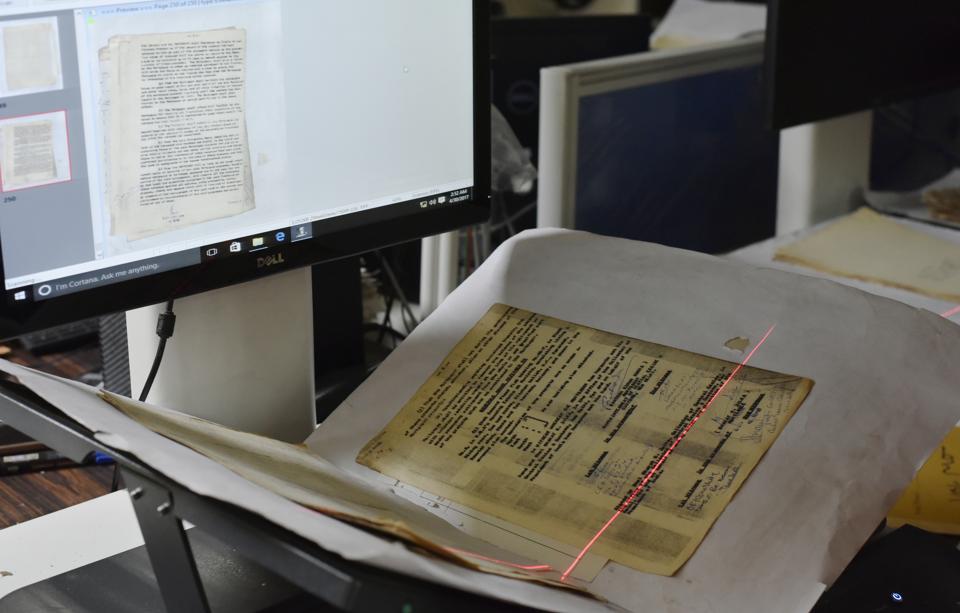
A 100-member team of archivists is digitising over 10 crore documents to prevent further loss. The first phase of the project is expected to be completed in two years.
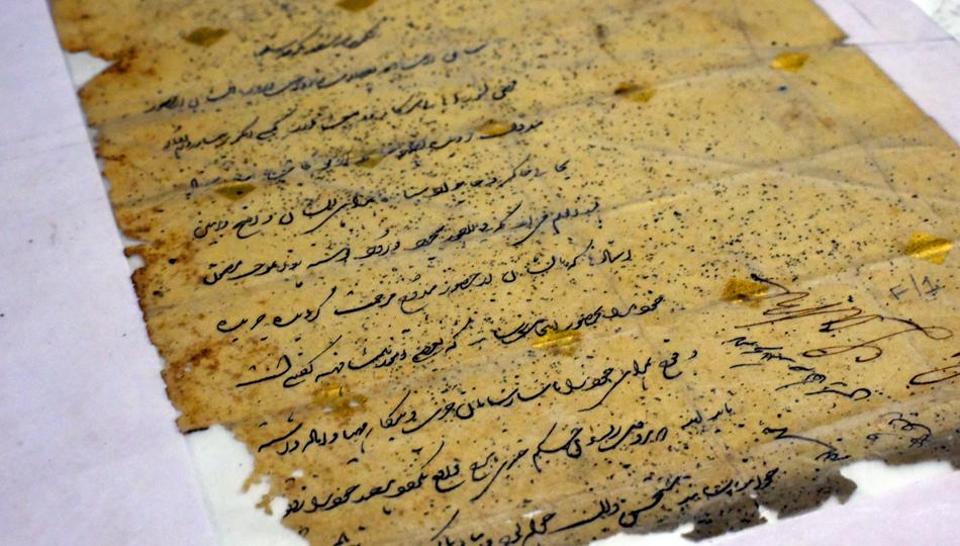
A letter from General Lake Sahib to Zaibun Nisa Baigum dated 8 October 1802 at Delhi archives.(Vipin Kumar/HT PHOTO)
On March 9, 1858, a British court declared Delhi’s last king, Bahadur Shah Zafar, guilty of rebellion, treason and murder before exiling him to Rangoon in the then British-controlled Burma. The trial was approved and confirmed a month later by N Penny, major general commanding, Meerut division.
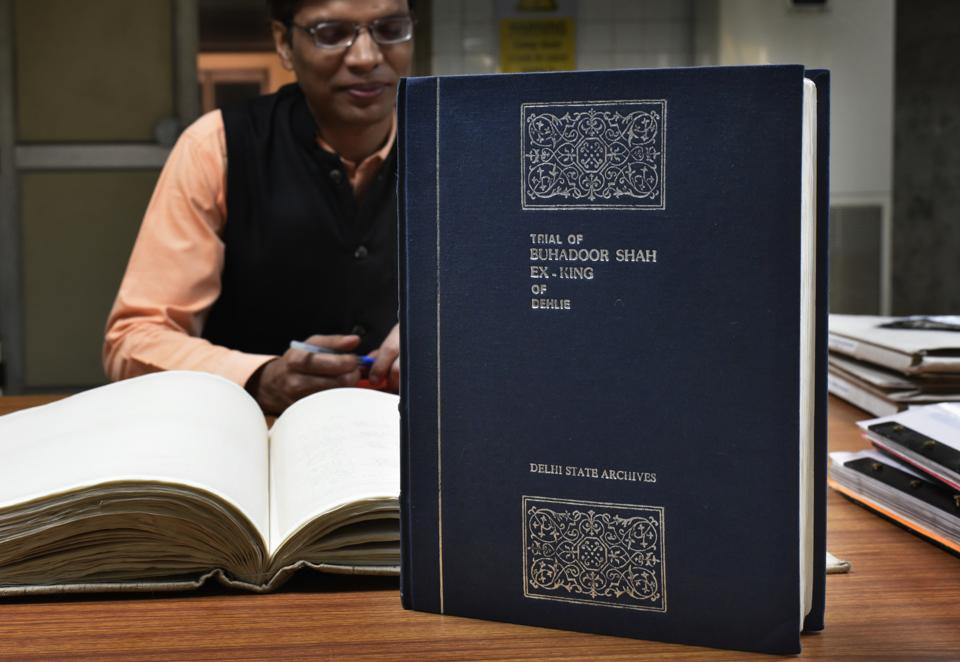
One hundred and fifty nine years later, the 42-day trial conducted at Diwan-e-Khaas of the Red Fort by British prosecutor Major F Harriott lies preserved word for word at the Delhi archives in the form of a hardbound book comprising 262-pages.
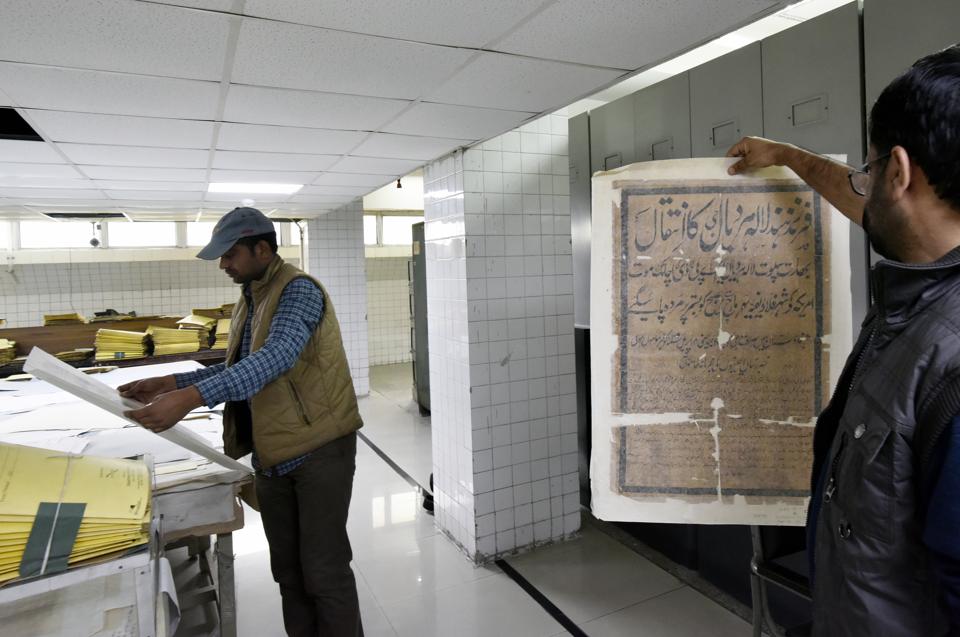
Apart from the handwritten trial papers, the Delhi archives is a repository of over 10 crore rare documents comprising Mughal firmans (imperial orders), maps, land acquisition award statements, jail records, manuscripts and government orders narrating the historical and political journey of Delhi since 1803.
So far accessible to only researchers, the treasure trove will soon be just a click away for those interested in the history of the national capital. An ambitious ‘digitisation and microfilming of archival records’ project started by Delhi government is underway with the target of converting 4 crore documents in the first phase by 2020.
An official with a copy of the trial of Bahadur Shah Zafar. (Vipin Kumar/HT PHOTO)
“Some of the records are so old that they might get damaged. So, it is required to preserve them in digital and microfilm formats for posterity,” said Sanjay Garg, the chief archivist of the archives. The Delhi Archives is city’s second repository of records from early 19th century after the National Archives of India.
Mughal firmans to land acquisition for Lutyens Delhi
In September 1803 East India Company’s forces under general Gerard Lake fought the Marathas in what is popular as Battle of Delhi, or Battle of Patparganj — named after the area now in east Delhi.The earliest documents at the Delhi Archives relate to this battle. Thought the British emerged victorious, they allowed Shah Alam II — the blind emperor of Delhi — to issue firmans in Persian language, many of which are also preserved at the archives.
“There are different sizes of royal seals in Persian language depending on the hierarchy in the Mughal courts on the firman with gold marks,” said Ashutosh Kumar Jha, assistant archivist pointing at ‘A letter from General Lake Sahib to Zaib-un-Nisa Baigum’ dating October 8, 1802.
The transfer of power to the British crown in 1958 followed setting up of a new administration and eventually the construction of the new capital, Delhi, in 1912. The Archives also have records of land acquisition during this historic shift of the national capital from Kolkata to Delhi.
“From photographs to award statements of land acquired from the owners, we have rare documents that bear testimony to how the present day Delhi came up,” said Sandeep Singh, assistant archivist. In one of the records dating March 1913, an individual named Ram Das was awarded a compensation of Rs 172, two paisa and nine annas for his 285.38 acre of land acquired by the government in Khanpur. The deal was signed by Kamruddin, revenue assistant, Delhi province.
Documents being scanned for digitisation at Delhi archives. (Vipin Kumar/HT PHOTO)
The repository at the archives includes pictures of construction of historical buildings housing Parliament and Rashtrapati House in early 20th century. Originally called House of Parliament, the Sansad Bhawan was designed by the British architect Edwin Lutyens and Herbert Baker in 1912-1913 and was constructed between 1921 and 1927.
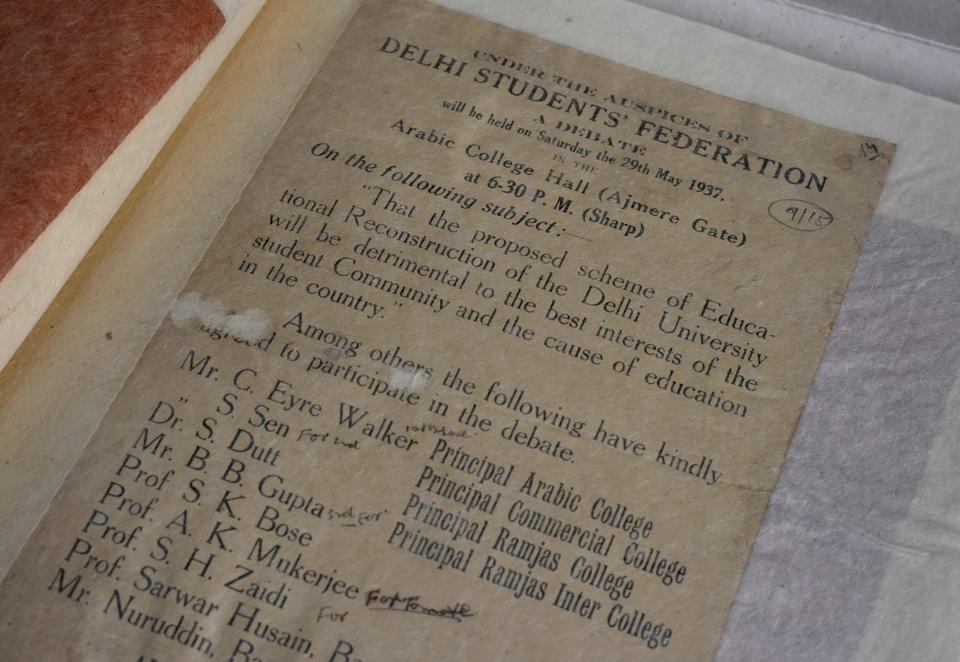
A poster of a debate being organised by Delhi Students’ Federation on May 29, 1937 at Arabic College Hall (Ajmeri Gate) is in the section of rare documents showing how teachers would support students’ concerns. The debate on why “the proposed scheme of educational reconstruction of Delhi University will be detrimental to the best interest of the students’ community and the cause of education in the country”, had C Eyre Walker, principal Arabic college, S Dutt, principal Ramjas College, and BB Gupta, principal Ramjas inter college among speakers.
A rare document dated April 7, 1912 is testimony to how ‘Khan Bahadur’ title was awarded to one Chaudhari Nabi Ahmed on the occasion of ‘His Majesty, the King- Emperor’s Birthday’.
The Delhi archives is a repository of over 10 crore rare documents comprising Mughal firmans, maps land acquisition statements, jail records, manuscripts and government orders. (Vipin Kumar/HT PHOTO)
Digitising 10 crore rare documents
The project, billed as the largest in Asia, envisages digitisation of 10 crore records stored in the four specially constructed floors of the Delhi Archives building in Qutub Institutional Area. In the first phase, four crore records are expected to be ready and uploaded on the website of the Delhi archives over a span of 30 months at a cost of Rs 25.4 crore.
The project was fist conceived in 2011 but was taken up by the incumbent government on August 31 this year. Led by Garg, a 100-member team of archivists, scholars and employers are busy with the digitisation task using computers and high-end German-made scanners.
“We have got eight scanners for now. We digitise about 50,000 pages each day,” Garg said
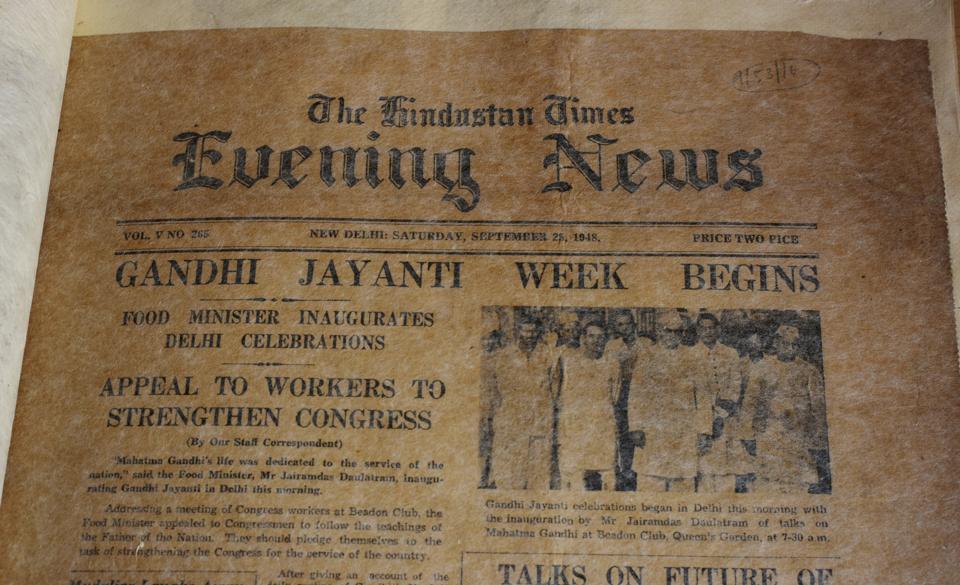
A collection of old newspapers at the archives includes a copy of Hindustan Times, Evening News, published on September 25, 1948. (Vipin Kumar/HT PHOTO)
Once digitised, the records would be transformed into microfilms.
“The thumbnails of the records with some information would be available on the website. For higher resolutions, one has to pay,” Garg said
A welcome move
“It’s a welcome move to preserve and digitise records particularly Bahadur Shah Zafar’s trial. The public will know who sided with British and who was with revolutionaries in the first war if Independence,” said historian Rana Safvi, who has translated Zahir Dehlvi’s Dastan-e-Ghadar which comprises eyewitness account of the 1857 uprising against the British
An old invite of Delhi Student Federation, now DUSU (Delhi University Student Union), at Delhi archives. (Vipin Kumar/HT PHOTO)
Established in 1972, the Delhi archives is a repository of non-current records of Delhi government under the department of art and culture. It is responsible for preservation of the archives and making them available research and references.
“We are committed to make knowledge more accessible to the common people. This is an important step towards preserving our precious heritage. While digitisation will ensure preservation of documents, making them available to a larger audience through a website and outreach events will play a key role in dissemination,” said Manish Sisodia, the minister of Art, Culture and Languages.
source: http://www.hindustantimes.com / Hindustan Times / Home> Cities / by Gulam Jeelani, Hindustan Times / December 14th, 2017