Tag Archives: Bahadur Shah Zafar

There is no history of India’s freedom without its Muslims

INDIA :

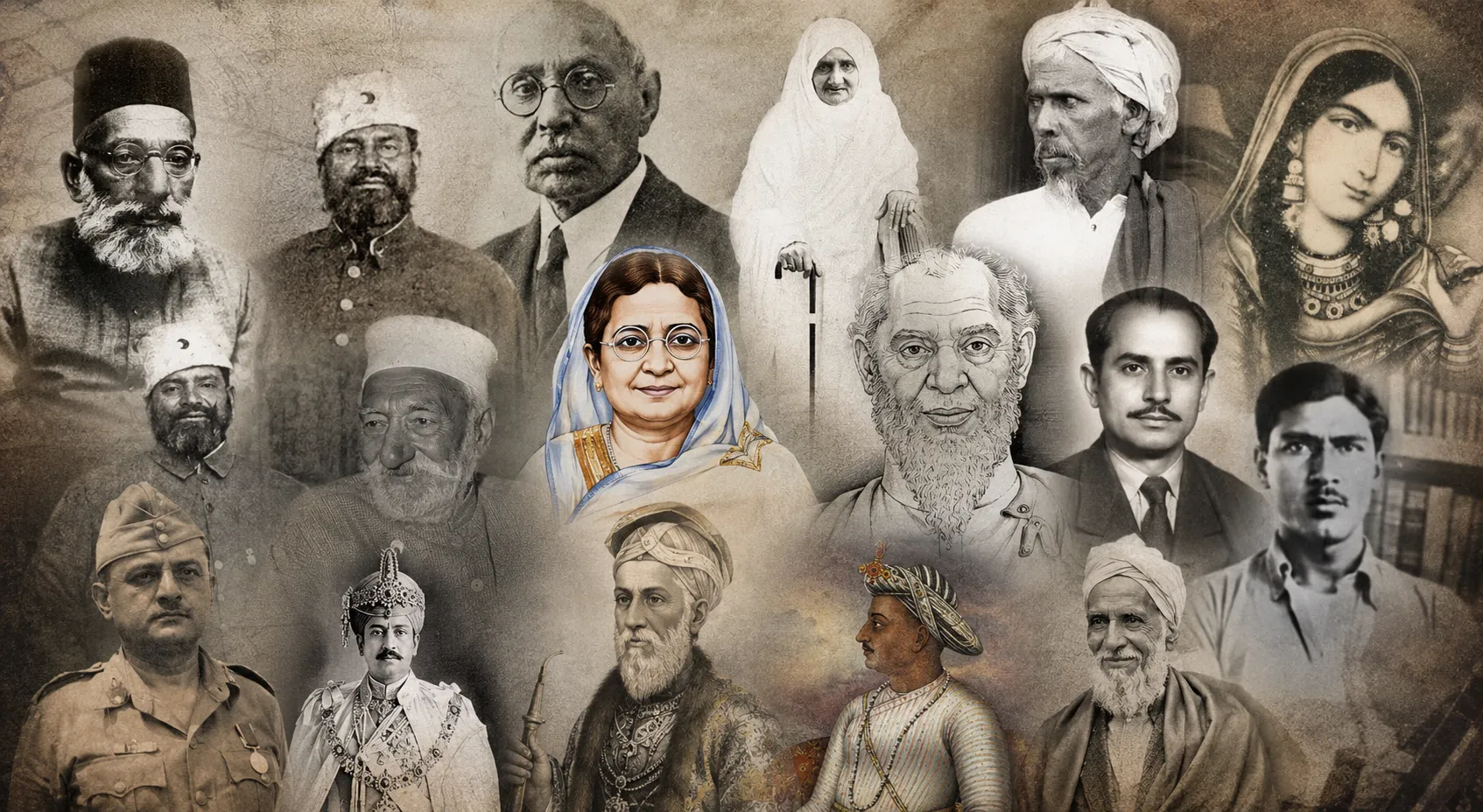
At 80, revisiting the Muslim lives, movements and sacrifices that shaped India’s struggle for freedom, and the politics of forgetting them.

Stroll through the pages of India’s history, because academia has failed to acknowledge some names and contributions in the Indian freedom struggle. From the Taj Mahal, Red Fort, Qutub Minar, Humayun’s Tomb, Gol Gumbaz, Charminar, to Fatehpur Sikri and the bustling lanes of Chandni Chowk, they all speak volumes louder. But the cultural pattern of ‘selectively remembering’ and ‘selectively forgetting’ has downplayed nation’s history into one-dimensional narratives , while external sources of learning like cinemas, textbooks, public places re-branding, etc,  are getting colored with contemporary political dynamics, to legitimize their plans and policies. 

To fathom India’s past sincerely, we must be willing not only to learn but also to unlearn. Learning involves discovering forgotten contributions, while unlearning requires shedding inherited biases, political narratives, and simplified versions of history. Because, as eminent historians have speculated, the past is constantly reinterpreted in the light of new evidence and new questions. Consequently, the framing of our past will affect the present, which will further be read as a past in the future, thus entrusting us with sheer responsibility of weaving a lineage of conscience, not insidious storytelling.

The lost dots of the Indian freedom movements

Revisit in Indian history afresh because erasure never happens all at once, it happens slowly and systematically.

Independence Movements did not count from the very battles fought, but from the conditions laid down before and after to formulate and fixate Indian society and culture altogether. Resistance to the economization, politicisation, and, ultimately, colonization by the Britishers was confronted by the collective plurality which our country possessed with pride. Testifying that resistance was not always born on the battlefield, often it began with communities refusing to harbor animosity for one another. 

Hindu sanyasis and Muslim fakirs whom the British Company wanted to fragmentalise, chose each other instead. Naga ascetics of the Dashnami order like Pandit Bhabani Charan Pathak stood beside Muslim fakirs of the Madari and Burhana sects, Majnu Shah Fakir, Chirag Ali, Musa Shah, and together resisted the oppressive taxation and economic exploitation the Company had imposed. It was one of the earliest organized rebellions against British rule in India, and yet how many of us have even heard these names?
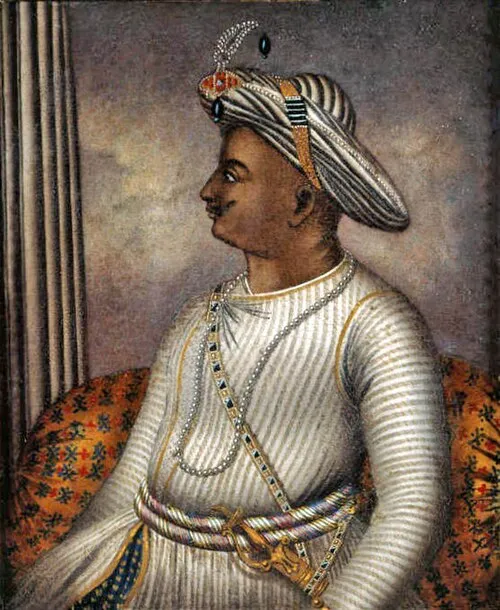
Tipu Sultan

That same defiance carried into Mysore, Tipu Sultan, a name antagonized in recent years that people even slipped away from the fact that he is the man who invented Missiles in India, a ruler who terrified the British. He built iron-cased rockets before most of the world imagined such a weapon, and fought the British across four wars, refusing again and again to let his kingdom bow. And what do we do with that legacy today? 

Islamic gallantry didn’t halt there. Moulvi Ahmadullah Shah, one of the key leaders of the First War of Indian Independence in 1857 was called the lighthouse of rebellion in Awadh, an epitome of the Ganga-Jamuna culture of Faizabad. The rebel army of Awadh was led by Barkat Ahmad and Maulvi Ahmadullah Shah, with Barkat Ahmad declared Chief Army Officer of the rebels after the Battle of Chinhat. ​​​​​​
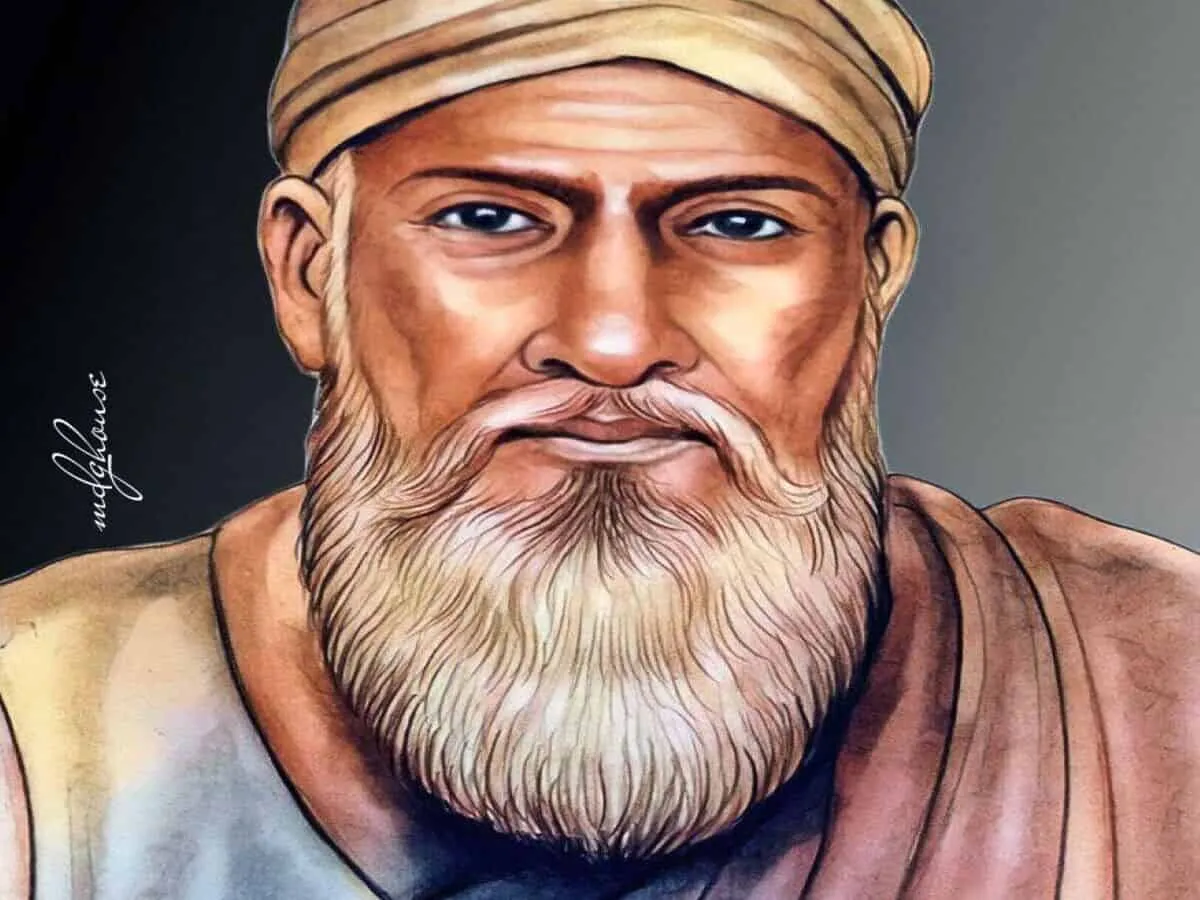
Moulvi Ahmadullah Shah

At the head of that same uprising stood Bahadur Shah Zafar, lending his name and his throne to the rebellion we call the Sepoy Mutiny. He gave everything a king could give, and the British broke him in the cruelest way. After his surrender, his sons Mirza Mughal and Mirza Khizr Sultan, and his grandson Mirza Abu Bakr, were stripped and shot in cold blood by Major William Hodson at what is now called Khooni Darwaza, and their severed heads were brought before their own father as a trophy. So many lives were lost in that struggle, so many families broken, and it is widely said that nearly 5 lakh Muslims were martyred, close to 50,000 of them ullema who chose the battlefield over silence. After rotating around 79 years of India’s independence, we are still cynical over the contributions carved by Indian Muslims.
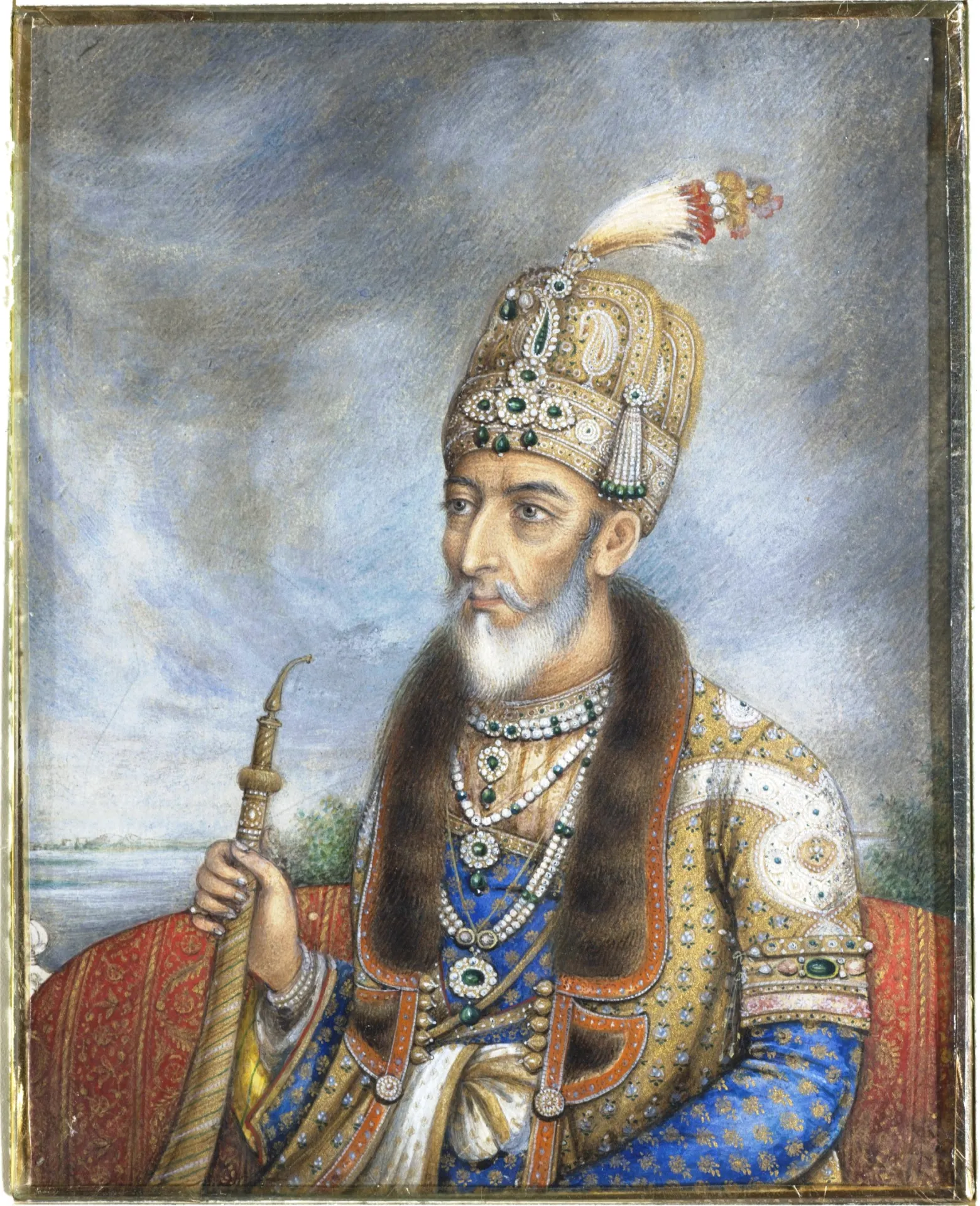
Bahadur Shah Zafar

Another buried name is of, Ashfaquallah Khan, was hanged on 19th December 1927, at just 27 years old, along with other Kakori comrades who were sent to the gallows. This Kakori robbery was to pull back the wealth of Indian soil to channelize it for the national struggle. Khan revolutionized nationalist movement with his participation in Hindustan Republican Association (HRA), founded by Ram Prasad Bismil along with two others. Like Kakori robbery, many other raids were rolled out to confront with required force rather than abstracting the notion of peace towards the gruesome tortures.   Have we ever lent an ear to these lines of Khan’s  ‘Hasrat’ poem- “Kuch aarzoo naheen hai, hai aarzoo to yeh hai, Rakh de koi zara si Khaak-e-watan kafan men” who as his last whim, recited this poem soaked in patriotism. Are we made to remember these lines by a Muslim freedom fighter when we are reminded about the terrified misapplication of the divine slogan “Allah-u-Akbar” to polarize the Islam?
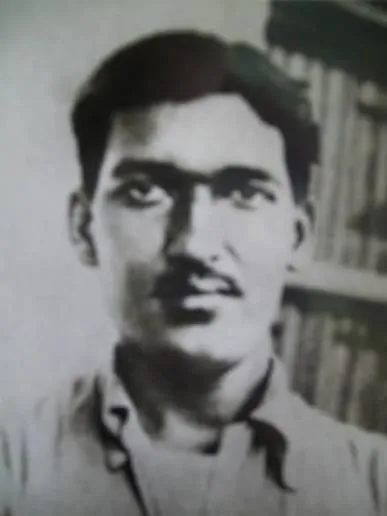
Ashfaqullah Khan

Walking further, Abdul Habeeb Yusuf Marfani, gave away his entire estate for a freedom he’d never see honoured. His courage was never separate from the cause, it was central to it, and it’s long overdue we remember it that way.
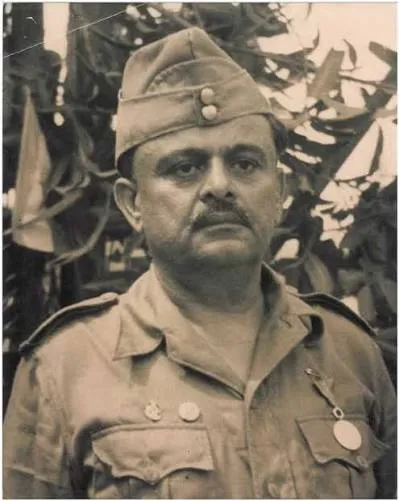
Abdul Habeeb Yusuf Marfani

Muslim participation in India’s freedom struggle was not boxed in a specific time or way, it encompassed armed resistance, societal reforms, mass mobilization, revolutionary events, and non-violent protests. The hurls on the invasions done by Muslims are widely made, but onlookers of the contributions by very same people, are tactfully airbrushed.

Sacrifices for the Indian motherland were proven on silent or loud battlefields,  not by the mere recital of ‘Patriotic Songs’ such as Vande Mataram as a contemporary reference. That is turned down by Indian Muslims lyrically, not soulfully, because of the religiosity which the Indian Constitution guarantees them. When did the recital of patriotic songs begin to outweigh the very acts of sacrifice they were meant to spring up?

Freedom fighters such as Maulvi Ahmadullah Shah, Begum Hazrat Mahal, Fazl-e-Haq Khairabadi (clarified the Jihad term through his war against the British), and Azimullah Khan were also important in the 1857 uprising. Barely, we learn or are made to learn about them? While vilifying other names of this very same community. 
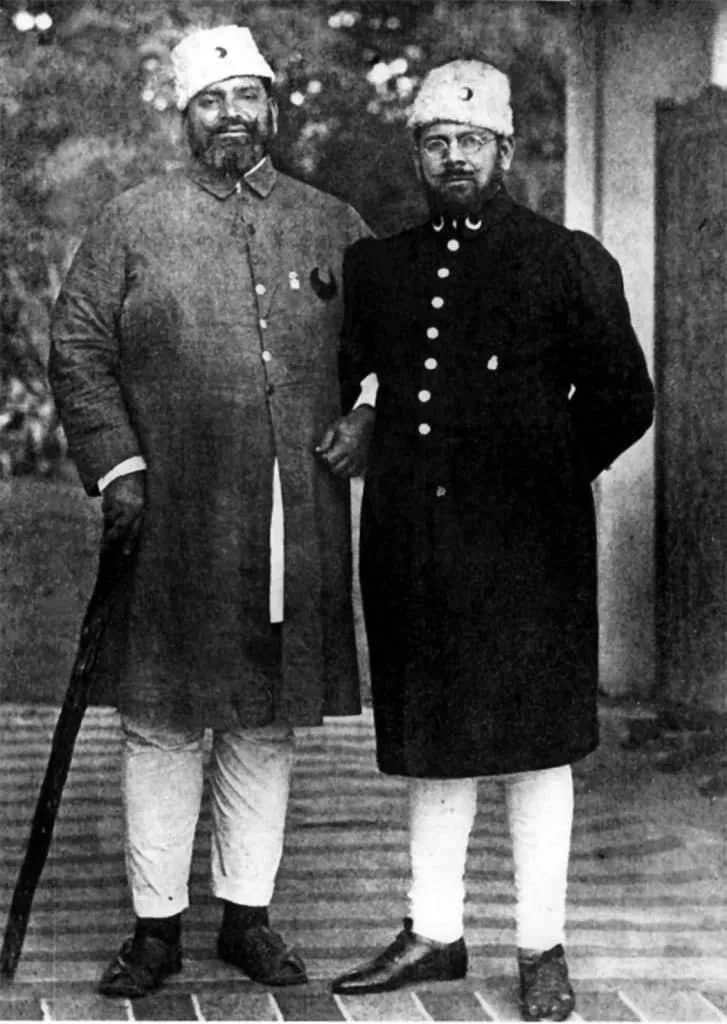
The Ali brothers, Shaukat Ali (1873-1938) and Mohamed Ali Jauhar (1878-1931)

Even the popular moments like the non-cooperation movement and the Khilafat Movement were helmed by some unheeded names: Mohammad Ali Jauhar and Shaukat Ali. Erected on the former’s name, there stands a university in Rampur, U.P. which recently has fallen prey to the communal politics, staking Indian youth’s future at darker stage, thus disregarding the blood of these freedom fighters.
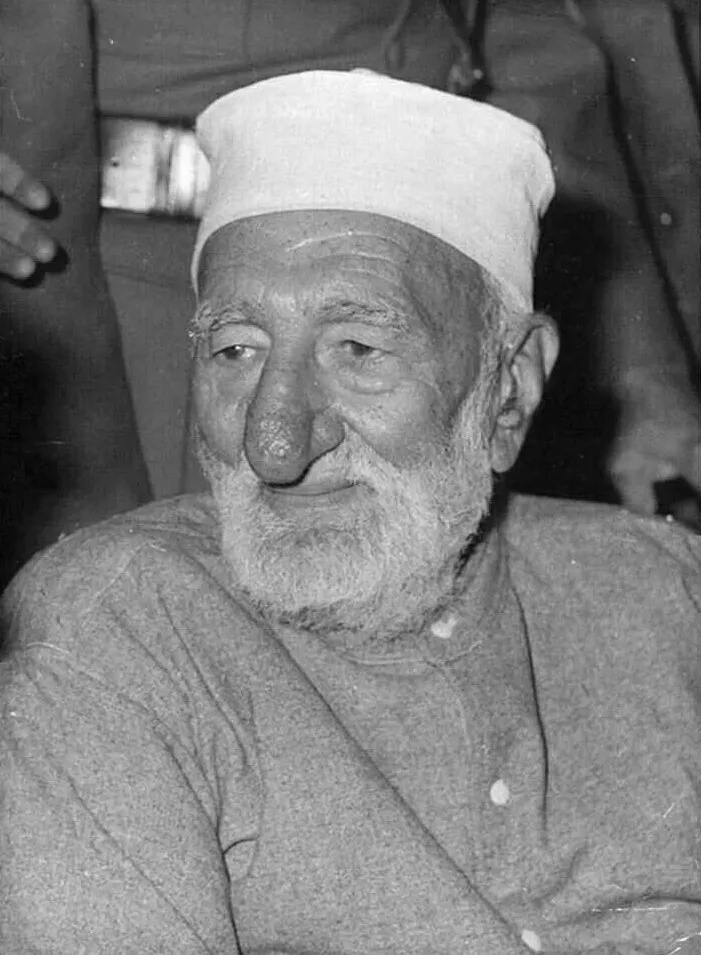
Khan Abdul Ghaffar Khan

Khan Abdul Ghaffar Khan who spent three decades in prison and headed the non-violent Khudai Khidmatgar Movement among Pashtuns against British rule, wherein he combined social reform, service, and discipline. His demise took place during his house arrest in Peshawar. 
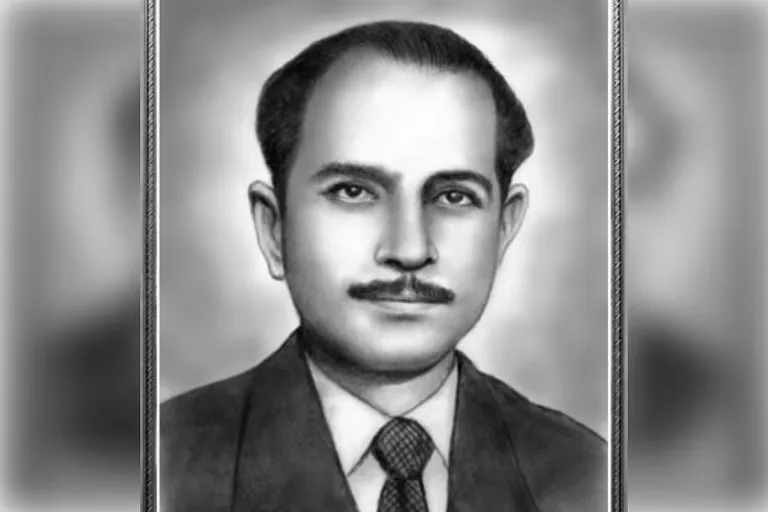
Abid Hasan Safrani

Without a single community-led leader, ideologies often find a loose hand to wrestle for their individual existence rather than collective results. Abid Hasan Safrani,  prominent INA member, mobilized the Muslim youth and committed to Subhas Chandra Bose’s movement (Azad Hind Fauj), which underpinned armed resistance in the Indian Freedom Struggle rather than non-violent means, brewing the unity for winning back the motherland.

Having said that, the famous Ghadar Party, founded in 1913, was pioneered by one more buried name- Maulana Barkatullah Bhopali. He was the first Prime Minister of the Provisional Government of India (Government-in-Exile), which was established in Kabul in 1915. He traversed across Europe, Asia, and North America to usher in the momentum for the Indian freedom struggle. His death took place in the US, leaving him deprived of bidding adieu to his motherland one last time.
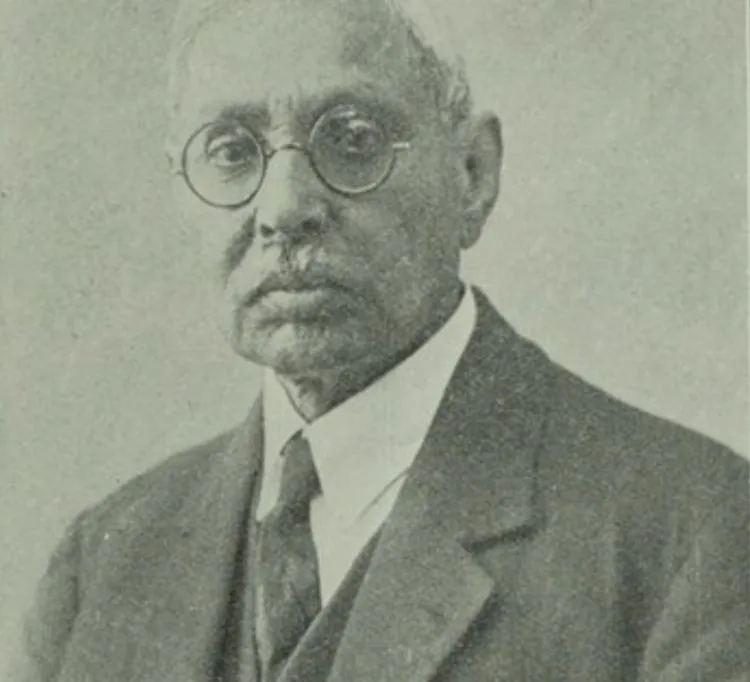
Maulana Barkatullah Bhopali

Then, “Inquilab Zindabad”, the popular hymn echoed at Jantar Mantar very recently, was originally coined by Urdu poet-politician Hasrat Mohani at the Congress’ Ahmedabad session, while Bhagat Singh solely made it popularized. Mohani had been a soulful Krishna Bhakt, leaving him writing eulogies for ‘Hazrat Krishna’ (Hazrat is not a religious tag; it is an honorary title).  He, being the co-prisoner of Gandhi ji, presented him with the USSR idea of federalism for empowering the localized and regional pockets of the agglomerate India. His courage and values proved his patriotism in the debates of the Constituent Assembly and confrontations with the Britishers. 
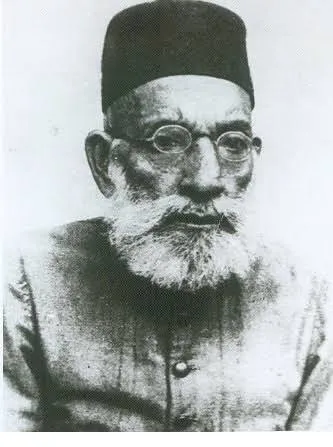
Hasrat Mohani

We remember Mahatma Gandhi more than any other freedom fighter, but are we mindful of the fact that the man who saved him was Batak Mian Ansari during the Champaran Satyagraha in 1917? He was the cook deployed by the Britishers, who then ordered Batak Mian Ansari to serve venomous milk to Gandhi ji. His integrity made him stake his life to save Gandhi ji. He sneakily warned Gandhi ji, and, as anticipated, he was kicked out of his job by the Britishers, further leaving him battered by the villagers and ousting him and his family from his residence. To date, his family couldn’t receive what was promised for his courage by India’s first president, Rajendra Prasad. Questioning how much we have honoured the honorable personalities on the ground?
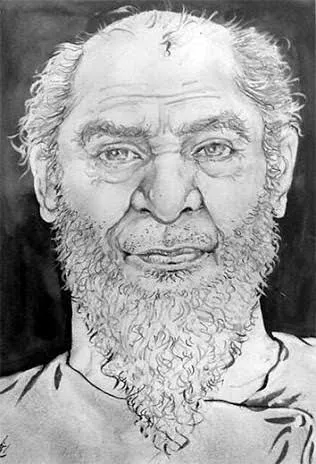
Batak Mian Ansari

The last Nizam of Hyderabad, Mir Osman Ali Khan, is also in this queue of the buried names. Independence movement is not merely the swing between direct confrontation with colonial regime, it too laps over the pre and post period that either nudged the movements or repaired the damages caused to India. He has reportedly granted mammoth donations across educational and religious institutions. From BHU, AMU, IISc, publication of critical editions of Mahabharata, Golden Temple, Amritsar and many more places . We rewind through cruel rulers who demolished Indian structures, to attack their community and make them accountable in the present, but are we awakened with these submerged realities as well? One-sided history or evolving history, rationality comes with the choices citizens make to discern their roots.
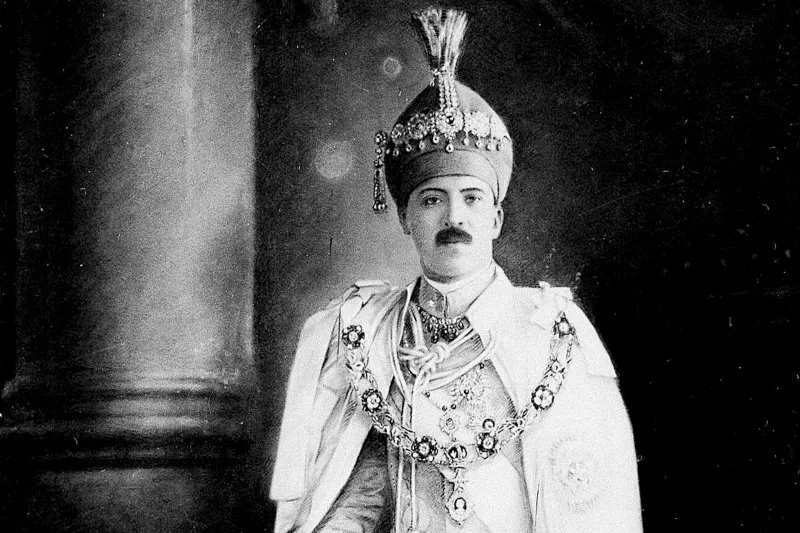
Mir Osman Ali Khan

The history of Muslim resistance to British colonial rule also travelled deep into Malabar in Kerala, where Variyankunnath Kunjahammad Haji, Ali Musliyar , and Sayyid Fazal Pookoya Thangal emerged as formidable names in a long tradition of anti-colonial mobilisation. Fazal Pookoya Thangal, the 19th-century Mappila spiritual leader of Malabar, became an influential voice against British authority and the oppressive agrarian order sustained under colonial rule, eventually being forced into exile in 1852. Decades later, that inheritance of resistance found powerful expression in the 1921 Malabar uprising, with Ali Musliyar, a religious scholar and Khilafat leader, and Variyankunnath Kunjahammad Haji becoming among its most prominent leaders. Haji challenged British authority in parts of Malabar and established a parallel administration in areas under rebel control, while Ali Musliyar mobilised people against colonial rule before being captured and executed by the British. Haji, too, was eventually captured and executed by firing squad in January 1922.
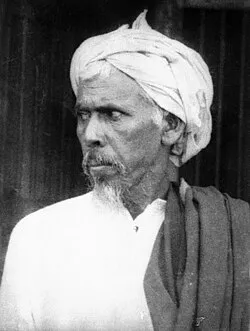
Ali Musliyar

Culture can marginalise women, but religion pours courage 

“Khoob Ladi Mardani thi, Wo Jhansi Wali Rani thi”, Whenever we speak of women who took up arms for this land, Rani Lakshmibai of Jhansi is the name that comes to every tongue, and she deserves every bit of that memory. But here’s what gnaws: she was not alone. There were other women just as fearless, standing in the same fire, and history simply didn’t bother to write their names down. 
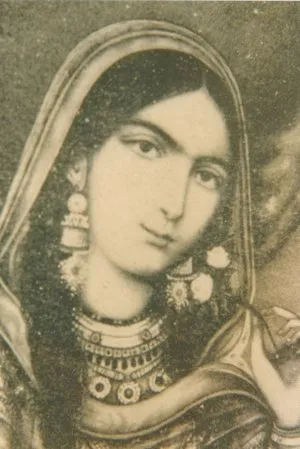
Begum Hazrat Mahal

Begum Hazrat Mahal was one of them, and she wasn’t a side character, she was one of the rebellion’s most formidable forces. Even William Howard Russell, a British correspondent writing for his own side, couldn’t deny her fire. In his My Indian Mutiny Dairy, describing her as a woman of remarkable energy who had stirred all of Oudh into rising for her son’s cause and had herself declared undying war against the British. At Musa Bagh in Lucknow, she didn’t issue orders from a distance, she personally fought alongside and rallied nearly 9,000 rebel soldiers, moving from camp to camp, lifting morale with speeches that set entire camps on fire.
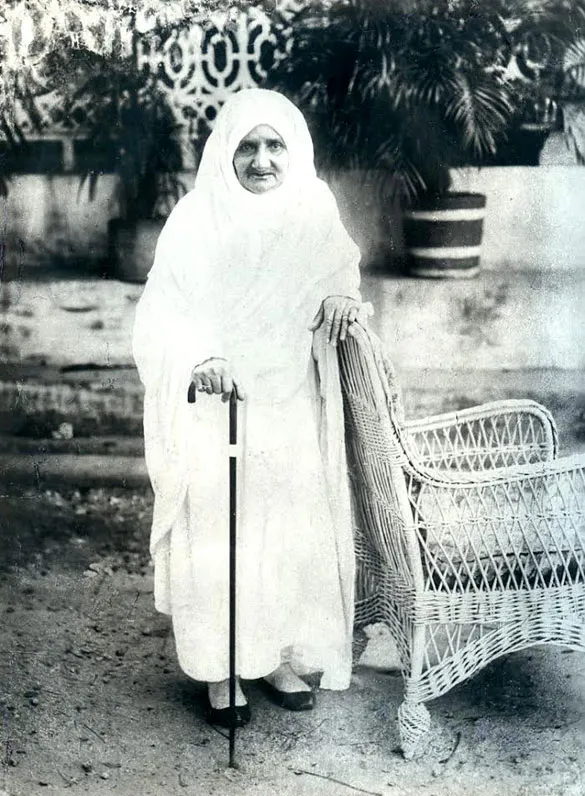
Abadi Bano Begum

And then there’s Abadi Bano Begum- the woman history remembers, if at all, only as “Bi Amma.” A widow with six children, one of the sons Maulana Shaukat Ali, and the other Mohammad Ali Jauhar, above-mentioned together known as the Ali Brothers. She could have used every excuse the world hands a woman to stay silent. widowhood, motherhood, the weight of raising children alone. She used none of them. When the country needed people brave enough to stand up to the British, she stood up too. She became the first woman to address a political rally while wearing a burqa and let that sink in for a moment. She didn’t have to remove a part of her identity to be taken seriously in public life; she broke the idea that a veiled woman couldn’t also be a fighter, a leader, or a voice loud enough to move a crowd. She urged women to stop hiding at home and join the struggle, organizing funds and meetings where they were addressed as political beings for the first time, and taught why boycotting foreign goods mattered. She convinced them to donate to the Tilak Swaraj Fund, set up by Bal Gangadhar Tilak to finance India’s freedom struggle.
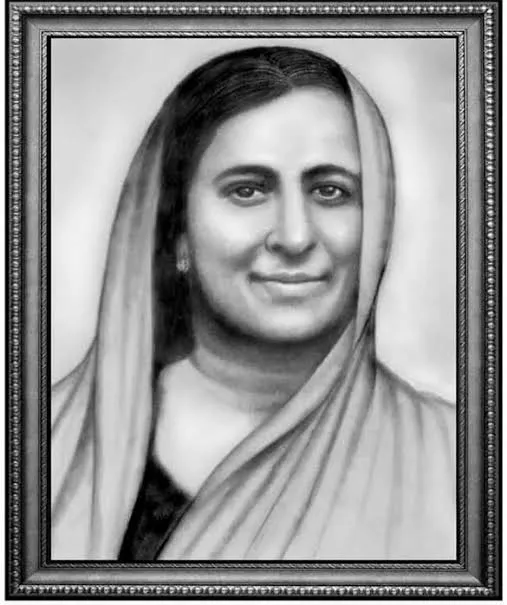
Kulsum Sayani

Not every battle was fought with a sword, some were fought with pen and paper. Kulsum Sayani, awarded the Padma Shri in 1960, waged her own war against illiteracy through the Jan Jagran movement, teaching under “each one, teach one” and leading centres for Muslim women that grew from 50 to 600 by sheer will. Begum Rokeya, a fiercely prolific feminist writer at a time when a woman dreaming was seen as rebellion, imagined a world turned upside down in Sultana’s Dream, then built that vision into reality, founding a girls’ school in 1909 and the Muslim Women’s Association in 1916, giving women space to learn and speak.
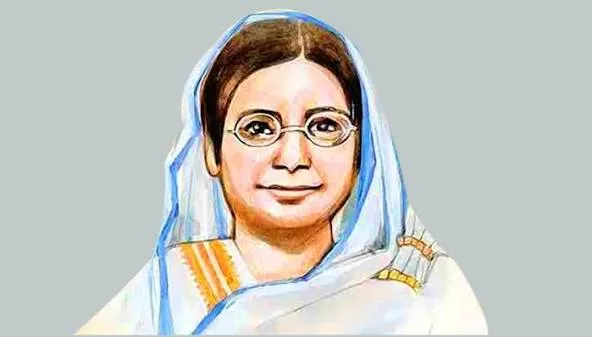
Begum Rokeya

80th Indian Independence Day’s call to unwind the narratives 

As the author of ‘Sare Jahan Sai Achcha, Hindustan Humara’– Allama Iqbal penned- “The freedom lovers of the nation stepped forward with such dignity that even those long imprisoned by deprivation watched in admiration.” It has been shouldered on the present generations to soak in the evolving history to sanitize the present from groans of hatred, rotting the Indian society. 

These lost chapters from Indian history wouldn’t have been possible to muster without the effulgent works of Salim Khan, Romila Thapar, Ramachandra Guha, S. Irfan Habib, Mushirul Hasan, A. G. Noorani, Rana Safvi, etc. Grinning us with the fact that the pluralistic framework of India is not only designed by the constituent makers, but it is also originally earned by all the freedom fighters, from pre- to post-independence.

Adeena Navaid is a law student and writer covering legal, social, and feminist issues, with work published in Maktoob, Bar & Bench, The Quint, Siasat, SheThePeople, and other platforms. Aiman Tabassum is a final-year LL.B. student at the University of Mumbai who writes on constitutional law, legal history, and socio-political issues, with work published in Bar & Bench.

source: http://www.maktoobmedia.com / Maktoob Media / Home> Opinion / by Adeena Navaid & Aiman Tabassum / August 14th, 2026
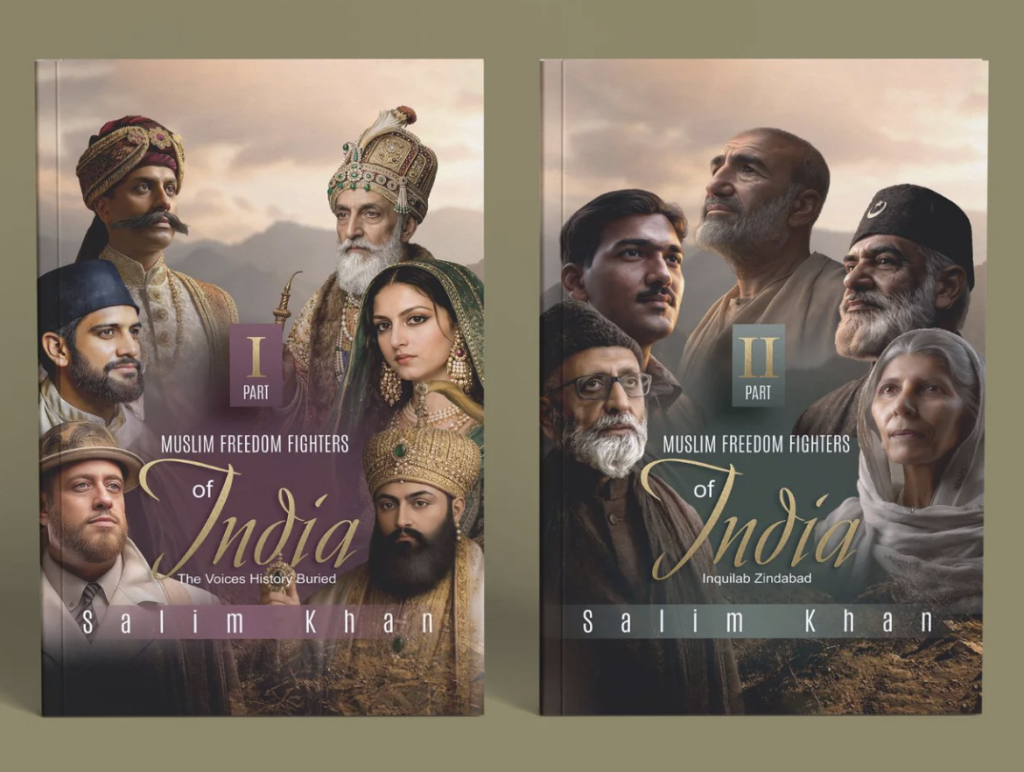
Why We Need a Book About Muslims Who Fought for India’s Freedom

Mumbai, INDIA :

Can a stable and just democracy flourish on foundations of wilful amnesia and erasure?

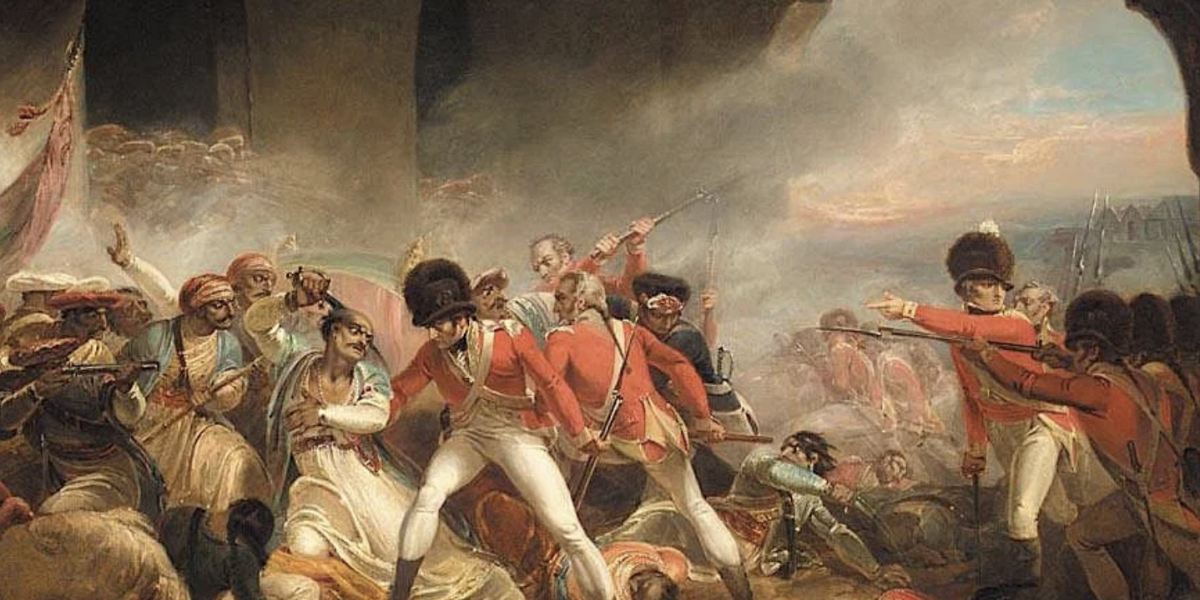
A c. 1800 painting showing the last stand of Tipu Sultan, ruler of Mysore in 1799 at the end of the Anglo-Mysore Wars with the East India Company. Photo: Henry Singleton/Public domain.

Many will ask why a book about Muslims who fought for India’s freedom? There’s no answer to such questions except another question. Had we been better memory keepers as a nation, could we have avoided the peak disinformation and stupidity which normalises reviling ordinary Muslims as outsiders, infiltrator and insurgents? 

Muslim Freedom Fighters of India is a two-volume biographical compilation by Salim Khan on less-known, mostly forgotten and hardly known Muslim figures. The books aim to clear the fog around Muslim freedom fighters whose names are heard of without them being extensively known and this requires us to understand why this fog exists. Written in an extremely readable and accessible format, these biographical accounts embed the historical figures in the context of their times, responding to unprecedented events with foresight, clarity and conviction that sealed their fate and shaped and the nation’s destiny.

 Whether we are reading about Generals of 1857 – Bakht Khan and Khan Bahadur Khan – or the Cambridge-educated Rampur scion Mohammad Ali Juahar of Khilafat moment and his fiery mother Bi Amma, the larger questions seething beneath the stories keep rising to surface. Who does a society and nation choose to remember and celebrate? Whose memories are deemed worthy of preserving? History is always shaped by those who control archives, narratives and memorialisation and hence memory. 

Reading about Tipu’s dazzling reign through the three Anglo Mysore wars where he proved superior to British forces, I was reminded of the controversy sparked by the late Girish Karnad’s suggestion of naming the Bengaluru airport after Tipu Sultan. Karnad had said, “It is true that Tipu Sultan was not born in Bengaluru, but he was a son of this soil and a freedom fighter. Had Tipu been a Hindu, he would have achieved the status of Shivaji, and the airport would have been named after him.” I recalled Karnad because his play Dreams of Tipu Sultan echoes the same theme that this two-volume tribute to erased, obscured and deliberately unremembered historical figures echoes: that when politics lays down who should be forgotten, remembering the erased becomes a duty, an affirmation and a political act. 

It is important to clarify that this is not a compilation of eulogies but well-researched fact based account of people who had the uncommon clarity to resist colonial domination even before the nationalistic narratives took shape. That they happened to be Muslims is important today because of the distortions that have obscured and erased them. But back then when they fought and resisted, they were simply rallying for the cause of their soil and their watan. From the earliest times they understood that freedom from foreign domination required Hindus and Muslims to put up a united front as in the war of 1857, the Khilafat movement, and the period between 1919 and 1924. Back then too, traitors cut across religious lines – Jagat Seth, Mir Jafar, and Ilahi Baksh.

Muslim Freedom Fighters of India: Part 1 and Part 2’, Salim Khan, Qalam Aur Kaagaz Books.

From Siraj ud Daulah to Tipu to Shahzada Firoz Shah, the book shows how the fog around these personalities is not accidental but meticulously designed – initially by the colonial mind, then picked up by early nationalists and woven into simplistic narratives. The macabre dance of history further stifled Muslim voices. Cataclysmic events like the ‘end’ of the Mughal Dynasty in 1857 and the Partition in 1947 sundered clans, erased family histories, legacies crumbled with no one is around to defend and uphold them. Today, even people who don’t know history have heard of Lakshmi Bai, but many who read history may not have heard about Shahzada Firoz Shah, the Mughal Emperor’s grandson who in August 1857, led a band of armed soldiers to rally the rebels in Rohilkhand and Malwa and who fought alongside Tatia Tope and called for a united Hindu-Muslim front against the Company. 

The British understood the dangerous potential of popular memory and subverted any potential for memorialisation of hugely influential figures. No one knows if Shahzada Firoz died in battle or escaped to West Asia. The Maulavi Ahmadulla of Faizabad whose authority and fearlessness scared the British so much that they kept a reward on his head, was likewise interred in an unmarked grave. Knowing that even his memory could become a node to unite the rebels, the British saw to it that no commemoration was permitted or possible. Zafar, the last Mughal was exiled to Rangoon for the same reasons.

In her book, India, 5,000 years of history on the subcontinent, Audrey Truschke, elucidates how Muslim rulers like Nawab Siraj ud Daulah and Tipu Sultan to Zafar felt a responsibility for their subjects no matter what their religion. For example, Siraj ud Daulah actively intervened in times of famines and drought in Bengal. But after the British took over they did nothing to alleviate human suffering, so that 20% of Bengal’s population died in the famine of 1768 and the small-pox epidemic of 1769-70 following it. This had never happened during earlier episodes of failed harvests. Truschke says, British historians initiated the custom of categorising Indian rulers as tyrannical, effete and incompetent, reducing them to their religion and writing in terms of Hindu rulers and Muslim rulers. The British needed to demonise Muslim rulers who were their immediate predecessors in subcontinent so that they might look good by comparison, Truschke notes. It was a part of the colonial propaganda.

Another pattern Salim Khan’s compilation brings out is that from mid-18th century onwards, the first responders and the most committed crusaders resisting colonial domination – the kings, queens, princes, preachers, noblemen – were Muslims. Not only because the British had wrested from them the power they had wielded for centuries (howsoever fragmented or diluted it may have become); but also, because they were looked upon as leaders. In Awadh, for example, the Shia elite took it as their moral-ethical duty (see Chapter 7, volume I: Shia Ullema and Noblemen of Awadh

Even in the 20th century, Muslim freedom fighters like Hasrat Mohani of the Inquilaab Zindabad fame and Asfaqullah Khan of the Kakori conspiracy who was an icon for Bhagat Singh, remain in the shadows, seen only in a hazy half-light. Were their contributions any less or only less remembered? One of the most important projects post-Independence should have been to restore memory and affirmation to those whom the British put on the wrong side of history, no matter what their religion or caste. But we know this is not what happened.

Since the arrival of the political controversy over Tipu Sultan, we have entered in an era of deliberate distortion of history. The larger question that these accounts refrain from asking but that jumps to any thinking person’s mind is this: can a stable and just democracy flourish on foundations of wilful amnesia and erasure? Should the memory of Muslim freedom fighters be kept only by the Muslims? The heritage and memory of Indian Muslims needs to be reclaimed by them. But equally, these volumes are required reading for the casually miseducated, hopelessly disinformed or simply ignorant Hindus who have been stupefied into denying and distorting their composite history.

Varsha Tiwary is a Delhi-based writer and translator. She has recently published 1990, Aramganj a translation of the best-selling Hindi novel Rambhakt Rangbaz.

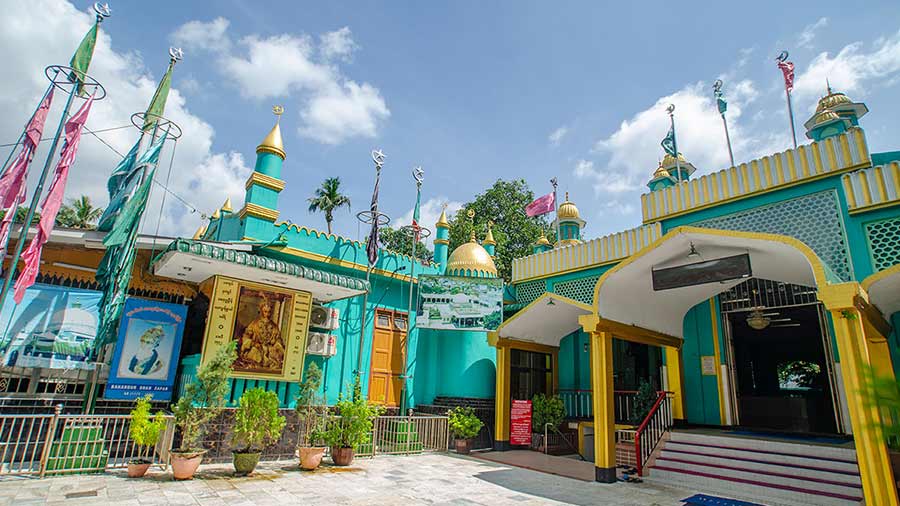
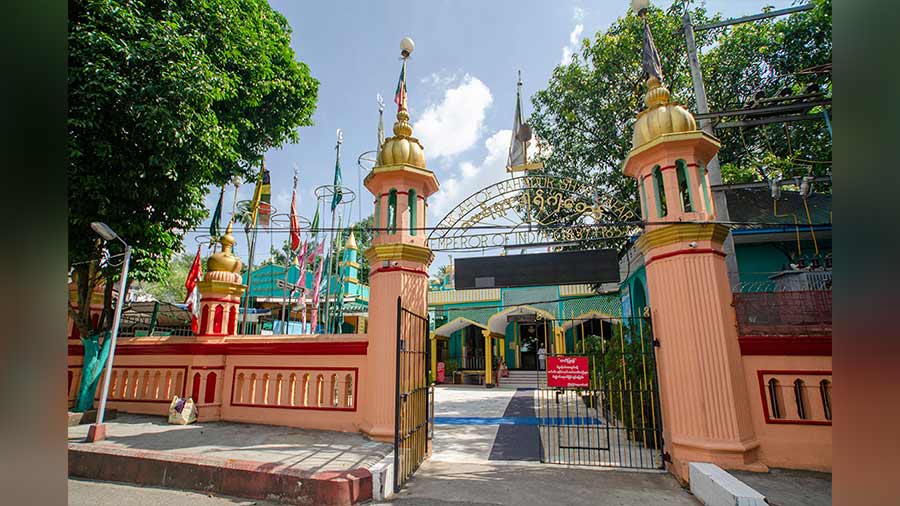
Dargah of Bahadur Shah Zafar in Yangon — where the last Mughal Emperor rests

Yangon (Rangoon), MYANMAR (formerly BURMA):

Close to the Shwedagon Pagoda in Myanmar, this dargah is the last tribute to the Mughal ruler and poet.

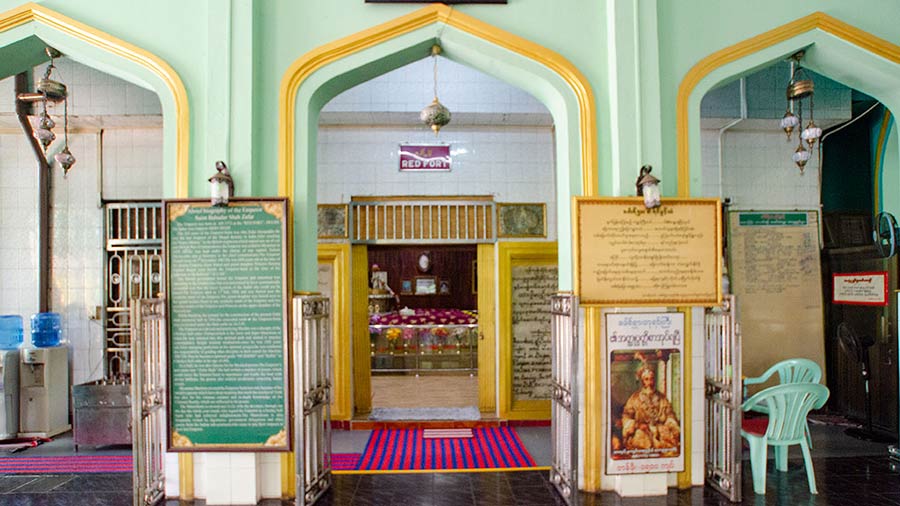
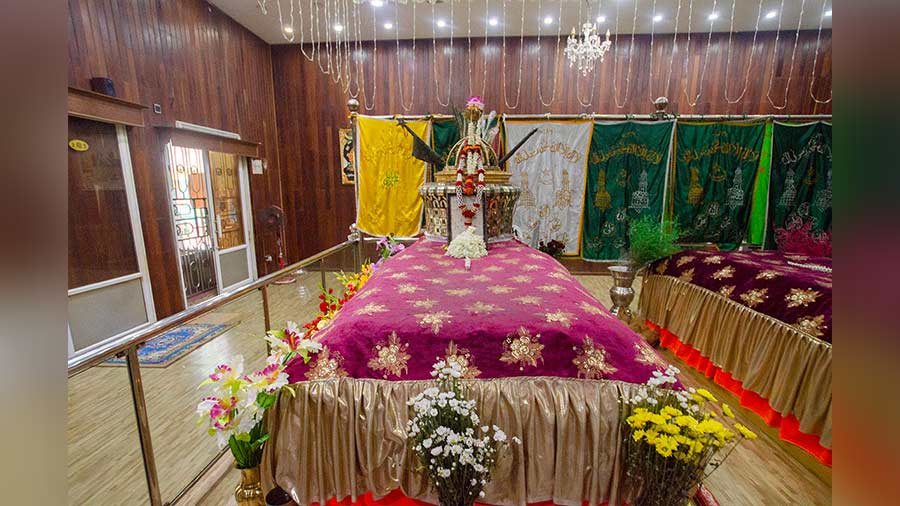
The main hall at the Dargah of Bahadur Shah Zafar
Photos: Subhadip Mukherjee

Myanmar (Burma) has some uncanny ties with India when it comes to the freedom struggle. Netaji Subhas Chandra Bose was imprisoned in Mandalay and the last Mughal emperor Bahadur Shah Zafar, who was also imprisoned, later died in Yangon (Rangoon).

If one visits Yangon, then one must visit the Dargah of Bahadur Shah Zafar. It is an irony of sorts when one thinks of the last Mughal emperor not being able to spend the last days of his life in a country where his ancestors once ruled. For the British, Bahadur Shah Zafar was more like a threat; they were constantly worried that he could be used as a proxy leader for another attempt at a revolt in India. 

The Dargah of Bahadur Shah Zafar in Yangon

After being arrested from Humayun’s Tomb during the Sepoy Mutiny on September 19, 1857, he was spared the death sentence and negotiated a life in exile instead. They thought it was better to have him sent to exile in Myanmar, and considering his health, they were almost certain that he would never set foot in India again. Bahadur Shah Zafar left Delhi along with his wife, two sons, and some close support staff on October 7, 1858.

More than a rebellious ruler, Bahadur Shah was more into poetry and that’s exactly how he spent the sunset years of his life in Myanmar. The British were paranoid and even prevented him from getting supplies of pen and paper fearing that he would pass messages to his supporters back in India. 

Life in Yangon

Room next to the main hall, housing the tombs

He lived in a small wooden house that was located very near Shwedagon Pagoda. If you are visiting Yangon, then you’ll find Shwedagon Pagoda as one of the major landmarks in the city. His life was miserable out here with a very limited supply of food and without any pen and paper. So, as a last-ditch attempt, he started using charcoal and scribbled poetry on the wall of his home. 

His life came to an end at the age of 87 on November 7, 1862. By then, he was completely bedridden and unable to eat or drink. A very unfortunate end to the last Mughal emperor of India.

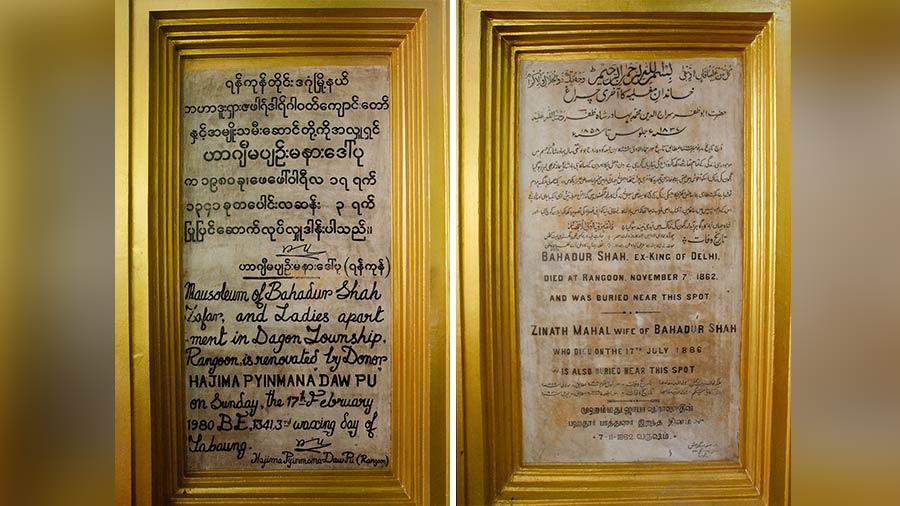
Memorial plaques inside the dargah

Even after his death, the British were paranoid and hurriedly buried him without giving him the last respect that he deserved as the last emperor. Just a small plaque was placed on top of the grave and the rest was kept as simple as possible. This was purposely done to prevent his followers from making this place into a pilgrimage spot.

Four years later, his wife also passed away in Yangon and was buried right next to him.

The Lost Grave

The Lost Grave

With time, people simply forgot about this grave just exactly as the British wanted. To make matters more complicated no official records were kept as to the exact place where he was buried. 

The discovery of the grave happened by chance in the year 1991 during an expansion work of a prayer hall that was being carried out by labourers. Two graves were found with small inscriptions on top of them. While one had the name Bahadur Shah Zafar, the one next to it was that of his wife Zinat Mahal. 

Further excavation was carried out on the two graves and upon opening up the grave of Bahadur Shah Zafar, the skeletal remains were found wrapped in a silk shroud.

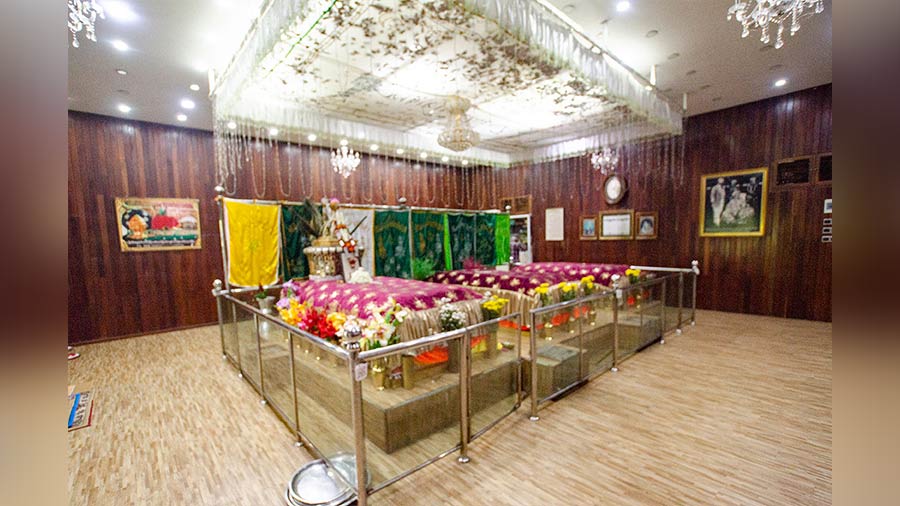
Interiors of Bahadur Shah Zafar Memorial Hall at the dargah

After this discovery and realising the importance of the grave, it was decided to restore and renovate the graves and the surrounding area. With support from the local community, the local government, and further support from the Government of India, a permanent structure was constructed over these two graves. A dargah was constructed at this very spot making it fit for the last Mughal emperor.

Dargah of Bahadur Shah Zafar

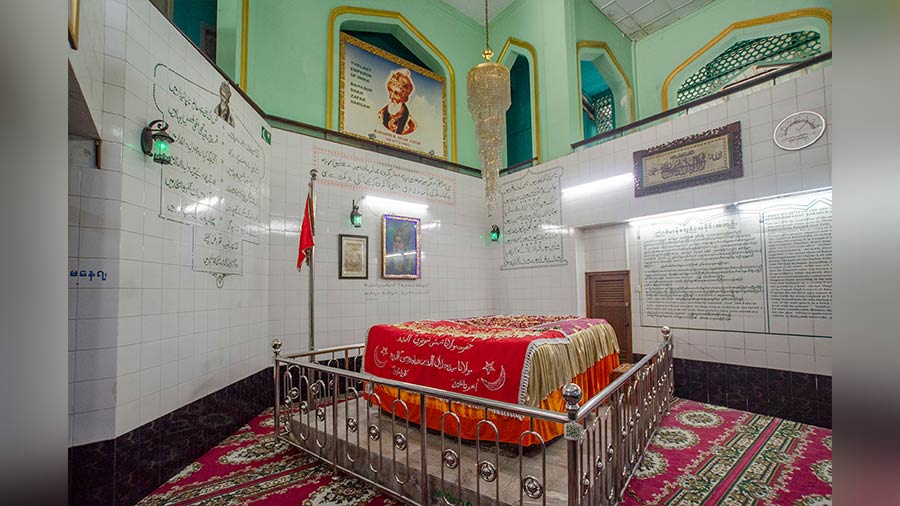
Original grave of Bahadur Shah Zafar at the basement

The dargah has two levels, the top level has a large prayer hall and a room with three decorated tombs. These tombs are that of Bahadur Shah Zafar, Zinat Mahal, and his granddaughter Raunaq Zamani. The surrounding walls in this room have only three known photographs of the emperor and poetry written by him lamenting his life in exile.

Kitnaa hai badnaseeb ‘Zafar’ dafn ke liye do gaz zamin bhi na mili kuu-e-yaar mein

Bahadur Shah Zafar

There is however another secret to this place. There is a room located in the basement of the dargah. This is the room where the original grave of Bahadur Shah Zafar was located when it was discovered. The grave now has been converted into a decorated tomb. This is the very place where the last Mughal emperor was buried and was thought would be forgotten.  But as luck would have it, it is now somewhat fit for an emperor. It’s sad that Bahadur Shah Zafar could never return to the country he once ruled. He remained in exile even after he died in Myanmar.

The Kolkata Connection

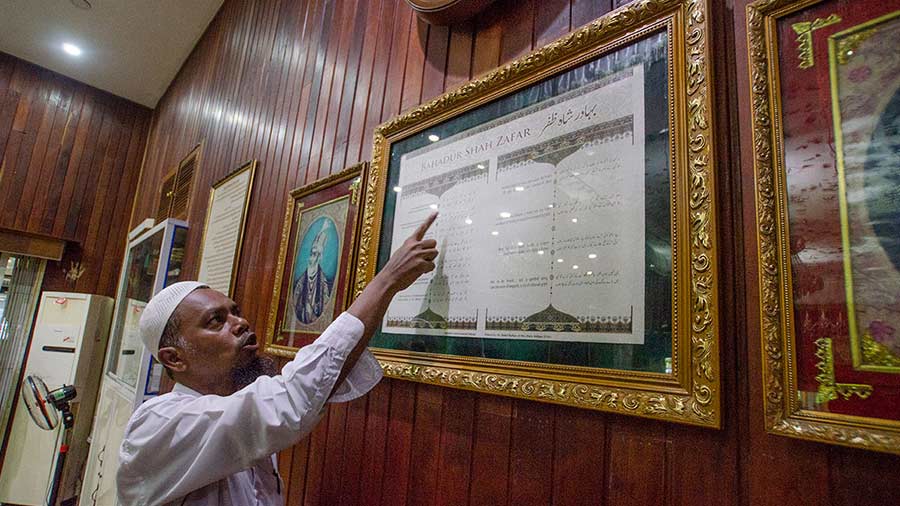
A representative from the Dargah reading poetry written by Bahadur Shah Zafar

Bahadur Shah Zafar along with his wife Zinat Mahal were also accompanied by their two sons Jawan Bakht and Jamshed Bakht. His sons never left Burma and settled there and ultimately died there only. Jamshed Bakht had two sons. One of his sons, Mirza Bedar Bakht, came back to India and settled in Kolkata. He married Sultana Begum with whom he had five daughters. Mirza Bedar Bakht had a very quiet life living in a slum and earning by sharpening knives and scissors. He died in the year 1980 in this very city and was buried here in Kolkata. 

Working for more than a decade in the book retail and publishing industry, Subhadip Mukherjee is an IT professional who is into blogging for over 15 years. He is also a globetrotter, heritage lover and a photography enthusiast.

source: http://www.telegraphindia.com / The Telegraph Online / Home> My Kolkata> Historical Landmark / by Subhadip Mukherjee / April 03rd, 2023

English, Urdu books on contribution of Indian Muslims in freedom movement released

NEW DELHI :

Patna: 

In a glittering ceremony, two books on Muslims’ contribution in India’s Freedom movement were launched here in Patna on 17th December. The function was presided over by Harsh Mandar, former IAS officer and human rights defender in the country.

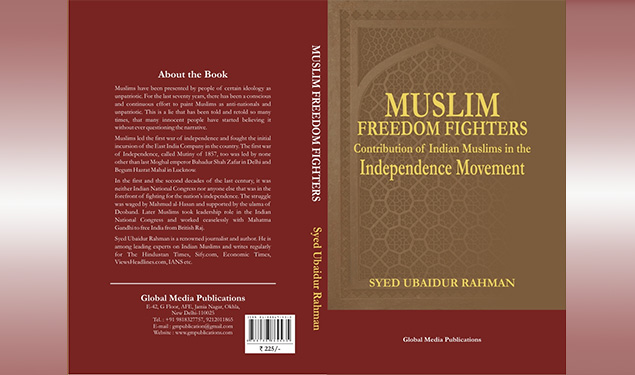
The books ‘Muslim Freedom Fighters: Contribution of Indian Muslims in the Independence Movement’ and its Urdu version ‘Muslim Mujahideen-e-Azadi aur Tehrik-e-Azadi Mein Unki Khidmat’ have been authored by Delhi based author and journalist Syed Ubaidur Rahman.

The two books try to fight the oft-repeated allegations that Muslims are anti-national and have not contributed for the freedom of the nation. The books nail the lie and prove that Muslims not just participated in the freedom movement, they went on to lead the freedom struggle for a long time. The first war of Independence or Mutiny of 1857 was led by Mughal emperor Bahadur Shah Zafar in Delhi and Begum Hazrat Mahal in Lucknow. The Independence Movement in the first two decades of the twentieth century was led by Mahmud Hasan and ulama of Deoband and they had respect and support of everyone including Hindus and Muslims.

If anyone has any doubt about the Muslim contribution in the freedom movement, the fact that the Indian National Congress had as many as nine Muslims as its president till the year 1947 will remove such doubts.

While speaking on the occasion, Harsh Mandar said that the divisive forces in the country are trying to divide the nation on the basis of religion and faith. He said that the danger from such forces for the national fabric and its unity has become grave.

Harsh Mandar added that the threat to the communal amity in the country was never so high as is today as divisive forces are doing every thing to pit one community against the other and create a fear psychosis among the majority community prompting it to turn it against minorities.

Khursheed Mallick, a Chicago based urologist, philanthropist and director of IMEFNA said that the book is a timely reminder to the nation that Muslims and Hindus both sacrificed for the nation and this fact must be clearly told to our young generation. He said Muslims sacrificed heavily for the cause of the freedom of the nation and efforts must be made to tell the history.

Syed Ubaidur Rahman, the author of the two books, while speaking on the occasion said Muslims have been rather loath to write about the sacrifices they have made for the cause of the Independence and freedom. He said Muslims suffered badly throughout the freedom movement. They were the worst suffers in the wake of the mutiny of 1857 and its aftermath when Muslims were hounded across North India and beyond. Tens of thousands of Muslims lost their lives for the freedom.

Syed added that ulama of Deoband played a stellar role in the freedom movement. Unlike the common perception, they were secular to the core and when they established a government in exile in Kabul in 1915, they appointed Raja Mahendra Pratap as its President and Maulana Barkatullah Bhopali as its Prime Minister.

The book documents the lives of forty renowned Muslim freedom fighters including, Shaikhul Hind Maulana Mahmud al-Hasan, Maulana Barkatullah Bhopali, Hakim Ajmal Khan, Maulana Ubaidullah Sindhi, Maulana Abul Kalam Azad, Maulana Mohammad Ali Jauhar, Dr Maghfoor Ahmad Ajazi, Dr Mukhtar Ahmad Ansari, Ashfaqulla Khan, Maulana Hasrat Mohani, Maulana Muhammad Mian Mansoor Ansari, Asaf Ali, Husain Ahmad Madani, Aruna Asaf Ali (Kulsum Zamani), Peer Ali Khan, Saifuddin Kitchlew, Mohammed Abdur Rahiman, Captain Abbas Ali, Abdul Qaiyum Ansari, Prof. Abdul Bari, Moulvi Abdul Rasul, Nawab Syed Mohammed Bahadur, Rahimtulla Mahomed Sayani, Syed Hasan Imam, Sir Syed Ali Imam, M.C. Chagla, Yusuf Meherally, Justice Fazal Ali, General Shah Nawaz Khan, Allama Fazle Haq Khairabadi, Maulana Shaukat Ali, Syed Mahmud, Maulana Mazharul Haque, Badruddin Tyabji, Col Mehboob Ahmed, Begum Hazrat Mahal, Maulana Shafi Daudi, Rafi Ahmed Kidwai, Syed Mohammad Sharfuddin Quadri, Batak Mian

The book launch function was organized at Anjuman Taraqqi Urdu and was presided over by Abdul Qaiyum Ansari, chairman of Anjuman Taraqqi Urdu Bihar.

Name of the Book: Muslim Freedom Fighters: Contribution of Indian Muslims in the Independence Movement
Author: Syed Ubaidur Rahman
ISBN: 81-88869-43-0
Price Rs 225/-
Global Media Publications
E-42, G. Floor, AFE, Jamia nagar, Okhla, New Delhi-110025

source: http://www.ummid.com / Ummid.com / Home> India / by ummid.com News Network / December 12th, 2017

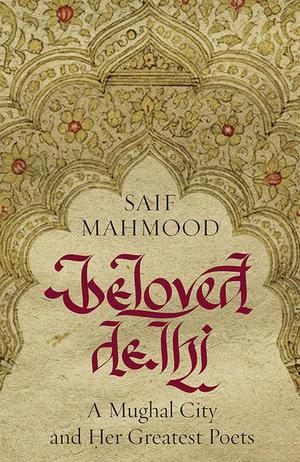
Beloved Delhi — A Mughal City and Her Greatest Poets review: The city of verse

NEW DELHI :

Eight poets of the past capture Delhi’s joys and sorrows

Saif Mahmood’s Beloved Delhi: A Mughal City and Her Greatest Poets offers offers a window into the life, times, and poetry of Delhi’s greatest Urdu poets from the 18th and 19th centuries, with witty and critical insight, in a conversational style that has become Saif’s hallmark in many a literary gathering.

Focusing on eight poets, he allows us to touch Delhi’s past and rethink its present through Urdu. Each chapter on a poet is divided into two sections — the first is biographical and provides the reader with insight into Delhi’s material conditions through the vicissitudes of the poet’s life. Thus, the 18th century poets are nomadic because of the post-Nadir Shah instabilities of Delhi.

The 19th century poets lead more sedentary lives, as the British Residency of Delhi provides the military support, at least until the cleavage of 1857. This upsets the tradition of the classical Urdu ghazal, and so the last poet analysed is Daagh Dehlvi, already writing in 1857, and a step-grandson of the last Mughal King, Bahadur Shah Zafar. The book also records this decline visually through Anant Raina’s photographs of the current gravesites of these poets, exhibiting the absolute lack of public or state support toward heritage maintenance.

The second part gives an excellent commentary on their poetry.

Saif’s familiarity with the tradition and his capacities for literary criticism shine through, as the raconteur in him narrates the stories of these poets’ poetry with coherence, complexity, and lucidity. The book highlights Urdu poets who are well known to Urdu readers, but not to listeners of ghazals or those interested in the literature from the outside.

Apart from Ghalib (described by Saif as ‘Master of Masters’), and Mir Taqi Mir (‘the Incurable Romancer of Delhi’), poets such as Sauda (‘the Great Satirist’), Mir Dard (‘Urdu’s Dancing Dervish’), Ustad Ibrahim Zauq (‘The Poet Laureate’), Bahadur Shah Zafar (the ‘Emperor’ who has an ‘Affair with Urdu’), and Daagh (‘the Last Casanova of Delhi’) get the attention they deserve.

The collection also brings out the specificities of their poetry including the great licence, often through satire, that many of these commanded with the ruling powers as dissenters. Tolerance for such criticism today rests uneasy with the crown. The poets extol the city of Delhi as picturesque, showing colours unimaginable, but also to be lamented after each violent tragedy, with a sense of loss, sometimes in a dedicated genre, the shahr-ashob or city-lament.

Beloved Delhi is for keeps and must be read by all with the remotest of interests in Urdu, Delhi, or poetry and poets.

Beloved Delhi: A Mughal City and Her Greatest Poets ; Saif Mahmood, Speaking Tiger, ₹599.

source: http://www.thehindu.com / The Hindu / Home> Books> Reviews / by Maaz Bin Bilal / November 03rd, 2018

Destitute ‘heir’ of India’s emperors demands royal residence

Kolkata, WEST BENGAL :

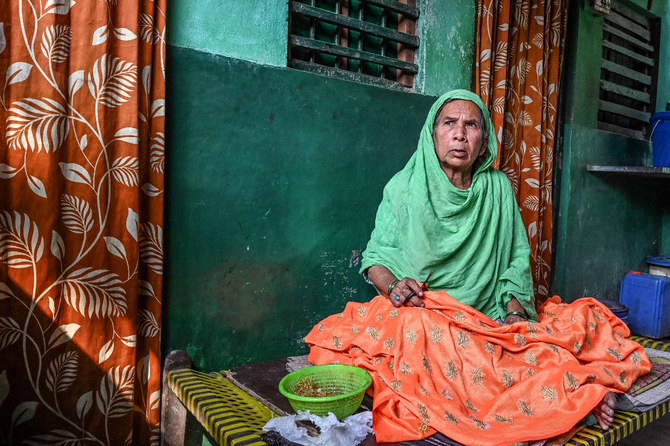
Sultana Begum works on a garment inside her house in Kolkata. (Photo by Dibyangshu Sarkar / AFP)
  • Sultana Begum’s case rests on her claim that her late husband’s lineage can be traced to Bahadur Shah Zafar, the last emperor to reign
  • After a massive rebellion blamed on an already frail Zafar in the 1850s, British forces executed 10 of the ruler’s surviving sons despite the royal family’s surrender

Kolkata :

A destitute Indian woman who claims she is heir to the dynasty that built the Taj Mahal has demanded ownership of an imposing palace once home to the Mughal emperors.


Sultana Begum lives in a cramped two-room hut nestled within a slum on the outskirts of Kolkata, surviving on a meagre pension. Among her modest possessions are records of her marriage to Mirza Mohammad Bedar Bakht, purported to be the great-grandson of India’s last Mughal ruler.


His death in 1980 left her struggling to survive, and she has spent the past decade petitioning authorities to recognize her royal status and compensate her accordingly.


“Can you imagine that the descendant of the emperors who built Taj Mahal now lives in desperate poverty?” the 68-year-old asked AFP.


Begum has lodged a court case seeking recognition that she is rightful owner of the imposing 17th-century Red Fort, a sprawling and pockmarked castle in New Delhi that was once the seat of Mughal power. “I hope the government will definitely give me justice,” she said. “When something belongs to someone, it should be returned.”

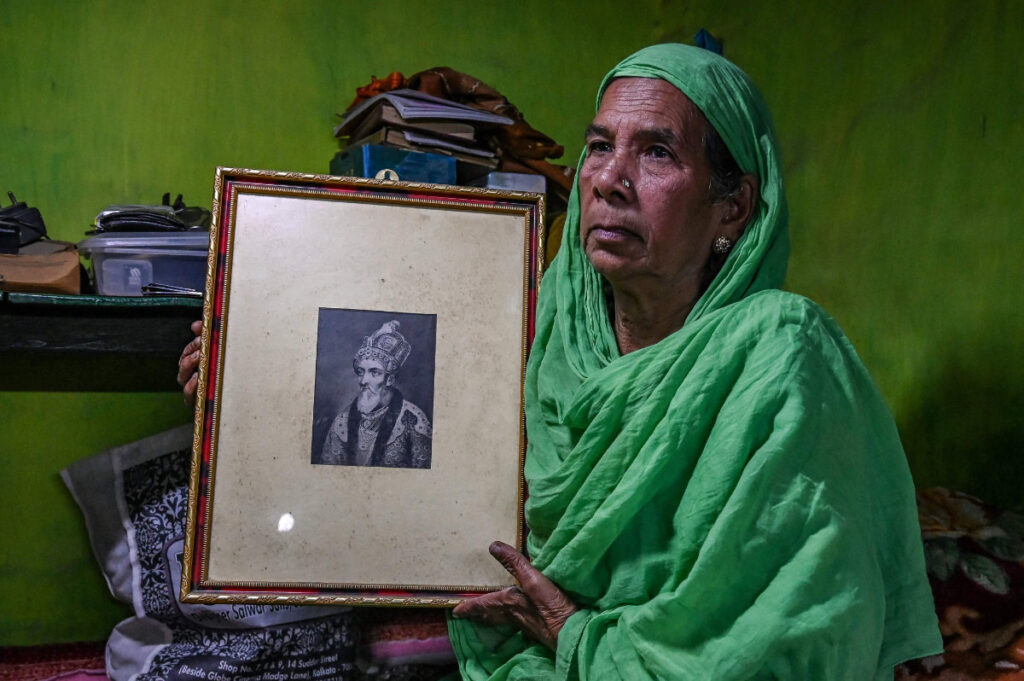
Sultana Begum reacts while holding a picture of last Mughal Emperor of India Bahadur Shah Zafar in her house in Kolkata. (Photo by Dibyangshu Sarkar / AFP) 

Her case, supported by sympathetic campaigners, rests on her claim that her late husband’s lineage can be traced to Bahadur Shah Zafar, the last emperor to reign.


By the time of Zafar’s coronation in 1837, the Mughal empire had shrunk to the capital’s boundaries, after the conquest of India by the commercial venture of British merchants known as the East India Company.


A massive rebellion two decades later — now hailed as India’s first war of independence — saw mutinous soldiers declare the now frail 82-year-old as the leader of their insurrection. The emperor, who preferred penning poetry to waging war, knew the chaotic uprising was doomed and was a reluctant leader.


British forces surrounded Delhi within a month and ruthlessly crushed the revolt, executing all 10 of Zafar’s surviving sons despite the royal family’s surrender.


Zafar himself was exiled to neighboring Myanmar, traveling under guard in a bullock cart, and died penniless in captivity five years later.

Many of the Red Fort’s buildings were demolished in the years after the uprising and the complex fell into disrepair before colonial authorities ordered its renovation at the turn of the 20th century. It has since become a potent symbol of freedom from British rule.


India’s first Prime Minister Jawaharlal Nehru hoisted the national flag from the fort’s main gate to mark the first day of independence in August 1947, a solemn ritual now repeated annually by his successors.


Begum’s court case hinges on the argument that India’s government are the illegal occupants of the property, which she says should have been passed down to her.


The Delhi High Court rejected her petition last week as a “gross waste of time” — but did not rule on whether her claim to imperial ancestry was legitimate. Instead the court said her legal team had failed to justify why a similar case had not been brought by Zafar’s descendants in the 150 years since his exile.


Her lawyer Vivek More said the case would continue.
“She has decided to file a plea before a higher bench of the court challenging the order,” he told AFP by phone.

Begum has endured a precarious life, even before she was widowed and forced to move into the slum she now calls home.

In this picture taken on December 22, 2201, Sultana Begun walks by an alley in the locality she lives in Kolkata. (Photo by Dibyangshu Sarkar / AFP)

Her husband — who she married in 1965 when she was just 14 — was 32 years her senior and earned some money as a soothsayer, but was unable to provide for their family. “Poverty, fear and lack of resources pushed him to the brink,” she added.


Begum lives with one of her grandchildren in a small shack, sharing a kitchen with neighbors and washing at a communal tap down the street.


For some years she ran a small tea shop near her home but it was demolished to allow the widening of a road, and she now survives on a pension of 6,000 rupees ($80) per month.


But she has not given up hope that authorities will recognize her as the rightful beneficiary of India’s imperial legacy, and of the Red Fort.


“I hope that today, tomorrow or in 10 years, I will get what I’m entitled to,” she said. “God willing, I will get it back… I’m certain justice will happen.”

source: http://www.arabnews.com /Arab News / Home> News / by AFP / December 30th, 2021

Delhi’s Jharna gardens, Bijri Khan tomb to be made available for corporate events

NEW DELHI :

According to the INTACH’s listing of heritage structures in the national capital, Jharna was built around 1700 in which additions were made subsequently by later rulers of Delhi.

The tomb of Bijri Khan is located on the Venkateshwara Marg. (Photo| EPS)

New Delhi : 

Two inconspicuous heritage sites Jharna, a Mughal era garden in Mehrauli and the Tomb of Bijri Khan in RK Puram are set to get a new lease of life.

The Indian National Trust for Art and Cultural Heritage (INTACH) will develop and promote these historical buildings, victims of urban sprawling, as venues for cultural and literary events under the ‘adopt a heritage scheme’.

The archaeology department of the Delhi government and INTACH have also signed a memorandum of understating (MoU) for regular upkeep and sprucing up of their surroundings. Vikas Maloo, head of office (archaeology), said that the department would soon start working on a plan to develop these site for events.

“We will determine what needs to be done apart from basic amenities such as pathways, installation of dustbins, and toilets. Some requirements are site-specific, which are to be ascertained. Hopefully, both the places will be available for the events soon,” said Maloo.  

According to the INTACH’s listing of heritage structures in the national capital, Jharna was built around 1700 in which additions were made subsequently by later rulers of Delhi.

The walled garden earned its name from a waterfall, which was constructed to drain off excess water from Shamshi Talab located in its vicinity. Mughal kings Akbar Shah II and Bahadur Shah Zafar added two pavilions to the place. 

The Lodi-period mausoleum of Bijri Khan is located at a raised mound along Venkateshwara Marg. Khan was probably a noble. Apart from this fact, no significant information is available about the tomb and the person buried at the site. The grave inside the sepulchre has no inscription.

 As per the MoU, the sites, once ready, will be available for cultural events and activities such as Sufi musical recital, poetry symposiums, book readings, theatrical plays and also for products launches. The officials, in the know of the matter, said that INTACH will tie up with different organisations and corporates for their better maintenance and create awareness about their significance.

“The idea is to promote and bring more footfalls to small monuments. The events, majorly connected with culture, will pave the way for their popularity. They can be utilised for art exhibitions, book launches, musical programmes, and other purposes. Corporates can be roped in to run a cleanliness drive etc. The association will result in their better upkeep and make people more aware of the heritage of Delhi,” said Ajay Kumar, project director, INTACH (Delhi chapter).

 The sites will be available for corporate or private events on nominal charges. INTACH will ensure proper illumination and facilities such as a sitting area, benches, kiosks for refreshments, and signage or information panels about the history of the site. 

source: http://www.newindianexpress.com / The New Indian Express / Home> Cities> Delhi / by Parvez Sultan, Express News Service / March 21st, 2021

Depicting various hues of life with Urdu poetry: A dying art


Image Courtesy: Nohar Patrika

“Quidquid Latine dictum sit altum videtur” (“Whatever is said in Latin seems profound”), they say, and the language’s sonorous tones aren’t confined to religion, but law and medicine too. In the South Asian millieu, Urdu has the same position with its assimilative nature and its courtly pedigree giving it refinement as well as ability to express elaborate, sophisticated concepts. Its poetry is the vanguard.

And once we avoid the trap of confining Urdu poetry to its romantic aspect — though that is the area where it is fairly prolific and popular — we find that, like any other long-standing literary tradition, it also spans a wide expanse of life beyond love and longing, and in a variety of styles.

In fact, there are few issues of the human condition or for the natural world that Urdu poets have not covered in the few centuries the language has existed so far, beyond the usually known motifs of the pining lover, the cupbearer or the tavern, the flame and the moth, and so on. Let us see something new.

Take the sky and Jaleel Manikpuri, in an eloquent negation of man-made borders and divisions, writes: “Main kis sar-zameen ki qadr karun/Asmaan saath saath chalta hai”, and on wind, Nawaz Deobandi brings out its misuse as agency for human depredations: “Yeh jala diya, yeh bujha diya, yeh kaam kisi aur ka hai/Na hawa kisi ke saath thi, na hawa kisi ke khilaaf hai.”

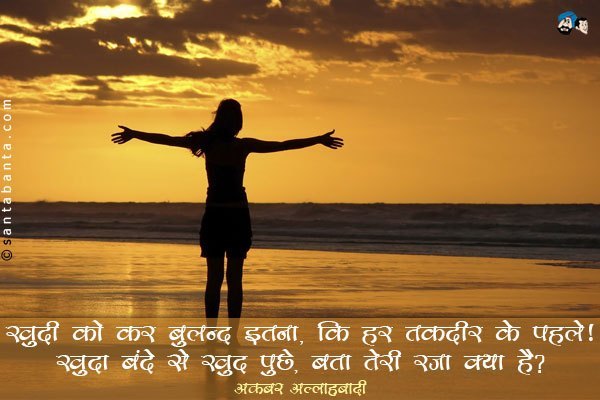
Image Courtesy: SantaBanta.com

Other human emotions and traits also figure. On wisdom, Allama Iqbal says: “Guzar ja aql se aage, ke ye noor/Chirag-e-raah hai, manzil nahi hai”, Saqib Lakhnavi on the “pleasure” of difficulty, observes: “Bu-e-gul kaliyon mein rahi thi magar reh na saki/Main to kaanton mein raha aur pareshan na huya” and Shad Azimabadi, on “sharafat” (integrity), says: “Gulon ne khaaron ke cherhne par siva khamoshi ke dam na mara/Shareef uljhe agar kisi se, to phir sharafat kahan rahegi.”

Likewise, there are many more, and let’s take up a few more unexpected topics and issues, with an attempt to give “shaairs”, who are not well known outside committed connoisseurs or scholars, their place in the sun — as far as possible.

What could be a better topic to begin with than “hamdardi”, or empathy, with Ameer Meenai telling us: “Khanjar chale kisi par tadapte ham hai ‘Ameer’/Saare jahan ka dard hamare jigar mein hai”, or “himmat”, which conveys more than courage, as Pandit Brij Narayan Chakbast brings out the difference between its possessors and others: “Ahl-e-himmat manzil maqsood tak aa bhi gaye/Bandahe taqdeer qismat ka gila karte rahe.”

Or take human breath, which Arzoo Lakhnavi advises: “Ae saans! Na aa ke dil mein hai zakhm/Thes abhi hai jab hawa lagti hai” and Fani Badayuni looks on offered medicine with some trepidation: “Fani! Davaye dard jigar zahar to nahi/Kyun haath kaanpta hai mere charah-saaz ka.”

On advice, Bebak Shahjahanpuri wryly holds: “Kami wafaa mein agar ho to voh jafaa na kare/Salah dete hai kya kya salaah kar mujhe” and for effort, who can better Mirza Ghalib himself, making good use of shared religious imagery, with: “Kuch farz hai sab ko mile ek sa jawaab/Aao na, ham bhi sair karen Koh-e-Toor ki.”

Akbar Allahbadi makes a definitive stand on human nature with: “Tarkeeb-o-taklif lakh karo fitrat kahi chupti hai, Akbar/Jo mitti hai voh mitti hai, jo sona hai who sona hai”, while Bahadur Shah Zafar, the emperor of poets more than subjects, has some frank advice on on”s good and bad points: “Na thi haal ki jab hame apni khabar, rahe dekhte auron ke aib-o-hunar/Padi aapni buraiyon pe jo nazar, to nigaah mein koi bura na raha.”

But despite all, love however can crop up — though in various unexpected guises — and Jigar Moradabadi likens it to a story being told to some eager listeners with: “Koi hadd hi nahi shahd mohabbat ke fasaane ki/Sunta ja raha hai, jisko jitna yaad hota hai.”

On the other hand, Maulana Hasrat Mohani, whose ghazal of a former romance that still pricks the heart (“Chupke chupke raat din..”) has never been bettered, gives tassavur or imagination a new spin with, “Tassavur mein bhi in ke kuch ajab aalam nikalta hai/Isi par to meri hairaniyon ka dam nikalta hai” and Asr Lakhnavi tries the same with dreams: “Gulon ki god mein jaise naseem aake machal jaaye/Isi andaaz se in par khumaar aankhon mein khvaab aaya.”

There are much more, specially on the overarching issues of life and death, and love which may cause and also transcend them, but the habit of quoting an apt Urdu couplet on any occasion — on the pattern of a Biblical or Shakespearean reference — is dying out. Learn the language or use one the sites offering transliterated versions, but don’t let it happen. (IANS)

source: http://www.indianewengland.com / India New England / Home> News> Entertainment> Leisure / by Vikas Datta / July 22nd, 2018

The haveli of Mughal fireworks in Chandni Chowk

Chandni Chowk, DELHI :

Delhi did have fire-crackers much more than 200 years ago and Haider Quli, the artillery chief, made good use of them at his haveli, now lying deserted.

The cluttered entrance to Haveli Haider Quli in Chandni Chowk

Delhi did have fire-crackers much more than 200 years ago and Haider Quli, the artillery chief, made good use of them at his haveli, now lying deserted. In Chandni Chowk is Haveli Haider Quli, whose inhabitant till February 2016 was the nonagenarian Narain Prasad. The double-story apartment he lived in was only a part of the original mansion, where now houses and shops have mushroomed and the garden that was one of its attractions has disappeared in the ensuing rabbit of a warren locality.

Haider Quli was the chief of the artillery during the reign of Mohammad Shah Rangila (1719-1748) in whose reign Nadir Shah invaded Delhi and took away the Peacock Throne and Kohinoor, along with other fabulous treasure.

Haider Quli got his exalted post because of his patron Hussein Ali, but later turned against his mentor and got him murdered while he was on his way home in Chandni Chowk. A boy related to him fired at one of the assailants, killing him on the spot but the others hacked the boy to pieces with their swords. It is said that Mohd Shah was also involved in the conspiracy, along with his mother as he had become wary of Hussein Ali.

It was Haider Quli who organized the first fireworks in 18th century Delhi some 260 years ago under his supervision as Mir Atish, whose descendants had fireworks shops behind the Jama Masjid.

The Mughal emperors preceding Mohd Shah celebrated Diwali with illuminations but there were no fireworks as such. Possibly the only cracker was a ball of gunpowder exploded by the Mir Atish and a crude kind of Phuljhari (sparkler) for the amusement of the ladies of the harem when the Seths of Chandni Chowk were worshipping Lakshmi in their shops.

It is pertinent to remember that Babur brought guns with him when he invaded India in 1526 and on whose firepower he won the First Battle of Panipat against Ibrahim Lodi-the Sultan’s elephants running amuck at the sound of the blazing cannon and the fireballs they ejected.

Gunpowder was invented or discovered in China in the ninth century and India was practically devoid of it till AD 1250. The Mughals’ ancestor, Changez Khan had made use of gunpowder during his Mongol raids because of which it made its way into parts of Russia. Evidence of this found in the story of Alibaba and the Forty Thieves, in which the chief of the robbers Abu Hassan used gunpowder (Shaitani Rait or Devil’s Sand) to overawe his victims. Then after depositing the loot in his treasure-house Simsim, he retired to the fort, where he resided as the seemingly pious Imam Sahib, to whom people went with their complaints against Abu Hassan. The hypocrite, with his lust for the slave girl Marjina, would then march out with troops in a mock campaign to nab the robber chief.

History shows that before the Mughals some sort of atishbazi was introduced into Delhi during the reign of Nasiruddin Mahmud, Chirag Delhi. But he and other Slave kings are not known to have celebrated Diwali, which was first patronised by Mohmmad bin Tughlak. The succeeding Sayyids and Lodhis may also have willy-nilly followed the custom. Babur and Humayun had their Nauroz celebrations, but Akbar did celebrate Diwali on a grand scale because of his Rajput wives. Jahangir and Shah Jahan had an even more elaborate Diwali, with the latter emperor being bathed in waters collected from seven rivers and pandits chanting mantras while the Maulvis looked askance. However, his daughter Jahanara was not burnt during Diwali celebrations but one evening at the daily lamp-lighting. Aurangzeb, despite his orthodoxy, did observe Diwali with the Rajput chiefs coming to him with sweets and gifts. Gossip would have us believe that his first Diwali was celebrated with his beloved Hira Bai Zainabadi in his arms and offering him a cup of wine to prove his love for her. But when Aurangzeb moved as if to sip it, Zainabadi (appreciating the gesture) took away the cup from his hand. No wonder when she died an early death. Aurangzeb was devastated Jahander Shah, his grandson, celebrated Diwali with concubine Lal Kanwar in Lahore (1712), when he bought all the oil available in the city for illuminations, though fireworks were absent till Mohd Shah took over after the death of Farrukhseyar and some puppet kings.

Historians, however, fix the date when Diwali crackers became popular as 200 years from now, though the British were enjoying fireworks on Guy Fawkes Night in observance of the Gunpowder Plot of 1605 (the year Akbar died). Mirza Ghalib was one of those who were present at the Diwali celebrations of Bahadur Shah Zafar, who released the bluejay or Neelkanth bird as a sign that Durga was on her way home after Dussehra. But Prof Ram Nath observes that it was actually Shah Jahan who first did so. For the later Mughals fireworks were also the main observance during Shabhe-Barat, heralding the approach of Ramzan.

This display of crackers was extended to Diwali. As a matter of fact, during Mohd Shah Rangila’s reign it was a cracker thrown at the palanquin of the emperor’s jeweller, Sukh Karan that led to the March 8, 1729, shoesellers’ riot in which Rangila Piya’s favourite concubine Nur Bai, on her way back home in Chawri Bazar from the Red Fort, lost a tooth when she was hit by a stone thrown by the rioters. So Delhi did have crackers much more than 200 years ago and Haider Quli, the artillery chief, made good use of them at his haveli-now lying deserted as even the last occupant, Narain Prasad’s 94-year-old sister has left it after her brother’s death. But whenever you see the place you instinctively think of fireworks as happened during Guru Nanak’s birthday celebrations amid a crescendo of crackers despite the ban on them.

source: http://www.thestatesman.com / The Statesman / Home> Supplements> Section 2 / The Statesman News Service / New Delhi – February 09th, 2019

Identity crisis… .the royal kind

Noida, UTTAR PRADESH / Hyderabad, TELANGANA :

Begum Laila Umahani, said to hail from the family of Bahadur Shah Zafar, is living a life of obscurity with her two sons. Film-maker Arijeet Gupta convinced her to talk of her pedigree for “The Living Moghuls”, a documentary on the descendants of the Moghuls. On the other hand, we have Pakeeza Sultan Begum asserting her case as the last known direct descendant. RANA A. SIDDIQUI reports… .

Arijeet Gupta: the documentary film-maker.

HE SCOOTS of to buy vegetables, leave his children at a local school and lives the life of a common man. He is Ziauddin Tucy. His mother tells fairy tales to her grandchildren. But those tales do not constitute fairies, who help people in their moments of distress. They talk of Moghuls, their grandeur, the last Moghul Emperor Bahadur Shah Zafar and his four wives till the period of what is called India’s First War of Independence – the Mutiny of 1857. All these not because the children have inclination for history of Moghuls but because their grandmother herself is said to be the last surviving member and direct descendant of Bahadur Shah Zafar and his first wife, Begum Ashraf Mahal.

Eighty-year-old Begum Laila Umahani, who lives in Asmangarh, a small city in Hyderabad, is this grandmother. She narrates the glorious family history to her grandchildren, knowing that it won’t have any takers if she goes to tell it to people beyond the periphery of her small house.

This is what Arijeet Gupta, the man behind the documentary “The Living Moghuls” screened at India Habitat Centre in New Delhi the other day, tries to prove. Said to be the first-ever archival documentary produced by Public Service Broadcasting Trust – PSBT and financed by Prasar Bharti, it traces the history of Moghuls from1857 to 2002 – a period of 145 years which saw the sudden disappearance of Moghuls from the historical centrestage. But Begum Laila Umahani helps tracing it when she reveals that after Bahadur Shah Zafar’s exile to Burma by the British in 1857, his son Mirza Quaish – the first generation — managed to save his life and fled to Kathmandu. After he secretly came back to India, he was given shelter by Maharana of Udaipur. His son Mirza Abdullah — the second generation — again a fugitive, went to Nagpur and then Aurangabad and finally Hyderabad. Here, Nizam of Hyderabad helped him. His son Mirza Pyre later married Habeeb Begum, hailing from the family of the sixth Nizam of Hyderabad. One “Habeeb Mahal” near Char Minar in Hyderabad, belongs to her which is occupied by one family and they have moved High Court for its possession. Begum Laila Umahani, daughter of Mirza is the fourth and only surviving Moghul from the family.

Begum Laila Umahani: Waiting for recognition.

Begum Laila now lives in a rented house in Aamangarh with her two sons, Ziauddin Tucy and Masiduddin Tucy — the fifth generation. Her husband died earlier. While Ziauddin Tucy is retired marketing supervisor from Andhra Pradesh Government, Masiduddin Tucy is a food consultant in Welcome Group of Hotels in Hyderbad.

The family after several futile approaches made to Indira Gandhi and subsequent governments in Delhi, preferred to take a backseat “Who will listen to me now? Instead they will mock so it is better to remain silent to keep our dignity intact,” Begum Laila says in the documentary. She reportedly broke her silence before the camera after much coaxing from Arijeet Gupta.

There are historians who believe that it is difficult to trace that period after145 years. It simply because after Moghuls were deposed, many records also were destroyed. They were just fleeing for their lives and carried no identity cards.

Pakeeza Sultan Begum: known direct descendant of Bahadur Shah Zafar.

The film-maker, Arijeet Gupta met the family in 1998 after he saw a letter from Ziauddin Tucy addressed to the powers that be requesting the family to grant benefits/ pensions to help them survive with dignity. Since Laila Begum was not ready to articulate her viewpoint, and there could not be many compromises on authenticity, this documentary took five years to complete, he says.

EVEN AS Begum Laila Umahani fights for recognition from the Government, she has to encounter another battle of words and letters – from Pakeeza Begum, claimed to be the only direct descendant of Bahadur Shah Zafar. A resident of Neeti Bagh in New Delhi — her ancestral house Chandni Mahal is in the Walled City — Begum Pakeeza denies that Begum Laila is a direct descendant of the last Moghul Emperor. “The entire Delhi knows that only I am only the direct descendant of the king and not she because only the heir apparent – Vali Ahad — was supposed to be one and Mirza Qwesh — whom she refers to as her forefather — was never a crown prince as reported in a Delhi daily earlier. He wanted to be one and to do that he also accepted the humiliating conditions of the British but never succeeded. While he was only attempting to become one, the 1857 Mutiny broke out. My great grandfather Mirza Fatehul Mulk was the heir apparent.”

She narrates the historical background that she says is found in record books too. It is reported that historians Maheshwar Dayal and Tara Chand also verified the same in their books. “Mirza Fatehul Mulk Bahadur alias Mirza Fakhruh was appointed the heir apparent in 1853. At the time of Mutiny, the son of Mirza Fakhruh, Mirza Farkhunda Jamal was only four or five year old. When Major Hudson killed the sons and grandsons of Bahadur Shah Zafar at Khooni Darwaza, Delhi on Bahadur Shah Zafar Marg, and soon after this news broke out, the nurse – Anna — of Mirza Farkhunda Jamal took the child secretly without even informing the family because those who were responsible for the Mutiny were among the family only. For years, she did not reveal his identity and nurtured him by doing different work at different places. That is how she managed to save the last successor.”

Begum Qamar Sultan with younger brother Hamid Shah in royal costume, 1963.

Some time after the Mutiny the British announced that there would be no killings and punishment, Anna brought the child back to the mother. The British Government released political pension in favour of Mirza Farkhunda Jamal as the heir apparent. After the death of Mirza Jamal, the pension was received by his sons and daughters — Qamar Sultan Begum — daughter of Mirza Jamal who kept receiving this share even after Independence. She refused to take it sometime after the Independence saying now we are free citizens and everyone is equal in this democratic country. Sultan Begum died in June 1993. She had two daughters, Begum Tahira Sultan and Pakeeza Sultan Begum. The former is settled in London while the latter lives in Delhi and is also an ex-director ICCR and an expert on Africa.

She questions the authenticity of Begum Laila’s statements: “Why was Mirza Qwesh running away even after the Mutiny? Despite the fact British announced that there would be no killings? Who was he afraid of? The British? Who, as her statements go that he was helped by the Indian soldiers of British Army to flee to Kathmandu? There were no Indian soldiers in British Army and even if there had been any, they were British soldiers and not from the King’s Army.”

She contends: “He was running away from his own people who got to know of his schemes and policies that he accepted the Britishers’ humiliating condition to become the successor of the Moghuls.”

The lady argues: “I don’t have any problem if she gets any help from the Government but she should not disturb the lineage by giving wrong statements.” She also expresses regret that without going to history books and records with the Government Arijeet Gupta went ahead to make his documentary film.

source: http://www.thehindu.com / The Hindu / Home> MetroPlus – Delhi / September 12th, 2002