Tag Archives: Tablighi Jamaat

Mewat, Haryana: The birthplace of Tablighi Jamaat and the Mewati Gharana of Indian Classical Music

HARYANA :

Arshad Shaikh digs into some amazing facts about the Mewat region in the Indian state of Haryana, which was recently in the news for the wrong reasons. Meo-Muslims have been targeted by cow-vigilantes and anti-social elements. Communal violence rocked the region last week.  Six people lost their lives, scores were seriously injured, thousands were arrested and many houses were controversially demolished. The Hindu-Muslim violence in the Mewat region was extensively covered by the media, however, not many know about some of the amazing facts of this region and how it is emblematic of the denial and deprivation that Muslims have suffered in post-Independence India.

Mewat (now officially re-named as Nuh) is a Muslim-majority district in the state of Haryana. The Mewat district was established in 2005, through the incorporation of regions from Gurgaon district and the Hathin Block of Faridabad district.

Nonetheless, in 2008, the Hathin sub-division underwent restructuring with the formation of Palwal district. In 2016, Mewat district’s name was changed to Nuh, given that Mewat represents a cultural area that extends across Haryana, Rajasthan, and Uttar Pradesh states. Mewat (Nuh) is located in the southern part of Haryana. It is one of the 22 districts of Haryana.

The region is bordered by the Aravalli Range to the north, the Gurgaon district to the northeast, the Alwar district of Rajasthan to the south, the Bharatpur district of Rajasthan to the southwest, and the Palwal district of Haryana to the west.

The following Table compares the district of Mewat (now known as Nuh) with the entire state of Haryana:

VariableHaryanaNuh districtComparison
Area44,212 sq km
(17,070 sq miles)
1,860 sq km
(720 sq miles)
4.2% of the state
Population25,351,4621,089,2634.2% of the state
% of Rural population65.12%95.36%Shows the degree of neglect by successive governments
% of Urban population34.88%4.64%
Sex ratio (number of females per 1000 males)926/1000907/100019 less than state sex ratio (this is surprising, given that Mewat is a Muslim-majority district and Islam strictly prohibits any preference for male children)
Literacy75.55%54.08%21% behind the state, again highlights a problem that poses a challenge to both the government and the community
Hindu versus Muslim populationHindu (87.46%)Muslim (7.06%)Hindu (20.3%) Muslim (79.2%)Mewat is one of the few districts in India with a Muslim population close to 80%
Languages spokenHindi – 47.9%
Haryanvi – 37.1%
Punjabi – 7.3%
Bagri – 2.1%
Mewati (1.66%)
Urdu (1.48%)
Number of Railway Stations2113Ferozepur Jhirka, Punhana and Tauru

Legislature: Mewat has three Haryana Vidhan Sabha constituencies:  Nuh, Ferozepur Jhirka and Punhana. All three are parts of the Gurgaon Lok Sabha constituency.

Roads: There are currently 5 national highways in the Mewat region of Haryana. The Delhi Mumbai Expressway will pass through the Mewat region. This expressway will connect Delhi and Mumbai via Manesar, Gurugram, Sohna, Nuh, and Palwal.

History: Mewat was once a princely state, ruled by the Meo Rajputs. The Meos are a Muslim Rajput tribe who are believed to have migrated to the region from Rajasthan in the 12th century. In the 16th century, Mewat was conquered by the Mughal Empire. The Mughals ruled Mewat for over 300 years, until the decline of the Mughal Empire in the 18th century.

In the 18th century, Mewat was conquered by the Maratha Empire. The Marathas ruled Mewat for about 50 years, until the British East India Company conquered Mewat in 1803. The British ruled Mewat until Indian Independence in 1947. After Independence, Mewat became a part of the state of Haryana.

Here are some not-so-well-known facts and “figures” from the Mewat region in India:

Raja Hasan Khan Mewati, a Khanzada Rajput ruler, held dominion over Mewat as a Muslim leader. He succeeded his father, Raja Alawal Khan, in a dynasty that had governed the Mewat State for approximately two centuries. He undertook the reconstruction of the Alwar Fort during the 15th century. In a significant historical event, he allied himself with 5,000 compatriots from the Rajput Confederation and participated in the Battle of Khanwa. Tragically, he met his demise on the battlefield, confronting the Mughal forces commanded by Babur.

Firuz Khan Mewati was a Mughal commander who served under the emperor Bahadur Shah I. He was born in Mewat in the 17th century and is known for his bravery and military prowess. He was also a skilled diplomat and administrator.

The Tablighi Jamaat was established in 1926 by Maulana Muhammad Ilyas al-Kandhlawi, in the Mewat region. According to community historian Siddique Ahmed Meo (as reported in the Hindustan Times) – “People from Mewat would travel to Delhi for work and halt for lunch near the masjid in Nizamuddin, before proceeding ahead with the journey. Maulana Ilyas took notice of the labourers and enquired about them one day. Through conversations with the Meos, he realised that while they were Muslims, they did not have a good understanding of Islamic practices.

“Driven by his interactions with Meos in Nizamuddin, Maulana Ilyas visited Ferozepur Namak in Mewat for the first time in 1925. He started surveying the region and over subsequent visits, he came to the understanding that Meo-Muslims needed to be introduced to Islamic practices and brought back into the fold. A panchayat was called in Nuh and a charter consisting of names of 103 people was shared. Some 31 proposals aimed at laying the groundwork for the Jamaat were passed in that panchayat. Finally, in 1926, the Jamaat started undertaking trips to reach out to people and spread the message of Islam.”

The Mewati Gharana is a Hindustani classical music tradition that was founded in the late 19th century by Ustad Ghagge Nazir Khan. The gharana is named after the Mewat region of India, where Ustad Ghagge Nazir Khan was born and raised. The Mewati Gharana is known for its emphasis on purity of tone, intricate taans, and expressive singing.

The gharana also has a unique style of khayal singing, which is characterised by its use of subtle ornamentation and its focus on the emotional content of the lyrics. Some of the most famous vocalists of the Mewati Gharana include Pandit Jasraj, Pandit Maniram, and Pandit Pratapnarayan. Pandit Jasraj is considered one of the greatest khayal singers of all time, and he helped to popularise the Mewati Gharana around the world.

Mewati Martial Art is a traditional martial art that originated in the Mewat region of India. It is a combination of wrestling, boxing, and stick fighting. Mewati martial arts are known for its emphasis on self-defence and its focus on using the opponent’s strength against them. Mewati martial art was further developed in the 17th century, when the Mewat region was ruled by the Mughals. This led to a fusion of Mewati martial arts with Mughal martial arts, which resulted in the development of the modern form of Mewati martial arts.

source: http://www.radiancenews.com / Radiance News / Home> Amazing Facts / by Arshad Shaikh / Radiance News Bureau / September 01st, 2023
Inside The Tablighi Jamaat: A Book Review

INDIA:

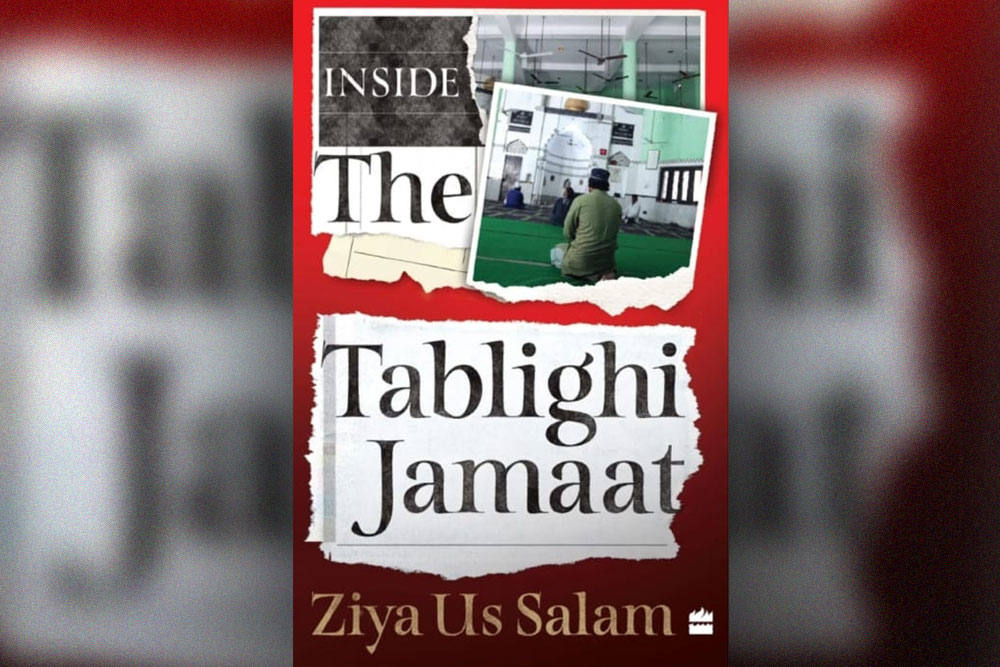
As Tablighis came under the scanner of the government post lockdown in India for allegedly ‘ spreading the coronavirus intentionally’, journalist and noted author, Ziya Us Salam pens down a topical book on the history and evolution of this Jamaat. The book is being published by Harper Collins India.

Cover Page of The Book : Inside The Tablighi Jamaat 

A book such as Inside the Tablighi Jamaat is an important intervention to understand the historical continuity of a contemporary phenomenon, more so in the context the controversy involving the movement and its headquarters popularly known as Markaz. Tablighi Jamaat has been in existence for almost one hundred years but it preferred a life of quietude till such time it was made the focus of sustained media attention in the month of April for its congregation in the context of the pandemic.

Many would have preferred to remain quiet on the issue but Ziya us Salam chose to dig out material from the history and place them and the movement in the contemporary context. Devoting twenty four chapters and 260 pages to unravel the layers of the existence of the movement must be viewed with as much seriousness as the book deserves. The scholarly community as well as an interested reader would find mist evaporating from the body and the movement that were initiated about a hundred years ago.

The clarion call of the movement has been to invite the Muslims to become better Muslims and follow the prescribed rituals of Islam. But in the course of doing so it moved in the direction of revivalism in personal life of a member of Jamaati and then spreading out to those who would come under its influence through personal contacts in the course of conducting Chilla whether for three days or forty days or a year. The very fact that the Jamaatis would invite their contacts to live a life of piety as modeled during the times of the Prophet Muhammad and his companions.

For the purpose of helping a new entrant to the charmed circle of the Jamaatis, a book consisting of several volumes known as Fazail-i-Amal was compiled, generally believed to have been done in good faith preaching lessons from the Islamic scholarship and traditions. Among the jamaatis the book evokes tremendous respect and acceptability. As a matter of matter of fact in their circle the book attracts much greater attention than any other book. It is believed that for a Jamaati there is no word beyond Fazail-i-Amal. But the author is not quite impressed as his scholarly scrutiny of the movement takes him to argue, “In other words, Fazail-i-Amal introduces a lot that is biddah (a practice not approved in Islam) based on hearsay. The stories and anecdotes might seem attractive to a layman, but they do not always pass the crucible with scholars of Islam.” (p.102)

An overwhelming emphasis on the good conduct and personal piety does not create conditions of bringing about social reforms within the community of believers. For instance it has opened the door of the Jamaat on women without laying emphasis on social reforms leading to an ideological and cultural climate of gender equality. The Tablighi Jamaat has been shying away from the question of women performing namaz in masjids. The author has highlighted instances where tablighi controlled masjids have been openly hostile to the idea of men and women performing namaz simultaneously. Precedents from the instructions by Hazrat Umar are invoked while a reference to Surah Tauba talking about men and women going for prayers in a masjid is ignored.

The author explains has argued that the tablighis rarely engage themselves in issues which social and political bearings. This benign neglect of contemporary issues such as Tripple Talaq or the issue of Babri Masjid judgement etc. is borne out of their understanding of the movement that it must not get involved in the worldly affairs. This reclusive approach has helps the movement to keep itself away from the gaze of public and the government of the day. However, the fact remains that values imbibed on social plane have bearings in personal life too as it become hard to maintain a distinction between the two. Seen in this perspective, life of an average tablighi is reflective of the larger values they inculcate in the course of their interactions within the organization.

However, such an approach has borne them fruits of a different kind. Their apolitical nature and tendencies to avoid getting involved in contentious issues have gained them access to far off land in the Western hemisphere. They have significant bases in countries such as the UK and USA in a significant way. They have managed to penetrate certain African nations such as South Africa and others without difficulty. However, South-east Asian nations such Indonesia and Malysia have proved to be fertile grounds for the expansion of the Tablighi work. But in the Central Asian countries a similar luck eluded the movement as many regimes suspected it for spreading too much religious mindedness and making masjids as centers of their activities.

While the author has subjected the tablighi movement to scrutiny in a number of ways especially as regards gender justice in spiritual spaces he emerges a trenchant critic of the movement as regards the leadership issues. He raises the issue of absence of democratic values within the oragnisation as no member of the organization has risen to the leadership position due to the stranglehold of the family since the time of Maulana Ilyas. There is a dedicated chapter, ‘All in the Family’ and has argued, “Right from the 1920s to 2020 not a single president has come from outside the family.” (p.138)

The most interesting aspect of the book is its journey into the past to explore historical dimensions of the Tablighi Jamaat and return to the contemporary to examine the continuity and digressions and adjustments. Attempts to locate its genesis take the readers to 1920s when the Shudhi movement under the aegis of the Arya smamaj, especially it’s leader Swami Shradhanand was launched. Culturally vulnerable groups were targeted. Much like the Ghar Wapsi campaigns in recent years.

The author has cleverly used his skills of navigating between the popular and academic language format, which makes the book immensely readable. While it is a book on Tablighi Jamaat, it quietly introduces myriad dimensions of the Islamic religious traditions to the readers.

 ( Views are personal) 

The Reviewer, Prof. Rizwan Qaiser teaches History at Jamia Millia Islamia. 

The Author , Ziya Us Salam writes for Frontline Magazine. 

source: http://www.outlookindia.com / Outlook / Home> Books / by Rizwan Qaiser / September 29th, 2020

Let’s talk about how Tablighi Jamaat turned Covid hate against Muslims around

NEW DELHI :

After all those days of hate, there was redemption for Tablighi Jamaat in the end. Some say it was in keeping with what Quran teaches.

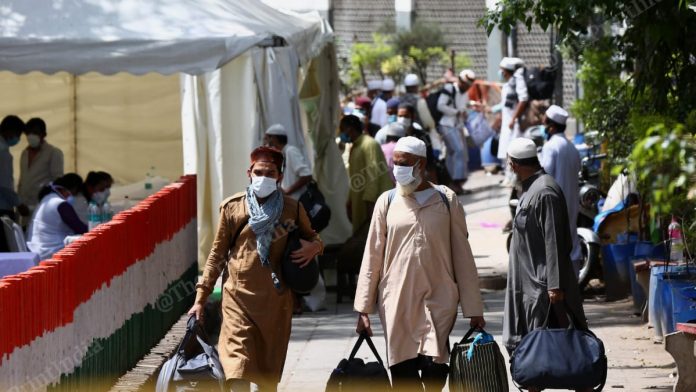
Nearly 4,000, including foreigners, had attended the Tablighi Jamaat event in Delhi (representational image) | Photo : Suraj Singh Bisht | ThePrint


Elisabeth Kubler-Ross’s seminal work, Death and Dying, describes the five distinct stages of grief: denial, anger, bargaining, depression and acceptance. While the Swiss-American psychiatrist was speaking about the series of emotions terminally ill patients go through, the first of the five stages that she postulated possibly holds true for a section of India’s people when the country was trying to come to terms with COVID-19 in the initial days of the pandemic.

The spread of the virus in the early months had then exposed the country’s second-largest religious group to a vulnerability born out of denial. Indiscretion and reckless behaviour by members of the Tablighi Jamaat had purportedly led to a spurt in coronavirus-positive cases, not only in Delhi but also in many other parts of the country.

An international gathering of Tablighis — preachers or a society to spread the faith —had taken place in New Delhi’s Nizamuddin area in March 2020, drawing hundreds of foreign nationals from Thailand, Nepal, Myanmar, Indonesia, Bangladesh, Malaysia, Sri Lanka and Kyrgyzstan. Despite a government order prohibiting large gatherings, more than 4,500 people had assembled at the Tablighi Jamaat Markaz (headquarters).

Media reports had quoted government sources as saying that since 1 January 2020, over 2,000 foreigners from 70 countries had arrived in India to participate in Jamaat activities. As the Covid-19 lockdown came into force on 25 March 2020, over 1,000 were left stranded in Nizamuddin.

Within days, a state of panic had set in as reports of Covid-19 deaths and positive cases started coming in from various parts of the country. By early April, private television news channels had begun insisting that over 30 per cent of the corona-positive cases had the “Tablighi Virus.”

Political factors were at play too. The country was already in ferment over the Citizenship Amendment Act and the National Register of Citizens.

The Tablighis’ state of alleged ignorance was dubbed a “Himalayan” blunder as a heavy dose of media onslaught, Islamophobia and blame game followed. As Najmul Hoda, a Chennai-based IPS officer, lamented on his Facebook wall, Covid-19 looked like a common cold in comparison to the plague of communal hatred.

Tablighi virus, Corona Jihad, stories of discrimination, Quran, divine injunction, Muslim society, deadly virus, Covid-19, Muslim clergy, Indian Muslims, social distancing, community prayers, letter of appreciation.

Political factors were at play too. The country was already in ferment over the Citizenship Amendment Act and the National Register of Citizens. Shaheen Bagh and its women protesters were making international headlines and the February 2020 riots in Delhi had deepened the sectarian divide, exacerbating religious tensions. It was in this situation that the Tablighi Jamaat held its congregation. According to data shared by Equality Labs (a digital human rights group) with TIME magazine, the hashtag ‘Corona Jihad’ appeared nearly 300,000 times.

The online attack became more and more vicious as reports of people leaving for different parts of the country from the Markaz poured in. For days, “Tablighi virus” and “Corona Jihad” trended on Twitter. Our entire focus shifted from fighting and containing COVID-19 to fighting the Tablighis and the Muslims, who the general population started equating as one and the same. Those were the initial days of our COVID-stricken lives, unsure of what awaited us and we were quick to blame the Markaz for all our misery.

The usual practice of portraying Muslims as the other came into play, as did indulging in victimhood.

In the midst of this Islamophobic onslaught, many articles and tweets expressed fears of a Muslim apartheid. The usual practice of portraying Muslims as the other came into play, as did indulging in victimhood.

“Social media, as ever, remained truculent and toxic. Generally speaking, Muslims continue to use social media space to indulge in their victimhood addiction,” observed Najmul Hoda.

While the community needed to address the elephant in the room and could not be absolved of its responsibility for wrongful acts by the Tablighis, the polarised discourse that was unleashed in mainstream media impacted the psyche of the general population. Most Muslims came out against the Jamaat, but the entire community was still clubbed together and labelled the “Superspreader”.

But the way the Tablighi Jamaat’s role and, by extension, of the entire Muslim population’s involvement in the spread of the virus was covered by the mainstream media, it suddenly felt that Covid-19 had a religion.

The Tablighis were guilty for sure for the congregation of thousands of people despite the prohibitory orders, and of not reporting cases, but the wave of hatred failed to see that the Tablighi Jamaat is not the sole representative of India’s 170 million Muslims and its actions should not be linked with the larger community. It is also pertinent to note that the Tablighi Jamaat preaches a narrow interpretation of Islam to some sections of Muslim society.

But the way the Tablighi Jamaat’s role and, by extension, of the entire Muslim population’s involvement in the spread of the virus was covered by the mainstream media, it suddenly felt that COVID-19 had a religion.

Soon, stories of discrimination against the poorer sections among Muslims started coming out. NDTV reported how vendors in Mahoba district of Uttar Pradesh were allegedly targeted and stopped from selling vegetables by people who accused them of being members of the Tablighi Jamaat and of spreading the coronavirus.

Old sociological problems, such as overcrowded ghettos, lack of hygiene and low levels of awareness, became handy tools again to stigmatise the community.

The Bharatiya Janata Party (BJP) MLA from Deoria in Uttar Pradesh, Suresh Tiwari, warned people against buying vegetables from Muslims. The defiant leader was later asked to explain his comment by his party chief.

A video shared widely on Facebook and on Twitter purportedly showed Muslims intentionally sneezing on each other. It was later debunked by the fact-checking website AltNews.

Tablighi virus, Corona Jihad, stories of discrimination, Quran, divine injunction, Muslim society, deadly virus, Covid-19, Muslim clergy, Indian Muslims, social distancing, community prayers, letter of appreciation

Several video clips purportedly showing COVID-positive members of the Tablighi Jamaat misbehaving with hospital staff and other patients found space on prime-time debates. Old sociological problems, such as overcrowded ghettos, lack of hygiene and low levels of awareness, became handy tools again to stigmatise the community.

The reaction from the community was at times defiant, while some took to social media to counter the hate being peddled with tweets that were either equally toxic or full of self-pity.

A closer look at the role the Muslim clergy played reveals a far more constructive engagement than what has been projected by the mainstream media.

It was at this point that the Muslim clergy, intellectuals and other community leaders stepped in. On 2 April, seven signatories — Dr. Zafarul Islam Khan, Chairman, Delhi Minorities Commission; Prof. Akhtarul Wasey, President, Maulana Azad University, Jodhpur; Prof. Mohsin Usmani Nadwi, President, Human Welfare Society; Prof. A.R. Kidwai, Director, K.A. Nizami Center for Quranic studies, AMU; Masoom Moradabadi, Secretary, All India Urdu Editors Conference; Zaheeruddin Ali Khan, Managing Editor, Daily Siasat, Hyderabad, and Prof. Iqtedar Mohd. Khan, Deptt. Islamic Studies, Jamia Millia Islamia, Delhi — issued an appeal to the government to take into consideration the “genuine constraints faced by certain people.” They argued that it was not a time to find fault. “Any attempt to give it a sectarian twist would weaken our battle against the deadly virus,” they said.

A closer look at the role the Muslim clergy played reveals a far more constructive engagement than what has been projected by the mainstream media. As early as 6 March, Maulana Khalid Rasheed Firangimahli, Lucknow-based Imam, Eidgah, had asked mosque-going Muslims to take preventive measures against Covid-19, and told them to avoid congregations and coughing and sneezing in public.

Firangimahli was among many religious heads across the country who issued fatwas saying that the fight against the coronavirus was a religious obligation.

A broad consensus that was worked out decided against special Eid prayers at Eidgahs and at mosques, etc. Islamic seminaries, such as the Darul Uloom, Nadwa and Deoband, issued fatwas asking the faithful to offer Eid prayers at home.

A major challenge came during the month-long period of Ramadan — that began in the last week of April — in terms of enforcing social distancing and avoiding guests at the breaking of fast (iftar) and at community prayers (tarahwih), etc. But enforcing a sense of discipline among 170 million people sharply divided on sectarian and linguistic lines was done with remarkable ease and voluntary compliance.

As Ramadan is closely followed by Eid, suspension of the customary Eid prayer posed another hurdle. However, a broad consensus that was worked out decided against special Eid prayers at Eidgahs (where special Eid prayers are held) and at mosques, etc. Islamic seminaries, such as the Darul Uloom, Nadwa and Deoband, issued fatwas asking the faithful to offer Eid prayers at home.

The results were so good that Uttar Pradesh Chief Minister Yogi Adityanath called up Firangimahli in Lucknow and congratulated him, saying that Eid prayers throughout the state had been observed without any incident of the virus spreading. The state government also issued a letter of appreciation.

Those members of the Tablighi Jamaat who had tested positive for the virus, and have since been cured, came forward in huge numbers to donate their blood plasma — containing anti-viral antibodies — and helped cure many affected people.

Eid ul-Fitr 2020 saw the largest ever participation of women in family prayers. That prompted Najmul Huda, the IPS officer, to say “thanks” to the virus for bringing gender equality to every Muslim home. “May it get institutionalised. Corona, I can’t really say thank you to you, but it’s thanks to you,” he wrote .

There were other positives too. Charity acted as a great succor as appeals were issued to channelise Ramadan and Eid shopping for the needy. Maulana Naeem Ur Rahman Siddiqui, secretary of the Islamic Centre of India, claims that zakat — or charity — saw a rise of over 50 per cent as compared to the previous year.

Not to forget, the redemption and acknowledgement that came after all those days of hate. If the members of the Tablighi Jamaat were guilty of ignorance in the initial phase of the pandemic, they turned adversity they had wrought upon themselves into opportunity in the form of penance. Those who had tested positive for the virus, and have since been cured, came forward in huge numbers to donate their blood plasma — containing anti-viral antibodies — and helped cure many affected people.

Some say it was in keeping with what the Quran teaches — that divine injunction is not for returning evil with good, but with the best. It says: “Good and evil are not equal. Repel (evil) with what is best, and you will see that the one you had mutual enmity with, will become the closest of friends.” (41:34)

Rasheed Kidwai is Visiting Fellow at Observer Research Foundation (ORF). He tracks politics and governance in India. Naghma is Senior Fellow at ORF. She tracks India’s neighbourhood — Pakistan and China — alongside other geopolitical developments in the region. Views are personal.

This article was first published by ORF.

source: http://www.theprint.in / The Print / Home> Opinion / by Rasheed Kidwai and Naghma Sahar / July 12th, 2020