Tourist Guide Who Saved Five Lives But Unfortunately Lost His Life In A Act Of Bravery
Srinagar
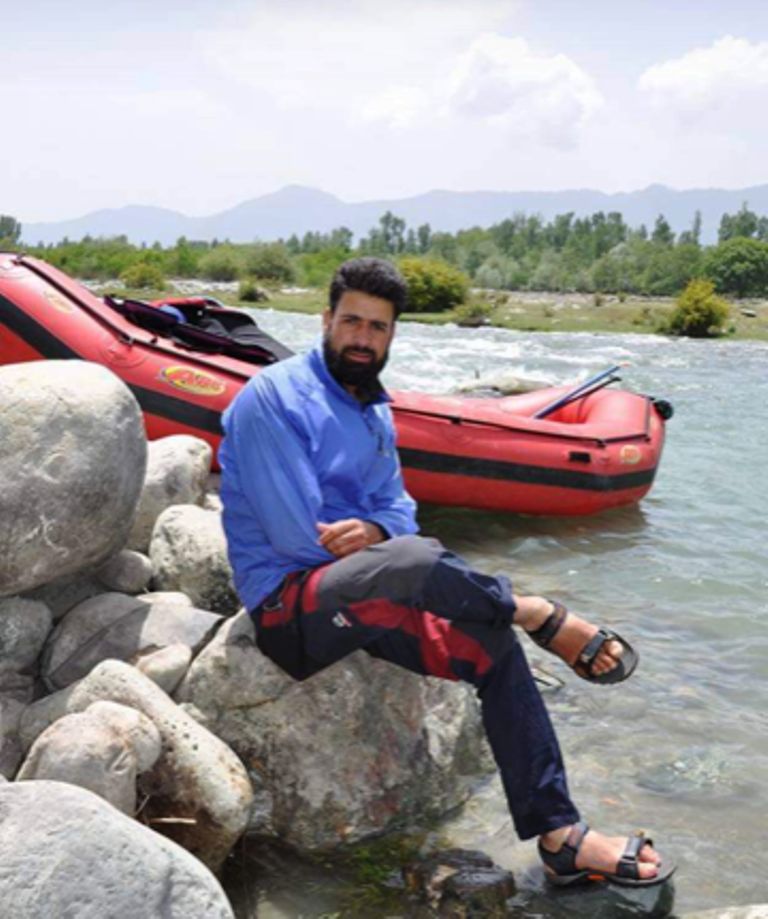
Governor Satya Pal Malik has saluted the bravery of Tourist Guide Rouf Ahmad Dar, who lost his life while rescuing tourists from the Lidder river in Pahalgam. He described Rouf as a real-life hero who sacrificed his life for saving the lives of others.
Governor has prayed for eternal peace to the departed soul and strength to the bereaved family in its hour of grief.
Honouring the exemplary display of selfless action, Governor has announced financial assistance of Rs 5 lakh for the family of Rouf.
Dar saved five tourists, two of them foreigners, after their boat capsized in fast flowing river Lidder near Mawoora area of Pahalgam in south Kashmir’s Anantnag district on Friday evening.
Unfortunately, Dar lost his life in an act of bravery which is being hailed by people and the administration.
source: http://www.kashmirlife.net / Kashmir Life / Home> Latest News / by KL News Network / June 01st, 2019
She was one of the most powerful women of medieval India, a Mughal princess like no other. And yet, her extraordinary story remains lost in the pages of history.
In an unassuming part of India’s capital city, amidst winding alleys lined with attar and chadar sellers, lies the 800-year-old dargah of Hazrat Nizamuddin Auliya—one of the most revered saints in Sufism. From dusk to dawn, thousands of devotees throng this bustling complex to pay their respects.
Yet, few know that Delhi’s most famous Sufi shrine is also home to the tomb of one of the most powerful women of medieval India, Jahanara Begum.
A writer, poet, painter and the architect of Delhi’s famous Chandni Chowk, Jahanara was a Mughal princess like no other.
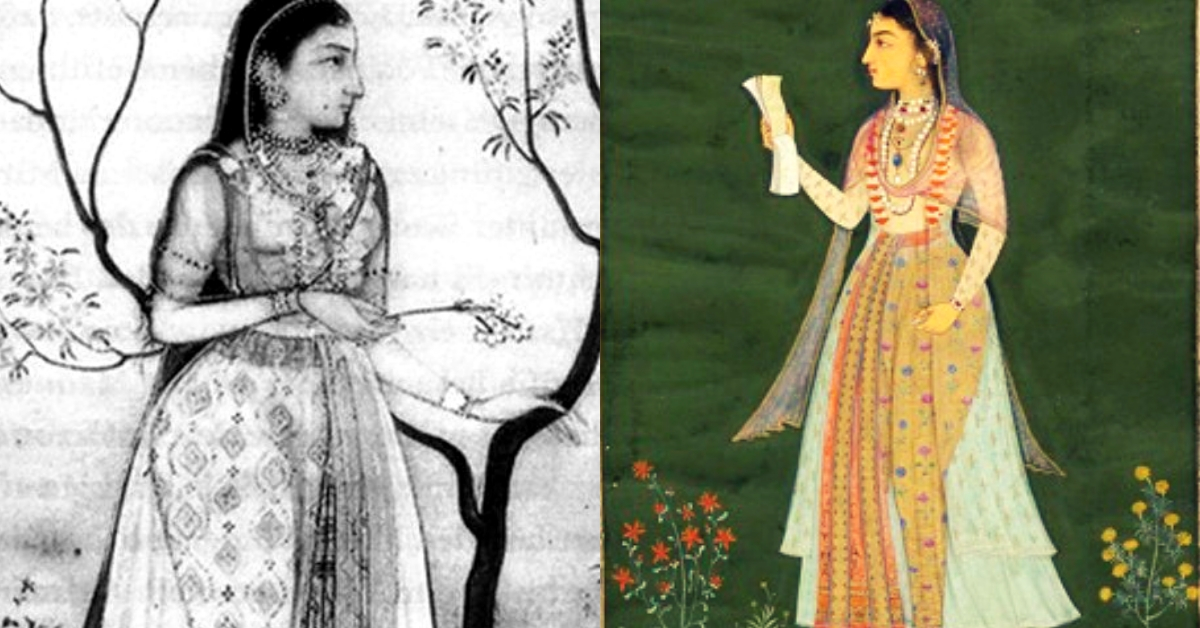
Portraits of Jahanara Begum. Source: Wikimedia Commons
This is her story.
The eldest child of Emperor Shah Jahan and his favourite wife, Mumtaz Mahal, Jahanara was born in Ajmer in 1614. Growing up in one of the richest and most splendid empires in the world, the young princess spent her childhood in opulent palaces, humming with family feuds, battle intrigues, royal bequests and harem politics.
As such, she was well-versed in statecraft by the time she was a teenager.
Soon after, Jahanara was appointed Begum Sahib (Princess of Princesses) by her doting parents. She would often spend her evenings playing chess with Shah Jahan, understanding the workings of the royal household, and helping her father plan the reconstruction of other palaces.
As French traveller and physician François Bernier writes in his memoirs, Travels in theMogul Empire ,
“Shah Jahan reposed unbounded confidence in his favourite child; she watched over his safety, and so cautiously observant, that no dish was permitted to appear upon the royal table which had not been prepared under her superintendence.”
Jahanara was also especially close to Dara Shikoh, Shah Jahan’s eldest son and her favourite brother. The two shared a love of poetry, painting, classic literature and Sufism.
In fact, she also wrote many books, including a biography of Ajmer’s Sufi saint Khwaja Moinuddin Chishti, displaying her flair for prose.
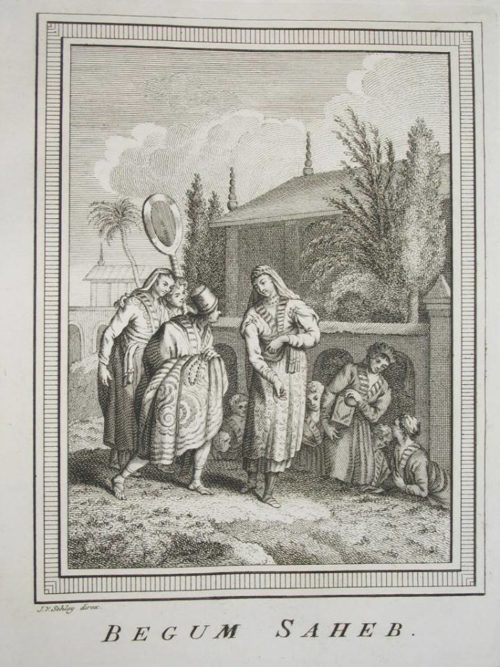
The Begum Sahib. Source: Royal India Families/Facebook
But tragedy struck the young princess’s life with the untimely demise of her beloved mother, Mumtaz, in 1631. At the tender age of 17, she was entrusted with the charge of the Imperial Seal and made Malika-e-Hindustan Padshah Begum—the First Lady of the Indian Empire—by the shattered Emperor, whose grief kept him away from his royal duties.
It was only on Jahanara’s behest that the inconsolable Shah Jahan came out of mourning.
In the years to follow, she became her father’s closest confidante and advisor. Highly educated and skilled in diplomatic dealings, her word became so powerful that it could change the fortunes of people. Her favour was much sought-after by foreign emissaries.
In 1654, Shah Jahan attacked Raja Prithvichand of Srinagar. Despairing of success in the battle, the Raja sent a plea for mercy to Jahanara. The Princess asked him to send his son, Medini Singh, as a sign of his loyalty to the Mughal Empire, thereby getting him a pardon from the Emperor.
The following year, when Aurangzeb was the viceroy of the Deccan, he was bent on annexing Golconda, ruled by Abdul Qutb Shah. The Golconda ruler wrote an arzdast(royal request) to the Princess, who intervened on his behalf. Qutb Shah was pardoned by Shah Jahan (against Aurangzeb’s wishes) and secured his safety on payment of tax.
Interestingly, Jahanara was also one of the few Mughal women who owned a ship and traded as an independent entity.
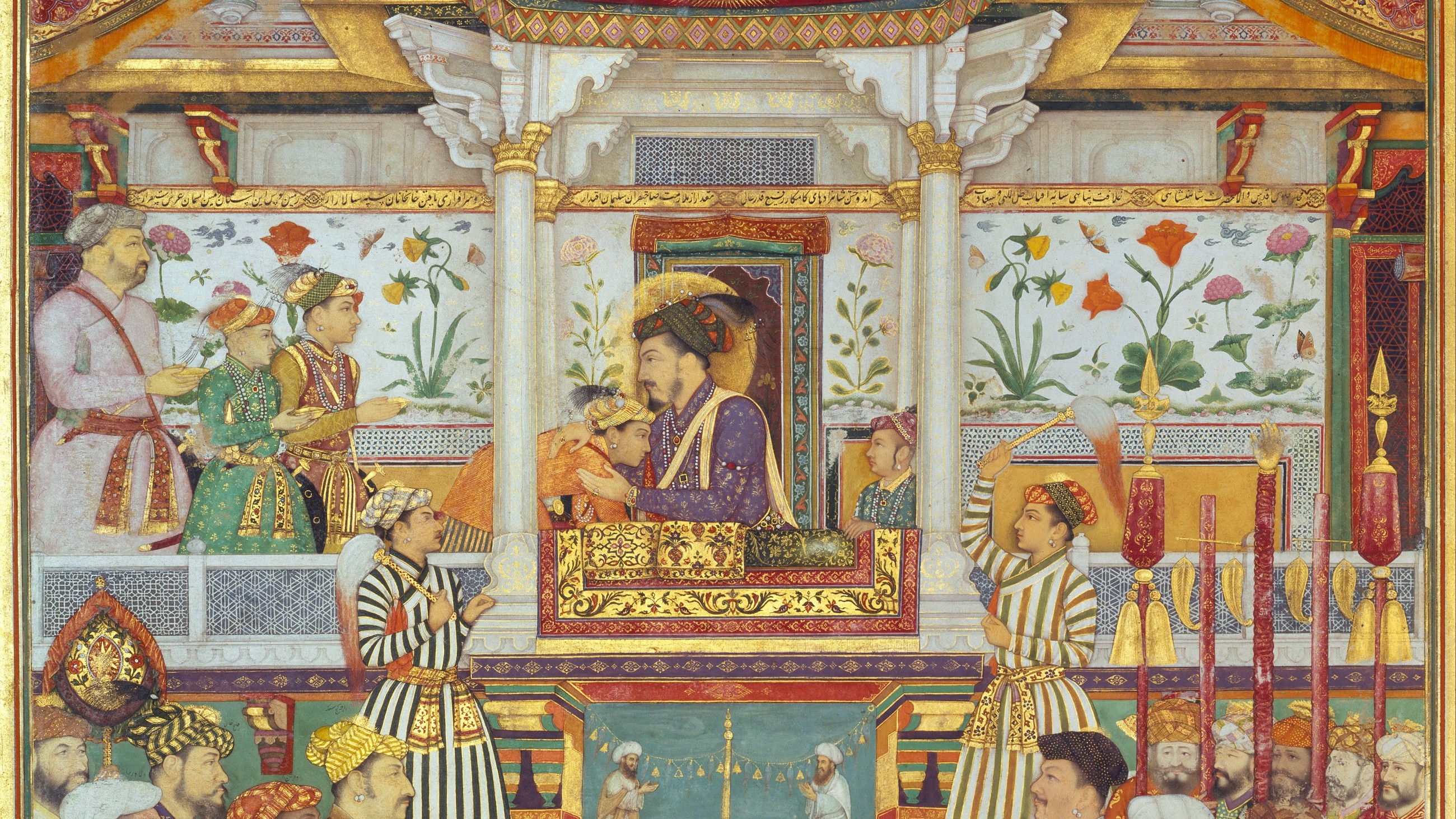
Padshahnama plate 10 : Shah Jahan receives his three eldest sons and Asaf Khan during his accession ceremonies (8 March 1628). Source: Wikimedia Commons
Named ‘Sahibi’ after its owner, Jahanara’s ship would carry the goods made at herkarkhanas (factories) and dock at her very own port in Surat; its revenue and the colossal profits she made via trade significantly boosted her annual income of three million rupees!
In his book Storia Do Mogor, Italian traveller Niccolao Manucci writes, “Jahanara was loved by all, and lived in a state of magnificence.” The book is considered to be one of the most detailed accounts of Shah Jahan’s court.
But Jahanara’s political and economic clout failed to have an impact on the bitter war of succession between her brothers, Dara Shikoh and Aurangzeb. She made several attempts to mediate between them, but as Ira Mukhoty writes in her book Daughters of The Sun , she had “underestimated the corrosive loathing that Aurangzeb has for Dara, whom he blames for his father’s cold criticism throughout his career”.
Aurangzeb ultimately killed Dara Shikoh and placed an ill Shah Jahan under house arrest in Agra Fort’s Muthamman Burj (Jasmine Tower). Faithful to her father, Jahanara set aside her lucrative trade and luxurious lifestyle to accompany him into imprisonment.
A constant presence beside Shah Jahan in his exile, she took care of him for eight years, till he breathed his last in 1666.
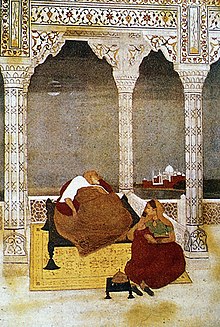
“The Passing of Shah Jahan” (1902), a painting by Abanindranath Tagore. At the foot of the bed is Jahanara Begum, the daughter of Shah Jahan; the Taj Mahal is in the background. Source: Wikimedia Commons
It says much for her stature in the Mughal court that after Shah Jahan’s death, Aurangzeb restored her title of Padshah Begum and gave her a pension along with the new title of Sahibat al-Zamani (Lady of the Age)—befitting for a woman who was ahead of her time.
Unlike other royal Mughal princesses, she was also allowed to live in her own mansion outside the confines of the Agra Fort.
“Jahanara establishes herself in the city as the most influential woman patron[s] of literature and poetry. She collects rare and beautiful book[s], and her library is peerless. She donates money to charity, especially Sufi dargahs, and carries on a genteel diplomacy with minor rajas who come to her with grievances and gifts,” writes Ira Mukhoty in her book.
Spending her last years in the pursuit of her artistic and humanitarian passions, Jahanara passed away in 1681 at the age of 67 but not before she etched her mark in the annals of history in a manner that would have made her father proud.
She commissioned several architectural spectacles, mosques, inns and public gardens across the Mughal empire.
But she is best remembered as the architect of Old Delhi’s legendary bazaar, Chandni Chowk—which translates to ‘Moonlit Intersection’.
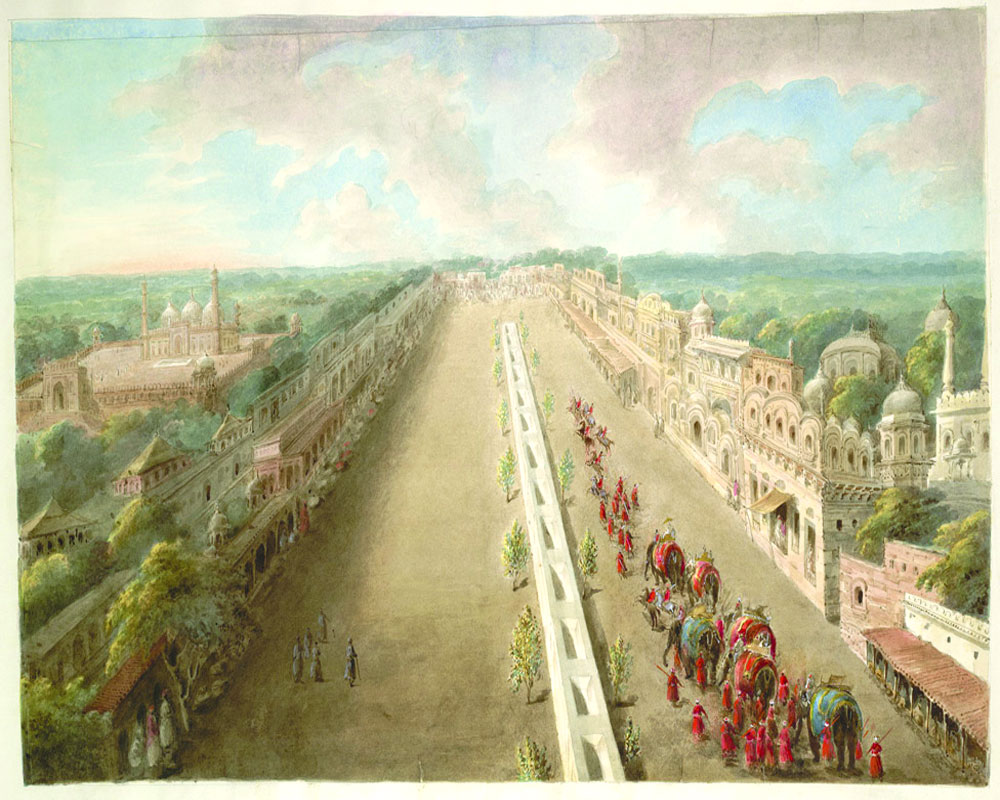
Water colour of Chandni Chowk in Delhi from ‘Views by Seeta Ram from Delhi to Tughlikabad Vol. VII’. Source: British Library
In his book Shahjahanabad : The Soverign City in Mughal India , Stephen Blake writes,
“The chowk was an octagon with sides of one hundred yards and a large pool in its center. To the north, Jahanara built a caravansarai (roadside inn) and a garden and, to the south, a bath. On certain nights, the moonlight reflected pale and silvery from the central pool and gave to the area the name Chandni Chawk (Silver or Moonlight Square). This name slowly displaced all others until the entire bazaar, from the Lahori Gate to the Fatehpuri Masjid, became known as Chandni Chawk.”
Today, many of Chandni Chowk’s ancient buildings have been torn down, as its lanes brim with new shops and colliding crowds. And yet, somehow it manages to invoke the spirit with which Jahanara lived—the same spirit that helped her survive and thrive amidst betrayals and tragedies.
Interestingly, Jahanara’s resting place in the Nizamuddin Dargah is of her own choosing, just like her character.
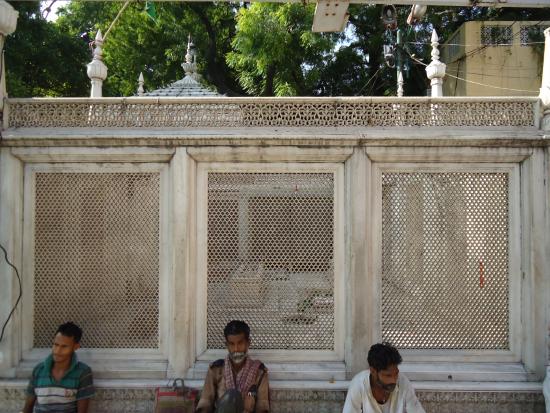
Jahanara’s tomb at the Nizamuddin Dargah. Source
Unlike the giant mausoleums built for her parents, she rests in a simple marble tomb open to the sky, inscribed with her own couplet in Persian:
Baghair subza na poshad kase mazar mara, (Let no one cover my grave except with green grass,) Ki qabr posh ghariban hamin gayah bas-ast. (For this very grass suffices as a tomb cover for the poor.
Perhaps it is poetic justice that green vines grow on the grave of this extraordinary princess of India.
(Edited by Shruti Singhal)
source: http://www.thebetterindia.com / The Better India / Home> History> Women / by Sanchari Pal / May 24th, 2019
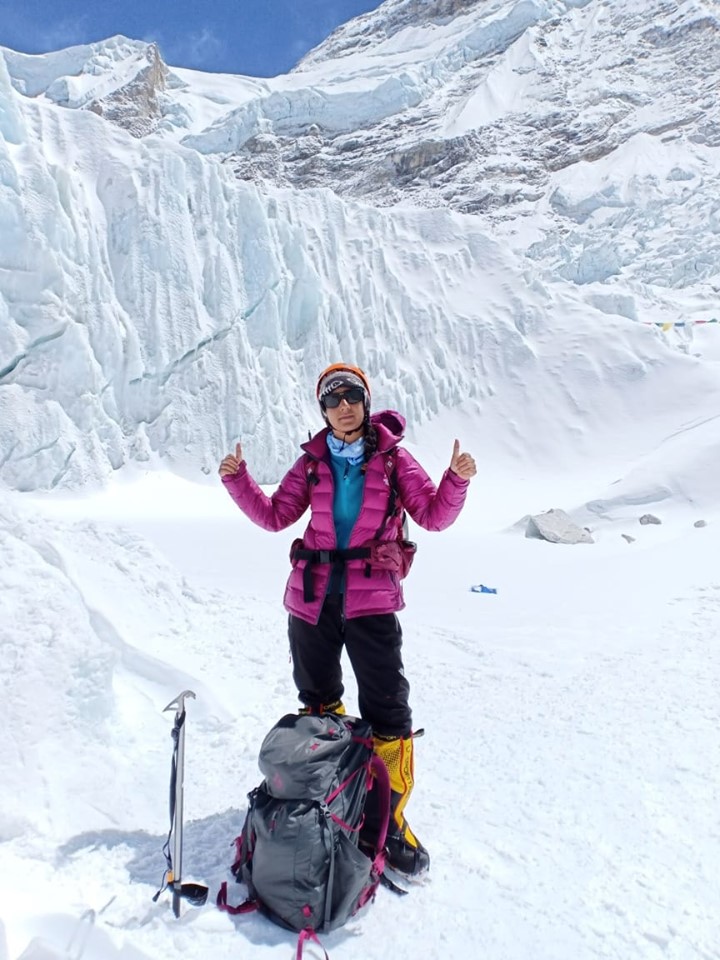
Nahida Manzoor has become first Kashmiri woman to successfully summit the World’s highest peak, Mount Everest.
The news about Nahida’s successful summit was made public by Transcend Adventures, the company with which she had gone for her maiden attempt to scale the Everest.
“The Fourth summit of the day is Nahida Manzoor along with her Sherpa Guide Nima Kancha. Nahida hails from the state of Jammu & Kashmir. The 26-year old lady has been passionate about the snow peaks and took to the mountains at a very young age,” Transcend Adventures posted on their official Facebook page.
Nahida along with her group had left from Everest Base camp for the summit on Saturday and on Tuesday she made successful summit of the peak.
The experienced trained mountaineer had on March 4 started crowd funding to support her dream journey.
source: http://www.thedespatch.in / The Despatch / Home> Chai Khana / by The Despatch Staff / May 22nd, 2019
Ever since the news of the results filtered in, Sajid, his wife Abida and the teachers at the Binanipuram Government High School have been flooded with congratulatory calls from government quarters and the media.
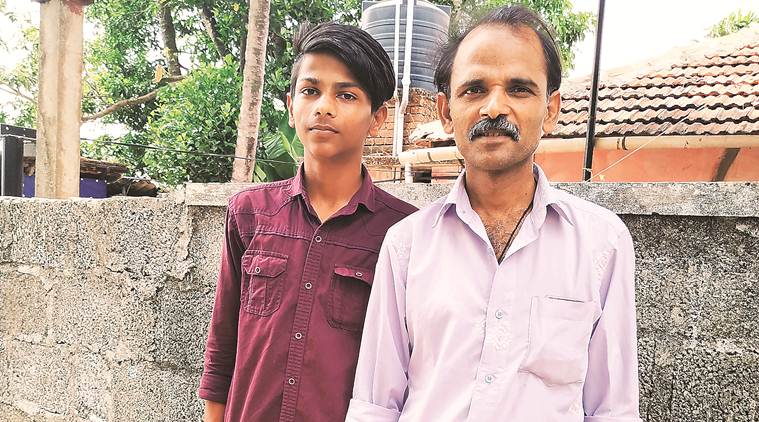
Bhutto Sajid (right) with his son Dilshad. (Express photo: Vishnu Varma)
Bhutto Sajid, 41, is an ‘angootha chaap’ (illiterate). Born into a poor peasant family in Bihar’s Darbhanga, Sajid’s family didn’t have the financial means to send him to school. Doing odd jobs, first in his village and then later in Delhi, Sajid was among the first wave of migrant workers in 1999 travelling thousands of miles to Kerala, a state grappling with a shortage of labour after its own people left in droves looking for jobs in Gulf countries.
In the past two decades, Sajid has made Kerala home, working in a small shoe factory in the industrial area of Edayar in Ernakulam district and living with his wife and five kids.
If the lack of education suppressed Sajid’s dreams in life, on Sunday, in a bittersweet moment for him, his eldest child, Muhammad Dilshad, made him and his family proud by topping from his Malayalam-medium government school in the Class X Board examinations and securing A+ grade in all subjects.
“Hum gareeb the, nahi padh paye. But mera beta mera sar uncha kar diya (We were poor so couldn’t study. But my son has made me proud),” Sajid said.
Ever since the news of the results filtered in, Sajid, his wife Abida and the teachers at the Binanipuram Government High School have been flooded with congratulatory calls from government quarters and the media.
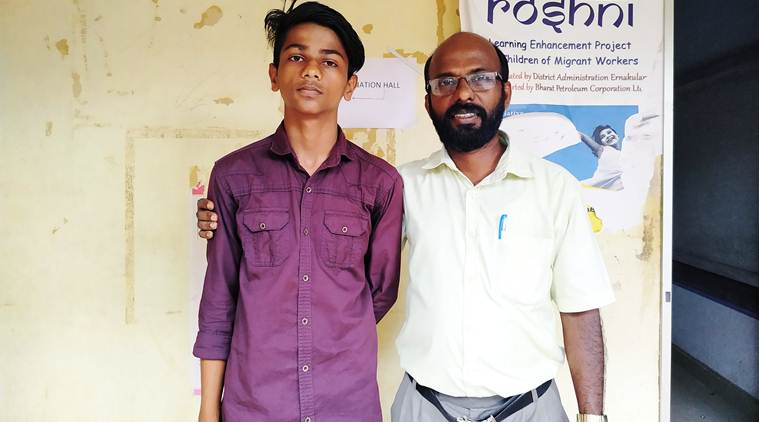
Sudhi TS, the mathematics teacher at the school who took a special interest in Dilshad’s studies, said he is more happy with his student’s performance than his own son who also appeared for the board examinations this year.
“I used to tease my son by telling him that Dilshad would score better than him. That would get him jolted and serious about studying,” Sudhi said.
Muhammad Dilshad with his Mathematics teacher Sudhi TS at the school. Sudhi opted out of a transfer so he could help Dilshad with his studies. (Express photo/Vishnu Varma)
“In fact, I had the opportunity of a transfer to another school here two years back. I have an asthma condition and this is an industrial area. But I stayed on just to help him (Dilshad) out. I wanted to see him do well in the exams because he has a bright future ahead,” he said, adding that he would often fix special classes at 6 am in the morning for Dilshad’s batch.
The six-decade-old government school, located in an industrial belt on the fringes of Kochi where a large section of inter-state workers are employed, receives a sizeable number of applications of children of such workers into all grades. In Dilshad’s class of 12 students who wrote the board examinations this year, four of them, including him, hail from northern states.
But, the primary hurdle for such students in excelling at studies has been the medium of instruction. Most subjects, with the exception of English and Hindi, are taught in Malayalam at schools like these, which end up making the learning process arduous.
To solve this particular problem, the Ernakulam district administration flagged off the ‘Roshni’ project two years ago through which schools with a large concentration of migrant students were identified. The project, a brainchild of Ernakulam district collector Mohammed Y Safirulla, involves an extra hour of language proficiency class in the morning before regular classes begin.
Teachers under ‘Roshni’ have been trained to use code-switching methodology to help students, from classes I to VII, in familiarising with the Malayalam language. To attract more students to the programme, a round of nutritious breakfast is offered at the school as an incentive.
source: http://www.indianexpress.com / The Indian Express / Home> Education / by Vishnu Varma / May 11th, 2019
The Mysore District Athletic Association (MDAA) conferred the prestigious Nandi Awards to the top sports persons of Mysuru district for the year 2018-19 at a function held at Maharaja’s College Centenary Hall on May 9.
In addition to this, Vidya Vikas Educational Trust was given the Best Sports Promoters Award. Mohammad Nouman, Senior Sports Journalist, Prajavani, Mysuru, was conferred the Distinguished Sports Journalist Award while Nagesh Panathale, Senior Photo-Journalist, Vijaya Karnataka, Mysuru, was conferred the Distinguished Sports Photographer Award.
The function was presided by Vasu, Chairman, MDAA. V.R. Beedu, Dronacharya Award winner for Lifetime Achievement in Athletics as a coach, was the guest of honour.
Dr. P. Krishnaiah, Director (In-Charge), Department of Physical Education, University of Mysore, K.Suresh, Assistant Director, DYES, Mahesh Ballal, Vice-President, MDAA, Somashekar, President, MDAA and B. Srikanth, Hon. Secretary, MDAA were among those present at the function.
source: http://www.starofmysore.com / Star of Mysore / Home> Sports / May 10th, 2019
Students with special needs and health complications defeated all their challenges to come out with flying colours in the class 10 examination, with help from online videos, peers, faculty, and private tutors.
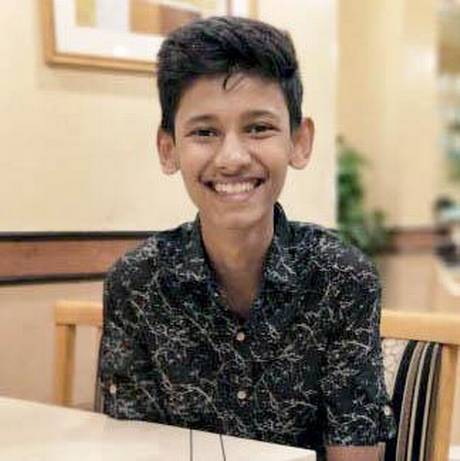
Krishna Rao, diagnosed with Asperger Syndrome, scored 75% in the board examination. A student of Sri Kumaran Children’s Home, Krishna faced problems owing to illegible handwriting and had social issues “My teachers helped me a lot as did the private tutor. Reading the newspaper daily even during exams also helped,” he said.
He said the faculty also ensured that he was not bullied or treated differently from the rest and sensitised other students about his condition. He has score well in Sanskrit (81) and Social Science (93). He aims to pursue political science and legal studies.
Kushal Katariya, who has almost overcome his dyslexia, is a student of Delhi Public School-South. He scored 68% in the examination. Though he found the teachers at his school to be supportive, he attributes his success to his private tutors who went out of their way to ensure that he did well. “I found online videos very helpful. I used to watch motivational speeches on a daily basis to remain focussed,” he said.
There were nine students in Delhi Public School-North with special needs, and all of them scored above 75%.
Mohammad Jamshed, a student who had a bone marrow transplant this academic year, could not attend a majority of the classes, but managed to get 80%. Owing to lack of attendance, he had to obtain special permission from the CBSE chairman to write the board examination. “My teachers helped me a lot. They came home and taught me,” he said. His method of studying involved daily planning and breaking down concepts into basic units for easy comprehension. Jamshed aims to pursue commerce to become an entrepreneur.
Medha Jayanth, a student of Kendriya Vidyalaya Indian Institute Of Science, scored 75.4%. She has been diagnosed with cerebral palsy. “I’ve been studying at KV for 10 years and the comfortable environment helped me score well,” she said. She aims to pursue commerce and follow her father’s footsteps by completing Chartered Accountancy.
source: http://www.thehindu.com / The Hindu / Home> News> Cities> Bengaluru / by Sanjana N / Bengaluru – May 07th, 2019
Here is the complete list of nominees of Khel Ratna and Arjuna awards across all sports.
Asian Games 2018 gold medal-winning Indian boxer Amit Panghal has been nominated for Arjuna awards by the Boxing Federation of India.
Panghal claimed the light flyweight (49kg) category gold after defeating reigning Olympic champion Hasanboy Dusmatov of Uzbekistan in the Asiad final at Jakarta.
In a similar move, the Board of Control for Cricket in India recommended India pacers Mohammad Shami and Jasprit Bumrah, all-rounder Ravindra Jadeja and women’s team spinner Poonam Yadav for the Arjuna award.
National football team stars Gurpreet Singh Sandhu and Jeje Lalpekhlua, too, have been recommended for the Arjuna award by the football’s national governing body.
The National shooting federation has suggested the names of pistol ace Heena Sidhu and trap shooter Ankur Mittal for the Khel Ratna. Anjum Moudgil(rifle), Shahzar Rizvi (pistol) and Om Prakash Mitharwal (pistol) have also been nominated for the Arjuna Awards.
Meanwhile, the Wrestling Federation of India has recommended Bajrang Punia and Vinesh Phogat for the Khel Ratna award. Besides the duo, the WFI has also suggested names of Rahul Aware, Harpreet Singh, Divya Kakran and Pooja Dhanda for the Arjuna Award.
The Table Tennis Federation of India has recommended Harmeet Desai, Sanil Shetty and Madhurika Patkar for the Arjuna Awards.
source: http://www.sportstar.thehindu.com / SportStar / Home> More Sports / by Team Sportstar / April 30th, 2019
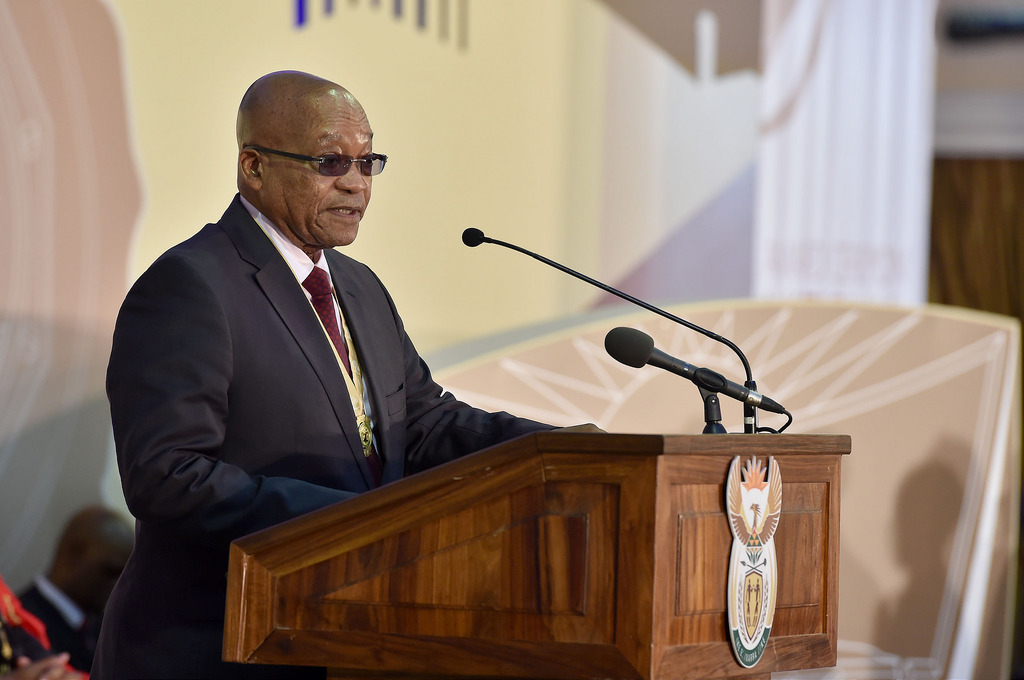
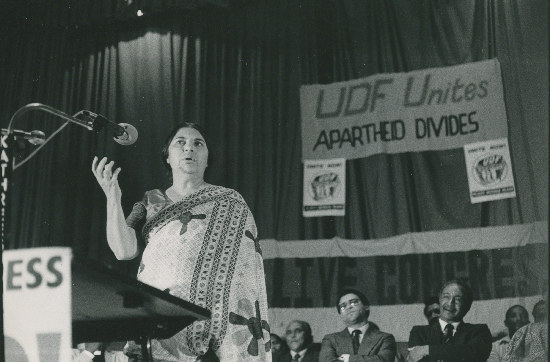
Fatima Meer and Shantie Naidoo, two Indian-origin women veterans of the freedom struggle in South Africa, were conferred South Africa’s highest National Order awards by President Jacob Zuma.
South Africa President Jacob Zuma presenting the awards. Photo courtesy: GovernmentZA
Meer posthumously received the Order of Luthuli in Silver; while Shantie Naidoo joined 21 others, who were part of a group who suffered at the hands of the apartheid-era security police, to receive the same award at the Presidential Guest House in Pretoria.
Meer, who was a longtime friend of the late Nelson Mandela together with her husband Ismail Meer, started her activist career as a high school student aged 17 in 1945.
“The Indian community suffered the enactment of the first Segregation Act which restricted their economic and residential rights to specific areas in the country,” said Meer’s citation from the President. “The Indian community resisted by organising Satyagraha, the first since Gandhi’s Satyagraha at the close of the century.”
Meer mobilised high school students and established the Students Passive Resistance Committee to canvass and raise funds for the Passive Resistance Campaign.
Meer was a prolific writer, historian and sociologist, and penned many books including a biography of Mandela, as well as the script for the film Taj Mahal, made by Indian filmmaker Akbar Khan.
In 1969, she published a book, Portrait of Indian South Africans, donating the total proceeds thereof to the Gandhi Settlement towards the building of the Gandhi Museum and Clinic at the Phoenix Settlement started by Gandhi. After the advent of democracy in 1994 under President Mandela, Meer served as a member of parliament before her death in 2010.
Fatima Meer. saha.co.za
Naidoo is a descendant of Thambi Naidoo, one of Gandhi’s most trusted lieutenants during his tenure in South Africa. She was imprisoned multiple times as a member of the Transvaal Indian Congress and the African National Congress.
“My mother Amma Naidoo, inspired by my grandfather Thambi before her, was at the forefront of the historic Women’s March to the Union Buildings in Pretoria in 1956 to protest the unjust anti-apartheid laws,” Naidoo said.
“Her undying commitment to justice, freedom and equality was in turn an inspiration to me, my brother and sisters,” said Naidoo at the award reception.
source: http://www.connectedtoindia.com / Connected To India / Home> News Global / by Tushaar Kuthiala / May 02nd, 2017
Ian Sansom on a clan whose empire became synonymous with India
Shah Jahan, who built the Taj Mahal. / Photograph: dbimages/Alamy
In the month of Ramadan of the year 899,” writes the great Babur (1483-1530) in his autobiography, The Baburnama, “and in the 12th year of my age, I became ruler in the country of Fergana.” Babur – his name means “tiger” – inherited the tiny kingdom of Fergana, in what is now Uzbekistan, from his father. The family was descended from Genghis Khan and Tamerlane the Great; Babur the boy-king became the first of the Mughal emperors, a family of Turko-Mongol rulers who, according to the historian Abraham Eraly, “so decisively stamped their personalities on India that the Mughal Empire became, in the public perception, synonymous with India.”
Babur established his empire through conquest, successfully invading India in 1526. His son, Humayun (1508-1556), who succeeded him, came close to losing everything that his father had achieved. It wasn’t until the rule of Akbar (1542-1605), Humayun’s son, that the Mughal Empire was consolidated. Akbar, like Margaret Thatcher, slept only four hours a night. When he was awake, which was most of the time, he set about expanding the Mughal territories abroad and reforming the government at home. He ended the tax imposed on non-Muslims. He invited Jesuit missionaries into his court. And he formed his own religion. Above all, he knew how to make friends as well as enemies. According to his court historian, Abul Fazl, “His majesty forms matrimonial alliances with princes of Hindustan and of other countries; and secures by these ties of harmony the peace of the world.”
Jahangir (1569-1627) succeeded his father, Akbar, in 1605. He preferred to drink and carouse rather than to rule, and his wife, Nur Jahan, took on the responsibility of the state. The fifth Mughal emperor, Shah Jahan (1592-1666), was more like his grandfather Akbar and his great-great-grandfather Babur: a schemer, a man of grand plans and ideas. When his wife, Mumtaz, died in 1631, Shah Jahan was grief-stricken, so much so that, according to one observer, he “gave up the practice of plucking out grey hair from his beard”. He also decided to build his wife a memorial. The English travel writer Peter Mundy described the construction: “The building is begun and goes on with excessive labour and cost, prosecuted with extraordinary dilligence, Gold silver esteemed common Mettal, and Marble but as ordinarie stones.” According to Rudyard Kipling, the place was “the embodiment of all things pure, all things holy, and all things unhappy”. It was the Taj Mahal.
Shah Jahan’s rule ended with a war of succession between his sons, in which Aurangzeb (1618-1707) emerged triumphant. Having killed his brothers, he imprisoned his father. After Aurangzeb the decline of the Mughals began. In 1738, India was invaded by the forces of Nadir Shah, ruler of Iran. Territories were divided. Then the British East India Company moved in.
The last of the long line of Mughal emperors was Bahadur Shah II, known as Zafar. “Personally, he was one of the most talented, tolerant and likeable of his dynasty,” writes William Dalrymple in The Last Mughal (2006). The first emperor, Babur, had been a warrior. Zafar was an aesthete – a poet and an architect. Alas, empires tend not to survive under aesthetes. “While the British progressively took over more and more of the Mughal Emperor’s power,” writes Dalrymple, “the court busied itself in the obsessive pursuit of the most cleverly turned ghazal, the most perfect Urdu couplet.”
Zafar died in exile in Rangoon in 1862. His courtiers were hanged and much of Mughal Delhi was destroyed. “The death of the ex-King may be said to have had no effect on the Mahomedan part of the populace,” wrote the British commissioner at the time, “except for a few fanatics who watch and pray for the final triumph of Islam.”
source: http://www.theguardian.com / The Guardian – International Edition / Home> Family> Great Dynasties of the World / by Ian Sansom / July 16th, 2019
On January 25, India’s Polar Satellite Launch Vehicle (PSLV-C44) successfully injected Microsat-R and Kalamsat-V2 satellite into their designated orbits. Two young engineers who played lead role in designing and building world’s lightest satellite Kalamsat-V2 are Rifath Sharook and Mohammed Abdul Kashif.
They were part of a 12-members team of Space Kidz India- a group which trains aspiring space students. The group was being led by 18-year-old Sharook who hails from Tamil Nadu. Sharook is the youngest student of the team. Giving the credit of building the satellite, the media called him one-man army.But Sharook rejects to take credit solely.
Apart from Kashif (lead engineer), those who are in his team include Vinay S Bhardwaj (design engineer), Yagna Sai (lead technician) and Gobi Nath (biologist).
They were all working on rocket and space technology under the mentorship of Chennai-based Srimathy Kesan, who is the founder of Space Kidz India.
Sharook who hails from Tamil Nadu’s Karur is Chief Technology Officer (CTO) at Space Kidz India. Sharook’s father, Mohammed Farook, was also scientist. When he was in Class V, his father had left for heavenly abode. He was interested in space since his childhood.
“My dad was also a scientist. He’d do independent research on astronomy. We’d spend hours watching the space through a telescope,” Sharook was quoted by rediff.com as saying.
Talking about the Kalamasat V2, Mohammed Abdul Kashif said “We have produced a new electronic architecture for this satellite that ensured that it was lighter, smaller, more economical and consumed less energy while functioning like any other communication satellite”.
He added “There are a wide variety of uses it can be deployed for. But with this launch, we are only testing the technology and seeing how it operates”.
The satellite was 64 grams, 3.8 centimeter-cube-sized and it is world’s lightest and smallest satellite. It was made through the competition ‘Cubes in Space’ which was a collaboration between NASA and ‘I Doodle Learining’.
Muslim boy Sharook and Kashif played larger role in building the world’s lightest satellite and it was named also after a Muslim scientist A P J Abdul Kalam, who was the president of
India.
source: http://www.caravandaily.com / Caravan Daily / Home> Indian Muslim> Indian Muslims / by Caravan News / February 04th, 2019