Parappa Village (Delampady Gram Panchayat) , KERALA :
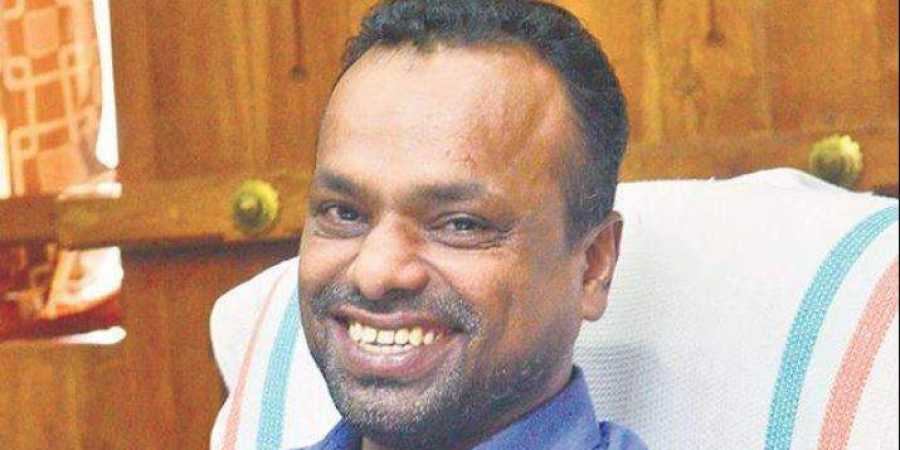
Maharoof comes from a remote village called Parappa in Delampady grama panchayat on the Karnataka border. His father D P Mohammed works as a waiter at a hotel in Kozhikode.
Maharoof Mohammed
Kasargod :
Maharoof Mohammed, a 12-year-old boy from Kasaragod, is the toast of the footballing world. Last day, when schools were shut because of heavy rain, Mahroof and his friends hit the dirt to play football.
In a short video shot by his friends, Maharoof can be seen dribbling past five big boys and sending a prefect cross to his friend waiting at the goal mouth to find the back of the net. The friend takes off his T-shirt and Maharoof runs to hug him.
The 20-second video went viral on WhatsApp and one of his friends posted it on Instagram with the caption “Little Messi”.
On Instagram, Maharoof’s dribbling skills got the attention of footballers and fans. Kerala Blasters’ biggest fan club KBFC Manjappada shared it and footballers started taking notice. Iain Hume, the former ace player of Kerala Blasters, showered praise. He tagged the club’s manager Thomas Antony and wrote: “@thomantony Get this kid signed up NOW!!! #TheFuture”.The video posted by KBFC Manjappada touched 60k.
Hansito Jorge Mulder, who played for Delhi Dynamos and Chennaiyin, sought to know if the boy has an Instagram account.
Mulder, who now plays for Dutch club RKC Waalwijk, shared the video on his timeline saying: “Support my friend @mahruf_parappa. Showing some great footwork aka India Messi”.
Maharoof’s friends immediately started Instagram accounts for him. At the last count, the boy has eight Instagram accounts, including a fan page.
Maharoof comes from a remote village called Parappa in Delampady grama panchayat on the Karnataka border. His father D P Mohammed works as a waiter at a hotel in Kozhikode.
“He plays for local club Parappa Classic,” said Mohammed, who is happy about the attention his son is getting. His mother Misriya is a homemaker.
source: http://www.newindianexpress.com / The New Indian Express / Home> Good News / by Express News Service / July 25th, 2019
Nikhat Zareen, a former junior world champion, was the only woman boxer to reach the final of Thailand Open.
Nikhat Zareen Thailand’s Jutamas Jitpong in the semi-final. (Photo Credit: @BFI_Official)
Former junior world champion Nikhat Zareen (51kg) reached the final of International Tournament in Bangkok on Friday and was lone Indian woman to do so while Asian silver-medallist Deepak Singh (49kg) led four men into the summit clashes of the tournament.
Ashish Kumar (75kg), Commonwealth Games bronze-medallist Mohammed Husammuddin (56kg) and Brijesh Yadav (81kg) were the other three men to make the gold medal bouts.
Zareen was up against Thailand’s Jutamas Jitpong. The Hyderabadi impressed with the ferocity of her punches as she edged past the local favourite 4-1 and let out a scream to express her elation when her hand was raised by the referee.
Zareen later took to Twitter to dedicate her win to the Kargil War martyrs. 20 years ago, India decisively won the Kargil war and regained the territories that were briefly captured by Pakistan. The nation is celebrating the Army’s victory in the historic war.
__________________________________________
Nikhat Zareen ✔@nikhat_zareen
I dedicate my today’s Semi-Final victory at the Thailand Open to our brave soldiers of Kargil war who sacrificed their lives for our country#KargilVijayDiwas
Meanwhile, former Asian youth silver-medallist Ashish (69kg) lost his semi-final bout to sign off with a bronze medal. Ashish lost to Thailand’s Wuttichai Masuk in a split decision after an exhausting clash.
Among the women, Manju Rani (48kg) and Bhagyabati Kachari (81kg) ended with third-place finishes. Manju went down to Chuthamat Raksat of Thailand, while Bhagyabati lost to China’s Li Qian.
Earlier, Deepak hardly broke a sweat against Bhutan’s Tashi Wangdi. The Indian’s dominance was such that Wangdi faced two standing eight counts and was left with a gash above his right eye. The judges eventually ruled unanimously in the Indian’s favour.
Also advancing was Husammuddin (56kg). In a messy slugfest with Thailand’s Ammarit Yaodam, the Indian came out as the more aggressive and clean puncher to emerge triumphant in a 3-2 decision.
In the 75kg category, Ashish defeated Uzbekistan’s Fanat Kakhramnov to make the final.
Brijesh was up against local favourite in Saranon Klompian in the last bout of the day and produced a ferocious performance. A left hook just a minute into the second round sent his opponent crashing and the Thai could not regain his composure after that. Klompian faced three eight counts before the referee stopped the bout in Brijesh’s favour.
Aurangzeb was abducted from Pulwama by terrorists and later his bullet-ridden body was recovered on June 14 last year.
Aurangzeb’s brothers Mohammad Tariq and Mohammad Shabbir join the Indian Army. (Photo: India Today)
Nearly a year after Rifleman Aurangzeb was abducted and killed by terrorists in Kashmir, his two brothers – Mohammad Tariq and Mohammad Shabbir, have joined the Infantry Battalion of Territorial army.
Aurangzeb was abducted from Pulwama by terrorists and later his bullet-ridden body was recovered on June 14 last year. The deceased Army man was proceeding towards his home for the festival of Eid when he was abducted in broad daylight from a vehicle. After his abduction, the Jammu and Kashmir police had launched a massive manhunt.
His father Mohammad Hanief said, “My two sons have joined TA Battalion. When Aurangzeb was killed, I told Raksha Mantri and top officers of the Indian Army that I will dedicate all my six sons to the forces.” He said, “My two sons will avenge the death of my son.”
Aurangzeb’s mother Raaj Begum said, “Yes, we fear something untoward may happen, but our sons wanted to join the Indian Army.”
Mohammad Tariq said, “After our training, we will fight against terrorism and will take revenge for our martyred brother Aurengzeb. Today we feel proud of joining the Indian army and are proud of our country.”
Aurangzeb’s father was a former sepoy of the Jammu and Kashmir Light Infantry. He joined the BJP before Lok Sabha polls but says his decision to send all his sons to the Indian Army is not based on his political inclination.
His eldest son Mohammed Qasim has already completed 12 years service and is back to serving in the Kashmir Valley.
source: http://www.indiatoday.in / India Today / Home> News> India / by Kamaljit Kaur Sandhu, New Delhi / July 22nd, 2019
Claim to fame: Recipient of the Padma Bhushan award this year, he is an illustrious Unani practitioner, 105 years old. Quadri has been treating patients for the past 75 years at his dispensary at Haji Mohsin Square, near Wellington, free of cost.
Fighting fit: Hakimji begins his day with namaaz at the break of dawn followed by his visit to Swadeshi Dawakhana — his dispensary, where he attends patients all day. About 100 patients visit daily.
The centurion is amazing in his physical fitness and sharpness of mind and is a specialist in treating infertility. After a day’s hard work, which ends around midnight, he goes for a walk — to keep his gout from acting up.
Starting point: Born in a family of hakims in Bihar, it was natural for him to choose this profession. Quadri completed a course on Unani from Shafakhana Darsgah Tibbia (Gaya) in 1930. He participated in the freedom movement. He started to practise in Calcutta after his family shifted here.
Other activities: He began an informal school for children and triggered an adult literacy campaign in his locality. He had also published a magazine called Hikmate Bangala in the late Fifties. He works for citizen’s rights and is a founder member of the Unani Medical College and Hospital, Calcutta.
Low profile: He has had a lot of visitors since becoming the only person from the city to be awarded the Padma Bhushan this year. But he keeps reminding them that he is a mere “hakim”.
source: http://www.telegraphindia.com / The Telegraph, online edition / Home> West Bengal / by Shabina Akhtar / June 17th, 2007
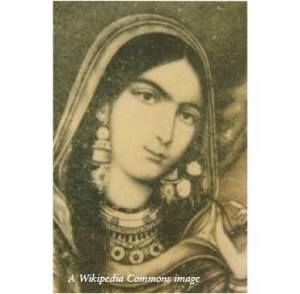
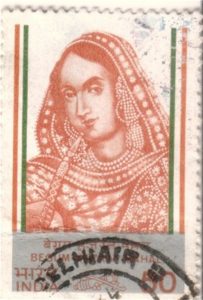
Begum Hazrat Mahal was the last of the official queens of the kingdom of Avadh, or “Oudh” as known to the British imperialists, a large province in northern India.
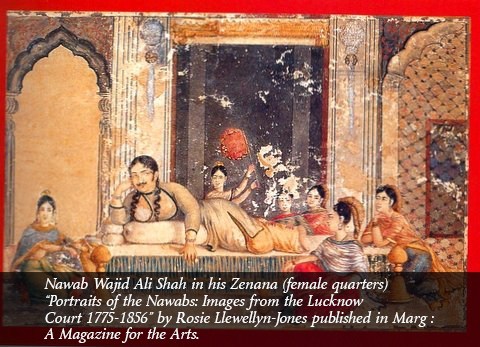
While the details of her birth and family are unclear, it is certain that Begum Hazrat Mahal was not of royal lineage. She is believed to have been a courtesan in the court of the last king of Avadh, Nawab Wajid Ali Shah, starting as a dancing girl named “Mahak-Pari” or fragrant fairy. The Nawab, besotted with the young girl, married her by means of the Shiite tradition of “mutah” marriage or “temporary marriage of pleasure.” It was a convenient method by which the Nawabs could add to their harems, and not technically stray from their marriages.
Mahak-Pari, as she was initially known, gave birth to a male child named Mirza Birgis Qadr Bahadur, and was elevated to the title of Hazrat Mahal Saheba, commonly known as Begum Hazrat Mahal. Transforming from a courtesan—a Pari (fairy)—to a Mahal (a royal queen) was rare, and the good fortune of bearing a male child combined with the right maneuvers in harem politics likely helped the young woman.
In 1856, the administrators of the East India Company annexed the kingdom of Avadh, by means of the infamous Doctrine of Lapse. The British coveted this territory as a great resource for cotton and indigo, and appalled by the debauchery of the Avadh court and its gross mismanagement of revenue, preferred to govern the region directly with a more “conventional” administration.
Nawab Wajid Ali Shah was exiled to Calcutta, and the unhappy king left with a few of his wives, and without most of his large harem, including his “secondary” wives. Begum Hazrat Mahal did not accompany the deposed king, continuing to reside in Lucknow with her young son.
When the Mutiny of 1857 broke out, Avadh was one of the major areas of rebellion as several recruits of the army were from Avadh. People were unhappy about the annexation, the deposition of their king, and the religious insensitivity of the British. The rebels needed a leader to further their cause.
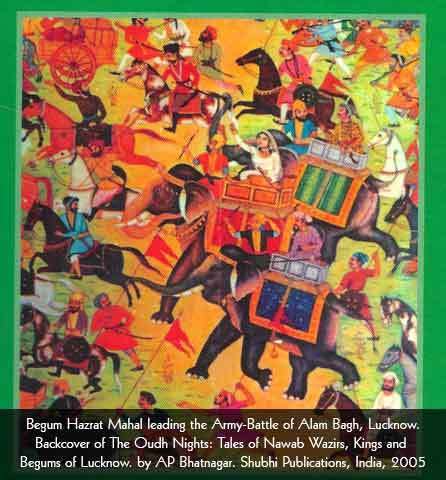
Begum Hazrat Mahal rose to the occasion to help the rebels defend Lucknow against the British troops. To the surprise of her adversaries, she reorganized the army with better co-ordination between the three units of the cavalry, artillery, and infantry. Many times, she rode at the head of the army on an elephant to encourage the soldiers against the advancing British troops.
As in other places, the Indian rebels could not hold out for long against the larger number of British troops, and the queen’s advisors asked the Begum to leave Lucknow in March 1858. She fled to the countryside, continuing her hostilities against the British by issuing orders while in hiding.
On November 1, 1858, Queen Victoria issued a proclamation whose intent was to end the Mutiny, pacify the religious sentiments of the Indians, and formally transfer control of the British territories in India from the East India Company to the British Crown. Begum Hazrat Mahal issued a counter-proclamation in which she argued against every claim of Queen Victoria.
The Begum reminded the Indians that several previous treaties had been violated, that princely heads had either been pensioned or killed, and property worth millions of rupees seized. If the British intent was honorable, why did the British Queen not “restore our country to us when our people wish it?” asked the bold and shrewd Begum. She questioned Queen Victoria’s claim to religious non-interference:
“…to destroy Hindoo and Mussulman temples on pretence of making roads to build churches—to send clergymen into streets and alleys to preach the Christian religion—to institute English schools, and to pay a monthly stipend for learning the English sciences, while the places of worship of Hindoos and Mussulmans are to this day entirely neglected; with all this how can the people believe that religion will not be interfered with?”
Begum Hazrat Mahal forewarned the Indians that their future prospects appeared limited under British rule. “It is worthy of a little reflection, that they have promised no better employment for Hindoostanees than making roads and digging canals.” The Begum’s words were rather prophetic. For decades after 1857, Indians pushed files under British bureaucracy and worked as laborers for the British government in India and overseas.
Begum Hazrat Mahal eventually sought asylum in the kingdom of Nepal, where she lived for the rest of her life. The British administration initially negotiated with her, assuring her a safe return and the possibility of a pension. The Begum, distrusting the British, refused—most likely because British retribution in the immediate aftermath of the rebellion was extremely harsh. While both Hindu and Muslim rebels were ruthlessly punished, there was fear that the Muslims would rise against the British (and Christian power) because it was a hitherto Muslim power that was being displaced, and the repercussions in former-Muslim strongholds such as Lucknow and Delhi were particularly extreme. After their initial negotiations failed, the British labeled the Begum as a woman of “savage disposition.”
Begum Hazrat Mahal has remained a relatively minor figure in Indian history. Her legacy and her heirs were inadequately honored in the centenary celebrations of the Mutiny held at Lucknow post-Indian independence. Her great-grandsons protested against this oversight by the Indian government, which led Prime Minister Jawaharlal Nehru to order an inquiry into her place of burial. Her grave was discovered near Kathmandu, Nepal, in very poor condition. At this point, a park in Lucknow was named after her to commemorate her memory—this park has very recently been renamed—and later a postage stamp was issued in her honor.
Begum Hazrat Mahal’s legacy was diminished in the changed landscape of India post-1857. Her humble beginnings as a courtesan made her an inadequate role model.
The courtesans at the zenith of Lucknow’s court were no petty “nautch-girls” as described by the Victorian sensibilities of the colonists. They were sophisticated women, well versed in the arts of dance, music, and poetry. Their association with the courts made them extremely wealthy and nineteenth-century British records indicate that they were in the highest income-tax bracket before 1857. While the British derided the courtesans, and the culture they espoused, they did not hesitate to tax them on their “ill-earned” wealth. During the Mutiny, the courtesans monetarily supported the rebels, and their homes became rebel hideouts and secret meeting-venues.
Yet, this courtesan culture, the associated decadence and “debauchery” became a source of embarrassment for late-nineteenth-century Indian nationalists, social reformers, and the emerging middle-class English-educated “elite.” Indian nationalists believed that it was decadence and indolence that had helped the British uproot power in the princely states. A strong, respectable people hoping for self-rule needed to identify with respectable women and men, and a former courtesan-turned-warrior-queen did not fit this idealized image.
A strong and resolute woman, the Begum never gave in to the British, while her husband—a good man and an artist at heart, but weak in resolution—continued to live off the generous pension he received, always short of money, and therefore always acquiescing to the British.
Postage Samp of Hazrat Mahal. www.kamat.com
Several years after the Mutiny, a British painter visited Begum Hazrat Mahal, in Kathmandu, to paint a portrait of her son, Birgis Qadr. As he worked on his task, the painter ventured to ask her whether she would consider returning to Lucknow. Given the fact that much time had elapsed since 1857, the British regime was willing to forgive her and pay her a pension. Her residence in India would be proof of the British paternalistic spirit of forgiveness. Their condition, however, was that she would not be allowed a lavish lifestyle with a large retinue of servants. Perhaps, surprised by, or suspicious of the offer, but more likely annoyed at the continued interference in her life, the Begum refused the gesture, stating, with true Avadhi andaaz (style) “of what use will be the salary, if I am not to spend it upon the servants?”
Begum Hazrat Mahal was buried in a simple grave in the grounds of a mosque she built. Ironically she named it Hindustani Masjid, after the beloved homeland she had left behind, for whose sovereignty she had fought, and in which she has largely been forgotten.
Aarti Johri is a tech-professional turned history buff. This is an extract from her thesis for the Stanford MLA degree. Her articles have been published in the San Jose Mercury News, Stanford’s Tangents Magazine, and others. She serves on the board of SACHI (Society for the Art and Cultural Heritage of India).
source: http://www.indiacurrents.com / India Currents / Home> Features, General / by Aarti Johri / June 11th, 2016
For Abdul Nasar, it was a long journey from an orphanage to the District Collector’s office.
Abdul Nasar
Kollam :
For Abdul Nasar, it was a long journey from an orphanage to the District Collector’s office. The Thalassery man who assumed office as Kollam Collector the other day had lived the hard ways of life, spent childhood in an orphanage and came up to the top fighting all odds in life. Tragedy befell his family when Abdul was just 5. His father Abdul Khadar passed away, leaving his mother Manjumma Hajjumma alone to fend for six kids. The financial crisis pushed Manjumma to send her youngest son Abdul to an orphanage in Thalassery.
He spent the next 13 years at the orphanage. He had worked as a supplier and cleaner in hotels during his school days to fund his education. While pursuing his BA in English Literature at Government Brennen College, Thalassery, Abdul also worked as a telephone operator and a newspaper boy. After his graduation, he worked as a health inspector in Kerala Health Department and then as an upper primary teacher at a school in his village, and finally, after his preparations, he cracked the PSC exam for the post of deputy collector.
He passed the prelims in 2002 and mains in 2004. In 2006, he was appointed deputy collector. During his stint as the State Entrance Exam Commissioner, he was able to convert the exams into an online format. And in October 2017, he was elevated as an IAS officer.
Abdul is all praise for his mother whose hard work is behind all his achievements. “It was her hard work that made me the person I am today,” said the 49-year-old. He also appreciated the support he had received from his wife MK Ruksana, a higher secondary teacher. The couple has three children – Nayeema, an engineering graduate; Nuamul Haq, BBA student; and Inamul Haq, who studies in Class VIII.
source: http://www.newindianexpress.com / The New Indian Express / Home> States> Kerala / by Express News Service / July 04th, 2019
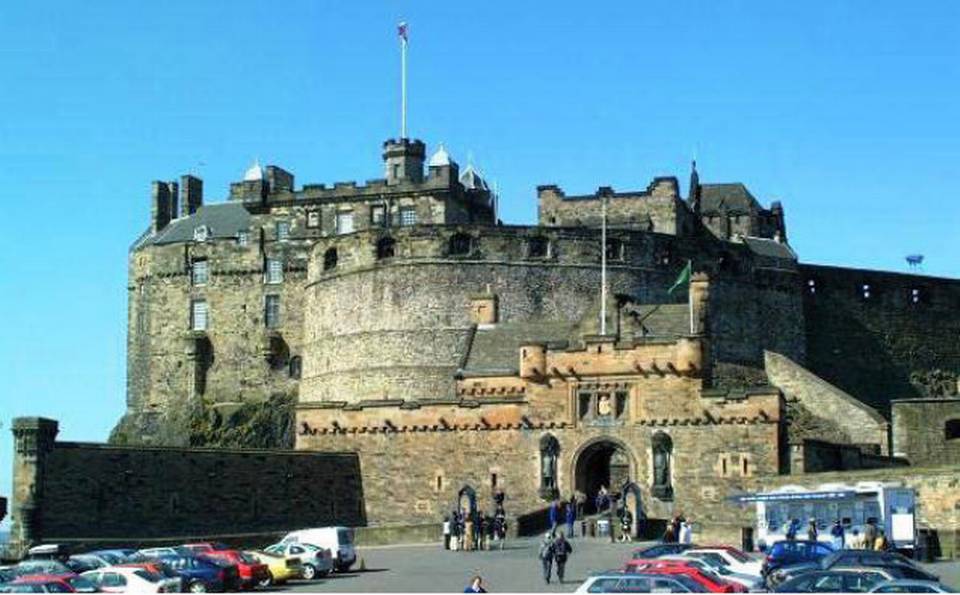
The view of the 12th century edifice at Edinburgh castle that houses the National War Museum.
The legend of Tipu Sultan is still alive in far away Scotland
It is an irony that Tipu sultan, the ‘Tiger of Mysore’, whose birth anniversary celebrations in India became a contentious issue recently, in Scotland whose soldiers and commanders fought for the dissemination of this great warrior king, the only Indian monarch to have died on the battlefield fighting the British, is cherished and commemorated in song, dance, drama, opera, in novel and in paintings. A wealth of personal effects and curiosities of Tipu Sultan have found way to numerous art galleries and museums in Scotland, particularly in its capital Edinburgh.
The participation of the Scots in the affairs of the East India Company began immediately after the unification of Scotland with England through an Act of Union in 1707. Since then Scottish people began coming to India as soldiers, generals, writers, administrators, traders, merchants and missionaries. But they excelled in their service as military generals and commanders. A separate Regiment of foot, the ‘75 Highlanders’ 75th .Highlanders was raised in Scotland to deal with Tipu Sultan. Scottish generals like Sir Hector Munro, Baillie, Beatson, Fraser, Gordon, Dunlop and others participated in the military operations against Tipu. The Scots, more than the English were in the forefront of the British forces in almost all the Mysore wars fought between 1760 and 1799.
After Tipu was finally dismembered by the British under the command of General Arthur Wellesley, the future Duke of Wellington, the images of Tipu Sultan as well as Srirangapatnam proliferated in Britain. No other Indian ruler, against whom the British fought and won, captured the imagination of the average Britisher at home, as much as that of Tipu Sultan. There were tales of mythical proportions in circulation about his valour, reckless energy and merciless acts of tortures meted to the captured British soldiers. It is said that British housewives used to threaten their weeping babies with the ‘arrival of Tipu’ to silence them
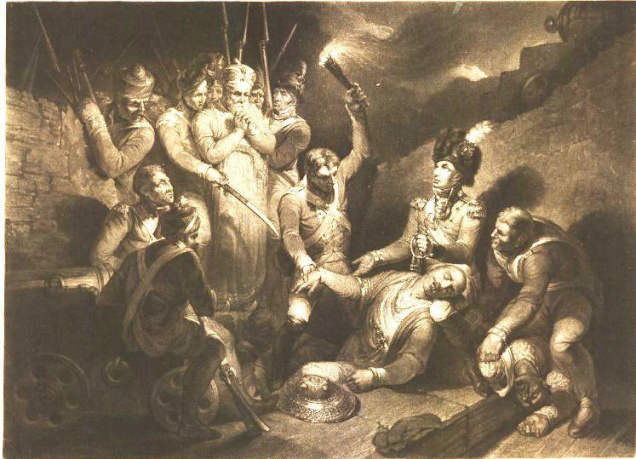
The images of Tipu Sultan and his capital, Srirangapatnam became subjects for paintings and art sketches throughout Britain. When Ker Porter’s Panorama a single large painting of Tipu Sultan was displayed in Edinburgh, there was euphoria among the Scots to have a glimpse of it. The celebrated British painters J.M.W. Turner and J.S. Cotman painted scenes of Srirangapatnam and other places in Mysore besides the portraits of Tipu. Sir David Willkie, the famous painter of the day was commissioned by the widow of Sir David Baird, and his poignant painting Discovering the body of Tipu Sahib on 4 May, 1799, was exhibited in 1838 in the Royal Academy of Arts in London. The Scottish General David Baird had spent several years in Srirangapatnam as a prisoner of Tipu before avenging in the final assault on Tipu.
Alexander Allen an artist of great repute travelled to India to personally see the hill forts in Mysore kingdom before he produced captivating sketches. William Darnell and Beckford also produced several sketches that survive even today. Holmes’ Select Views of Mysore, and Hunter’s Picturesque Scenery in the Kingdom of Mysore also evoked great enthusiasm in Britain. The Mysore wars offered exciting subjects and artists who never even visited India responded to the popular appeal of the Tiger of Mysore. As a result of such prolific paintings, the image of Tipu was so much etched in the collective memory of the Britishers that decades later, when Raja Ram Mohan Roy visited England, he had to confront hostile crowds as he was mistaken to be a descendant of Tipu Sultan. The head gear he wore was similar to the huge turban Tipu wore.
Returning soldiers of Scotland provided Sir Walter Scott with anecdotes for his novels on India. Several dramas and stage plays depicting Tipu and his fall were written and enacted at the Royal Corbug theatre in Edinburgh. Events at Srirangapatnam also appear in the writings of the novelists like Charles Dickens, Wilkes Collins and Jules Verne.
The remnants of Tipu Sultan’s dismantled throne, his numerous swords, daggers, bejewelled sword-belts, hukkas, ivory caskets, and several other artefacts were displayed in Glasgow and Edinburgh besides London.
Tiger in Museum:
In 1999, National Museum of Scotland, Edinburgh, as a part of the bi-centennial celebrations of Tipu’s death, held a special exhibition and decided to make Tipu’s Toy Tiger as a special exhibit along with several other Tipu’s memorabilia. But as the antique Toy Tiger was advised by exerts not to be moved from Victoria & Albert museum, fearing damage in the transit, a replica of it was made for the occasion.
The Toy Tiger is an awesome life size wooden toy seen devouring a European in military uniform. This impressive toy has cast a spell over generations of admirers since 1808 when it was first displayed in the Indian section of Kensington Museum now called Victoria & Albert Museum. The Toy in its body has a mechanical pipe organ hidden and by turning a handle, creates wailing shrieks and a loud roar. The design of this Toy Tiger is said to have been inspired by the death of the son of the Scottish General, Sir Hector Munro, a bête Notre of Tipu Sultan.
Tipu’s Memories at Edinburgh Castle:
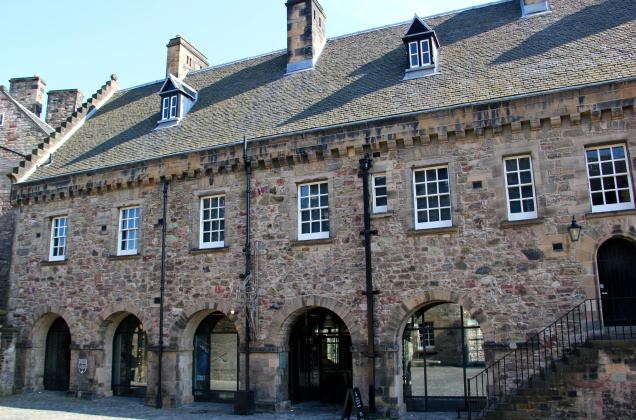
The most significant of Tipu’s memories lay at the imposing castle in Edinburgh, Scotland’s capital. This historical castle, perched on a hillock with a commanding site, is a national symbol of Scotland. Inside the castle is located ‘National War Museum’in which the ‘the Battle Honors” of the Scottish Regiments are displayed. Here are seen numerous ornamental swords belonging to the several prominent Scottish Generals who saw action in the Mysore wars. Swords presented to Generals as souvenirs and medals are also on display What is surprising is the words, ‘Carnatic’, ‘Mysore’, and ‘Srirangapatnam’ carved in stone, are seen on the wall of this Museum indicating the importance the Scots bestowed on their combats during the wars against Tipu.
At the Edinburgh International Festival (EIF), held annually in August with several programmes of music, theatre, opera and dance, Tipu’s memories also come alive . The closing ceremony of the EIF held at the Castle is marked by spectacular display of fireworks. The scene is suddenly shrouded in darkness and bellowing smoke as rockets and explosives presents dramatic images of a big hill-fort under siege. This is an imitation of the Mysore wars when Scottish soldiers in India were familiar with such sights when deadly fires were showered on them from the impregnable forts like Nandidurg, Savandurg and Ootradurg in Tipu’s kingdom. It is said that four tons of explosives are used that evening for the celebration of such fireworks. Tipu Sultan, the ‘Tiger of Mysore’ must have died two centuries ago, but his enduring legend continues to be celebrated in far away Scotland with genuine nostalgia.
source: http://www.thehindu.com / The Hindu / Home> Friday Review / by K.S.S. Seshan / Hyderabad – March 17th, 2016
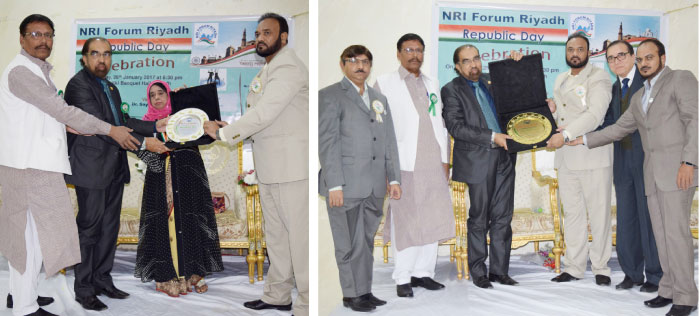
The NRI Forum (NRIF) Riyadh celebrated the 68th Republic Day of India with fanfare here. Patriotic songs and popular Bollywood numbers by eminent singers and the felicitation of Pravasi Bharatiya Sammam and Pravasi Excellence Award winners marked the celebration.
Mrs. Zeenat Jafri was felicitated by NRIF for her latest accomplishment of receiving the Pravasi Bharatiya Samman Award by Indian President Pranab Mukharjee in India. Terming her as the torch-bearer of knowledge and education in the Kingdom, Vice President NRI Forum Dr. Sayeed Mohiuddin said, “Selfless service and utmost dedication are the words that truly describe her.”
“At the time when expatriate community in the capital did not have any educational facility for children of Indian expatriates, Mrs. Jafri ventured into this field by making a small beginning. An educationist herself, she started a school for Indian children at her home. The school, which was established with the blessings and permission of Mrs. Indira Gandhi, groomed by Mrs. Jafri is now known as International Indian School Riyadh (IISR) and is one of the prominent Indian community schools in Saudi Arabia. She was the principal of the girls section of IISR from Aug 1982 to May 2014,” Mohiuddin said.
After receiving the memento of appreciation from eminent community leaders Mohammed Abdulrahman Saleem, Mohammed Quaiser and Syed Akram Mohiuddin, Mrs. Jafri thanked NRIF for the honor and Indian Embassy officials for recommending her name to the Indian government for the prestigious award. She highlighted the importance of education and stressed on the necessity for all to gain knowledge and education. She appreciated the activities of NRIF and assured her support in all possible ways.
Chief Guest Mohammed Abdulrahman Saleem, president Hindustani Bazm-e-Urdu Riyadh, was felicitated by NRIF for receiving the Pravasi Excellence Award by the Confederation of Telangana Associations (COTA) in Hyderabad. A memento of appreciation and floral garland was presented to him. COTA conferred on him this award in recognition of his continuous services spread over four decades.
He founded different professional and cultural organizations and worked for the promotion of Urdu language and literature. An ardent lover of Urdu language and literature, his passion is to keep Deccani Tahzeeb alive and see it flourish.
Saleem thanked the NRIF and highlighted his activities and accomplishments during his long stay in the Kingdom.
Guest of Honor, President Tanzeem Hum Hindustani Mohammed Quaiser congratulated Mrs. Zeenat Jafri and Abdulrahman Saleem for achieving eminent awards.
President NRIF Syed Akram Mohiuddin highlighted the activities of NRIF and said the forum is involved in various activities since its inception, including educational, sports, cultural, religious and other social activities. The memorable ghazal nite by Zulfiqar Ali Khan was a grand success and was very much applauded by the expatriates in the Kingdom.
Eminent Singers of “NRI Melody Makers” — Rahmat Ali Khan, Abdul Qadeer Ali Alvi, Syed Riyaz, Muneer Ahmed and Miss Shreeja Janardhan presented melodious songs to make the evening memorable.
A young student of Al Yara International School Aswin Siva Prasad addressed the gathering on the Republic Day of India and its importance.
General Secretary Nooruddin Jahangeer and Vice President Cultural Affairs Shakeel Mah handled the overall arrangements.
source: http://www.saudigazette.com.sa / Saudi Gazette / Home / February 14th, 2017
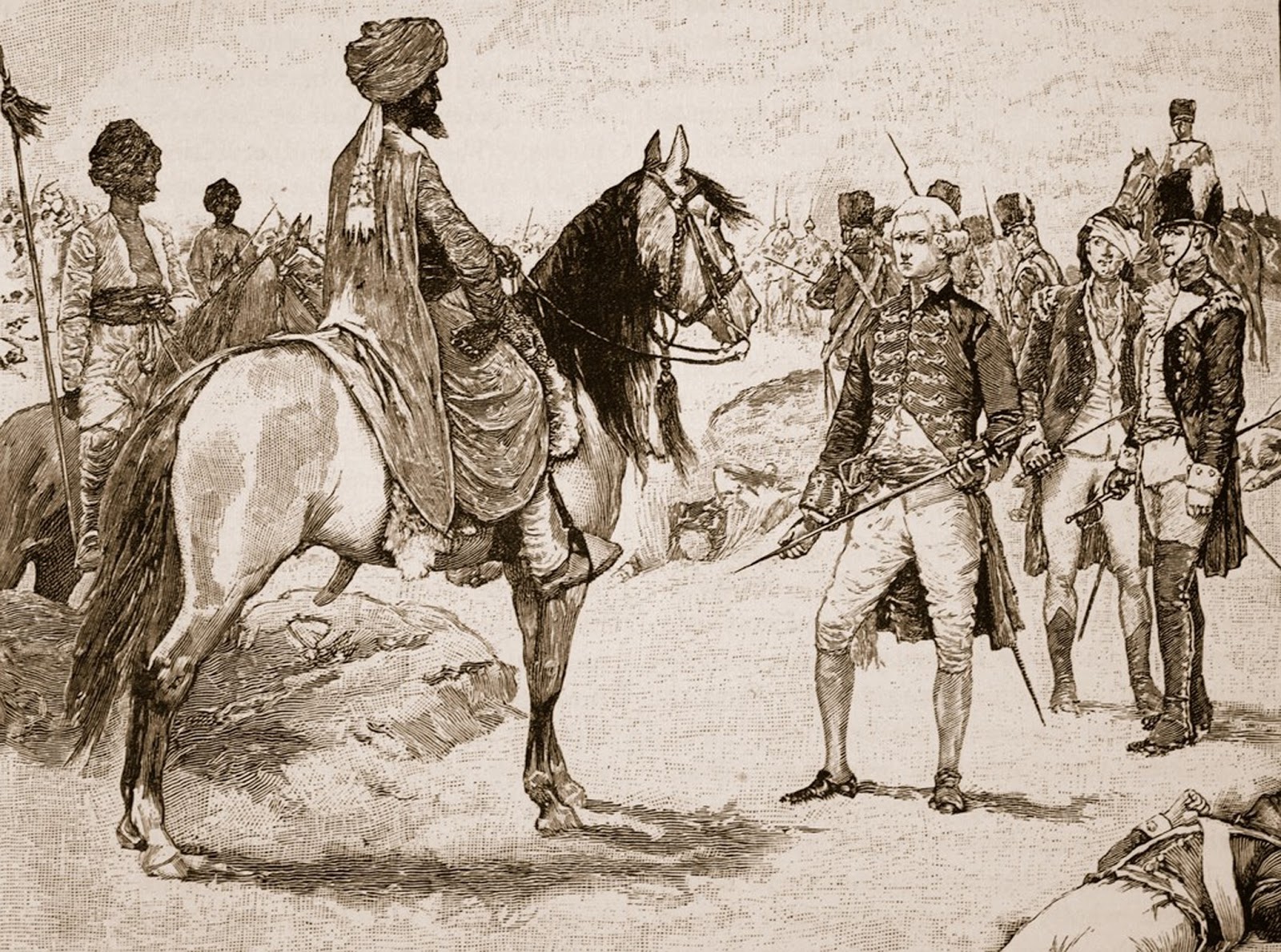
Surrender of Baillie to Hyder Ali, 1780, illustration from ‘Cassell’s Illustrated History of England’ (20th century) 1780
It was 1765 and a Duke in faraway England known for breeding race horses named his foal Hyder Ally. A few years later in 1782, and many more thousand miles away at the other end of the world, a single mast ship named Hyder Ally gave the fledgling navy of United States of America one of its greatest victories. How are these two events related and what connection did they have with the people of the erstwhile Kingdom of Mysore, the precursor to modern day Karnataka state, India?
In 1749 a 27-year old youth Haidar Ali (Hyder Ally as the British spelled his name), born at Budikote in modern day Kolar district, Karnataka put his military skills in action for the Mysore Army during the nine month siege of Devanahally Fort against a Poligor. Poligars (or Palegaras in Kannada language) were the local strong men, each controlling a few fortified settlements prior to the British rule. In early 1750s Haidar was also part of the action between the French and English in their struggle to install a person of their choice as Nawab of Arcot in which the Mysore Army sided with the English. Haidar Ali increased his stature among the military circles of the Mysore Army and was elevated asFaujdar of Dindigul in 1755. He successfully led Mysorean resistance to the Maratha invasion in 1759 and was consequently elevated as the Chief Commander of its army. Haidar’s perseverance in fighting his political foes paid off and in 1761 he was the lone survivor around the utterly weak Mysore King of the Wodeyar dynasty. He proclaimed himself a Nawab soon and found himself the de-facto ruler of Mysore Kingdom, being the most successful in protecting it from invasions by both other Indian kingdoms as well as Europeans 1. By then the British East India Company had its eyes set firmly on peninsular India having taken control of Bengal in 1757 as a consequent of the Battle of Plassey.
Back in England, Peregrine Bertie was the 3rd Duke of Ancaster in England having succeeded his father in Jan 1742 2. He raised a regiment of foot for the King of England during the rebellion in Scotland in 1745 3. He was subsequently promoted to the rank of a General in the Army in 1755 and later as a Lieut. Gen., in 1759 4. Peregrine was a leading horse racer who started a number of famous racing lines 5. He was appointed Master of the Horse to Queen Charlotte, Queen of Great Britain and Ireland in 1765. Peregrine as a military administrator was probably aware of the military and political happenings in India. In fact he was transferred in a year from the post of the Master of the Horse to the Queen to that of the King, where he was ‘responsible for overall management of all the royal stables, horses, carriages’. This transfer was due to the changes affected by the stock-holders of East India (EI) Company in England. The stock-holders were apparently alarmed by the acts of the English Prime Minister Lord Chatham to curb the influence of EI Company which by then controlled huge resources and land across in India. Given this background Peregrine was probably informed of the meteoric rise of Haidar Ali in south India’s political and military theatre. Indeed in 1760 an overconfident English Army detachment under Major Moore tasted its first defeat at the hands of Mysoreans under Haidar Ali at Trivadi near Pondicherry. And through that decade Haidar continued to spoil the political, economic and military aims of East India Company in Peninsular India with ramifications beyond this country given the global nature of the company’s trade. Did the military acumen of this Mysorean soldier play a role in Peregrine in naming his foal Hyder Ally in 1765 6,7? This may not be surprising as another race horse breeder in England named a foal Tippoo Saib in 1769 8, 9. Just a couple of years ago in June 1767, 17-year old Tipu Sultan (or Tippoo Saib as the British preferred to call him), heading a small force of the Mysore Army, stormed East India Company’s HQ in south India at Madras and nearly imprisoned the Madras councillors who threw themselves into the sea and escaped in a dingy. A year later Tipu recovered Mangalore from the British who fled the fort leaving behind their sick and wounded 10. The military and political deeds of this father-son seem to have left an impression on the British psyche.
US Navy’s tryst with Hyder Ally
Chance a race horse imported into USA by Col. Tayloe was a line of Peregrine’s Hyder Ally 8,11. Interestingly foals within America were also being named Hyder Ally (and Tippoo Saib) in 1770s.
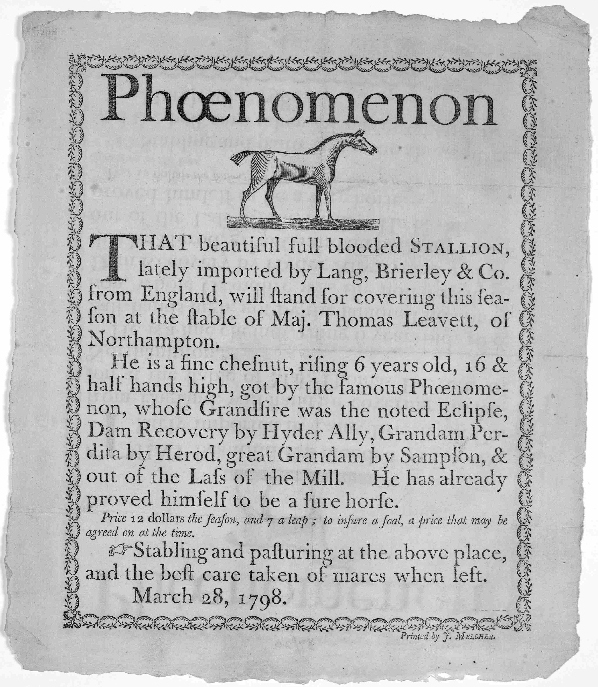
A pamphlet advertisement for a stallion of Hyder Ally’s line published in the city of Portsmouth, USA in 1798. Accessed from Library of Congress, USA on November 5, 2017 from this link.
The first Hyder Ally to be foaled in America was in 1777 and four other foals were recorded with the name in 18th century 12, 13. But something very interesting was recorded in eye witness accounts of America’s history in 1770s. An upheaval overtook the country in 1775 as ordinary Americans rose against the Government of Great Britain, declared independence and flew their own flag 14, 15. Apparently the first flag of the Union, now the US national flag- the Stars and Stripes, sent to the state of Maryland was hosted on a sailboat by teenaged Joshua Barney at Baltimore in October 1775 who served the US Navy since then.
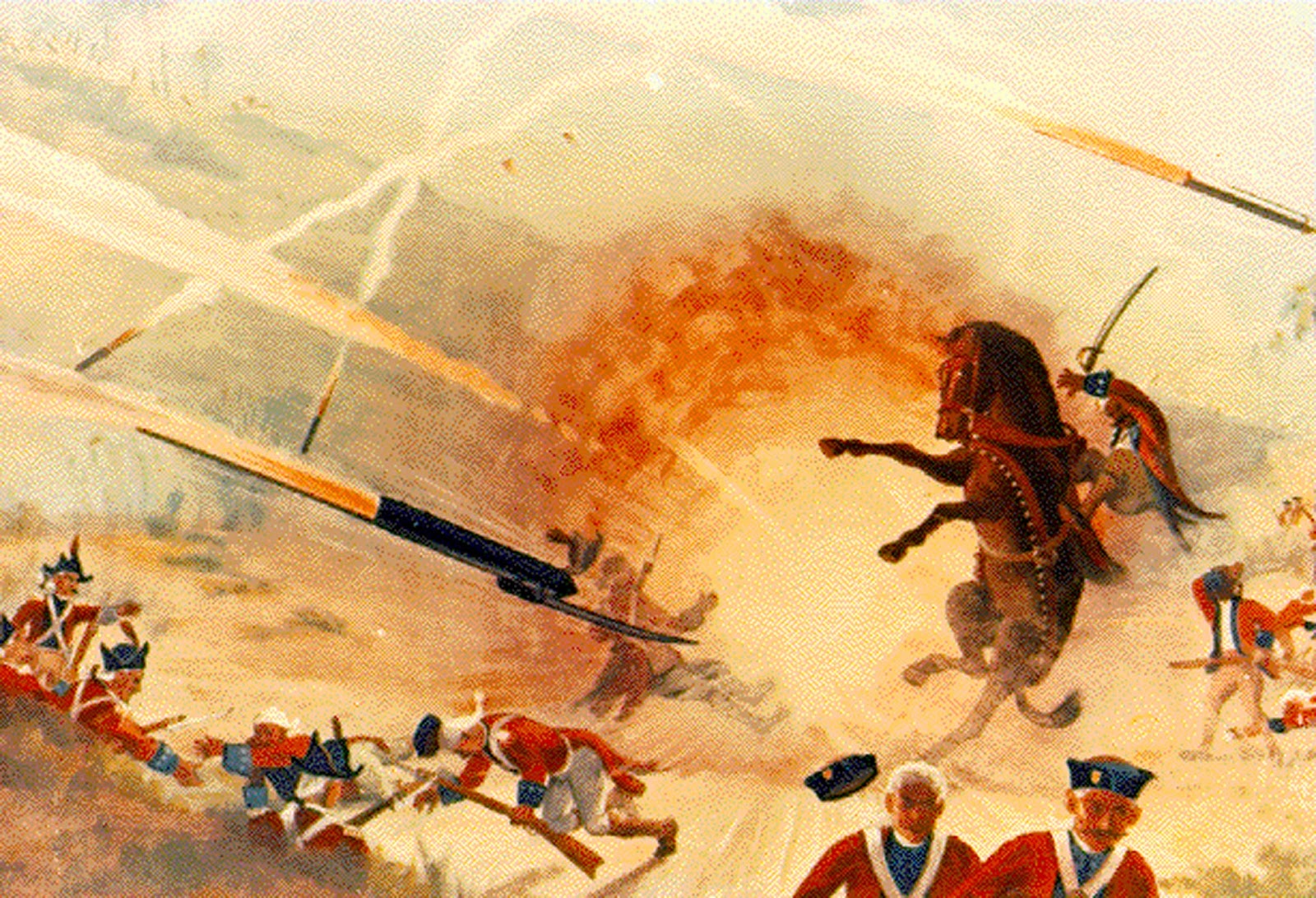
‘Rocket Warfare’, by Charles H. Hubbell (1898–1971) captures the humiliation of British at the Battle of Pollilur (Sep. 1780) by Mysorean war rockets
In 1780, in far-away Mysore Kingdom, America’s ally against the British through the French, the East India Company was suffering one of its worst reverses in its military history. The reverberations of the humiliation of British at Battle of Pollilur in September 1780 inspired the Americans who received the news 16 on 23 August 1781. On 19 October 1781, the British land force led by Charles Cornwallis (who later led EI Company’s army and its Indian allies to defeat Haidar Ali’s son Tipu Sultan in the 3rd Anglo Mysore War) surrendered to the Americans led by George Washington. Nine days later Cornwallis’ surrender was celebrated at Trenton, New Jersey with the town being decorated with American colours. The town’s who’s who along with inhabitants attended a service at the Presbyterian Church, where a discourse highlighting the occasion was delivered by a Reverend. In the afternoon the gathering drank 13 toasts accompanied with a discharge of artillery one of which was for ‘The great and heroic Hyder Ali, raised up by Providence to avenge the numberless cruelties perpetrated by the English on his unoffending countrymen, and to check the insolence and reduce the power of Britain in the East Indies’.
In October 1781, the British land force led by Charles Cornwallis surrendered to the Americans led by George Washington (Incidentally a decade later Cornwallis gave EI Company and its Indian allies victory over Haidar Ali’s son Tipu Sultan in the 3rd Anglo Mysore War in India). But America was far from being an independent nation. The British still ruled the seas. They kept a keen watch on the ships entering and exiting the ports of north east USA, often capturing the vessels and looting goods 17.
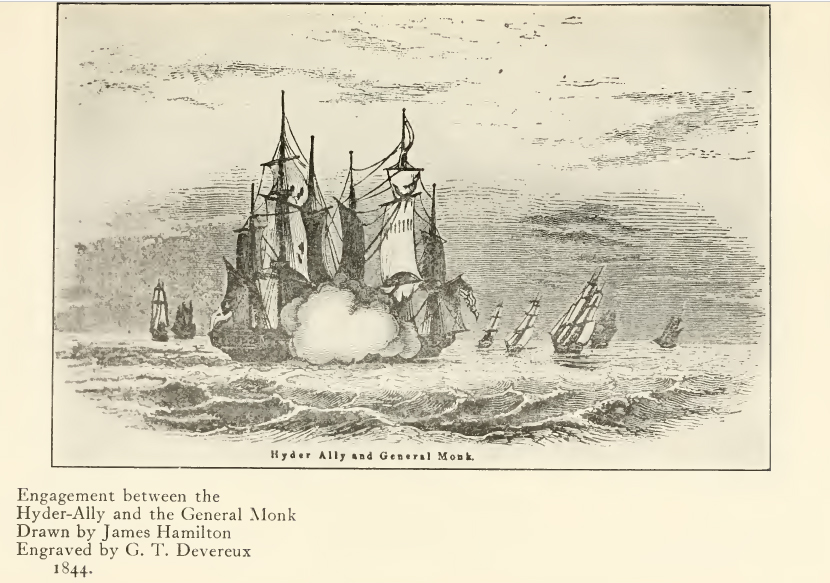
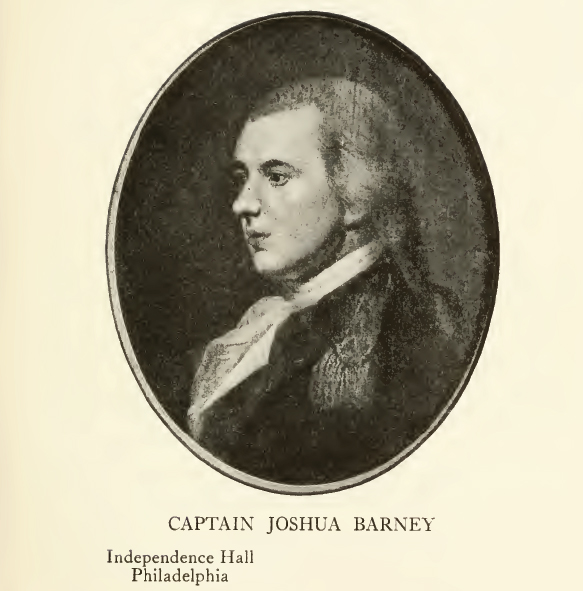
General Washington an American sloop-of-war was captured by Admiral Arbuthnot, and placed in the king’s service under a new name The General Monk, which was then used to pirate American ships. By 1782 the commerce of Philadelphia City as well as the ordinary life of the residents of the coast and nearby streams was deteriorating. As the fledgling American Union was not in a position to protect the affected vessels the State of Pennsylvania, at its own expense, fitted a number of armed vessels that operated in waters leading to Philadelphia. The state purchased Hyder Ally, a small sloop (single mast ship) equipped it with sixteen six-pounder guns to help protect the American vessels. 23-year old Lieutenant Joshua Barney, now in the US navy, arrived at Philadelphia where he was honoured with the command of Hyder Ally17. Assigned with recruiting men, Barney used a poem penned by Philip Morin Freneau18 to attract young American men to the ship. The poem exalted Haidar Ali’s bravery against the British with the following lines:
Come, all ye lads who know no fear,
To wealth and honour with me steer
In the Hyder Ali privateer,
Commanded by brave Barney.
From an eastern prince she takes her name,
Who, smit with freedom’s sacred flame,
Usurping Britons brought to shame,
His country’s wrongs avenging;
Come, all ye lads that know no fear.
With hand and heart united all
Prepared to conqueror to fall.
Attend, my lads! to honor’s call —
Embark in our Hyder-Ally!
And soon Barney led a force of a hundred and ten men. On April 8, 1872, he received instructions to protect a fleet of merchantmen to the Capes just before the sea, at the entrance of Delaware Bay. Dropping the convoy at Cape May road he was awaiting a fair wind to take the merchant ship to sea when he saw three ships19 which he realised were waiting to plunder the convoy. Barney immediately turned the convoy back into the bay, using Hyder Ally to cover the retreat. Soon the bigger General Monk under the command of Captain Rogers of the Royal Navy nearly double his own force of metal, and nearly one-fourth superior in number of men caught up with Hyder Ally. Despite being fired upon, Barney held Hyder Ally’s fire till within pistol shot when both the two vessels got entangled. A desperate fight, lasting for only 26 minutes though, resulted in the lowering of flags by General Monk indicating her surrender. Both vessels arrived at Philadelphia a few hours after the action, bearing their respective dead. The Hyder Ally had four men killed and eleven wounded. The General Monk lost twenty men killed and had thirty-three wounded including Captain Rogers himself, and every officer on board, except one midshipman!20
Source: ‘Life of Commodore Joshua Barney, Hero of the US Navy (1776-1812), 1912
A hero is celebrated
Philadelphia burst in celebrations. Ballads were made upon this brilliant victory and sung through the streets of the city! And echoing with Barney’s name was that of Hyder Ally. Here are some lines 14:
And fortune still, that crowns the brave
Shall guard us o’er the gloomy wave —
A fearful heart betrays a knave!
Success to the Hyder-Ally!
While the roaring Hyder-Ally
Cover’do’er his decks with dead !
When from their tops, their dead men tumbled
And the streams of blood did flow,
Then their proudest hopes were humbled
By their brave inferior foe.
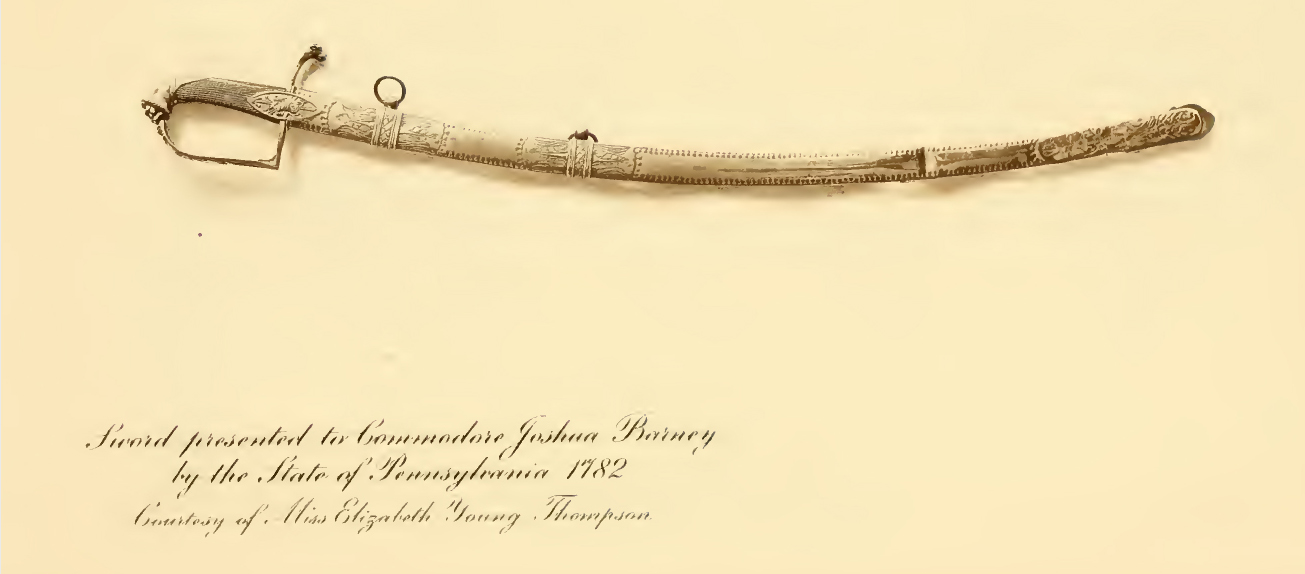
In 1782 the Legislature of Pennsylvania passed a vote of thanks to Captain Barney and ordered a gold-hilted sword to be prepared, which was afterwards presented to him in the name of the state by Governor Dickinson. It was a small sword with mountings of chased gold- the guard of which on the one side had a representation of the Hyder Ally, and on the other the General Monk 14. Barney was the last officer to quit the Union’s service, in July, 1784, having been for many months before the only officer retained by the United States.
Source: ‘Life of Commodore Joshua Barney, Hero of the US Navy (1776-1812), 1912
Barney was sent by the American Government to Paris. A reception was given in France him as a hero of dashing naval exploits during the Revolutionary War 21. A painting representing the action between the two shipswas executed in 1802 by L. P. Crepin in Paris by order of Barney, while in the service of the French Republic. The same was presented by him on his return to the United States, to Robert Smith, Esquire, then secretary of the navy 22. The painting is now in the United States Naval Academy, Annapolis, Maryland 14. Barney was an intimate friend of Count Bertrand, one of Napoleon’s generals 15. Napolean incidentally had an alliance against the British with Haidar Ali’s son Tipu Sultan, during the latter’s life time 23.
Barney was appointed a Captain in the Flotilla Service, US Navy on 1814 April 25 24. He took part in seventeen battles during the Revolutionary War and in nine battles during the War of 1812. A British Musket-ball lodged inside his body in battle at Bladensburg, Maryland in August 1814 25. He passed away on December 1, 1818, aged 60.
70 years after Hyder Ally’s victory over General Monk, James Cooper wrote “This action has been justly deemed one of the most brilliant that ever occurred under the American Flag. It was fought in the presence of a vastly superior force that was not engaged, and the ship taken was in every essential respect superior to her conqueror.”17
The world today is considered a global village thanks to the scaling down of boundaries between nation states and individuals alike. But it may surprise us even in the 18th century seemingly local political events and humans made an impact on lands and societies far away. The name Haidar Ali, after an adventurer from an obscure place in the erstwhile Kingdom of Mysore who gave many a lesson in military and political strategies to global colonial powers of England and France, echoing across the proverbial seven seas in distant North America for nearly a century is testament of this 26, 27.
Painting of Commodore Joshua Barney at Independence Hall, Philadelphia, ‘Life of Commodore Joshua Barney, Hero of the US Navy (1776-1812), 1912
Sources/ Notes:
Col. Mark Wilks, Historical Sketches of the South of India, Volume 1 of 3, 1810. Wilks traces the origins and political lives of Mysore Kingdom’s rulers and provides an insight into their military campaigns.
The New Peerage, or Present state of the Nobility of England, Vol. 1 of 4, 1784
The Gentleman’s Magazine, Vol.78, Part 1, 1808
George Cokayne, Complete peerage of England, Scotland, Ireland, Great Britain and the United Kingdom, 1887
Allan Chivers, The Berties of Grimsthorpe Castle, 2010. Peregrine established the racing lines of Blank, Paymaster and Pacolet which were well-known in England. Their foals went to establish themselves in the US.
Blank was one of his favourite horses and he named a foal sired by it as Hyder Ally.
Hyder Ally was later sold by Bertie to C.Blake who then sold it to Richard Vernon. The later, in Oct. 1773, raced it at New Market, considered the birthplace and global centre of thoroughbred horse racing. Many of this horse’s progeny were imported into America and entered racing.
allbreedpedigree.com Online database on Pedigree horses. Downloaded Oct. 10, 2017.
It is interesting that it was not uncommon for race horses to have names originating in the east. Such names in 1700s included Mumtaz Mahal and Salim7. But Pergerine’s only horse named after a human was Hyder Ally.
Prof. B Sheikh Ali, Tipu Sultan – A Crusader for Change
American Turf Register and Sporting Magazine, Vol. 2, 1831
J.H.Wallace, American Stud Book, Vol. 1, 1867
Other books that document Hyder Ally foals and sires are William Pick and R.Johnson’s The Turf Register, and Sportsman & Breeder’s Stud-Book (1803) and Patrick Nisbett Edgar’s The American Race-turf Register, Sportsman’s Herald, and General Stud Book, Vol. 1 of 2 (1833)
A biographical memoir of the late Commodore Joshua Barney (1832) by Mary Barney sister of Joshua Barney provides in-depth information of the latter’s personal and military life.Born on July 6, 1759, 13-year old young Philadelphia Joshua Barney set sail on his maiden merchant ship journey to Ireland in 1771 with his brother in law Captain Thomas Drysdale. He sailed back home the following year and made trips to ports in Europe again. He set sail for Nice, France in December 1774 during which journey Captain Drysdale died. He took control of the ship which needed urgent repairs and therefore docked at Gibraltar, Spain instead. In a few months he sailed to Algiers, Algeria from Alicant, Spain to deliver Spanish troops during which he witnessed the annihilation of these troops by the Algerians which made him return to Alicant soon. He immediately set sail across the vast Atlantic Ocean for Baltimore, USA. As he entered the Chesapeake Bay on 1st October he was surprised by the British Sloop of war Kingfisher. An officer searched his ship and informed him that Americans had rebelled and that battles were being fought. He was fortunate enough to escape detention. Returning to Philadelphia he was determined to serve the Americans fight against British. At that time a couple of small vessels were under at Baltimore ready to join the small squadron of ships stationed then at Philadelphia and commanded by Commodore Hopkins. Barney offered his services to the commander the sloop Hornet, one of these vessels. He was made the master’s-mate, the sloop’s second in command. A new American Flag, the first ‘ Star-spangled Banner’ in the State of Maryland, sent by Commodore Hopkins for the service of the ten gun Hornet, arrived from Philadelphia. At the next sunrise, Barney unfurled it in all pomp and glory. In 1776, Robert Morris, President of the Marine Committee of the Congress offered him a letter of Appointment as a Lieutenant in the Navy of the United States in recognition of his efforts during a naval battle engagement in Delaware.
A summary of Mary Barney’s book14 is well recapped with notes in William Frederick Adams’ Commodore Joshua Barney: many interesting facts connected with the life of Commodore Joshua Barney, hero of the United States navy, 1776-1812 (1912).
Frank Moore, ‘Diary of the American Revolution’, Volume 2, 1860
James Fenimore Cooper in History of the Navy of the United States of America (1853)
‘The sailor’s invitation’, Freneau’s Poems written and published during the American Revolutionary War (1809)
Two ships and a brig- a sailing vessel with two masts
As explained by Barney himself in his painting of this war commissioned later
A. Bowen, The Naval Monument,1815, Concord, Massachusetts, U. S. A. gives an account of the reception received by Barney in France
The painting was accompanied by a description, in the hand-writing of Commodore Barney, which is reproduced in Mary Barney’s book
Record of Service, Bureau of Navigation, Navy Department, United States Navy
The conduct of Commodore Barney, at the battle of Bladensburgh, was appreciated by his military opponents as well. He was wounded in the engagement and was taken prisoner by General Ross and Admiral Cockburn but paroled on the spot. At the time of his death in 1818, the ball was extracted and given to his eldest son. For the valuable services of her husband, Congress granted Mrs. Barney a pension for life.
William Goold, Portland in the past, 1886 has information of at least one more well-known ship named Hyder Ally built in the US in 1800s after the one described in this story. This ship, like many other US ships, resorted to pirating British ships in the Indian Ocean all the way up to the island of Sumatra and around the Cape of Good Hope in South Africa in the run up to the British-American War of 1812.27. Corbett’s Annual register (1802) documents the ship ‘Tippoo Saib’ registered in Savannah, Georgia, the southern most of the 13 colonies that declared independence from the British in 1776 and formed the original ‘United States of America’.
These women embodied feminism long before it became a part of the zeitgeist.
The heiress apparent to the throne of Bhopal, Abida Sultan, wore her hair short, played the saxophone, had her own band, sped around in a Daimler, and when her husband announced that he’ll assume custody of their son, threatened to kill him with the pistol she kept in her pocket. All the while, she remained pious and committed to Islam.
Abida Sultan’s autobiography, Memoirs of a Rebel Princess, was unabashed and far from removed from the stereotypical picture of an oppressed Muslim woman. In the book, she wrote frankly about her conjugal life and her inability to be the good, dutiful wife. But could one expect any less from the child of a feminist royal lineage?
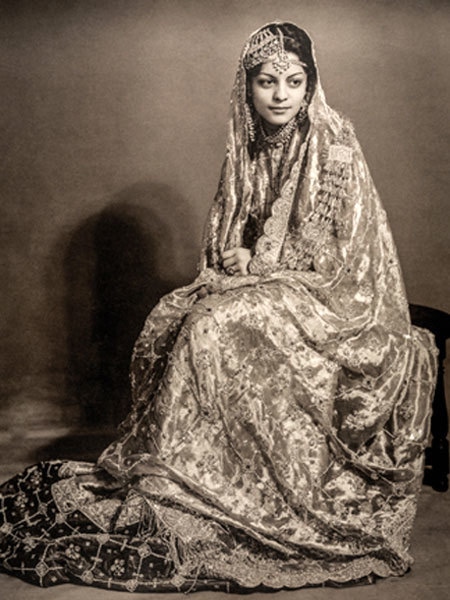
This matrilineal reign, which began in 1819, lasted more than a hundred years, with the lone interruption in 1926, when Sultan Jahan Begum abdicated in favour of Nawab Hamidullah Khan. Hamidullah Khan’s daughter Abida Sultan was to succeed to the throne, but when she chose to leave for Pakistan after the Partition of India, her younger sister Sajida became the Begum of Bhopal.
Sajida Sultan. — Unknown/Wikimedia Commons
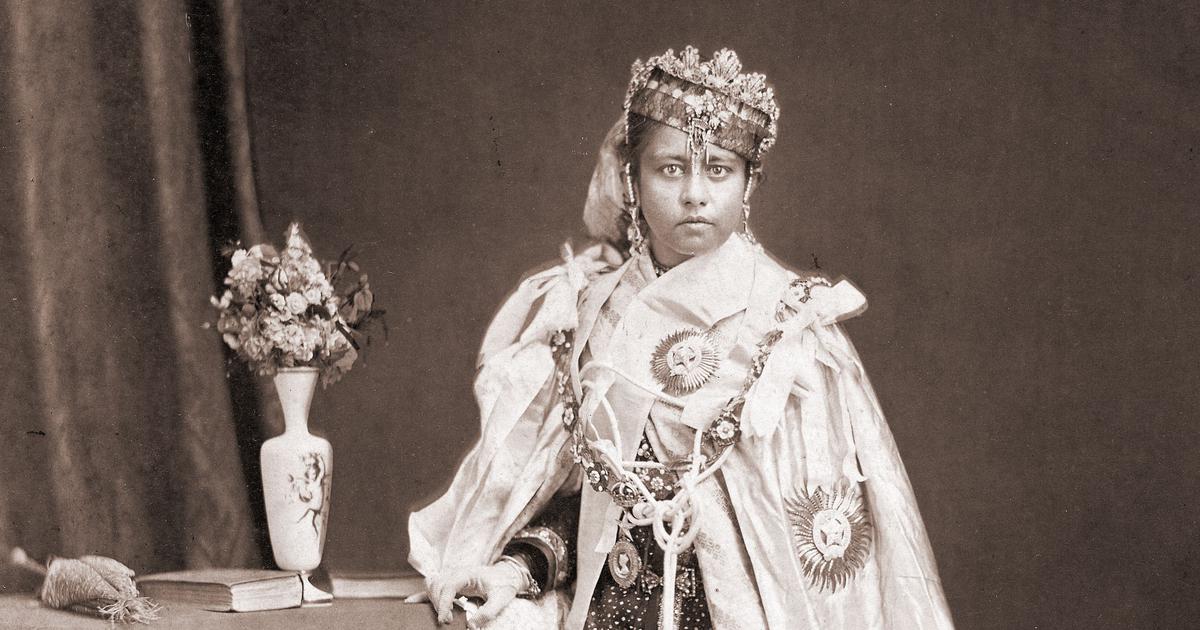
Unlike the Queen-Regent of Travancore, whose brief radical rule ran only till her son came of age, these women ruled for unexpectedly long periods, facilitated by the absence or death of male contenders to the throne, and through sheer grit. A photograph taken in 1872 of Nawab Shah Jahan Begum, Abida Begum’s great-grandmother, shows a booted woman staring straight at the camera, much in the manner of a Vogue cover shoot. The Begums of Bhopal practised feminism much before it gained prominence. They were interesting, headstrong and opinionated, but their wars weren’t fought on the battlefield.
Archival records are filled with the Begums exhibiting their commitment to Islam: donating money to build a mosque in Basra, Iraq, funding the Muslim University at Aligarh, and opening a school for girls in Delhi in the early 1920s. At the time, it was unusual to have a ruler devote time and money to women’s education — even a progressive thinker like Syed Ahmad Khan was focused on Muslim men getting Western education — but to do so outside their state was truly remarkable. So much so that when Lord Edwin Montagu, the British Secretary of State for India, met Begum Sultan Jahan in 1917, he noted in his diary that she was “frightfully keen on education, and jabbered about nothing else”.
Sultan Jahan Begum. — Wikimedia Commons
Fringes of history
Women and their assumption of political power have always been sidelined in Islamic history, though there is reason to believe that Aisha, the Prophet’s wife, had a role to play in the establishment of the first Islamic state. Razia Sultana’s brief reign as the Sultanah of Delhi in the 1200s and her killing demonstrated the near impossibility and legitimacy of a Muslim women ruler.
Nothing changed over the centuries. Though it was a young woman, Queen Victoria, who reigned over the hundreds of Indian monarchs at the start of the Paramountcy, assuring them gently of their territorial sovereignty, this mattered little in India. Indian monarchies have been patrilineal and patriarchal, guarding the male and natural right to ascend the throne.
Against this background, to have four Muslim women successively rule a state is unprecedented in world history. But what makes it all the more remarkable is that these women administered a state dominated by feudal warlords accustomed to male privilege over the throne.
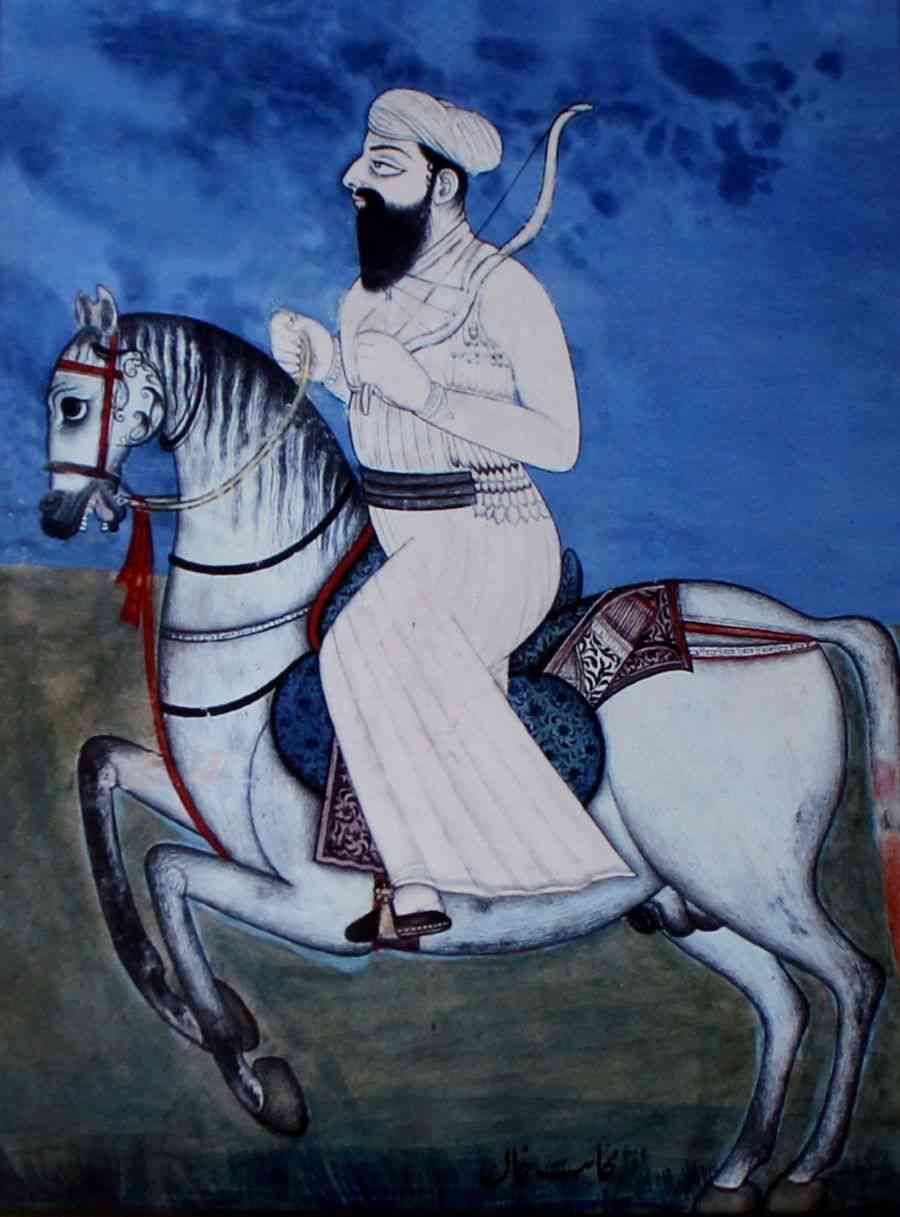
The modern city of Bhopal was founded in the early 18th century by Dost Mohammad Khan, an Orakzai Pathan from Afghanistan, and it soon became the second-most important Muslim princely state after Hyderabad. Its geographical location — in Central India — was vital for the suppression of the 1858 War of Independence.
Dost Mohammad Khan. — Wikimedia Commons
In North India, there were several Muslim princely states — such as Bahawalpur, Mahmudabad, Tonk, Pataudi and Rampur — which were supported by the British under the Paramountcy. Under this policy, while nearly 500 princely states were autonomous and maintained internal sovereignty, their foreign policy and right to wage wars was controlled by the British.
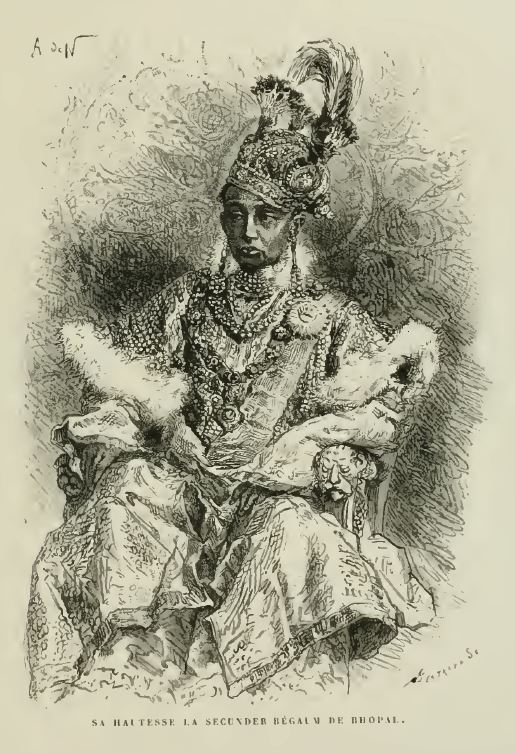
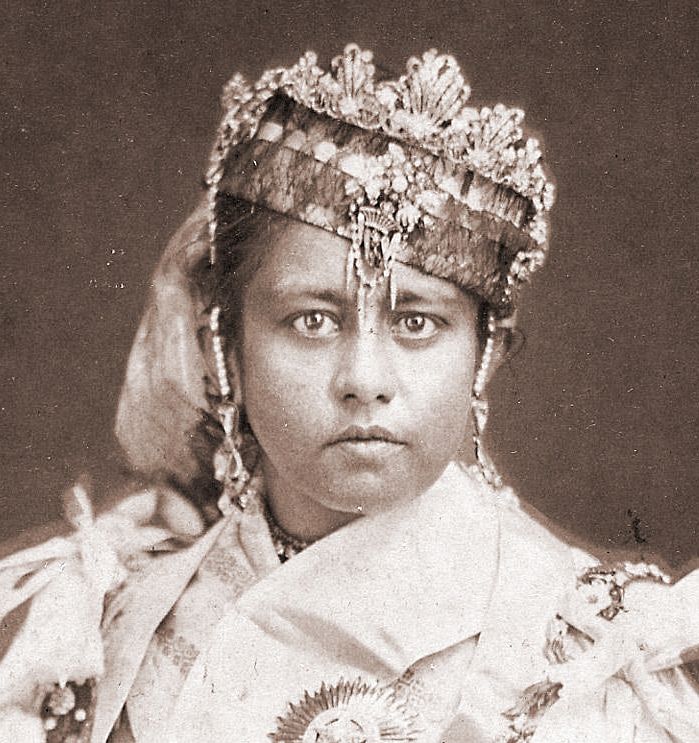
The reign of the Begums began in Bhopal in 1819, when the ruling Nawab, Mohammad Khan, died without an heir and the British decided to crown his young wife Qudsia till her daughter Sikandar came of age. Sikandar Begum’s husband too died in 1844, and she proved to be a competent ruler and a worthy ally to the British, playing a vital role in the First War of Independence in 1857-1858. This compelled the British to make a provision that the Begum was a sovereign in her own right. Three years later, in 1861, she was invested with the Exalted Order of the Star of India, making her, at the time, the only female knight in the British Empire besides Queen Victoria. She was succeeded by her daughter Shah Jahan Begum and then by Sultan Jahan Begum.
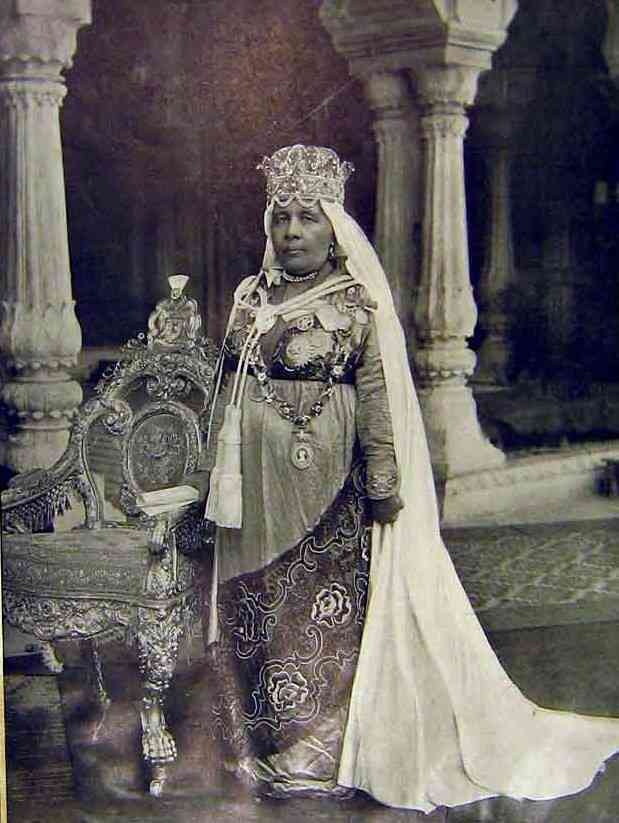
Sultan Jahan Begum went on to have a 25-year-long reign, marked by a commitment to progress, education and women’s health reforms. She was the last Begum of Bhopal as the heiress apparent, Abida Sultan, abdicated the throne in 1948.
Sikandar Begum. — Louis Rousselet/Wikimedia Commons
‘Magical island’
The first and foremost among them, Qudsia Begum, set the template of the ideal ruler. Spartan, and shunning jewellery, she refused to take loans and made sure that any money spent would be solely for education and philanthropy. As the British agent Lancelot Wilkinson in Bhopal noted: “She rides and walks about in public, and betrays her determination to maintain herself in power by learning the use of the spear and other manly accomplishments. At times she became quite frantic; and as one of the soldiers observed, more terrible to approach than a tigress.”
This “magical island”, as at least one commentator called it, was as rare as it was difficult to create. Like all figures of power, the Begums too attracted people who wanted to manipulate them — and in their case, this meant both the British and the ruling clan.
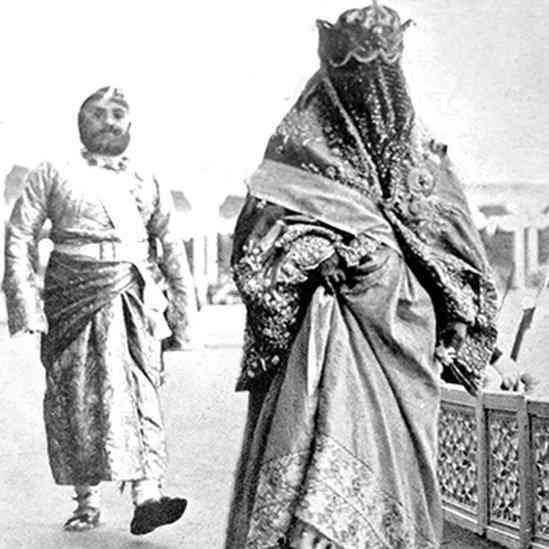
Qudsia Begum and her daughter, early inheritors of an uneasy throne, responded to the tugs and pulls by quickly learning traditional masculine skills like fencing and hunting. Shah Jahan Begum embraced the Purdah, asserting notions of orthodox Islamic femininity. She withdrew from public life into strict seclusion and refused to meet the British Viceroy in 1875. Her daughter would later recount in her autobiography that “even as a young girl, she preferred to meet with other girls of her age to discuss ‘a thousand little points of household duties and of domestic management than to perform outdoor activities’.” None of this though got in the way of being a good ruler, and she proved that a veiled woman could rule as competently as anybody else.
Shah Jahan Begum. — Louis Rousselet/Wikimedia Commons
Balance of power
The Begums carefully navigated the multiple demands of power by ingeniously playing around with tradition and modernity. They would sometimes opt to let go of the burkha and at times wear it to demonstrate a different modernity. In their writings, the Begums constantly acknowledged their mothers and grandmothers, paying obeisance to the strong women who shaped their lives and characters.
Their commitment to austerity and Islam set them apart from the wasted royal lives that were given to overindulgence and dissipation. They constantly drew upon the Quran and respected Islamic scholars, reinforcing the idea that Islam speaks of equity between the sexes. Their spartan lives struck Mahatma Gandhi too, when he visited the state in the late 1920s, on invitation. He was suspicious that the Begum’s cotton clothes and thin mattress had been “put on as a show”, till his travelling companion Sarojini Naidu assured him otherwise.
The Begums of Bhopal, who styled themselves as “Nawab Begums”, were radical and unconventional (the term ‘Nawab Begum’ itself was ingenious as there is no word for queen in the Islamic political imagination). Nonetheless, with consummate ease and success, they proved they were no less. Keeping in line with the Islamic tradition of maintaining a diary, like the founder of their state used to, the Begums invested much energy in maintaining records — of the state and of themselves.
Sultan Jahan Begum. — The Graphic/Wikimedia Commons
Shah Jahan Begum, the third in the line, established a History Office, along with a system for retrieving and maintaining records of important characters in her family. Abida Sultan’s son, Shahryar Khan, a former career diplomat in Pakistan, has carried on this family tradition by writing an authoritative account of the dynasty, The Begums of Bhopal.
Like a host of other wealthy Muslim ashraf women, the Begums travelled to Europe and to West Asia as part of the obligatory hajj. And despite the seriousness of the occasion, they never failed to display flashes of their chutzpah. There are anecdotes of Sikandar Begum not disembarking from the ship to Europe without her bottles of pickle. And upon reaching London, she mistakenly wore a dressing gown to meet King George V and Queen Mary, a realisation made only owing to the headlines in the newspapers the next morning.
Many princesses have ascended to power in democratic India by contesting and winning parliamentary elections. The Begums of Bhopal, however, are remarkable for sustaining a determined succession of women monarchs, despite hostility to their gender ruling — the very first Begum, Qudsia, had declared that her infant daughter would succeed after her. Despite the religious and political odds against them, their reign was marked by benevolence and modernity, a radical openness to change, like women’s education and medicine, while maintaining a steadfast commitment to the tenets of Islam. The Begums are icons for women, Muslim or otherwise.
This piece was originally published on Scroll and has been reproduced with permission.
source: http://www.dawn.com / Dawn / Home> Prism / by Priya Mirza / June 04th, 2019