The Women Education and Empowerment Trust (TWEET), one of the implementing organizations of the ‘Vision 2026’ project, has started a novel national-level year-long campaign ‘Freedom from Illiteracy: Each One Teach Ten’.
The campaign aims at providing illiterate adult women across the country with functional literacy. TWEET launched the campaign while the country is all set to celebrate its 76th Independence Day on 15 August.
TWEET is a national-level NGO based in New Delhi established for executing women empowerment initiatives under ‘Vision 2026’- a flagship project implemented by seven NGOs including TWEET. Vision is a decade-long program to bring about sustainable change in the socio-economic status of marginalized and deprived communities in the country. Right from its inception, Vision has been implementing numerous programs for illiteracy eradication.
The campaign was launched on Sunday by Rahamathunnissa A, Chairperson, TWEET, at the Press Club of India, New Delhi in the presence of Shaista Rafat, general secretary, TWEET, and Dr. Sharnas Muthu, Treasurer, TWEET.
“The major mission of the ‘Freedom from Illiteracy: Each One Teach Ten’ campaign is to engage educated women all over the country to volunteer for the initiative, educating at least 10 illiterate adult women and creating a remarkable impact on their lives,” Rahamathunnissa said, while launching the initiative.
“TWEET also aims to address major issues among the women such as unemployment, poverty, social backwardness and unrest, discrimination, suppression, and many more through the effective execution of the campaign,” said Shaista Rafat, introducing the campaign.
India’s National Literacy Mission defines literacy as acquiring the skills of reading, writing, and arithmetic and the ability to apply them to one’s day-to-day life. According to National Family Health Survey (NFHS-5) 2019-21, the literacy rate amongst adult women (15-49 years) in the country stands at 71.5% while the literacy rate of adult men is 87.4%.
source: http://www.indiatomorrow.net / India Tomorrow / Home> Education / by Admin, India Tomorrow / August 08th, 2022
“The Musalmans of India are, and have been for many years, a source of chronic danger to the British Power in India.” – W W Hunter, an English official posted in India, in his famous book ‘The Indian Musalmans’, published in 1871.
After 1947, Indian scholars wrote a ‘nationalist’ history of the Indian freedom struggle and for unknown reasons, they excluded Muslims. For the last seven decades, we have been reading a history of the Indian Freedom Struggle that has largely overlooked the contribution of Muslims. The generations brought up over this narrative believe that either the Indian Muslims were pro-British or aloof from the freedom struggle.
Such falsehoods propagated in the name of history should be challenged.
The British imperialism in India was resisted by the Indians right from its outset and the Muslims were the flag bearers of this resistance. The British took over Bengal administratively and economically after defeating the royal armies at the Battle of Plassey (1757) and the Battle of Buxar (1764). With their win over the Nawab of Bengal, the British started exploiting the Indians of Bengal province in an unprecedented fashion. Their ruthless loot resulted in a famine in 1770, which accounted for the deaths of one-third of the total population of Bengal.
No wonder the first popular national resistance to foreign colonial rule arose in Bengal. A united front of Hindu Sanyasis and Muslim Fakirs rose up in arms against the British. The man who led this fight was, Majnu Shah, a Muslim sufi from Kanpur (Uttar Pradesh). Majnu was a devotee of Shah Madar, Kanpur, and took up the cause of poor peasants on the advice of another Sufi saint, Hamiduddin. Almost 2000 Fakirs and Sanyasis, under his command, would loot the treasures of the British and British-backed landlords to distribute the money and food among poor exploited masses. From 1763 till his death in 1786, Majnu was the most dangerous threat to the British Empire in India. Fakir and Sanyasi forces killed several officers and soldiers of the British in guerrilla wars. After his death, Musa Shah took up the leadership of the movement. Hindu Sanyasi leaders, like Bhawani Pathak, were also there and fought alongside but the colonial records considered Majnu as the most threatening leader because under him Hindus and Muslims fought a united war. The ruthless British suppressed this movement a few years after the death of Majnu but the spirit of nationalism could not be killed.
The suppression of the movement led by Fakirs in Bengal did not mean that they accepted defeat. Fakirs changed their strategy and joined Marathas and other anti-British forces at the turn of the 18th century. The first major mutiny by the Indian sepoys of the English East India Company Army in 1806 at Vellore, which is said to be the inspiration behind 1857, was planned by Holkars, sons of Tipu Sultan and brother of Nizam of Hyderabad with the help of Fakirs. In every cantonment in South India, Fakirs propagated the message of nationalism through religious sermons, songs and puppet shows. When the revolt broke out at several places including Vellore the Indian revolutionaries were led by Fakirs like Shaikh Adam, Peerzada, Abdullah Khan, Nabi Shah, and Rustam Ali. Scholar Perumal Chinnian writes, “the Southern conspiracy was supported by Fakirs and other religious mendicants. The conspiracy was established in all the army stations by them.”
Within a few years, the British faced another challenge in the form of three distinct movements led by Syed Ahmad Barelvi, Haji Shariatullah and Titu Mir respectively.
Born in Uttar Pradesh, Syed Ahmad toured a large part of the country and gained followers in Bihar, Bengal, and Maharashtra. His followers took up arms against the British and its allies in the areas adjacent to Afghanistan. The movement posed a challenge to the British for decades. The British painted the movement as a work of religious fanaticism while in reality, Syed Ahmad tried to forge an alliance with Marathas against the foreign rulers. After he died in 1831, Enayat Ali and Wilayat Ali, both from Patna, took up the leadership of the movement. The wars they led in the frontier region caused the death of thousands of soldiers of the British army.
Haji Shariatullah and his son Dudu Miyan took up arms in Bengal to resist the tyranny of rich landlords. They led peasants to revolt against the indigo planters and other British agents. The movement they led is known as Faraizi movement.
Titu Mir also led a movement of poor masses against the British-backed landlords. He formed his army and set up a popular administration. In 1831, Titu was killed during a battle with the British. Hundreds of his supporters were arrested and hanged, including his deputy, Ghulam Masum.
Meanwhile, the Movement started by Syed Ahmad remained a grave danger to British rule in India. Enayat Ali, Wilayat Ali, Karamat Ali, Zainuddin, Farhat Husain, and others led an armed struggle against the British. In Patna, as soon as the news of the revolt of 1857 reached, all the prominent leaders were arrested before they could act. Still, Pir Ali launched a revolt in Patna. Though not a part of the larger movement himself the British believed that he had their support. Pir Ali, Waris Ali, and other Muslim revolutionaries were executed in Bihar during the revolt of 1857.
The First War of the National Independence of 1857 had a long history of planning behind it. In 1838, the English government arrested Mubariz ud-Daula for plotting a nationwide revolt against the foreign rule. The investigations revealed that Raja Ranjit Singh, Gaekwars, Satara, Jodhpur, Bhopal, Patiala, Rohilla Pathans, and several nawabs, rajas and zamindars had agreed upon the plan. Raja Ranjit Singh had actually sent his troops to help Mubariz and contacted Persian and French powers for help. The plan, because of a few traitors leaked out, Mubariz was imprisoned where he died in 1854 and the revolt took place two decades later.
The role of Muslims in 1857 is no secret. The unity of Hindus and Muslims in 1857 threatened the British like never before and they resorted to a policy of divide and rule after that. Maulvi Ahmadullah Shah of Faizabad, Fazl-e-Haq of Khairabadi, Imdadullah Muhajir Makki of Muzaffarnagar, and Azimullah Khan, an associate of Nana Saheb, were prominent in propagating the need of taking up the arms against the colonial rule. For years before 1857, they were propagating these ideas among sepoys as well as civilians.
In Bihar, Kunwar Singh was leading the revolt of 1857. Zulfiqar was one of his most trusted comrades with whom Kunwar was discussing every plan. After liberating Arrah the civil government installed by Kunwar had his most trusted allies and there were several Muslims. The government had “Shaikh Ghulam Yahea as Magistrate. Shaikh Muhammad Azimuddin, an inhabitant of Milky Tola in the town of Arrah, was appointed Jamadar (treasurer) of the eastern thana: Turab Ali and Khadim Ali, sons of Dewan Shaikh Afzal, were made Kotwals (Police officers in charge of a city)”
The revolt did not succeed. Bahadur Shah was exiled to Burma, several were hanged and many more were transported for life to Andamans. But, the zeal for freedom did not die.
In 1863, tribals in North West Frontier Province stormed the British territories and entered into a war. The British, though registered a victory, had to face one of the stiffest military challenges. They lost more than a thousand of its English soldiers. Intelligence reports pointed towards a financier in Ambala. The man was Jafar Thanesri. During the raid police found several letters which established him as the principal financier of the war in NWFP. He channelled money, men and arms from different parts of the country to the war front. Yahya Ali of Patna and nine others were also charged for waging the war against the Queen. What followed was a series of arrests and trials across India.
People were arrested in Ambala, Patna, Malda and Rajmahal. Ahmadullah, Yahya Ali, Jafar, Ibrahim Mandal, Rafique Mandal and others were arrested and transported to Andamans. These revolutionaries celebrated martyrdom over life, hence the British decided not to hang them but to send them to the Andamans. In 1869, Amir Khan and Hashmat Khan were arrested in Kolkata. Norman, the Chief Justice, sentenced them to the Andamans. The sentence was avenged by Abdullah by assassinating Norman in 1871 and after a few months Sher Ali killed the viceroy, Lord Mayo, in the Andamans.
Bipin Chandra Pal, in his autobiography, credited these trials and killings as an important influence on his political career. Another famous revolutionary, Trailokya Chakravarty, noted, “the Muslim revolutionary brothers gave us practical lessons of unbending audacity and inflexible will and also advice to learn from their mistakes”.
In Maharashtra, Ibrahim Khan, a Rohilla leader, and Balwant Phadke launched a guerilla war against the British. They provided a tough resistance through the 1860s and 70s, and threatened the British in south India.
Meanwhile, in 1885, Indian National Congress (INC) was formed to voice the apprehensions of the emerging educated middle class. Badruddin Tayyabji and Rahmatullah Siani were two of the earliest members and presidents of Congress. Later on, M.A Ansari, Hakim Ajmal Khan, Hasrat Mohani, Abul Kalam Azad, and others remained associated with the largest political outfit of India.
In 1907, peasants in Punjab started agitation against the canal colonies. Along with Lala Lajpat Rai and Sardar Ajit Singh, Syed Hyder Raza was one of its prominent leaders. The movement is seen as a precursor to later Ghadar movement.
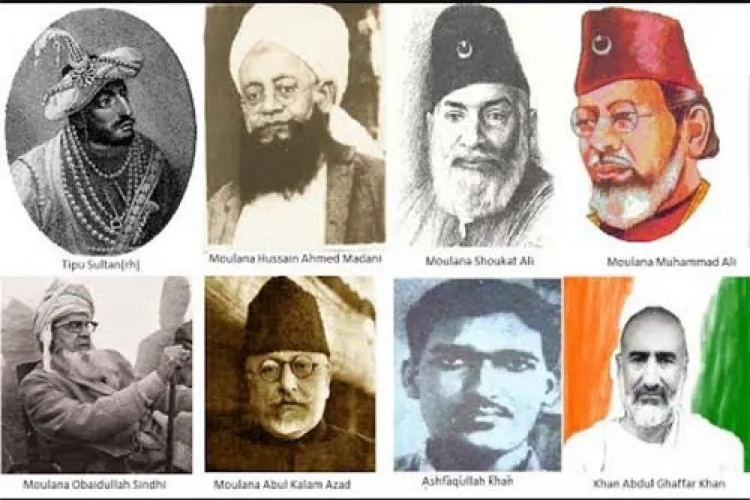
During the First World War (1914 – 18), the British intercepted three letters written on silk cloth. The letters were written by Maulana Ubaidullah Sindhi to Maulana Mahmood Hasan and pointed towards a global plan to overthrow the British rule in India. Ubaidullah was named as one of the most dangerous Indians for the British in the Rowlatt Committee Report. He formed armed groups, preached anti-British ideas and formed a provisional government in Kabul. The Prime Minister of the government was Maulana Barkatullah. The government had to have an army as well, which would attack India to free it. But, the plan failed because of the leaked silk letters and the end of the World War. The plan was called Silk Letter Movement and 59 freedom fighters, mostly Muslims, were charged for waging the war against the Empire. Maulana Abul Kalam Azad, Abdul Bari Firangi Mahli, Ubaidullah Sindhi, Maulana Mahmood, Husain Ahmad Madni and M.A Ansari were few of them. Maulana Mahmood and Madni were arrested in Makkah and imprisoned in Malta.
Maulana Abul Kalam Azad, who is often seen as a token Muslim in a largely Hindu dominated Congress, was a freedom fighter whom the British feared. His name occurred in different CID reports for planning armed revolutions. At least 1700 freedom fighters took oath to die for the cause of freedom as members of Hizbullah, a revolutionary organisation formed by Azad. Al-Hilal, a paper edited and published by him, was banned for propagating the revolutionary nationalist ideas. Azad established Darul Irshad, a madarsa, to popularise the anti colonial ideas. For his organization, Hizbullah, Jalaluddin and Abdur Razzak were prominent recruiters, who also united Hindu and Muslim revolutionaries of Bengal. No wonder, Azad was jailed many times and was the President of INC when the Quit India Resolution of 1942 was passed.
The Silk Letter Movement was not the only resistance movement during the World War. Ghadar Movement was another movement in which several Muslims took part and attained martyrdom. Rehmat Ali was hanged in Lahore for trying to instigate mutiny among soldiers. The efforts bore fruit in Singapore, when, in February, 1915, 5th Light Infantry consisting mostly Muslims from Punjab revolted. The soldiers captured Singapore for a few days. The revolutionaries were later defeated, captured and shot dead.
Another misconception prevalent among Indians is that the Bengali revolutionaries were Hindus. Interestingly, the revolutionary organizations with Hindu religious overtones, like Jugantar and Anushilan had many active Muslim members. Sirajul Haq, Hamidul Haq, Abdul Momin, Maksuddin Ahmad, Maulvi Ghayasuddin, Nasiruddin, Razia Khatun, Abdul Kader, Wali Nawaz, Ismail, Zahiruddin, Chand Miyan, Altaf Ali, Alimuddin, and Fazlul Kader Chowdhury were few of the Bengali Muslim revolutionaries who took up arms along with Hindus. Many of them were sent to Andamans or killed.
After the World War, the British introduced a draconian Rowlatt Act. The Indians protested against the act and many leaders were arrested. At Jallianwala Bagh people were massacred when they were protesting against the arrest of Saifuddin Kitchlew. The proportion of Muslims killed at Jallianwala was quite high. Around this time, 1919 onwards, Abdul Bari Firangimahli, Mazharul Haque, Zakir Husain, Mohammad Ali, and Shaukat Ali emerged as the mass leaders. Women like Bi Amma, Amjadi Begum, and Nishat al-Nisa also jumped into the freedom struggle.
In Tamil Nadu, Abdul Rahim organised the workers during the 1930s against the oppressive colonial rule. V. M Abdullah, Sharif Brothers, and Abdul Sattar were other prominent Muslim leaders in South India who led nationalist movements and braved torture and imprisonments.
Khan Abdul Ghaffar Khan led pathans posed a non-violent challenge to the British. In 1930, the British fired upon a crowd protesting against the arrest of Ghaffar Khan at Qissa Khwani Bazar, Peshawar. Hundreds of pathans laid their lives for the service of the motherland.
Faqir of Ipi, Mirza Ali Khan, and Pir of Pagaro, Sibghatullah, raised their armies in the 1930s in Waziristan and Sindh respectively to fight the British during the World War. In a larger scheme of things, Subhas Chandra Bose and Axis Powers allied with their armies in order to liberate India.
In 1941, Netaji Subhas Chandra Bose escaped from house arrest. The man who played an important role in the escape was Mian Akbar Shah. Netaji reached Berlin and formed a Free India Legion. Abid Hasan, became his confidant here and served as secretary. Abid was his only associate who accompanied him on a famous submarine journey from Germany to Japan. In 1943, Netaji formed Azad Hind Sarkar and Azad Hind Fauj. Here several Muslims like, Lt. Col. Aziz Ahmad, Lt. Col. M.K Kiani, Lt. Col. Ehsan Qadir, Lt. Col. Shah Nawaz, Karim Ghani, and D.M Khan became ministers with important portfolios. Azad Hind Fauj faced reverses in war and its soldiers were taken prisoners by the British. Rashid Ali’s imprisonment became a symbol of Hindu Muslim unity when Hindus and Muslims across the political affiliations came out on Kolkata road demanding his, and other Azad Hind Fauj soldiers, release in 1946. The police fired upon the protesters killing dozens of Indians. Elsewhere, in Mumbai and Karachi, the Royal Navy revolted in support of Azad Hind Fauj. Anwar Husain was one of the prominent martyrs of this revolt as Colonel Khan led the soldiers in revolt at Mumbai port.
India gained independence on 15 August, 1947. It was a costly affair. The cost was the Indian lives. The lives we paid were neither Hindu, nor Muslim. The lives belonged to the Indians. Those who laid their lives were Indians first, and Hindus or Muslims later. Here again, Muslim leaders like Allah Bux Somroo, K. A. Hamied, Faqir of Ipi, Abdul Qayyum Ansari, Abul Kalam Azad and others fought against the divisive communal politics of Muslim League to stop the partition. Tragically, more than seven decades later people have forgotten this important aspect of our freedom struggle and try to divide this great struggle along petty sectarian lines.
(The article is an updated version of an article published last year.)
source: http://www.awazthevoice.in / Awaz, The Voice / Home> Culture / by Saquib Salim / August 15th, 2022
At the behest of Sheikh Abdullah,Ameen tailor of Gomoh hastily prepared Pathani clothes for Netaji.
Jharkhand:
While turning the pages of history of the Independence Movement, one comes across Gomoh, a small town in Jharkhand’s Dhanbad district, which has a significant association with the legendary freedom fighter Netaji Subhas Chandra Bose.
When Netaji left the country to fulfill his mission to wage an armed struggle for Independence and to establish the Azad Hind Fauj, he spent the last night in Gomoh town.
From Gomoh railway station, Netaji took the Kalka Mail Express and left for Peshawar. At present, Gomoh junction is known as Netaji Subhash Chandra Bose junction.
It was on January 18, 1941, when Netaji, who was placed under house arrest by the British government at his residence on Elgin Road, Kolkata, escaped by deceiving the British police. Despite the strict guard of the British government, his exit from Kolkata was planned by Satya Ranjan Bakshi of Bengali Volunteer. (Bengal Volunteers Corps was an underground revolutionary group against the British rule of India.)
After leaving his Calcutta residence, Netaji reached Gomoh with his nephew Shishir Bose in his ‘Baby Austin’ car (BLA 7169) at 8 p.m. and reached the house of his lawyer friend Sheikh Mohammad Abdullah, who lived in Loco Bazar in Jharkhand. He had shared his plan to visit Peshawar with Sheikh Abdullah where it was decided that Netaji would board the Howrah-Peshawar Mail 63 train from the station by disguising as a ‘Pathan’.
At the behest of Sheikh Abdullah, Ameen tailor of Gomoh hastily prepared Pathani clothes for Netaji. On the same day, Ameen Tailor took Netaji to the station at 1 a.m. where he finally boarded the train from platform number three.
Later, this train came to be known as Kalka Express. In 2021, the Indian Railways renamed this train as Netaji Express. This incident of Subhash Chandra Bose leaving the country is etched in the pages of history as ‘The Great Escape’.
To preserve and keep alive the memories of ‘The Great Escape’, a life-size bronze statue of Netaji has been installed between Platform No. 1-2 of Netaji Subhas Chandra Bose junction in Jharkhand. The tale of ‘The Great Escape’ is also briefly written on a plaque at this junction.
The story behind this heroic tale is that on July 2, 1940, Netaji was arrested under Section 129 of the Indian Defence Act due to the Hallwell Movement. The then Deputy Commissioner John Breen arrested Netaji and sent him to the Presidency Jail.
After going to jail, Netaji observed a fast-unto-death due to which his health deteriorated further. Later, the British government released him on December 5, 1940, on the sole condition that he would be arrested again when he recoverd well. Netaji was released and came to his residence in Elgin Road, Kolkata.
Netaji subhas chandra bose gomoh.
The hearing of the case involving Netaji was scheduled on January 27, 1941. The British government came to know on January 26 that Netaji was not present in Calcutta. Netaji had left for Gomoh eight days before on the night of January 16-17, 1941 at 1 a.m. by changing his appearance.
It is said that after reaching Gomoh with Shishir Bose, he reportedly hid in the forests of Gomoh Hatiatad. He had a secret meeting with freedom fighter Alijan and advocate Chiranjeev Babu in this forest. Later in the evening, Netaji went to meet Sheikh Abdullah in Loco Market, Gomoh.
When Netaji went from Gomoh through Kalka Mail, the Britishers were never able to arrest him again.
In 2009, the Railway Ministry renamed the Gomoh station as Netaji Subhas Chandra Bose Gomoh Junction. On January 23, 2009, the then Union Railways Minister Lalu Prasad inaugurated Netaji’s memorial.
source: http://www.ummid.com / Ummid.com / Home> India> Views & Analysis / by Shambu Nath Choudhary, IANS / August 12th, 2022
Indians and other historians have either tried to whitewash the revolutionary movements for freedom or presented these as disjointed localised efforts.
Even the largest movement of Azad Hind Fauj led by Netaji Subhas Chandra Bose has been narrated in a staggered manner and an episodial manner like the battle of Burma (Mayanmar) and the battle of Imphal. The picture thus presented is of an army fighting at a frontier with no support elsewhere. This history needs to be revisited.
In 1930, Sayyid Sibghatullah Shah Al-Rashidi called Pir of Pagaro, a Muslim Saint from Sindh with a huge following, was arrested by the British Government for ‘creating disturbances’. He was accused of instigating anti-colonial feelings among his followers known as ‘Hurs’ (literally meaning free). The decision to send him to a prison away from Sindh rather shaped this anti-colonial Muslim saint into a nationalist revolutionary.
In the Bengal hail, he met several revolutionaries and realised that what he had experienced in his area was the same being experienced by others. He understood that British colonialism was destroying the nation and Hindu-Muslim unity was the only weapon to fight them.
From the prison, he started preaching nationalist messages. Sarah F. D. Ansari of the University of London in her book Sufi Saints and State Power: The Pirs of Sind, 1843 – 1947, writes, “messages strongly coloured with a radical nationalist tinge were smuggled out in the form of notes written in the margins and between the lines of books and magazines. They condemned the British for treating ‘Indians like donkeys’, loading them down with ‘England’s burdens’, and pointed out that the only reason why the British were able to rule over 300,000,000 people was that Indians were ‘cowards’.”
In 1936, when he returned to his seat at Khairpur in Sindh, Pir of Pagaro had turned a revolutionary.
He started establishing links with revolutionary leaders of Bengal as well as those living in Europe, especially Germany. He started inviting Congress leadership to his area and organise Hindu-Muslim unity meetings. We must keep in mind that it was 1938 and Subhas Chandra Bose was the President of Congress. Unsurprisingly when Subhas formed Forward Bloc after his famous differences with Mahatma Gandhi, Pir of Pagaro asked his followers to back Forward Bloc and denounced the stand of Congress.
In 1939, the centuries-old Hindu-Muslim unity of Sindh was severely shattered over the Manzilgah mosque dispute and the riots that followed. Pir of Pagaro ordered his large following of armed followers known as ‘ghazis’ to save Hindus from the Muslim fanatics. Sarah F. D. Ansari writes, “In his newspaper, the Pir-jo-Goth Gazette, he (Pir of Pagaro) called for Hindu-Muslim unity: ‘My forefathers’, he wrote, ‘treated Hindus and Muslims alike as a sacred trust. The same is my principle . .. Allah is the same as Parmatma, though with different names. I will be happy when I see temples and mosques together with only a wall dividing them and everyone [worshipping] according to their rights so that no one may have a grievance against the other’. In a similar vein, he denounced the Hindu Sabha and the Muslim League as divisive communal movements. Only when Hindus and Muslims combined would ‘peace . . . be achieved and satanic deeds . . . stopped’: Indians had to be ‘national minded’ and regard India as a country which belonged to all its inhabitants.”
An intelligence report dated October 1940 says, “Pir of Bharchundi is not liked by the Pir Pagaro, who disrespected the Pir of Bharchundi and sent him away from his ‘Kot’ when the Pir of Bharchundi last visited the Pir Pagaro… the reason for such treatment of the Pir to the Pir of Bharchundi was that the Pir of Bharchundi would not assist in getting the murderers of Hindus arrested.”
It further says, “Pir Pagaro has won great sympathy of the Hindus.” Sarah also points out how the Pir came out in support of a Muslim man’s right, who had earlier converted into Islam from Hinduism, to reconvert into Hinduism. “
Another intelligence report noted that Pir of Pagaro has enlisted at least 6,000 militants to fight with an oath to die for the cause. These militants were called ghazis. Ghazis had paraded and displayed their military skills in front of him during his visits to Jaisalmer and Jodhpur as well. The nationwide presence was a threat for the British. The report further noted, “the Pir was renewing his contacts with terrorists (terrorists was a term used by the English for revolutionaries) who had been in prison along with him in Bengal. His visits to Calcutta (Kolkata) were, it is said, performed for no other reason.”
The British apprehension was not wrong. Pir Pagaro had contacts with Bengali revolutionaries and Subhas. If Subhas raised an army on Eastern Front, Pir of Pagaro raised another on the Western Front. An intelligence report from 1941 noted, “He (Pir of Pagaro) has got his electric plant and radio set at which he and his followers hear Hindustani programs from Germany and then spread the German news in the villages which has a disquieting effect on the local people.” The report also pointed out that “the villainous activities of the Pir and his growing contempt of authority are becoming a byword throughout India”.
Pir of Pagaro was running an independent government in that region of Sindh with the help of his militia. The British Government arrested him in Karachi on the pretext of holding talks with him. His ghazis would not stop and kept attacking the British infrastructure. They were so much feared that the Legislative Assembly members did not want their names to become public for voting in favour of an act against Hurs (followers of Pir of Pagaro).
Sarah notes, “The level of fear which existed in Sind at the time even inside the Legislature was reflected in the session being held in camera. Members of the Assembly were not prepared to vote openly in favour of the act ‘lest they were marked down for the Pir’s future vengeance’.” The fear was not unfounded as soon after Ghazis killed the son of Hidayatullah, one of the tallest Sindh leaders in that Legislative Assembly, by derailing a train.
It did not take much time and within weeks Martial Law was declared. The British had to open a war front at the time of World War II. Sarah writes, “The area north of Sanghar and the Thar desert (Rajasthan) were thoroughly reconnoitered from the air; paratroopers and bombs were used against bands of armed men. Hur villages were raided, wells stopped up and their cattle herded into other districts.” On the other hand, the Pir was being tortured to ask his followers to put down their weapons.
Did the nationalists concede defeat? No. The Pir of Pagaro, Sibghatullah, embraced martyrdom at the gallows on 20 March 1943, after a sham of a court trial. Hurs kept fighting the British till 1946 even after their Pir was gone.
source: http://www.awazthevoice.in / Awaz, The Voice / Home> Culture / by Saquib Alim / July 23rd, 2022
A veteran diplomat Talmiz Ahmad provides a rare non-Western narrative of complex undercurrents in West Asia, where inequality, politics over oil and regional rivalries are fuelling tensions
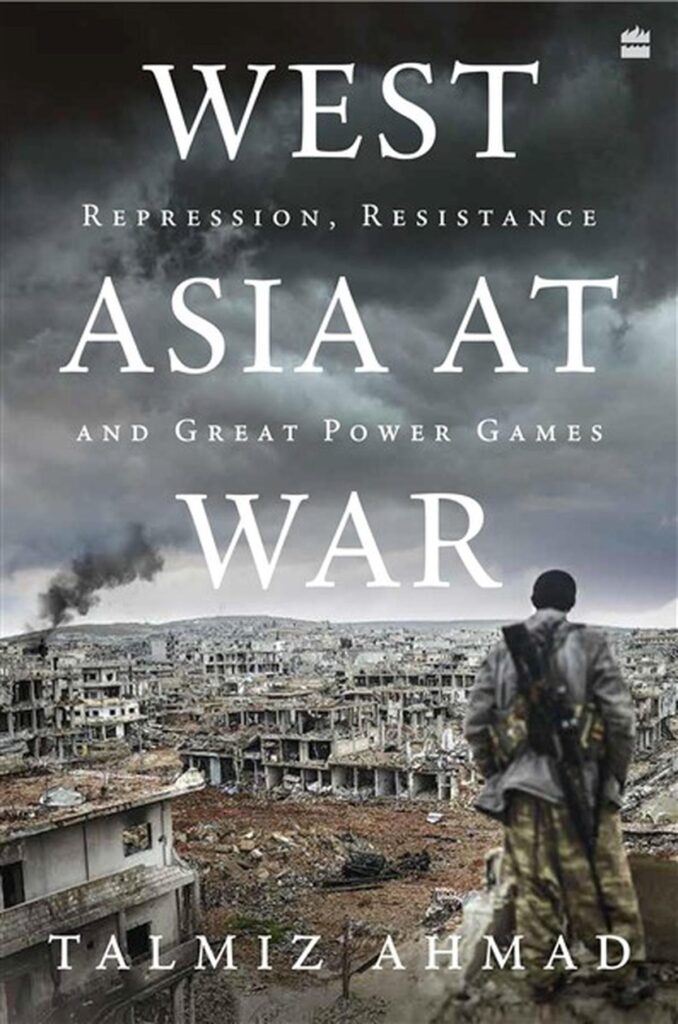
West Asia is a strategically critical region faced with confrontation and conflict amid growing economic prosperity. In his latest book, West Asia at War, Talmiz Ahmad, a former ambassador, brings out the diverse political, religious, military, socio-economic and cultural forces shaping the region. His long diplomatic career with postings there and wide-angled view from the headquarters gave him uncommon insights, which he pieces together in this book providing a rare non-Western view of complex undercurrents.
The exhaustive work traces the origins of the troubled region to the 17th century when Britain and France fiercely fought with each other over resources and zealously guarded their colonial empires. The new states that emerged in the wake of the Ottoman Empire’s fall also fell prey to this contestation. The discovery of large quantities of hydrocarbons at the beginning of the 20th century proved to be the region’s nemesis as it exposed it to outside competition and a rivalry between superpowers.
Internal bickering
Ahmad elaborates on the rise of Arab nationalism after World War II, tracing developments leading to the nationalisation of the Suez Canal by Gamal Abdel Nasser.
He explains how regional rivalries destroyed West Asia from within. The two major Arab powers, Egypt and Saudi Arabia, representing different ideological trends — revolutionary and conservative — played against each other. Further, the Saudi-Iran rivalry deepened Sunni-Shia hostilities. In a bid to fortify its standing in the region, Saudi Arabia’s call for ‘global jihad’ unwittingly propped up Osama bin Laden and Mullah Omar, with disastrous consequences. The Palestine cause unified the Arab world, but the constant internal bickering and feuding weakened their collective resolve for Palestine.
Gulf monarchies and the Muslim Brotherhood fiercely competed for the domination of political Islam. The massive oil revenues strengthened authoritarian regimes, whose economic control often conflated with people’s livelihood issues. With about 66% of 400 million Arabs redundantly poor and 10% controlling 61% of the wealth, the region is one of the most unequal in the world. Beyond the dazzle of Dubai, Doha and Riyadh, the author observes, is pervasive poverty, inequality and injustice that are alienating people and making them susceptible to fundamentalism, drugs, terrorism and extremism, further fuelling tensions within.
Ahmad rips apart the U.S. policy towards West Asia that is anchored in the influential ‘Israeli lobby’. Its twin objectives of securing oil flows and guaranteeing the security of Israel at the cost of Iran are deeply flawed and the much-maligned Iraqi WMD (weapons of mass destruction) programme is grossly exaggerated, he writes. The causal linkage to 9/11 and the injustice meted out to Palestine by Israel, backed by the U.S., are two examples of short-sighted policies which led to Islamophobia and fomented the fictitious idea of a ‘clash of civilisations’ as a living reality in the West.
India’s stand
The evolution of India’s policy towards West Asia is put in context by Ahmad. India’s leadership viewed the Palestine issue and the Suez crisis within the framework of the Arab nationalist struggle against British imperialism. Their common commitment to liberation movements drew them naturally to the Non-Aligned Movement. However, some perceptible changes in the approach in the last two decades stem from India’s newfound confidence as an emerging economy with the ability to buy large supplies of Gulf oil. India’s de-hyphenation of its relations between Palestine and Israel is pragmatic as well as in sync with the changing dynamics in the region. Closer ties with Israel also brought India the backing of the U.S. on several fronts. The strategic depth that our relations attained is attributed to Prime Minister Narendra Modi, who took a personal interest through frequent travels to the region to build solid economic partnerships as well as to secure the interests of our strong resident community.
The ongoing geo-political churn in the region is insightfully covered. Bahrain, Sudan, Morocco and the UAE seeking cautious normalisation of relations with Israel would have a salutary effect on both the regional stability and the survival of Israel. The realisation that Israel’s subversive activities against Iran could neither effect regime change nor completely disrupt its nuclear programme should prompt a dialogue between them.
The Shia-Sunni sectarian binary used for mobilising hostility and rancour is also losing steam. This apart, the author underlines that the prospect of a stable and prosperous West Asia is contingent on real internal reform that goes beyond optics and palliatives.
The perception that disengagement of the U.S. from the affairs of the region would have significant implications for itself and the security of West Asia is indisputable. China-Russia working in tandem and Iran-Turkey aligning their positions pose a serious challenge to U.S. hegemony in the region.
All Gulf countries have upgraded their economic relations with China. Ahmad underscores the point that while India is a natural partner of many in the region, it needs to be diplomatically agile to manage the challenges arising out of these new alignments in West Asia.
West Asia at War; Talmiz Ahmad, HarperCollins, ₹799.
The reviewer is an Indian Foreign Service Officer.
source: http://www.thehindu.com / The Hindu / Home> Books> Reviews> Politics / byDammu Ravi / July 23rd, 2022
Mairaj Ahmad Khan wins a spectacular gold from nowhere in the Digvijay Singh shotgun championship in Delhi on Sunday. | Photo Credit: Kamesh Srinivasan
New Delhi:
Darshna Rathore had a chance to fight for gold but missed the last two birds and thus had to settle for the bronze.
Olympian and World Cup gold medallist Mairaj Ahmad Khan asserted his class yet again as he accelerated to a smart finish in grabbing the skeet gold in the Digvijay Singh shotgun championship at the Dr. Karni Singh Range, Tughlakabad, on Sunday.
The 46-year-old Mairaj beat Arjun Thakur 35-30 for the gold, as he missed only one bird in the medal round. He had qualified on top in the semifinal with 27 hits, after having made the final with a modest score of 115, six point behind qualification topper Gurjoat Khangura.
‘’Final and semifinal are great. I am going to work only on qualification for the next three months’’, said Mairaj, understandably happy about the way he had competed despite not being at his best.
It was a similar case during the last World Cup in Changwon, when Mairaj had to win a shoot off with four others after being tied on 119 for the last two berths, before racing to the gold.
Anantjeet Singh Naruka who had shot 120 in qualification lost the shoot off against Amrinder Singh Cheema for a berth in the medal round.
Raiza Dhillon won both the women’s and junior skeet gold medals. | Photo Credit: Kamesh Srinivasan
It was Raiza Dhillon all the way as she won both the women’s and junior gold. Raiza beat qualification topper Ganemat Sekhon 36-35 for the women’s gold, and beat Parinaaz Dhaliwal 33-32 for the junior gold.
Darshna Rathore had a chance to fight for gold but missed the last two birds and thus had to settle for the bronze.
New Book , First ever English translation of Nizami’s invaluable Urdu book Begumat ke Aansoo
pix: amazon.in
Apart from the fifteen years that Sher Shah Suri snatched upon defeating Humayun, the flag of the grand Mughal Empire flew over Delhi undefeated for over 300 years.
But then, 1857 arrived and the mighty sword fell helpless in the face of a mightier British force.
After the fall of Delhi and Emperor Bahadur Shah Zafar’s tragic departure from the Red Fort in 1857, members of the royal Mughal court had to flee to safer places. Driven out from their palaces and palanquins onto the streets in search of food and shelter, the dethroned royals scrambled to survive. Some bore their fate with a bitter pride, others succumbed to the adversity.
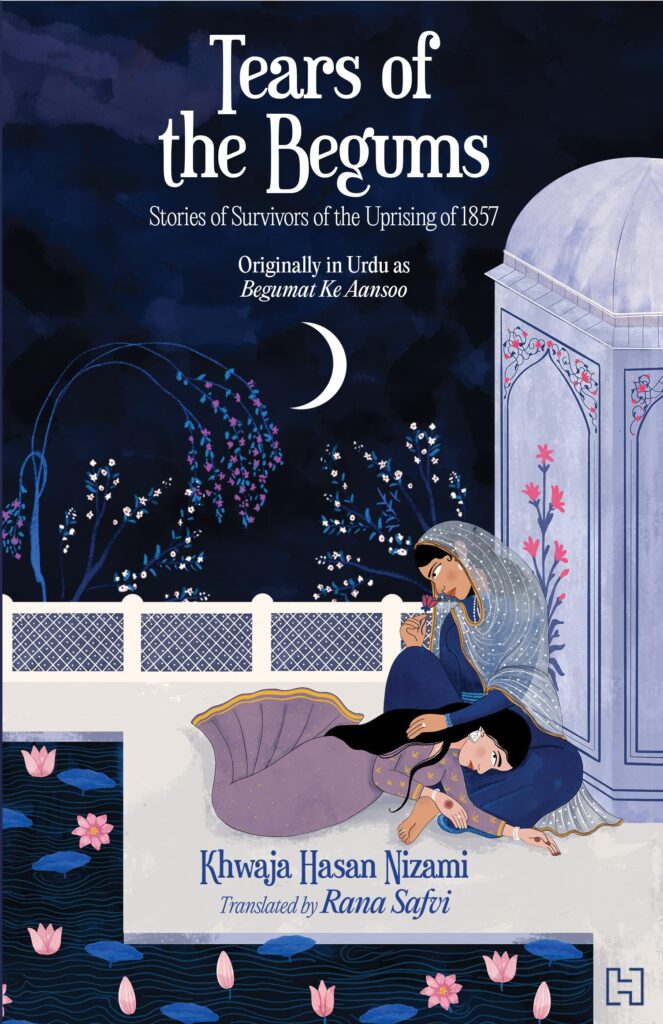
Through twenty-nine accounts of the survivors of the Uprising of 1857, Khwaja Hasan Nizami documents the devastating tale of the erstwhile glorious royalty’s struggle with the hardships thrust upon them by a ruthless new enemy.
In vivid and tragic stories drawn from the recollection of true events, Nizami paints a picture of a crumbling historical era and another charging forward to take its place.
With the reminiscence of past glory contrasted against the drudgery of everyday survival, Tears of the Begums – the first ever English translation of Nizami’s invaluable Urdu book Begumat ke Aansoo – chronicles the turning of the wheel of fortune in the aftermath of India’s first war of independence.
source: http://www.amazon.in / Amazon / Home> Books> History> World / as on August 06th, 2022
Humaira Garasia, whose family roots are in Valsad, was .elected speaker of London borough of Hackney in May
Surat :
Rishi Sunak might be in news for being the frontrunner for the post of Prime Minister of the UK and he will create history if he is elected for the post of the country that once ruled India.
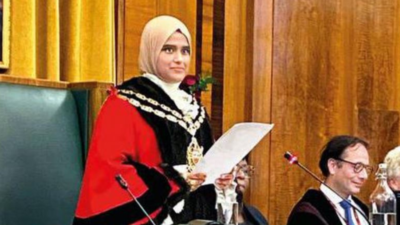
But Indian origin Humaira Garasia (25) has already created a history by becoming the youngest-ever speaker of council in London Borough of Hackney.
Garasia’s family is originally from Valsad and her father had migrated to the UK at a young age. Garasia was determined to enter active politics when she was 15 and wanted to represent the marginalised population.
She identifies herself as a Gujarati of Indian origin. She studied BA politics from the University of London. Her father Rafik Ahmed, a warehouse worker, is from Nana Taiwad in Valsad while her mother Najma, a housewife, is from Bharuch.
“I am the youngest-ever speaker/civic mayor of Indian origin in the whole of the UK and the youngest speaker to have ever been elected for the London Borough of Hackney,” says Garasia.
“I was elected at the age of 21 as a councillor in 2018 and completed a four-year term. I was the youngest person of Indian origin to be elected as a councillor then. I was successfully re-elected as a councillor in May 2022,” she added.
She said: “I will be working with leaders, residents and communities from across the borough to address issues of inequalities, while also helping to tackle long-term issues such as racism and discrimination. I will focus on providing support to the most vulnerable members of society and helping young people to feel both empowered and safe.”
Born and brought up in London, Garasia’s parents migrated around 35 years ago. Garasia visits Valsad every year with her family.
source: http://www.timesofindia.com / The Times of India / Home> News> City News / by Yagnesh Bharat Mehta / July 23rd, 2022
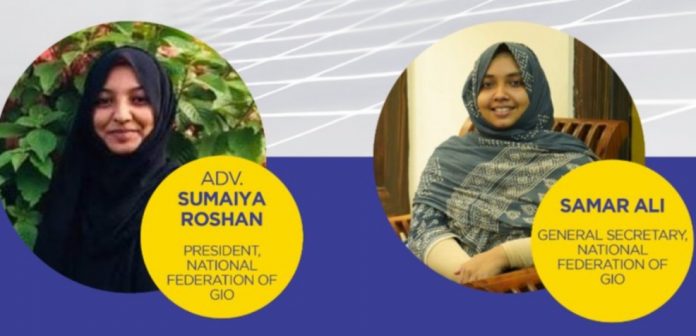
Girls Islamic Organization (GIO), one of the foremost women’s organizations of India, elected its first National President and General Secretary. On the 30th of July 2022, Advocate Sumaiya Roshan (from Karnataka) became the first President of the National Federation of GIO, and Samar Ali (from Kerala) became the General Secretary.
In a significant development, GIO, which earlier worked at the level of state councils, was consolidated and formed into a National Federation. The new dispensation will be headed by a National President and General Secretary and will comprise a Federal Committee having representatives from all GIO states for a term of two years. The Federal Committee meeting was conducted from 29th to 31st July.
Girls Islamic Organization is the girls students organization of Jamaat-e-Islami Hind.
GIO is a non-profit organization and has been actively engaging on various issues regarding women in general and Muslim women in particular across the country since1984. The organization has a presence in almost every state in India. Over the past few years, GIO at the state level has been working on the overall development of Muslim women and will continue to do so.
At the National level, the objectives of the Federation will be to coordinate interaction and sharing of ideas between the states, and to address and give voice to the prominent issues of National concern. GIO aims to provide space for women to come together, express, and nourish themselves while preparing them to fight the challenges of society. Its scope of work will revolve around the said objectives, not limited to Muslim issues but women issues in general and issues of national importance.
Being part of the largest democracy in the world, every citizen of the country must be provided with equal opportunities to evolve themselves and attain their highest potential. Despite immense efforts and development, women in India continue to face discrimination in all possible manner.
Even after forty years since the Mandal Commission recommendations, there remains gross inequality among the opportunities provided for Other Backward Communities(OBC).
The organization focuses on enabling educational upliftment, progress in socio-political conditions, entrepreneurial advancement, and equal space for the women of marginalized communities. The organization will make conscious efforts to develop a free and open space where anyone can raise their voice and question the injustice faced by them.
source: http://www.muslimmirror.com / Muslim Mirror / Home> Indian Muslim / by Muslim Media Network / August01st, 2022
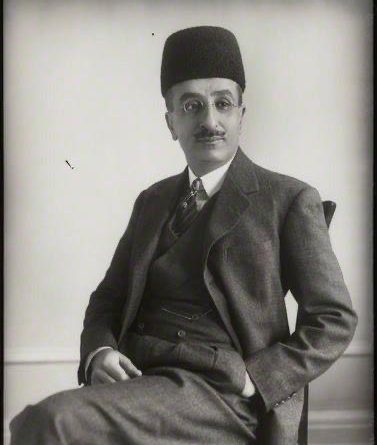
“I believe deep down in my heart that the great reality of spiritual revelation given to humanity by the Prophet (blessed be His name) is an infinitely greater thing than any sectarian difference (Shia & Sunni) imposed upon it by subsequent human feeling and by lesser vision than his of the inner realities from which the external life of humanity has developed.” Mirza Ismail, a Shia Muslim by faith, who was the Prime Minister of Mysore had spoken these words at the inauguration of Jamia Mosque, a Sunni mosque, in Bengaluru on 30 May 1941.
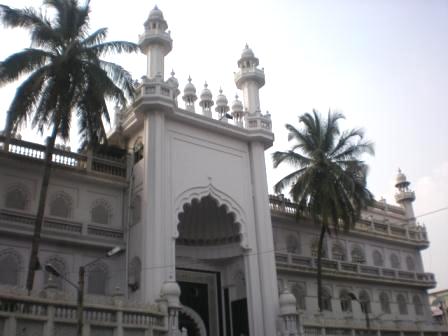
Jamia Masjid, Bengaluru
Mirza Ismail remained one of the most important politicians in India as he held the position of Prime Minister (PM) of the second wealthiest state, Mysore, from 1926 to 1941 after which he became PM of Jaipur and Hyderabad.
A Shia by his faith whose foreparents had migrated from Iran and stayed in India, Ismail remained committed to the unity of humans. He believed that Shia and Sunni, Hindu and Muslim, or any caste difference among humans could not stop them from living together harmoniously.
Ismail inaugurated the mosque at Bangalore, which was one of the most important cities in Mysore state, as his last public ceremony in the capacity of the PM of Mysore after resigning from the post. On the occasion he noted, “I am particularly happy that this function, which is the last of my period of service as Dewan of Mysore, gave me the opportunity of expressing an ideal of my life which has been foremost in the past and will remain foremost in the future.”
What was the ideal Ismail talking about? Making a mosque or something else?
The ideal he was talking about was the unity of Shia and Sunni as one Muslim community. He told the people gathered there that the non-Muslims observing this ceremony would not think much about it. In their view a Muslim had come to lay the foundation stone of a mosque of his fellow Muslims. “But to you”, Ismail argued, “fellow-Musalmans, it is not so simple. You know that in the historical development of Islam I belong to a section of the organised expression of the Faith that for centuries has been in sharp opposition to the section to which you, who are going to build this mosque, belong.” He expressed satisfaction that Sunnis had invited him for this event. He told the people that since its very inception he had taken “the greatest possible interest” in this mosque where Sunni Muslims would pray in the manner they wanted.
Ismail went on to tell the people;
“At the centre of Islam is the teaching and practice of brotherhood. You would have been false to the truth of life if, because I am a Shia by birth, you had not invited me to this function, and I would have been equally false to the brotherhood of Islam if, because you are Sunnis, I had not accepted your invitation. Our differences are transient, even trivial, in comparison with the spiritual reality which these differences tend to obscure and weaken.”
Ismail went on to state that love and peace are the essence of Islam and Muslims should stop fighting among themselves as well as with their coreligionists in the country. The mosque is one of the most important mosques in Bengaluru today.
(Author is a neurobiologist with a keen interest in history, society and culture of India)
source: http://www.heritagetimes.in / Heritate Times / Home> Featured Posts> Heritage> Leaders / by Mahino Fatima / March 08th, 2022