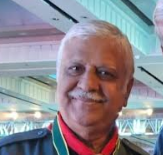
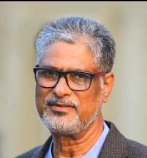
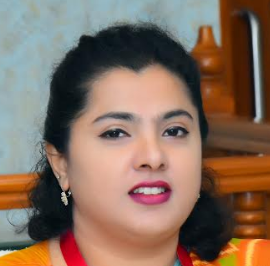
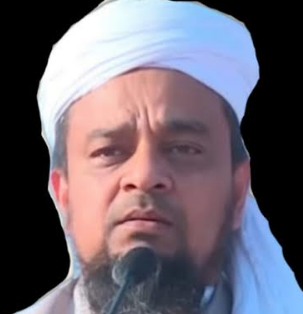
Amid our fast-paced lives, there exists a remarkable group of individuals who believe in slow, steady, and consistent efforts to create meaningful change.
These individuals are known as changemakers—people who quietly dedicate themselves to bettering society, far from the spotlight and the noise of daily routine.
They don’t seek fame or recognition. Instead, they focus on making a positive impact in their communities. Often unheard of, these changemakers influence others through their actions, values, and vision for a better world.
Awaz–The Voice is proud to launch a special series starting this Sunday, spotlighting Indian Muslim changemakers of India.
Through their inspiring stories, we aim to shine a light on individuals whose work exemplifies compassion, dedication, and innovation.
Our editorial team has carefully selected these changemakers based on several parameters, including the authenticity of their efforts and the tangible impact they have made.
These are everyday heroes who are addressing pressing social, environmental, and economic challenges—often with limited resources but unwavering commitment.
They are improving access to education, healthcare, and sanitation; they are empowering women, protecting the environment, and uplifting their communities—all without expecting any rewards or recognition. For them, the satisfaction of doing good is reward enough.
Their actions may seem small, but their impact is profound. As the saying goes, “Every drop counts in making an ocean.” Each changemaker is a vital part of the wave of progress that is quietly transforming India.
One of our key criteria in identifying these individuals was whether they are creating tangible change or inspiring others to become changemakers themselves. For us, a changemaker is someone who brings positivity into the world through innovative solutions, leadership, and a commitment to improving lives and systems.
In a world that often celebrates loud success, we believe it’s important to pause and acknowledge those who uphold the highest ideals of humanity. These changemakers serve as a moral compass, reminding us of our own responsibilities to society and to one another.
We begin our series with changemakers from Uttar Pradesh, featuring stories like that of Capt. Saria Abbasi, who dreamt of joining the Indian Armed Forces from a young age. After earning her engineering degree and receiving multiple job offers, she chose instead to follow her dream and joined the Indian Army—becoming a role model for countless Muslim women aspiring to serve the nation. She has done challenging missions like serving at Indo-China border post at Tawang in October 2021.
Rubina Rashid Ali, who lives in Aligarh Muslim University’s campus has become a champion for women earning their livelihood out of applique (ornamental needlework in which pieces of fabric are sewn or stuck). She has stood up for them to ensure that these women from poor backgrounds get the wages they deserve.
The changemakers of India
Dr Farha Usmani, a medical practitioner who hails from Aligarh, went to US to pursue her career in the United Nations Population Fund in 2007. Leaving behind her family was a tough call for her. She is the only Muslim woman to have risen to the position of director in the UNFPA. Today, she is making world policies for women’s health and rights. She is the Vice President of SAFAR, an organization that is responsible for the overall advancement and rights of minority and marginalized women and girls in India.
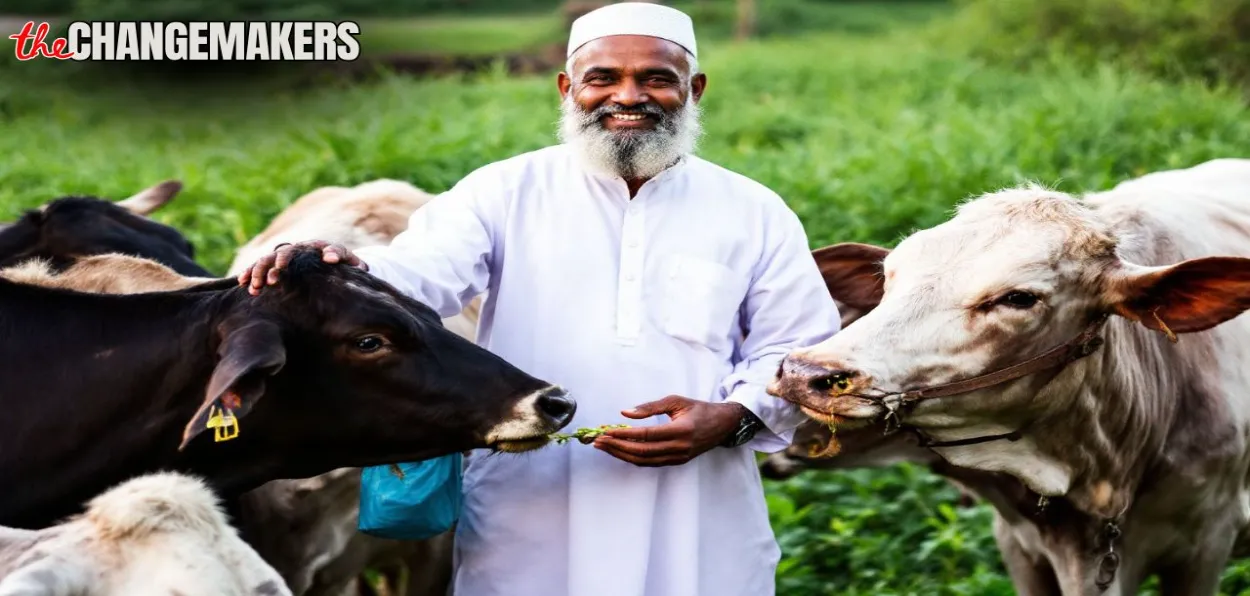
Another inspiring figure is Babban Mian, a businessman who runs a large gaushala (cow shelter) in Bulandshahar, caring for hundreds of cows. Inspired by his late mother’s deep affection for animals, Babban Mian’s work also challenges stereotypes and promotes harmony by offering a different perspective on the Muslim community’s relationship with animal care.
Some of the changemakers will remind you of characters straight from Indian folklore and vernacular literature. People who have been nurtured by Indian civilizational values of compassion and selflessness.
Through these stories and many more, we hope to inspire our readers and celebrate the quiet revolution being led by changemakers who are shaping a better, more inclusive India.
We’d love to hear your thoughts on this series. Write to us at input@awazthevoice.in or engage with us on our social media platforms.
The author is the Editor-in-Chief of Awaz-the Voice portal
source: http://www.awazthevoice.in / Awaz, The Voice / Home> Stories / by Atir Khan, Editor-in-Chief, Awaz-the Voice portal / May 22nd, 2025
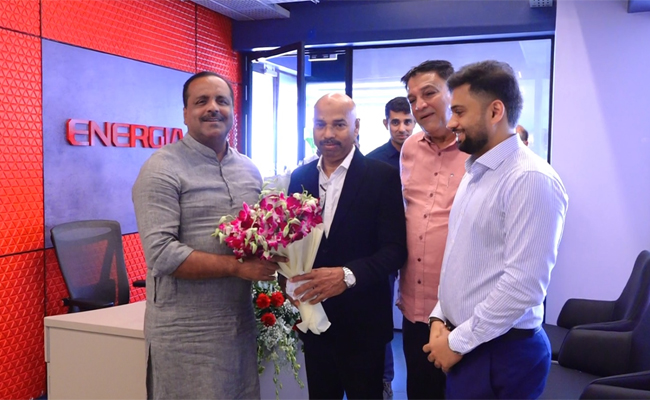
Energia on Sunday inaugurated its Corporate Service Center in Mangaluru, marking a step towards strengthening its global corporate operations and expanding its presence in India.
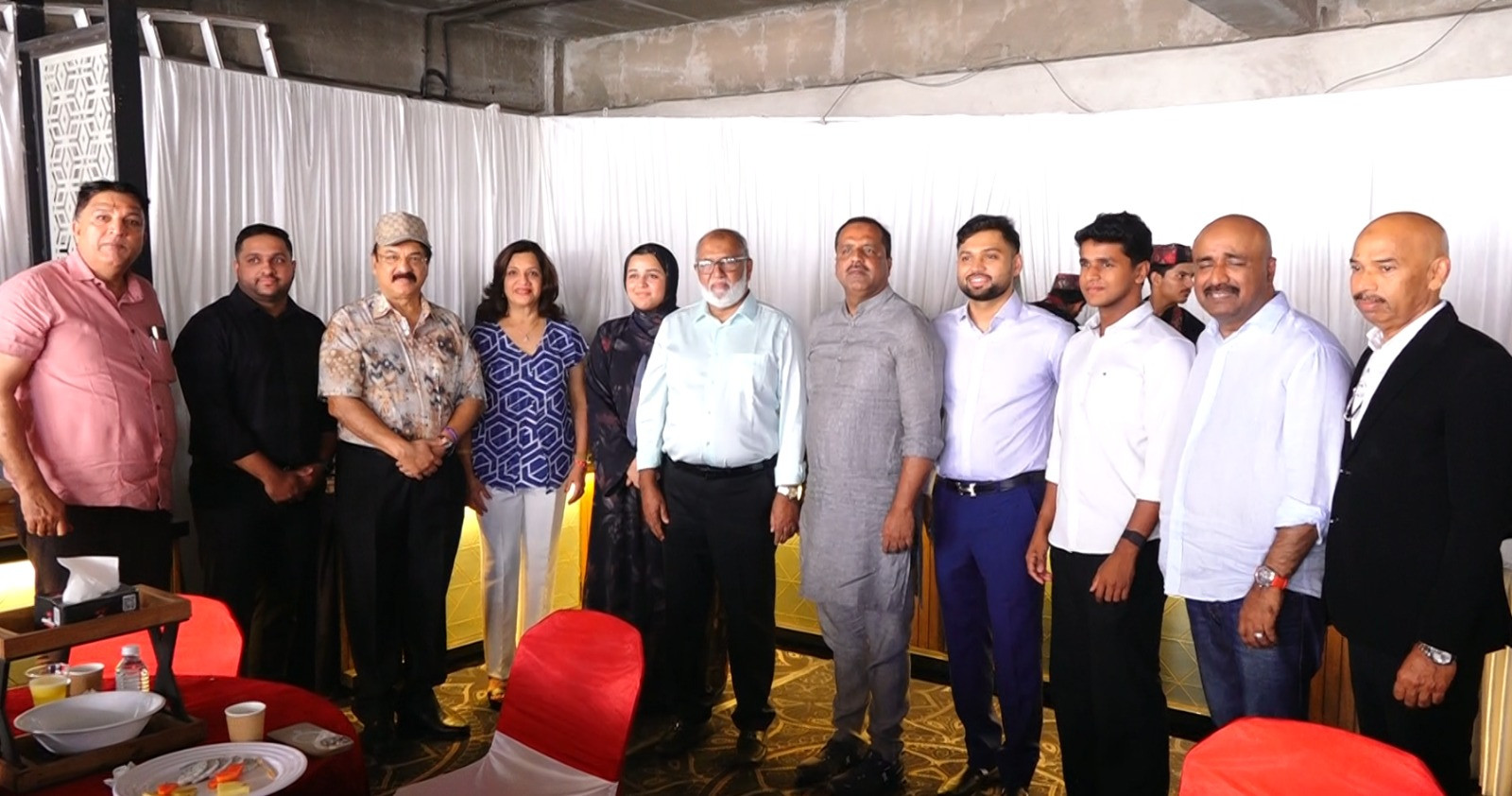
The new office was inaugurated in the presence of U. T. Khader, Speaker of the Karnataka Legislative Assembly, and NRI Busnessman Dr. Ronald Colaco along with members of Mangaluru’s business and community circles.
The ceremony was led by Shahid Hassan, CEO of Energia, along with Mohin Sheikh, Managing Director, Rajan Mengoth, Operations Director, and Mehboob, Chairman of Energia. Senior officials and team members of the company were also present.
The Mangaluru Corporate Service Center will function as a dedicated support office for Energia’s operations in the Kingdom of Saudi Arabia. The company said the centre will help improve coordination, strengthen back-end support and enhance governance across key corporate functions. It is expected to improve service delivery through structured processes and better operational control.
Energia stated that the new centre will create employment opportunities in Mangaluru, particularly in corporate services and support roles. The company also plans to introduce structured career pathways and skill development programmes for professionals in the region.
While the immediate focus of the centre will be to support overseas operations, Energia said it intends to deepen its long-term engagement in India. The company indicated that it is exploring opportunities in the renewable energy sector in line with India’s expanding clean energy landscape. The Mangaluru office is expected to act as a base for future partnerships and renewable initiatives in the country.
“This Corporate Service Center reflects Energia’s long-term commitment to building strong capability and governance. Mangalore gives us access to high-quality talent, and this office will play a critical role in supporting our Saudi operations while also helping us prepare for future renewable initiatives in India,” said Shahid Hassan, CEO of Energia.
Among those present at the event were Chairman of State Allied and Health Care Council UT Iftikhar Ali, President of New Jumma Masjid Sharif Whitestone, Chairman of Bearys Chamber of Commerce and Industry SM Rasheed Haji, Founder of Team B-Human Asif Deal, Dr Haroon Hussain and others.
Energia is an energy solutions company with operations in the Kingdom of Saudi Arabia and a growing presence in other markets. The company provides integrated energy solutions across sectors with a focus on reliability and long-term value creation.
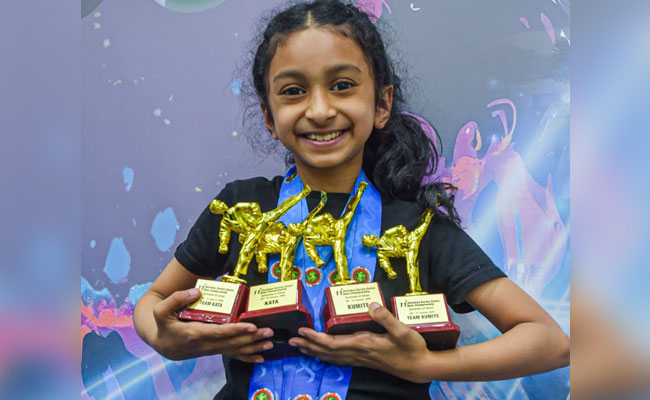
Indian karateka Zaara Vasim Assadi emerged as the standout performer at the International Karate Open Championship held as part of the Muscat Night Festival, clinching four gold medals in a remarkable display of skill and consistency.
The prestigious tournament saw participation from around 400 athletes representing 24 clubs across multiple countries. Amid intense competition, Zaara, aged just 10, created history by becoming the only girl at the championship to secure gold in all four categories she competed in individual Kata, individual Kumite, team Kata, and team Kumite.
Zaara’s achievement adds to her already impressive record. She has remained undefeated in Kata since the age of five, underlining her long-standing dominance in the discipline. Her performances were widely praised for technical precision, discipline, and composure well beyond her age.
Training at The Champ Sports & Arts in Muscat, Zaara’s journey has become a source of inspiration for young martial artists, reinforcing the idea that dedication and passion can overcome age-related barriers in competitive sport.
The championship also served as a platform for cultural exchange, bringing together athletes and spectators from diverse backgrounds and celebrating the unifying spirit of karate.
Zaara Vasim Assadi is the daughter of Vasim Assadi and Hasra Sana and hails from Udupi. She is the granddaughter of Zikriya Assadi.
source: http://www.english.varthabharati.in / Vartha Bharati / Home> Gulf / by Vartha Bharati / February 02nd, 2026
KUWAIT / Raigarh District (MAHARASHTRA) / New Jersey (U.S.A) :
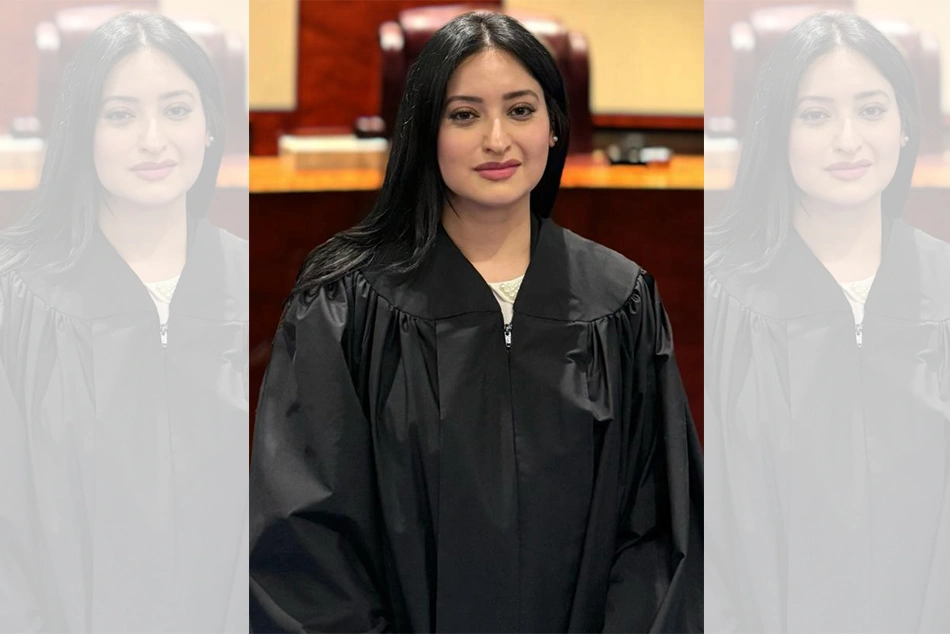
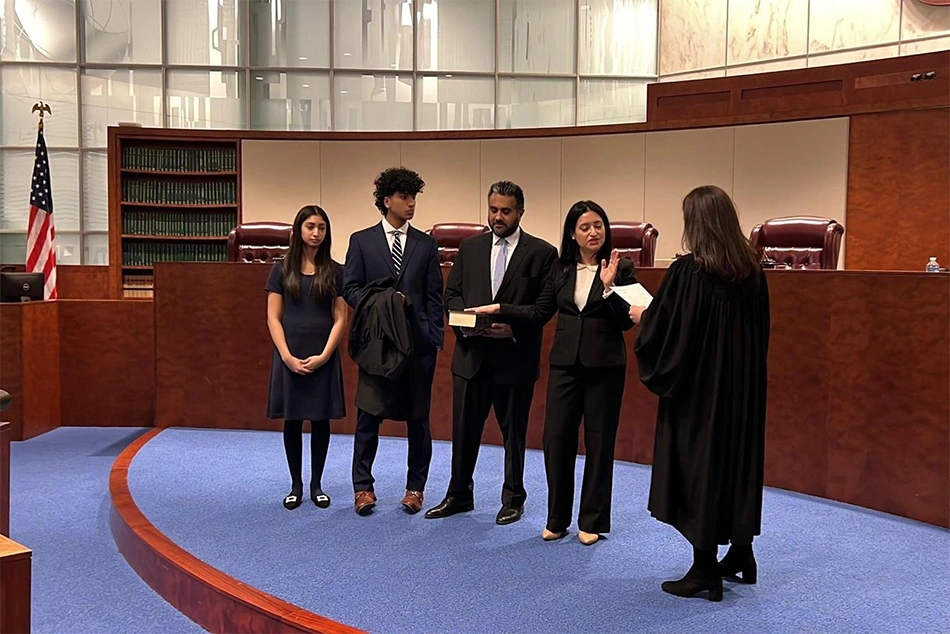
Kokan’s daughter Lubna Qazi Chaudhry took the oath as Administrative Law Judge in New Jersey with her hand placed on The Holy Quran, pledging to uphold constitutional responsibilities.
Mumbai:
Lubna Qazi, a lawyer originally from Maharashtra’s Raigad district, has created history by taking oath as an Administrative Law Judge (ALJ) in the US state of New Jersey, becoming the first Muslim woman to be appointed to this position in the state. The appointment is being widely regarded as a significant milestone for minority representation in the American judiciary.
The oath-taking ceremony was held recently, where Associate Justice Rachel Wainer Apter of the New Jersey Supreme Court administered the oath. On the occasion, Lubna Qazi placed her hand on the Holy Quran and pledged to faithfully discharge her constitutional duties.
The position of Administrative Law Judge holds considerable importance within the American judicial system. ALJs preside over cases involving decisions of government agencies, administrative disputes and public grievances, delivering rulings based on established legal principles.
Lubna Qazi’s Life Journey
Lubna Qazi’s life journey spans multiple countries and cultures. She was born in Kuwait, where she spent her early childhood with her parents. In 1990, during a school vacation, she travelled to the United States. However, following the outbreak of the Gulf War, the family decided to settle there permanently.
Lubna later pursued her education in California, completed her graduation from the University of California, and earned her law degree from Western State University College of Law.
After marrying Ahsan Chaudhry in 2005, Lubna moved to New Jersey, where she served in various government legal positions for nearly two decades. Recognising her extensive legal experience and professional competence, the Governor of New Jersey nominated her for the post of Administrative Law Judge in 2025.
Lubna Qazi is also distinguished for her linguistic abilities. In addition to English, she is fluent in Urdu, Hindi and Konkani, and has working knowledge of Arabic. Committed to preserving cultural and linguistic heritage, she is personally teaching Urdu and Arabic to her two children at home.
Family Feels Honoured
Expressing his pride, Lubna’s father Inayatullah Qazi said that the entire family feels honoured by her achievement. He described the appointment not merely as a position, but the result of years of hard work, sacrifice and prayers.
Speaking to the correspondent, Inayatullah Qazi said that his family hails from Tala taluka of Raigad district in the Konkan region. He completed his education up to Class VI at Jamia Millia Islamia School, Delhi, and his high school education at Anjuman Islam, Mumbai.
After obtaining a degree in Mechanical Engineering from Government College of Engineering, Aurangabad, in 1975, he moved to Kuwait for employment, beginning his career with an air-conditioning company. After working there for fifteen years, he migrated to the United States with a single suitcase following Iraq’s invasion of Kuwait after the Gulf War, as his children were already in the US at the time. He later ensured higher education for all four of his children.
Inayatullah Qazi said that the family’s roots are deeply embedded in Islamic tradition and that Urdu is spoken with pride at home. He added that Lubna completed recitation of the Holy Quran at the age of seven.
He further shared that around five to six generations ago, their ancestors were sent to the Konkan region as Qazis (judicial authorities) to administer justice without discrimination based on religion, caste or race. Although the profession discontinued a few generations ago, he expressed happiness that his daughter has now proudly revived the family’s judicial legacy.
Lubna Qazi is also the granddaughter of Dr Rehana Ahmed, a noted educationist and Executive Chairperson of the Girls’ Board of Anjuman Islam, Mumbai. Dr Ahmed expressed joy over Lubna’s achievement, stating that it serves as a shining example for young women across the community and will inspire girls to pursue higher education and professional careers. She is widely recognised for her dedicated efforts toward the promotion of girls’ education, particularly within the Muslim community.
Meanwhile, several social and legal organisations, including the Asian Pacific American Lawyers Association of New Jersey, have congratulated Lubna Qazi on her appointment. Observers believe that this development marks a significant step forward in strengthening Muslim and minority representation within the American judicial system.
source: http://www.ummid.com / Ummid.com / Home> United States / by Mohiyuddin Altamash / January 30th, 2026
Muslim Mirror’s 100 Most Influential Muslims of 2025
New Delhi:
Muslim Mirror has released its much-anticipated annual list of the “100 Most Influential Indian Muslims of 2025,” spotlighting individuals who have made significant contributions to India’s public life across a wide spectrum of fields including politics, culture, education, business, media, religion, sports, and social service. Now in its second edition, the list aims to document influence not merely as power or popularity, but as sustained impact, leadership, and the ability to shape public discourse.
A defining feature of the 2025 edition is the growing prominence of younger achievers, signalling a visible generational shift within Indian Muslim leadership. Alongside established national figures, the list includes emerging voices who have built influence through grassroots activism, professional excellence, digital platforms, legal advocacy, education, and community engagement. Editors associated with the project said this was a deliberate attempt to recognise new centres of influence beyond traditional hierarchies.
The list reflects the diversity and plural character of Indian Muslim society, cutting across geography, ideology, profession, and language. From seasoned politicians and religious scholars to artists, entrepreneurs, academics, and social reformers, the compilation offers a broad snapshot of leadership trends at a time when issues of representation, constitutional values, and social justice remain central to national debate.
Representation Across Sectors
The 2025 list features several eminent academicians and intellectuals who have shaped higher education, policy discourse, and social research. Among them are Abul Qasim Nomani, Ameerullah Khan, Furqan Qamar, Shahid Jamil, and Ubaid-ur-Rahman, recognised for their contributions to education, public policy, and academic leadership.
In the business and entrepreneurship category, the list includes influential names such as Azad Moopan, Azim Hashim Premji, Farah Malik, Irfan Razack, M. P. Ahammed, Mecca Rafiq Ahmed, Meraj Manal, Syed Mohamed Beary, P. Mohammed Ali, Shahnaz Hussain, Tausif Ahmad Mirza, Yusuff Ali, and Ziaullah Sharif. Their inclusion underlines the growing economic footprint of Indian Muslim entrepreneurs, both domestically and globally, spanning sectors from retail and healthcare to infrastructure and consumer goods.
Community leadership remains a strong pillar of the list, with figures such as Arshad Madani, Mahmood Madani, Malik Motasim Khan, Mehmood Pracha, Syedna Mufaddal Saifuddin, Navaid Hamid, Pirzada Md Abbas Siddiqui, Qasim Rasool Ilyas, Sadatullah Husaini, Umer Ahmed Ilyasi, and Yusuf Mohamed Abrahani recognised for their roles in religious guidance, legal advocacy, social mobilisation, and institutional leadership.
Culture, Media, and Public Discourse
In arts and entertainment, globally recognised names such as A. R. Rahman, Aamir Khan, Mammootty, Munawar Faruqui, and Shah Rukh Khan continue to command immense cultural influence, shaping narratives that extend well beyond cinema and music into social consciousness.
The list also acknowledges the growing importance of media and journalism in shaping opinion and challenging dominant narratives. Journalists and commentators such as Arfa Khanam, Irfan Meraj, and Seema Mustafa are recognised for their consistent engagement with issues of democracy, minority rights, and constitutional values.
Religious and Intellectual Scholarship
A significant section of the list is devoted to Islamic scholars and religious thinkers, reflecting their continued influence on moral leadership and intellectual discourse. Names such as A. P. Aboobacker Musliyar, Qasim Nomani, Prof. Akhtarul Wase, Asghar Ali Imam Mahdi Salafi, Asjad Raza Khan, Ibraheem Khaleel Al-Bukhari, Javed Jamil, Khalid Saifullah Rahmani, Khaleelur Rahman Sajjad Nomani, Qamaruzzaman Azmi, Rashid Shaz, Shakir Ali Noori, Shamail Nadvi, and Yasoob Abbas find place for their scholarly work, writings, and public engagement.
Politics and Governance
The political category features leaders cutting across party lines and regions, including Asaduddin Owaisi, Ghulam Nabi Azad, Hamid Ansari, Mehbooba Mufti, Omar Abdullah, Salman Khurshid, Najeeb Jung, Syed Naseer Hussain, Engineer Rashid, Akhtarul Iman, Iqra Hasan, Zameer Ahmed Khan, Rakibul Hasan, K. Rahman Khan, Kadir Mohideen, Mohibullah Nadvi, Md Shafi, Agha Mahadi, Asim Waqar, and Sadiq Ali Shihab Thangal. Their inclusion reflects influence exercised through electoral politics, governance, diplomacy, and legislative advocacy.
Changemakers and Social Reformers
One of the most dynamic sections of the 2025 list is that of changemakers and social reformers, featuring individuals such as Safeena Husain, Shahabuddin Yaqoob Quraishi, Syeda Hameed, Zameer Uddin Shah, Mahbubul Hoque, Sabahat S. Azim, Mehmood Pracha, Faiz Syed, and Zahir Ishaq Kazi, among others. Many of these figures have earned recognition through long-term grassroots work rather than formal authority.
International Booker Prize 2025 winner Banu Mushtaq for Heart Lamp, along with renowned poet Wasim Barelvi, has been placed in the category of Literary Figures.
In sports, iconic names Sania Mirza and Irfan Pathan continue to inspire younger generations through excellence and public engagement beyond the playing field.
Beyond Rankings
The editors emphasised that the list does not claim to be exhaustive, nor does it measure influence solely through fame, wealth, or official position. Instead, it seeks to capture real-world impact, moral authority, intellectual contribution, and the ability to shape conversations within and outside the community.
The annual list has increasingly become a reference point for understanding evolving leadership patterns among Indian Muslims. By foregrounding both established figures and rising talents, the 2025 edition reflects continuity as well as change, underscoring how Indian Muslims continue to contribute meaningfully to India’s democratic, cultural, and social field.
source: http://www.muslimmirror.com / Muslim Mirror / Home> Indian Muslim / by Muslim Mirror / January 15th, 2026
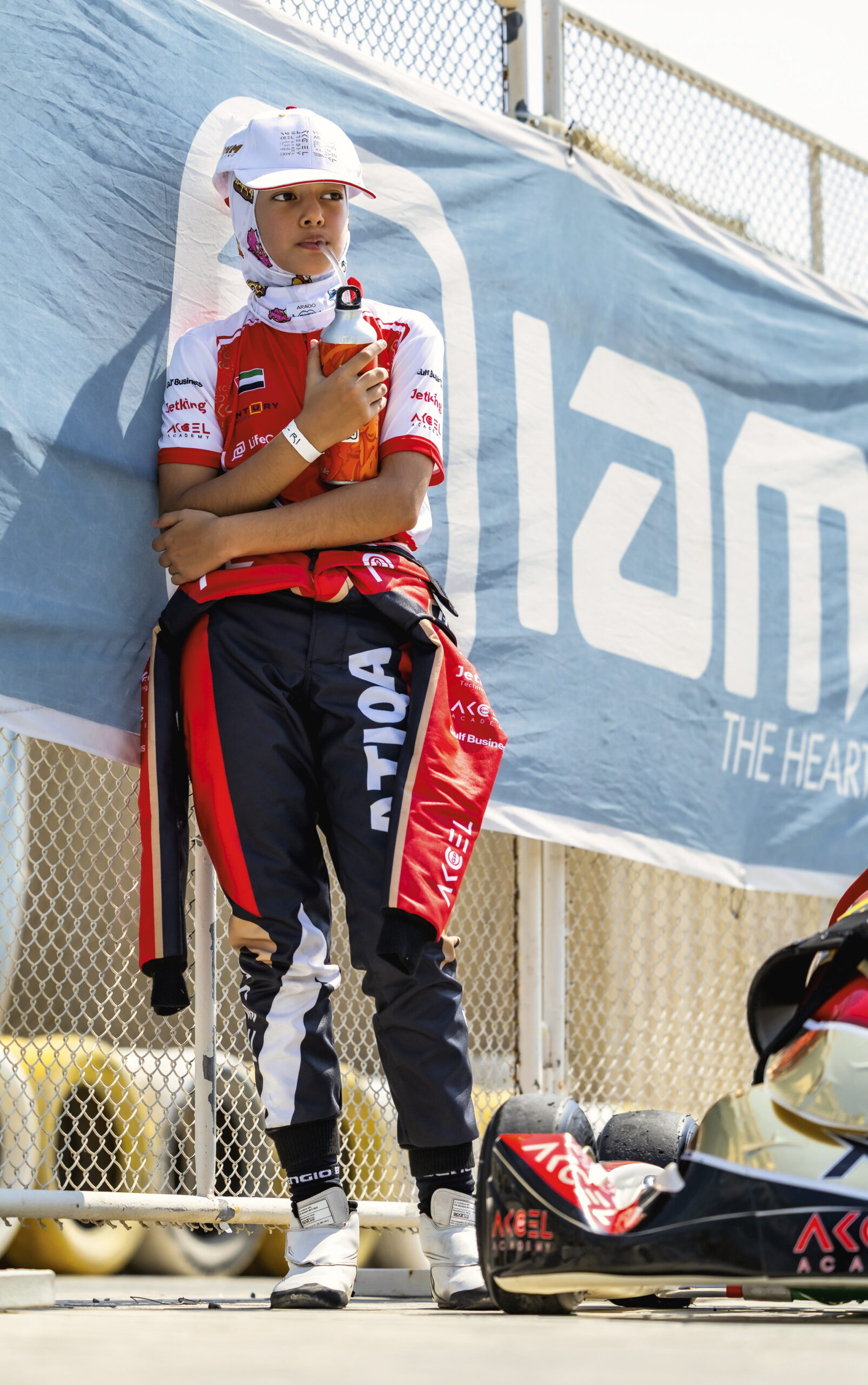
Formula 1 Academy-backed Indian racer Atiqa Mir showed scorching speed for her second pole position in as many weeks before picking up a Heat win in Round 2 of the RMC UAE Karting Championship here.
After a pole and podium finish in the Formula 1-backed COTFA series last week, Atiqa switched seamlessly into different equipment to set a blistering pace at the Al Forsan Circuit. She is the first Indian to be supported by Formula 1.
In the Official Practice sessions, Atiqa topped three out of the four sessions and clocked the fastest time of the day in a highly competitive field of international drivers. She was the only female.
Dubai: Indian racer Atiqa Mir during round one of IAME UAE Karting Championship, in Dubai. (PTI Photo)
Atiqa, who turned 11 last week, carried that form into qualifying, clinching pole position in the dying minutes of the session with a sizzling time of 60.686 seconds.
Representing Akcel GP, she led from the front in the Heat race for a deserving victory. She lost the lead briefly on Lap 1 before regaining it soon after and pulling away from the field of 18 drivers.
In the pre-final race, Atiqa suffered a big crash while fighting for the lead on the last lap, injuring her elbow.
Her determination and fighting spirit came to the fore when she drove the final lap with the injury and a broken kart. After making up five places on the opening lap, Atiqa’s kart developed a technical problem, forcing an early retirement.
”What could have been a dominant weekend ended back in the pits. But that is racing, we are racing so close to each other at such high speeds that crashes are bound to happen.
“I got a hard hit on my elbow, and it is bruised quite badly. I wanted to fight and get back to the front in the final, but it wasn’t meant to be as my panel broke and due to that I couldn’t drive,” said Atiqa.
Her father and former Formula Asia Vice Champion Asif Mir said luck was not on her daughter’s side this weekend, but at the same time, he called the collision part of racing.
“A dominant show by her, a slight touch with another kart changed her entire weekend. She deserved a better result, but that is how it goes sometimes in sport. She is driving at a high level week in and week out in different karting championships.
“She has to switch engines, tyres almost every weekend, and she can adjust well,” said Asif.
source: http://www.awazthevoice.in / Awaz, The Voice / Home> Sports / by PTI / November 18th, 2025
From the tech labs of Bengaluru to the coffee plantations of Coorg, from the ancient ruins of Hampi to the bustling streets of Mysore, Karnataka exudes energy. This is where India’s IT revolution was born, where classical arts thrive alongside cutting-edge innovations, and where every district tells a story of transformation.
Many Kannadigas have built empires and earned acclaim—but some went further. They didn’t just succeed; they became the Changemakers—individuals who shattered barriers, rewrote destinies, and ignited revolutions that ripple far beyond their own lives. Here are ten personalities of Karnataka whose courage and vision are reshaping the future:
Rifah Taskeen
A 15-year-old firecracker from Mysore started racing at age three in a custom car built by her ex-racer father, Tajuddin. By five, she was driving Mysore to Bengaluru; by seven, she was drifting in school shows and stealing Republic Day parades.
Fighting red tape and disbelief, she stormed past every “too young” barrier to claim seven world records (Golden, Elite, High Range, India, Asia, Worldwide & Wonder Books), mastering bikes, JCBs, cranes, buses, tippers, road rollers, and even flying a plane at eight.
Mysore’s cleanliness ambassador for five years and tuberculosis state warrior for four, she’s also a state-level boxing medalist and karate fighter. She’s drifted for Rahul Gandhi, flown with Sonia Gandhi’s blessings, and left global crowds speechless.
Self-funded, unstoppable, and dreaming of IAS wings after SSLC, Rifah doesn’t just break records; she rewrites what “impossible” means. Age is just a number.
Mushtaq Ahmed
A Bengaluru-born visionary landed in Dubai when it was still sand dunes and a dream. For 41 years as head of Dubai Police photography (until 2018), the retired 1st Warrant Officer framed an entire nation’s rise—capturing the Burj Khalifa’s skeleton, the Kaaba from a crane, Sheikh Mohammed’s 1979 wedding, and sacred Medina in rare reverence.
From helicopter shots above a bridgeless Dubai to standing beside Sheikh Zayed and global icons like Lata Mangeshkar and Mohammed Rafi, the 79-year-old chronicler turned fleeting moments into eternity. Honoured, hugged, and kissed on the forehead by Dubai Police upon retirement, Mushtaq’s lens didn’t just document history—it built it. His quiet mantra: “The best shot is yet to come.”
Tazaiyun Oomer
Tazaiyun Oomer was 13 when she fought through a crowd in Parliament House and got Indira Gandhi’s autograph, an electric moment that taught her leadership has no gender.
From a Kutchi Memon girl helping in her father’s textile shop, she grew into Bengaluru’s quiet revolution. In 1999, she founded Humane Touch Trust: 100+ corrective surgeries for disabled children, Al-Azhar School, 1,750 dignified mass weddings, 2,000+ Muslim women turned entrepreneurs, and yearly scholarships lifting nearly 300 girls into tech careers.
Recipient of the Sulthan Nari Shakti and Karnataka’s Rising Beyond the Ceiling awards, she proved compassion can shatter centuries-old barriers. Where tradition once whispered “a woman’s place,” Tazaiyun built schools, businesses, and futures. Her mantra: “Change begins the moment you decide to act.”
Mohammed Ali Khalid
Mohammed Ali Khalid, India’s Bronze Wolf Award recipient —the highest global honour in Scouting—has lived the Scout promise for over four decades with breathtaking sacrifice and impact.
Mohammed Ali Khalid stands as one of India’s most influential Scout leaders, a visionary whose four decades of service have shaped millions of young lives. From volunteering at the 1980s National Jamboree to becoming Additional Chief National Commissioner of Bharat Scouts and Guides, he has built global partnerships, led landmark events like the 2017 National Jamboree and the 2022 International Cultural Jamboree, and strengthened Scouting across the Asia-Pacific Region. A strategic thinker behind Vision 2013 and a respected global diplomat, Khalid’s selfless leadership, mentorship, and bridge-building continue to inspire generations—earning him the Bronze Wolf and global admiration.
Architect of Vision 2013 for Asia-Pacific, broker of WOSM’s global fee consensus, founder of SAANSO, and mentor to countless young leaders, Khalid turned India into Scouting’s most connected powerhouse. At 70, he still pushes for 20% membership growth and 50% youth representation worldwide.
Rahmath Tarikere
Rahmath Tarikere, born in 1959 in Tarikere’s syncretic lanes, grew up where Hindus and Muslims shared the same street and stories. The 1992 Babri demolition jolted him into action: he left pure literary criticism to unearth Karnataka’s living pluralistic traditions—Sufi saints, Nathpanthis, Shakta poets, and folk Moharram rituals that united communities for centuries.
Author of 30 books—including four Karnataka Sahitya Academy winners and the 2010 Kendra Sahitya Akademi winner Kattiyanchina Daari—he returned the national award in 2015 protesting intolerance and the murder of M.M. Kalburgi. A humble professor who insists “I am not a changemaker,” Tarikere quietly weaves pluralism into Karnataka’s soul, proving unity is not uniformity but a vibrant mosaic of differences.
Khudsiya Nazeer
Khudsiya Nazeer, the “Iron Lady of India,” was born 1987 in Bangarpet and lost her wrestler father at two. Raised in a conservative Muslim family amid depression and mockery, she turned pain into power.
Post-Caesarean, she deadlifted 300 kg to set a world record (2022), then stormed the global stage: three golds at Asia Pacific Masters 2023 (South Korea), silver in Athens, golds in Commonwealth (Australia) and Germany. The first Indian Muslim woman to win international weightlifting medals, she lifts drug-free while working full-time at KSRTC.
From burqa-clad walks guarded by police to Harvard’s stage, Khudsiya proves motherhood multiplies strength. Her mantra: educate, play sport, write your own destiny. This Iron Lady doesn’t just break records; she shatters every ceiling for women.
Fouzia Tarannum
Fouzia Tarannum, 2015-batch IAS (AIR 31), cracked UPSC on her first attempt from Bengaluru’s public libraries—no coaching, pure grit. From IRS gold-medallist to Karnataka cadre, she turned arid Kalaburagi into a national millet powerhouse with “Kalaburagi Rotti,” empowered thousands of SHG women, lifted districts to top SSLC ranks, revived gram panchayat libraries, and delivered India’s cleanest electoral rolls—earning the President’s Best Electoral Practices Award in 2025.
At 36, this quiet DC faced Islamophobic slurs yet answered only with work. Unfazed, empathetic, and fiercely people-centric, Fouzia proves bureaucracy can have a heart and a steel spine. She doesn’t shout change—she builds it, one roti, one vote, one woman at a time.
Zafer Mohiuddin
pix09
Zafer Mohiuddin, Raichur’s radio-struck boy who once ghostwrote love letters in school, turned a bus-ride compliment from R. Nagesh into a lifetime on stage. He quit UPSC and Air Force postings to found Kathputaliyaan Theatre Group (1988), wielding puppets and plays as weapons against taboo.
From translating Girish Karnad’s Tipu Sultan ke Khwaab (Theatre Olympics 2018) to shattering Urdu myths with Zaban Mili Hai Magar, his raw, Amitabh-like voice has roared in ten languages, narrated Swaraj Namah, and defended Urdu’s secular soul alongside Karnad.
In November 2025, Karnataka crowned him with the Rajyotsava Award—its highest honour—for four decades pulling society’s strings toward truth and harmony. The puppet master still refuses to cut his own.
Moulana Dr. Mohamed Maqsood Imran Rashadi
Moulana Dr. Mohamed Maqsood Imran Rashadi, Principal and Chief Imam of Bengaluru’s iconic Jamia Masjid, memorised the Quran in 18 months, earned a PhD in Urdu literature, and turned a struggling madrasa into a 100%-pass powerhouse for 400 underprivileged students.
From quietly removing provocative meat thrown to spark riots to defusing the 2025 “I Love Mohammed” banner crisis with one calm sermon, he prevents violence before it begins. He negotiates fair loudspeaker rules across faiths, hosts Hindu swamis for iftar, and, after the Pahalgam terror attack, thundered “Terror has no religion—we love Hindustan.”
A scholar who preaches in Tehran, meets Saudi royals, and still walks the KR Market uniting traders, Moulana Maqsood proves that unity is built by deeds, not banners. Bengaluru’s heartbeat of harmony beats in his voice.
Syed Nawaz Miftahi
Syed Nawaz Miftahi, fully sighted yet forever changed by the tear-filled Quranic recitations of blind children in Mumbai in 2011, vowed to become their light.
He mastered Braille, invented the “broken-rice touch” technique to awaken ageing fingers, and turned Sultan Shah Markaz, Madrasa-e-Noor (70 students), and daily phone classes into sanctuaries where the visually impaired recite flawless tajweed and complete multiple khatms every Ramazan.
From Hyderabad to Kashmir, his model now trains teachers who were once his students. In November 2025, he launched Umang Foundations—a residential beacon run by seven blind trustees and one fearless young sighted woman—where every visually impaired soul, of any faith, learns Quran, computers, and independence.
Nawaz doesn’t give sight; he proves the heart’s vision is brighter.
source: http://www.awazthevoice.in / Awaz, The Voice / Home> The Changemakers of Karnataka / by ATV / posted by Aasha Khosa / November 22nd, 2025
From Mughal ports to Dutch wars to Bombay’s merchant dynasties, Gujarati Muslims once shaped the Indian Ocean world — long before one of their descendants took New York.
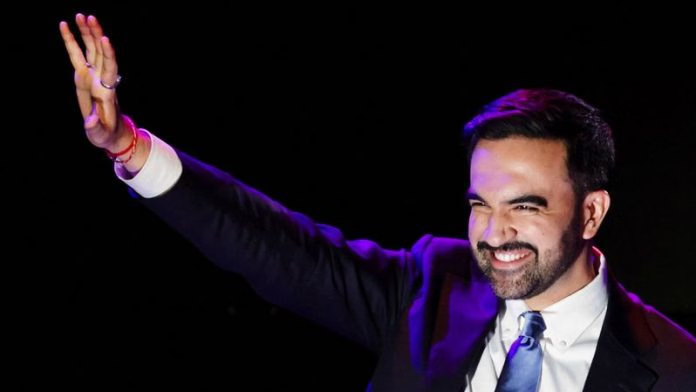
File photo of Zohran Mamdani | Reuters 2025
_______________________________________________
What You Need to Know
Zohran Mamdani’s election highlights a forgotten Indian Muslim cosmopolitanism. Historically, Gujarati Muslim communities dominated Indian Ocean trade, challenging European powers and fostering diverse business relationships. Later, groups like the Khojas adapted through “corporate Islam” (jamaats), becoming powerful economic forces globally. This rich, diverse history is increasingly overshadowed by modern religious nationalism.
*AI-generated summary. Check context in original text.
________________________________________________
Having delivered speeches in Gujarati, Bengali, Arabic, Hindi, Luganda, and Spanish, Mamdani is a reflection of a long-forgotten Indian Muslim cosmopolitanism. The Gujarati Muslim communities he descends from once challenged the Dutch for hegemony in Indonesia; poured money into schools, hospitals, and printing presses from Japan to Arabia; and helped the British Empire consolidate its grip over Africa. To this day, that Indian Muslim history still echoes — in high-end London auction houses as much as in the working-class boroughs of New York.
The election of Zohran Mamdani as Mayor of New York last week has struck a surprising chord in the world’s media — especially considering he is technically the head of just one American city’s administration. But the buzz around this young Indian-origin Muslim, an avowed democratic socialist, is a ripple in a much older ocean.
Gujaratis in the Indian Ocean
This column began with a rather innocuous tweet pointing out that Mamdani’s multilingualism would have made him a fortune in the early modern Southeast Asian spice trade. As of writing, it has racked up over one million views and 54,000 likes — and it’s a pretty accurate reflection of what propelled Gujarati Muslims to international trade superstardom in the first place.
In her paper ‘Gujarat’s Trade with South East Asia (16th and 17th centuries)’, historian Ruby Maloni describes the great port of Khambhat in Gujarat as having “stretched out two arms — one towards Aden, the other towards Malacca.” While Banias were especially prominent in East Africa and the Persian Gulf at the time, Gujarati Muslim merchants dominated the Malacca trade, conveying relatively cheap block-print textiles from manufactories in Ahmedabad deep into Southeast Asia to trade for spices.
The most prominent among these merchants effectively formed ‘dynasties’ closely linked to the Mughal court, among others. But there was also a strong aspect of caste-based collective organisation, paralleling that of Hindu and Jain Gujaratis.
Nowhere was this more evident than in Surat, perhaps the most impressive port on India’s west coast. Its multilingual babble included Gujarati, Arabic, Persian, Urdu, Dutch, English, and Portuguese. Certainly, there were clear distinctions between caste and religious groups, and within their communities Gujarati merchants — Hindu and Muslim alike — could be quite rigid. At the same time, in interpersonal and business relationships, their shared Gujarati heritage encouraged cosmopolitan attitudes.
Historian Jawaid Akhtar offers several examples in his paper ‘The Culture of Mercantile Communities in Mughal Times.’ In Surat, Armenian merchants were in business with Parsis and Muslims; Vaishnavite Bhatias, despite a taboo against crossing the ocean, jointly owned cargo and ships with Muslims. Akhtar cites documentary evidence of Bania men adopting Muslim practices such as offering dowers to their wives. Muslim and Hindu merchants also collectively represented their grievances to Mughal authorities.
On one occasion in 1669, when the Qazi of Surat compelled a Vaishnavite Bania to convert to Islam, nearly 8,000 merchants — apparently of all religions — emigrated to Bharuch in protest against this infringement of their privileges.
Gujarati Muslims quickly identified Europeans as a threat to their trade dominance in Southeast Asia. Maloni notes that Dutch East India Company records mention their difficulties with these merchants, who took them on through price wars and by installing their own candidates as port authorities. It seemed that there was nothing the Dutch could do to prevent Gujarati Muslims from trading. The Sultanate of Johor welcomed ships belonging to the merchant Haji Zahid Beg, who bought tin in flagrant defiance of Dutch embargoes. Other merchants, Maloni writes, hired cargo space on English ships; the spectacularly wealthy merchant Abdul Ghafur of Surat even flew Dutch flags on his own ships. It was only when the Dutch forcibly colonised much of Indonesia that Gujarati Muslims finally lost their grip on Malacca. But by then, new opportunities were already emerging on the horizon.
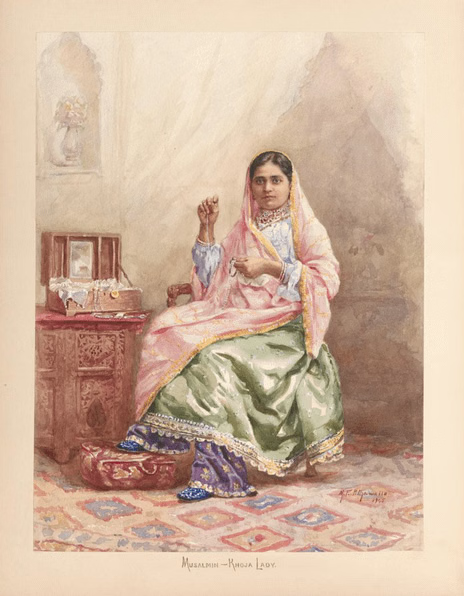
Khoja Lady | From the album presented to the Princess of Wales by the women of Bombay, featuring 13 full-page watercolours of Indian women by artist Manchershaw Fakirjee Pithawalla (1872-1937) | Wikimedia Commons
The rise of ‘Corporate Islam’
As the Mughal juggernaut began to shake and unravel in the 18th century, the old order of great merchant princes and dynasties started to fall apart. Surat, repeatedly raided by the Maratha king Shivaji, faced growing competition from the East India Company’s new port at Bombay.
Three Gujarati Muslim communities — the Bohras, Memons, and Khojas — who had hitherto been relatively small-time traders, found themselves ideally placed to benefit from the changing political landscape. Zohran Mamdani descends from the last of these.
In his seminal book No Birds of Passage: A History of Gujarati Muslim Business Communities, 1800–1975, historian Michael O’Sullivan notes that these three groups had spread “as far east as Ujjain, as far west as Karachi, as far south as Poona, and as far north as Udaipur… They thus inhabited a territory that was, by the reckoning of an Indian lexicographer in the 1840s, larger than Great Britain and Ireland, with their shared mother tongues [Gujarati] serving as the principal language of business in Central and Western India.”
The Bohras, Memons and Khojas had all converted to Islam around the 15th century, but their social and cultural practices varied drastically. Subgroups were affiliated with various Sunni and Shia sects; some were Ismaili and revered the Aga Khans, while others traced descent by region and worshipped Sufi saints.
What these groups shared, though, was the jamaat —an institution that O’Sullivan describes as a form of “corporate Islam”. Essentially, members of each jamaat shared some resources in common — schools, hospitals, that sort of thing. Particularly wealthy members, who often held senior religious positions, also maintained private family trusts and companies.
What the jamaat ensured, O’Sullivan writes, was a mechanism for organisation, exclusivity, and interpretation, allowing these communities to adapt the changing contours of Islamic practice to an era of globalisation. Jamaats could mobilise capital, human resources, and theological flexibility at a rate few other Indian institutions could match.
Collectively, these Gujarati Muslim jamaats emerged as some of the most powerful Indian economic forces of the late 19th and early 20th centuries. Though now outshone in the popular imagination by Parsi and Bania entrepreneurs, Gujarati Muslims similarly negotiated with the Marathas and the British, benefited from the Opium Wars, and switched soon after to manufacturing all sorts of commercial goods, especially in Bombay.
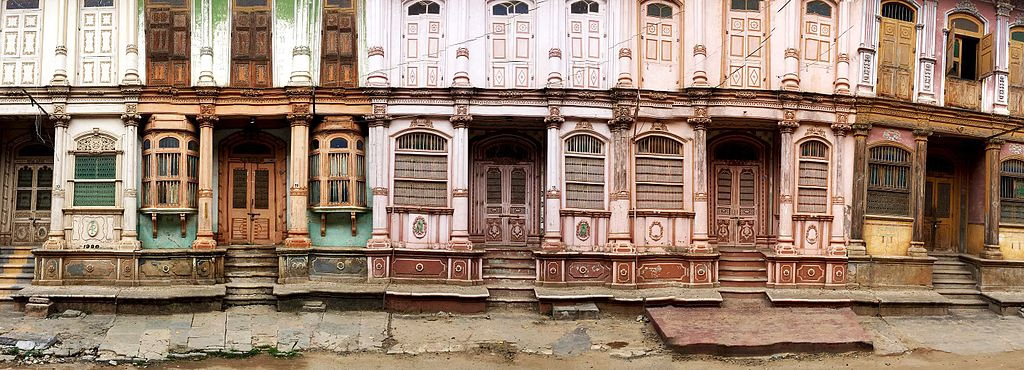
In the 1840s, Gujarati Muslims commissioned pioneering printed texts — in Gujarati — including travelogues and cultural primers for new markets like China. Their growing wealth also funded spectacular mansions, such as those in Sidhpur, now eerily abandoned. It was Gujaratis, perhaps more than any other Indian group, who built the financial infrastructure of the British Raj in East Africa — a migration line from which Zohran Mamdani himself descends.
All of this amounted to a decisive shift in the centre of gravity of Indian Ocean Islam. It was for this reason that the Aga Khan, revered by Ismaili Khojas, moved his seat from Iran to Bombay before Partition.
Sidhpur city in Gujarat | Wikimedia Commons
A cosmopolitanism forgotten
The versions of Islam promoted by Gujarati Muslims absorbed the modernist vocabulary of capital accumulation and inheritance, frequently splintering into new jamaats as they expanded into ever-new markets and cultures.
At the same time, as researcher Danish Khan notes, Gujarati Muslims attained positions of leadership and influence in Bombay well before they had even set foot in the United States of America. “The first Muslim baronet in colonial India,” he writes, “was a Khoja and the first Muslim ICS officer was a Sulaimani Bohra. Badruddin Tyabji and Rahimtoola Sayani were the first two Muslim Presidents of Congress party. Sir Adamjee Peerbhoy presided over the first session of the Muslim League in Karachi.”
But with the rise of pan-Islamic and Hindu nationalism in the early 20th century, the scales swung once again, and mercantile, oceanic histories were overridden by grievances inspired by long-dead inland kings.
Where does the history of Gujarati Muslims fit now? Mamdani’s election is ironic on many levels. In Bombay, once the historic home of the community, a BJP politician declared, in response to Mamdani’s victory in New York, that “We won’t allow any Khan to become mayor.”
The fact is that before and since, the history of Gujarati Muslims has, for all intents and purposes, disappeared into the ever–widening gap between radical Hindutva and radical Islam. Every news cycle, it seems, tears India’s many intertwined histories further apart.
Anirudh Kanisetti is a public historian. He is the author of ‘Lords of Earth and Sea: A History of the Chola Empire’ and the award-winning ‘Lords of the Deccan’. He hosts the Echoes of India and Yuddha podcasts. He tweets @AKanisetti and is on Instagram @anirbuddha.
This article is a part of the ‘Thinking Medieval’ series that takes a deep dive into India’s medieval culture, politics, and history.
(Edited by Prashant Dixit)
source: http://www.theprint.in / The Print / Home> Opinion> The Fine Print / by Anirudh Kanisetti / November 13th, 2025
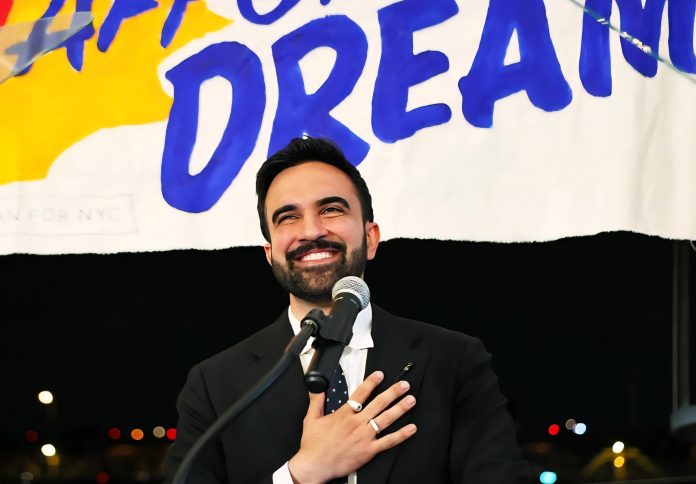
“I am a Democratic Socialist, I am a Muslim… I am not apologizing for either.” With these words, Zohran Mamdani declared victory in the New York City mayoral race, a symbolic global capital of commerce and culture. His triumph rekindled hope among conscientious citizens in New York and resonated worldwide, especially amid the rise of populist, authoritarian-leaning leaders who thrive on division and privilege wealthy allies.
Only a year prior, Mamdani was widely seen as an underdog. Yet he defeated Andrew Cuomo, the former governor who ran as an independent and received informal support from prominent national figures, including the sitting president. Mamdani garnered just over 50 percent of the vote, becoming the youngest mayor in a century and the first Muslim and South Asian to hold the office. His campaign also achieved one of the highest voter turnouts in New York City since 1969, signalling renewed civic engagement for a progressive, inclusive agenda.
Political Polarization and Economic Context
While such a victory might appear routine in an established liberal democracy, it must be understood against the backdrop of deep U.S. political polarization since the Trump era. Divisive rhetoric and exclusionary policies fractured communities and workplaces, stifling dreams and limiting opportunity.
During the Trump administration, harsh immigration enforcement via ICE and other agencies fuelled fear in immigrant communities. Arbitrary detentions, wrongful arrests, and forced family separations became emblematic of policies that disregarded due process and human dignity. At the same time, tariffs and trade disputes increased living costs, particularly in metropolitan areas like New York. Rising rents and price hikes strained households across demographics, as economic hardship transcends ethnicity, citizenship, or geography. Some commentators noted that the political climate during Mamdani’s election was marked by tension between the federal administration and certain Democratic-led cities. Debates around federal funding, social welfare programs, and executive rhetoric heightened the stakes of the mayoral race, creating a context in which Mamdani’s message of local accountability and inclusion resonated strongly with voters.
The Socioeconomic Landscape of New York
New York City, with a population of approximately 8.48 million as of 2024, is among the world’s most diverse urban centres. Over 30 percent of residents are foreign-born, representing more than 100 nationalities. Yet the city struggles with high income inequality, reflected in a Gini coefficient of 0.555. Housing shortages, rising rents, and long commutes—averaging 41 minutes—have made the city increasingly unaffordable for lower- and middle-income households, prompting out-migration to suburbs.
Employment levels have recovered post-pandemic, with private-sector jobs growing 2.8 percent in 2024–25, yet the income gap continues to widen. Households in the highest quintile earn more than twenty times those in the lowest quintile. Policies favouring high-income earners during prior administrations exacerbated this structural inequality.
A Campaign Grounded in Inclusion
Mamdani’s success can be attributed to his focus on everyday concerns of New Yorkers: affordability, public transportation, universal childcare, housing, and progressive taxation. He positioned himself against divisive political rhetoric, resonating across New York’s diverse communities and appealing to those marginalized economically or socially helping unite both conservatives and liberals as economic hardship doesn’t see political allegiance.
A defining moment in his campaign was his emphasis on local priorities. During a mayoral debate, while other candidates pledged their first visit abroad to Israel, Mamdani highlighted his responsibility to New Yorkers first, reinforcing his commitment to municipal governance over symbolic foreign policy gestures.
He also navigated sensitive international issues with nuance, affirming support for the safety and rights of Jewish residents while criticizing the humanitarian crisis in the occupied Palestinian territories. His stance on human-rights accountability, including adherence to ICC mechanisms, underscored a principled approach that strengthened his political credibility.
Major New York City billionaires marshalled tens of millions of dollars to thwart Zohran Mamdani’s mayoral campaign, deploying deep-pocketed political machinery in support of his opponents. For instance, former Mayor and billionaire Michael Bloomberg is reported to have donated approximately US$8.3 million to the pro-Andrew Cuomo super-PAC Fix the City. Hedge-fund billionaire Bill Ackman contributed at least US$1 million to the anti-Mamdani PAC Defend NYC, and additional sums to Fix the City.
Concurrently, opposition efforts against Mamdani involved advertisements and mailers that his campaign denounced as blatant Islamophobia. For example, a mailer circulated by the pro-Cuomo super-PAC Fix the City was reported to have altered his appearance, darkening his beard and lightening his skin, a move Mamdani characterized as racially and religiously discriminatory. In addition, opponents sought to question his political allegiances, falsely portraying him as a supporter of Hamas and suggesting that he did not recognize Israel’s right to exist—claims that his campaign firmly rejected as misleading and defamatory.
Engaging Communities on the Ground
Mamdani’s outreach strategy was multifaceted and culturally inclusive. Campaign messaging spanned multiple languages, reaching New Yorkers across diverse linguistic and ethnic backgrounds. Beyond digital platforms, he visited places of worship, including Hindu temples, Jewish synagogues, and Christian churches, reinforcing interfaith solidarity.
He also engaged with ethnic food outlets and small businesses, highlighting immigrant contributions to the city’s cultural and economic life. This ground-level engagement translated into broad support across communities—Muslims, Christians, Jews, and secular groups alike—demonstrating a shared alignment with his vision for an inclusive, socially just New York.
Diasporic Resonance and Global Context
Mamdani’s heritage evokes transnational connections to India and Uganda, reflecting the experiences of diaspora communities navigating multiple cultural and political identities. His election elicited reactions from segments of Indian nationalist (Hindutva) movements, including online circulation of Islamophobic commentary. In contrast to widely celebrated Indian-origin figures such as Rishi Sunak, Kamala Harris, Tulsi Gabbard, and Usha Vance—often cited as symbols of India’s soft power abroad—Mamdani’s identity as a Muslim and his candid critique of the 2002 Gujarat riots have positioned him outside these narratives. He has reflected thoughtfully on the experiences of Muslims in New York, observing that “to be Muslim in New York is to expect indignity,” while emphasizing that such challenges do not define the broader community. His principled approach extends to global issues as well; his measured stance on the Israel–Palestine conflict underscores a commitment to human rights and ethical governance, reinforcing his reputation as a leader guided by conscience and social justice rather than partisan or sectarian considerations.
Zohran Mamdani’s unapologetic assertion of his identity, faith, and commitment to the public good offers a potential model for Indian Muslims and other marginalized communities confronting the rise of militant Hindutva and an increasingly adversarial state. His example demonstrates that principled, assertive engagement—grounded in inclusivity and social justice—can effectively challenge exclusionary and sectarian politics. Secular political parties in India, which in recent years have often sidelined Muslim voices in public life, might draw lessons from Mamdani’s approach: defeating divisive politics requires active, unapologetic advocacy for inclusion and pluralism, rather than silence or timidity. In essence, countering the forces of social and political exclusion demands a combination of ethical clarity, strategic assertiveness, and public visibility.
A Template for Inclusive Politics
Domestically, Mamdani’s rise occurs amid American ideological polarization and Democratic Party struggles to counter authoritarian rhetoric. His unapologetic advocacy for inclusive, pluralistic, and redistributive policies offers a potential model for progressive politics, reinforcing democratic values while countering divisive populism.
Mamdani’s victory, therefore, represents more than a personal or partisan success: it is a reassertion of democratic ideals, a rejection of exclusionary politics, and a renewed belief in a morally grounded, economically just, and inclusive vision that resonates far beyond New York City.
Diasporic Resonance and Global Context
Mamdani’s heritage evokes transnational connections to India and Uganda, reflecting the experiences of diaspora communities navigating multiple cultural and political identities. His election elicited reactions from segments of Indian nationalist (Hindutva) movements, some of whom circulated Islamophobic commentary online.
In contrast to celebrated Indian-origin figures such as Rishi Sunak, Kamala Harris, Tulsi Gabbard, and Usha Vance—often cited as symbols of India’s soft power—Mamdani’s identity as a Muslim and his critique of the 2002 Gujarat riots positioned him outside such narratives. He has reflected on the experiences of Muslims in New York, noting that “to be Muslim in New York is to expect indignity,” while emphasizing that these challenges do not define the broader community. His principled, humanitarian approach extends to global issues, with a measured stance on the Israel–Palestine conflict that underscores his commitment to ethical governance and human rights.
A Model for Marginalized Communities
Mamdani’s unapologetic assertion of his identity, faith, and commitment to the public good offers a potential model for Indian Muslims and other marginalized communities confronting militant Hindutva and adversarial state policies. His example demonstrates that principled, assertive engagement—grounded in inclusivity and social justice—can effectively challenge exclusionary politics. Secular political parties in India, which in recent years have often sidelined Muslim voices, might draw lessons from Mamdani’s approach: defeating divisive politics requires active advocacy for inclusion and pluralism rather than silence or timidity.
A Template for Inclusive Politics
Domestically, Mamdani’s rise occurs amid increasing ideological polarization in the U.S. and ongoing struggles within the Democratic Party to counter authoritarian and exclusionary rhetoric. His unapologetic advocacy for inclusive, pluralistic, and redistributive policies offers a potential model for progressive politics, reinforcing democratic values while challenging divisive populism.
Ultimately, Mamdani’s victory represents more than a personal or partisan success: it is a reaffirmation of democratic ideals, a rejection of exclusionary politics, and a renewed belief in a morally grounded, economically just, and inclusive vision—one that resonates far beyond New York City.
source: http://www.muslimmirror.com / Muslim Mirror / Home> Opinion / by Mushtaque Rahman / November 11th, 2025
Mecca, (Ottoman-SAUDI ARABIA / Kolkata, WEST BENGAL / DELHI :
Abul Kalam Ghulam Muhiyuddin (November 11, 1888-February 22, 1958), better known as Maulana Azad, was a writer-activist-statesman.
Historian S Irfan Habib speaks on Maulana Azad on his birth anniversary at an event organised by the Maulana Azad College alumni association in Calcutta on Tuesday / The Telegraph
Historian S. Irfan Habib, while delivering his Maulana Abul Kalam Azad memorial lecture titled “Revisiting Maulana Azad in Contemporary India” on Tuesday, rued how in today’s India, anytime he posts anything on social media on the freedom fighter, 80 per cent of the comments comprise hateful abuse.
“Full of abuse… 80 per cent of the comments. And from people who have no idea of who he was, what he stood for, and what he did for India,” said Habib, whose lecture on the Maulana on the icon’s 137th birth anniversary was organised by the Maulana Azad College alumni association to mark the college’s centennial.
Abul Kalam Ghulam Muhiyuddin (November 11, 1888-February 22, 1958), better known as Maulana Azad, was a writer-activist-statesman.
One of Mahatma Gandhi’s most trusted lieutenants and the youngest president of the Indian National Congress, he made crucial contributions to the freedom movement. He was also Independent India’s first education minister.
“I will speak about those issues relevant for today’s India. What he did for education, how he defined nationalism — today all those who have no idea of what nationalism is are nationalists — and how he defined Islam…. Islam too is in danger when we see what we believers have done to our own faith,” said Habib, former Maulana Azad Chair at the National University of Educational Planning and Administration, New Delhi.
Maulana Azad’s family moved from Mecca to Calcutta when he was two. He spent several decades of his life in this city, his residence on 5 Ashraf Mistry Lane of Ballygunge now a museum.
November 11 is celebrated as National Education Day to recognise his contribution in establishing the education foundations of India — from the Indian Institutes of Technology, the University Grants Commission, the All India Council for Technical Education, the Council of Scientific and Industrial Research, the Indian Institute of Science, and the Sahitya Akademi, the Sangeet Natak Akademi and the Lalit Kala Akademi, besides the Indian Council for Cultural Relations.
“Patriotism, nationalism and humanism, the difference between them Maulana tried to look at. In this (the belief in the culmination in humanism) he was very close to Gurudev Rabindranath Tagore, and he actually writes about it, that he believes in the idea of nationalism which was pitched by the idea of Tagore’s humanism and universalism,” said Habib.
“True relationship is only one, where the entire earth is one’s native land. This is necessary is today’s India, where we indulge in othering among own citizens, in the name of religion, caste, language, all sorts of issues, all sorts of divisive tools we use to divide Indians, while Maulana says mankind is one family and all humans are brothers, this is the idea of humanity of nationalism which Maulana left behind,” he added.
Habib underscored how the Maulana began as a pan-Islamist, speaking against the subjugation of Muslim nations by imperialist powers — a sentiment expressed strongly in his papers Al-Hilal and Al-Balagh, and it was because of his role as a fiercely upright journalist that the British Raj viewed him as one of the most dangerous persons in India.
Habib stated that after the Maulana was released from exile in Ranchi in 1920, he was torn between reading and writing in seclusion, or public life and the freedom struggle. It was soon after coming out of exile that the Maulana met Gandhi on January 18, 1920, for the first time.
“The meeting seemed to have had a profound impact on both… and they remained inseparable for the rest of his (Gandhi’s) life,” he said.
According to Habib, the Maulana fought on multiple fronts, not only against the British, but also Hindu and Muslim communalists.
“Maulana stressed on indivisible or composite nationalism, where he went back to early Islamic history, when the Prophet (Muhammad) created the first Muslim nation in Medina by aligning with the Yehudis (Jews). He saw no reason why Muslims could not join hands with Hindus and others in nation-forming…. He was appalled with communalists busy with sectarian campaigns when the need was to fight the British as a composite nationalist group,” Habib said.
“Maulana stood for a united India and remained steadfast in this resolve till the end. We are amid polarising politics where religion has become a distinct marker of identity…. The majoritarian nationalism being flaunted today runs contrary to the idea of composite nationalism espoused by Maulana all his life,” he added. “Maulana found the demand for Pakistan absurd as he was conscious of the fact that religion cannot be a binding factor for a nation.”
source: http://www.telegraphindia.com / The Telegraph Online / Home> West Bengal / by Meghdeep Bhattacharyya / November 12h, 2025