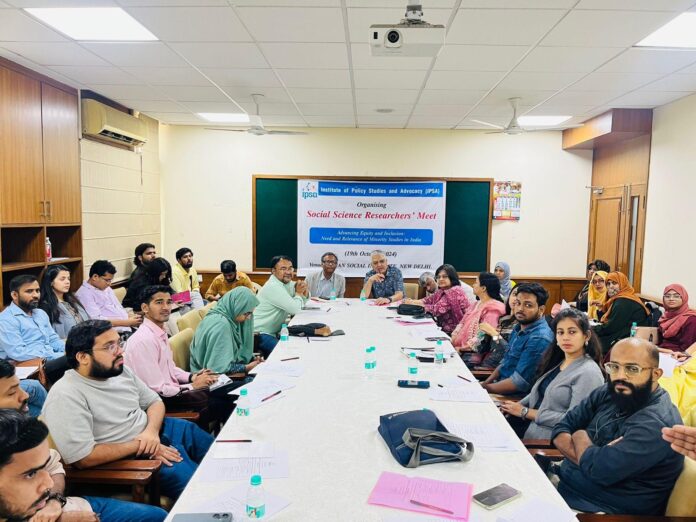
On October 19, 2024, the Institute of Policy Studies and Advocacy (IPSA) hosted a one-day workshop at the Indian Social Institute, focusing on the prospects and challenges of conducting research on minorities in the context of social inclusion.
The event aimed to gather key stakeholders—academics, PhD scholars, students, policymakers, and civil society organizations—to discuss the importance of minority studies, particularly regarding the Muslim community in India, and to propose actionable recommendations for aligning research with national and state policies.
The workshop brought together over 40 research scholars and senior academics from various universities, including Jawaharlal Nehru University, Jamia Millia Islamia, and Delhi University. The Social Science Researchers’ meet, titled “Minority Studies in India,” sought to create a collaborative environment for scholars to share insights and identify areas needing further exploration.
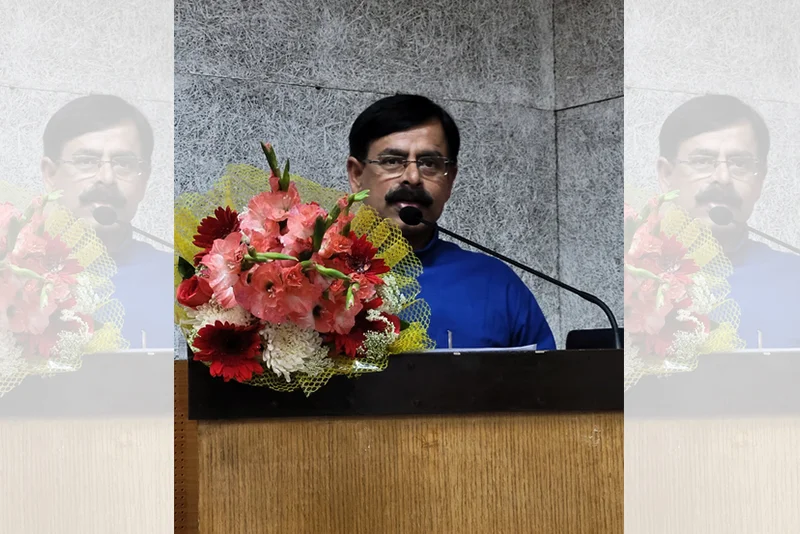
Dr. Jawed Alam Khan, General Secretary of IPSA, initiated the discussions by outlining the workshop’s objectives and context. He emphasized IPSA’s ongoing initiatives in minority research and highlighted the necessity for continued dialogue in this field.
Dr. Furqan Qamar, a professor at Jamia Millia Islamia, underscored the critical role of institutions in development and articulated the significant challenges faced by Indian Muslims. He called for studies that investigate the underlying causes of Muslim marginalization, including their access to financial resources, and stressed the importance of producing accessible and critical literature.
Dr. Tanvir Aeijaz from Delhi University contributed to the discourse by examining the distinction between “minority” and “Muslim” in academic literature. He discussed the need for equity and affirmative action, particularly in the context of the Post-Sachar Report, and raised crucial questions about citizenship amid rising deprivation and exclusion practices.
The workshop also featured a panel discussion chaired by Dr. Asheref Illiyan, Professor and Head of the Department of Economics at Jamia Millia Islamia. Dr. Ghazala Jamil, an Assistant Professor at Jawaharlal Nehru University, urged the need for fresh perspectives in studying Muslims, advocating for a shift away from outdated stereotypes. She emphasized areas like land rights, urbanization, and the unique challenges faced by Muslim women.
Dr. Khalid Khan discussed the importance of empirical research on inclusion and development theories, while Dr. Zakaria Siddiqui called for a redefinition of minority status and highlighted the critical gaps in data concerning Muslim communities.
Following the panel, an Open House session allowed participants to share their research and discuss the future of minority studies. Scholars expressed the need for collaborative efforts, research groups, and support mechanisms to foster engagement among minority researchers. The session was addressed by Professor Arvinder Ansari and Dr. Ghazala Jamil, who responded to participants’ questions and concerns.
In conclusion, the workshop highlighted the urgent need for in-depth research on Muslim communities in India, advocating for a multidisciplinary approach to address issues of equity, representation, and social justice. Participants agreed on the importance of forming a dedicated agency for minority research, which could produce newsletters, journals, and foster a network of scholars committed to advancing minority studies in India.
source: http://www.indiatomorrow.net / India Tomorrow / Home> News> Society / by admin india tomorrow / October 25th, 2024
Professor Mazhar Asif of Jawaharlal Nehru University (JNU) has been appointed the new vice-chancellor of Jamia Millia Islamia, an official statement said Thursday
New Delhi:
Professor Mazhar Asif of JNU has been appointed the new vice-chancellor of Jamia Millia Islamia, an official statement said Thursday.
Professor Mazhar Asif, School of Languages JNU, will serve on the post for five years.
“The President of India in her capacity as the Visitor of the university has appointed Professor Mazhar Asif, School of Languages, JNU New Delhi as the vice-chancellor of Jamia Millia Islamia for a period of five years,” the statement said.
The appointment of Dr Mazhar Asif, came after Prof. Najma Akhtar demitted Jamia VC office in 2023. Prof Najma was the first and so far only woman VC of Jamia Millia Islamia.
About Prof Mazhar Asif
Born on January 02, 1971, Dr Mazhar Asif is currently serving at Centre for Persian & Central Asian Studies, School of Language Literature & Culture Studies, Jawaharlal Nehru University, New Delhi.
Prof Mazhar is specialised in Indian Knowledge System, Sufism and Mysticism and has more than 27 years of teaching experience, including over 10 years as Professor.
As per his bio, he is fluent in Assamese, Bhojpuri, English, Hindi, Persian, Urdu and Vajjika.
He is Trustee, Dara Shikoh Research Foundation, Member, North East India History Association, Member, All India Persian Teachers Association and also holds a number of other posts and positions.
A very interesting mention in his bio is that during his time as a student at JNU, Prof Mazhar Asif was a member of the Akhil Bharatiya Vidyarthi Parishad (ABVP). ABVP is the students wing of the BJP and is affiliated with the right wing RSS.
source: http://www.ummid.com / Ummid.com / Home> Education & Career / by ummid.com news network (headline edited) / October 24th, 2024
“If we only remember Sir Syed over a plate of biryani once a year, we miss the essence of his mission. AMU was created to serve the community, and it’s our duty as graduates to stay true to that vision.”
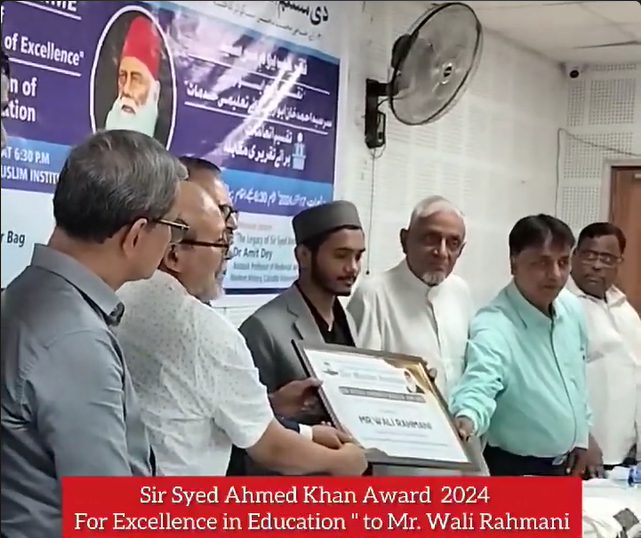
The Aligarh Muslim University (AMU) recently celebrated the 207th birth anniversary of its founder, Sir Syed Ahmad Khan, a visionary leader known for his contributions to education and social reform. On this occasion, Wali Rahmani, a prominent speaker and recipient of Sir Syed Ahmad Khan Award 2024 for Excellence in Education, delivered a compelling message urging the audience to deeply understand the compatibility between science and faith.
During his address, Rahmani challenged the common notion that science and religion are separate, emphasising that the Quran encompasses scientific principles. “To say that one hand holds science and the other the Quran implies that the Quran lacks scientific understanding, which is a misconception,” he stated.
“The Quran isn’t void of science; it contains scientific wisdom. When we speak of education, we must start in the name of Allah. Education divorced from His name isn’t complete.”
Reflecting on Sir Syed Ahmad Khan’s legacy, Rahmani highlighted how Sir Syed dedicated his life to the cause of education, building AMU to serve the community. He noted that Sir Syed’s vision extended beyond the establishment of a university; it was about empowering the community through knowledge and service.
“It is essential to remember why leaders like Sir Syed did the work they did,” he remarked, adding, “If we merely commemorate his work without continuing it, we aren’t doing justice to his legacy.”
Rahmani emphasised the need to go beyond token celebrations, stating, “If we only remember Sir Syed over a plate of biryani once a year, we miss the essence of his mission. AMU was created to serve the community, and it’s our duty as graduates to stay true to that vision.”
Expressing his gratitude, Rahmani acknowledged the honour of receiving an award in Sir Syed’s name, though he humbly expressed his doubts about deserving it.
“It’s an honour for my work to be recognised, but I also feel a sense of responsibility,” he shared. “While I cannot force anyone to become like Sir Syed, I can call them towards the truth, towards what is right.”
Rahmani’s words resonated with the audience, reinforcing the values and mission that Sir Syed Ahmad Khan championed – education, community service, and a harmonious integration of science and faith.
source: http://www.radiancenews.com / Radiance News / Home> Pride of the Nation> Awards> Education> Focus / by Radiance News Bureau / October 26th, 2024
Aligarh, UTTAR PRADESH / Murshidabad, WEST BENGAL :
Aligarh:
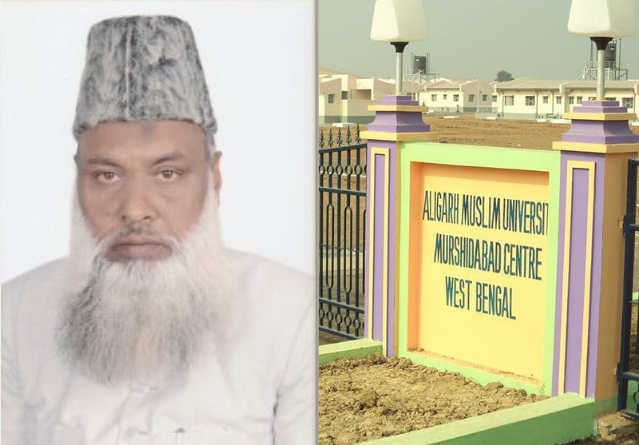
Dr. Mahboobur Rahman, Associate Professor in the Department of Sunni Theology at Aligarh Muslim University (AMU), has been appointed Director of the AMU Murshidabad Centre in West Bengal. His term will last for one year or until further orders or the convening of the General Selection Committee.
With over two decades of experience in teaching and research in theology, Dr. Rahman has been associated with AMU’s Department of Theology and has also taught at Senior Secondary School (Boys). His teaching portfolio includes a range of subjects such as Islamic culture, Quranic exegesis, Indian religions, sciences of Prophetic traditions, Islamic history, jurisprudence, and social sciences.
Dr. Rahman has authored two books, one of which is co-authored with Prof. Muhammad Ismail from the Department of Islamic Studies, and has published more than 50 research papers and articles in renowned national and international journals.
He previously served as Nazim-e-Deeniyat (Sunni) from 2012-2018, was Joint Editor of Fikr-o-Nazar, President of the Theological Society at AMU, and has been a member of several administrative bodies within AMU and beyond.
source: http://www.radiancenews.com / Radiance News / Home> News> Report / by Radiance News Bureau (headline edited) / October 26th, 2024
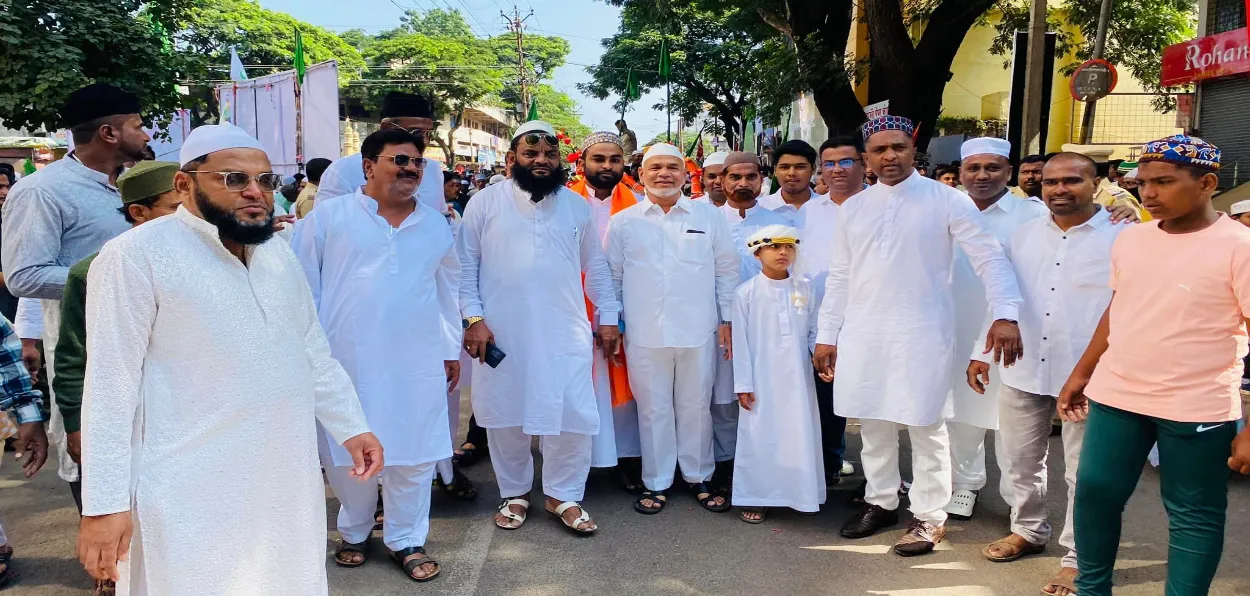
Idris Naikwadi celebrating Eid (Fourth from left, wearing a white skull cap)
A few days ago, elections were announced in Maharashtra and the code of conduct came into force in the state. Now preparations for the elections are going on everywhere. Before the code of conduct, many big and important decisions were taken in Maharashtra.
One of these was the Governor appointed seven nominated members of the Legislative Council which had been hanging fire for four years.,As per the rules, the governor of Maharashtra appoints 12 members having special knowledge or practical experience in respect of matters such as literature, science, art, co-operative movement and social service.
In the Legislative Council, BJP has three nominated members – Chitra Wagh, Vikrant Patil and Babusingh Maharaj Rathod, Eknath Shinde’s Shiv Sena is represented by Manisha Kayande, Hemant Patil and Ajit Pawar’s NCP hasPankaj Bhujbal and Idris Naikwadi.
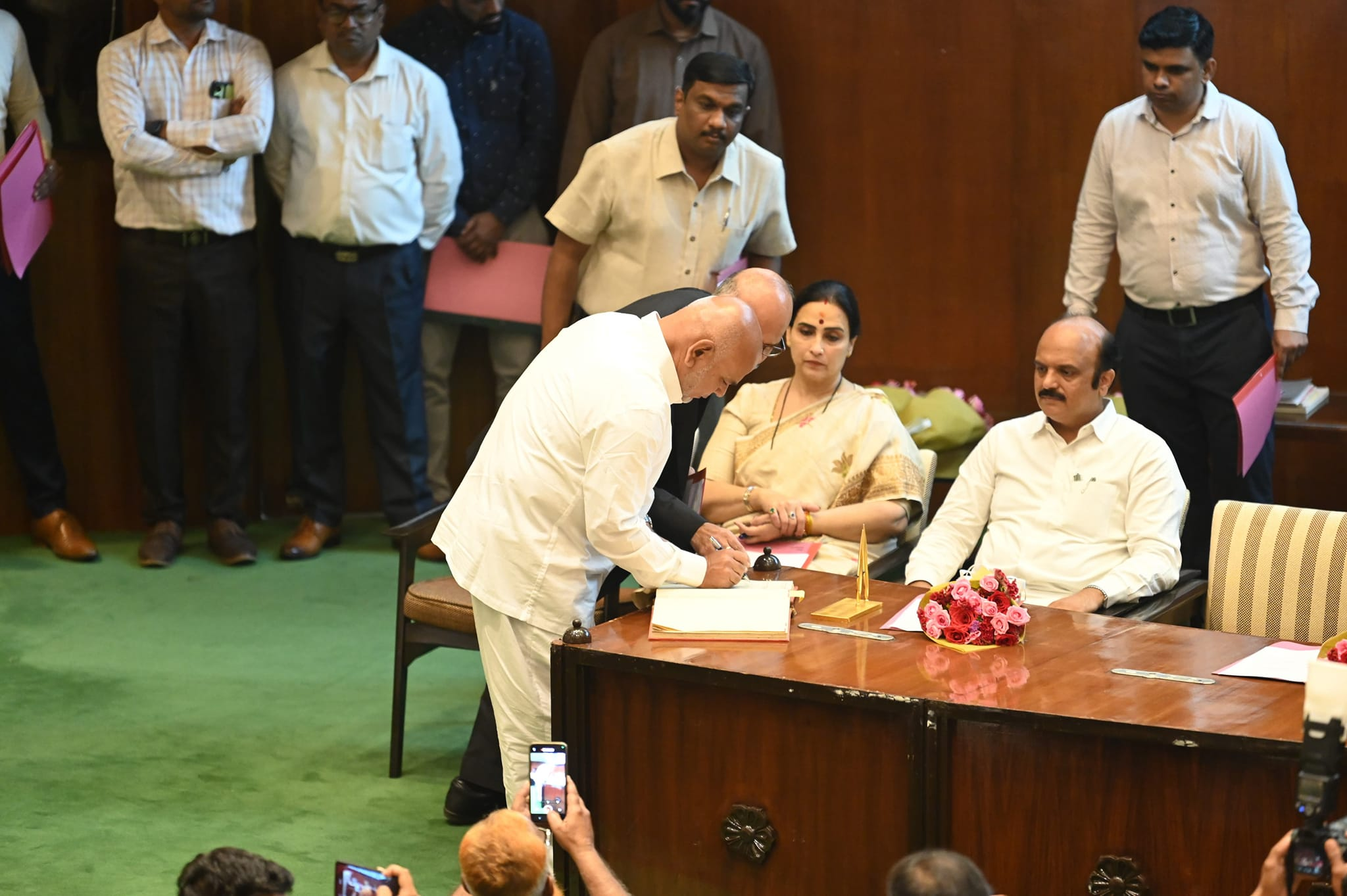
Idris Naikwadi signing his papers as a Member of Legislative Council
Thus Idris Naikwadi is the only Muslim member of the Maharashtra legislative council. It may be recalled that Maharashtra, Bihar and Andhra Pradesh, Uttar Pradesh, Telangana and Karnataka are the only states to have an upper House.
Naikwadi, a former Mayor has always been associated with the Nationalist Congress Party. Seen as a strong leader, Idris Naikwadi has always been active in public life.
He has worked as a councilor in Sangli Mira and became a Mayor of Sangli, Miraj, and Kupwad City Corporation.
For the first time, no Muslim was elected to the Legislative Council. The move was seen as a brazen phenomenon in keeping Muslims out of the legislative body.
Naikwadi was sworn in as a member of the Legislative Council sending thrill across Muslim communities in the State.
The NCP faced a split just before the Lok Sabha elections with 40 MLAs going with Ajit Pawar.
Analysts feel Idris Nayakwadi’s nomination to the Legislative Council is aimed at garnering Muslim votes in the upcoming Legislative Assembly elections.
After being sworn in as MLC, Idris Nayakwadi told the media, “Ajit Pawar’s role is for the justice of the loyal workers. My family has been with the Nationalist Congress for 20-25 years. I am thankful to my leader for keeping my work in mind and allowing me to become a member of the Legislative Council,’
He said,” I will not beg for the unity of the minority community with the Nationalist Party in the upcoming assembly elections. I will meet the migrant workers and minority workers across Maharashtra.”
source: http://www.awazthevoice.in / Awaz, The Voice / Home> Story / by Fazal Pathan, Mumbai / October 26th, 2024
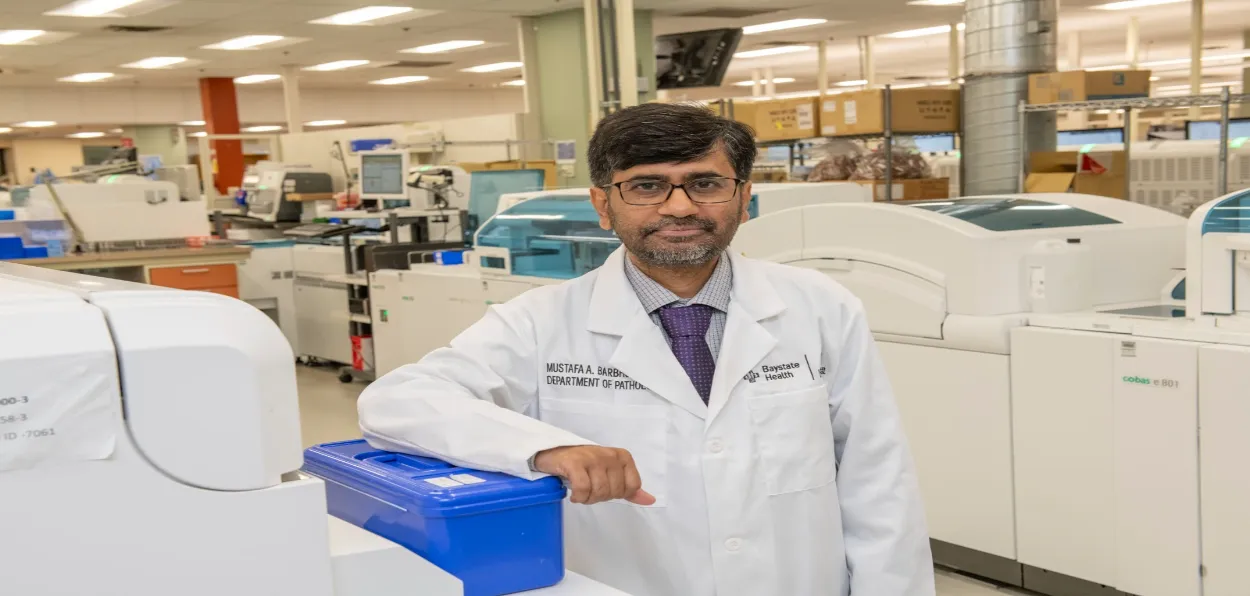
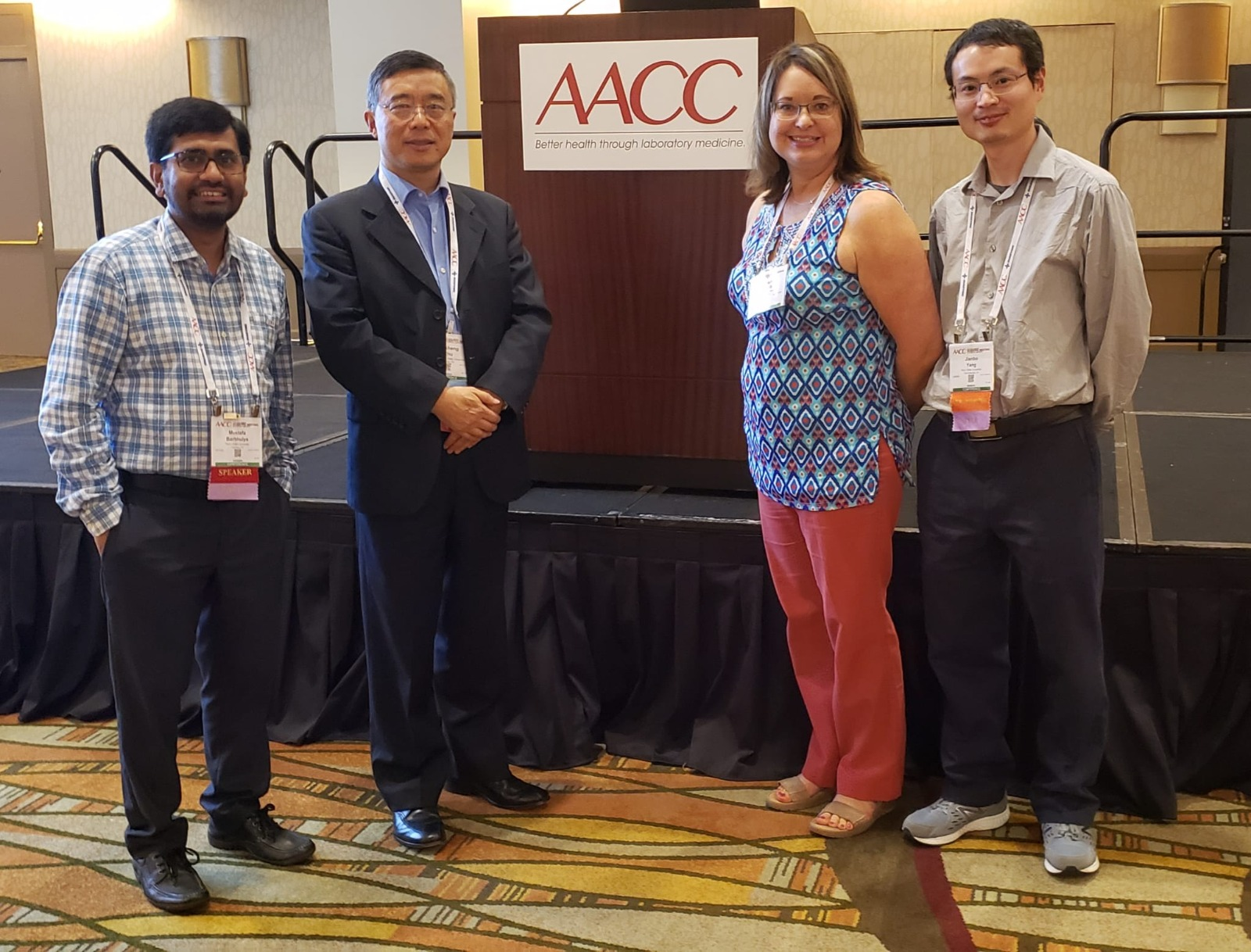
Dr. Mustafa A. Barbhuiya at his workplace in the US
Hailing from a remote village in southern Assam’s Hailakandi district, Dr. Mustafa A. Barbhuiya has been selected among top 100 most influential people in Pathology, specifically, as one of the Top 20 Heroes of Pathology in US for this year.
Featured in ‘The Pathologist Power List’ 2024, Dr Mustafa has demonstrated innovation, leadership, and achievement in the field of Pathology. But the journey of Dr Mustafa to achieve this coveted position was not so easy.
Dr Barbhuiya completed his elementary schooling (HSLC/10th) in Sanuhar Ali Memorial High School, Bahadurpur, a remote village in Hailakandi district of southern Assam. During those days in the early nineties, his village neither had electricity nor had motorable road communication.
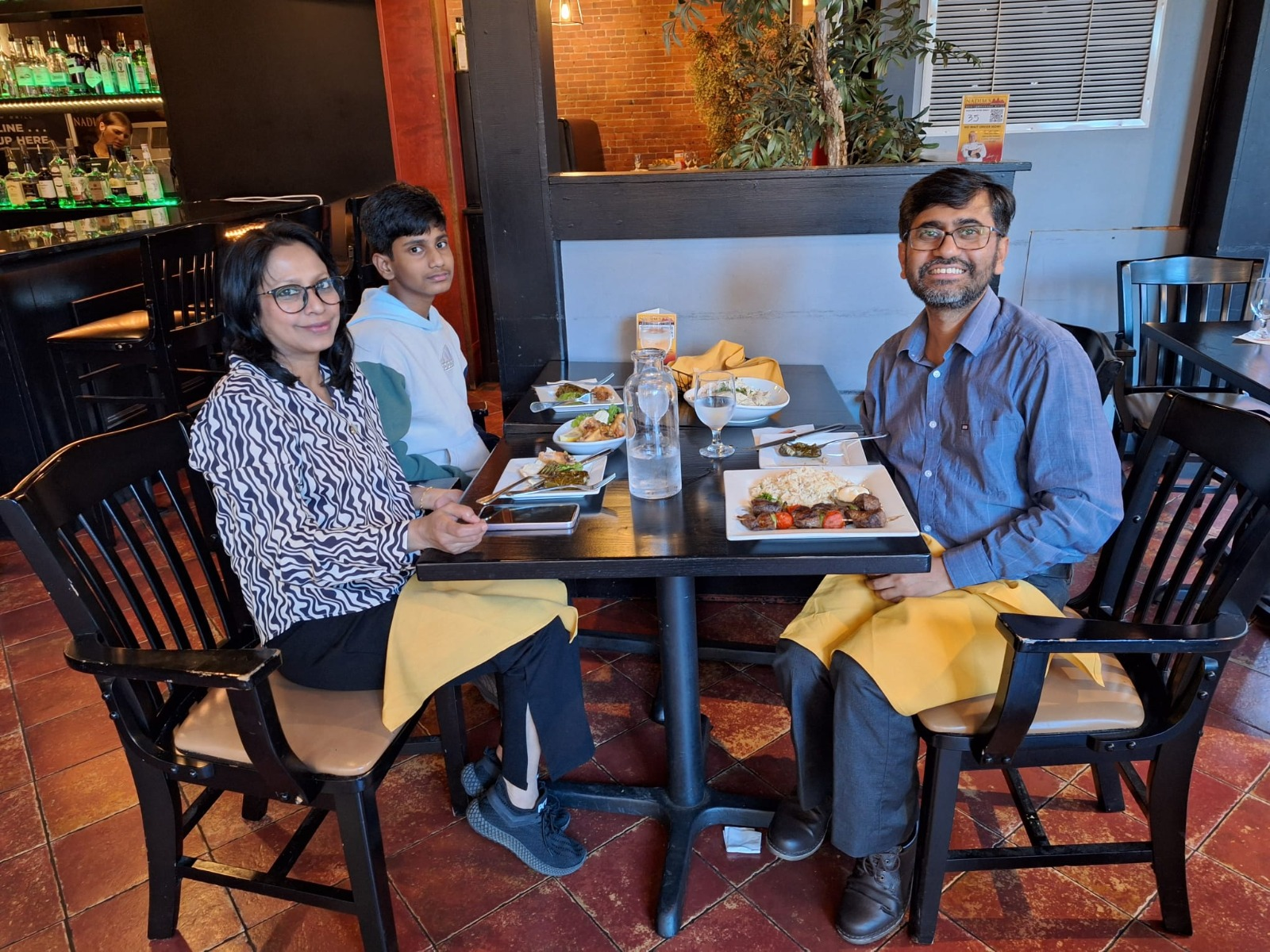
Dr Barbhuiya Mustafa with his family
“I used to cycle from my village on muddy roads to attend Advanced Mathematics and Science classes in Hailakandi town. I went to Gurucharan College, Silchar, Assam for 12th and Bachelor of Science with a major in Zoology and pass course in Botany, Chemistry and other science and language electives,” Dr Barbhuiya told Awaz – The Voice.
He studied further in Jiwaji University, Gwalior for Masters and PhD in Biochemistry which paved his way to become a Clinical Biochemist and a Molecular Biologist.
“I will remain ever grateful to two of my teachers who helped me to become what I am today. One is Prof. Baby Singha (Retired) of Department of Zoology, Gurucharan College, Silchar with whom I have specialized in the subject of Parasitology and I have never looked back. The other teacher who actually got me into Clinical Biochemistry was Late Prof. Meenu Rai, former Head of Biochemistry, College of Life Sciences, Cancer Hospital and Research Institute, Gwalior, Madhya Pradesh.
“My PhD guide Prof. Pramod K. Tiwari shaped me as the future molecular biologist with whom I have not only learnt about science of medicine, study of diseases but several life lessons that I continue to carry as of today,” Dr Barbhuiya said.
Dr Barbhuiya with his collegaues
Dr Barbhuiya completed his PhD in Biochemistry Jiwaji University, Gwalior, Madhya Pradesh in July, 2013. He went to Johns Hopkins School of Medicine, Baltimore, Maryland, USA in July 2013 to pursue advanced postdoctoral training.
“The ultimate goal was to return to India and set up my own laboratory around clinical biochemistry and molecular diagnostics in my home state Assam. But the circumstances after completion of my postdoctoral training in Johns Hopkins and lack of securing a suitable job back in India compelled me to pursue things in the United States. I further completed my clinical chemistry fellowship in Penn State College of Medicine, Hershey, Pennsylvania, USA and have become a practicing clinical biochemist and clinical laboratory director,” he said.
Dr Barbhuiya currently holds the position of section medical director overseeing the Clinical Chemistry and Point of Care Testing operations of Baystate Health Pathology services across Western Massachusetts, USA. He provides clinical consultation to physicians and other healthcare providers regarding the laboratory test interpretations in the subspecialty area as systems consultant.
Dr Barbhuiya with other renowned pathologists
He ensures that the clinical laboratory meets several US federal and local state regulations delivering timely and accurate diagnosis for patients. He is accountable for the effective management and administrations of clinical operations of the Clinical Chemistry and Point of Care Testing service within the Baystate Health Pathology operations. He also serves as Assistant Professor of Pathology; Healthcare Delivery and Population Sciences, UMass Chan Medical School- Baystate Regional Campus.
Dr Barbhuiya has set up a global non-profit organization, Foundation for Advancement of Essential Diagnostics, both in the USA and India. “My next goal is to take my non-profit foundation activities to low and middle-income countries around the world and locally serve in underserved areas of the United States,” he added.
Academically, Dr Barbhuiya is making efforts to continue his research areas of interest. His primary areas of research are studying biliary tract (liver and gallbladder) cancer mechanisms, discover biomarkers of diagnostic and therapeutic values.
source: http://www.awazthevoice.in / Awaz, The Voice / Home> Story / by Daulat Rahman, Guwahati / October 27th, 2024
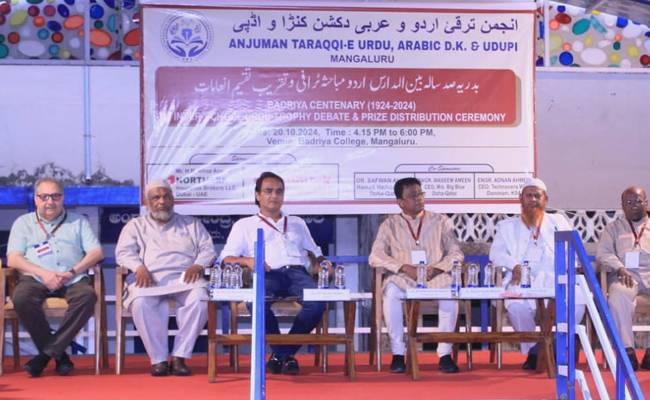
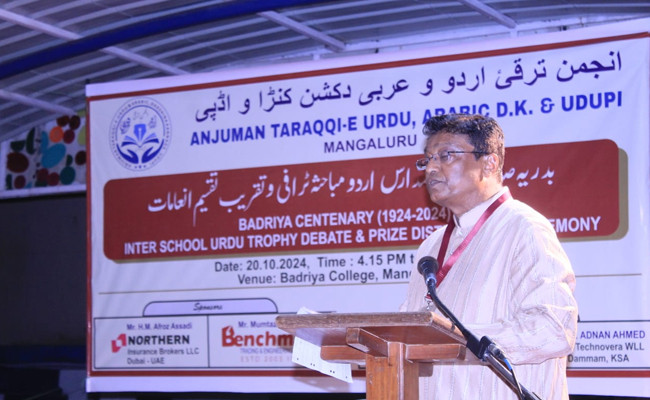
Anjuman Taraqqi E Urdu, an NGO promoting the Urdu language in Dakshina Kannada and Udupi districts, organised a debate competition on 20th October at the Badria College campus as part of the Badria Centenary celebrations (1924–2024). The competition featured the Badria Centenary Urdu Debate Trophy.
The event, divided into morning and evening sessions, saw a debate competition in the morning followed by a trophy award ceremony.
Chief Guest P.C. Hashir, Managing Director of Peecy Group of Companies and Correspondent of Badria Institution, alongside Keynote Speaker Abid Ulla Athahar Shimogavi, a retired principal and president of the State Organization, Secretary of Urdu Taraqqi Hind and H. M. Afroz Assadi, Managing Director of Northern Insurance LLC, Dubai, who sponsored the event, were present at the event Mumtaz Hussain, an NRI entrepreneur from Qatar, chaired the proceedings.
Both sessions commenced with a recitation from the Holy Quran. In his address, P.C. Hashir highlighted the role of debates and educational activities in fostering intellectual growth among students, suggesting that such competitions could help shape future lawmakers.
Keynote Speaker Abid Ulla Athahar stressed the importance of primary education in one’s mother tongue, citing the example of countries like Japan, Germany, and France, which educate children in their native languages. He noted that studying in the mother tongue allows for better comprehension compared to learning in foreign languages like English.
Mumtaz Hussain, an alumnus of Badria Institution, shared the brief history of the institution, founded in 1924 by Marhoom C. Mehmud as AL MADRASATHUL BADRIA, initially offering religious education to local children in Bunder and Kudroli. The relationship between Badria and the Urdu language is profound; it was the first school to offer Urdu studies in the undivided Dakshina Kannada and Udupi districts since 1947. After C. Mehmud’s passing, various presidents led the organization, with Marhoom Thumbe Ahmed Hajee serving the longest from 1975 to 2020. Hussain recounted that, in the past, students were required to speak Urdu within the institution or face punishment for using other languages.
The junior-level debate competition saw participation from seven higher primary schools in Dakshina Kannada.
Mohammed Ghouse from Higher Primary School Kandatpalli won first place, with Rifa and Fathima Suzana from Government Urdu Higher Primary School, Kawalkatte (Bantwal Taluk), securing second and third places, respectively.
At the senior level, five high schools from Dakshina Kannada and Udupi districts participated. Abdul Baari and Abdur Rahman from Thouheed English Medium High School, Gangolli, Udupi district, took first and second places, while Khadeejatul Farzana from Sayyed Madani Urdu High School, Ullal Taluk, D.K., came third.
The junior-level Badria Centenary Championship Trophy was awarded to Government Urdu Higher Primary School, Kawalkatte (Bantwal Taluk), and the senior trophy went to Thouheed English Medium High School, Gangolli, Udupi district. Twenty other participants received consolation certificates.
Five 10th standard students, Mohammed Meraj Khan, Fouzia Banu, Moulana Mohammed Uzaim, Sabiya Naaz, and Aysha Ruha were also felicitated for excelling in Urdu in the Karnataka State Board Examinations (2023–24).
The event began with a welcome address by Mohammed Hanif Master, Secretary of Anjuman. A.S. Madani, President of the organisation, outlined its objectives and future plans for promoting the Urdu language. Engineer Khaleel, Assistant Secretary, provided logistical support, and Rahmathulla, an active member of the Anjuman, gave the vote of thanks. The event was hosted by Badria alumnus and international emcee, Sahill Zahir.
source: http://www.english.varthabharati.in / Vartha Bharati / Home> Karavali / by Vartha Bharati / October 21st, 2024
The Annual General Meeting of the NRI Brothers Mukka Committee was recently convened at the ‘Mask 7’ hall in Jubail.
Over 100 participants from Saudi Arabia, Dubai, and Qatar attended the event, which focused on reviewing the Committee’s achievements and planning future initiatives.
During the meeting, Committee President KM Hasan, along with Muzaffar and Shameem Moidin, introduced a new program, the Family Relief Fund (FRF) project. Mohammad Zainuddin provided an overview of the Committee’s establishment and its accomplishments to date.
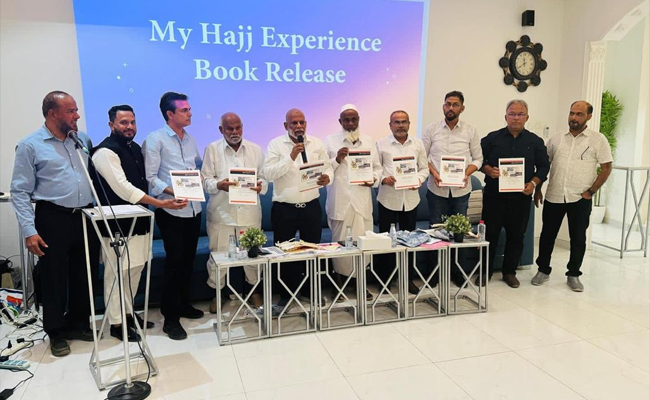
The occasion also witnessed the launch of Shameem Moidin’s book, Hajj Experience 2024.
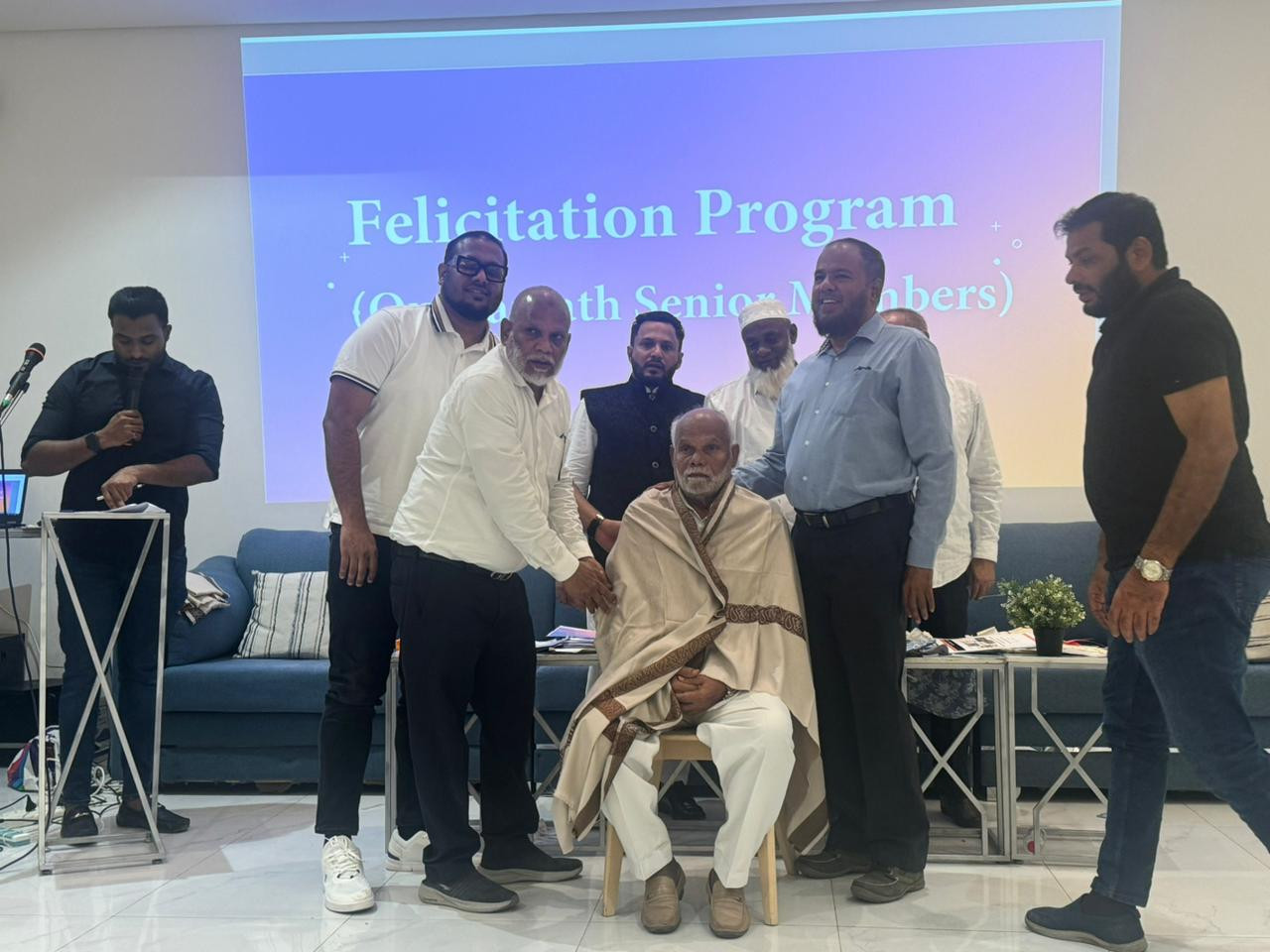
Senior members KM Iddinabba, Iqbal Hasan, and Abdul Ghafoor were honoured for their contributions to the Committee.
A quiz competition, led by Shameem Moidin, added an interactive element to the event.
New office-bearers were selected during the meeting. Sadiq Moidin assumed the role of President, while Mushtaq Ahmad and Mohammad Shaik were named Vice Presidents. Mohammad Safwan took over as the new General Secretary, with Mohammad Zainuddin and Rizwan Shafi as Joint Secretaries. KM Hasan was appointed as Treasurer.
The meeting commenced with a recitation of Quran by Muhammad Ashraf and concluded with the recitation of three salaths.
source: http://www.english.varthabharati.in / Vartha Bharati / Home> Gulf / by Vartha Bharati / October 07th, 2024
Yasir Ahmad Khan Pathan has been selected as the Congress candidate for the Shiggaon Assembly constituency by the party leadership, Chief Minister Siddaramaiah announced on Thursday.
Yasir will file the nomination in Shiggaon on Friday after taking out a procession. Party bigwigs are expected to join the event. It is prestigious for Minister for Housing and Haveri District In-charge Minister Zameer Ahmad Khan to ensure the victory of the candidate.
The constituency has a large number of Muslim community votes and if Lingayat votes are divided and Dalit and backward classes votes go to the Congress party, the victory is certain.
However, the competition is tough as BJP MP Basavaraj Bommai has been camping and touring every corner of the constituency for two months and preparing ground for his son. Unlike other constituencies, the Muslim community is not hostile towards Basavaraj Bommai as he managed good relations with them.
Yasir Ahmad Khan was defeated by Basavaraj Bommai in the 2023 assembly election from the Shiggaon constituency. He secured 64,038 votes and lost the election by 35,978 votes. In 2018, the Congress had fielded Syed Azampeer Khadri, who also lost against Basavaraj Bommai.
The Congress had delayed the announcement of the candidate as too many aspirants came forward to contest. The district in charge Minister Zameer Ahmad Khan has demanded a ticket for a Muslim candidate. However, the local leaders had contended that fielding a Muslim candidate would result in the BJP’s victory and the ticket must be given to a Hindu leader.
The demands were also raised for fielding Congress MLA Vinay Kulkarni’s daughter from the constituency to stop the polarisation of Lingayat and Hindu votes.
Deputy Chief Minister D.K. Shivakumar earlier stated “We are looking at what will benefit us politically.”
Karnataka Home Minister G. Parameshwara had said the screening committee is collecting all information. “The final decision is made on the winnability and it is the criterion. Based on the party workers’ opinion, a candidate would be selected,” he said.
Bharat Bommai, son of former Chief Minister and BJP MP Basavaraj Bommai, filed his nomination as a BJP candidate from the Shiggaon Assembly constituency in Karnataka on Thursday morning.
“I submitted my nomination at an auspicious time following my mother’s guidance. I will submit another set of nominations on Friday,” said Bharat Bommai while talking to media persons after filing his nomination in Shiggaon town.
Bharat said that people have always blessed his father and requested that people bless him as well just like they have done with his father.
“I will work for the welfare of the poor, youth, and women. If victorious, I would share details of various initiatives to be implemented in the coming days,” said Bharat.
source: http://www.daijiworld.com / DaijiWorld.com / Home> Karnataka / by IANS / October 24th, 2024
The ensemble of luxurious silks and embroidery was the quintessential garment for aristocratic Muslim women and generations of brides from my family.
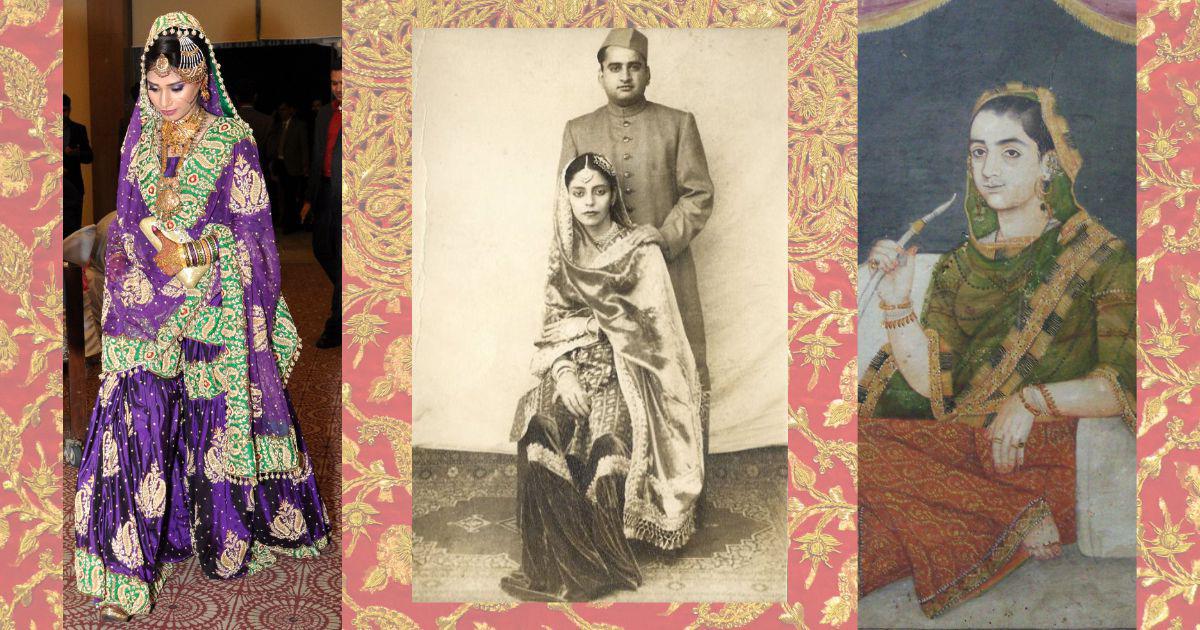
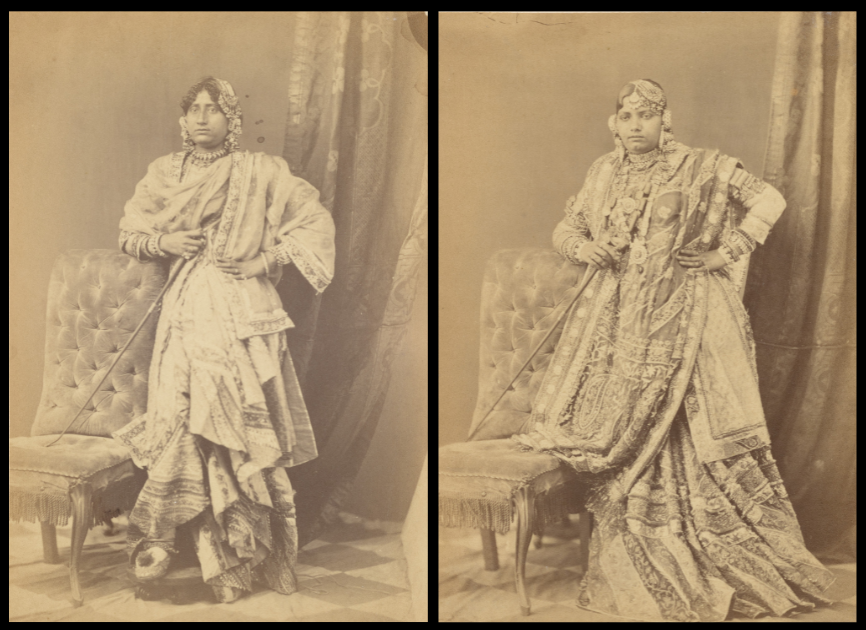
A bride in her ‘nikah’ gharara, a photograph of a couple at a wedding from the 1874 album ‘The Beauties of Lucknow’ by Darogah Abbas Ali and a miniature said to be of “Bahu Begum”, the queen of Nawab of Oudh Shuja-ud-Daula. The backdrop is of a 20th-century silk wedding gown that has been decorated using gilt thread, beads and ‘zardozi’, or embroidery. | Public domain images and Farmina Khan, CC BY-SA 4.0, via Wikimedia Commons
My cousin, Tee, relinquished her oath of singlehood, got her ears pierced and was besieged with intense gharara pangs. She would not, like the rest of us, wait for the groom’s family to bring the wedding gharara. Making your own bridal gharara was unheard of in a conservative Muslim family in 2005, but one could only expect the unexpected from Tee. The besotted groom decided to spin a story about a designer friend making the gharara and we, the sisterhood of cousins, busied ourselves in making Tee’s trousseau and the all-important nikah gharara.
The gharara is a pair of wide-legged pajamas worn with a tunic and a dupatta. A farshi gharara, which Tee craved, has a train that would trail behind on the floor – the “farsh”. For a North Indian Muslim bride, the gharara ensemble is the essence of the nuptials. The groom’s family is judged by the bridal ensemble offered and the bride sees it as a testimony of the love of her future family. My mother wept seeing her sister’s too-plain wedding gharara, feeling sure that the sister would have to endure a tough, married life.
Like Tee, I too desired a farshi gharara trailing behind me, held by my teary-eyed sisters as I walked towards my smiling groom. My in-laws got an elaborate farshi of 20 metres of cloth for me – it had sliced my waist in half and contributed to my delirious happiness.
By the mid-19th-century, inspired by Awadh fashions, the gharara became the embodiment of elegance in the aristocratic Muslim families of North India. Abdul Haleem Sharar writes in Guzishta Lakhnau, a historical work on Awadh, that in the early 19th century, ladies’ pajamas had voluminous skirts fitted at the waist and the hems were tucked in at the waist while walking – a precursor of the present farshi gharara.
Rampur, a Muslim princely state under British colonial rule, was deeply influenced by Awadhi culture. Jan Sahib Rekhtigo’s composition, Musaddas e Tahniyāt e Jashn e Benazir, which describes a festival at the Benazir Palace of Rampur in 1860s, has sketches of tawaif courtesans wearing farshi ghararas with short blouses. The book can be said to be a cultural snapshot of Rampur, reflecting the changes in its Rohilla Pathan culture.
By the end of the 19th century, the farshi gharara, or farshi pāyechā, was essential courtly attire for women attending the zenana durbar to pay respect to Her Highness Begum Rampur. It was quintessential dress for weddings and festivities. At home, the noblewomen generally wore a shorter version of the gharara gathered at the knee with an ankle-length frill. This was the gharara my grandmother wore all her life with a mulmul kurta and a crinkled cotton or georgette dupatta. The colour of the dupatta changed to white when she was widowed – she had to give up the gharara altogether when she became bedridden and was made to wear the more convenient petticoats. She knew, then, that life was dwindling to its logical end for her.
For generations, the brides of my family wore intricately embroidered Rampuri ghararas. Heirloom ghararas with real silver work were bequeathed to daughters-in-law. When my grandparents moved from Rampur to Aligarh, a wedding necessitated several trips to Rampur’s narrow gullies for embroidery and stitching of ghararas. My mother and aunts favoured the shorter gharara and the fashionable single skirt – the sharara – for their wedding trousseaus in the 1970s.
For some reason, all married aunts left their ghararas in their rambling maternal home at Aligarh as they busied themselves with childbearing, household duties and shifted locations to wherever fate and husbands took them. A large tin box was the repository of generational masses of silk ghararas, which were sunned every winter.
The ladies of the bride’s or groom’s family are dressed in ghararas – the married ones wear ghararas from their trousseaus and the singletons borrow, or, if they are lucky, get them stitched for the occasion. We sisters dipped into the gharara box trying out and fighting over the garments before every wedding. There was a hectic mixing and matching of ghararas and dupattas, the kurtas were tightened or loosened to accommodate our body types and metamorphosing bodies.
The bridal gharara was out of bounds, only to be worn by married women. It was too heavy, anyway, to negotiate the rituals and festivities in which we were to play an important role – joota churai, rasta rukai, the dancing and eating. Only an NRI cousin had her own ghararas because her mother decided to get her trousseau made years in advance, even though there was no boy in sight.
Photographs of the “dancing girls” of the “Oudh Court of Lucknow”, from the 1874 album, “The Beauties of Lucknow”, by Darogah Abbas Ali. Credit: public domain images, The New York Public Library Digital Collections.
About 20 years later, confronted with Covid-19 lockdowns and my son’s sudden decision to get married, I wished I had the NRI aunt’s foresight. My daughter had already laid claim to my nuptial ensemble. The bride and bridegroom to be, working from their respective homes, wanted only a simple ceremony before the impending third wave.
Everything could be arranged within a few days, except the bridal gharara. A gharara is generally custom made but there were no markets to get the material from: the embroiderers were ill or had been forced to close their workshops. The option of a store-bought lehenga was unthinkable. A bride had to have her bridal gharara, even in the middle of a pandemic. I was one of the hundreds of desperate Muslim mothers-in-laws attempting to make a suddenly fashionable – thanks to Pakistani wedding Instagram sites – farshi gharara. I was also trying to demonstrate our love by giving our daughter-in-law the nuptial gharara of her dreams.
I was pondering using my sky-blue Banarasi saree and magenta Kanjeevaram to make a farshi gharara when my cousin Mona, the one and only gharara queen of our sisterhood, entered the fray. “You cannot, I repeat, cannot pair a brocade with a tanchoi!” she screamed.
Over long video sessions, she pulled out her old ghararas and educated me on luxurious silks – poth, kamkhab, atlus – which had to be spruced up with dabka, aari, thread, sequins and bead embroideries. Then came the moving parts of the gharara: two legs with the upper half, called the paat, and the lower half, the goat, each with several sub parts and embroidered ribbons, tassels, and lachkas stitched to the seams. The upper tunic has now – thanks to Pakistani fashion – transformed from a short, plain garment to a long and thickly embellished kurta. And finally, the heavily embroidered dupatta.
Mona sent me a slew of Instagram photographs of farshi ghararas that left me hyperventilating. I didn’t even have the material to begin working and Mona said it took two months to get a decent gharara made. Meanwhile, my daughter had shared Kareena Kapoor’s wedding pictures on the family WhatsApp group and the bride and groom could only think of Kareena’s heirloom gharara.
Even in the 1990s, when I got married, there were few people who could stitch a farshi gharara in Rampur. Now, the Rampuri embroidery work has deteriorated, real zardozi work is hardly done here because it is more lucrative to make sequins and bead work. I contacted a gharara maker in Lucknow and sent him pictures.
“You are the 21st person who has called me for this Kareena gharara,” Mr Lucknow gharara sighed on the phone. After lamenting the sad extinction of the tissue silk – the material of Kareena’s heirloom gharara – he suddenly “found” a similar material that we could use. Mona said the best option was to buy the material from him, but the gentleman was loath to part with the material. We broke off with teeth-gushing politeness from both sides. Now, I had no cloth, no farshi in sight and two months to the wedding.
Mona, in lifesaver mode, introduced Nilo appi, an experienced farshi gharara maker from Lucknow. We could send her the brocade and monitor the work over Zoom calls. We made a life-threatening trip to Delhi, double-masked, grabbed brocades and silks in the manner of surgical strikes and couriered the material to Nilo appi.
The next two months were filled with disastrous pictures from Nilo appi and damage control Zoom meetings. The kurta sprouted stereotypical roses on the stem and had to be hidden in masses of nebulous patterns and the pearl beads on the dupatta were too trite. Finally, the kurta was declared irretrievable and the bride had to cover it by wrapping the elaborate dupatta around.
The sisterhood agreed that the red and sea green ensemble looked magnificent – Mona still mourned the kurta – the opulent skirt trailed behind the bride with timeless perfection, as she glided into our lives buoyed with our love.
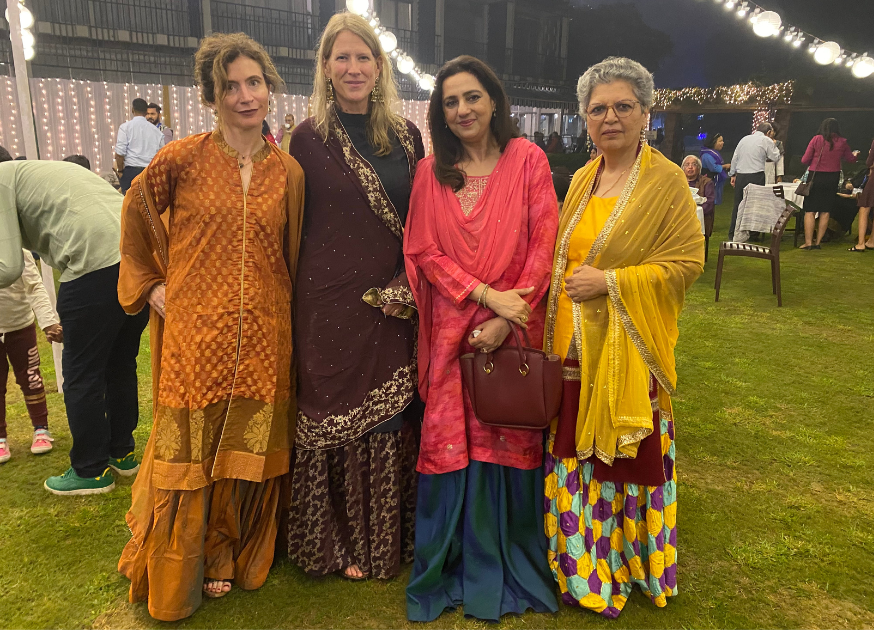
Writer Claire Chambers, Historian Siobhan Lambert Hurley with author Tarana Husain Khan and historian Rana Safvi at the Jashn-e-Rampur food festival. Credit: Tarana Husain Khan.
Tarana Husain Khan is a writer and food historian based in Rampur.
source: http://www.scroll.in / Scroll.in / Home> History / by Tarana Hussain Khan / September 22nd, 2024