Monthly Archives: October 2024

This book asks why the Indianness of Aligarh Muslim University, Jamia Millia Islamia is questioned

NEW DELHI :

‘Between Nation and Community’ cites primary and secondary sources and oral testimonies to understand what India thinks of the two universities.
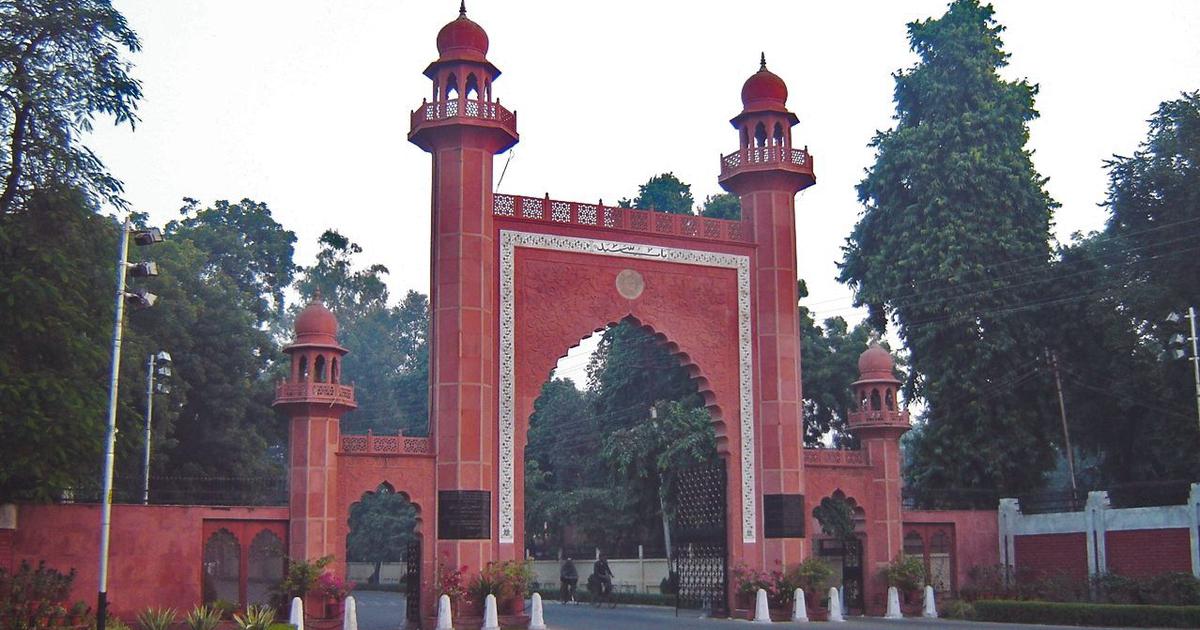
Bab-e-Sayyad, the entrance to Aligarh Muslim University. | Hhkhan / CC BY-SA 3.0

By sheer serendipity, I happened to begin reading Laurence Gautier’s Between Nation and ‘Community’ immediately after TCA Raghavan’s Circles of Freedom, which locates the life and career of the barrister-politician Asaf Ali in the national freedom struggle and probes the challenges of being a moderate Muslim or a nationalist Muslim within the Indian National Congress. Coming close on the heels of Raghavan’s book, I was struck by the opening line of Gautier’s Introduction: “Can a Muslim university be an Indian university?” Clearly, the doubts and apprehensions, the mistrust and suspicion that afflict Indian Muslims similarly afflict Muslim institutions, including universities that Gautier is at pains to clarify at the very outset were “established by Muslim individuals or organisations, primarily – though not exclusively – for Muslim students.”

Between Nation and ‘Community’: Muslim Universities and Indian Politics after Partition, Laurence Gautier, Cambridge University Press.

Having worked briefly at both Aligarh Muslim University (AMU) and Jamia Millia Islamia (JMI) – a few short months at Aligarh and a few years at Jamia – I can say that there is a Muslimness, an unmistakably Muslim character to both: the time table changes during the month of Ramzan, a long break for the Juma namaz, the presence of several mosques on campus, the opening of academic/formal events with recitations from the Holy Quran, and increasingly the presence of ever more hijab-clad women (this was pointed out by mother who studied at AMU in the 1950s and noted that there were very few women in hijab let alone the full burqa in her time). The question, however, is: Does any of this diminish or detract or take away from the Indianness of these universities or, for that matter, from those who study or work here? That would lead us to the larger question: What is Indianness?

We come back to the question posed by Gautier in her very first line when she goes on to cite Gyanendra Pandey, who has compared Hindu nationalists and nationalist Muslims. Hindus are seen as nationalists by default whereas Muslims are often put to an agni pariksha to prove their nationalist credentials. As Gautier puts it: “Indian Muslims are taken to be primarily Muslims, whatever their political stance might be. Unlike Hindus, their commitment to the nation cannot be taken for granted; it has to be proven, for their Muslimness casts doubt on their Indianness.”

Incidents like Batla House in the Jamia neighbourhood or the anti-CAA protests at both JMI and AMU bolster the argument that these universities are nurseries of disaffected anti-nationalists and prompting a politician to famously declare: “Desh ke gaddaron ko…Goli maaro saalon ko.”

Aligarh Muslim University and Jamia Millia Islamia

While there is much to read and reflect on in this richly detailed book that brings together, seamlessly, many primary and secondary sources and oral testimonies, a few things need to be flagged. One is the obvious differences between AMU and JMI, by now both Central Universities though the two have entirely different histories. The reasons and the circumstances behind their establishment and their distinct “historical character” have cast a long shadow on their growth and development. AMU was set up to provide secular, western education to the Muslim qaum in a campus modelled on the colleges at Oxford and Cambridge, and to “develop a strong bond with the colonial authorities in order to preserve their access to power”.

JMI on the other hand clearly had different ideas right from its inception: “Hers was a voice of rebellion, one that highlighted the dissonances within the supposedly unified Muslim community.” A splinter group of ardent nationalists, led by Maulana Mohamed Ali, broke away from the MAO College to set up a new kind of educational institution devoted to the service of the nation. In the heady days of the Khilafat Movement and the high noon of Hindu-Muslim unity, Gandhi pledged instant support to this new venture, famously declaring to go begging bowl in hand, if need be, to support this nationalistic enterprise.

It’s interesting to note the different treatments meted out to the two universities immediately after independence, and their vastly different public perception. While AMU was given Central University status in 1951, one among three central universities, Jamia – that had once been famously called the “lusty of the freedom movement” – struggled financially. It seems as though it quite suited the Congress government of the day and Nehru in particular – who had close personal ties with several of Jamia’s teachers and was a frequent visitor – to view the Jamia as a quaint space where visitors such as the Shah of Iran would be shepherded to view its projects and schemes.

Even the cover photograph on Gautier’s book written with immense empathy though it is, perhaps unintentionally, reinforces this quaintness with gamine-faced boys dressed like grown-ups in shervani and Gandhi caps against a building designed by the German architect Karl Heinz. There are other photographs in the Jamia archives showing several eminent people earnestly poring over rough-and-ready hand-made charts and diagrams. Overall, the picture that emerges is that it suited everyone to have this quaint, charming, idealistic venture in one’s backyard as long as it showed no great ambitions to grow into anything bigger or grander.

The Jamia too, I suspect, chose to live in a shell of its own making, hiding its light under a bushel, making a virtue of frugality and simplicity and service. It seemed content to allow the world to view it as a curiosity, a whimsical other-worldly place, a retreat from the mainstream; for some, it was even a recalcitrant child bent upon being odd and different from others, especially its older sibling, the AMU. For far too long, the serious students and the professional scholars stayed away from the Jamia choosing to go to AMU instead.

The differences

The Jamia biradari – a word constantly used by Prof Mushirul Hasan, the most faithful chronicler of Jamia’s history – was a close-knit community. Being small, much smaller than the sprawling AMU campus, Jamia fostered from its earliest days a sense of fellowship among its students and teachers. We get a sense of that in the oral testimonies and memoirs of its teachers and students frequently referred to by Gautier: the annual Jamia Mela, the idea of selfless service (be-laus khidmat) reinforced by teachers often voluntarily taking cuts in their salaries, the emphasis on community service and shram daan, the sense of community living, the devotion of not just staff but their families to the “idea” of Jamia, all of which was fostered by the compactness of the campus. Also, Jamia was more democratic in its functioning than AMU, again possibly due to its size. In this, it drew inspiration from early Islamic society. There are instances of school functions starting punctually on the dot when the chief guest, Vice Chancellor Dr Zakir Hussain, happened to be running late.

Then there was the presence of female students from its earliest days – in classes, in reading rooms, even on stage – with the earliest students being daughters and sisters of Jamia teachers and workers. However, as Gautier points out, this was “primarily out of practical considerations, not out of ideological principles” and Mujeeb, a long-serving Vice Chancellor, recognised it as a valuable project only in hindsight. Whatever the reason, Jamia offered new opportunities for women in its feeder schools, Balak Mata centres, teacher training courses, and adult literacy classes.

The presence of women on campus seen as a threat in AMU with Islamist groups gaining ascendancy, was much less so in JMI in the 1970s and 80s when debates on “proper” and “improper” mingling of the sexes began to gain ground between the “conservatives” and “progressives” and questions about the presence of women, especially in cultural programmes, began to be raised. While present in JMI, too, these voices were muted and not as strident as in AMU.

Then, there is the rather obvious difference of location and how that has impacted the development of the two universities: Jamia’s location in Delhi compared to AMU’s approx 180 km away. While in the early years, AMU was far more cosmopolitan than the mosquito-infested neck of the woods beside the Yamuna that was home to Jamia, from the 1980s a perceptible change became visible. The establishment of a working women’s hostel in 1982 by AJ Kidwai was possible in Jamia primarily due to its location, followed by the MCRC. We see that change accentuated in recent years in the changing profile of both staff and students with Jamiabeing more open to change and AMU becoming more closed, more insular, more inward-looking.

source: http://www.scroll.in / Scroll.in / Home> Book Review / by Rakshanda Jalil / September 29th, 2024
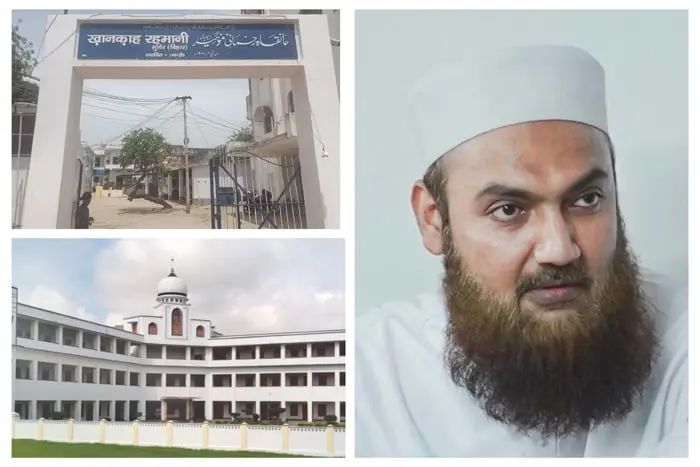
Quran, Coding and Community: Inside India’s Most Unique Educational Center

Munger, BIHAR :

The long history of social change at Khanqah Rahmani. Where freedom fighters and future leaders meet. Rahmani30 has sent 513 students to different IITs and 838 students to the National Institutes of Technology (NITs)

Munger:

When you reach Khanqah Rahmani during the last asra (phase) of Ramadan, you will find hundreds of people doing itikaf – a ritual, in which faithful reside inside the mosque from the night of the 21st Ramzan till the sighting of the Eid Moon. They pray and fast and reside there only. Mohammed Salauddin, is a regular for itikaf for three decades.

The 64-year-old man remained associated with Khanqah for the last 32 years.

And the obvious question arises, what does he get by giving so many years of his life in the Khanqah?

“Everything,” the tall man gives a single-word answer. And adds, “I am an angutha chap (an illiterate person). For employment, I got a driving license in 1982, and since then I started working for the Rahmani Saheb family. And did other jobs as well but remained attached to the Khanqah.

“Later Salauddin got married and became the father of two sons. Both of his children studied in Jamia Rahmani.

“I became hafiz from Jamia and then did an initial study of Alimiat from here. And went to Deoband for the completion of Alimiat. And took a graduation degree from Munger, MA from CCU Meerat, BEd from Haryana, Mass communication from Jamia Millia Islamia. I cleared state and centre level teacher’s eligibility tests. Then sat in the examination of Bihar Public Service Commission’s TRE2 and became a teacher in February this year,” informs Mohammed Najmuddin, Salauddin’s son. Najmuddin is also pursuing a PhD from Munger University.

Najmuddin is not alone. Along with him, Mohammed Mudassar Usmani (MA, MEd), Akbar (MA, BEd) and Mohammed Hassan (BA, BEd) all are huffaz of Khanqah Rahmani who cleared the BPSC TRE 1 and 2 and have become teachers in 2023 and 2024.

Najmuddin’s elder brother Shahabuddin also a hafiz from Jamia is now an officer in the National Council For Promotion Of Urdu Language, has done a BA from Jamia Millia Islamia, MA from Maulana Azad Hyderabad, qualified NET and done an MPhil from Delhi University before joining NCPUL, Delhi.

“All these were possible for a person like me because of Khanqah Rahmani and its educational centres,” claimed Salauddin, the father.

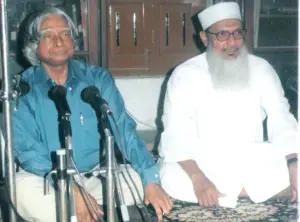
APJ Kalam and Mohammed Wali Rahmani in Khanqah Rahmani in 2003 | Arranged

The history of Khanqah Rahmani

It was established in 1901 by Maulana Mohammed Ali Mungeri. Since then the Khanqah not only remained as a center for societal reform and purification of souls but also helped freedom fighters during the freedom struggle. Freedom fighters like Mahatma Gandhi, Jawahar Lal Nehru, Abul Kalam Azad and Dr Rajendra Prasad among others stayed at this centre. Former Prime Minister Rajiv Gandhi also visited the Khanqah.

After Ali Mungeri, Maulana Syed Shah Lutfullah Rahmani, his nephew ran the centre. And thereafter Minnatullah Rahmani and then his son Mohammed Wali Rahmani and now his son Ahmad Wali Faisal Rahmani is taking care of it. His brother Fahad Rahmani is the CEO of Rahmani Programmes of Excellence under which Rahmani30 functions.

Khanqah was also been instrumental in establishing the All India Muslim Personal Law Board, which safeguards Muslims in protecting their personal laws and identities.

Who is Ahmad Wali Faisal Rahmani, the present head?

The chief of Imarat-e-sharia and the secretary of All India Muslim Personal Law Board, Ahmad Wali Faisal Rahmani, is also head of the Khanqah. He has studied Information Technology from the University of California and worked as a teacher there. His professional career also includes working for Adobe and British Petroleum. However, Faisal Rahmani got his early education in Khanqah Rahmani as he got his elementary education in Arabic, Quran, Deeniyat and Mathematics in the Khanqah. He started looking after the activities of the Khanqah after the demise of his father Mohammed Wali Rahmani.

Whenever he gets time from the activities of Imarat Shariah and AIMPLB, he spends time in the Khanqah. He does not let anyone chide even a screaming child. There are a large number of women who come to listen to him. He prefers to eat along with the students and members as well as the faculty of the centre.

Students of Rahmani BEd College | Arranged

Jamia students hold the Quran on one hand and tablets on other

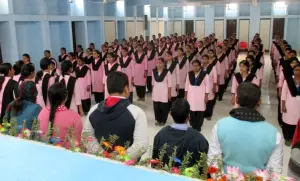
Jamia Rahmani, which came into existence in 1927 is one of the several centres run by the Rahmani Foundation , a charity body of Khanqah Rahmani. Jamia’s students not just memorize the Qur’an, but also understand it by learning Arabic.

Here, every student also learns science, English and Mathematics as well and gets tablets for their study. They have smart classes too.

But this is just the beginning for the students. The Khanqah has Rahmani30, to prepare for JEE Advanced (IIT), JEE Mains. It has branches in several cities across India. There is also a centre for Medical (NEET) entrance and for the preparations for Chartered Accountant and Company Secretary entrances. It has a BEd College, which has a large number of female students. Jamia Rahmani has added several new courses after 2011.

“When Ahmad Wali Faisal Rahmani became head here, the first thing he did was, start a one-year Diploma in Mass Communication in journalism course in Jamia. Later started two years of Master in Islamic Jurisprudence Study and last year, a two-year course, Diploma in English Language in Professional Skills also began,” said Fazle Rahma Rahmani, head of the Department of Journalism and Mass Communication.

The Khanqah also provides residential facilities to the families of its faculties as well as the cooks. It provides meals to almost 1200 people three times a day. Most of the beneficiaries are the Jamia students and people associated with the Khanqah.

Then there is the Rahmani School of Excellence (where students can get enrolled in a Nursery and study up to standard twelve). In the School Management Committee, Muslims as well as non-Muslims teachers are present, it has females too. And it has a diverse background of students.

“While Jamia Rahmani and Rahmani30’s study is completely free, BEd, school education and other studies have some fee structure. But where there are fees, Khanqah authorities give scholarships to needy students and have a liberal approach to such cases where parents approach the centre. Money never became a hurdle in getting an education from the educational centres related to Khanqah,” points out Fazle Rahma.

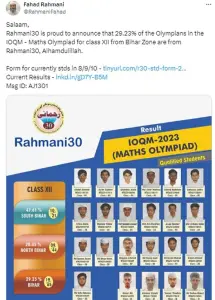
Since the inception of Rahmani30, 513 students have been admitted to different IITs in the country. While 838 students reached JEE Advanced to get admission to the National Institute of Technologies (NIT) during the same period.

“Several students of School of Excellence have become IITians so far,” claims Fazle Rahma.

Whereas, many students of different centers of Rahmani30 also take part in the Olympiad, every year.

The Jamia Rahmani’s Taleemgah building was inaugurated by Former President of India APJ Abdul Kalam. Kalam, who wanted to be known as a Professor rather than a former President, in 2003 itself, says a lot about Khanqan’s educational work.

From the stage of Khanqah, the scientist claimed that he was also a student of the Madrasa Board.

However, neither before the visit of the President of India nor after it, did Khanqah Rahmani’s educational works got the attention that it should have got the mainstream media.

source: http://www.enewsroom.in / eNewsRoom India / Home> Education / by Shahnawaz Akhtar / April 09th, 2024

From Everyday Jobs to Extraordinary Futures: How Urooj Made It Happen

Kolkata, WEST BENGAL :

Thirty two students from humble background clear NEET 2023 with the help of Urooj, celebrate medical dreams.

Kolkata :

Three years ago, amidst the fast-paced hustle of Blinkit, grocery deliveries zipped past Mohammed Iqbal. But on Sunday, in a Kolkata school auditorium, a stethoscope draped around his neck marked a stark contrast to his past – a future doctor stood ready to embark on a new journey.

“In 2021, I was an auditor for Blinkit. I have to visit Blinkit stores and check their qualities,” Iqbal, now a student of Bachelor in Dental Studies (BDS) at Burdwan, reminisced. “My father ran a small clothing shop. Juggling studies and supporting my family, NEET (National Eligibility cum Entrance Test) coaching seemed like a distant dream. That’s when I found Urooj.”

Urooj Institute, recognizing Ahmed’s financial constraints and demanding work schedule, extended a helping hand. Dr Minhjuddin Khurram, the institute’s anchor man, vividly recalled their first meeting, 

“He came in wearing a Blinkit t-shirt. We understood his situation – he couldn’t afford coaching while working in a job where he has to be mobile most of the time. So, we helped him secure a librarian job, allowing him to study for NEET while earning an income.”

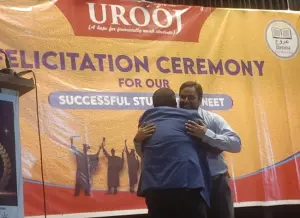
Teacher Amrendra Kumar (face not visible) and Dr Minhajuddin Khurram hug each other during the felicitation | eNewsroom

This act of support and understanding proved crucial. With renewed focus and dedication, Ahmed aced the exam on his second attempt. Now, he sets his sights even higher, aiming for an MBBS seat next time.

Similar struggles resonated in the story of Sarfaraz, a former freelance video editor. “My father, a primary school teacher who started working late in life, couldn’t afford luxuries,” Raiyan, now a BDS student, shared. “To support myself, I did video editing. Urooj’s guidance proved invaluable, helping me score 569 marks in NEET 2023.” Like Ahmed, Raiyan plans to retake the exam to improve his rank and qualify for an MBBS seat.

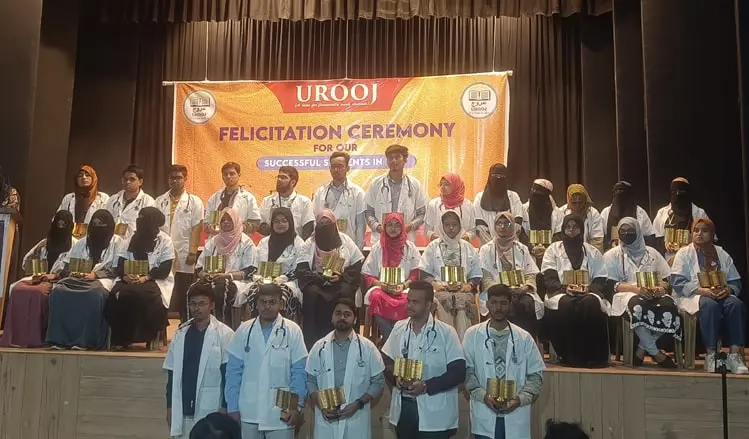
Ashraf, whose father owns a paan shop, and Shenaz, daughter of a bus driver who fell short of an MBBS seat by just one mark in 2022, were among the 32 Urooj students celebrated by renowned practicing doctors in Kolkata. 

The evening buzzed with stories of resilience and triumph, each one a testament to the transformative power of opportunity.

Urooj’s students with the felicitating doctors | eNewsroom

Urooj also recognized its partners, including Headmaster Mohammed Alamgir of MD High School. His words resonated throughout the hall, “The government invests heavily in each doctor’s education – crores of rupees, funded by taxpayer money. So, if you studied at a government medical college, remember your responsibility to serve the public. Don’t think your success solely relies on you and your parents’ hard work. Society plays a vital role through taxes.”

Several doctors echoed Alamgir’s sentiment, urging the newcomers to pay it forward by helping others pursue their medical dreams, just like Urooj helped them. 

On the occasion, Urooj also honoured three of its teachers- Md Irshad, Amrendra Kumar and Nadim Haider.

Abdullah Amir of Helping Hand Trust told the medical students about the butterfly effect and that every small work matters.

Dr Jawera Mehreen reminded the students, “In Palestine, doctors are true heroes. Remember, you have to serve the humanity wherever you will be.”

These 32 young individuals, embarking on their journeys as future doctors, represent not just personal triumphs but testaments to the power of collective support and dedication. As they step into the white coats, a shared commitment to serve humanity unites them, a promise whispered in the echoes of their past struggles and fueled by the unwavering support they received.

Last year, 22 students of Urooj, most of them from humble background had cleared NEET 2022.

The names of the students have been changed on their requests.

source: http://www.enewsroom.in / eNewsRoom India / Home> Education / by Shahnawaz Akhtar / February 12th, 2024

Siyasi Muslims: In a new book, Hilal Ahmed argues for a more nuanced understanding of political Islams in India

NEW DELHI :

In Siyasi Muslims, Hilal Ahmed offers “an evocative story of politics and Islam in India, which goes beyond the given narratives of Muslim victimhood and Islamic separation”

How do we make sense of the Muslims of India? Do they form a political community? Does the imagined conflict between Islam and modernity affect the Muslims’ political behaviour in this country? Are Muslim religious institutions, such as mosques and madrasas, directly involved in politics? Do they instruct the community to vote strategically in all elections? What are ‘Muslim issues’?

These are just a few of the questions Siyasi Muslims (Penguin India), a recently published book by Hilal Ahmed, attempts to answer. “Examining the everydayness of Muslims in contemporary India, Hilal Ahmed offers an evocative story of politics and Islam in India, which goes beyond the given narratives of Muslim victimhood and Islamic separation,” a synopsis for Siyasi Muslims reads.

Ahmed, who is associate professor at the Centre for the Study of Developing Societies in New Delhi, discusses some of the ideas articulated in his book in this interview with Firstpost.

You begin your book with Ramachandra Guha’s now infamous op-ed in Indian Express in which he compared the burqa with a trishul. While Guha later admitted that his comparison was ill-chosen, you write that even in his clarification, the idea of the Muslim community as an unchanging and regressive monolith remains. In your experience, how pervasive is this gaze about Muslims among liberal intellectuals?

Let me begin with a clarification. I find Ramachandra Guha’s intervention very powerful and provocative. He forced many of us to revisit the idea of Muslimness to problematise the given imagination of public presence of Muslims in postcolonial India. This line of argument is not systematically explored — primarily because Muslimness is always seen in relation to aggressive Hindutva.

Guha, in my view, pushes us to get rid of the official story of Muslim victimhood and pay close attention to those internal power structures which determine the everyday life of Muslim communities. In this sense, Guha was criticised for the wrong reasons!

I did not respond to the Indian Express debate intentionally. The debate centres on a puzzling binary between ‘declared liberals’ and ‘problematic liberals’. It gave us a strong impression that complex ideas and arguments about Muslims can easily be accommodated in these neat and clean categories. It was not an easy task for someone like me to adjust my findings and inferences in this framework.

There was also a problem of perception. Those who participated in the debate (except a few) did not take the idea of Muslim social and political heterogeneity very seriously.

We must remember that there is a difference between Muslim presence and Muslim everyday life.

Muslim presence is always constituted as a homogeneous entity in the public discourses; while highly diversified Muslim everyday life has its own pace and rhythm. Many a time, we invoke ‘Muslim presence’ as a read-to-use-template to explain virtually every aspect of Muslim social life.

This is what we observe in this debate as well. Most of the participants expressed their opinions to the nuances of Muslim presence without problematising the idea of Muslim oneness. This analytical laziness eventually led to oversimplification. Consequently, we are again forced to choose between liberal beliefs and Hindutva stereotypes.

Nevertheless, I do recognise the significance of this debate. In this sense, I offer a constructive, critical analytical framework in Siyasi Muslims — not refute what Guha and his adversaries argue — but to expand the scope of the present mode of thinking about Muslimness and its politics.

Your book is prefaced with an FAQ that has 19 questions and answers about Muslims and politics. This is not something commonly found in books and I couldn’t but think of it as a burden of a Muslim scholar writing on Muslims to clarify certain positions and address misinformation up front. Did you imagine the FAQ as something similar? Who do you think is the audience for this book?

I am a trained researcher and an academic. I write primarily for an academic public — teachers, researchers and students of social sciences and humanities. But Siyasi Muslims is not written exclusively for them. My aim is to reach out those readers who are interested in knowing about Muslims and Islam or what is now called ‘political Islam’.

I have been observing for a long time that our English-educated public in general and literate public in particular do face two very specific problems:

First, the ‘reading culture’ is declining. The pace of life, especially in metro cities, where English-educated readers are mainly located, does not allow them to follow an argument in densely written texts. I often describe the contemporary moment of knowledge as an “FAQ moment”. The reader wants a summary that can navigate him/her into the text.

Unlike other academics, I do not blame my students/readers for their apathetic attitude towards reading. They are the product of the FAQ moment! On the contrary, I take up this challenge as an author to write for an indifferent reader — to provoke him/her to go beyond the WhatsApp University and FAQ mode.

The second problem, in my view, is related to the subject matter — Muslims/Islam. As I said, we rely heavily on a few liberal beliefs and Hindutva stereotypes to think about Muslims. The 19 FAQs I identify in the book emerge from these perceptions. As an academic, I believe that it is my duty to answer these questions by using my research tools so that the reader could draw her/his own informed meaning. I believe that this book must also be written in Hindi so that it could reach out to non-English readers as well.

That said, I do not feel that it is a burden for me because I am a Muslim. My Muslimness is also related to other identity attributes of my individual self: I am a teacher, a researcher, and an author. These attributes are not in conflict with each-other.

You touch upon the issue of caste among Muslims a few times in the book and also profile Ali Anwar. Caste has been one of the most glaringly omitted aspects in studies and theoretical frameworks about Indian Muslims so far, and consciousness about it among mainstream and upper caste writers is very nascent and due to the work and assertion of Pasmanda scholars and activists. How would you say your understanding of caste has affected the manner in which you understood politics around ‘Siyasi Muslims’ in India?

Yes, I agree with this observation. I admire the Pasmanda movement because this has given us a new vantage point to look at the question of Muslim social stratification and the diversity of Muslim political discourse in India. In my view, the Pasmanda movement as an intellectual force has expanded the scope of the tradition of the internal critique initiated by Hamid Dalvai and further developed by Asghar Ali Engineer and Ali Anwar.

My understanding of caste among Muslims is inextricably linked to my theoretical position on Muslim politics.

I believe that caste, class, and gender play a very powerful role in shaping the nature of Muslim engagements with different form of politics.

Two related arguments that emerged in different historical moments — the 1960s and early to mid-2000s — may be useful to elaborate this point:

The 1960s argument was that Muslims must act as a homogeneous minority pressure group in the realm of competitive electoral politics so as to protect their cultural-religious interests. This evocation of Muslim oneness allowed the upper caste, upper class, aristocratic and/or Ulama elite to establish themselves as community representatives.

In the mid-2000, especially after the publication of the Sachar Report — a revised version of this argument is produced. We have been told that Muslims are more backward than Scheduled Castes. Therefore, there is a need to have a comprehensive agenda of Muslim empowerment.

No one can deny that Muslims are poor and marginalised. But, it does not mean that they should be treated as a singular entity for the purpose of affirmative action. The caste and class are two important sociological indicators to offer a context-specific view of Muslim backwardness.

Interestingly, the publication of the Sachar Report, which aimed at transforming the Muslims into a developmental category, eventually reestablished Muslim homogeneity as a frame of reference in the political sphere. This led to what I call a counterproductive politics of Hindutva victimhood.

In a chapter on religiosity, you use CSDS data to note that unlike what is otherwise perceived, Muslims do not think of themselves as very religious, and many Muslim do not observe namaaz or roza regularly. This is important to note but I have a question on the method of understanding and determining religiosity in general.

You treat the “Five Pillar Theory” [of Shahada (belief), NamaazRozaZakat and Hajj> as the root of Islam for Muslims in India. However, are there any studies to show that Muslims across India consider these the basic constituents of Islam in their lived experience? I ask this because recent work by religious studies scholars iterates that daily lived experiences and practices are a better marker of religiosity than “belief”.

For example, what about subcontinent practices like faith in a mazaar and dargah that many Shia and Sunnis communities swear by? Are they necessarily subordinate to the “Five Pillars” of Islam?

This is a very valuable question. I agree with your point that Muslim religiosity should not be reduced merely to the Five Pillar Theory.

However, the purpose of that chapter is not to reestablish the supremacy of textual Islam over the lived religiosity. On the contrary, I am interested in unpacking the idea of pucca Musalman — a dominant mode to measure Muslim religiosity and moral conducts. This question leads me to two sets of issues: the nature of organised/reformed Sunni Islam and the self-perceptions of Muslims about their own religiosity.

The Five Pillar Theory, in this schema, emerges as an important reference point to compare the Muslim self-perceptions about their own religious practices. If you closely look at the structure of the chapter and presentation of data, you may find that it actually corroborates the point you make here: Muslims do not think that they are sufficiently religious because various forms of lived religiosities cannot entirely be accommodated in the given framework of textual-reformed Sunni Islam. The chapter ends with Hali’s comments on everyday religiosity and the attitude of [the> Ulama to further substantiate this argument.

You have dedicated a chapter to discuss Muslim “backwardness”. You show that only six percent of the total Muslim male workforce manages to get white collar occupations, and Muslims constitute only three percent of the directors and senior executives among the BSE 500 companies. Could you throw some light for our readers on what these numbers say about the overall backwardness of Muslims in general, and class-caste disparity among Muslims?  

There can be two ways to look at this issue. We may interpret the given set of information to underline Muslim backwardness by arguing that there are very few Muslims in white collar jobs. However, we can also infer this data to make a completely different observation: it can be suggested that there are very few Muslims at top level which shows that there is serious economic disparity among Muslims in India. In my view, both of these interpretations are valid for the purpose of my argument. I try to demonstrate the nature of class division among Muslims to show how the idea of backwardness merges with the emerging forms of politics, especially in the post-Sachar period.

Muslim Personal Law has been in the eye of the storm with the Triple Talaq Bill. In your book, you write about how the evolution of Sharia as a legal entity drew its inspirations from colonial modernity. How do we understand the Sharia vis-a-vis the Quran on one hand and colonial modernity on the other?

The Islam we know today (which is often described as a more than 1,400-year-old religion) is a relatively new phenomenon.

Muslims in India — and for that matter South Asia — follow those versions of Islam that emerged in the 19th century as religious reform movements. This is true of other religions as well. The Islamic reform movements had to respond to colonial rule in two very different ways: First, they had to adjust themselves with a new kind of political institutions, which were completely alien to them. On the other hand, the intellectual challenges posed by the colonial knowledge system forced the religious elite to reconfigure their imaginations of Islam itself.

Interestingly, they imbibed the framework of modern knowledge to produce a more organised form of Islam: the society of the Prophet Mohammad was identified as the classical Islamic past; the spread of Islamic power was presented as the triumph of Islam; strict sets of rules and norms were codified as Shariat. This structured form of idealised religion eventually received official recognition by the colonial state. The Shariat Law of 1937 is good example in this regard. This process continued in postcolonial India in a very different form. The Islamic religious organisations and elites recognised the discourse of minority rights as a source to refashion their interpretation of Islam.

In this backdrop, the book makes a modest attempt to problematise the popular perceptions about Shariat and its politics, especially with regard to the triple talaq issue.

Many readers would be surprised to read that the Shahi Imam of Delhi’s Jama Masjid appealed to vote for the BJP in 2004. In your book, you suggest that around 6-7 percent of Muslims vote for the BJP at the national level. But you go on to say that “in 2014, there was a tacit acceptance of Narendra Modi among Muslims”. What makes you say that?

I have written extensively on fatwa politics and the idea of the Muslim vote bank in my first book, Muslim Political Discourse in Postcolonial India: Monuments, Memory, Contestation (2014), which examines the nature of Muslim politics.

The second part of the question is about the 2014 elections. We find that unlike previous elections, the Muslim support for BJP increased significantly in 2014. The party managed to get around nine percent Muslim votes at the national level. This trend continued in 2019 as well.

However, this national picture must be adequately analysed. There are four important aspects of Muslim voting, which we must note while discussing the increasing vote share of BJP among Muslims:

First, Muslim voting pattern depends on party competition at the state level. In those states where the nature of electoral competition is bipolar (meaning there are only two main parties in the fray such as Gujarat), the Muslim vote would naturally be divided between two main contenders. Therefore, the chances of the BJP to secure Muslim voters would be higher.

Second, we must also remember that a number of regional leaders have joined the BJP in last few years. These leaders also bring with them a section of ‘loyal voters’, which also includes Muslims.

Third, elections are always fought at the constituency level, where personal equations, caste considerations and economic interests play a major role. BJP, like other parties, try to use informal network to attract Muslim voters at this level.

Finally, the anti-Muslim discourse somehow also creates an atmosphere of fear. Muslims are directly threatened to vote for the BJP, like Maneka Gandhi in one of her election meetings this time.

source: http://www.firstpost.com / Firstpost / Home> Lifestyle / by Shireen Azam / August 17th, 2019

KU mourns demise of KU academic Prof Neelofar Khan

Srinagar, JAMMU & KASHMIR :

The university observed a two-minute silence to honour Prof Neelofar Khan

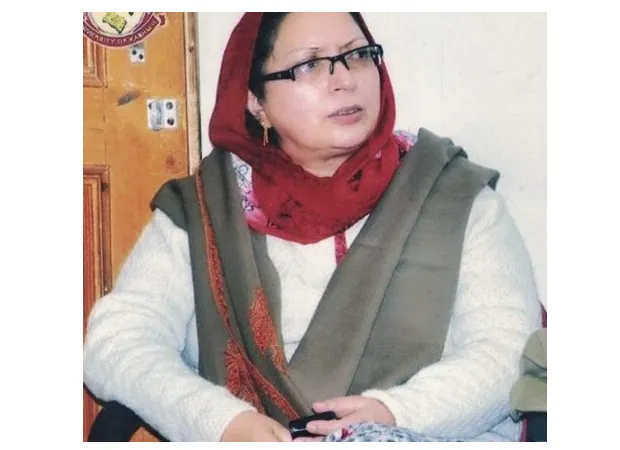
File/GK

Srinagar :

The University of Kashmir (KU) mourned the demise of Prof Neelofar Khan, a distinguished scholar and former Director of the Centre for Distance and Online Education (CDOE) and the Directorate of Lifelong Learning (DLL) during a condolence meeting held here Wednesday.

Prof Khan also served as the Coordinator of the National Service Scheme (NSS), leaving behind a legacy of significant contributions to the university and the broader academic community, an official statement issued here said.

The Dean of Academic Affairs, Dean of Research, Dean of College Development Council, Deans of various schools, Heads of Departments (HODs), and other officers of the university administration, teachers, scholars and students attended the condolence meeting expressing their grief over the loss.

The university observed a two-minute silence to honour Prof Neelofar Khan.

“The university community, particularly the academic fraternity is deeply saddened by her passing away and expressed profound sorrow and extended heartfelt condolences to the bereaved family,” a spokesperson said in the statement.

In her condolence message, KU Vice Chancellor Prof Nilofer Khan, conveyed her sympathies to the bereaved family on behalf of the entire university community, including teaching and non-teaching staff as well as students.

“Prof Neelofar Khan was not only a committed academic but also a visionary leader who significantly shaped the educational landscape at the University of Kashmir. Her dedication to expanding educational opportunities and fostering a culture of lifelong learning will continue to inspire us all,” the KU Vice Chancellor said.

KU Registrar Prof Nasser Iqbal also paid tributes to the departed soul.

He said, “The university has lost a remarkable scholar and an exemplary leader. Prof Khan’s contributions will remain etched in the history of our institution and her legacy will continue to guide us.”

Meanwhile, a separate condolence meeting was held at the office of the Director of the Centre for Distance and Online Education, where staff members, teachers, scholars and students gathered to honour the memory of Prof Khan.

The attendees shared fond memories of her impactful work and prayed for her soul to rest in eternal peace.

Director, CDOE, KU, Prof Showkat Ahmad Shah in his condolence message said: “Prof Khan’s tenure at the University of Kashmir was marked by dedicated service in several key roles. Her leadership at the Centre for Distance and Online Education and the Directorate of Lifelong Learning was instrumental in expanding educational access and promoting the principles of lifelong learning. Her contributions have left a lasting impression on the university and her influence will be felt for generations to come.”

“The University of Kashmir mourns the loss of a beloved educator and leader and extends its deepest condolences to Prof Neelofar Khan’s family,” he said. “Her contributions to the academic community will be remembered with enduring respect and admiration.”

source: http://www.greaterkashmir.com / Greater Kashmir / Home / by GK News Service / August 29th, 2024

Beyond the Headlines

JAMMU & KASHMIR / NEW DELHI :

A celebration of country’s unsung heroes

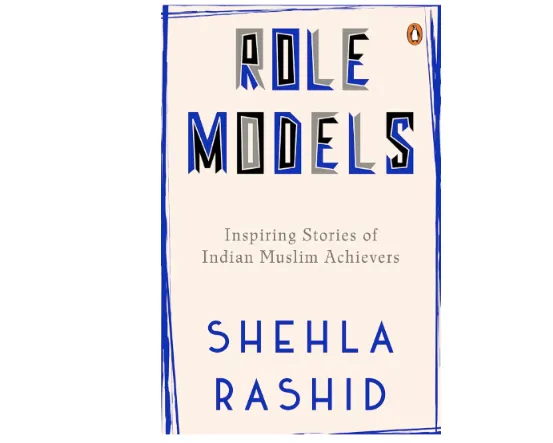
Role Model: Inspiring Stories of Indian Muslim Achievers’ by the former vice president of the Jawaharlal Nehru Students’ Union (JNUSU) Shehla Rashid comes at a time when the Indian Muslim has been negatively portrayed as a non-entity in the eyes of a commoner.

The first book by Shehla, who has research interests in technology and politics, is divided into 16 chapters which inclusively talk about the achievements of Indian Muslims in varied fields ranging from science, entertainment, and sports.

‘Role Model: Inspiring Stories of Indian Muslim Achievers’ highlights the contributions of Indian Muslims to civic national life by presenting the life stories and work of achievers.

The personalities which Shehla sheds light on are Nigar Shaji, Programme Director of Low Earth Orbit Missions at Indian Space Research Organisation (ISRO) and Project Director of the Aditya L-1 Solar Exploration Mission, globally renowned music composer and reticent genius A R Rahman, tennis ace Sania Mirza; Padma Shri awardee Dr Zahir Kazi, actor, producer, and author Huma Qureshi, military leader Lt Gen Syed Ata Hasnain, former ambassador of India to Saudi Arabia and Yemen, Dr Ausaf Sayeed, former vice chancellor of Aligarh Muslim University (AMU), Prof Tariq Mansoor, former vice chancellor of National Academy of Legal Studies and Research (NALSAR), Prof Faizan Mustafa, and the pioneer of dendritic cell immunotherapy in India, Dr Jamal Khan, among others.

“We have seen many negative media portrayals of Muslims, and this book attempts to humanise the discourse about Muslims by presenting inspiring life stories that everyone can relate to,” notes Shehla, a prominent youth figure in India.

The author emphasises that while people are somewhat aware of the contributions and sacrifices made by Indian Muslims during the freedom struggle, highlighting the work of notable Muslims in contemporary India was a long-overdue task. “This book is rare in that it provides detailed insight into their lives for the first time,” the author writes.

Interestingly, the foreword of the book is written by legendary film-writer Salim Khan. In his inspiring style, Khan, in the foreword, writes that the Indian Muslims must own their dreams and participate in the vision with vigour and optimism.

“Instead of unproductive fixations on our differences, we as Indians need to think about how to excel professionally and be kind to one another, for the sake of our motherland,” Khan writes in the foreword of the book.

Shehla, who is also a tech policy consultant, writes that the former President of India, the late Dr A P J Abdul Kalam, gave the country Vision 2020 for India and that Prime Minister Narendra Modi has energised people again with the mission of building a Viksit Bharat by 2047.

The book is published by Penguin Publishing House and costs just INR 203 on Amazon.

The author has accepted that while the book contains the life stories of a select few achievers, it must be mentioned that there is a vast majority of Muslims, which silently makes its contributions to various professions – civil services, fashion design, customer support, film direction, medicine, philanthropy, and so on.

Shehla, who cares deeply about the condition of Indian Muslims, notes that there are millions of Muslims engaged in informal employment in both organised and unorganised sectors who power the Indian economy, making life in India incredibly convenient and increasingly making the country a preferred destination for tourism, business, and investment. “We should be equally proud of them. All of them, whether rich or poor, skilled or semi-skilled, are an essential component of Brand India, which is premised on the power of youth, skills, innovation, a positive outlook, a growth mindset, and hard work,” the author points out.

Shehla, who deeply cares about women’s rights, notes that the unfortunate use of the term puncturewallas (‘puncture mechanic’) on social media as an insult for poor, hardworking Muslims has permeated the discourse.

She says that it is these puncturewallas who ensure that there isn’t a stranded woman anywhere in the country without recourse to assistance.

“While it is surprising that no volume on the contributions of contemporary Muslim public figures exists, it is also unsurprising because it wouldn’t make sense for them to over-emphasise their identity for fear of being boxed as ‘Muslim’ professionals when they are otherwise universally celebrated,” Shehla writes in the book.

The book is a celebration of contributions of Indian Muslims to the country. The book brings spotlight on the people who have long remained in shadows. It is a story that shatters the stereotypes. The book celebrates Muslim achievers of the country, a community that otherwise remains in the headlines for all the wrong reasons.

source: http://www.greaterkashmir.com / Greater Kashmir / Home> Opinion and Editorial / by Syed Rizwan Geelani / October 24th, 2024

Well, Well

Nagara Fort (Shivamogga District), KARNATAKA:

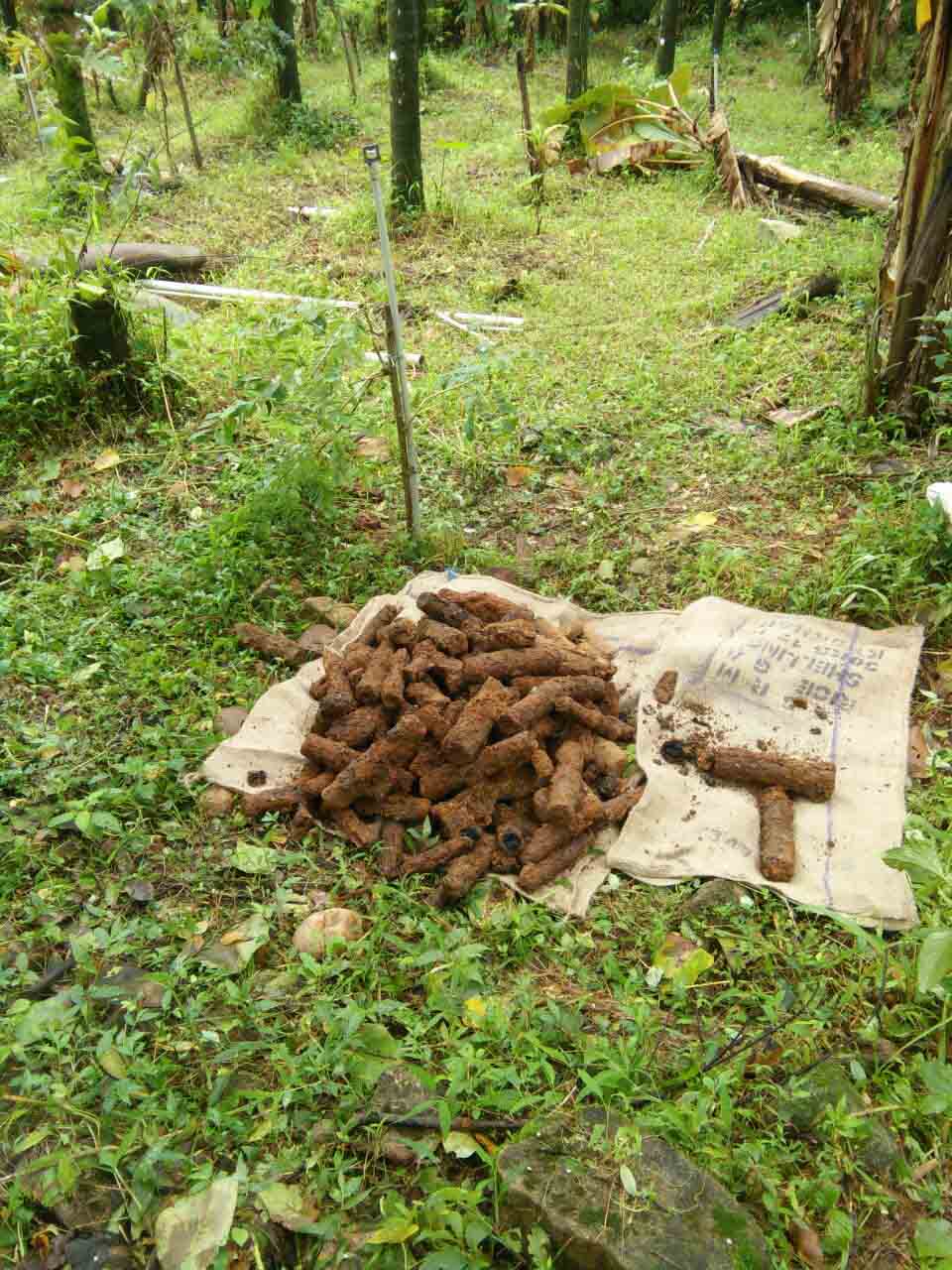
Rockets, Nagara Fort, India (Courtesy Karnataka Department of Archaeology, Museums, and Heritage (DAMH))

More than 1,000 unexploded rockets have been recovered from an abandoned well in the state of Karnataka in southern India.

The excavators believe the corroded shells date to the eighteenth century when the Muslim warrior King Tipu Sultan ruled the region.

The cache was uncovered when the well, located at Nagara Fort in the Shivamogga District, was being repaired. “The rockets, which are of several sizes, are metallic cylinders filled with some powder, possibly saltpeter or some form of explosive propellant,” says R. Shejeshwara Nayaka, assistant director of the Karnataka Department of Archaeology, Museums, and Heritage (DAMH), who led the excavation in 2018. “They have circular end caps on oneside, while on the other side there is an opening which lights like a fuse. We have also found some equipment that might have been used for assembling or making them.”

G. Venkatesh, commissioner of DAMH, adds, “Records say that Tipu Sultan’s father, Hyder Ali, was the first to use metal-cased rockets. He also had an armory and factory at Nagara Fort, a strategically very important city. There is a strong possibility that this site was used as a storage point or a factory for the rockets.”

source: http://www.archaelogy.org / Archaelogy Magazine / Home> Digs & Discoveries / by Gurvinder Singh / Nov-Dec 2018

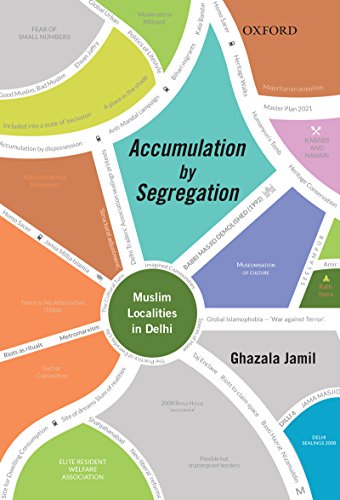
Accumulation by Segregation by Ghazala Jamil

NEW DELHI :

Accumulation by Segregation by Ghazala Jamil / India, OUP India, 2017 / 244 pages / ISBN: ‎9780199470655/750 INR

Muslims in India continue to live in precarious conditions. Being classified as a minority implies more than just their small numbers; historically, it has implied a completely varied identity, negatively affecting their political, social, or cultural lives. With complete disregard for the geographical and cultural diversity within the Muslim community, postcolonial Muslims in India are differentiated by their aspersed identity. Within this overall restriction, which frequently took violent turns and formed the circumstances for surviving, Muslims had to negotiate their citizenship. Muslims’ circumstances were affected by their humiliating, dehumanising, and stereotypical identity.

Seen in this light, this book by Ghazala Jamil is an intervention into the conditions of Muslims in Delhi, studied as a part of the globalisation process. It provides readers with a systematic way of looking at the segregation of Muslims in Delhi. It looks at segregation in the context of the 1857 mutiny, the partition of 1947, Emergency and communal violence, and examines the relationship between globalization and segregation.  It also examines the discursive practices perpetuating and strengthening the Muslim identity as anti-modern, backward, and unchangeable, thereby hindering the developmental potential among Muslims.                                             

The author argues that comparing the historical ghettos of the Jewish population in Europe to the concentration of Muslims is misleading. The situation of Muslims is not primarily caused by coercion, violence, and oppression but rather by the limited options they face. This makes their situation historically specific and functionally distinct, warranting critical examination.

The book largely focuses on areas in Delhi, including parts of the walled city and localities outside Shahjahanabad; Seelampur and other trans-Yamuna Muslim areas in  North Eastern Delhi. It also includes Jamia Nagar in South Delhi; Nizamuddin and Nizamuddin West, and the Taj Enclave. Through ethnographic explorations, Jamil explores the city’s inhabitants’ memories, living experiences, dreams, and discontent.

Violence, displacement, discrimination, migration and hope remain common in making these settlements. Various events, such as post-partition violence, the beautification drive during the emergency, and subsequent violence associated with growing Hindu nationalism, particularly in Gujarat, have contributed to the establishment of these settlements. As a result, a large influx of people migrated to settle in Delhi. By the late 1980s, segregation in Delhi on religious identity lines became almost final and complete (p. 5). These settlements faced various forms of discrimination, including being labelled as centres of terrorism, poverty, backwardness, and fanaticism associated with Muslims. 

These places are identified as Muslim settlements and are subsequently termed ‘mini-Pakistan’, as with Seelampur. These conditions further determine the relationship of Muslim settlers beyond the segregated areas.

In the context of economic liberalisation, Delhi provided a sense of security in segregation but also better educational and economic opportunities to Muslims. Capitalism is found in Muslims as an ‘incarcerated resource’. For example, in Jamia Nagar, students with the requisite skills are making their place in the global economy. In Seelampur, the small manufacturers, both semi-skilled and unskilled labourers have ‘benefited’ from manufacturing jobs brought to India by globalization. But what is making them functionally distinct and incarcerated resources from other beneficiaries is that their involvement with globalization is restricted by their location in the segregated areas, which limits their movement and confines them to these areas only. Globalization, in this case, is not promoting progress but rather enforcing separation and discrimination, creating barriers that are challenging for Muslims to overcome.

Muslims are incorporated into the capitalist objective of maximizing profits. However, their situation is distinct due to several limitations. Firstly, they receive less financial help from banks and lack capital, both socially and financially. Additionally, they face a disproving work and business environment. Moreover, they are often viewed as enemies, backward, stagnant, and traitors. These factors ultimately determine their terms of incorporation with the outside world. Hence, making the point that aspersed identity has a distinctly exploitative and material function.

Despite segregation, the real estate business thrives within these settlements while keeping the segregated topography of Delhi undisturbed. Within these processes Muslim neighbourhoods have become complex and diverse in economic classes. Zakir Nagar Extension, Jogabai Extension, Johri Farm and Taj enclaves have emerged as affluent enclaves, areas of the neighbourhood where the wealthy citizens are clustered. Despite being wealthy, the residents are unable to leave their neighbourhood because Hindu property owners in other sections of the city refuse to sell or rent their homes to Muslims or because they see a threat of violence or claim to have had already experienced it.  They try to enclose themselves and try to become less like the popular stereotypes about Muslims.

The author argues further that old Delhi, Jama Masjid with adjoining areas and that of Nizamuddin fell prey to commodification from the 1990s. The less significant structures, the Partition’s history and legacy, the clothing, the eateries, and the fragrances all serve as living artefacts and installations for tourists in addition to the historical monuments and religious sites in the region.  The taboo topics of Muslims and “Muslimness” have evolved into odd, even weird, spectacles for the adventurous.

People flock to the streets of old Delhi to explore the exotic and the antique, reducing the inhabitants to spectacular displays for the consumer while rendering political contestation and mobilization difficult (p. 91). Through accumulation, it functions as a means of constructing the identity of individuals, connecting them to a particular place and creating an impression of an inherent and unchanging nature.

Jamil notes that in this effort of commodification, the state, civil society, and media are all involved, promoting history tours and good exotic Muslim foods to tourists. Keeping these things in mind, marketable Muslims in segregated areas has to remain as it is for the consumption of others.          

Ghazala Jamil, drawing from Althusser, argues on the same lines that ideological state apparatus is reflected in cinema and media representation. She argues that Muslims and Muslimness are always shown and understood as homogenous entities, with utter disregard for their variation in political interest and in cultural practices. This notion is sustained and perpetuated in popular media films. Where the lines between reality and the stage are blurred. The author here analyses various Hindi movies during the period between 2008 to 2010, where the popular image of Muslims depicted as fundamentalist, parochial and backwards was given a space and subsequently uncritically consumed by viewers. When examining print media descriptions, it is evident that irrational attitudes, dangerous behaviour, volatility, and backwardness continue to be prominently used to portray incidents involving Muslims, often generalising the entire community.                                                                                                                                                                                       

 Further, framing her case through fake encounters, extra-judicial killing, and differential treatment, she claims the Indian Muslim is fashioned as homines sacri. They are being made to “feel guilty for the partition of the country, represented as irrational fundamentalist fiends, loathsome and polluted, disloyal normative non-citizens, and potentially dangerous terrorists”(p. 99).

Homines sacri, according to Trevor Parfitt (2009), are individuals who have been placed outside the boundaries of the law, rendering them outlaws. They can be harmed or even killed without any legal repercussions. Their lives are meticulously planned, controlled, and regulated in every possible aspect.

When employing the concept of ‘homo sacer’ for Muslims in India, akin to its application to Jews in concentration camps, it raises the question of how to interpret the legal constitutional rights granted to Muslims in comparison to the rights that Jews were deprived of. This brings to light the inquiry as to how the treatment of the Muslim case, which Jamil considers “historically specific and functionally distinct,” falls short in addressing this issue.

The author puts forth a convincing viewpoint concerning the Muslim community’s struggle with a deficit in citizenship and a feeling of alienation within the political sphere. This argument carries logical weight as it emphasizes the obstacles faced by Muslims in fully exercising their rights as citizens and achieving a sense of inclusion within the larger political framework.

Particularly since the rise of right-wing governments, hatred against Muslims has become more crude and naked; where everything associated with Muslims is being politicized and then criminalized. Every activity in the eyes of sponsored vigilantes has become some or other kind of jihad against the government and the people. Responses from the government include intimidation, demolitions, and arrests of victims guised as perpetrators. With the unfolding of these events, experts are even raising concerns over the situation and its striking similarity with past historical atrocities. 

However, this violence is not absolute. The Muslim remains an equal citizen theoretically capable of posing counter-hegemonic discourse, which the author does acknowledge.  Therefore, it is crucial to approach the situation of Muslims with an understanding that their experiences, though marked by violence, do not reduce them to the status of ‘homo sacer’, as they retain the capacity for political agency and the ability to contest dominant narratives.            

The author in the end puts her hope in education and the growing enthusiasm around it among Muslims. Muslims themselves are expected to make interventions in their own circumstances and discourses around them. For instance, measures to combat epistemic Islamophobia would also require adjustments in other areas. This can be found in the ‘Discursive-Political’, which encompasses manifestations of daily life, culture, and behaviour and are primarily considered non-political. These activities, as she claims, involve transformative political practices that reveal the ‘contingent and socially constructed’ nature of what is portrayed as ‘necessary and natural’. The effective resistance for her is to claim and assert citizenship and be able to represent and define rather than getting defined.

References 

Parfitt, Trevor. (2009). Are the Third World Poor Homines Sacri? Biopolitics, Sovereignty, and Development. Alternatives: Global, Local, Political, Vol. 34, No. 1 (Jan.-Mar. 2009), pp. 41-58.  

source: http://www.thedaak.in / The Daak / Home> Issue No.4 / by Rizwan Hamid / July 15th, 2023

Lucknow-Shahjahanpur Gharana: After doyens, onus now on disciples to strike the right note

Lucknow, UTTAR PRADESH :

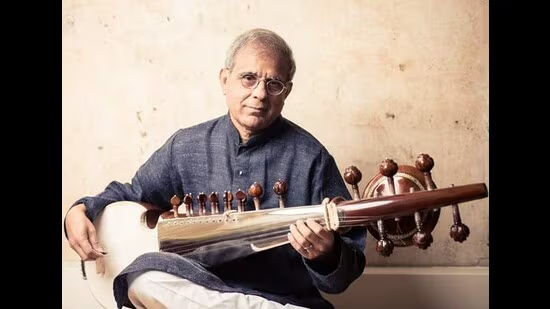
Ustad Irfan, 69, is the seventh generation of the family of gifted sarodiyas and sitarists — referred to as the Lucknow-Shahjahanpur gharana.

Ustad Irfan Muhammad Khan of Lucknow-Shahjahanpur gharana. (Sourced)

Lucknow :

Hailed as the ‘khalifa’ of the Lucknow-Shahjahanpur gharana, celebrated sarod player Ustad Irfan Muhammad Khan feels his disciples are his only hope to take the rich music legacy of his family forward.

Ustad Irfan, 69, is the seventh generation of the family of gifted sarodiyas and sitarists — referred to as the Lucknow-Shahjahanpur gharana.

This gharana has its roots in the Bangash tribe of Afghanistan, three of whom migrated to India some 200 years ago. Irfan’s great great grandfather Niyamatullah Khan played sarod in the court of Nawab Wajid Ali Shah. However, after the exile of the nawab to Calcutta (now Kolkata) following the 1857 uprising, Niyamatullah Khan also migrated.

More than half a century later, Irfan Khan’s grandfather Sakhawat Hussain Khan was invited to Lucknow by Vishnu Narayan Bhatkhande to teach at Marris College (now Bhatkhande Sanskriti Vishwavidyalaya). Later, in 1954, Irfan Khan was born in Lucknow. After completing his school education in Calcutta, he returned to his residence at the Latouche Road in Lucknow. While he had already been excelling in his sarod training in Calcutta, Khan’s skills were further honed under the guidance of his uncle Ustad Ilayas Khan, the legendary sitar player, in Lucknow.

For several years, Irfan has been keeping the rich tradition of his gharana alive. But in the face of reducing number of mehfil concerts, the gharana is struggling to preserve its rich musical tradition. Besides, the next generation of Irfan Khan’s family didn’t stick to being full-time artistes due to the shrinking size of the audience for sitar/sarod players.

Dwelling on the reasons behind the ‘disinterest’ among youths in classical instruments like sarod or sitar, Ustad Irfan Khan said, “A lot of youngsters look for overnight fame. Also, there is no parental support to pursue this training seriously as they don’t want their kids to stare at an uncertain future. Furthermore, concerts for classical music are limited to only a few cities. Lastly, organisers tend to invite only the big names — this creates a monopoly which further reduces opportunities for budding talents.”

In fact, most of Khan’s disciples are not Indians and he currently doesn’t have a single student from Uttar Pradesh, the birthplace of the Lucknow-Shahjahanpur gharana.

Speaking on this irony, one of his London-based students Pete Yelding said, “Hindustani music is constantly evolving. It has an inherently international and interfaith tradition with roots in Sanskrit, Persian, Arabic, and Greek musical philosophies. Within its history are stories of constant innovation, reinvention, and moving with the times. Approaching it in this way makes it much less alienating because there is something in it for everyone.”

He added, “I visit Ustad Ji once a year and learn via Skype the rest of the year… Carrying the flame of his illustrious musical lineage really is an honour.”

When asked about the steps that could revive the interest in the rich art form, Ustad Khan said, “Our schools should start training interested students in music. Training in formative years will help them appreciate classical music better. This, in turn, will increase demand for concerts by sarod/sitar players. I come across several bright young talents… Some of my foreign disciples are also doing very well, which keeps me hopeful.”

‘Don’t write off the gharana just yet’

Bringing an optimistic point of view to the table, Chandrima Majumdar, an eminent sarod player who also has a PhD thesis on the Shahjahanpur gharana (a different music school tradition), feels that it takes only one generation to revive a gharana and hence, the Lucknow-Shahjahanpur gharana should not be written off just yet.

“Yes, the artistes of this gharana are not in the limelight due to fewer concerts but there will always be some serious learners and practitioners. They will keep the tradition alive. I believe that one serious disciple of a gharana is enough to keep the torch burning. Thanks to digital media, people are able to listen, compare and enjoy the rendition of the same raag by different gharanedar artists,” said Majumdar, who has studied at the Bhatkhande Music College.

In a similar vein, Dr Ruchi Khare, assistant professor, Bhatkhande Sanskriti Vishwavidyalaya, said, “Bhatkhande has always supported sarodiyas and sitarists of the Lucknow-Shahjahanpur gharana and will continue to do so. For Ustad Ilayas, retirement rules were also relaxed. Several disciples of the gharana, including a Sri Lankan national, were taught here. Many of them are imparting this knowledge to their disciples now. In this way, the rich legacy of the gharana will continue to thrive.”

source: http://www.hindustantimes.com / Hindustan Times / Home / by Prateek Shukla / May 21st, 2023

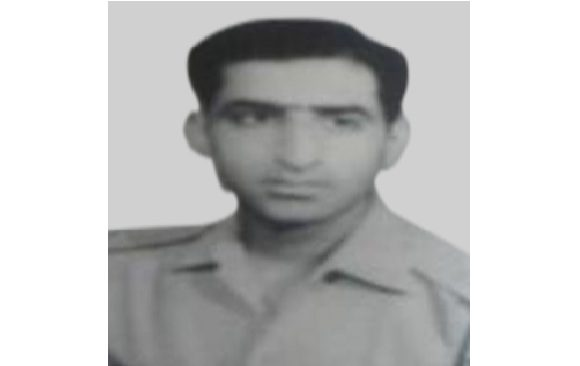
Major Mahmood Hassan Khan Vir Chakra

Dhanuri Village (Jhunjhunu District), RAJASTHAN :

Major Mahmood Hasan Khan hailed from Dhanuri village in Jhunjhunu district of Rajasthan and was born on 02 March 1941. Son of Risaldar Nawab Mohd Hasan Khan, he was born into a military family but lost his father at an early age. He was brought up by his uncle Major Akbar Ali Khan who was serving with the then Nizam of Hyderabad. He completed his school education in Hyderabad and later went to Aligarh Muslim University for higher studies. He joined the Indian Army in the year 1962 as a Sepoy and subsequently got commissioned as a commissioned officer. He was commissioned into 14 Grenadiers of the Grenadiers Regiment, an infantry Regiment known for its brave soldiers with a rich history of various battle honours. In 1971, Maj MH Khan got involved in the thick of operations as his unit got deployed on the western border when the war with

Atian Supply Point Raid (Naushera Sector): 06 Dec 1971

During the Indo-Pak 1971 War, Maj MH Khan’s unit 14 Grenadiers was deployed on the western front. In December 1971, India had to go to war with Pakistan as the genocide perpetrated by the Pakistani army in their erstwhile eastern part of the country had resulted in an unprecedented influx of millions of refugees into India. Though the war was concentrated on the eastern front, Pakistan launched operations on the western front too. When the war was declared on 03 Dec 1971, 14 Grenadiers under the command of Lt Col Inderjit Singh was functioning under the operational control of 25 Div and was spread all over the Div AOR (Area of Responsibility) from Naushera to Poonch. On 06 Dec, 14 Grenadiers along with the elements of 8 Mahar battalion were tasked to raid the enemy’s Atian Supply Point to cause maximum damage to it.  Maj MH Khan as ‘Raid Commander’ was tasked to carry out the assault along with two more officers, Capt Roy Chowdhary and 2nd Lt Prakash, and 49 OR (Other Ranks).

The raid involved going through a heavily guarded area and destruction of the objective of platoon strength. The team led by Maj MH Khan and divided into three groups planned a multi-directional attack on the enemy to achieve an element of surprise and cause maximum possible damage. The attack commenced at around 1800 hrs on 06 Dec and Major Khan led his men to the objective by shrewd manoeuvres, destroying post after post. The raid was thus successfully carried out after twelve hours of constant action. Maj MH Khan and his soldiers fightly valiantly, destroyed the enemy’s 12 storehouses, and 6 timber stocks, besides eliminating several mules and personnel. Maj MH Khan was given the gallantry award, “Vir Chakra” for his act of conspicuous gallantry, unyielding fighting spirit, and leadership. By the second week of Dec 1971, India had almost achieved victory on the eastern front but the border skirmishes were still going on, on the western front. Maj MH Khan’s unit 14 Grenadiers was involved in operations in the “Battle of Daruchhian” during that period. 

“Battle of Daruchhian” (Indo-Pak War): 13/14 Dec 1971

After the failure of the Pakistani divisional attack on Poonch, the Indian Army decided to carry out local and limited actions all along the ceasefire line to improve its defensive posture. One such attack was launched by an infantry battalion in the area opposite Madarpur on the night of 10/11 December, and having captured Nangi Tekri, Jungle Tekri, Bump and other features denied the use of the Kotli-Madarpur-Hajira road to the enemy. As a follow-up to these operations, it was decided to secure Daruchhian, a feature blocking the Balnoi neck of the Kotli-Balnoi road between the Poonch River and the ceasefire line. Daruchhian was a conical feature, narrow and rugged at the top and with steep projections. It was forested on all sides except the southwest spur and was reportedly held by less than one Pakistani company of regular troops and some Mujahids as part of the main picquet line. 14 Grenadiers battalion under the command of Lt Col Inderjit Singh was tasked to launch an attack on Daruchhian and it was allotted an additional company and artillery support of four to six fire units. Maj MH Khan was functioning as a Company Commander of “D” Company at that time.

The capture of Daruchhian was planned to be carried out by 0800 hrs on 14 Dec in three phases. It was a multi-pronged attack involving primarily B, C, and D companies of 14 Grenadiers and elements of other outside resources. As per the plan, in Phase-I ‘B’ Company was to capture OP (Observation Post); in Phase-II ‘C’ Company was to capture West Spur and in Phase-III ‘D’ Company was to capture South West Spur. Besides the commanding officer Lt Col Inderjit Singh, Maj MH Khan, Maj HS Chahal(‘B’ Company Commander), and Capt Hamir Singh(‘C’ Company Commander) as company commanders were involved in planning and executing the operational plan. ‘A’ Company under the command of Maj SR Dogra was responsible for marking the FUP(Forming up Point) for Pase-I and then acting as a reserve for Phase II. The attack was launched on the night of 13/14 Dec 1971 in three phases with three assault groups attacking from different directions.

In Phase-III of the battle, Maj MH Khan’s ‘D’ Company was given orders to attack SW Spur at about 0400 hrs on 14 Dec. Maj MH Khan moved swiftly and ordered his platoons to give him fire support when he with one platoon moved towards the objective. Despite heavy enemy firing, Maj MH Khan and his men kept moving and reached the flat ground west of the OP position. While moving forward, Maj MH Khan noticed one of the enemy MGs that was impeding the advance and causing casualties. Maj MH Khan along with a few men in a daring move charged towards the bunker with grenades. However while doing so, Maj MH Khan was shot and got injured. But despite the injury, he moved forward and lobbed the grenade in the enemy bunker, before falling to another burst of fire on his head. The enemy gave a very stiff resistance and the battle for Daruchhian continued for over 12 hours. Maj MH Khan as the Company Commander of ‘D’ Company fought valiantly and led his men to give a befitting reply to the enemy firepower. In the fierce exchange of fire, during the battle, a total of eight officers, seven JCOs, and one hundred and forty-five other ranks were martyred, wounded, or missing in action. Besides Major MH Khan, the other martyred brave hearts included five officers (Maj HS Chahal, Maj SR Dogra, Capt OP Dalal, Capt Bakshish Singh, and 2nd Lt GP Bahukhandi), 4 JCOs ( Sub Jai Singh, Sub Taj Mohd Khan, Nb Sub Hasam Khan and Nb Sub Ram Sarup Singh) and 44 ORs. 

Major MH Khan displayed commendable gallantry and devotion to duty during the operation and laid down his life in the service of the nation. Though he was given the gallantry award, “Vir Chakra” for his act of gallantry on 06 Dec 1971, he did not live long enough thereafter and made the supreme sacrifice on 14 Dec 1971 during the heroic ” Battle of Daruchhian”. 

____________________________

2 Comments
  • Shaheen KhanReplyLate Major MH khan is my grandfather. We obviously have a lot of relevant information about him. Pease contact us so we can give as much info for the page of this great man.
  • Salim khanReplyPuri gatha batao plz

  • Honourpoint is an online memorial to honour, appreciate and remember the spirited and valiant sons and daughters of India who had the distinction of serving the country in “military uniform”, and are no longer with us. It is an endeavour to ensure that supreme sacrifices of our soldiers and their families do not fade away and are given their rightful place in our nation’s collective consciousness. Read more…

source: http://www.honourpoint.in / HonourPoint / Home> Profile / headline edited