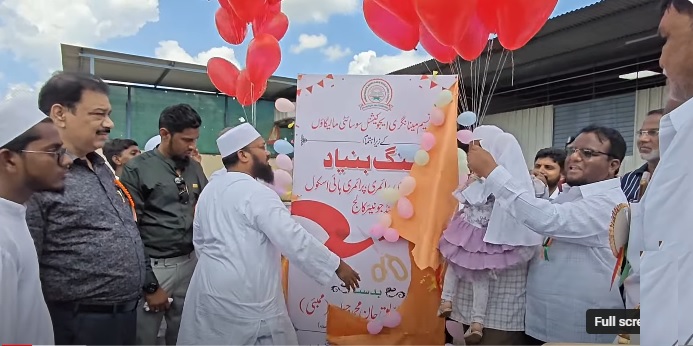
Maulana Umrain Mahfuz Rahmani laying foundation of the Millat Urdu High School, Malegaon
Malegaon:
The educational journey of the Ahmed Naseem Meena Nagri Education Society is set to become a defining milestone for New Malegaon, thanks to the remarkable efforts of Shakir Sir. In honour of his legacy, Shakir Sir has been instrumental in establishing new educational institutions including the Abdul Shakur Pre-Primary and Primary School and Junior College, Millat Urdu High School, Insha Paramedical College and Diploma Courses. The inauguration ceremony of these institutions was held near Labbaik Hotel in the Malda area of New Malegaon. The residents of Malegaon are expected to benefit greatly from these new facilities.
The foundation stone ceremony of Millat Urdu High School was conducted by General Secretary of All India Muslim Personal Law Board, Maulana Umrain Mahfuz Rahmani. Maulana Rahmani acknowledged the significant contributions of Shakir Sir, saying, “He has been a dedicated teacher, and with the establishment of this institution, he has gifted the community a place of learning that will endure even after him.”
Maulana Rahmani also highlighted that the late Maulana Syed Wali Muhammad Rahmani had close ties with Shakir Sir.
Inaugurating Insha Paramedical and IT College, Dr. Saeed Farani remarked, “This campus offers education from primary levels to medical training. Paramedical services are now indispensable, serving as the backbone of healthcare without which medical care cannot function.”
Dr. Farani stressed that medicine ensures success in both this world and the hereafter if pursued with sincerity. Highlighting Malegaon’s rise as a medical hub, attracting patients from a 150-200 km radius, he noted the growing presence of hospitals and increasing interest from corporate healthcare. However, these hospitals will need qualified paramedical staff, now mandated by the government. He urged residents to enrol in paramedical courses to boost their employment prospects.
Dr. Ayub Khan Poonawala, speaking on the significance of paramedical education, noted that the era of paramedical and IT training has begun. “This is the sixth paramedical college being established after Mumbai, Pune, and Nashik. Paramedical students have a 100% job placement rate. Malegaon, known as a city of skilled workers, will now benefit from this initiative.”
Headmaster Al-Haj Qureshi Mukhtar also addressed the gathering saying, “In an era where educational institutions are becoming commercial enterprises, establishing such a purposeful campus in the suburbs is truly commendable.”
source: http://www.radiancenews.com / Radiance News / Home> Education / by Radiance News Bureau / October 04th, 2024
Five brave Kashmiri women scholars from Kashmir have come up with a book “Do You Remember Kunan Poshpora“
Essar, Ifrah, Samreena, Munaza, Natasha, five brave Kashmiri women scholars, have come up with a book “Do You Remember Kunan Poshpora.”
This book is about the Kunan-Poshpora mass rape, which took place in 1991 in Kupwara district in Kashmir.
The book is edited by Essar Batool and published by Zubaan Series on Sexual Violence and Impunity in South Asia.
The book published in 2015 for the first time is now running into its paperback edition is about gender violence in conflict zones.
“This book is about one night in two villages in Kashmir. It is about a night that has refused to end for 24 long years, a night that holds stories of violations, injustice, oppression, and falsehood, as well as acts of courage, bravery, and truth. This book is about Kunan Poshpora,” reads the preface of the book.
The five fearless authors began to unearthing documentary evidence of the truth by sitting through a web of lies and botched-up investigations, and by painstakingly building a bridge of trust and hope between the victims/survivors of Kunan and Poshpora villages.
The author’s while narrating the mass rape by the Indian army in two villages Kunan-Poshpora gives a candid account of various courts of law where justice is meant to be dispensed.
The authors have gathered information from the survivors’ local administration and eyewitnesses as to what happened on the night of 23 February 1991, when the Indian soldiers from the 4 Rajputana Rifles regiment gang-raped around 23 women of Kunan and Poshpora villages.
According to Dr. Ghulam Nabi Fai, the Secretary-General, of the World Kashmir Awareness Forum, “The Indian Army has gang-raped over 10,000 women, even brides on the way to their new homes since 1991.”
“The women of Kashmir, especially those who have been violated against their will, only hope that the CEDAW and UN Special Rapporteur will take note of their sufferings.
“The women of Kashmir wonder what action was taken by the UN ‘Special Rapporteur on Violence Against Women,’ whose mandate included action on “state-sponsored violence against women”, he added.
The Indian Army and the Government of India have denied all these allegations.
[The writer, Syed Ali Mujtaba, is a Journalist based in Chennai. He can be reached at syedalimujtaba2007@gmail.com.]
source: http://www.ummid.com / Ummid.com / Home> Book Review / by Syed Ali Mujtaba / October 16th, 2024
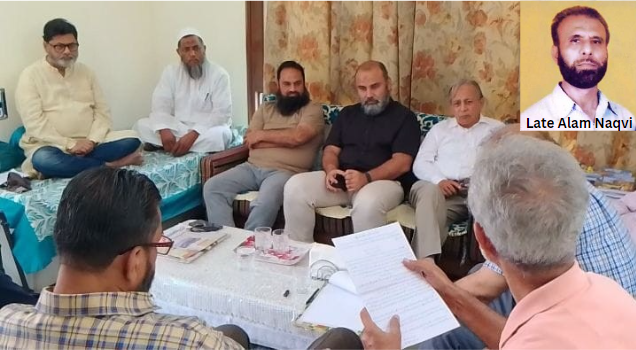
A prayer and condolence meeting in memory of the renowned journalist and intellectual Alam Naqvi was held on Sunday, at the residence of his younger brother, M. Tahir Naqvi.
The meeting was presided over by Professor Moinuddin A. Jinabade, former professor at Jawaharlal Nehru University, New Delhi. Among the attendees were Mansoor Alam Qasmi, Laiq Rizvi, Asif Fahmi (of Deen Duniya magazine), Dr. Mehmood Alam (Professor, Department of Commerce, Zakir Husain College), Naeemuddin, and Muhammad Arif Iqbal, among others.
Muhammad Arif Iqbal, editor of Urdu Book Review, New Delhi, who conducted the proceedings, described Alam Naqvi as a journalist of high calibre, akin to greats like Allama Muhammad Usman Farqaleet (of Al-Jamiat) and Muhammad Muslim (of Dawat). He emphasized that Alam Naqvi transcended sectarian and ideological divides, dedicating his life to the cause of unity within the Muslim community. A staunch advocate of truth, he never indulged in slander or falsehood and was a torchbearer of truthful journalism.
Tahir Naqvi read a brief paper highlighting his brother’s virtues, followed by remarks from Mansoor Alam Qasmi, Asif Fahmi, Dr. Mehmood Alam, and Naeemuddin, each paying tribute to the late journalist.
Before the concluding address, senior electronic media journalist Laiq Rizvi shared a heartfelt tribute, recounting some of Naqvi’s contributions to journalism. He also mentioned the threats Naqvi faced from Shabana Azmi and others over one of his published articles, noting that Naqvi remained calm and undeterred in the face of these challenges.
In his closing remarks, Professor Moinuddin Jinabade reflected on his deep friendship with Alam Naqvi, recalling that Naqvi kept himself far removed from religious and linguistic chauvinism. He possessed all the admirable qualities of Lucknow’s culture but stayed clear of its vices. Naqvi had a remarkable ability to shape constructive thought. Professor Jinabade ended his tribute with poignant words: “In the end, the dusk of life arrived…”
source: http://www.radiancenews.com / Radiance News / Home> Latest News / by Radiance News Bureau / October 17th, 2024
The book Kasb-e-Maash Ka Islami Tasawwur (Islamic Concept of Livelihood) by Maulana Muhammad Anas Falahi Madani was launched at the Indian Center for Islamic Finance (ICIF) on Saturday. This publication was made possible through the collaboration and financial support of ICIF and Rafah Chambers of Commerce, along with the coordination of Tasneefi Academy.
In his introduction, the author discussed two prevalent attitudes towards wealth in Muslim society: one driven by inflation and the other by extravagance. He noted that some individuals disregard ethical boundaries in their pursuit of wealth, often ignoring whether their means are halal or haram, driven solely by the desire to accumulate more.
“Islam recognizes wealth as a vital necessity of life. While individuals are encouraged to earn as much as they wish, it is imperative that they do so through legitimate means and adhere to the limits set by Allah,” he emphasized.
Dr. Razi-ul-Islam Nadvi, National Secretary of Jamaat-e-Islami Hind, expressed his appreciation for the book’s detailed exploration of this balanced perspective of Islam. He outlined the book’s structure, noting that it consists of six chapters: the first examines the nature of worldly life through the lens of the Qur’an and Sunnah; the second highlights motivational aspects of earning a living as described in the Qur’an and Hadith; the third discusses legitimate versus illegitimate sources of income; the fourth reflects on the economic life of the Prophet Muhammad; the fifth covers methods of earning and spending; and the sixth analyzes the consequences of Islamic and non-Islamic approaches to wealth accumulation.
Dr. Nadvi expressed hope that the book would be well received in both academic and religious circles, clearing up many misunderstandings in the process.
Professor Mohsin Usmani Nadvi praised the author for illustrating Islamic principles of earning through various examples from the Qur’an and Hadith.
In his closing remarks, Professor Jawed Ahmad Khan, Chairman of ICIF, pointed out the abundance of literature focused on spending, contrasting it with the scarcity of works aimed at wealth creation. He urged young students and researchers to engage in research that meets the demands of our rapidly evolving economic landscape, where the focus increasingly lies on wealth generation and investment. H. Abdur Raqeeb, General Secretary of ICIF, concluded by emphasizing the importance of financial literacy, particularly for women.
source: http://www.indiatomorrow.net / India Tomorrow / Home> Economy / by admin indiatomorrow / October 07th, 2024
Marsiya Dilli ye marhoom ka ae dost na cher Na sunaa jaaye-gaa hum se yeh fasaanaa hargiz
Do not strike the chords of the story of Delhi My heart won’t bear the woeful tale of its loss
Delhi, the city of lights and poetry, has been destroyed seven times only to rise again each time from the ashes of memory, a memory painted into vivid relics and commemoratives; the memoirs of loss and longing.
The life of the last King of Delhi, the poet Bahadur Shah Zafar, took a drastic turn in 1857 when the British exiled him to Rangoon for his alleged role in the uprising of 1857. His sons were shot, his titles stripped and his poetry confiscated. Denied a pen and paper, the exiled and imprisoned poet-king used a burnt stick to write his epitaph on the walls of the small room, outpouring his desolation and heartache:
The siege of Delhi marked the end of a literary epoch, but the nostalgia inspired numerous fictitious and fanciful accounts of the city, colonial rule playing an ironic impetus in this memorialisation, with its blooming print culture and a fetish for memorabilia. Among those who bled the evocation of the lost city in their accounts were Munshi Faizuddin, Rashid-ul-Khairi, Nasir Nazeer Firaq, Hasan Nizami, Arsh Taimuri and others.
Murraqa literature
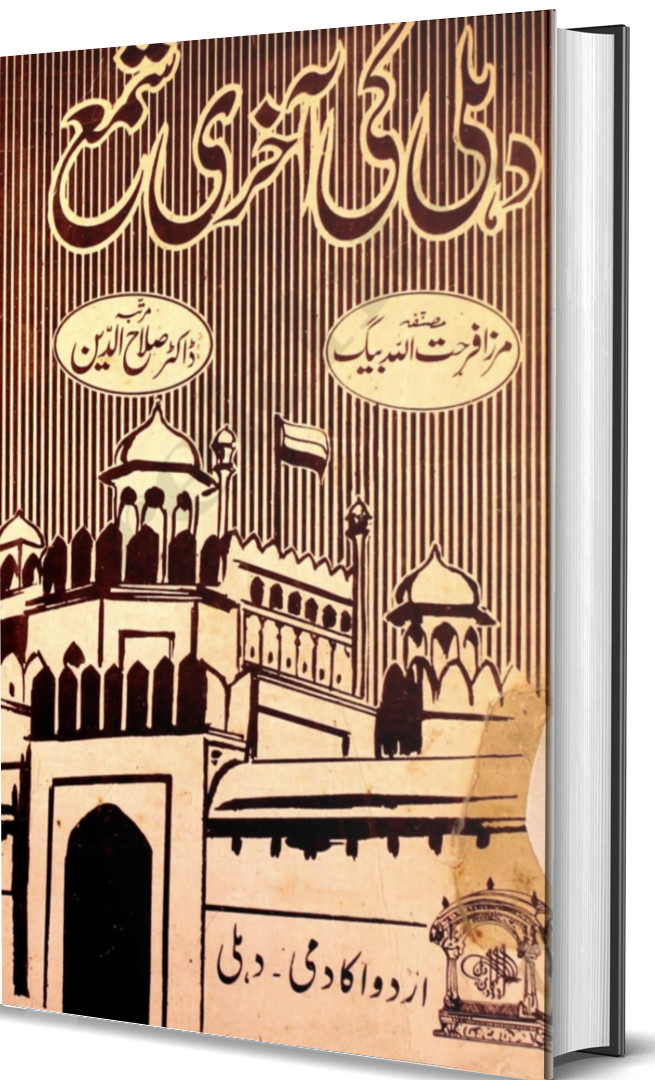
Dehli Ki Aakhri Shama, written by Mirza Farhatullah Baig in the early 1900s, is considered as one of the most splendid pieces of murraqa literature, interlocking overlapping layers of lived experiences with a poetic interlude. The writer of this splendid vignette, Mirza Farhatullah Baig, is considered one of the finest satirical writers of the Urdu language, his sketches rich with colourful characterisation emanating from a sense of deprivation and despondency; a theme that is constant across the writings of the authors mentioned above.
The historical novel is a story of a fictitious mushaira (poetic symposium) held in Delhi in 1845 under the patronage of Bahadur Shah Zafar, with his son Mirza Fakhru (pen name Ramz) as its chief guest. The artistic rendition, even though an imagination, turns out to be much more than that. It draws the sketch of the culture and tradition of pre-1857 Delhi in the most ornate and poignant colours, something well deserved by the ever-persevering city of lights.
Mirza Baig mentions a portrait of the great Urdu poet Momin Khan Momin that inspires him to draw a similar portrait of all the poets in the form of a novel, something that the posterity could dwell upon and find pride in, especially when everything was marred by a sense of impotence during the worst periods of British colonial rule. The second inspiration drawn by Mirza was from the famous narrative of Muhammad Hussain Azad, called Nairang-e-Khayal (An imaginal play) and Maulvi Karimuddin’s Tabqaat-ul-shoora-hind (Biographies of the Poets of Hind).
Interestingly, Maulvi Karimuddin mentions a mushaira that is actually held in 1845 at his home and Mirza Baig redraws the same gathering, albeit at a larger scale as a key literary event in Delhi. In his debt to Maulvi Karimuddin, he makes him the sole narrator of the novel and mirthfully limns him deserving any praise and all the criticism that his account would draw from the audience. The mushaira runs across the poetic eras and exhumes characters, known, unknown and forgotten, from across the length and breadth of Rekhta (the original name for Urdu).
Dehli Ki Aakhri Shama by Mirza Farhatullah Baig.
Delhi, a city in motion
The novel starts with a frazzled air of self-awareness of the city it is penned down in: once a patron city of arts and now a vestige of the East India Company. Molvi Karimuddin, who belongs to an opulent family of Molvis (Muslim preachers) in Panipat, now reduced to pennies, comes to the capital Delhi during the days when Delhi College is newly founded and the city has acquired printing presses for the first time. He enrols himself in the college and in order to earn a living starts publishing translations of well-known Arabic books from a rented building: Mubarak-un-Nissa’s haveli (Mubarak-un-Nisa was a courtesan in Mughal court and built a beautiful red mosque in old Delhi, that is often referred to as Randi ki Masjid) in Qazi Ka Hauz (now Hauz-e-Qazi).
However, his business fails.
Karimuddin, never fond of poetry, is left with no option but to organise a gathering of poets so that he can publish an account of the life and works of great poets based on it to get the press going. He starts his journey by meeting Nawab Zain-ul-Abideen Khan Arif, Ghalib’s nephew and Hakeem Ahsanullah Khan, the Prime Minister of Bahadur Shah Zafar.
The book gives very picturesque details of the lanes, houses and markets of Delhi. The canals in the courtyards, large platforms pillared halls, recliners, fountains, and porches. An especially opulent and splendid silhouette of the old city is drawn for the reader. The two associates of Maulvi arrange his meeting with Emperor Bahadur Shah for official permission for the gathering. The author describes the ease of access a commoner had to the royal court and the mannerisms that were prevalent among the nobility. The acronyms detailed in the book are unheard of in any book of history, with the Emperor being referred to as Jahan Panah, Zil-e-Elahi, Badshah Salamat, Fath-ul-Mulk, Hazrta Peer-o-Murshid, Zilullah, Qibla-e-Alam etc.
These are the times when what was once referred to as Lal Qila (Red Fort) or The Qila Mubarak (The Sacred Fort) is referred to in an ironic diminutive Haveli or Lal Haveli (red mansion), implying a shrinking influence of the Mughal family in the backdrop of growing colonial power. The book mentions the scheme of the fort, its Islamic, Persian, Timurid and Hindi styles, and details the conduct of personal and public life there. The physical sketches of kings, princes, ministers and poets are intricately penned down giving the reader a tactile presence of each of them. Baig writes that it had become customary in the last days of Mughal rule for princes to swear by the throne or the crown, political conditions being so uncertain that every potential heir thought he might be the next king.
A culture of poetry
The author profiles the three great poets Mirza Ghalib, Ibrahim Zouq and Momin Khan Momin with such eloquent artistic ingenuity that the reader is teleported to Ballimaran, Kabuli Gate and Cheelon ki Ghali in the very presence of Ghalib, Zouq and Momin, witnessing their aristocratic styles and patrician demeanour. The lanes leading to their houses, the shops en route, their mansions, their taste in dressing and most of all their behaviour towards the guests and strangers are detailed lucidly with an immaculate imaginative prowess that gives the book an exquisite artistic life of its own.
The Mughal empire was a great admirer of art which is evident in its marble and sandstone. However, it did not only leave stones and sand, its high culture left us a wealth of disquisition: poetry, prose and letter. A simple mushaira would be a central event receiving an inordinate state patronage. The alleys leading to the venue would be strung with coloured glass lamps, the roads would be cleaned and sprinkled with water for the guests and volunteers would offer water to the passersby. The whole city would be abuzz with the news and the lights (described beautifully as qandeel, jhar, fanoos, qumquma, deewar gir, hoondi, shama) would dazzle the eyes.
The poetic symposium, mushaira, was a cultural institution unlike any other with etiquettes of its own. It would also serve as a testing ground for the abilities and talent of the poets. The poets critics attended to evaluate the standard of poetry, rhetoric and prosody. Not only the use of language or the contents of poetry were subject to meeting certain standards, but the mannerism, the delivery and traditions too counted a lot. Even saying “Waah, waah” and “Subanallah” had limits and rules, and the tonality of each would convey a different intent every time. Mirza Baig defines these limits for the reader, “The ghazal that should not be praised is not praised”. The culture of starting the gathering with “Fatiha”, reading the poem of the patron (usually the emperor) by his emissary and then commencing the event by moving a lamp/candlestick/lantern among the poets as described in the book was prevalent until the late 20th century.
The author brings nearly 60 poets, a gamut of eccentric and interesting characters from different eras, on a same dais. The leading names of sukhan(narration) like Ghalib, Dagh, Momin, Bedil, Zauq and Aish are put up against the forgotten masters like Yusuf Tamkeen, Ghulam Ahmad Tawseer, Mohammad Jafar Tabish, Syed Mohammad Tashuq, Haji Beg shohrat, Nawazish Tanweer, Mirza Mahir, Najmuddin Barq, Mirza Pyare Refat and others whom Baig digs out from the antediluvian. Every poet is introduced with a physical sketch and his profession and interests, his expertise in poetry, his teachers and his immediate friends and foes. Then each of them uses the medium of the ghazal in exquisite ways to articulate complex human thoughts, philosophical concepts, revolutionary ideals, and, of course, the universal emotions of humankind. Some of the finest ghazals find their way in the book, becoming the vehicles of rebuttal, reconciliation and revenge between the poets.
The poets chant the withering of the rose of happiness. They echo the transitory nature of life in numerous metaphors and combine it with a desire for immortal beauty, strongly influenced in their world view by the imagery of Muslim mystics. The beloved to whom the poets refer to is always considered cruel whom one only knows by hearsay: a noble virgin living in purdah, a coy courtesan, a despotic ruler whose will is inscrutable and who is beyond the reach of a common man. The “rival and the reproacher”, so closely associated with the love drama, fit as well in the scenery of court intrigue, the ambiguity permitting numerous interpretation of an outwardly simple verse.
This is the time when Persian poetry, which according to Ethe had lived through the Mughal court its “Indian summer”, was burning its last embers. Other than a few masters like Mirza Ghalib hardly anyone would write in Persian. The fact is alluded to when Maulana Sahbai recites a Persian ghazal, and in the words of Karimuddin (Farhatullah Baig), “Persian ghazal is imposed on the Urdu mushaira”; and everyone is left blank faced: unable to appreciate the profundity of the dying language. The mehfiland its labyrinth of poignant inventivenessgo on the whole night in a sublime poetic ecstasy, occasionally marked by twangs of jealousy and rancour that were prevalent among the poets of past and often served as a goad for improvisation.
The mushaira and the novel end with the the word of God just as they had started, remembering the bygone era in all its lost glory. Drawing upon the living memories the book blends fact and fiction seamlessly keeping alive the high culture of old Dilli. Conscious of the decline and defeat of the cultural sophistication, Mirza Baig, like many of his times, seemed to be living somewhere between the struggle of two worlds: A world of poetry and a world of ashes.
Ab kharaba hua Jahanabad Warna Har ek qadam pe yahan ghar tha
Now Jahanabad (Delhi) has become a barren land Otherwise every footstep was a home here.
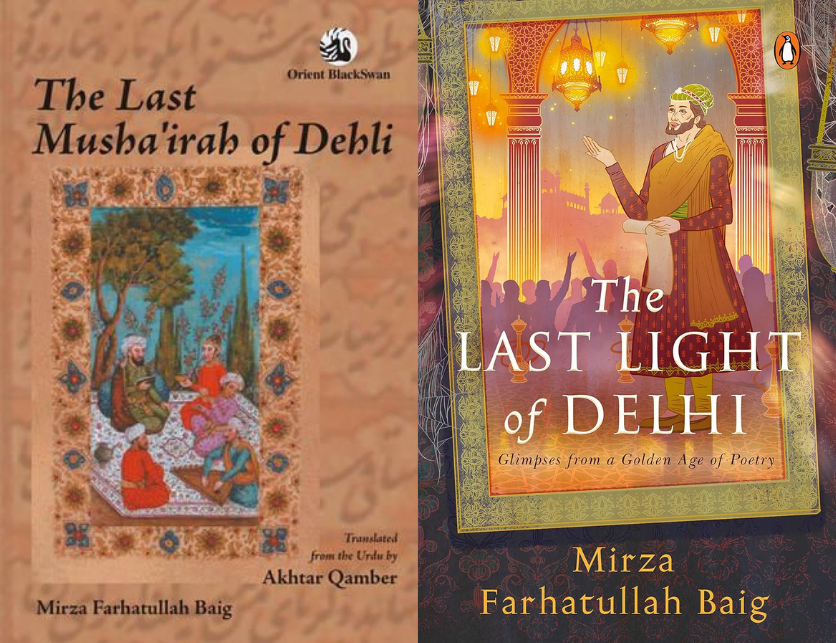
The English translation of Dehli Ki Aakhri Shama is available as The Last Mushaira of Delhi translated by Akhter Qamber (Orient Black Swan) and The Last Light of Delhi translated by Parvati Sharma and Sulaiman Ahmad (Penguin India).
source: http://www.scroll.in / Scroll.in / Home> Talking Books / by Khawar Khan Achkzai / September 29th, 2024
Do you know that Mahatma Gandhi’s Young India was edited by a Hyderabadi? Maybe not. Yes. It was edited by Badrul Hasan for some time.
This is an episode from the little-known history of India’s freedom struggle that was fought from the soil of Hyderabad State which at that time was ruled by the Nizam, Mir Osman Ali Khan.
Ordinarily, the history of Indian struggle in Hyderabad State is seen from the Hindu-Muslim binary. A large number of Muslims had come under the influence of the Majlis Party which later came under the leadership of Kasim Rizvi.
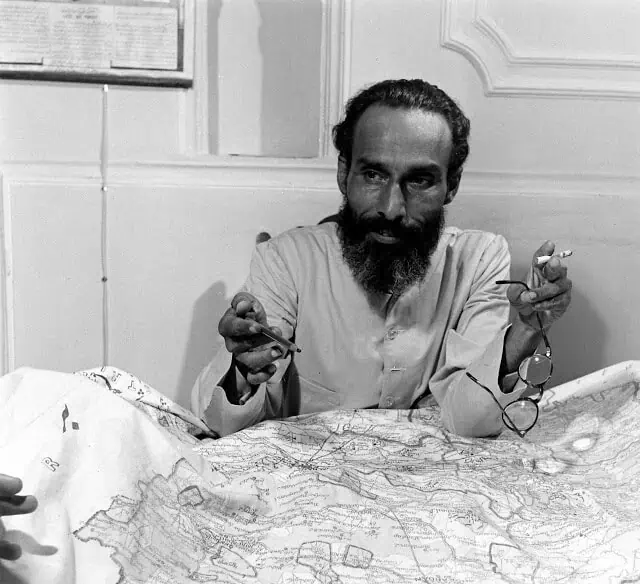
Kasim Rizvi
But there was also a section of the Hyderabad population that was under the influence of Congress and its leaders like Mahatma Gandhi, Jawaharlal Nehru, and Maulana Azad. The undeclared leader of this section was Sarojini Naidu, the first Hyderabadi to be sent to England for higher studies by the Nizam.
Badrul Hasan, a young Hyderabadi travelled to Gujarat and stayed at Gandhi ji’s ashram in Ahmedabad. In Ahmedabad, he used to stay at Sabarmati Ashram of Gandhi ji. During his connection with Gandhi ji he wrote a book Evil of Drugs and Alcoholism the preface of which was penned by the Mahatma.
This historic episode was shared by Ismat Mahdi, a well-known linguist from Hyderabad, to a small enthusiastic crowd of senior men, and women under the umbrella of Dobara, a city-based organisation. Mir Ayoob Ali Khan, a senior journalist, moderated the talk.
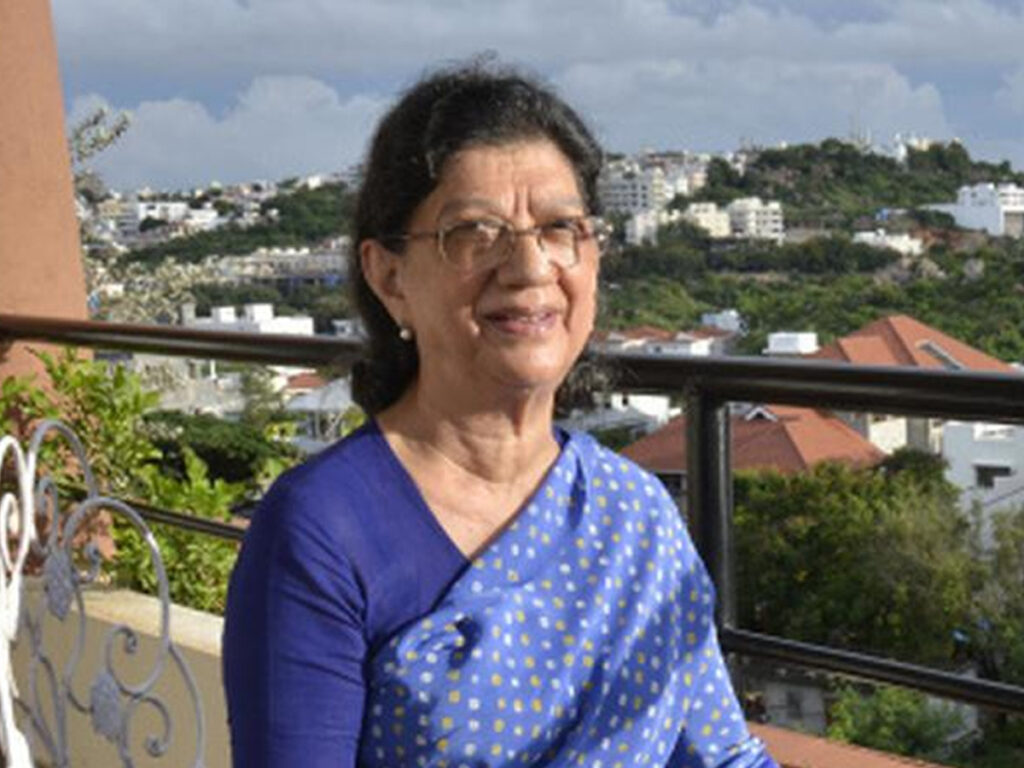
Ismat Mahdi
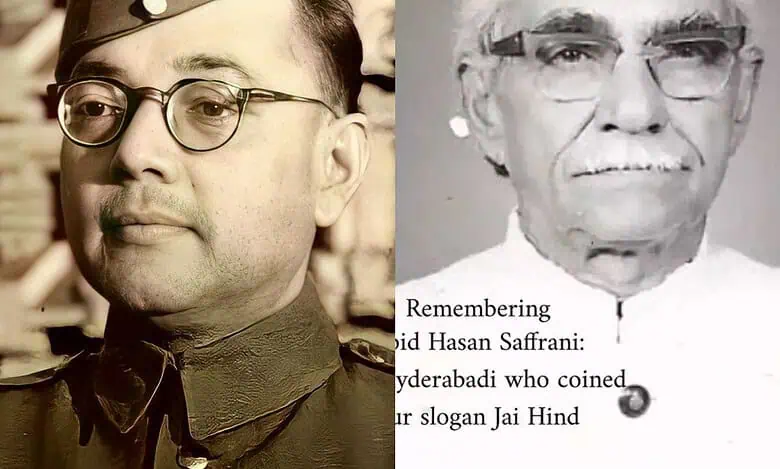
Another dimension of the talk was revealed by Mahdi. She said Badrul Hasan’s brother Abid Hasan who later came to be known as Abid Hasan Safrani was on the other side of the freedom struggle. He was with Netaji Subhash Chandra Bose.
One day Netaji went to meet the German Nazi leader Adolf Hitler to seek his assistance in carrying out the struggle against the British Raj. Hitler said they should go in a submarine up to Japan and from there they can choose their front to fight. They were handed over the Indian army men who were fighting under the British flag and had been arrested by the Nazis. The duo agreed.
Another dimension of the talk was revealed by Mahdi. She said Badrul Hasan’s brother Abid Hasan who later came to be known as Abid Hasan Safrani was on the other side of the freedom struggle. He was with Netaji Subhash Chandra Bose.
One day Netaji went to meet the German Nazi leader Adolf Hitler to seek his assistance in carrying out the struggle against the British Raj. Hitler said they should go in a submarine up to Japan and from there they can choose their front to fight. They were handed over the Indian army men who were fighting under the British flag and had been arrested by the Nazis. The duo agreed.
There broke a debate over what colour the national flag of an Independent India should be. The Hindus said it should be all saffron. The Muslims, on the other hand, said it should all be Green. After a long heated debate, the Hindus proposed that one-third of the flag should be saffron, and one-third should be green. The one that should be run between the Saffron and Green should be white representing all other communities. Observing the sacrificing stance of the Hindus, Abid Hasan decided to add Safrani (of saffron) to his name and came to be known all his life as Abid Hasan Safrani.
Abid Hasan Safrani treated Ismat Mahdi, who was his niece, as her daughter. He wanted to adopt her formally but the Islamic law did not have any provision for that. In any case, Ismat Mahdi stayed and travelled with him wherever he was posted. And it is because of this long travelling life that she mastered French, Arabic, and English.
Mahatma Gandhi
Her last government job was to teach Arabic at the Centre of English and Foreign Languages in Hyderabad. She is now the Managing Trustee of Sarvodaya International Trust which aims to propagate the ideals and values of Mahatma Gandhi among the youth.
Mir Ayoob Ali Khan is a senior journalist who has worked with the Times of India and Deccan Chronicle in Hyderabad in senior positions. He is now associated with the Siasat.com.
source: http://www.siasat.com / The Siasat Daily / Home> Featured News / by Mir Ayoob Ali Khan / August 15th, 2024
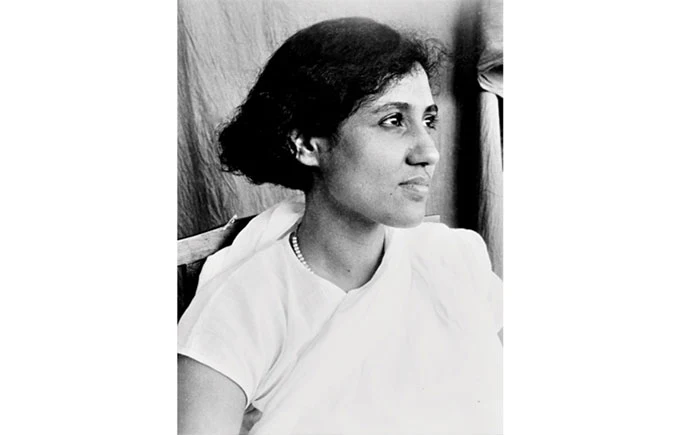
Though long neglected in translation, Rashid Jahan blazed a trail for Urdu writers.
In her short, eventful life, Rashid Jahan made her mark as a literary stylist and an outspoken critic of patriarchal norms. COURTESY SHAHID NAJEB
1952. ISMAT CHUGHTAI HAD BEEN, for nearly a decade, the leading short story writer and novelist in the world of Urdu literature. But across the border in Pakistan, Qurratulain Hyder’s reputation as the disaffected chronicler of the generation lost to the tribulations of Partition was rapidly rising and would soon challenge Chughtai’s supremacy. In Lahore, Hijab Imtiaz Ali was turning to psychoanalytically inspired fictions about alcoholism and the Electra complex. Several other young, female Urdu short story writers, of a generation nurtured on the literature of the Progressive Writers’ Movement, were coming to maturity: Khadija Mastur, Hajra Masroor, Mumtaz Shirin, Shaista Ikramullah, Amina Nazli. And Rashid Jahan—doctor, political activist, Chughtai’s literary mentor and the forerunner of this entire wave of writers—died of cancer in a Russian hospital in July of that year, some weeks before her forty-seventh birthday, almost forgotten by the literary world she had stormed two decades before. Yet she had freed the tongues and the pens of several generations that followed; her impact would be surpassed only three decades later, by Fahmida Riaz and Kishwar Naheed, the feminist poets of the 1960s who replaced the forensic idiom of Rashid’s work with a lyrical celebration of women’s bodies.
The daughter of Shaikh Abdullah and Wahid Jahan Begum, an illustrious couple of educationists in Aligarh, Rashid came from an enlightened family, and her decision to study medicine was perhaps not surprising. Her literary reputation rested on her contribution to Angaare, a pioneering anthology of short fiction published in 1932. This milestone of Urdu literature had introduced four young writers in their twenties, who in their fiction presented contemporary philosophical and psychological ideas, and also techniques absorbed from modern European writing. The most famous of the four was Ahmed Ali, who, though not prolific, would go on to become one of the most respected Anglophone litterateurs of the subcontinent. Ahmed Ali had introduced the young doctor to the other contributors. Aware of her literary predilections, one of them, Sajjad Zahir, is believed to have persuaded her to write two pieces for the book; another, Mahmud-uz-Zafar, would become her life’s companion.
The contributors, radical and ready to challenge as they might have been, were perhaps unaware of the shockwaves their discussions of sex and religion would send out into an audience that, though probably ripe for a new literary movement, was unprepared for the force of this onslaught on their sensibilities. Rashid was the only woman in the gang of four. Critics have noted that she was also the only one of them that didn’t differ significantly from her predecessors in her choice of milieu or material, but her unabashed vocabulary earned her the censure of readers across the Urdu-speaking regions. Ordinances were passed against her and the others. She was advised to travel with bodyguards but, as a practising doctor, she refused to take such precautions.
Her zeal was infectious. Faiz Ahmed Faiz, arguably the greatest political poet of his generation, was said to have been awakened to his ideological responsibilities by Rashid and her husband and fellow communist, Mahmud-uz-Zafar. Ismat Chughtai said of her, “I stored up her work like pearls … the handsome heroes and pretty heroines of my stories, the candle-like fingers, the lime blossoms and crimson blossoms all vanished … the earthy Rashid Jahan shattered all my ivory idols to pieces … Life, stark and naked, stood before me.”
Even Premchand, the grand old man of Hindi and Urdu literature, who was a vital supporter of the Progressives and their aims, is said to have written his last few stories of “stark and naked” life—of down-and-outs and derelicts—under the direct impact of Rashid and Angaare.
Six years later came Aurat, the only book Rashid would publish in her lifetime, a collection of seven stories. Throughout the decade of the 1940s, she had been involved in her work as a medical practitioner and Communist Party worker; she only occasionally published a story or a play in some obscure journal. Her reputation as a trailblazer and pioneering feminist was held to be based more on her ability to tell bitter home truths than on any exceptional literary talent. Her promise, it was held and still is, was never fulfilled. Above all, perhaps, it was the eventfulness of her short, unconventional life that made her a legend.
But in the fleeting period of her fame—or infamy—she had written at least a handful of pieces that made an impact on literary history which continues, to this day, to be analysed and chronicled. Her uncollected stories were published in Shola-e-Jawwala (1974), while the uncollected plays were included in Woh Aur Dusre Afsane Drame (1977). There was no authoritative collection of Rashid’s work for more than 30 years till Nasr-e-Rashid Jahan appeared in Pakistan in 2012. Edited by Humera Ashfaq, this was a major retrospective volume of 16 stories, five plays and a few essays, bringing together the author’s most famous pieces and lesser-known texts. Now, in A Rebel and Her Cause: The Life and Work of Rashid Jahan (Women Unlimited, 256 pages, R400), Rakhshanda Jalil, the well-known critic of Urdu literature who translated and edited the volume, presents eleven stories and two plays (all but one of these texts are also in Ashfaq’s volume), prefaced by a brief biography and a critical assessment, to give us the first full-length study of Rashid Jahan’s life and work to appear in the English language.
Three of the texts included are widely acknowledged as minor classics: the very brief monologue ‘A Tour of Delhi’, and the plays ‘Behind the Curtain’ and ‘Woman’. These three works, written in the space of about five years, display the development of her perception. In the first of these, a woman wrapped up in a burqa, whose husband has promised her a day trip in Delhi, is left to sit alone at the railway station to guard their bags while the husband goes off on a jaunt with a friend. Later, the woman recasts her experience as a self-deprecating story to entertain her friends back home. Rashid’s wit, and her command of the idiom of semi-educated middle-class women, are in evidence here. Though Rashid may have been influenced in passing by Western literary models, the most remarkable trait she reveals in ‘A Tour of Delhi’, and indeed throughout her career, is an ability to weld disparate influences into a seamless whole and create fictions that are deeply rooted in the milieu she portrays. This quality makes her work less formally innovative but more radically relevant to her readers’ lives than the writings of her male contemporaries.
The second piece, ‘Behind the Curtain’, a dramatised dialogue for two female voices, is far darker in texture. Muhammadi Begum, the mother of many children, laments to a friend that her husband has lost interest in her.
The truth is that my womb and all the lower parts had slipped so far down that I had to get them fixed, so that my husband would get the same pleasure he might from a new wife … How long can a woman who bears a child every year expect to have her body remain in good condition? It slipped again. Again, he went after me, nagged and threatened me into going under the butcher’s knife. But he is still not happy.
These words, of an unprecedented frankness at the time in their charting of a woman’s anatomy and naming of reproductive organs, nevertheless do not release the woman who utters them into any form of freedom. But Rashid would complete this task in ‘Woman’, which has a wider cast of characters, both male and female, and a more intricately theatrical frame. Here, in a very similar situation, Fatima, whose ailment this time is gonorrhoea, actually throws the cheating husband who gave it to her out of their marital home. The long-suffering woman of Urdu literature is replaced by a character prepared to take control of her own destiny.
I have the disease you have given me. You caused my innocent babies to die. You murderer! I will get myself treated by whoever I want. No one can stop me now. I have suffered enough at your hands by listening to your commands.
Again, one could compare Rashid’s characters to Western ones—in this case, Ibsen’s Nora from A Doll’s House and his other stories of discontented wives. But Rashid’s stories derive so completely from their parochial contexts that such comparisons point more to the discontinuous universality of human—and in particular women’s—experience than to literary borrowing.
Shaista Ikramullah—an admirer, whose own concise fictions show the influence of Rashid Jahan—was one of the few critics to pay serious attention to Rashid’s work during the latter’s lifetime. In her seminal work, A Critical Study of the Development of the Urdu Novel and Short Story (1945), Ikramullah writes about ‘Woman’:
It is a common enough occurrence, namely a husband contemplating a second marriage on the ground that his wife is childless. The fiction writers of the last four decades have condemned and criticised this cupidity of man. But none of them had the smouldering indignation that is present in Rashid’s indictment of it, nor has anyone yet succeeded in showing how contemptible were such men as she has. So far authors have been content to show just this one trait in man’s character, but Rashid has shown the entire man in his grossness.
Ikramullah is perhaps alone in tracing the connection between Rashid and the earlier generation of reformist writers, and in showing how she extends and rewrites their agenda from her progressive standpoint.
The lot of the poor has been championed in novels and short stories from the time they appeared in the Urdu language. But they were treated with an air of fateful acceptance … In Rashid’s stories there is a fire and a defiance that were not found in the stories that were written on the same theme before … In this attitude lies the difference between the new and the old school of writers.
What Ikramullah might have added is that Rashid brought to the concise and elliptical form of the short story the concerns of the novelists of a prior generation, often saying in three or four pages what it had taken the reformists several times that number to narrate. Hers was not only a political but also a formal innovation.
THE STORY that opens Jalil’s selection, ‘That One’, is a first person account of a young teacher’s strange relationship with a syphilitic prostitute; his infatuation with her is expressed by the daily gift of a flower. Finally, one of the housekeepers in the narrator’s hostel abuses and insults the prostitute, and throws her out. This story was, in some ways, Rashid’s introduction to a new generation of feminist readers, especially when it was translated into English for Susie Tharu and K Lalita’s pioneering anthology, Women Writing in India, 600 BC to the Present, Volume II (1993). The editors, however, focusing on Rashid’s narrative technique and conflating it with her authorial persona, ranged Rashid with a generation of bourgeois liberal women writers, introducing in the process a new if somewhat skewed reading of her literary politics.
The focus of these narratives remains the middle-class protagonist and her moral awakening to social responsibility and therefore also to citizenship. The ‘other woman’—the prostitute, the working class woman—is a figure cut to the measure of this middle-class woman’s requirements that is also, we must not forget, the requirement of the nation. These stories may be about those at the margins, but they are, all the same, stories of the centre, told by the centre … Though many of the protagonists in the stories are women, the questions raised pose few threats to a patriarchal order.
How exactly Tharu and Lalita expected Rashid to overturn the patriarchal order they did not say. But their restaging of Rashid Jahan’s image persists. Priyamvada Gopal, in several nuanced and sensitive readings of Rashid, attempts to vindicate her and yet sees her returning to a default position as a bourgeois narrator—a surrogate for the author—who surveys her material with a lofty disdain. But this, today’s readers might find, is something of an advantage, as they can easily identify with her modern voice; and Rashid is able to use this narrative mode to inflect her stories with varying levels of irony.
Several such tales are included in Jalil’s selection. Foremost among them in terms of fame is ‘One of my Journeys’, in which a young woman student, on her way home for the holidays, gets into a compartment full of women, both Hindu and Muslim, who use every opportunity they find to engage in thinly disguised sectarian disputes. The narrator, a secularised Muslim, castigates them all for their bigotries and the story ends on a note of almost manic harmony. The comic note of ‘A Trip to Delhi’ is reprised but in a multi-vocal mode, with Rashid’s perfect ear for speech giving it the immediacy of one of her plays.
Far more subtle and intricate, and perhaps as a result not as competently translated, is ‘Sale’, in which a young narrator, hiding in the back of a car on a country drive and reminiscing about an erotic moment, observes strange goings-on through the window: three burqa-clad women and five men, one of whom the narrator recognises as a comfortably married neighbour, disappear into the woods for a bit of fun.
A torch flashed … those few seconds of strong light revealed two naked bodies. As soon as the torch lit the darkness, the man – scared of being recognised and uncaring of his body – hid his face in the woman’s burqa.
Evidently, it is not a sin to commit a sin; it is a sin to get caught.
Suddenly, peal after peal of dead laughter rent the air. She was laughing at the dogs.
It’s a chilling story, told from the centre about the centre, but pervaded by the “dead” laughter of the prostitute—to the extent that the centre begins to expose its own hollowness.
In ‘Thief,’ a doctor—obviously a very deliberate parody of the author—complains about the time, demands a fee, and generally behaves obnoxiously with a poor man who has brought a child in for emergency treatment, until pity or a doctor’s duty takes over. But the story keeps turning. The narrator then discovers that the same man had robbed her house only some time before, yet decides to let him go. The rest of the brief story is an examination of social conscience and of varieties of theft:
… petty thievery, picking pockets, robbery, larceny, black marketing, exploitation, filling your home with the money earned from the labour of others, swallowing up someone else’s land or country. After all, why aren’t these included in theft? … I looked around me. I saw that some of the biggest thieves walk around me, dressed up as saints.
Though not perhaps one of Rashid’s best, this late story shows her experimenting with technique in a combination of pseudo-memoir and ironic essay, and in its satirical retake on the familiar narrative persona.
The bulk of Rashid Jahan’s stories, though, are not told in the first person. More often, they begin in the breezy omniscient tone of a traditional tale, as in ‘Mute’, a beautifully calibrated story of a young woman whose parents fail to find her a suitable groom.
Siddiqa Begum’s marriage was proving to be a very difficult one to arrange. She was a true blue Sayyadani. Her father, Hamid Hasan, was reasonably well placed. What is more, she was one among thousands when it came to beauty. Yes, Siddiqa Begum was still not married and already twenty-three years old. Her mother … could not sleep at night for worry over her.
The multi-layered ‘A Daughter-in-Law For Asif Jahan’ is also set in the enclosed milieu of the women’s quarters, but this time the occasion that sets the story in motion is the birth of a much prayed-for girl child, whose cousin has already been chosen as a bridegroom for her. The story’s subtext chastises the women of the family for failing to summon a doctor; instead, they use traditional midwives and methods of delivery. But in place of polemic Rashid graphically describes the process of childbirth, interspersed with the manic humour familiar from other stories, which culminates in a celebration of women’s resilience as every female member of the household plays her part in bringing the girl child into the world.
Rashid is inevitably identified with portraits of women, but some of her writing, in particular her later, unpublished plays, show that she can also manage the voices of men with panache. This is also evident in one of the finest stories in A Rebel and Her Cause, ‘Bad Company’, about an establishment judge who rejects his Marxist son. The piece is created from a seamless weave of interior monologue, telephone conversation, and dialogue. There are times that the judge’s climb is seen with something close to sympathy, but that is soon revealed as an illusion when the man’s snobbery and deep conservatism are gradually uncovered.
Jalil comments on the unevenness of the author’s oeuvre, noting that Rashid Jahan probably wrote quickly and didn’t edit; some of the stories, she feels, read like drafts. Though this is true of one or two of the stories in Aurat, it largely isn’t evident in those Jalil has chosen to translate for this book, which consistently display, in their seemingly simple mode of exposition, the storytelling dexterity that is Rashid’s forte. There is some consensus that Rashid herself probably favoured the dramatic form for its immediacy and its performative qualities, which encouraged group activity of the kind she enjoyed—and some of her best later work (which Jalil comments on in an analytical chapter) is in this genre. As we have seen, Jalil includes the two most famous plays but has otherwise chosen to concentrate on the fiction, possibly because dialogue is harder to render in English than narrative.
Jalil’s translations valiantly attempt to convey the range of her subject’s interests, and the themes and styles with which Rashid experimented. It’s a laudable enterprise, as is the decision to accompany the fictions with biographical and historical facts. What doesn’t always come through here is the distinctive lucidity and diamond-hard precision of Rashid’s prose, which depends so much on her ability to balance various registers of the Urdu vernacular—pathos and satire, humour, anger, compassion and very occasional touches of lyricism—in a way that’s near-impossible to capture in English translation. In fact, Rashid is underrated as a stylist; and, if this timely book succeeds in sending bilingual critics back to the originals (as it did this reader), that will be yet another of its several achievements, the finest of which is to make us grateful that, in her short and exceptional life, Rashid Jahan found time to write so many outstanding stories.
source: http://www.caravanmagazine.in / Caravan / Home> Gender> Books / by Aamer Hussein / January 01st, 2014
Mahfoozur Rahman, Principal of Government Medical College, Patna
Greek or Unnai medicine is the greatest system of treatment for humans. Through research, it has been found out that Greek medicine offers a complete cure for every disease and is Nature’s cure for disease. In the past, Greeks have treated even the most stubborn diseases and eradicated them from their roots.
This is the opinion of Mahfoozur Rahman, Principal of Government Medical College, Patna.
Dr. Rahman told Awaz-The Voice that although the allopathic system has dealt a blow to Greek medicine in the last few hundred years, yet due to the renewed government support the Unnani medicine is once again becoming popular.
Dr. Mahfoozur Rahman said that although Unani medicine treated human disease for centuries, it could not compete and adapt to allopathy.
Packaging of treatment is a major factor in the success of allopathy. However, the Unani system is trying to maintain its relevance with its holistic approach. However, allopathy has undoubtedly gained acceptance and popularity in modern times.
Haldi or curcumin and Dr Mahfoozur Rahman
Dr Rahman however, believes that if the packaging of Greek medicines is done the right way, it can have a positive effect. According to him, since Greek medicines have no side effects on human life whereas allopathic medicines have. Due to this, we see rampant kidney and liver damage or heart problems even among younger people.
According to Dr. Mahfoozur Rahman, Greek medicine has the ingredients used by a person in his daily life. It has elements like ginger, garlic, onion, cloves, herbs different potions, etc. Humans are accustomed to these substances and therefore there is no risk of side effects.
Dr. Mahfoozur Rahman says that Greek medicine believes in rooting out a disease. The patient has to have a little patience for the disease to be not only cured but rooted out. For this reason, there is a great need to promote Greek medicine and to spread awareness about it.
Dr. Mahfoozur Rahman says that herbs are a natural remedy and medicines are prepared from plants created by nature. This method of treatment came from Greece, but the Muslim kings and sultans played an important role in developing this system. History says that during the Muslim rule on any land and places that sages visited, they found a way to treat various diseases.
They tested the properties of the plant on patients and later penned it down to reveal it to the world. Most of those books are in Arabic language. Later these collections were translated into Persian and Urdu. According to Dr. Mahoouzur Rahman, as the number of Urdu-knowing people is falling, it’s adversely impacting the Unani treatment.
He says that the allopathic system flourished as it took the form of a trade while the Greek method of treatment remained mired traditionally.
Speaking on the urgent need to popularise Unani medicine in modern times, Dr. Mahfoozur Rehman says people are taking modern medicine and have become addicted to it. As a result, diseases are cropping in different parts of the human body. Diseases like kidney, liver failure, loss of vision, obesity and acidity are becoming common.
Ingredients for Unani medicine
The Unani medicine is safer because it uses food level ingredients like the world like marjoram, ginger, onion, garlic, lentils, sugar, cloves, cardamom, pepper, etc. Take ginger, we use ginger for cough, similarly we use black pepper for acidity or indigestion. It means that we use ingredients that cause no harm to the body while curing the main ailment.
Dr. Mahfoozur Rahman says there is a dire need of Greek medicine for the survival of humanity. It is good enough that efforts are being made to promote Greek medicine at the state and central levels but more initiatives are needed.
“They say that the soil of every place in the world looks the same but its effectiveness is different. This is the reason why researchers looked for remedies in different regions and from different plants. If those researches are revisited and medicines developed, Greek medicine may change the human life.”
He says that efforts are being made to establish the link between soil and herbs used for medicines in different parts of the world. Research on plant extracts is different parts of India is going on with laboratory testing.
Dr. Mahfoozur Rahman admits that Unani medicine is weak in emergencies like heart attacks or low oxygen in the body. In such cases, modern drugs are used. “In the case of emergencies, our medicines are not effective but work is being done in this regard as well.”
“People often ask whether the Unani system has a surgery option. I want to tell them that almost 5,000 years ago, the Greeks invented all the instruments needed for surgery. “Man used to travel on elephants, horses and camels then and today he uses airplanes. Times have changed but the Unani medicine remains unchanged. Now, efforts are being made to advance it. It is hoped that gradually it will also be adapted to the requirements of the modern era,” Dr Rahman said.
Ancient Greek Doctors
However, he said in surgery, the Unani system is lagging, but attention is being paid to this too, and this.
Dr Rahman says sages chronicled research on specific fruits and the soil in which these are grown in their books. Like they mentioned the apple of Kashmir and, the cinnamon of China as the best ones for curing disease. The problem is that the ingredients required for the medicine are not available from these places, which also limits the scope of Greek medicine.
He says there are good practitioners of Unani medicine and students are also joining in courses to become one but due to the lack of authentic medicines, its growth is hampered.
Most Greek medicines have a shelf life of two years, and if the medicine is not sold, it rots. In such a situation, there is a need to draw people’s attention to this aspect and to the natural treatment it offers.
Dr. Mahfoozur Rahman says that the Unani medicine can treat various diseases especially those related to the stomach, quite well. Unani medicines are very effective in stomach disorders, constipation, loss of appetite, sluggish motion etc.
Similarly, it’s very effective in infertility and also diseases of women’s reproductive system. A liver or kidney stone can be easily removed with medication. Similarly, there are many good medicines for strengthening the heart and body.
Dr. Mahfoozur Rahman says that the hospital has more capacity to treat patients. One of the reasons for this is that Greek medicine does not have the kind of packaging that is done in allopathy.
Another problem is that sugar is being used in other medicines such as potions, mixtures, or yeasts. Earlier, Greek medicines were prepared from pure honey, nature has put such healing in honey, but now pure honey is unavailable and sugar is being used instead. Sugar is a cause of various ailments of the human body and its use in medicines is impacting the effectiveness of medicines.
Dr. Mahfoozur Rahman says that unless worked upon, the future of Greek medicine looks bleak. “Once everyone consulted a Hakim for treatment of disease. The doctors were good and so were medicines. Even today Hakims are very competent and medicines are also good in the dominance of allopathy, the common people are ignoring and forgetting Greek or natural remedies.
source: http://www.awazthevoice.in / Awaz, The Voice / Home> Story / by Mahuz Alam, Patna / October 07th, 2024
Renowned singer Zakir Abbasi has been awarded the prestigious Shining Diamond Excellence Achievers Award for his outstanding contributions to promoting road safety awareness through music. The award ceremony, organized by Traffic Welfare and Road Safety Foundation, Ministry of Corporate Affairs, Government of India, took place at Magal Sain Auditorium in Karnal, Haryana, on Sunday.
Abbasi, who serves as Secretary of Bazm-e-Mausiqi and is also Jhunjhunu’s Election Icon, has been recognized for using his musical talent to raise awareness about road safety across the country. His songs on the subject have had a significant impact on the public, making him a source of pride for the Jhunjhunu district.
The award ceremony was graced by several prominent personalities, including Raghavendra Kumar, popularly known as ‘Helmet Man,’ Haryanvi singer Veer Dahiya, and actor and director Raj Arora. Zakir Abbasi gave a special performance of one of his road safety songs during the event, earning widespread appreciation.
District Collector Ramavatar Meena, Madrasa Board Chairman MD Chopdar, President of Bazm Sarfaraz Khan, Advocate Dharampal Banshiwal, Treasurer Manwar Diwan, and other members of Bazm-e-Mausiqi congratulated Abbasi on his achievement. The foundation recently appointed Zakir Abbasi state coordinator for Rajasthan.
source: http://www.radiancenews.com / Radiance News / Home> Pride of the Nation> Awards> Latest News / by Radiance News Bureau / October 14th, 2024
The Delhi Urdu Academy has announced the prestigious award, recognizing Intizar Naeem’s autobiography Ujalon Mein Safar.
Intizar Naeem, a renowned poet, intellectual, former General Secretary of Idara-e-Adab-e-Islami Hind, former Director of Radiance Viewsweekly and Ex-Managing Editor of Peshraft, and founder of Madhur Sandesh Sangam – an institution dedicated to the representation of Islam in Hindi – has been lauded for his contribution to Urdu literature with his autobiography. Ujalon Mein Safar has been awarded first prize in the Academy’s 2021 awards.
His autobiography has already received recognition from the Uttar Pradesh Urdu Academy as well.
In this work, Naeem encapsulates his seven decades of experiences, highlighting his efforts, particularly in the preservation and reclamation of Waqf properties.
Critics have praised his insight, noting that if Muslim leaders had acted upon his recommendations, the serious challenges facing Waqf assets today might have been averted.
source: http://www.radiancenews.com / Radiance News / Home> Pride of the Nation> Awards> Report / by Radiance News Bureau / October 16th, 2024