Monthly Archives: October 2024

Can Rs 99 Change Your Life? The Rise of Sultan, the Kurta King

Kolkata, WEST BENGAL :

How one man made ethnic wear a fashion statement. The story behind a Kolkata fashion empire.
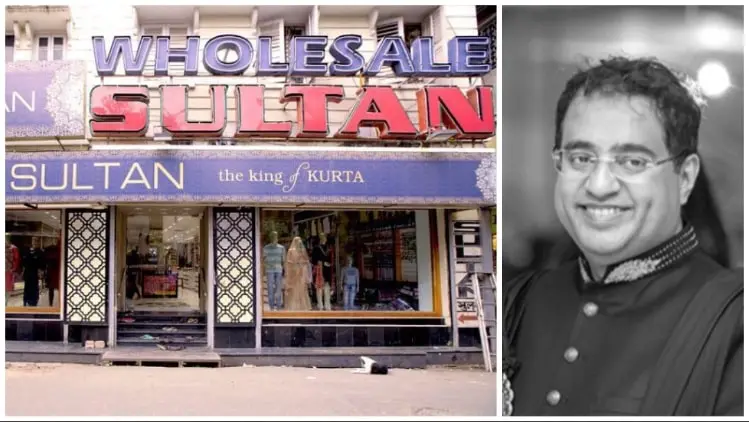
The outlet of Sultan in New Market and its Managing Director Arshad Shamim

Kolkata:

They say that a lion before making the final leap takes a step back. In ways similar to it, this youngster in early 2000 chose not to start on with his business sale despite having his stock and shop in place. He chose to strike at the right time with the right strategy.

As Ramadan arrived, back in 2001, he placed ads and banners with an unbelievable offer – Kurtas for only 99 and that too with a one-year guarantee. A tempting deal that not many would want to miss. The unique marketing strategy gave the now-famous-ethnic brand for men the push that its founder had anticipated – a record-breaking sale that saw buyers queued to buy kurtas for Rs 99. Within an hour the stock ended. The crowd went into a frenzy to catch hold of its kurta, glasses broke, police had to be called to reign control and then as they say – the rest is history.

The man behind it was Arshad Shamim, the Managing Director of Sultan – The King of Kurtas. Born in a family that dealt in ethnic wear, especially for women, Shamim aspired to grow beyond Chittpur, the hub for ethnic wear manufacturers in Kolkata.

The journey of this commerce graduate from St Xaviers’ College is nothing but magical. However,  magic is not easy. It took a lot of patience, perseverance and strategising to achieve the result. And, that’s exactly what Shamim excelled in.

“I always wanted to be a businessman. The apparel industry appealed to me as it was my family business. But I didn’t want to venture into the women’s ethnic wear industry. Men’s ethnic wear was where I wanted to make a mark. So, my goal was set. And the strategy that I chose to launch Sultan Kurtas gave my business the right push,” reminisces Shamim.

With a capital of rupees of only five lakhs, he chose to invest in the ethnic wear industry. “We started very small, in 2001. And till lockdown happened, I could have been spotted hawking for Sultan Kurtas outside our shop at Zakaria Street (Rabindra Sarani). My job was to reach out to the maximum customers and I had no qualms selling my products on the streets of Kolkata,” he says.

Did he ever think that the Sultan could compete with Manyavar?

“Well, the clientele of Manyavar and Sultan is different. They cater to the rich and we cater to the needs of the middle class. So, we didn’t face much competition. The price range from where Manyavar begins its range is the price for the most expensive range of apparel we have on offer,” the MD gave an honest reply.

He adds, “See, we have one vision – offer the best quality apparel at an affordable price. And that has managed to create a mark for our brand.”

Also, the fact that two-decades later when the business has not just expanded in Bengal, but across India and even beyond the borders.

“As far as production of Kurta is concerned, Sultan is the largest kurta producer in the Indian subcontinent,” he proudly mentioned.

Any specific reason to choose kurtas? “I have a liking for sherwanis and kurtas. And they are pretty expensive. I knew that there was a market for it and all that needed to be done was to make them affordable. And that’s exactly what I did.”

“Bengal is culturally rich and men here like to wear kurtas, irrespective of one’s religion. And it’s love for ethnic wear and value for money that made Sultan become the King of Kurtas. So, let me be very clear, it’s not just in Ramadan that our sales witness a peak but also during the Pujas,” Shamim points out.

As the brand grew, Sultan also began to sell Sherwani and four other items together for just Rs 863. It was another hot cake offered by the King of Kurtas after its Rs 99 kurta offer.

Sultan’s success also lies in its appealing and maverick advertisements, which got ideated by the Xavierian itself.

Shamim’s strength lies in the fact that even after tasting success, he has remained grounded and works as hard even today. He recalls an incident soon after he had purchased a Mercedes Benz car.

“Once I was hawking near our old shop in Zakaria Street when I spotted a man observing me from a distance. I initially took him to be a thief and kept my eye on him as I sold my goods. A few hours later, the man came up to me and asked if I had a brother, who drove a Mercedes. I shocked him by saying that both people are the same, and it is me who drives the expensive car as well.”

Today Sultan has at least fourteen showrooms across Kolkata. Still, it doesn’t make Shamim take a break. Even till date, the main dealing, negotiations, and product handling is done by him.

This sense of humility still exists in the man, who set up a brand that in these two-and-a-half decades has become a name to reckon with when it comes to ethnic wear for men. During Ramadan, he breaks his fast with his colleagues in his office premises. He doesn’t forget to offer his tiffin to those sitting with him.

The 52-year-old man who has witnessed several shades of life, adds, “I will look after the business for three more years, thereafter, I would like to give society back. I will work in the education sector and will ensure that at least where I reside, in that area, no child sleeps hungry.”

source: http://www.enewsroom.in / eNewsRoom India / Home> Art & Culture / by Shabina Akhtar / March 26th, 2024

From Wings to Wisdom: Retired Wing Commander Shapes Youth for Success

Kolkata, WEST BENGAL :

Watch | With over 14 years of service left, Wing Commander Akhtar chose to invest his time in nurturing the next generation, recognizing the importance of instilling confidence and resilience.

Former Wing Commander gives ‘soft skill wings’ to students’ dream

source: youtube.com / eNewsRoom

Kolkata:

Wing Commander Shamim Akhtar (Retd) made a remarkable decision to take voluntary retirement from the Indian Army, not to rest but to serve a higher purpose: grooming the youth for careers in the army and beyond. Presently stationed in Kolkata, he dedicates his time to training students from diverse educational backgrounds in essential soft skills, such as communication, leadership, and resilience.

His students, hailing from far-flung areas, converge to attend his sessions, spanning disciplines like engineering, law, and literature. What sets the army veteran apart is not just his dedication but his altruism—he offers these sessions free of cost, a gesture aimed at empowering the youth irrespective of their financial background.

Beyond imparting soft skills, Akhtar serves as a conduit between aspiring youth and Indian Army vacancies, often bringing to light opportunities that students were previously unaware of. For him, retirement wasn’t an end but a new beginning—a chance to inspire and mold future leaders.

“When I took premature retirement, my 14 years of service was left. But I wanted to groom youth and help build future leaders, so it was the right time to quit and start something to motivate students,” the ex- Air Force Officer shared with eNewsroom.

His philosophy is simple yet profound: to instill confidence and uniqueness in his students, empowering them to make a mark in their chosen fields. Through his mentorship, he not only imparts skills but also emphasizes the importance of maintaining mental strength and physical fitness, essential for navigating the challenges of the future.

Akhtar’s mission extends beyond the classroom; it’s about fostering holistic development and nurturing well-rounded individuals. By encouraging his students to prioritize quality time with family and friends, he underscores the significance of balance in life—a lesson as valuable as any technical skill.

source: http://www.enewsroom.in / eNewsRoom India / Home> Audio-Video / by Staff Reporter / March 24th, 2024

First Muslim IAS officer from Kashmir Mohd Shafi Pandit passes away

Srinagar, JAMMU & KASHMIR :

Pandit was undergoing treatment at a hospital in Delhi after he was detected with cancer about a month ago, his family said

In the bureaucratic circles, Pandit was widely viewed as a chief secretary that Jammu and Kashmir never had. Image: X@Jairam_Ramesh

Mohammad Shafi Pandit, the first Muslim IAS officer from Jammu and Kashmir, passed away on Thursday. He was 80.

Pandit was undergoing treatment at a hospital in Delhi after he was detected with cancer about a month ago, his family said.

Pandit was the first Muslim from Jammu and Kashmir to qualify the civil services examinations in 1969. His final assignment with the government was as the head of autonomous Jammu and Kashmir Public Service Commission.

In the bureaucratic circles, Pandit was widely viewed as a chief secretary that Jammu and Kashmir never had.

The soft-spoken Pandit was part of many civil society and philanthropic initiatives in Kashmir. He also played a key role in rolling out of the Mandal Commission report as he was the joint secretary in the Government of India in 1992.

Pandit’s body will be flown to Srinagar later in the day.

“If possible, he will be laid to rest today,” his family said.

Congress leader Jairam Ramesh condoled the death of the IAS officer.

“My good friend of many years. Mohammed Shafi Pandit, has just passed away.He was a 1969-batch IAS officer who occupied important positions with distinction, both in J&K and at the Centre,” Ramesh wrote in a post on X.

“After retirement, he devoted himself to various public causes and emerged as a leading voice of civil society. Soft-spoken and extremely gentle by nature, he epitomised the glorious composite heritage of J&K and was a role model for youth from the Valley to join the civil services,” the Congress leader added.

source: http://www.business-standard.com / Business Standard / Home> India News / by PTI, Srinagar / September 19th, 2024

Celebrating Nawab Wajid Ali Shah and His Contribution to Kolkata’s Culture

Kolkata, WEST BENGAL :

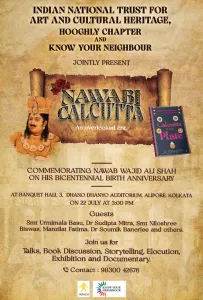
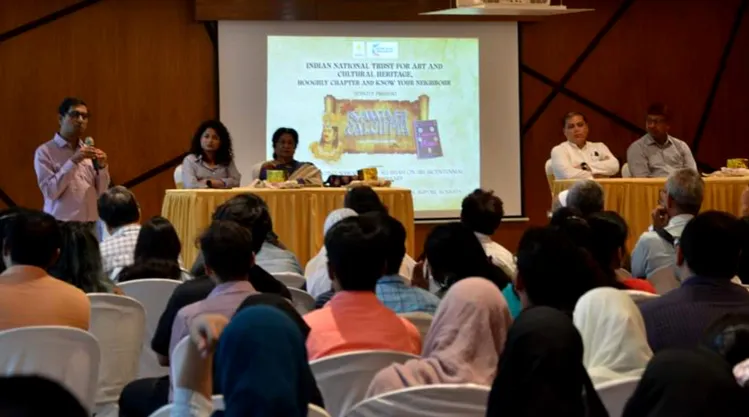
Nawabi Calcutta: An overlooked era, organised by Know Your Neighbour and INTACH, highlights how Thumri, Kathak and Urdu blossomed under King of Oudh’s patronage.

Speaker Sabir Ahamed during the bicentenary celebration of Nawab Wajid Ali Shah | Picture: Know Your Neighbour

Kolkata:

We all remember the story of Wajid Ali Shah, the ruler of Oudh, being exiled to Kolkata by the East India Company for being a poor administrator. But how many of us know that the ruler had travelled to the colonial Kolkata with around 6000 attendants in 1856, in hope of travelling to London to place his case before Queen Victoria concerning the unfair annexation of his kingdom? How many of us are aware of the fact that it was only in 1857, when the first revolt for independence broke out that the recuperating Shah was kept under house arrest?

But the most intriguing aspect about the Shah’s stay in Kolkata was his ability to not lose hope, despite being robbed of his throne and his journey of recreating mini-Lucknow (Metiabruz) along the bank of river Hooghly. And little by little bringing the Lucknowi style to Bengal.

How the Shah took on to his new life, patronised art and rebuilt a mini-empire of his miles away the banks of Gomti was what Nawabi Calcutta: An overlooked era attempted to recall.

“There is more to Wajid Ali Shah and his ‘Chota Lucknow’. We shouldn’t just remember him for bringing biryani to Kolkata and giving it a spin by introducing potato to it,” said Sabir Ahamed, of Know Your Neighbour (KYN), during his inaugural speech.

The remains of structures built by Wajid Ali Shah, have often been overlooked by Kolkatans. Rare images of old Metiabruz and structures built by the last king of Oudh were screened during the programme. Ninety-nine per cent of these structures built by the Wajid Ali Shah, no longer exist, said Shaikh Sohail, who conducts heritage tours in Metiabruz. He gave a call to all to come and visit the remains and know the history of the Shah’s ‘Chota Lucknow.”

The invitation card of the event

Remembering the last king of Oudh, Sudipta Mitra, author of Pearl by the River ( a book that documents the life of Wajid Ali Shah)  chose to highlight his love for rare animals. A connoisseur of wild animals, the Shah even created a mini zoo, which home some rare animals including an open snake house much ahead of Kolkata having a zoo of its own.

“His love to collect unique or rare wild animals for his personal zoo was so famed that zoologist  Edward Blyth once wrote to his friend Charles Darwin about the King of Oudh and his love for animals. He wrote that till the Shah is alive, animal trade would flourish in India,” said Mitra.

He then went on to add, “Once Oudh was annexed, about 18 tigers from the Shah’s personal collection were brought by Blyth for Rs 20 each. These tigers were put on display for the public at the present age Teratti Bazar. And later when the Shah made Metiabruz his home, he brought three tigers from his pre-owned collection for his new personal zoo at a much higher price.”

In a bid to feel at home, the pining Shah, even established the famed Sibtainabad Imbara, where he now rests, much like his father Amjad Ali Shah, who rests at Hazratganj’s Sibtainabad Imbara.

Debunking the poor administrator theory was Dr Soumik Bhattacharjee. While addressing the audience, Dr Bhattacharjee said, “The East India Company (EIC) created a narrative to justify their annexation of Oudh. The Shah was a lover of art, and that’s not a crime. He promoted thumrikathak and a lot of artists during his reign. He also introduced a number of administrative reforms, which were good for Oudh. But the ECI brought in laws that made it difficult for the king to do his work in a judicious way. The king, failing to understand the implications of the new laws, fell prey to ECI’s trap.”

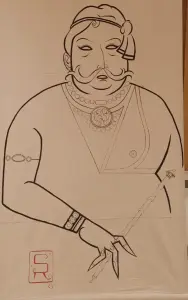
A portrait of Nawab Wajid Ali Shah at the event venue| Picture: Soumyadeep Roy

“While Prem Chand was almost reprimanding in his play Shatranj Ke Khiladi, Satyajit Ray was more understanding towards the king of Oudh. The king’s decision to not revolt against the British and approach Queen Victoria regarding the unfair annexation should be seen as his fondness for non-violence and not weakness,” he summed up.

Taking up from where Dr Bhattacharjee left, was foodpreneur and great great granddaughter of the Shah, Manzilat Fatima. “It’s sad that not many know about the history and reality of Wajid Ali Shah. My father, Dr Kaukab Quder Meerza, wrote a book on him in Urdu, which has been translated into English by sister Talat Fatima.” She added that they are also working on a project to highlight the revolutionary work of Begum Hazrat Mahal.

On being asked if the Indian historians have been a little harsh on the king of Oudh, she said, “It’s sad that the historians despite being Indians chose to highlight the narrative set by the British and East India Company. But it’s heartening to see so many remember Wajid Ali Shah with great fondness. I am humbled by the number of events that are being organised to mark his bicentenary. As his descendants, we will try doing our bit to keep his legacy alive.

While, Mohammad Reyaz, Assistant Professor, Aliah University, highlighted the central focus of the Nawab’s migration – rebuilding a new city, which was demolished after his death and the legacy that he created in the field of art. “The Nawab of Oudh was beyond bringing biryani to Kolkata,” he said.

The event organised by INTACH (Indian National Trust for Art and Cultural Heritage) and Know Your Neighbour, also hosted an art exhibition – Dastan-e-Akhtar by visual artist Soumyadeep Roy, who chose to pay tribute to the king through his paintings.

Also present at the event was Sarod maestro Irfan Md Khan, whose ancestor had travelled to Kolkata with Wajid Ali Shah. He summed up by saying, “The Shah was a patron of art. He patronised and promoted kathak, thumri and sarod to this city.”

source: http://www.enewsroom.in / eNewsRoom India / Home> Bengal> Inclusive India / by Shabina Akhtar / July 26th, 2023

Razack Family Donates Rs 5 Crore to St Joseph’s Boys’ High School for Infrastructure Development

Bengaluru, KARNATAKA :

Bengaluru:

The Razack family, renowned for their legacy of generosity, has donated Rs 5 crore to St Joseph’s Boys’ High School (SJBHS) to support the institution’s ongoing projects.

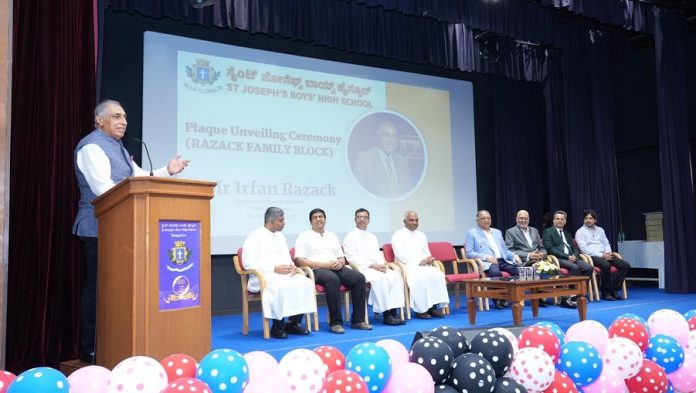
The unveiling of the ‘Razack Family Block’ plaque in September 2024 marked a significant moment for the school. Present at the event were prominent alumni, including Irfan Razack, Managing Director of Prestige Estates Projects (Batch of 1968), along with his brothers Rezwan Razack (Batch of 1970) and Noaman Razack (Batch of 1974).

The generous contribution will fund crucial developments at the school, including the construction of a playground with a double basement and additional classrooms. These infrastructure upgrades aim to align with the new National Education Policy (NEP) and address longstanding challenges such as parking limitations in Bengaluru’s Central Business District.

During the ceremony, Irfan Razack expressed his gratitude, saying, “It is a privilege to give back to my alma mater, which has shaped me into who I am today. Your recognition of my efforts is humbling, and I am deeply grateful.” The sentiments were echoed by Rezwan Razack and other family members, all underscoring their continued commitment to supporting the school’s growth.

Jayashree Prince Jacob, a teaching faculty member at SJBHS, highlighted the deeper meaning of the Razack family’s donation, stating, “This contribution represents more than just financial support. It is a testament to the lasting bond between the school and its alumni, inspiring future Josephites to uphold the tradition of giving back.”

In a statement, the school reflected on its cherished motto, “Fide et Labore” (Faith and Toil), emphasizing that the values imparted through the years continue to resonate with the alumni. “Once a Josephite, always a Josephite” remains more than a saying—it embodies the unyielding love and loyalty of the Josephite community.

The Razack family’s contribution serves as a lasting example of dedication to the school’s mission, ensuring that St Joseph’s Boys’ High School continues to thrive and inspire future generations.

source: http://www.radiancenews.com / Radiance News / Home> Latest News> Report / by Radiance News Bureau / October 12th, 2024

Bhagalpur Boy Saad Hussaini Shines at State-Level Rifle Shooting Event

Bhagalpur, BIHAR :

Silver medal for the shooter has brought pride not only to his family but also to his city and the community.

Bhagalpur :

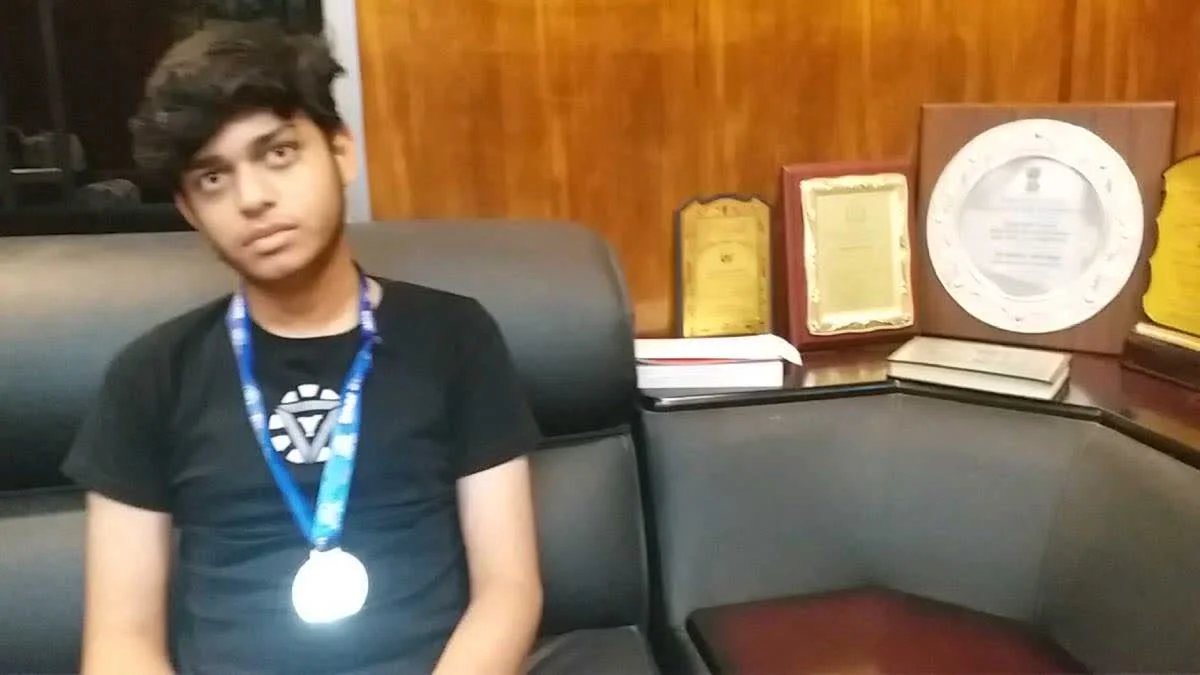
Syed Saad Hussaini, a promising young shooter from Bhagalpur in Bihar, has won the silver medal at the state-level Junior Rifle Shooting Championship. The victory has brought pride not only to his family but also to his city and the community.

Saad Hussaini, son of Syed Shah Fakhre Alam Hasan, a senior official of Pir Dumaria Shah’s monastery, competed against a large pool of state-level shooters at the five-day championship held by the Bihar State Rifle Association in Siwan district.

The recent competition saw participation from numerous shooters across Bihar. Saad’s exceptional performance in the 50m rifle shooting category earned him the silver medal, marking a historic achievement for Bhagalpur. This is the first time a shooter from Bhagalpur has secured such a high rank in a junior shooting event at the state level.

In a ceremony hosted by the Monger Rifle Association Shooting Club, Saad was felicitated by Monger SSP Imran Masood for his outstanding performance. The recognition is a testament to his hard work and dedication to the sport.

Saad Hussaini expressed his gratitude, stating, “I am thrilled to have achieved this milestone. It is the result of relentless effort and dedication. I extend my thanks to everyone who supported me throughout this journey.” He further mentioned his aspirations to compete at the national and international levels, with plans to prepare for the Olympics in the future.

Currently focused on memorisation of the Noble Qur’an, Saad plans to chart his path forward in shooting while continuing his religious studies. His achievement has sparked a sense of pride and inspiration within the community, highlighting the potential and talent emerging from Bhagalpur.

source: http://www.clarionindia.net / Clarion India / Home> Editors’s Pick> Indian Muslim> by Team Clarion / August 07th, 2024

Tayyaba Kausar, Daughter of a Tailor, Earns Prestigious ₹2 Crore Scholarship

Mumbai, MAHARASHTRA :

Mumbai’s 16-year-old prodigy fights all odds to study in Singapore

Mumbai :

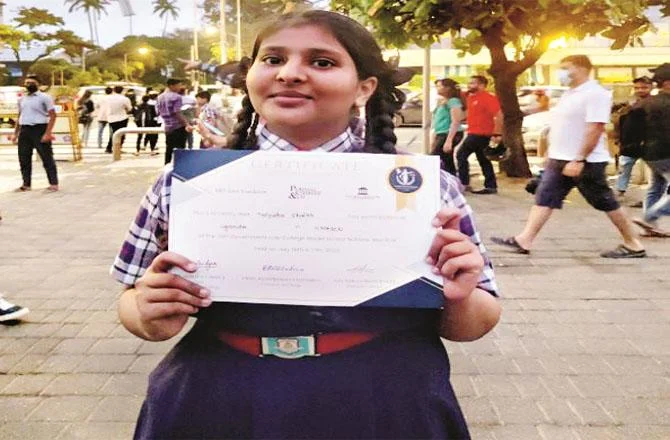
Sheikh Tayyaba Kausar Muhammad Arif, a 16-year-old student from Holy Mother English High School in Malvani in the northern area of Malad in the country’s financial capital, has secured a ₹2 crore scholarship to study at the United World College (UWC) in Singapore, starting August 10. Her achievement has brought immense pride to her family and community.

Tayyaba scored 93% in her SSC exams despite her modest background. Her father is a tailor, her mother a homemaker, and she has two younger sisters. Her disciplined study routine included early mornings and late nights, demonstrating her dedication.

Her journey began in October 2023 with an essay competition, followed by a rigorous selection process and a challenging interview in Pune on January 20. “Without the support from my school and NGOs, the documentation process would have been daunting,” she said.

Principal Rafiq Siddiqui of the Holy Mother School played a crucial role. He recalled how Tayyaba, who had to leave her previous school due to unpaid fees, joined Holy Mother in the sixth grade. “Moved by her determination, we assured her she’d never have to worry about fees again,” he said. NGOs like Smile Foundation and Teach for India also provided vital support.

In an interview, Tayyaba expressed her gratitude: “I thank Allah, my parents, my sisters, my principal, and the NGOs. I am excited to study in Singapore but aim to return and serve my country.”

Tayyaba’s journey from Mumbai’s Malvani to securing a ₹2 crore UWC scholarship is a testament to perseverance, hard work, and community support. Her success is an inspiration, showing that with determination and the right support, anything can be made possible.

source: http://www.clarionindia.net / Clarion India / Home> Editors’s Pick> Indian Muslim> by Team Clarion / August 07th, 2024

Aaqib Khan, Rising Cricket Star from UP, Selected for India ‘A’ Team

Sahranpur, UTTAR PRADESH :

The selection of the young lad from Saharanpur to the national cricket team comes at a time when India is looking to rebuild and experiment with new talent

New Delhi :

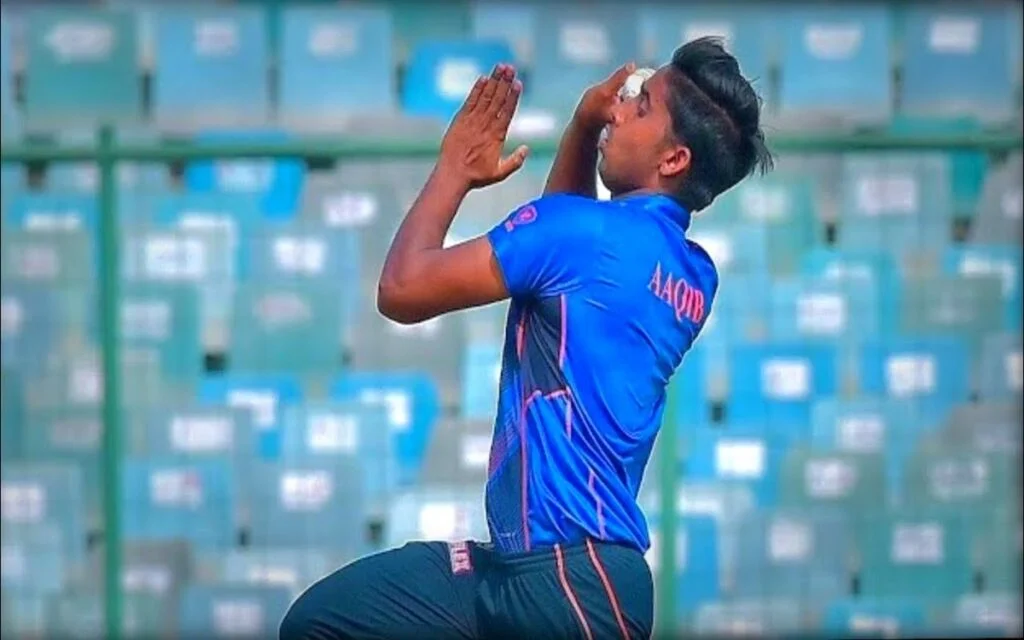
Aaqib Khan, a rising cricketer from the domestic circuit, has earned his maiden call-up to the Indian national cricket team. He has been selected for India ‘A’ team for the forthcoming ACC Men’s T20 Emerging Teams Asia Cup, scheduled in Oman from October 18 to 27.

The selection marks a significant moment in Khan’s career, signalling his emergence as one of the most promising cricketers in the country. Hailing from Saharanpur in Uttar Pradesh, he received recognition for his outstanding performance in the recent Duleep Trophy, during which he claimed eight wickets across two matches.

Aaqib Khan has been a consistent performer in domestic cricket, particularly excelling in first-class and T20 formats. His journey began with the domestic leagues, where he showcased exceptional skills as both a bowler and a batsman. Known for his sharp bowling variations, Khan has been particularly effective in the T20 format, with his ability to adapt to different match situations.

His breakthrough came during the Ranji Trophy, where he played a pivotal role for his team by taking key wickets and maintaining a strong economy rate. His performances did not go unnoticed, and soon he became a sought-after player in the domestic T20 leagues, including the Indian Premier League (IPL), where he was picked by a top franchise. His impressive stint in the IPL, where he played alongside international stars, further solidified his reputation as a bright prospect for the national team.

Khan is primarily known for his fast bowling, with the ability to consistently bowl at speeds exceeding 140 km/h. His control and accuracy in delivering yorkers and slower balls make him a lethal bowler in the shorter formats of the game. In addition, he has demonstrated the ability to swing the ball both ways, making him a potent threat in all conditions. His ability to maintain composure under pressure has been a key factor in his rise to prominence.

As a lower-order batsman, Khan has shown resilience and the ability to contribute valuable runs in crunch situations, making him a versatile all-rounder option for the team. His fitness levels and work ethic have also been highly praised by coaches and teammates alike.

On his selection for the India ‘A’ team, Aaqib Khan, while speaking to the Times of India, said, “I learned about my selection through social media when the squad was announced today. I am extremely pleased to see my name included. I extend my gratitude to the BCCI and the Uttar Pradesh Cricket Association for acknowledging my efforts and providing me with this opportunity.”

The selectors see Khan as a potential game-changer, especially in the T20 and One-Day International (ODI) formats. His inclusion is part of India’s strategy to inject fresh talent into the squad and build a strong, competitive unit for upcoming international tournaments.

Aaqib Khan’s selection is a testament to his hard work, talent, and dedication. As he prepares to don the Indian jersey, cricket fans across the country will be eagerly watching his progress, hoping he can contribute to India’s success on the world stage.

source: http://www.clarionindia.net / Clarion India / Home> Editors’s Pick> Indian Muslim> Sports / by Team Clarion / October 16th, 2024

Worst Indian Muslim Representation in Every Socio-Economic Domain: Book

NEW DELHI :

This is the first time in Indian history since the PMO was set up in 1977 when there is no Muslim representation among its officials.

New Delhi:

Muslims in India have the worst representation in almost every socio-economic domain with no Muslims among 52 officials posted at the Prime Minister’s Office and no minister in the current cabinet, records a book that deals with data.

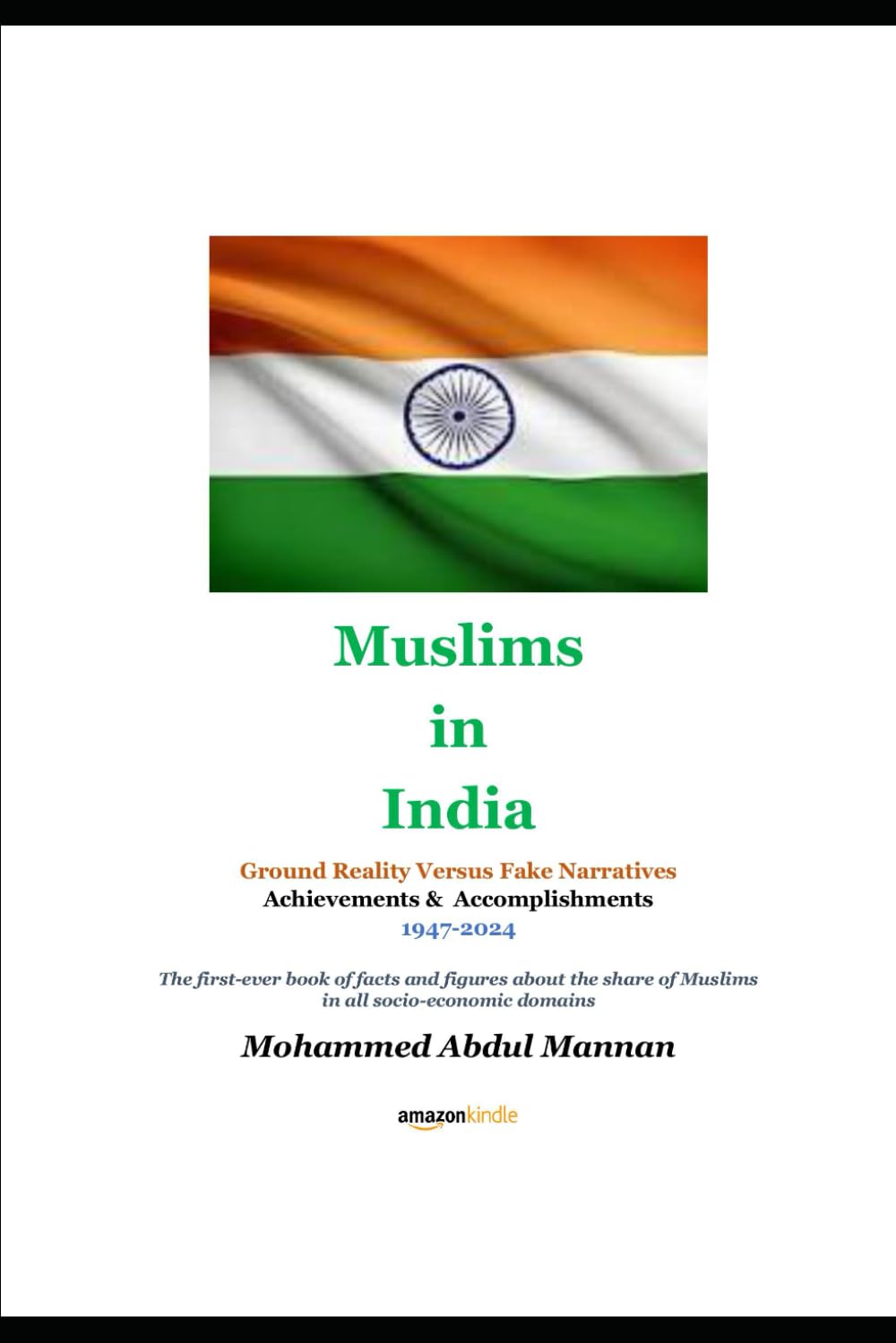
The book titled “Muslims in India – Ground Reality Versus Fake Narratives – Achievements & Accomplishment” written by Mohammed Abdul Mannan gathered the data with regard to the Muslim representation.

“This is history’s lowest-ever representation of Muslims in the Union governance levels,” said the author, who has penned 12 books including the latest “A Nation in Descent – India after the 1990s.”

This is the first time in history since the PMO was set up in 1977 when there is no Muslim representation among its officials. Earlier, the PMO was considered a part of the government in 1961 by the allocation of business rules. PMO was originally set up as the Prime Minister’s Secretariat (PMS) in 1947.

According to the book, there is one Muslim among 115 officials of the Ministry of External Affairs and 49 officials of the Ministry of Cooperation. “The 54 Union Ministries and 93 Departments under their jurisdictions in New Delhi have a total of 11131 officials from the secretary level downwards, of which 178 are Muslims,” noted the book.

Six ministries and 11 departments have no Muslims among the total 506 officials while only two Muslim are higher-ranked secretaries.

When it comes to the political representation, out of 60,693 elected MLAs, 3198 are Muslims, out of 9430 Lok Sabha MPs elected, only 527 were Muslims and of 2176 Rajya Sabha members, 329 were Muslims so far.

The book revealed that only 57 Muslims were appointed governors among 529, out of total 539 chief ministers, only 10 were Muslims and 80 of the total 1919 mayors across the cities were Muslims.

With regard to the Vice Chancellors in the universities, 62 VCs were Muslims among 1017 at the Central Universities while 219 were Muslims among 8633 VCs of the state universities.

721 of the total 13951 District Session Judges were Muslims.

According to the author, life for the 200 million-strong community has remained in a whirlpool of front-paged discrimination in every socio-economic domain since the 1990s. No Muslim representation has existed in the Union government since July 2022, a first in history. Muslims, according to the US-based Council on Foreign Relations (CFR), “face discrimination in employment and education and encounter barriers to achieving wealth and political power”.

According to the book, out of the 4123 Legislative Assembly seats across India, Muslim voters-dominated seats stand at 450. There are 65 seats across 12 states and two Union Territories that have over 25 perc ent Muslim population. As many as 65 seats have over 25 per cent of Muslims voters. Muslim votes decide the outcome in more than 100 assembly constituencies in Telangana and Andhra Pradesh. In Uttar Pradesh, India’s most populous state, 29 districts are Muslim-majority districts with 137 assembly seats. In Madhya Pradesh, the Muslim vote factor is crucial in at least 22 seats. In Gujarat, 17 assembly seats have significant Muslim voters. There are 40 Lok Sabha seats in Bihar out of which on 34 Muslim votes matter.

source: http://www.clarionindia.net / Clarion India / Home> Big Story> India> Politics / by Waquar Hasan, Clarion India / October 18th, 2024

Omar Abdullah sworn in as first chief minister of union territory of Jammu and Kashmir

JAMMU & KASHMIR :

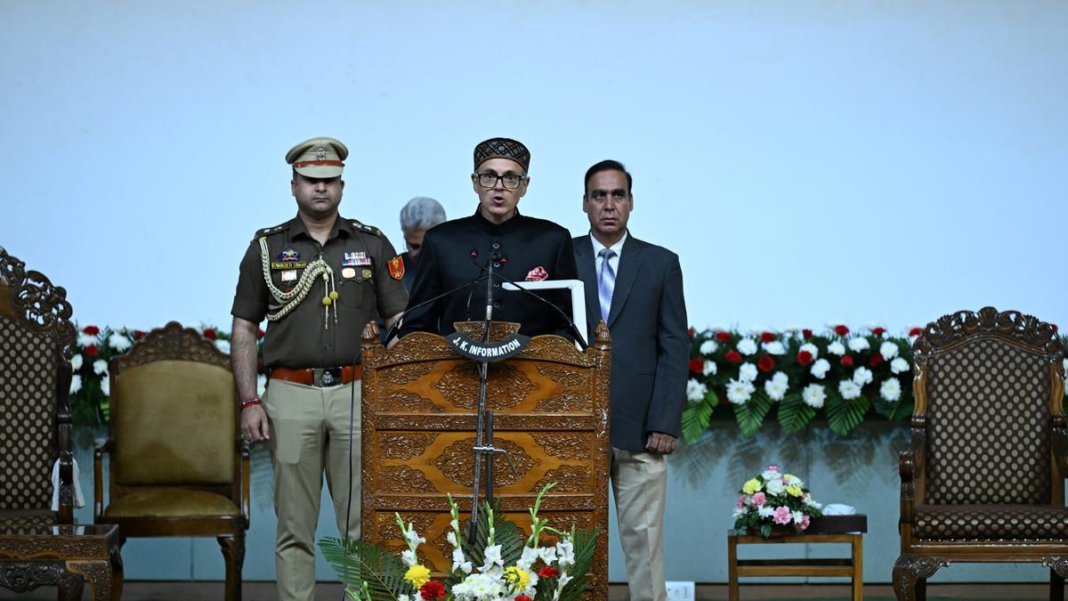
National Conference (NC) leader Omar Abdullah took oath as the first Chief Minister of Jammu and Kashmir since its reorganisation as a Union Territory. The swearing-in ceremony, held at the Sher-i-Kashmir International Convention Centre (SKICC) on the banks of Dal Lake in Srinagar, was administered by Lieutenant Governor Manoj Saxena.

The event marks a significant moment in the political landscape of Jammu and Kashmir, as it comes after a 6.5-year period without a locally elected government. “It is a red-letter day,” said NC spokesperson Imran Nabi Dar, adding, “May God give strength to Omar Abdullah to raise the people’s voice.”

The ceremony saw the presence of several top leaders from the INDIA alliance, including Congress President Mallikarjun Kharge, Rahul Gandhi, Priyanka Gandhi, Samajwadi Party leader Akhilesh Yadav, CPI(M) leader Prakash Karat, CPI leader D. Raja, DMK’s Kanimozhi, and NCP’s Supriya Sule.

Omar Abdullah paid homage to his grandfather, National Conference founder Sheikh Muhammad Abdullah, at his mausoleum before the swearing-in.

Speaking ahead of the ceremony, Abdullah acknowledged the challenges of leading Jammu and Kashmir as a Union Territory: “Being a Chief Minister of a Union Territory is a different matter altogether. It has its own challenges, but I hope this status is temporary.”

Abdullah emphasised that his government’s priority would be to work toward restoring Jammu and Kashmir’s statehood, which was revoked in 2019 following the abrogation of Article 370. He stated, “We look forward to working in cooperation with the government of India to resolve the people’s problems, and the best way to do that is by restoring statehood to J&K.”

The National Conference-Congress alliance secured 48 seats in the 90-member assembly , with NC winning 42 and Congress six. This decisive victory allowed Abdullah to form the government, which comes after Jammu and Kashmir had been under Presidential rule since 2018, following the collapse of the PDP-BJP coalition government led by Mehbooba Mufti.

source: http://www.maktoobmedia.com / MaktoobMedia.com / Home>India / by Maktoob Staff / October 16t, 2024