Monthly Archives: August 2025

Jamaat Expands Interest-Free Finance Network to Boost Economic Stability in Karnataka

Bengaluru, KARNATAKA :
Bengaluru:

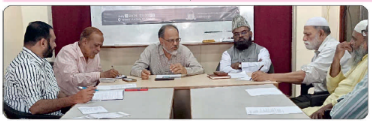
Jamaat-e-Islami Hind (JIH) Karnataka is stepping up its drive to promote economic stability by expanding interest-free financial institutions across the state. At a meeting with Souharda Cooperative Society leaders, JIH Karnataka State President Dr. Belgami Mohammed Sa’d stressed the need to free people from exploitative moneylenders.

Dr. Sa’d outlined plans to set up interest-free cooperative societies in major cities and towns as the first step in a state-wide mission. “Economic stability is a cornerstone of positive social change,” he said, urging community support to replicate the model in more regions.

JIH Karnataka State Secretary Mohammed Yusuf Kanni highlighted the success of existing Souharda Societies. About 18,000 members are part of these societies in Bidar, Kalburgi, Raichur, Ilkal, Bellary, Davangere, Bhatkal, Udupi, and Mangalore. Last year, they handled transactions worth ₹125 crore.

Mr. Kanni announced expansion to Sindhanur, Hubli, Hassan, and Bijapur by March 2026. He said the aim is to give more people access to interest-free finance, promote equitable participation, and reduce reliance on conventional banks.

Mriza Abid Baig Falahi from Jamaat’s Shariah Council recently visited societies in Bidar, Kalburgi, Raichur, Ilkal, and Bellary. His inspection focused on Shariah compliance and staff training in Islamic finance modules like Mudarabah, Musharakah, and Murabaha. “Interest-free finance is an ethical necessity for a just and inclusive economy,” he said.

Prominent members from different districts attended, including Mujtaba Khan from Bidar, Hamza Muazzam from Kalburgi, Imtiaz Baig from Davangere, Nazeer Ahmed Qazi from Bhatkal, and Riaz Ahmed from Koppal. Souharda Societies’ convenor Rafiq Ahmed opened the meeting, focusing on operational expansion, Shariah compliance, and greater community involvement.

The initiative is part of Jamaat’s mission to drive societal reform through ethical measures. By offering cooperative, interest-free finance, it aims to empower individuals, support small businesses, and protect vulnerable people from debt traps.

With planned expansions, JIH Karnataka hopes to build a strong network of Shariah-compliant institutions. Leaders believe sustained community participation will make interest-free finance a widely accessible reality in the state.

source: http://www.radiancenews.com / Radiance News / Home> Latest News> Report / by Radiance News Bureau / August 13th, 2025
“My book is a survival manual for framed, forgotten,” says Kerala Muslim activist acquitted after years in jail

Kozhikode, KERALA :

“We must understand that the political system often frames individuals, and their families suffer for no fault of their own,” reflected Razik Raheem, a Muslim activist in Kerala who spent years in jail under the draconian UAPA before being acquitted.

“For me, my belief kept me strong, and it’s important for the younger generation to be prepared for such injustices.”

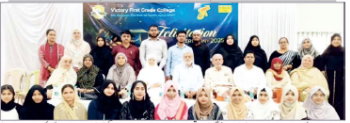
Razik Raheem stood before the gathering at Vidyarthi Bhavan in Kerala’s Kozhikode on Saturday, his words carrying the weight of years spent in prison, of trials both legal and personal, of a fight that never truly ended. The room was filled with activists, students, and community members—some familiar with his story, others hearing it for the first time.

The occasion was the discussion of his recently launched book, Thadavarakkalam (Prison Days), a work he never intended to write.

But something changed. The crackdowns on young activists during the anti-CAA protests, the faces of students and dissenters dragged into police custody, the silence that followed—it all forced him to put pen to paper, Razik told the audience. Thadavarakkalam, a Malayalam book published by Pratheeksha Books, became more than a memoir; it became a guide. A survival manual for those who might find themselves framed, convicted, forgotten.

The event, organized by the Solidarity Youth Movement, was more than just a book discussion. It was an indictment of a system that Razik and others on the stage knew too well.

Faseeh Ahmed, Solidarity Kozhikode’s secretary and a researcher, spoke at length about the book and its political significance. He connected Razik’s ordeal to the broader struggles of political prisoners across India. The Panayikulam SIMI case, once a headline, now a footnote, was revisited.

“We must stand firm in our efforts to provide assistance and ensure these prisoners and their families are not forgotten,” said Thoufeeq Mampad, Solidarity Kerala’s president. He recalled visiting Beeyumma, the mother of Zakariya from Parappanangadi, who had been imprisoned for 16 years and is still in jail under the draconian UAPA, even without trial. There was a reason these stories kept resurfacing—they weren’t over.

Sadiq Uliyil, from the APCR, reminded the audience of the absence of literature documenting the lives of Muslim political prisoners. “In Kerala, which prides itself on political awareness, there is still very little concern for the number of prisoners suffering under oppressive laws,” he pointed out.

Independent researcher Afnan Hussain echoed this, stressing the urgency of writing. “It forces the public to acknowledge the flaws in our justice system and the suffering of countless families.”

The Panayikulam case was a warning, a precedent. In 2006, Razik Raheem and four others—Nizamudeen, Shammas, Ansar, and PA Shaduli—were arrested for allegedly organizing “a secret meeting of the banned Students’ Islamic Movement of India (SIMI).” The state claimed it was a terror gathering. The men, who insisted it was merely a public seminar on the “Role of Muslims in Indian Independence,” were tried under the Unlawful Activities (Prevention) Act (UAPA).

In 2015, an NIA court sentenced Ansar and Razik to 14 years in prison for sedition. The others received 12-year terms. It would take another four years for the Kerala High Court to finally acquit them, ruling that there was no evidence against them. By then, they had already spent years behind bars—years they would never get back.

The book is not about seeking sympathy. It is about recognition, about making sure that when another young activist is thrown into a prison cell, they will know what to expect, the author said. It is about breaking the cycle of silence, he added.

source: http://www/maktoobmedia.com / Maktoob Media.com / Home> Bookshelf / by Muhammed Hisham / February 17th, 2025

Brothers who fought against each other in Indo-Pak battlefield

Rampur, UTTAR PRADESH :

Two brothers Sahibzada Yakub Khan and Yunus Khan

During my childhood, I heard in Deoband that Haji Mastan, a notorious smuggler with the image of Robinhood, had sought permission to shoot a film at Darul Uloom, the famous Islamic educational institution in Uttar Pradesh. The film was based on a touching story of the undivided India and was about a Hindu woman adopting a Muslim child and raising him along with her son.

After the Partition, the Muslim boy migrated to Pakistan. Both boys became pilots in their respective countries’ air forces. They come face to face in the Indo-Pak war of 1965, where their planes collide and both die. The last scene of the film is heart-wrenching—the mother is seen carrying the bodies of both her sons on her shoulders.

I was reminded of this incident when I watched a vlog by retired Pakistani Lieutenant General Amjad Shoaib, in which he shared a true incident.

He told how Sahibzada Yakub Khan, who later became Pakistan’s foreign minister, was wounded by his elder brother, Yunus Khan, on the battlefield, at the hands of a brother.

Sahibzada Yakub Khan was born in Rampur in a Nawabi family. Before Partition, he and his brother Yunus Khan were officers in the British Army. After Partition, Yakub went to the newly created Pakistan, and Yunus stayed in India.

During the first Indo-Pak war of 1948, the two came face to face at the Kashmir border at the rank of Major. During the firing, Yunus Khan shot at a Pakistani officer—when he realised that the man was none other than his younger brother Yakub, he shouted, “Don’t mourn, Chotey (little one). We are soldiers, and we have done our duty.”

When General Manekshaw, a top officer of the Indian Army at the time, learned about this incident, he praised Yunus Khan’s courage and expressed sympathy for Yakub.

Years later, almost 36 years later, the two brothers met at Yakub’s wedding in Kolkata. They hugged and cried—a tearful reunion of brothers separated by war.

This incident makes it clear that questioning the patriotism of Indian Muslims is not only wrong but also unjust. Time and again history has shown—whether it is Brigadier Usman, Param Vir Chakra winner Abdul Hamid, or the Muslim soldiers martyred in Kargil—Indian Muslims have protected the country by putting their lives at stake.

People with fundamentalist ideologies, be they soft or hard, are unable to understand that Indian Muslims were not ‘internal enemies’ even in 1947 and they are not so even today.

They are spreading poison that neither benefits the country nor religion. After all, who would be foolish enough to think himself safe from the fire in his neighbor’s house?

Partition not only robbed Indian Muslims of their leadership but also deprived them of the educated class and family ties. Even today, there are thousands of families divided across the borders, who have not seen each other for years.

Children of Indian-Pakistani origin born in countries like America and Britain also face visa difficulties to meet their grandparents.

Late MP Syed Shahabuddin rightly said, “Indian Muslims are the real casualties of Partition.”

The story of Major Yunus Khan, who was forced to fire at his brother in battle while performing the duty of a soldier, has become a symbol of the complex identity of Indian Muslims and true patriotism. Hundreds of such Muslims have shed their blood for this soil, and this is our proud history.

source: http://www.awazthevoice.in / Awaz, The Voice / Home> Stories / by M Ghazali Khan / May 01st, 2025

Army’s support makes Sheikh Abdul Karim’s life a tad better

Hyderabad, TELANGANA :

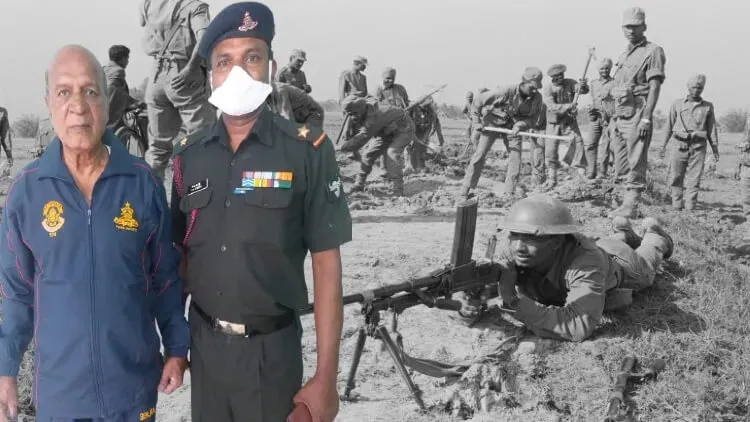
Sheikh Abdul Karim with Subedar Major P K Swami

Sheikh Abdul Karim, the star-soldier of the 1971 India-Pakistan War, is smiling again. The reason for his renewed happiness is the visit of a senior Indian Army officer to his home where he honoured him by presenting him a memento as a token of appreciation of his role in the 1971 war.

He was recently presented a track suit of the Artillery Regiment (Artillery), of which he was once a part; the visitor photographed him in the track suit before presented the same as a memento to him.

He was told that these photographs will be displayed in the regimental centers on the occasion of the Golden Jubilee of the 1971 war when the services of the brave soldiers like him will be recalled and commemorated.

It may be recalled that the media including Awaz-the Voice had highlighted the story of Sheikh Abdul Karim, who was facing extreme financial troubled in the wake of the Covid-induced lockdown.

On the instructions of Colonel Ajay, Commandant of Artillery Regiment, Subedar PK Swami reached the house of Sheikh Abdul Karim. He made him wear the track suit and clicked his picture before presenting the dress to him.

Picking media reports, the Army reconnected with Sheikh Abdul Karim and recalled his services. He was invited to his regiment where he was felicitated and welcomed by the personnel and the officers.

From that day, the Indian army has taken up the task of backing him up in getting all his issues, including non- payment of pension, sorted.

Sheikh Abdul Karim had served in the Army for nine years and participated in the India-Pakistan wars of 1965 and 1971.

In the 1971 war, he was deployed as a wireless operator on the Lahore border. This is the area where Pakistan had entered 10 to 15 km inside the Indian territory and where Havaldar Abdul Hameed destroyed a full fleet of Pakistani Patton tanks and attained martyrdom.

He was awarded the Star Medal in addition to the special award in the 1971 war. His name is also inscribed on the medal.

However, today at the age of 71, he has become an auto-rickshaw driver to support his family. He doesn’t even have a house and lives in rented accommodation.

Abdul Karim served in the army for almost 9 years. Received several medals for outstanding services.

Speaking to Awaz-The Voice, Sheikh Abdul Karim said that Army is in touch with him regarding all his unresolved problems. The army not only encouraged them, but also helped in getting his problem resolved.

Sheikh Abdul Karim had been allotted 5 acres of land in Golapali, by the government for being as ex-serviceman. The land remained was in his name when one dayu he found, the government had reallocated it among seven locals.

After he complained he was allocated five acres of land at the other place. However, the  documents of this allotment are yet to get finalized and reach him. Sheikh Abdul Karim said that the army has taken cognizance of this problem.

Sheikh Abdul Karim also asked the Telangana government to provide him a double bedroom house as he currently lives with his wife in a small rented house.

He expressed happiness on the support provided by the Indian Army.

source: http://www.awazthevoice.in / Awaz, The Voice / Home> Stories / by Sheikh Mohammed Yunus, Hyderabad / November 05th, 2021

Kerala-born entrepreneur Shaikh Mohammed is Kyrgyz major general

Kozhikode, KERALA / KYRGYZSTAN :

Man from Kozhikode left state at young age, visited last in 2007.

Kozhikode:

Kerala-born entrepreneur Shaikh Rafik Mohammed, 42, has been appointed Major General of Kyrgyzstan, in a first for an Indian in the Central Asian country.

Mr Mohammed assumed the prestigious post in the presence of defence minister Ali Mirza at an official ceremony held in Kyrgyzstan. He holds Kyrgyzstan nationality, conferred by former President Kurmanbek Saliyevich Bakiyev, whom he had met in his late-20s while working in Iran.

Mr Mohammed, who heads Gammon Middle East in Saudi Arabia, used to be an adviser to Kyrgistan President and the latest appointment is in recognition of his contributions to the country, sources in Dubai said.

Rafik, known as Rafi here is the son of Late Abdul Hameed and Fathima of Eravannur, 12 km from Kozhikode. He had studied up to Class VII at local AMPL School, Eravannur. According to his sister Rukhiya K.M, Rafik left for Mumbai at the age of 20 and then to Gulf. “We are all elated by his elevation to the prestitgious post. He called us on Saturday and we spoke a lot. Mr Mohammed’s last visit to Kozhikode was in 2007,” Ms Rukhiya told this newspaper. Mr Mohammed, who has an Iranian wife, has made it big from a humble background. His father was a fisherman and struggled to make two ends meet.

Mr Mohammed’s neighbour and distant relative, Mr Azis Master U.P., says he maintains a warm relation with his birthplace. “It was Rafik who gave ’25 lakh for the construction of a madrasa recently. Similarly he will reach out to anyone in time of need,” Mr Azis master said.

Sources said that Mr Mohammad keeps cordial relations with major political leaders of Kerala. He holds Kyrgyzstan nationality conferred by its former President Kurmanbek Saliyevich Bakiyev whom he casually met in his 20s while working in Iran. Later, he became the adviser to Mr Bakiyev.

Dubai reports said Mr Mohammed, after selling the successful project to the Iranian government, went to Kyrgyzstan and presented a similar project to Mr Kurmanbek, then a governor who was preparing to contest presidential elections.

After Kurmanbek won the election, he appointed young Rafik as his chief adviser – a milestone in his career.

He developed wide network of friends in the Central Asian country, which has witnessed a rapid flow of foreign investment and reversal of socialist mode of development to a capitalist mode of production, reports said.

source: http://www.deccanchronicle.com / Deccan Chronicle / Home> Nation / by Amiya Meethal / January 02nd, 2017

1965 War: A Tale of War and Three Brothers

Mangrol (Gandhinagar District), GUJARAT :

About 28 years ago, I learnt one of the most fascinating tales of what military rivalry between India and Pakistan has meant for some families.

At a dinner party in New Delhi, an elegant gentleman walked up to me and asked if I was serving in the Indian Army. My haircut perhaps gave this away, as I answered in the affirmative (I was then an instructor at the Indian Military Academy, Dehradun). When I enquired if he had any military connections, he replied ‘yes’; his two elder brothers had both been officers. To this, my natural response was, “What were their regiments?” He then said with a sad smile, “Let me tell you a story.”
 
And this was the story he narrated to me:

Several years earlier, he had run into the Pakistani military attaché, Brigadier Beg, in India at a circuit house (Dak Bungalow) while driving on the Delhi-Ahmedabad highway. Apparently the attaché had upset him earlier in the day with his lack of road manners, and when informed of the same, to make up, the Pakistani Brigadier invited him for a drink. During the course of their conversation, and on learning that his guest (the gentleman who was narrating the incident to me) was an Indian Muslim, the Pakistani Brigadier said to him that it was only in the 1965 war that he learnt that Muslim officers were also serving in the Indian Army.
 
(The Indian Army’s armoured (tank) units had made substantial gains in fierce battles in the Sialkot sector of Pakistan’s Punjab. Many well known armoured regiments were part of India’s 1st Armoured Division’s thrust lines, such as Poona and Hodson’s Horse, 2nd Lancers, 3rd, 16 and 18 Cavalry. Many thought it was only a matter of time that Sialkot would fall to Indian troops, as Pakistan’s Armoured Division, despite its apparently superior tank units, was in retreat. Pakistan’s commanders desperately needed a tactical break to regain some of the momentum of battle.)
 
It was at this stage of the war—around 8 September 1965—that the Pakistani Brigadier, then a young Lieutenant, was summoned by his Brigadier Commander. He was asked plan and undertake a commando raid that would take him into Indian frontline positions around Sialkot. His task was to eliminate one or more Indian tank commander(s). This would leave that Indian unit briefly without a commander and give Pakistan that brief window of opportunity to break through India’s formidable frontline.
 
So this Pakistani officer (then a Lieutenant, now a Brigadier) set about preparing for the raid, to sneak in amongst Indian tanks, during darkness, and kill an Indian tank commander who was giving Pakistani troops a rough battle. So, on 8/9 September before dawn, Lieutenant Beg sneaked into his target area as Indian tanks were preparing for another day’s battle around Sialkot. (In those days, in the absence of night vision devices, tank battles were largely fought during day light). He soon identified a Squadron Commander’s tank, and climbed atop it unnoticed in the loud roar of tank engines as they were warming up for battle.
 
Peering inside the open cupola, he saw a Major in his radio headset who was poring over his maps, planning for another day’s battle. With no time to lose, Lieutenant Beg shot the Indian Major through the head. But before leaving the wounded Indian officer, Lieutenant Beg decided to take along some proof of having accomplished his mission. He quickly unbuttoned the shoulder flaps of  the Indian Major, and pulled out the cloth epaulets of his ranks from his shoulders. On this was also embroidered ‘16 CAV’, the title of his regiment. And in the breast pocket of the Major, he also found a holy pendant that some Muslims carry on them as a good luck charm. His job done, this young Lieutenant with his raid party then quickly crossed back over into the territory that Pakistani troops were still holding onto, before dawn broke.

Lieutenant Beg then immediately went to see his Brigade Commander, who had sent him on the raid. He met him in the early hours of the morning, where he proudly reported that he had accomplished his mission. His Brigade Commander asked him if he had any proof of it. The young Lieutenant pulled out the epaulettes of the rank badges of the Indian Army Major he had shot, and handed it over to his Brigade commander. Then he suddenly saw the Brigadier become tense. Lieutenant Beg said to the Brigadier that he had possibly killed an Indian Muslim officer, as he handed over the holy pendant he had recovered from the dead Major’s pocket. As an afterthought, he added that he was quite surprised that India’s army also had Muslim officers who were fighting with such commitment and valour against Pakistan.

At that point his Brigade Commander’s hands began to shake and he couldn’t control his emotions any more. His voice became heavy and his eyes filled with tears as he slumped into a chair. Lieutenant Beg asked the Brigadier, with due respect, what the problem was. In a voice choked with emotion, he replied: “Young man, I have just realised from the evidence you have provided that I had tasked you to kill my younger brother.” The Commander kept shaking his head and then went on to add, “I hadn’t the foggiest idea that it was the 16 Cavalry that was directly pitted against us, because Major MAR Sheikh, whom you have just killed, was my younger brother and one of its squadron commanders. And he was their only Muslim officer.” Lieutenant Beg could say little else, as he saluted and took his commander’s leave.

And when Lieutenant Beg finished telling this story to the man who had related it to me, this gentleman told the Pakistani officer, “Brigadier, it may surprise you to know that the two brothers you have spoken about were both older to me… I am the youngest of the three brothers.”

And as the Brigadier stared at him in disbelief, the narrator of this tale requested Brigadier Beg to visit his family home—which was only a few hour’s drive from where they were—to meet his aged mother, who had always wanted to meet someone who had fought against her son! When the Pakistani Brigadier met the old begum the next day (who didn’t know that her son had died of wounds inflicted by the Brigadier), she seemed pleased that the enemy thought well of him!

Records show that Major Sheikh died of wounds in his head sustained in battle near Sialkot on 10 September 1965. He was posthumously awarded the gallantry award of a Vir Chakra. His brother, the Brigadier, rose on to become a General in Pakistan.

source: http://www.openthemagazine.com / Open / Home> Web Exclusive / by Maroof Raza / August 27th, 2015

Interview of A young doctor Mustaqeem Pathan Full Detail Is Here.

Erandol Tehsil (Jalgaon District), MAHARASHTRA :

Interview of A young doctor Mustaqeem Pathan resident of Erandol Tehsil of district Jalgaon, Maharashtra has been selected for the post of Research Officer (Scientist) in CCRUM under the Ministry of AYUSH, Government of India.


The Central Council for Research in Unani Medicine has released the list on june 30 of the candidates,who were selected for the post of Research Officer,in which Mustaqeem Pathan of the historic city of “Erandol” has secured the Class-I Gazetted Post Group-A. This achievement is very important for Mustaqeem as his journey of success has been full of difficulties.

Mustaqeem’s parents worked hard to gave him the jewel of higher education. Mustaqeem’s father was a porter and his mother managed her son’s education by sewing & running the household.


Mustaqeem started his early education from ZP urdu medium School. Mustaqeem Passed 10th and 12th from Anglo-Urdu High School. Later completed his BUMS degree in 2017 from Jamia Akkalkuwa and was topper of the Maharashtra Health University in two subjects.

Musaqeem started his own clinic to ease the burden of financial problems to give comfort his parents. Mustaqeem told, I got an opportunity to serve the people, enthusiastically I practice for one year,but despite this I never feel satisfaction, though i help lots of poor people. I started preparing for PG entrance with passion and to do something more got admission in National Institute of Unani Medicine, Bangalore on the basis of very good All India Rank.

Thoughts of preparing competitive exams comes in my mind when I am in 2nd year of my Medical PG at Banglore. As soon as I finished PG, I started preparing for civil services. I joined Aligad Muslim University (RCA) after qualifying interview but due to some problems I had to come back to my home town.

In an exclusive conversation Dr Mustaqeem Pathan further said, I started self-study again while staying at home. Appeared the prelim exam of UPSC but could not get success with due to few marks only.

Later I moved to Hamdard RCA, Delhi, after discussion to Deputy Director of JHRCA in Hamdard, I joined Liaquat Sahibs private coaching in Batla House Delhi, where i am preparing for the last 7 months. It was from here that I successfully cleared the stages of Asst. Professors exams and the CCRUM exam.

I would like to attribute my success to my parents especially my dear father who passed away a few years ago. It is the result of their hard work that I have reached on this place today.

Interview by,
Akhlaqur Sk, / Career Counsellor, Mumbai / 9967329370 / sakhlaque2@gmail.com

source: http://www.salaampeople.com / Salaam People / Home> Community Round Up / by Akhlaqur Sk

Mumbai Based Social Entrepreneur Dr Syed Ahmad Iqbal founder Chancellor Halima Aziz University, Manipur Honoured at Function in Bhagalpur Bihar

Mumbai, MAHARASHTRA :

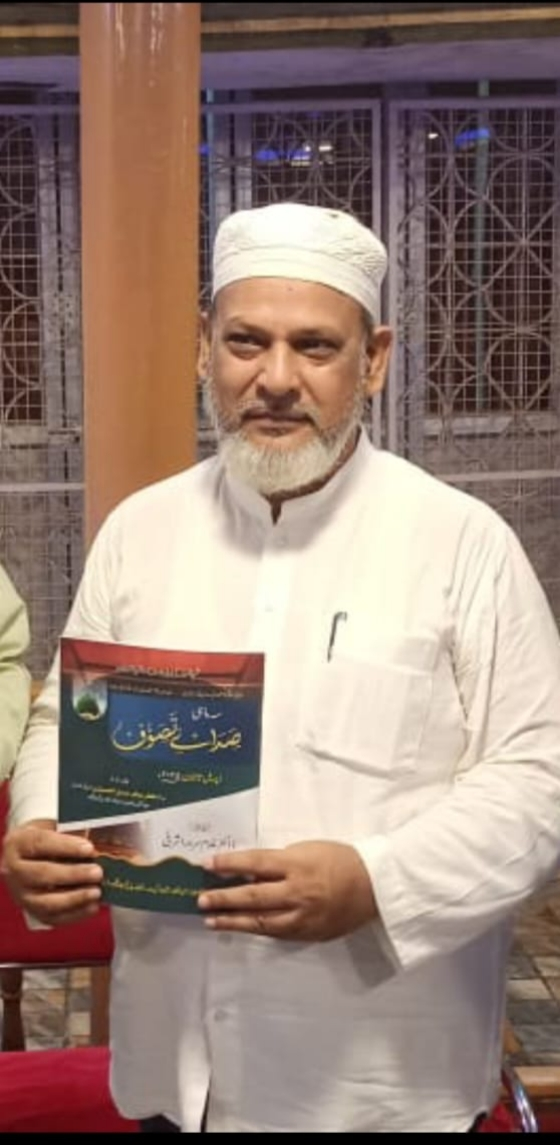
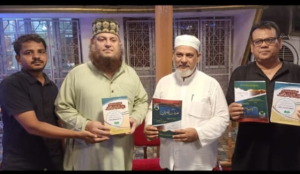
Dr Syed Ahmad Iqbal founder Chancellor Halima Aziz University, Manipur & Goodwill Ambassador Indo Arab Society Mumbai Attended as Guest of Honour Research Book on History of Khanqah Peer Damaria, Bhagalpur,Bihar& Quarterly Magazine Sada-E-Tasawuf in Urdu Language Release function held at Khanqah Peer Damaria,Khalifa Bagh on Wednesday,18th June 2025.

On this Special Occasion Sajjada Nasheen of Khanqah Peer Damaria Syed Shah Fakhre Alam Hasan Mazahari Presided over the function .

Cross section of the Society including Research Scholars, Historians, Educationist and Journalists attended the function and appreciated the welfare Works and Movement and Message for National Integration, communal Harmony, Love and Peace among the Communities from Khangah Peer Damaria, Khalifa Bagh, Bhagalpur.

source: http://www.salaampeople.com / Salaam People / Home> Community Round Up / by Salaam People National Desk

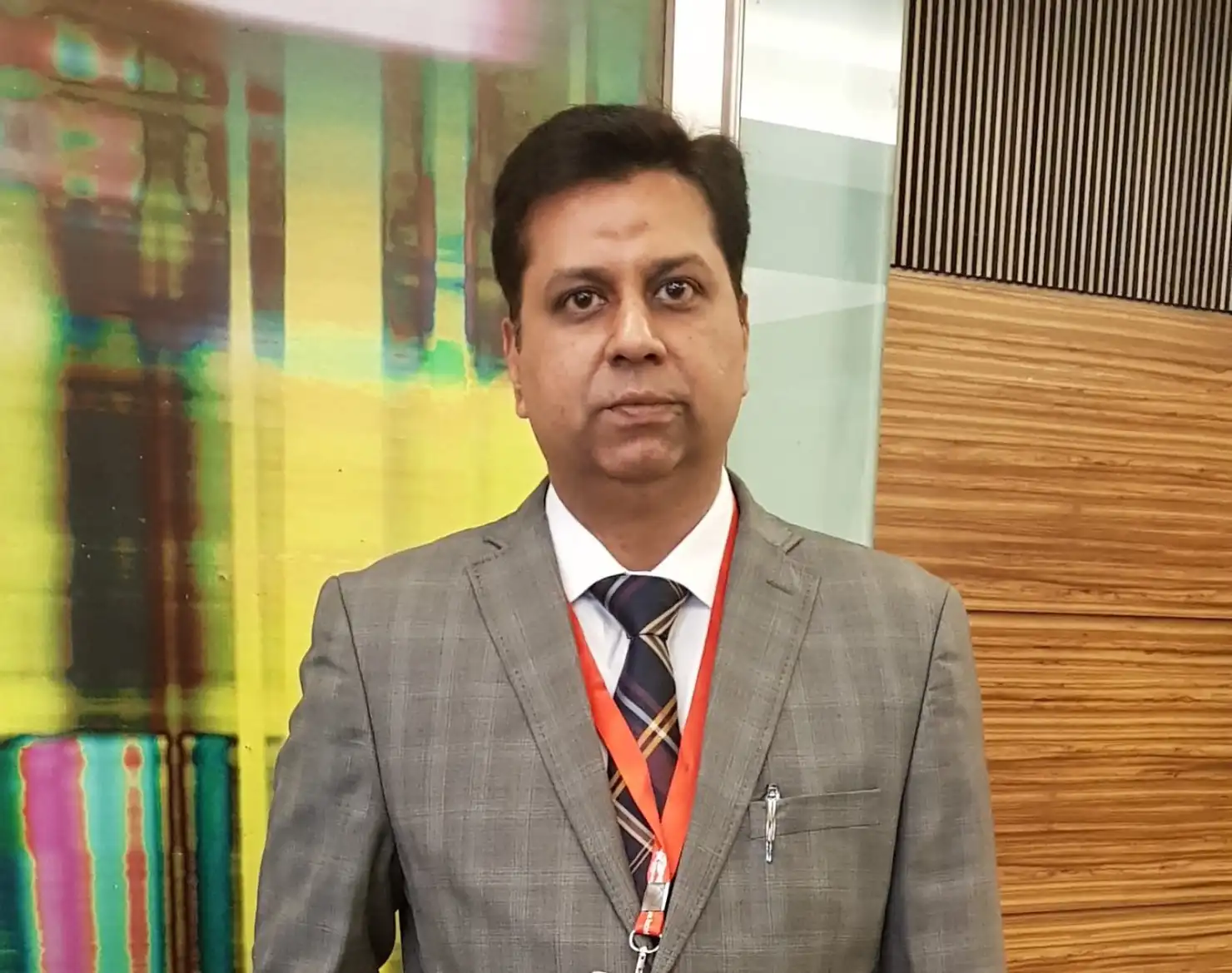
Meet Dr. Sabir Jamal Sayed Mumbai based Dynamic Entrepreneur, Information Technology Consultant and IT Skill development  trainer, read his profile here

Mumbai, MAHARASHTRA :

Dr. Sabir Jamal Sayed call him a dynamic entrepreneur or multi-talented or humble, well the list goes on to describe this human being who has been so selfless towards the society.

Dr Sabir has a passion to serve the community and society. If you look at this simple looking man you might never know that he is an Information Technology Consultant and IT Skill development trainer.

Dr. Sayed also works as Professor at a Business School and also goes as a visiting faculty in other Schools to teach Marketing Management, Information Technology and Digital Marketing to the students under-going Masters In Business Management Program.

In order to give back to the society and to full fill this passion he has been onboard with many Educational and Charitable organizations where he has displayed beautifully his sense of social and moral responsibility by serving the poor and needy at the time of crisis. He is  Vice President at Mumbai Central Residents and Businessmen Association, Managing Committee member Kumbharwada Welfare Trust.

He has also worked in the area of Encouraging Moderate Voices and countering violent extremism online for which he has been selected for  the International Visitors Leadership Program IVLP USA in the year 2017.

Dr. Sabir Sayed is also an officially trained interfaith dialog facilitator. Over and above all this he is Computer Engineer graduated from Birla Institute of Technology and Science Pilani, He has also completed his MBA in Marketing and Ph.D. in digital marketing from University of Mumbai. His entrepreneurial debuts are M/s NexGen Marketing . He is associated in the capacity of Director Computer center with Anjuman-I-Islam and Pir Makhdum Saheb Charitable Trust.

Some social activities under the various NGO are as follows :


Talent, Drawing, Drama and other competitions are held at BMC Schools…
Distributing Cooked Food, Ration, Masks and Sanitizers etc.


During Ratnagiri Flood, They collected three tempos loaded with Clothes, Utensils.


Very often they help the Old age and Widow home people with Food, Gifts, snacks and sweets. At the time of Eid-e-Milad un Nabi they made it a point to distribute snacks and water to the police and other citizens present in the procession.

Organizing election awareness campaign, medical and documentation camps.

Distributing walkers, cycle and other instruments to handicap.

In Ramadan they distribute Ration, Iftari and Eid food packets.

Taking old age people and Yateem (orphan) children for picnic or Dinner to Islam Gymkhana. Organizing Career guidance, education and Job fairs.

Organized Diabietic patients camp.

Organizing Make-up, Cooking and Mehndi classes for the underprivilege children.

Sent Rakhi and National flag to soldiers at border on Raksha Bandhan and Independence day.


Help patients get medicines specially for cancer they also organise Diwali events and the list goes on.

source: http://www.salaampeople.com / Salaam People / Home> My Profile