Monthly Archives: September 2025

Shamsur Rahman Faruqi, My Awe-Inspiring Friend and Father

Prayagraj (formerly Allahabad), UTTAR PRADESH / NEW DELHI :

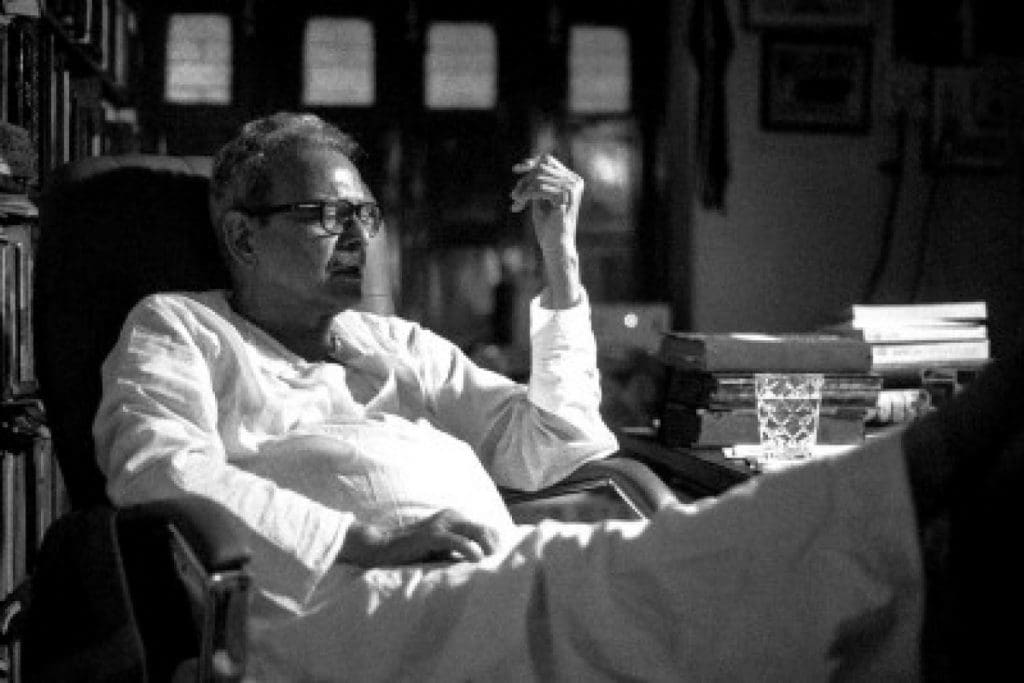
Shamsur Rahman Faruqi with Baran Farooqi. Photos courtesy: Baran Farooqi

Abba was the magician who introduced me to the wide and varied wonders of the world, taught me everything about life and its customs and kept me enamoured of his extraordinary personality. I was awe- struck by his learning, his cool, confident air and the way and adulation he commanded sat comfortably on his shoulders.

And may there be no sadness of farewell 

When I embark;

Alfred Lord Tennyson

Yeh meri akhiri bimari hai (this is my last illness),” spoke Abba with a wry smile on his face. He was addressing Dr Nandani Sharma, a homeopath in Shivalik, Malviya Nagar (New Delhi), whom we were all very fond of and trusted. That evening we had taken him there since he had expressed a desire to actually see her and not consult her over a video call to ask about the chances of curing the fungal infection which had invaded his eye during his stint at Fortis Escorts hospital where he had been hospitalised after having tested Covid positive. None of us had imagined that it was a matter of just a few days before he would be gone, transited peacefully and in full preparation of “seeing his pilot face to face.” Dr Nandani assured him that he still had long to live and accomplish some more as she was confident her medicines would be able to control the fungus. This conversation had taken place in her driveway as Abba was not able to walk since he had returned from hospital and so it was decided that instead of him having to go into her clinic, he would be seated on his wheelchair near the car and she would examine him. We returned upbeat from Dr Nandani’s place but it was as if Abba knew better than Dr Nandani this time. He had been sent the summons and he had answered them with acceptance and great sporting spirit. So, he laughed at our jokes in his weak strength and held out his hands or arms to embrace whenever he saw me or my sister or my daughters enter the room. He would kiss my hands and softly caress my head if he happened to be sitting, bolstered by the electrically operated bed we had arranged, half a dozen pillows and bolsters around him.

Of late, in fact, right from the time he would send voice notes from the hospital, he would often repeat, “I love you” or “know that I love you.” Of course, we had never had any doubts about this ever because Abba was the master of expression. A vocal person, he taught me how I need to say “thank you” even to my own parents if they got me something and to house helps and friends for services rendered or acts of kindness. I once overheard him reproaching my mother for never doing salam to him first when he got home from office or smilingly extending her hand of welcome. Always cheerful and smiling when he came home from office, he expected everyone else at home to be as smiling and welcoming as he was. Each time any of us would enter his room for something, he would beam aaiye aaiye (do come in) and show his pleasure. He used to call me “funny face” sometimes, which didn’t seem very amusing to me but I knew I was supposed to show a sense of humour and not sulk over little things. I finally asked him one day, “Why do you call me funny?” He answered that funny faces are those who are delightful and make him feel happy and full of mirth. Once, when I made him fill out my columns of questions like, who is your best friend, what’s your favourite colour, what are you scared of and so on, (this was a raging activity in my school those days that you took autographs of people in your autograph book for no reason and also made them fill columns which were made in a double page of a register.) I remember almost all his answers to this day but I’ll speak of only a couple, to the question, “If you had a wishing wand, what would you wish me to be?” he had answered “Queen of Sheba.” I immediately understood this is something divinely great and luminous and so on, since I didn’t really know who queen of Sheba was at that time. In the answer to the question, “what are you scared of?” he had answered “centipedes,” making me aware that he was human and vulnerable in his own way.

I have wandered far from what I was initially talking about — his illness and his demeanour during those days. After stretching out his hands and making me sit close, he told me one day that the time for him to leave this world had come and that I should allow him to go. That the ceaseless struggle that we were putting up to withhold him was futile and he was convinced about his departure. He needed to go back to his spacious and open house where his favourite pet dog Bholi and others were, and he wanted the birds to sing near his window before he ceased to breathe. On those nights when he was awake and not faint with weakness, I would sit by him and read out his WhatsApp messages to him and also make him listen to the voice notes people had sent. He chose to respond to one or two voice notes or emails and messages every day. He would speak the voice notes himself and dictate the written messages or emails. He once made me write a mail to CM Naim sahib though there wasn’t one from him that day and also to Frances Pritchett, informing them about his health. One of the voice notes that he sent to Amin Akhtar (a relative of ours who has been assisting him in his library-cum-office and miscellaneous affairs for many years) was about the local graveyard which Abba’s efforts had helped restore and put in order after his return to Allahabad after retirement. He asked Amin to go to my mother’s grave and convey his salam there. He also asked Amin to see if it was still possible if he could be laid to rest right next to her, but in case anyone objected, he reminded Amin, he had chosen a remote corner of the graveyard for himself as a second choice. Amin responded next day tearfully that he had carried out his instructions and that there was no question of anyone objecting to his burial next to his wife. He had written the ayat he would like to be written on his tombstone and given it to Amin many years back already. I felt heart-broken at these conversations but I, too, knew that they must happen and not be left unfinished, for the day of parting may come if it had to, and there was nothing anyone would be able to do about it. 

I marvel at Faruqi’s (as he would like to refer to himself, sometimes  even calling himself “saala Faruqi” or “Fraudie”), courage and foresight for the way he bore his illness. He was also very kind and forbearing towards us, always succumbing to our pleas for making him eat or drink something despite being terribly averse to both ideas. Every time he would ask when we were planning to go back to Allahabad with him, and my sister or I would give a date a week or two away, he would nod patiently and agree. Ever since Ammi passed away, Abba had been careful to hand over all that she had left behind as money or property to both of us, saying this belongs to you both as she was your mother. But when it came to caring for us and endowing us with gifts or maintaining the large house, he acted as the perfect father. Never once did he ask us to bear any financial burden of any kind, be it the property Ammi left behind — he continued to pay property tax for it — or other charities that she was used to doing at her native village. 

Unselfish by nature, and generous towards the world and its people, he once told me that he had spent his life with the aim to be of help to any number of human beings he came across in the journey of his life, particularly during his career in civil service. I have never known or seen, nor do I ever hope to see, another more good-hearted person who is also competent, capable and one of the greatest literary minds of the century. Abba loved exploring new things and enjoy them if the children so wanted. Any new joke, and we wanted to share it with him, a new piece of machinery or a gadget and he would be curious to know about it, any adventurous outing, and he would want to be a part of it. In fact, most of the interesting outings in my and my daughters’ lives were either planned by him or planned for him. It was just last winter that we all went to Kochi together to explore the backwaters of Kerala and spend some part of winter there to avoid the low temperatures up North. As he grew older, he had begun dreading the winters, as they confined him to his room and restricted his hours in the study. There were arrangements to keep his room, his study, and even his bathroom warm, but the cold got to him since he was finicky about wearing “inners” and heavy quilts bothered his frail body with their weight.

Apart from travelling to new places and exploring places of historical interest or natural beauty, Abba had a penchant for stylish and tasteful clothes and good food (which he always ate very little of, but wanted to be served in good quantity). However, he had this little thing in his head about what are supposedly “manly” dishes and which foods are meant to be consumed only by women. Consequently, I never saw him relishing anything even slightly sour. He was supremely dismissive of achar and chutneys or chaat of any kind. Even remotely foul-smelling vegetables were banned in our house, not to speak of home-made sirka or ghee being extracted from malai. I once witnessed a bitter exchange he had with my mother for having gotten mooli achar prepared in the courtyard of our house. This was even worse than cooking sabzi out of the mooli! Like any other subversive spouse, Ammi would sneak such things into the house and eat them secretly when he was in office. 

Abba was a great animal lover, too. As children, having animals and birds around us was as natural as breathing and it must never have occurred to us that in the eyes of the world, we qualified as “animal lovers.” At any given time in our lives, there were always dogs, cats, turtles, mynahs, peacock chicks or grown peacocks, pigeons, partridges, quails and finches and other singing birds. Abba would often send a tid-bit or two to his pets (I said “send” because the house was really so huge in area that things had to be delivered from one place to another) and tell the person he had chosen for the task, “greet him with my salam and say that Faruqi sahib has sent this. We knew a lot about birds, which ones could be tamed or caged and which couldn’t be bred in captivity. He also had a collection of coffee-table type books on birds and animals and some of the exciting times of my childhood were certainly made of browsing through those books. Sea creatures like starfish, octopus or dolphins intrigued me greatly and I was enamoured by pictures of the mighty ocean. I longed for a trip to a coastal town but my wish was deferred for quite some time as my parents had already been to places like Bombay and Calcutta many times and were more focussed on the hills or animal and bird sanctuaries. 

Abba played his favourite musical records of ghazals and classical ragas in the mornings which were spent enjoying three to four cups of bed tea. The tea, which would be brewed in an elegant tea pot and had a bitter aroma, would cool gradually as he read the morning papers. The music would continue to play up until he was almost ready for breakfast. Gradually though, I, too, developed a taste for singers like Farida Khanum, Iqbal Bano, Mehdi Hassan, Kishori Amonkar, and artists like Hari Prasad Chaurasiya, Ustad Bismillah Khan and other such maestros. My sister and I were also subjected to regular doses of mushairas and seminars which we had to duly attend along with our parents; I was still wearing frocks at that time. By the time I grew up, I had sat on the laps of many a great Urdu writer, poet or artist. I grew particularly familiar with Naiyer chacha (Naiyer Masud), Shamim chacha (Shamim Hanfi), Shahryar chacha and Balraj Komal uncle. The critic Khalil-ur-Rahman Azmi was someone I don’t clearly remember but I recall Abba grieving over him so much that Ammi had to chide him about moping a couple of times.

Abba was the magician who introduced me to the wide and varied wonders of the world, taught me everything about life and its customs and kept me enamoured of his extraordinary personality. I was awe- struck by his learning, his cool, confident air and the way and adulation he commanded sat comfortably on his shoulders. He lived a life of grace and élan. Once, when on one of our usual summer holiday road trips, when we were touring Uttar Pradesh and Himachal, there was an incident which impacted me for the rest of my life. It so happened that the road we were on was broken severely, blocked, you may say, so Abba decided to take a detour through another path, which was on the lower side of the road, beside the fields. It was a water-logged path but he estimated that our Ambassador car would be able to successfully wade through it. But to our chagrin, the car got stuck in the slush beneath and water began to enter the car at a high speed! The car seemed to be floating in the water, I began to bawl loudly saying, “Hum doob jayenge, hum doob jayenge, (I’m going to drown, I’m going to drown).” I got one of the most unexpected and loud scoldings of my life from him at that time, “Abey tu apne liye ro rahi hai sirf! Aur baqi tere ma baap aur behen? (Stop crying and saying such a selfish thing! Why are you worried about only yourself drowning and not your parents and your sister?)”. I wiped my eyes and looked at him, bewildered. It was a lesson I have remembered to this day — unselfishness and courage. 

So close, so friendly and participative and yet so distinguished and awe-inspiring! They don’t make men like you any longer, Abba. I conclude my piece again from the poem quoted above. Abba would sometimes teach us English poetry, too, apart from Urdu and Persian. Abba had read out the poem to me many, many years ago and explained it to me. Alfred Lord Tennyson’s “Crossing the Bar” was one of his top favourite poems of the English language. I remember his voice almost choking at the sombre grandeur and sonority of the poem:

For tho’ from out our bourne of Time and Place

The flood may bear me far,

I hope to see my Pilot face to face

When I have crost the bar.

Perhaps, the very same lines were echoing in his mind when he breathed his last, in full control of his senses, aware and courageously ready for the journey across.

source: http://www.thepunchmagazine.com / The Punch Magazine / Home> Non fiction – Essay / by Baran Farooqi / February 28th, 2021
Padshah of Urdu; People mourn death of Shemsur Rehman Faruqi

Prayagraj (formerly Allahabad), UTTAR PRADESH :

Legendary Urdu poet and critic Shamsur Rahman Faruqi passed away on Friday at his Allahabad home, a month after recovering from COVID-19.

His daughter Mehr Farooqi tweeted about her father’s demise: “We reached Allahabad and father transitioned peacefully,” she wrote.

“It’s not just the world of Urdu, I feel I’ve been orphaned again,” historian Rana Safvi sent her condolences.

Writer and historian William Dalrymple took to Twitter to mourn the demise of Faruqi, calling him “one of the last great Padshahs of the Urdu literary world.”

Sanjiv Saraf, the founder of Urdu festival Jashn-e-Rekhta, also condoled the death of “the century’s most iconic figure in the realm of Urdu literature”.

“His demise has left us bereaved as an entire generation of literature lovers mourn this loss. I extend heartfelt condolences to his family and loved ones,” Saraf said.

“Shamsur Rehman Farooqui’s demise is a big loss to the world of scholarship, and adab. His work built many bridges across India’s diverse traditions. He was immensely valuable to us in so many ways and will be sorely missed, ” said CPIM general secretary Sitaram Yechury.

“Am just gutted. Shamsur Rehman Faaroqui saheb has passed away. Innalillahi wa inna ilayhi rajeeon. May allah grant him jannat..aameen,” wrote journalist Rana Ayyub.

“His modernist style had irked the traditionalists and contemporaries in the sixties, seventies. But he wasn’t just a critic and theorist, whenever he took to fiction, he created magic. And, his Allahabad home had been the nucleus of Urdu literary world, for over half-a-century,” wrote journalist Shamsur Rehman Alavi in a condolence note.

Legendary

A profile of his on Caravan Magazine alluded to his immense and immeasurable contribution to Urdu literature.

Shemsur Rehman began writing in 1960. Initially he worked for the Indian postal service (1960–1968), and then as a chief postmaster-general and member of the Postal Services Board, New Delhi until 1994. He was also editor of his literary magazine Shabkhoon and part-time professor at the South Asia Regional Studies Center at the University of Pennsylvania.

An expert in classical prosody and ‘ilm-e bayan (the science of poetic discourse), he has contributed to modern literary discourse with a profundity rarely seen in contemporary Urdu critics. His most recent books, The Mirror of Beauty (translated into English from the Urdu Kai Chaand The Sar-e-Aasmaan in 2006), and The Sun That Rose From The Earth (Penguin India, 2014), have been highly critically acclaimed. He is the recipient of numerous honors and awards. Most recently he was awarded the prestigious Saraswati Samman for his work She`r-e Shor-Angez, a four-volume study of the eighteenth-century poet Mir Taqi Mir.

He was awarded the Saraswati Samman, an Indian literary award, in 1996. The Government of India awarded him the civilian honour of Padma Shri in 2009.

source: http://www.maktoobmedia.com / Maktoob Media / Home> India / by Maktoob Staff / September 25th, 2020

Rakhshanda Jalil Defends Urdu as a Shared Indian Heritage in her new Anthology

NEW DELHI :

New Delhi:

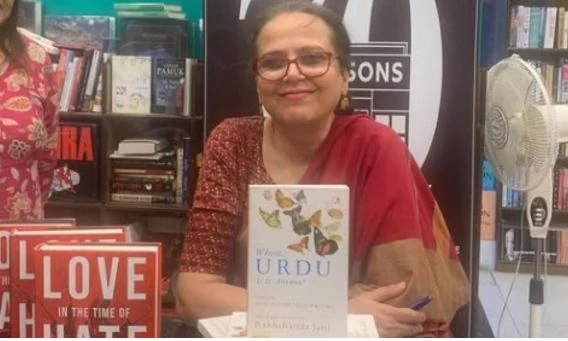
Literary historian Dr Rakhshanda Jalil has once again reminded Indians that Urdu is deeply rooted in the country’s soil and belongs to all communities, not only Muslims. In a detailed interview with the Indian Express about her new anthology Whose Urdu Is It Anyway?, Jalil traced the rise, decline, and contested identity of Urdu in modern India.

She explained that Urdu developed through centuries of cultural exchange, drawing from Persian, Arabic, Turkic, and local dialects, and eventually became the lingua franca of North India. From courtrooms to markets, it was a language spoken across caste and creed. Yet, political movements in the early twentieth century began to link Hindi with Hindu nationalism, sidelining Urdu and associating it exclusively with Muslims.

Jalil underlined how Partition worsened this perception. With Pakistan adopting Urdu as its national language in 1947, Urdu was treated as “enemy property” in India. This shift, she argued, accelerated the decline of Urdu and restricted its public identity. Today, while the government occasionally honours Urdu writers, stereotypes and misinformation continue to reduce Urdu to a religious marker rather than a shared cultural heritage.

Her anthology features sixteen short stories by non-Muslim Urdu writers such as Krishan Chander, Rajinder Singh Bedi, and Gulzar. The collection challenges the misconception that Urdu belongs only to Muslims. Jalil believes that Urdu is “as Indian as anybody or anything can be regarded as Indian” and insists that the language is willing to belong to anyone who values it.

Despite fears about its future, she remains optimistic. Urdu continues to thrive in poetry, Bollywood lyrics, and growing digital platforms. While fewer people read its script, its cultural resonance persists. Echoing Manto, Jalil recalled his words that no human effort can kill a language. Urdu, she said, will remain part of India’s consciousness for years to come.

Dr Rakhshanda Jalil is a noted literary historian, translator, and cultural commentator with over 25 books to her credit. She is widely recognized for her work on Urdu literature and the Progressive Writers’ Movement.

source: http://www.radiancenews.com / Radiance News / Home> Arts & Culture> Focus> Report / by Radiance News Bureau / August 29th, 2025

Mumbai Youth Congress gets its first woman president in Zeenat Shabrin

MAHARASHTRA :

Mumbai Youth Congress member Zeenat Shabrin

Mumbai :

Mumbai Youth Congress member Zeenat Shabrin has been elected the new president of the outfit, becoming the first woman to hold the post after securing the highest 10,076 votes in the recently concluded organisational elections.

The elections for office-bearers in the Congress’s youth wing in Mumbai were conducted between May 16 and June 17 with nine candidates in the fray for the president’s post. The results were announced on Sunday with Shabrin, who secured the maximum 10,076 votes, emerging victorious, a party press release said on Monday.

Indian Youth Congress (IYC) office-bearers are chosen through internal elections rather than nominations.

Shabrin, who hails from a non-political background, said under her leadership, the Congress wing try to become the voice of Mumbai’s youth.

The party statement quoted her as saying, “The Indian Youth Congress has given me, a person from a non-political background, a platform. I thank the Indian National Congress, the Mumbai Congress, the Maharashtra Congress, and the Mumbai Youth Congress family for their guidance and trust. We will work to become the voice of Mumbai’s youth.”

The organisation would continue to fight under the leadership of Congress MP Rahul Gandhi and IYC national president Uday Bhanu Chib to strengthen the outfit and safeguard democracy and the Constitution, she asserted.

source: http://www.awazthevoice.in / Awaz, The Voice / Home> Sports / by PTI / posted by Vidushi Gaur / September 22nd, 2025

Kashmiri MMA fighter Owais Yaqoob wins international championship

Muran Village (Pulwama District), JAMMU & KASHMIR :

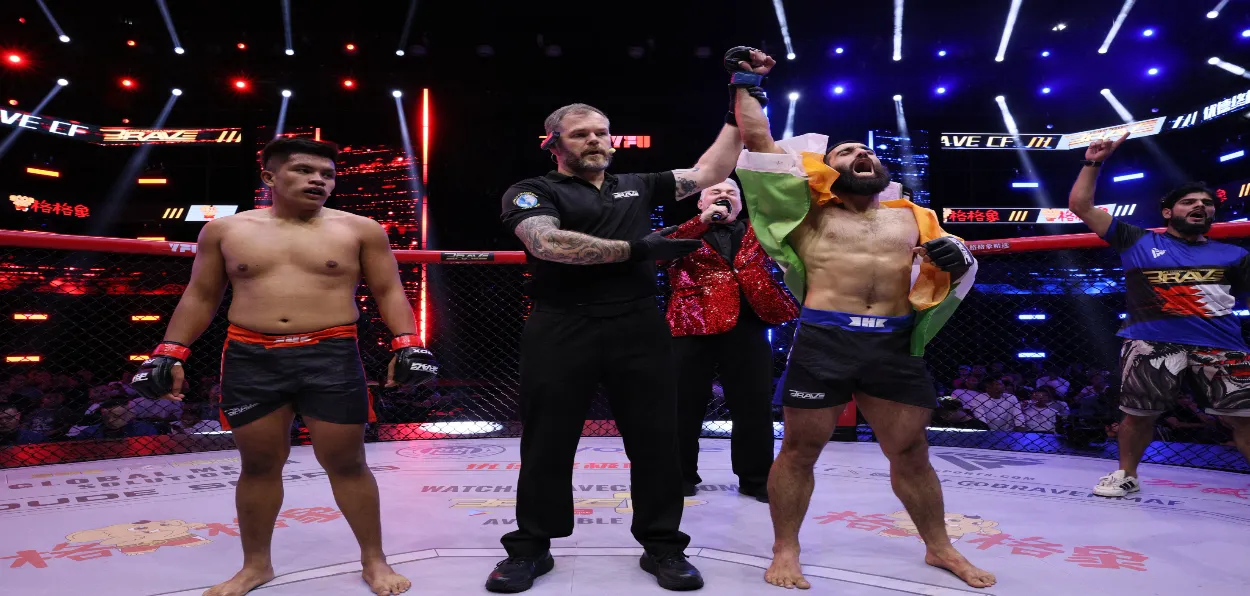
Owais Yaqoob’s moment of victory at Guangzhou, China

New Delhi :

Owais Yaqoob, a 26-year-old mixed martial arts (MMA) fighter from South Kashmir’s Pulwama district, registered a win at an international competition in China by defeating Ian Paul “Choco” Lora of the Philippines, on Friday

He was fighting under the Bahrain-based BRAVE Combat Federation in China’s Guongzhou.

Born in Muran, a village surrounded by apple orchards, some 6 km from Pulwama town,  Owais has been active in sports since his childhood.

Just 3 minutes and 6 seconds into the match, Owais secured a takedown and then landed a barrage of powerful punches, knocking him to the ground. Lora surrendered and tapped out. This victory represented more than just winning a match for Owais. It was a dream come true, a dream that had come true after years of hard work, struggle, and dedication.

Owais Yaqoob began his martial arts journey in 2013 with taekwondo. Over the next ten years, he won 11 national gold medals, 6 silver medals, and 17 state-level titles. Owais’s exceptional performance earned him the titles of “Champion of Champions” and “Best Fighter Boy” in 2018.

In 2022, Owais participated in the WEKAF World Championships held in the Philippines, where he won a bronze medal and represented India in Filipino stick fighting (Eskrima). This performance established him as a world-class martial artist.

Owais’s inspiration for MMA came after watching a match featuring UFC superstar Khabib Nurmagomedov in 2018. Owais was determined to pursue a career in the sport. Before entering the world of professional MMA, Owais also won three national amateur MMA titles.

Owais shared his bout on X:

He made his professional debut in 2023 and defeated Mohammed Azim Mokhlis by unanimous decision in March 2024. He then defeated Shetty Pratik Sadashiv by technical knockout (TKO) in April 2024. His professional record now stands at 3-1.

Owais had, for some time, deviated into stone pelting but was counseled and brought back into the mainstream, and today is an example of how positivity can change lives in Kashmir.

According to Kashmir media, his victory was celebrated in his village, where people visited his home to congratulate his parents. Friends and family celebrated his victory by distributing sweetmeats.

“His victory shows what Kashmiri fighters are capable of on the international stage,” said Waseem Ahmad, an athlete from Pulwama.

Rouf said the win has strengthened his brother’s resolve to push forward. “Every fight is a test. It will embolden him to train harder and prepare for bigger challenges ahead,” he added.

His achievement has sparked interest among youngsters in Pulwama, many of whom now aspire to pursue MMA professionally.

source: http://www.awazthevoice.in / Awaz, The Voice / Home> Sports / by Aasha Khosa / September 21st, 2025

Writer Banu Mushtaq Inaugurates Dasara Festival In Mysuru

KARNATAKA :

BanuMushtaq was accompanied by Chief Minister Siddaramaiah, several ministers in the state cabinet, among others.

Banu Mushtaq inaugurated the Mysuru Dasara festival.

Mysuru :

The famous Mysuru Dasara festival commenced in the city and palaces on Monday with religious and traditional fervour, with International Booker Prize-winning writer Banu Mushtaq inaugurating the festivities.

Banu Mushtaq inaugurated the festivities during the auspicious “Vrushchika Lagna” by showering flowers on the idol of goddess Chamundeshwari, the presiding deity of Mysuru and its royals, amid chanting of Vedic hymns by priests, at the premises of Chamundeshwari temple atop the Chamundi Hills here.

Celebrated as ‘Nada Habba’ (state festival), the 11-day Dasara or ‘Sharan Navaratri’ festivities are expected to be a grand affair this year, showcasing Karnataka’s rich culture and traditions, coupled with reminiscence of royal pomp and glory.

In the inaugural event, Banu Mushtaq was accompanied by Chief Minister Siddaramaiah, several ministers in the state cabinet, among others.

Earlier, Banu Mushtaq, along with Chief Minister and other dignitaries, visited the Chamundeshwari temple and offered prayers to the goddess, referred to as the “Naada Devate” (state deity), ahead of the inaugural. 

(This story has not been edited by NDTV staff and is auto-generated from a syndicated feed.)

source: http://www.ndtv.com / NDTV / Home> News> India News / by Press Trust of India / September 22nd, 2025

Ghiasuddin Babukhan’s legacy: building institutions, empowering lives

Hyderabad, TELANGANA :

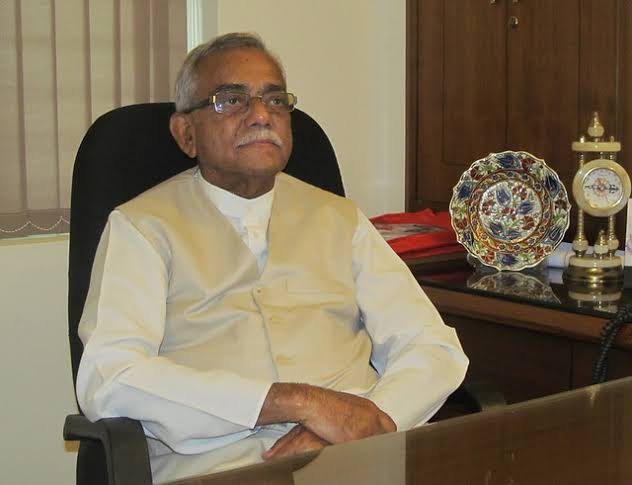
Ghiasuddin Babukhan, one of Hyderabad’s most respected builders, philanthropists, and educationists, died Monday at 83. He is survived by his wife, three sons, and a daughter.

Known for his compassion, Babukhan leaves behind a legacy that bridged stone and society — architectural heritage inherited from his father and a philanthropic network of his own making.

He was the son of Khan Bahadur Abdul Karim Babukhan, a legendary builder who left an indelible mark on India’s architectural history. Abdul Karim Babukhan’s construction empire produced some of the most celebrated structures of the 20th century, including the Arts College at Osmania University, the Hyderabad House in New Delhi, and the Kadam Dam in Nirmal, then in Adilabad district.

Ghiasuddin inherited not just this construction legacy, but also the conviction that enterprise must serve society. In the early 1990s, he shifted decisively from business to social service. In 1992–93, he founded the Hyderabad Zakat and Charitable Trust (HZCT), creating a structured and transparent system of charitable giving. For him, philanthropy was not about token donations but about building institutions that could sustain dignity and hope for generations.

The trust focused primarily on education, which Babukhan believed to be the most powerful tool for empowerment. Its annual scholarship program for orphans became one of its most impactful initiatives. For more than a decade, over 10,000 orphaned students across Andhra Pradesh and Telangana pursued education with dignity through these scholarships. Many went on to become doctors, engineers, teachers, and entrepreneurs — living proof of Babukhan’s belief that charity must enable, not merely provide.

Unlike many who confined themselves to charity within their community, Babukhan’s work cut across religious and social lines. He was committed to humanitarian relief, healthcare support, and the preservation of Hyderabad’s plural cultural ethos. His schools, social programs, and charitable initiatives reflected an inclusive philosophy rooted in compassion, justice, and service.

“The passing of Ghiasuddin Babukhan is a great loss for Hyderabad. He was a dedicated philanthropist whose efforts in educating the poor will be remembered. My condolences to his family and friends. May Allah grant him maghfirah and patience to his loved ones,” Hyderabad MP Asaduddin Owaisi said in an X post.

Jamaat-e-Islami Hind president Syed Sadatullah Husaini called him a “true champion of education and a benefactor to the Muslim community.” In a post on X, Husaini said Babukhan’s contributions through the Hyderabad Zakat and Charitable Trust transformed the lives of thousands and would be remembered for generations.

“He was a true champion of education, a liberator of the marginalised, and a benefactor of the Muslim community — an embodiment of the noble spirit of zakat and compassion. Through his philanthropic initiatives, he played a pivotal role in the educational upliftment of the Ummah, poverty alleviation, relief work, and community development,” Husaini wrote.

source: http://www.maktoobmedia.com / Maktoob Media / Home> India / by Maktoob Staff / August 26th, 2025

KEF Holdings’ Meitra Hospital joins KKR’s healthcare platform in India

Kozhikode, KERALA :

Kozhikode:

KEF Holdings, a diversified conglomerate with interests in manufacturing, healthcare, and wellness, has announced that Meitra Hospital, its flagship healthcare institution in Kozhikode, will join the pan-India healthcare platform of funds managed by global investment firm KKR.

The collaboration marks a major milestone in Meitra’s growth journey, aiming to strengthen its mission of delivering world-class healthcare to patients, professionals, and communities across India.

Founded in 2012 by entrepreneur Faizal Kottikollon, Meitra Hospital is JCI-accredited and designed to meet international standards. The hospital spans 450,000 sq. ft, featuring 220 individual patient rooms and suites, eight advanced operation theatres, and 52 intensive care units, supported by cutting-edge medical diagnostics and clinical facilities benchmarked against leading global hospitals.

As part of its expansion plans under the partnership, Meitra will establish a state-of-the-art Oncology Centre and increase its capacity by adding new hospital beds and ICUs, addressing the rising demand for specialized and comprehensive healthcare in South India.

Faizal Kottikollon will continue to serve as Chairman of Meitra Hospital, ensuring continuity of leadership and vision.

Commenting on the development, he said: “Meitra Hospital was founded with the dream of bringing the world’s best healthcare practices and infrastructure to Kozhikode. This strategic partnership with KKR’s healthcare platform will enable us to accelerate that vision, expand our capabilities, and deliver even greater value to the communities we serve. Together, we are building a future-ready healthcare institution for India.”

source: http://www.english.varthabharati.in / Vartha Bharati / Home> India / September 22nd, 2025

Hyderabad Banker Hafiz Syed Musa Kaleem Falahi Honoured with Global Islamic Finance Award in Malaysia

Hyderabad, TELANGANA :

Kuala Lumpur:

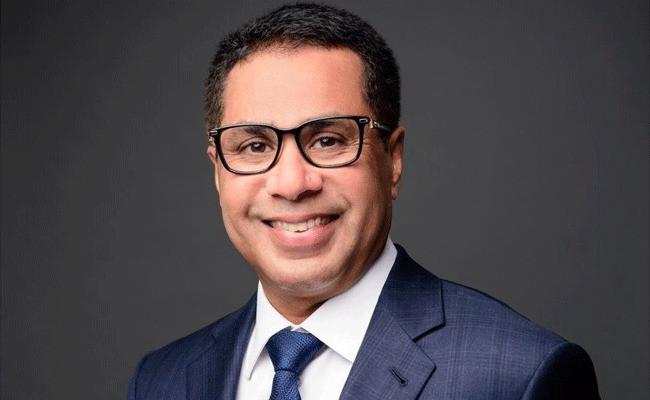
Hafiz Syed Musa Kaleem Falahi, an Islamic finance expert from Hyderabad, has been honoured with the Global Islamic Finance Award 2025 at the Global Islamic Finance Summit held in Kuala Lumpur. The award was presented by former Maldivian President Mohamed Waheed Hassan.

The summit was attended by Malaysian Prime Minister Anwar Ibrahim, Deputy Prime Minister Ahmad Zahid Hamidi, and several global dignitaries, alongside leading figures from the international Islamic banking and finance sector. Organised annually by the International Islamic Finance Committee, the summit recognises outstanding contributions in advancing Islamic banking and financial services worldwide.

Falahi, who currently serves as Chief Business and Investment Officer at Siraj Finance in Abu Dhabi, brings over two decades of experience in Islamic banking. He has played a pioneering role in developing Islamic financial products across retail, small, and medium enterprise sectors. Previously, he served as President and CEO of the Islamic Bank of Afghanistan, where he established institutions across major cities, and has also been associated with Dubai Islamic Bank.

Son of the late Maulana Syed Yusuf, former Secretary of Jamaat-e-Islami Hind, and Editor Radiance Viewsweekly, Falahi is recognised as one of South Asia’s leading Islamic finance professionals. The Kuala Lumpur summit also saw participation from prominent figures such as Sheikh Ebrahim bin Khalifa of Bahrain. Leaders at the event emphasised the critical role of Islamic banking in guiding the Muslim world toward sustainable economic development.

source: http://www.radiancenews.com / Radiance News / Home> Pride of the Nation> Awards> Latest News / by Radiance News Bureau / September 18th, 2025

AMU Students Win Top Honours at National Practicum Competition in Delhi

Aligarh, UTTAR PRADESH :

Aligarh:

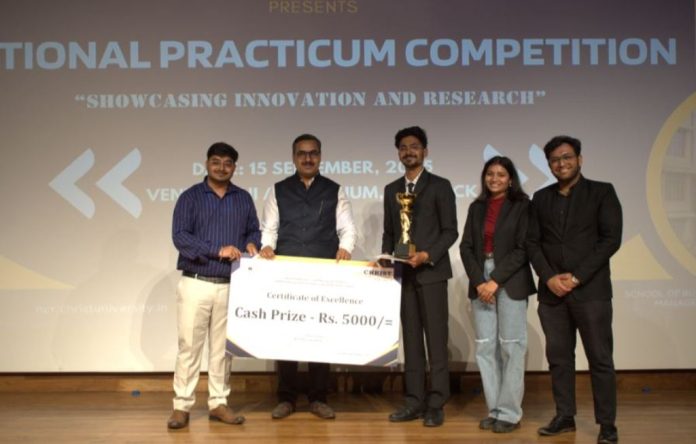
Students of the Department of Business Administration, Aligarh Muslim University (AMU), showcased their talent at the National Practicum Competition organised by Christ University, Delhi.

A six-member team, led by Chairperson Prof. Salma Ahmed, represented AMU in the competition. The participants included Safdar Khan (Travclan), Arsalan Haq (IMCS), Manaal Tehsin (TeleCRM), Arham Ullah Khan (Powergrid), Mohd Arish (ITC), and Mohd Adam (ITC). Each student presented their summer internship work before a panel of experts and an audience comprising students and faculty from institutions across the country.

The event turned into a proud moment for AMU as its students secured both the first and second prizes. Safdar Khan won the first prize for his presentation based on his internship at Travclan, while Arsalan Haq earned the second prize for his internship work with IMCS.

Prof. Salma Ahmed congratulated the winners and praised all participants for their efforts, assuring continued support for students to take part in similar competitions. She said the recognition highlighted the department’s commitment to providing strong academic and practical exposure.

source: http://www.radiancenews.com / Radiance News / Home> Latest News >Markers of Excellence / by Radiance News Bureau / September 20th, 2025