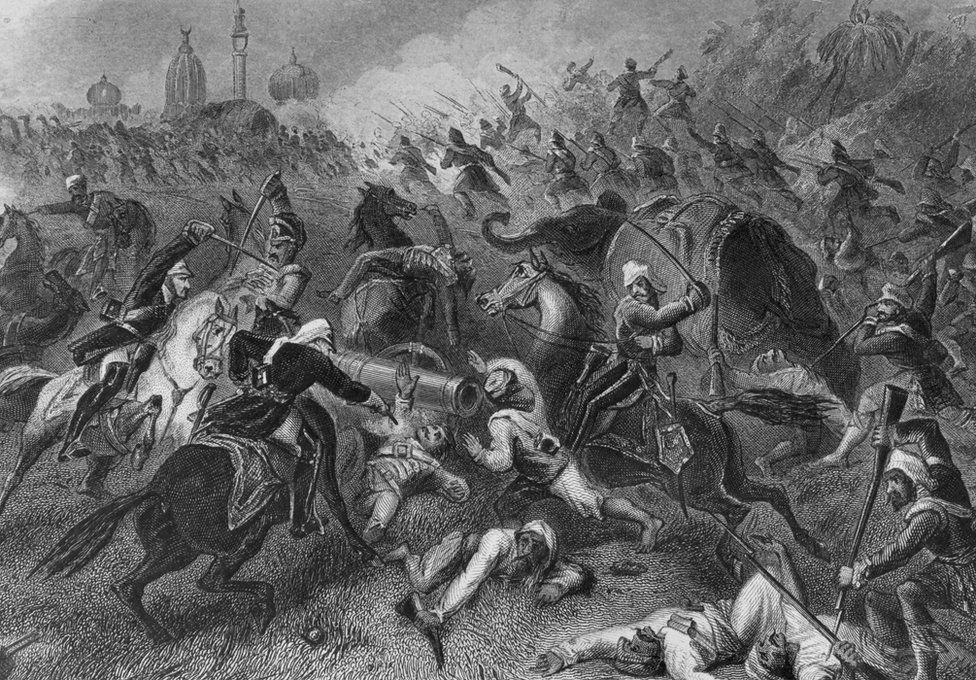
In 1963, a human skull was discovered in a pub in Kent in south-east England. A brief handwritten note stuck inside the cavity revealed it to be that of Alum Bheg, an Indian soldier in British service who was executed during the aftermath of the 1857 Uprising. Alum Bheg was blown from a cannon for having allegedly murdered British civilians, and his head was brought back as a grisly war-trophy by an Irish officer present at his execution. The skull is a troublesome relic of both anti-colonial violence and the brutality and spectacle of British retribution.
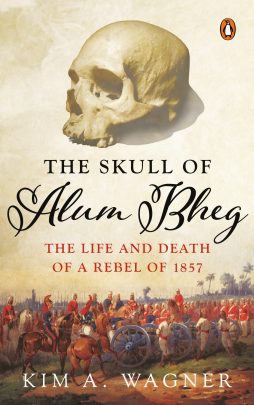
Kim Wagner presents an intimate and vivid account of life and death in British India in the throes of the largest rebellion of the nineteenth century. Fugitive rebels spent months, even years, hiding in the vastness of the Himalayas before they were eventually hunted down and punished by a vengeful colonial state. Examining the colonial practice of collecting and exhibiting human remains, this book offers a critical assessment of British imperialism that speaks to contemporary debates about the legacies of Empire and the myth of the ‘Mutiny’.
source: http://www.penguin.co.in / Penguin House / Books> Non-Fiction
The skull belonged to a 32-year-old Indian soldier who revolted against the British
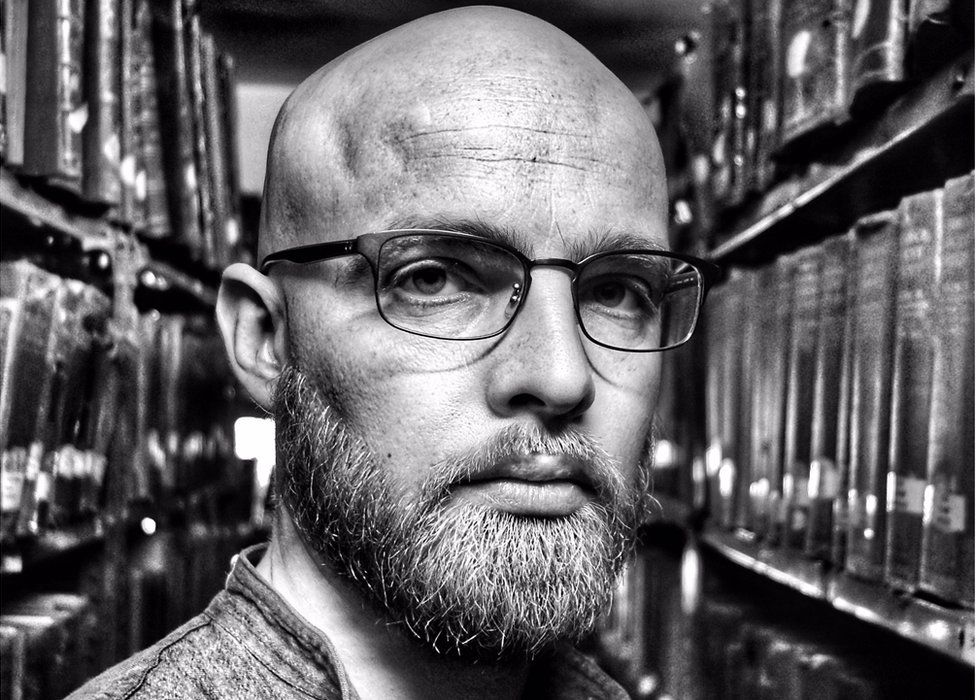
In 2014, while sitting in an office in London’s Mile End, historian Kim Wagner received an email from a couple who said they owned a skull.
Dr Wagner, who teaches imperial history at Queen Mary University of London, says the couple told him they did not feel comfortable with the “thing” in their house, and did not know what to do with it.
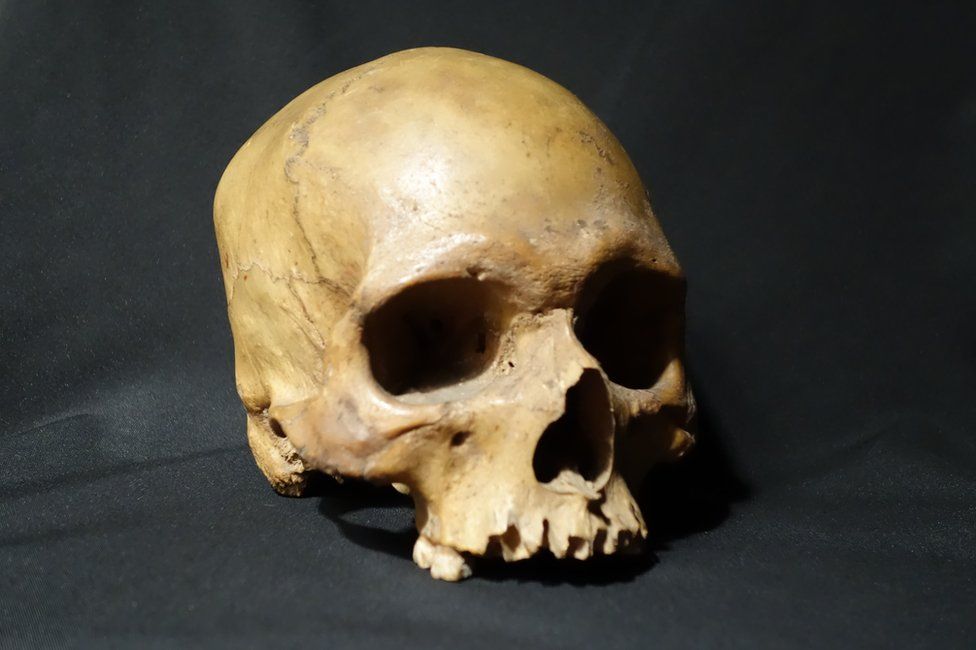
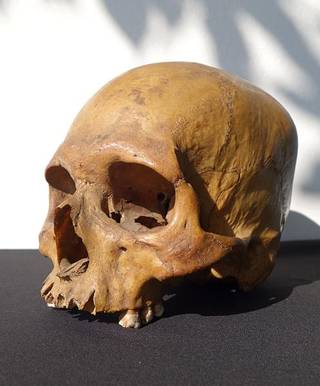
The lower jaw of the skull was missing, the few remaining teeth were loose, and it had the “sepia hue of old age”.
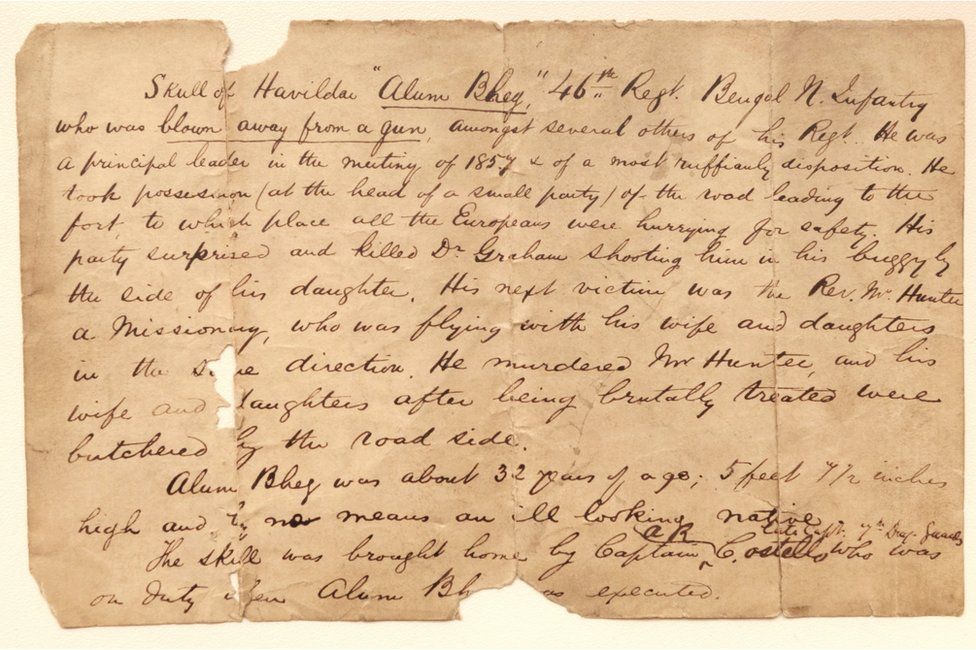
But what was remarkable was a detailed handwritten note in a neatly folded slip of paper inserted in an eye socket. The note told the brief story of the skull:
Skull of Havildar “Alum Bheg,” 46th Regt. Bengal N. Infantry who was blown away from a gun, amongst several others of his Regt. He was a principal leader in the mutiny of 1857 & of a most ruffianly disposition. He took possession (at the head of a small party) of the road leading to the fort, to which place all the Europeans were hurrying for safety. His party surprised and killed Dr. Graham shooting him in his buggy by the side of his daughter. His next victim was the Rev. Mr. Hunter, a missionary, who was flying with his wife and daughters in the same direction. He murdered Mr Hunter, and his wife and daughters after being brutally treated were butchered by the road side.
Alum Bheg was about 32 years of age; 5 feet 7 ½ inches high and by no means an ill looking native.
The skull was brought home by Captain (AR) Costello (late Capt. 7th Drag. Guards), who was on duty when Alum Bheg was executed.
A handwritten note inserted in an eye socket told the brief story of the skull
What was clear from the note was that the skull was of a rebel Indian soldier called Alum Bheg, who belonged to the Bengal Regiment and who was executed in 1858 by being blown from the mouth of a cannon in Sialkot (a town in Punjab province located in present-day Pakistan); and that a man who witnessed the execution brought the skull to England. The note is silent on why Bheg committed the alleged murders.
Native Hindu and Muslim soldiers, also known as sepoys, rebelled against the British East India Company in 1857 over fears that gun cartridges were greased with animal fat forbidden by their religions. The British ruled India for 200 years until the country’s independence in 1947.
The couple in Essex had trawled the internet and failed to find anything about Bheg. They contacted Dr Wagner after they found his name as a historian who had authored a book on the Indian uprising, often referred to as the first war of independence.
‘Grisly trophy’
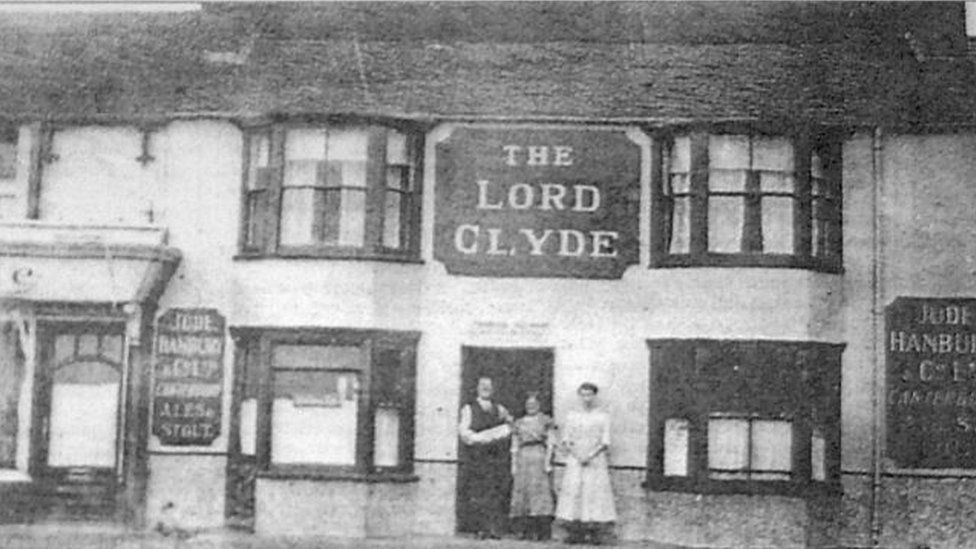
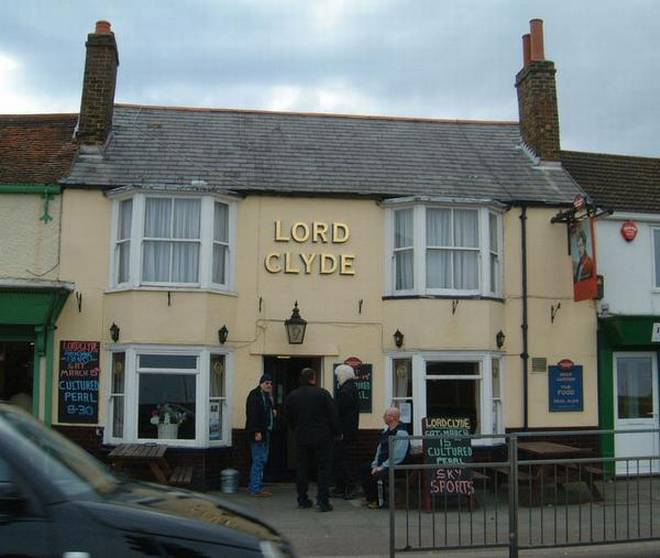
On a wet November day, which was also his birthday, Dr Wagner met the couple. They told him that they had inherited the skull after one of their relatives took over a pub in Kent called The Lord Clyde in 1963, and found the skull stored under some old crates and boxes in a small room in the back of the building.
Nobody quite knows how the skull ended up in the pub. The local media had excitedly reported on the “nerve-shattering discovery” in 1963 and carried pictures of the new pub owners “proudly posing with the grisly trophy” before it was put up on display at the pub. When the owners died, it was finally passed on to their relatives who simply hid it away.
“And so it was I found myself standing in a small train station in Essex with a human skull in my bag. Not just any other skull but one directly related to a part of history that I write about and that I teach my students every year,” says Dr Wagner.
What was very clear, he says, is that it was a “trophy skull, irrevocably linked to a narrative of violence”.
But first Dr Wagner had to confirm that the skull matched the history outlined in the note, written by an unknown person. At London’s Natural History Museum, an expert examined it and suggested that it dated back to the mid-19th Century; and that it definitely belonged to a male of Asian ancestry, who was possibly in his mid-30s.
The skull was discovered in a pub in Kent called The Lord Clyde in 1963
There was no sign of violence, said the expert, which is not unusual in the case of execution by cannon, where the torso takes the full impact of the blast. The skull also bore cut marks from a tool, suggesting that the head was defleshed by being boiled or being left exposed to insects.
Dr Wagner says he did not believe immediately that it would be possible to find out very much more about Bheg.
Individual soldiers rarely left any traces in the colonial archives, with the possible exception of someone like Mangal Pandey, who fired the first shot at a British officer on 29 March 1857 on the outskirts of Kolkata and stirred up a wave of rebellion in India against the colonial power.
Bheg’s name was not mentioned in any of the documents, reports, letters, memoirs and trial records from the period in the archives and libraries in India and UK. There were also no descendants demanding the return of the skull.
But there were a few helpful discoveries.
Dr Wagner found the letters of Bheg’s alleged victims to their families. What proved crucial, he says, in piecing the story together were the letters and memoirs of an American missionary, Andrew Gordon, who lived in Sialkot during and after the uprising. He knew both Dr Graham and the Hunters – Bheg’s victims – personally and he had attended the soldier’s execution.
There was also a revealing report in the illustrated newspaper, The Sphere, in 1911 on a grisly exhibit in a museum in Whitehall:
The ghastly memento of the Indian Mutiny has, we are informed, just been placed in the museum of the Royal United Service Institution at Whitehall. It is a skull of a sepoy of the 49th Regiment of Bengal Infantry who was blown from the guns in 1858 with eighteen others. The skull has been converted into a cigar box as we see.
The newspaper said that “while we may be able to understand all the savagery of the terrible time – the cruelty of the natives and the cruel retribution that followed – is it not an outrage that a memento of our retribution, which in these days would not be tolerated for a moment, should be placed on exhibition in a great public institution?”
Indian soldiers rose up against the British in 1857
Battling a famine of evidence, Dr Wagner began researching Bheg. He worked in the archives in London and Delhi, and travelled to Sialkot to locate the forgotten battlefield of the four-day Trimmu Ghat clash in July 1857 – during which the Sialkot rebels, including Bheg, were intercepted and defeated by General John Nicholson. The general was mortlly wounded two months later leading the assault to recapture Delhi from the mutineers.
He relied on letters, petitions, proclamations and statements by rebels after the outbreak of the uprising, went through 19th Century newspaper databases and scanned books.
“It was only after I spent some time researching the story, in the UK and in India, that I managed to piece a historical narrative together and realised that there was a bigger story to tell,” he told me.
‘Detective novel’
The result is Wagner’s new book, The Skull of Alum Bheg, a vivid page-turner on life and death in British India during the largest anti-colonial revolt of the 19th Century. Yasmin Khan, associate professor of history at the University of Oxford, says the book “reads like a detective novel and yet is also an important contribution to understanding British rule and the extent of colonial violence”.
Dr Wagner writes that his book sets out to “restore some of the humanity and dignity that has been denied to Alum Bheg by telling the story of his life and death during one of the most dramatic episodes in the history of British India”.
“I hope I have prepared the ground for Alum Bheg to finally find some peace, some 160 years late.”
Kim Wagner says the ‘final chapter of Alum Bheg’s story has yet to be written’
In Dr Wagner’s telling, Alum Bheg – properly transliterated as Alim Beg – was a Sunni Muslim from northern India. The Bengal Regiment was raised in Cawnpore (now Kanpur) in today’s Uttar Pradesh state, and it is likely that Bheg hailed from the region. Muslims made up around 20% of the largely Hindu regiments.
Bheg was responsible for a small detachment of soldiers, and had a gruelling routine, guarding the camp, carrying letters and working as a peon for higher officials of the regiment. After the revolt in July 1857, he appeared to have evaded the British troops until his capture and execution nearly a year later.
Resting place
Captain Costello, who was described as being present at the execution in the note, was established as Robert George Costello. Dr Wagner believes he is the man who brought the skull back to Britain. He was born in Ireland and sent to India in 1857, and retired from his commission 10 months later, boarded a steamer from India in October 1858, and reached Southampton a little more than a month later.
“The final aim of my research is to prepare for Bheg to be repatriated to India, if at all possible,” Dr Wagner says.
He says there have been no claims to the skull, but he’s in touch with Indian institutions and the British High Commission in India is also involved in the initial discussions.
“I am very keen for Alum Bheg’s repatriation not to be politicised, and for the skull not to end up in a glass-case in a museum or simply be forgotten in a box somewhere,” says Dr Wagner.
Dr. Wagner says Bhegh should be buried in an island on the current India- Pakistan border
“My hope is for Alum Bheg to be repatriated and buried in a respectful manner in the near future.”
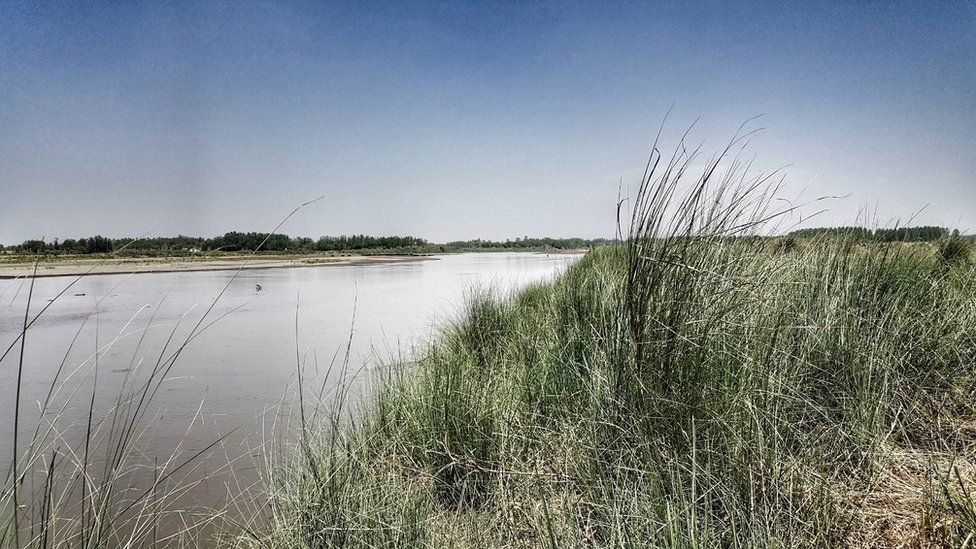
A fitting place to bury Bheg, he believes, would be on the island on the Ravi river, where the sepoy and his fellow soldiers had taken refuge after surviving the first day of the battle and which today marks the border between India and Pakistan.
“Ultimately, that is not for me to decide, but whatever happens, the final chapter of Alum Bheg’s story has yet to be written.”
Photographs courtesy Kim Wagner
source: http://www.bbc.com / BBC News / Home> India / by Soutik Biswas / India Correspondent / April 05th, 2018
This year, Sahitya Akademi’s ‘Annual Festival of Letters’ will feature a seminar on Oral and Tribal literature and Tribal poet meet. The Annual Festival of Letters is going to take place in New Delhi at Rabindra Bhavan from Monday, February 12 to 17, 2018.
This year the theme of the six-day long festival is ’70 Years of Indian Independence’. The festival will begin with the inauguration of the Akademi exhibition by Hindi writer Chitra Mudgal followed by the Sahitya Akademi Awards presentation ceremony.
The seminar on Oral and Tribal literature and Tribal poet meet will be held on February 13 and 14 and feature eminent writers and scholars from all over the country, including over 30 tribal poets.
The following tribal poets will take part in the seminar and reading session at the Akademi’s annual Festival of Letters: Arjun Singh Dhurve (Baiga), Rajkishore Nayak (Bathudi), Kuldeep Singh Bampal (Bhotia, Sudarshan Bhumij (Bhumij), Zohming Thanga (Bongchar), Kulin Patel (Dhodia), Colnat B. Marak (Garo), Rafiq Anjum (Gojri), Roop Singh Khusram (Gondi), Veera Rathod (Gormati), Rudra Narayan Panigrahi (Halbi), Kairasing Bandia (Ho), Riquoma Rq. Lalloo (Jayantia), On Teran (Karbi), Saroj Kerketta (Kharia), Minimon Laloo (Khasi), M. P. Rekha (Kodava), Bikas Ray Debbarma (Kokborok), Mahabir Oraon (Kurux), Deenabandhu Kanhar (Kui), Konchok Rigzen (Ladakhi), Kachyo Lepcha (Lepcha), Kalachand Mahali (Mahali), Th. Thumbu Maram (Maram, Dipok Kumar Doley (Missing), Puni Losii (Mao), Ashrita Tuti (Mundari), Jamuna Bini Tadar (Nyishi), N Vumsuan (Paite),Charu Mohan Rabha (Rabha), Rajesh Rathava (Rathavi), Aasim Sardar Tadavi (Tadavi), and Satyajit Toto (Toto).
The keynote address will be delivered by T.V. Kattimani, Vice-Chancellor, Indira Gandhi National Tribal University.
The six-day-long festival will witness participation of more than 250 writers and scholars from different parts of the country representing various languages.
“National seminar on ’70 Years of Indian Independence: Literary Portrayals’ and a seminar on Tribal and Oral Literature will feature eminent scholars and writers from all over the country. Apart from other regular features, we will have Indo-Israeli Writers’ Meet on the occasion of the 25th anniversary of the establishment of diplomatic relations between India and Israel,” said the Akademi’s Secretary K. Sreenivasarao while talking to media persons .
Importantly, three Muslim writers were selected among others representing 24 Indian languages for 2017 Sahitya Akademi award. Afsar Ahmed for his Bengali novel, “Sei NikhonjManusta”, Baig Ehsas for his Urdu short stories “Dakhma” and poet LateInqulab for his Tamil poetry “Kandhaal Naatkal” are among those honored with Sahitya Akademi award 2017.
Two more Muslims, Iqbal Nazki and Mahmood Ahmed Sahar were selected for Sahitya Akademi prize for translating Tamil novel “Chaivu Narkli” to Kashmiri “Araam Kursi” and Sanskrit poetry “Meghdootam” to “Kalidas ki Azeem Shairi” respectively.
On December 21, 2017, Sahitya Akademi had announced its annual awards in 24 languages.
source: http://www.twocircles.net / TwoCircles.net / Home> Adivasis / by Raqib Hameed Naik, TwoCircles.net / February 09th, 2018
The Munshi Premchand Award-2016 for contribution in the field of literature was awarded to Ali Zamin Kazmi by the state government for his novel ‘Godan Ke Baad’ on Saturday.
A cash award of Rs 1lakh was also given to Kazmi.
“The Munshi Premchand award 2016 came as a surprise to me as I was not expecting it,” said Kazmi. He said youngsters should develop a love for books and literature.
source: http://www.timesofindia.indiatimes.com / The Times of India / News> City News> Lucknow News / March 25th, 2018
Doctors of the Department of Internal Medicine at Government Royapettah Hospital have brought out a book, Manual of Toxicology — An Indian Perspective, which, they say, will fill a lacunae in the knowledge about poisons.
“Most toxicology manuals are silent on many of the Indian posions, as they have been written from a western perspective. This book is based on our experience treating cases involving toxins,” says Dr. A. Shaik Sulaiman Meeran, one of the doctors who spearheaded this book project.
Dr. P. Paranthaman was the editor-in-chief. Dr. Sulaiman, Dr. A. Samuel Dinesh and Dr. D. Venkateswaralu served as associate editors and Dr. P. Raja as co-editor. The book has been brought out by Chess Educational Publishers.
Dr. Sulaiman says that knowing the sources of danger will prevent accidental ingesting of poisons or strikes by venomous reptiles and insects.
Knowing where to seek help will be a crucial factor in recovery.
He says snake bite cases from the southern suburbs, which include Tambaram and surrounding areas, parts of Old Mahabalipuram Road and East Coast Road are common. Anti-venom serum for treatment of bites by cobra, viper and krait is available. Government general hospitals have them.
Residents of semi-urban areas can face the problem of snake bikes, it is available in primary health centres, he says. Here is a word of caution. “Ninety percent of the sea snakes are poisonous and there is no anti-venom serum for them. Only supportive treatment can be given. Sea snakes are sometimes found near fishermen’s settlements. They get entangled in fishermen’s nets and are brought ashore. There is always a high possibility of finding them near fishermen’s hamlets on East Coast Road,” says Dr. Sulaiman.
source: http://www.thehindu.com / The Hindu / Home> News> Cities> Chennai / March 23rd, 2018
An Intermediate second year student B. Padmaja bagged second place with cash prize of ₹25,000 on Sunday for her Telugu essay on the life of Prophet Muhammad.
The competition titled ‘Inspired by Prophet Muhammad’ was an initiative of the Jamaat-e-Islami Hind (JIH) affiliate Student’s Islamic Organisation.
Ms. Padmaja arrived in the city from Jagtiyal specifically to participate in the competition.
Speaking to The Hindu about what inspired to pen the essay, she said, “I read about the virtues of Prophet Muhammad and decided to enter the competition. He saw everybody as equal and took measures to protect women’s rights.” It did not take long for Ms. Padmaja to prepare for the competition. “The JIH gave me a book. I read it for about an hour a day before the competition. Then I spoke to my friends who are Muslims. After this, I wrote the essay,” she said.
And how does she intend to use the prize money? “I will use it to pay for my education,” she said.
With a keen interest on participating in similar competitions centred around different themes, Ms. Padmaja said, “It’s important that people look for good things in different faiths. Only this can help all of us co-exist.”
While Ms. Padmaja was awarded the second prize, the first place went to Syeda Haajer, also an Intermediate second year student. She was awarded a cash prize of ₹50,000. A graduation student, Mariya Gouher, bagged the third place and was awarded ₹15,000.
Around 20,000 students in different parts of the State wrote the essay in Telugu, Urdu and English. The winners were awarded prizes at Khaja Mansion where JIH Telangana and Odisha president Hamed Mohammed Khan spoke of the importance of pluralism and building bridges between different communities.
source: http://www.thehindu.com / The Hindu / Home> News> Cities> Hyderabad / by Syed Mohammed / Hyderabad – December 17th, 2017
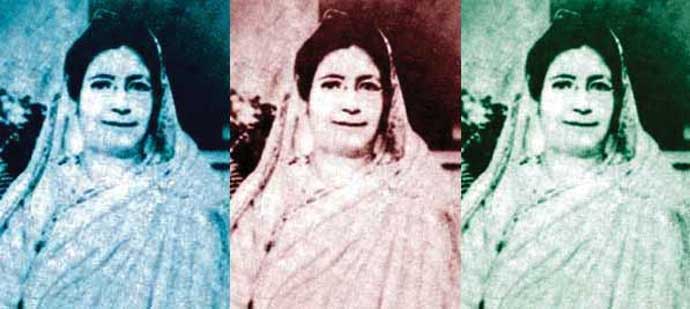
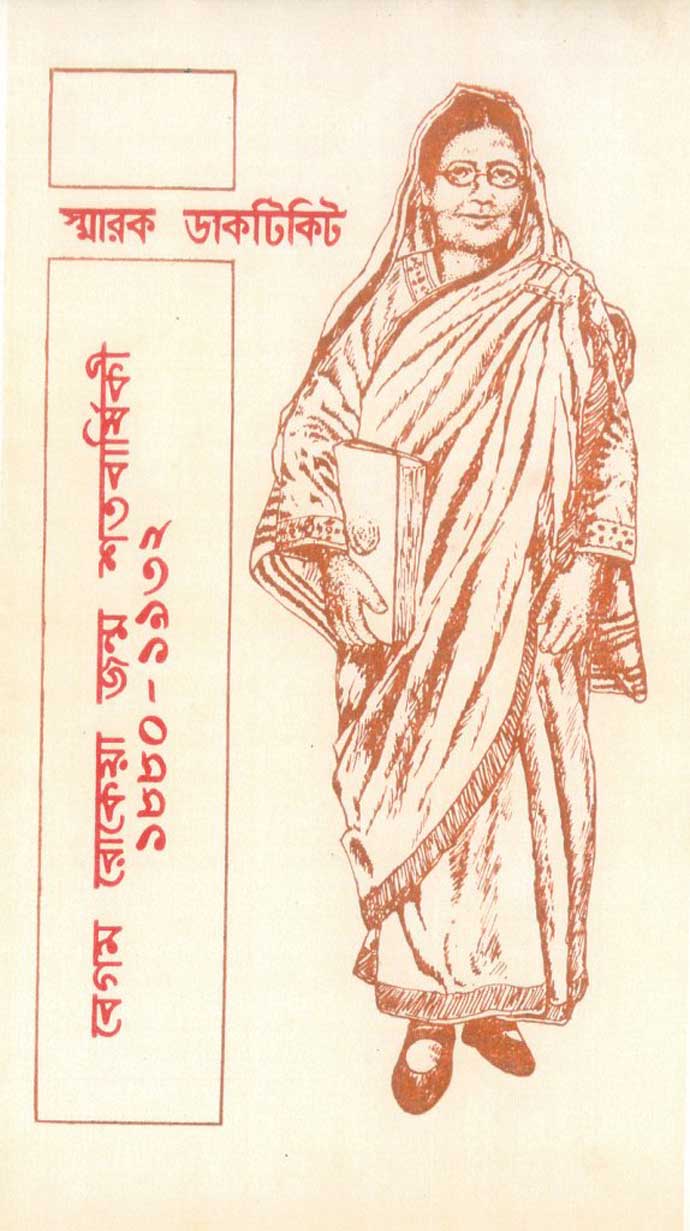
Rokeya Begum was an educationist, writer, social activist and effectively, India’s first Bengali Islamist-feminist.
As a Muslim reformist, her activism was neither half-baked nor exclusionist, yet little is known of her meaningful contributions to society.
Sometimes when wars are long and without any imminent hope of triumph or an end, it’s best to count on the smaller victories. Such as the taking down of Omprakash Mishra’s misogynist cringe-pop video or Uber apologising for their presumptuous and sexist offer on “Wife Appreciation Day” or Hulu’s The Handmaid’s Tale bagging the Emmy for “Best Drama Series” leaving behind popular shows like Westworldand Stranger Things.
The Handmaid’s Tale is to feminists what the BJP manifesto is to Arnab Goswami. Though Margaret Atwood’s evergreen dystopian thriller published in 1985 was one of its kind, it wasn’t the first. Eighty years before that, Begum Rokeya Sakhawat Hossain published her feminist utopian fantasy Sultana’s Dream, a novella investigating the ironies of a technologically advanced, gender-reversed India (one where men were confined to the “zenana” — the part of a house for the seclusion of women, or as Rokeya terms it, the “mardana” — imagined in the dreams of a woman named Sultana.
Born in 1880 to a wealthy Zamindar family in Pairabondh (present Bangladesh), Rokeya Begum was an educationist, writer, social activist and effectively, India’s first Bengali Islamist-feminist. While Savitri Phule and Pandita Rama Bai re-emerged through the obliterating clouds of India’s redacted history-telling, the narrative on Rokeya’s work remains shrouded, at least, in India.
Her father, an orthodox Muslim, persisted that the women maintained purdah and allowed them to be educated in Arabic (only) to enable them to read the Quran. Rokeya and her sister Karimunnesa, learned Bengali and English at the behest of their supportive brothers, who educated them on the sly. Perhaps this phase of her own life contributed amply to her tenacious belief that the lives of Muslim women could not be ameliorated without proper education. Added to that was her own sister who remained a key inspiration for Rokeya’s writings and her social work.
Karimunnesa, a seasoned poet, had been married off before the age of 15, putting what might have been a lucrative future to an abrupt end. This had further consolidated Rokeya’s faith in educational and individual rights for women — chiefly Muslim women, who, in that era, lived like showpieces in a glass casket but with an iron curtain.
With this line of thought and the support of her husband (Sakhawat Hossain, whom she was married to at the age of 16 and who died in 1909) and the money he had set aside, Rokeya went on to establish Sakhawat Girls Memorial High School, five months after his demise.
She started the school in Bhagalpur (a majority-Urdu speaking area in erstwhile East Bengal) with merely five students and was forced to shift the school to Kolkata in 1911 due to property feuds with her husband’s family. It remains one of the city’s most popular schools for girls and is now run by the state government of West Bengal.
Today, Rokeya’s memory is as fleeting — even for her benefactors — as Sultana’s dream. Photo: http://nationalwomansparty.org
In 1916, she founded the Anjuman-e-Khawateen-e-Islam (Islamic Women’s Association), which was her other organisational contribution to Bengali Muslim women. Through this organisation she offered financial and educational support to downtrodden Muslim women, over and above raising public opinion regarding the issue of Muslim women’s rights. That Rokeya was way ahead of her times finds semblance in the curricula of the school she established, which included physical and vocational training in an attempt to arm women with financial independence. She coined the term “manoshik dashhotto” or mental slavery, referring to the absence of individuality that pervaded the entire gamut of Muslim women and attributed it as the root cause for their subjugation. This rings true even today.
A century ago, Rokeya approached her adversaries with a wit and logic that is hard to find in today’s generation (which appears to be self-deprecatingly volatile). Insightfully, Rokeya tapped into the quintessential Muslim male ego and inversed it to men’s disadvantage, instead of directly antagonising them with liberal arguments.
She writes, “The Muslim society is paying a greater price for the lack of any system of education for their women. I have been informed by a reliable source that some educated Muslim youths of well-to-do families are setting conditions that if they can’t find educated Muslim women, they will not marry. They even threaten to become Christians and marry someone from that community if they fail to find educated Muslim women.”
Critics might question the ethic behind this approach, but the truth is, even now, “the threat to minority identity” continues to be the most veritable impediment to the realisation of Muslim women’s rights.
Keeping this in mind and the socio-politico environment of that era, perhaps by playing on their fears was not only ingenious but also the only way out.
In 1926, when she was invited to chair the Bengal Women’s Educational Conference, she said, “Although I am grateful to you for the respect that you have expressed towards me by inviting me to preside over the conference, I am forced to say that you have not made the right choice. I have been locked up in the socially oppressive iron casket of ‘porda’ for all my life. I have not been able to mix very well with people – as a matter of fact, I do not even know what is expected of a chairperson. I do not know if one is supposed to laugh, or to cry.”
Having lost her husband early and her two children who died at infancy, Begum Rokeya was not just subjected to scathing criticisms for her views but also faced unforgiving social exclusion. Despite the variegated hindrances she faced, in lieu of her gender, her community and the very fabric of the milieu that she had set out to change, she worked tirelessly and fearlessly to carve a way out for many Bengali Muslim women like myself.
Begum Rokeya died on December 9, 1932, and up until 11pm on December 8, 1932, she was working on an unfinished article titled, “Narir Odhikar“, which translates to women’s rights. The over-arching principle that governed her literary and social work was feminism and through it she heralded the discourse into Bengal. As a Muslim reformist from that era, Rokeya’s activism was neither half-baked nor exclusionist as the classist and sexist Aligarh movement led by Syed Ahmed Khan, yet little is known of her meaningful contributions to society. Today, Rokeya’s memory is as fleeting — even for her benefactors — as Sultana’s dream.
source: http://www.dailyo.in / Daily O / Home> Variety / by Suman Quazi / September 21st, 2017
The resting place: The skull was found in a store room of The Lord Clyde pub in London. | Photo Credit: Special Arrangement
Skull of soldier, executed by the East India Company for rebellion in 1857, found its way to London pub; it’s now with historian Kim Wagner
Headhunting is usually associated with primitive tribes and contemporary terrorists, but the colonial rulers of India also collected heads of Indian soldiers as war trophies.
A 160-year-old skull of sepoy Alam Beg, now in the possession of a historian in London, is proof that colonial rulers who brought many modern practices to India were also at times inhuman.
In 1857, Alam Beg, also known as Alum Bheg, was a soldier with the 46th Bengal Native Infantry, an arm of the East India Company.
The Mutiny that year, after having covered the north Indian heartland, spread to Sialkot (now in Pakistan), where Alam Beg and his companions tried to follow their fellow soldiers and attacked the Europeans posted there. On July 9, 1857, they killed seven Europeans, including an entire Scottish family.
Alam Beg, along with his comrades, left Sialkot and trekked all the way to the Tibetan frontier only to be turned away by the guards on the Tibetan side. He was reportedly arrested from Madhopur, a scenic town on the northern part of the Indian Punjab and taken back to Sialkot. A year later, he was tried for the brutal killing of the Scottish family and blown up from the mouth of a cannon. The Mutiny ended soon after. Alam Beg’s tragic story surfaced more than a century later thanks to an Irish captain Arthur Robert George Costello, who was present at his execution.
The skull of Alam Beg. | Photo Credit: Special Arrangement
Present at execution
The Irishman was a captain in the 7th Dragoon Guards, dispatched to India after the Mutiny had shaken the bonds between the East India Company and the native soldiers. Costello had not seen any episodes of the Mutiny but was present at the execution, said historian Kim Wagner, who possesses the skull now.
Costello picked up the skull and returned to London with it. In 1963, the skull was discovered in a store room of The Lord Clyde pub of London, after it had changed hands. The new owners were less than happy to find this war ‘trophy’ from 1857, but treated it as a solemn object from a disturbing past of British history in the subcontinent. The owners of the pub learnt from a note left in an eye socket that it belonged to Alam Beg, who played a leading role in the mutiny of sepoys in Sialkot. They desired to repatriate the skull to the soldier’s family. For years, they tried but failed. It is not known how the skull of Alam Beg ended up in the Victorian-era pub. But it is possible that the Irish captain who witnessed the execution of the leader of the mutinous soldiers visited the pub or someone deposited it there, given the fact that it had links with the history of the Indian Mutiny. In fact the pub was named after Collin Thomson, also known as Lord Clyde, who was a military commander and played a role in crushing the mutiny in north and northwest India. So it is possible that soldiers after their Indian stint would visit the pub.
In 2014, the owners of the pub contacted Kim Wagner who has been writing about South Asian history for years. They urged him to take the skull and return it to the descendants of Alam Beg. Mr. Wagner brought it home and the skull finally added to his research on South Asia which was published late last year as “The Skull of Alum Bheg: The Life and Death of a Rebel of 1857.” The historian believed that only by making people aware of the skull that Alam Beg can be returned to his motherland.
His research showed that most of the soldiers of the 46th Bengal Native Infantry were from modern states of Uttar Pradesh and Bihar and Havildar Alam Beg most probably hailed from Uttar Pradesh. Though he wanted to return him to a dignified family grave yard of Beg’s family, it was not possible as the East India Company left no records of the soldiers of the 46th Bengal Native Infantry.
“There are no longer any records for sepoys of the Bengal Army – the best I could do was locate the area where the 46th regiment recruited from,” Mr. Wagner said.
The Mutiny of 1857 was crushed mercilessly and many gruesome incidents of that era find mention in official records. In 2014, around the time when Mr. Wagner began writing his book on Alam Beg, Ajnala in Punjab’s Amritsar hit the headlines when authorities discovered skeletons of 282 soldiers who were executed after the Mutiny. They apparently had surrendered hoping for a fair trial, but the Deputy Commissioner of the district Frederick Henry Cooper ordered execution of the rebels. They were buried with medals and even money of the East India Company that many of them had in their pockets. The grisly discovery is yet to receive a closure as the family members of those soldiers remain untraced.
Similar is the condition of Alam Beg as his journey back home remains incomplete but Mr. Wagner believed that his only physical remain should find a proper peaceful burial. Mr. Wagner is aware that the government of Prime Minister Narendra Modi has been vocal about honouring the fallen soldiers of India in various colonial era battles. He says that something similar can be done in case of Alam Beg as well.
“After all these years, it is high time for Alum Bheg to return home…he was probably born in what is today India, he was executed in what is now Pakistan,” Mr. Wagner wrote in his book proposing that a burial for Alam Beg near the India-Pakistan border would be the most suitable tribute to his sacrifice.
The historian said that in the absence of the descendants of such soldiers, it is the Indian government that should bring back Alam Beg to his motherland.
Headhunting by colonial rulers from Europe was a rampant practice in the 19th century and activists worldwide have been vocal in demanding human remains from Western museums and collectors should be returned to their countries of origin. Such a movement is yet to begin in India whose soldiers from the colonial past in many instances continue to remain anonymous and abroad.
source: http://www.thehindu.com / The Hindu / Home> News> National / by Kallol Bhattacharjee / New Delhi – February 04th, 2018
Socially disadvantaged marginal groups such as Adivasis (Tribals) and Muslims living in the remote district of Birbhum of West Bengal are being severely neglected in terms of educational development as well as economic and political empowerment. Abject poverty has reduced them to the level of the most backward people of society. Not only are they unaware of the benefits of education, social awareness and self-employment, but they also lack in the basic issue of feminine hygiene.
Although the problems of the Tribals and Muslims are different because of their different cultural context, it is clear that at the grassroots level, both communities require serious efforts at social upliftment if they are to compete with the rest of society. To this effect, a team of passionately devoted women has taken it upon itself to create awareness of empowerment and the need for self-reliance among the tribal and Muslim women of these areas.
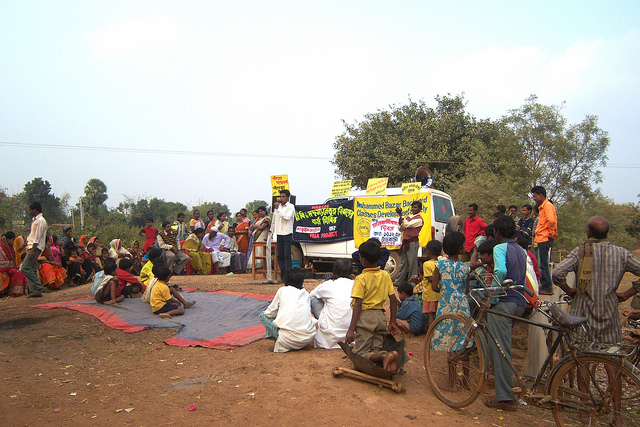
An awareness programme of MBBDS at Purana Gram Panchayet Area
The Mohammad-Bazar Backward Classed Development Society of Birbhum District of West Bengal (MBBDS), targets people from the marginally weaker sections of society, mainly the Tribals and Muslims women. The society is both headed and managed entirely by women. Speaking to TwoCircles.net, Ayesha Khatun, head of MBBDS confirmed that the Secretary and President are both Muslim while the rest of the six members comprise four Muslim and two Adivasi women.
In the remote villages of Birbhum, Muslim women groups run schools, training programs, health and hygiene awareness, HIV prevention programs and promote Self-Help groups
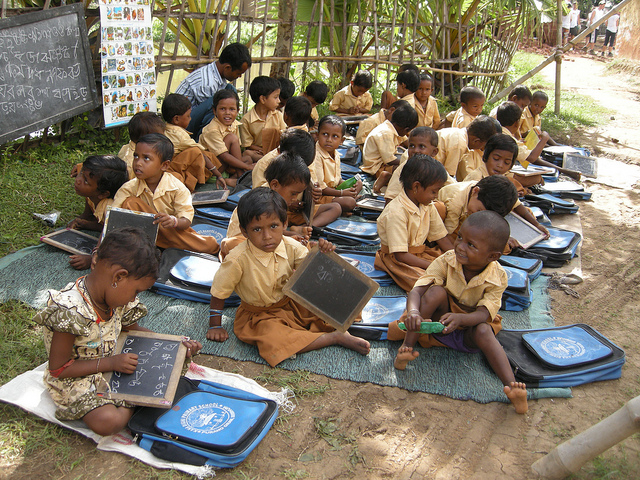
The main areas of operation of MBBDS are concentrated in Purana, Bharkatta, Sekada gram panchayets in Birbhum and Shikaripara in Jharkhand. They are also active in projects for Muslim girls’ education in Murshidabad and Howrah districts. They have been running the Kanadighi Prathyahik Bidyalaya, a school, under the Purana Gram Panchayet in Birbhum since 2003. More than 250 students who were dropouts are getting education there. Another school, Jambani Cluster Child Growth Centre for Tribals under the Deucha Grampanchayet, has enrolled 78 students up to now.
A school for Tribals at Jambani by MBBDS
MBBDS also supports a school along the Ganges River bank, an area affected by land erosion. As a result of the land erosion, people are losing their homes and living in very poor and inhumane conditions. Their main occupation is bidi making. Ayesha Khatoon sees education as the way forward, and so has established a school in Akheriganj which has 71 students at present. Another school is being run in Panchpara, Sultanpur of Howrah district near Kolkata.
Panchpura of Howrah district is a Muslim dominated area. According to research conducted by the MBBDS, most of the residents are refugees of the Bhagalpur riots. Since it is a low-lying area, it is easily flooded during the rainy season and so the school dropout rate was very high as children were unable to go to school. Also, there is no electricity or a road network connecting the area to major cities. So, the MBBDS has provided a school for basic education to the poor Muslims.
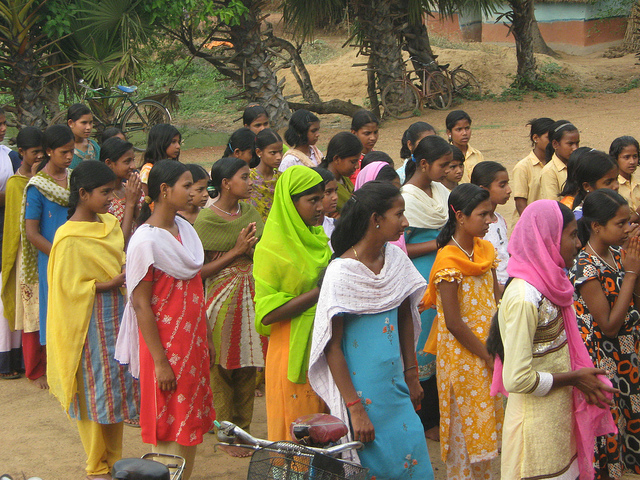
Muslim girls at an education camp
Though they belong to the Hindu community `Adivasis’ are locally called `Santhal’. Their culture and lifestyle is vastly different from that of Muslims, and they even speak their own language, ‘Santhali’. The Birhum district is mainly dominated by the Tribals but there are a few Muslim pockets too.
The MBBDS has taken some initiatives which may help both communities:
• Provision of Elementary schools for Adivasi children in the area
• Health awareness: diarrhea and malaria prevention programs
• Built a nutritional garden
• Vocational training: tailoring and stitching; making of low-cost sanitary napkins; `Kantha Stitch’ (traditional hand embroidery particular to Bengal); hand batiks.
• A Pond for fish reproduction
• Training programs to develop leadership abilities in women
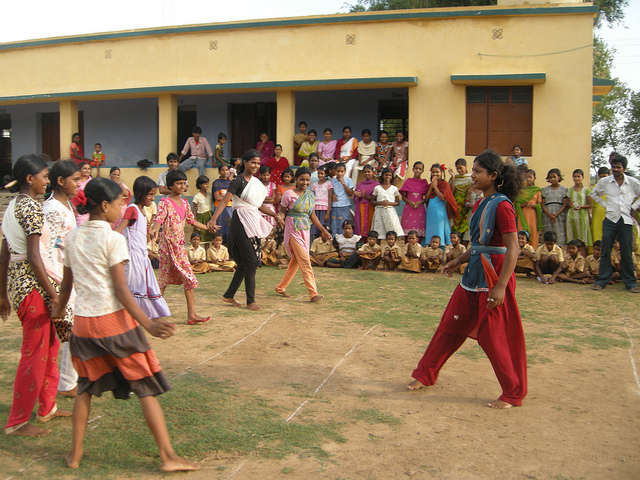
• Sports training (volley ball, khokho, kabadi)
• Provision of adult education to teenage girls
• HIV/AIDS Awareness Programs
• Awareness and Prevention of child marriages
The MBBDS has opened up a school which provides free study materials, free coaching, free uniforms, and even free food. There have been generous donations from internationally renowned organizations such as Association for India’s Development (AID), Hope Foundation, American Jewish World Service (AJWS), Dining for Women (DFW), PRIYA, to name a few.
The grinding poverty in these remote areas has forced the people to work as menial laborers earning daily wages while their women earn a living as sex workers. As these areas are located along the National Highway, truck drivers stop by to rest and find willing partners, for a small price. Hence, the risk of HIV/AIDS is very high. In order to combat this deadly trend, Ayesha Khatun has created an awareness program highlighting the dangers of unprotected sex.
Mumtaz Khatun, student of Rokeya Mission is a national-level Kabaddi player
There is also one pre-primary school in the area which encompasses at least 6-7 villages including Heruka, Sahanagar, and Kaldighi. Ayesha Khatun hopes that education will pave the way for these under-privileged communities to interact and assimilate with society and building schools is the first step in this direction.
Ayesha Khatun’s Society bought nearly an acre of land and built a school from the Fifth standard to Secondary Level. The Rokeya Mission School in Puranagram Muslimpara (Mohammadbazar area) has 109 students enrolled to date. The school provides leadership and self-help group training, family life education and counseling besides the other facilities named above. Mumtaz Khatun, a student of Rokeya Mission School has been selected to be a member of the National Kabadi Team: a real achievement indeed.
Ayesha Khatun, the inspiration behind this noble mission comes from an educated and elite background. She has seven other siblings: five brothers and two sisters who all hold Postgraduate degrees. She has a double Masters degree herself. Her father, Mohammad Minhilal was a school teacher. Ayesha Khatun was very impressed with the teachings of the Quran and the life of the Holy Prophet in her teenage years. She believes that Islam gives women equal rights and that the Quran should be followed and implemented correctly. It was after reading the Quran and its interpretation that Ayesha ventured to do social service.
Ayesha Khatun strongly believes in the social upliftment and political empowerment of women. The three-tiered Panchayet system already has a 50% reservation for women. She thinks that if women took the initiative and availed the opportunity to take part in politics, society and especially Muslim women would greatly benefit from this.
Besides being a social worker, Ayesha Khatun is also a writer. She has won the Rokeya Award from Bharatiya Bhasha Parishad, Young Writers Award from Bharatiya Sahitya Academy and Ila Chand Award from Bangiya Sahitya Parishad.
Edited by Ozma Siddiqui
source: http://www.twocircles.net / TwoCircles.net / Home> Articles> Indian Muslim> Women / by Zaidul Haque, TwoCircles.net / April 08th, 2012
Speaker R. Avudiappan inaugurated the memorial constructed for Umaru Pulavar, great Islamic poet, at Ettayapuram near here on Monday.
Official sources said that it was built by the Public Works Department on an outlay of Rs.22.5 lakh.
The monument would be maintained by the Department of Information and Public Relations.
The memorial, a two-storied edifice, has a tomb and prayer hall in the ground floor with a library on the top floor.
A collection of 1,000 literary works of Umaru Pulavar would be added into the library in a phased manner. The works would include poems like ‘Seerapuranam’, ‘Muthu Mozhil Malai’ and ‘Sethakathi wedding poems’, among others.
The access to the library would be free.
Sources said that the memorial was a tribute to the poet, whose ancestors had chosen Ettayapuram in Tuticorin district as their ‘home away from home’ since they descended from Arabia.
The forefathers of the poet came here to sell perfumes and settled in Nagalapuram, before moving to Ettayapuram where the poet was born in 1642.
Umaru Pulavar’s literary talents flourished under Kadikai Muthu Pulavar, court poet of the Ettayapuram Zamin. At the age of 16, Umaru Pulavar stole the national limelight by winning a literary debate with Vallai Varundhi, a renowned poet from North India. Umaru Pulavar was then made the court poet of the Ettayapuram Zamin.
“Seerapuranam,’ considered to be one of the best works by him, depicts the history related to Prophet Mohammed Nabi, and it contains 5,027 poems in three ‘Kandams’ (parts), which are Vilathathu Kandam, Noobuvathu Kandam and Hijurathu Kandam.
“Each of the ‘Kandams’ narrates various stages of the life of Nabi,” sources said.
Ministers Geetha Jeevan, Parithi Ellamvazhuthi and T.P.M. Moideen Khan, Collector R. Palaniyandi, District Public Relations Officer S.R. Sarathy and senior revenue officials were present.
source: http://www.thehindu.com / The Hindu / Home> National> Tamil Nadu / by Staff Reporter / October 30th, 2007