The Karnataka government is presenting a few finely crafted Channapatna toys to Barack Obama, the chief guest of this years Republic Day parade. When the President had come visiting in 2010, the first lady Michelle Obama had bought a few Channapatna toys in New Delhi.
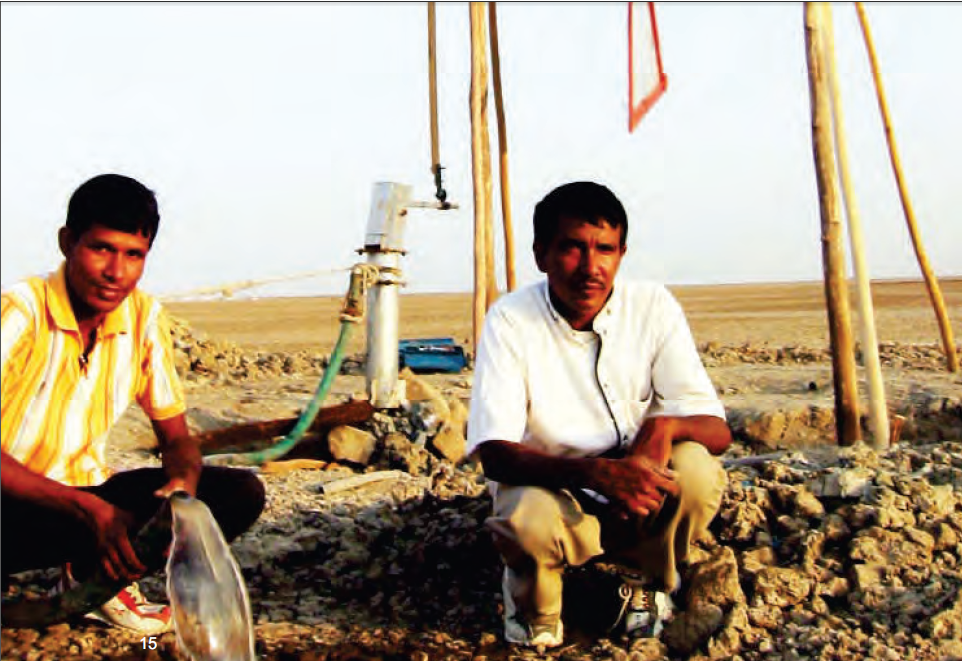
Brothers Mohammad Methar Hussain and Mushtaq Ahmad wanted power for irrigation and they developed a low cost windmill made out of bamboo, which is more than 10 times cheaper than the regular ones available in the market. Now, there are more than 25 such windmills running in Gujarat. Read to know more about their journey and how they did it.
Mohammad Methar Hussain and his brother Mushtaq Ahmad from Darrang district in Assam grew paddy in the winter season (also known as bodo paddy). Irrigation involved a lot of manual effort and using diesel sets for pumping water was a huge drain on the resources. To tackle this issue, Mehtra thought that if they could run a large wheel on wind power, and connect the wheel to the hand pump, that would serve their purpose quite efficiently.
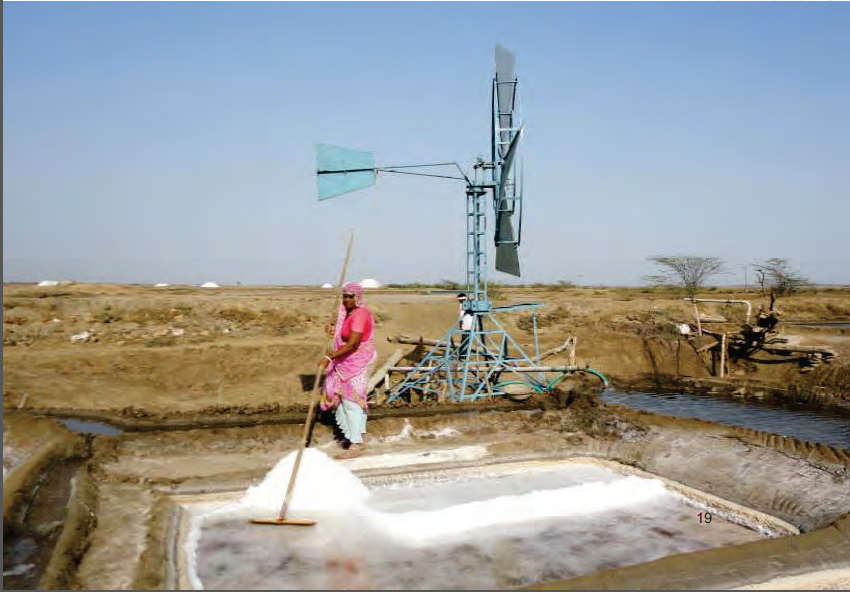
So, both of them started working on making a windmill unit from locally sourced materials such as bamboo wood, strips of old tyres, pieces of iron, etc. With the help of a carpenter, the first prototype was ready in four days. Since the supporting framework was composed of bamboo, the final product costed Rs. 4500, vis-a-vis the commercially available wind mills which cost over Rs. 60,000.
Mehtar and Mushtaq
Innovation Diffusion : Assam —> Gujarat
India is the third largest salt producing country in the world with an average annual production of about 157 lakh tonnes. The Little Rann of Kutch (LRK) supplies 21% of the total salt production of India.
Salt workers, known as Agarias, are some of the poorest people in the state. Agarias mostly used counterpoise, a method that requires two people, one for lowering the counterpoise and other for straining the water. Some of them started using diesel pumps, but the exorbitant machine and fuel costs made a huge dent in their already diminishing returns from salt farming.
With the mission to improve lives of salt farmers, Gujarat Grassroots Innovation Augmentation Network – West (GIAN W) along with National Innovation Foundation (NIF-India) took the lead in diffusing the innovation in salt farming areas.
Based on the feedback received from salt farmers, GIAN W improved the design and developed a multi-dimensional model which was installed at LRK in 2008. Understanding the diverse needs of farmers to increase the efficiency of windmills, GIAN W joined hands with Alstom foundation for design modification and improvement.
As of 2012, 25 of these windmills have been installed in Kathivadar and Kadiali villages in Amreli district.
Low cost windmill has solved irrigation problems for the village
Benefits of the Windmill Pump
Thanks to the windmill pump, now salt farmers don’t have to slog for hours with the water pump. The windmill pump saves about Rs.50,000 worth of diesel in six months. It has decreased salt farmers’ reliance on manual labour resulting in savings of about Rs. 28,000 per season per person. Farmers can now easily recover their investments within the harvesting season.
The innovation would also result in the reduction of five tonnes of carbon emissions for every 100 tonnes of salt produced. As per NIF, on an average, every windmill-powered hand pump should generate five Carbon Emission Reductions (CERs) certificates worth Rs.3750.
Every rupee saved and milligram of carbon emission reduced is a glaring testimony of how rural innovations impact the community, society and the world at large.
In the next phase, GIAN W plans to erect more windmills in other parts of Gujarat. The salt farmers of Gujarat are indebted to Mehtar and Mustaq for making their lives more efficient and their occupation, profitable.
For any enquiries related to the machine, please get in touch with NIF-India at bd@nifindia.org.
source: http://www.thebetterindia.com / The Better India / Home> Innovation> Gujarat / by Rahul Anand / July 24th, 2014
The most popular pit stop for all visitors to Lucknow, be it film stars, politicians or even tourists, is the Tunday Kabab shop. But not just for the outsiders, but for the city folk too, it had become increasingly difficult to differentiate the real from the copies, with kebab shops by the name of Tunday mushrooming all over the city in the last few years. But after Mohd Usman, grandson of the legendary Tunday or Haji Murad Ali won a case filed against him for infringement of trademark by his khala’s (paternal aunt) son, Mohd Muslim, who owns Lucknow Wale Tunday Kababi’s chain of restaurants, all shops bearing the name Tunday and not belonging to Usman had to take their signs down on Monday . They will now have to change the names of their outlets.
Muslim claimed that the name ‘Tunday’ belonged to him and his family and they were the rightful owners of it and anyone else using the name was doing so illegally . But in December 2014, the Delhi High Court declared Usman the rightful owner of the name ‘Tunday’.
The lineage
Haji Murad Ali, a one-handed royal khansama from Bhopal made the Galwati kababs and paranthas world famous and several shops in his name had sprung up in Lucknow and outside of it. Mohd Usman, who holds the patent of Tunday , is Murad’s brother’s son, as Ali himself had no children.
“It was our grandfather who started Tunday . Although I don’t remember much of him but my father tells us tales of how he used to work with one hand. The 109-year-old legacy of our grandfather was being misused and maligned. We had to put a stop to that. Allah has bestowed his blessings on us as we have won the case.It’s nothing else but the blessings of our dada jaan,” says Usman.
The patent and the problem
“We had got the name’Tunday’ patented in 1995, so no one could use the name without our permission or without our franchise. We had also got the secret recipe patented a decade back,” he says, adding, “Mere dada jaan ne, unke baad mere walid saab ne itni mehnat se yeh naam aur iski shaan banayi thi. Hamari origi nal dukaan Chowk mein Akbari Gate ke paas hai, aur 1996 main humne Aminabad wali dukaan shuru ki.”
Not happy with the circumstances that led to this lawsuit, Usman says, “It’s not nice when people within the family fight but I was forced to take this step as it was affecting the reputation of my forefathers. People would come up to me and complain about bad quality food being served at these outlets in our name. Ab main kitne logon ko batata ki yeh asli Tunday Kababi nahi hai?” says he. What also irked Usman was that tourists and celebrities were often taken for a ride, and led to the fake Tunday kabab outlets instead of the original ones.”Kitni baar hum akhbaar mein hi padhte thay ki falan-falan celebrity Faizabad Road ya Gomti Nagar gaya.Yeh log toh tourists ko bhi mislead kar rahe thay,” says Usman. He’s right on the mark. In November 2012, celebrity chef Vikas Khanna had promoted a TV show at the Faizabad Road outlet, which had to remove the Tunday signage on Monday .
Apart from Chowk and Aminabad, the other original Tunday outlets are at Kapoorthala, Alambagh, Kanpur Road, Telibagh, Rahim Nagar and Sahara Ganj.
In August 2014, Usman filed a writ petition in the Delhi High Court to prevent anyone from using his grandfather’s name. “Those people – my khala’s family, went to court last year and filed a case against us for trademark infringement and demanded a compensation of 50 lakh from us, but now that they have lost the case, we are demanding a compensation of `20 lakh from them for misusing our grandfather’s name and bringing it ill repute,” says Usman, “Now it’s time for them to get worried,” says he with a smile.
Board of contention
The restaurants in Lucknow that had to take down their signboards displaying the name of Tunday are those in Vivek Khand, Gomti Nagar, Sapru Marg, Faizabad Road, Aashiana, apart from the one in Kanpur and in Raebareli.
source: http://www.timesofindia.indiatimes.com / The Times of India / Home> City> Lucknow / by Itishree Misra, TNN / January 07th, 2015
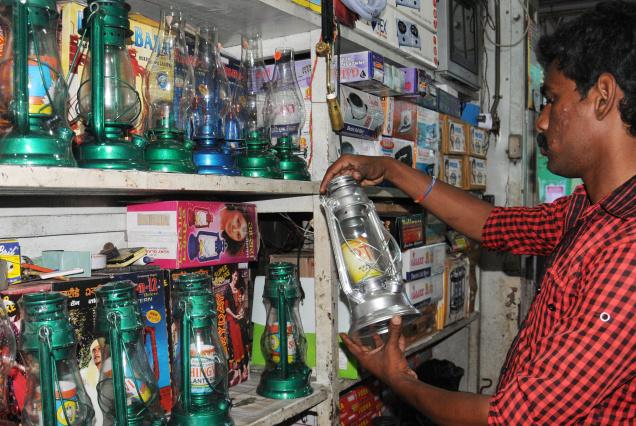
The lamps are now purchased only by restaurants, cinemas, serial production houses and interior decorators. Photo: B. Jothi Ramalingam / The Hindu
Hurricane lanterns, once a common sight in households, are now a part of antique collections
If you were to search the loft in your house, you might find a hurricane lamp with the faint smell of kerosene still emanating from it. These lanterns, which were once a common sight in households, are now a part of antique collections.
Until about two decades ago, most homes in the city owned hurricane lamps with wicks. The flame would never get extinguished, not even on windy nights. The children of the house were often entrusted with the task of cleaning them in the evenings.
“As children, we had to remove the glass covering carefully, and clean the soot gathered from the previous day’s use. After this, kerosene was poured in the bottom chamber and the wick lit. We used to study under its light,” recalls V. Aryadevi, an octogenarian resident of Mylapore.
Now, these lamps are purchased only by some restaurants, cinemas, serial production houses and interior decorators. “Earlier, we used to sell around 300 lamps per month. But, now, the number has fallen to 100,” says Shair Ali, who has been selling lanterns since 1945 on Evening Bazaar Road.
Though electric lamps have replaced hurricane lights, he says the latter burn for a longer duration. “I use one in my house to this day. You can still spot them in villages,” he says.
K. Nizam, who also sells hurricane lamps in the locality, says those who sell food on Marina and Elliots beaches, and petty shop owners purchase the lanterns from him. “But most customers prefer electric lamps. They feel that pouring kerosene and lighting the lamps is too much of a hassle. Hurricane lamps are more of a decorative piece in most homes now,” he adds.
source: http://www.thehindu.com / The Hindu / Home> News> Cities> Chennai / by Vivek Narayanan / December 24th, 2014
The bylanes of Charminar have series of shops offering Zardozi work. Most of them have been running the show for the past thirty to thirty-five years.
Stopping by Mohammed Haji at Laad Bazar, the artist, Mohammed Haji himself sits on the floor behind the wooden equipment working on a piece of cloth, held taut with two long pieces of wood and thread to enable him to work easily.
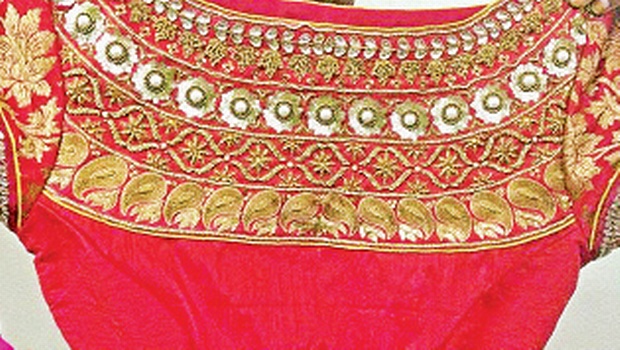
“Though in the beginning of my career, I used to do a lot of work on sarees, I mostly work on blouses now as people these days like heavy blouses,” says the 24-year-old, who started designing when he was in school.
Not being a family business, he got into the craft full-time after his class VII. “I started with helping my brother Mohammed Latif in my childhood as my mother would not like me wasting time. She asked me to pick up the skill as it would make a good source of income in future. I later dropped the idea of continuing schooling,” clarifies Haji.
He now has set up a separate workshop for himself in Laad Bazar and works along with one of his helper.
He says, “The way sarees are pre-designed these days has changed the fashion style.”
Today, we can witness a blend of the past with the present, the old with the modern. Zardozi has become a well-known and fashionable hand embroidery. “Earlier people would prefer heavy zardozi sarees. But now its limited to blouses only. Which in turn is affecting our income,” he rues.
The Zardozi work has not only kept up with modern embroidery but is also booming.
Ranging from gold to silver to the metal one, the craft though has changed with the passing time, Haji is more focussed on using the metal one, which he blends with zari, kundan, lace, chain, beads and resham threads. “But zardozi is what completes the design,” he informs.
Speaking about designs, he says, “Peacock and mango are the most popular designs which people prefer these days. They come up with their own designs. Sometimes if the customer has no idea about the design, I suggest them as per their material and the occasion. They add their own ideas to it and that’s how we brainstorm.”
Budget plays an important role while deciding design he says.
As his workshop is on first floor, there is not much footfall there so he generally picks orders from a nearby boutique.
The materials used to do the embroidery are bought from the city market.
The smallest work takes a day to be completed. “Gold, silver and antique Zardozi is in vogue now. Along with that, people also prefer using coloured ones,” explains Haji.
Each piece is charged as per the design and the materials used for embroidery. The quality check of the Zardosi, Haji says comes through years of experience.
The Zardosi works can specify patterns and motifs to suit their budget and choice. “Normally for a blouse we charge anywhere between `1,000 to `5,000. But for bigger works we charge more,” says Haji.
source: http://www.newindianexpress.com / The New Indian Express / Home> Cities> Hyderabad / by Pratima Shantaveeresh / December 22nd, 2014
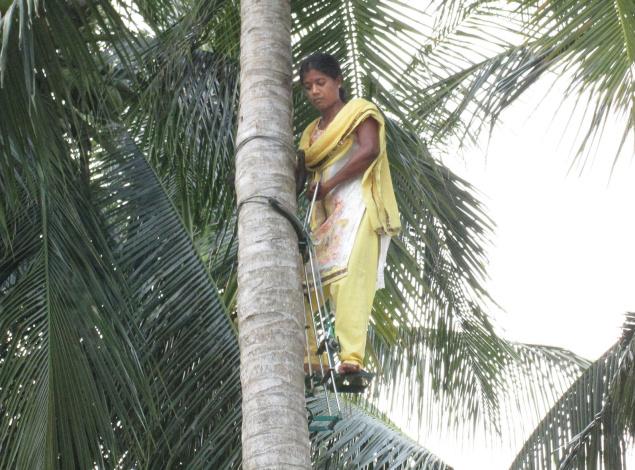
A woman undergoing training in coconut plucking at Parangipettai in Cuddalore district.
Even though Cuddalore district abounds in coconut trees, the price of coconuts is high. The reason trotted out for such market behaviour is the lack of manpower to pluck coconuts or the high wages the workers demand.
It has created a situation in which even the ripe coconuts are left either to rot on the trees or fall. It has become consternation for the coconut growers to find the workforce on time to harvest, not to speak of the plight of the households having a few coconut trees in their garden.
To overcome the problem, the M.S. Swaminatan Research Foundation (MSSRF) has launched the “Friends of Coconut Tree” programme for farmers and the unemployed youth.
R. Elangovan, Project Officer of the MSSRF, told The Hindu that the six-day training programme organised under the aegis of the MSSRF Village Resource Centre at Parangipettai was intended to help the farmers and unemployed youth learn to climb trees to pluck the coconut.
To start with, 20 persons, including four women hailing from Killai, Nochikadu, Manikkollai and Parangipettai, joined the programme conducted recently. It was conducted in coordination with the Coconut Development Board that provided the device for climbing the trees free of cost.
In-house training
It was a sort of an in-house training as the trainees would stay at the Parangipettai centre throughout the training programme. Besides mastering the tree climbing techniques, they were also taught yoga and pranayam.
Mr Elangovan said the Coconut Development Board had made it mandatory that 30 per cent of the trainees ought to be women.
It was a surprise that four women had come forward to enroll their names in the programme.
One of the trainees, Kausalya, 24, told this correspondent that initially she had hesitation in joining the programme as she lacked courage in climbing tall trees.
But, the device provided by the centre made the job simple and easy. She gained confidence gradually.
However, the centre has prescribed a dress code for women — they should either wear salwar kameez or a pair of trousers to avoid risks.
Mr Elangovan said that after completion of the training programme, Parangipettai Town Panchayat Chairman Mohammad Yunus gave away certificates and the climbing device (free of cost) to the participants.
source: http://www.thehindu.com / The Hindu / Home> News> National> Tamil Nadu / by A.V. Raghunathan / Cuddalore – December 18th, 2014
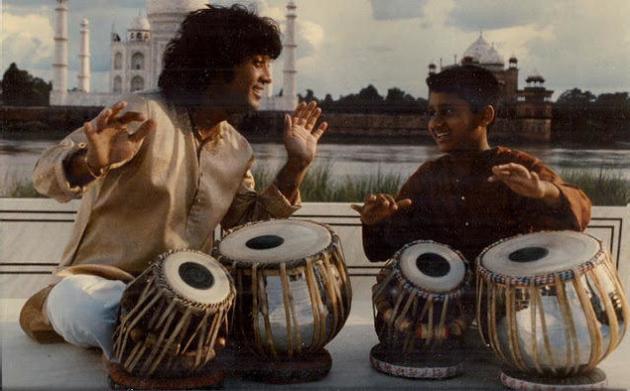
Aditya Kalyanpur (left) with Ustad Zakir Hussain in the commercial / by Special Arrangement
The “Wah Taj” campaign with Ustad Zakir Hussain not only engraved Taj Mahal tea on the popular imagination, it also helped the tabla to make its star space in the popular imagination
You have to admit it was a whacky idea. I mean, taken literally, who would you find to go and sit in front of the Taj Mahal and start practising the tabla? And then continue to sit right there, with India’s most famous monument as a backdrop, and sip a cup of tea served up by an anonymous hand? But it wasn’t just any old tea, it was Brooke Bond’s Taj Mahal, and it wasn’t just any tabla player, it was Ustad Zakir Hussain, one of the earliest ‘stars’ of Indian classical music. So, when the anonymous voice complimented his playing with “Wah Ustad, wah!”, the ustad replied with “Arre huzoor, wah Taj boliye!” And the entire nation was hooked.
Whether everybody began drinking Taj Mahal tea is not the question here, though that may have been important to the tea makers. But if it was consumer connect they were after, they hit a winner. Brand recall? The combination of “Wah Taj!” with the dashing young Hussain’s curly locks flying about his face as his fingers flew across the surface of his tabla — not to mention that charming smile accompanied by the resonance of his playing — ensured brand immortality.
The famous campaign / BL
It’s not surprising that the man commissioned to shoot that ad, Sumantra Ghosal, went on to make an acclaimed documentary on Ustad Zakir Hussain.
The tie-up between the tabla maestro and the tea company went on for a number of years, during which it must have helped that Hussain was not linked to any other product. The ad that added a phrase to the lexicon of modern Indians had a number of sequels. In one of them, an adorable little disciple keeps pace with the maestro and, in place of the disembodied voice, Hussain — hats off to the naturalness of his acting before the camera — praises the little fellow with “Wah, Ustad!” This time it is the cheeky little one’s turn to correct him, “Arre huzoor, wah Taj boliye!”
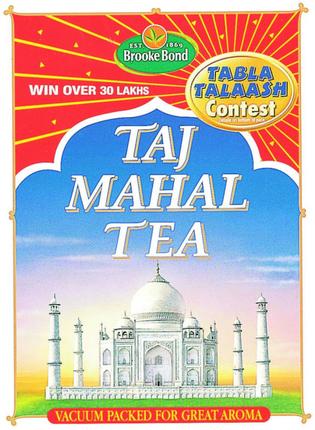
BROOKE BOND, TAJ MAHAL TEA / Special Arrangement
Aditya Kalyanpur is on tour in Goa when we contact him to look back on those early days. “I was around nine when I was invited by the ad company to do a screen test at Famous Studios in Mahalaxmi (Mumbai),” he recalls. It was his guru Ustad Alla Rakha — father of Zakir Hussain — that recommended him to the ad filmmakers, says Kalyanpur. “They were looking for kids to appear along with Zakir Bhai. But they couldn’t find any that played the tabla. So Alla Rakha sahib said why don’t you try this boy, he is playing well. Fortunately, they thought I was good looking and I could play.”
It must be a great thing to know that your guru has recommended you at such a young age as a promising artist. Agreeing that he has had many blessings in life, Kalyanpur says the elder ustad was “like a grandfather and mentor” besides a tabla guru.
While he was “excited and maybe a little intimidated” at the thought of playing with the celebrated Zakir Hussain, Kalyanpur says, “It was the beginning of a new chapter of my career. I learnt how to record, how to face the camera. Fortunately I started when I was very young.”
As for preparations, he says, “Zakir Bhai asked me to play a couple of relas — fast compositions. He picked one up and said let’s play this.” The audio recording was completed in Mumbai in only a couple of takes, but for the video for which they travelled to Agra, a few days were required. “In 1989, things were much different from what they are now,” he adds, referring to the changes in technology.
Kalyanpur agrees that the ad campaign, by emphasising the excellence of an ustad’s playing and juxtaposing it with its claim of a high quality tea, helped ordinary people become familiar with the concept of classical music and the tabla in particular. “Thanks to Zakir Bhai for reaching into people’s lives,” he remarks.
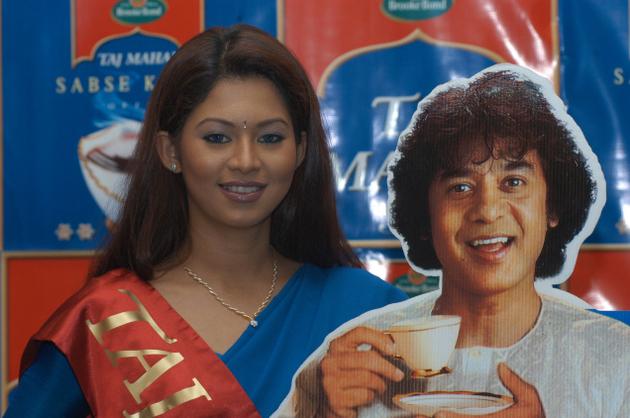
Some old-timers might have cringed at the idea of a serious artist allowing praise for his musicianship to be substituted with a lip-smacking pat on the back for a beverage — no matter how much a part of Indian culture that beverage was considered. If that shocked the purists, the 2001 ad (“Taj Mahal Challenge” of Hindustan Thomson Associates and HLL), really made them shudder. Here the ustad was shown staking a claim that if anyone found a better tea than Taj Mahal, he would quit playing his instrument. But, on the part of the ad makers, the idea was to simultaneously put the tea brand at the top of its category in consumers’ minds, and scotch wild rumours that had recently surfaced that Zakir Hussain was going to give up his performing career. By the time 2002 rolled in, contest winners were getting to meet the ustad and also receive a gold tabla set, for having ‘found’ his instrument, which his detractors — so the ads told us — had stolen since he could not be stopped from playing as no better tea brand had been discovered.
Time has proven that the partnership between the tabla wizard and the tea brand gave both their careers an enviably healthy longevity, and both are still going strong. And the brand’s classical music connection is expanding. Since this summer, sitar exponent Niladri Kumar has been the tea’s brand ambassador.
In recent years — another ad campaign, another beverage — we have been hearing that a lot can happen over a cup of coffee. But there’s no contesting, whirlwinds in a teacup are of an older vintage
source: http://www.thehindu.com / The Hindu / Home> Features> MetroPlus / by Anjana Rajan / December 14th, 2014
Once, these saris used to be woven by master craftsmen in Mysore. In the 17th century, Maharao Kishore Singh, a Mughal general campaigning for emperor Aurangzeb, took back with him some of these master weavers to reproduce these handcrafted, light and colourful saris in his town of Kota in Rajasthan. Over time, these saris came to be known as Kota Doria saris and the town itself became famous for this craftsmanship.
Centuries later, the Chennai youngster, so used to the heavier silk saris of the south, is taking a liking to these light saris. Catering to this demand, Noor Mohammed, 32, whose family has more than a hundred years of history in weaving Doria sarees, is bringing his wares to the city for the fourth time.
Noor Mohammed, who hails from Kaithoon village in Kota, says, where the weavers from Mysore came to between 1684 and 1695.
“This is the sole occupation of our village and we have more than 3,000 loom pits.”
Kaithoon is the biggest producer of Kota Doria in Kota. Mohammed primarily exhibits in Hyderabad, Delhi and Mumbai.
“A few years ago, our villagers were mazdooris (labourers) for businessmen who sold our sarees. Then, every family had an income of only Rs 4,500 a month. So we approached chief minister Vasundhara Raje and the government suggested that we weave and sell our own sarees. That’s when we formed our own weaving society, which has more than a hundred women. Now, the entire family weaves together.”
Mohammed says the family incomes have doubled now.
Kota Doria (Doria means thread) is made of cotton and silk threads in different combinations in warp and weft (vertical and horizontal weaving). The weaving produces square check patterns on the fabric known as ‘khat’. The skilfully made khat becomes transparent which is a unique characteristic of this fabric. An authentic Kota Doria is soft to touch with very little starch. Since the fabric is woven by hand on traditional pit looms, the edges on the side are slightly uneven.
“Contrary to the taste of south Indians, there is a separate crowd- mostly youngsters who go in for Kota because of its lightness,” says city based textile businessman C Balamurugan. “It weighs not more than a dupatta and it is particularly comfortable during summer.”
The exhibition will begin on December 20th at The Palace, T-23A, 7th Avenue, GOCHS Colony, Besant Nagar.
For details call 9840012523.
source: http://www.timesofindia.indiatimes.com / The Times of India / Home> City> Chennai / TNN / December 16th, 2014
Pehnawa – The Oudh Fashion Summit-2014, was organized by CII-Yi, Lucknow Chapter, in the city recently.
Muzzafar Ali and Dimple Yadav
Muzzafar Ali, who was the guest of honour for the event, earned many wah-wahs for his lines on Lucknow: “Nazakat aur nafasat tujhe virasat mein mili hai, naaz hai humein tujhpe pe ae Lucknow.”
The chief guest on the occasion, MP Dimple Yadav took note of the suggestions made by panelists to improve the work conditions for craftsmen working in the fashion industry, and promised to bring them to her husband and UP CM Akhilesh Yadav’s notice. “Work has already started on courses to train workers in chikankari,” she said.
source: http://www.timesofindia.indiatimes.com / The Times of India / Home> City> Lucknow / by Akash Wadhwa, TNN / December 14th, 2014
The fire services department will be Andhra Pradesh’s first department to move out of Hyderabad. The newly-built complex of the AP fire services will be inaugurated by chief minister N Chandrababu Naidu here on Friday.
The new fire services headquarters has been built near the police control room in the city. Although the complex was initially designed to locate regional offices, it was later decided to make it the headquarters of the fire department after the bifurcation of the state. The new complex will house nearly 50 officials of various cadres, from director-general of fire services to field officers. The complex also has space for parking six fire-fighting vehicles.
Fire services DG Nanduri Sambasiva Rao said the work on the complex was completed in a record six months time. The DG, along with district collector M Raghunandan Rao and DCP Taqseer Iqbal visited the complex and inspected the arrangements for the CM’s visit late on Thursday night. Naidu will visit the Ungutur assembly constituency in West Godavari district in the morning and will reach Vijayawada by evening.
source: http://www.timesofindia.indiatimes.com / The Times of India / Home> City> Hyderabad / TNN / December 12th, 2014