Category Archives: Business & Economy

Indian scientist gets Order of Merit from German government

Hyderabad :

Eminent Indian scientist Prof Seyed E Hasnain has bagged the Cross of the Order of Merit of the Republic of Germany. He served as the founder-director of Centre for DNA Fingerprinting and Diagnostics (CDFD) and vice-chancellor of University of Hyderabad.

The award has conferred on Prof Hasnain in recognition of his contribution to Indo-German relations. The Order of Merit of the Federal Republic of Germany was instituted in 1951 by Federal President Theodor Heuss. It is the only honour that is awarded in all fields of endeavour and is the highest tribute the Federal Republic of Germany can pay to individuals for services to the nation.

German Ambassador to India, H E Michael Steiner, conferred the prestigious ‘Bundesverdienstkreuz’ on Prof. Seyed Hasnain at the German Embassy in India, says a statement from the University of Hyderabad on Thursday. Prof. Hasnain is a renowned microbiologist especially acclaimed for his path-breaking research on tuberculosis. He paved the way for the office of the German Research Foundation in India, which is one of the key forums for scientific cooperation between Germany and India. During his stay at the Robert Koch-Institute in Berlin and the University of Wurzburg, he produced remarkable research results in microbiology.

Prof. Hasnain has almost all major Indian Science Awards to his credit: GD Birla Award, Shanti Swarup Bhatnagar Prize, FICCI Award, J.C. Bose National Fellow Award, Ranbaxy Research Award, Goyal Award, Bhasin Award and several others. He is the first Indian elected member of the German National Academy of Sciences Leopoldina and one of the youngest to be elected Fellow of TWAS, Trieste, Italy. Internationally, Prof. Hasnain is a recipient of the prestigious Humboldt Research Prize, awarded by the Alexander-von-Humboldt Foundation, Germany; as well as the very exclusive Robert Koch Fellowship, of the Robert Koch Institute, Berlin.

source: http://www.timesofindia.indiatimes.com / The Times of India / Home> City> Hyderabad / by Syed Akbar, TNN / March 13th, 2014

India-born British ‘curry queen’ hunts for new backers

London :

An India-born British ‘curry queen’ who made her name supplying ready-made Indian meals to supermarkets and pubs in the UK is looking for new backers for her food empire.

Perween Warsi, who moved to the UK from India in the 1970s, wants to expand her S&A Foods firm with an injection of fresh funds.

Advisers from PriceWaterhouseCoopers firm have been hired to lead the search for the company, she set up nearly 30 years ago, from her kitchen, according to the Sunday Times.

The Derby-based caterer, which has 600 staff, makes Indian curry dishes for UK supermarkets including the chain Asda, its biggest customer.

Sales last year were 51 million pounds with pre-tax profits of almost £700,000.

Warsi was famously inspired to start the company after being appalled by the quality of a samosa she had bought from a supermarket.

She founded S&A Foods in 1986 by supplying her local Indian takeaway and the following year had her big break after persuading several large grocery chains to include her food in a series of taste tests.

Warsi was producing the curries from home but, after beating several established food manufacturers in the tests, was persuaded to open a factory.

She was honoured with a Commander of the Order of the British Empire (CBE) in 2002.

S&A Foods confirmed it was “seeking partners” to fund future expansion and new production facilities.

source: http://www.timesofindia.indiatimes.com / The Times of India / Home> NRI> Other News / by PTI / March 09th, 2014

She brought ‘ghararas’ to Ludhiana

In this town of good taste and high living, women score high on the trend-o-meter. Fashionistas, dance divas, art connoisseurs, bloggers or activists, the ladies don their hats with consummate ease. When it comes to their homes, they keep it both chic and regal. Whether it’s designer cutlery they’re picking or a Louis Vuitton  they’re packing,  Ludhiana’s women make both seem effortless. Every Wednesday, TOI traces these euphoric raconteur women as they share interesting tales…

The tiny little board announcing ‘Naurah’ (flower in Arabic) welcomes city’s shopaholics to this designer wear store. Tucked away in a Sarabha Nagar neighbourhood, this place is no less than a fascinating world of floristry.

The banter inside the charming store is a cinch to transport the womenfolk back to the 1980’s Doordarshan days.

Geti  Kidwai, the dynamic young owner of the boutique, is mobbed by the frenzied girls as she greets each with a wall of chatter and a display of unusual bridal wear. With apair of “karan phool” in her ears, she unwittingly reminds one of a diva news presenter from India’s first public service broadcaster.

“Yes yes… we make ‘ghararas’ here. The one that royal women in Lucknow wear. The one that have ‘zari’ and ‘zardosi’ work. Royal blue, pink, purple… all for your princess. And yes, the iconic newsreader Salma Sultanji is my mother-in-law,” she tells them, speaking breathlessly and with enormous liveliness in her voice.

Geti, who moved to Ludhiana along with her husband Saad in 2007, is credited to have brought a breath of fresh air to designer circles of this fashionable city. Four years ago, she had set a new trend by using ‘ghararas’ with their short, mid-thigh length and a pair of wide-legged pants as the trousseau wear for Ludhiana’s beautiful women. The outfit became an instant hit among the affluent and urbane women of the town. And, Geti developed her own fan following from a closed cohort of women looking up to her as their fashion icon, much like her mother-in-law.

If one were to measure Sarabha Nagar outlet ‘Naurah’ on a style-o-meter, the results will please its owner Geti Kidwai no end. High on vintage and also on modern twists to outfits, the place is all about the 21st century woman’s take on trousseau and bridal wear. And Geti, much like her mother-in-law Salma Sultan — a popular presenter on Doordarshan, has a style of her own.

“Style icons… bhai kuch aisa karo ki log kahe aapko dekha kya cheez hain aap bhi koi tareekhi cheez hain..,” she grins, recollecting a couplet that Salma recited to her. Between 1967 and 1997, Salma Sultan had initiated a trend: of wearing a flower low in her hair and draping the border of her sari around her neck in a modern yet traditional way. It was later picked up by almost all the women newsreaders.

All Geti’s ‘ghararas’ are bespoke and come in different varieties. They are either made of Kimkhav, Jamavar or Banarasi tissues. The embroideries are done using a lot of kundan and jadaau.

From graduating in sociology and fine arts in 1997, through post graduation in interior designing, her journey has been eventful.

There are traces of effusive child-like prattling when she talks about her venturing into modelling and choreography that even drew mild ire of her father.

“Shauk bahut tha na har cheez mai kudne ka… papa kehte hai are bhai ab ruk bhi jao…” she recollects and then breaks into peels of laughter again.

“He then asked me to step out of modelling and do something which involved… like getting into choreography. But here again, I will jump onto the stage and start moving my legs,” she adds.

Her zest to conquer everything took her to contesting Miss India pageant, ramp shows and even setting up a gourmet shop called Just Kebabs in south Delhi. “Kakori… tikka… bharra… you could get all of that there… ab Lucknow se hai toh khaane ka shauq toh rakhenge,” she quips.

There is no economisation of smiles on her face. Every long sentence must ensure a belly laugh for she tells you hilarious incidents, some in Urdu and others in English – both impeccable.

“Ab yeh bhi nahi ki hum bilkul hoosh hai (not that I am an ill-mannered garrulous talker)… gappe lagane mai maza aata hai,” she points out.

When fulfilling her professional duties, she is punctilious and spick and span.

“I like dressing up girls, telling them how to comport at their or other’s weddings, how to carry a clutch bag, eye contact…” she goes on.

Her kids — son Samar, 12 and daughter Mehar, 7 — have begun idealizing her. Samar has been focusing on his chess classes and Mehar has taken up choreography. “Dangayee bachche nahi hai… I tell them shareef hona theek hai… but dumb mat hona… thoda mischievious toh hona chahiye,” she laughs.

source: http://www.timesofindia.indiatimes.com / The Times of India / Home> City> Ludhiana /  by Rohan Dua / July 18th, 2012
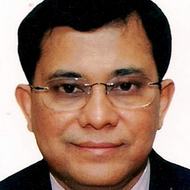
HR Khan replaces Gopinath as RBI deputy governor

Mumbai :

Harun Rashid Khan on Monday took charge as the deputy governor of the Reserve Bank of India for a period of three years. He replaces former deputy Shyamala Gopinath, who retired last month, the central bank said in a statement.

As one of the deputy governors at RBI, Mr Khan will look after external investments & operations, government & bank accounts, payment & settlement systems, foreign exchange, internal debt management department, inspection & central security cell.

Prior to this, he has been an executive director at the central bank in charge of DEIO and IDM since 2007. He joined the banking regulator in 1978 after masters in political science from Utkal University. He is a Certified Associate of the Indian Institute of Banking and Finance and also holds a diploma in business management.

An MPhil from JNU, Khan, who spent 32 years with RBI, is said to be mild but sharp. He has worked under former deputy governor Usha Thorat and handled internal debt management cell for several years. He has handled diverse responsibilities in areas of rural credit, currency management, banking supervision and regulation, debt management, reserve management, exchange control, personnel administration and internal accounts of RBI. He has also been associated with a number of internal and external committees, including technology exports, ways and means advances to states and working group on model fiscal responsibility and budget management bill for states, among others.

He also chaired a panel which was involved with rural credit and microfinance and popularly known as the Khan Committee. Khan was also the nominee director of RBI on the boards of  Dena Bank , Bank of Maharashtra , Punjab and Sind Bank, Bank of Rajasthan and Orissa State Finance Corporation.

The other three deputy governors at the central bank are KC Chakrabarty who looks after banking supervision, Subir Gokran in charge of monetary policy department and Anand Sinha in charge of banking operations and development & non-banking supervision.

source: http://www.articles.economictimes.indiatimes.com / The Economic Times / Home> News> News By Company> Corporate Announcements > Central Bank /  ET Bureau – July 05th, 2011

HR Khan

HR Khan,  Dy Governor RBI
HR Khan, Dy Governor
RBI

The government has appointed Harun Rashid Khan a deputy governor of the Reserve Bank of India ( RBI) .

Khan, who gets a three-year term, will monitor the foreign exchange department, payment and settlement systems and external investments and operations, among others.

H R Khan’s deputy governor’s position at the central bank became vacant after Shyamala Gopinath retired on June 20. RBI has four deputy governors. They serve for five years or till the age of 62, whichever is earlier.

Khan was an executive director (ED) at RBI since October 2007. He is credited with evolving the information communication technology-based business correspondent model for financial inclusion. He chaired the RBI internal committee on rural credit and microfinance. Based on the recommendations, RBI had issued guidelines to expand banking outreach through business correspondents.

As an ED, Khan was in charge of the department of external investments and operations, the foreign exchange department and internal debt management, among others.

He joined RBI in 1978, after a Masters in political science from Utkal. University, Bhubaneswar, and an M.Phil from the School of International Studies, Jawaharlal Nehru University, Delhi.

source: http://www.moneycontrol.com / MoneyControl.com> ELITE / Home> Economists> HR Khan

Prachi Desai, Gauhar Khan Turn Showstopper


Gauhar Khan (IANS Photo).

Actress Prachi Desai and Gauhar Khan turned show-stopper at the Lakme Fashion Week here.

Known for her exotic red carpet creations worn by Bollywood stars, Sonaakshi Raaj presented her collection ‘A Broadway Affair’ on day four of the Lakme Fashion Week Summer/Resort 2014 here.

It was a collection of skirts teamed up with cropped tops, high waist pants with bustier, gowns, pre-stitched draped saris with corsets, lacy blouses, halter gold bustier in shades of white, beige, light blue and tomato red.

Wearing a stunning corset and moulded draped sari, Prachi turned the showstopper for Sonaakshi.

Another designer Ken Ferns created a floral fantasy for his garments through his collection called ‘Secret Garden’.

The silhouettes were utterly feminine with cropped tops, pleated shorts, floppy sleeves for asymmetric tunics, maxi skirts teamed with blouses for women. Men’s wear was a line-up of shorts, printed pants, shirts and muscle sleeved tunics.

He made use of colours like blue, white, turquoise, green, pink and lime green.

Ken had Gauhar, who wore a printed corset with a long pencil skirt seductively slit at the back.

source: http://www.newindianexpress.com / The New Indian Express / Home> Entertainment> Fashion / by Anupika Khare – Mumbai / March 15th, 2014

Mughal Emperors eyes medical tourists from Iraq

The company is promoted by Yakub Habeebudin Tucy, the great grandson of last Mughal Emperor Bahadur Shah Zafar.

Hyderabad-based Mughal Emperors Logistics Private Ltd is reaching out to Iraqi nationals interested in medical tourism in India.

The company, which is promoted by Yakub Habeebudin Tucy, the great grandson of last Mughal Emperor Bahadur Shah Zafar, said it was also looking at Jordan and Palestine.

According to Tucy, the potential medical tourists from Iraq to India is 800-900 every year. While a less severe medical therapy costs around Rs 60,000 in Iraq, in India it costs Rs 15,000-20,000. The cities mostly preferred for therapies are Mumbai, Chennai and Hyderabad.

On average, a medical tourist from Iraq stays for 20-25 days in India, while in some cases it’s around 60 days.

On the total Indians visiting Iraq annually, Tucy said more than 16,000 visit places of religious interest including the shrines of Abdul Qadir Gilani in Baghdad, Imam Hussain in Karbala and Imam Ali in Najaf. Some Indians also throng the ruins of Babylonia on the River Tigris.

Mughal Logistics is ferrying a batch comprising 100-120 individuals every two months to these holyplaces for the Muslim community.

It runs a seven and eight-day package for Indians travelling to Iraq, priced at Rs 65,000 and Rs 75,000 respectively.

source: http://www.business-standard.com / Business Standard / Home> Companies> News / by BS Reporter / Hyderabad – March 05th, 2014

Mayor Majid Hussain to quit today

Hyderabad :

Mayor Mohd Majid Hussain will resign on Friday ending his over two-year term at the helm of the Greater Hyderabad Municipal Corporation (GHMC).

His party Majlis-e-Ittehad-ul-Muslimeen (MIM) has asked him totender his resignation from the post on Thursday. MIM is likely to field him in one of the Assembly constituencies in the city.

“My party has directed me to resign from the post on Thursday. Abiding by the decision of the party, I am resigning on Friday. My party will take a decision on utilizing my services,” Majid Hussain told TOI on Thursday.

Majid Hussain took over the reins of the GHMC on January 3, 2012 as part of the power-sharing agreement between MIM and Congress in 2009 soon after the civic body elections.

As part of the agreement, of the five-year term, the mayor post goes to a Congress candidate for the first two years followed by that of MIM for the next two years. The last year should go to a Congress candidate. Likewise, the deputy mayor post would go to the other party during that period. Congress mayor Banda Karthika Reddy had served as the mayor for the first two years and subsequently MIM corporator from Ahmed Nagar, Mohd Majid Hussain, took over the reins in January, 2012 and has completed his two-year term on January 3.

Though in the last one year the mayor post should have gone to the Congress, the party has not been claiming it for various reasons mainly keeping in view the likely tie-up with the MIM in the general elections. Since Congress was not coming forward, Majid Hussain continued in the post.

By pulling out from the mayor post, MIM is likely to snap its ties with the Congress in the upcoming Lok Sabha, Assembly and GHMC elections to be held this year.

With the resignation of Majid Hussain, Congress has to announce its mayor candidate. Several corporators, including deputy mayor G Raj Kumar, floor leader Diddi Rambabu, Bowenpally corporator Narasimha Yadav and others are eyeing the post.

source: http://www.timesofindia.indiatimes.com / The Times of India / Home> City> Hyderabad / by TNN / March 07th, 2014

Repository of Indian medicines

With the growing interest in traditional and complementary systems of medicine across the globe, a facility located in Foundation for Revitalisation of Local Health Traditions (FRLHT) campus, Bangalore helps authenticate the identity of medicinal plants, especially in the form of a repository of the natural resources. 

This centre named as Bio-cultural herbarium is a one-stop information related to plants and currently holds about 40,000 accessions pertaining to more than 3,200 medicinal plants collected from across various bio-geographic regions of the country. A unique feature of this herbarium is its easy accessibility both to the scientific community and the layman which has been achieved through linking the cultural information pertaining to vernacular names, local uses and classical uses of plants to the herbarium database.

The centre also has a repository of raw drugs collected directly from the botanical source and samples. The herbarium and raw drug repository is supported with an image library that currently possesses over 20,000 images. Dr Noorunnisa Begum, curator of the Herbarium says “Traditional knowledge of medicinal plants and their utilisation is increasingly being realised and put to use by modern medicine”.

The long term goal of the centre is to act as a vehicle to promote medicinal plant conservation and in turn help revive health care traditions.

source: http://www.deccanherald.com / Deccan Herald / Home> Supplements> Spectrum / by Manish Sharma / March 11th, 2014

A slice of Kutch in Hyderabad

Jabbar Khatri
Jabbar Khatri

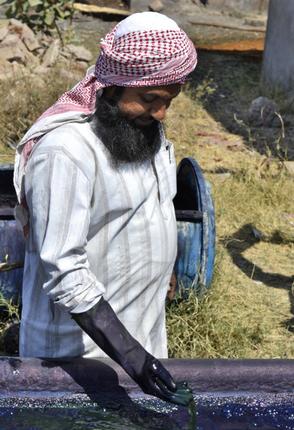
Abdul Jabbar Mohammed Khatri is not a name urban dwellers are familiar with, but many get to wear garments made from the natural-dyed, ajrakh-printed fabric that comes from his workspace in Dhamadka near Bhuj, Gujarat.

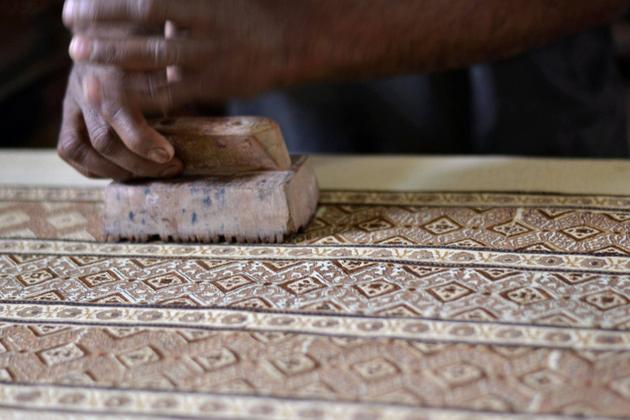
The ajrakh block printing process at Jabbar Khatri's workshop in Dasada, near Bhuj / The Hindu
The ajrakh block printing process at Jabbar Khatri’s workshop in Dasada, near Bhuj / The Hindu

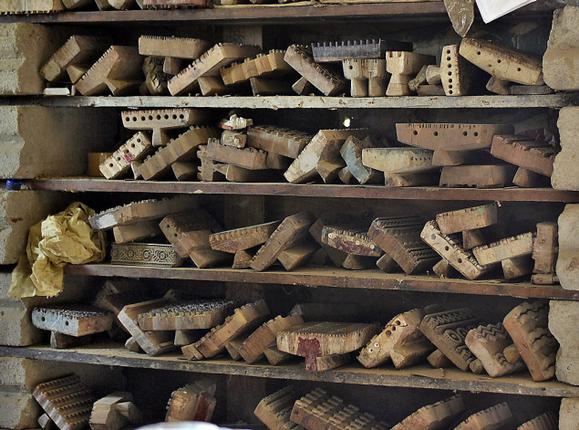
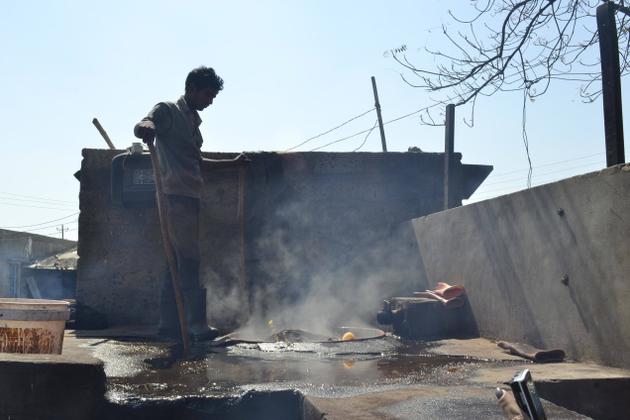
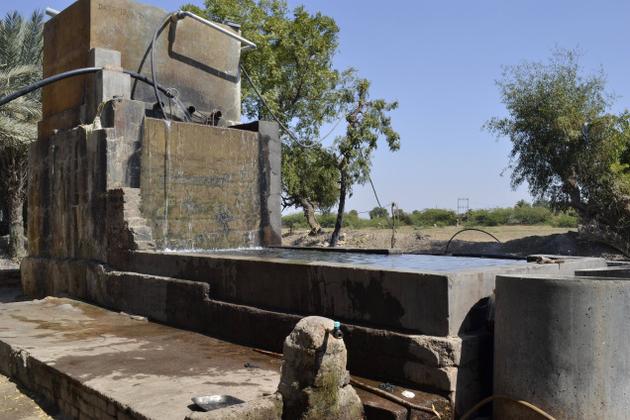
As one enters the muddy lane leading to his workshop, one can spot several metres of fabric, in different stages of dyeing and printing. The workshop has a large outdoor area where water from the borewell is filtered to rid its iron content, a boiling unit where fabric is treated several times during printing and dyeing and a printing room lined with tables and innumerable wooden blocks intricately carved with ajrakh patterns.

Stacks of ajrakh blocks at Jabbar Khatri's workshop in Dasada, near Bhuj
Stacks of ajrakh blocks at Jabbar Khatri’s workshop in Dasada, near Bhuj

A part of Khatri’s storehouse has stock that has to be sent to Fabindia. He’s a national-award winningajrakh printer and this is the 10th generation of a family of ajrakh printers that moved from Sind to Dhamadka. “Ajrakh requires running water and my forefathers moved here because of the river Saran, which dried up in 1987. Now we draw water from a depth of 200ft and it has more iron content,” he says.

A staff member treats the printed and dyed fabric with boiling water at the ajrakh workshop of Jabbar Khatri in Dasada, near Bhuj

In the initial stage, an indigenous ‘harda’ root is used as a mordant for the fabric (pomegranate skin and acacia nut skin are the other mordants). The ‘harda’, says Khatri, can react with iron in the water and turn the fabric black. “We use a filtering unit that has a bed of sand, coal, small and large stones to filter the water; iron particles gather on top,” he explains.

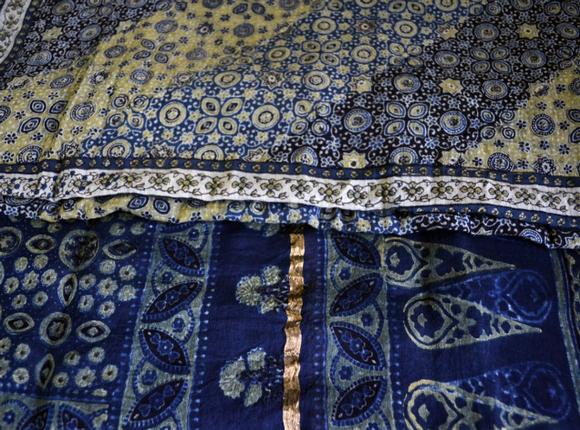
The dye varies from alizarine, madder or indigo, according to the colour desired. A mixture of lime and gum is used as a resist dye to keep the white portions intact.

Ajrakh printed saris, dupattas and stoles are now a fashion statement. Khatri recalls that a few generations ago, those who reared animals were the primary customers buying lungis and towels. Double ajrakh or printing on both sides, now a niche domain, was done to make the fabric more useable. “If one is wearing a lungi that flutters in the desert wind, one wouldn’t want the inner side to be not colourful,” says Khatri. Double ajrakh requires precision and is done only by master craftsmen.

An indigenous water system used to wash fabrics at the ajrakh workshop of Jabbar Khatri

If naturally dyed ajrakh printed fabric comes at a premium, it is because of the work that goes into it. In Ajrakhpur village in Kutch, several craftstmen specialise in block prints. “Each tribe has specificpatterns of ajrakh and communities do not copy patterns,” smiles Khatri.

Jabbar Khatri will be demonstrating ajrakh block printing at the International Workshop on Natural Dyes organised by ANGROU in Hyderabad from March 5 to 7.

Weft, warp and a legacy

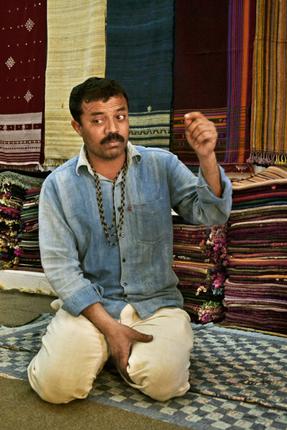
Visitors to Bhujodi village near Bhuj would be surprised by the number of award-winning weavers in the village. Among them is Vankar Shamji Vishram Valji, known as Shamji bhai, who will also be participating in the International Workshop on Natural Dyes in Hyderabad next week. He gives us an insight into the Bhujodi settlement and its new quake-resistant and weather-proof houses and looms and moves on to talk about indigenous wool from the sheep he uses for weaving shawls, throws and bedspreads. Shamji bhai’s family weaves a small number of shawls in chemical-dyed, acrylic wool for commercial purposes but the larger focus is on indigenous wool and kala (black) cotton that grows in the area and natural indigo for dyeing.

Vankar Shamji at his store in Bhujodi, Bhuj

“I get indigo from Auroville and Hyderabad,” he says, showing us his indigo vat, a 3.5ft clay pot placed partially within the ground. “We use excreta of goats at the base to maintain the temperature of the vat. Goats feed on salty leaves and hence their excreta does not attract ants,” he reasons. One of the vats he now uses has a four-year-old indigo dye that gets replenished after each dyeing process. Date, lime and water are added to the vat from time to time. “A vat can be used up to 20 years if it is in good condition. One has to use the vat each day,” he says. These vats, explains Shamji, are smaller than those used in Rajasthan to dye saris.

Shamji and his brothers work in spaces designed with an understanding of wind and sun direction so that they use minimum or no electricity. “We moved here from Rajasthan 10 generations ago, invited by members of Rabari community. The Rabaris are herders and their garments were the yardstick of their wealth,” he explains. Traditionally, Rabaris wore black and white while Ahirs (farmers) wore multicoloured garments. “The Rabaris wear black to mourn the death of one of their kings (the black shawls worn by Deepika Padukone in Ram Leela is an example) and the Ahirs, believed to be descendants of Lord Krishna, like colours,” adds Shamji.

Natural-dyed fabric with ajrakh block prints

Today, Shamji’s family weaves cotton and wool shawls, stoles and furnishings and has a clientele that extends beyond Gujarat. He shows us prized, award-winning weaves by him and his father, valued at more than Rs. 2 lakh each. “My dream is to open a gallery to showcase such pieces,” he says.

(The writer was in Kutch as part of a textile trail conducted by Jaypore-Breakaway Journeys).

source: http://www.thehindu.com / The Hindu / Home> Features> MetroPlus> Events / by Sangeetha Devi Dundoo / Hyderabad – Bhuj, February 27th, 2014