From Asia’s largest trout farm in south Kashmir’s Kokernag, 500,000 trout ova were dispatched to Arunachal Pradesh, Nagaland and Uttarakhand for rearing
Representational image. (REUTERS)
Brown and rainbow trouts are cold water fish introduced in Kashmir over 100 years ago.
The chief trout farming project officer at Kokernag, Mohammad Muzaffar Bazaz, said that 500,000 trout ova were dispatched from the farm to Arunachal Pradesh, Nagaland and Bhimtal in Uttarakhand where the directorate of cold water research centre has been established by Indian Council of the Agriculture Research.
Bazaz said that the 500,00 trout ova were airlifted so the progeny reach the respective destinations safe and unharmed.
“Our staff at the farm worked overnight so these trout ova reach the respective destinations undamaged. The facilities were provided by the principal secretary of the animal husbandry department through the PMMSY scheme.”
Spread over 20 hectares, the farm was set up 36 years ago with support from the European Economic Committee. It started with a single hatchery which has now been upgraded to three hatcheries that supply millions of eyed ova and seeds to beneficiaries, including private fish farmers.
Bazaz said that Kashmir has two types of fisheries, warm and cold water. “For trout culture, the temperature shouldn’t exceed 20 degrees Celsius. Brown trouts are in abundance in the upper reaches,” he says.
Kashmir is also known as an anglers’ paradise—tourists, particularly foreigners, head for high-altitude water bodies as brown trout is found in high-altitude lakes and streams.
source: http://www.hindustantimes.com / Hindustan Times / Home> India News / by Mir Ehsan / January 18th, 2021
Natural fragrances are a big hit in India. Photo: Special Arrangement/THE HINDU
These natural fragrances have a cult following that seems to defy their low-profile marketing
For several years now, Hassan Siddiqui has never had a day that did not include perfumes in it. “I have around 600-700 bottles of attars and around 300 Western scents. The costliest one in my collection is a 10-ml bottle of pure Oudhattar that costs ₹46,000. Yes, it’s like an addiction, but of the good kind,” he laughs, over a phone interview.
The 26-year-old Siddiqui is one of many aroma enthusiasts trying to highlight India’s thriving indigenous fragrance industry through social media. Though he is based in Bahraich, a small town near Lucknow in Uttar Pradesh, Siddiqui reaches a global audience through his YouTube channel Perfume Review India. It offers a mix of product trials, interviews with perfumiers and explainers on fragrance usage and terminology in Hindi/Urdu, to its 17,800-plus subscribers.
Hassan Siddiqui educates customers about the latest attars through his YouTube channel Perfume Review India. Photo: Special Arrangement/THE HINDU
Siddiqui wants to increase awareness about the role natural fragrances play in Indian culture. His focus is on attar or ittar, a broad term that refers to scents using essential oils derived from botanical sources via steam or hydro-distillation, a method credited to the Persian physician Ibn Sina (also known as Avicenna in Europe).
Many of India’s traditional attar manufacturers rely on Ibn Sina’s extraction techniques, and are masters at creating not just floral scents, but also edible flavouring from natural sources.
Over a thousand enterprises are reportedly involved in the Indian perfume industry, estimated to be worth 500 million USD in a global market of $24 billion. Besides natural plant extracts, perfume manufacturers use chemicals and synthetic additives.
Even though imported alcohol-based perfumes have a more visible presence in the Indian market, attars too are holding their own. As India grows 31 of the 300 naturally fragrant raw materials required for perfume manufacture, it is an important supplier of essential oils like mint, jasmine, sandalwood, tuberose and spices in the global market.
Traditional production
The domestic natural fragrance market is dominated by Kannauj, a town in Uttar Pradesh known as the perfume capital of India. “We have been using the same hydro-distillation technique since 1896, when my great grandfather Sheikh Mohamed Ayub established the perfumery,” says Saad Akhir, of Kannauj’s family-run business Syed Mohamed Ayub Mohamed Yaqub Perfumers.
The ancient technique starts with the plucking of flowers early in the day. The petals alone are mixed with water and poured into copper stills known as deg and sealed with a mixture of clay and cotton. A bamboo pipe doubling as a condenser (chonga) connects the deg to the copper receiver (whose mouth has been covered with cloth or bhapka) placed in a cooling chamber filled with water.
An earthen oven (bhatti) fuelled by wood and dung cakes ‘cooks’ the petals until the distillate is obtained from the vapour in two separate rounds. Both the bhatti and the water in the cooling tank are constantly monitored to maintain an even temperature.
Kannauj is known for attar shamama, a dense, woody scent said to be invented by Sheikh Mohamed Ayub, that is used in the base of most perfume blends by designer houses in France and UK. “Ironically,” says Siddiqui, “they are sold back to India, at a considerably high price, and our people are unaware of this.”
Patronised by the Mughals and the other princely states with Turkish links, attar makers and sellers were once an integral part of the Indian cityscape, as can be seen from the remnants of street names like ‘Attar Mohalla’ and ‘Gandhakaarar Theru’ in southern India.
Vishwas Vijayvergiya of Sugandh Co, Lucknow. The manufacturing unit which uses the ‘deg-bhapka’ system of hydro-distillation can be seen in the background. Photo: Special Arrangement/THE HINDU
“The credit for patronising perfumes in Lucknow goes to the Nawabs of Oudh, particularly to Nawab Wajid Ali Shah,” says Vishwas Vijayvergiya, whose family runs Sugandh Co in Lucknow. Apart from distillate extracts of agarwood, sandalwood and flowers, India also pioneered the art and science of making incense, an elixir that perfumes spaces through the combustion of fragrant materials with aromas permeating through smoke, he adds.
Keeping it natural
The lockdown briefly affected production of base oils until restrictions were eased in September. “Even though our exports have stopped due to the pandemic regulations, we are still manufacturing for our domestic customers,” says Mohamed Sadathullah of Hameed and Co Perfumers in Hyderabad.
______________________________________
Plan B for lockdown
The pandemic-induced slowdown has made many perfume companies diversify their product base. While Lucknow’s Sugandh Co still has artisanal winter fragrances this year like Azeemah, Utsav, Hayaa and Kausar, it has also looked into chemical sanitisers. “Like all other sectors, the perfumes sector came to a standstill during the lockdown. However because fragrance is such an integrated part of all everyday life, we continued manufacturing industrial perfumery compounds for the hand-sanitiser and soap industries as soon as the lockdown was eased,” says company executive Vishwas Vijayvergiya.
Adds Rahul George, of ARI Fragrances, Bengaluru, that creates signature aromas for corporate spaces, “Before the lockdown, nearly 80% of our clients were IT companies, who have all started working for home since March. So we are focusing now on manufacturing for pharma and hospitals. We are hoping to launch products related to women’s personal hygiene and a fragrance for pets.”
______________________________________
“We make perfumes with a sandalwood base, and also blends from attars bought from Kannauj, like henna, rose, and amber. We make oudh from the wood (agarwood, aloe wood) that grows in Assam. The wood chips are cooked to extract the oil from it. All our sandal-based perfumes are made without chemical additives and alcohol,” he says.
Cities like Delhi, Hyderabad and Lucknow are also popular for attar shopping tours, which give visitors a whiff of history with an ittar-saaz or perfumier creating a customised attar using different compounds.
Rose petals being prepared for the ‘deg’ in Sugandh Co, Lucknow. Photo: Special Arrangement/THE HINDU
“We can recreate most of the French, Italian and American scents with the help of the ingredients here, because the base note is more or less the same,” claims Saadathullah.
Measured in tolas (12 ml = 1 tola), the attar is sold in quaint craft glass bottles that add to the Oriental mystique of the perfume.
YouTuber Siddiqui, who launched his own perfume brand recently, says that he has come across some expert aroma replicators on his tours. In one of his videos on unusual attars, Siddiqui reviews products that smell like ‘Johnson’s Baby’, mud, and Lucknowi biryani. “I feel we should do more to showcase our attars effectively. The manufacturers have not even entered into influencer marketing, though this industry is thriving,” he says.
He points out the image problem attars seem to have, in general. “Expensive attars, which typically sell for ₹1,000 per 10ml, are packaged in ₹3 glass bottles with cheaper applicator sticks. Besides this, customers need to be educated on the right time of the year, and day, to use these natural scents. A winter-time perfume like musk can turn out to be very smelly in summer.”
source: http://www.thehindu.com / The Hindu / Home> Life & Style / by Nahla Nainar / Chennai – December 29th, 2020
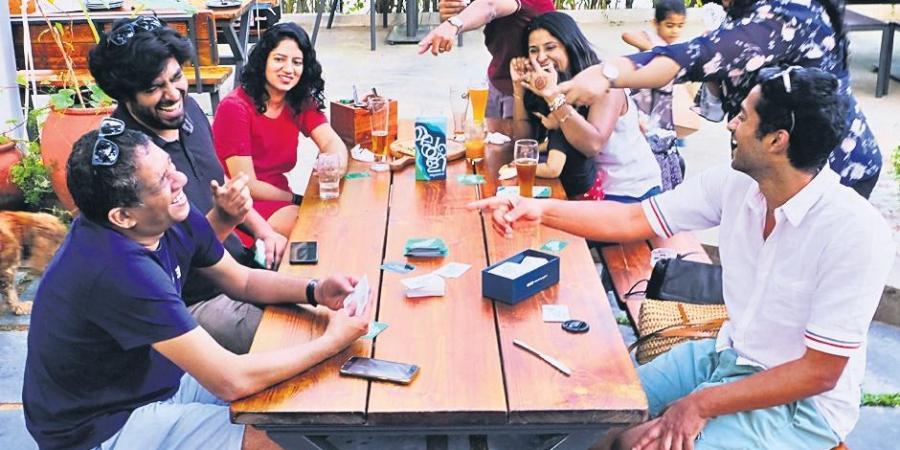
This new card game created by two Bengaluru-based women, who hail from Kerala, celebrates Malayali culture, Mollywood and more.
The game needs at least four players and can be played by anyone aged 18 and above
Bengaluru :
You may take a Malayali out of Kerala but you can’t take the love for Malayalam pop culture out of a Malayali. Or so it seems from this new game developed by two Bengaluru- based women who hail from God’s own country. Called Malayali Aano, the new game by Sona Zainab Harris and Rose Mary Jacob is a cardbased game that draws heavily from Malayali pop culture, popular phrases, movie characters, food, stereotypes and other such trivia.
Those who have played the popular party game Cards Against Humanity need no introduction to the rules of Malayali Aano, whose tagline is: ‘A party game for devil’s own people’. It consists of 500 cards, of which 100 have questions on them while 400 have statements, movie dialogues, or phrases that could work as an answer. One player picks a question card, others throw the quirkiest answers from the 10 they possess into a pile. The player that poses the question reads out each question- answer pair, laughter ensues and the most creative or whackiest answer wins.
A minimum of four players is mandatory, with more being merrily encouraged. “Each statement in the answer card is iconic in its own way but when set to the context of another question, it can incite a laughter riot. Since we’ve picked out trivia from the 1980s to now, the nostalgia factor is high as well.
Any player aged between 18 and 45 will find something to remind them of their childhood, adolescence, first romance, parental relations or their connection to Kerala,” says Harris, the founder and creative director of Backflip Design Studio. But it is not just fun and games.
It also helps bring up important conversations. “When you hear certain dialogues – for example, ‘You are just a woman’ from the film The King – you don’t think much in the context of the plot. But isolating such things and using it in the game makes people see that it could be problematic too. Humour can help break barriers with topics like sexism, classism, misogyny, etc,” says Jacob, who is also the founder and curator of the popup My Cup of Tea.
The two women took a month to develop the content of the game. It makes use of, what Jacob and Harris refer to as, a “Manglish” script. There is also a leaflet with a QR code that can be scanned to understand the translation and reference of the answer cards. The game is meant for those aged 18 and above, with some players even finding it to be an effective ice breaker with their parents.
“One player told us he never thought he would talk to his father about the topics included in the game. But they had a good laugh about it, so it can help different generations bond better too,” says Harris.
source: http://www.newindianexpress.com / The New Indian Express / Home> Cities> Bengaluru / by Simran Ahuja / December 29th, 2020
Sondarapally Village (Thalassery),KERALA / Sharjah , UAE :
C P Rizwan won the man-of-the-match award his 109 against Ireland in the first ODI on Friday
Kannur:
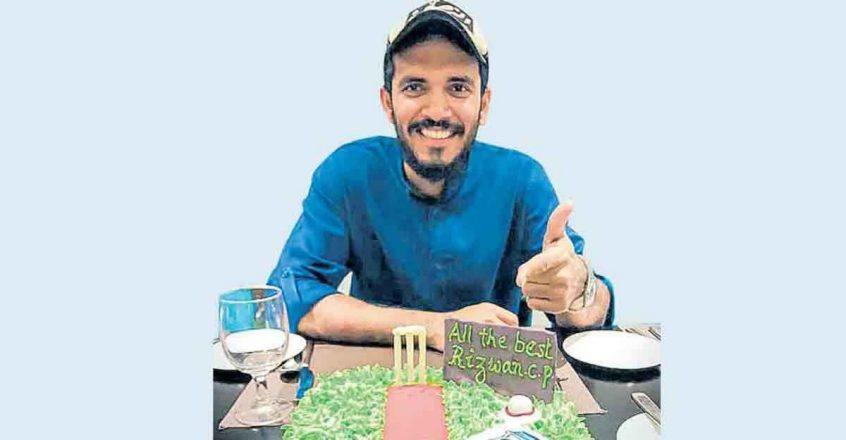
The story of C P Rizwan, who on Friday became the first Keralite to score a One-Day International (ODI) century representing any country, bears testimony to the fact that if you strive hard and stay focussed, you will ultimately realise your dreams.
The 32-year-old hailing from Thalassery, the cradle of cricket in Kerala, never gave up and never lost hope, even when his career hit a roadblock.
Growing up at Saidar Pally, a small village near Thalassery, Rizwan’s childhood mostly revolved around playing cricket with his friends in the locality. The youngster was gifted with the qualities that make a batsman successful at the top level and had the potential to become a future star.
He went on to represent Kerala in the junior levels and captained the U-25 state team. Although his performance in age-group categories was rewarded with a place in the senior side which included the likes of Sanju Samson and Sachin Baby, he was never given a chance in the playing eleven.
As it was frustrating sitting on the bench, he moved to the UAE in 2014 and landed a job in Sharjah. He continued to play cricket there and was able to catch the attention of the local cricket fraternity with consistent performances in domestic tournaments. In 2018, Rizwan completed the four years required for him to be eligible to play for the UAE and was duly included in the national team.
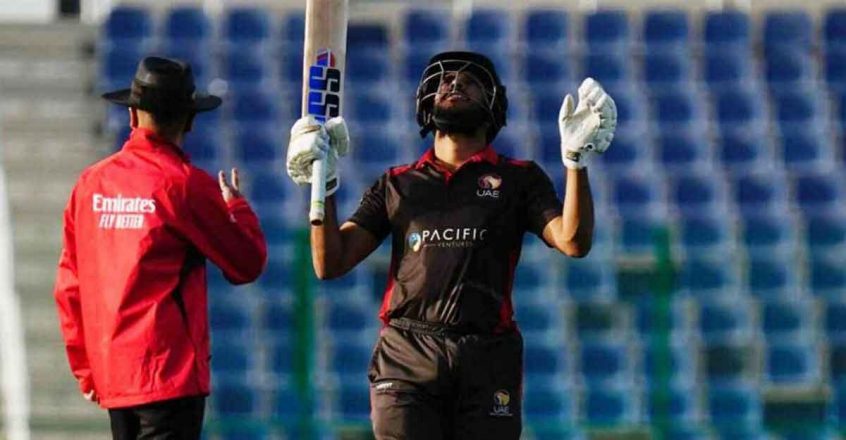
Rizwan celebrates his hundred against Ireland
An electrical engineering graduate from the Cochin University of Science and Technology, Rizwan made his debut for the UAE on January 26, 2019, in an ODI against Nepal. The Emirates Cricket Board offered him a one-year central contract last month in recognition of his excellent batting against against the USA and Zimbabwe. Apart from him, two other Keralites – Basil Hameed and Alishan Sharafu – also made it to the squad.
On Friday, Rizwan made history when he guided the UAE to a six-wicket win over Ireland in the first ODI of the four-match series in Abu Dhabi by scoring 109 off 136 balls. The splendid knock, which earned him the man-of-the-match award, was laced with nine boundaries and a six. He shared a fourth-wicket partnership of 184 with Lahore-born Muhammed Usman, who made an unbeaten 102, and made short work of the 269-run target set by Ireland.
Centurions Rizwan and Muhammed Usman after the first one-dayer against Ireland
Born on April 19, 1988, to M P Abdul Rouf and C P Nasreen of Poovathankandy, Rizwan studied at the St Joseph’s Higher Secondary School in Thalassery and played for the local Students Cricket Club and the Kochi-based Cordiant Sports Foundation in his formative years.
The right-hander, who bats at No. 3, has so far scored 288 runs from 10 ODIs at an average of 32.
He is currently employed with the Eastern International LLC in Sharjah.
source: http://www.onmanorama.com / OnManorama / Home> Sports / by G. Dinesh Kumar / January 09th, 2021
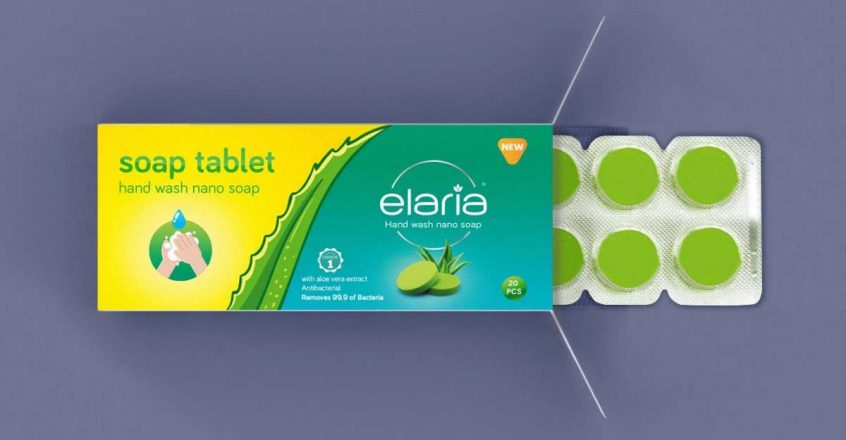
Orial Imara, a Kerala-based soap manufacturer and exporter, has launched Elaria, nano soaps packed in tablet strips to help fight Covid conveniently on the go.
Jabir K C, Managing Director, Orial Imara, who developed the nano soap, said each tablet soap, weighing around 2 gm, is enough for one good hand wash. The company has now launched packets of 20 tablet soaps in two strips priced at Rs.30.
Elaria handwash nano soaps are made available in supermarkets and drug stores across Kerala and Karnataka now and will be taken to other south Indian markets in phases while exports to Qatar have already been started.
Jabir said according to many experts, a bit of soap and water is still the best way to get rid of germs, including the virus that causes Covid-19. Using alcohol-based sanitizer should be your second choice, according to the United States’ Centers for Disease Control and Prevention.
He also said Elaria could be first of its kind nano soap in the world which is ideal for people who are always on the move and those who do not want to touch soap dispensers in public places like restaurants. “It’s also a grade 1 soap with 76-80% total fatty matter (TFM),” he said.
Kozhikode-based Orial Imara is into the manufacture and export of grade 1 soaps with its R&D centre in Kozhikode and manufacturing units in Mumbai and Solan in Himachal Pradesh.
source: http://www.onmanorama.com / OnManaroma / Home> Lifestyle / by OnManorama Staff / January 08th, 2020
As students, brothers Khalid and Akram, bubbling with enthusiasm would dream of building a business of their own. They would experiment with entrepreneurship and were raring to do something.
After several small ventures such as zamber, a social networking site, hostelneeds.com – an online e-store for dorm supplies and others – they finally succeeded in establishing www.yourlibaas.com
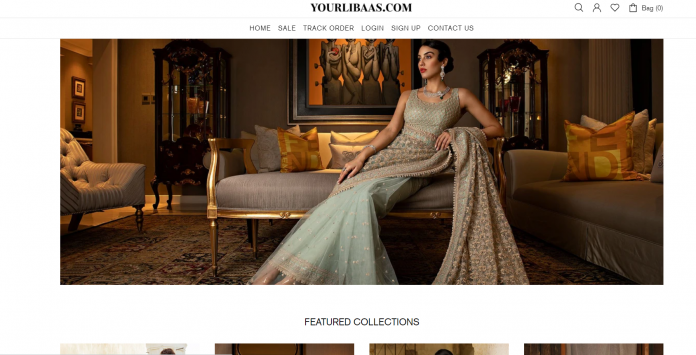
In 2014, Khalid – then 24 years-old, was in Pune Institute of Computer Technology (PICT) while his younger brother Akram, 19-years old then, had just joined Engineering in Aligarh Muslim Univsersity, the duo established yourlibaas.com, which is an online store for designer ethnic apparel bringing the best of Pakistani fashion to India. Their site has now gone global with top Pakistani and UAE Designers, including Sana Safinaz, Maria.B, Gul Ahmed, Sapphire, Zara Shahjahan, Élan, Faraz Manan, Charizma, Baroque, and Motifz, among others.
“When we began in 2014, ecommerce was in a nascent stage with the market being fragmented and multiple small players existing. Amazon and Flipkart were yet to emerge as market leaders. We now have an office in Noida but after the lockdown we have shifted to Jasola Vihar, New Delhi” said Akram while talking about their early days.
YourLibaas is an Urdu word that means your “garment or attire”. Today, the brothers claim that their online store is the market leader within the lawn suit market in India (by total revenue and market share).
“What began as a small start-up in New Delhi quickly transformed into a strong brand with an international presence. If you search for all related terms for apparel, we rank on the top position at Google. Today we have 23 employees on our payroll,” said Khalid Raza Khan, the founder and CEO of YourLibaas.
But it was not so easy to achieve success. Managing a business with college was difficult. There were several obstacles when they began.
They started off with inadequate capital pooling in their savings from the pocket-money they received from parents. Initially, they contacted small retailers and listed the suits on their site. When an order came in, they bought it from them and shipped it.
Khalid used to ship packages daily and often missed college because the courier offices and post-office closed by evening and packages would be delayed. In order to not miss college, he began sending the parcels from a post office that was 25 kmts from where he lived. This particular post office was open for 24 hours which was a good thing for the boys. During the nights, he would go on his scooty and send the parcels. And to save on costs, the duo delivered local orders themselves searching out the addresses while roaming on their two wheelers.
But missing classes had an adverse effect. Khalid could not cope with the lessons and failed in his exams due to which he had to repeat a year. The university in which he studied had different rules known as ATKT system wherein you have to repeat a year upon failing in a subject (unlike other colleges where you are promoted).
Akram who was pursuing engineering at AMU, handled digital marketing and technical development. And his studies also went downslide and he had a backlog of 14 papers.
As if that was not enough, they also suffered another set-back when they were duped by a wholesaler who didn’t send the products even after receiving full advanced payment of around Rs. 1.2 Lakh from them. This was a major setback and it took some time for them to bounce back.
They did the sourcing and packing themselves travelling in an auto rickshaw to the wholesaler bringing in heavy ‘katta bags’. As they slowly grew and as profits increased, they hired their first full-time staff named Sarfaraz for packing and logistics and 3 interns from Aligarh Muslim University for customer support and content writing.
However, they still were not in a position to pay handsome salaries due to which the staff left and they were back to looking after the packing and logistics till they could find replacements. In this way – slowly and bit by bit and through sheer perseverance, the brothers kept going.
With time as the business grew, so did their team.
“I remember how we generated enough profit to buy our own catalogue for around Rs. 60000. And we slowly moved to an inventory-model. Now, we completely own all the inventory displayed at the portal. It is imported from UAE as the majority of the dress designers are headquartered there” said Akram Tariq Khan, co-founder of YourLibaas.
Apart from these glitches they also had market regulations and compliance to overcome.
In 2015 they set up a basement office-cum-warehouse in Sector 50, Noida. The products arrived in Delhi and inter-state logistics was proving to be difficult. The brothers shifted to Jasola Vihar, Delhi.
Another major problem was dead stock or unsold items lying in their warehouse. This blocked their capital. To deal with the unsold stock, they started attending trade fairs and managed to sell the stocked clothes.
But after 2018, they stopped attending the fairs when Akram moved to Jamshedpur to pursue MBA.
Why specific focus on Lawn apparels and Pakistani suits?
Lawn fabric is purest form of cotton and is lightweight. It is produced in bulk in Pakistan as 90% of the lawn producing centres were located in Pakistan at the time of partition. Lawn suits have gained huge popularity due to it being lightweight, wrinkle free and soft. Mostly due its suitability to the hot Indian climate.
“Awareness regarding lawn suits primarily developed through Pakistani TV serials that were aired on Zee Zindagi in 2017,” feels Khalid.
“Pakistani suits were a rare commodity in India back then. The demand was high and supply limited. It wasn’t sold on marketplaces (and still isn’t) like Amazon, Flipkart, Myntra, and so on,” he added.
“Pakistani brands had tried entering the market through official partnerships that failed to materialize (like Sana Safinaz partnering with OCM Fabrics), and they chose Indian actresses to model for the latest collections (like Kareena Kapoor, Jacqueline Fernandes, Madhuri Dixit, and so on). We realized how a niche store specializing in Pakistani suits could be set up and that is what inspired YourLibaas” explained Akram.
Despite logistical hurdles and a rather negative connotation attached with Pakistani suits, the market size in India of Pakistani apparel is estimated at over INR 400 Crore.
Even though they set up YourLibaas and sell genuine Pakistani brands, they have competition from imitators. Many fashion houses and sites have replicas of the Pakistani designs selling at a lesser price.
But YourLibaas stuck to the originals even though they were expensive. Customers who preferred authentic designs from the original designers continued to buy from YourLibaas.
We have at least 40% repeat buyers, disclosed Akram.
“Designers and their team put in a lot of efforts and months of planning to launch a collection which the replica makers imitate thereby stealing the credit. Fortunately seasoned customers can easily make out an original from a replica. Moreover, selling replicas alongside originals hurts the brand equity. Replicas are a nuisance in India as these are manufactured by registered Indian companies and sold openly. A first time online buyer who is unaware of this would buy a replica since both display the same picture, but a replica is priced at 20-25% of the original cost. This leaves a bad impression of “Pakistani Suits” and the consumer never returns back to buying lawn suits. Further it creates trust issues especially if you’re selling online. We have maintained our reputation and people largely buy from us since local shops and sellers usually sell replicas and fool buyers especially new customers, ” elaborated Akram Khan.
Due to international demand, the duo made inroads into the global market by establishing a Dubai, UAE subsidiary and setting up a Freezone company. They have plans to also establish a physical office in Dubai.
Leveraging technology to their advantage
Being from a technical background proved to be an advantage and the duo used their technological skills to thwart competition wherever possible and establish a strong market presence.
For instance – they introduced cash on delivery as many of their customers where women who were non-working. They took this risk despite knowing that there could be cancellations and also non acceptance of goods when they arrived at their door step. They also offered no-questions asked returns. All this bolstered confidence amongst the customers.
Next was introducing ‘Order on WhatsApp’ & ‘Order on Phone’ options which made it easier for the women to order instead of logging on to websites. The YourLibaas WhatsApp commerce at YourLibaas employs AI-based NLP chatbots with human agents who answer the queries of the customers guiding them to successful shopping
Why do people prefer buying from YourLibaas rather than the brand itself?
“We provide multiple brands with easy accessibility, free shipping and easy returns on a single platform. Most of the consumers aren’t comfortable with buying online, so we have WhatsApp chatbots alongside human agents that assist them making the ordering process seamless. Secondly, buying from brands directly isn’t a feasible option – the shipment might get stuck at customs, or it could end up being delayed otherwise. Even in a normal scenario, the delivery timelines will be longer than what a domestic player can offer,” concluded Khalid Raza Khan.
Today, Khalid is totally dedicated to YourLibaas while Akram has his fingers in several pies. He writes for Entrepreneur.com a business magazine and has developed an online browser game called ‘Bhag Corona’ and is also part of entrepreneur’s leadership network in which he delivers lectures based on his experiences.
His game ‘Bhag Corona’ has received millions of hits and this game was hosted on ShareChat, a social network site.
Akram continues to explore new venues while his brother, now married, is steadily managing YourLibaas which they had begun as students.
source: http://www.twocircles.net / TwoCircle.net / Home> India News / by Nikhat Fatima, TwoCircles.net / January 01st, 2021
The brand of M Fab shawls as elaborate, comfortable and quality wear has become an instant hit among young women in Kerala
It has been long since the trend of mismatching ensembles made a foray into Kerala’s fashion horizon.
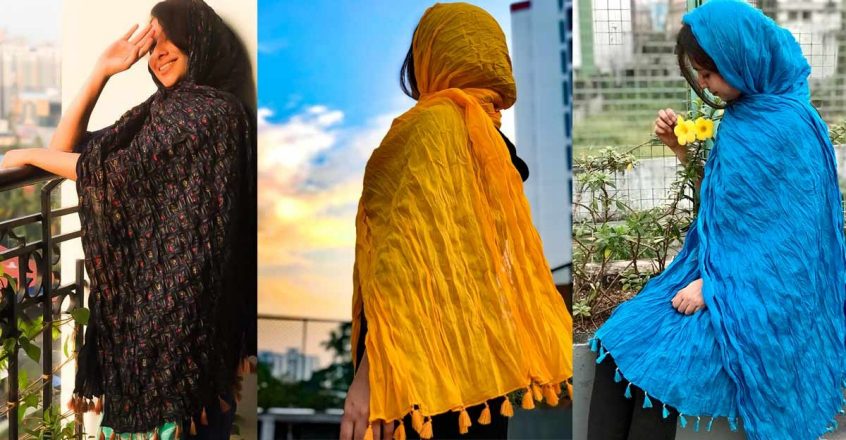
And for women toying with shawls of churidars is not new either. In the process, a new trend of designer shawls too emerged. Shawls thus became a fashion statement as well as a handy and comfort wear giving the material an independent costume status.
It was then a youth, hailing from Kozhikode, who was trying out various design elements with women’s wear, entered the scene. Muzammil Moidu, after graduating in business studies, was experimenting with various design elements in women’s costumes and their promotion.
The shawl was the last thing on Muzammil’s mind. But, his simple idea of creating a multi-purpose, elaborate, comfortable, and quality wear soon received wide attention and acceptance in the market.
The demand for them skyrocketed and soon he was in a position that he was unable to match the requirement in the market for the product.
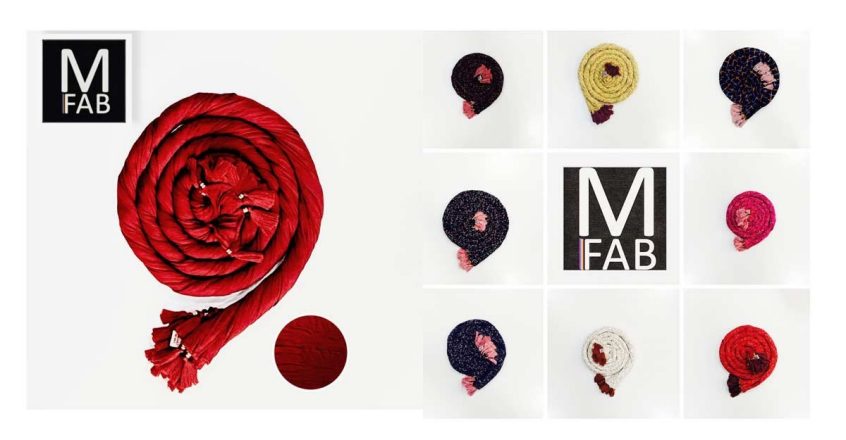
“We didn’t have the facility to meet the sudden surge in the demand for our shawls. So we started focussing on this particular product and branded it as M Fab Shawls,” says Muzammil.
Now, women in Kerala, especially the youth, are quite familiar with the extra-large M Fab shawls, which are now popular as a quality cotton garb marketed exclusively in the state. The popularity of the material grew so much in a short span of time that it is now termed as Fab shawls across Kerala.
However, there are many other such shawls available in the market, which fake the M Fab brand. “But people can easily identify the fake ones. We are not at all worried about it as such products are opted for by customers only when our brand is not available there,” says Muzammil.
“It’s very easy to distinguish the fake ones from the M Fab shawls, which are pure cotton, better finish, heavier in weight and the M Fab label clearly displayed,” says Muzammil.
The product, which is supplied from Kozhikode, is yet to match the growing demand for it in the market and Muzammil is all set to expand its production and marketing across the state.
source: http://www.onmanorama.com / OnManorama / Home> Lifestyle / by OnManorama Staff / December 29th, 2020
Putting an end to his expatriate life 27 years ago, Abdul Kareem, a native of Thrikkakara, had only one quest in life — to provide services for a seamless living.
Thrikkakara, (Ernakulam District) KERALA :
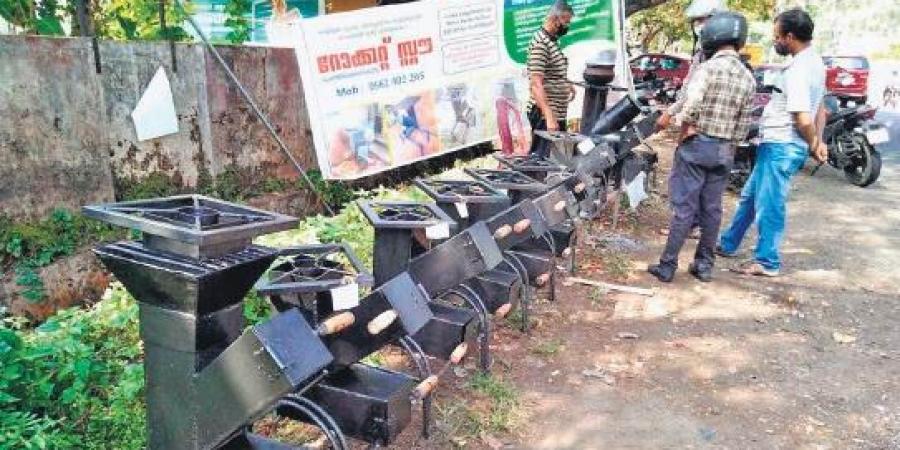
Abdul Kareem’s rocket stove was on sale at many locations in the city | A Sanesh
Kochi :
‘Rocket stove,’ a new cooking facility which does not require LPG or electricity, is becoming the new trend among families in the city. It uses firewood, coconut shells and waste paper as fuel, while reducing the emanation of smoke up to 80 per cent compared to traditional kitchen stoves. The stove provides a water heating facility and doubles up as an oven.
Putting an end to his expatriate life 27 years ago, Abdul Kareem, a native of Thrikkakara, had only one quest in life — to provide services for a seamless living. Using his earlier experience in manufacturing low-cost motor pumps, Kareem came up with ‘rocket stove’, which provides a sustainable twist to traditional cooking methods.
“With four decades of experience in making furnaces, boilers, kitchens and other industrial materials, Rocket stove was developed out of my curiosity. Thanks to Covid-induced lockdown, I managed to finalise the design around six months ago and started the production,” said Kareem.
Rocket stove is based on the concept developed by the British in the 1850s. “Though it is an old idea, we transformed it to suit the requirements of Keralites,” he said. “Apart from traditional firewood, people can also use waste paper and other combustible dry waste in the stove.
All types of vessels including terracotta pots can be used on it. Compared to traditional units, a rocket stove will release only 10 to 20 per cent of smoke during its operation. It can be easily used in the balconies of flats without creating any disturbances to the neighbours,” he said.
The stove is currently available in five models. “The high-end model costs around Rs 14,000 and has a pipe to expel the smoke outside. This will be ideal for flats and apartments. A normal model with a basic stove will cost Rs 4,500. Remaining two models have options like grilling, oven, water heating etc. The oven model will provide heat up to 280°C,” said the 57-year old.
However, Kareem could not market the product properly due to the pandemic. “We are hoping that word of mouth will give us the much-needed traction. We are currently delivering orders received over the phone. Due to Covid restrictions, we had to stop selling them on the street as well,” he said.
The product was launched after various rounds of testing. “We have run many quality tests to ensure efficiency in the last six months. Besides, we have ensured that the product meets all safety standards. Depending on the demand for the product, we will move to large scale production soon,” he said.“In the case of a natural disaster or calamity and if electricity and LPG supply shuts down, the rocket stove will be a good alternative,” said Kareem.
source: http://www.newindianexpress.com / The New Indian Express / Home> Good News / by Kiran Narayanan / Express News Service / December 29th, 2020
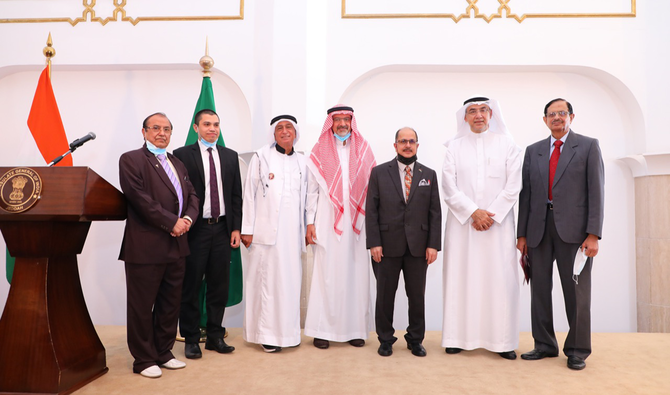
Indian Ambassador Dr. Ausaf Sayeed, third right; Dr. Ashraf A. Amir, second right; Acting Consul General Y. Sabir, second left; Dr. M.S. Karimuddin, right; and others.
The Jeddah chapter of the Indo-Saudi Medical Forum (ISMF) was launched at the InterContinental Jeddah on Friday by Indian Ambassador Dr. Ausaf Sayeed. The event took place in the presence of prominent Saudi and Indian healthcare professionals in the western region.
Dr. Sayeed thanked Dr. Ashraf A. Amir, chief medical officer (CMO) at Jeddah’s high-profile International Medical Center (IMC), for agreeing to become the forum’s president. He also thanked veteran and popular Indian pediatrician, Dr. M.S. Karimuddin, for becoming the forum’s vice president.
The ambassador highlighted the great strides that have taken place in recent times in relations between Saudi Arabia and India. Dr. Sayeed said the visit of Prime Minister Narendra Modi to Saudi Arabia in October last year plus the signing of a series of important agreements in different fields, including healthcare, have provided new momentum to the two countries’ relationship.
The ambassador highlighted the immense opportunities that “are waiting to be tapped in the healthcare industry.” He said the new forum, led by an energetic and experienced team, would be a good platform for complementing the steps and initiatives being taken by both governments — in Riyadh and New Delhi — to increase cooperation in the field of healthcare. He pointed out that India had become the “pharmacy of the world” during the coronavirus (COVID-19) pandemic. “India stands ready to play its part in alleviating the difficulties of the global community during times of global health crises.”
Dr. Ashraf Amir promised to take all steps to achieve the stated objectives of the Indo-Saudi Medical Forum. He said the advancement of the Indian healthcare sector had been phenomenal and that Saudi Arabia had won international praise for its exceptional handling of the coronavirus crisis.
Acting Consul General Y. Sabir welcomed the guests. He noted that the Indo-Saudi Medical Forum aimed to serve as a key platform point for high-level informal interactions between the medical fraternities of both India and Saudi Arabia.
Dr. Karimuddin highlighted the many activities that the forum plans to undertake in the coming days and months. Among other things, he said: “An effort will be made to bring together corporations working in the healthcare sector, including hospitals, pharma and surgical equipment firms, in order to collaborate with a view to providing excellent healthcare for Saudi citizens and expats.”
Dr. Karimuddin said the Indo-Saudi Medical Forum was a nonprofit body under the patronage of the Embassy of India. The forum, made up of Indian and Saudi doctors and experts in the field of healthcare and wellness, will play a supporting role in strengthening India-Saudi Arabian cooperation related to healthcare. ISMF will have three chapters in Jeddah, Riyadh and Dammam.
Nouf Marwaai, award-winning yoga instructor, spoke about how India’s expertise and facilities in the field of wellness and holistic healthcare was relevant to the Saudi healthcare system.
She said the momentum for the present Saudi-Indian relationship began during Modi’s visit to the Kingdom in April 2016 when King Salman presented him with the Kingdom’s highest civilian decoration, the Sash of King Abdul Aziz. “This recognition is an indication of the importance the Kingdom attaches to its relations with India,” she said.
Dr. Iqbal Musani, general secretary of the forum, highlighted with a PowerPoint presentation the giant strides that India and Indian doctors have made in the field of medicine.
Prominent among those who were present at the event included Hamna Maryam, consul (commerce) at the Indian Consulate in Jeddah; Mohammed Alungal, chairman of Abeer Medical Group; V.P. Mohammed Ali, chairman and managing director of Jeddah National Hospital; Dr. Kavitha Marusamy of Ibn Sina National College; Dr. Ataat Khan and Dr. A.H. Maniyar.
A large number of Indian and Saudi doctors also attended the launch virtually in view of COVID-19-related restrictions.
source: http://www.arabnews.com / Arab News / Home> Business>Corporate News> Latest News / December 26th, 2020
Colonial historians and scholars often claim that the Indian Freedom Movement was a disjointed movement with no nationalistic feeling among the people participating in it. This belief, that Indians fought against the British for local communal reasons without any coherence, has been further propagated by the Indian historians as well, after the independence. Often, we are made to believe that Muslims fought to secure their religion or Caliphate while Hindus to protect regressive social institutions. Similarly, urban elite, peasantry, tribal, and others have their own narrow interests in fighting against the British.The idea may be true and open to debate, but the fact that there was a coherence among different groups within India while fighting against the British is an undeniable fact.
During the early 19th century, the British decided to partition Bengal. Hindus and Muslims, together, rose up against the decision which based itself upon religious segregation. India in general, and Bengal in particular, adopted the Swadeshi campaign to oppose this decision. In 1905 Bengal got divided, agitating the youth. It must be noted that the present Bihar was part of Bengal at the time. The youth, led by people like Barin Ghosh, started adopting militant methods to oppose the British.
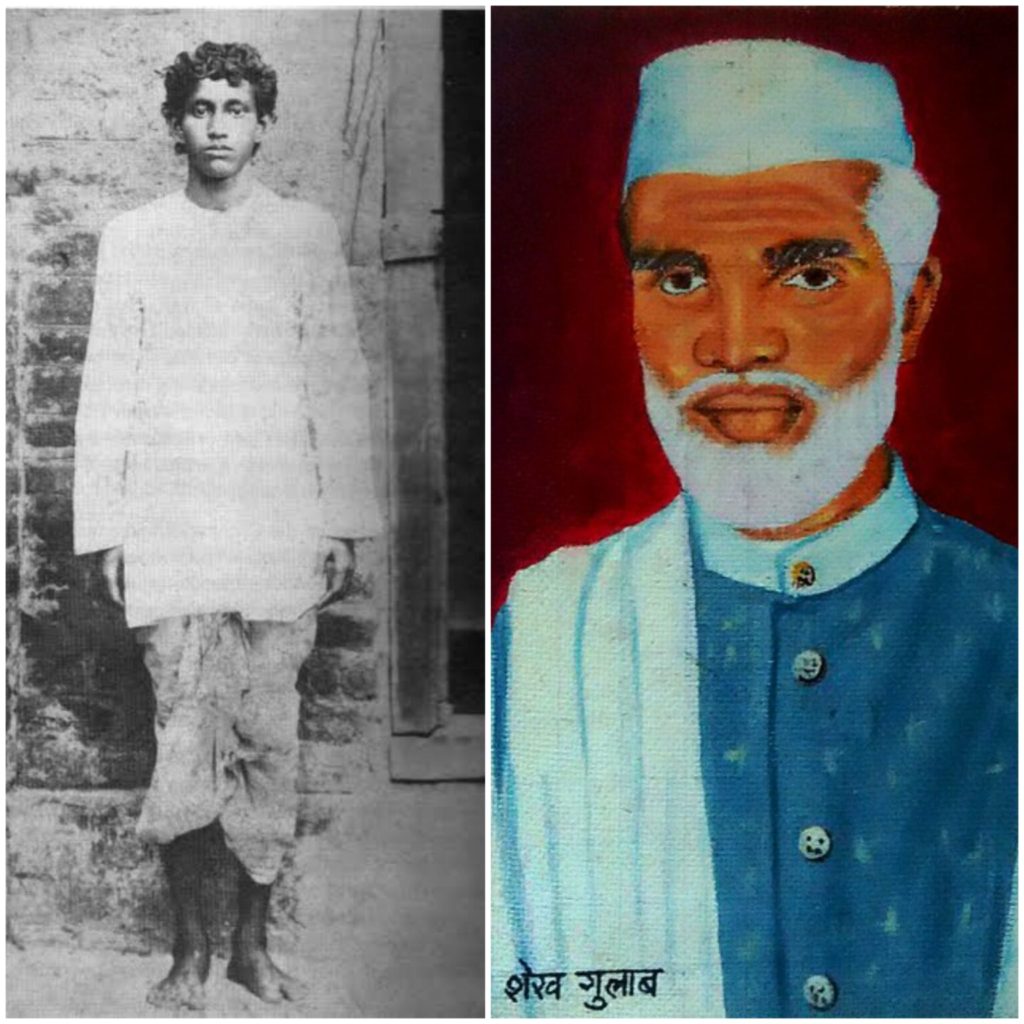
At the same time, in Champaran of Bengal (now, in Bihar) indigo planters led by Sheikh Gulab started a non-cooperation agitation against the British indigo planters. Gulab defied the tinkathia system, where indigo had to be planted on the best portions of land, on his 60 bigha land which was near Sathi factory in Champaran. It was 1907 & Champaran was part of Muzaffarpur commissionerate.
More and more peasants joined Gulab in his movement and another Sital Ray rose as another prominent leader. Planter’s Association had their own army called Bihar Light Horse, famous for its cruelties over peasants. In 1907, the government passed an order appointing Gulab and his comrades as the special constables in police. Gulab defied this appointment and did not join. Police arrested him under the Special Police Act, 1861.
Sentence of Gulab was reversed later by Kolkata Court in March, 1908.
Next month, in Muzaffarpur a judge, Kingsford, was transferred from Kolkata. Champaran lied under his jurisdiction. Indians were already angry with the judge for his anti Indian attitude and there was this apprehension that he had been brought to crush the anti British peasant movement. British reports were already pointing towards a collaboration between Kolkata based Bengali revolutionaries and the peasant movement of Champaran.
The arrest of Sheikh Gulab had stirred the local emotions and this transfer of Kingsford acted as a catalyst.
Within a few days, Khudiram Bose, a young boy of 17, and Prafulla Chaki, both of them Bengali tried to assassinate Kingsford with a bomb. Accidentally, they killed two English women.
Khudiram Bose was hanged till death in August, 1908.
Khudiram’s martyrdom instilled a new spirit in Sheikh Gulab. In September, 1908, he organized more peasants at Vijayadashami Mela in Bettiah, Champaran. Now, peasants were openly defying the planters and attacking them. On 16 October, 1908, peasants attacked the Parsa Indigo factory. Government reacted brutally. Sital Ray was arrested along with more than two hundred peasants.
In the Legislative Assembly of Calcutta, it was argued that Bengali and Bihari have worked in unison against the British in Champaran during 1907 – 1908. Further reports that a Burkha clad Muslim woman provided shelter and help to Khudiram Bose during his attempt on Kingsford’s life also point towards an association between Sheikh Gulab’s movement and Bengal revolutionaries. P.C Roy, implicitly, contends that the arrest and case against Sheikh Gulab may be one of the reasons that Khudiram Bose attacked Kingsford in Muzaffarpur.
(Writer is a well known historian)
source: http://www.heritagetimes.in / Heritage Times / Home> Bihar> Freedom Fighters / by Saquib Salim / July 17th, 2020