Nellihudikeri Village, Siddapur (Kodagu Distrct), KARNATAKA :
Madikeri:
A farmer and a vintage car collector died after a tree branch fell on him at Nellihudikeri village near Siddapura in Kodagu district yesterday.
The deceased, 67-year-old P.C. Ahmed Kutti Haji, was working in his Mubarak Estate along with his son Ashraf at around 11.30 am. Due to heavy rain and wind, a branch of a banyan tree fell on Ahmed Kutti. He was immediately rushed to a hospital. But he succumbed to his injuries in the hospital. Kodagu Deputy Commissioner P.I. Sreevidya has announced Rs.5 lakh compensation to his family. She sent the cheque through the Tahsildar.
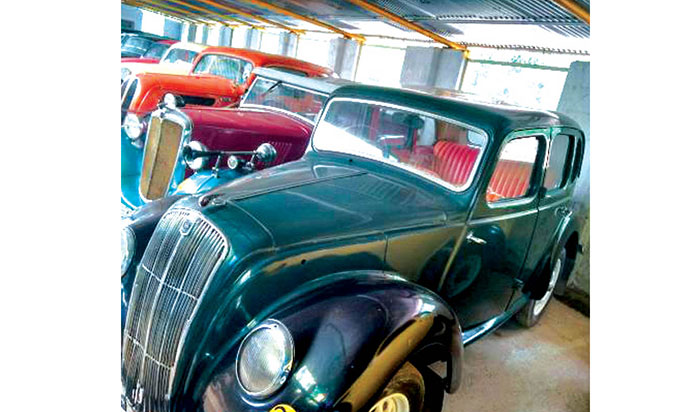
With his death, Kodagu has lost a collector of Vintage ‘beauties
Ahmed Kutti Haji is a coffee planter and also an industrialist. He has a huge collection of vintage cars which he threw open to public. Collecting vintage cars was a hobby for Ahmed who has 86 of them and over 15 vintage petrol jeeps. Not to stop there, he also has 20 old two-wheelers, a 125-year-old bicycle and a 200-year-old bullock cart. The oldest car in the collection is 1925 model.
Normally vintage car collectors eye Bengaluru to add cars to their collection. Changing the trend, Ahmed focussed on old workshops in Kodagu and surrounding areas to hunt vintage ‘beauties.’ After picking them, Ahmed gave old cars a fresh coat of paint and tuned them to working condition.
Almost all foreign cars owned by Ahmed were manufactured between 1925 and 1965. Barring Dharmasthala, no other place in the State has such a wide collection of vintage cars.
With his death, Kodagu has lost a vintage automobile enthusiast.
source: http://www.starofmysore.com / Star of Mysore / Home> News /June 10th, 2018
It is 8am on Saturday and big black cauldrons that will slowly simmer dal in them have been put up on burning embers with the help of two strong men. For the past 179 years, the ritual has been repeated every Ramzan in the bawarchikhana (kitchen) within the premises of the Chhota Imambara.
While it is dal and tandoori roti that is cooked for three days, an Awadhi delicacy called ‘taley hue aaloo ka salan’ (fried potato curry) with roti follows for the next three. The cycle continues for the entire month of Ramzan, feeding around 600 poor people as their dinner the the entire month of Ramzan.
In the same kitchen, a different set of snacks is also prepared for the specific purpose of serving rozedars coming to offer prayers in 15 mosques under Husainabad & Allied Trust (HAT).
Around 2,500 people will receive a plate of gujhiya, phulka, chana, suhaal, dates, a fruit (preferably banana) along with bread-butter and cake outsourced from a bakery, thanks to a king’s commitment to the poor.
The third King of Awadh, Muhammad Ali Shah, had created the Husainabad Endowment Deed in 1839 to feed the poor. Since then, the two massive community kitchens within the Chhota Imambara have been following the tradition of sending out iftari to the 15 mosques under its umbrella.
Every Ramzan, by the end of the day, this kitchen would have fed over 3,000 mouths.
“A sum of around Rs 16 lakh is passed for the iftar and dinner services every year. Two separate dedicated teams of chefs and their assistants are engaged for it. Everyday, activity in the kitchens begins at 8am. By 4.30pm, we send out the first batch of iftar food for the mosques,” said Habibul Hasan, an official from HAT.
The 179-year-old Nawabi tradition saw a break only in 2015. During Ramzan that year, a movement against alleged corruption in the UP Shia Central Waqf Board being spearheaded by Shia cleric Maulana Kalbe Jawad had brought the tradition to a halt. Protesters had locked the entrances to both the Bada Imambara and Chhota Imambara, restricting all entry. Even the kitchens could not function.
However, people from the neighbourhood of the 15 mosques came together to fund the food. HAT had also roped in private bakeries. Even during the mourning months of Muharram, food is served from the traditional kitchens of the Imambara.
source: http:///www.timesofindia.indiatimes.com / The Times of India / Home> News> City News> Lucknow News / by Yusra Husain / TNN / May 21st, 2018
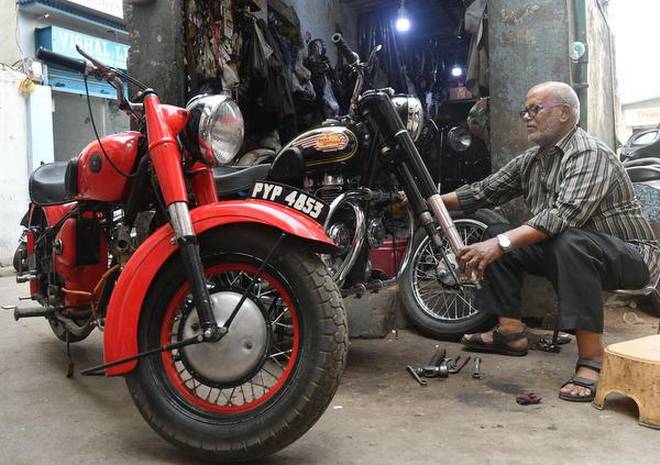
Sayeed bin Abdul Rabb giving the final touches to a Bullet, which had come in for repair. | Photo Credit: The Hindu
The septuagenarian bike specialist just plays it by the ear to fix the bikes or restore them from scrap
He is called the hakeem — a doctor in Urdu — of the Royal Enfield Bullet. His diagnostic ability is like the practitioners of Unani medicine who can identify an ailment just by checking a patient’s pulse.
The Bullet’s famed thump is its pulse, and he only has to listen to tell what’s wrong.
Sayeed bin Abdul Rabb has been restoring Enfield Bullets since his pre-teens. His proficiency in dealing with the motorcycle’s cast iron engines is well known not only in Hyderabad but also in Marathwada.
“I was 10 years old when I started working for marhoom [deceased] Enfield mechanic Mahbub Patel. I think I’m 75 years old now. In my 65 years as a Bullet specialist, I must have repaired thousands of Bullets and restored hundreds,” he says.
A Yafai tribesman, Mr. Rabb’s grandfather, Sayeed bin Abdul Rabb, after whom he is named, arrived in the city from Hadramaut in the modern day Yemen. Unlike his countrymen, Rabb Sr. did not join the Afwaj-e-Beqidah, the Nizam’s irregular army. Instead, he dabbled in small trades.
Room for workshop
Mr. Rabb’s workshop is a room in Troop Bazaar in the city centre. Hanging on walls is an array of spares: handlebars, silencers, wheelrims and a toghra (wall hanging) with a verse from the Quran. In a corner is a rudimentary lathe machine, used to fabricate out-of-stock spare parts for other British Classics such as Norton and Triumph.
In a conversation peppered with delightful Dakhni idioms, he says: “I’ve been repairing motorcycles for 65 years, miyan. Hau? I only need to listen to the firing [for thump] or the sound of the engine. If the tapit [tappets] make a certain sound or the bigin [corruption of the world flywheel] sounds strange, I know there is some gadbad,” Mr. Rabb says.
His customers also come from Nanded, Parli Vaijnath, Osmanabad and Latur in Maharashtra.
source: http://www.thehindu.com / The Hindu / Home> News> Cities> Hyderabad / by Syed Mohammed / Hyderabad – May 26th, 2018
Shaista Yacoob, 43, is a writer, poet based in Bangalore. Born and brought up in Bangalore, she has been living in Benson Town since Childhood. She has done journalism in College. Recently, she started a small catering business called Shaista’s Little Kitchen.
“It has been a few years since I have been learning the Quran. It is very difficult to understand the true meaning of the Quran, unless you have someone to teach you. I have always read the Quran, but understanding it’s true meaning is very tough.”
“I really want to put in the effort of learning it. You have to understand the context of what was said and why it was said. There has been a reason, there has been a context, a moment in the prophet’s life when something has happened, and the revelations came on him. So we have to know the situation to understand what it is all about.”
I saw a friend of mine recently who is also learning the Quran. She found a few things in Quran which she thought were very demeaning to women. but then when she went and researched, she realised what she had been thinking is not what the Quran says. It was actually a very beautiful interpretation of a woman.”
Her earliest memory of Ramadan was of an old man who used to come to the locality to wake everyone up for Sehri. She says “I remember this old, frail man, so bent and concave, he used to come every morning with a duff. This year he did not come. I don’t know why, but he came every year without fail. It is a beautiful moment when you wake up in the morning for sehri. God has said that he is listening, and that there is no veil between you and him, at that moment.”
” It is a magical month, Ramadan. It leaves you with a new feeling. After it is over, it is a big turmoil, its very challenging. You are so much in the mode of this month. Your soul is peaceful and your desires limited that coming out of it is not easy.”
In a first, an IIT-Kanpur startup, in association with a Lucknow-based food delivery firm, successfully flown in flasks of freshly brewed tea on the doorsteps of its customers in the city of nawabs.
TechEagle Innovations, founded and run by IIT Kanpur graduate Vikram Singh Meena, pilot-tested delivery of two litres of hot tea with the help of battery-powered and GPS-fitted drones on May 23. It has developed the specialised drone to drop-ship a consignment up to 2 kg within a 10-km-radius of its take-off station with just a single click of a mouse. TechEagle has joined hands with OnlineKaka, a Lucknow-based food delivery startup, for these test flights.
“We have successfully delivered world’s first chai via drone. Now, we would provide these mean machines to other food delivery startups like Zomato, Swiggy and Foodpanda. To begin with, we plan to venture out in north India,” Meena told TOI.
Talking about the drone-delivery model, Bilal Arshad, who founded OnlineKaka, alongwith friend Ahad Arshad and Salman, said: “It’s not like the customer will directly receive the order from the whirring gadget. The drones would be flown and received by our executives at different points and because they would not be commuting through the busy streets, it would cut down the delivery time drastically.” Although the cost implications would be known only after a full-fledged launch of the service, both Bilal and Ahad said they would try to ensure that there was no extra burden for the customer as they would be saving on commuting. At present, they charge Rs 59 per delivery.
Although the trial was conducted with DGCA’s permission, the firs is yet to get a nod for the regular service. “The DGCA had said the norms for drone delivery would be specified in January but it hasn’t come through. It is now expected sometime in July. In sync with the Civil Aviation ministry, the DGCA would mark zones for the drone flights and assign altitude, etc, besides issuing licence for each gadget. The pilots hired for the drones would be another factor to determine cost of operation,” said Ahad.
Interestingly, there are no active drone-based food delivery services in the world. UberEats, the largest grub-delivery platform which has recently opened shop in India, has recently tested a similar drone-based delivery in San Diego, US.
In October last year, global e-tail giant Amazon had filed patent for delivery of products via drones in India.
In 2014, an unmanned drone was used to deliver a pizza to a flat in a high rise in Worli, Mumbai. Another drone startup, based out of Kanpur, called Aarav Unmanned Systems, raised a bridge round funding In April 2016.
However, many firms and startups, who are raring to begin unmanned aerial vehicles (UAV) or drone-based commercial operations (like door-to-door delivery, aerial mapping, infrastructure monitoring and product transport) across the country, have hit a regulatory roadblock as India’s sky watchdog, the Directorate General of Civil Aviation (DGCA), hasn’t yet formulated a final official policy for the same. Although, Goldman Sachs has estimated that drone industry will be worth $125 billion globally by 2020.
The founding members of TechEagle Innovations started designing and manufacturing since 2015 in the garage of IIT Kanpur hostel and formed the B2B tech startup only in January 2017.
“Our startup develops custom-made drones of both types — rotary wing and fixed wing — which can carry 500gm to 5kg payload. The wingspan ranges between 60cm and five-meter, flight time varies between 30 min and two hours,” added Meena.
“The drone-based delivery system came to our minds when we saw real-life problems like traffic jams affecting delivery services, especially food transportation. Then, we partnered with Online Kaka,” the TechEagle CEO said.
TechEagle plans to expand its services across the country based on need and resources. “We have analyzed that around 10-15 drones can be deployed in one city. Our drones can traverse 10 metres in one second and one single trip can last up to 20 minutes. So, it can fly up to 6km to deliver tea and come back to its take-off spot. We are doing research on batteries to increase the payload capacity and flight time,” Meena added.
On the likely cost of food or tea to be delivered via drones, Meena signed off by saying, “Quality and price of tea or any food items will be handled and decided by the food delivery firms, who will use our drones, instead of a bike or a motor van. We can’t disclose the exact selling prices of the drones at present. But when the service becomes fully functional, our drone delivery will definitely be cheaper than the current modes of transportation. We are in talks with quite a few food delivery startups.”
There was a time in the city when one could order little from home other than pizza. It was 2016 and while big names like food panda and zomato were foraying into the Lucknow market, a startup with just two delivery boys caught the fancy of locals, whose staple feast is the kabab-biryani fare. “Our shoestring budget did not allow a lavish ad campaign, so we relied more on word of mouth,” said Ahad Arshad, who founded OnlineKaka, along with friend Bilal Arshad, adding.
Founded in 2016, OnelineKaka is a popular service in Lucknow for delivery and is preferred for delivery from iconic joints from crowded Old City. “It saves people the trouble of commuting to the crowded, jammed areas and they could enjoy kabab-paratha, biryani, kulcha-nihari in the comfort of home,” Bilal says. Today, they have a 125-strong army of delivery boys and an equal number of vendors on their panel, with over 500 new joints in queue. From a turnover of Rs 20 lakh in their first year, they have notched Rs 5 crore and recorded a 15% growth per month, said the founders.
“There was a minimum-order rider in the beginning but now we deliver the smallest of orders,” said Ahad, adding that their latest offering was delivery of the city’s favourite chai and bun-makhan, anywhere. “The packing ensures you get your cuppa steaming hot but with a successful run of delivery by drone, we hope to pick up more orders in this segment,” he added.
source: http://www.timesofindia.indiatimes.com / The Times of India / Home> News> City News> Lucknow News / by Sovan Manna / TNN / June 01st, 2018
The Thottara Puncha before harvest. | Photo Credit: Special Arrangement
Government’s farming success story sees revival of 652 acres of paddy land
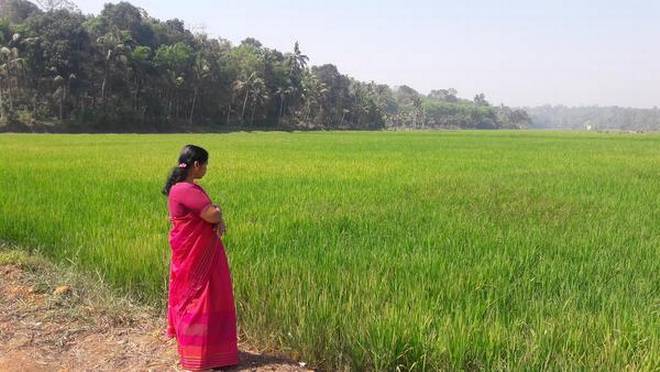
A rice bowl that had been lying almost fallow for over a decade has now been revived fully to produce some 1,500 metric tonnes of paddy in a joint effort by the Ernakulam district administration, Agriculture Department, paddy field collectives, and local bodies.
The rejuvenated Thottara Puncha, where 652 acres of paddy land were brought under cultivation last year, will now be a brand, with the rice produced here hitting the market in that name in the first week of June. The effort to breathe life back into the Puncha, trapped amid some nine hills, was spearheaded by District Collector K. Mohammed Y. Safirulla.
The plan is to market some 20 tonnes of rice initially, followed by another batch of 20 tonnes. Keecheri Service Cooperative Bank has completed collection of paddy, threshing, packing, and branding, said a release issued here.
Mr. Safirulla sought the support of Amballoor and Edakkattuvayal panchayats to cultivate some 350 acres of the 990 acres of the Puncha in Ernakulam district (the remaining 1,082 acres are in Kottayam) in 2016-17, and the results were stunning. “Preparation of fields itself was a challenge, but paddy field collectives worked in tandem to make it happen. This time around, we were able to bring under cultivation the maximum cultivable area — around 700 acres over nine paddy land collectives barring areas acquired for various projects, canals, farm roads, and irrigation channels,” said C.K. Prakash, general coordinator of the project.
Several departments, including irrigation, Land Development Corporation, and the State Electricity Board, supported the initiative. The canals were cleaned, and pumping facility was added to the sluices at Olippuram and Pulimukham (as a chunk of the Puncha being in low-lying areas will get heavily inundated during the monsoon).
“It posed some challenges, as not every area could be cultivated in October, which delayed harvesting too. We have now set up 12 high-power submersible pumps along the Puncha for de-watering, which will help us harvest the entire field by March next. This is going to drastically reduce the harvesting cost as well. And, the idea is to incorporate Kudumbasree in threshing paddy at our own mill and brand it,” said Mr. Prakash.
A Thottara Puncha Development Council will soon be formed, and a mill will be set up at a cost of ₹40 lakh. Terming it his pet project, Mr. Safirulla said all agencies and stakeholders had chipped in with verve to script the success story.
source: http://www.thehindu.com / The Hindu / Home> News> Cities> Kochi / by Special Correspondent / May 25th, 2018
Hina Oomer of The Luxe Box has put together the perfect luxury gift boxes, exclusively for AD readers!
A Luxebox is a neat little box that is thoughtfully put together with an ensemble of gifts that look, smell, taste and feel good!
As much joy as searching for the perfect gift for our loved ones gives us, there’s an equal joy in finally getting it home and gift wrapping it! Some people like pretty-looking gifts and some prefer ones they can put to use, over and above other factors. The Luxe Box, a personalised luxury gifting service curated by stylist and image consultant Hina Oomer, offers all of this and more, in one gorgeously wrapped package. Essentially, a “luxebox” is a thoughtfully put together gift box that takes into account the likes, preferences, age, and interests of the receiver along with keeping in mind the occasion. The Luxe Box ensures that these personalised gift boxes can be presented across different occasions—Father’s Day, birth anniversaries, wedding anniversaries, farewell parties, bridal parties, graduation day parties, and more—as thoughtful and useful gifts.
Hina Oomer obliged us when we requested her to curate 5 exclusive design-meets-home decor inspired luxeboxes for our discerning readers. Here’s what she came up with:
Gift Guide: Rustic Home Box
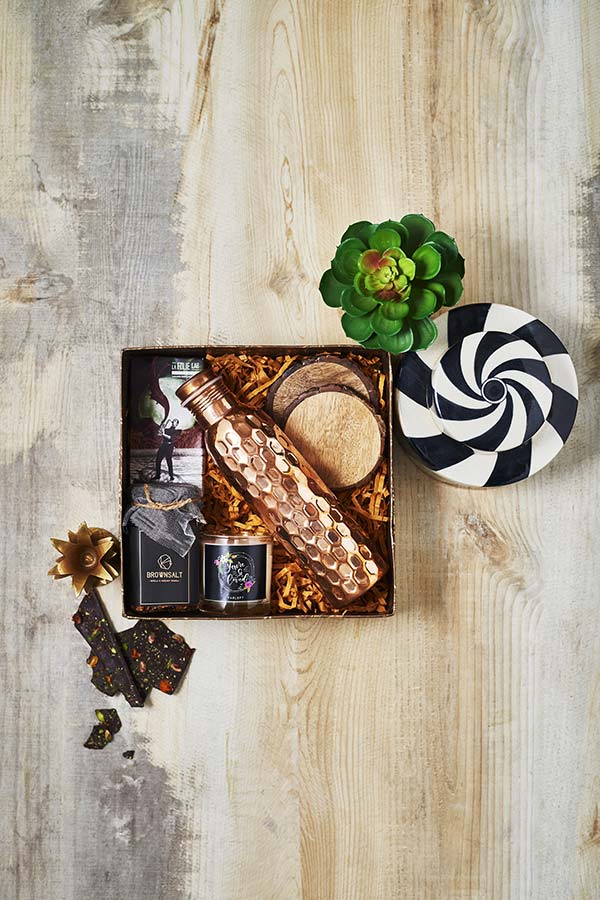
A copper bottle, set of wooden coasters, soy wax scented candle, jar of Brownsalt Nutella granola and a La Folie chocolate
The Rustic Home Luxebox
Guide Guide: Entertainment Box (Party Box)
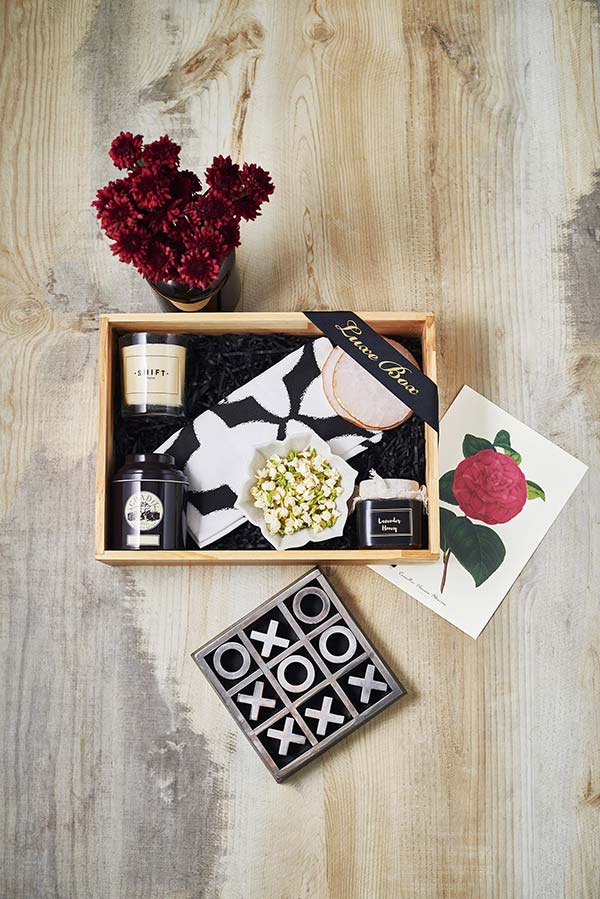
A set of agate marble coasters, marble lotus bowl, Chado green tea, lavender honey, Shift soy wax scented candle and Nomad table napkins
The Entertainment Luxebox
Gift Guide: Sunday Brunch Box
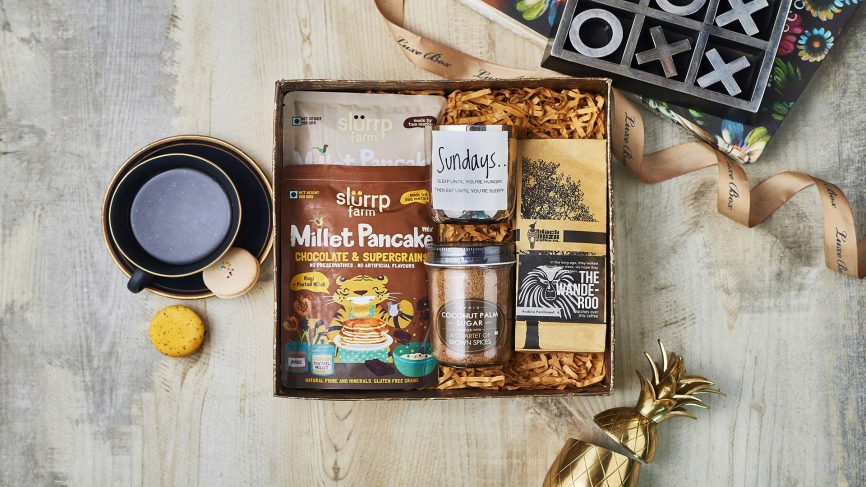
Packets of Slurrp Farm healthy superfood pancake mix, soy wax scented candle, jar of Sprig coconut palm sugar and a packet of Black Baza coffee
The Sunday Brunch Luxebox
Gift Guide: Netflix and Chill Box
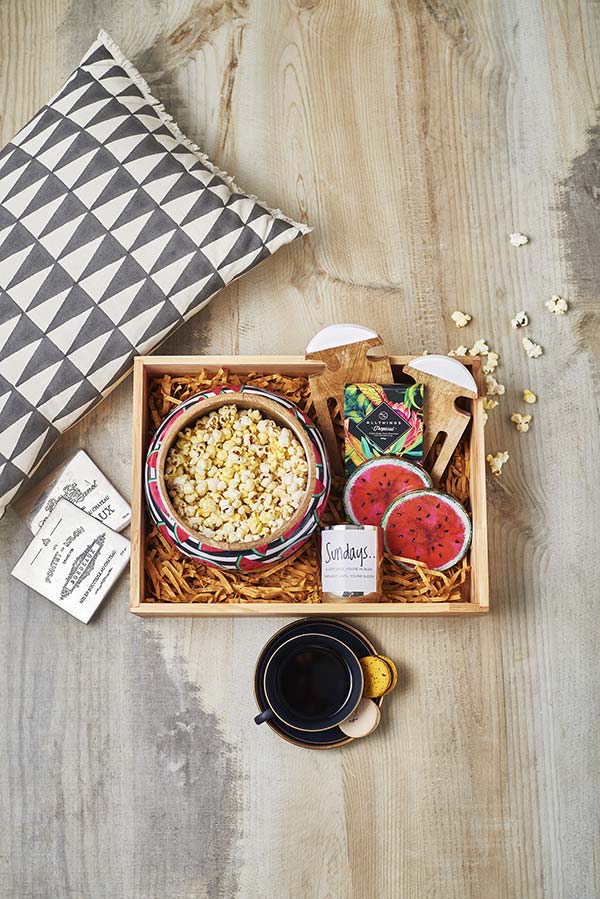
Faaya tropical themed wooden salad bowl with a set of salad mixers, a set of watermelon printed coasters, scented soy wax candle and an All Things Tropical chocolate
The Netflix and Chill Luxebox
Design Enthusiast Box
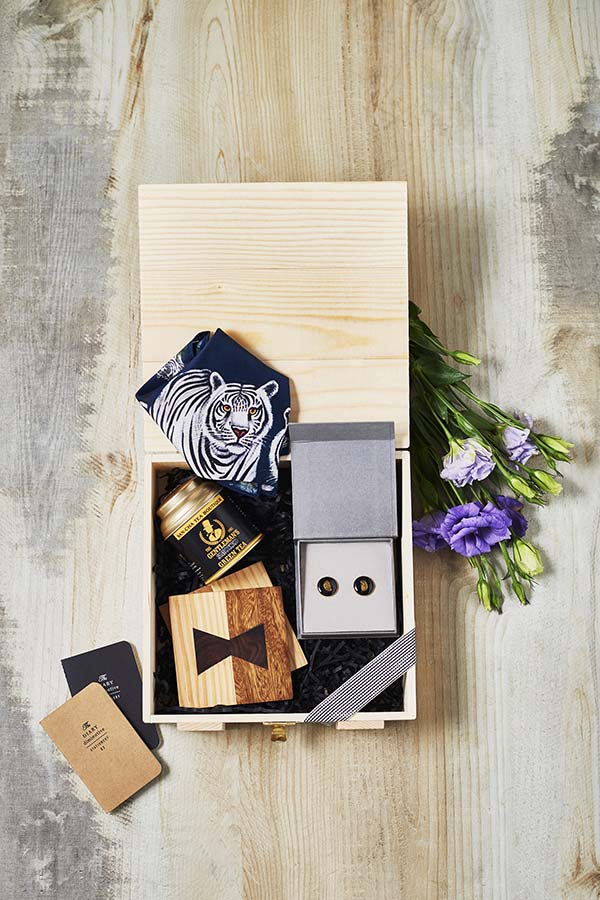
Meesha printed pocket square, Sancha tea, bow tie coasters and a set of Azga cufflinks
The Design Enthusiast Luxebox
source: http://www.architectural digest.in / Architectural Diges – AD / Home> Lifestyle> Style / by AD Staff / May 24th, 2018
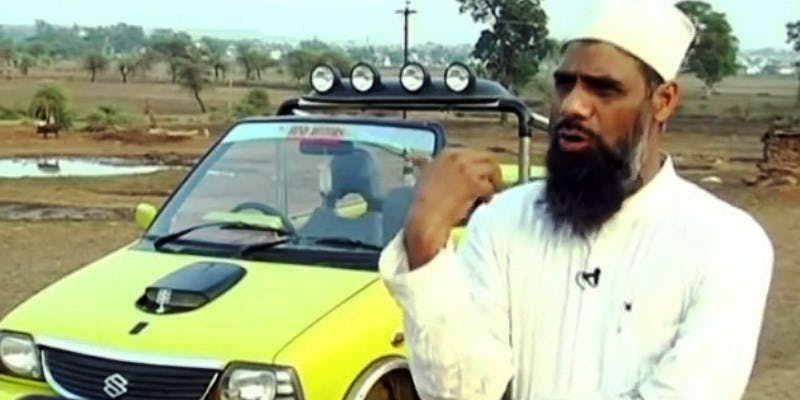
44-year-old car mechanic Mohammad Raees Markani from Madhya Pradesh has invented a car that runs on water.
This 12th pass took five years to develop the final product. The car runs on acetylene gas, which is formed from a chemical reaction between calcium carbide and water. Raees now has a patent for his water car. According to Mirror, Raees has been modifying an 800 cc engine for the last five years – and now believes he has made the scientific breakthrough. The eco-friendly car uses a mix of water and carbides.
Raees who has been a mechanic for the last 15 years told Mirror, “The gas is used for several industrial purposes including welding and portable lighting for miners. But in my case, I am using it to propel the car engines . I have made other changes to the engines, which helps the overall performance of the car. So basically, it is just about the water.”
“The market for environmentally friendly cars is getting bigger and automobile companies around the world are looking for eco-friendly ways to reduce pollution. So a car like mine can be a good alternative. It costs close to nothing to operate and it is environment friendly,” added Raees.
Image : Pultan
The Chinese automobile companies have invited Raees to develop the idea further. All the companies that are interested in Raees’s water car project will have to meet his one condition – any plant to make new cars will be established only in his hometown in Madhya Pradesh. “I want things to change in my hometown. So this is where my work should continue,” Raees stated.
Karim’s had transformed from a local purveyor of aloo gosht into a monument. It was visited by princes and prime ministers, eulogised by journalists, studied by historians, and patronised by tourists.
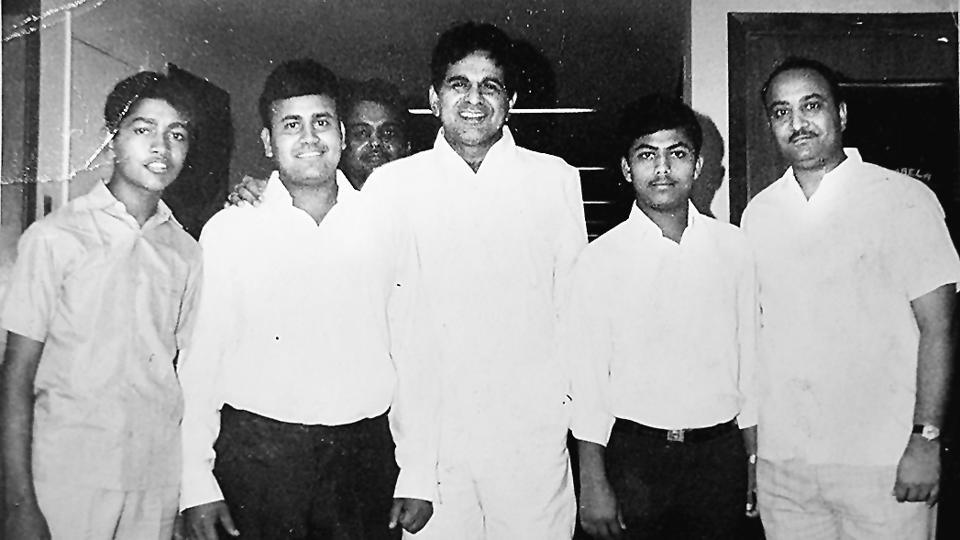
Haji Zahooruddin (extreme right) with Bollywood star Dilip Kumar.(Image courtesy Zain-al-Abedin,Zaeemuddin Ahmed and family))
When Haji Zahooruddin started working at Karim’s over 70 years ago, the business consisted of a single restaurant run by his father and grandfather. On January 27, when he died at the age of 85, Zahooruddin was the managing director of a small empire, with 26 outlets overseen by around a dozen other family members.
Karim’s had transformed from a local purveyor of aloo gosht into a monument. It was visited by princes and prime ministers, eulogised by journalists, studied by historians, and patronised by tourists.
Much though Karim’s success was the result of adaptation to changing times — with the addition of Punjabi butter chicken to the Mughlai menu, for example, and the establishment of small take-out joints throughout the city — Zahooruddin devoted himself to protecting Karim’s most valuable asset: its heritage.
“This is time-tested Mughlai food and we do it well,” he told an English daily in 2013, “so why should we change?”
Karim’s changed only as much as it had to. Striking this balance enabled Zahooruddin’s “number one contribution”, said Shahid Siddiqui, a regular at the restaurant who has written extensively about Old Delhi. “He introduced the food of the old city to New Delhi and to the public in general.”
The Karim’s family attributes their culinary lineage to Mohammad Awaiz, a chef in the royal court of the last Mughal emperor, Bahadur Shah Zafar. When the British sacked Delhi and expelled the king to Rangoon, Awaiz fled. He settled in Ghaziabad and found other work, but taught his son, Haji Karimuddin, everything he knew about Mughal cuisine. During the coronation of King George V in Delhi in 1911, Karimuddin returned to the imperial city and set up a food stall. In two years, he made enough money to open a restaurant.
Karimuddin’s son, Haji Nooruddin, had four sons of his own, including Zahooruddin, who was born around 1932. He started working at Karim’s at the age of 12. The young boy learned the power of belonging to the Karim’s family when a particularly strict teacher demanded Zahooruddin hand over the food in his tiffin box every day at lunchtime. Zahooruddin may have gone hungry, but he was spared the beatings inflicted on his classmates.
He spent his whole adult life working at the restaurant, learning its traditions zubaani (orally) and mixing spices with his male relatives — the only ones allowed to know Karim’s recipes. In the late 1940s, he married Samar Jahan, also a resident of Old Delhi, and had four children, two of them sons who have spent their careers working at Karim’s. Four of Zahooruddin’s grandchildren now manage branches of the restaurant.
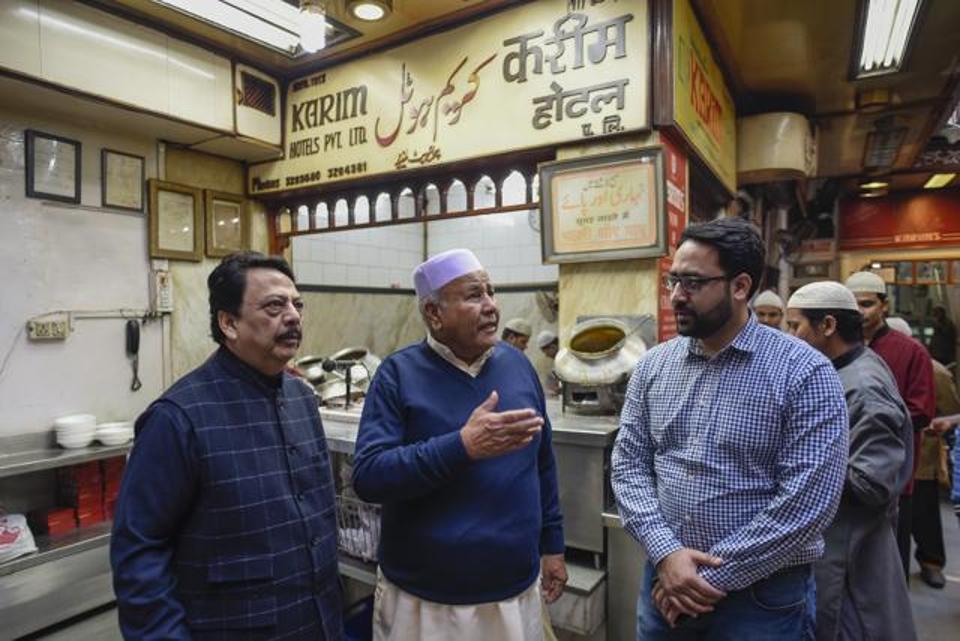
Zahooruddin’s son Zaid-ul-Abedin, his brother Salahuddin, and nephew Zaeemuddin, three of the current directors of Karim’s, say that his focus was always on Karim’s buniyaad, both in terms of values and dishes. (Burhaan Kinu/HT PHOTO)
Clients and business associates found Zahooruddin to be a commanding figure, and heeded his advice. For newlyweds, he recommended nahari; to the sick, thigh meat for its high degree of bone marrow; to one fat customer, Siddiqui remembered Zahooruddin making the suggestion, improbable for a restaurateur, that the man eat a little less. If a customer said something was wrong with their mutton or chicken, Zahooruddin would keep the piece of meat and show it to his butcher in disapproval. “Babu would scold me sometimes,” said Javed Qureshi, whose family has supplied Karim’s with meat for decades, “but he loved me like a son.” Qureshi is one of many people who refer to Zahooruddin as “Babu” (father).
As time went on, Karim’s business grew, and its legend along with it. The family opened a second branch in Nizamuddin in the years before the Emergency. The former Presidents Fakhruddin Ali Ahmed and Zakir Husain became devoted customers, the latter ordering his food to Rashtrapati Bhavan. Indira Gandhi was also fond of Karim’s, but had security guards oversee the meals cooked for her.
The obvious antiquity of Karim’s Jama Masjid alleyway, its family’s claims of royal patronage, their distinctive Old Delhi Urdu, their promotion of old-fashioned dishes such as mutton brains — all this was stimulus for myth-making and myth-debunking. Historians debate whether Karim’s famous ‘istoo’ is authentically Mughal or secretly British. Some trace the family’s origins to a Saudi Arabian soldier who became Babur’s personal cook, but Zaeemuddin Ahmed, Zahooruddin’s nephew, said the family does not know anything about their ancestors prior to Awaiz.
In 1988, when Karim’s registered itself as a company, Zahooruddin was made chairman. When his brother Alimuddin Ahmed died in 2007, Zahooruddin took over from him as managing director. A slim gentleman with a well-trimmed moustache, he became the public face of his venerable restaurant. He attended numerous award ceremonies and made an appearance on the NDTV show Foodistan. At such moments, Zahooruddin smiled with the discomfort of a dignified man in a flamboyant place.
The public image of him as an embodiment of Old Delhi customs was shared by those who knew him personally. When Faiz-ul-Islam, his friend of over 40 years, returned from Haj, Zahooruddin invited 200 of Islam’s friends for a free breakfast at Karim’s, in keeping with his sense of mehmannawazi (hospitality). “He did it without takalluf (hesitation) and without a single line on his forehead,” said Fazl-ul-Islam, Islam’s son.
Zahooruddin performed culinary experiments, sometimes inventing his own dishes, while also sampling the food from different outlets of Karim’s every week to ensure his standards were being upheld. He insisted that the core of the menu — qorma, nahari, mutton burra, kebab — remain untouched.
“Babu used to say, ‘If we let others own a franchise, will they give the same attention to the quality of spices we use?’” said Zain-ul-Abedin, Zahooruddin’s son. “For example, he would say that cloves are something most people don’t eat: they take it out and put it aside on the plate. So another restaurant owner may think, ‘What is the use of putting in the cloves or buying the best-quality cloves?’ But clove adds to the taste, its juices mix with the food and bring out the smell of meat.”
What he was selling, after all, was not just food. Visit Humayun’s Tomb, and you’ll find a silent testament to the dead. Visit Zahooruddin’s restaurant, and you’ll find traces of the past still alive.
source: http://www.hindustantimes.com / Hindustan Times / Home> Delhi / by Alex Traub and Zehra Kazmi, Hindustan Times / February 01st, 2018
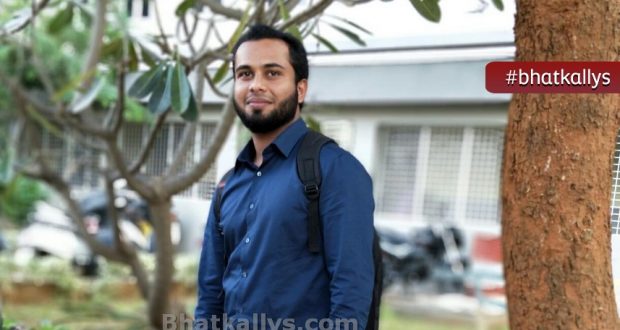
Bhatkal lad Abdul Bais Kadli, secured Best Oral Presentation Award during the International Conference on Desalination (InDACON-2018) on 20th April 2018 at National Institute of Technology, Tiruchinapalli, Tamilnadu.
Abdul presented his paper entitled ‘Optimisation and Modelling Of Desalination Of Water Using Biological Waste By Rsm And ANN’ during the event and secured the award.
The event was organized by National Institute of Technology, Tiruchinapalli, Tamilnadu at their campus on 20th and 21st April 2018.
Abdul Bais is a student of 8th semester chemical engineering at Siddaganga Institute Of Technology, Tumakuru and was representing his college in the event.
He is also a alumni of Anjuman Hami-e-Muslimeen Bhatkal where he completed his high schooling and Pre-University education, he was also a recipient of the prestigious academic award of the institution ‘Viqare Islamia’ in 2012 his teachers and management and Anjuman expressed their happiness over Abdul’s achievement and congratulated him while also wishing him luck for his future endeavors.
(Bhatkallys News Bureau/ Shaikh Zabi)
source: http://www.bhatkallys.com / Bhatkallys.com / Home> Bhatkallys News / by Shaikh Zabi, Bhatkallys News Bureau / April 23rd, 2018