The coins till the police action were in the pattern of Moghal coinage before it was changed in 1858.
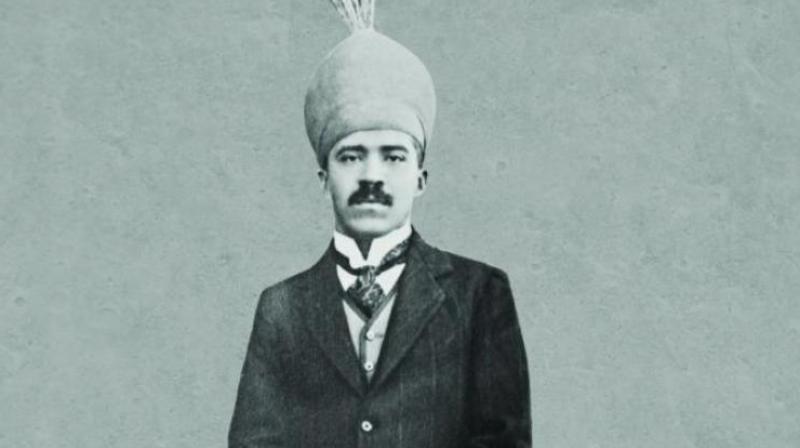
Nizam VII Mir Osman Ali Khan
Hyderabad:
The first series of paper currency introduced during the rule of Nizam VII Mir Osman Ali Khan were printed in London.
The currency notes of one five, 10, 100 and 1,000 rupee denominations were widely appreciated for their design and quality of paper, said Mr Amarbir Singh, an eminent numismatic. “The need for having paper currency was felt as there was a shortage of metal after World War I,” he said during a lecture here.
The notes had Islamic resemblance without any pictures of animals, plants or buildings and contained four languages — Urdu, English, Kannada and Telugu.
“The Nizam ensured that they were without any signature of the finance committee member. Only when they landed in the Hyderabad did they gain complete form,” Mr Singh said. The second series of notes, smaller in size, were introduced in the 1930s and printed at the Government Printing Press at Malakpet.
The regular coinage of Hyderabad in large circulation was the one rupee coin, the Osmania ‘Sicca’. The one rupee note was unpopular, and people were put off by its black colour.
The coins till the police action were in the pattern of Moghal coinage before it was changed in 1858.
Hyderabad had a mechanised mint at Saifabad where gold silver and copper coins were printed.
The highest coin for public circulation was silver one rupee.
source: http://www.deccanchronicle. com / Deccan Chronicle / Home> Nation> Current Affairs / by Asif Yar Khan, Deccan Chronicle / July 15th, 2018
Allapra (Kunnathunad Taluk – Ernakulam Distirct ), KERALA :
Mr Nizar has won the district-level best innovative farmer award in aquaponic farming.
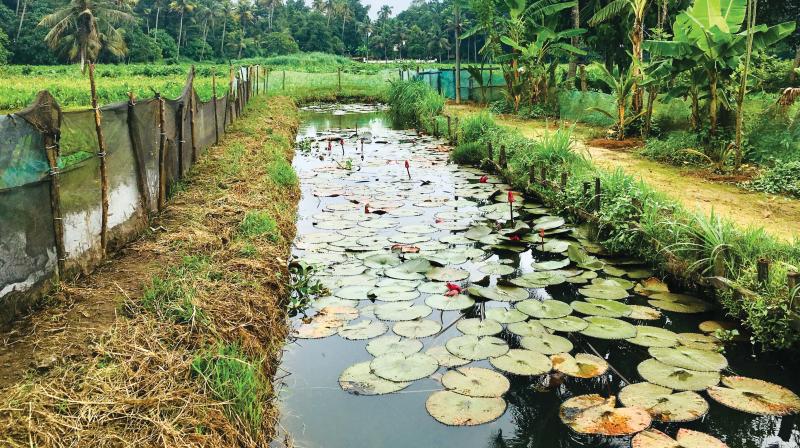
Scenes from the compound of Nizar’s plywood unit
Kochi :
At a time when green experts debate impacts of highly polluting plywood companies in Perumbavoor area, a plywood unit owner from there has bagged the state’s award for best innovative farming. Nizar M. M. from Allapra is a role model for entrepreneurs on how to convert a polluting industry environment-friendly and farming on its premises.
The more than four acres of land where the plywood unit is situated has been developed as an organic aquaponic fish, vegetable and dairy farm by spending Rs 50 lakh. Mr Nizar has won the district-level best innovative farmer award in aquaponic farming. “We’ve initially taken up farming at the plywood company compound to minimise damage to the environment. Later, it has been expanded, and now the four-acre organic farm produces vegetables, fish and milk,” he said.
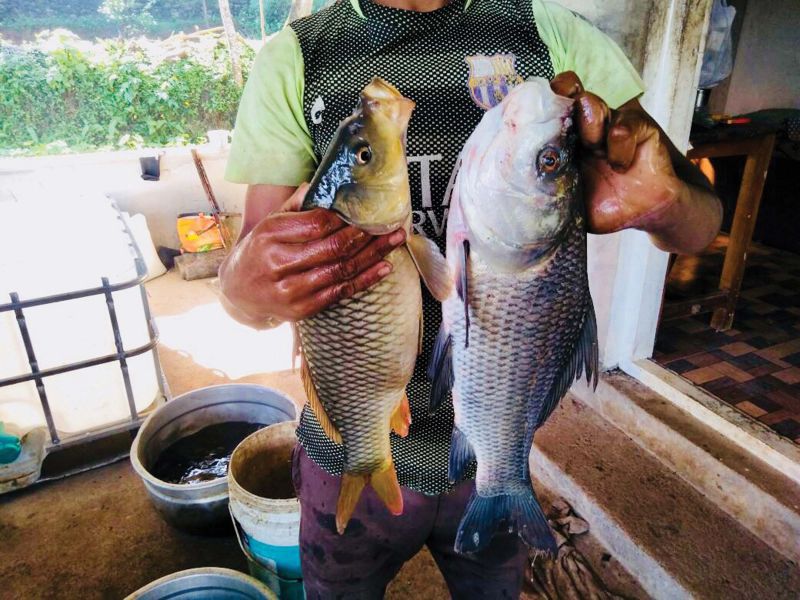
“The aquaponic farm was set up on an experimental basis spending `1 lakh, six months ago. Now, fishes from the farm are being sold at markets in Perumbavoor and the 20-20 food security market at Kizhakkambalam. Milk of the six indigenous Vechur dwarf cows on the farm is a most sought after.”
Fishes are given only organic feeds and waste from the fish ponds is used as organic manure for corn, sugarcane and vegetable cultivation. There are plans to develop the aquaponic farm at an estimated cost of Rs 6 lakh with a government subsidy of Rs 2.5 lakh.
Mr Nizar also plans to set up an organic coconut oil manufacturing unit and a goat farm soon.
The more than 100 migrant workers of the plywood unit are staying in the company compound, and their food is being made of organic vegetables and fishes from the farm.
source: http://www.deccanchronicle.com / Deccan Chronicle / Home> Lifestyle> Pets and Environment / by Smitha N, Deccan Chronicle / July 13th, 2018
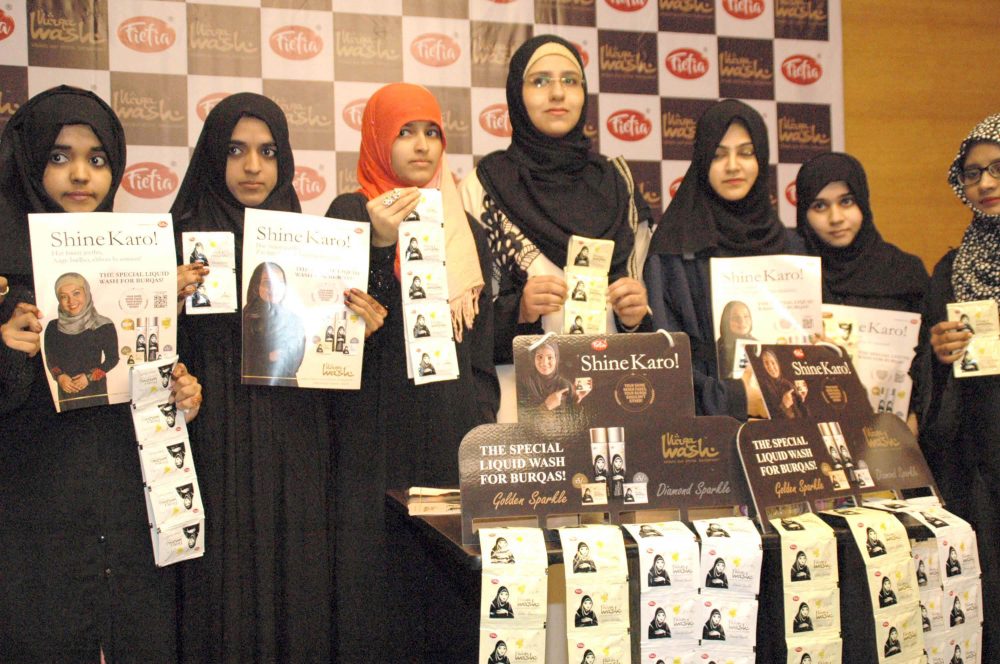
Hyderabadi girl Mahanoor Khatoon (C), launching her unique invention ‘Vurqa Wash’ a special liquid wash for Burqas, in Hyderabad on Wednesday. UNI PHOTO
source: http://www.siasat.com / The Siasat Daily / Home> Hyderabad> Photo News / July 12th, 2018
GI Tag Product Buyers demanding local high quality product at the price of Chinese scissors, say manufacturers.
Sunil Sharma / HT Photo(“The cottage industry that used to manufacture around two lakh pieces a month, has declined to almost 40% of its size now.”)
The Meerut scissors are straining to cut through the intense competition being offered by low-cost Chinese scissors that are flooding the domestic market, say local businessmen. Despite being a WTO geographical indication (GI) registered product since 2013, the scissors are still to find the national and international recognition that is deserved, they say.
“Meerut scissors have a unique identity. For centuries, this was a popular product across the country. But the industry received a set back in the past one year with the imposition of 18% GST. That and the inflow of low-cost Chinese’s scissors in the domestic market badly impacted the sales, and there is no sign of improvement,” said Sharif Ahmad, a seventh generation craftsman and the owner of Asli Akhuji Scissors Works.
“The cottage industry that used to manufacture around two lakh pieces a month, has declined to almost 40% of its size now,” he added.
Octogenarian Saeed Ahmad, who has been running ‘Sheikh Scissors’ since 1965, agrees. “I have never seen such a bad condition of the industry in the past five decades. This is due to imposition of high tax and Chinese scissors flooding the market,” he said.
Manufacturer Farmanuddin said that many clients in South India cancelled orders for Meerut scissors over the past few months because of “escalated prices”. “We manufacture scissors ranging from size of 3 inches to 18 inches. They are priced from Re 1 to Rs 1,000. Our problem is that buyers have now started demanding our quality product at the price of Chinese scissors! We don’t know how to deal with this situation,” he said.
A 350-YEAR-OLD COTTAGE INDUSTRY
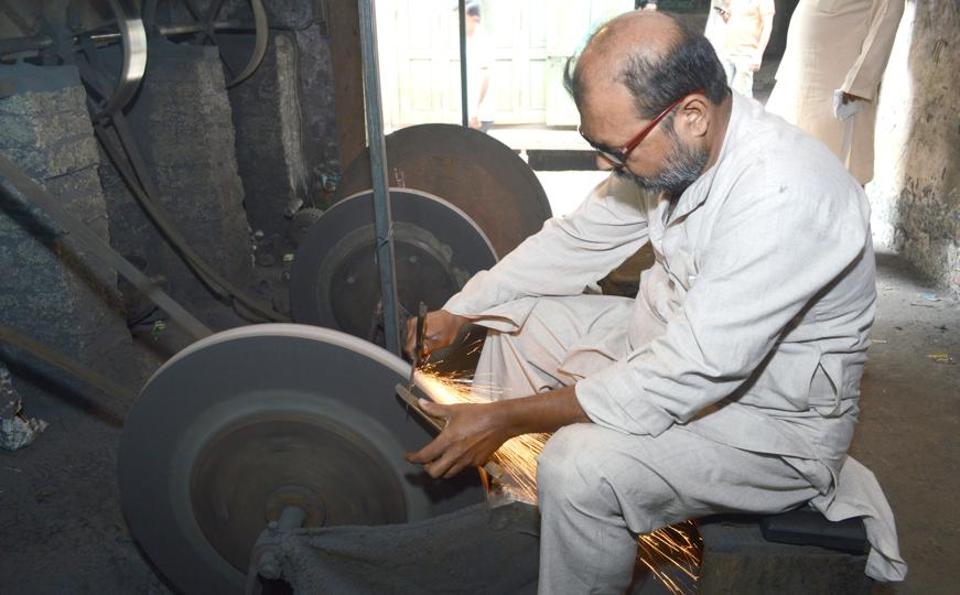
Scissors manufacturing is a 350-year-old cottage industry in Meerut.
A local blacksmith Akhunji is said to have combined two swords to cut leather in 1645 during the Mughal period, creating the first scissors in India.
“Since then, our family has been in the business,” said Sharif Ahmad who represents the seventh generation of the family. “Scissors manufacturing is still our family business. Gradually, the sizes and designs of the products changed. Today, our scissors are used for multipurpose cutting,” he said.
At present, Meerut has 225 small and medium scissors manufacturing units, out of which there are 30 registered units that feed only the domestic market. Although there are some vendors who cater to the overseas markets too, they don’t export directly.
More than 25,000 artisans and their families depend on this industry.
GI TAG IN 2013
Sharif Ahmad said the scissors manufacturers collected historic evidence for over two years to represent their case in front of the GI committee that examines documents before declaring a product GI certified.
Ahmad, who is also the vice president of the Meerut Scissors Manufacturers’ Special Purpose Vehicle — an association of scissors manufacturers — said that officials of the association worked hard to plead their case in front of the committee. “With our combined efforts, Meerut Scissors was certified as the country’s first GI scissors,” he said.
Association president Farmanuddin added, “We provided the GI committee with printed packing material, copy of Gazette and other evidences to support our claim that the scissors first originated here (in the country).”
However, he added that although it was a great achievement and a matter of pride for the city and the state, “very few people are aware of the Meerut scissors’ international status”.
Uttar Pradesh has only 20 GI products. Out of these, 15 are handicraft and two are agricultural products. Only three products from the state figure in the ‘manufactured’ category of GI products.
To recall, after the Meerut scissors received the GI tag, the then state government had established a scissors cluster at Lohia Nagar here in 2014. However, manufacturers assert that unless the issues of heavy taxation and competition from Chinese scissors were addressed, the industry would not revive.
GI PRODUCTS OF UP
Lucknow Chikan Craft (handicraft)
Mango Malihabadi Dussehri (agriculture)
Varanasi Glass Beads (handicraft)
Khurja Pottery (handicraft)
Saharanpur Wood Craft (handicraft)
Agra Durrie / Dari (handicraft)
Farrukhabad Cotton Print (handicraft)
Lucknow Zardozi (handicraft)
Banaras Brocades and Sarees (handicraft)
Meerut Scissors (manufactured)
Banaras Gulabi Meenakari Craft (handicraft)
Banaras Metal Repousse Craft (handicraft)
Varanasi Wooden Lacquer Ware & Toys (handicraft)
Mirzapur Handmade Dari (handicraft)
Nizamabad Black Pottery (handicraft)
Azara Ghansal Rice (agriculture)
Firozabad Glass (handicraft)
Kannauj Perfume (manufactured)
Kanpur Saddlery (manufactured)
Moradabad Metal Craft (handicraft)
INDIAN GI PRODUCTS IN ‘MANUFACTURED’ CATEGORY
Meerut Scissors
Mysore Agarbati
Coimbatore Wet Grinder
Mysore Sandalwood oil
Mysore Sandal Soap
Goa Feni
Nashik Valley Wine
Kannauj Perfume
Kanpur Saddlery
source: http://www.hindustantimes.com / Hindustan Times / Home> Cities> Lucknow / by S. Raju, Hindustan Times,Lucknow / July 09th, 2018
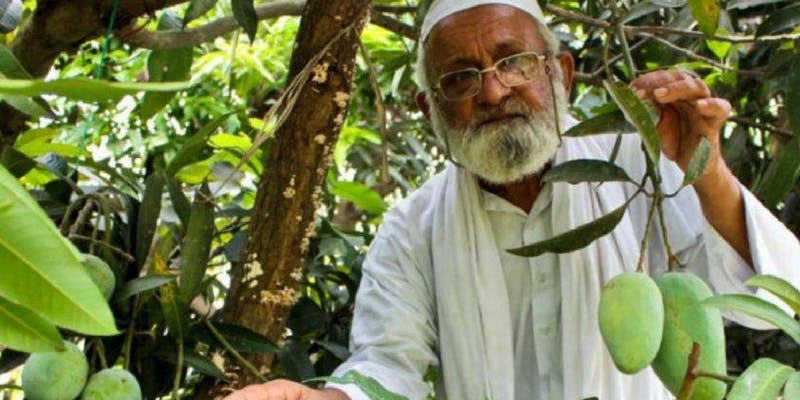
Last year, when newspapers and social media woke up to the news of a certain mango variety being dedicated to Prime Minister Narendra Modi, everyone’s attention shifted to 78-year-old “Mango crusader”. Hailing from Malihabad in Uttar Pradesh, Haji Kalimullah Khan is a mango cultivator who is either growing varieties of mangoes, experimenting with its flavors, naming a celebrity over each of the indigenous brands, or growing 300 varieties of mangoes on a single tree. Yes, you heard it right!
This sixth standard pass-out has pioneered the art of cultivating mangoes. He says,
Mango cultivation runs in our family, and we have been doing this for the past 300 years. Our ancestors in our rajwadas used to have huge mango orchards that grew beautiful hybrids. I cultivated a mango tree at the age of 17, which had seven varieties of mangoes in it, and all had different tastes and flavours.
Since then, I have been trying to grow new hybrids every year to show that it is possible to introduce newer varieties, he told NDTV.
Father of eight children, Kalimullah grabbed the headlines when he named a mango variety after Prime Minister Narendra Modi, and called it “NaMo Aam“. A hybrid of Kolkata’s Husn-e-Aara and Lucknow’s Dussehri, he plans to grow the variety at Modi’s hometown. In the past, he had dedicated mango varieties to yesteryear actor Nargis Dutt, Bollywood actor Aishwarya Rai Bachchan, Cricket prodigy Sachin Tendulkar, and Anarkali, the popular character in the movie “Mughal-e-Azam.”
Source: AmarUjala
“The ‘NaMo’ mango will remain even when we are gone and will remind people of Narendra Modi and his success. We wish to meet him once. We will be very happy if he visits us once and sees the ‘NaMo aam’ ripen, he told Zee News .
He also grows a certain breed of guava, which on ripening becomes as red as an apple. Kalimullah is also the recipient of the Padma Shri award
source: http://www.yourstory.com / YourStory / Home> Social Story> Think Change India / June 07th, 2018
The precious mango, so delicate that each piece has to be carefully plucked by hand and swathed in cotton, was developed in the late 18th century by the last nawab of Bengal.
New Delhi :
The West Bengal government is pushing for a GI tag for the Kohitur mango, arguably the most prized variety among the king of fruits that was ‘created’ during the reign of nawab Siraj-ud-Daulah strictly for royals only and now sells for up to Rs. 1,500 a piece.
The precious mango, so delicate that each piece has to be carefully plucked by hand and swathed in cotton, was developed in the late 18th century by the last nawab of Bengal. The mango was out of bounds for commoners with only royal orchards permitted to grow it, and only royals allowed to relish it.
Still out of reach for most, except for modern-day royals who have the means to spend, the the West Bengal government is trying to save and popularise the Murshidabad nawab’s favourite fruit all over the world and get a geographical indication (GI) tag.
“Kohitur is an exclusive variety from West Bengal. It can be only found in Murshidabad. At one time, there were 148 varieties in this district but now only 42 varieties are left. We are trying to save this variety. We have now applied for GI tag for Kohitur. Hopefully we will get it,” Gautam Roy, Deputy Director of Horticulture, Murshidabad told PTI.
The GI tag ensures that only those registered as authorised users are allowed to use the product name.
The rare and costly mango is presently on display and sold as a precious item from the state at the ongoing ‘Mango Festival” by the West Bengal government in the capital’s Janpath area.
“Legend has that, Siraj ud-Daulah, a connoisseur of mangoes, had gathered saplings of the best mangoes from all over the country for his garden in Murshidabad. He had even appointed few of his favourite mango breeders who were treated like Akbar’s Navratnas to do research and cross breed between various mangoes to create new varieties. Kohitur was created at that time and it was his favourite,” Roy stated.
The Kohitur is believed to have been created by a royal mango breeder called Hakim Ada Mohammadi, by cross breeding between a mango called Kalopahar and another variety, Roy said.
Though the Kalopahar, which got its name from its blackish green skin, is now extinct, the Kohitur continues to grow.
But the numbers are dwindling.
According to Kohitur growers, there are only 10 to 15 growers and only 25 to 30 Kohitur trees left in Murshidabad district despite the state government’s efforts to save the mango species.
“The district has more than 200 mango orchards but this variety is found only in a few. Some of these trees are over 150 years old. One tree does not bear more than 40 fruits in a season and the trees don’t bear fruit every year, making Kohitur one of the most sought after mangoes,” said Ashabul Mondol, a mango grower.
“It is an extremely delicate mango. It is not a very commercially viable mango,” he added.
But since each mango is priced at more than Rs. 500, growers tend to earn well.
“Last season we sold each mango at Rs. 1,500 per piece in Kolkata,” Mondol said.
The fruit is so delicate that fully ripe mangoes have to be plucked by hand. They start rotting if they fall from trees or get damaged in handling.
“It is so delicate that these mangoes need to be packed or kept separately wrapped in cotton. Legend has it that the nawabs kept the mangoes dipped in honey to preserve it and increase its shelf-life,” said Roy.
To relish the royal favourite, if you can afford it, eat them the way the royals did.
According to legend, Kohitur was not sliced by metal knives but bamboo knives to get the real flavour and taste. The nawabs would then use golden toothpicks to dig in delicately.
The Union Commerce Ministry has earlier given the GI tag for the Ratnagiri and Devgad Alphonso mangoes.
source: http://www.ndtv.com / NDTV / Home> Sections> All India / Press Trust of India / June 24th, 2018
Ordinary people continue to talk about the work of Moudgil, Gupta,Jaffer, Tewari, Singh, and Ghosh even today
Bidar district is fortunate to get good officers known for their out-of-the-box thinking. Munish Moudgil, Harsh Gupta, P.C. Jaffer, Anurag Tewari, Naveen Raj Singh and Ujjwal Kumar Ghosh, to name a few, were not only good administrators leading the bureaucratic apparatus but also people-friendly officers who ordinary folk continue to talk about even many years after they have been transferred.
That many of their unique experiments in the district have grabbed the attention of the political class in Bengaluru who, in turn, adopted them for the entire State considering their effectiveness in improving governance is testimony for their outstanding performance.
When Naveen Raj Singh was Bidar Zilla Panchayat Chief Executive Officer (CEO) between 2003 and 2005, the district witnessed a successful experiment of watershed development through arch-check-dams. A civil engineering graduate, Mr. Singh studied the pressure enduring logic behind Idukki Dam, a double curvature arch dam constructed across the Periyar in a narrow gorge between two granite hills in Kerala, and built the first-ever inclined-buttress check-dam, as it was called, in Bidar applying the same logic.
Considering the reduction of construction costs by half as compared to conventional check-dams and increased life expectancy to around 100 years, the arch-check-dams proved to be a successful model in watershed development at affordable costs. The experiment impressed the State government which issued standing directions to all district to adopt the Bidar model for building smaller check-dams.
Munish Moudgil, who served as Deputy Commissioner in the district between 2005 and 2007, was the man who not only forced the mighty to respect and adhere to the law of the land but also significantly contributed to improving the administration. An M.Tech graduate from IIT Bombay, Moudgil was the one who first conceived the idea of time-bound public grievance redressal system.
He began to hold Jana Spandana, a people-meeting programme, on Tuesdays to address public grievances and put a mechanism in place to see that every grievance is addressed within a stipulated time.
Then, all the other department heads also followed him. Impressed by the initiative, the government adopted it for the entire State under a new name, Sakala.
Then came Harsh Gupta. During his tenure as Deputy Commissioner between 2007 and 2010, Bidar saw multi-front development. He put men on task to identify and protect 96 little-known monuments of historical importance. It was during his tenure that around 1,100 acres of public land encroached upon by private parties returned to government’s possession. His groundwork is undeniable in the famous Bidriware getting geographical indication (GI) tag as he was the one who roped in Cauvery Handicrafts Emporium to train Bidri artisans and get their work globally recognised.
Education was P.C. Jaffer’s cup of tea. During his tenure as Deputy Commissioner between 2012 and 2015, he introduced a series of programmes for improving the education scenario in the district. He selected one efficient teacher from each one of the 1,350 government primary schools and get them trained in English teaching training. Experts from English and Foreign Languages University (EFLU), Hyderabad, with whom he entered into an agreement, trained teachers in two sessions with multimedia teaching tools.
Mr. Jaffer conducted a series of career counselling programmes for spreading awareness on UPSC examinations in the backward district. In one of his important initiatives, he conducted a preliminary test for those aspiring for civil services and selected 12 students — eight males and four females, whom he sent to Delhi for higher-level coaching. Two of them cracked the UPSC exams. His efforts to improve the district’s performance in SSLC and PUC examinations were unlimited.
Anurag Tewari, who succeeded Jaffer as Deputy Commissioner and worked between 2015 and 2017, was Bidar’s waterman. In collaboration with Team YUVA, a civil society group of professionals, he identified hundreds of public tanks and wells that were crying for dredging. The collective efforts paved way for the dredging of 100 tanks and 300 open-wells resulting in increased water storage and groundwater table recharge. In 2016, the then Chief Minister Siddaramaiah, who visited a lake in Aurad, locally known as Deshmukh Kere, which was freshly dredged, was so impressed that he extended the initiative to the entire State under the name of Kere Sanjeevini.
Ujjwal Kumar Ghosh, during his tenure as the CEO of Bidar Zilla Panchayat, put a system in place for ensuring punctuality of teachers in government schools. The system inspired the Education Department to further develop it into an SMS-Based School Attendance Monitoring System and extend it to the entire State.
Anirudh Sravan P. is another promising officer that Bidar could expect the furtherance of the legacy from. Transferred as Deputy Commissioner of the district by Election Commission during the recent Assembly polls, he got recognised as people’s officer within a short period. It is his repeated visits to the district hospital that made it a patient-friendly hospital. Known for his style of working more from the field than from office, he is still talked about in the rural areas of Kalaburagi where he had meaningfully implemented MGNREGA as the CEO of Kalaburagi Zilla Panchayat.
source: http://www.thehindu.com / The Hindu / Home> National> Karnataka / by Kumar Buradikatti / Kalaburagi – June 19th, 2018
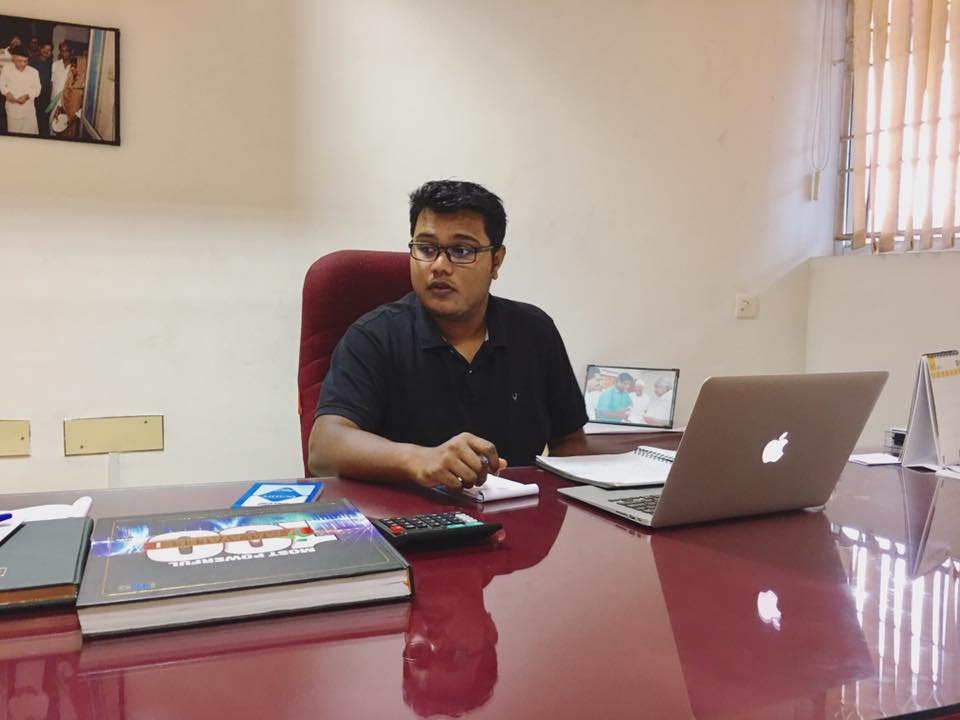
Today, Jawad is the managing director of TNM Online Solutions, a multi-crore IT establishment that deals with e-commerce, web designing and app development, and has a large clientele base from across the world.
It was a computer gifted to TNM Jawad which overturned his fortune and changed his life for the better. The 21-year-old from Kannur, Kerala, is a millionaire today and owns a company that rakes in an annual income of ₹2 crore. He also owns a house and a BMW car—and all this is thanks to Google!
This is the inspiring story of an enterprising youngster who entered uncharted territory at a very young age and emerged a winner through sheer hard work and trust in his abilities.
Today, Jawad is the managing director of TNM Online Solutions, a multi-crore IT establishment that deals with e-commerce, web designing and app development, and has a large clientele base from across the world.
But let’s go back to where it all began.
All of 10, a young Jawad made every possible use of the computer his father had gifted him along with an internet connection. Interestingly, Jawad’s original name is Mohammad Jawad TN, and it was his father who created his Gmail ID.
The 21-year-old genius.
“At that point, the user ID with my name wasn’t available, and instead Google came up with the suggestion ‘TNM Jawad’, and the name stuck! When I look back, that instance was the beginning of everything good in my life,” says the 21-year-old to The Better India.
Back then, Orkut and similar social networking sites were the rage, and this always intrigued Jawad. “I was keen to learn about everything—like how websites were created and how they worked and spent most of my after-school hours in the same pursuit. You could say that I was addicted to the computer but in a good way,” he recalls.
He soon learnt the basics of blogging and web design through free website building applications and even made a few blogs on his own. By the time he was a Class 10 student, he had launched a website along with his classmate, Srirag, named jasri.tk.
“Both of us were equally passionate about everything web related, and this was our first outing. However, we couldn’t afford a dot-com domain since we didn’t have any pocket money, so we created the site through a free domain,” Jawad adds.
Even as this went on, Jawad made sure that his studies never suffered. After scoring an ‘A1’ grade in all subjects in his exams, he had a lot of time on his hands and decided to explore the field further. He spent his vacation time understanding how great performing websites were different and what made them better.
By then, Jawad’s interest started becoming more pronounced. Realizing that there was a looming scope for website development, he decided to take the plunge by registering his first domain name—TNM Online Solutions—and running it as a virtual company. He started out by announcing on Facebook about designing a website at prices starting from ₹1,000.
Soon enough, enquiries started pouring in, but he admits to being technically ill-equipped to handle almost 99 percent of the queries that came his way.
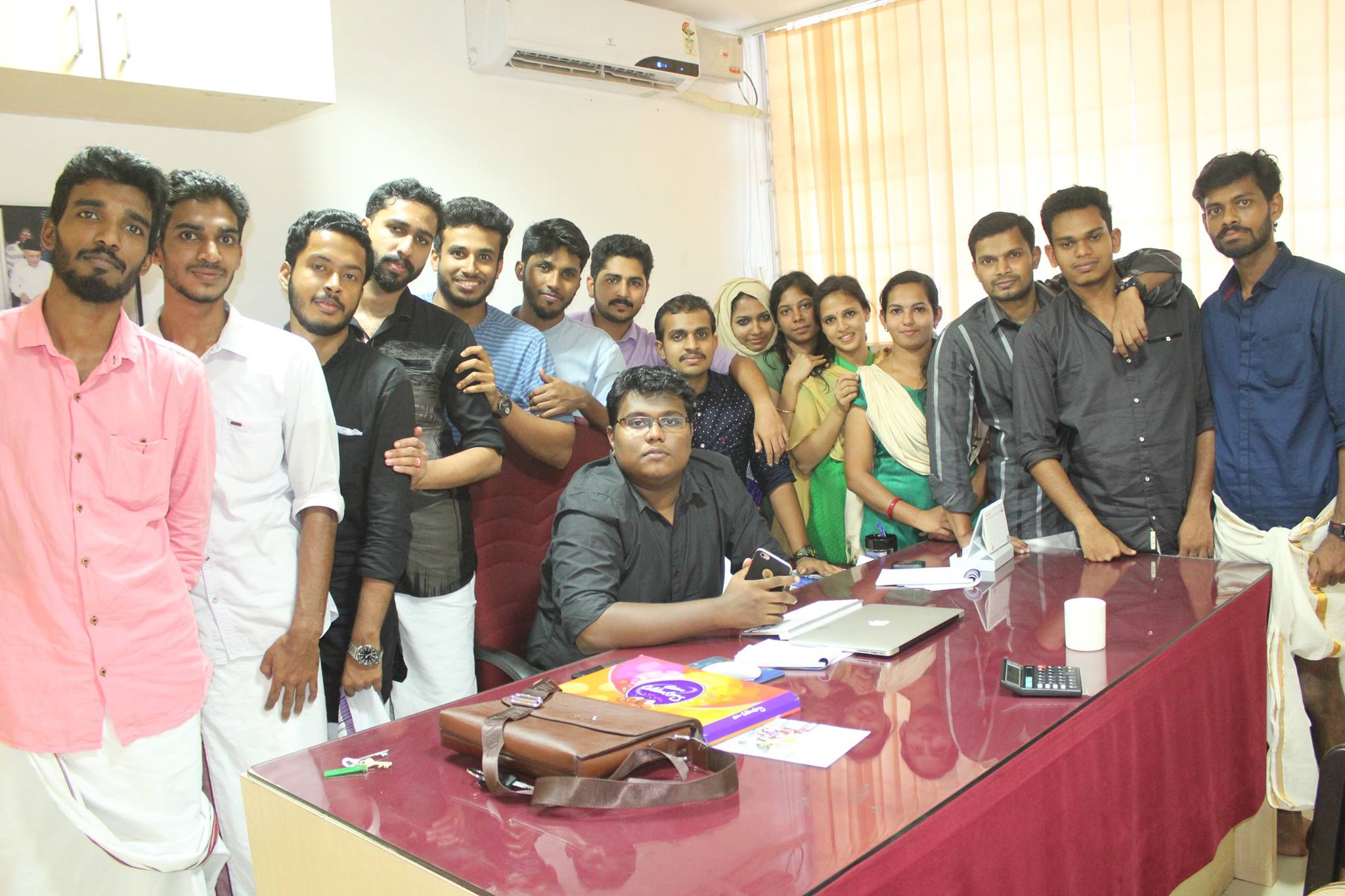
Jawad and his workforce.
“That is when I realised that I lacked strong tech-based skills that are important for website development, and to learn more, I even visited a couple of website design companies in Kannur and saw how they worked,” says Jawad.
When nothing seemed to be working for Jawad, the silver lining came in the form of a teacher from his school (where he was pursuing his higher secondary education) who had seen his Facebook post about website building. “Her brother had been an interior designer and was in need of a website. She came looking for me and requested if I could help, and guaranteed that she would pay the full amount I had quoted,” he recalls.
That was the first website formally developed under TNM Online solutions. “My teacher paid me the first ever remuneration I’d ever received in my life. Until then my folks at home had no clue about the company, so naturally, my mother, Fareeda, was shocked when I handed over an amount of ₹2,500 to her, and I had to explain what had happened,” laughs Jawad.
Somewhere around this time, Jawad’s family started grappling with a severe financial crunch after his father, who had been working in the banking sector in Dubai had to leave his job and return to India.
“Things started going from bad to worse, and I knew there was no time to brood over what had happened. Instead, I raised the subject of starting my own company to my parents and requested my father to somehow source ₹1 lakh for the venture. Knowing my penchant for computers and proclivity for web-based work, they wholeheartedly supported my ambition,” Jawad says.
In the meantime, he had signed up with an IT academy in Kannur, where he spent about a month professionally learning about website building and designing. This became yet another landmark turn in his life, as Jibin and Dinil, two of his teachers at the academy, agreed to work for him as salaried employees.
And thus on 23 June 2013, 17-year-old Jawad flagged off TNM Online Solutions at a small office in South Bazaar. Ably juggling school and work, Jawad would rush from school to office and work till 9:00 p.m., following which he would discuss business with clients till 2:00 a.m.
Jawad’s mother, whom he calls his backbone, was a constant pillar of support throughout his days of struggle.
Jawad with his umma, Fareeda.
What makes his commitment even more worthy of appreciation is that he managed to score 85 percent in his higher secondary exams.
However, nothing in life comes devoid of obstacles.
Jawad had been offering designing services at a paltry sum, and this provision wasn’t enough to cover the company expenses that included office rent and employee salaries. Also, business was slow, and the team was only getting 1-2 projects per month. That is when his mother stepped in and offered to pledge her golden bangles for money, as she was against the idea of not paying the employees on time.
After two years of testing times and learning curves, TNM Online solutions had worked with over 100 small-scale clients within Kerala itself. “In this time, I learnt that more than revenue generation, it is one’s portfolio that matters,” he adds.
Jawad cites his participation in the YES Kerala Summit for young entrepreneurs that gave him and his venture the visibility it needed and brought in many new projects, as a landmark achievement in his career.
The young man was always keen on living in his own home because, despite the fact that his father had a well-paid job while he was abroad, his family had always lived in rented houses. At the age of 19, he fulfilled this dream by building a home of his own in Varam.
Today, the 21-year-old works with clients from over 18 countries and has opened an office in Dubai, which has a clientele base of over 900.
The young man with his prized possession.
Another significant trajectory for TNM Online Solutions started when Jawad started incorporating Search Engine Optimisation (SEO) for the websites he created, making it much easier for websites to be found during a search.
For his incredible achievements at such a young age, Jawad was recently felicitated in the UAE and bestowed with an award by Dr Ram Buxani.
At present, Jawad is busy with a new initiative. He has started the TNM academy that provides professional training in areas like web designing and digital marketing to youngsters. The academy was recently inaugurated in Kannur and is open for anyone, irrespective of age.
Jawad’s resilience and determination deserve to be admired and recognised, and his story will surely motivate everyone. We wish him great success in life and hope that all his future endeavours are fruitful.
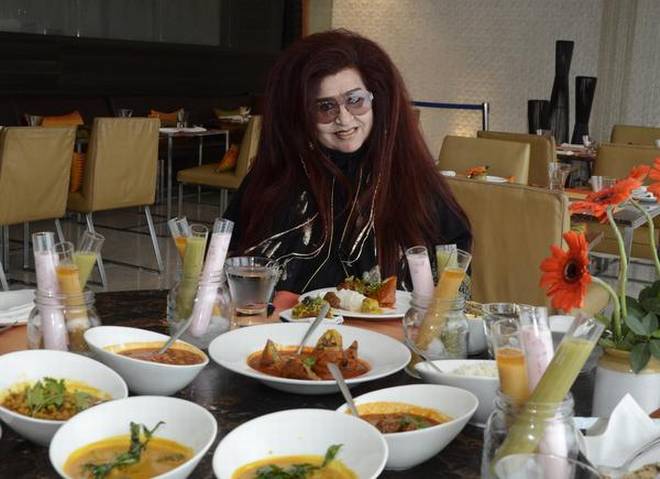
Appetite for knowledge Shahnaz Husain at The Park’s Fire restaurant in New Delhi | Photo Credit: Sushil Kumar Verma
Shahnaz Husain says quality of food plays a vital role in making a person look attractive.
It is usual to find film stars, sport personalities and politicians surrounded by fans and followers. One did not expect such response for Shahnaz Husain, one of the pioneers of herbal beauty care movement in the country. From the moment she steps into Fire, the multi-cuisine restaurant of The Park for a luncheon interaction, men and women of all age groups douse my cynical mind with their requests for selfies and autographs with the doyenne of cosmetic industry.
Perceiving my surprise, Shahnaz says, “This is the goodwill that I have earned thanks to my profession. For me, money was never primary. It was to help people look good without adverse effects. I’m always keen to help people including strangers whenever I observe a skin or hair problem. I try to suggest what is good for them. Recently, I noticed the girl doing my cardiogram at the doctor’s clinic had a bad case of skin pigmentation. I advised what was best for her.”
Chef Abhishek Basu has specially curated organic seasonal menu for the guest. Shahnaz remarks, “Being conscious about my diet, I am glad about this menu.”
Carving her own niche
Considering that Shahnaz comes from a family of legal luminaries — her grandfather Samiullah Beg served as the Chief Justice of Hyderabad High Court, father Nasirullah Beg was the CJ of Allahabad High Court and uncle Mirza Hameedullah Beg was the CJI — many find it surprising that she decided on cosmetic business as a career. “My father wished me become the Chief Justice of the International Court of Justice in Hague while I teased him that my limited schooling was not enough for that. Having been married at 15 and becoming a mother at 16, I wondered what to do with my life. Not keen on interior decoration or fashion, I decided to opt for cosmetic therapy and cosmetology.”
What she decided, she did with style, studying in eight countries and getting trained in globally reputed institutions like Helena Rubinstein, Swarzkopf, Christine Valmy, Lancome and Lean. “Having dropped out of school, I was hungry for knowledge , till they said, there is nothing else to teach,” she quips. Remarkably, Shahnaz paid the fees for these institutions on her own by writing articles on beauty for magazines and weeklies.
Shahnaz took a major decision when after learning Western techniques and methods she decided to create herbal products based on Ayurveda. She says it happened because of a chance incident. “At Rubinstein, my classmate Catherine used to come with a very beautiful woman whom she made wait outside. Unable to control my curiosity, I found out that the lady was her mother. A well known model, she had gone blind by using a famous eye make-up while advertising for the product. I was completely stunned and wondered that if a cosmetic product led to loss of sight, there is something wrong with the beauty business. Pondering over it, I decided to tap India’s more than 3000-year-old Ayurvedic heritage to find alternatives for the chemicals used in beauty products.” After returning to India, she employed several ayurveda practitioners for the job. “You would be surprised to know that for each formulation we discovered 20 alternatives. Such is the richness of this ancient science.”
Meanwhile, the chef fills the table with healthy options. There is sol kadhi, bael pathar ka sharbat and bhutte ka kees taco. Each finds favour with Shahnaz. “This is the strength of natural ingredients. It not only lends taste and flavour but also provides required nutrients.” As we finish the main course of Thanjavur manga curry, mangodi ki subzi and munsiari rajma masala is served. Shahnaz remarks, “The sheer colour, aroma and presentation makes the dishes so tempting. I will try a little of each.”
As we enjoy the delicacies, Shahnaz observes that while most people think that creams, lotions and treatment makes one look good, it is essentially our food intake that plays a major part. “If possible, people should go vegan, otherwise they must eat lots of fresh fruits and vegetables; go high on protein and less on carbohydrates; eat dal and rice after removing the water. These are the mantras for healthy skin and hair.” One couldn’t help observe the hotel staff, listening in rapt attention as did other guests around us.
Strict diet
On being asked if she herself practices what she preaches, Shahnaz says. “I follow my diet rigorously. Breakfast is oats, papaya and green tea. Lunch is usually fruit juice, brown bread, cheese and vegetables while dinner is one roti with subzi.” It must be tough to resist the temptation. “Yes it is,” she admits candidly. “I do have cheat days when I eat Hyderabadi biryani, korma, roast potatoes, kakori kababs, sheer mal and kheer.” Her favourite cuisine is of course South Indian. “Being light and healthy, I prefer idli and dosa with sambar. I learnt this from Vyjayanthimala, who told me that a doctor had advised her to eat these when she wanted to be fit for a particular film.” Likewise, she prefers Chinese cuisine, particularly chicken chowmein, Peking duck and sweet corn soup. “Bahut light hota hai!”
Amazingly dealing with chemicals and their formulations, Shahnaz does not lead from the front in kitchen. “I never had a chance to learn since we always had a cook at home. Once venturing to make rice, I was so confused about the quantity of water and the time required to boil it, that I ended up adding milk and sugar to make kheer,” she quips.
As the doyenne emphasises the need for proper diet for healthy body and mind, one wonders what beauty means to her. “Beauty is what a woman exudes from inside. There are essentially two aspects to it. A woman needs to be intelligent besides being attractive. One without the other never works. Secondly, neither the skin nor hair colour is important, it is the quality that counts.” Then what about this fanatic longing about fairness? “That is really unfortunate. I know several women having underwent chemically induced treatment to look fair. That never helps as the side effects are terrible. We too are entreated by parents to make their daughters fair to help them get a suitable match. All this pains me.” The cosmetic industry too fuels this fascination as evident from ads. “Instead of changing public perception, they are promoting it. Skin colour does not decide the character or nature of a person or how he or she will be as a life partner,” remarks Shahnaz.
Instead of this obsession for fairness, Shahnaz suggests one should take care of oneself. “Looking good is feeling good. People in general and women in particular must take out ‘me time’ to take care of themselves. This need not necessarily mean visiting salons or parlours.” Stating that beauty consciousness is no longer confined to the upper crust of the society, she narrates some interesting anecdotes. “I once met a woman selling Rajasthani cushions in Connaught Place. She recognised me and eagerly shared that she uses one of my products which she picks up in bulk during her visits to Delhi. Likewise, a guard once asked me what cream to buy for his wife. Beauty is everyone’s concern,” she sums up.
source: http://www.thehindu.com / The Hindu / Home> Life & Style> Food / by S. Ravi / June 20th, 2018
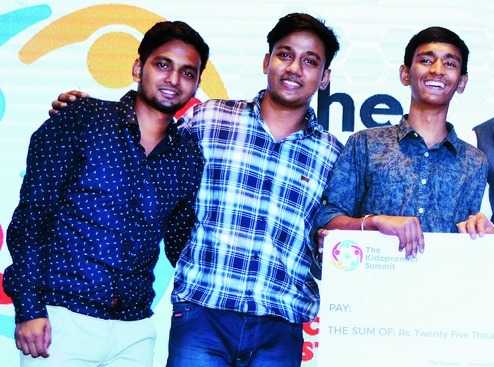
(From left) Md Wasim Ali Ansari, Azhar Rabbani and Ayush Singh at The Kidopreneur Summit at Novotel on Saturday. Picture by Biswajit Kundu
Calcutta:
They gave Id celebrations at home a miss to pitch their business module before a roomful of entrepreneurs. Azhar Rabbani and Mohammad Wasim Ali Ansari, along with Ayush Singh, have devised a plan to provide easy accommodation to outstation students through an app.
The three friends beat six other teams to bag the first prize at The Kidoprenuer Summit, in association with The Telegraph, at Novotel on Saturday. Co-hosted by Sonali’s Cubo, Merchants’ Chamber of Commerce and Srei Infrastructure Finance, the one-of-its-kind conclave gave young entrepreneurs a chance to showcase their innovative business ideas.
The OFY (Only For You) Homes project hopes to address the accommodation problems that students of other cities face when they come to Calcutta to study. “More than 60 colleges in and around the city don’t offer hostel facilities and at any time around 30,000 students are looking for a place to stay,” said Ayush, 17, a student of Shree Jain Vidyalaya.
The boys plan to offer standardised paying guest accommodation and flats on rent through an app. “Students can rent a home for any period of time and also share it with a maximum of four roommates. We will offer packages. They can get food, Internet, electricity and other amenities at Rs 6,000 to Rs 12,000 a month,” said Azhar, 18, of Seth Anandram Jaipuria College.
College mate Wasim, 18, said the trio have been working out the logistics for the past three months. “We hope to launch the app by the year end. We are tying up with people who rent out rooms,” he said.
Yubasana Kapas, 14, of Gokhale Memorial Girls’ School won the third prize for her plan to showcase Bengal’s art and culture before foreign patrons.
Three students – Kaushik Sardar, Shane Romel Kujur and Gaurav Bordoloi – from National Institute of Technology, Durgapur, bagged the second prize for Pedals Go, an app-based rental plan for bicycles.
“The event has brought three generations of entrepreneurs on one platform,” said Vayjayanti Pugalia, who curated the event.
The summit saw young entrepreneurs from across the country exchange notes with business stalwarts from the city and share their stories and challenges.
source: http://www.telegraphindia.com / The Telegraph,Calcutta,India / Home> Calcutta / by Chandreyee Ghose (additional reporting by Samabrita Sen) / June 17th, 2018