Category Archives: Business & Economy

First woman river pilot to start guiding ships soon

Chennai, TAMIL NADU / Kolkata, WEST BENGAL :

Reshma Nilofer Naha
Reshma Nilofer Naha

Kolkata :

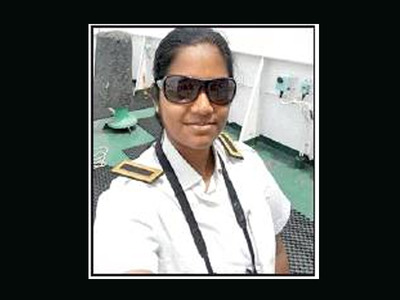
After six months, Reshma Nilofer Naha  will be piloting ships from sea to the Kolkata port.

She will be the world’s first woman river pilot to do this. She will pilot ships through a distance of 223km, of which, 148km will be up the Hooghly – considered to be one of the most treacherous with its sharp ‘bars and bends’. Reshma, originally from Chennai, is now undergoing training at the Kolkata Port Trust (KoPT).
“The role of river pilots is crucial as they have knowledge of the river and can guide the ships into port. We have 67 river pilots in service and Reshma will start her job soon,” KoPT chairman Vinit Kumar said.

Reshma, a BSc (Nautical Science) graduate, was recruited by KoPT in 2011. According to JJ Biswas, director, marine department, KoPT, she also has a year’s experience at sea as a cadet. “After joining KoPT, she obtained the 2nd and 1st mates competency certificates from the Directorate General of Shipping. Recently, she cleared the Grade III Part-I examination from KoPT. In the next six months, she will qualify as a Grade III pilot,” he added.

As a Grade III pilot, Reshma will initially be assigned smaller vessels. Later, as she gets more experienced, she will graduate to Grade II and Grade I and take charge of large ships like Panamax vessels – nearly 300m-long with a capacity of 70,000 tonnes or more.

All ships calling on the ports of Kolkata or Haldia have to contact the pilot station on Sagar Island when they approach the Sandheads. From the Sandheads to the pilot boarding point at Sagar, remote pilotage is provided to the ships using Vessel Traffic Management System guidance. At a spot known as Middleton Point, a pilot vessel rendezvous with a ship and the pilot gets on board. The pilot is in charge till the ship reaches Kolkata and the harbour pilot takes over.

“The river has several sandbars and bends. A river pilot knows the channel along which the ship has to move to avoid getting stranded. Draught is also a problem and there is little scope of manoeuvring. The pilots make best use of the tides to guide ships in. People without training and experience along the river cannot handle ships,” another official said.

source: http://www.timesofindia.indiatimes.com / The Times of India / News> City News> Kolkata News / by Jayanta Gupta / TNN / April 05th, 2018

SIDBI marks Foundation Day as Day of Sampark

UTTAR PRADESH :

Lucknow :

The Small Industries Development Bank of India (SIDBI) commemorated its foundation day as day of  Sampark (connect), Samwad (interaction), Suraksha (security) and Sampreshan (dissemination).

The bank’s chairman and managing director Mohammad Mustafa launched a series of initiatives from Lucknow headquarters. “The occasion is an opportunity to look within and reinvent our strategy for course correction and development,” he said.

While flagging off the bank’s MSME contact programme, he called upon bank’s officers to use the day long stay at MSMEs to come closer in understanding their opportunities, challenges and the eco system to comprehend what can be done to ease the way they do business. This is what SIDBI has been created for and learning with footprints at field level is the true spirit of the organisation, he said.

A new step forward in commencing Bancassurance services for MSMEs was also taken.

An MoU was signed with New India Assurance and two MSMEs were issued insurance policies.

While launching the revamped SIDBI website (www.sidbi.in) on the occasion the CMD mentioned that it is an attempt to reimagine the site to reflect the new vibrant face of SIDBI aiming to transform the MSE ecosystem.

Besides providing crisp and precise information about the various strategic interventions made by SIDBI, it exhibits potential for the MSE aspirants through its other offerings in the form of a “Contactless Loan Platform” likely to be introduced on the website shortly.

source: http://www.dailypioneer.com / The Pioneer / PNS, Dehradun / April 04th, 2018

How Thumbay Moideen Became A Healthcare Billionaire In The U.A.E.

Mangaluru, KARNATAKA / UNITED ARAB EMIRATES :
ThumbayMPOs25mar2018

With the tinge of an Indian accent, a bespectacled professor rattled off medical terminology in English as students frantically took notes. Unfazed by the stench of embalming fluids, they examined the torso of a cadaver at Gulf Medical University (GMU) in Ajman, United Arab Emirates. Nothing unusual as far as anatomy classes go,  except that GMU is the only privately owned academic medical center in the U.A.E. It is part of a network of four pioneering teaching hospitals that now train 19% of doctors in the country and treat nearly 1,800 patients a day.

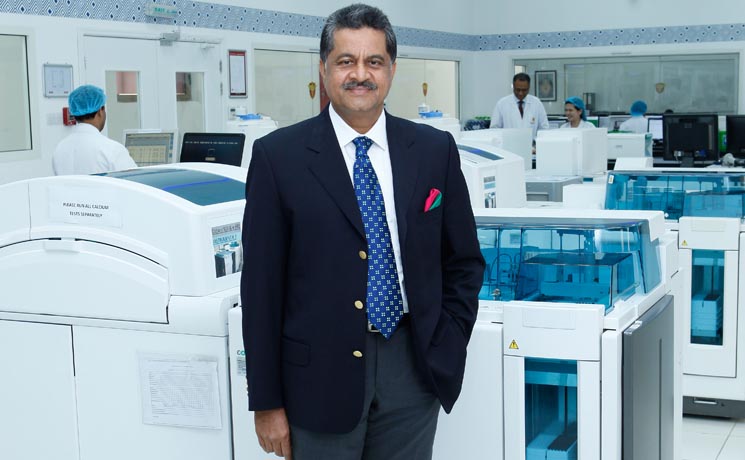
The founder is Thumbay Moideen, a 58-year-old former timber trader from Mangalore, a port city on the Arabian Sea in southern India. He is as surprised as anyone to find himself at the helm of a growing healthcare empire, Thumbay Group, which generated $700 million last year, up more than 20% from 2014. “It’s an unlikely tale,” says Moideen.
The career switch has made Moideen a billionaire, with a fortune FORBES MIDDLE EAST estimates at $1.8 billion, based on comparable publicly traded healthcare companies in the U.A.E. He says he’s Thumbay Group’s sole shareholder.

What began as an institution to teach aspiring medical professionals from India in the U.A.E.—Indians make up half of the country’s population, turned into training grounds for all expats, and includes a sizeable Arab student body. The university gets up to 6,000 applications a year for a total of 270 spots. Tuition ranges from $8,000 a year for a degree in physiotherapy to $32,000 annually for a medical degree—more than three times the cost of an MD at a government-run university. Other specialties include dentistry and pharmacy. Since 2003, over 2,000 students have graduated.

Healthy Choice

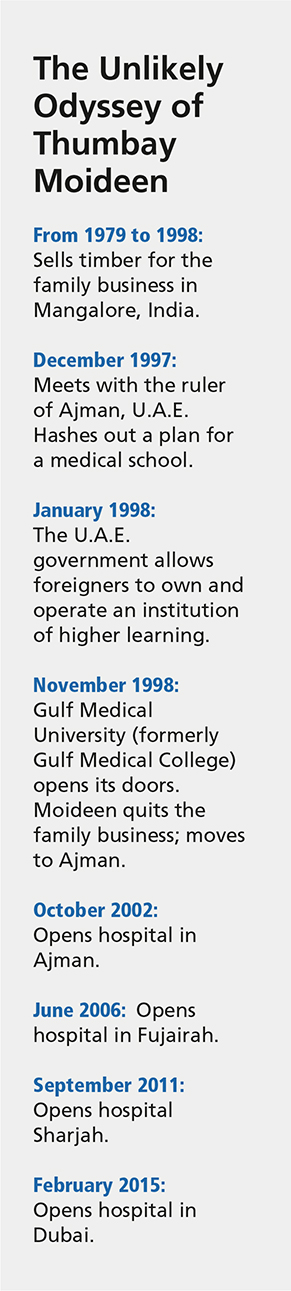
The tale of Moideen’s ascent into medical academia begins in December 1997.  Traveling from Mangalore to Tanzania, he made a stop in Ajman and paid a visit to a member of the royal family, Sheikh Majid bin Saeed Al Nuaimi, a family acquaintance.

Moideen was then working for his family’s timber and real estate company, BA Group Thumbay, a pillar of the Mangalore business community.  His father, Ahmed Hajee Moideen, formed the establishment in 1957. It imports wood from Malaysia, Papua New Guinea, Tanzania, Nigeria and Ghana, and processes them in its factories. After graduating with a degree in commerce from St. Aloysius College in Mangalore, Moideen joined the business in 1979, and traveled frequently.

Over dinner that December evening in Ajman, Sheikh Al Nuaimi asked him, “Can you think of a project which could have multiple effects on the economy of Ajman?” recalls Moideen.

Ajman is the smallest emirate in the U.A.E., and the royal family was on the hunt for new projects to help boost its economy.

“In those days, Ajman was like a village. There was nothing,” says Moideen.

He proposed expanding the family business in Ajman, but the Sheikh pushed for new ideas. Moideen told him the story of a medical university and affiliated hospital close to his hometown. Kasturba Medical College in Manipal began accepting medical students in 1969, and it built Kasturba Hospital. “The whole town grew around the college and it became world renowned,” says Moideen. In 2015, an India Today/Nielsen survey ranked Kasturba Medical College one of the top 10 medical schools in India—a feat in a country with more than 280 medical colleges.

Moideen thought their conversation was casual brainstorming, but the Sheikh immediately saw potential. Three days later, he brought up the idea of an academic medical center for Ajman with the Emirate’s ruler, Sheikh Humaid bin Rashid Al Nuaimi, who asked to see Moideen. He told the Emir that although it was an exciting idea, he didn’t have expertise in education or healthcare. The Emir persisted. “As we spoke, the ruler said, ‘you look like a smart chap, why don’t you try it? I’ll help you,’” recalls Moideen..

“It was a risky move, but I’m an adventurous fellow,” he says. It didn’t take him long to abandon his career in the family company in 1998, and immerse himself in the business of healthcare. “I was rushing between India and Ajman. I couldn’t keep up anymore and this was so much more exciting.”
OdyssesyThumbayMPOs25mar2018

His first move was to seek advice from Kasturba Medical College. Consultants from the school helped him draw a feasibility study. The only other medical schools in 1998 in the U.A.E. were Dubai Medical College, which is only open to women, and government-owned Al Ain University.

The Ministry of Higher Education didn’t allow expats to own a license for educational institutions, but a royal decree soon waived that requirement in January 1998. Moideen bought 25 acres of land from the government the following month, bankrolling the venture with an initial investment of nearly $41 million in bank loans and his own capital. In March, he began building the university and by the fall of that year, it started accepting students.

To his surprise, the school hardly got any Indian applicants. Arabs and expats from countries such as the U.K. and Germany enrolled. Gulf Medical University, which had only recruited Indian staff, quickly had to hire personnel from other nationalities.

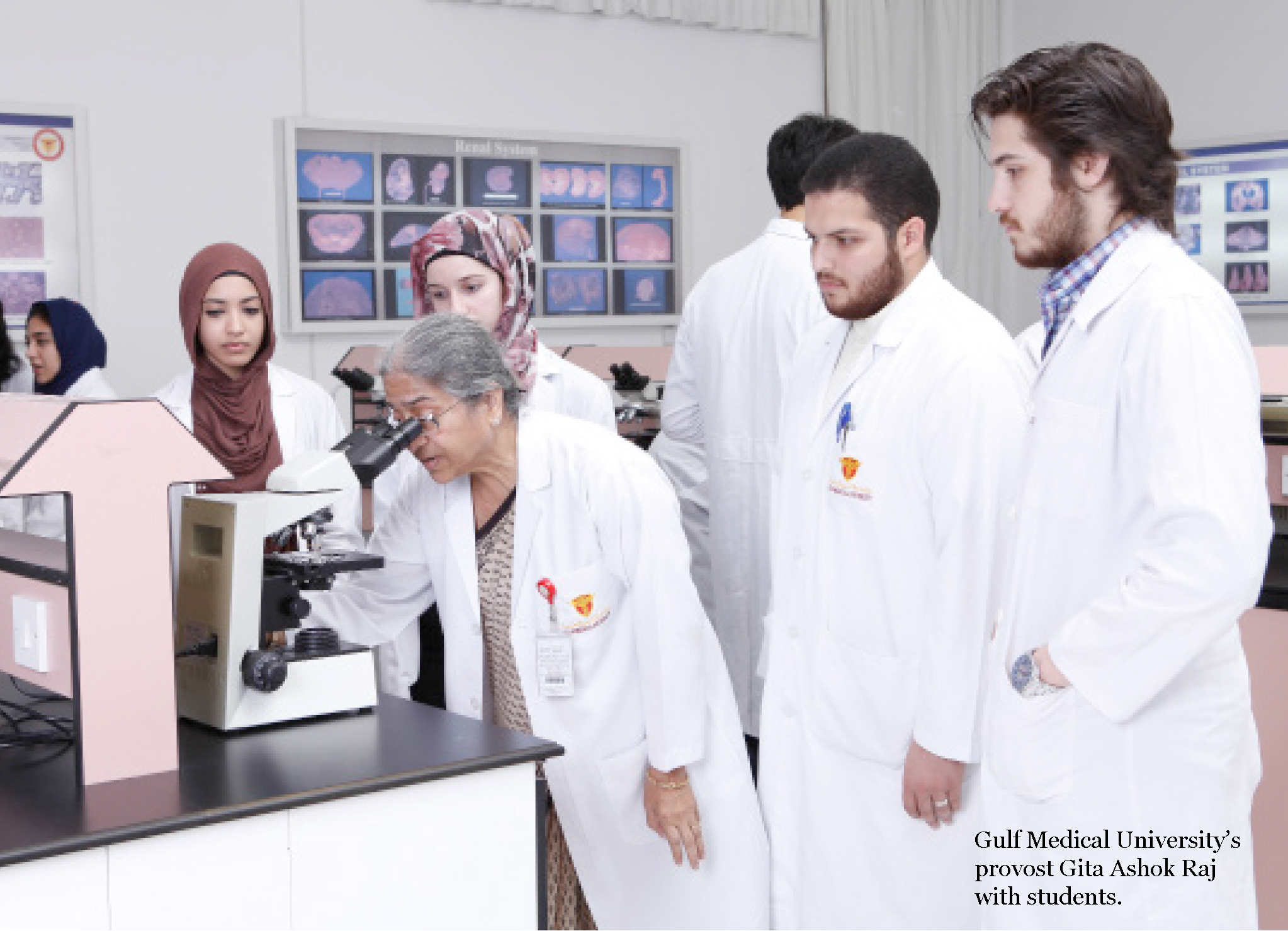
The student body is now made up of 36% Arabs, 32% Asians (including Indians, Pakistanis and Sri Lankans) and 22% Africans; the rest comes from Europe and the U.S. Gita Ashok Raj, a pathologist from Mangalore, oversees a faculty of 162 from 22 countries. Students straighten up when she walks down the university corridors.  “We have fast evolved from a college offering one full-time program to a full-fledged university offering 15 full-time programs,” she says.

To build the school’s reputation, Moideen began raising its profile by sponsoring conferences with top medical schools, such as Johns Hopkins, Mayo Clinic and Hamburg University. “We took the initiative 17 years ago and contacted these big universities,” he says. Early on, for example, GMU organized a national conference on ophthalmology along with the U.A.E.’s Ministry of Health and Mayo Clinic. James Garrity, Chair and Professor of Ophthalmology at Mayo Clinic, delivered the keynote address. To date, the school has organized more than 275 national and international conferences.

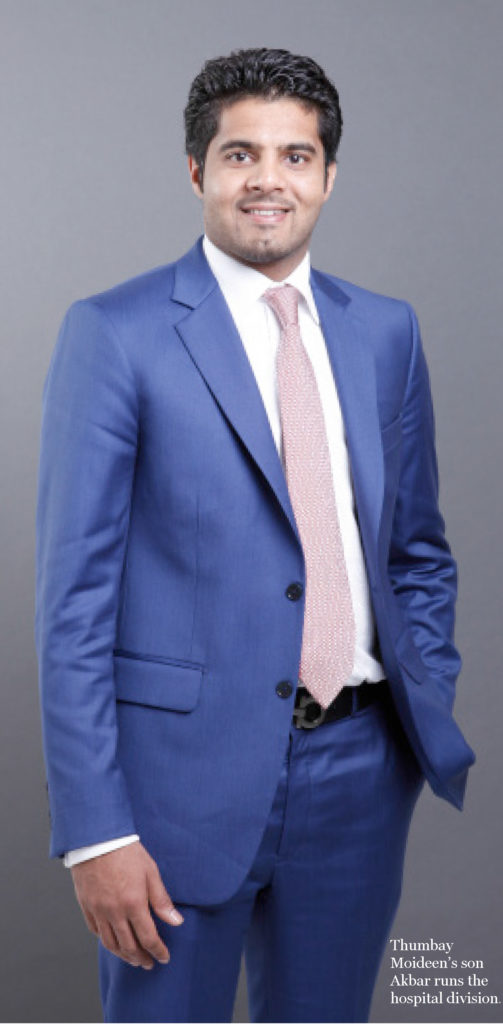
The plan for a teaching hospital began in 2000. For the first two years, students were sent to Iranian Hospital in Dubai, while Moideen built the first 200-bed Thumbay Hospital in Ajman. Financed with $81 million in loans from Islamic banks and his money, it opened in 2002, a year before the first graduating class. He opened three other hospitals with 60 beds each in Fujairah in 2006 and Sharjah in 2011, and 150 beds in Dubai in 2015. His eldest son Akbar who studied hospital management at the SDA Bocconi School of Management in Milan, Italy, runs the hospital division.

AkbarThumbayMPOs25mar2018

GCC countries still struggle with a shortage of medical professionals. There are 1.5 physicians per 1,000 people, while hospital beds lag at 21 per 10,000 people, according to Colliers International, a global real estate consultancy firm.

One law hasn’t changed for Thumbay Group: its medical school graduates are required to complete a year of internship at a government-owned hospital. Besides Al Ain University, they now include the University of Sharjah, and Ras al-Khaimah Medical and Health Sciences University.

The majority of GMU students go on to specialize in areas such as cardiology, neurology, and dermatology; 22% are admitted to U.S. medical schools for further training.

The school’s academic record hasn’t necessarily translated into a preference for its physicians, or any U.A.E.-trained doctor for that matter. Saudi German Hospital in Dubai, for example, hires GMU graduates with three years of experience, but a western education still carries prestige. “Western-trained doctors are preferred by patients,” says Semira Dikbas, executive, International Patients Program at Saudi German Hospital.  “Gulf Medical University is well recognized, but we cannot compare it with any other university in Europe, the U.S. or India.”
 

Thumbay02MPOs25mar2018

In an effort to gain prestige, Moideen started the first medical journal in the GCC. Launched in 2012, the Gulf Medical Journal is a peer-reviewed publication with an international advisory board that includes doctors from India, the U.K. and U.S. Researchers at Gulf Medical University are expected to publish two to three articles a year. The school spends close to $3 million a year on research, and faculty is regularly awarded external grants. Recently, for example, the World Health Organization provided a $10,000 grant to study at-risk relatives of patients with diabetes, which affects one in five people in the U.A.E.

The strategy is slowly paying off at Thumbay hospitals too. In 2013, they received accreditation from Joint Commission International, a U.S. non-profit organization. It bestows its highly coveted stamp of approval on hospitals that meet benchmarks for quality and safety.

Thumbay Group runs the only privately owned teaching hospitals in the U.A.E., but the number of hospitals is growing to meet demand. VPS Healthcare, HNC Hospitals and NMC Healthcare, to name a few, are expanding. Their founders are also Indian entrepreneurs, who have staked out a claim in the healthcare sector in the Gulf.

Moideen has now set his sights on Ghana where he expects to open a medical school by 2017. He inaugurated a hospital in Hyderabad in November 2015, and plans to build hospitals in Saudi Arabia, Qatar, Bombay and Bangalore next year.

source: http://www.forbesmiddleeast.com / Forbes Middle East / Home> Business / March 01st, 2016
Lone warrior strives for making the Valley greener

Srinagar , JAMMU & KASHMIR :

Businessman Bhat has spent Rs 30 lakh from his pocket to plant 1,45,000 trees; he aims to plant 20,000 trees every year.

Abdul Hameed Bhat digging pits and planting conifer saplings.

Srinagar:

About nine years ago, he single-handedly began planting trees on barren hillocks which, till a couple of decades ago, used to be full of beautiful clusters of deodar or Himalayan cedar and conifer trees.

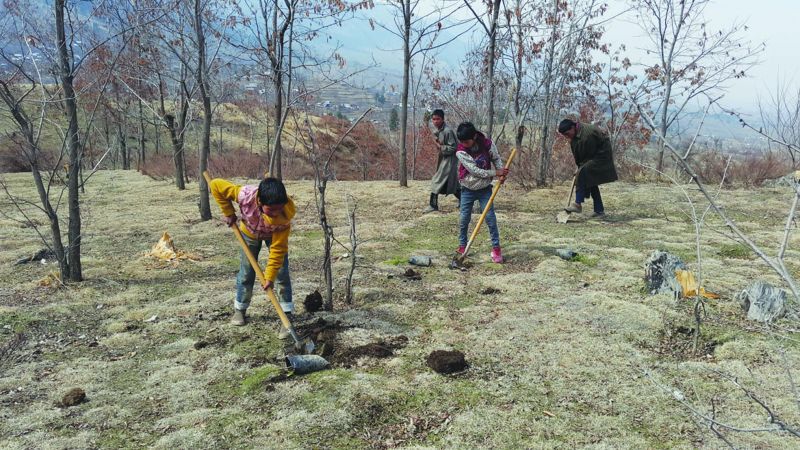
Abdul Hameed Bhat, 51, a businessman, has himself planted or helped volunteers in planting as many as 1,45,000 trees, mostly pine, in different parts of the Kashmir valley spending Rs 30 lakh from his own pocket.

“I don’t get any financial help from government or any other source nor do I run any NGO. It is an effort made at personal level,” he said, calling it a “heart mission” rooted in his love for environment.

Mr Bhat’s passion began in 2009 when he started taking care of dozens of pine trees planted by the social forestry department on the pavements outside his office in Srinagar’s Barzulla area but were left unattended.

As a  promotion activity in his auto business, he started gifting saplings to clients in place of calendars, diaries and other stationery items.

Last Sunday, Mr Bhat, a school dropout who has made it big in business, was joined by a large group of volunteers, including journalists and members of a football club,  to plant over 1,000 pine trees on a knoll at Sutaharan in central district of Budgam. Sitting in the lap of Pirpanjal Range, Sutaharan like many other Valley areas has witnessed large-scale deforestation mainly during the three-decade old armed conflict in Kashmir.

“There are many things we can do to preserve and protect our environment if we want to preserve and protect life on Earth and leave behind something good for our coming generations,” he told this correspondent after digging about 100 holes and planting saplings in them.

Mr Bhat said that it pains him to see deforestation across Kashmir and he took a “conscious decision” to do his bit to rectify the wrong.

“I know the damage done to our woods over the years is huge and no single effort is likely to have a great impact of reparation. But I thought whatever I can, I must do,” he said.

Relentlessly dedicated to restoring nature, Mr Bhat who is now known to many people in Kashmir as “Green Warrior” has not only won appreciation from all but is also enthusiastically joined by volunteers from almost every walk of life in planting trees.

Rahim Greens, a subsidiary of Rahim Motors owned by Mr Bhat, in collaboration with various organisations and the state’s forest department sometime ago launched a plantation drive in Srinagar city and Rajouri district in the Jammu region and involved educational institutions. An initiative named as “The Tree of Life” was organised by it jointly with Help Voluntary Trust earlier.

“No doubt, Hameed Sahib took the initiative and continues to be at the forefront of the campaign but it now appears to be a story of Mein akela hi chala tha janib-e-manzil magar; loag saath aatey gaye aur karvan banta gaya (I set out alone for the destination but people kept joining me and it turned into a caravan),” said a volunteer.

One of the prominent faces which have ardently joined the crusade is Rifat Abdullah, a TV journalist. Apart from distributing saplings in schools and colleges, he has adopted a barren hill in Rathsun area of Budgam and taken a pledge to convert it into what he calls “First Oxygen Zone” of Jammu and Kashmir.

“Thousands of deodar trees have been planted voluntarily on the hill, so far, under ‘Mission One Crore Plants’ launched by ‘Save Environment, Save Kashmir’, a public movement,” he wrote on Facebook.

Volunteers in Sutaharan area of the Valley.

The Kashmir valley bounded on the southwest by the Pir Panjal Range and on the northeast by the main Himalayas range is blessed with exotic natural beauty of landscape and water bodies. But over the years, its water bodies, mountains and particularly forests have been vandalised and the ecological assets are fast disappearing. As per official statistics, more than 14,000 hectares of forestland, including 9,496 hectares in the Jammu region and 4,877 hectares in Kashmir, has been encroached upon by people.

The state has a total forest area of 20,230 square km, largely distributed in the Valley (8,128 sq.km) and the Jammu region (12,066 sq. km). The twin district of Leh and Kargil in Ladakh are mostly devoid of forest vegetation with only 36 sq. km forest area together.

Forest minister Choudhary Lal Singh claimed that the government retrieved from encroachers around 135,000 kanals (16,875 acres) of forestland in 2016-17 for restoration.

“I have asked divisional forest officers to gear up their men and machinery for demarcation of retrieved forests land to avoid further encroachment,” he said.

Officials claim that a slew of measures have been initiated to regenerate the degraded forests. These include planting over two crore saplings across the state — 250,000 of these along the highways.

Mr Singh, while speaking in the state Assembly recently, admitted that out of 20,230 sq km forest area, about 9,000 sq km area is degraded due to “unabated human intervention”.

He also said that 382,000 kanals (47,750 arces) of forest area was under encroachment as on April 1, 2016. “I need around Rs 10,000 crore for treating 9,00,000 hectares of degraded forest area of the state and at the rate of present funding, it will take more than 350 years to rehabilitate the degraded forest area,” he said.

As per the forest policy of the country, 33 per cent of the total area of every region in plains and 60 per cent in the Himalayan region must be under forest cover but the ground reality is that India does not have more than 22 per cent total forest area.

In Jammu and Kashmir, despite it falling in the Himalayan region, the total forest area is about 20 per cent of the total area. The Valley has been experiencing erratic snowfall and hotter summers for the last decade or so and environmentalists say that the main reason for it has been the large-scale deforestation.

Ecologists and other experts insist that restoring the state’s green cover needs the involvement of people and more importantly the spirit shown by  Mr Bhat and his partners.

Mr Bhat is hopeful of a greener future. “Our younger generation is aware of the consequences (of deforestation). I have found young boys and girls more than willing to work with me and others in our humble effort to see our  surroundings turn green again.

source: http://www.asianage.com / The Asian Age / Home> India> All India / by Yusuf Jameel , The Asian Age / March 17th, 2018

The life of a weave

Mubarakpur (Azamgarh District) , UTTAR PRADESH :

One of Abdullah’s designs

Abdullah, a recepient of the Sutrakar Samman Award, on how self help groups are giving weavers a new lease of life

“If you weave good pieces, you will get good returns, this is what I feel,” says Abdullah, whose words belie his 37 years. He is the recepient of the Sutrakar Samman Award 2017, which is presented annually by the Delhi Craft Council to a weaver for his innovation and skill

Abdullah is from Mubarakpur, a small town about 13 km from Azamgarh in Uttar Pradesh. Mubarakpur has been the bastion of Benares sari weaving. Over the years, it seemed to be losing its significance, but timely interventions have led to renewed interest among the weavers and consumers.

Passion for the loom

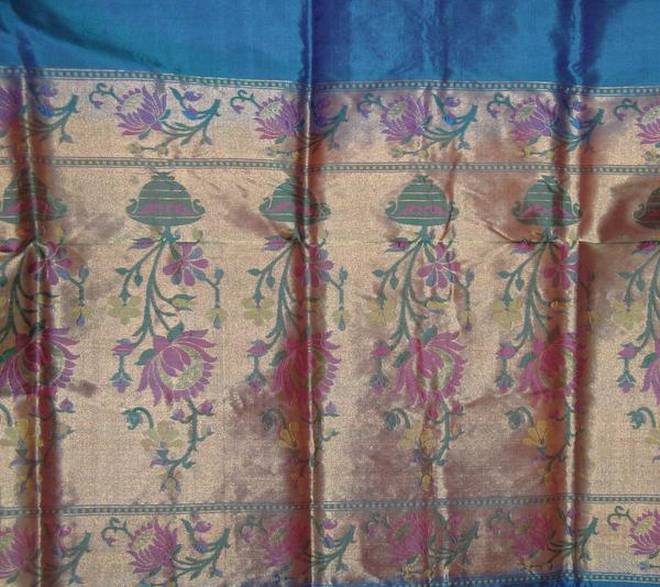
Abdullah has been weaving for over 25 years. What marks him out is his unceasing love for the loom and the willingness to learn. “Thankfully there have never been any complaints about my work. I have had long stints with master weavers who used to love my creations, I have worked independently and now I work with a SHG. I believe in my work.” His specialty is the khadua or weaving the brocaded borders and motifs for which Benarasis are known. “Khadna or khadai on the loom which is done using small attachments or tillis give that brocaded look. We have to see if the threads are uniformly drawn; they should not criss cross.”

Abdullah started weaving when he was 11; he learnt the technique from his father. His sisters would work on the brocaded pieces and he learnt from them. In a year or so, he was proficient enough to weave a sari on his own. When he was 20, he installed two hand looms in his house. “I used to buy the yarn and do my own designs. My saris had many takers.” However, when market conditions deteriorated it hit the weavers hard. Master weavers make saris for traders from Benares. Their earnings depend on what the buyer fixes. Wages for weavers are not high. “Gradually I learnt what works and what doesn’t in the market. I also mastered the technique with the help of the master weavers with whom I worked. Today I can make any pattern, if you show me the design I can replicate it,” says Abdullah, who takes immense pride in his work.

In a world, where handloom products are on the wane, meeting a weaver like Abdullah fills you with hope. Abdullah adds, “Nearly 80 per cent of the people living in Mubarakpur are dependent on weaving. So there are more weavers than there is work.”

His association with Mubarakpur Weavers, a self help group of young weavers, gave a new lease of life to his work. The group procures orders and gives it to its members. There is a system of fair wages, the group knows at what price the final product is sold. There is no arbitrary profiteering by middle men. They participate in exhibitions and directly supply to stores also. This interaction with buyers also helps them understand design trends and prices. Abdullah’s brother and his other family members also assist him in the weaving.

I ask the inevitable question, will his sons also take up this profession? He smiles, “my experience with the SHG has been good. So if this continues, there will be no regret if my sons also take it up.” As a parting shot he adds, “it is not the money that I make which is important. The buyer who wears my creation should be happy. That is my reward.”

source: http://www.thehindu.com / The Hindu / Home> Society> History & Culture / by Chitra Balasubramanian / March 08th, 2018

JWT’s Anvar Alikhan passes away at 66

Hyderabad, TELANGANA / Mumbai, MAHARASHTRA  :

He was 66 and on the verge of retiring from his post as senior VP and strategy consultant at JWT Mindset

source: Twitter
source: Twitter

Veteran adman Anvar Alikhan passed away yesterday after a lung infection. He was 66 and on the verge of retiring from his post as senior VP and strategy consultant at JWT Mindset.

In a tragic coincidence, many of his former colleagues and associates had been preparing video messages to bid farewell to Alikhan as he ventured out of advertising, only to hear of his untimely demise.

Alikhan’s career saw him play pivotal roles at agencies like O&M, Contract and JWT, besides ambitiously foraying into what was then considered “new media” as creative director at the fledgling rediff.com. He was an erudite author on a wide range of subjects from advertising to history to the relative merits of Roger Moore and meeting author RK Narayan.

You will find links to some of his writing at the end of this piece.

Brand Equity reached out to a few of his colleagues and former associates for their memories of Alikhan:

Ram Gedela, managing director, JWT Mindset and Santha John, chairman emeritus, JWT Mindset

In 1998, we saw a real vacuum in Hyderabad: big international agencies with shell-like structure and locals with no world experience.

Anvar came up with the name Mindset in 2000, a few years after we started. He’d moved back to Hyderabad when his father had a stroke and needed him. We were fortunate to have Anvar on board and the impact was immediate. We had the contacts, and Anvar the brand value. Clients had a lot more respect for us when he came for meetings and we were invited to many more pitches. By 2004, we were Agency of the Year.

We won Coke’s regional business, a go-karting facility that was branded as Runway 9 by Anvar; Godavari Fertilisers which was looking for divestment, got us to rebrand its identity and create a mass media campaign that eventually helped them sell out to the Murugappa Group. Sagar Cement, a regional brand’s advertising with claymation characters created a lot of buzz regionally. This brand too found a foreign investor Vicat immediately after the campaign.

For a sunglass chain called Shades, which was endorsed by popular celebrities like Sanjay Dutt and Suniel Shetty, the line Anvar wrote was a simple ‘You know who, you know where’.

Towards the latter half of the 17 years with Mindset, his focus shifted to strategy. He did painstaking research with no support whatsoever, but never missed a presentation deadline.

We owe this agency’s success to Anvar. In many ways, he was a mentor to us. He would help us with tips on presentation skills, dress code for different occasions, planning pitch process etc. He conducted workshops internally and a lot of us benefited from them.

We had several suitors for acquisition. When we didn’t like a particular agency, even the refusal was well rehearsed. The eventual acquisition by JWT had many inputs from Anvar including wooing the CEO on his maiden visit to Hyderabad.

He had a great sense of humour, and also a bit of a mean streak. When he didn’t like a particular clients’ inputs on his strategy or creative he would start packing up with loud noises, making it very obvious.

He brought wisdom, wit and worldly stature to the workplace.

One year, he also bought a whole lot of cheap and fake Mont Blanc pens and these were given out liberally. In the process, his own genuine pen got mixed up with the fakes and was lost forever! He would talk about it with his usual twinkle in his eye

In all the years we worked closely together, not once did he show irritation nor a cross word ever pass his mouth

More recently, he kept in touch with calls, mails, forwards, articles but not his physical presence. None of us even dreamt the end was so near. As recently as last week, we picked his brain regarding a thorny issue and the depth he put into it, marvels us now.

His oft-quoted statement “No other agency has this many brains under one roof” was SO true, because under our roof, was this magnificent brain

From 2000, we had a New Year wishes mailer which was created in such a way, that people often retained it on their noticeboards, giving us great mileage through the year. ‘Life is what happens to you, while you are busy making other plans’ was the first well remembered card

Colvyn Harris, founder, Harris-Mint and former CEO, JWT India

I was going to record a tribute to Anvar and send it for his farewell, but now, he’s given us an entirely different reason to say farewell.

When we merged Mindset into JWT, we acquired the agency not for revenue but to complete the geography of JWT and most importantly for the three people who ran the place, who were gems. He was a phenomenal ad guy, a fabulous professional and the finest of gentlemen. They don’t make them like him any longer.

He had a very versatile writing style, with depth and knowledge. Even recently when he had written a piece on Sir Martin Sorrell he reached out to get the nuances right.

When we went to the office around the time of the merger, he’d framed strips from Dilbert — a personal favourite of mine — all over the place. There are very few quintessential ad guys without brashness and aggression. His death is a big loss to advertising and I was fortunate to have worked with him.

Pratap Bose, founder, Social Street

When I first saw Anvar, the first thing that came to mind was that he was a really distinguished gentleman; the sort you don’t see too often, especially in our business. Ogilvy was my first agency and I had no idea what agency life was like. Over the years, I used to ask him for advice and he shepherded me through. We did not interact too many times, but he was there for me whenever I needed him. I remember meeting him a few years ago; it was his first time at Goafest and we spent an hour talking about books and movies. He was very well spoken and knowledgeable; not just about advertising but life in general. He was one of the last true gentlemen in the business.

A selection of his writing from scroll.in.

source: http://www.brandequity.economictimes.indiatimes.com / ET Brand Equity / Home> Marketing & Advertising News> Latest Marketing & Advertising News> Advertising / by Ravi Balakrishnan / December 27th, 2017

Prominent Indian businessman Abdul Hameed dies

Kochannoor (Thrissur District), KERALA /  Doha, QATAR :

K P Abdul Hameed
K P Abdul Hameed

Doha :

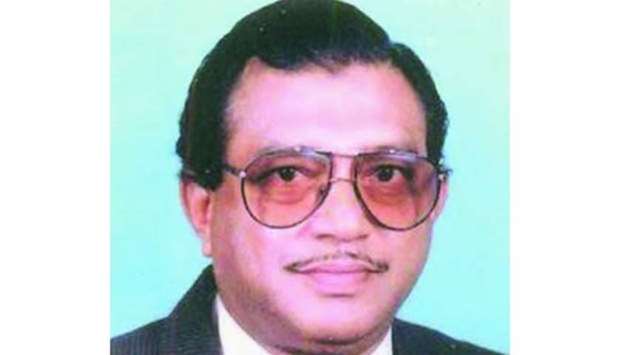
Long-time Doha resident and prominent Indian entrepreneur K P Abdul Hameed (76) passed away at a hospital in Bengaluru in southern India on Monday.

He was a managing director of Al Muftah Rent A Car, set up in 1970 as the first vehicle rental firm in Qatar.
Hameed will be buried at his native place, Kochannoor, in Kerala’s Thrissur district on Tuesday. He leaves behind his wife Aminu and two sons, Dr K P Najeeb (Hamad Medical Corporation) and Fazil Hameed (Al Muftah Rent A Car). A K Usman, who is also a managing director of Al Muftah Rent A Car, is his brother-in-law.
Hameed had suffered a stroke more than a month ago in Doha and was taken to India for treatment. Hameed, who arrived in Qatar in 1965, was a regular presence at a number of community events over the last four decades.
The veteran businessman was among the founders of MES Indian School, which was the first Indian expatriate institution of the country. The school was established in 1974.
Hameed was also one of the founding members and chief patrons of the Indian Cultural and Arts Society (Incas Qatar).
Indian Community Benevolent Forum (ICBF) and expatriate forums Incas Qatar and Indian Medical Association (Qatar chapter) and Pravasi Malayali Federation have mourned the death of Hameed.
source: http://www.gulf-times.com / Gulf Times / June 19th, 2017

DSS powering up differently-abled to earn a living

Hyderabad, TELANGANA :

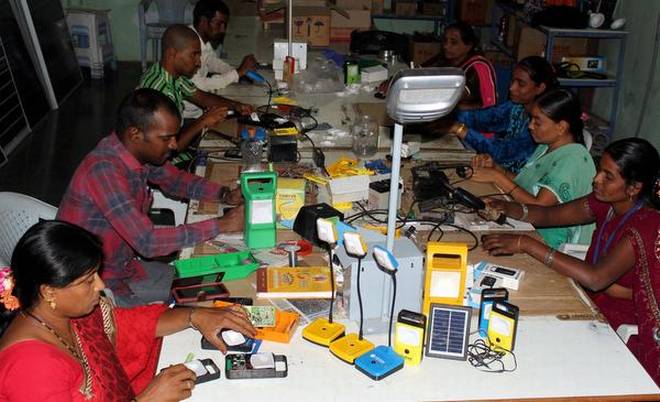
Zubeda Begum (extreme left) and her workers busy assembling solar lights in Sangareddy on Thursday.

Employs 15 divyangans led by Zubeda Begum

Sashikanth, who was affected by polio in childhood, never thought he could earn his living. But life has changed for better since the past three months, thanks to Divyangan Solar Society (DSS).

Led by Zubeda Begum, a differently-abled woman fighting for the rights of divyangans, the DSS has employed Sashikanth along with 14 others who are differently-abled to sell solar-powered lights. It has also given indirect employment to a total of 85 persons. So far, the Society has sold over 20,000 solar lights of different varieties.

Work begins at 9.30 a.m. and workers get ₹3,000 a month as salary. For many, more than the money they get by working here, it’s the respect that they earn by doing so that matters the most. “Everyone considers a differently-abled person a burden both on the family as well as the society. We don’t get jobs easily as the employers see certain limitations in what we can do and refuse to give us a chance to prove them wrong. It’s humiliating. That’s the reason why I began my fight for divyangans and their rights. I can say I have been partly successful in this regard,” Ms. Zubeda told The Hindu.

About two decades ago, she set up a public telephone booth, which took her almost a year, for self-sustenance. Given her grit to live life on her own terms, she was entrusted with the responsibility of running DSS after it was established in 2016. For the past two years, the Society has done business of ₹18 lakh. It produces 10 varieties of solar lights.

The DSS has also established its units in Mahabubnagar, Janagam, Manchiryal and Kamareddy.

source: http://www.thehindu.com / The Hindu / Home> News> Cities> Hyderabad / by R. Avadhani / Sangareddy – March 17th, 2018

Women’s Day: Meet first Muslim post woman Jameela

Hyderabad, TELANGANA :

Jameela
Jameela

Hyderabad:

Jameela a widow of Mahboobabad instead of mourning the death of her husband, joined her husband’s job and decided to bring her children on her own. She works as a post woman and delivers letters, telegrams and parcels etc. from one place to another.

Jameela belongs to Garla mandal in Mahboobabad district. Her husband Khaja Miya was a postman who died 10 years ago when their elder daughter was in 5th class and the younger daughter was in 3rd class. Jameela was facing a gloomy situation. Luckily Jameela got her husband’s job. Thus she became the first Muslim Post woman of the postal department.

At first, Jameela didn’t know how to ride a bicycle. She used to go by walk and deliver letters and parcels to houses. Now she has learnt to ride the bicycle. Initially, she was getting a salary of Rs. 6000 which was insufficient to meet her expenses. So she started selling sarees along with her job. Today she gets Rs. 10000 per month. Her elder daughter is doing engineering and the younger daughter is doing diploma course.

source: http://www.siasat.com / The Siasat Daily / Home> Featured News> Hyderabad> News> Top Stories / March 08th, 2018

Parveez Shaikh is M&C Saatchi’s senior VP and ECD

Bengaluru, KARNATAKA / Mumbai, MAHARASHTRA :

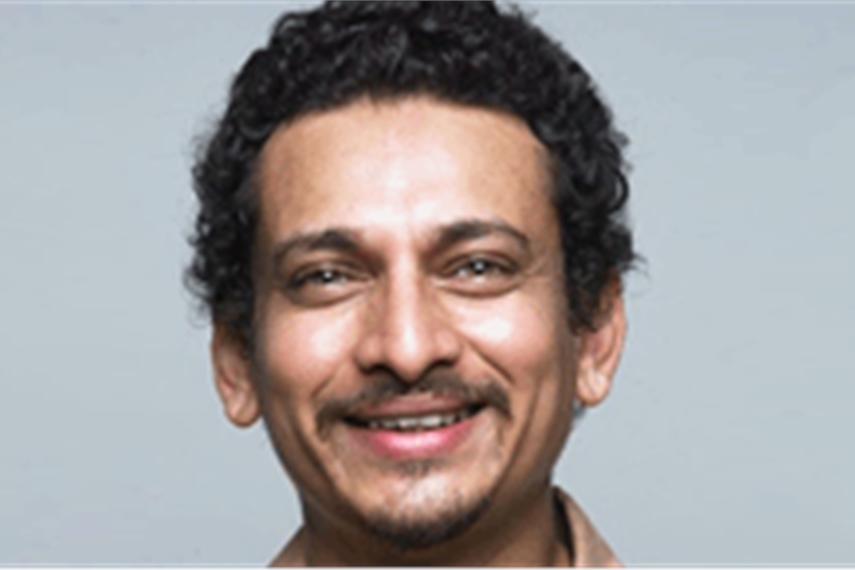
M&C Saatchi India has appointed Parveez Shaikh as their senior vice president and executive creative director.Shaikh is best known for building Contract’s creative reputation during the 11 years that he spent at the agency before he quit, in 2003. He has worked as a creative consultant with a few leading agencies for a few years after that.

ParveezShaikhMPOs28feb2018

M&C Saatchi India has appointed Parveez Shaikh as their senior vice president and executive creative director.

Shaikh is best known for building Contract’s creative reputation during the 11 years that he spent at the agency before he quit, in 2003.

He has worked as a creative consultant with a few leading agencies for a few years after that.

Shaikh has worked on premium, blue-chip clients such as Philips Audio, Franklin Templeton AMC, Asian Paints, Shoppers’ Stop, ICICI Bank and Cadbury India.

He has won over a hundred national and international awards, including two Cannes Lions and five finalists at the prestigious Cannes Advertising Festival, an entry in the D&AD, the One Show, the New York Festival and the ‘Copywriter of the Year’ award.

He has also featured in the Indian Copy Book as one of the 16 best Indian copywriters of all time. Shaikh will be based in Mumbai.

source: http://www.campaignindia.in / Campaign India / Home> Advertising / by Campaign India Team / May 22nd, 2008