Category Archives: Business & Economy

For Saif Faisal, All Roads Lead to Design

Bengaluru, KARNATAKA :
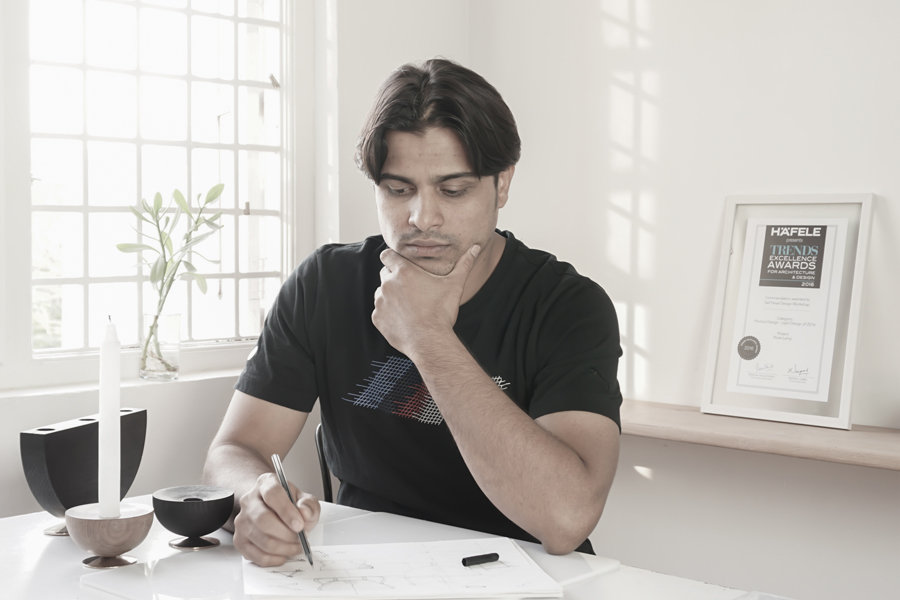
SaifFaisal01MPOs28feb2018

It all started with cars, as Saif explained to us. His dream of becoming an Automotive Designer started early on to which point he even enrolled into an Architecture Undergraduate program near Bangalore just to be able to pursue a Master’s degree in car design. There, in college, he also joined the Formula Student Racing Team, where he acquired diverse experience in design and technical know-how. Now that’s real commitment.

But things took a U-turn when later he dropped the plan to go ahead with his Master’s, thinking that it was too restricting to be involved in just one specific field. At that point, he had discovered that only an Industrial Design course could give him the freedom to be multi-disciplinary, and to be able to work on Architecture, Product design, Automotive design and more. Then, the rest is history.
SaifFaisal02MPOs28feb2018


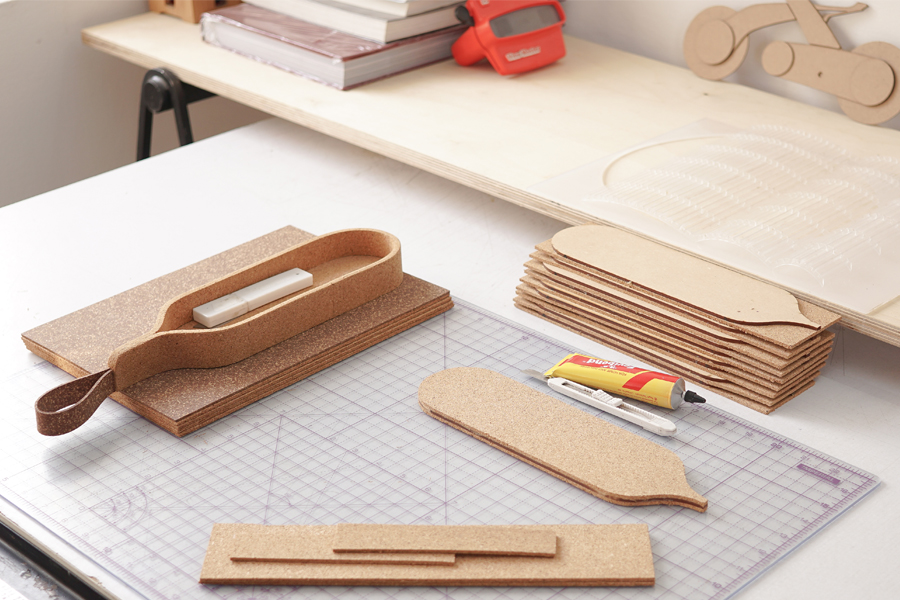
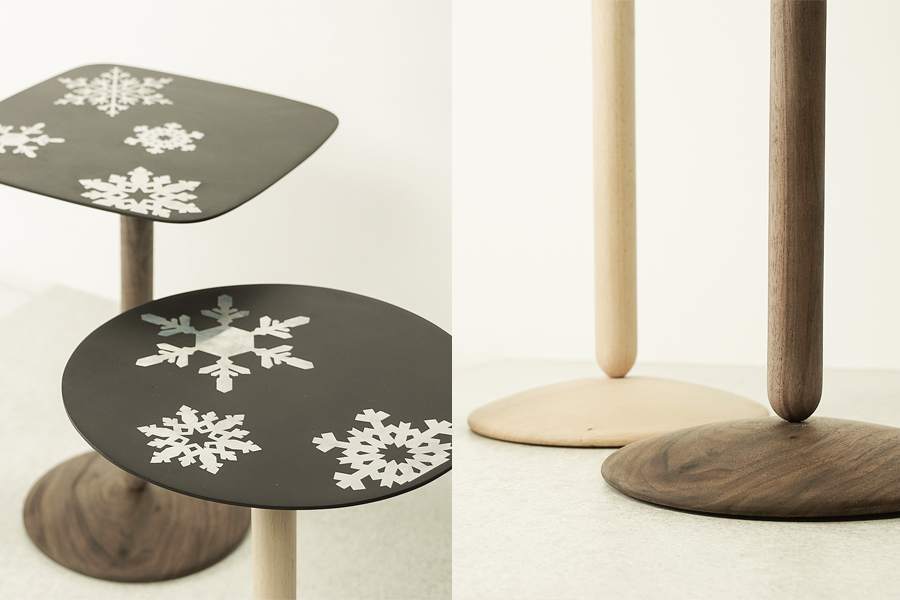
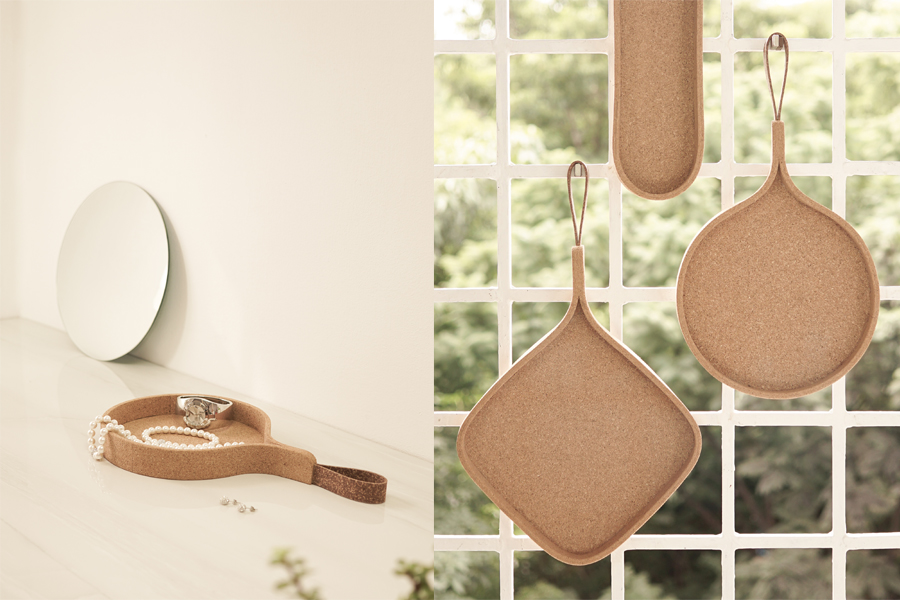
Winning design from EDIDA INDIA 2017: Qaiser Series (T) and Cork Trays (B).

“Design, in general, is what gets me going,” he said, “So it is all a playful adventure.” Since setting up his creative office in 2014, Saif had been steadily creating designs that draw heavily from his appreciation of technology and processes. But it wasn’t until he won the recent EDIDA India for furniture and tabletop with the Qaiser Series and Cork Trays that he finally caught the eyes of the global design industry.

The former is a series of side tables with tops that used a unique craft form called ‘Bidriware’. “One of its kind in the world,” explained Saif, “It uses a special mud from the medieval fort in Bidar, in South India.  So it is made by us with local craftsmen.” The latter, a quite self-explanatory design, takes the shapes of typical hanging cutting boards, but with a thick border to hold objects in their place. Akin to Enzo Ferrari who used to build and sell cars to fund his racing, the trays are currently self-produced by Saif but would definitely like to be mass-produced. “Maybe by a manufacturer from Scandinavia perhaps…” he hoped. And so do we.

We talked to him about his journey so far and his future endeavours.
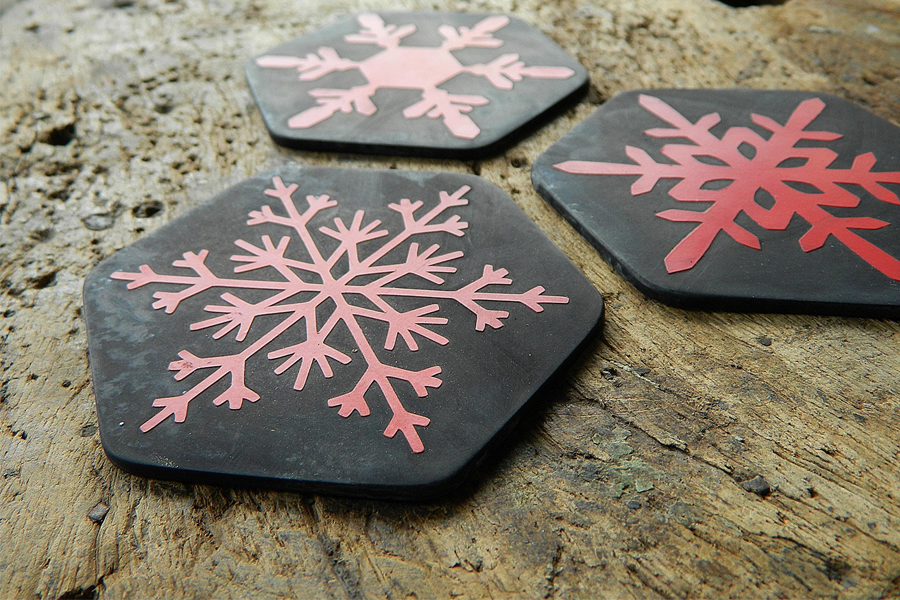
Qaiser Series used a unique craft form called 'Bidriware'.
Qaiser Series used a unique craft form called ‘Bidriware’.


In the process of making the Cork Trays.

For people who are not yet familiar with you, tell us about your background.

I’m an Industrial designer working on Architecture, Interiors, Product design, Brand Identity, Design Development, Creative Direction,  Motorcycle design, Automotive racing, Furniture, Lighting, Craft & Jewelry. I’ve always had an admiration for things and objects: their materials, beauty and how they were made. I always found it fascinating to watch a carpenter or a mason engaged in his craft. I could make stuff out of anything that was around; I used to make miniature farms with plantations and worked on irrigation, inspired by the country life I experienced during the summer stays at my grandfather’s farm. I’d also make models of scooters and bikes out of wheat flour dough. That’s one of the reasons I still love scale models so much, making them and collecting them. It was around 16 that I discovered design could be a legit career. I wanted to become an automotive designer. I’m an autodidact, and it’s quite natural for me to pick up something that interests me and pursue it with certain passion on my own, learning and doing on the way.

How do you describe your design aesthetic?

I’m an ‘ESSENTIALIST’; my focus is on sensitive, thoughtful and meaningful design. I have quite a contrasting way of looking at things; some designs are practical and functionalist while others are poetic expressions that can have certain humour and curiosity. All in all, everything has to have that beauty. Making stuff has been a huge part of the process; so much so that some of the products hardly have any drawings or detailed sketches – it’s just straight from the concept sketches to the making of the prototype.
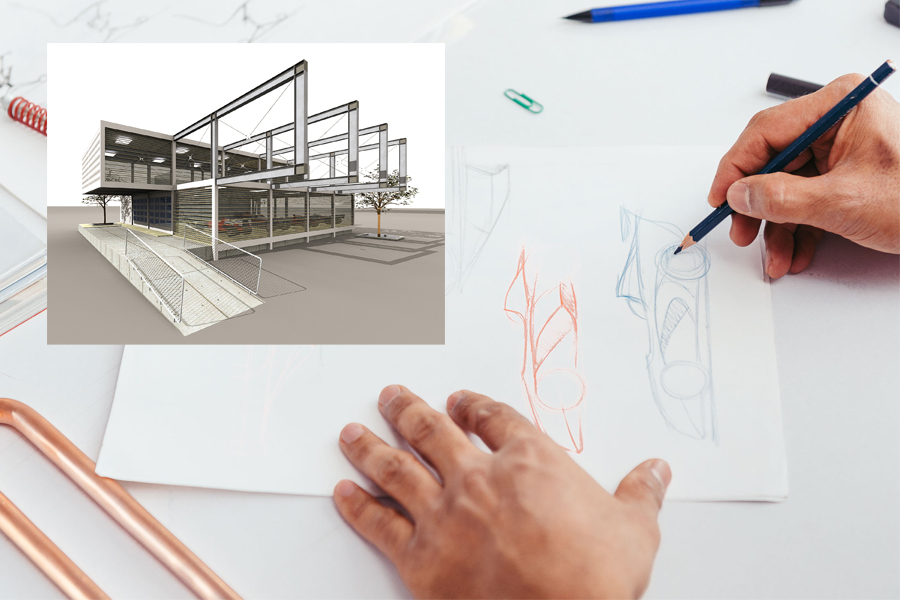
 

Designing cars, including racing architecture has always been Saif's dream.
Designing cars, including racing architecture has always been Saif’s dream.

Lots of your pieces used natural materials like wood and cork. What's your fascination with these materials?

I love working with beautiful, humble natural materials; they have great quality regarding how they age gracefully. I love exploring their properties in new and expressive ways, for instance, the Cork trays have two variations of cork, the rubberised one for the strap and the hard one for the tray body, perfectly coming together, not to mention the ecological aspects of these materials.

Where are you based now?  What made you want to be here? What are the advantages?

I’m based in Bangalore at the moment; I came here for my undergraduate about 12 years ago, while doing my Architecture I was part of the Formula SAE team which mostly had Mechanical engineering students, I used to design the Chassis, Ergonomics, Suspension, Brakes, Safety and Packaging. During this time I developed a great network of vendors and suppliers. This field felt quite indispensable when I wanted to start my multidisciplinary studio. But I seem to have exhausted the potential of the city. Maybe I will shift to Scandinavia in future; you’ll never know…

What is the current design scene in India?

Its still evolving and not that refined at the moment. There is this underlying fascination with Bollywood and Kitsch with a ‘Royal’ hangover from the bygone era of the ‘Maharajas’ that I feel is quite hindering. But otherwise, there is new breed of young designers with a more progressive perspective that is doing some significant work that I feel would be worth something in the coming years.

Where do you find your inspiration?

Inspiration to me comes from a social concern, a beautiful material, an inspiring craft, a practical need, a curiosity… I look to other creative fields too. At this moment, in particular, I’m fascinated with the contemporary culinary scene. Also, it’s quite difficult not to notice the tech-innovations of late…
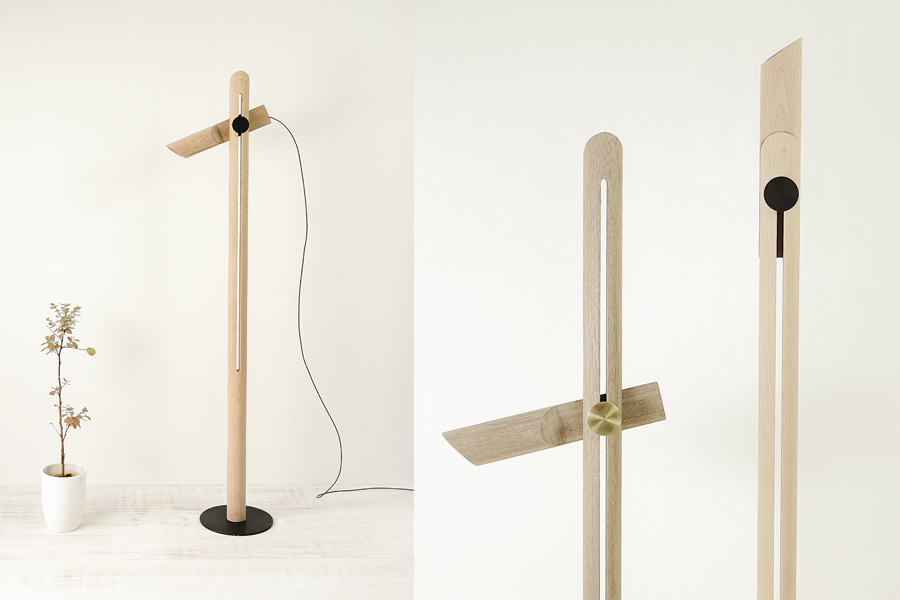
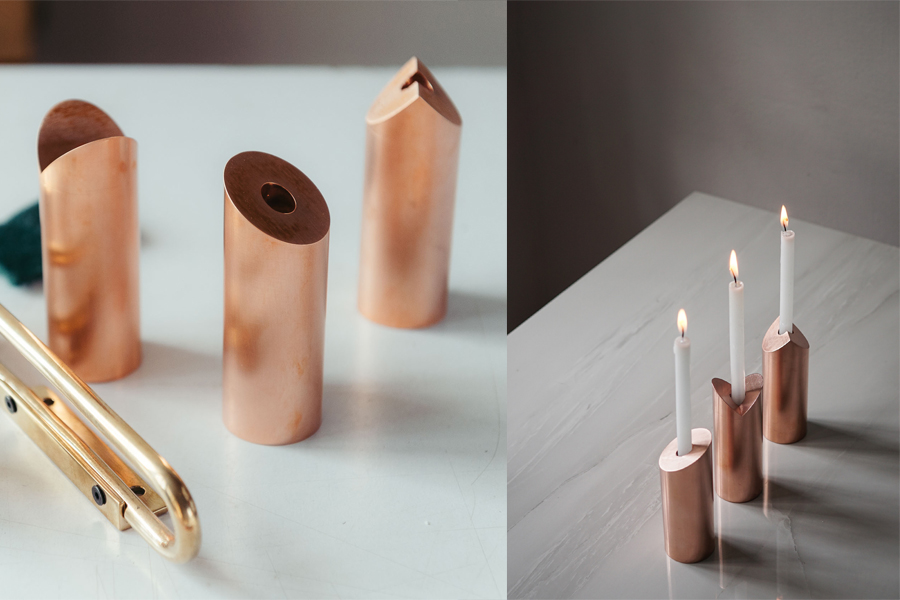
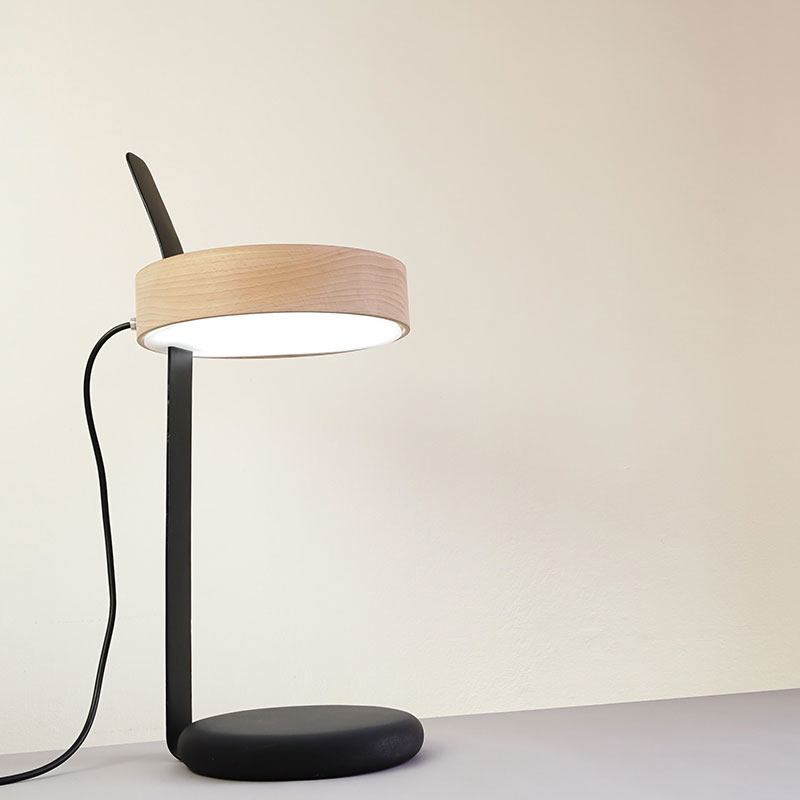
Another EDIDA winning design from 2016: Poise Lamp.


The new Euclid Series of candleholders.

Where will we see you next?

We have several projects that we have completed and are speaking to different manufacturers to get them in production. Among other stuff, I’m working on an electric Café racer that will host a couple of very innovative features in response to the whole Autonomous vehicle scene. Also, I’ve been approached for an electric car; it’s more on conceptual lines at the moment focussing on the future of urban mobility in developing nations like India, I’m working on the Packaging, Interiors & Styling. One important thing at the moment is we are working with a manufacturer who is looking at working with a couple of craft form to launch innovative contemporary Art-Design pieces soon, hopefully during I Salone 2018 in Milan. This is a new direction for my work; I’m quite pleased with the progress at the moment.

For more info about Saif Faisal, visit here.

Any views or opinions in the post are solely those of the authors and do not necessarily represent the views of the company or contributors.

source: http://www.theartling.com / the Artling / Home / by Yen Kien Hang / January 26th, 2018
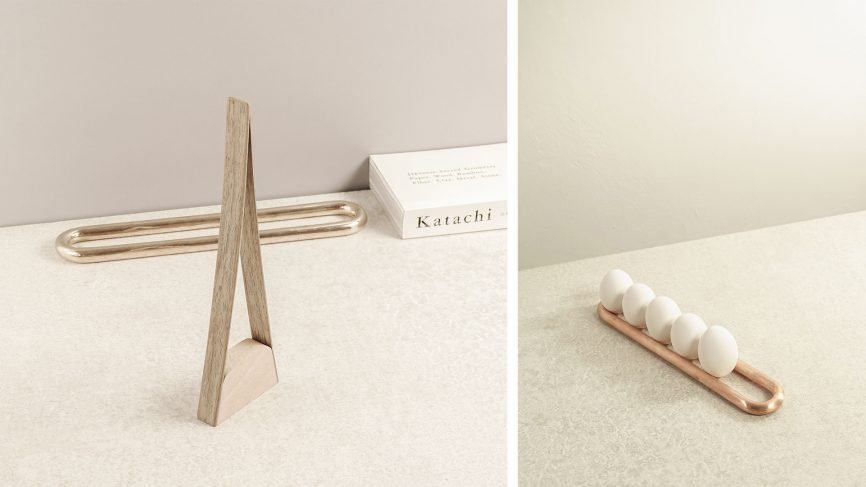
The minimalist creations of product designer Saif Faisal

Bengaluru, KARNATAKA :

From designing cars to designing products for your home—Bengaluru-based Saif Faisal is fast becoming a name to reckon with

Foster Memo Clip (Left). Brackett Trays (Right).

Product designer Saif Faisal who started his career designing cars has very successfully ventured into designing products for your home. Trained as an architect at Bengaluru’s RV College of Architecture, Faisal previously represented his college at Formula SAE, a student design competition, where he worked on driver safety and ergonomics. Now, Faisal’s eponymous studio has created a collection of home accessories with a markedly minimalist design. AD sat down with the designer to get a more intimate understanding of his design instincts and inspirations.

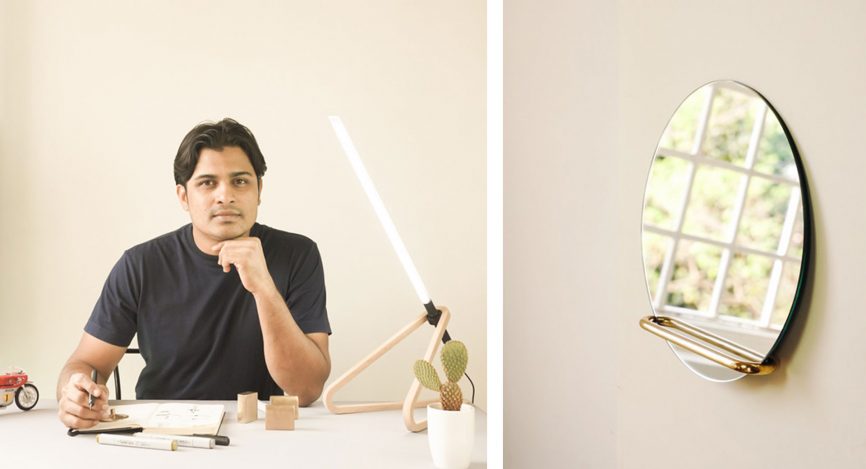
Architect and product designer Saif Faisal (Left). Loop Mirror (Right).

Architectural Digest (AD): Where did you learn wood working?
Saif Faisal (SF): It was more like collaborative learning with a couple of people in the trade to understand the craft. This helped a lot in the design and product development. With my earlier design and engineering work in Formula Student racing, this brought the two extremes of craft and high-tech together. For instance, our design, the Counterpoise lamp uses the dynamics of gravity but is made in a humble natural material: wood.

AD: Did you start the brand with the intention of specializing in table-top office accessories (like lamps, trays, clips, coasters, etc)?
SF: Actually it’s the contrary; initially we were more focussed on furniture. We have worked on a lot of furniture, the String Series for Godrej Design Lab, a book case, and a series of Roto-molded seating for indoor/outdoor use. The development process of larger projects take quite a while so we started doing smaller objects in between, which can be self-produced and completed quickly as well—again something which we didn’t favour much earlier. I have to admit it’s quite enjoyable doing smaller stuff.

AD: Will we see any other products—like kitchen or tableware for instance—from your brand?
SF: Maybe…in 2015 we ventured into jewelry and craft that was a surprise for us. Every new thing we do is an exploration and adventure.

Counterpoise Lamp. Principle: Function and flexibity with ease.

AD: In its minimalism and simplicity, your products remind one of Scandinavian design. What/who is your design inspiration?
SF: You are right; they are reminiscent of Scandinavian design, and I suppose, of Japanese design too. I would say its Essentialism and not merely Minimalism, as we try to be more honest to the design essence with no frivolous decorative elements. If you see our Qaiser series in Bidriware, it has the Zillij pattern on it—that’s not minimal but essential. On that note, Essential Design can help the world become a better place, and it’s not just with the products…my observation is cultures with a better sense and appreciation of design have holistic politics and interactions.

AD: You mention ‘poetry’ and ‘harmony’ in design (in the notes on the products) several times. Why is this so important to you?
SF: It’s quite important that a design be poetic, to express to a user the object needs to communicate on a poetic level.

source: http://www.architecturaldigest.in / Architectural Digest – AD / Home> Perspective> Profile / by Leena Desai / February 24th, 2017

Meet the Men Behind the Red Banarasi Saree Anushka Sharma Wore

Varanasi (earlier Benares), UTTAR PRADESH :

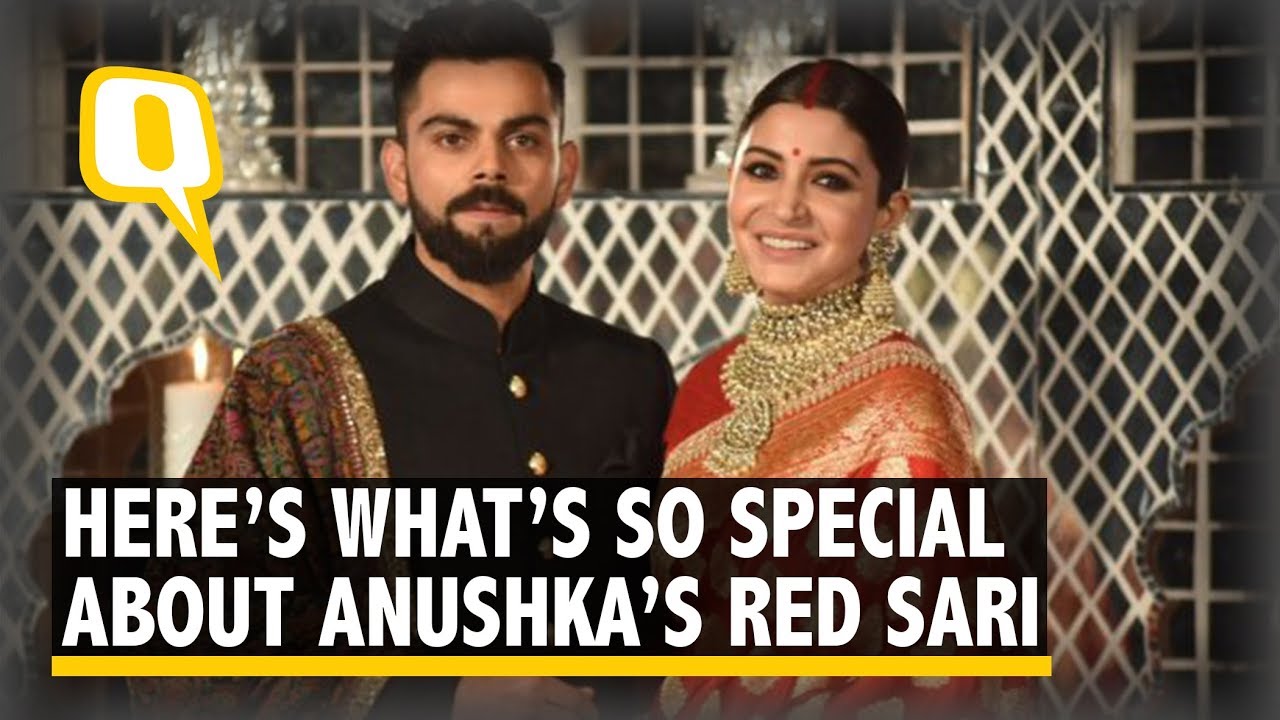
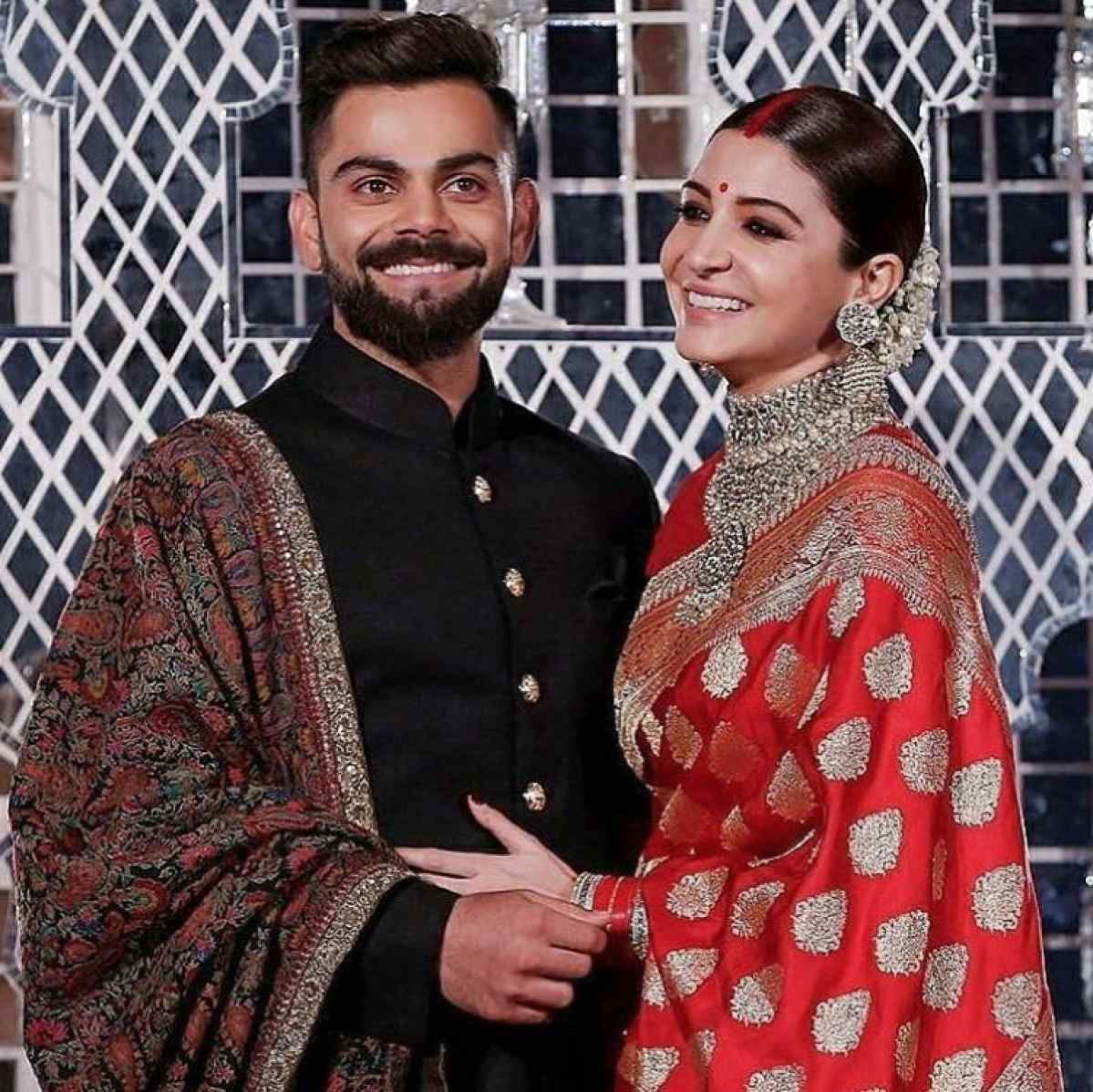
Here’s a look at the craftsmen who worked on the gorgeous Banarasi saree that Anushka Sharma wore for her wedding reception in Delhi on 21 December. (Photo Courtesy: Vikrant Dubey (L), Yogen Shah (R))

Muazzam Ansari of Benares was among several thousands who were glued to the television screen for news of the glitzy Virat Kohli and Anushka Sharma wedding. But unlike several others, Ansari was watching the ‘Indian wedding of the decade’ closely for a very special reason – the gorgeous Banarasi red saree that Anushka wore for her reception in Delhi.

Anushka02jan20th2018

Ansari was among a team of three craftsmen who toiled day and night for two months to create the exquisite saree. And the saree maker says having the world fawn over it was a moment of great pride.

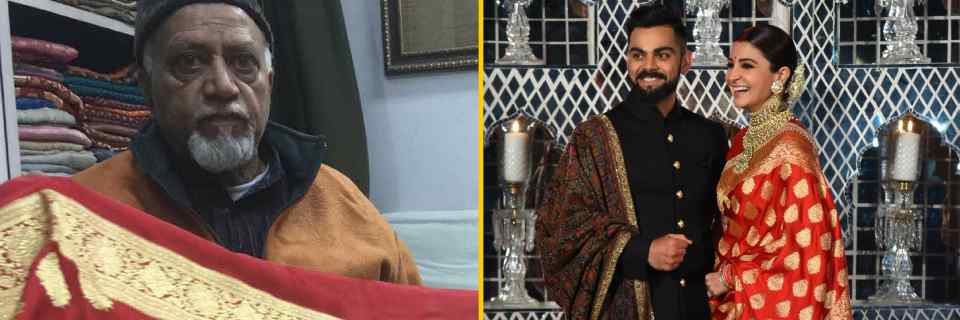
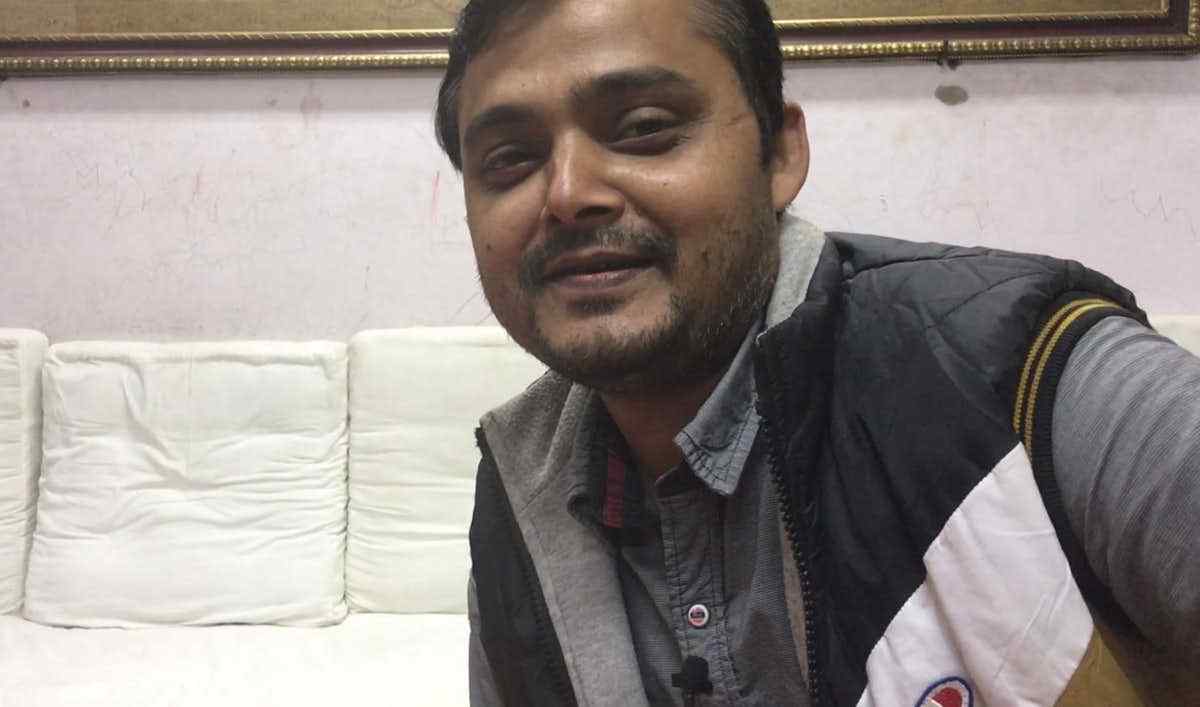
Muazzam Ansari, the man behind the red Banarasi saree that Anushka Sharma wore for her wedding reception in New Delhi. (Photo Courtesy: Vikrant Dubey)
Muazzam Ansari, the man behind the red Banarasi saree that Anushka Sharma wore for her wedding reception in New Delhi.
(Photo Courtesy: Vikrant Dubey)

As the Virat-Anushka reception photos went viral, Ansari was quick to post photos of the saree on his Facebook page – a move that would quickly bag him the nickname, ‘Anushka Sharma’s Saree Man’.

Anushka’s saree called for extensive planning. After the designers decided on a Banarasi saree came the tough part – selecting a craftsman from the thousands of skilled workers in this trade in Benaras.

Maqbool Hassan Gets the Job

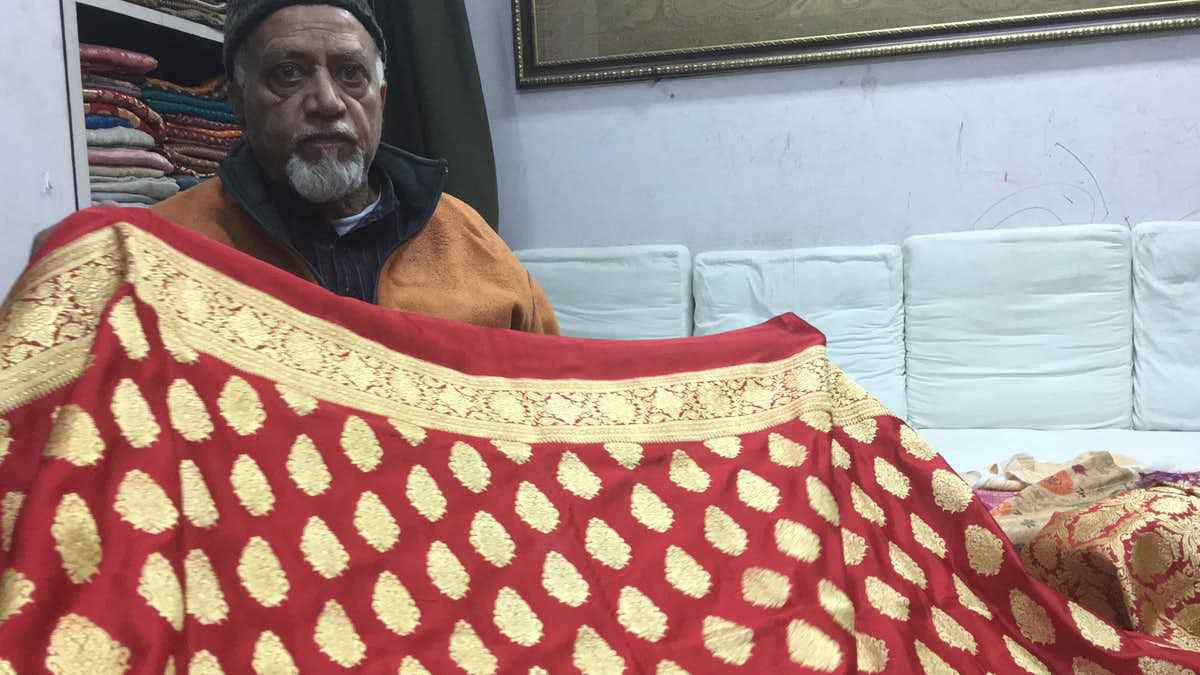
Craftsman of Anushka’s Banarasi saree, Maqbool Hassan. (Photo Courtesy: Vikrant Dubey)
Craftsman of Anushka’s Banarasi saree, Maqbool Hassan.
(Photo Courtesy: Vikrant Dubey)

The important task was given to Maqbool Hassan from Peeli Kothi in Benaras, who has been in the business since 1966. Hassan, whose family has been engaged in the business for over two centuries, is also credited with having created a saree for Aishwarya Rai and a sherwani for Abhishek Bachchan.

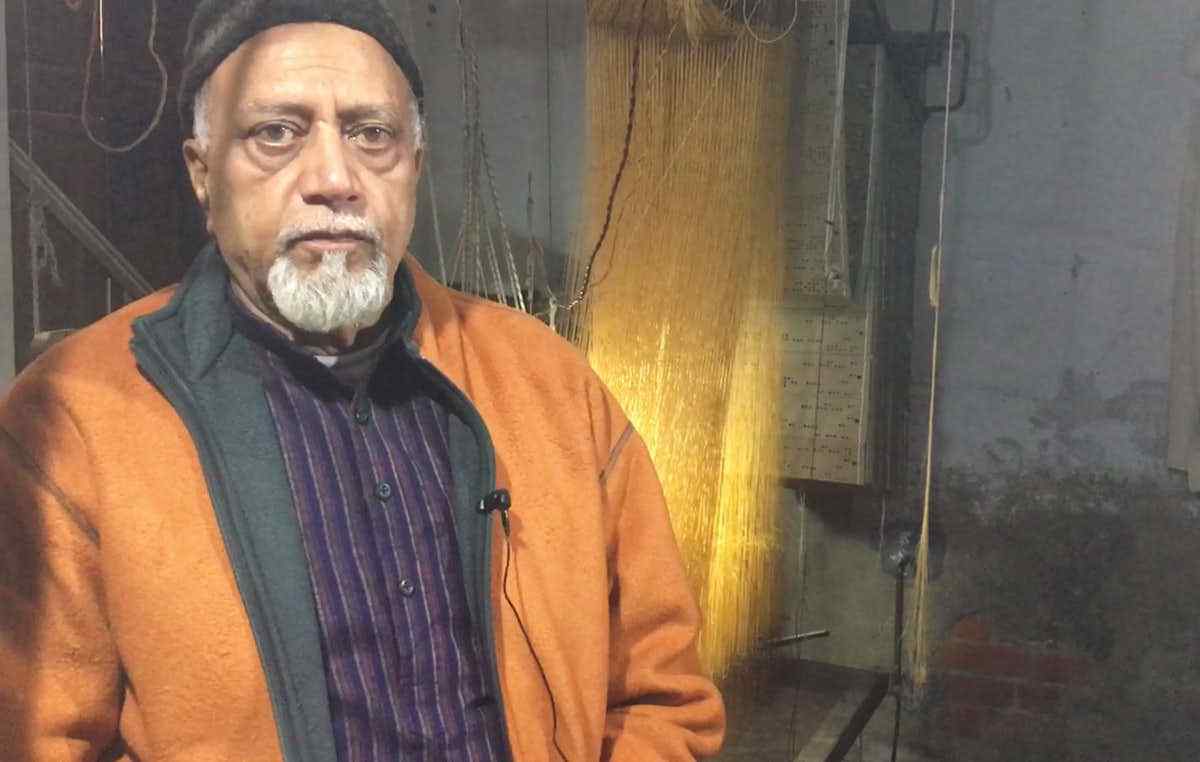
Maqbool Hassan of Peeli Kothi in Benaras has been in the business since 1966. (Photo Courtesy: Vikrant Dubey)
Maqbool Hassan of Peeli Kothi in Benaras has been in the business since 1966.
(Photo Courtesy: Vikrant Dubey)

After the Cottage Emporium in Delhi reached out to Maqbool Hassan with the order to create the sari, he set about creating a team of three of his most skilled craftsmen. Among his top three were Muazzam Ansari, whose work is already popular in Benaras, despite the fact that he only joined the industry five years ago. What’s more, fans of Ansari’s work reportedly compare his work with craftsmen with over 20 years of experience.

Months of Secret Planning & Weaving

From planning to making the saree it took almost six months. (Photo Courtesy: Vikrant Dubey)
From planning to making the saree it took almost six months.
(Photo Courtesy: Vikrant Dubey)

As soon as the dates for Virat and Anushka’s wedding were decided, the designers zeroed in on the Banarasi saree for their Delhi reception.

Then began the hunt for the saree design. After much debate and decision, the creators decided on a bright red colour with traditional golden work. The entire process of selecting a colour, finalising a design, and finishing the design took six months. All of it was done in absolute secrecy.

It took total of 60 days for Anushka’s saree to be made. (Photo Courtesy: Vikrant Dubey)
It took total of 60 days for Anushka’s saree to be made.
(Photo Courtesy: Vikrant Dubey)

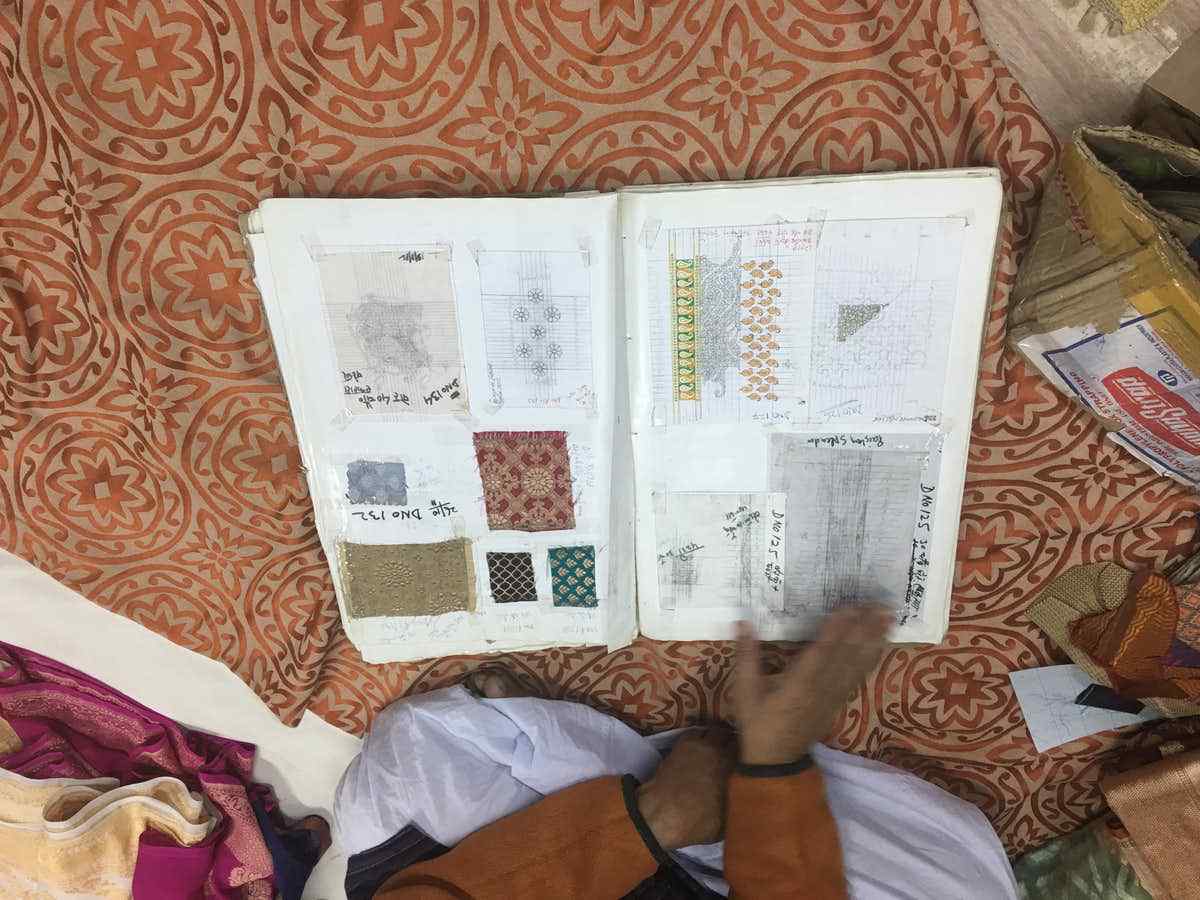
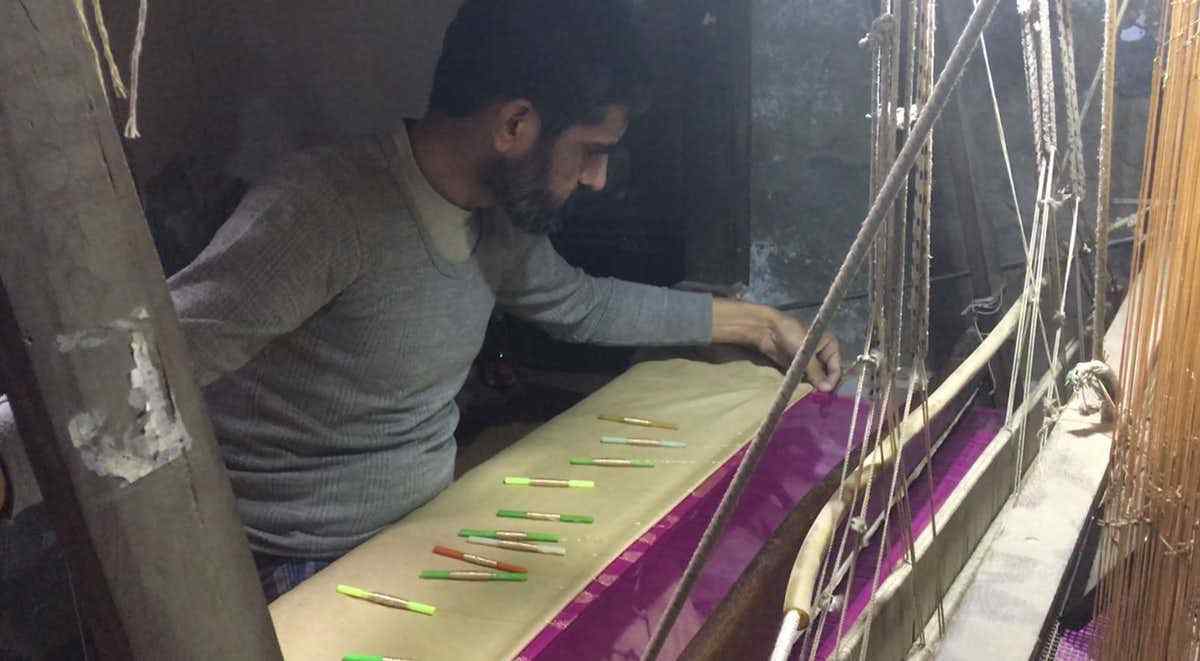
Once the design, colour, and fabric was finalised, it was time for the actual weaving. Banarasi sarees are made on handlooms – each thread and the colour for every bit of the design is put in place by hand.

The saree called for three weavers to work day and night for 45 days. It took another 15 days to add the finishing touches, taking it to a total of 60 days.

Painstaking Effort

Anushka Sharma’s saree took 60 days to make. (Photo Courtesy: Instagram)
Anushka Sharma’s saree took 60 days to make.
(Photo Courtesy: Instagram)

A mixture of silk and chiffon was used to make the saree in order to create an outfit that was both soft and light, despite all the embroidery and the seemingly-heavy work on it. The craftsmen also ensured that the saree did not have a glittery shine, even with real gold being used for the zari – with each motiff being worked on separately.

The three craftsmen tasked with making the saree had to work simultaneously on the weaving, and the absence of even a single craftsman made weaving impossible. With all the work that has gone into the saree, it is small wonder why Banarasi sarees are known for their timeless allure.

(This article was first published on QuintHindi.)

source: http://www.thequint.com / The Quint / Home> Entertainment / by Vikrant Dubey / December 27th, 2017

Meet Naeem Khan, Michelle Obama’s Fashion Designer

UTTAR PRADESH / Mumbai, MAHARASHTRA  / New York, USA :

Designer for power women had his life changed when outgoing First Lady wore his gown for a state dinner in 2009.

NaeemKhan01MPOs16jan2018

When he was an adolescent growing up in Mumbai, fashion designer Naeem Khan had just one dream.

“When I was 14 years old, I said to my then-girlfriend in India that one day I am going to design for the First Lady of America,” says Khan, who remembers being enchanted by images of former First Lady Jacqueline Kennedy in the now defunct Life Magazine.

Almost four decades later, the designer, now 57, has fulfilled his dream many times over. As one of Michelle Obama’s favourite couturiers, he has dressed her for various state dinners, as well as for more casual occasions, such as during a visit to Brazil.

________________________________________________________

“[Michelle] likes elegant glamour and loves her arms, so you have to make sure you enhance that.”

________________________________________________________

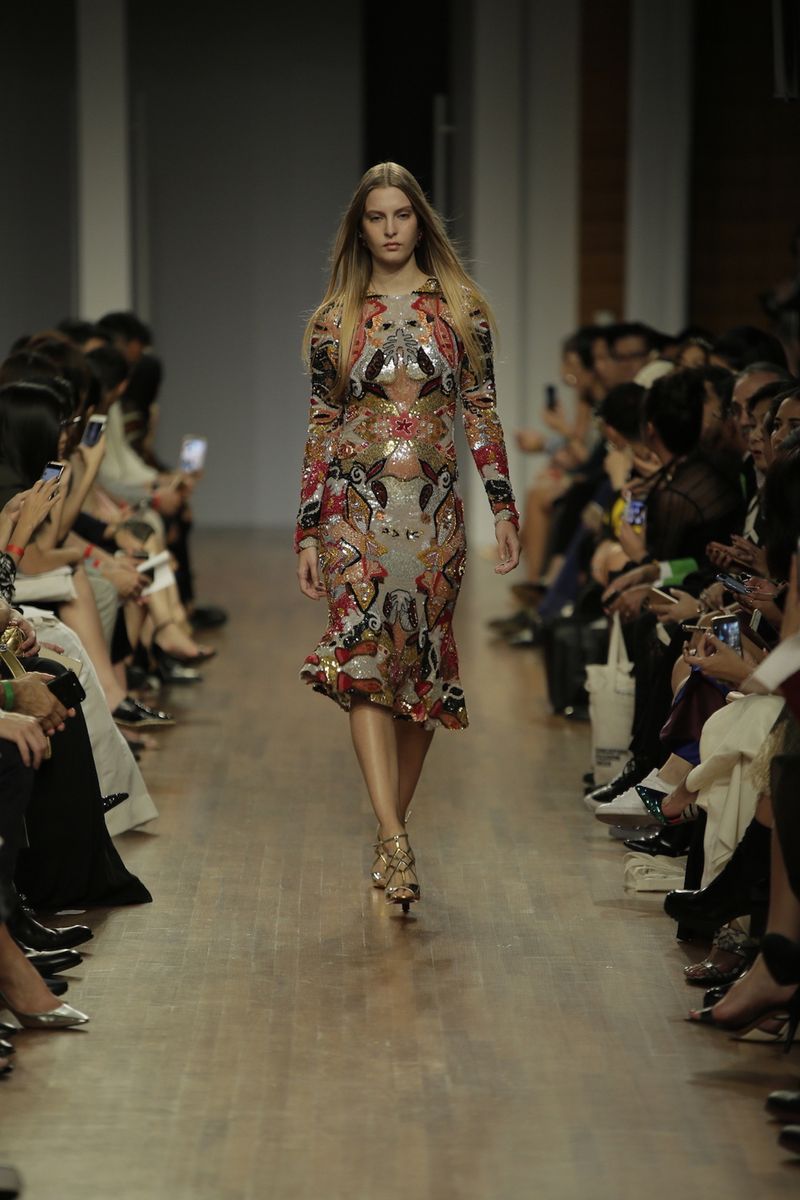
Since he launched his eponymous label in 2003, his uniquely glamorous aesthetic featuring figure-flattering silhouettes and lavish textiles have made him a firm red carpet favourite of some of the world’s most famous women, ranging from celebrities such as singer Beyoncé and actress Penelope Cruz to prominent public figures including Queen Noor of Jordan and Catherine, Duchess of Cambridge.

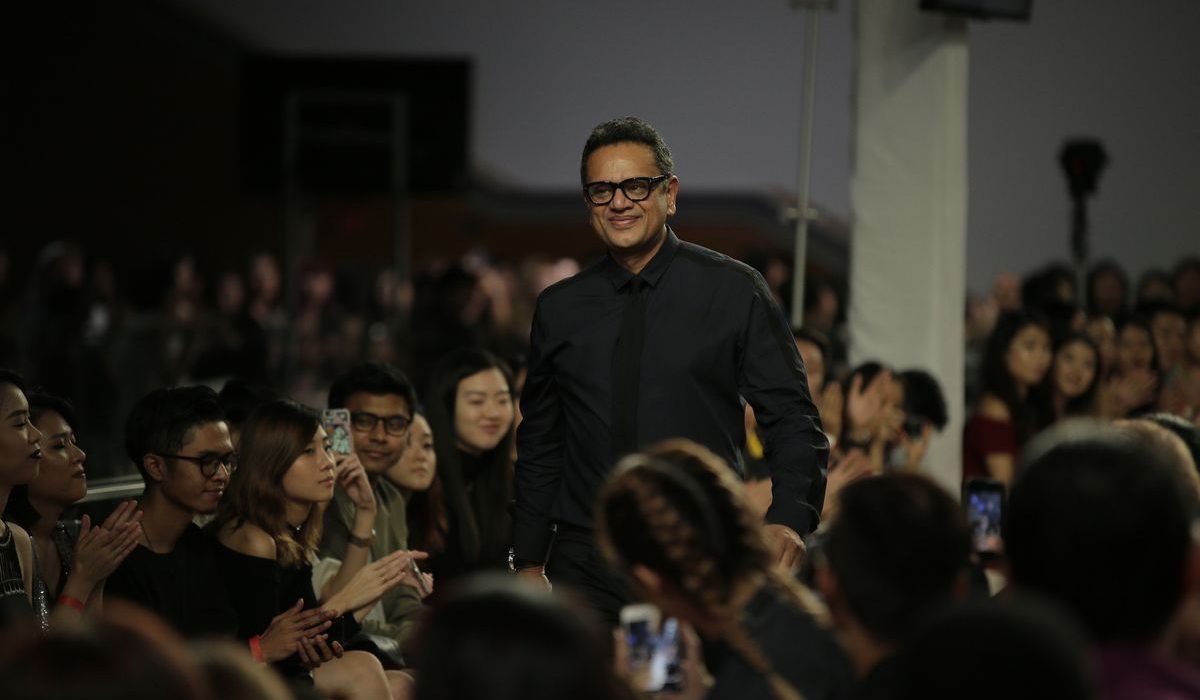
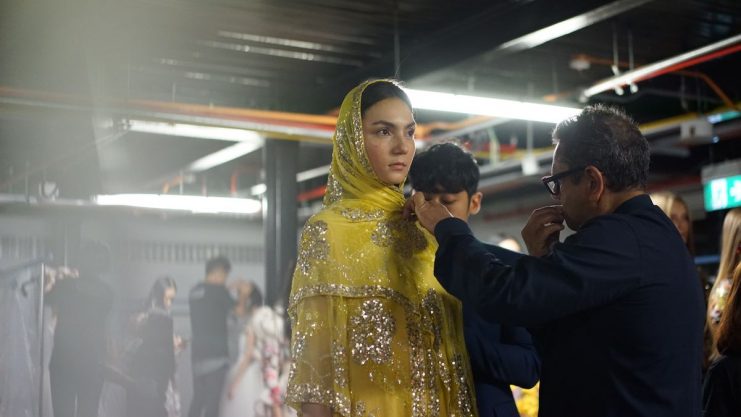
In Singapore to present his Spring/Summer 2017 collection at Singapore Fashion Week, Khan says without hesitation that the moment Michelle Obama stepped out in his strapless, embroidered gown to host their first State Dinner for India in 2009, he knew his life had changed. He was propelled to global fame in that singular moment.

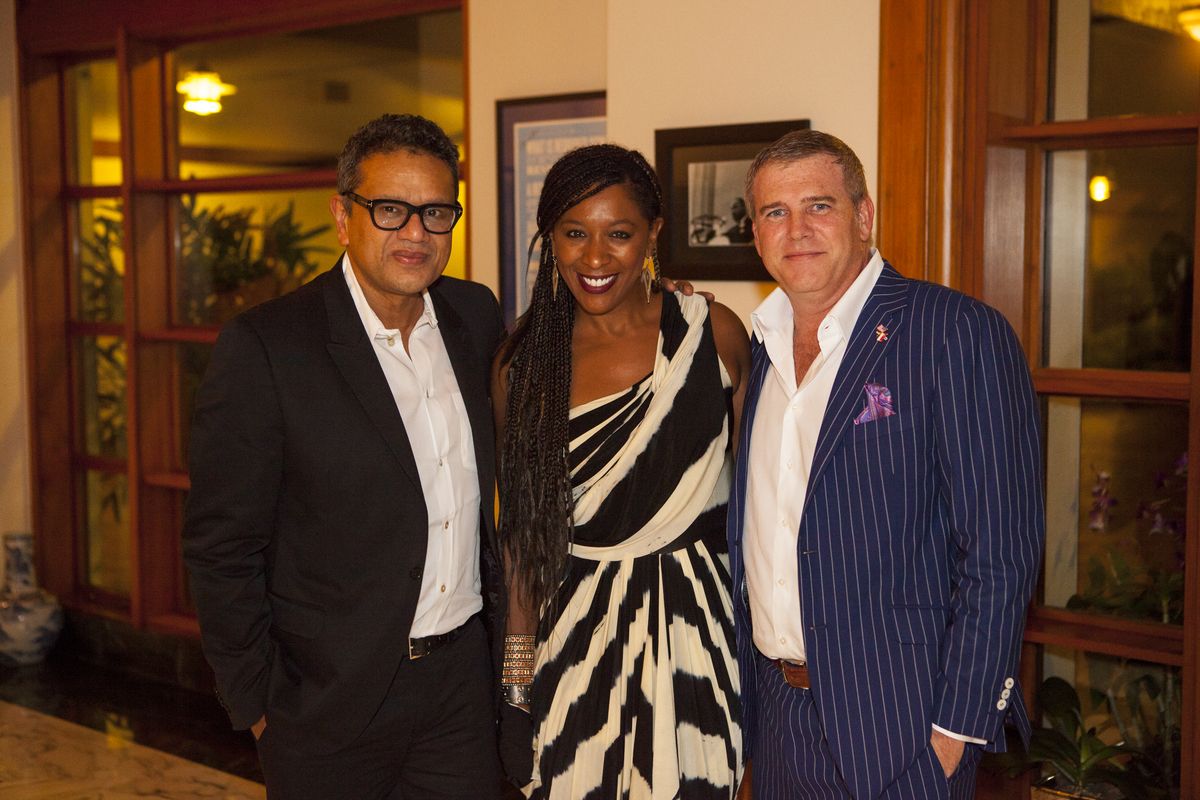
Khan was hosted at the U.S. Embassy by HE Kirk Wagar during his trip – here are the photos.

Mr Naaem Khan, Ms Crystal Meredith Wagar, HE Kirk W.B. Wagar (U.S.A)

“I have always believed that if you are true to your dream and consistent in pursuing it, it will happen,” he says.

NaeemKhan03MPOs16jan2018

He grew up with a lifelong interest in fashion and honed his sartorial instincts by “osmosis”, thanks to his grandfather and father who both designed luxurious textiles and clothing for Indian royal families. At the age of 20, he moved to New York City to do an apprenticeship with legendary designer Roy Halston Frowick of the label Halston where he rubbed shoulders with Halston’s social circle, which included luminaries like the artist Andy Warhol, actress-singer Liza Minnelli and dancer Martha Graham.

His time with his guru Halston – who coincidentally shot to fame when he designed Jackie Kennedy’s pink pillbox hat which she wore to her husband’s presidential inauguration – laid the foundations for his own label.

He says: “My style is to use textures and luxurious fabrics in a form which is classic, yet relevant to the times. It works perfectly for powerful women because the garments send a very strong message – I am powerful, confident and fashionable. Look at me.”

NaeemKhan04MPOs16jan2018

The business of fashion is of course notoriously challenging, but Khan says he grew his to its current size by sticking to a simple principle. Besides his ready-to-wear business, he also launched Naeem Khan Bridal in 2013, and both lines are sold at over 100 retail outlets around the world.

“I don’t have investors and I’ve grown my business organically by watching the bottom line to make sure we are making money. It is not about having the largest business which is running at a loss,” he says. “Instead, my business philosophy is about having a good life, being profitable and enjoying what I do.”

One of his greatest rewards is having the privilege to develop relationships with movers and shakers of society, like the outgoing First Lady. “She gives full liberty to design for her. We have her form and we’ve create mannequins to drape on so it’s become a simpler process,” he says. “She likes elegant glamour and loves her arms, so you have to make sure you enhance that.”

Certainly, a designer couldn’t ask for a better muse. He adds: “She’s tall and has a great body for clothing so she is the perfect person to design for as she knows how to carry it off.

“She has said to me how much she loves my work. I love that she is so open with her compliments and has such respect for my art, which makes me want to do more for her.”

source: http://www.thepeakmagazine.com.sg / The Peak, SPH Magazines  / Home> Fashion & Watches / by Karen Tee / November 02nd, 2016

Nazeer Ahamed Mohamed Zackiriah

BRUNEI DARUSLALAM  :

NazeerMPOs16jan2018

Brunei :

Mr. Nazeer Zackiriah, Permanent Resident of the Sultanate of Brunei Darussalam, is an Indian-origin entrepreneur who has strengthened the links between India, Brunei and the Indian community of Brunei.

He has actively supported Government of India initiatives and events and has ensured meaningful interactions with local and Indian entrepreneurs for visiting Indian delegations.

He has heightened respect for the Indian community in Brunei by his active charitable endeavours, both in his individual capacity and as President of the Indian Chamber of Commerce of Brunei.

By virtue of the recognition that he has obtained from His Majesty the Sultan of Brunei for these charitable and community-building efforts, he has been instrumental in raising the prestige and profile of the Indian community in Brunei.

Mr. Nazeer Ahamed has achieved notable success in the textile retail sector in Brunei.

From humble beginnings, through hard work and acumen, he has built up the largest chain of textile stores of Brunei which is now providing significant employment and promoting trade.

He has contributed towards strengthening the link between the Indian community and Bruneians by organizing the active participation of the Indian community in Bruneian national events like the National Day of Brunei and the Birthday Celebrations of His Majesty the Sultan.

source: http://www.pbdindia.gov.in / Pravasi Bharatiya Divas / Home> Profile of Awardees / 07-09 January 2017, Ministry of External Affairs, Government of India

Awarding PIOs in recognition of their services

BRUNEI / LIBYA  / SAUDI ARABIA  :

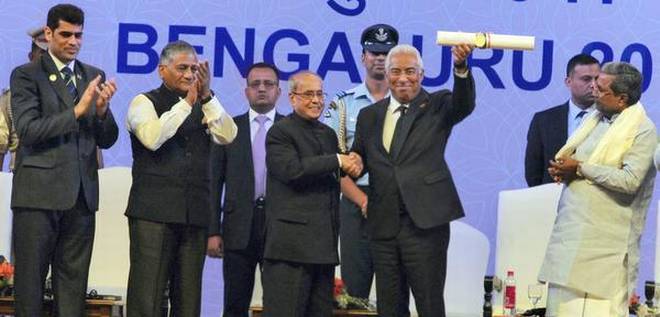
President Pranab Mukherjee honours Dr. Antonio Costa, Portugal Prime Minister, who received the Pravasi Bharatiya Samman, as Suriname Vice-President Michael Ashwin Adhin and Union Minister V.K. Singh look on, in Bengaluru on Monday. | Photo Credit: G R N SOMASHEKAR;G R N SOMASHEKAR -
President Pranab Mukherjee honours Dr. Antonio Costa, Portugal Prime Minister, who received the Pravasi Bharatiya Samman, as Suriname Vice-President Michael Ashwin Adhin and Union Minister V.K. Singh look on, in Bengaluru on Monday. | Photo Credit: G R N SOMASHEKAR;G R N SOMASHEKAR –

Winners of Pravasi Samman Awards include Portugal Prime Minister Dr. Antonio Costa

Her son was three years old when she realised that there was no school she could send him to. British and American schools were too expensive and she didn’t want to send him to a local school.

That prompted Zeenat Jafri to start the second Indian school in Saudi ArabiaInternational Indian School — in 1982 with her husband. She was among the 30 people feted for her achievement on Monday during the Pravasi Bharatiya Divas, when the Pravasi Samman Awards were given away by President Pranab Mukherjee.

The 64-year-old MBA graduate from Bhopal, who was given the award for her contribution to the field of education, said she started the school from her house, gradually scaling it up   to now educate 12,000 people.

Another person of Indian origin who was recognised with the award was Ariful Islam, coordinator and nodal point in the Embassy of India in Libya.

The electrical engineer relocated from India to Libya in 1980 following a pact between the two nations. He has seen his adopted country go through the worst of times, but continues to live there alone, though his family has moved back to Aligarh. “I have spent half my life there. We have successfully rescued many Indians,” he said.

The rescuer

The most recent episode he was involved was in the rescue of three abducted Indians from the IS in a dramatic operation in 2016 from the deep Libyan deserts.

Among the organisations that were awarded were the Singapore Indian Association in the category of community service.

The event saw double the number of awardees as it was being held after an interval of two years.

Among the other prominent winners of the award were Portugal Prime Minister Antonio Luis Santos da Costa, Labour Member of the European Parliament representing the West Midlands Neena Gill, British politician Priti Patel and Mauritius Minister of Finance and Economic Development Pravind Kumar Jugnauth.

Nisha Desai Biswal, Assistant Secretary of State for South and Central Asian Affairs in the United States Department of State, who was also among the 30 awardees, said persons of Indian origin, who were building bridges and connecting in an “increasingly divided world,” retained strong ties with India, she said.

source: http://www.thehindu.com / The Hindu / Home> News> National / by K.C. Deepika / Bengaluru – January 10th, 2017

TN girl to receive prestigious national award

Nagercoil  (Kanyakumari District), TAMIL NADU :

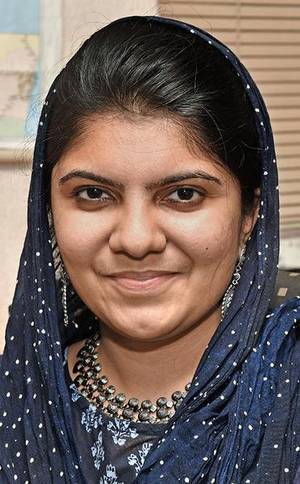
Masha Nazeem
Masha Nazeem

For contribution to science

Nagercoil girl Masha Nazeem will receive the prestigious National Youth Award for her contributions to science and technology.

The annual award is instituted by the Ministry of Youth Affairs and Sports and is given to recognise outstanding work and achievements of youngsters and further motivate them to excel in the field on National Development and Social Service.

“I am very excited to be selected for this award,” said 24-year-old Masha, who with her father Khaja Nazeemudeen, a government employee, is all set to receive the award from Prime Minister Narendra Modi on January 12.

Hailing from Nagercoil in Kanniyakumari district Masha is the elder of two siblings. She developed a keen interest in science from the time she was nine years old.

“It all happened because of my father, he would enroll me in every possible contest in school, one of them was a science exhibition. I didn’t even know my name was on the list,” she said. Masha, then a class five student, made a burglar alarm which impressed her teachers and won her the first prize.

From then on, there was no stopping, Masha went on to invent 14 socially useful gadgets such as a flameless seal marker, which is now used by State government officials, hi-tech train toilet system, fuel dispensers, anti sinking alarm amongst others.

Three of her innovations are in the process of getting patented. She has also won several awards and accolades including the State Youth Award 2016.

Innovation centre

To provide free hands on training to young inventors and help them turn their ideas to reality, she setup Masha Innovation Center, a research laboratory and workshop in her hometown.

“There are many students who are creative and have ideas but get stuck in only learning theory taught in schools. While theory is important, they must also be encouraged to have practical experience. This is my aim and I hope more students benefit from it,” she said.

source: http://www.thehindu.com / The Hindu / Home> News> Cities> Tiruchirapalli / by Staff Reporter / Chennai – January 12th, 2018

Engineering students in Bengaluru launch 3 race cars

Bengaluru, KARNATAKA :

AshwaRacingMPOs16jan2018

On the combustion, hybrid and electric platforms

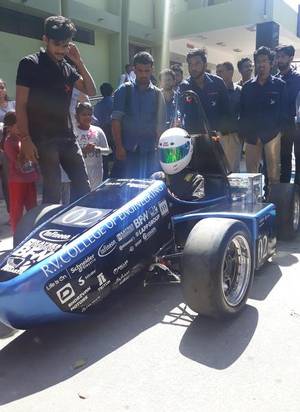
Ashwa Racing, a brand under Ashwa Mobility of RV College of Engineering, Bengaluru, on Saturday launched three new race cars on the combustion (AMF RZX8- CO), hybrid (AMF X8-HY) and electric (AMF-RZX8 -ELE) platforms for the 2018 race season.

Undergraduate students, who conceived, designed and build formula race cars, would be competing in national and global events in the coming months.

The combustion vehicle (210 kg without driver) development is headed by team captain Sweekruth Shetty, project manager Rakesh H.N, chief engineer Prateek Bhustali. The racing hybrid vehicle (300 kg) development is headed by team captain Asfan Khan, project manager Suhas B.U., chief engineer Uday Naik and chief communication officer Tarun Kasa.

The electric vehicle (200kg) development is headed by team captain Pranave Nanda, project manager Rahul S.D., chief engineer Gautam Singh and chief communication officer Srivatsa Deshpande.

The combustion and electric divisions of Ashwa Racing would be competing in Formula Bharat, which will be held in Coimbatore in Tamil Nadu from January 24 to 28, 2018.

source: http://www.thehindu.com / The Hindu / Home> News> Cities> Bengaluru / by Special Correspondent / January 15th, 2018

Mandi and the Arabian connection

Hyderabad, TELANGANA :

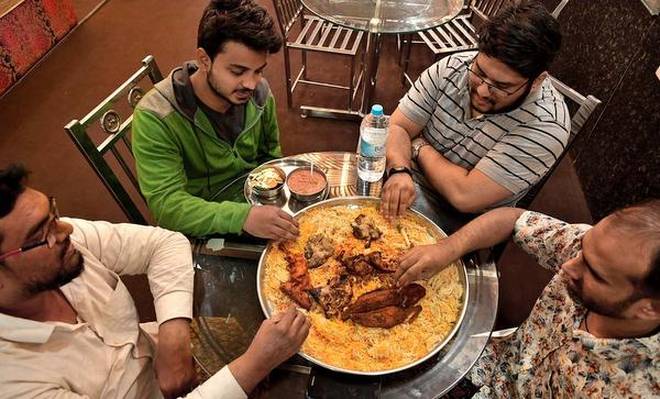
A must-try: Foodies having a Mandi, a combination of large chunks of mutton and rice garnished with dry fruits, at Mataram Al Arabi at Errakunta on Saturday.

Restaurateurs in Barkas and Yerrakunta suburbs arrived here from Hadhramaut in Yemen over two centuries ago

A 20-minute drive south of Charminar is all it takes to wonder whether one has teleported oneself to a west Asian country. For, once in Barkas and Yerrakunta suburbs, one is greeted by exotic signage in Arabic on restaurants like Mataam al Arabi, Al Saud Bait al Mandi and Al Khaleej serving the Arabian delicacy Mandi. And the business is booming.

The connection is clear. The two neighbourhoods are home to those who arrived here from Hadhramaut in Yemen over two centuries ago. Several of these restaurateurs continue to bear Arabian tribal affiliations. While one eatery is owned by those from the Bin Ziyad tribe, another belongs to the Nahdis. There are dozens of tribes as are the restaurants run by them.

Abdul Raheem Yamani, proprietor of Real Arabian Dhaba, pegs the number of Mandi restaurants along the six-km stretch that connects Barkas to Shaheen Nagar along the Srisailam highway at approximately 35. “This is the reason why the highway has a new moniker – Mandi Road,” he says.

The restaurateurs say that the spurt in the number of Mandi restaurants began in 2011 when the Arab community realised that it was a profitable business. Restaurants started mushrooming not just along the margins of the main thoroughfares, but in the by-lanes of Barkas.

With diners converging from across the city, observers say that while traditional Hyderabadi biryani continues to be famous, Mandi is giving it a run for money.

One of the first Mandi restaurants in the area is Mataam al Arabi. Its proprietor Abdullah Bashaadi says the dish is a combination of large chunks of mutton and rice garnished with dry fruits.

The 38 year old recounts that he began the business in 2010 soon after returning from the Haj. “We were served Mandi during the pilgrimage. All ate from the same large thaala sitting on the floor. That is when I struck upon the idea to start a Mandi restaurant,” Mr. Bashaadi says.

The traditional Arabian method of dining—sitting on the floor and eating from the same large dish—has been retained in all the Mandi restaurants.

Like most who trace their ancestry to the Arabian Peninsula, Mr. Bashaadi’s great grandfather Ahmad bin Awad Bashaadi arrived in the city from Hadhramut, Yemen. In fact, noted scholar Omar Khalidi writes in Muslims in the Deccan: A Historical Survey that Hadramis were a part of Afwaj-e-Beqaidah(Irregular Army) of Asaf Jahs. Their numbers swelled so much so that the Diwan, Salar Jung, constituted a separate court, the Qazaat-e-Uroob, for them. Further, two Hadramis served as Commissioners of Police of Hyderabad State.

Taha Quadri, a professional caterer specialising in Arabian cuisine, explains the Mandi variants. The rule of thumb is three parts of mutton to one part of rice. The rice is cooked in the same water that is used to boil the meat. “Mutton can be replaced with fish, chicken and even quail,” he says.

But while diners converge at the Old City from all across Hyderabad, the dish is a hit with the IT crowd of Hitec City. The uptown area of Jubilee Hills has one.

“There was a great demand for the dish in this part of the city which is why we started the restaurant around nine months ago. A majority of our customers are those working in Hitec City,” says Syed Waaris Ali, proprietor of Mandi @ 36.

source: http://www.thehindu.com / The Hindu / Home> News> Cities> Hyderabad / by Syed Mohammed  / Hyderabad – January 13th, 2018

Biographies of Kamil and Talat Hasan

Lucknow , UTTAR PRADESH / Saratoga, California , USA :

Kamil and Talat Hasan have two daughters and live in Saratoga, California. They have recently purchased land in Santa Cruz county and intend to establish a home there as well. They are actively involved in charity and educational activities through the Hasan Family Foundation.

Kamil Hasan

Kamil Hasan is a general partner in the San Jose-based venture company, Hitek Venture Partners. He received his B.S. in engineering from Aligarh Muslim University, India, in 1967, an M.S. degree in engineering from M.I.T, in 1969, and a Ph.D. degree in engineering from UC, Berkeley in 1973. After receiving his Ph.D., he taught at the Indian Institute of Technology, Dehli, as an assistant professor of engineering and later at Stanford University as an associate professor of engineering.

For more than 25 years, Hasan has worked in the software industry. He founded Hitek Venture Partners in 1995, to invest in early-stage companies in the internet, e-commerce, telecommunications, and enterprise software areas. He has a portfolio of 35 companies and serves on the board of five of these companies.

Kamil’s articles have appeared in more than 50 technical and trade journals, and he is a recipient of a John F. Lincoln Foundation award for outstanding achievement in engineering design.

Talat Hasan

Talat Hasan is chairman and CEO of Sensys Instruments, a company she founded in 1996 to market products for the semiconductor manufacturing industry. She holds an M.A. in physics from Oxford University and a B.Sc. in physics from Aligarh Muslim University, India.

Prior to founding Sensys, she was vice president of corporate business development at Tencor Instruments (now KLA/Tencor), and, in 1983, was cofounder of Prometrix Corporation, serving as a board member and senior vice president of strategic planning when the company merged with Tencor.

Previously, she worked as a scientist, conducting research in semiconductor characterization and process control and working for almost five years at Signetics Corporation/Philips Research Labs in Sunnyvale.

She currently serves on the board of directors of Microbar and the board of trustees of Castilleja School (a private school for girls) and of IBPW (Indian Business and Professional Women), and is a charter member of TiE (The Indus Entrepreneurs). She is also active, with her husband, as an Angel Investor for start-up companies and a mentor to several budding entrepreneurs. Also with her husband, she is in the process of establishing the Nurul Hasan Educational Foundation (named after her late father, Professor Nurul Hasan, who was Minister of Education in the cabinet of Indian Prime Minister Indira Gandhi and was a governor of the State of West Bengal, India).

source: http://www.1.ucsc.edu / UC Santa Cruz Current Online / by Barbara McKenna / October 16th, 2000