Category Archives: Business & Economy

Students go innovative, price of their drone dips

Bengaluru , KARNATAKA :

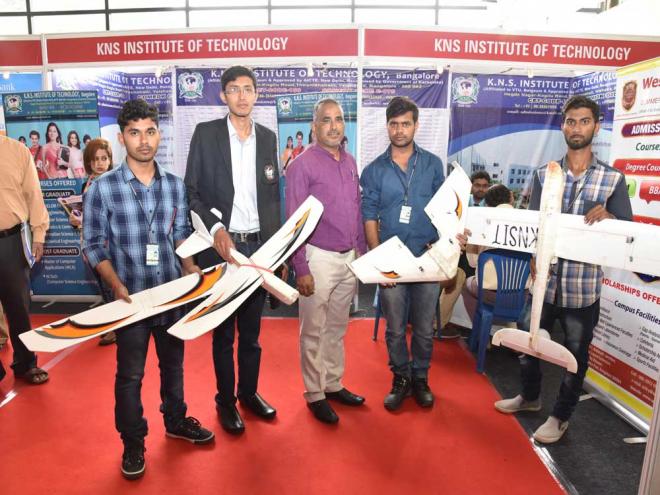
KNS Institute of Technology students display the drones designed by them at Eduverse, the ninth edition of Jnana Degula education expo organised by Deccan Herald and Prajavani, at Jayamahal Palace Hotel grounds on Sunday. DH photo

An unmanned aerial vehicle (UAV) at Rs 1,500? Students of KNS Institute of Technology have done it, without much fanfare. They plan to enhance the design to customise the drones for surveillance and transporting goods.

The makers of the plane – Inayatullah, Debabrata Mondal, Premkumar Singh and Syed Junaid – represented their college along with vice principal Nayeem Ahmad at Jnana Degula-Eduverse event organised by DH and Prajavani.

Inayatullah said the plane was made of simple polymer materials (expanded polyolefin and polystyrene) and can carry 350 gm payload. “It can fly for an hour at a speed of 45 km per hour. We have used a propeller made of composite material with aluminium coating so that it can fly at a height of 500 feet and withstand force of up to 85 newtons,” he said.

The team is also working on a plane specifically designed for surveillance.“While the 45 kmph plane can be improvised to make it a delivery drone, we are working on a plane that flies slower, at 36 kmph, providing opportunities for deeper surveillance of a particular area,” Mondal said.

Inayatullah said the cost of the UAVs will come down further if produced on a large scale. “The UAVs produced by government agencies cost a lot. Our planes are disposable. The army can use the surveillance drone and does not have to worry if one of them is lost or destroyed,” he said.

The planes can be controlled by a 2.4GHz radio frequency device, which has a range of 2.5 km. “The remote controller cost us Rs 3,500. Considering that it is the plane and not the device that is susceptible to damage, we think ours is the most affordable UAV,” he said.

“The turbo is imported from China for Rs 90 and sold in India for Rs 250. The same turbo can be made in India at a cost of Rs 40. Nearly 95% of the materials were imported from China. After a detailed study, we found the cost will come down to Rs 600, if we make these materials in India,” Inayatullah said.

source: http://www.deccanherald.com / Deccan Herald / Home> City / DH News Service / Bengaluru – May 29th, 2017

Latest crop at Mango Man’s nursery christened ‘Yogi’

Lucknow, UTTAR PRADESH :

HajiKalimullahMPOs07may2017

Lucknow :

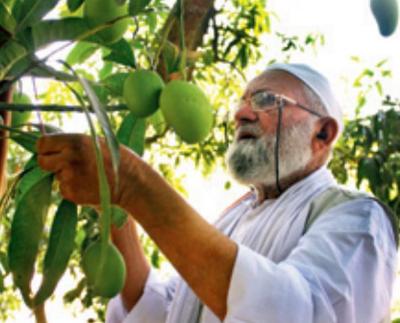
Yogi  mango is latest product from the laboratory of UP’s Mango Man. Three years after Haji Kalimullah  christened a mango after PM Narendra Modi he has now named another after UP chief minister Yogi Adityanath. The 74-year old Padmashri recipient, Haji Kalimullah is excited about the new variety in his orchard in Malihabad, about 30kms from Lucknow.

It’s the first time the variety named by him has not been developed by the man himself, rather, has grown naturally in his orchard. In all likelihood, it appears to be a cross of another naturally developed variety, ‘Karela’ and Dussehri.

“The Yogi mango is slender, elongated and beautiful and you won’t stop marvelling when you see it,” said Kalimullah. But the hybrid’s parent is not know even to him. “Some people visited my orchard recently and while they were looking around they asked about these four five different-looking mangoes on a tree. I said the variety might have developed naturally and they suggested to name it after Yogiji and I did,” he said.

This time, however, Kalimullah has named the variety a little earlier than usual. On all other occasions on which he developed a new variety, he waited for the fruit to ripen to know its taste and smell.
“I am still not sure how this mango is going to taste as it is green and the same can be said about how it would smell. But I hope it will taste good as it is a hybrid of Dussehri,” he said, adding that it will take about a month for the fruit to ripen.

Meanwhile, the tree bearing Modi mango has some fruits on it this year too. “Modi mango is exceptional in taste and very nice to look at,” said Kalimullah. It’s a hybrid of Kolkata’s Husn-e-Aara and Lucknow’s Dussehri. No wonder, the fruit has acquired distinct streaks of crimson like Husn-e-ara and elongation of Dussehri.

Kalimullah’s technique is different when it comes to developing a new variety. “I cross flowers, develop a fruit and then sow its seeds because every seed is different and that is how the best variety develops,” he said.

It’s anything but easy. About 99% experiments have gone waste. The few that survived brought the man recognition. He has named the hybrid of Khasul Khaas and Chausa weighing up to 1 kg after Sachin Tendulkar. He has also named one variety named after Aishwarya.

source:  http://www.timesofindia.indiatimes.com / The Times of India / News> City News> Lucknow News / TNN / May 07th, 2017

Najma Heptulla bereaved

NEW DELHI :

New Delhi:

Akbarali A. Heptulla, noted manpower consultant and husband of Rajya Sabha MP Najma Heptulla, passed away on Tuesday.

Mr. Heptulla (75) complained of stomach ache around 2 a.m. and was rushed to the All-India Institute of Medical Sciences here, where doctors declared him brought dead.

Described by close friends as “the man behind the successful woman,” Mr. Heptulla is survived by three daughters. The burial will take place on Friday.

Mr. Heptulla, who held a licence to import newsprint from Russia, was among those instrumental in the establishment of the newspaper Patriot in the 1960s. — PTI

source: http://www.thehindu.com / The Hindu / Home> National / September 05th, 2007

Srinagar woman runs the only bat unit in city

Srinagar, JAMMU & KASHMIR :

RifatJanMPOs25apr2017

Srinagar

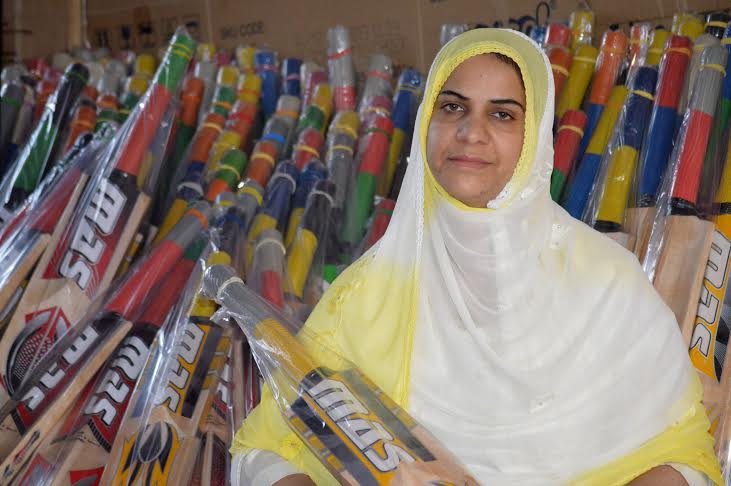
Close to the Alam Sahib’s shrine in Narwara, Rifat Jan lives like any other Kashmiri woman. However there is one aspect which makes her special. Rifat runs the only bat manufacturing unit in the city by the name of Masoodi Arts and Sports.
 “I couldn’t have done this without my husband. He gave me all the support I needed,’’ said a beaming  Rifat. “ At first I was reluctant to start the unit as my husband cannot run it for being a government employee,  but I made up my mind and decided to give it a shot. Since then we have come a long way.”
Rifat’s husband, Showkat Masoodi, who is the coach of the Forest Department’s football team and also runs a football academy ,says that at first she needed a lot of help but now he just fixes minor glitches. “I cannot do a business as I am a government employee. More than that, I am a coach and I have to give time to the academy also. All my time goes with my official and coaching assignments,’’ said Masoodi.
The unit also boasts to sell bats under its own brand name MAS, which is unusual in the valley. However, almost all the 10,000 pieces, mostly tennis ball bats, which they produce per-year are sent to other states of the India. The reason for that, as the couple says is lack of sports infrastructure and sporting culture at the grass root level.
Rifat informs that when the unit started in 1996, things were slow. The only way to increase the sales was to uphold quality. “At that time we used to send bats to Chennai (then Madras). We knew that if we want to make a mark, quality has to be exceptional. And we did that. Now by the grace of Allah, our product is being used in Mumbai, Delhi and many other places.”
She also pointed out that they are the only ones who sell by their own name. “In Kashmir by and large, semi finish bats are produced. That means the producers send the product to companies without stickers and then they sell them under their own name. But we have our own brand, our own identity, “she said adding that the response has been above expectations.
“When people see our bats outside, they do ask the dealer where it was manufactured. When they hear Kashmir, they are a little bit surprised as almost every unit here sells semi-finish bats not an own brand like us.”
Rifat also feels that her unit has almost no competition in the valley. “Competition is there but outside, not here. Our product has competition from big companies like DCS, who manufacture good tennis bats,’’she says.
They even got a call from a dealer in Meerut who was ready to pay more than the market rate for a semi finished product. “We said no. We cannot sell our product under any other name. It has to be MAS, “ said Rifat.
Rifat also mentioned that Kashmir not being the market is not as kids don’t play but the state of infrastructure and lack of sports at school level. “In Kashmir, we don’t have a big market. And the reason is not that kids don’t play cricket. It’s the environment which matters. Look at the grounds here. How many do we have.  In Mumbai, a coach is compulsory, which makes sports compulsory. There are school tournaments held on regular intervals. We don’t see such environment here.  Sometimes I wonder people  who are solely dependent on sports how do they meet ends.”
She added that because of such level of gaming at the school level Mumbai is her biggest market. “Our biggest market is off course in Mumbai. It’s the hub of cricket. And they have this grass root culture. Kids start playing at a young age and then that talent gets honed in schools which provide them with that environment. There are so many academies there who need bats. What do we have here? Amar Singh club and I don’t see anything else on a big scale. Forget academies, point out a school where after regular classes a coach comes a teaches a bunch of 50 kids.”
Job motivation for sportsmen
Masoodi, her husband voices her concern and says that football in the valley faces similar problems.
 “Earlier there was a team of almost every government department here. So it was very good for everyone. Now talented players are jobless. If a department has no team then what would he do? Now tell me how many can JK Bank and Forest accommodate?, “ asks Masoodi, who also runs Iddgah Fooball Academy.
He added, “ If a player is good and he wants to make a career how can he do it without a job. Government should look into it. Even if they accommodate four boys in every department in a year and keep a sports quota, like it is everywhere then it can be a huge motivator.”
Masoodi, who took over as the coach of Forest XI in 2012, says that there is abundant talent in the valley however, they lack incentives and motivation due to a bleak future. “ After I took over as coach Forests’ team has won every tournament. They even defeated the powerful JK Bank team recently. But the players are still contractual employees. They wonder why this happens to them. This dents their morale. Our players have played Santosh Trophy many times, which is the biggest tournament in the country, still they don’t get what they deserve, “ rues Masoodi.
He says that government wants youth look at the brighter side when they don’t help them out. “It is simple. If you want to keep the youth happy and engaged, you have to give them jobs by which they can pursue their dreams.”
source: http://www.risingkashmir.com / Rising Kashmir / Home / by Mir Basit Hussain / Srinagar / November 02nd, 2015

The Queen of Roses

MADHYA PRADESH / NEW DELHI :

I enjoy food and do not like to eat like a glutton, but relish each morsel and am ready to experiment with the food which has a touch of Indian roots.

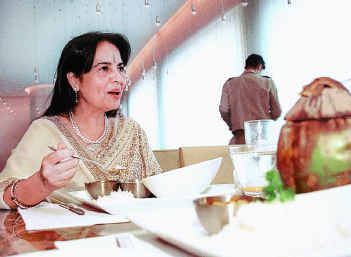
Salma Sultan reveals her fine taste over food at The Park's Fire restaurant in New Delhi.
Salma Sultan reveals her fine taste over food at The Park’s Fire restaurant in New Delhi.

REMEMBER THE newsreader on Doordarshan with a big, red rose in her hair? And then you would wonder, whether it was a season of the rose or not, but she would always have one tucked in her neatly done hair? Yes, one is talking about Salma Sultan. The famous face on the small screen, who also initiated a trend: of draping the border of her sari around her neck in a modern yet traditional way. It was later picked up by almost all the female newsreaders. She now discloses the reason; “I did not have so many blouses to match with each sari so I created a style to hide them.”

You saw her till 1997 then wondered where she vanished after that. Well, she started doing something more worthy of her time. That is, making serials on social topics for Doordarshan under her production house Lensview Private Limited. Serials like “Suno Kahani”, “Panchtantra” and “Swar Mere Tumhare” were among the offerings.

She is averse to those family soaps in which women are scheming and have an extra marital affair at the drop of a hat. But she is definitely not averse to food. “I enjoy food and do not like to eat like a glutton, but relish each morsel,” says Salma, now a grandmother of two, though looking at her well-maintained stature one would not find it hard to believe her on this count. The grace personified Salma is at New Delhi’s Fire restaurant in The Park Hotel. She is ready to experiment with “the food, which has a touch of Indian roots”. This 60-seat restaurant leaves one spellbound for two reasons: one, the space, limestone colour floors, walls and furniture drapes, and seats arranged at considerable distances making the restaurant a comfortable gourmet experience and second, a radiant orange, glass wall on which glittering green, red, orange lights keep interchanging their positions, providing a visual delight. Her starter of sweet corn, ginger and coriander soup has arrived. She warns the photographers, “Please don’t take my picture while I am eating, you would repent seeing those horrifying mouth angles in the frame later.”

You might have wondered why Salma would economise on her smile on DD but a meeting with her ensures a belly laugh for she tells you ample hilarious incidents. She recalls one such occurrence, “Once while reading news, I realised that two words got jumbled with each other. The line read like this, `Purane zamane main aurton ko bandar kaha jata tha’ while it should have been `Purane zamane main auraton ko band rakha jata tha’. The moral of the story is “the alertness of the mind is very important while reading news”.

Her entry into news reading too had been quite a hilarious experience. After doing her post graduation from English Literature from I. P. College, Delhi, she started working with Doordarshan as an announcer and presenter. “Those days (1967-68), they would not take young people for news reading but mature ones. Pratima Puri and Gopal Kaul were regular faces then. But Kaul never wanted to read news so once, when it was time to read news, he came entered the office with a completely-shaven head! Panic-stricken producer started looking for someone to replace him and their choice zeroed on me. I was asked to give a quick audition.” Always ready to take up challenges, Salma followed, “When I came back to the control room after audition, I witnessed a pin-drop silence and everyone sitting stunned. With a chocking voice I asked what happened, and was told that I read the 15-minutes news so quickly that they could not even start the roll!” Such was her nervousness that made DD realise that they should train people for news reading too!

Here she changes the subject to food. She prefers a spicy main course: broccoli, zucchini, asparagus, baby corn and bell peppers with kadai spices.

There is another facet of her personality that is strongly reflected in her serial titled “Jalta Sawal” on women issues currently showing on DD News on Sundays at 11 a.m. The face of a very sensitive and concerned woman and a responsible citizen. In this “very well-received programme” as she gauges from the responses, she has shown insightful and touchy episodes on prostitution, rape, dowry, infertility and foeticide. The next episode on working women can be seen this coming Sunday.

It’s time for some dessert here and Salma is offered a special seasonal fresh-fruit platter with kulfi. “That’s wonderful,” she compliments.

And she too!

RANA SIDDIQUI

source: http://www.thehindu.com / The Hindu / Home> MetroPlus – Online edition / by Rana Siddique / Thursday – Mar 24th, 2004

The Colours Of Kotwara

Lucknow, UTTAR PRADESH / NEW DELHI :
MuzaffarFPMPOsapr2017

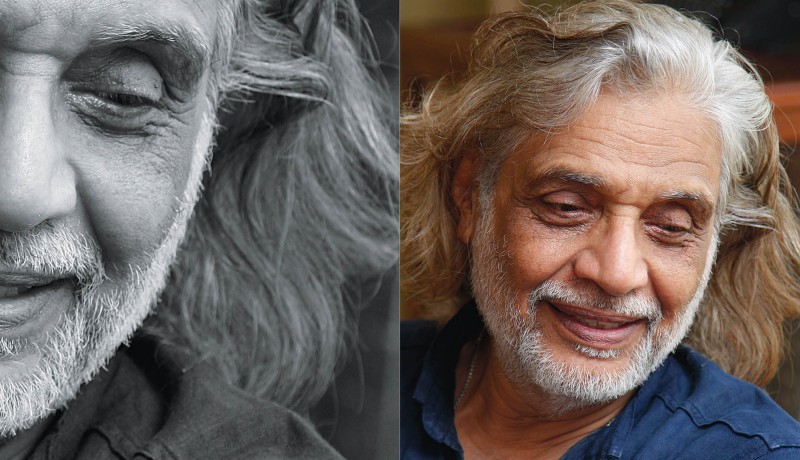
Muzaffar Ali wears many hats—filmmaker, painter, poet, fashion designer, revivalist, Sufi exponent, social worker—with consummate ease. As he prepares to release his latest labour of love, Jaanisaar, he speaks to Ambica Gulati about being in a ‘constant state of inspiration’

Filmmaker. Painter. Sufi exponent. Revivalist. Fashion designer. Music lover. Social worker. Just some of the ways Muzaffar Ali is described. But the man himself is loath to be labelled. For him, life is a singular pursuit: a quest for harmony and love as elucidated by the Sufi philosophy, “surrender of the highest order, which manifests through human compassion”.

Our introduction to Ali takes place at his charming farmhouse in Gurgaon, where Barrack, his horse, runs freely in the grassy expanse while dogs laze contentedly in the morning sun. In another corner, vintage cars are parked in a shed, pregnant with stories of a royal past. Ali is the current Raja of Kotwara, a former princely state 160 km from Lucknow, but there is nothing pretentious about him or his lifestyle. Enter the farmhouse and you notice how mud, mortar and brick blend seamlessly, mirroring the owner’s constant quest for harmony and balance in keeping with the Sufi way of life. Inside the massive door, red pillars catch the eye, and once inside the glass doors, you are introduced to the sophisticated yet mellow world of a man with seemingly infinite creative nuances. Designed by his wife Meera, Ali’s farmhouse is a fusion of styles that perfectly capture the personality of the Raja—his paintings adorn the walls, old books lie open on tables, and a fireplace painted by Ali himself occupies pride of place in the centre of the room.

At the age of 70, white hair flowing across his elegant shoulders, Ali speaks with a quiet passion about his films, establishing the Kotwara clothing brand with Meera, spreading Sufism, creating beautiful minds, reinventing the lives of the people of Kotwara and his umbilical ties to the region. During the conversation, the Padma Shri (2005) recipient also sheds light on his soon-to-be-released film Jaanisaar, and receiving the Rajiv Gandhi National Sadbhavana Award (2014) for promoting peace and harmony.
Muzaffar01MPOsapr2017

EXCERPTS FROM AN INTERVIEW

Who really is Muzzafar Ali?

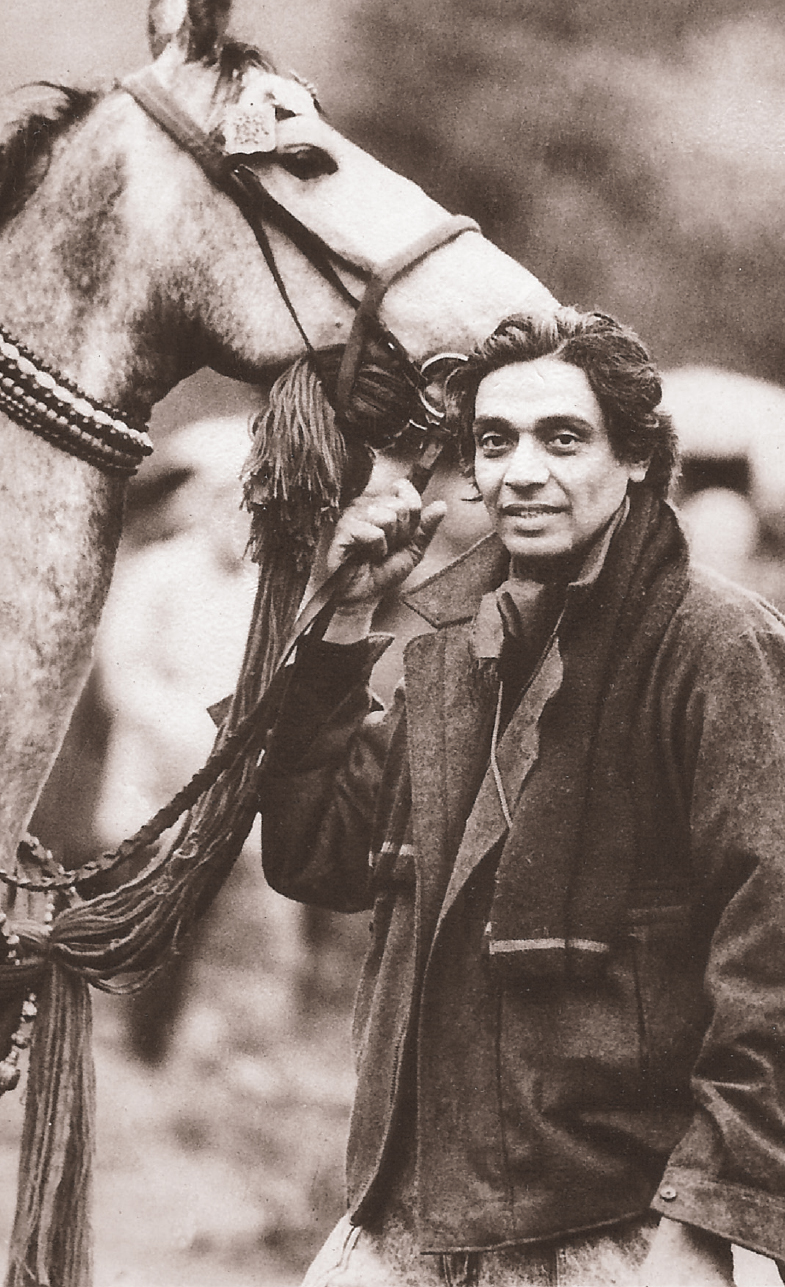
I am my parent’s child, shaped by my father Syed Sajid Husain Ali’s progressive thinking and groomed by my mother Kaneez Hyder’s cultural feathers. I grew up in an era of turmoil, when India was all for independence. Awadh had a prominent Nawabi culture. My father was the head of Kotwara, but he thought like the common man. He had studied in Scotland where he dressed up like the British, drove a sports car and was influenced by the philosophy of the Communist Party of Great Britain. He believed in an egalitarian society, and focused on health, education and work for all. In 1937, he fought his first elections against the Muslim League as he believed in a secular, democratic India. Humanism and secularism were his principles. My mother followed the purdah system. She was interested in art, culture, music and all the influences you see in Umrao Jaan.

What is common to Muzzafar Ali the filmmaker, social worker, painter, Raja and fashion designer?

An artist in quest for a balance between humanity and beauty.

Were you groomed for the arts at home? And was the pursuit of creativity a deliberate career choice?
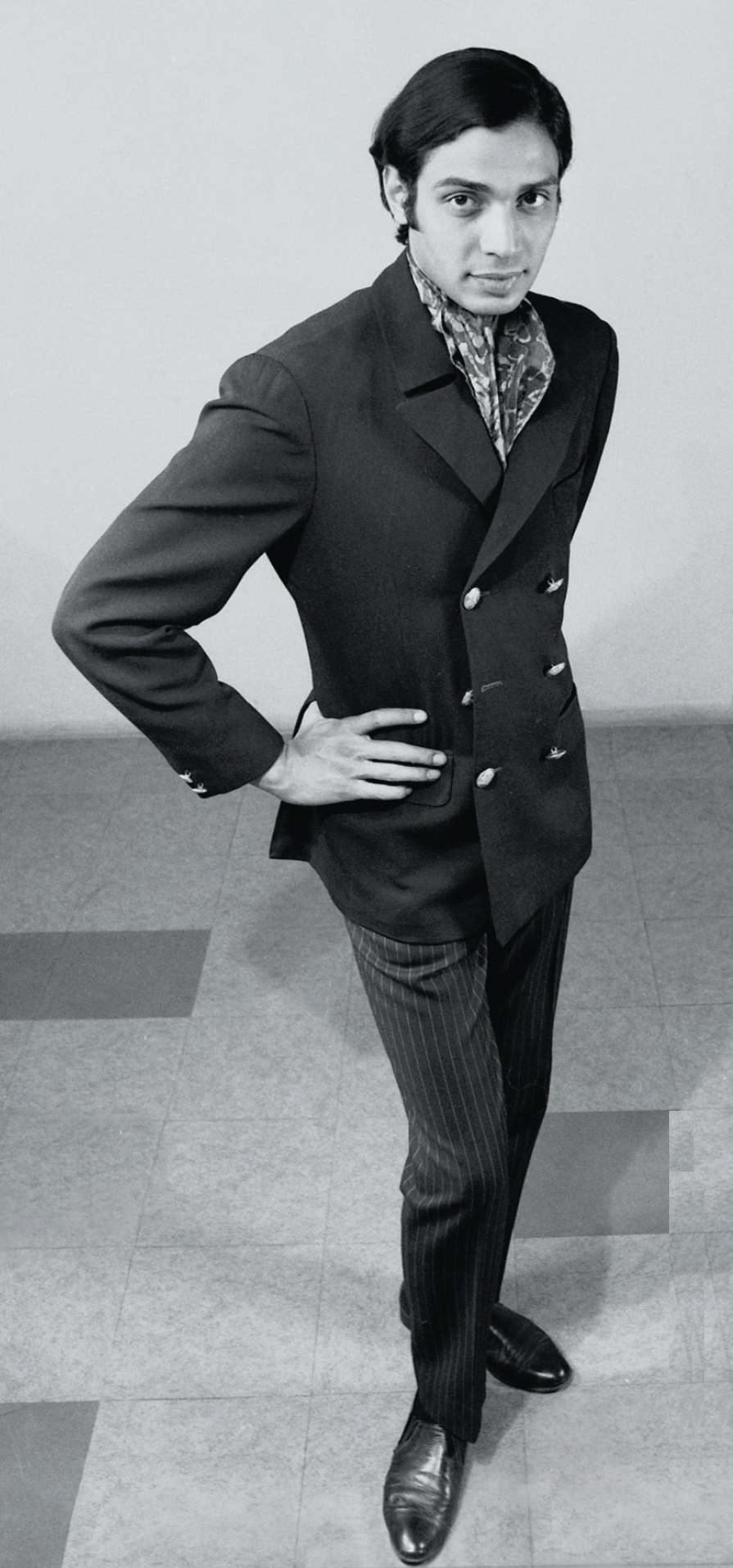
I was studying science at Aligarh Muslim University. My father believed in the Nehruvian vision, which was progress through science and technology. He wanted me to be a part of that. After the zamindari system was abolished in 1957, he locked himself up and studied law. During India’s transition, he also transformed. He gave up wearing mill-made clothes and opted for khadi. Suddenly, there was a perceptible shift from a lavish lifestyle to a Spartan one. I guess something similar happened to me in university. I discovered poetry and poets like Faiz Ahmed Faiz and Rahi Masoom Raza, and my education became an art of science or perhaps it was the science of art that got to me. I read the works of Rumi and became passionate about the Sufi way of love and surrender.
Muzaffar02MPOsapr2017

I completed my BSc but went to Kolkata to work in an advertising agency headed by renowned filmmaker Satyajit Ray. His thoughts and style were a strong influence on me. I realised that film was an interesting medium to express your beliefs. But my introduction to the arts was through painting. I loved to sketch and paint since childhood. I even won many prizes in school.

Do you still paint?

I still paint as much as I can create time for it. I like to live with my paintings, in constant dialogue with them. Therefore, I am in a constant state of inspiration. These works are in my own homes, mostly in the Gurgaon home. I have had 10 one-man shows; I would like to show soon if I meet the correct person through whom I should hold an exhibition.

Did you have any doubts when you chose a career different from the one you were being prepared for?

Nothing is impossible and I was brought up in an open-minded atmosphere. I had seen my father take a quantum leap from being a zamindar to giving people a voice and wearing hand-woven clothes. He did not believe in a capitalist society and always said ‘a penny saved is a penny earned’. My salary in Kolkata was ₹ 300 and my hostel fee was ₹ 150 per month. But I managed.
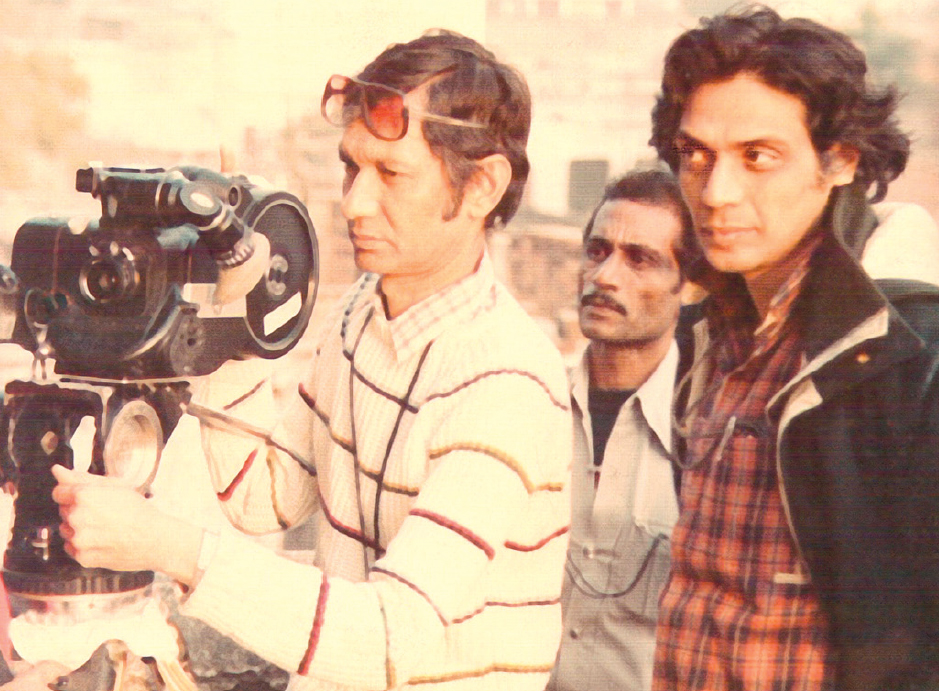
Muzaffar04MPOsapr2017

How did films happen?

The first film I made was Gaman. Working with Satyajit Ray, I had realised what a camera could do. So my journey was from sketching to moving images. It’s a journey I continue to repeat every time I make a film. Each film, therefore, became a milestone in my understanding and expression of life and has been rooted in the soil of Awadh, Lucknow and Kotwara. They have been shot there, with natives featuring in them.

I had started working with Air India in the communications department in the 1970s. I worked there for 11 years. I lived in Mumbai and I would see people coming from villages to the city. They would lose their identity to earn a living. This was the theme of my film Gaman. Social issues and cultural ethos always influenced me. In 1976, I started Umrao Jaan. The film captured the culture of Awadh and times of Wajid Ali Shah. All the detailing in the movie was what I had seen and learnt at home. All the poetry and love and surrender I was in love with found its way into the songs. In Anjuman, I explored the lives of chikan workers and the exploitation of women.

What about your famed film Zooni, which is yet to see the light of day?

Zooni was based on the folklore surrounding 16th century Kashmiri poetess Habba Khatoon. It was my way of expressing pride in the beautiful state of Kashmir, my way of showing that violence will lead us nowhere. Zooni is a big exploration into the people and culture of the Valley and something that neither I nor the people are ready to undertake because of what has happened since 1989. It is an unfinished dream and if I meet the right people, it may become a reality. The script will need to be revisited to suit the audience of today but the spirit is universal and, therefore, it has to be a global film.

What can we expect in Jaanisaar? Is it a sequel to Umrao Jaan?

This film is centred on the siege of Awadh, the revolt of 1857, and romance between an Anglicised Raja and a courtesan. It stars newcomers Imran Abbas Naqvi and Pernia Qureshi. It is not a sequel to Umrao Jaan but takes off from where Umrao Jaan ends in the same region. This is my fifth feature film. Not counting Zooni, I have done several serials and short films on Sufism.

Umrao Jaan established Rekha as one of the most beautiful women in the country. It also had classical songs such as Dil cheez kya hai…. Will Jaanisaar offer something similar?

The focus is on the culture of Awadh. The rest is up to the audience, to see where it goes.

What will be your next artistic endeavour after Jaanisaar?

Plans after Jaanisaar will become reality only after the film is released and accepted. I think big but take small, measured steps. Every film is a dialogue with my audience.
Muzaffar05MPOsapr2017

The creation of the Kotwara brand—how did that happen?

Ambience is very important for me. Kotwara is a beautiful 14-acre, green land with mango groves. In films, my actors always look beautiful, so I thought why not clothes in real life? Kotwara has been my studio for all my creative shades. It was where I began painting and it is where my work with the revival of chikan began. It also houses a school for children and Jaanisaar is also being shot there.

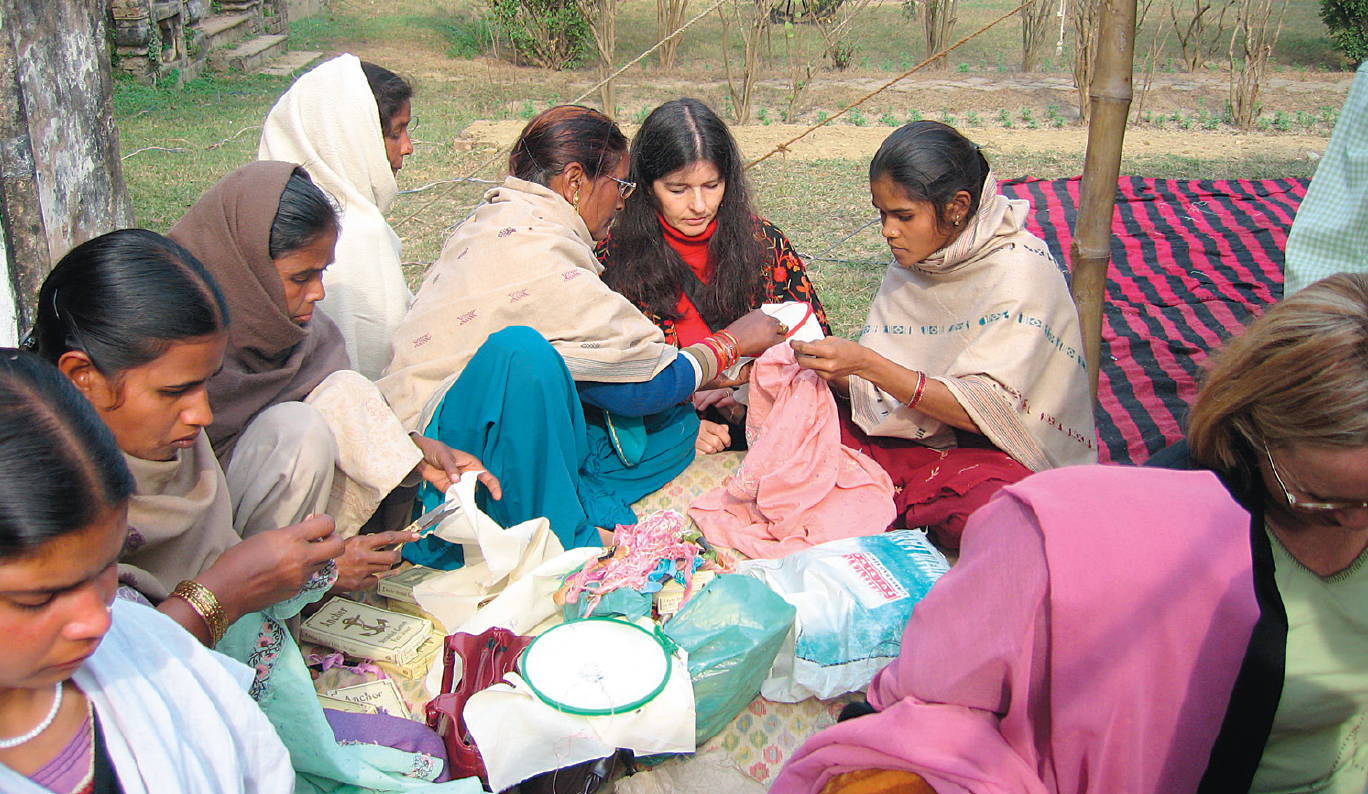
Fashion happened during the making of Zooni in 1988. American fashion designer Mary McFadden visited us back then and after seeing Kotwara, she said it could be a haven for crafts. Fashion was still evolving in those days and even known names like Suneet Verma worked with Mary. In 1991, my father passed away and I was wondering what to do next with his huge legacy. Meera supported me and helped turn Kotwara into an asset. Sugarcane farming was the mainstay of the region but there was never enough. We decided to revive the crafts and got a few people from Lucknow to train a few willing workers. We looked at how to make new motifs suited to the changing world and new works with zardozi. And ‘Dwar Pe Rozi’ [a charitable society] was born. Now, there are 300-400 people working on this in different pockets. Then, we built a small school for children; there are 300 children studying there.

How did the brand hit the limelight?

We started participating in fashion weeks in 2000, and the rest is history.

What do you feel is the biggest contribution to your hometown through the Kotwara brand?

Kotwara is a concept, an idea. Inspired by my first film Gaman, it aims to provide employment at one’s doorstep under the Dwar Pe Rozi vision. In Kotwara, I have tried to pour in my creative skills with human resources from the village to create craft and couture in which my films could add value. I think it is a very slow process and is succeeding because of the thought and style that is going into it, from both Meera and I.

How did Jahan-e-Khusrau, the annual Sufi festival you have been organising at Humayun’s tomb in Delhi, happen?

The Sufi way of love and surrender has always been my approach to peace and harmony. The soul’s call is to create a union. The music albums I have brought out are centred on this Sufi spirit. Paigham-e-Mohabbat had lyrics by some of the most distinguished poets such as Rahi Masoom Raza, Ali Sardar Jaffery, Faiz Ahmad Faiz, Ahmad Faraz, Qazi Nazrul Islam and Jan Nisar Akhtar. Other albums are Jahan-e-Khusrau, a tribute to Hazrat Amir Khusrau, while Raqs-e-Bismil (Dance of the Wounded) is a collection of ghazal inspired by Rumi. I received the support of then Delhi chief minister Sheila Dixit for the festival. Delhi is the land of Sufi saints and has the dargah of 36 saints. This festival was a natural way of felicitating the Sufi spirit of union. We started in 2000. Given the chance, I would also like to organise a Wajid Ali Shah festival in Lucknow. In 2005, I also started the Rumi Foundation and published two motivational journals and poetry.

Are you also translating Sufi works? And how can Sufi music bring peace to the subcontinent?

For me, Sufi poetry is the final stage of love and surrender. Every time I use it in an album or in Jahan-e-Khusrau, I try to translate it. Although I am not very good at translation, I don’t want listeners to miss out on the meaning. Raqs-e-Bismil with Abida Parveen, selected, composed and translated by me, is one such effort.

Life’s journey has brought you to the Rajiv Gandhi National Sadbhavana Award. How does this make you feel?

I sometimes wonder if I even belong there. I have been graced along with a galaxy of people such as famous scientist Yashpal and Mother Teresa. The award is a significant recognition in our country. In a nation of such vast ethnic diversity, taking the route of religion to unite people can lead to unprecedented intolerance. We need to celebrate those who have upheld these human values. The award leaves you with the responsibility of living up to these ideals.

Have you ever felt that you may not be able to live up to the expectations of the people around you?

I feel I could do more for the school. But I focus on creating more beautiful minds and let the doubts out.
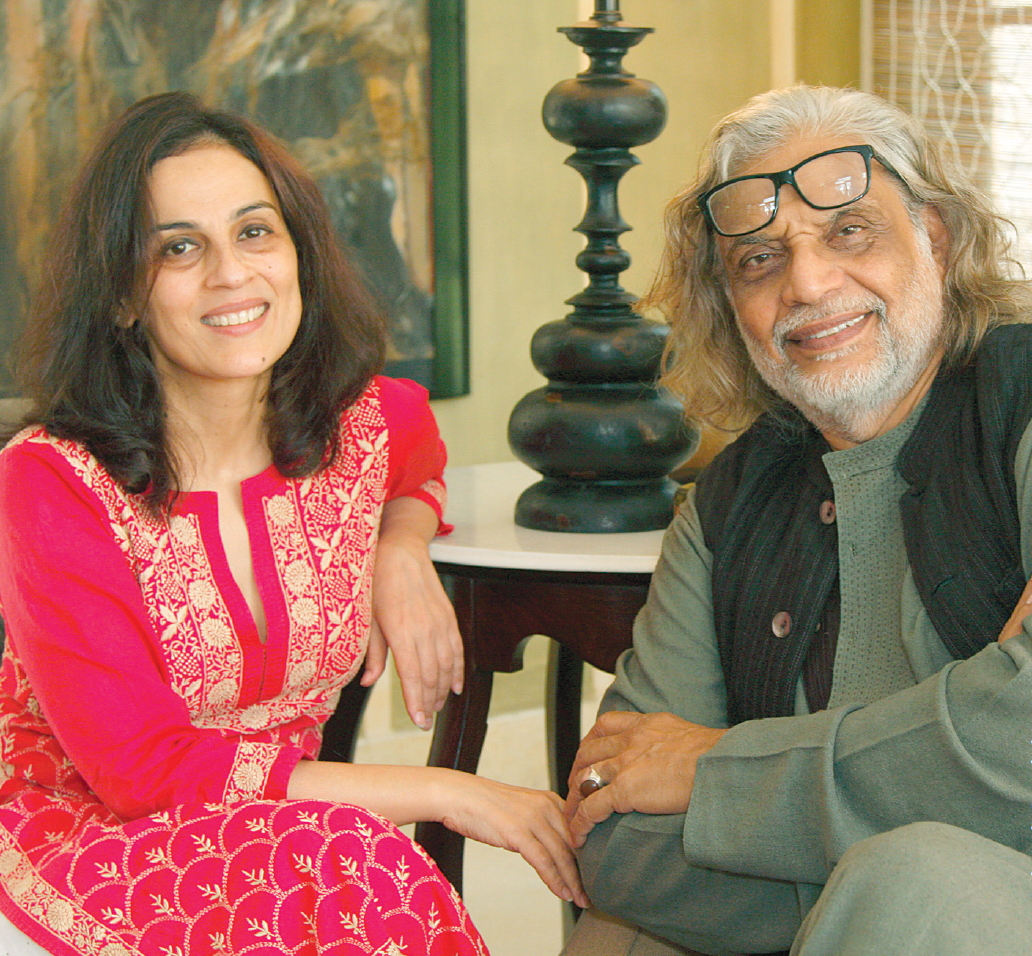
Muzaffar03MPOsapr2017

How did you meet Meera? Does the age difference ever make you feel insecure?

I met Meera in Delhi when I was uprooted from Kashmir with an incomplete film. I found her an extremely powerful anchor in my life. I was making an hour-long film on the life of Hazrat Khwaja Moinuddin Chishti of Ajmer, called Seena Ba Seena (From the Heart to the Heart). I gave her a small role and we married soon after that. That was 25 years ago. Age did not matter then, nor does it now. She is honest and dedicated. She thinks out of the box, is a talented architect, and open and receptive to new things and ideas.

Are your children also involved in creative pursuits?

My eldest son Murad [from his first marriage] is based in Delhi and is an actor; Shaad [from his second marriage] lives in Mumbai and is directing films; and my daughter Sana [with Meera] has started helping us with the clothing brand. But now I look at the whole world as a child. I do not think about my biological children only, but in a broader scope of creating happier worlds.

What is a typical day like for you?

Walk with my dogs. Playing with my horse. Work on my thoughts. Sharpen my aesthetics through poetry and music. Sketch and paint.

Has age made any difference to your life and work? Has it mellowed you or contributed to your growth?
By His grace, I have learnt to become sharper with age, and I believe this is the time to enlighten the youth with dreams to improve the world in which we live. Create open and questioning minds.

What is your future vision?

To create beautiful, open minds. I find pleasure in seeing the children in school. They are going to be the new harvest. In turn, they will create a happier world for others. I will keep sharing whatever I can, in my own way.

Photos: Avinash Pasricha
Featured in Harmony — Celebrate Age Magazine
January 2015

source: http://www.harmonyindia.org / Harmony India.org / Harmony – Celebrate Age Magazine / January 2015
Collegians whip up a storm

Bengaluru, KARNATAKA :

CakeMPOs06apr2017

Nineteen-year-olds, Sana Azam and Rhea Agarwal balance studies and their baking business

Running a baking business when you are a full-time student is not a piece of cake. However, Sana Azam and Rhea Agarwal, both 19, prove all you need is passion to batter-up and bake away.

SanaMPOs06apr2017

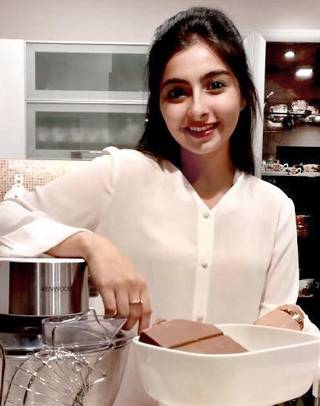
The decision to start a baking venture happened organically for Sana, founder and baker at Pink Whisk. Having grown up in an environment where the oven was always in use — whether it was her grandmother making the more traditional Muslim recipes and bakes such as roat or her mother making a cake. It was from there that Sana developed a love for cooking. “I’d always been a sous chef,” she says laughing. “My earliest memories go back to holding the mixer while my mother handled everything else.” That gradually changed, as she began doing things independently and grew as a baker herself. Although she had received requests in the past from close friends and family, the decision to start Pink Whisk only happened towards the end of her 12th standard in school.

Sana, a first-year B.Com student at Mount Carmel College, has a Pink Whisk stall at MCC’s many fests. She is working on a launching a Facebook page soon but currently takes orders by phone or WhatsApp. Pink Whisk also has a WhatsApp group which keeps people updated about what is cooking.

Although she specialises in all things sweet, Sana also dabbles with savouries like chicken quiches, tarts, samosas, pastas and bakes. Apart from cakes and cupcakes, she also makes éclairs, cheesecakes, bars (something between a cookie and a cake), chiffon pies, and trifles. Pink Whisk’s white chocolate and raspberry and strawberry jam bars are extremely popular, mini cheesecakes accompanied by a berry compote and the signature Banoffee are favourites as well. Sana said her most challenging order was “baking a five-kilo cake for a software company. Any order placed less than two days before it is needed is always challenging.”


RheaMPOs06apr2017

Chance encounter

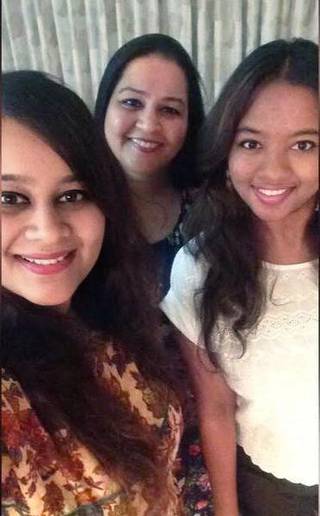
Rhea Agarwal, on the other hand, found her love for baking by chance. The 19 year old, first year BBA student at Christ University started It’s Whipped, with her sister Sakshi Agarwal. Rhea says: “I was maybe 12 or 13 when my mother enrolled me in a summer baking class.” And there was no looking back. Within a week, she had practiced everything she had learned. Whether it was a family function or a friend’s birthday, “Nobody asked me but I took it upon myself to make something for every occasion, I just got good with practice,” she says. Friends and family always suggested she start taking it more seriously and turn it into a business but it was only when a close relative placed an order for a chocolate cake and offered to pay her for it, that the idea to turn the hobby into a business venture arose.

Rhea runs It’s Whipped with the help of her mother and sister. They have a Facebook page and an Instagram account where they communicate with potential customers by posting pictures of desserts they make as well as inform their customers of new items they add to their ever-growing menu.

“We make everything from chocolates, cakes, cupcakes and pies to granola bars, cookies and herb crackers. We also have a list of egg-less recipes. Our teacakes are popular and we offer them in many flavours including lemon, walnut, chocolate chip, honey and date.”

Talking of her most challenging order yet, Rhea says, “It was an order for 600 chocolate-covered brownie bites that a corporate had requested for Diwali.”

Both It’s Whipped and Pink Whisk operate out of homes and they prefer when customers come to pick up their orders.

source: http://www.thehindu.com / The Hindu / Home> Life & Style> Food / by Harshala Reddy / April 05th, 2017

High five to 555

Hyderabad, TELANGANA :

Cafe555MPOs03apr2017


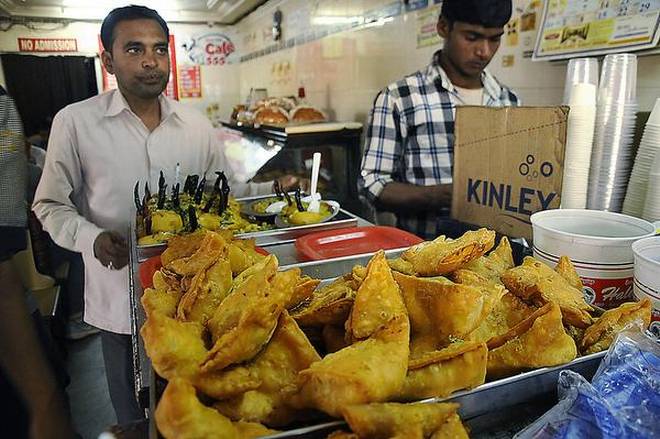
Cafe 555’s Irani chai and haleem draws crowds from most parts of Hyderabad

In a steep lane dominated by biryani joints and residential blocks at Masab Tank, Café 555 is just a few metres away from one of the busiest roads in the city that connects one to Jubilee Hills, Panjagutta and Khairatabad. Their chai is so well known that you’re not amused by their tagline that reads, ‘Don’t drink and drive, Drink only Café 555 ki chai and drive.’ The café that enters its silver jubilee year in 2017 is now owned by Ali Raza Jowker and draws most of its crowds from the nearby Ahmed Nagar apart from other parts of the city.

Their chai was first sold at Rs 1.50. Now priced at Rs 10, nothing betters the warmth that their cup of Irani chai to begin your day or energise you on a tired evening. Most customers prefer to savour it with the crisp irani samosa. If you with to indulge in something sweet to go with it, there is the popular ‘bun butter’ option.

The cafe is frequented by a number of actors from Telugu film fraternity. Sania Mirza too makes it a point to visit Cafe 555 when in town. It not just their chai that’s popular — the manager Mohammed Ali proudly shows us the award the café won for its haleem.

The sight of Cafe 555 during the Ramzan season is a delight to your senses with its multi-coloured lights during the night adding to the festive aura. The haleem prepared by Ali Raza’s grandfather was a hit with the Nizams too, says the manager.

A cafe has other options as well; their quintessential dal rice and poori are sought out items during breakfast and lunch times. No full-course meal feels complete without the Lassi here. What makes Cafe 555 ideal is also their ability to cater to foodies with diverse choices over the years.

Employees from the nearby Telugu Samkshema Bhavan, Tribal Musuem, tailoring and stationery shops continue to see the cafe as a companion that has transformed itself and evolved with changing customer tastes without losing its charming nativity.

source: http://www.thehindu.com / The Hindu / Home> Life & Style> Food / by Srivathsan Nadadhur / April 03rd, 2017

In this 108-year-old Meerut Gaushala, Muslims tend to cows, worship them

Meerut, UTTAR PRADESH :

Meerut :

61-year-old Ali Hasan’s day starts at 6am. After winding up house-hold chores, he arrives at Meerut’s Gopal Gaushala with his friend Noor Hasan, who is 45 now.

Like other caretakers at the ‘Gaushala’ (home to cows), the duo pick up buckets and start washing the cows. They then feed the animals and go to a nearby farm to cut feed from them.

Ali had been doing this work religiously for the past 48 years, while Noor has given 20 years of his life to the Gaushala, which houses as many as 800 cows.

Unstirred by the debate surrounding Muslims’ relation with the animal, considered sacred by the Hindus, the duo has been serving the cows and also worships them.

Ali, who was sitting on floor to milk a cow in the 108 years old Gaushala, appeared in content with his life. With an orange ‘gamcha’ (cotton towel) tied around his head, Ali said proudly that he also takes part in Goverdhan Puja (worship of cows).
“I was 13-year-old when I started working at this Gaushala. We earn our living from here and I love these cows as much as I love my family members. I have a special attachment with each of these cows. We also take part in Goverdhan Puja and worship these cows,” he said.

For Noor also, the cows are like family members.

“Cows have become a part of my family now. On days when I am not well and cannot come to work, my sons ensure that the animals are taken care of,” said Noor, while he fed cow number five.

The over 800 cows have been allotted numbers to establish their identity. There are a total of 60 caretakers at the Gaushala, located in Mohkampur area of Meerut.

When asked whether anyone from their community ever raised objection to their work, Noor shot back: “It is no one’s business. I earn from this work and work is no less than Allah for me. Some people raise questions but it doesn’t bother me. I am faithful towards my work.”

Unlike other Gaushalas in UP, Gopal Gaushala — run by a trust of 21 members– does not insist on keeping only the milch cows.

Umesh Pandey, manager of the Gaushala, told TOI, “Out of the total 800 cows, only 100 give milk. Others were either saved from slaughterhouses and sent here or left here by farmers, who don’t have enough money to take care of their animals after they stop giving milk.”

Asked if the crackdown on slaughterhouses has had any impact on Noor and his family, he said, “Honestly, it doesn’t matter much. What will happen at the most? We will stop getting non-vegetarian food in the market. We are ready to quit meat, it is no big deal,” Noor retorted.

source: http://www.timesofindia.indiatimes.com / The Times of India / News> City News> Meerut News / by Ishita Bhatia, TNN / March 29th, 2017

Kutchi Memons go a long way back

KERALA :

The Kutchi Memons who came here in 1815 first settled in Mattancherry

Kochi:

If a phrase can describe the Kutchi Memon community in Kochi it is great cultural resilience. In rebuilding their lives, so far away from the place of their origin, the first generation Kutchi Memons here demonstrated a remarkable ability to flourish in the face of greatest of odds.

“I just wonder how they made it to Kochi,” says Javeed Hashim of the Abad Group of companies of his great grandfathers who arrived in Kochi from Kutch, in Gujarat early in the 19th century.

Would it have been by sea? Or, over land? Whichever way they came, they showed great spirit. The same spirit of perseverance and enterprise that stand them in good stead to this day. Mr. Hashim is just one example of the way generations of Kutchi Memons, a close-knit and mostly endogamous community, have rebuilt their lives in their new homelands becoming ever closer to the societies that accepted them and at the same time, keeping alive the flame of cultural identity and social coherence. he language is a big factor that has kept our identity intact, says Mr. Hashim. “At home I speak Kutchi, and the moment I am out, I have to switch either to English or to Malayalam,” he says. Kutchi is a language closer to Sindhi than Gujarati. The Kutchi Memons who came here in 1815 first settled in Mattancherry, the hub of business and nucleus of the old city. They have now spread out into other parts as the city grew over the decades.There are about 500 families of Kutchi Memons in Kochi, says Rasheed Usman, president of the Kutchi Memon Association.

Religious festivals like Eid and social occasions like marriages are times when the community cements its unity. On days of religious festivals there are family get-togethers at places that are fixed by communities in each locality, says Dr. Sadath Sait, a Homoeopath.

And marriage celebrations last more than a week with the pre-marriage celebrations bringing together relatives and friends in large numbers to the homes of the bride and groom. While the community members have more or less adopted the local dress code, the older people still love to wear their traditional dresses. Dr. Sait says that the Kutchis love their food and though have adopted the local food in many ways, the mix of masalas or the preparation of Biriyanis etc differ a lot from the local practices. The Kutchi Memon Association and the Cutchi Memon Jamath are engaged in both charity work and also in helping the more needy members of the community. The Kutchi Memon Association lays great stress on helping people to attain higher education, says Adam Essack, the Association Secretary.

The Kutchi Memons have made their mark both on the political and business fronts in Kerala. Ebrahim Suleiman Sait and G. M. Banatwala, both from the Kutchi Memon community are examples of great innings in politics.

source: http://www.thehindu.com / The Hindu / Home> National> Kerala / by K.A.Martin / July 25th, 2008