Category Archives: Business & Economy

India 20 Under 40 – This ‘modest fashion’ startup is giving Muslim women more than clothes

UNITED KINGDOM :

Muslim women are flocking to a startup that promises them fashionable clothes that fit with their faith.

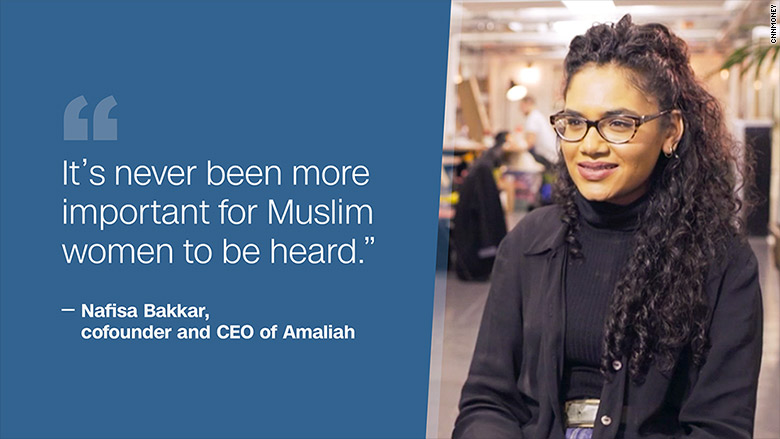
Nafisa Bakkar and her sister, Selina, launched Amaliah from their mother’s kitchen table in 2015 as an Instagram page to curate Muslim-friendly clothes from top brands.

Since then, that page has grown into an online community of more than 250,000 Muslim women.

The sisters grew up in the U.K., born to Indian immigrants from the eastern city of Kolkata.

Nafisa Bakkar told CNNMoney they grappled with multiple identities throughout their upbringing, but soon realized how big a role Islam played — and the challenges they faced as a result.

One of those was how to find clothes that were stylish but allowed them to adhere to their religion.

“Amaliah started as a personal frustration,” the 24-year-old said. “We realized that it was a big pain point for Muslim women to find clothes that were modest but also fashionable.”

That Instagram page has grown into a platform that allows Muslim women to share their perspectives, experiences and, of course, find the right clothes. The company’s website  features a curated collection from leading stores such as H&M, ASOS and Zara, which customers can order directly online.

It also features blogs and articles with titles such as “My journey to being a part-time hijabi” and “Empowerment looks different to everyone.”

“I see Amaliah as a … tool for cultural change,” Nafisa Bakkar said. “I don’t really see us as just a clothing brand.”

NafisaMPOs22mar2017

The ultimate objective is gradually to change the perception of Islam in an increasingly polarized world.

“In today’s political turmoil… it’s never been more important for Muslim women to be heard,” the young CEO told CNNMoney. “What we’re seeing in the Islamic economy [is] a lot of start-ups rising out of frustrations, out of feeling that we’re not catered for.”

That market is growing, and big global brands are beginning to notice. Bakkar says fashion powerhouses such as Dolce & Gabbana and DKNY have started catering more to Muslim women over the past couple of years.

But there’s still a long way to go.

“In an ideal world, Amaliah wouldn’t exist,” Bakkar said. “It wouldn’t be difficult for a Muslim woman to find the right clothes that she doesn’t feel compromises her culture and values, it wouldn’t be difficult to hear the opinion of a Muslim woman in the mainstream news.”

Abad group chairman Sait is dead

Kochi, KERALA :

Kochi:

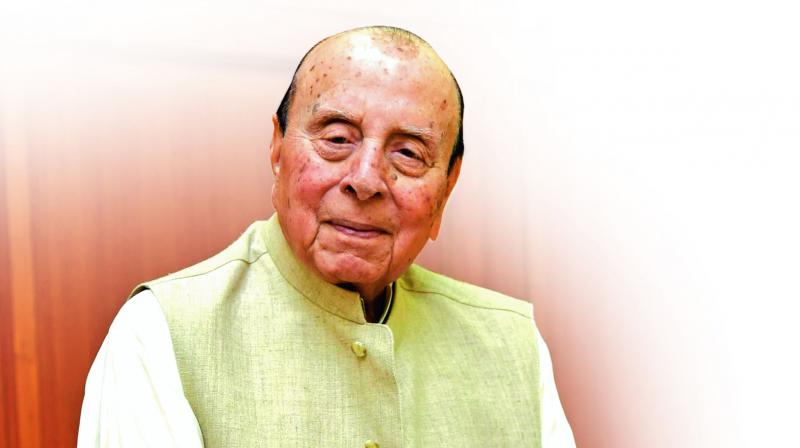
Abad group chairman Hashim Usman Sait (85) passed away at his residence here on Saturday. He is survived by his children Anvar, Arif, Javeed, Yasmin, Nelupher, Jabeen, Suman and Kiran.

The funeral will be held on Sunday at Central Juma Masjid at noon.

The Kochi-headquartered Abad group was started by Mohammed Kasim Allana in 1894 and has branches across Kerala.

Hashim Usman Sait played a major role in expanding the business interests of the group, which is one of the leading players in hospitality field of Kerala.

source: http://www.timesofindia.indiatimes.com / The Times of India/ News Home> City> Kochi / TNN / February 26th, 2012

They have played their cards right

Chennai, TAMIL NADU :

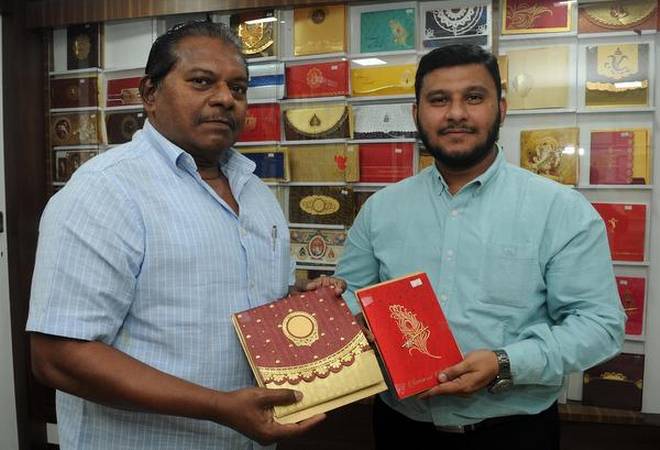
H. Noor Mohamed (left) and his son Mohamed Faizal. Photo: K. Pichumani | Photo Credit: K_Pichumani

When the wedding cards business was at a nascent stage, N.M. Habibullah sensed an opportunity and started Olympic Cards Ltd. Later, his son H. Noor Mohamed went on an ambitious expansion spree, making it a pan-Chennai enterprise

In 1962, N.M. Habibullah, a resident of Parrys, started a stationery store on Anderson Road under the name Olympic Papers and Stationery. With Habibullah’s work, the business flourished. Five years later, during a pensive moment at the store, when he was turning over in his mind various strategies to expand his business, two stores for wedding cards caught his attention.

In 1967, Habibullah switched to selling wedding cards. It turned out to be the right move. In 1974, his son, H. Noor Mohamed joined him and took the company to the next level.

“Until the mid-1960s, there were only two shops in Madras for wedding cards, Ramakrishna and MN Swami; and both wound up their businesses in a few years. Even in the 1970s, there weren’t too many stores for wedding cards. Sensing an opportunity, my father started this new business. As the basic raw material was paper, which is what he was selling in the stationery business, it took him only 15 to 20 days to set up a wedding card store,” says Noor, the current managing director of Olympic Cards Ltd.

Olympic Cards Limited was first set up on Anderson Road. In 1982, Noor and his brother Saladin Babu established a second store at No. 194 (now 195), N.S.C. Bose Road, and this went on to become the main office.

“The five-storey building, which originally belonged to the East Indian Company, was demolished and reconstructed to accommodate the showroom and the office,” says Noor.

Soon, Noor’s sons N. Mohamed Faizal and N. Mohamed Iqbal joined the business as the executive director and production head of the factory respectively.

Quickly, Olympic Cards Ltd. spread to other parts of the city: Kodambakkam, T. Nagar, Anna Nagar, Peravallur in Agaram, Velachery and Thiruvanmayur.

“Wedding preparations involve considerable stress for families. So, they would gravitate towards a wedding card store that is located in or close to their neighbourhood, sparing them a long trip. With this thinking, we began to take our collection to different localities,” explains Noor.

Besides wedding cards, they sell office envelopes, calendars, diaries, notebooks, account books, business cards, letterheads, files and folders, scribbling pads and greeting cards. They also have provisions for instant digital printing, design creation and proofreading at the outlets.

In addition to an outlet in Coimbatore, they have 25 franchise stores in Chennai, Puducherry and Kerala. There are plans to expand their franchising operation across Tamil Nadu, Andhra Pradesh, Kerala and Karnataka in the near future.

On how difficult it is to manage several branches, Mohamed Faizal says that besides training the staff, the heavy stock has to be managed and their timely delivery ensured every day.

“We cannot maintain all stock at all the outlets. Therefore, we keep all our stocks in Parrys. Whenever there is a requirement, we send it to the respective outlets,” he explains.

The waning demand for greeting cards too keeps the team on their toes. “We not only cater to direct customers but retailers as well; the latter look for variety. Creating designs that are different from previous year’s can be challenging. We create 20 to 30 designs once in three months. If these don’t sell out in three months, we incur a huge manufacturing loss,” says Mohamed.

Despite all these challenges, the business is growing, as is evident from the size of its manufacturing unit.

From a 13,000 sq.ft factory at the Vyasarpadi Cooperative Industrial Estate, the company now handles the production from a two lakh sq.ft factory near Periyapalayam. The factory is well-equipped with advanced machinery.

“Contributing to the creation of a healthy environment, we have installed 0.5MW solar power production facility at the unit. This way, we ensure all our products are manufactured in an eco-friendly manner,” says Noor.

Olympic Cards Ltd. will soon test the waters in the others areas of the print industry such as packaging and pharma-printing and luxury packaging.

“We have taken baby steps by way of outsourcing packaging jobs and associating with their print partners. We hope to get into mainstream packaging shortly,” adds Noor.

Name and fame

Olympic Cards Ltd was first incorporated as Olympic Business Credits (Madras) Private Limited, in April 1992 under the Companies Act, 1956. Subsequently, in October 1996, it became a public limited company and the name was changed to ‘Olympic Business Credits (Madras) Limited’. In 1998, it was renamed Olympic Cards Limited, in 1998. In 2013, the company offered IPO and successfully subscribed and listed in BSE.

A ringside view

*H. Noor Mohamed: “In India, the wedding card market is booming, despite the advent of e-cards and Whatsapp. So, any aspiring entrepreneur can enter this industry confidently.”

*Mohamed Faizal: “My father has cultivated a habit that has contributed immensely to his success. Every morning, he jots down the details of his tasks for the day, this is a habit he picked up from his father. This practice has made him so self-disciplined that he never forgets to take his pen, cellphone or wallet with him. It has helped him considerably in his business.”

source: http://www.thehindu.com / The Hindu / Home> News> Cities> Chennai / by Shiba Kurian / February 24th, 2017
Mobile museum of rocks, minerals

Pune, MAHARASHTRA :

RockMPOs30jan2017

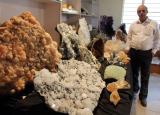
 Makki has rare collection of stones: Makki owns over 1,000 exhibits worth several crores

Huge claws of a T-Rex dinosaur that would take you to the world of Steven Spielberg’s Jurassic Park, massive amethyst crystals and a meteorite that fell in Siberia in Russia that remind of Carl Sagan’s Cosmos are part of his collection. Besides them, he owns hundreds of small precious stones, which would hold visitors in awe and expose them to a new world of stones.

Interestingly, all these are held by one man and he answers to the name of Makki. He is virtually a mobile museum. Whether it is something extra-terrestrial or buried in mounds or deep inside the earth, he has almost everything. He has ruby, agate, amethyst and many more.

“You need to touch them, feel them and experience them,” says 68-year-old Muhammad Fasihuddin Makki about his exhibits. He is not touchy about anyone touching specimens and insists that students need to be brought closer to them to change their perspective about stones.

Collecting and selling stones are his hobby as well as profession. “It’s my passion and I love it… my bread and butter are minerals,” he said. “I am taking stones to the doorstep of people for them to develop love for them,” said Makki, who has no formal training in geology. In fact, Makki is a Master’s in English and calls himself a “pujari of Laxmi and Saraswati”.

The Pune-based Makki is the founder of Matrix India and also runs a touring museum. His personal collection is displayed in exhibitions across India. He has participated in several exhibitions, conferences and auctions abroad. He has been supplying rocks and minerals to schools and colleges. He also runs one of the biggest agencies in the world involved in exporting and importing rocks and minerals.

“We offer a variety of minerals from spectacular specimens for collectors to large stock of supplies to wholesale buyers. We have a ready stock of different rough materials from India and we regularly add to our inventory freshly mined new specimens from the Deccan Traps,” said Makki. They also supply boulders and large colourful rocks for landscaping and interior decoration.

Makki is a member of various associations, including Minerological Society of India, Minerological Society of America, Collectors Society of India, Volcanological Society of India, Euromineral France and Mineralientage Germany.

The family of Makki hails from Karnataka and his father was into collecting minerals. “I picked it up from him,” he said. It has been close to five decades into this profession and hobby. “I love this and it keeps me going,” he said. He takes over 1,000 specimens for exhibitions and their value will be several crores.

“I do not charge any money or take remuneration.The institutions where I arrange these mineral and fossil exhibitions arrange for my accommodation and for my two or three assistants. The organisers bear the cost of transporting exhibits like stones from Pune. Some of the exhibits are quite heavy and many of them weigh more than 100 kg,” he said.

His son Sami has started helping him in the business and in arranging these educational earth science exhibitions.

The most precious among the specimens in his collection is a meteorite. It looks small but it is over 8 kg, he smiles. “It fell in 1947 in Sikhote-Alin in Siberia. In 1994, I visited an exhibition in the United States, where this was auctioned…. I did not hesitate, bid for it and bought it… it was quite a sum, but it is a rare collection,” he says.

He recently held “Exhibition of Rocks, Minerals & Archaeological Antiques” and it was hosted by the Centre for Extra-Mural Studies (CEMS) of the University of Mumbai in collaboration with the INSTUCEN (India Study Centre) Trust, and the Deccan College of Pune. “I want people to touch them, photograph them… it is a kind of a bond…it is a rock. Minerals do not have life, but once you touch and feel it, you are in a totally different world,” he says passionately.

He said, “The trilobites are over 400 million years old. These are the oldest fossils with me. Dinosaurs became extinct 60 million years ago. I have dinosaur fossils with me and in fact children love to see them. They often want to touch and see and I do not object. Today one can see dinosaurs in films or on television. When children see a live claw or egg or remains they get excited,” points out Makki.

Explaining how he goes about his collection, he said: “I do mining and collection from all parts of India. I have set aside a lot of large exotic colourful mineral specimens as my personal collection and in addition to that I also acquire many different kinds of colourful and interesting mineral specimens found in other countries. I buy from other dealers or exchange with my specimens and in this way over the years I have accumulated a huge collection of colourful crystalline mineral specimens from all over the world.”

India, he says, is a treasure house of minerals and the Geological Society of India and Geological Survey of India have been doing a great job. “Collection and exhibition of rocks and minerals offer good careers,” he claims.

source: http://www.deccanherald.com / Deccan Herald / Home> Special Features / by Mrityunjay Bose  in Mumbai / DHNS – January 29th, 2017

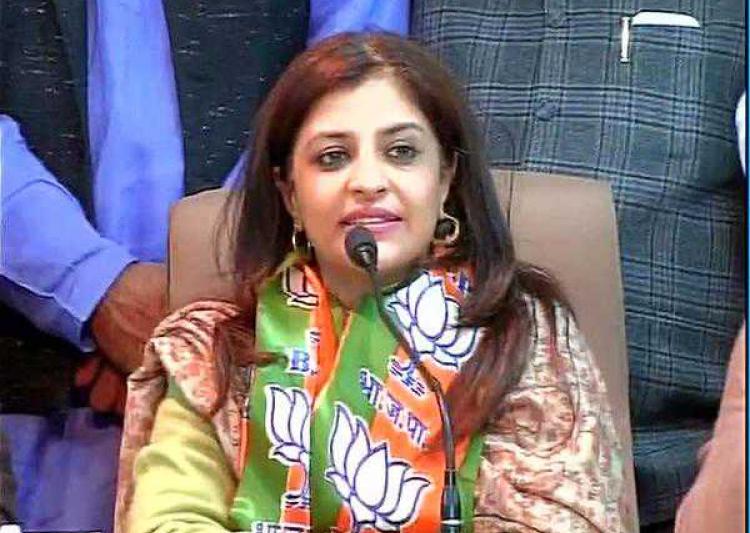
Shazia Ilmi among 10 BJP leaders appointed by Centre as independent directors in top PSUs

Kanpur, UTTAR PRADESH / NEW DELHI :

At least 10 politicians affiliated with the ruling Bharatiya Janata Party have been appointed as independent directors on the board of top public sector firms.

Shazia Ilmi
Shazia Ilmi

Among those who feature in the list of directors appointed by NDA last week, are BJP’s Delhi unit Vice President Shazia Ilmi, Gujarat IT cell convenor Rajika Kacheria; minority face of the BJP in Gujarat Asifa Khan; former BJP MLA candidate from Odisha Surama Padhy and former Bihar MLC Kiran Ghai Sinha, reports Indian Express.

These politicians have found themselves on the boards of Navaratna PSUs that include Engineers India Ltd (EIL), Hindustan Petroleum Corporation Ltd (HPCL), Bharat Heavy Electricals Ltd (BHEL) and the National Aluminium Company Ltd (NALCO).

While Ilmi, a former journalist has been appointed an independent director at Engineers India Ltd, Kacheria, a cosmetologist by profession, has been named the head of Cotton Corporation of India Ltd.

Also, while Kiran Ghai Sinha has been listed as an independent director of the National Aluminium Company, Asifa Khan will be on the board of Hindustan Petroleum Corporation Ltd.

Former BJP MLA candidate from Odisha Surama Padhy has been given a position on the board of Bharat Heavy Electricals; and BJP’s Karnataka unit secretary Bharathi Magdum will serve on the state trading board.

source: http://www.indiatvnews.com / India TV / Home> Politics> National / by India TV Politics Desk, New Delhi / January 27th, 2017

On the Kutch food trail

London / Kochi, KERALA :

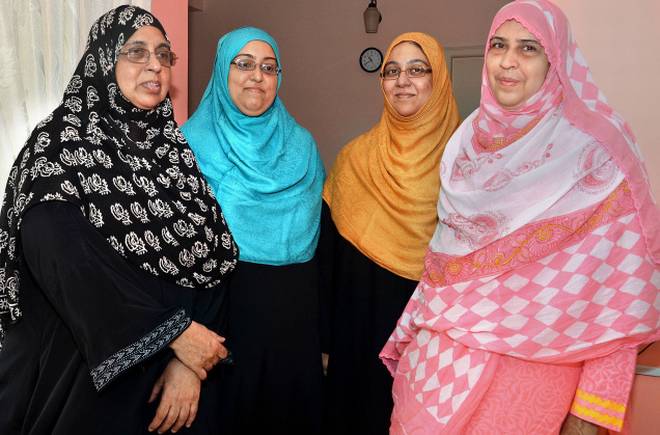
Together for food : From left, Sajida Aslam, Ruqia Suhaib, Nazia Tamir and Munira Munir from ‘Cutchi Kitchen’. Photo :Thulasi Kakkat

‘Cutchi Kitchen’ documents Kutchi cuisine through memories and recipes.

Almost 200 years ago, Sajida Aslam’s grandfather moved to Alappuzha from the Kutch region of Gujarat. Seventy-five years ago, her father moved to Kochi, where she was born among the growing community of Kutchi Memons in the city. Today, Sajida’s daughter, Shazia Wahid, is the founder of ‘Cutchi Kitchen’ — an initiative that documents through history and memories, the rich cuisine of the migrant community.

‘Cutchi Kitchen’ runs a website and a catering service primarily of Kutchi delicacies, with world cuisine as well. While Shazia runs the website from her present home in London, her mother Sajida, aunt Munira Munir Sait, sister Nazia Tamir and cousins Ruqia Suhaib and Sabiha Munir man the local orders from their homes in Ravipuram and Kaloor. “Shazia was inspired to begin ‘Cutchi Kitchen’ after she left the country,” says Ruqia, “She gave us all the first big push and we’ve completed almost a year now.”

‘Cutchi Kitchen’ opens with Shazia’s tribute to her ummima’s (maternal grandmother) special Kutchi chicken biryani. It is a detailed affair with three layers of rice sandwiching chicken in between, and served with raita. This recipe has been a favourite in our family for three generations for its minimal standing-by-the-stove time, writes Shazia. While two generations of Sajida’s family are involved in the daily workings of ‘Cutchi Kitchen’, Ruqia and Nazia say their children have taken a keen interest too, often chipping in with the preparations and tasting.

‘Cutchi Kitchen’ now has an active Facebook presence with over 3,000 fans and several followers on Twitter too. “We try and post at least once a day — either tips, or full recipes,” says Nazia. Thus far, they’ve had two online competitions too — the more elaborate one after they completed 100 recipes.

Their popularity rose most during the Ramzan fast, when they put together nine special Iftar menus, each with six dishes from starter, drink and main course to dessert. One of the highlights of these menus was their falooda recipes. While Sajida created an unusual falooda pudding made from China grass and cut into diamonds once set, Munira prepared the falooda drink, served cold and with jelly or ice cream. The menus were then released as an e-book.

The fasting season also brought with it almost daily orders for homemade frozen chicken fillets, samosas and rolls that only have to be fried before consumption. Their most ordered dish was also ‘Cutchi Kitchen’s’ most prized recipe — the goond jo laddoo, a powdery, sugary dessert served for auspicious occasions, given to brides before weddings and to mothers after deliveries. Explains Sajida, “The goond (acacia gum) has medicinal properties, and though the recipe for the laddoo is simple, it takes years of practice to get the mixture to hold right without giving way or being too sticky.” Sajida and Munira are the only ones in the family who prepare the laddoo, even today, as the next generations are still grasping the knack.

Changing rituals

Time has changed much among the Kutchi Memons, says Sajida. Old, prolonged rituals have turned brief, and with it, the associated foods have morphed too.

For example, by tradition, the peeti (haldi) ceremony for brides lasted several days and the household favourite was muthiya, a steamed rice dumpling dish that could be served dry or with gravy. “I remember my ummima sitting and shaping the muthiyas all by herself, not trusting anyone to make them correctly with her special mix of spices and ingredients,” writes Shazia. Peeti ceremonies now are associated more with quicker dishes such as kaaja (a badusha-like savoury) and paalchaya, a condensed milk-based drink. Hot favourites are also the Kutchi koottan (a dal curry served with pathiri), beef kofta (boneless beef meatball curry), buttery, cookie-like nankhatais and mitta ghatia, a deep-fried flour-based snack.

Sajida counts among her most prized possessions, a kombi, a 100-year-old bandini shawl bordered by gold, traditionally placed over the bride’s head at weddings. What they also cherish is their Kutchi language — a conglomeration of Sindhi, Gujarati, Urdu and Hindi, reflective of the community’s wide travels.

“We still speak it at home and though it has no specific script, all our children have learnt it too alongside Malayalam, Hindi and English,” says Sajida in fluent Malayalam. Someday, they hope to bring out a book of their family’s recipes. For now, ‘Cutchi Kitchen’ conducts workshops on their food, alongside those on Arabian recipes and world cuisine. Find the ‘Cutchi Kitchen’ at www.cutchikitchen.com

source: http://www.thehindu.com / The Hindu / Home> Food / by Esther Elias / November 14th, 2013

Nawab who misses the royal culture

Hyderabad, TELANGANA :

At 92, Shah Alam Khan visits his office daily and tries his best to preserve Hyderabad’s culture.

Shah Alam Khan, one of Hyderabad’s royals who is still referred to as ‘Nawab’.

At 92, Shah Alam Khan, one of Hyderabad’s royals who is still referred to as ‘Nawab’, is gracious enough to stand up to welcome you into his study at the Hyderabad Deccan Cigarette Factory in Musheerabad. What’s more, he eloquently reminisces on the “good old days” when Hyderabad was still ruled by the Nizams.

“Life was not expensive at all. I once saw a goat being sold for four rupees… four rupees!” he says incredulously. With seven sons, Alam’s family has, over the years, expanded their businesses in various fields but one thing that they all take pride in is ensuring that the Nawabi and Hyderabadi culture isn’t forgotten.

Alam’s son Mehboob Alam Khan is a well-known food historian and connoisseur who has helped preserve the Hyderabadi Mughlai cuisine that the city is famous for. Working with various restaurants, Mehboob helps them maintain authenticity in their recipes.

“Hyderabad was known for two things — biryani and sherwani!” says Alam, and says that training today’s chefs is all that is required to bring back the lost culture. “The cooks in our city know only a little bit of this and that. But our womenfolk know a lot of recipes,” he says.

Sipping a typically Hyderabadi cup of chai, he talks about growing up in the Cantonment area in Secunderabad and moving on to study at the Jagirdar College — what’s now known as Hyderabad Public School. “We had the best of Continental as well as Mughlai food. Even the schools served amazing food, that we didn’t even get at home!” he remembers.

Alam then pursued a Bachelor’s degree in Economics and Political Science from Osmania University, where he says his professors helped mould his life: “I can’t forget the way my English teacher, Prof Doraiswamy, taught us. When the results came out and I passed, I went to his house and fell at his feet.”

The lessons came in handy when he took over the reins of a cigarette factory from his wife Begum Abida Khader’s father in 1945. “When I used to hoist the flag during ceremonies, I’d tell them that this is the place where you as well as me fill our tummy. If there’s a quarrel in the house between the husband and the wife, then your house is not good. If there’s a quarrel in the factory, it’s not good for the industry,” Alam explains.

Alam still goes to office every day but has one regret: Not doing enough to preserve Hyderabad’s culture — “I once had the opportunity to address the old boys’ association of Osmania University in Karachi. And I told them with tears rolling down my cheeks that I can’t believe that the association is here… it should have been in Hyderabad. And with it, you have also taken away our culture.”

source: http://www.deccanchronicle.com / Deccan Chronicle / Home> Lifestyle> Viral and Trending / Deccan Chronicle – by Christopher Isaac / March 18th, 2016

Istafa Husain Ansari brought handloom industry to forefront

Gorakhpur, UTTAR PRADESH :

There is no denying to the fact that 1970-1980 was the best decade for a Bunkar (weaver) of Uttar Pradesh. This period can be identified as the golden era for the handloom industry and the person responsible for this was no other than late Istafa Husain Ansari of Gorakhpur. I am fortunate to be one of his grandsons.

Istafa Husain Ansari (1914-1987) was the third child of Sheikh Murtaza Husain- a Zamindar and a successful businessman, along with a prominent political leader of Gorakhpur. From the very beginning he had nationalist leaning. His initial education was in Gorakhpur and for the higher education he attended Lucknow University, from where he completed his M.Sc. and LLB. During those days the political environment in Lucknow was stirring, and there he worked along with stalwarts Dr. Shankar Dayal Sharma and K Raghurammaiyya, who were prominent student leaders of that time. At an early age he got married to Amina Khatoon, daughter of a prominent businessman of Gorakhpur, Mian Rahmatullah. One of his brothers-in-law, Niamatullah Ansari participated in the freedom struggle, and was later elected as a MLA from Gorakhpur.

IstafaHusainMPOsJan052017

After completing his education in Lucknow, he went back to Gorakhpur to practice law in Gorakhpur Civil Court. He was interested in the issues related to small farmers, peasants and the marginalized sections of the society. His contact with Professor Shibban Lal Saxena, who was an influential Congress leader of that time, brought him closer to Maharajganj and Pharenda, from where he started his formal political career by getting elected as the Gram Pradhan of Bhelumpur, which was also known as Karmaura. In 1952, for the first assembly election after independence, he won the Gorakhpur seat on a Congress ticket. He won by a big majority and then again by a bigger majority in 1957.

He was elevated to the position of Parliamentary Secretary for Education, Home and Information, when Sampoorna Nand became the Chief Minister of Uttar Pradesh. Then in 1966 and in 1972, he was elected as a Member of the Legislative Council in Uttar Pradesh Vidhan Parishad. In November 1973, when Chief Minister Hemvati Nandan Bahuguna, formed his eleven member’s cabinet, he was assigned as a Cabinet Minister in-charge of the small scale industries. He saw the deterioration in the politics climate and declined to be a part of that. His refusal to subscribe to the kind of politics brought in by Sanjay Gandhi curtailed his political career, because he could not do the Jee-Hazoori (sycophancy) that became the norm for success those days.

The success story of his life can be gauged by his contribution to the handloom as well as other cottage industries. He battled tirelessly for uplifting the weaker sections of the society. He fought relentlessly for the cause of the weavers and led an agitation against the ruling congress party, of which he was an active member, without fearing for the consequences and his own political future. As a result of the struggle, all his demands were met, and for the first time the woes of the handloom industry caught the attention of the policy makers. As a result, in 1970s when Prime Minister Indira Gandhi formulated her twenty point development program, challenges facing the handloom industry were also included in it. Then came the golden period of the handloom industry where infra-structure was developed to provide the raw material as well as avenues were opened to find markets for the finished product.

Apart from political appointments, he was also a member of the Aligarh Muslim University and Agra University courts. Locally in Gorakhpur, he was in the Executive Committee of Gorakhpur University, and was the founder member of Madan Mohan Malviya Engineering College. For life, he was the President of the school named after his father, Sheikh Murtaza Husain Memorial Higher Secondary School. During the time of his death in 1987, he was the member of Uttar Pradesh Minorities Commission.

It is not out of place to mention that in spite of being in public life for about five decades he maintained an unblemished record. His eldest son, Ashfaq Husain ventured into politics, and was elected to the Lok Sabha from Maharajganj. It is not out of place to mention that he was a great advocate for education and encouraged his descendants for quality education. As a result, today all twenty-two of his grandchildren are either engineers or have achieved post graduate degrees.

(The author is a Nuclear Engineer and was in the United States for long, but presently is in India. Can be contacted at www.tanvirsalim.com.)

source: http://www.twocircles.net / TwoCircles.net / Home / by Tanvir Salim / October 26th, 2013

Kiosk on wheels helps persons with disabilities turn entrepreneurs

Bengaluru, KARNATAKA :

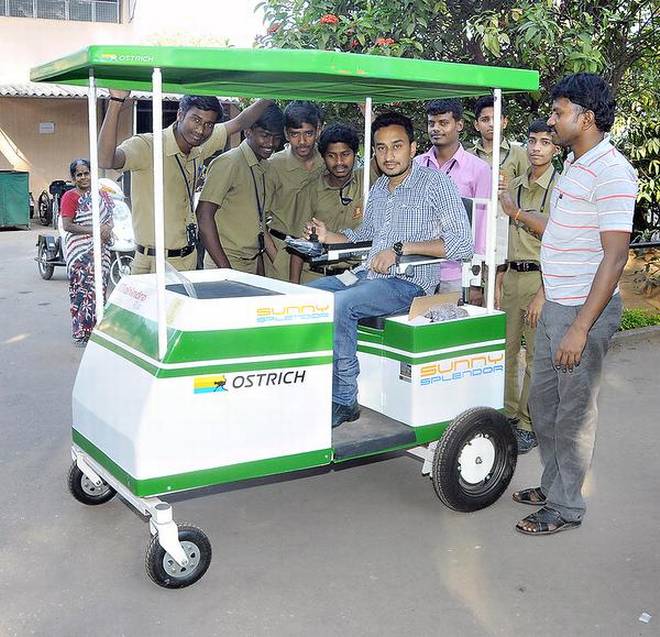
The battery-operated kiosk, Sunny Splendor, is a boon to persons with disabilities. —Photo: Sampath Kumar G.P. | Photo Credit: G_P_Sampath Kumar

Three years ago, Umesh, a lorry driver, lost his legs in a road accident. To make ends meet, he decided to sell tea on a two-wheeler, but the new venture threw up many challenges.

Dejected but not defeated, he approached an automobile firm for help. The firm, along with a wheelchair manufacturer, came up with a design for a disabled-friendly mobile kiosk to help people with disabilities earn a livelihood as part of a CSR initiative. The company approached the Association of People with Disabilities (APD), which funded the project. By 2015-end, Umesh had a prototype of the mobile kiosk.

APD rolled out three such mobile kiosks in the city in December last year to enable people with locomotive impairment and cerebral palsy start a business. The kiosk or electric vehicle named Sunny Splendor can also be charged on solar power.

Calling it ‘office on wheels’, C.N. Gopinath, executive board member of APD, said: “It plays a pivotal role in creating a perfect livelihood option for the physically challenged, who at times are constrained by financial circumstances and lack of qualification.”

Mansoor Ahmed, one of the fund raisers of the project, said the kiosk is environment and disabled-friendly. “We replaced the steering wheel with a joystick and the tires have increased brake efficiency”.

“I want to start a cosmetics and beverages business and my target audience comprises those working in tech parks. With this vehicle, I can commute to different tech parks,” said Basheer Ahmed, who is affected by polio. For Mahesh, who has been repairing mobile phones from home, the vehicle will help him broaden his customer base. “I want to run the business outside a government office. I am also planning to buy a typewriter, so I can help officials in their work”.

Four kiosks in Bengaluru

There are four such kiosks in Bengaluru. Beneficiaries can approach APD if they wish to become entrepreneurs, and have to go through a selection process before they can get their own mobile kiosk.

APD charges 10 per cent of the ₹1 lakh that costs to make a unit. “We believe they have the right to stake a claim in our ventures. This would not be possible if we operated on a charity model, which is is why we accept 10 per cent monetary contribution from them, though we do not insist this from those who cannot afford,” Mr. Mansoor Ahmed added.

source: http://www.thehindu.com / The Hindu / Home> News> States> Karnataka / by Shilpa Ramaswamy / Bengaluru – January 03rd, 2016

An intrinsic crafter of bidriware

Bidar, KARNATAKA :

bidriwarempos03jan2016

From a one-room house in Bidar old city to the Republic Day parade on Rajpath in New Delhi, it has been a long journey for bidri artisan Shah Rashid Ahmed Quadri.

The artisan, who was part of the bidriware tableau at the parade, was once advised by his father to quit the profession as there was no money in it. However, he did not quit because he liked hitting metals with chisels and a hammer.

Born on June 5, 1955, Shah Rashid Ahmed Quadri hails from a family of bidri artisans. As a result, Quadri got exposed to this craft from a young age and was trained under his father, Shah Mustafa Quadri. “I was forced to get involved in this craft to support my father, who was the only earning member in our family,” says Quadri. Initially, his father was not keen on him joining the shop as he felt the profession was not remunerative. He received a lot of encouragement when he began doing the craft and improved upon his father’s traditional designs. After a long period of training, he started working independently in 1970 and introduced various unique patterns.

Quadri has experimented with various bidriware techniques and patterns in his work. He introduced phooljhadi design and reintroduced sheet-work, an old technique that was used by court artists in the Bahmani Empire. Additionally, he is also an expert in wire and sheet-work inlaying.

Quadri has also trained several people in bidriware. Around 80 youngsters and many women have benefited by the training. Shaheda Begum, who has been working under him for the past two decades, is one such woman and has become an expert in sheet technique. He has also hosted various training programmes, where he taught bidri art. Some of the programmes he taught are organised as an apprenticeship training scheme.

Ample recognition
Quadri received several awards for his work including the Karnataka State award in 1984, a national award in 1988, district Rajyotsava award in 1996, Great Indian Achievers Award in 2004, and the Swarna Karnataka Rajyaotsava Award in 2006. Recently, he was honoured with Shilpa Guru award. The award is given in recognition of excellent craftsmanship, product excellence and for being instrumental in the continuance of crafts as a vital part of traditional heritage.

He exhibited his works in several countries and gave live demonstrations as well. These included the Science Festival of India that was held at The Museum of Science in Boston, USA in 1987 and a live demonstration in Holland in 1992. Bidri Art was selected to represent Karnataka at the Rajpath in New Delhi on Republic Day in 2011. Quadri, along with his team, took seat on the tableau with his work and gave a live demonstration. The Karnataka tableau was awarded second prize that year.

Apart from being a professional artisan and inspiring many others to continue the legacy, Quadri has also served as a member of Karnataka State Award selection committee in 1998.

He can be contacted on 9880690669 or at craft@gmail.com

source: http://www.deccanherald.com / Deccan Herald / Home> Supplements> Spectrum / by Rehaman Patel / January 03rd, 2017