Category Archives: Business & Economy

Sheikh Ashiq bags award

Srinagar, JAMMU & KASHMIR :

Srinagar  :

Sheikh Ashiq, Director M/s Ferozson Exports Pvt Ltd, (a unit of Alkhuddam Group) Srinagar has bagged award for “meritorious performance in the export of Natural Silk Carpets.” It is the prestigious award in the silk industry.

 
Ashiq received the award on Monday at a function at Vigyan Bhawan, New Delhi. The function was organized by Indian Silk Export Promotion Council set up by Ministry of Textiles, government of India.

 
Acknowledging the award, Ashiq said the credit goes to the founder and chairman of the Alkhuddam Group Sheikh Feroz “who made the foundation of the company very strong.”

 
“Credit also goes to the suppliers of the company who have always shown trust in it,” he said.

 
Ashiq also thanked the organizers of the event.

source: http://www.greaterkashmir.com / Greater Kashmir / Home> Business / GK News Network / December 10th, 2014

Woman on top

Srinagar, JAMMU & KASHMIR :

Dr Gazalla Amin’s is an incredible story that holds the promise of inspiring many women writes Sana Altaf.

In December 2013 when Dr Gazalla Amin became the first woman member of the Jammu and Kashmir Chamber of Commerce and Industry, the first thing she did was to put up a ‘no smoking’ signboard outside the office premises in Srinagar. Recently when the city received its heaviest snowfall of the season, bringing normal life to a standstill, she decided to take matters into her own hands. With the snow cutters she had purchased before the winter set in, Amin and some of her employees cleared roads and by-lanes across the city, something that had been neglected by the local civic agency.

“The city was under a pristine carpet of white. No one had made it to work that day and I wondered why they were holed up inside their homes when it was so lovely. When I called up some of my staff, I realised that many would be stuck as only a few streets had been swept. So I simply gathered a few people together and we did the job ourselves. All of us have to get involved in the community, we cannot always rely on the government,” asserts Amin, who is in her late-forties.

For years now, Amin has been trying to work at bringing about positive change in the lives of ordinary Kashmiris. She was not, however, groomed to be the change-maker she became. Like most middle-class girls in the Valley, she went to the all-girls Presentation Convent in Srinagar and, later, enrolled in the medical college at Srinagar. “I never wanted to be a doctor. But since my parents wanted me to be one, I had no choice. In those days, children hardly had a say in such matters,” remarks Amin.

During the fourth year of her MBBS degree, however, the family started looking for a suitable match for her and soon she was married to a young businessman. Though she completed her studies after marriage, Amin never got down to practicing medicine as she became a mother soon after. As she dutifully ran her home and took care of her three sons, she decided to put her education to good use by teaching at the newly-instituted Jhelum Medical College in the early 1990s. She continued there for three years, but gave it up as her sons grew older and needed more attention. All this time, however, Amin never once abandoned her secret desire to do something that “lay outside the confines of what I had been told was ‘good’ for me”.

That opportunity came to her when she visited her native Sonawari village in Bandipora district of south Kashmir. Amin recalls, “The land there was lying neglected and barren. I realised that I could make a difference in the local community by involving them in cultivating crops that would be commercially viable.”

In 2004, when Amin decided to grow lavender and rose in order to extract and sell their oils, her family and friends were not in favour of her making the switch from medicine to business. After all, women were never associated with entrepreneurship in Kashmir. But Amin was determined to fight such feudal attitude and invested her savings of about Rs 8 lakh in the farm to grow and process aromatic plants.

“As I was from a professional family, my exposure to running a business was minimal. But I decided to hang in there anyway. I didn’t earn anything out of it for three years, but I knew I would learn the ropes on the job,” she adds. Another driving factor for her was that she was keen to see local farmers increase their earning potential – a lavender crop brought in about 20 times as much as, say, maize – to better support their families.

Today, Amin’s Fasiam Agro Farms, besides dealing in essential oils, includes dry fruits and honey under its umbrella. Apart from her business venture, she founded Women’s Association for Kashmir Entrepreneurs (WAKE) in an effort to provide direction to women’s entrepreneurship in the state.

Last year, she also contested the elections of the Jammu and Kashmir Chamber of Commerce and Industry, which had no female representation since its inception in 1934. Amin broke into this privileged circle by becoming the first woman member of its executive council.

source: http://www.deccanherald.com / Deccan Herald / Home> Supplements> She / WFS / February 15th, 2014

Sikri’s startup story: Muslim, Dalit weavers float firm to reach customers

Agra, UTTAR PRADESH :
Agra:

About 374 weavers, mainly Muslims and Dalits, engaged in manufacturing rugs in five villages of Fatehpur Sikri, have decided to float a company so that they can get rid of middlemen, who take away a lion’s share of their profits, and sell their products to the customers directly.

On an average, these weavers are paid a meagre wage of Rs 50 for a rug, which is sold for anything from Rs 500 to Rs 1,000 in the local market. The rug’s price, however, goes up substantially when it is shipped to other cities or foreign countries.

To start with, these weavers have pooled in Rs 50, 000 to get their company (Nayi Roshni Dari Utpadan Producer Company Ltd) registered, apart from collecting an additional amount of Rs 5 lakh as corpus fund. With 130 women members, the group, hailing from villages like May Bujurg, Nagla Jannu, Nagla Beech and Gujarpura, hopes to turn its initiative into success.

Anek Singh, one of the 15 directors of the proposed company, told TOI, “Despite all the hard work, a worker earns only Rs 2,500 per month after weaving around five meters of rug every day.” Anek, who could not complete schooling due to financial pressure, admitted that marketing and procurement of raw material would be a challenge for their company. “Till now, we had been weaving for others, but starting a company will be a different ball game,” he said.

These workers have taken up the initiative after getting assistance from NGO Nav Chetna Siksha Gram Vikas Samiti. With help from the NGO and the government, Anek and many others believe that they will be able to succeed. “Weaving is in our blood. For the better future of our children, we have decided to take the plunge. While we keep struggling, the middlemen and big businessman make huge profits,” Anek said

Another weaver, Shyam said the government officials have assured them that they will be helped in marketing. “It is a great opportunity. Apart from other avenues, we will be able showcase our talent at the annual international trade fair in Delhi,” he said.

Dr Puneet Kumar, district development manager, Nation Bank for Agriculture and Rural development (NABARD), said with the returns on rug weaving being poor, many workers have shifted to other professions. “NABARD would certainly help this group,” he said.
Sanjay Yadav, senior branch manager, National Small Industries Corporation Limited (NSICL), Agra, said these weavers would get a subsidy of 95% on their stall at the international trade fair.
As per a rough estimate, there are 20,000 weavers in Fatehpur Sikri and rugs worth over Rs 200 crore are exported from here every year.

source: http://www.timesofindia.indiatimes.com / The Times of India / News Home> City> Agra / by Anuja Jaiswal / TNN / August 09th, 2016
Kerala innovator develops ‘Prime Card’ to replace multiple ATM cards

Malappuram, KERALA :

No more the hassles of carrying multiple ATM cards, an innovator in Kerala has developed a ‘Prime Card’ that helps customers merge savings accounts of different banks in a single card. He affirms that it can replace the US-based VISA and Master card available in India and emerge an alternative to existing Indian domestic card ‘RuPay’ with high-end security features. He has applied for an Indian patent for his innovation.

The 43-year-old innovator K Ummer Thalhath, a native of Malappuram opted out of his final year graduation in science at Farook College in Kozhikode. He went on to pursue an electronics course for three years and left that on an innovation spree.

Thalhath claims that the card has high-end security features and hence none would be able to duplicate or hack it. It will help the bank account holder draw money from any ATM. If the Prime Card is lost or stolen, the one who gets hold of it may not know which bank accounts are merged in the card and it has two pin numbers which cannot be easily cracked.

He is keen to develop it further with the support of industries here, who are willing to develop a domestic high-end electronic payment facility.

VISA and Mastercard are US-based global payments technology companies, while RuPay is an Indian domestic card scheme. He believes that his idea of ‘Prime Card’ payment technology if realized in association with Indian banks or domestic card company, will help India take a lead in floating a high-end secure card. He has held initial discussion with major banks including State Bank of India (SBI), Industrial Development Bank of India (IDBI) and Federal Bank.

The account holder can merge existing accounts or new account to the Prime Card with different personal identification numbers (pin) for different bank accounts. On high-end security feature of the card, he said Prime Card has two pin numbers, the customer should provide one pin when the card is inserted in ATM machine and another when selecting the bank for transaction. Other security modes are Matching Number System and Number looping system. Hence the security is much higher than ordinary cards, he said.

Responding to that, Federal Bank – Digital Banking assistant general manager Sunny KP told TOI that “the idea is good as it is handled by a single payment application software, yet there are practical difficulties in its implementation. It requires infrastructure, intermediary standing between banks to merge accounts and permit from Reserve Bank of India (RBI).”

National Payments Corporation of India (NPCI) chief manager Dheeraj Bharadwaj said over 50 crore cards are already in the market and to replace that with one card for various bank accounts would be tedious as it requires the consent of many banks. It was NCPI that launched RuPay to fulfil RBI’s desire to have a domestic and multilateral payment system in the country.

Centre for Science and Technology Entrepreneurship Development (C-STED) director Ajith Prabhu assured all possible support to take it forward in terms of exploring the commercial possibilities.
While, the innovator swears by his innovation that it can end the headache of banks over issues involving current ATM transactions. However, an electronic payment company or a financial institution with RBI permit should come forward to take it up, he said.

source: http://www.timesofindia.indiatimes.com / The Times of  India / News Home> City> Thirvananthapuram / by Laxmi Ajai Prasanna / TNN / August 08th, 2016

Passion, the driving force of entrepreneurs

Madurai, TAMIL NADU :

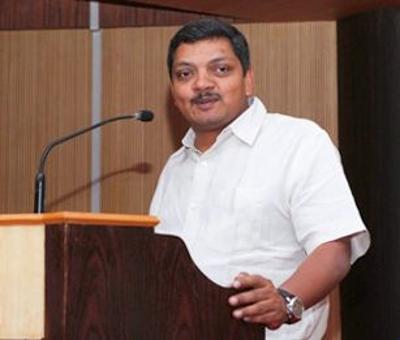
Navas Meeran. (TOI file photo)

Madurai:

Passion for innovative ideas is one the prerequisites to become a successful entrepreneur, students from engineering colleges were told at a startup event organized in the city on Thursday.

Former chairman of Confederation of Indian Industry (CII), southern region, Navas Meeran, inaugurated the session titled, The Next Wave of Indian Economy, organized by CII.

He told the students that the Startupreneurs Forum had been formed to facilitate favourable eco system and engagement with start-ups across the region.

This is an initiative to encourage southern states to engage with the start-up community and provide newcomers the much- needed hand-holding support and guidance of established entrepreneurs.The main objective of the forum is to identify and nurture innovative ideas into start-up businesses, to create a network for start-ups with potential investors and senior professionals through monthly meets and also to hold an Annual Regional Startupreneurs Awards to recognize the best start-ups of the year, participants were told.

Two social entrepreneurs Happy Hens, which is into rearing of free range chicken to produce quality eggs and Rainstock, which deals in rainwater harvesting spoke about their ventures and answered questions raised by students.

Young entrepreneur K Sakthivel said passion for an idea will help an entrepreneur realize his goals. To get investment for that idea should be secondary, he said.

Chairman of CII, Madurai Zone, M Anbukani, welcomed the move to form the forum.

source: http://www.timesofindia.indiatimes.com / The Times of India / News Home> City> Madurai / July 22nd, 2016

Starting with caution, they emerge victorious

Peroorkada (Thiruvananthapuram) ,  KERALA :

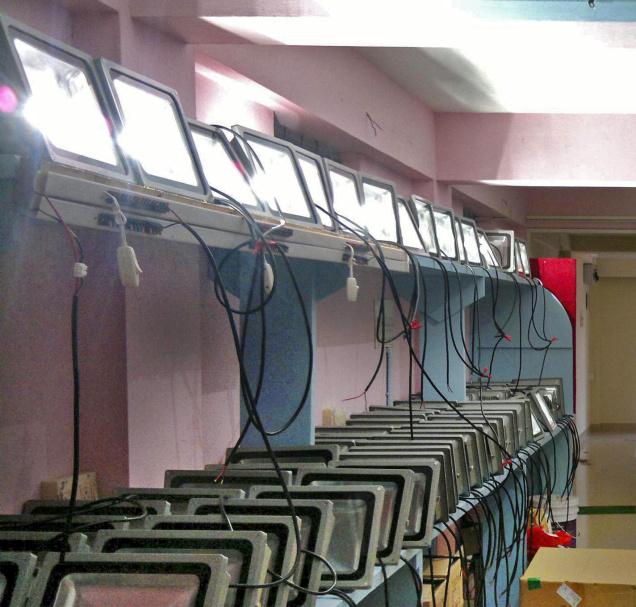
Success story:The LED manufacturing unit of the start-up Semilon Technologies Pvt. Ltd. at Peroorkada.

Start-up by five youths makes turnover of Rs.1 crore in 2014-15

While several start-ups have been launched in the State in the past few years, not many have been able to break even and go on to register profits.

The feeling of uncertainty could easily have dissuaded a group of five youths from floating their start-up company soon after graduating from a self-financing college at Karakulam in 2010. But, pooling in the caution deposits they received from the college, they launched their endeavour, which primarily focused on supplying LED lights.

“Despite many odds, we were confident of tapping the potential of such a venture though LED lights were not in vogue then as they are now,” says Jino V. Manohar, one of the founders of the company. Amal Raj, Arul Raj, Shahab Ellias Iqbal and A.K. Surjith are the other members of the group.

Their decision turned out to be a masterstroke with their company, Semilon Technologies Pvt. Ltd. at Peroorkada, witnessing a turnover of Rs.1 crore during the 2014-15 fiscal. The company has a workforce of 12 people at present.

Their journey has been far from smooth. However, the company has gone on to bag the commendation award from the Kerala State Energy Management Centre in 2012 for manufacturing energy-efficient equipment.

Diversification

After establishing themselves in the market, they ventured into lighting design services in 2014. “Lighting design is an important component in architecture and has become increasingly popular over the years. There are several takers for planning the specifics of lighting equipment while designing the interiors and exteriors of a building right from its planning stage,” Mr. Manohar says.

Besides having commenced a solar power plant division, the group also diversified to create a R&D consulting division. They were recently empanelled as one of the few channel partners by the Union Ministry of New and Renewable Energy to implement solar power plants.

e-crop

The R&D division had recently developed ‘e-crop’ for the Central Tuber Crops Research Institute (CTCRI) at Sreekaryam.

The device is equipped with multiple sensors for various purposes, including assessing soil parameters, solar radiation and predicting crop yield.

source: http://www.thehindu.com / The Hindu / Home> News> Cities> Thiruvananthapuram / by Staff Reporter / Thiruvananthapuram – July 06th, 2016

The game is on

Mumbai, MAHARASHTRA / Bengaluru, KARNATAKA :

In a league of his own: Mustafa Ghouse (right)

Former Indian tennis player Mustafa Ghouse talks about how private leagues are benefitting our sports

Mustafa Ghouse was born into a family of tennis player and took to the sport as a child. He participated in the ATP Tours and picked up a clutch of medals, including a bronze at the Asian games in Doha in 2006. Post retirement in 2008, he is currently the CEO of JSW Sport, and the chief operating officer of Bengaluru FC, two time winners of the I-League. He also manages the Sports Excellence programme that mentors 40 athletes across Olympic sporting events.

In the city for the recently concluded TedX Bangalore event, Mustafa says, “My background in sports helps me manage the team better. I am happy to have been part of a team that was built from scratch and has gone on to win two titles in three years. We want to keep up our performance. The one factor, that has helped this team, has been the passion for the sport and winning that our players have. Every player is very hardworking and willing to go the extra mile to achieve more success.”

Mustafa feels that the mushrooming of private leagues in sports such as kabaddi, tennis, badminton and football has the potential to become a game changer for Indian sport. “These leagues ensure that players become very popular, get sponsors and are able to compete at higher levels. Audiences are flocking to see sports other than cricket and it is very heart-warming. The BCCI must be given credit for showing us the way ahead.”

Is tennis still his favourite sport? “Yes, I have played all sports, from football to cricket, badminton, tennis and squash. I have enjoyed playing all sports, though tennis holds a special place in my heart.” He is circumspect about India churning out an individual grand slam winner soon. “It will require a lot of systemic changes and will require a lot more effort and support. We do have talented youngsters, but it is important to get a working system in place for achieving success in the long term.”

source: http://www.thehindu.com / The Hindi / Home> Features> Metroplus / Nikhil Varma / Bengaluru – June 06th, 2016

IT employees to have a body to press for their demands

Bengaluru, KARNATAKA :

ITemployeesMPOs27jun2016

The AIITEA will hold its first meeting on June 30 on the ITC Infotech campus

Amid the opportunities and growth prospects, the problems faced by employees of the information technology sector are among the least addressed. The struggles within these workplaces often get sidelined or swept under the carpet by the ‘terms and conditions’ of the company. Consequently, employees often have little say in such matters.

Now these unhealthy workplace practices have forced IT employees to join hands to make a forum where they can address their issues.

The All India Information Technology Employee Association (AIITEA), a registered body meant to take up and resolve problems faced by people in the IT sector, is going to have its first meeting on June 30, on the ITC Infotech campus to announce in the open its arrival in the IT city.

Syed Muqeem, head of AIITEA and one of the founder members of the association, said: “There is a general perception that unions and associations are for blue-collar people, but there are many instances where the IT employees, the so-called white-collar staff, face workplace-related problems, but there is no group to support them.”

“Most associations that have been formed earlier either play in the hands of the big multinational companies or have failed to take up the issues faced by the employees in the sector, and take it to a logical conclusion. This void that the industry has created over a period is what we are trying to fill up. Our main aim is to ensure equal employee representation in resolving employee grievances,” said Muqeem.

Bengaluru, deemed India’s IT capital, is home to 35 per cent of the 8 million IT employees and in the last financial year, it clocked around 1 lakh crore in software exports. But beneath this glitter is a dark cloud looming and that is the ever-deteriorating state of the IT employees.

A global study done by the National Institute of Mental Health and Neurosciences (NIMHANS) says 50 per cent of employees in India Inc are under stress and around 30 per cent software engineers in the city show signs of psychiatric disorder. One in every 20 employees has contemplated suicide.

The fast pace at which the IT industry is progressing has its own side-effects and employees are at the receiving end. Muqeem said that till date “we have helped resolve around 15 cases where the employee was being harassed by the employer, but on an average we receive 15-20 complaints per week, but the fear of losing one’s job, coupled with the feeling that engaging with an association might hamper future growth prospects is what is keeping many from coming out in the open”.

source: http://www.bangaloremirror.com / Bangalore Mirror / Home> Bangalore> Others / Bangalore Mirror Bureau / June 27th, 2016

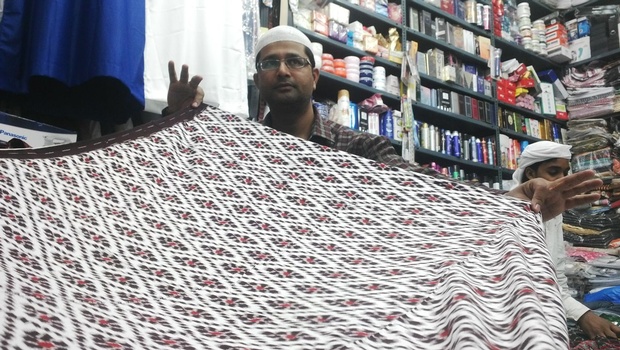
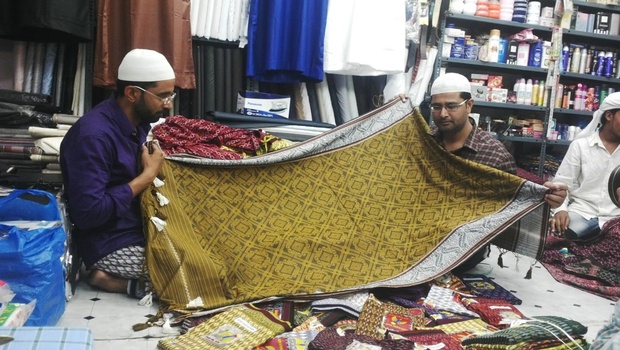
Yemeni Lungis fly off the shelves in Pearl City

Hyderabad, TELANGANA :

A shopkeeper displaying a Yemeni lungi | (Vinay Madapu/EPS)

Hyderabad :

While the colourful lungi is fast disappearing giving way to the trendy Bermudas, the casual wear is making a comeback among certain communities in the Pearl City.

Sale of imported Yemeni lungis or Futah (also called Izaar in Saudi Arabia) has more than doubled during the holy month of Ramzan in Barkas, the area where Arab-origin Hy derabadis reside in Old City.

While big shops in the area have recorded a whopping 60-70 per cent rise in the sale of lungis, small-scale textile dealers say that there is a 50 per cent rise in demand for lungis.


A shopkeeper displaying a Yemeni lungi | (Vinay Madapu/EPS)

“The lungis form part of our identity,” said 23-year-old Khaled Umar, who doesn’t mind shelling out some extra bucks for it.

Young or old, every male in Barkas prefers the Arab lungis along with full or half-sleeved shirts over any other dress. This is said to be the reason for the spurt in sale of the simple casual wear during Ramzan.

“People gift lungis to their relatives in Barkas and elsewhere during Ramzan and Eid, and a customer will order for multiple number of lungis,” said Md Sarfaraz Khan, a dealer.

Though the price range of lungis starts from Rs 350, high-quality Futahs cost up to Rs 7,000.But, one needs to be extremely careful in handling the lungis. “They are not for rough use. They should be cleaned with care and not squeezed too hard, or else small holes may appear,” said the shop-owner, whose great grandfather, like many other residents of Barkas was brought to Hyderabad as soldiers in the Nizam’s Army.

source: http://www.newindianexpress.com / The New Indian Express / Home> Cities> Hyderabad / by Aishik Chanda / June 20th, 2016

Engineers come forward to support distressed farmers

Hyderabad, TELANGANA :

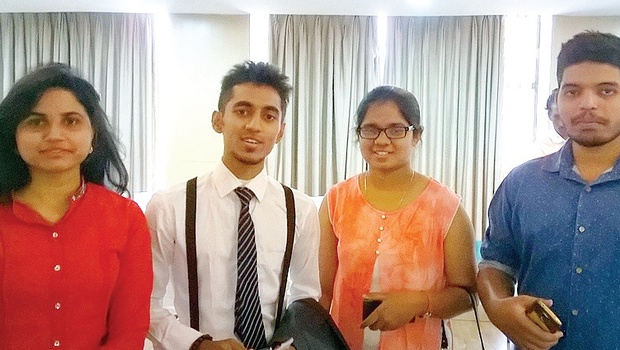
The quartet who are part of the start-up Toe-Up | Express Photo

Hyderabad :

Concerned over the plight of farmers, whose fortunes depend on the vagaries of weather, four engineers have shouldered the task of developing an app to help them out.

S Saquibuddin, Shaik Mukheet, Neha Bandari and Asma Fatima, working at the T-hub in Hyderabad are in the process of developing ‘Niyantran’, an app to provide crop related information to the farmers and help them seek help of experts for better yield.

“Initially we wanted to create an identity for ourselves and decided to take the startup route instead of a waiting for a job. As agriculture is the most neglected sector in spite of being the most important one, we decided to concentrate on this area. As we came to know about the plight of farmers, who land in debt-trap due to vagaries of weather, we decided to develop an app for the farming community,” said S Saquibuddin, CEO and co-founder of the startup christened ‘Toe-Up’.

Saquibuddin, Mukheet and Neha have graduated from Institute of Aeronautical Engineering, Dundigal and being aeronautical engineers they have experimented the use of drones to monitor crops. But as it proved unviable due to practical difficulties and cost factor, they have decided to come up with a more convenient and easy tool for farmers.

“After downloading the ‘Niyantran’ app, farmers can seek expert opinion regarding the problems they face in farming. They can click the picture of the plant or crop affected by pest or other problems and send it to the experts. He will immediately receive guidance from experts regarding pest control. They can even record their voice and send it like in WhatsApp for information and guidance,” explained Neha.

The quartet has been working on the app for the past eight months and it will be ready for launch in a month.

While these youngsters are not keen about financial returns through this app, they are ambitious about building a profile to catch the attention of venture capitalists and investors. The start up received a shot in the arm as NASA selected it to conduct its space app challenge in Hyderabad.

“Besides being selected for T-Hub we are also part of Collab House, co-working space launched by Mozilla in Hyderabad. This has given us good mentors and exposure. Our focus is on developing apps that will bring out a positive change and Niyantran is part of that effort. Once we add value and bring in a positive change, we believe that success will follow,” stated Saquibuddin.

source: http://www.newindianexpress.com / The New Indian Express / Home> Cities> Hyderabad / by J. Deepti Nandan Reddy / Express News Service / June 16th, 2016