Category Archives: Business & Economy

I Won’t Deliver a Costume Unless I Love It Myself, Says Designer Reza Shariffi

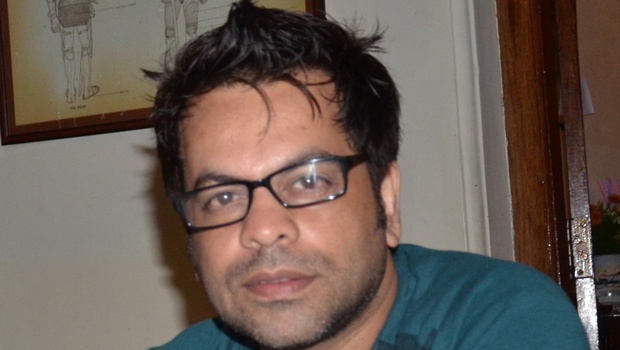
Reza Shariffi
Reza Shariffi

In an exclusive interview, costumes designer Reza Shariffi talks about how he devises a frame to design and create costume, how he tries to retain the integrity of the character and the costumes that he has designed so far. 

What inspired you to be a costume designer?

I was exposed to a wide variety of fabrics very early in life. I was the first born in my family, having six maternal aunts.  For the first five years of my life, they never made me wear a single garment repeatedly. When I grew up I naturally returned that favour and till the date I always wanted to dress them up in my creations. I think this is the source of my inspiration.

When I started working as a designer in a Boutique in Bandra, Mumbai, one of the top designers bought my outfit to style a famous Bollywood actress. It gave me immense satisfaction when I saw the outfit on the screen. That satisfaction germinated into a strong desire.

Since you have designed for almost all the well known B-Town celebrities, How do you manage to pull out the best for everyone?

As a professional costume designer, I devise a frame within which I need to design and create a costume. I keep in mind a few things before I design like the comfort zone of the star, physical attributes of the celebrity, purpose of the costume (is it for movie, live performance, appearance etc.), the time it will be worn (day, night, how much time on the body) and finally my vision of the costume. After I create the costume I evaluate it on all the five parameters very stringently. The outcome rarely falters.

What are the key points, you keep in mind while designing for actresses like Shilpa Shetty, Shraddha Kapoor and others?

As I told you earlier, my five parameters work for each and every costume I create. For movies I try to retain the integrity of the character as much as possible. Tanu Weds Manu and Tanu Weds Manu Returns are the cases in point. I believe ‘clothes maketh the character’ and my costumes are very loyal to the characters my actors play.

Sanjay Leela Bhansali is said to be the perfectionist in traditional attires, how did you manage to meet his expectations?

Yes he is a perfectionist. For a Filmfare award function he wore a black kurta designed by me that was the biggest compliment from him.  When I worked with Sanjay Leela Bhansali in Devdas, I had extensively made research on my outfits for the movie. It was during Devdas that I crystallised my principles of ‘character integrity’. That we worked again in Saawariya was a compliment in itself.

Kangana Ranaut has worked in movies like Fashion, Queen and Tanu weds Manu, What were the challenges you faced while designing for her upcoming sequel of Tanu weds Manu?

Tanu Weds Manu Returns is the fourth project I have worked for Kangna. As I have designed for both Tanu Weds Manu and soon to be released Tanu Weds Manu Returns, I had a definite line of thought to work on, right from the beginning. Tanu (Kangna as Tanuja Trivedi) is still the feisty lady who could say “Darti to Main kisi ke baap se bhi nahin” in Tanu Weds Manu and “Haalat dekhi hai? Adrak Ho gaya hai ye aadmi” in TWM Returns. Obviously the clothes need to match up!! The colours are bold (as in part one). I have given her costumes which have inherent shock value adding quirky twist using hounds tooth print in pink, Shibori fabric, tie and dye, kilim fabrics with leather and suede combination trimmings and jackets. I have designed printed draped dhotis in ethnic colours and mildly embellished kurtis

In Tanu Weds Manu Returns Kangana also plays Datto aka Kusum. Kusum has a wardrobe of printed floral Salwaar kameezes paired with sporty jackets, knits and sweaters. The colours used for her are more subtle. Datto (a ward of Delhi University from Haryana) wears sporty track suits while practicing her sport on field.

What are your hobbies other than designing?

I love road trips. Shopping from every nook and cranny of the places I stop on the way to my destination gives me happiness beyond compare.  When I shop, I focus on its aesthetics first and price later. Though I love small / miniature artifacts, I am not averse to life size animal statues too. I love taking care of stray animals.

Out of all the costumes that you have designed so far, which was your favorite?

A film costume needs to be appealing and independent in the current fashion trend. Then they become memorable because of the way they are carried by the actor in the movie and how they are shot. I don’t think I would deliver a costume unless I love it myself.

Among my many favorites are Devdas – Dola re Dola; Wajood (Madhuri Dixit Nene), Kismat- particularly the dance costumes (Priyanka Chopra), Garv (Shilpa Shetty), Main Madhuri Dixit Banna Chahti Hoon (Antra Mali), Shabri (Isha Koppikar), Rahena Hai Tere Dil Mein- Zara zara song (Dia Mirza). Latest is Kangna’s white suit in Tanu Weds Manu (Rangrez song).  The list is endless, I can pick one (at least) per project I have done so far. There are times when some outfits are chopped on the editing table or used in a shot for just a few seconds and so on, they never get registered or see the light of day.

You have achieved many awards and designed for almost all the stars. What is your ultimate goal in life?

Keep working.

The film industry has a lot of well known designers, who among them is your role model?

Bhanu Athaiya and Leena Daru.

What is your message to all the aspiring designers?

I maintain that for any chosen field the basics need to be strong. Get your foundations right and then slowly keep building on it. More than theory, practical working knowledge is important. Remain a student all in your life, learn more and more, evolve…

We have learnt that you are currently working for Jacqueline Fernandes and Mallaika Arora Khan, would you like to share about the projects?

Yes, I have been doing lot of work with Jacqueline Fernandes and Mallaika Arora Khan for their live performances.

source: http://www.newindianexpress.com / The New Indian Express / Home> Entertainment> Fashion / by Nibedita Mohantha / April 27th, 2015
New team for MDSSIA

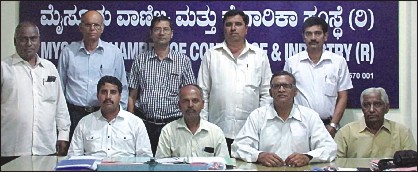
MDSSIA office-bearers (sitting from left) M. Abhishek, Hon. Treasurer; A.S. Satish, President; C.M. Subramanian, Hon. Secretary and N.D. Nagaraje Urs, Hon. Joint Secretary; (standing from left) Committee Members: Lingaraj, Mohd. Ghouse, H.D. Raghavendra, P. Kumar and N.H. Jayantha.

Mysuru, Karnataka  :

A.S. Satish, President, Mysore Chamber of Commerce and Industry (MCCI), has been elected as the President of Mysore District Small Scale Industries Association (MDSSIA). The other office-bearers are: Suryanarayana – Vice-President, C.M. Subramanian – Hon. Secretary, N.D. Nagaraje Urs – Joint Secretary and M. Abhishek – Treasurer. The Managing Committee members are: H.N. Nagaraj, Mohd. Ghouse, H.D. Raghavendra, N.H. Jayantha, Lingaraju, P. Kumar and Nagesh.

MDSSIA, started in 1964 by a group of young entrepreneurs, is the only apex body in Mysore District for Small Scale Industries. Many programmes including seminars, exhibitions and interaction with various Government Departments regarding the problems faced by SSIs have been planned.

Micro and SSIs, who are not members of this Association, may enroll as members.

For details, contact Secretary C.M. Subramanian on Mob: 88808-88853.

source: http://www.starofmysore.com / Star of Mysore / Home> General News / April 28th, 2015

Feisty Hashimpura women script their own destiny

HashimpuraMPOs07apr2015

The Hashimpura massacre left a whole group of aggrieved women “victims” of state injustice

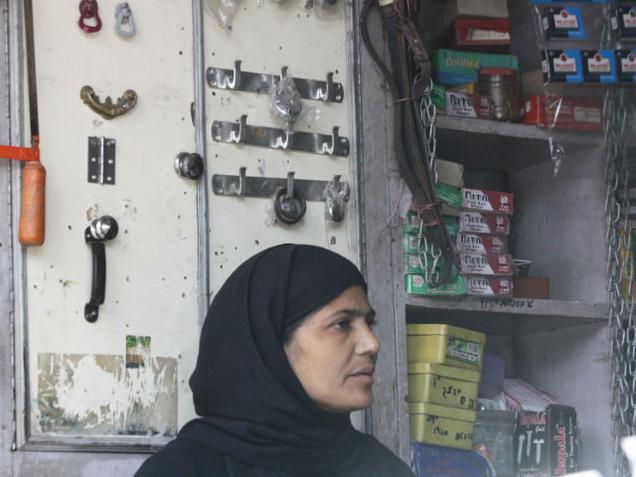
For several years, residents of Meerut found it rather odd to see a Muslim woman in a black scarf running a hardware shop on the Hashimpura main road. Little did they know that it was only the massacre of 1987 that led Anjum, a shy housewife then in her early twenties, to be transformed into a sharp businesswoman who is known in the vicinity as “hardware wali Anjum.”

The 42 who were killed in cold blood by the Provincial Armed Constabulary on May 22, 1987, included Mohammad Jameel, her father-in-law, an employee with the Meerut Municipal Corporation, who was the main breadwinner of the house and his youngest Naseem. Unable to bear the death of his father and younger brother, Mohammad Saleem, her husband committed suicide the same year, leaving her alone to take care of three children.

For Anjum, who was just four years into her marriage then, it was not an easy decision to make. Like any other Muslim woman in Hashimpura she had never stepped out of her in-laws’ house.

“Seeing my husband commit suicide left me broke from within. Finding me without any male in my family, my in-laws attempted to encroach on my husband’s shop and the rest of the property,” says Anjum while dealing with customers in between the conversation.

“But I had to take a decision. And it was not an easy decision to make,” says the woman in her early forties. Her education till graduation from Ismail Girls College in Meerut, came in handy when she had to don the role of a business woman.

Anjum, the owner of “Janta hardware store,” is not alone in this. The Hashimpura massacre left a whole group of aggrieved women “victims” of state injustice but many of them decided to instead become the controllers of their destiny.Women of as many as 42 families who lost their men to the bullets of the PAC decided to defy the stereotypes about Muslim women as docile homemakers and started working to survive. The society where the idea of working woman used to be a social taboo soon witnessed a large number of houses having women in the role of breadwinners and financial guardians. In the process, Hashimpura also became the only area in Meerut with the largest number of working women.

In the immediate aftermath of the massacre the task of running 42 homes was an overpowering challenge before the Committee for Justice for Victims of the Hashimpura Massacre, a group of the survivors and family members of those killed in the massacre.

“It was a big tragedy we were faced with — the fact that 42 families lost their breadwinners. The biggest priority for us was to ensure survival of these families,” says Zulfiqar Nasir who had deceived the bullets of the PAC while remembering how the Army had herded all the “young and productive” men of Hashimpura into the truck on the fateful Friday, May 22, 1987, only to kill 42 of them in cold blood.

Zaibun Nisa, who was one of those women who started working after she lost her husband Iqbal in the massacre, in order to run the family of three, recalls, “So, the Hashimpura Justice Committee decided that women can go out and work. There was resistance from the rest of the Muslim society in Meerut but we didn’t care because we had seen the biggest tragedies of our lives and our priority was to survive.”

Naseem Bano recounts to this correspondent how she was into her early twenties when the deaths of Siraj, then 23 year old, her only brother in the massacre, left her father a “dead man.”

“My father, who used to sell bangles, couldn’t bear the tragedy of seeing his young son getting killed. After his death, I had three young sisters to take care of. I started teaching Urdu in the local senior secondary school,” says Ms. Bano whose husband left her when she started working.

“All of us, the man-cum-women of our respective houses, became in a sense sisters. Seeing so many of our sisters in difficult circumstances also became a source of inspiration and determination that all of us have to work and survive,” she narrates while supervising the construction of her house.

Inspired by the stories of courage and strength of women in Hashimpura, Mohammad Naeem one of the survivors of PAC’s bullets, is hell bent that all of his daughters are not only educated but receive higher education. His eldest daughter Nuris Parveen is doing M. Phil. in Social Work from Mahatma Gandhi Hindi University in Wardha. Seeing his commitment, V.N. Rai, a retired IPS officer and former Vice-Chancellor of the university, had a few years ago, decided to facilitate her education.

source: http://www.thehindu.com / The Hindu / Home> News> National> Other States / by Mohammad Ali / Meerut – April 07th, 2015

Visionaries narrate success stories

Kanpur :

The Entrepreneurship Cell of IIT-Kanpur organised TEDx on Saturday. In this event, seven visionaries and performers from different fields narrated their stories before the audience both from IIT-Kanpur and the city.

The event started with a formal inauguration by IIT-K director Indranil Manna and Prof B V Phani. The first talk was given by Ad-man Abhijit Avasthi, followed by Amit Deshpal, a graduate from IIT-Madras in 2008 and joined the private equity arm of World Bank. Inspired by Tagore’s and Tolstoy’s thoughts on education, he quit his job a year later to start a learning space for children.

He spent nearly three years travelling around the country learning from different places and tried to understand meaning of education beyond formal schooling.

Talks were also delivered by renowned pantomime artist Padma Shri Niranjan Goswami and Anand Patwardhan, a critically acclaimed and socio-political documentary film-maker and activist. Other speakers were Irfan Alam, a social entrepreneur based in Patna working towards organising and empowering rickshaw-pullers through his organisation Sammaan, Aabid Surti, National Award winning author, artist and playwright-turned-environmentalist, Dipendra Manocha, founder of Saksham Trust that works towards developing communication devices for the visually impaired. The organisers of TEDx said that these talks may seed the notion of entrepreneurial zeal in individuals to think differently and act smartly. Many entrepreneurs and well-known people of the city attended the programme.

source: http://www.timesofindia.indiatimes.com / The Times of India / Home> City> Kanpur / TNN / March 29th, 2015

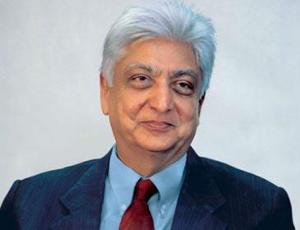
Azim Premji attends RSS function, creates ripples

Premji said he was "not a political person" but "deeply interested in and concerned about my country".
Premji said he was “not a political person” but “deeply interested in and concerned about my country”.

New Delhi :

Wipro chairperson Azim Premji on Sunday caused ripples of surprise when he attended Rashtriya Sewa Sangam, a meeting of NGOs organized by the Rashtriya Swayamsevak Sangh (RSS).

Premji was invited by RSS chief Mohan Bhagwat who was present on the dais when the entrepreneur-philanthropist addressed the gathering.

Admitting that “some people expressed apprehension” over his participation at an RSS meet on the ground that it would be “seen as endorsing the ideology of the Sangh”, Premji said that “merely speaking at a particular forum does not in any way mean that one endorses all, or any, of the views that might be expressed at the forum, or which may be held by the organizers”.

Premji said he was “not a political person” but “deeply interested in and concerned about my country”.

Focusing primarily on education as the ultimate game changer, Premji also told the gathering of nearly 500 NGOs – mostly Sangh affiliates – that as a “great pluralistic nation, we must accept our differences”.

“It is vital that we accept them and find a common ground to work together. Negative people only focus on differences. How empowering it would be for us as a nation if we focus on common causes,” Premji said. “If there are differences of views or divergence of ideas, they can only be resolved through discussion and dialogue,” he added.

Detailing the work done by his foundation and university – both named after him – Premji stressed on the need to improve governance, weed out corruption and ensure safety for children, women and disadvantaged sections. Terming government investment in education – 2.8% of GDP – to be “woefully inadequate”, he said it had reached 3.5% in most developing countries and 5%-6% in the developed world. Higher expenditure, he said, needed political will and prioritization.

Premji said based on the experience of his foundation and university, there was a need for government to strongly and visibly reaffirm the importance of quality public education as it was “foundational to democracy and helps beak down social and economic inequalities” so that an equitable society can be built. He also said many excellent policies and intentions of the government were poorly executed on the ground.

The Wipro founder said change in education system was possible only if all stakeholders worked together, especially teachers. He highlighted the critical role of teachers and how they needed to be empowered and given “adequate voice”. Premji suggested reforms in Cluster and Block Resource Centres as well as 600-plus District Institutes of Educational Training.

source: http://www.timesofindia.indiatimes.com / The Times of India / Home> India / by Akshaya Mukul, TNN / April 06th, 2015

Asif Iqbal to head South India Chapter of Indo-Arab chamber in Bangalore

AsifIqbalMPOs05apr2015

Bangalore:

The 32-year-old Indo-Arab Chamber of Commerce and Industries (IACCI) has set up its South India chapter in the city with Asif Iqbal as its Executive Director and singer-actor Lucky Ali as the Cultural Director. “The chapter will identify new areas of mutual cooperation to ensure the smooth flow of trade, investments, joint ventures, and technology between Indian and Arab industries,” Mr. Iqbal said in a statement on Aug. 4. The chapter will cover Karnataka, Andhra Pradesh, Tamil Nadu, Kerala, and Goa. In the Arab world, it will cover 18 countries.

Established in 1980, the IACCI aims to provide a link for promotion of commercial and economic relations between India and the Arab world. It is also an active forum for Indian businessmen who have close contacts with the Arab world.

The IACCI has supplied manpower and made a breakthrough in construction and project exports, thus ensuring the economic development of the Arab world. The Gulf chapter of the IACCI is in Muscat, Oman. The Bangalore office is located at World Trade Centre, 22nd Floor, Unit 2201A, Brigade Gateway, 26/1. Ph: +91 80-49365431, 98455-84891. Fax:+91 80 49365301. E-mail: asif@indoarabchamber.org

source: http://www.karnatakamuslims.com / Karnataka Muslims / Home> District> Bangalore / by Staff Reporter, KMNM / August 05th, 2012

Self-employment scheme gets more applications

TelanganaAidSAM01apr2015

Minorities Finance Corporation extends age limit by another 15 years

A good number of petty traders can now escape the stranglehold of moneylenders. The government’s decision to relax the age limit for availing the bank-linked subsidy-cum-loan scheme of the Telangana State Minorities Finance Corporation has brought cheers to thousands.

Last date

Recently the government raised the age limit from the existing 21-40 years to 21-55 years paving way for a large number of minority candidates to avail the scheme. The revised age eligibility is on a par with the backward class and tribal candidates. The last date for online registration for the self-employment scheme for the year 2014-15 is also extended up to April 15.

The age relaxation has led to a spurt in online registration for the economic support scheme. Since March 13 when the GO 15 was issued, a total of 10,816 persons have applied and the number keeps increasing. The maximum of 4,008 applications have come from Mahabubnagar followed by 1,421 (Hyderabad) and 1,387 (Medak). Officials expect a flood of applications in the coming days.

In the current budget the Telangana government has allocated Rs. 82.40 crore for the bank-linked self-employment scheme. But going by the response, officials feel, this amount will prove to be quite insufficient. The increase in age eligibility by 15 years will enable more number of people to apply. This time instead of ration card, the applicants should submit the Aadhar card, income certificate and business quotation. Maximum subsidy of Rs. 1 lakh or 50 per cent of the unit cost will be sanctioned. The maximum loan will be of Rs. 2.50 lakh and Rs. 3 lakh for transport scheme.

Plan shelved

The Minorities Finance Corporation also toyed with the idea of providing microfinance so that petty traders who borrow money on a daily basis can come out of the clutches of moneylenders. But considering the difficulty in recovering the loan the plan is shelved. “We don’t have sufficient staff to recover petty loans”, says Prof. S.A. Shukoor, managing director, Telangana State Minorities Finance Corporation.

source: http://www.thehindu.com / The Hindu / Home> News> Cities> Hyderabad / by J S Ifthekhar / Hyderabad – March 31st, 2015

Poop to perfume: The rose crop of Khitoli

RoseMPOs30mar2015

Aligarh :

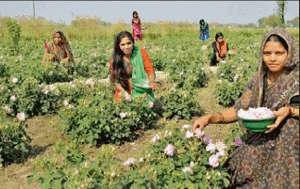
At Khitoli village, Hasayn, Hathras district, mid-March is when the process for extracting rose essence (ruh) begins. The process will go on till the end of April, over a period of 40 days. There is a big rose mandi here. Ask farmers what the secret of the rich aroma of the roses of this region is, and the answer is unanimous – human poop.

The rose of this region is called “Noorjehan” – jewel of the world — after the wife of Mughal emperor Jahangir. The air in the village at this time year is laden with the aroma of roses.

Workers are seen plucking roses early in the morning, while dewdrops are still on the buds. They measure the roses, add bunches of them into water to steam in a large copper container called degh to extract ruh. About 250 kg of flowers yield just 40 gm of ruh.

Work on the floriculture crop begins in October each year, with the sowing of seeds.

“The good yield of the rose is because of fertile land – and if you are thinking what makes the soil here especially fertile, it is human poop,” says Mahesh Pal Singh, former pradhan of the village whose father Veer Pal Singh started the work of rose essence extraction some 65 years ago in Khatoli. Veer Pal Singh died at the age of 108 last week.

“The farmer is also a scientist,” Singh says. “He knows what is good, what is not. Most of us avoid cow dung and prefer human poop in our fields as manure. Almost 95% of our villagers don’t have toilets at home. All the men, women and children answer the call of nature in the fields. That is why the produce in the village is far better than what is grown in farms away from human habitation.”

One cannot then help wonder if toilets in village homes is at all a good idea then, in this part of Hathras district.

“The toilets are only part of the big houses here. Just about five village homes here have toilets – the rest go to the field. That is what is best, not just for the rose crop, but also for potatoes. We need bijli (electricity) and sadak (roads) rather more urgently that toilets. It would save us the bother of going out of the way to transport our produce,” farmer Bahadur Singh says.

“And what when every house has a toilet?”

“There will be no roses then,” the farmer says, with quiet conviction.

The essence extracted from the rose is later used in tobacco, perfume and soap manufacturing.

Horticulture officer Kaushal Kumar of Aligarh says, “Yes, there is truth to the belief that human excrement is good manure – there is a good quantity of micro-nutrients in excrement, as well as nitrogen, potassium and potash. But for the sake of hygiene, it should first be treated well.”

It is human poop that also breeds earthworms, farmers say. “They make the land fertile, dig the ground and make soil breathe,” Bahadur Singh says.

Kaushal, however, said it was not as if there was a direct link between foul-smelling human excrement and sweet-smelling roses: “The excrement makes the land fertile and aids in growth. Without it, some nutrients would be lost to the soil. Even the farmers are aware that the transition is no direct one, he says.

Besides poop and earthworms, the rose crop also needs moisture-laden easterly winds at the beginning of the growing season – rain in that time could damage the crop, farmers say.

source: http://www.timesofindia.indiatimes.com / The Times of India / Home> City> Agra / by Eram Agha, TNN / March 29th, 2015

Wipro hires ex-TCS executive as COO

Global software major Wipro Ltd on Monday appointed former TCS honcho Abid Ali Neemuchwala as its group president and chief operating officer from April 1.

WiproMPOs17mar2015

“Abid will head service lines of global infrastructure, business application, business process and advanced technology solutions,” the company said in a statement here.

Abid headed the business process services (back office operations) of Tata Consultancy Services (TCS) and held leadership positions during his 23-year career in the IT bellwether.

“Abid brings invaluable experience with his track record of building and scaling businesses. I am confident his understanding of technology and expertise in IT & BPS will help power our businesses to greater heights,” Wipro chief executive T.K. Kurien said.

A chess buff, Abid is an electronics & communication engineer from NIT, Raipur in Chhattisgarh and has masters in industrial management from IIT, Mumbai.

“I am honoured to join Wipro, a company with a rich heritage of technology innovation and unflinching commitment to values. I look forward to contributing towards the company’s next phase of growth,” he said from Dallas in US’ Texas state, where he lives with family.

Abid will also head business operations, geographies comprising continental Europe, Africa, Latin America, strategic engagements, advisor relationships and marketing function.

source: http://www.deccanherald.com / Deccan Herald / Home> Business / IANS / Bengaluru – March 16th, 2015

How he built a biryani empire

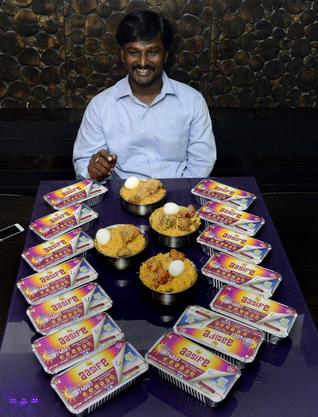
Y. Aasife Ahmed, managing director of Aasife Biryani. Photo: M. Vedhan / The Hindu

From a pushcart to a chain of plush restaurants…the author gets a whiff of Y. Aasife Ahmed’s success

Y. Aasife Ahmed was not much for bookish learning. “I knew what I was passionate about, and I set about pursuing my dream,” he says. And so at 18, he apprenticed with a biryani cook and later started his own wedding catering business.

Even then, he had his eye set on something much bigger, something he hardly dared to dream of, but he set about working towards it anyway.

What started with five kg of biryani on a thallu vandi (pushcart) on Butt Road in St. Thomas Mount 15 years ago has now grown to 500 kg of biryani per day, served out of four Aasife Biryani Centre outlets all around the city, the latest one being on Anna Salai.

“From the pushcart we moved to a hole-in-the-wall. We still serve take away from that shop. We then expanded across the road,” says Aasife, seated in the well-appointed lobby of the Alandur branch one evening.

I tell him I have fond memories of cycling down the road on my pink Ladybird to pick up biryani and kothu barotta for lunch.

His face lights up as he says, “You must have seen me there then; I was always behind the counter! It is good to meet old customers. In fact, there is one person who has been a regular from the beginning, and he still dines at our outlet frequently. It is the most satisfying feeling.”

While the shop was established as Aasife and Brothers, they have now parted ways. “My two brothers have diversified into other businesses. They do not share the same love for biryani or the potential I see here,” he shrugs, gesturing to the restaurant filled with chattering diners and customers waiting for their take-away orders.

He has hired the same architect and design firm to work on all his upcoming restaurants. They open in Kilpauk this month and in Nungambakkam the next.

But his pet project is the one on OMR. The 39-year-old’s soft-spoken and calm demeanour is replaced by a palpable excitement when he talks about it: “We have five floors, each with a different concept. The kitchen will take up an entire floor, and another will have a floating restaurant. There will also be a large play area for children. I want it to be the biggest restaurant in the country when we launch in May or June this year.”

Aasife’s mantra for both his cooking and his business is quality. “The ingredients should be of the best quality; even if one ingredient is not good, it will ruin the taste. Also, diners want to see a well-maintained restaurant. They care about the ambience, and so my staff are trained to ensure that every nook and corner is cleaned throughout the day. I am lucky to have such a great team of managers who know exactly what my expectations are and carry it out to perfection,” he says.

It is a good thing his favourite food is biryani, mutton in particular, and although he does not cook as much as he used to when he started the business, he does several taste tests a day.

“I go to the gym for an hour every morning. After that I visit the centralised kitchen in Guindy, and each of the outlets. I ask for whatever negative feedback has been received, and we set about rectifying them as quickly as possible,” he says.

Walking around the Anna Salai branch just before opening time on a weekday afternoon, Aasife draws my attention to the wall.

“Our speciality is that we use wood fire to make our biryani. As a tribute to that, we cut up our firewood logs and incorporated that into our decor,” he says proudly, running a hand over the now varnished wood.

“Although this is the newest branch, I feel like I have arrived on the scene with this restaurant. It is just the beginning for me.”

Apart from biryani, Aasife’s other love is cars. “Right now, I drive an Elantra. I would love to get some of the best and fastest cars available,” he says with a grin. But those can wait: right now, his plan is to take over the Chennai biryani market by 2016.

He does, of course, talk of his three children — a girl and two boys — with a lot of tenderness.

“I hope that one day they will take over what I have started here. I want this to be my legacy to them. Although it is my passion, I am doing this for their future as well.”

source: http://www.thehindu.com / The Hindu / Home> Features> MetroPlus / by Susanna Myrtle Lazarus / March 08th, 2015