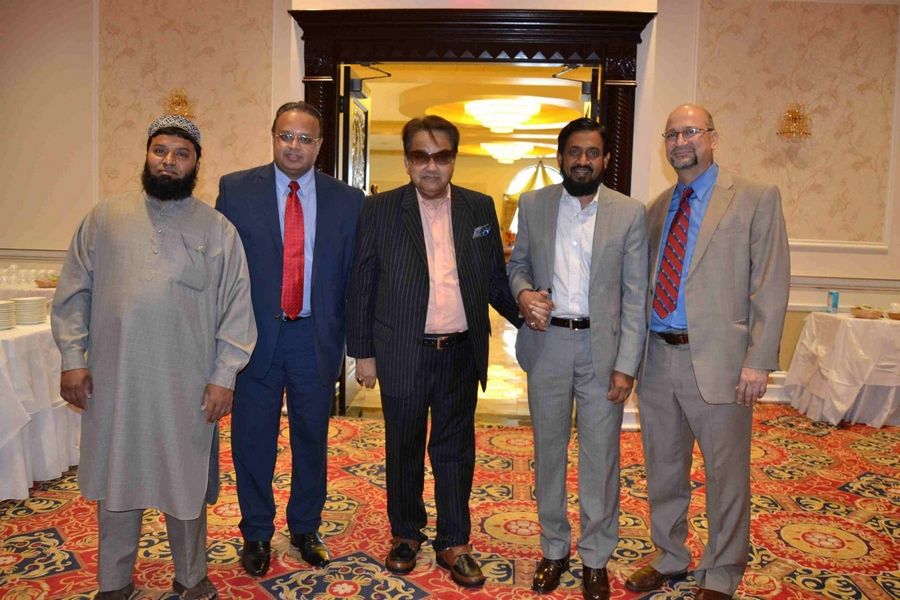
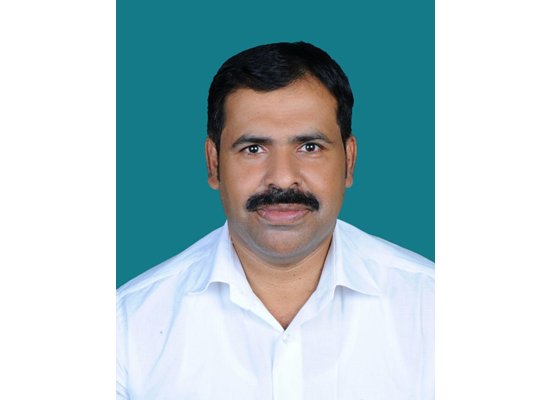
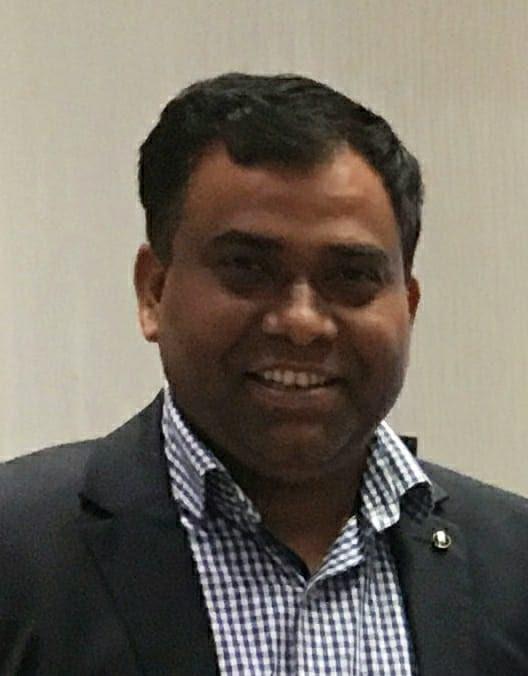
Khan Lateef Mohammed Khan, center, the editor-in-chief of the Munsif Daily, passed away Aug. 6 in Chicago. (Courtesy of Syed Ullah)
Lateef Mohammed Khan, who spent his life defending Urdu through journalism, books and lectures, died Aug. 6 at a local Chicago hospital. The 80-year-old worked in journalism for more than three decades, getting his start at the Munsif Daily, an Urdu language newspaper.
The Munsif Daily is an Urdu language newspaper published from Hyderabad in India. Its editor-in-chief was Khan Lateef Khan till yesterday. The Munsif Daily Is the largest circulated Urdu newspaper in South Asia. The paper was owned by Mahmood Ansari, when Masood Ansari fell seriously ill, the newspaper was sold to Khan Lateef Khan in 1996, who became editor-in-chief. He started the first Urdu satellite TV channel in India.
He was chairman of the Sultan ul Uloom Education Society. Khan was known for bringing in a revolutionary change in Urdu publications in the city by reintroducing the Munsif newspaper in color print 23 years ago.
Ali Khan, president and founder of Urdu Semaj Chicago, shared his condolences and said, “He was a legend in our community and a very genuine, gracious man in person and an acclaimed columnist. Sad to hear of his passing away today. This is a total loss for the whole community.”
Many renowned personalities including Dr. Qutub Uddin, Iftekhar Shareef, Azeem Quadeer, Saleem Abdul Rehman, Ishaan Ahmed, Kaleem Hasan, Omer Haqqani and many others paid tribute to his service.
Khan’s funeral services will be at the Muslim Community Center in Chicago after Friday prayers. He will be buried in Chicago.
source: http://www.dailyherald.com / Daily Herald / Home / by Syed Ullah / August 07th, 2020
Baroda, MADHYA PRADESH / Paris, FRANCE / London, UNITED KINGDOM :
If the proposal is passed, it will be the first time that non-white people will be featured on British coins or notes.
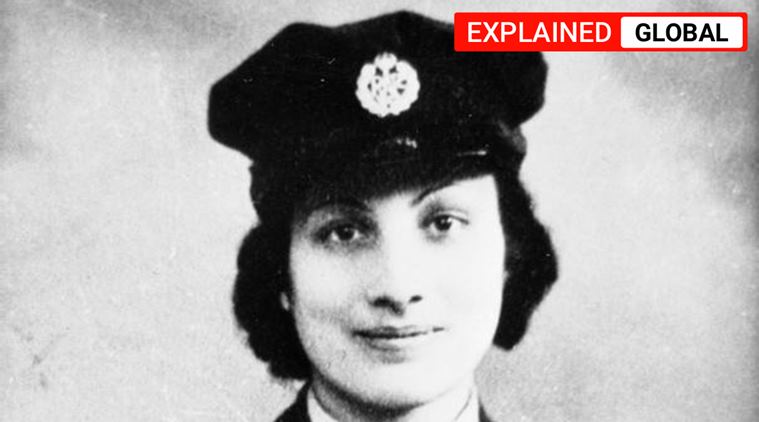
Born in Moscow to an Indian father and an American mother, Noor’s family moved to London and then to Paris during the First World War. (Source: Wikimedia Commons)
British media reported this week that Rishi Sunak, the Chancellor of the Exchequer, is considering a proposal to feature historical figures from the Black, Asian and minority ethnic (BAME) community of the country on a set of coins titled ‘Service to the Nation’.
If the proposal is passed, it will be the first time that non-white people will be featured on British coins or notes. The plan has been submitted to the Royal Mint, which is to come up with proposals and designs.
Zehra Zaidi of the advocacy campaign ‘Banknotes of Colour’, along with a group of historians and MPs, had written to the Chancellor proposing some historical figures. Among them were the Indian-origin British spy Noor Inayat Khan, as well as Khudadad Khan, the first soldier of the British Indian Army to receive the Victoria Cross. Khudadad Khan, who belonged to the Chakwal district of Punjab in present-day Pakistan, died in 1971.
The continuing Black Lives Matter protests in the United States , triggered by the killing of George Floyd by a police officer in Minneapolis in May, which have put a spotlight on the lack of BAME representation in the UK, and have compelled authorities to take appropriate steps.
Who was Noor Inayat Khan?
Born in Moscow to an Indian father and an American mother, her family moved to London and then to Paris during the First World War. Although Noor started working as a children’s writer in Paris, she escaped to England after the fall of France (when it was invaded by Germany) during the Second World War.
In November 1940, she joined the Women’s Auxiliary Air Force, an arm of the UK’s Royal Air Force to train as a wireless operator. She then did a stint at the secret intelligence organisation set up by Winston Churchill called Special Operations Executive (SOE).
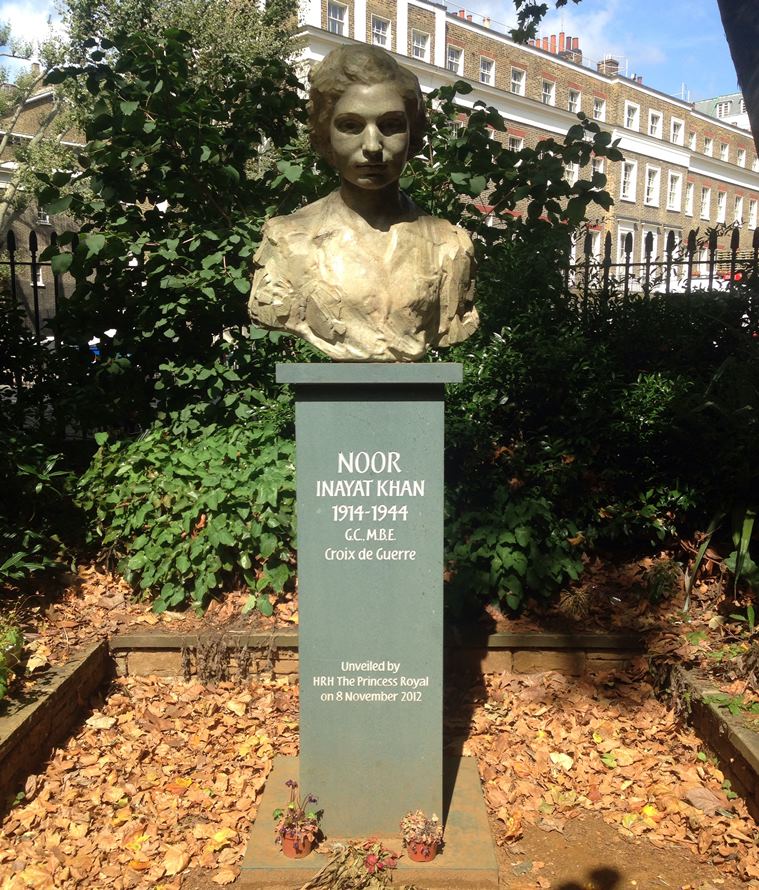
A bust of Noor Inayat Khan in Gordon Square, London. (Source: Wikimedia Commons)
She became the first radio operator to be sent to Paris to work for SOE’s Prosper resistance network under the codename Madeleine. She was just 29 then, and had signed up for a job in which people were not expected to be alive for longer than six weeks.
Even as many members of the network were being arrested by the Nazi secret police Gestapo, Noor chose to stay put — and spent the summer moving from one place to another, sending messages back to London, until she was arrested in 1943.
She was executed at the Dachau concentration camp in southern Germany near Munich. Noor was awarded the highest honour in the UK, the George Cross, in 1949, and the French Croix de Guerre with the silver star posthumously.
What was Noor’s connection to India?
She was connected to India through her father Inayat Khan. He was founder of the Sufi Order of the West, which is now known as the Inayati Order. He had migrated to the West as n Hindustani classical musician, and then moved to teaching Sufism.
Inayat Khan was born in Baroda. His maternal grandfather was the noted musician Ustad Maula Bakhsh Khan, who founded the music academy Gyanshala, which now serves as the Faculty of Performing Arts at Maharaja Sayajirao University. Maula Bakhsh’s wife, Qasim Bibi, was a granddaughter of Tipu Sultan of Mysore.
Inayat returned to India in 1926 and chose the site of his burial at the Nizamuddin Dargah complex in New Delhi. The Inayat Khan dargah still stands in a corner of the complex.
Besides being a GC, what other honours has Noor received?
In 2014, Britain’s Royal Mail had issued a postage stamp in honour of Noor as part of a set of 10 stamps in the ‘Remarkable Lives’ series. In 2012, a memorial with a bust of Noor was unveiled in London by Princess Anne. Shrabani Basu, author of ‘Spy Princess, The Life of Noor Inayat Khan’, and Chair of the Noor Inayat Khan Memorial Trust, had campaigned for the memorial.
In February 2019, Noor’s London home at 4 Taviton Street in Bloomsbury, the house that she left for her final mission, was honoured with a blue plaque. She was the first Indian-origin woman to be awarded the plaque.
How has Noor been represented in popular culture?
Various documentaries on women agents and the SOE have featured her story, such as Netflix’s ‘Churchill’s Secret Agents: The New Recruits’. In 2018, a play titled ‘Agent Madeleine’ premiered at the Ottawa Fringe Festival.
In 2012, Indian producers Zafar Hai and Tabrez Noorani obtained the film rights to the biography by Basu. In the film ‘Liberté: A Call to Spy’, an American historical drama, actor Radhike Apte played the role of Noor. The film had its world premiere at the Edinburgh International Film Festival last year.
source: http://www.indianexpress.com / The Indian Express / Home> Explained / by Surbhi Gupta / New Delhi / July 29th, 2020
AHMAD ZAIDI, who is originally from Aligarh, Uttar Pradesh, and is a 1985 Electrical Engineering graduate from the Thapar Institute of Technology, Karnal, Haryana, epitomizes a brilliant success story in United States.
Zaidi is currently a vice-President at the world-renowned hi-tech giant, the Intel Corporation in the Silicon Valley in California, US. He is among the very select band of bright young minds who migrated to US from India looking to contribute to the development of high technology and to making America great and India proud.
Zaidi holds nine patents in the field of microprocessor design and architecture. In US he earned a master’s degree in electrical engineering from Virginia Polytechnic Institute and State University, Blacksburg, Virginia, in 1987.
In 2009, Zaidi was presented an award by the Malaysian minister for setting up the Embedded Silicon Design Center in Penang, Malaysia. In addition, he and his teams have been honored with multiple technical awards, including an Intel Software Quality Award in 2011 and an Intel Achievement Award in 2012.
Ahmad Zaidi is vice president of the Platform Engineering Group and general manager of the Embedded Subsystems and Intellectual Property (IP) Blocks Group at Intel Corporation. He is also responsible for Security Silicon Engineering and manages Security CPU and IP engineering for the Intel Security Group. He leads an organisation that spans sites in the United States, Malaysia, Israel, Poland and India, and is responsible for delivering hardware, software, firmware IP subsystems and soft IP blocks for Intel products across all product segments. His group is chartered with delivering IP in areas such as audio, voice, speech, sensors, security, Input/Output (I/O) technologies and software related to storage, communications and manageability.
Since joining Intel in 1987 as an engineer in the microprocessor unit at Cupertino, CA, Zaidi has progressed rapidly and has held a number of senior technical and management positions in microprocessor design, embedded systems and communications. Before assuming his current position, he was the general manager of the Chipset and System-on-Chip (SoC) IP Group where he was responsible for delivering chipset hardware, firmware and software for Intel’s client platforms in addition to leading the development of reusable IP blocks for Intel products across all segments.
Prior to that, Zaidi was the general manager at Intel Corporation of the Embedded and Communications Silicon Engineering Group, where he led a cross-geography team responsible for delivering SoC and chipset products for the embedded and communications market segment. Earlier in his Intel career, Zaidi served as director of the Silicon Engineering, Infrastructure and Network Processor divisions and as engineering manager on the first Intel® Itanium® processor.
Ahmad Zaidi lives in Cupertino, CA with his wife and two children. His father was an engineering manager at the Fertilizer Corporation in Paniput, Haryana. As a young man, Zaidi grew up in Paniput.
source: http://www.clarionindia.net/ Clarion India / Home> Indian Muslims / by Kaleem Kawaja, Clarion India / July 18th, 2020
Dubai-based Asad Haque on the “incomparable” fruits of taking his hobby to the next level.
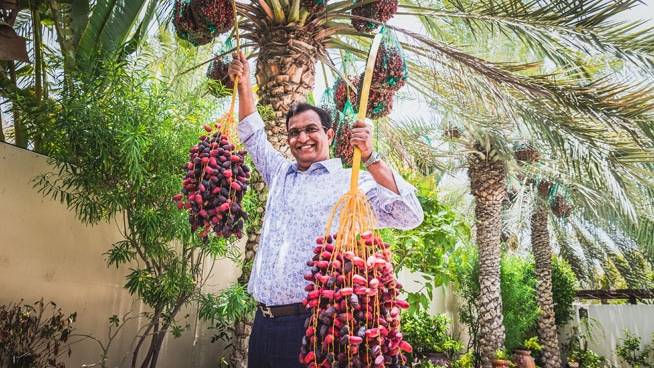
Dubai resident Asad Haque is a CEO. He’s also a date farmer. The two pursuits could not be more different from each other and yet, the Indian expat dons both hats with the ease that can only be born of passion.
Asad’s love for gardening goes back to his childhood, when he would tend to plants and flowers in the large compound around his home in Bangalore. Although he’s been a resident of the UAE for 30 years, it was only when he moved to his villa in the Meadows that he finally had the opportunity to take his hobby to the next level. It’s a mark of his love for Nature that he decided to embark on the intensely challenging pursuit of date farming while at it.
“The date palm is the one tree that suits the local terrain and can survive the terrible summer heat, while also producing a fruit both wonderful and nutritious,” he explains.
Few things are as representative of Emirati heritage as dates, a deliciously sweet fruit that has long been associated with the culture and history of not only the UAE, but also the Arab world. There is a recorded population of over 40 million date palms producing 199 varieties of dates in the UAE alone.
“The date palm has been mentioned in the Quran more than 20 times, and Muslims are well known for breaking their fasts during Ramadan with its fruit, so there is a spiritual and cultural connection too,” he adds.
Asad’s Dubai residence is home to eight of these trees – each one producing eight to 15 large bunches of fruit and up to a total of 1,000 kilograms every year. The bounty is no mean feat, considering the labour-intensive process of nurturing them from pollination to harvest.
Skilled gardeners are required to scale the trees (that can grow up to a height of 20 metres), using rope harnesses hitched around their waists and navigating the thorns that grow to about six inches long, in order to reach the flowers and pollinate the trees by hand. What follows are six to eight months of rigorous care, especially with regard to keeping pests like the red palm weevil at bay. Asad ensures he personally oversees every step of the process and loves giving the trees “baths” every other day. After 15 years, says the entrepreneur, the trees have become “like family” – and, if nourished well, can grow to about 150 years old.
“It’s been a fantastic experience here in the UAE,” says Asad, who is CEO at ICT Consultants. “Although I had a liking for gardening, it is Dubai that gave me the opportunity to nurture this hobby into a full-fledged passion.” With an annual crop so bountiful, the 54-year-old not only gifts the fruits to family and friends, but also distributes them generously among charities, labour camps and mosques, crediting his wife Reshma with “doing a beautiful job of packing them” every time.
There are other intangible ‘fruits’ of his labour that he cannot discount, he notes. “For one to take up date farming, one has to either have a lot of patience or cultivate such a trait. That’s something I’ve learnt after all these years of date farming; it’s given me a lot of patience. It also connects you to the supernatural, to creation and the Creator,” he says. “There is a deeply spiritual satisfaction that comes from seeing something through, from flowering to harvesting, that is difficult to express in words.”
Asad is quick to shoot down any notions that desert lands like the UAE are unsuitable to home farming. “Although the palm tree is the most naturally suited to the local habitat, it is not that nothing else can grow here. We grow a variety of other plants and trees in our garden: moringas, mangoes, lemons, figs, curry leaves, pomegranates and tomatoes are just a few.”
A strong advocate for cultivating a green thumb, Asad says, “Whatever you have at home – whether it’s a garden or even just a balcony – I would strongly encourage everyone to attempt growing fruits and vegetables at home. Not only are there a lot of green benefits to reap from it, but you will find a connection to nature and beyond that cannot be compared.”
karen@khaleejtimes.com
source: http://www.khaleejtimes.com / Khaleej Times / Home> WKND (Weekend) > Interview / by Karen Ann Monsy / July 16th, 2020
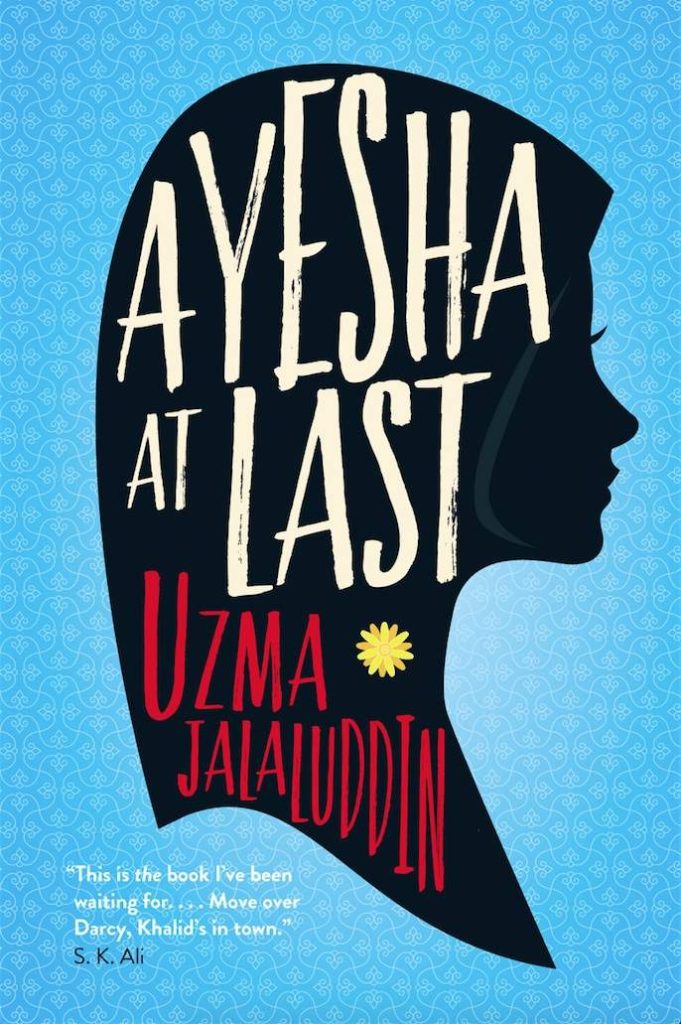
Ayesha At Last‘s Muslim characters are a far cry from the stereotypes we often come across. There are no gun-wielding terrorists in this debut novel by Uzma Jallaluddin. Instead the author’s characters are real, believable people. The protagonist Ayesha and her family are immigrants in Canada who are living regular lives dealing with their own tiny battles, and there’s Khalid, Ayesha’s love interest who is putting up with his bigot boss, even as he lives up to the demands by his unreasonable mother.
There’s a lot of drama happening in this narrative that’s inspired from the classic Pride and Prejudice. Uzma without trivializing anyone’s ethnicity throws light on the idiosyncrasies of people from different nations. Although this book can be classified into the chick lit genre, it brings to fore some critical questions about the changing dynamics of the contemporary world. Yet, the easy and effortless writing makes it a fun and light read.
In an email interview, Uzma answers questions about what made her write this story, her approach to prejudices and way forward for Ayesha At Last.
Is this to a certain extent an autobiographical account? I am asked this question all the time, and I can say that this book is definitely not autobiographical! However the themes within are mined from my own life. Like Khalid, I am a second generation Indian Muslim Canadian. Like Ayesha, I have lived in an extended family, with grandparents and aunts and uncles. Like many of the characters, I have tried to reconcile my identity as an Indian, as a Muslim, as a Canadian. And of course, I had my share of rishtas when I was younger!
Most of the women in your story – Ayesha, Farzana, Zareena (and I guess even Ayesha’s mum and Hafsa too) are terrible cooks – why did you want your characters to be like this? Was it just on a lighter note or did you want to highlight Khalid’s cooking talent? Only Ayesha, Zareena and Farzana were bad cooks. I assume the rest of the women characters were decent at meals. Growing up, my mother never really emphasized that I should learn to cook. It wasn’t until I was married and had children of my own that I tried to learn, from her and my mother-in-law, both of whom are excellent home cooks. However, AYESHA AT LAST has one excellent female home cook – Nani, Ayesha’s grandmother. In fact, Nani teaches Ayesha and Khalid an important life lesson, while also teaching them how to make delicious parathas. I wanted to make Khalid an excellent cook to dismantle stereotypes. There is something so loving and nurturing about the act of cooking, and I wanted my male lead character to have that quality.
However, all your women characters are quite strong-willed and forthcoming, a few are breaking stereotypes, while others are reinforcing those stereotypes – Ayesha and her family versus Khalid’s mum – could you explain why you wanted to bring out this contrast? As a writer, my primary responsibility to readers is to write a story that is entertaining, and authentic. I wanted to write about characters who felt true to life, while also providing a way for readers to laugh at the foibles of others. Some of my characters are foolish, some are wise and kind, others are shallow and misguided. That’s how regular people behave too, and in fact we all cycle between many different ways of being. My book is set in Canada, and it was also important to me that I showcase how much diversity there is within diverse communities. Sometimes books set in the West only have few characters who are not White, and those characters are limited in their presentation. My book is mostly populated by characters whose families hail from India, the Middle East, Afghanistan, etc., and I took this opportunity to play around with character types, to emphasize how no matter where you are from or where your family is from, people come in all different flavours.
Why is it that all the characters who have roots in the Asian subcontinent have run away from some kind of a disturbance – be it the Babri Masjid issue or the bombing in Afghanistan – this seems like a typecasting Indians, Afghanis etc? Was it because your readership in Canada isn’t aware of how the countries are now? I disagree with this assessment. Sulaiman Mamu, Ayesha uncle, and his family immigrated to Canada without any dramatic events precipitating this move, same with Khalid’s family, and Tarek’s family, the Imam, etc. I think it is fair to say that readership in Canada has a somewhat limited understanding of the way that regular life in India, or Afghanistan is today. At the same time, Canada, and Toronto in particular, has a very diverse immigrant population that maintains close ties with their roots. In Scarborough, the suburb where Ayesha At Last is set, 85-90% of the population is first or second generation; they or their parents were born outside of Canada, mostly from Asia in fact. Though Ayesha’s immediate family and one other character were running from something, I wanted to highlight that many others move to a country like Canada for a variety of reasons, and must figure out how to all get along and live in their new environment. The focus of the book is not on immigration, or refugee status, however – it is about what life is like for the children of immigrants/refugees in this new place, how to navigate between two worlds and cultures, and how they find love.
There is similarity to the classic, Pride and Prejudice. Your thoughts on this. My novel has been described as Pride and Prejudice remix set in a close-knit Toronto South Asian Muslim community. I love Jane Austen, and Pride and Prejudice is one of my favourite books, so I am pleased and honoured at this comparison. While I did not set out to write a straightforward retelling, I think the themes in P&P are echoed in my book, namely class differences, family expectations, and the search for identity mixed in with the search for love.
Eventually, the idea that being glamorous is equivalent to being frivolous (reference-Hafsa) and being focused and determined means you cannot be glamorous (reference-Ayesha) gets reinforced in the end… was it intentional? Glamour is certainly not equivalent to frivolity, as Ayesha has her fun moments – such as when she passionately performed poetry in a bar, or when she dressed in a beautiful sari at the end of the book. Ayesha and Hafsa have different family situations, and through their contrasting characters, I wanted to explore the effect of wealth disparity even within a single family. Mostly, I hope my story will make readers think about the dangers of snapping to quick judgements about others, as people are quite complicated and cannot simply be described as being only either ‘glamorous’ or ‘determined’!
The book is quite insightful and offers an understanding about the Muslims living in Canada, this is something that I truly enjoyed and was informative – through this book would you say you are trying to show the world that Muslims can be normal (and are not all are terrorists)? When I set out to write Ayesha At Last, my aim was to tell a fun, joyful, and romantic story about Muslims in the West. Unfortunately, most stories about Muslims contain negative stereotypes that reinforce xenophobic, one-sided narratives that can cause real harm to vulnerable populations. I hope that more stories about Muslims, or Hindus, or Buddhists, etc., set in the West, will help readers understand immigrant communities better, but most importantly will also allow those immigrant communities to see themselves as worthy of being featured in all types of stories, not just highly politicized ones. Your question reinforces the dangerous effect of this lack of representation – and yes, Muslims are normal. We are people, like everyone else.
How long did you take to complete this book, how many drafts did it go through? The book took a long time complete, because like most people, I wear many different hats. I am a parent to two sons, I teach high school English, and I also write a column for The Toronto Star, Canada’s largest daily newspaper. So I wrote Ayesha At Last in stolen moments over many years – about eight years in total. I’m not sure how many drafts I went through, because after a while I simply lost count. More than a dozen for sure.
Where did you write this – at home, in the kitchen, on the dining table or at a coffee shop? Since the book took so long to draft and revise, I can honestly say I have written Ayesha At Last everywhere: in coffee shops, in waiting rooms, on my desk at home, the kitchen table, while waiting for my children to finish soccer, baseball, swimming, and Scouts.
What are your writing rituals and how does your atelier look like? I like to write in the mornings if I can. This is tough with teaching, so I make use of any time off and my weekends. I have a small office in my basement, which has an old desk, a monitor, and speakers for music (I love pop music and Top-40 hits). It also has a large bulletin board where I pin ideas for my book, plot details, and inspiring quotes.
What are you working on next? My second novel is also a romantic comedy set in Toronto, featuring Muslim Indian characters and takes place in the restaurant world.
What about Ayesha At Last being adapted to the screen? Any updates? Ayesha At Last was optioned for film by Pascal Pictures last fall, which was a very exciting development. Right now a screenwriter is working on the adaptation.
Rs 399. Published by Penguin Random House.
ayeshatabassum@newindianexpress.com @aishatax
source: http://www.indulgexpress.com / The New Indian Express – Indulge / Home> Culture / by Ayesha Tabassum / June 04th, 2020
Karad Village (Malappuram District) , KERALA / Doha, QATAR :
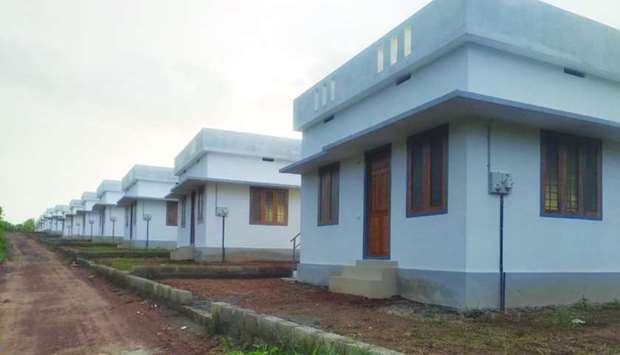
Some of the houses constructed on land donated by Iqbal.
It was a day of immense joy and fulfillment for Qatar-based Indian businessman Ahammed Iqbal who donated 1.5 acres of land in his native place to build houses for 15 families left homeless by floods last year.
Karad, a village in Malappuram district of the southern state of Kerala, Sunday witnessed a function where the families received the keys to their new homes.
Ahammed Iqbal
“The smiles of gratitude gave me a feeling of delight. I am glad that I could uplift some flood victims from despair to happiness,” Iqbal told Gulf Times.
After the land was handed over to the district administration, the 15 houses were built with funds contributed by M P Ramachandran, chairman of Mumbai-based Jyothy Laboratories Ltd.
Iqbal recalled that the district administration had received several applications from many families whose houses were washed away in the deluge. The beneficiaries were selected after scrutiny and drawing lots.
Most of the beneficiaries came from Kavalappara village that was wiped out by a massive landslide and flash floods on the night of August 8 last year. The natural calamity claimed 48 lives while leaving hundreds homeless.
Iqbal, who was in Qatar during the deluge, approached the Kerala district administration expressing his readiness to extend a helping hand to the victims.
On behalf of Iqbal, his friend Mujeebu Rahman handed over the documents to the district administration.
“I simply wanted to do my part for the victims and stand with my people during the tough times. I have sufficient land and my religion allows me to take only three pieces of cloth when I depart,” he said, adding that his parents very often inspire him to help landless people.
Kerala’s Higher Education Minister K T Jaleel and magician Gopinath Muthukad handed over the keys to the beneficiaries.
source: http://www.gulf-times.com / Gulf Times / Home / by Shafeeq Alingal / June 28th, 2020
Varis Sayed of Fincasa Capital owns homes in four countries and plans to snap up distressed sales as real estate markets contract amid Covid-19.
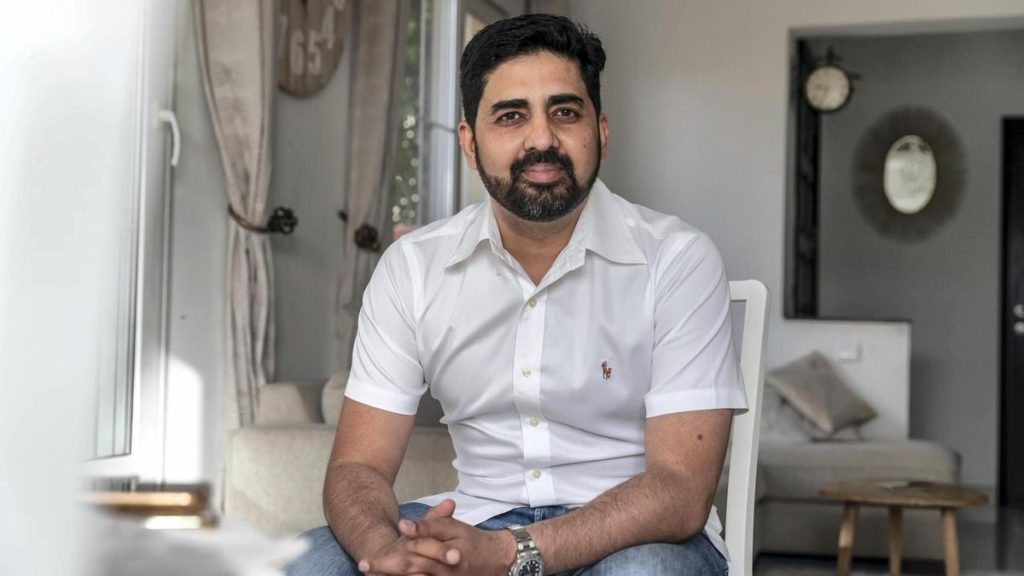
Varis Sayed says he made his first Dh1 million in the UAE in the second half of 2015 after launching a business advisory service. Antonie Robertson/The National
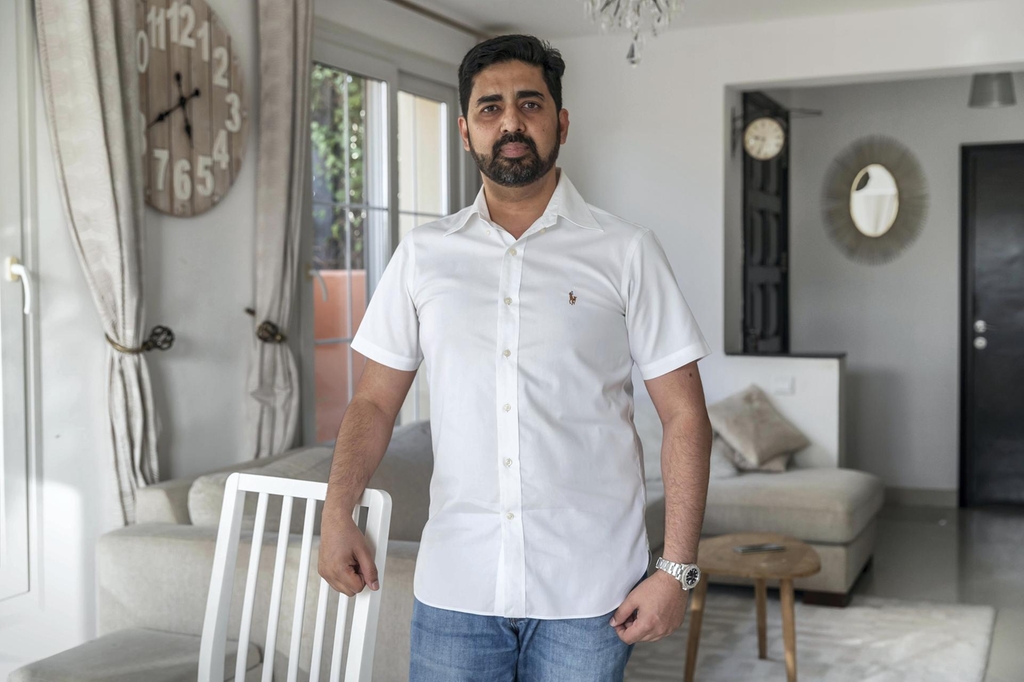
Varis Sayed is the founder and chief executive of Fincasa Capital, a global advisory firm specialising in cross-border investments and offering services for residency and citizenship through investment. The millionaire, Indian-born entrepreneur, who moved to the UAE in 2011, invests in real estate across the globe and believes the coronavirus crisis will throw up lucrative property opportunities for those with cash to spare. Mr Sayed, who is in his late 30s, lives in The Springs with his wife Shruti and their children, a five-year-old daughter and two-year-old son.
How did your upbringing shape your attitude towards money?
I grew up in Vadodara in Gujarat, an Indian state known for its entrepreneurial spirit. My dad was a successful serial entrepreneur with many businesses. I learnt from him that while money is good to have, it is equally important to pursue a good lifestyle, which comes from enjoying life and the luxuries that money can buy.
How much did you earn in your first job?
I started working while still in school, with a series of summer jobs – events support, distributing magazines, selling mutual funds and a bit of modelling. It was important for me to make my own money, and the jobs allowed me to meet new people. My first earnings were 600 Indian rupees (Dh28.96), as a commission for selling mutual funds.
Who has been your biggest financial inspiration?
Richard Branson. He knows how to enjoy life, but is also unafraid of setting up multiple businesses – many of which have been failures. As he says, unless you take part, you can’t win.
When did you make your first Dh1 million?
Dubai is truly the land of opportunities and possibilities, which has made me what I am today. I made my first Dh1m in this country in the second half of 2015 after launching a business advisory service. It took me about four years.
What has been your weakest financial moment?
In 2014, as I was incorporating my first business in the UAE. I made several early entrepreneurial mistakes. To add to that, my wife was pregnant and I had no financial backup to even pay my bills. With the strong support of my wife, who has always been my backbone and stronghold, we came out of it quickly and within a short span, by the end of the following year, we made a profit.
What is your investment philosophy?
It’s important to choose your investments carefully. For me, investments in real estate offer a way to secure the future for my family. So, research, analyse and judge before you take the plunge to make an investment. If you’re looking at stocks and trade, for instance, it’s important that you weigh the situation and the markets, rather than just counting on your luck.
What is the most important financial lesson you’ve learnt as an entrepreneur?
Planning is important to stay ahead of the game. As an entrepreneur, I don’t jump into every second project or investment that I am offered any more. I did this in the early days of my business – and that’s when I lost money.
Why did you set up your business?
I saw my father invest overseas, and that attracted me to the field. When I began my career in India, I worked with a small advisory firm and saw the potential the field offers. That was enough for me to decide this would be my bread and butter going forward. We offer boutique, customised solutions for each client such as private equity, venture capital and investment projects across varied sectors, including real estate, start-ups and more. We also offer advisory services for second residency and citizenship.
What return can investors expect from a golden visa?
It depends where you invest. Each investment is customised in line with an investors’ retirement goal. The ROI (return on investment) varies typically from 2 per cent to 15 per cent or more, depending on a number of factors, including the investor’s risk appetite.
Have you bought into a golden visa scheme yourself?
Yes, I have taken Greece residency.
Mr Sayed says investing in real estate offers a way to secure the future for his family. Antonie Robertson/The National
What’s your financial dream?
I want to own a mansion in West Palm Beach in Florida, a penthouse facing Central Park in Manhattan, a three-storey building in central London and vacation homes in Cannes, Greece and other corners of the world.
What financial goals have you already met?
I haven’t met all of them yet, but I now own a villa in The Springs in Dubai, as well as property in Vadodara in India, in Toronto in Canada and New York in the US. Buying property is my hobby. I like real estate. It brings me happiness.
Why did you choose these countries?
As a principle, it’s always advisable to diversify your exposure. The US, Canada and Greece all are different real estate markets, priced in different currencies. At the micro level, events in these markets are not related to each other. Also, the nature of my business means I often come across amazing deals which I cannot refuse. Because of the coronavirus crisis, real estate markets are likely to contract further, and we will see more distressed properties come on the market.
Have you already seen any distressed properties?
Certainly. You can now buy an apartment in downtown Athens for €50,000 (Dh206,452). The same amount in Dubai will only get you a property in International City.
What else do you invest in?
Investing is my passion. I like investing in stocks, start-ups and real estate.
How has the coronavirus pandemic affected your portfolio?
My personal investments are mostly in real estate and start-up companies, so from a book value perspective, the valuations will show losses but that’s OK – the underlying asset remains. However, I have made sure to maintain a significant amount of cash to buy more real estate. In particular, I am bullish about Dubai.
Are you a spender or a saver?
Money is to be spent and enjoyed so why not buy whatever money can buy? Saving is boring. Getting 2 per cent a year is rubbish. Either spend or invest. I like investing and spending. I believe in collecting experiences. As a traveller, I want to see how life is lived. So rather than go to an amusement park, I make sure to go to the most expensive restaurant in a city I am visiting. In New York City, I’ll make sure to eat lunch on Wall Street. Even if I’m broke, if I lose everything, at least I will have enjoyed it.
What is your most cherished purchase?
I am fond of watches, particularly my Patek Phillipe Aquanaut, Rolex Yacht-Master and Rolex Explore.
How do you plan to fund your retirement?
I invest in real estate, which can then be easily sold or rented out when needed.
How much do you have in your wallet right now?
Dh4,000.
What car do you drive?
I drive the latest new model GLS500 Mercedes Benz and an Audi.
Do you have any financial regrets?
Yes, I have missed many good investment opportunities. In 2015, I nearly booked a flat near Wall Street in south Manhattan but didn’t go through with the purchase. Now it’s being sold at a 40 per cent higher price.
source: http://www.thenational.ae / The National / Home> Business / by Keith Fernandez / June 18th, 2020
A collaborative study between scientists in India, Saudi Arabia and South Korea aimed at discovering potential drugs to SARS-CoV-2 infection in humans has led to new findings that could pave way for clinical trials to cure the Coronavirus disease.
The recent study is titled ‘Unravelling lead antiviral phytochemicals for the inhibition of SARS-CoV-2 Mpro enzyme through in silico approach. ‘ It has been co-authored by Dr. Arun Bahadur Gurung (North-Eastern Hill University, Shillong), Joongku Lee (Chungnam National University, South Korea) and three others, Dr. M. Ajmal Ali, Dr. Khalid Mashay Al-Anazi along with Dr. Mohammad Abul Farah (King Saud University).
The research has used screening from FDA approved antiviral drugs applying computational approach to embark on a scientific experimentation of vaccine development for the disease.
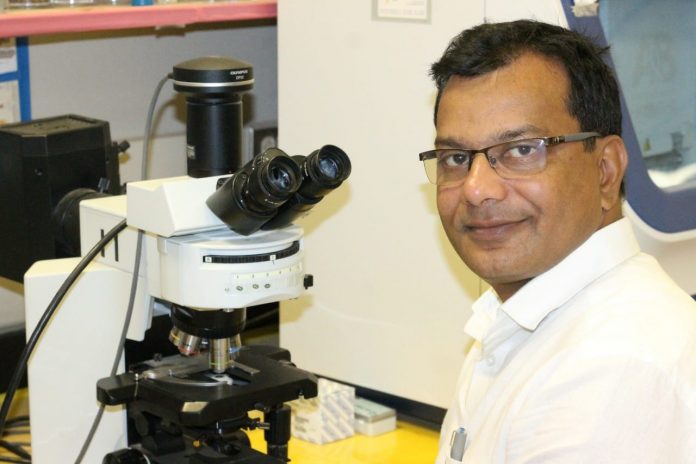
Dr Mohammad Abul Farah, originally from Ranchi in the Indian state of Jharkhand, spoke with TwoCircles.net about the study that has revealed substances and proteins having high capabilities of being used in treatment of the COVID-19 disease. An alumnus of Aligarh Muslim University, he is currently Professor at Saudi Arabia’s King Saud University and closely associated in the Genetics Laboratory at its College of Science in the Department of Zoology.
Having more than a decade of experience in academics and research in cytogenetics and genotoxicity, he is also working with Proteonik Inc, a South Korea based biotechnology research organization.
He opines that “the discovery of novel drug molecules is crucial and is need of the time” as mortality rate due to Coronavirus is rising exponentially and the speed for finding a vaccine must be accelerated with more variety in clinical lab experiments. He explained that at present there are no approved antiviral drugs or vaccines for the treatment of human CoV infection therefore the scientists in this study were compelled to use computational methods to address the problem and build on effective therapeutics against the current pandemic.
One of the co-authors, Dr M Ajmal Ali
Dr Farah informed that the researchers have proposed “potential lead molecules which can be explored as drug candidates for the treatment of the COVID-19 disease.” He further detailed the findings of the study for TwoCircles.net, beginning with the fact that “SARS-CoV-2 Mpro protease enzyme is a well-characterized drug target.” Through the study’s recent structural elucidation based on X-ray crystallography, it has opened an avenue for structure-based drug design. They have also explored “a small library of phytochemicals with previously reported antiviral properties for the identification of small molecular inhibitors against SARS-CoV-2 Mpro enzyme” leading to identification of three lead molecules which exhibit higher binding affinities as compared to the control.
“The findings are novel and exciting as the lead molecules also demonstrated broad-spectrum antiviral activities against SARS-CoV Mpro and MERS-CoV Mpro,” he informed. He also outlined that the scientists screened small drug-like molecules from a dataset of phytochemicals possessing antiviral activities and this was achieved with the help of drug-like filters and toxicity studies. The selected molecules were evaluated for their binding affinity to SARS-CoV-2 Mpro enzyme using molecular docking, from which a total of 38 phytochemicals belonging to the class of flavonoids, alkaloids, essential oils, organic acids, stilbenes and other phytoconstituents were screened. This led to identification of three lead molecules – Bonducellpin D and Caesalmin B and 5,7-dimethoxyflavanone-4′-O-β-d-glucopyranoside – all three having antiviral activities against parainfluenza virus (PI-3) and bovine (cattle) virus. These three lead phytochemicals, he says, “have potential to be developed as effective antiviral drug specifically against SARS CoV-2.”
When asked whether this identification would accelerate the process of vaccine formation or not, Dr Farah pointed that antiviral drug development takes place via classical mechanisms – usually by targeting important virus enzymes such as polymerases, proteases or neuraminidase; however vaccine against a specific virus is developed by injecting the same virus in inactive form or non-pathogenic form to activate the host immune system to produce specific antibodies against the virus. For that, he said “the current findings need further validations through in vitro and in vivo lab experiments for developing into drug candidate molecules.”
Bonducellpin D is a promising drug candidate against coronavirus, suggest the findings. While the three substances were found to be “significantly inhibiting Mpro enzyme that ultimately block the viral replication,” Bonducellpin D was identified as a unique precursor to a vaccine for coronavirus.
Discussing India’s more than 1 lakh mark of current infection rates coupled with a fourth phase of a nationwide lockdown and massive breakdown of economy unfolding with the migrant crisis, Dr Abul Farah highlighted that all the three lead molecules that need further validations through lab experiments can be obtained through a clinical manufacturing company and in case they are not available commercially, they can easily be purified from the source (plant), or could be synthesized in any chemistry lab equipped for organic synthesis.
“Of course, India can afford all these kind of research,” he said, when inquired about the feasibility of obtaining or manufacturing the same molecular binding in research labs in the country. He assured that India has “many high standard virology and clinical trial labs,” and the substances for clinical experiments can be obtained easily.
Ayesha Sultana, who is from Hyderabad, was returning home on Tuesday night after completing her shift at the Al Ahli Screening centre in Dubai when she was stopped by a policeman.
For representational purpose. (Photo | EPS)
Dubai :
An Indian doctor in the UAE was moved to tears after her car was stopped during curfew hours and a policeman, instead of checking her documents, gave a salute, acknowledging her service during the coronavirus pandemic, according to media reports.
Ayesha Sultana, who is from Hyderabad, was returning home on Tuesday night after completing her shift at the Al Ahli Screening centre in Dubai when she was stopped by a policeman at the Dubai-Sharjah highway, the Khaleej Times reported.
Sultana said that she did panic initially but was focused on showing her work permit and other documents to prove that she was a doctor.
According to a report in the Gulf News, Sultana said she was pulling her ID and papers to show to the policeman but “he saluted me, saying I don’t need to show him anything.”
“I was speechless and cried. Despite (the fact that) I was tired (after) work but this salute was my reward and waived my tiredness,” she said.
“I was full of emotions at that moment and didn’t know what to do. I wish I knew his name or face as he was wearing (a) mask. I just want to thank him,” she was quoted as saying in the Gulf News report.
The doctor later tweeted: “As a UAE resident, this is the biggest day of my life THANKYOU.”
“Had tears in my eyes. I’m blessed to be in the UAE and serve the people here,” she tweeted.
Sultana, who was born and brought up in the UAE, said she did not expect she would be dealing with a pandemic when she passed out of the Dubai Medical College in February, the Khaleej Times reported.
“This is my home and I want to do my best in helping UAE fight the pandemic. We see around 200 to 300 people every day – both with and without symptoms. It is very rewarding and I am all the more committed to continue doing my job,” she said.
According to the Johns Hopkins University data, the UAE has over 11,000 COVID-19 cases with 89 deaths.
UAE had been under an overnight curfew since March 26 to stem the spread of the deadly disease.
Dubai had on April 4 imposed a two-week lockdown to contain the virus.
source : http://www.newindianexpress.com / The New Indian Express / Home> World / by PTI / April 30th, 2020
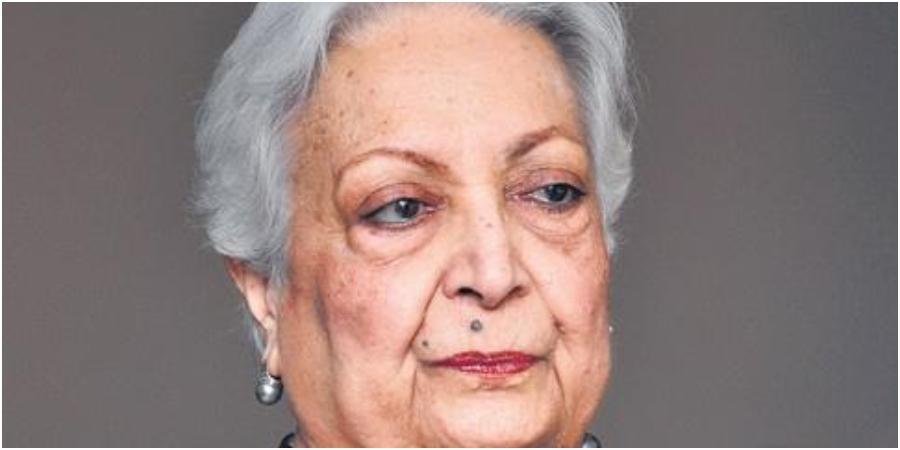
On April 25, the Indian-born American artist passed away at age 83 in London after a prolonged illness.
Artist Zarina Hashmi
In her complete oeuvre that stemmed from her lived experiences in Aligarh, Bangkok, Paris, New York and London, artist Zarina Hashmi constantly questioned the idea of home and belonging.
Her abstract geometric collages, floorplans and maps in printmaking techniques (largely in intaglio, lithography, silkscreen and woodblock), handmade paper and sculpture, and often accompanied with Urdu calligraphy, reflect her Islamic roots, formal degree in mathematics, an interest in architecture, ponderings over rigid geo-political boundaries and tragic memories of the 1947 Partition. The Victoria and Albert (V&A) Museum in London, Museum of Modern Art (MoMA), Hammer Museum Guggenheim Museum in New York…have featured her works in their public collections.
On April 25, the Indian-born American artist passed away at age 83 in London after a prolonged illness.
Poet and culture theorist Ranjit Hoskote, who curated ‘Everyone Agrees: It’s About to Explode’ – India’s first national pavilion at the Venice Biennale (2011) – in which he displayed Hashmi’s prints, was among the first ones to tweet of her demise. “Heartbroken to hear that Zarina Hashmi has passed away in London. She was magnificent: full of wit and shrewd wisdom, her work imbued with a tragic vision…” he wrote, and proceeded to tweet snapshots of her prints being installed and the final display at the 2011 edition.
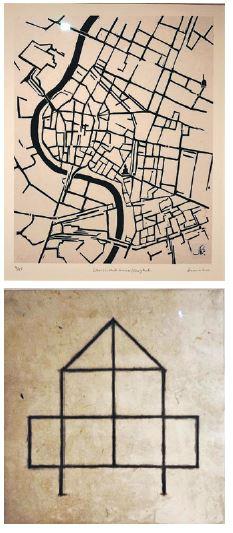
Zarina Hashmi’s prints (top) Letters I Called Home/Bangkok series; and Bangkok 1958-1961
In fact, a major retrospective ‘Zarina: A Life in Nine Lines’ at The Kiran Nadar Museum of Art (KNMA), New Delhi that opened on January 30 during the annual India Art Fair was ongoing till the nationwide lockdown commenced. But Kiran Nadar, Founder-Chairperson of KNMA, is determined the show must go on. “We will be showcasing this show on our virtual platforms for everyone to enjoy. It is quite a coincidence that we are having her show at this time, and we lost her at this moment. It’s a huge loss to the art world.” Nadar remembers meeting Zarina a few times, when she first acquired her work some years ago. “Zarina was much more active and younger at that time. Over the years whenever she came to India, I would get an opportunity to interact with her. Zarina’s art is very subliminal, very basic at one level. She deals with lines and distance that she has abstracted in many ways. When you see her work, it looks emotional.”
For Renu Modi, Founder-Director of Gallery Espace, Hashmi was a dear friend of the gallery. “The passing of Zarina is a deep personal loss. She was a friend as well as an artist Gallery Espace represented. She was a very special person, exceedingly compassionate and lived her life gracefully, on her own terms.”
source: http://www.newindianexpress.com / The New Indian Express / Home> Cities> Delhi / by Ornello D’Souza / Express News Service / April 27th, 2020