Hyderabad, TELANGANA / Birmingham, UNITED KINGDOM :
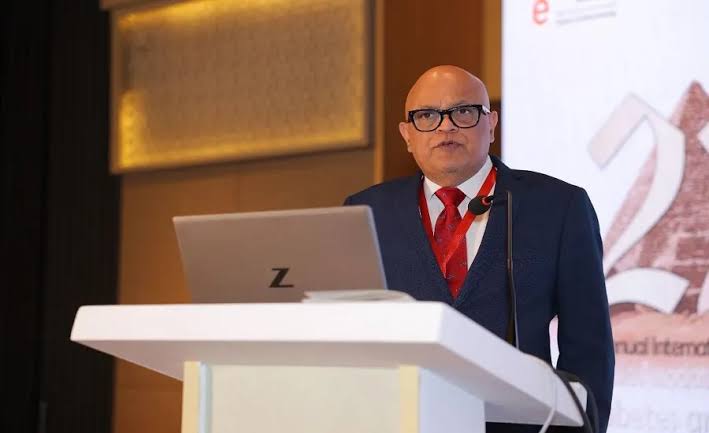
The Hyderabad-origin doctor’s three-decade pursuit of better diabetes care and fairer health outcomes earns him an Officer of the Order of the British Empire (OBE)
Hyderabad :
The news arrived with all the ceremony one would expect of a royal honour. For Prof Wasim Hanif, however, it also prompted a journey in the opposite direction — back to Hyderabad.
Back to St. George’s Grammar School. Back to Gandhi Medical College. Back to the city where medicine first became more than a profession and where a young student began imagining a life in healthcare.
This month, Prof Hanif was named an Officer of the Order of the British Empire (OBE) in the King’s Birthday Honours List 2026 for services to diabetes care and tackling health inequalities. In Britain, the award recognises a career spent shaping policy, advancing research and advocating for patients often overlooked by healthcare systems.
In Hyderabad, the news was received somewhat differently. Here, the honour belongs as much to memory as achievement.
Hanif grew up in a Hyderabad that was very different from the technology hub it would later become. His father served as General Manager of the Azam Jahi Mills at Gunfoundry, one of the institutions that formed part of the city’s industrial landscape. Education was valued, ambition was encouraged and, like many Hyderabadi families of the period, the expectation was simple: work hard, study harder.
Medicine became his path, first in Hyderabad’s classrooms and later in hospitals thousands of miles away. At Gandhi Medical College, Hanif belonged to a generation of students who viewed medicine not merely as a profession but as a public service. The crowded wards, demanding schedules, and constant interaction with patients offered lessons that would remain with him long after he left the city.
When he moved to the United Kingdom in 1995, he joined a long line of Indian doctors seeking advanced training and professional opportunities abroad. Over time, one question increasingly shaped his career: why do some communities experience significantly poorer health outcomes than others?
For Prof Hanif, diabetes was never simply a disease measured through blood sugar levels or laboratory reports. It was also a lens through which broader questions about society could be examined. Why were certain ethnic groups more vulnerable? Why did some communities have less access to healthcare? Why did outcomes differ so sharply between populations living in the same country?
These questions would come to define much of his professional life.
Today, he serves as a professor of diabetes and endocrinology at University Hospitals Birmingham and Clinical Advisor to Diabetes UK. His expertise has taken him far beyond hospital clinics and lecture halls. He has advised the World Health Organisation (WHO), the European Union and the UK Parliament on issues relating to diabetes, obesity, ethnicity and public health.
Yet colleagues often describe him as someone who has remained grounded in the realities of patient care. Behind the research papers, policy recommendations and leadership positions lies the daily work of listening to patients and understanding the circumstances that shape their health.
His work has been particularly influential in drawing attention to the disproportionate burden of diabetes among South Asian and minority ethnic communities. Long before health inequality became a widely discussed public issue, Hanif was highlighting the social, cultural and economic factors that influence health outcomes.
Reflecting on the honour, Prof Hanif responded with characteristic humility.
“I am deeply honoured to receive this award. Throughout my career, I have been driven by a desire to improve the lives of people living with diabetes and to address the inequalities that continue to affect health outcomes across our society.”
The award, he emphasised, belongs to many others as well.
“This recognition reflects the dedication and support of the many colleagues, students, researchers and healthcare professionals I have had the privilege to work with. While this is a tremendous personal honour to my family and me, it is also recognition of the importance of continuing our efforts to deliver fairer, more inclusive healthcare.”
Today, Prof Hanif’s influence extends across some of Britain’s most respected medical institutions. He is President-elect of the British Medical Association, Trustee of Diabetes UK, Non-Executive Director of the BMJ, Chair of the Association for the Study of Obesity UK and Trustee of the South Asian Health Foundation.
Taken together, the appointments speak to the esteem in which he is held within British medicine. Yet honours and titles tell only part of the story. The larger story is about persistence — about a doctor who spent three decades asking difficult questions about fairness in healthcare and working to find practical answers.
For Hyderabad, the recognition carries a special resonance. The city has produced generations of doctors who have built distinguished careers across the world. Prof Wasim Hanif now joins a long list of Hyderabadis whose contributions have transcended national boundaries while remaining rooted in the values and education that shaped their early lives.
The OBE marks a significant milestone. But perhaps its deeper significance lies elsewhere.
It recognises the idea that medicine is not only about treating disease. At its best, it is also about reducing barriers, widening access and ensuring that those most vulnerable are not left behind.
That conviction has guided Wasim Hanif from the classrooms of Hyderabad to the highest levels of British healthcare. The honour may have been announced in London, but its roots lie elsewhere – in the classrooms of St George’s Grammar School, the wards of Gandhi Medical College and a Hyderabad upbringing that first shaped a young doctor’s understanding of service.
__________________
Syed Khaled Shahbaaz is a Hyderabad-based journalist and author of the best-selling coffee-table book ‘The Kohinoors: Distinguished Personalities of Hyderabad.’ He may be reached at syedkhaledshahbaaz@gmail.com.
source: http://www.clarionindia.net / Clarion India / Home> Editor’s Pick>India> Indian Muslim / by Syed Khalid Shahbaaz / June 18th, 2026
