Category Archives: NRI’s / PIO’s

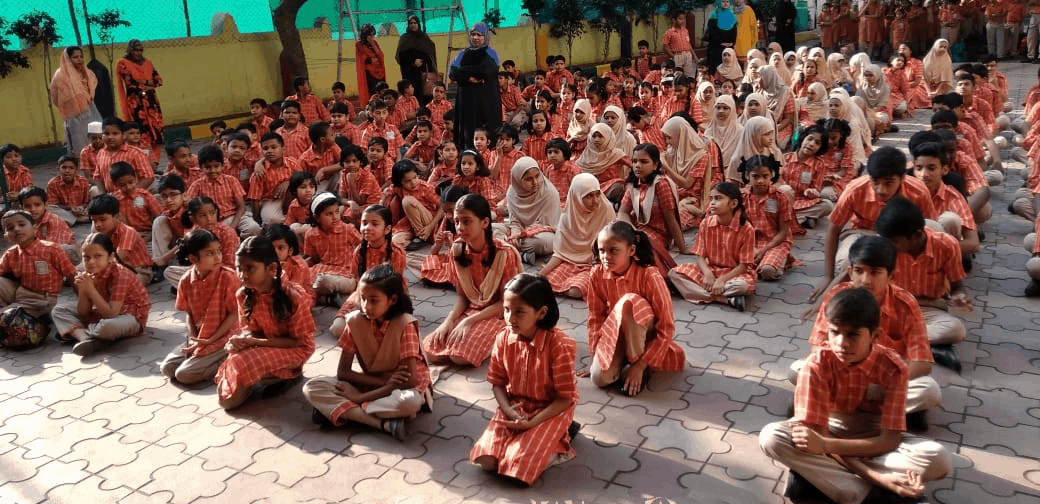
Saudi NRI promoting education in Hyderabad

Hyderabad, TELANGANA / SAUDI ARABIA :

MMS01MPOs06feb2020

Hyderabad:

 Arshad Pirzada’s successful career in Saudi Arabia has enabled him not only to help his family but also serve the community through education initiatives.

Whether it was learning skills from various General Motors representatives at Al-Jomaih Automotive Company or learning from the Indian expatriates, Pirzada’s hard work has paid off.

“Okay, I had gone to the Kingdom to alleviate the economic woes of my own family. But should one stop there? Shouldn’t he think about the people he has left behind in his city who were in the midst of an economic crisis for a long time?” Pirzada asks looking back at his stay in Saudi Arabia.

The moment one asks Pirzada about the ups and downs in his life, he goes back to the times of grandfather (maternal) who was the Collector of Rychur, formerly a part of Nizam’s Hyderabad State. Those were the days when there was peace and prosperity prevailed. But the 1948 Police Action changed all that.

Speaking about how began his journey to educate a miniscule part of the community, he says, “My children are well settled. My wife, on the other hand, is a teacher of Quranic Arabic, author of a book and an entrepreneur in her own right.  She designs and sells mostly Bridal ware. This where my active association with Mount Mercy School comes in,” he informed.

Mount Mercy School
Mount Mercy School

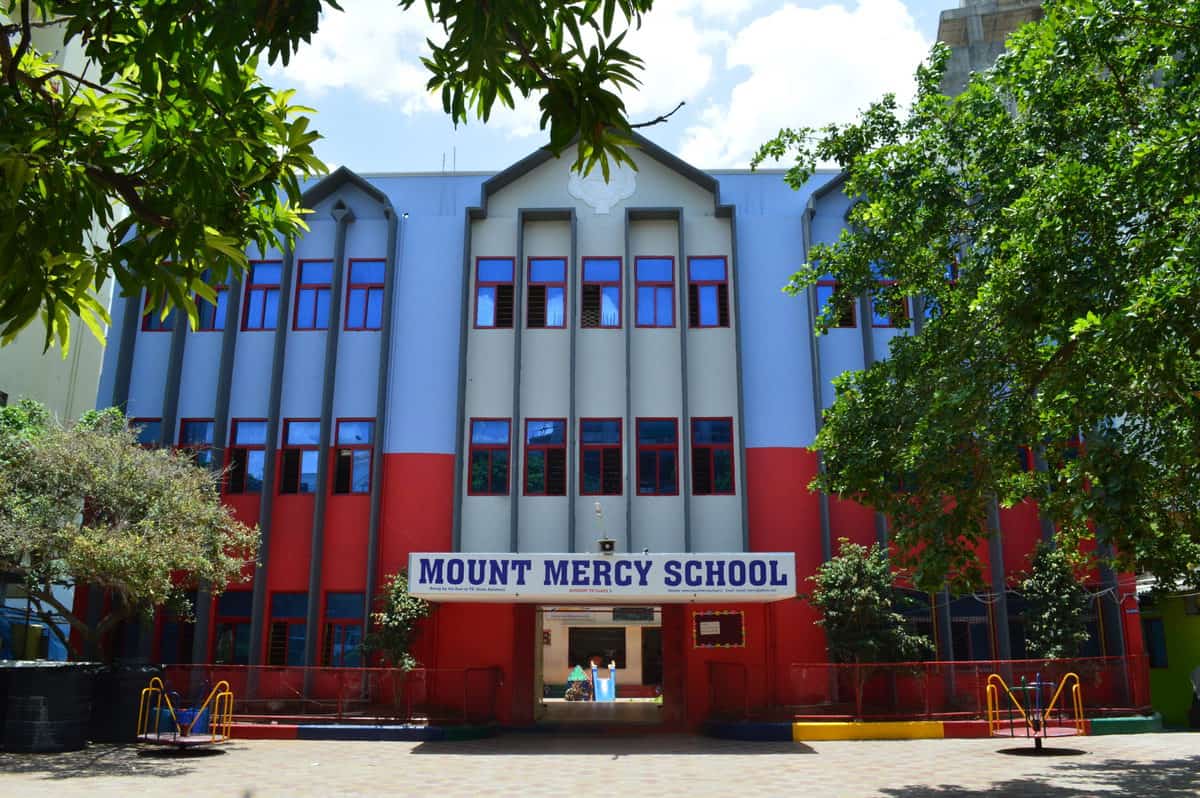
Established in June 1999, the school in its early days has gone through the pangs of growth. There was always a galore of challenges. Initially only 56 students enrolled. Yet, through better infrastructure developed and word of mouth, there are now 850 students.

MMS04MPOs06feb2020

Pirzada mentions, “Not many among us realise how bad the literacy levels are among the Muslims. For example, around 30 to 40 percent of the kids in MMS are first-generation learners who come from families with limited financial resources. Also, whatever money we make is pumped back into the development of facilities at the school.”

He said, “In today’s competitive, globalized market, soft skills are just as important as the hard skills. We also polish the kids and prepare them for interviews for different competitions, contests and tournaments as well.”

Although the journey that lead to him to forming Mount Mercy with others is one that many Hyderabadi gulf migrants will identify with. That too, whether or not they came from the same background as Pirzada.

source: http://www.siasat.com / The Siasat Daily / Home> News> Hyderabad / by Daneesh Majid – Researcher/Writer / posted by Minhaj Adnan / February 04th, 2020

With the End of 2019, A Great Scholar Also Departs for Heavenly Abode

Deoband, UTTAR PRADESH / KENYA / Croydon (South London). UNITED KINGDOM :

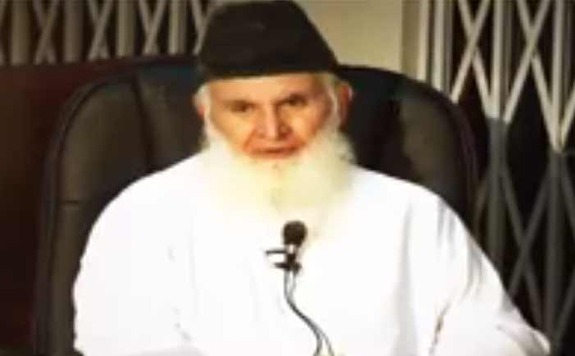
With 2019 saying goodbye, Maulana Izhar Ahmad Qasmi, an embodiment great scholarship, piety, humility, patience and perseverance, also said adieu to this mortal world.

Maulana Izhar Ahmad Qasmi, 74, was born in Deoband, India, and breathed his last on 30 December, leaving his family and admirers in tears.

MaulanaIzharMPOs31jan2020

He belonged to a very rare breed of ulema who had dedicated themselves to the service of Islam. His funeral prayer and burial was attended by thousands of his admirers from all over UK.

A widely respected and admired person, Maulana Izhar worked tirelessly to propagate the message of Qur’an without indulging in controversial issues.

In 1970 when Indian Muslims living in Kenya approached the great scholar and rector of Darul Uloom Deoband, late Maulana Qari Tayyab, and requested him to send a scholar to Kenya for their religious guidance, his choice fell on Maulana Izhar, a man Allah SWT had blessed with a spiritual attraction, humility, politeness and deep knowledge of Deen. He convinced Maulana Izhar to accept this responsibility.

From 1970 – 1983, Maulana Izhar served as the Imam in Pangani Mosque of Kenya. Following political unrest in the country, like several other Asians, Maulana Izhar had to migrate to Britain with his family.

In Britain he established the first mosque in Croydon, a town in South London, and served as an Imam for 15 years until he was diagnosed with a brain tumour and had to undergo a delicate surgery in the 90s.

As an Imam Maulana Izhar earned admirable love and respect of the local community. His knowledge of Qur’an and deep love to spread its message earned him wide respect all over Britain.

After his surgery, doctors said that his days were numbered and that he would not be able to survive more than a few days. But Allah SWT’s plans and works in strange and mysterious ways. When He chooses someone for the service of His Deen, He does it in ways that are beyond human comprehension. Not only did Maulana Izhar lived for at least 21 years but also completed his seminal translation and interpretation of Qur’an, titled, Izharul Qur’an in ten volumes, and continued his Qur’anic lectures even after suffering from stroke after his brain surgery and becoming partially paralysed. Gradually he became bedridden and spent the last few years in this condition.  Strangely until it was possible for him to sit in a chair he continued his Qur’anic lectures on Iqra TV without letting the viewers feel that his body was paralysed and that he was bedridden.

A comment on my Facebook from Dr Atif Suhail Siddiqui, University of Yale, says it all about Maulana’s resolve. He writes, ‘You did not mention one of the most important qualities of Maulana: He performed 42 Hajjs. After every Hajj he used to travel to Deoband to see his parents. In Deoband, my house is next door to his. So whenever he came to India, I used to visit him. When his [extended] family members noticed his swollen shoulder, they were shocked. I am a witness to it myself. They immediately called for a doctor who advised them to take him to an orthopaedist. His x-ray showed a fracture in his shoulder. It was then that it was found out that during Hajj he got pushed during tawaf and fell down. Due to the stroke one side of his boy had become so insensitive that he did not feel any pain and did not realise that his shoulder had been fractured. He performed all the arkans of Hajj in this condition and even travelled to Deoband. May Allah SWT shower His mercy on him.’

Despite such severe condition Maulana did not like to take anybody’s help. Another Facebook friend, Chicago based alim, social media activist, blogger  and YouTuber, Mufti Yasir Nadeem al-Wajidi, said that he had seen Maulana performing Tawaf and SaI during Umrah without anybody’s assistance or a wheelchair despite the fact that ‘He was virtually dragging himself.’ He added, ‘On one occasion Maulana said that his ailment and his bedridden condition had become a blessing for him because it allowed him to finish one Qur’an every day. Seeing this [and his contentment] one of his Christian doctors had embraced Islam.’

Among Maulana’s survivors is the renowned Alim of Britain, Mualana Qasim Rasheed, who himself is an institutions-maker. Lest this be confused with merely establishing mosques and madarsas, let me make it clear that he is the founder and chairman of one of the major charity organisations, Al-Khair Foundation , that does not only send food and other temporary aid to the displaced people in war-torn and hit by natural-disaster-hit regions of Africa, Middle East, Bangladesh and Pakistan but has also built schools and health clinics for them. He has also established two secondary schools and two TV channels in Britain. However, most important of all these is a full-fledged hospital in Gaza . I have mentioned it only to reflect on the impact of tarbiyah on one’s children.

May Allah SWT bless Maulana Izhar saheb with huge rewards for his services and bless Imam Qasim Saheb and all the survivors with patience and perseverance to tolerate this loss.

source: http://www.milligazette.com / The Milli Gazette / Home> Online News> Community News / by M Ghazali Khan , The Milli Gazette Online / January 04th, 2020

An incredible Saudi-Indian tale

SAUDI ARABIA :

Eminent Saudis of Indian origin evoke nostalgic memories
SaudiIndianOriginMPOs20dec2019

Jeddah :

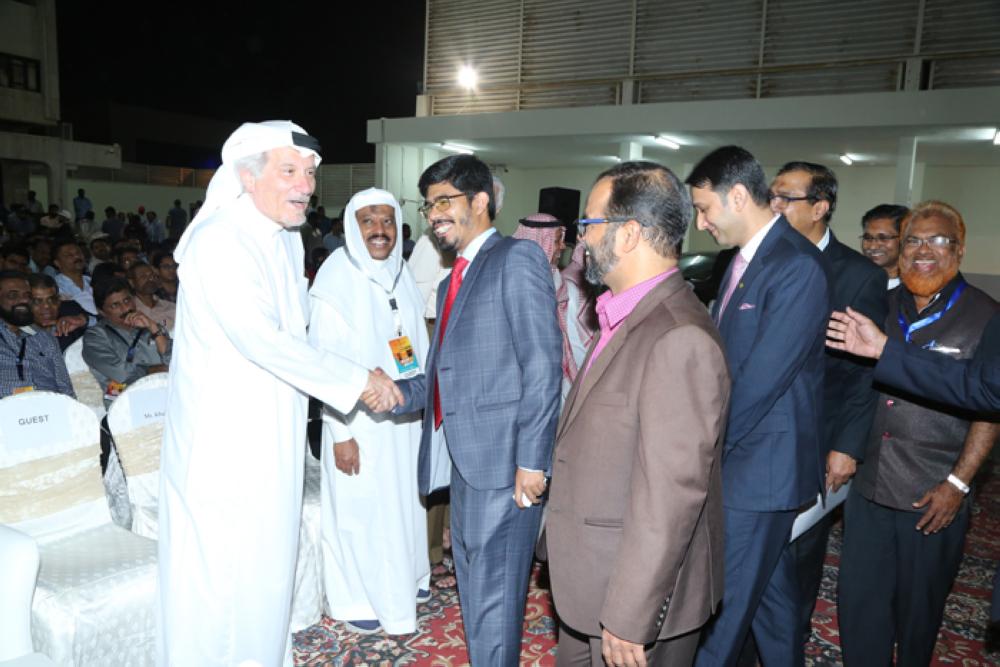
Jeddah, the gateway of the Two Holy Mosques, witnessed a historic event during the weekend, with the gathering of eminent Saudis of Indian origin and thus adding a golden page in the annals of history of centuries-old deep rooted Saudi India ties. The interaction titled “Muziris to Makkah”, the first of its kind in the Kingdom, was organized by the Consulate General of India, in association with Goodwill Global Initiative. More than 20 guests were honored on the occasion.

Going down memory lane, they shared with the august audience, including prominent figures from the Indian and Saudi communities, the untold stories of the beginning of migration by their forefathers from the Indian subcontinent to the Arabian Peninsula nearly two centuries ago.

When they spoke in the original slang of the language of their forefathers that they had inherited with showing their keenness to pass on to their younger generation, it was an enthralling experience for the attendees. They interacted with the Indian expatriate community in Jeddah in English, Arabic, Malayalam, Telugu, Urdu and Manipuri languages.

Ahmed Attaullah Farooqui, founder and CEO of Farooqui Group and representative of UN World Human Rights Service Council, recalled that his family’s lineage reaches the second caliph Umar Al-Farooq, and that his forefathers migrated to India during the period of Islamic conquests. “My great grandfather Haji Imdadullah Farooqui emigrated from Jaipur to Makkah 150 years ago and had a role in establishing Madrasa Saulatiya, the first school in the Arabian Peninsula, along with its founder Maulana Muhammad Rahmatullah Kairanavi.

“The school was named after Saulathunnisa Beegam, a rich Haj pilgrim from Kolkata and wife of Bengal nawab, who made the necessary funding for building the school, which was demolished a few years ago for the largest ever Haram expansion.”

In his interaction, Abdullah Mohyadeen Melibary, popular as Kubba, recalled the arduous journey of his father along with many others to escape persecution of British colonial rulers to Makkah and other parts of Arabian Peninsula. “While I was a child, my father died and so I had to work hard to make ends meet. We used to go to school in the morning and do some work in the evening to make a living.”

“After working as teacher and head of a school in Makkah for 34 years, I continued serving Haj pilgrims for more than half a century since childhood,” Kubba said, adding that he learned Malayalam mainly from Haj pilgrims.

Melibary is the finance manager of Madrasa Malaibariya, established in Makkah 92 years ago. At present, the school is running 12 Qur’an memorization centers in Makkah. Adel Bin Hamza Melibari, supervisor of Madrasa Saulathiya and Melibariya, also shared his experiences.

Talal Bakur Melibari, who served as head of schools in Makkah for 36 years, is the supervisor of Nusratul Masakeen Endowment in Makkah since seven years.

“Our ancestors came 120 years ago from the southern Indian state of Kerala and they established three endowments for education, charity and pilgrims’ accommodation. My father Bakur Muhayyaddeen Melibary, along with 10 others, founded Nusratul Masakeen to feed Malaibari Hajis, as well as to handle their transportation in the holy cities besides extending services for the burial of the dead and hospitalize those who fell sick. Keyi Rubat, established by Mayankutty Elaya, first translator of the Qur’an to Malayalam, and Madrasa Malaibariya are other endowments.

Dr. Abdul Raheem Mohammed Moulana, a renowned Islamic scholar, who serves as chief nephrologist in a Makkah hospital, shared his unique experiences as a physician as well as a great scholar. “When we started the dialysis unit in 1978 in Makkah for Hajis free of cost, there was only one dialysis center in India. At that time, we used to provide free dialysis for Hajis. I also started concentrating in learning more about Qur’an.”

A translator of the Holy Qur’an and Qur’an Encyclopedia and Hadith collection from Arabic into Telugu language, Moulana is now working on an Arabic-Telugu dictionary.

Dr. Abdullah Ramizuluddin Ghouth Ali of King Abdulaziz University shared with the audience about the arrival of his great grandfather Barakatullah Khan from the Kingdom of Manipur. He was the chief justice and the second Muslim who performed Haj in 1825. He returned back to India and then Ghouth Ali’s father came to Makkah and settled down there. “Out of 200,000 Muslims of Manipur, four or five families came and settled down in Makkah,” he said.

Musthafa Bakur Melibary narrated the last moments of Sayyid Abdurahman Bafaqi Thangal, a towering Indian Muslim leader and president of Indian Union Muslim League, who died while taking rest at his home in Ajyad close to Haram during the third day of Haj in January 1973.

Those who were honored also included Mohammed Ramizuluddin Ghouth Ali, a retired mechanical engineer, Faisal Al-Saddik, former CEO of Private Aviation, Adil Mohammed Iqbal Sanai, former senior vice president and head of risk management at the National Commercial Bank, Abdulsalam Ramizuluddin Ghouth Ali, head of maintenance department, Savola Co., Abdulgafoor M. Hassan, founder and CEO of Swipe IT Saudi Arabia, Abdul Qadeer Siddiqi, founder and CEO of Modern Gates Company, Ather Anwer Al-Aqqad, CEO of Mantech Systems Company, Abdul Rahman Abdullah Yousuf, chairman of Al Fadul Freight Solutions Company, Jeddah, Mohammed Saied Malibari, managing director of MOSACO, Taqiyuddin Omar Melibary, retired Control Room Operator at Saudi Electricity Company Makkah, Abdul Basit Abdullah Baitan, head of school in Makkah, Mohammed Bakur Melibari, director of SABIC’s Al-Sharq Company Jubail, Saud Bakur Melibari, operation manager at SWCC Shuaibah plant, Jaafar Ali Melibari, students’ dean at Makkah school and supervisor of Madrasa Malaibariya, Hamad Abdurazak Melibary, administrative supervisor of Madrasa Malaibariya, Eng. Adil Mohammed Ali Walanshira, general manager, Savola Foods and Dr. Gadeer Talal Melibari, lecturer at English language center, Umm Al-Qura University.

source: http://www.saudigazette.com / Saudi Gazette / Home> Saudi Arabia / a Saudi Gazette Report / April 17th, 2019

Hamna Mariyam assumes charge as Indian consul of community welfare

Kozhikode, KERALA / Hyderabad, TELANGANA / Jeddah, SAUDI ARABIA :

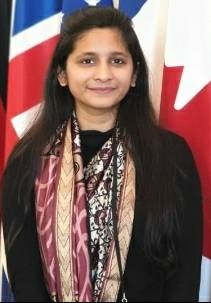
Hamna Mariyam
Hamna Mariyam

Jeddah :

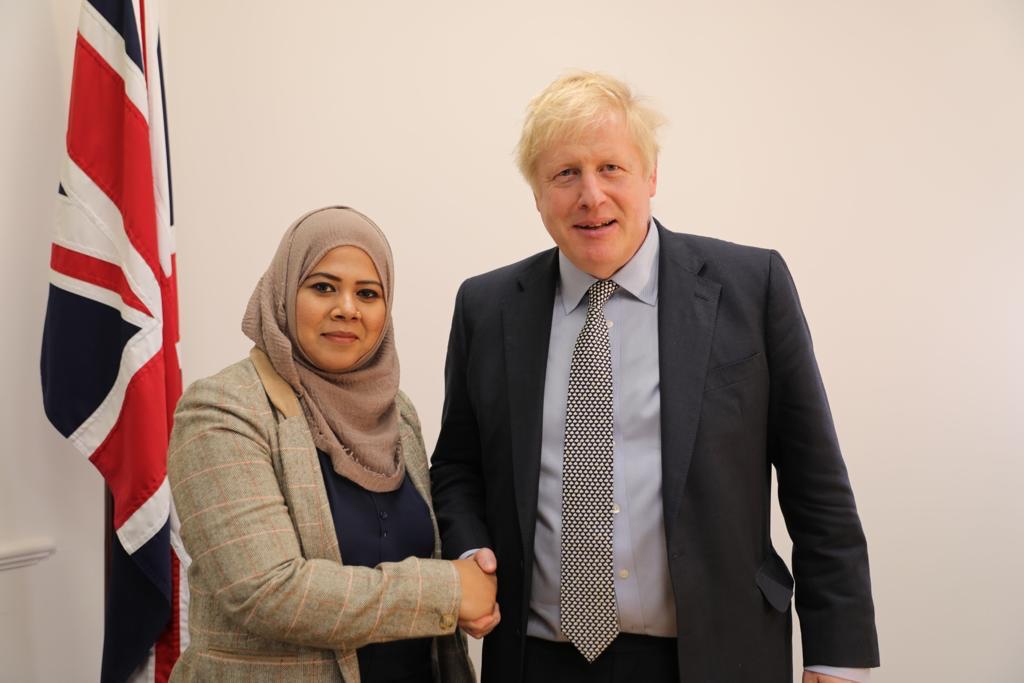
Hamna Mariyam, a young woman diplomat of 2017 Indian Foreign Service (IFS) batch, joined the Indian Consulate General, Jeddah on Dec. 10 as the new consul of community welfare.

Speaking to Saudi Gazette, Hamna expressed her happiness to get an opportunity to serve the one-million strong Indian community in the Western Region of Saudi Arabia. “I see the community welfare as a major area where I can do a lot in serving the vibrant community in this part of the world,” she said.

Hamna assumed the new position after her stint at the Indian Embassy in Paris where she had completed her French language training before leaving Europe in October this year. Earlier, Indian Consul General Mohammed Noor Rahman Sheikh told Saudi Gazette that that he was very happy to have the first woman IFS officer joining the consulate team at a time when the centuries-old historic economic and socio-cultural ties between India and Saudi Arabia have touched new heights of strategic partnership. Saudi Arabia is India’s 4th largest trade partner with a major source of energy and is the 15th largest market in the world for Indian exports.

“Hamna is a very good combination of Malayali who married to someone from Hyderabad, as the Keralite and Telangana communities are the major communities in this part of the world. Hamna’s appointment would help in the consulate’s outreach programs and interaction with these communities at a time when the consulate is very actively reaching out to all segments of the Indian community,” Sheikh added.

Hamna is married to Abdul Muzammil Khan, an IAS officer of Telangana cadre of the same batch and son of retired IPS officer A.K. Khan, who is presently an advisor to the Telangana government. Muzammil Khan, who is working as assistant collector in Vikarabad, left Jeddah on Saturday after performing Umrah along with Hamna.

Though daughter of a well-known doctor couple from Calicut in Malabar region of Kerala, Hamna chose a career other than medicine, and studied English language and literature from Ramjas College and obtained her master’s degree in the same discipline from Delhi University. While serving as asst. professor at Farook College, Calicut, she bagged the 28th rank in the Civil Services examination.

Renowned pediatrician Dr. T.P. Ashraf, former superintend of Calicut Medical College and former executive director of Kerala government’s Social Security Mission, is Hamna’s father while Dr. P.V. Jowhara, a physiologist at Calicut Medical College, is her mother.

source: http://www.saudigazette.com / Saudi Gazette / Home> Saudi Arabia / by Hassan Cheruppa, Saudi Gazette / December 15th, 2019

Kerala NRI in London converts Old Scotland Yard police HQ into 5-star hotel

KERALA / U.A.E. :

At the helm of this 300 million pounds (over Rs 28,06,09,18,200 roughly) investment is the Kerala born NRI businessman MA Yusuff Ali.

Kerala NRI in London converts Old Scotland Yard police HQ into 5-star hotel

A night stay at the hotel will cost you over Rs 40,000 and lunch over Rs 10,000 | Photo from Twenty14 Holdings website

Once upon a time in London, United Kingdom the address people would have wanted to avoid might be now the place they might aspire to be in – The Great Scotland Yard Hotel.

Better known as the Old Scotland Yard that served as police headquarters, now is a plush 5-start hotel.

At the helm of this 300 million pounds (over Rs 28,06,09,18,200 roughly) investment is the Kerela born NRI businessman, MA Yusuff Ali of Lulu Group’s hospitality arm, Twenty14 Holdings.

Calling it a “dream come true” to transform world’s most historic addresses, Adeeb Ahamed, the managing director of Twenty14 Holdings said, “This building holds more tales than ever told and our approach has been multi-layered, with emphasis on stories that are unheard, the hotel is a tribute to the intrinsic spirit of London.”

Opened to public from the December 5, it was inaugurated by Nicky Morgan, UK secretary of state for digital, culture, media and sport.

Speaking about the “exceptional transformation” that the building has undergone Sir Edward Lister, special advisor to the Prime Minister, said, “It is a place which is right at the heart of the city and the government and the West End of London. It’s just a perfect location for a tourist.”

Event was also attended by the High Commission of India, her excellency Ruchi Ghanshyam amongst other Lords and dignitaries.

It might cost upward of 430 pounds (Rs 40,000 roughly) to stay for a night and 100 pounds (Rs 10,000 roughly) to lunch at the The Great Scotland Yard Hotel that has Trafalgar Square, Whitehall and the West End just round the corner.

Current building at 3-5 Great Scotland Yard has grand five storey Imperial Red brick and stone facade with arched main entrance | Photo from Twenty14 Holdings website

From staff wearing brass hand cuff in their belts to retaining some of the writings on the walls, this dog-friendly hotel endeavours to give its guests an eclectic experience of past and the present.

Shafeena Yousuff Ali, the daughter of Yusuf Ali, the woman behind the art and decor of the hotel said that they have tried to give their guests “a transformational experience that will inspire their souls”.

The operations of the hotel have been handed over to The Unbound Collection by Hyatt.

source: http://www.indiatoday.in / India Today / Home> News> World / by Loveena Tandon / December 06th, 2019

First Muslim woman in Virginia Senate from teaching family

Hyderabad, TELANGANA / Virginia, U.S.A :

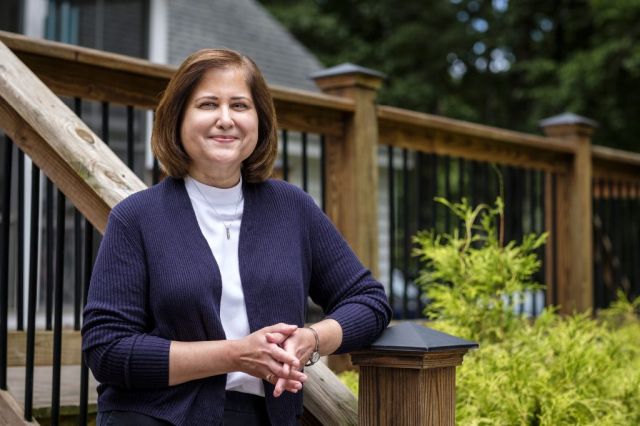
GhazalaHashmiMPOs07dec2019 
Hyderabad:

Ghazala Hashmi, who made history by becoming first Muslim woman to be elected to Virginia State Senate, hails from a family of educationists in Hyderabad.

Migrating to the United States with her family when she was just four, the Indian-American scored a stunning victory over sitting Republican Senator Glen Sturtevant.

The 55-year-old, a Democrat, was elected from Virginia’s 10th Senate District to become the first Muslim-American woman to serve in the State Senate.

A former literature professor and former director of the Center for Excellence in Teaching & Learning at Reynolds Community College, Richmond, she served as an educator for more than two decades.

Hashmi dedicated her win to her supporters with a tweet saying it belonged to all those who believed in the need for “progressive change in Virginia”.

“This victory, is not mine alone. It belongs to all of you who believed that we needed to make progressive change here in Virginia, for all of you who felt that you haven’t had a voice and believed in me to be yours in the General Assembly,” she tweeted.

In another tweet, she also admired the state’s willingness to make the change. “Today we sent a message that the status quo is no longer accepted,” wrote Hashmi, whose campaign focused on education, healthcare, gun violence prevention and environmental protection.

Hashmi was born in 1964 in a highly-educated family. Her parents Zia Hashmi and Tanveer Hashmi obtained higher education degrees from reputed institutions.

Zia Hashmi did MA and LLB from Aligarh Muslim University, where he was also the president of Student Union in early 1950s. Tanveer Hashmi is an alumnus of Osmania University’s Kothi Women’s College. She did BA and B.Ed.

Zia Hashmi later did PhD in International Relations from University of South Carolina. He retired as the Director of Centre for International Studies at the same university.

According to Ghazala Hashmi’s relatives, she was a bright student right from her school days. She earned a bachelor’s degree from Georgia Southern University and a PhD from Emory University in Atlanta.

Her elder brother Dr Sohail Hashmi, who did PhD in International Relations from Harvard University is a Professor at Massachusetts while younger sister Dr. Saira Ali Khan is a physician based in Florida.

Hashmi shifted to Virginia in early 1990s with her husband Azhar Rafeeq, who is Associate Professor in School of Medicine, Virginia Commonwealth University.

The couple has two daughters. Elder one, Yasmin, who has done Masters in Public Health Administration, is working in Washington while Noor is doing Engineering.

source: http://www.mangalorean.com / Mangalorean.com / Home> Agency News / by IANS / November 08th, 2019

Tamkeen Shaikh – born Indian woman Conservative nominee for UK poll

Ahmedabad, GUJARAT  / Barking, UNITED KINGDOM :

Ahmedabad-born Indian woman Conservative nominee for UK poll

London (IANS) :

Indian origin Tamkeen Shaikh, born and raised in Ahmedabad, has been selected as the Conservative Party candidate for the Barking constituency for the December 12 UK elections.

“Delighted to be selected as the Conservative Party Candidate for Barking. Hard work begins now! #BlueBarking,” Shaikh, who studied and worked as a journalist in India before coming to the UK, tweeted on being named candidate.

A staunch supporter of Prime Minister Boris Johnson and Brexit, Shaikh left home 14 years ago for a Masters in media and management in the UK.

Married with two children, Shaikh is now working in the education sector.

She says: “The reason I have joined politics and particularly the Conservative Party is, it’s the best way to contribute to the society and the party believes in creating opportunities for business and innovation.

“Here the Parliament is pushing to have 50:50 representation of men and women and are encouraging women on a wider scale to get involved in politics. If elected my priority is to draw more investments in school, social enterprise, youth engagement, building family homes and care for the elderly.”

“The mantra that has worked for me is ato be consistent and persistent’ that will lead you to achieve your goals. Indians are a large economical contributors in UK and continue to do so. Indian community has integrated well within the community and are making huge progress in all sectors,” she adds.

“Like the majority of Barking residents, I voted Leave and I want to get Brexit done.

“You only have to look at the epidemic of fly-tipping, the state of Barking Station and our failing high streets to realise the Labour Party is failing us. We deserve better than Labour. I live in Barking, my children go to a local school and so I understand the needs of local people.

“We need an MP who will fight for more investment in our schools, improved care for the elderly and to give young people things to occupy them to keep them off the streets and give them a better future.

“I want to see a thriving high street that will benefit social enterprises and small businesses, providing jobs for residents. I am your local candidate representing the local people of Barking and I will get Brexit done,” she promised.

source: http://www.therahnuma.com / The Rahnuma Daily / Home> World / by IANS / November 26th, 2019

Breaking bread between neighbours helps bring down barriers

Kolkata, WEST BENGAL / London , UNITED KINGDOM:

AsmaKhanMPOs27oct2019

Interview

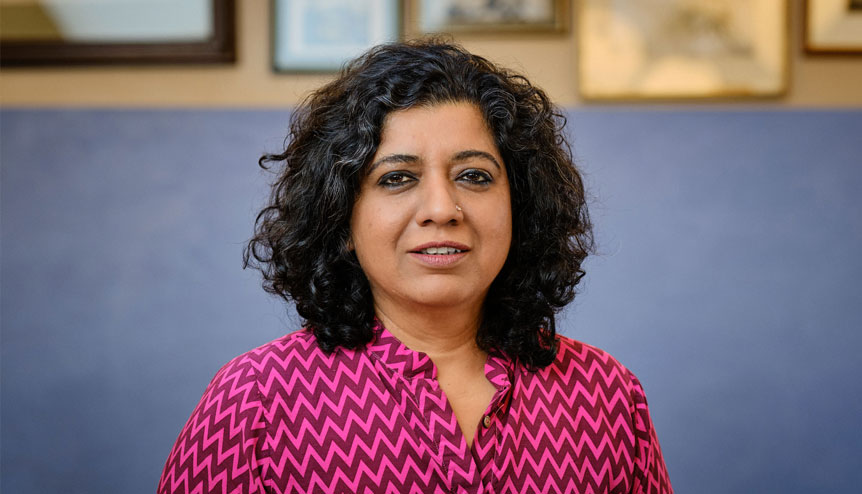
Drawing from her vast knowledge of  Indian cuisine, celebrated British chef Asma Khan dives into how a shared love for food can blur the boundaries of race and gender.

How would you define the soft power of Indian cuisine in the world?

The beauty of food is that you can enjoy and appreciate it without having to understand the language or the intricacies of a culture. It is the first contact many non-Indians have with Indian heritage. Indian food is a doorway to Indian culture and its people. It sparks conversations between people of different ethnicities.

The prevalence of Indian restaurants and food in supermarkets in countries like the UK means that almost every person has a chance to try and taste the country’s food.

What are some transformative business models (and hiring practices) that you feel could harness the potential of Indian food globally

AsmaKhan02MPOs27oct2019

It is important that food from a culture reflects the roots, flavours, and aromas of that cuisine. Given the popularity of street food in big cities around the world, it is one way in which Indian street food can be presented. Street food is complex, but people of all nationalities can be trained to assemble and serve these dishes.

As far as restaurants are concerned, the traditional model of family-owned businesses is deeply under threat as the next generation seldom wants to go into this business. In the UK, this has resulted in the closing down of many restaurants. A radical rethink is required in the way staff are recruited and trained. The first change should be an attempt to increase the number of women working.

Are the nuances of Indian food filtering through alongside its general popularity?

The generic Indian food, which was popular a decade ago, is still favoured by many. There is a greater awareness of regionality of Indian cuisine because of cheap travel to India, and information available on both the internet and television.

Does cuisine have a role to play in wider political debates, such as Brexit?

There isn’t a united cuisine of Europe. The European Union’s biggest role when it came to food was establishing vigorous health and safety regulations for the food industry and for the way we farmed and fished.

In Europe, there is a very strong regional tradition when it comes to food, which was not impacted by the birth and extension of the European Union. There is no doubt that breaking bread between neighbours is helpful, and sharing a meal helps bring down barriers between people.

How would you categorise your vision for gender balance in the workplace?

My vision is one of equality, equality for opportunity and progression in kitchens for men and women. There is an urgent need to establish codes of conduct, which protect the dignity and honour of everyone working in the kitchen. For too long, the dominant position of the head chef, invariably a man, has meant that the culture of a kitchen is very masculine and sometimes toxic and aggressive. This can intimidate and exclude some women working alongside these men. There has to be respect for women in all kitchens.

How can food technology be harnessed to tackle health-related issues such as diabetes?

There is a growth in food items that are low in fat, low in cholesterol, that are targeted to people trying to practice a healthier diet. Additional information in the labelling for diabetics is the way forward as healthy eating is the standard advice given to them. Diabetics do not necessarily need food produced specifically for them as there is already a growth of low sugar, low starch options.

How does being a Global Indian impact your wider worldview?

I have the advantage of being from the east and the west. I feel rooted in two nations. My cultural and culinary heritage is Indian. This is a great advantage in the work I do as I can present the cuisine of my country of origin with a depth and understanding that comes from having lived there for the first 22 years of my life.

Even though I have now lived longer in the UK than in India, I still feel a deep-rooted connection to my motherland. I can, therefore, explain to someone from another heritage who I am, where I come from, and what my country stands for.

source: http://www.indiaincgroup.com / Home> Interviews / October 24 & October 25th, 2019

Jamia Hamdard to confer honorary doctorate to Frank F Islam

UTTAR PRADESH / NEW DELHI / U.S.A. :

Frank F. Islam
Frank F. Islam

New Delhi :

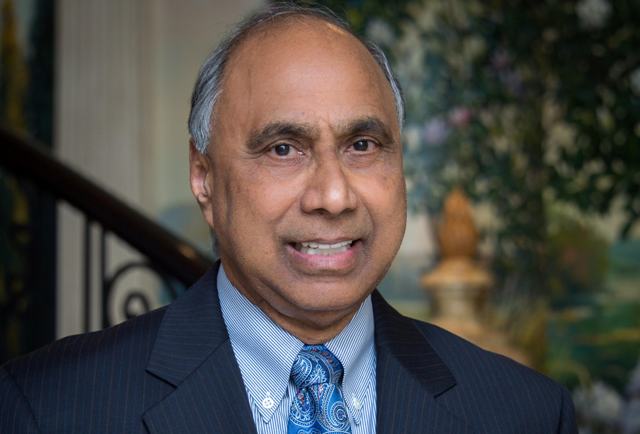
Jamia Hamdard, an institute of higher education announced that it will confer Honorary Doctorate to Dr. Frank F. Islam.

Islam will be formally conferred Doctor of Science (Honoris Causa) by the Jamia Hamdard University in a Special Convocation on 15th October, 2019, the registrar of the institute, S. S. Akhtar said in a statement.

Islam is an information technology entrepreneur, investor, philanthropist, civic leader, and writer who heads the FI Investment Group. He was the founder and CEO of the QSS Group and has served on numerous boards and advisory councils including the Board of Trustees of the John F. Kennedy Center for the Performing Arts, Board of Directors, Strathmore Center for the Arts, Ford”s Theater Society Board of Trustees and Kennedy Center International Committee on the Arts.

Islam joins the list of other distinguished recipients who have been honoured by Jamia Hamdard which includes N. R. Narayana Murthy (Co-Founder of Infosys), Bharat Ratna C.N. R. Rao, Sheila Dikshit (Former Delhi CM).

Inaugurated by late Rajiv Gandhi, former Prime Minister of India on August 1, 1989, Jamia Hamdard has recently been recommended by the Empowered Committee appointed by the Government of India for recognition as an “Institution of Eminence” and placed at the 5th rank among the 500 or so privately funded Universities of India.

–IANS

source: http://www.muslimmirror.com / Muslim Mirror / Home> Education> Indian Muslim / by IANS / October 12th, 2019

Oman raring to go for 8-nation ACC U-16 Championship

Chennai, TAMIL NADU / Muscat, OMAN :

AymanMPOs17oct2019

Muscat :

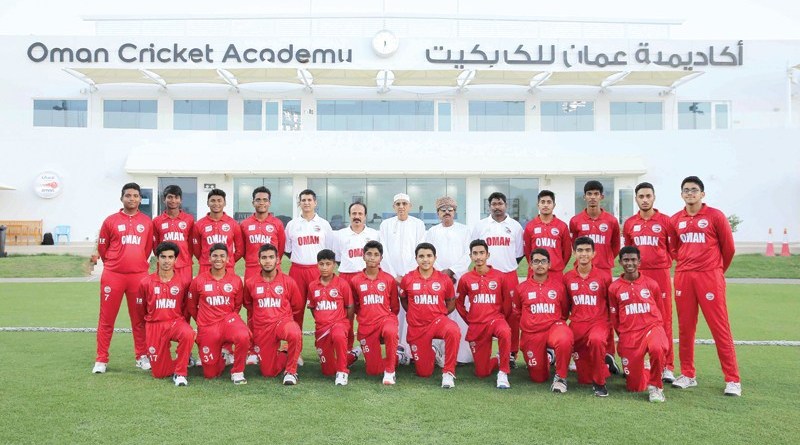
Soon after successfully hosting the Pentangular T20 Series, Oman is now gearing up to hold the Asian Cricket Council’s Under-16 Western Region Championship, starting on October 21 at its picturesque twin grounds in Al Amerat.
Having won the five-nation T20 series at senior level, Oman are now looking to repeat the feat at junior level too but this time the matches will be a 35-over a side affair.
Group A comprises UAE, Saudi Arabia, Iran and Bahrain while Group B consists of Oman, Qatar, Maldives and Kuwait.
With top class indoor and outdoor training and practice facilities, apart from the two wonderful grassy grounds, Oman is now emerging as a busy international cricket venue. Many bilateral and multilateral tournaments are going to be held here in the coming months.
Young Amanpreet Singh Sirah has been appointed captain of Oman team for the tournament and will be assisted by wicketkeeper batsman Shanmugarajan.
The team is being coached by Syed Tariq Hussain who is being assisted by Pervez al Balushi. Packed with plenty of penetrating spinners and all-rounders, Oman is expected to reach the semifinals.
“The boys have been training hard for the tournament and I am quite confident we will do fairly well,” said Oman coach Tariq Hussain.
Two games are scheduled to be held at 9.30 am daily, one each on OC ground 1 and 2.
The first day will see UAE taking on Bahrain and Saudi Arabia facing Iran on October 21. Oman will play their first game on Tuesday, October 22, against Kuwait while Qatar will take on Maldives on the adjacent ground.
The semifinals will be held on Monday, October 28, followed by the final the next day at OC ground 1.

Oman squad:

Amanpreet Singh Sirah (captain), Shanmugarajan (wicketkeeper, vice-captain), Mohammed Nihal Siraj, Yash Verma, Bilal Asim, Arjun Dhiman, Siddh Mehta, Ayman Ayaz, Jayesh Anil, Sanjaya Ravindra, Zayed Ali Khan, Viraj Ashar, Abdullah Iftikhar and Tanuj Sivakumar.
Reserves:

Navneeth Krishnan, Aditya Gurumukhi, Qais Khalid al Balushi and Ishan Jabir.
Officials:

Sher Mohammed (manager), Syed Tariq Hussain (coach), Parvez al Balushi (assistant coach), Suresh Kumar (physio).

source: http://www.omanobserver.com / Oman Daily Observer / Home / by Shahzad Raza / October 16th, 2019