Vlogging or video-blogging is nothing new in this modern age of technology. But there is an interesting vlogger family worth knowing about. Let’s meet four women from a family in Malappuram, who have established their paths in successful vlogging – Shamseera, Femina, Sabeena and Shabna.
Moyin KP and Khadeeja EC belong to the village of Munduparamb in Malappuram. They have four children – a daughter and three sons. Their daughter Shabna and the three daughters-in-law are into vlogging now. It all began with Shamseera, their eldest daughter-in-law. She grew up in Kerala and Qatar and lived with her husband and kids in Dubai where she too worked for a while. But when they moved to Saudi Arabia in 2014, she found it so different from the places she had been till then – it was hard to go out alone, she couldn’t work as job opportunities were very less for foreign women back then.
Her only solace then lay in her cooking experiments, reading and crafts etc. She even joined her kids’ school as an art teacher but soon realised that ‘teaching itself was art I (she) lacked’. In between, she was also watching videos on YouTube, which gradually brought her to the idea of starting a channel of her own. Shamseera began a YouTube channel in 2016 but had to drop it due to some technical issues. She then began another one in 2017 and uploaded the videos of the previous one in it and thus started the journey again. Since then, she hasn’t turned back from her ‘Momtastic’ channel. (https://m.youtube.com/channel/UCL-LW86fWpQejgKbsoWrQqw#menu). She now has 2.98 lakh subscribers from different parts of the world.
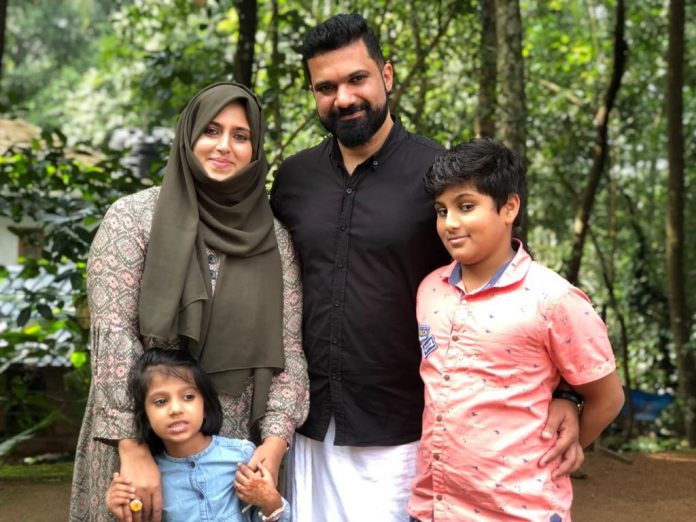
Shamseera Sherin and family
The other three were inspired by Shamseera. Shabna Hasker was the second to enter the field. She began her channel ‘Taste Tours’ (https://www.youtube.com/channel/UCwXXEk9v87KS57cFkpoTgIQ) in May 2018, and soon Sabeena Shemin joined with ‘Sabeena’s Spice Diary’ (https://www.youtube.com/channel/UChiazvVDnNGssDgqshIKGAA) in June 2018. And now, Femina couldn’t stay back. She joined the YouTube journey along with her husband Shajin in October 2018 – ‘Femina & Shajin’ (https://www.youtube.com/channel/UCzfIuOwn17TYHnt9NygsWKg) The topics they have selected are all similar – cooking, cleaning, organizing, gardening, crafts, travel, daily house chores etc. Shamseera chose English as the medium for her vlogs, though she has done one in English, Malayalam and Hindi together. Sabeena and Femina began in English and switched to Malayalam owing to the request of viewers. Shabna uses only Malayalam in her videos.
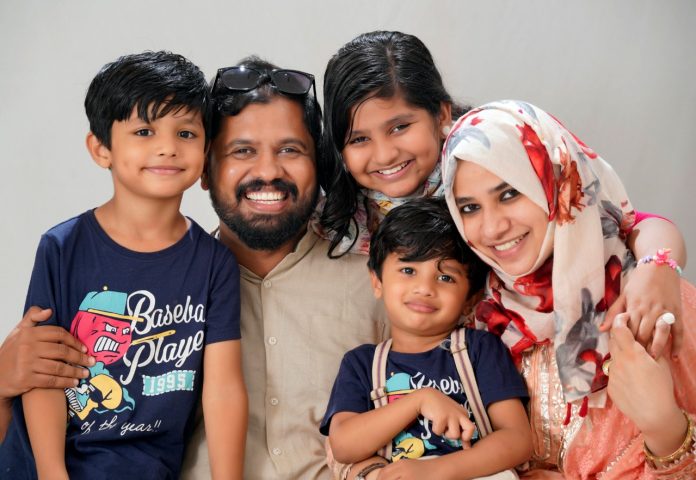
Femina Shejin and family
All the four ladies manage their YouTube channels along with taking care of their respective families and running their houses. Shamseera, a graduate in commerce, lives in Riyadh with husband and two kids. Femina, an MBA graduate, is in Calicut with her husband and two kids. Sabeena, a Statistical Investigator on leave from government service, lives with husband and a kid in Sharjah. Shabna, a graduate in commerce, lives in Malappuram with husband, three kids and parents-in-law. Speaking to TwoCircles.Net, they said that they wished to upload videos twice or thrice a week in a fixed time but were not able to do so always. Shamseera, Femina and Sabeena shoot their videos and do the related works when their kids are away in school, while Shabna has her youngest child always with her at home and so has to do her works at night after the kids go to sleep. All mentioned the support of their families. Shabna’s channel has more than 1.5 lakh subscribers, while Sabeena’s has 1.01 lakh and Femina’s more than 31,000.
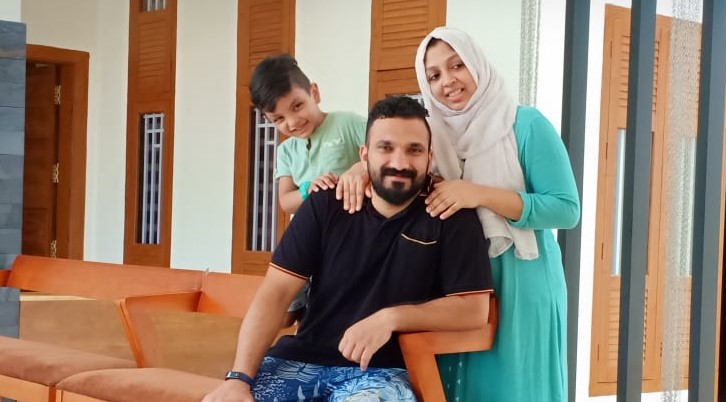
Shabna Hasker and family
Shabna now has a cookbook to her credit – ‘Janapriya Ruchikal’ by leading publisher DC Books, expected to be released soon. It was her husband Dr Hasker who suggested the idea and pushed her into writing it when she was reluctant. Shamseera has even starred in an advertisement for the famous Lulu Supermarket.
When asked how they managed their private life and public vlog with the camera inside their homes, all four said they were extremely particular that their vlogging shouldn’t affect their private lives. Shabna said, “We do capture our daily life at home but only for a short time. For example, we capture the first few moments of having food and then turn it off. So we have our time too.” Femina owes the lag between her videos to the priority she has kept.
shabna hasker
While the other three vlog on their own, Femina does it along with her husband. “It is good. We can spend some more time together,” she said. In addition to the usual topics dealt with by all, they also do comedy videos along with their kids. However, there are times when Femina has to do the vlogs alone as Shajin gets busy with work. The daughter of an Army Major, Femina was born in Kerala and grew up in different parts of the country. After completing her graduation in Commerce, she did MBA in HR and worked for a while when they were in Dubai and back in Kerala. Now she is also running a home décor-related business online.
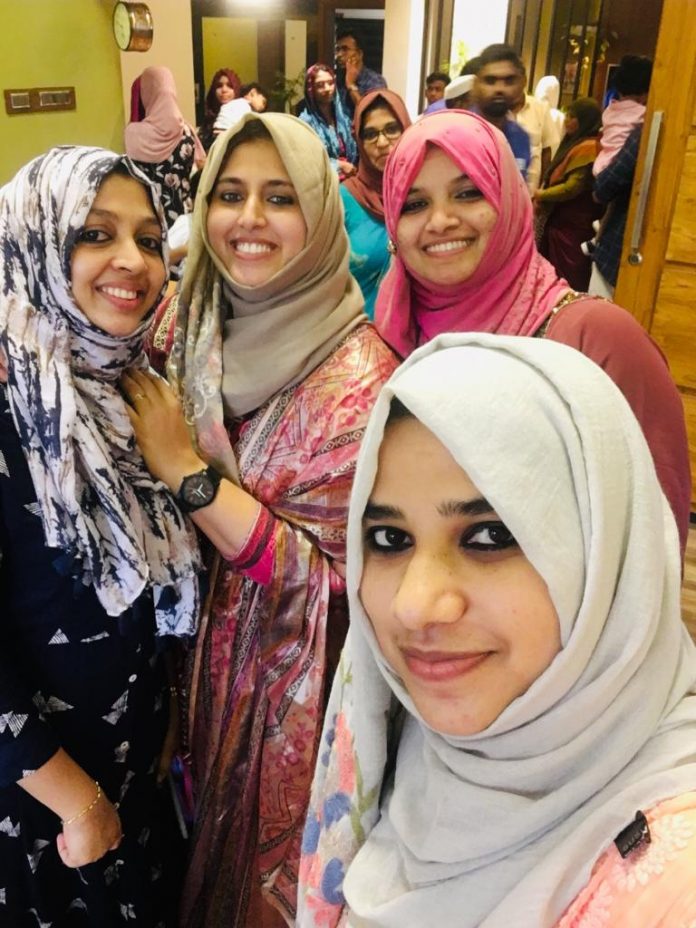
Sabeena Shemin and family
They also try to keep regular contact with their viewers–replying to messages on social media and trying to do videos on request. “Editing and uploading a video is a big task. My eyes get tired, my energy levels fall. But once I publish a video, the comments from my loving viewers are just enough to make my battery level go 100% in a few seconds,” said Shamseera. She recalled an experience she had last month on a trip to Kochi when a lady rode 6-7 kilometers on a scooter with two kids just to meet her.
So, how has YouTube affected their lives? Shamseera confesses she was reserved and shy earlier, but vlogging has made her a more confident person. Life has become busier and more hectic, but now that they are used to it, Femina says it is a beautiful mix. The women are doing their bit for charity too, the latest being during the floods in Kerala. Life has changed for all the four – getting recognized is indeed a matter, but it makes them more responsible too.
source: http://www.twocircles.net / TwoCircles.net / Home> TCN Positive> Indian Muslim> Lead Story> Women / by Najiya O – TwoCircles.net / September 16th, 2019
The decision by the Indian Muslims Association of Greater Houston( IMAGH) to become a Welcome Partner for the community reception to Prime Minister Narendra Modi is another step by IMAGH to rise above divisive politics in solidarity with other Indian-American organizations.
It was a unanimous decision by the IMAGH Board of Directors and the Executive Committee to be part of the organizing committee. Some 50,000 people have registered to hear Prime Minister Modi in what will be the largest audience in the US for a visiting foreign leader other than the Pope. 612 organizations have registered so far to be the Welcome Partner and the online registration is still open on howdymodi.org . Over 1,000 volunteers are working tirelessly to make the event a grand spectacle for the Houston community.
“The mission of IMAGH is to foster unity across cultures, communities and religion. We can only work toward this goal by engaging with all groups. We may not agree with their beliefs, practices or ideas but unless we interact with them in a cordial and friendly atmosphere, we cannot get our point of view across to them,” said Dr. Maqbool Haq, Chairman of the IMAGH Board of Directors.
Alluding to plans by a section of the people to stage a protest at NRG Stadium where Prime Minister Modi will be addressing the community on September 22, Dr Haq said,” We feel, we should try to have a seat at the table to present our views rather than not be at the table.”
Latafath Hussain, founding president of IMAGH, said, “I am very proud to be both an Indian and a Muslim. Growing up in Varanasi (Modiji’s constituency), I always felt that I had the same opportunities as everyone else. So when the duly elected leader of mother India comes visiting my adopted home town, it is my duty to give him a warm welcome.”
In a major outreach effort three months ago, IMAGH invited Ramesh Bhutada, national vice president of the Hindu Swayamsevak Sangh in America to be the chief guest at the organization’s signature event to celebrate Muslim festival of Eid al-Fitr, opening a new door for Hindu-Muslim cooperation in Houston and beyond.
Bhutada was forthcoming in his speech and received standing ovation by over 500 people at the event. He introduced himself as vice president of Hindu Swayamsevak Sangh, which is an independent US organization that takes inspiration from RSS in India and declared: “The RSS and the HSS would like communal harmony and unity among all religions.”
He quoted RSS chief Mohan Bhagwat, “India’s development cannot be complete without the development and progress of the minorities.”
Bhutada said: “We all have historical baggage — let’s acknowledge that — but we cannot look backwards. We have to look forward and that is the only way we can lead a peaceful life in this world.”
Hussain thinks that in order to move forward we must understand that we may be Hindus or Muslims or Christians but we are primarily Indian and are “part and parcel” of the Indian community in Houston. “In the community, there are, as there should be, political differences, but that’s for private debate. In front of the larger Houston and American community, we have to stand as one.”
Vijay Pallod, who is on the boards of IMAGH and Hindus of Greater Houston (HGH), says that both the organizations are unique in their role to carry out their missions with respect and understanding for each other.
The close cooperation between Hindu and Muslim organizations dates back to September 2010 when India Culture Center, an umbrella organization of various Indian groups, decided to host an Eid Milan party in collaboration with Indian Muslim groups. The joint event was an instant success and led to creation of IMAGH to foster amity across cultures, communities, and religions.
“We, in Houston, are proud to have a united happy community that respects interfaith customs and traditions by participating and celebrating Diwali, Holi, Eid, Christmas and Baisakhi,” said Col. Raj Bhalla who was the Event Chair of the Eid Milan party in 2010.
Talking about the joint event, Swapan Dhairyawan, president of Houston ICC in 2010, said, “This interaction and pollination has led to several positive and healthy relationships not only among individuals but also between organizations.”
India’s present Consul General in Houston, Dr. Anupam Ray, also helped in promoting cooperation by hosting an Iftar party in the fasting month of Ramadan for the past four years where people professing different faiths and nationalities were invited to break the fast with Muslims at the end of the day.
Although these efforts may appear to be the feeble first steps, the Houston community is showing its determination to move forward as ONE.
source: http://www.indiacurrents.com / India Currents / Home> Latest – Community / by Haider Kazim / September 14th, 2019
In a revolutionary move, Kerala State Haj Committee has got its first woman member. INL leader and Kanhangad municipality vice-chairperson L Sulaikha will serve the Haj Committee for the next two year
Malappuram :
In a revolutionary move, Kerala State Haj Committee has got its first woman member. INL leader and Kanhangad municipality vice-chairperson L Sulaikha will serve the Haj Committee for the next two years.
(Photo | EPS)
“It is a happy occasion and I am glad to serve the committee,” Sulaikha told Express.
The INL Kanhangad constituency committee secretary received official confirmation from officers concerned on Saturday, and she is all set to leave for Thiruvananthapuram to attend the new committee’s first meeting. Sualikha said that she will give emphasis on reducing the inconveniences faced by women pilgrims to Mecca. “In fact, females outnumber male pilgrims when it comes to Haj, and it’s the need of the hour to ensure women representation in Haj Committee,” she said.
This year, around 1,120 women applicants have left for Mecca without Mahram (male escort) after reforms were brought in the revised Haj policy by the Haj Committee of India. This relaxation for women was brought in lines with changes in Saudi Arabia’s Haj rule. In 2014, Saudi changed its rule that prevented women from performing Haj without related male or husband.
A graduate in English Language and Literature, Sulaikha was elected to Kanhangad municipality for the first time in 2010; she was the health standing committee chairperson in the civic body.
Sulaikha is thankful to INL leadership: “The support extended by my leaders helped me get the new position.”
Sulaikha’s husband Abdul Ameer is a Qatar-based businessman. Their daughter, Fathimath Naj Beegum, is third class student.
Apart from Sulaikha, the new committee has P V Abdul Wahab MP, MLAs Karat Razak and Muhammed Muhsin, Bahauddeen Muhammed Nadwi, Kadakkal Abdul Azeez Moulavi, C Mohammed Faizy, Abdu Rahman, Musliyar Sajeer, Anas MS, VT Abdullakoya Thangal, Mohammed Qasim Koya, H Muzammil Haji and PK Ahammed as elected members.
Besides, Kerala State Wakf Board chairman Syed Rasheed Ali Shihab Thangal and Malappuram district collector Amit Meena are ex officio members.
The first meeting, which is to be held in Thiruvananthapuram on Monday, will elect the new chairman.
source: http://www.newindianexpress.com / The New Indian Express / Home> States> Kerala / by Shafeeq Alingal / Express News Service / August 13th, 2018
Surat , GUJARAT / Bombay (now Mumbai) MAHARASHTRA / London, ENGLAND :
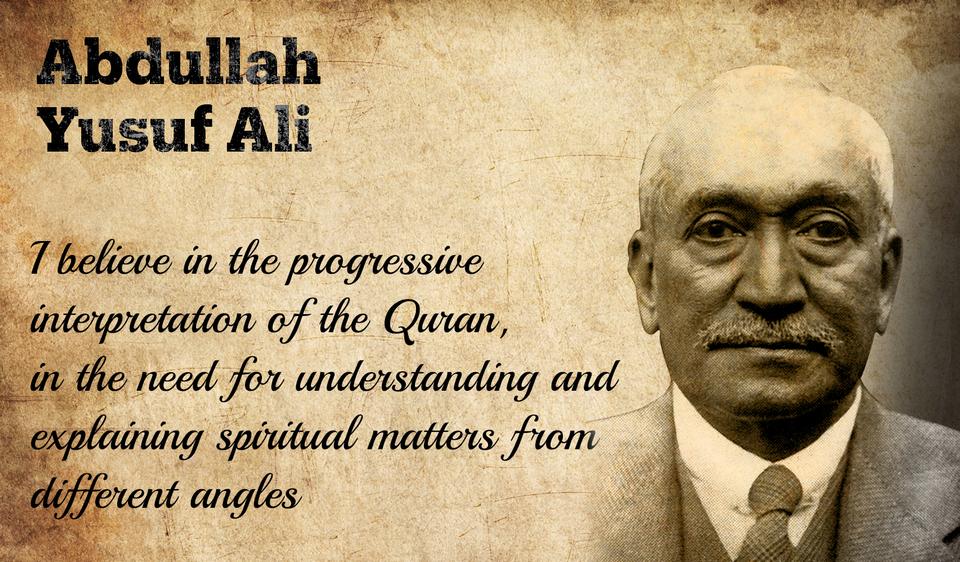
Abdullah Yusuf Ali wrote perhaps the most famous translation of the Quran but he also supported the British against the Ottomans and died a lonely man.
On a frigid December morning in 1953, a policeman found a half-conscious old man slumped on a street bench in the Westminster area of London. He was in a delirious state and died a day later on December 10. Ali
That man was Abdullah Yusuf Ali, the famous 20th-century translator of the Quran. He died alone, homeless, and with no one by his side. When the news reached Pakistan’s embassy in London, it dispatched someone to pay for his last rites.
“It pains me to think that so able and eminent a gentleman should have met with so pathetic an end,” Mirza Abul Hassan Ispahani, Pakistan’s High Commissioner in London, wrote in a letter to his prime minister two days later.
Generations of Muslims in English-speaking countries have grown up reading Yusuf Ali’s interpretation of the Quran. More than 200 editions of it have been published so far, making it perhaps the most read commentary in any non-Arabic language.
“Ask any English-speaking Muslim what translation and commentary of the Quran they originally studied, and the chances are that it was the one by Abdullah Yusuf Ali,” writes a commentator.
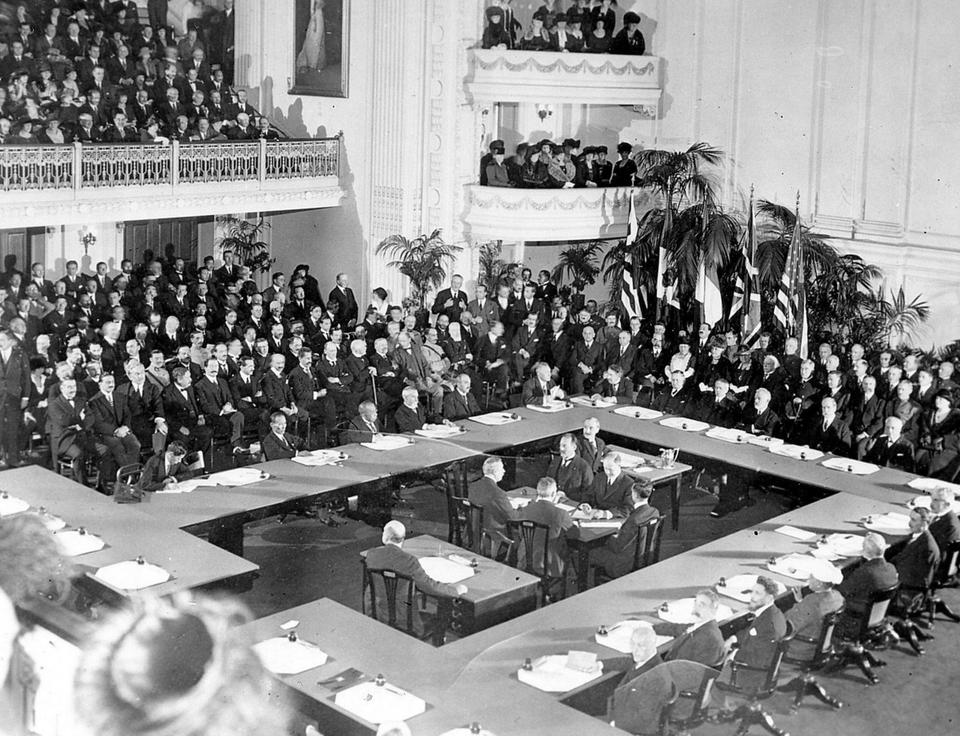
Yusuf Ali’s work and affiliations solidify his place as a giant of his time. He was one of the most senior Muslim civil servants during the British Raj, rubbed shoulders with the likes of Mohammad Ali Jinnah and the Aga Khan, inaugurated the first mosque in Canada, represented India at the Paris Peace Talks in 1919, was a trustee of London’s oldest mosque, and a known educationist. He was also a prolific writer on Islam.
But how did a prominent Muslim like him meet such a terrible end? Why was he forgotten so quickly?
A child of his time
In 1915, during World War I, the British faced a dilemma. Nearly half a million soldiers were Muslims from the Indian Subcontinent — modern-day India, Pakistan and Bangladesh — which was then under colonial rule. Some refused to fight the Turkish Ottoman soldiers who had joined the war against the allied army.
A mutiny broke out in November of that year in Singapore where Indian Muslim soldiers turned their guns on officers and took control of the island. The uprising was quickly crushed and 70 Muslim men were lined up against a wall and executed.
The events shook British officials. Many Muslims considered the Ottoman Sultan Mehmed Reshad as their Caliph. Their personal affinity and strong connection led to the Khilafat Movement in India that called for boycotting the British.
Abdullah Yusuf Ali thought otherwise.
“Fight ye glorious soldiers, Gurkha, Sikh or Muslim, Rajput or Brahman!” he said in a November 1914 speech at a London event in front of top British military officials. “You have comrades in the British army whose fellowship and lead are a priceless possession to you.”
In his talks and articles throughout the war, he urged fellow Muslims to side with the British, at times doing it so effusively that his rhetoric appeared jingoistic.
“The Ottoman Caliph announces Jihad against the British and what does Yusuf Ali do? He goes around European countries asking Muslims to fight for the British,” Humayun Ansari, a professor of Islam at the University of London, told TRT World.
“He was consistently loyal to the British and considered the British Empire to be a blessing. In his understanding of Islam he was very liberal. He wanted a reconciliation between the Muslim and Western philosophy.”
Abdullah Yusuf Ali attended the all-important Paris Peace Conference in 1919. (Getty Images)
Yusuf Ali was born in 1871 in Surat, western India, during a period of great introspection for the Muslims of India as their rule over the region for centuries came to an end and they were at the mercy of the English and a more politically organised Hindu majority.
Among the Muslims there was a realisation that they would have to study English, attain a modern education and learn British ways to get government jobs and regain their lost social status.
Yusuf Ali, who came from a middle-class family, proved to be an exceptional student throughout his school years and after matriculating from a missionary school, he won a scholarship to study at Cambridge University in London. The scholarship was given to only nine Indian students each year.
“We have to look at him in the context of his times. That was a generation when the British claimed superiority over the natives. And then you have somebody who can emerge and beat them at their own game,” says Jamil Sherif, who wrote Yusuf Ali’s biography titled Searching for Solace.
“Yusuf Ali’s approach was to show through his writing that Islam had made major contributions through the ages. But I think his compromise was that he saw religion mainly in spiritual terms and he saw socio-political dimensions of Islam as not really relevant in the days of empire,” he told TRT World.
At Cambridge, Yusuf Ali excelled in English composition, Arabic and other subjects. He also cleared the intensely competitive exam for the elite Indian Civil Service (ICS). In subsequent years, he rose to become perhaps the highest-ranking Muslim civil servant in India when he worked under Cabinet’s member of finance.
He was a devout Muslim, making sure he offered daily prayers, attended religious congregations and led prayers at the Shah Jahan Mosque in Woking, a town near London.
At the same time, he was against political Islam and insisted that Muslims could do better under British rule and that they should focus on educating themselves as opposed to agitating for independence.
Over the years, he remained affiliated with different institutions and also served as the principal of Lahore’s Islamia College – he was invited to take the position by the venerated poet Allama Muhammad Iqbal.
But behind the veneer of his intellect, busy schedule and scholarly importance, he was a man suffering from internal conflicts.
When the east meets west
Yusuf Ali was a troubled man. He married twice and both relationships ended bitterly.
In 1900, just a few years into his role as a civil servant, he married Teresa Mary Shalders, in a ceremony at the St. Peter’s Church in England.
“It was a bold and uninhibited act by the young couple, who may have looked at the dawn of the new century and thought everything possible – including the harmony of races, religions, and continents,” Sherif, who uses M.A. Sherif as his pen name, writes in his book.
But any hope of making a statement with this marriage of two different cultures faded in a few short years. They had four kids over the years but Yusuf Ali spent most of this time in India as a government officer while Shalders, who was in England, fell in love with another man.
Their divorce in 1911 was particularly painful for Yusuf Ali and he might have hinted at that period in the preface of his Quranic commentary when he wrote: “A man’s life is subject to inner storms…which nearly unseated my reason and made life meaningless.”
He won custody of their children but became estranged from them over time.
“These children by their continued ill-will towards me have alienated my affection for them, so much that I confer no benefit on them by this will,” Yusuf Ali later wrote in his will.
As an ICS officer, he rose swiftly from an assistant magistrate to more important positions, and the British government increasingly relied on him as its key propagandist.
Yusuf Ali was not entirely oblivious to the systematic discrimination that Muslims faced under British rule.
“He wrote about how Britain was using Indian revenue in the Great War. That’s a very subtle way of criticism. He also made references to discrimination suffered [by locals] on the basis of colour,” says Sherif.
In the early 1920s, Yusuf Ali married Gertrude Anne Mawbey, who he liked to call Masuma (innocent). That marriage didn’t work out either.
(TRTWorld)
It was during this personal crisis that Ali began the monumental work of writing an English translation of the Quran, often working on solitary ocean liner journeys which he took at the behest of the British government.
“Yusuf Ali’s bond with the Quran was forged in these times of anguish when searching for solace,” writes Sherif.
Prominent scholars such as Marmaduke Picktall and others had already done a lot to introduce the West to Islam’s holiest book but Yusuf Ali did it with humility and open-mindedness which set his work apart.
“His interpretation is very balanced. It doesn’t force you to any particular corner, it can be read by all the schools of thought. It’s a very broadminded, compassionate approach to studying religion,” Sherif tells TRT World.
Yusuf Ali was a Dawoodi Bohra, a strain of Shia Islam, but he garnered enough respect across the spectrum to lead congregations at Sunni mosques.
“In his translation of the Quran, published between 1934 and 1937, Yusuf Ali expounded the spiritual side of Islam more than its worldly view,” writes A R Kidwai, a prominent researcher.
His excellent command over the English language lends a poetic touch to the thousands of footnotes and he didn’t shy away from using English poets such as Longfellow and Milton to explain the word of God.
Besides dealing with his matrimonial failures, he had a hard time coming to terms with what happened to Arab Muslims after World War I.
“Unlike many of his contemporaries, he did not criticise the League of Nations when it dismembered the Ottoman empire,” says Sherif. “But what really shook him was the proposal to partition Palestine.”
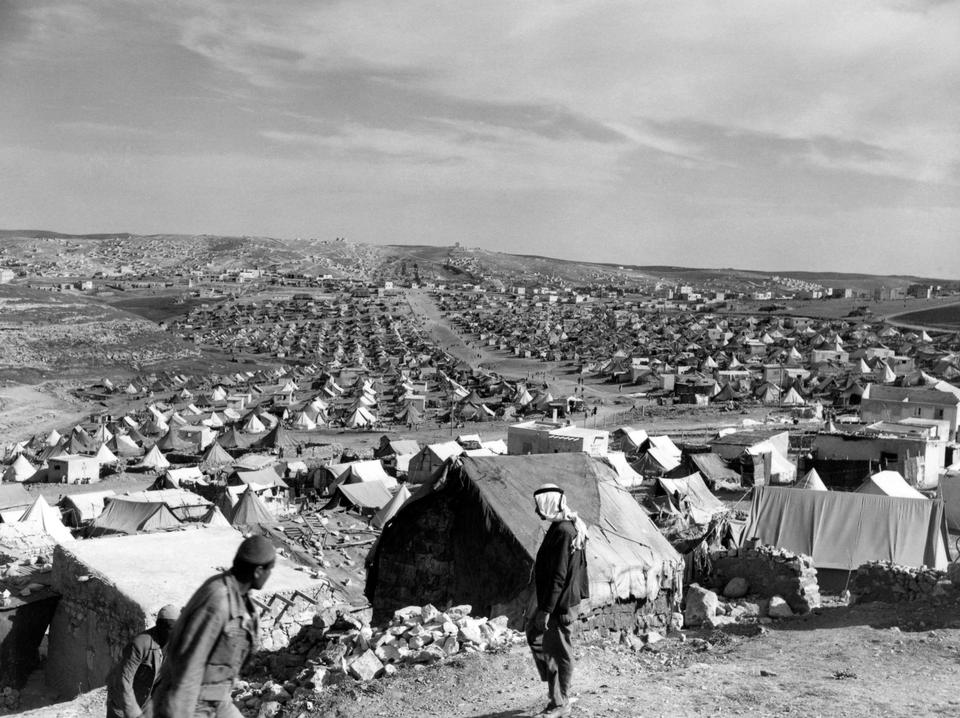
Hundreds of thousands of Palestinians were forced to live in camps in neighboring countries after Israel pushed them out of their homes. (TRTWorld)
For someone groomed to believe that the English people were true to their word, the haphazard division of the Ottoman Empire and the creation of Israel was unsettling for Yusuf Ali.
In 1937 he attended many meetings and conferences fighting the case of Palestinians and warned Western powers about creation of a Jewish state on Muslim land.
“One way alone can bring thee peace:
That ancient rights be not suppressed,
That aliens from encroachments cease,
And Quds be given its rightful rest,” he wrote in the poem Palestine published in January 1938.
However, Palestine’s tragedy wasn’t enough to deter his loyalty to the British as he travelled to India at the urging of England’s Ministry of Information to rally Muslim support after it declared war on Germany in 1939.
In Delhi, he met Sir Sikandar Hayat Khan and spoke to students about the need for India’s support for the British. That was a time of turmoil in India as both Muslims and Hindus had begun rallying for independence.
Upon his return, he wrote articles and gave speeches, asking Indians to unite in defence of the empire and drop their demand for political reforms. But his appearance as an important player in international events quickly faded after the war ended in 1944.
We might never know what broke him in the end. But as the British pulled out of the subcontinent in the days of its waning global status, so did Yusuf Ali slowly recede from the newspapers, his powerful friends no longer found a use for him.
Yusuf Ali spent his last years living in the National Liberal Club on a monthly pension that he received against his government job.
“How did the British treat him? There’s certainly a question mark there. They didn’t recognise his contribution as much as he probably expected,” says Humayun Ansari.
His powerful friends in the Muslim community including Pakistan’s then ambassador Ispahani had also lost track of Ali’s whereabouts, not bothering to check on him.
“That is an indictment of the Muslim society that we were not able to honour and care for someone of his stature,” says Jamil Sherif.
Source: TRT World
source: http://www.trtworld.com / TRT World / Home> News> Magazine / by Saad Hasan / September 04th, 2019
A new organisation seeks to represent Indian Muslims, as well as help dispel the negative stereotyping about their community
On 16 July, the Indian Crescent Society of Australia (ICSOA) held its inaugural Eid function at the Himalaya Restaurant in South Granville. The hugely successful event provided an opportunity for Indian Muslims to connect with Indians from other religions.
The evening was attended by Dr A.S. Nakadar (founder of the American Federation of Muslims of Indian Origin), Rajeev Kumar (Vice Consul CGI), Peter Doukas (Chair, Ethnic Community Council NSW) and Julia Finn (Member for Granville) amongst other dignitaries.
The soon-to-be launched ICSOA aims to promote a positive image of Indian Muslims and help them integrate into mainstream society. Indian Link scratched the surface to find out more from the President of the society Mr Abbas Raza Alvi.
A well-known community leader, poet and businessman, Mr Alvi began by summing up the need for such an organisation:
“For the last 30 years, we’ve felt that the participation of Indian Muslims in the mainstream society has been limited. Most Indian Muslims are highly educated professionals, but due to a lack of networking and proper representation, they are not being recognised and celebrated as they should be. After lengthy discussions with the Indian High Commission and the Consul General, we finally came to the conclusion that Indian Muslims needed a special representation in Australian society. There was a need for a platform to allow them to participate and integrate like other Indians.”
In the wake of the hysteria against Muslims being kicked up by public figures like Pauline Hanson and Sonia Kruger, Mr Alvi feels that ICSOA has suddenly become the need of the hour. He realises the urgency to dispel the negative stereotype by integrating and showing the world that Muslims are a peace-loving people.
Touching briefly on the issue, he said, “Pauline Hanson must understand the effect of her provocative comments on the Australian economy. She has a history of inciting racial hatred; initially she targeted Indigenous Australians, then Chinese and Indian origin Australians, and now Muslims. Her comments can have a negative impact on Australian jobs, businesses and families. Australia currently exports $15 billion worth of goods to parts of the Muslim world. Include in that the exports to India and China and this figure may exceed $120 billion.”
On a lighter note he added, “I do suggest that PH (Pauline Hanson) should neutralise herself to the value of seven. (pH for pure water, H2O) is 7). Continuously spreading hatred through racist comments towards ethnic communities will not benefit any Australian and this includes those who have voted for her.”
There are around 5000 Indian Muslim families in Australia, but Mr Alvi feels, “Even though there are several small Indian Muslim organisations, their overall participation is rather small. When Muslims are not seen playing a role in society it creates disharmony and unbalance. India can never be properly represented in Australia until Indian Muslims are included in its representation.”
HIGHLIGHTING SOME OF THE MAIN GOALS OF ICSOA, MR ALVI EXPLAINED, “OUR AIMS WOULD BE TO HELP INDIAN MUSLIMS IN ISSUES AFFECTING THEIR DAILY LIVES LIKE EDUCATION, COMMUNITY WELFARE, MENTORING AND SUPPORT FOR NEW MIGRANTS.”
In addition, the organisation would work towards the integration of Indian Muslims within their own community, with other Indians and with the wider Australian society. “We will send our representatives to attend functions arranged by other organisations and invite them to ours in order to share and learn and work together for the welfare of all Indians.”
Programs will include working towards better recognition of the Urdu language, promoting creative talents within the community, supporting high achieving students, encouraging women in their goals and working with Aboriginal people to create artworks that depicts both cultures.
Another issue that concerns Mr Alvi is the demise of Indian cultural values in Australia. “I grew up with Hindus, Sikhs and Christians all living side by side in India. I don’t remember calling them by name, they were either mama, chacha, taya or dada. When we misbehaved, our parents weren’t the only ones to discipline us. If the neighbours got to know they would chastise us before them. That’s the Indian culture I love, but sadly when we come here, we get so busy trying to make a living, educating the kids, building a house, that the only spare time is either spent in home maintenance or religion. This is creating an isolation and disconnect with our Indian culture and is the cause of major problems and stress not just for Indian Muslims but for all Indians. Being religious is good, but the community connection is important for people to thrive and be happy. So, we want to bring back the integration, community feel and brotherhood we were used to in India and we want to promote peace.”
Mr Alvi took great pains to stress that ICSOA is not a religious organisation but an organisation to promote the Indian Muslim culture, language, food and traditions in order to help them integrate in the mainstream society.
To get the ball rolling, ICSOA has contacted individual organisations to form an ad hoc board which will represent Indian Muslims from all corners. The board is ironing out the finer details, compiling a database, advertising, initiating coordination in other cities and getting the website and logo in place before the formal launch. Mr Alvi informed that there will be a membership but the fee will be nominal. “We want every single Indian Muslim to join ICSOA.”
On the question of funding, he advised, “ICSOA will be self-funded by the large Indian Muslim business and professional community.”
The immense support for ICSOA was apparent at the Eid function where the expected turnout of 150 guests ballooned to over 250 attendees. Mr Alvi is optimistic about the future of the organisation, remarking, “Since ICSOA is a need based organisation with an experienced leadership I foresee it growing rapidly in future.”
He couldn’t come out of the water as there was a strong undercurrent.
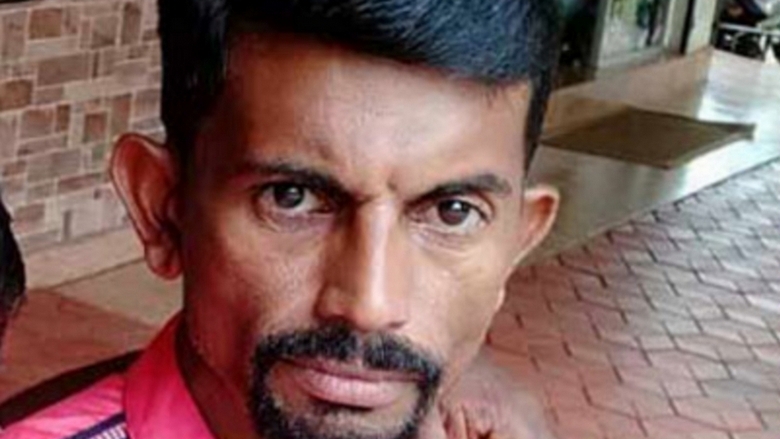
Flood in the Indian state of Kerala has claimed life of a Dubai expat. Razak Akkiparambil, a support staff of a school in Dubai, died after rescuing two children, including his son, who were caught in flood water.
The incident happened on Tuesday afternoon, Razak’s brother-in-law Shareef, said over the phone from Malappuram district, which is among the worst-hit regions.
“Razak had come to Kerala for his daughter’s marriage, which was held on August 4. The family had come to my home. The incident happened around 2.30 pm (IST). He saw these kids walk down to the water-filled paddy fields. It’s now filled up to the height of two people and soon these kids were in deep. As soon as Razak saw the kids were in danger, he rushed and jumped into the water to save them. He managed to hand over two kids safely to another person. But he couldn’t come out as there was a strong undercurrent. He is just 42 years but couldn’t cope with the sudden rush of water and collapsed. And as everyone was focusing on kids, no one noticed Razak drowning. He was pulled out of the water only after 15 minutes. We rushed him to a hospital but the doctor said he passed away before reaching there,” said Shareef, who works at Our Own English High School.
“We both work in the same school. Razak is there for some 10 years now. We had travelled together to Kerala for the marriage.”
Razak, a father of three, is survived by his family. They are devastated with the news of his untimely death.
“They were already affected by flood last year. They had somehow managed to renovate their house for the wedding. But again were hit by floods from last week. Luckily the wedding went well. It was his big dream. Now he is no more. The cremation will be tomorrow.”
ashwani@kjhaleejtimes.com
source: http://www.khaleejtimes.com / Khaleej Times / Home> UAE> Dubai / by Ashwani Kumar, Dubai / August 14th, 2019
Aligarh, UTTAR PRADESH / Geelong ( VICTORIA ) , AUSTRALIA :
siasat.com
Melbourne (Australia):
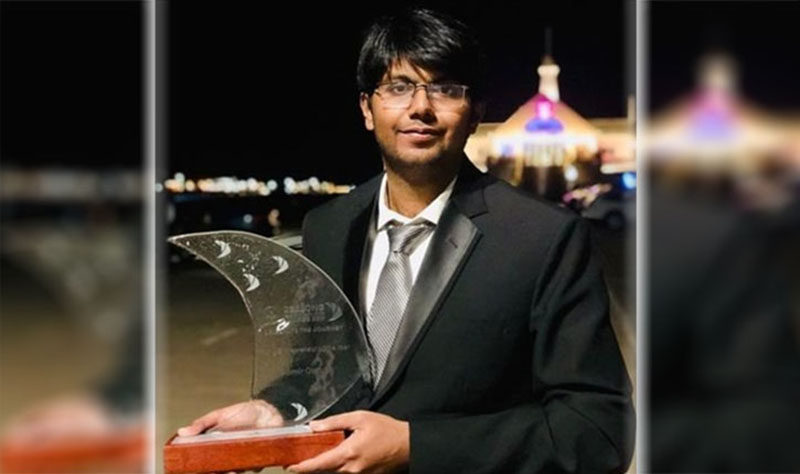
Indian-Australian Entrepreneur and an alumnus of Aligarh Muslim University (AMU), Aamir Qutub, has won the Young Entrepreneur of the Year award in the Business Excellence Awards (GBEA) category in Australia.
According to a press release issued by his firm, established in 1986, and managed by the Geelong Chamber of Commerce, the Business Excellence Awards are the oldest business awards in Australia.
“With a record number of entrants participating in the Geelong Business Excellence Awards, and going through a stringent judging process, the Awards are now more competitive than ever, ” says Ben Flynn, CEO Geelong Chamber of Commerce.
Aamir Qutub is the Founder and CEO of Enterprise Monkey (a digital solutions agency), Tech Investor and Co-Founder in 6 startups. Aamir is also a member of Ministerial Advisory Committee to the Minister for Planning in Australia.
He was appointed as the General Manager of ICT Geelong (local IT Industry Cluster) at the age of 25. He was the founding Secretary of Pivot Summit – Australia’s largest regional tech conference.
Aamir was brought up in Aligarh, Uttar Pradesh. He did his Engineering degree from Aligarh Muslim University (AMU) and immigrated to Australia at the age of 23 to complete MBA from Deakin University.
“I had applied for around 150 office jobs but couldn’t get any due to lack of experience in Australia. I used to work as a cleaner at the Avalon Airport, and distribute newspapers in midnight to pay for my living and fee,” Aamir has reportedly said.
In 2012, Aamir got an internship opportunity with ICT Geelong. Impressed with his performance and passion for digital transformation, he was asked by the board to step up as the General Manager of ICT Geelong at the age of 25.
At AMU, Aamir was elected as Geneneral Secretary of AMU Students’ Union (AMUSU) in 2011. As AMUSU Secretary, Aamir organized the first-ever recruitment drive in the university which resulted in the placement of 2000 students in 30 companies. His passion for technology contributed in the digitization of AMU campus by introduction of free WiFi and Smart Classrooms.
In 2014, Aamir founded Enterprise Monkey – a Web and App solutions company in his brother-in-law’s garage. “I started with $2000 in savings,” says Aamir who led his company to establish in 4 countries with YoY revenue growth of 300% in the first 3 years.
Enterprise Monkey has established itself as a leader in web and app space. It is now growing it’s leadership in Artificial Intelligence (AI), Augmented Reality and Internet of Things (IoT) space. The client list includes NASDAQ listed companies as well as seed stage startups.
source: http://www.siasat.com / The Siasat Daily / Home> News> India / posted by Qayam / August 02nd, 2019
Sheikh Mohammad Munir Ansari conferred with the Star of Jerusalem medal.
Jerusalem (PTI) :
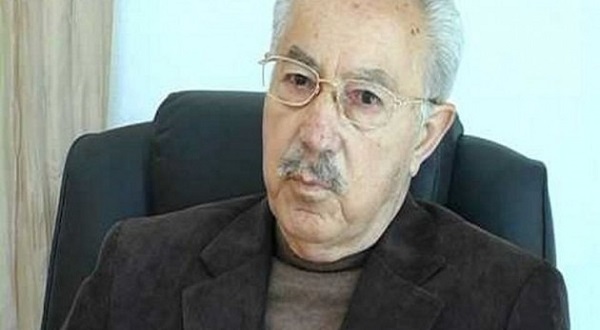
Palestinian President Mahmoud Abbas has conferred Indian-origin Sheikh Mohammad Munir Ansari with the Star of Jerusalem medal – one of the highest honours given to foreign nationals by the Palestinian Authority – for strengthening Indo-Palestine ties. At an event organised to honour 91-year-old Ansari Thursday evening, Abbas thanked him for serving Palestine and Jerusalem with distinction. Ansari, 91, is the Director of Indian Hospice, a unique and historic monument in the heart of Jerusalem, which has become a symbol of India’s heritage and presence in the third holiest city for Muslims going back to over 800 years.
Abbas said the Ansari family’s presence in the old city of Jerusalem reflects the strong traditional ties between Indian and Palestinian people. He called upon for strengthening people-to-people contact between the two sides.
Abbas plans to send Palestinian Prime Minister Mohammad Shtayyeh to India soon to boost tourist inflows from there which can contribute to strong bonding between the two people.
A representative of India, Sunil Kumar, who was present at the event, also appreciated the role played by the Ansari family in strengthening Indo-Palestine ties.
The Indian hospice has been under the direct supervision of a representative from India since 1924. Ansari’s father, Sheikh Nazir Hassan Ansari, was appointed the first Sheikh of the Hospice from whom the mantle passed on to the incumbent who was born in Jerusalem in 1928 and has spent his whole life here.
In 2011, India honoured Ansari with the Pravasi Divas Samman, the highest honour conferred on overseas Indians.
The history of the hospice goes back to about 12th century, when famous Sufi saint from Punjab Baba Fariduddin Ganj-i-Shakar (or Baba Farid, as he is better known) visited Jerusalem on pilgrimage and prayed in seclusion for 40 days at the site.
It later became a pilgrimage site for Indian pilgrims visiting Jerusalem and was dedicated as a charitable Waqf property in trust for a pious purpose.
The place where Baba Farid is said to have prayed has become a major attraction for Indian tourists visiting Jerusalem.
Almost every prominent Indian leader who has visited the region has paid a visit to the site and the hospice continues to host Indians visiting the Holy Land. The hospice also received a grant from the Ministry of External Affairs for its renovation.
source: http://www.caravandaily.com / Caravan / Home> Indian Muslims / by June 15th, 2019
Rahman founded Mina Jebel Ali Canteen and Catering Services, the flagship firm of the Parco group of companies – supplied photo
Rahman had been ill for nearly a year and he had flown to India for treatment.
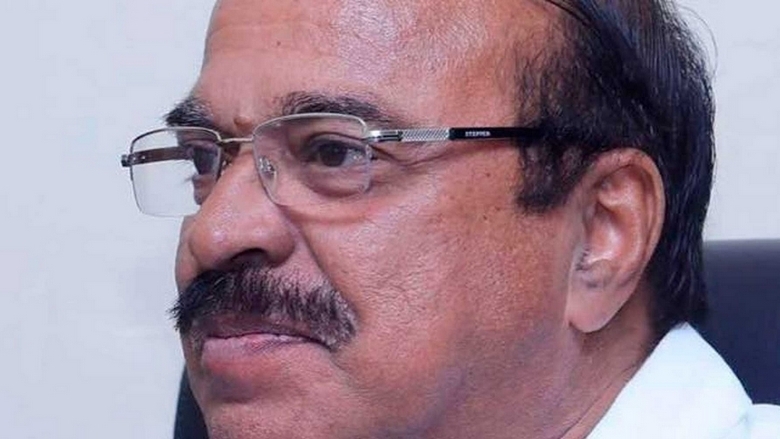
Dubai-based businessman PA Rahman, chairman of Parco Group, died in his hometown in the south Indian state of Kerala on Sunday night. He was 72.
OK Ibrahim, KMCC senior vice-president, told Khaleej Times that Rahman had been ill for nearly a year and he had flown to India for further treatment.
“Relatives and friends who are close to Rahman travelled to India two weeks ago to pay their last respects, as his health continued to deteriorate,” Ibrahim said.
Rahman founded Mina Jebel Ali Canteen and Catering Services, the flagship firm of the Parco group of companies.
Over the last 39 years, he, along with his brothers, built diverse business units with interests in hospitality, retail, manufacturing, real estate, contracting, jewellery, healthcare, restaurants and education, among others.
“These companies are all supported by a large team of dedicated professionals who develop and manage the activities of the group,” said Ibrahim.
He was a successful entrepreneur but, on top of his achievements, people knew him as a community leader who was always willing to help those in need. He did a lot of social work and opened education centres.
He had served as a member of the state council of the Muslim League and a director of the Dubai Middle East Chandrika. He also founded NAM College, Kallikandy, a general degree college located in Kallikkandy, Kannur district, Kerala.
dhanusha@khaleejtime.com
source: http://www.khaleejtimes.com / Khaleej Times / Home> Nation> Dubai / by Staff Reporter, Dubai / July 10th, 2019
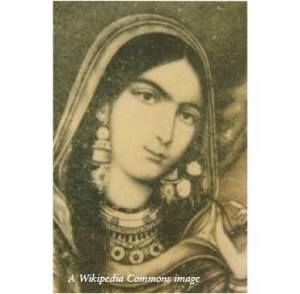
Begum Hazrat Mahal was the last of the official queens of the kingdom of Avadh, or “Oudh” as known to the British imperialists, a large province in northern India.
While the details of her birth and family are unclear, it is certain that Begum Hazrat Mahal was not of royal lineage. She is believed to have been a courtesan in the court of the last king of Avadh, Nawab Wajid Ali Shah, starting as a dancing girl named “Mahak-Pari” or fragrant fairy. The Nawab, besotted with the young girl, married her by means of the Shiite tradition of “mutah” marriage or “temporary marriage of pleasure.” It was a convenient method by which the Nawabs could add to their harems, and not technically stray from their marriages.
Mahak-Pari, as she was initially known, gave birth to a male child named Mirza Birgis Qadr Bahadur, and was elevated to the title of Hazrat Mahal Saheba, commonly known as Begum Hazrat Mahal. Transforming from a courtesan—a Pari (fairy)—to a Mahal (a royal queen) was rare, and the good fortune of bearing a male child combined with the right maneuvers in harem politics likely helped the young woman.
In 1856, the administrators of the East India Company annexed the kingdom of Avadh, by means of the infamous Doctrine of Lapse. The British coveted this territory as a great resource for cotton and indigo, and appalled by the debauchery of the Avadh court and its gross mismanagement of revenue, preferred to govern the region directly with a more “conventional” administration.
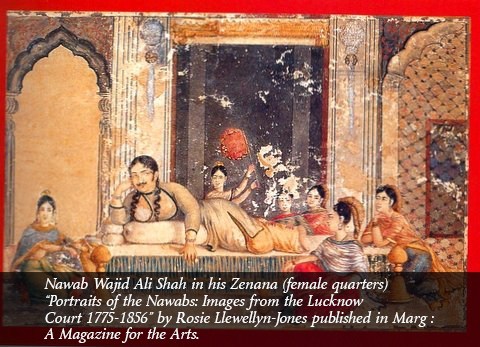
Nawab Wajid Ali Shah was exiled to Calcutta, and the unhappy king left with a few of his wives, and without most of his large harem, including his “secondary” wives. Begum Hazrat Mahal did not accompany the deposed king, continuing to reside in Lucknow with her young son.
When the Mutiny of 1857 broke out, Avadh was one of the major areas of rebellion as several recruits of the army were from Avadh. People were unhappy about the annexation, the deposition of their king, and the religious insensitivity of the British. The rebels needed a leader to further their cause.
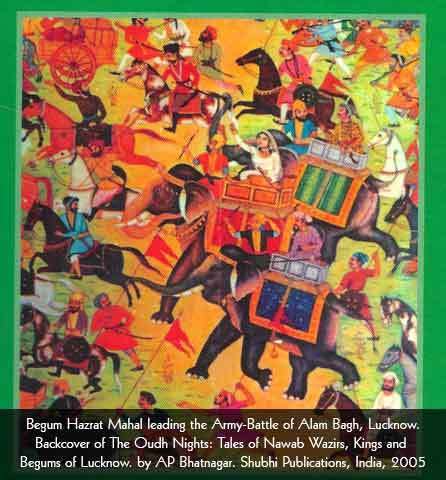
Begum Hazrat Mahal rose to the occasion to help the rebels defend Lucknow against the British troops. To the surprise of her adversaries, she reorganized the army with better co-ordination between the three units of the cavalry, artillery, and infantry. Many times, she rode at the head of the army on an elephant to encourage the soldiers against the advancing British troops.
As in other places, the Indian rebels could not hold out for long against the larger number of British troops, and the queen’s advisors asked the Begum to leave Lucknow in March 1858. She fled to the countryside, continuing her hostilities against the British by issuing orders while in hiding.
On November 1, 1858, Queen Victoria issued a proclamation whose intent was to end the Mutiny, pacify the religious sentiments of the Indians, and formally transfer control of the British territories in India from the East India Company to the British Crown. Begum Hazrat Mahal issued a counter-proclamation in which she argued against every claim of Queen Victoria.
The Begum reminded the Indians that several previous treaties had been violated, that princely heads had either been pensioned or killed, and property worth millions of rupees seized. If the British intent was honorable, why did the British Queen not “restore our country to us when our people wish it?” asked the bold and shrewd Begum. She questioned Queen Victoria’s claim to religious non-interference:
“…to destroy Hindoo and Mussulman temples on pretence of making roads to build churches—to send clergymen into streets and alleys to preach the Christian religion—to institute English schools, and to pay a monthly stipend for learning the English sciences, while the places of worship of Hindoos and Mussulmans are to this day entirely neglected; with all this how can the people believe that religion will not be interfered with?”
Begum Hazrat Mahal forewarned the Indians that their future prospects appeared limited under British rule. “It is worthy of a little reflection, that they have promised no better employment for Hindoostanees than making roads and digging canals.” The Begum’s words were rather prophetic. For decades after 1857, Indians pushed files under British bureaucracy and worked as laborers for the British government in India and overseas.
Begum Hazrat Mahal eventually sought asylum in the kingdom of Nepal, where she lived for the rest of her life. The British administration initially negotiated with her, assuring her a safe return and the possibility of a pension. The Begum, distrusting the British, refused—most likely because British retribution in the immediate aftermath of the rebellion was extremely harsh. While both Hindu and Muslim rebels were ruthlessly punished, there was fear that the Muslims would rise against the British (and Christian power) because it was a hitherto Muslim power that was being displaced, and the repercussions in former-Muslim strongholds such as Lucknow and Delhi were particularly extreme. After their initial negotiations failed, the British labeled the Begum as a woman of “savage disposition.”
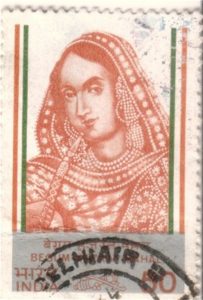
Begum Hazrat Mahal has remained a relatively minor figure in Indian history. Her legacy and her heirs were inadequately honored in the centenary celebrations of the Mutiny held at Lucknow post-Indian independence. Her great-grandsons protested against this oversight by the Indian government, which led Prime Minister Jawaharlal Nehru to order an inquiry into her place of burial. Her grave was discovered near Kathmandu, Nepal, in very poor condition. At this point, a park in Lucknow was named after her to commemorate her memory—this park has very recently been renamed—and later a postage stamp was issued in her honor.
Begum Hazrat Mahal’s legacy was diminished in the changed landscape of India post-1857. Her humble beginnings as a courtesan made her an inadequate role model.
The courtesans at the zenith of Lucknow’s court were no petty “nautch-girls” as described by the Victorian sensibilities of the colonists. They were sophisticated women, well versed in the arts of dance, music, and poetry. Their association with the courts made them extremely wealthy and nineteenth-century British records indicate that they were in the highest income-tax bracket before 1857. While the British derided the courtesans, and the culture they espoused, they did not hesitate to tax them on their “ill-earned” wealth. During the Mutiny, the courtesans monetarily supported the rebels, and their homes became rebel hideouts and secret meeting-venues.
Yet, this courtesan culture, the associated decadence and “debauchery” became a source of embarrassment for late-nineteenth-century Indian nationalists, social reformers, and the emerging middle-class English-educated “elite.” Indian nationalists believed that it was decadence and indolence that had helped the British uproot power in the princely states. A strong, respectable people hoping for self-rule needed to identify with respectable women and men, and a former courtesan-turned-warrior-queen did not fit this idealized image.
A strong and resolute woman, the Begum never gave in to the British, while her husband—a good man and an artist at heart, but weak in resolution—continued to live off the generous pension he received, always short of money, and therefore always acquiescing to the British.
Postage Samp of Hazrat Mahal. www.kamat.com
Several years after the Mutiny, a British painter visited Begum Hazrat Mahal, in Kathmandu, to paint a portrait of her son, Birgis Qadr. As he worked on his task, the painter ventured to ask her whether she would consider returning to Lucknow. Given the fact that much time had elapsed since 1857, the British regime was willing to forgive her and pay her a pension. Her residence in India would be proof of the British paternalistic spirit of forgiveness. Their condition, however, was that she would not be allowed a lavish lifestyle with a large retinue of servants. Perhaps, surprised by, or suspicious of the offer, but more likely annoyed at the continued interference in her life, the Begum refused the gesture, stating, with true Avadhi andaaz (style) “of what use will be the salary, if I am not to spend it upon the servants?”
Begum Hazrat Mahal was buried in a simple grave in the grounds of a mosque she built. Ironically she named it Hindustani Masjid, after the beloved homeland she had left behind, for whose sovereignty she had fought, and in which she has largely been forgotten.
Aarti Johri is a tech-professional turned history buff. This is an extract from her thesis for the Stanford MLA degree. Her articles have been published in the San Jose Mercury News, Stanford’s Tangents Magazine, and others. She serves on the board of SACHI (Society for the Art and Cultural Heritage of India).
source: http://www.indiacurrents.com / India Currents / Home> Features, General / by Aarti Johri / June 11th, 2016