Category Archives: NRI’s / PIO’s

Interview with Arshia Khan from University of Minnesota Duluth

Hyderabad, TELANGANA / Minnesota, U.S.A :

Dr. Arshia Khan interview at SAI Conference

source: http://www.youtube.com

Dr. Arshia Khan Ph.D, Associate Professor, Department of Computer Science, Swenson College of Science & Engineering, University of Minnesota Duluth, USA

Website :

http://www.d.umn.edu/~akhan

Hasan Patel of George Mitchell School in Leyton has won an Eton scholarship

Leyton, East London, UNITED KINGDOM :

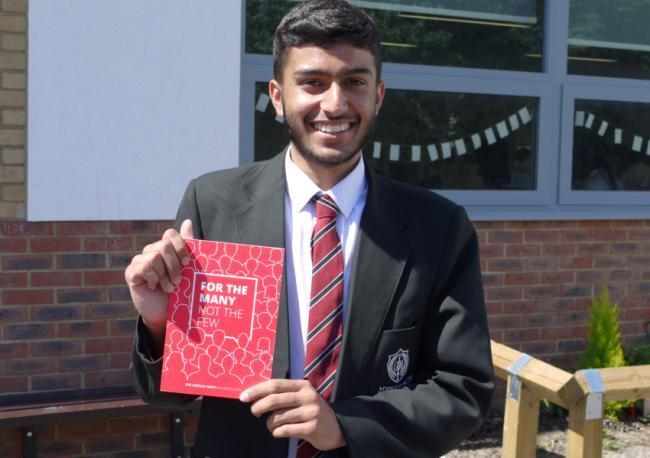
Hasan Patel of George Mitchell School in Leyton

An East End teen who shares his two bed council house with his parents and two brothers has won a £76,000 scholarship to Prince William and Harry’s old school Eton College.

Hasan Patel, 16, became the youngest speaker at a major political party conference, beating former Conservative leader William Hague.

He now has an army of followers after his rousing speech at the Labour conference last August when he was 15.

The state school student from a council estate, will rub shoulders with the elite when he joins the world-famous Berkshire school next September.

The rising political star, who currently studies at George Mitchell School in Leyton, will enter the sixth from to study A-Levels in four subjects; History, Geography, Politics and Drama and Theatre Studies.

It is a far cry from the two-bedroom council flat he shares with dad Abdul, 69, mum Aysha, 49, and two brothers Yusuf, 17, and Adam, 21.

He won his place after coming through a gruelling three-day assessment at the Berkshire School which included three entrance exams, seven interviews and a group interview.

Aged just 15 at the time, he was a year younger than the previous youngest speaker, former Conservative party leader William Hague.

Speaking of his future at Eton, he said: “I am very much there to provoke lively debate.

“I am a boy from a Leyton council estate who receives free school meals. My parents are on welfare and I share a room with my brothers.

“My dad was very smart and politically engaged but lived in abject poverty in India.

“The students at Eton are from the most privileged corners of society, we could not be any more different.

“My views may be different to them because my life experiences are very different. I think that is what impressed Eton, they wanted someone who could offer a different perspective.

“Eton is a place where they encourage debate, I genuinely believe I can offer something to the school.

He added: “My politics won’t change because I am entering a different type of environment.

“I may be attending Eton but I will still be the same boy from East London when I arrive and when I leave.I am not joining the elite but simply benefiting from the education my family would never in a million years be able to afford.

“This opportunity will allow me to return to my community better armed to tackle the many social problems we face.”

Hasan was mentored throughout the application process by his school’s Headteacher Saeed Hussain.

Hasan said: “George Mitchell is an exceptional school. The support I have received from the school, and particularly from my Headteacher, has been incredible.

“This is a place which gives us the students the tools and support to pursue our dreams. I have been here since I was three years old when I joined the nursery; it has played a crucial part in developing me into the person I am today.

Headteacher Saeed Hussain said: “Hasan is a truly exceptional young man. Aside from being incredibly bright he is one of the most engaged and motivated students I have known in my years of teaching.

“He is the type of person who will seize this opportunity generously offered by Eton. His is a name I expect we will all be hearing more of in the near future.”

Hasan’s dad left India in the early 1970s to build a better life for himself and his family. His mum moved over in the mid-1990s.

source: http://www.guardian-series.co.uk / East London & West Essex GUARDIAN / Home> News / January 22nd, 2019

Delhi Youth Welfare Association and American Federation of Muslims of Indian Origin felicitate meritorous students

NEW DELHI :

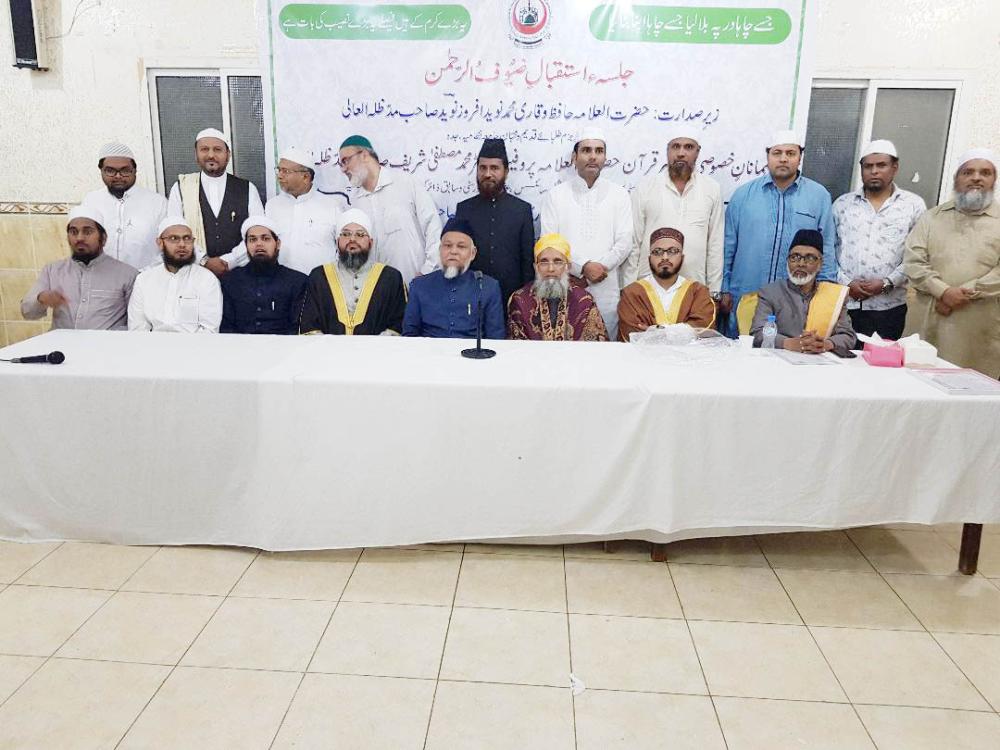
DYWAwadsMPOs15jan2019

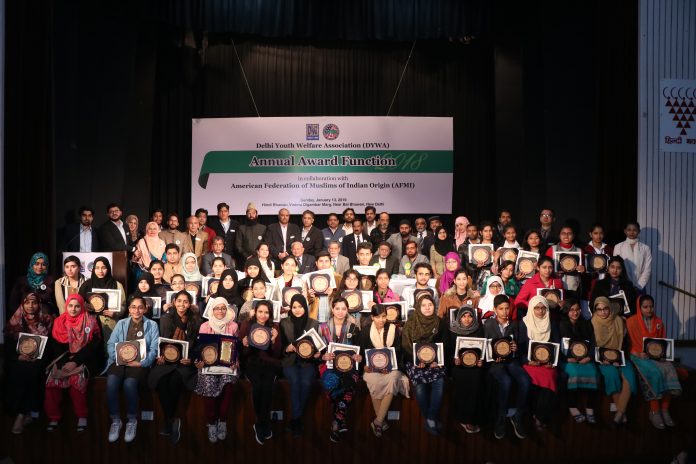
Delhi Youth Welfare Association (DYWA) in collaboration with American Federation of Muslims of Indian Origin (AFMI), organized the DYWA Annual Award Celebration on 13thJanuary 2019 at Hindi Bhawan, Rouse Avenue, New Delhi.

96 students from 15 schools were felicitated with a shields, certificates and cash prizes. Five special awards were also given. Maulana Azad Education Foundation (best government organisation), Society for Promotion of Education (best non-government organization), Shehnaz (best student, class XII), Nikhat Urooj and Iffat Zareen (best students, Urdu Language/Literature in class XII) and Rabea Girls’ Public School (the school with highest number of individual awards in class X & XII).

This was the 28th edition of annual awards.

Various educationists, social activists and political leaders such as Arfa Khanum (Senior Journalist, The Wire), Dr. A.S. Nakadar (Founder Trustee and Former President AFMI), Dr. Aslam Abdullah (Editor, Muslim Observer and Director Islamic Society of Nevada) attended the convention as guests.

Siraj Hussain, former vice chancellor, Jamia Hamdard University, was the chief guest at the event. He shared a few tips on how to become civil servants. “Befriend as many books as you can. And choose best universities to pursue higher education,” he said.

Dr. Nakadar encouraged students to identify their latent talents. “Stop comparing yourself with others. It will make you better person and best among the people,” he said.

Arfa Khanum shared her journey from a small town in Uttar Pradesh to charting a successful career in journalism. “Being in Delhi is a privileged which many of you may have overlooked. You must make use the resources available to you to the optimum. You are the future of India and you would decide what this nation wants,” she said.

Aslam Abdullah underlined the perils of patriarchy. “We ought to treat at par with men. That is a perquisite for us to bring about any change,” he said.

DYWA is a well-known organization of old Delhi and has been working in the field of education for the last 28 years and AFMI (American Federation of Muslims of Indian origin) is a philanthropic charity formed by American Muslims of Indian Origin in the year 1989.

source: http://www.twocircles.net / TwoCircles.net / Home> Education> India News> Indian Muslim> Lead Story / by TCN News / January 15th, 2019

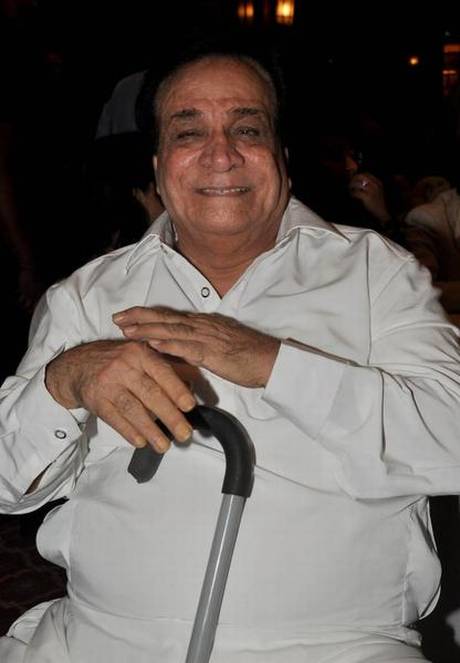
Veteran actor-writer Kader Khan passes away at 81

Mumbai, MAHARASHTRA / Toronto, CANADA :

Bollywood actor and dialogue writer Kader Khan. File Photo. | Photo Credit: AFP

Veteran actor-writer Kader Khan passed away due to prolonged illness at the age of 81 on December 31, his son Sarfaraz confirmed. Mr. Khan was admitted to a hospital in Canada and his son confirmed that his last rites will be conducted in the country.

“My dad has left us. He passed away on December 31 at 6 pm as per Canadian time due to prolonged illness. He slipped into coma in the afternoon. He was in the hospital for 16-17 weeks.

“The last rites will be performed here in Canada only. We have our entire family here and we live here so we are doing it,” Mr. Khan’s son Sarfaraz told PTI.

“We are thankful to everyone for their blessings and prayers,” he added.

The news of the death of the actor-screenwriter, who was at his peak in the 1980s-90s, comes days after his son dismissed media reports of his demise.

Mr. Khan had developed breathing issues and the doctors had reportedly transferred him from regular ventilator to BiPAP ventilator.

As per reports, he was suffering from Progressive Supranuclear Palsy, a degenerative disease that causes loss of balance, difficulty in walking and dementia.

Born in Kabul, Mr. Khan made his acting debut in 1973 with Rajesh Khanna’s Daag and has featured in over 300 films.

He wrote dialogues for over 250 movies. Before becoming an actor he had written dialogues for Randhir Kapoor-Jaya Bachchan’s Jawani Diwani.

As a screenwriter, Khan frequently collaborated with Manmohan Desai and Prakash Mehra.

His films with Desai include Dharam VeerGanga Jamuna SaraswatiCoolieDesh PremeeSuhaagParvarish and Amar Akbar Anthony and films with Mehra include JwalamukhiSharaabiLawaarisMuqaddar Ka Sikandar.

source: http://www.thehindu.com / The Hindu / Home> Entertainment> Movies / by PTI / Toronto-Mumbai, January 01st, 2019

‘Diversity is our strength’

UTTAR PRADESH / MAURITIUS :

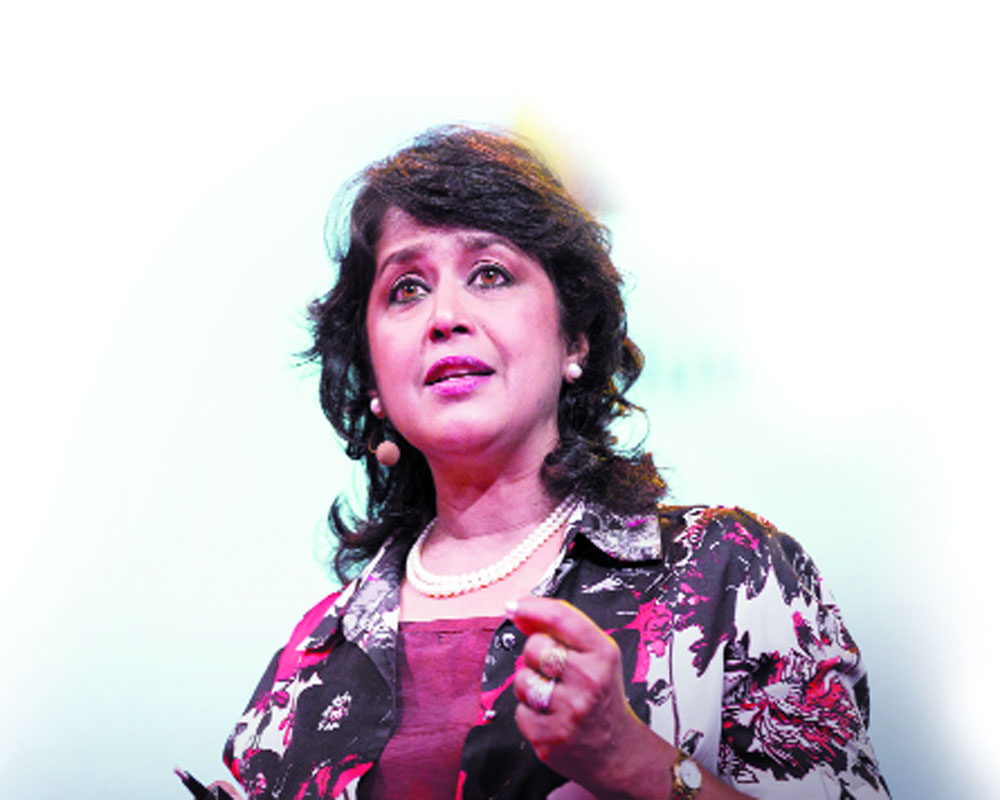
AmeenahMPOs29nov2018

Former President of Mauritius Ameenah Gurib-Fakim tells Asmita Sarkar that there are no two ways forward than making women and minorities part of the progress

She holds many mantles — politician, the first woman President of Mauritius and a biodiversity scientist. Not only that, she is also a proponent of cultural diversity and creating entrepreneurial opportunities for women in Africa. Social media- savvy and with a clear voice, she pushes for saving the planet and its biodiversity.

What is the way forward in Asia and Africa to empower women and other minority sections?

No team can win a football match by leaving 52 per cent of the team on the bench. Women, minorities must all come together with their talents and change their way of doing things. Our diversity is our strength. When it comes to minorities, I am reminded of the words of a great statesman Pierre Trudeau. He stated and I quote, “A just society will be one in which the rights of minorities will be safe from the whims of intolerant majorities”. Countries that have valued immigrants, like the United States, are a classic example. Most of the big brands in the US have emerged from the contribution of immigrants.

As a scientist and politician, how did you envision your expertise in changing the world around you?

Countries need to be technically-driven and this is where scientists have a key role to play in shaping the destiny of their respective countries provided the leadership takes heed. Again those countries that have recognised this technical vision have emerged strong.

Countries need strong institutions and strong leadership to emerge and science and technology are powerful tools. For the first time in 2015, even institutions like the United Nations (UN) have recognised this in the crafting of the UN Sustainable Development Goal’s.

Can you tell us about your link to India?

I am a fourth generation Indian from the diaspora. My forebears came from Ghazipur area in Uttar Pradesh. They left in 1862 to come to Mauritius to work the land and never returned.

Going forward, do you think that conversations around biodiversity have become confined to conservation alone?

May be the conversation has been skewed towards conservation but it is an equally laudable exercise, and one that we cannot shy away from.

What personal struggles did you face while growing up which you wish girls in your country don’t have to anymore?

When I was growing up, I had a set of challenges like girls were forever being denied education. That is no longer the case in my country although I am aware that this still happens in many other countries.

Girls in science were a rarity but is now becoming more common. So hopefully with more role models, it will ease the way for many more to join the efforts for encouraging girls and women in both leadership and power.

What is the way forward for Asia to transition from emerging economies to developed ones without damaging the environment?

Asia is fast emerging but the leadership will have to acknowledge that development must rhyme with sustainability. It is in their interest for their survival, for the prosperity of its people and long term future of their countries.

(The leader will be at the 10th edition of TEDxGateway on December 2 at the DOME @ NSCI Mumbai)

source: http://www.dailypioneer.com / The Pioneer / Home> Vivacity / by Asmita Sarkar / November 27th, 2018

Why we can’t talk about sexual violence without asking why men rape

Mumbai, MAHARASHTRA / Manhattan, U.S.A :

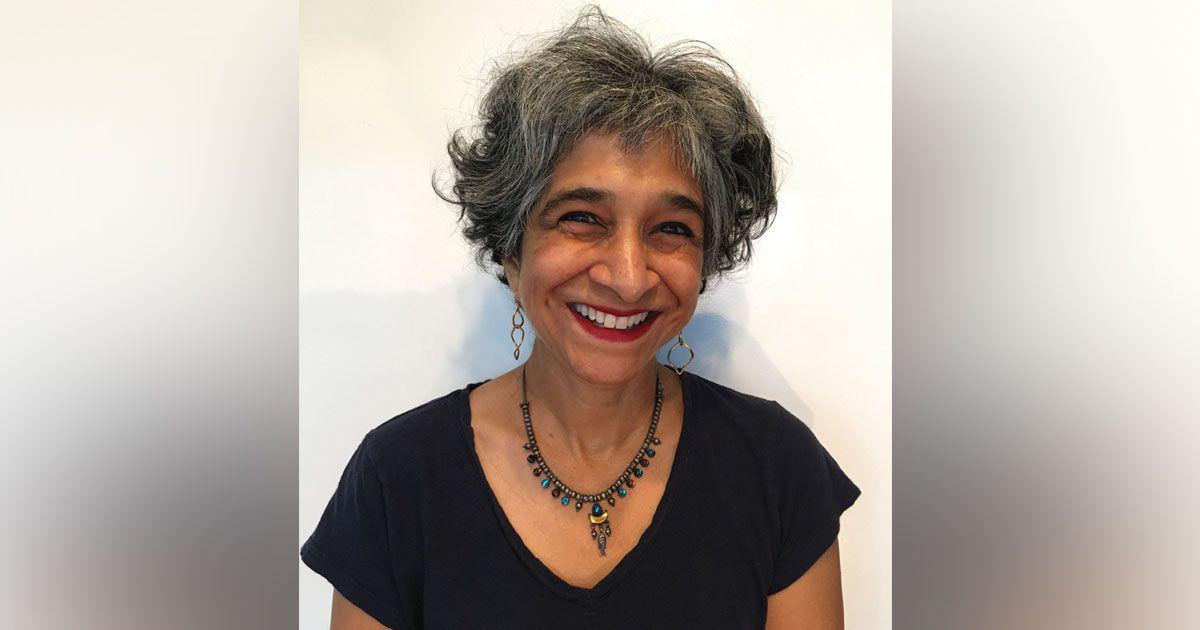
Sohaila Abdulali was the first Indian woman to write about being raped, in 1983. In a new book, she raises tough questions about how we view sexual violence.
SohailaMPOs15nov2018

Who rapes? Just as we can have fixed ideas about victims, we have them about perpetrators as well.

Are all men capable of rape? In my own life, I cannot accept this. Here is what one man said when I asked him if he thought he could imagine raping someone. “For myself, I would say no,” he said. “There’s a level of empathy that would make it impossible for me.” I believed him.

I can imagine murdering, but not raping. Murder is worse than rape, I know, but there are lots of reasons to do it. If I were in a state of out-of-control rage, if someone were threatening to harm me or someone else, if killing someone were the only way to avoid some terrible catastrophe…I know, this is a weird, weird paragraph. But think about it – there is no reasonable reason to rape. You’re either doing it explicitly to cause damage, or because you want sex and don’t understand or care that the other person does not want it.

Justifiable homicide exists (for instance, if you’re killing someone to stop a rape), but justifiable rape? Do you ever need to rape someone to stop any other crime? The only people who openly justify rape are those who run blatantly woman-hating societies, where women are objects.

Speaking of which, let’s talk about objectification. In my days of clarity and righteousness as a college student, I wholeheartedly believed the conventional feminist wisdom that men objectify women in order to rape them. The logic goes like this: if you deny someone’s humanity, you can abuse them.

But perhaps it’s your own humanity you have to deny. Or at least your own positive humanity. Cruelty and sadism are also very human.

Social scientists Alan Fiske and Tage Rai have studied the moral motivations of violence. Rape often has a (twisted) value component. You value your own needs more than your victim. You want to teach someone a lesson. You want to feel powerful. You feel you deserve to humiliate someone. All these values and emotions only apply to other people. We don’t usually feel the urge to humiliate objects. It’s precisely because someone is a human being that it matters how you treat him or her.

Paul Bloom wrote in the New Yorker about Fiske and Tage’s analysis:

In many instances, violence is neither a cold-blooded solution to a problem nor a failure of inhibition; most of all, it doesn’t entail a blindness to moral considerations. On the contrary, morality is often a motivating force…Moral violence, whether reflected in legal sanctions, the killing of enemy soldiers in war, or punishing someone for an ethical transgression, is motivated by the recognition that its victim is a moral agent, someone fully human.

The men who raped me were very clear that they were angry at me. Don’t ask me to explain why, and they’re not available for comment. I just know that they were enraged. I had no right to be out with a boy, they said. They would teach me a lesson. This is what happens to bad girls. At no time was I just an object. At worst, I was a whore who had to be put in her place. At best, I was a fool who had to be taught a lesson. But I was definitely a person.

I babbled like a parakeet on speed through the whole ordeal, trying to get them to show some mercy. Talking about myself and my life and trying to get them to see me as worthy of compassion – all that went nowhere. I was a wicked, clueless girl and had to be taught. But one thing did have an effect – when I started talking about them. “We are all brothers and sisters,” I ranted. “You are my brothers.” That infuriated them. They didn’t want to be reminded of their humanity.

This is just one story. But I think it’s worth considering the idea that other rapists have equally distorted views of themselves and their victims.

Audrey, the young British woman who was gang-raped in Italy, told me that one of her rapists said in his police statement that he didn’t need to rape to get women; he was so naturally attractive that women just flocked to him. In his mind, it wasn’t even rape. She was just lying there, clearly fine with it, so what was the problem?

We’ve got a long way to go when we can’t even agree on what is rape.

Audrey went on to say that the judge in her case sided with the rapists. “The judge and prosecutor seemed to share this perspective to an extent – that rape was something only real psychos jumping out of bushes did, or losers who couldn’t get sex any other way; it was not something that good-looking, well-dressed young men needed to resort to. I guess I would respond today that rape is really not about sexual attraction or having sex in the first place. Especially when you’re talking about a group, there’s a different dynamic at play, one that is more about humiliating someone and treating her as inferior…at least, this is the conclusion I have reached.”

Consider the Stanford rape case. Undergraduate Brock Turner sexually assaulted an intoxicated woman and left her unconscious. A woman friend of his wrote a letter to the judge, which said, “Where do we draw the line and stop worrying about being politically correct every second of the day and see that rape on campuses isn’t always because people are rapists?”

Rape on campus is always because people are rapists. We just don’t want to think about the uncomfortable truth that a rapist is just a guy, any guy, who rapes.

“Does anyone enjoy raping?” Kalki Koechlin wanted to know when we were trying to figure it all out. “What’s going on?”

Patriarchy is to blame, says writer bell hooks.

Provocative women are to blame, say the Iranian morality police.

Alcohol is to blame, says the Campus Sexual Assault Study, prepared for the US National Institute of Justice. The woman who was raped by Brock Turner, the Stanford student who infamously got a ridiculously light sentence for his crime (from Santa Clara County Superior Court Judge Aaron Persky, who lost his position two years later), wrote a powerful letter to be read out in court. She talked about alcohol:

Alcohol is not an excuse. Is it a factor? Yes. But alcohol was not the one who stripped me, fingered me, had my head dragging against the ground, with me almost fully naked. Having too much to drink was an amateur mistake that I admit to, but it is not criminal. Everyone in this room has had a night where they have regretted drinking too much, or knows someone close to them who has had a night where they have regretted drinking too much. Regretting drinking is not the same as regretting sexual assault. We were both drunk; the difference is, I did not take off your pants and underwear, touch you inappropriately, and run away. That’s the difference.

Brock Turner’s father also wrote a letter about his son, to the judge. It is a devastating testament to rape culture:

Now he barely consumes any food and eats only to exist. These verdicts have broken and shattered him and our family in so many ways. His life will never be the one that he dreamed about and worked so hard to achieve. That is a steep price to pay for twenty minutes of action out of his twenty-plus years of life.

Some rapists have permission to take what they want. Some rapists have had terrible lives full of abuse and despair. As a friend who was raped by a troubled man said, “You get a lot of shit on your plate – it starts to affect you.” It’s not an excuse, but a reality, like witnesses of domestic abuse who grow up to beat their partners. But then, there are the men who’ve had perfectly healthy, wholesome lives and commit rape anyway. What about them? Or the men who abuse their power, like those I’ve talked about in Washington, and Hollywood, whose penises have spent an inordinate amount of time outside their owners’ pants.

It’s time to throw one idiotic notion overboard – the notion that men can’t stop, that there’s a point of no return once you’re sexually aroused.

We keep talking about women’s agency, but men have agency too. Guys, tell me this: if you were in the middle of hot sex and really, really into it, and your grandmother walked into the room and peered at you over her glasses, would you stop, or would you keep going?

Rape is like a go-to hobby for men of all types. Godmen in Goa. Daddies in Denmark. Teachers in Tanzania. Boyfriends in Britain. Ski instructors in Switzerland. Priests in Prague.

This doesn’t necessarily contradict my earlier point about rapists dehumanising themselves. Violence has so many motivations. There’s damage rape (you want to cause pain) and there’s casual rape (you want sex).

When you look around at the whole panorama, it’s difficult to muster up wholesale abhorrence of all abusers.

They’re so aggravatingly human. So few have bulging red eyes, uncontrollable drooling, and fifteen heads. A therapist told me about how he took on the case of a fourteen-year-old boy who had raped a twelve-year-old autistic girl. “Everyone at the clinic thought he was a monster, and nobody wanted to take the case.” The therapist wondered how he would deal with this twisted teenager. “And then, this sweet young kid walked in.” He had been terribly sexually abused and brutalised himself, all his life, and he was “doing the only thing he knew.”

Why they do it is interesting, but after a point I’m more interested in moving along from this unevolved state of human interaction. I don’t want to care about rapists’ motivations. They should just stop. Whether it’s wired in or because their daddy didn’t play with them or they’re just jerks or they’re sexually frustrated or they do it because they can or they do it because they can’t not do it or they’re normal or they’re abnormal, who cares? They should just stop what one superior babysitter once called this “third-class behaviour.”

Unfortunately we do have to spend time trying to understand, if we’re going to stop it. So yeah, we can’t talk about rape without talking about why men rape.

SohailaBookMPOs15nov2018

Excerpted with permission from What We Talk About When We Talk About Rape, Sohaila Abdulali, Penguin Random House India.

source: http://www.scroll.in / Scroll.in / Home> Book Excerpt / by Sohaila Abdulali / November 14th, 2018
Breaking it down with Hasan Minhaj

Aligarh, UTTAR PRADESH / Davis, California,  U.S.A. :

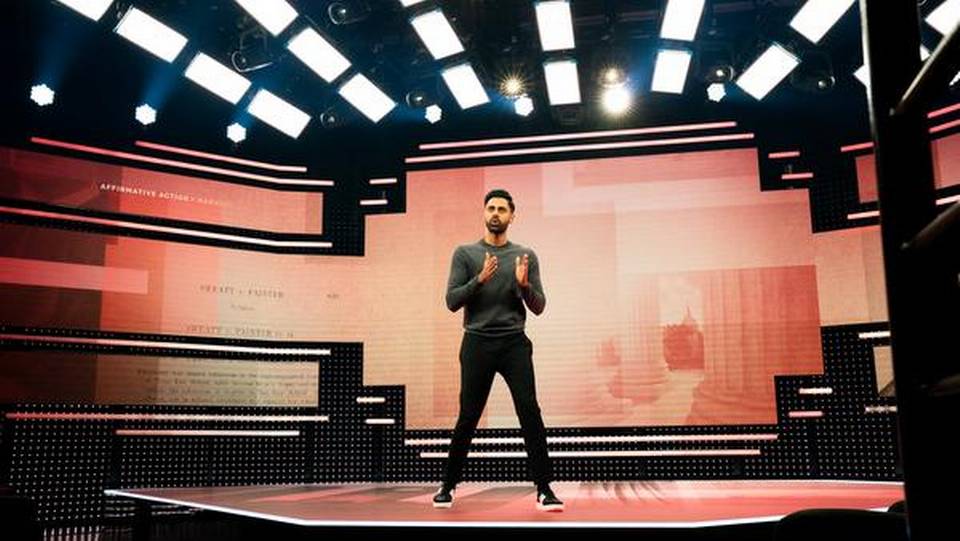
HasanMinhajMPOs12nov2018

Ending 2018 with his highest note so far, the Indian American comedian hopes to reinvent the late night talk show with the Patriot Act

Like most Indians abroad, Hasan Minhaj appreciates the value of a good lota. The “manual transmissions of bidets”, as the Indian American comedian calls them, features hilariously in episode two of his Netflix show, Patriot Act with Hasan Minhaj. The sophomore instalment took on Saudi Arabia’s crown prince Mohammed bin Salman. Like most other late night hosts, the 33-year-old too focussed on the atrocious hit on journalist Jamal Ahmad Khashoggi, who was dismembered by 15 assassins inside the Saudi consulate in Istanbul. But unlike anyone else, Minhaj worked a surprising, yet seamless, segue to a much lighter topic: imploring his audience to treat their bodies with the same respect as they would a pair of expensive albeit soiled Air Jordans. You would not use only toilet paper to clean them, right? So Minhaj laid down some “booty hygiene tips”.

Political comedy high

The Patriot Act — the latest to jostle for eyeballs among the oh-so-crowded pecking order of late night political comedies — dropped on the streaming giant’s website three weeks ago. A “woke TED talk”, as he puts it, the 20-something-minute show highlights a single topic with a generous dollop of humour. Contrarily, Minhaj’s peers — from Late Night with Seth Meyers to The Late Show with Stephen Colbert — devote a mere segment of an entire episode to news. “There’s a lot of tweet chasing that’s happening right now and I think this show is one of the few in the marketplace that provides insight and an in-depth look at really big issues,” he says. “But I think it’s awesome for me to do a huge geopolitical deep dive and then also do a different run on lotas.”

So far three episodes have aired, each featuring a wildly-gesticulating Minhaj in his trademark performance style. He goes through a gamut of emotions on stage, embodying sass, wide-eyed wonder and even outrage, while talking a mile a minute. The carefully-planned tirades are only amplified by an incredibly cool set, thanks to production/set and lighting designer Marc Janowitz. Surrounded by screens that double as walls, Minhaj stands on a stage that projects in 4K high-def. As images and graphics whoosh in and out, the comedian deftly uses every inch of space available, capturing his audience’s attention. Take, for instance, this writer’s personal highlight of episode three, Amazon, featuring Bill Gates’ possible worst nightmare. The founder of Microsoft, along with former CEO Steve Ballmer, proudly stars in a parody of the 1998 cult comedy, A Night at the Roxbury, replete with shiny disco suits. “Bill Gates wants us to forget that video so bad, he’s trying to end malaria,” sasses Minhaj to audience cackles.

Deeper focus

Despite the many jibes and comic tangents, he stresses that the focus is always on large political and cultural topics that often do not get covered in mainstream news cycles. “This is a news-driven show. It starts with news, facts and a take that comes from our senior news team,” says Minhaj, about his colleagues who comprise former reporters from illustrious publications like The New York Times and The Associated Press. “They’re print journalists who’ve spent years cutting their teeth on hard news. They’ve been waiting for the opportunity to put [news] in a format that is easily digestible.”

___________________

Minhaj’s late night picks

  • The Daily Show with Trevor Noah
  • Last Week Tonight with John Oliver
  • Late Night with Seth Meyers
  • The Late Show with Stephen Colbert
  • Full Frontal with Samantha Bee

___________________

Once the dossiers of information are collected, a unique peg is established. Minhaj has declared that the Patriot Act needs to be simultaneously current and with a long shelf-life. A paradox, if we have ever heard one. But he is confident he will successfully pull it off. Take, for example, the episode on Affirmative Action, which was actually about meritocracy and the rising anti-black sentiments in the Asian community.

As an [Indian] American, I can have a unique perspective on that,” he says. “India has programmes like that too, where there are seats reserved for under-represented groups. It is a heavily debated thing that’s both topical and evergreen.” Similarly, Amazon was about understanding monopolies and anti-trust laws; important issues that will not vanish any time soon. “Every single headline that we talk about ties into a larger fundamental question,” he emphasises, adding that whenever possible, he would like to run the topic through the prism of his own experiences. “I want it to be both broad in terms of its topical subject matter, but niche in terms of ‘this is how I feel about it’.”

Rise to the top

Before Minhaj brought us Patriot Act, he appeared on The Daily Show from to 2014 to 2018, first working with Jon Stewert and then Trevor Noah. As the show’s senior correspondent, he gave us gems like ‘Halal Things Considered’, a segment that addressed racism against Muslims. It was spurred from an incident where a woman was denied a canned beverage aboard an airplane for fear she would transform it into a weapon. Another memorable bit was highlighting American ignorance when a wave of racial intolerance and Islamophobia was hurled against the Sikh community. Among a collage of images which included a Sikh person, several US citizens picked the least likely representation of a member of the community. Often, they even chose a bird instead of an actual human being.

But what skyrocketed his rising fame was his set at the 2017 White House Correspondents’ Association Dinner. US President Donald Trump, who famously boycotted the event, was the ‘elephant not in the room’ according to Minhaj. “The leader of our country is not here,” he ribbed. “And that’s because he lives in Moscow. It is a very long flight. It’d be hard for Vlad [Putin] to make it. Vlad can’t just make it on a Saturday.” His likening of the President to the HBO show Game of Thrones’ vicious King Joffrey and the dinner akin to the Red Wedding bloodbath elicited a lot of applause.

Desi by heart

Later that year, Minhaj released his Netflix special, Homecoming King, recorded in his hometown of Davis, California. The hour-something show cemented his definitive rise to become one of America’s best comedians. With savage anecdotes and other poignant stories, Minhaj hung his heart out for the world. “I think audiences are really savvy. It’s an insult if you try to put on a front or present a different version of yourself,” he says, about the need to be vulnerable on stage. “I want people to feel like I’m speaking to them and hanging out with them.”

___________________

The Daily Show ticket

  • Racism got Minhaj his senior correspondent gig and the chance to work with Jon Stewert. Revved up by an episode of HBO’s Real Time with Bill Maher — where he talked about containing Muslims — Minhaj wrote an original piece for his audition. But it was the horror on guest Ben Affleck’s face at the time that really encouraged the comedian. His bit, titled ‘Batman vs Bill Maher’ (Affleck played the DC superhero in a slew of films), impressed Stewart. Minhaj even included a joke about host’s then latest film, Rosewater(2014), cinching the deal

_________________

In this vein, we got to know Minhaj was slapped in a department store aisle after his father checked that no one witnessed it. Plus, his encounter with the eternally-beloved Hindi phrase “log kya kahenge” when seeking his father’s blessing to marry a Hindu woman. “I can kick it with all my American friends, but the Indianness is entrenched in who I am,” says Minhaj, who danced to ‘Saajan Ji Ghar Aye’ from Kuch Kuch Hota Hai at his wedding. He also travelled back home from New York to Sacramento a few months ago to watch Dangal with his dad, Najme Minhaj. “What’s beautiful about art is that it travels very quickly,” he laughs. “My baby [dances] to the latest Bollywood hits. I am kheema roti, dal chawal and rajma chawal.”

As the first comedian of Indian descent to pull off something like the Patriot Act, Minhaj is expected to end Netflix’s bad romance with talk shows. They have cancelled Chelsea Handler’s ChelseaThe Joel McHale Show with Joel McHaleand Michelle Wolf’s The Break citing low viewership. Fortunately for Minhaj, the streaming giant has already ordered 29 more episodes, giving him plenty of time to hone his act. In an endless sea of similar formats, his series aims to push the boundaries of political comedy and we really like what we have seen so far.

Streaming now on Netflix.

source: http://www.thehindu.com / The Hindu / Home> Entertainment / by Deborah Cornelious / November 09th, 2018

Africa will witness massive growth in education in the next 15 years: Sajitha Bashir

Thiruvananthapuram, KERALA :

Bashir said in the next 15 years, Sub-Saharan Africa is poised for major education growth with the governments’ policy to form two million classrooms with two million teachers.

Thiruvananthapuram :

Africa is going to witness a major boom in primary and secondary education in the years to come, Sajitha Bashir, practice manager for education at the World Bank, told Express.

Bashir said in the next 15 years, Sub-Saharan Africa is poised for major education growth with the governments’ policy to form two million classrooms with two million teachers. Sajitha, vice-chairperson of the Vakkom Moulavi Foundation and closely related to the visionary, said she has been travelling across Africa and studying the progress achieved by countries in the Sub-Saharan regions in education as a senior World Bank official.

The World Bank team is into the design of the projects, monitoring, accountability, impact and financial implications. Bashir, an alumnus of the London School Of Economics, said there is a lot of improvement in the 48 African countries she is looking after, including Ethiopia, Sudan, Kenya, Rwanda and Tanzania. She said after the intervention of the World Bank, children have entered the system in Africa and this is a major development.

However, she said while children in South Africa, Zimbabwe, Kenya, Mauritius, Ghana and Botswana perform extremely well, children of countries like Nigeria, Ethiopia, Republic of Congo and Democratic Republic of Congo (DRC) are very poor in learning.

She also said the performance of children in international-level tests is bad and most children in several African countries are not even able to read a paragraph properly. The World Bank official also said the bank is even financing the production and distribution of school textbooks in African countries. Interestingly Dr Bashir said, “The high population rate is another factor creating a hindrance to the educational progress in these African countries and the fertility rate is 4 to 5 per cent which means a woman bears 4 or 5 children and this is a big challenge.”

source: http://www.newindianexpress.com / The New Indian Express / Home> Cities> Thiruvananthapuram / by Arun Lakshman / Express News Service / November 05th, 2018

Hockey: Asian Hockey Federation honours OHA veteran

OMAN :

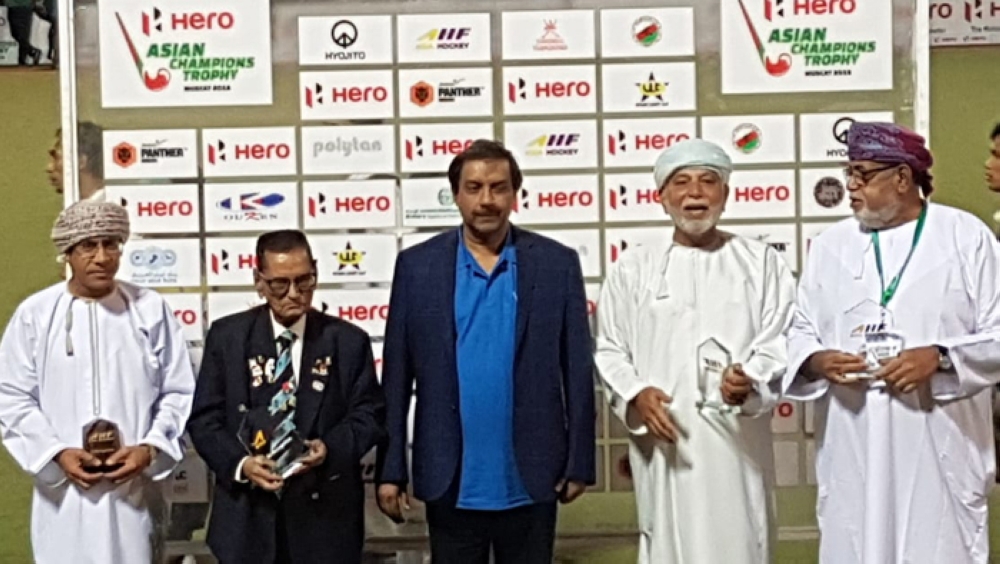
CEO of Asian Hockey Federation, Dato Tayyab Ikram aong with OHA veterans Eng. Dawood Al Raisi, SAS Naqvi, Mohammed Shambeh Al Raisi and Abdul Rahman Al Raisi.Supplied Photo

Muscat :

In recognition of their excellent contribution towards the development of hockey in the Sultanate of Oman, Dato Tayyab Ikram, CEO of Asian Hockey Federation (AHF) and member of Federation of International Hockey (FIH), in rare and unique gesture, presented mementos on behalf of the AHF to Eng. Dawood Al Raisi, SAS Naqvi, Mohammed Shambeh Al Raisi and Abdul Rahman Al Raisi.

Eng. Dawood Ahmed Al Raisi a former chairman of Oman Hockey Association and vice-president of Asian Hockey Federation, and a member of the Federation of International Hockey Umpiring Committee, represented Oman National Hockey team, as well as the Moscow University team in hockey. He was a student of Al Saidia School, Muscat, which is considered as the nursery of talented hockey players in Oman.

In 1982, Eng Dawood was deputed by Abdullah Hamed Al Ali, then director general of youth affairs to negotiate with the Indian Hockey Federation (IHF) to appoint a hockey coaches, as Oman had decided to participate in the 1982 Asian Games at New Delhi.

Eng Dawood signed an agreement with the Late K. L Passi, then secretary of the IHF to deputise S. A. S. Naqvi as coach and Joe Antic as assistant coach for Oman National Hockey team, the rest is history.

Oman participated in 1982 Asian Games in hockey at New Delhi and awarded the Fair Play Trophy apart from being placed sixth out of 12 teams.

Oman was the first country from GCC to participate in Asian Games hockey. Eng Dawood Ahmed Al Raisi was the head of Oman delegation for the 1982 Asian Games. Eng Dawood is now fondly regarded as the father of hockey in the Sultanate of Oman. He represented Al Ahli Sidab in hockey for several years.

In 1982, Saiyed Ali Sibtain Naqvi popularly known as SAS Naqvi was assigned as the first official National Hockey Coach of Oman by Indian Hockey Federation for a two years along with Olympian Joe Antic (1960 Rome Olympics) as his assistant coach.

The Oman Olympic Committee through which Games participation is ensured was not formed till 1982. Sheikh Fahad Al Sabha, then president of Asian Games Federation (now Olympic Council of Asia) granted recognition to Oman Olympic Committee (OOC) which made it possible for Oman to participate in International Games.

In 1983, Dr Hammad Hamed Al Ghafri was appointed by Royal Decree by His Majesty Sultan Qaboos bin Said as the president of Oman Olympic Committee.

A new head office of the Oman Olympic Committee was established with assistance of SAS Naqvi who was nominated as Technical Advisor.

SAS Naqvi had qualified from National Institute of Sports, Patiala, India in1976 and begun his playing career in 1947 until 1972 when he started coaching and umpiring.

SAS Naqvi was the coach of the Indian team at the 1973 World Cup training camp at NIS Patiala. In 1978, he was nominated as the coach of 1978 Indian women’s team for the World Cup at Madrid, Spain. In 1979 he had been appointed as coach of Indian women’s team for the pre-Olympics at Moscow.

From 1979 to 1982 he coached the Bombay XI, Bombay Customs, Punjab Sports Club, Western Railways, Air India, Teksons Sports, Maharashtra State Police and Don Bosco School.

SAS Naqvi accompanied the Oman delegation to the Asian Games in 1982 in Delhi, then again in 1986 at Seoul, 1990 at Beijing, 1994 at Hiroshima and 1998 at Bangkok.

He was also part of the Oman delegation to the Olympic Games in 1988 which was held in Seoul, then to Barcelona in 1992, at Atlanta in 1996 and in 2000 to Sydney, Australia.

SAS Naqvi has served as a Sports Consultant to OHA and FMEC for the last 15 years. Recently he established the Sports Museum in Muscat, Sultanate of Oman.

Mohammed Shambeh Al Raisi is one of the senior most hockey players of Oman and is a former treasurer of Oman Hockey Association. He has also been a member Asian Hockey Federation and a committee member of the International Hockey Federation (FIH). Mohammed Shambeh, a former chairman of the Oman Veteran’s Hockey Committee had represented Al Ahli Sidab in hockey for several years.

Abdul Rehman Al Raisi is also a former international hockey player and an International Hockey Umpire of Oman, he has been promoting the game for several years now in Oman. Khalid Al Raisi, his son, is an assistant coach of the Oman National Team while Marwan Al |Raisi is a prominent member of the Oman National Team.

source: http://www.timesofoman.com / Times of Oman / Home> Sports> Hockey / by Times News Service / October 30th, 2018