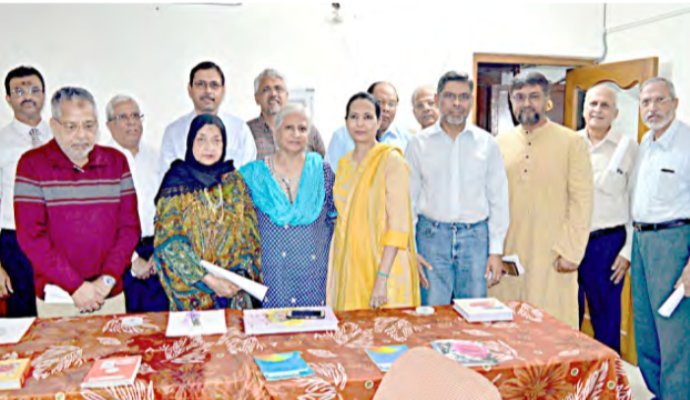
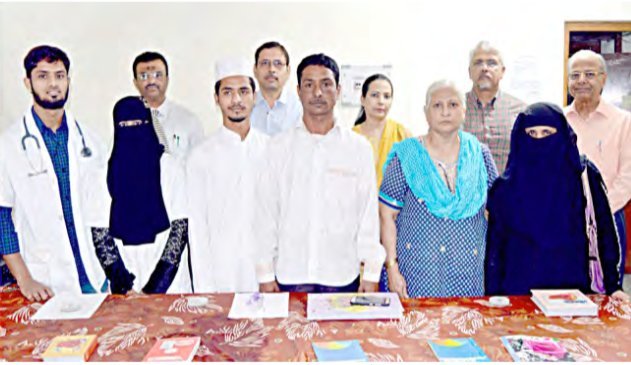
Category Archives: NRI’s / PIO’s

Meet Shahnaz Habib, whose debut translation has won the Rs 25-lakh JCB Prize for Literature

KERALA / Brooklyn, New York, U.S.A :

Before and after: What translating Benyamin’s ‘Jasmine Days’ involved, and what it means after winning the prize

ShahnazMPOs27oct2018

Shahnaz Habib has hit the proverbial jackpot at the very beginning of her career as a literary translator. Her debut translation, of Benyamin’s Jasmine Days, has won the Rs 25-lakh JCB Prize for Literature in its inaugural year. Habib, who has also translated Al-Arabian Novel Factory,the companion piece to Jasmine Days, has picked up Rs 5 lakh for the winning translation.

Habib wrote recently about the experience of being a first-time literary translator for a novelist whose previous work is highly respected – Benyamin’s Goat Days, for instance, shot to fame in 2012 – and about being a woman in what is still a male-dominated literary culture. She spoke to Scroll.in thereafter in two instalments – before and after winning the JCB Prize – about what drew her to the novel, her procrastinating habits, the differences between Malayalam and English, the migrations that aren’t covered enough, the fears of a first-time translator, and the Agatha Christie-inspired novel she’s currently writing. Excerpts from the interview:

What does Jasmine Days winning the JCB Prize mean to you?
So, to state the obvious, I am super thrilled. And I feel especially happy for Benyamin, who deserves this recognition so much. Jasmine Days is about a young woman who writes a book without knowing that she is writing a book and I feel a bit like she must have when she realised how much her words resonated with people outside her life.

But…there’s also this feeling of strangeness. I think most of us who work with words are so steeled for rejection and killing your darlings that it feels bizarre to win something! It’s also a win for translation in general and that makes me hopeful as a translator and excited as a reader of translations.

What would some of your suggestions be to other literary prizes when it comes to translations (and other forms of writing that they may be neglecting)?
Prizes are wonderful, but I wish we had more grants to encourage all kinds of writing and translation. By that, I mean support for writers and translators and poets so that they can set aside the time to work on projects before they are published. So much energy and struggle goes into the writing process itself and a writing grant can help a writer be more adventurous, take on a translation project that might be financially unfeasible, write essays that may not have mainstream appeal. And we need this now, more than ever.

In a recent essay for Scroll.in, you wrote about the distance between intended meanings and actual meanings – a father in Jasmine Days accidentally gifts his daughter a Christmas card on her birthday. Can you talk to us a little more about this distance? Particularly as it applies to translation within our daily lives?
In India, where many of us negotiate multiple languages daily – one language for work, another at home, a third on the street – we are much more involved in translation on a daily basis than in more linguistically homogeneous places. But even beyond that, at the risk of sounding esoteric, there’s a way in which translation is inherent in all communication. Even when there isn’t a language gap, there might be other gaps – the very different experiences of various generations, genders, sexual orientations, social classes, religions. Brothers and sisters growing up in the same family might need “translation” because their experiences are completely different. Sometimes the gaps come up suddenly in places where we don’t expect them and the friction between the intimacy of the relationship and the gap can be especially painful – that’s what the father and daughter in Jasmine Days find out.

What drew you to Jasmine Days?
I was very intrigued by the narrator – this feisty, funny, talkative young woman who manages to hold her own and even be subversive while living in a household ruled by men. I was also very drawn to the City, the unnamed West Asian city where the novel takes place. Like most Malayalis, I have family in the Gulf states and have always been curious about the many dimensions of migrant life there, how the different diasporas interact with each other, the question of how much you can belong. There is such a great body of American immigrant narratives, but I don’t think we have enough stories about these other migrations.

What are some of your first steps when you begin a translation project?
I light a white candle and wear all white clothes…just kidding! I begin by reading the book, usually way too close to the deadline, making margin notes on tricky passages or words that I don’t understand fully. I love reading the printed version but when I begin the page-by-page translation process, I also try to source a digital copy of the book manuscript because I find it easier to toggle between two documents on my laptop (as opposed to switching between book and laptop).

As a translator, how do you approach the cultural nuances in a story like Jasmine Days? Sunni and Shia Muslim identities, gender, the reality of being an immigrant in the Gulf. Did you draw on your own knowledge of friends and others in the Gulf when you went about choosing a specific word, phrase, dialogue in English?

I didn’t really encounter any dilemmas around the cultural nuances of Sunni and Shia Muslim identities, gender, the reality of being an immigrant in the Gulf – because I am following Benyamin’s lead with all that. I am not reinterpreting the story he wrote in any way. As for choosing specific words or pieces of dialogue, what helped me most was thinking of the young women I know and how they find their identity and power while surrounded by people who want to keep them sheltered.

Jasmine Days is your first foray into literary translation. Were you concerned about how it would be received?
Definitely. At some point during the translation, I was reading Helen Weinzweig’s Basic Black with Pearls, and the protagonist is on an airplane feeling claustrophobic and says, “I am prepared for disaster in two languages.” I felt an immediate recognition! In all fairness, I had very supportive and reassuring editors, so I didn’t worry too much. But if I know Malayalis, I am sure there are at least a few who have made notes in the margins and who will corner me next time I am in Kerala to tell me how I could have done a better job!
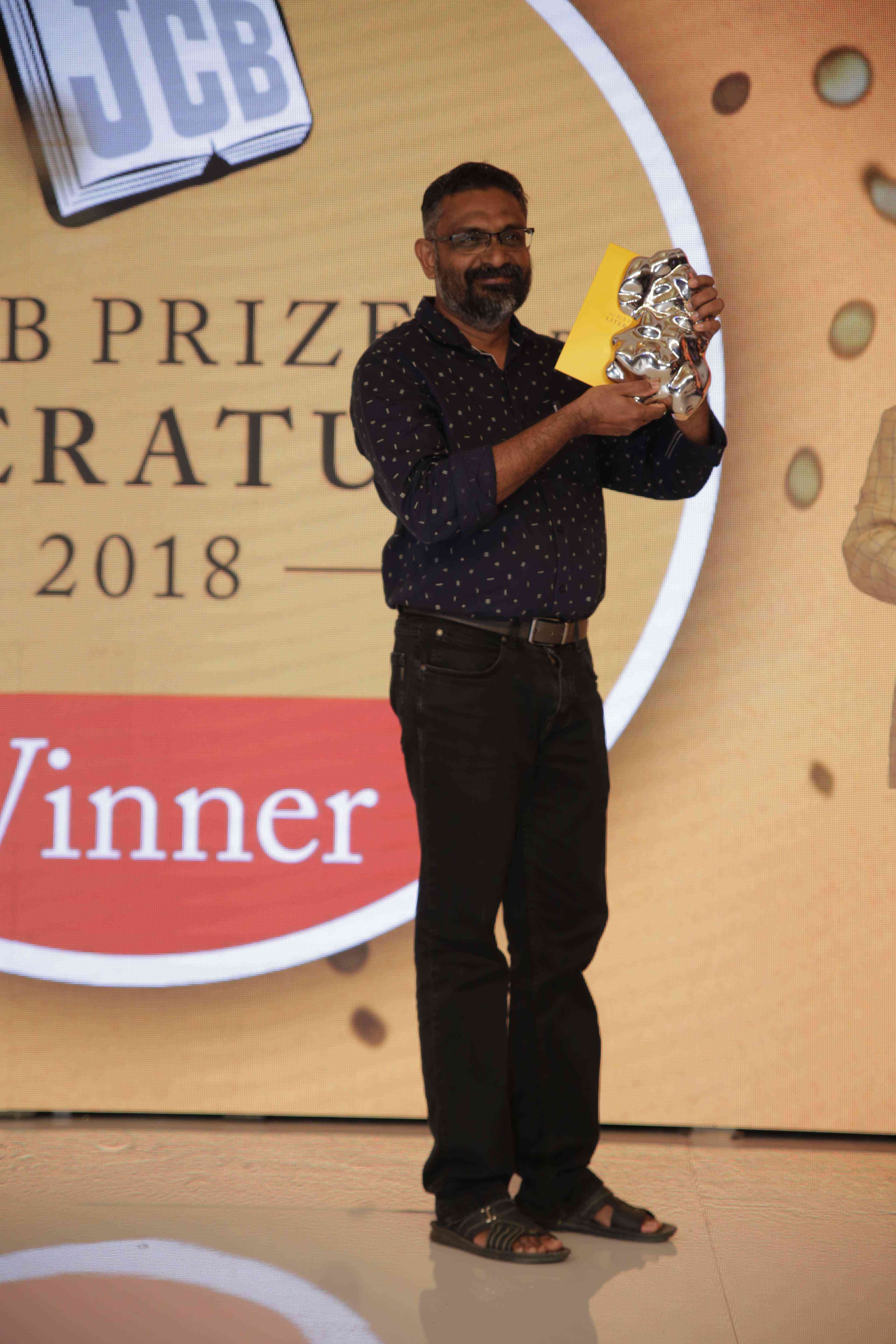
Benyamin with the JCB Prize for 'Jasmine Days'
Benyamin with the JCB Prize for ‘Jasmine Days’

Can you talk to us a little about the process of building a bridge between Malayalam and English? What is the relationship between the two languages like?
Beyond the power structures, there are also linguistic structures. Malayalam is agglutinative, so you can have long sentences packed with ideas, whereas in English those long sentences would be awkward and unwieldy. But English also has more words – it has had the opportunity to shop for words in a way that Malayalam has not. There were also some concepts that just didn’t travel well in a literal translation. I’ll give you an example – in Jasmine Days, during the protests, a Malayali man on social media says something that literally translates as “We are people who take care of ourselves, so we are safe.” In Malayalam, he is criticising his fellow Malayalis. The speaker is making a point about the innate selfishness of the Malayali who will look out for himself. The implication is that we take care of ourselves, instead of taking care of others. In English, what was a slightly melancholy, reproachful sentence actually ends up sounding like a compliment or a boast – we are an independent people, we are good at dealing with problems, we are safe. Ironically, this gap in the meaning indicates the community-centredness of a culture where taking care of ourselves first is a small crime. So, I translated it as: “We know how to look out for ourselves.”

Who are some of the translators whose work you admire?
Too many to name – especially since we read so many books without even realising they are translated. As someone who cannot write poetry but wishes she could, I am especially intrigued by Elizabeth Bishop, whose poetry owes much to her translation from multiple languages. Right now, I am loving reading Don’t Want Caste: Malayalam Stories by Dalit Writers, edited by MR Renukumar and translated by Abhirami Girija Sriram and N Ravi Shanker.

Are there texts on translation that have stayed with you?
My favourite text on translation right now is The Ben Vaughn Quintet’s Piece de Resistance song.

The translator Jessica Moore wrote about how she wrote a book of poems as she translated a poetic novel using “translated phrases as leaping-off points for my own pieces.” Does that happen to you, that as you translate you find yourself devising a new piece of writing?
Not yet. I am only two books deep into translation, so I don’t have that kind of bandwidth yet.

What are you currently working on?
A novel. There’s this Indian cook on an archaeological dig in Agatha Christie’s Murder in Mesopotamia. I have been thinking about how he got there, and it is turning into a novel.

source: http://www.scroll.in / Scroll.in / Home> Meet the Translator / by Urvashi Bahagunu / October 27th, 2018
Retired Dubai Police official helps rebuild Kerala

Dubai, U.A.E :

MushtaqMPOs21oct2018

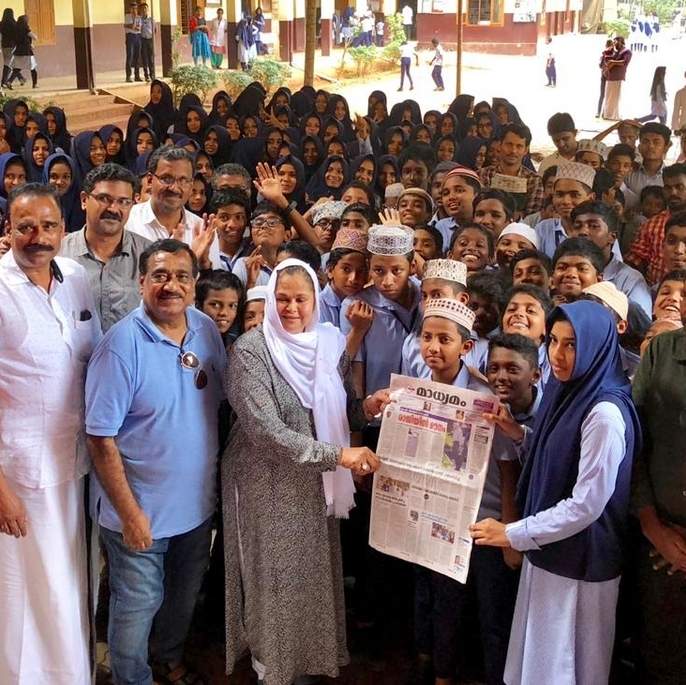
The 72-year-old retired official managed to collect Rs1.5 million (about Dh75,000) with some friends and set off for Kerala.

Shocked by the devastation caused by the Kerala floods in August, a retired Dubai Police official is now actively involved in rebuilding efforts in the Indian state.

First Warrant Officer Mushtaq Ahmed, an Indian who served as head of the photography section of the General Department of Community Happiness at Dubai Police, could not rest when he saw the visuals from the floods that killed more than 400 people and left 800,000 homeless.

“I was shocked to see people suffering after the waters destroyed their houses. I decided that I needed to make a move,” said Ahmed, a UAE resident since 1977.

The 72-year-old retired official managed to collect Rs1.5 million (about Dh75,000) with some friends and set off for Kerala. He has since helped rebuild three houses and is also funding repairs to others.

“The poor were the ones who were the worst affected. Some lost their lives while others lost their already ramshackle dwellings.”

Ahmed also contributed to an orphanage and a school with over 1,000 children. He said mere donations are impersonal. “Sometimes you need to go personally and see what people are going through and get involved,” said Ahmed. After spending 41 years documenting the history of Dubai Police through his photographs, he said he has found a sense of purpose.

sherouk@khaleejtimes.com

source: http://www.khaleejtimes.com / Khaleej Times / Home> Nation> Dubai / by Sherouk Zakaria, Dubai / October 19th, 2018

British Currency May Soon Have Picture Of Noor Inayat Khan, A British-Indian Spy During WWII

UNITED KINGDOM :

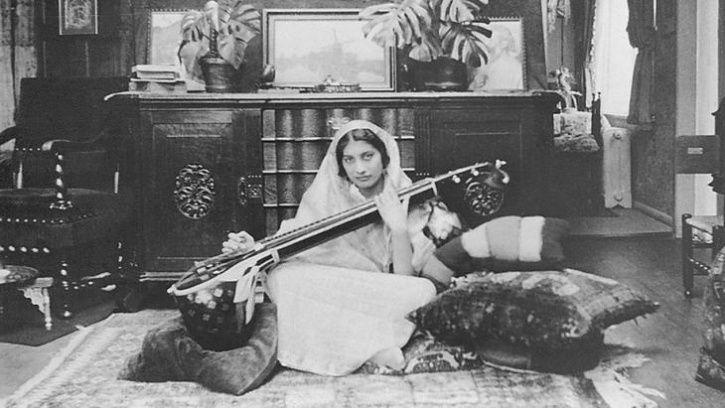
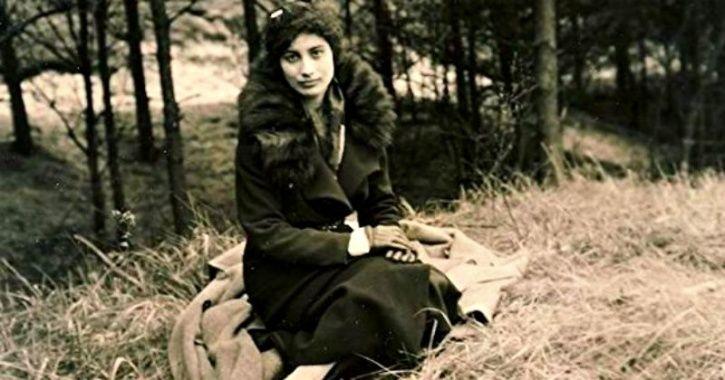
British Indian World War II spy Noor Inayat Khan may be the next face of British currency. A campaign for the same is gaining momentum wherein people are demanding the spy to be featured on a redesigned 50-pound currency note.

The Bank of England had recently announced plans for a new polymer version of the large denomination note to go into print from 2020 and indicated that it would invite public nominations for potential characters to appear on the new note.

An online petition in favour of the campaign has already garnered over 1,200 signatures by Wednesday, calling for Khan, a descendant of Tipu Sultan and daughter of Indian Sufi saint Hazrat Inayat Khan, to be considered as the first ethnic minority British woman to be honoured on the currency.

“I am absolutely delighted that the story of Noor Inayat Khan has inspired so many people and that she has become an icon. Noor was an extraordinary war heroine,” said Shrabani Basu, the author of Khan’s biography ‘Spy Princess’ and founder-chair of the Noor Inayat Khan Memorial Trust.

NoorInayatKhan01MPOs21oct2018

The trust was set up in 2010 to campaign for a memorial in honour of the war-time spy, who had been recruited by Britain’s Special Operations Executive (SOE) and infiltrated beyond enemy lines before being captured and killed by the Nazis in 1944, aged only 30.

Khan’s memorial bust now has a permanent home at Gordon Square in central London, with the trust also lobbying for a commemorative blue plaque to mark the house nearby where she spent time with her family.

“I am very happy to support the campaign for Noor Inayat Khan on the 50-pound note. It is a way of keeping her memory alive and taking this story to the next generation. It will certainly make a big statement internationally because Noor was someone who believed in breaking down barriers,” Basu said.

The campaign has found the backing of prominent political leaders, historians and academics in the UK, with many taking to social media to voice their support.

“The new 50-pound note could have anyone on it. I’m backing Noor Inayat Khan. She volunteered for SOE, served bravely as an agent in occupied Europe, was eventually captured and murdered. A Muslim, a woman, a hero of WWII. This would celebrate her courage and all SOE,” said Conservative Party MP Tom Tugendhat, who is currently leading the UK Parliament’s Global Britain and India Inquiry.

NoorInayatKhan02MPOs21oct2018

“Just returned from both East Africa and the Western Front and am more than ever aware of the shared service and sacrifice of men and women of many backgrounds. I would love to see Noor Inayat Khan on the new 50-pound note,” said Melvyn Roffe, Principal at George Watson’s College in Edinburgh.

Noor Inayat Khan, born in Moscow to an Indian father and American mother, was raised in Paris and Britain. As a Sufi, she believed in non-violence and also supported the Indian independence struggle.

But she felt compelled to join the British war effort against fascism and went on to become the first female radio operator to be infiltrated into Nazi-occupied France before she was captured, tortured and killed at the Dachau concentration camp in Nazi Germany.

“In this age, when we see a rise in anti-semitism, anti-Muslim hatred and intolerance, it is important that we continue to build bridges and show positive contributions from Britain’s ethnic and religious minorities, not least one of World War II’s almost forgotten heroes, a British Muslim woman,” said social activist Zehra Zaidi in the online petition she started to campaign for Khan as the face of the new banknote.

The 50-pound currency will be the final redesigned note to go into circulation after notes in the denomination of 5 and 10 have already been reissued in polymer. The new 20-pound polymer note will go into circulation from 2020 when the 50-pound is set to go into print to be circulated later.

“The bank will announce a character selection process for the new 50-pound note in due course, which will seek nominations from the public for potential characters to appear on the new note,” the Bank of England said.

With Inputs From PTI

source: http://www.indiatimes.com / India Times / Home> News> India / October 18th, 2018

Victoria’s secret: Karim’s great grandson lives in Bengaluru!

Bengaluru, KARNATAKA :

The family had moved to England at the Queen’s behest, bringing great solace to an increasingly homesick Karim, said Mahmood.

 Javed Mahmood, Abdul Karim’s great grandson
Javed Mahmood, Abdul Karim’s great grandson

It was an April morning in Bengaluru and Javed Mahmood, as was his custom, sat down to flip through the newspapers. The year was 2010, nearly two decades since he had moved to the city to live a quiet retired life. His relatives were scattered between Bengaluru and Karachi, as they had been since Independence. Very little remained of the family’s rich history, much of what they had left was lost in the traumas of Partition and mostly forgotten. That summer morning in 2010, however, everything changed. Mahmood found, to his astonishment, that Indian author Shrabani Basu’s Victoria and Abdul: The True Story of the Queen’s Closest Confidant had uncovered the truth behind his great grandfather Abdul Karim telling a tale of friendship and loyalty. Mahmood talks to Darshana  Ramdev about a family that has been steeped in history since, with his father, Anwar being a founding member of Bata in 1933.

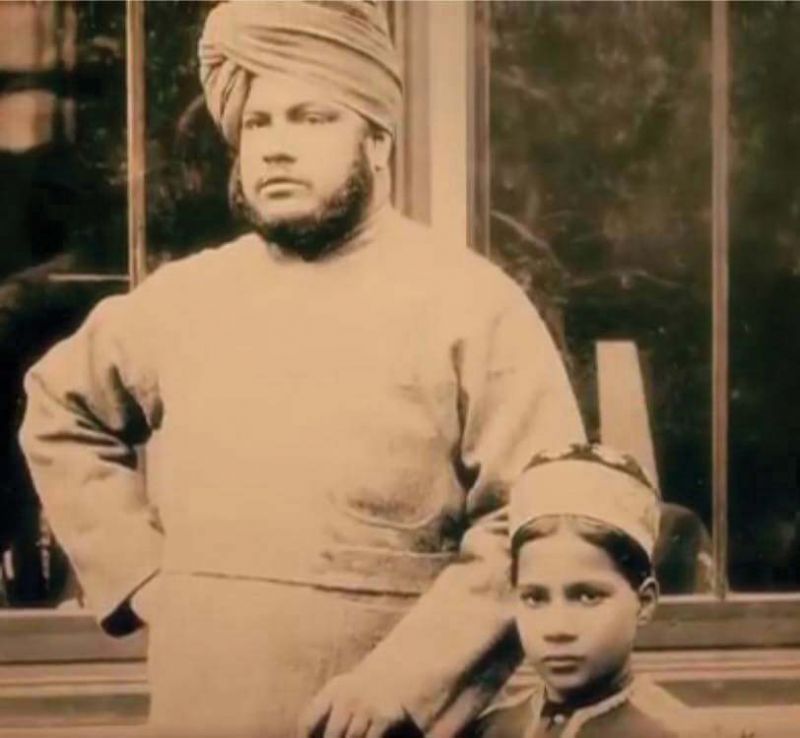
“I rushed at once to the British Council and asked them to help me contact her,” said Mahmood, whose grandfather, Abdul Rashid, was Karim’s adopted son. “We didn’t actually know he was adopted until Karim’s death in 1909 and the inheritance had to be dealt with.” The family had moved to England at the Queen’s behest, bringing great solace to an increasingly homesick Karim. “The Queen made them feel very much at home my grandfather received the same education that Edward VII and the rest of her children had earlier received.” The Queen, who was aware of the couple’s inability to have children, sent her personal physician, Dr. John Reid, to examine (much to his horror) Karim’s wife.

Abdul Karim with his adopted son, Abdul Rashid in England

“Abdul Karim had been greatly maligned by historians the Queen’s family may have wanted to destroy all trace of his presence in the court. Ms Basu had gained access to hidden archives, however. Our family still had a few documents – the diary being one of them, so Shrabani and I hopped on a plane to Karachi at once!” Karim’s descendants there were understandably wary, but Mahmood succeeded in coaxing them to part with the diary. Like most people of the time, Karim maintained meticulous written records into his life, which helped set the record straight on the stream of allegations that had been made against his character. “The diary proved beyond doubt that their relationship was marked by great affection, but had remained platonic always,” said Mahmood.

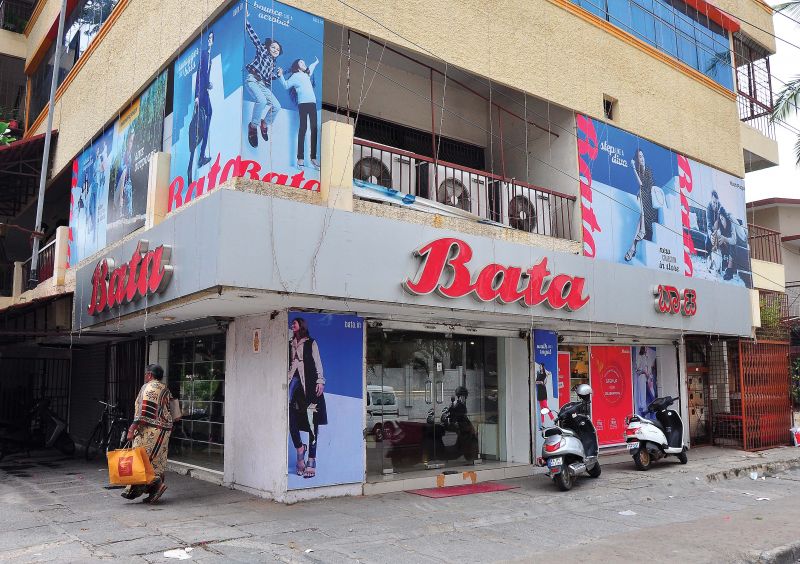
Javed Mahmood’s father, Anwar Mahmood, was one of the founding members of Bata in 1933. He started the Trot Shoe Company in 1963, setting up a second factory in Whitefield in 1970.

It contained valuable insights into Queen Victoria’s much loved Munshi, or teacher, the prepossessing young man who won the affections of a foreboding monarch with a reputation for a heart of stone. He was presented as an orderly to the Queen, which he didn’t like it was not a fitting position for the son of a landed ‘doctor’.  He soon found himself promoted to Munshi, leading the now ailing Empress to a discovery of India. The Queen’s love for her young munshi drew jealousy, hatred and racial prejudice in a society known for its repressive puritanical leanings. Neither cared, however, with the Queen sticking her neck out on numerous instances to defend her young friend. “She was always caring and appreciative of our customs every Eid, she would walk across the grounds to Karim Cottage (on the Osborne House estate) to visit the family.” They were, in turn, invited up to the palace for tea during Christmas “The Queen would even have the windows covered with silk curtains so Karim’s family could keep the purdah. He was also a wonderful cook  he would cook for her on occasion, as an act of love.”

Little was known of his life after the Queen’s death in 1901: Karim and his family were unceremoniously deported, almost at once, by a jealous Edward VII, who been aroused to such fits of rage that he had even attempted to force his mother to abdicate from office, on grounds of insanity. “Soon after the Queen’s death, King Edward arrived at Karim Cottage in Osborne House and ordered Rashid, who was a teenager at the time, to scour the house for any heirlooms or documents that contained the royal insignia. The little they could salvage, including Karim’s diary, returned with him to Agra in 1901, where he died eight years later. “He died at the age of 48 and the family was given his inheritance,” said Mahmood.

These remained with the family for some decades, until talk of Partition began to do the rounds. “We were a fairly prominent family and were advised at the time to shift temporarily to Bhopal, until the trouble blew over,” said Mahmood. This they did, greatly underestimating the scope of the problem and packing only the essentials. When the Partition took place, the family was evacuated to Mumbai, but many of the treasures were lost in transit. “The diary was with my grandfather, who was the custodian of Karim’s things.” The family moved to Karachi, save for Mahmood’s mother, Begum Qamar Jahan and two sisters. The diary went to Pakistan with them. “One of the sisters eventually shifted to Pakistan too,” he explained.

Meanwhile, in 1933, Bata, which was a burgeoning Czech company, found itself in hot water after the nation was declared Communist. The company decided to set up a factory near Calcutta, where leather was widely available. The large Muslim population in the area was another perk, providing the tannery services they so badly needed. “My father, Anwar Mahmood, was one of the founding members of the company,” he said. He joined the company at the age of 16 and worked there for nearly 30 years before he started his own business, the Trot Shoe Company. The first factory was set up in Kolkata in 1963 and the second in Whitefield, in 1970. “The organised shoe industry didn’t exist in South India and the Karnataka government had offered businesses a number of benefits, which led us here,” said Mahmood. Natural rubber, an important raw material and was grown abundantly in Kerala, making it easily accessible.  “My elder brother managed the factory here, I handled the one in Kolkata and my parents shuttled between the two cities. When my younger brother was ready to start work, we established a third branch in Hosur.” Javed Mahmood and his younger brother still call Bengaluru home.

Mahmood tells his story from San Francisco, where calls have been pouring in from across the world since the release of the film, Victoria and Abdul. “The film is doing very well, it’s being shown at local theatres here as well and friends have been getting in touch to tell me how much they enjoyed it,” he smiles.

“My great grandfather’s relationship with the Queen had been presented as scandalous and sleazy he was falsely accused of every imaginable sin. Ms Basu read Karim’s diary cover-to-cover and brought those insights into the second edition of her book.” And that’s how Abdul Karim’s story received its long overdue re-telling, well over a 100 years after his death in 1909. “Queen Victoria was a woman far ahead of her times, rising well above the prejudices that so plagued her society, to defend the young Indian man she called a friend. I think there’s a lesson in it for all of us even today.”

source: http://www.deccanchronicle.com / Deccan Chronicle / Home> Nation – In Other News / by Darshana Ramdev, Deccan Chronicle / October 14th, 2017

A Place for Us a ‘quintessentially American’ tale? Fatima Farheen Mirza answers

Hyderabad, INDIA / California, U.S.A :

Writing about an immigrant Muslim family in America, A Place for Us author Fatima Farheen Mirza says she wanted to place their lives and concerns at the centre of the narrative.

Visiting India for the first time five years ago, author Fatima Farheen Mirza visited the masjid (mosque) where her parents had her nikkah (wedding), in the city of Hyderabad. Fatima was then the same age that her mother was the same number of years ago.

“A man was sitting outside in the courtyard, threading flowers that would decorate one of the shrines. I asked if I could have one flower, because I wanted a souvenir of the place, and he denied me. I remember telling him, ‘But my mother got married here’. And he looked at me, asked me to wait for a minute, and then threaded an elaborate string of flowers that I could tie to wear in my hair. I’ll never forget it.”

This is how Fatima describes that moment. It is almost as if this passage has filtered out of the consciousness of one of the characters of her famous debut, A Place for Us. As a family gathers for the nikkah of their eldest child, the obedient, precocious doctor Hadia, their youngest, the delinquent, the errant Amar, cannot be found for the family photograph. This is a family, but the discord is unbelievable, and the silhouette of the elephant in the room grows darker and darker.

“I wanted to do my best [for] this family. I wanted to do justice to their lives, I wanted to understand their experience with as much complexity and care as I possibly could. I loved them, and it was a privilege to be able to write about them,” says Fatima about the book’s keenly felt impulses, its ability to pick up life’s mundane moments lying unnoticed in our midst and light them up with meaning. A Place for Us was recently chosen by Sarah Jessica Parker — Carrie Bradshaw of the hit American sitcom Sex and the City — for her publishing debut with her imprint for Hogarth Press. And while Parker has called it a “book about a quintessentially American family”, Pulitzer Prize-winner novelist Paul Harding has exalted it as “a work of extraordinary and enthralling beauty”.

Born and raised in California, it is natural to assume that Fatima not only spoke and wrote English for the majority of her life, but wrote about characters that belonged to a certain place, a certain way of life. How did the book come about? “Writing has always been a part of my life. Recently, I was surprised to find a story from when I was maybe seven or eight, because it was written in both Urdu and English—an impulse that returned when I was working on the novel. But throughout high school, I wrote about characters with names like Corrie, and now I wonder if my imagination had internalized the belief that stories belonged only to the kind of characters I’d grown up consuming. I remember pausing when I first wrote the name Hadia, how I not sure if I could proceed, but once I started writing about this family, I was committed,” says Fatima.

But conceptualising Hadia — which means the ‘guided one’, and is the ideal daughter, freethinking but also committed and devoted, and thinking for her — surely must have come somewhere from inside Fatima, who was once pursuing medicine, and has similar beliefs about religion and autonomy?

“Once seeds from one’s own life are planted into the novel, they are altered by the personality of the characters, and begin to take on their own significance. I might relate to the pressure Hadia feels to pursue a medical career path in order to make her parents proud, or Amar, keeping journals and looking to lines of poetry as a way to make sense of his own life — but the way these pursuits and pressures manifest in Hadia and Amar’s life is theirs alone,” Fatima shares.

At a moment in the novel, Hadia, soon to turn nine, contemplates intensely on the looming prospect of wearing the hijab, which her faith requires of her. With religious symbols coming under a lot of fire lately throughout the world, how does choosing or rejecting the hijab empower Hadia or her mother Layla? “Each character is aware of what the world wants from them. They have to navigate what their community, family, and faith want from them. It can be difficult, in the face of all of this, to know what they want for themselves. Figuring out their desires and attempting to make choices is what each of the characters contends with,” she says.

“[So], they are empowered when they make a choice that is aligned with their inner voice. This also applies to religious practices — Layla is empowered when she wears the hijab, and Hadia, when she decides not to.” And indeed, when not touching your deepest impulses about life and relationships, A Place for Us is a work about the significance of choices: An otherwise patriarchal father passes on a watch meant for a son, to his daughter. A deeply conservative mother gathers the courage to roll up her shalwar to meet her little son in the river. A young couple in love chooses to continue to meet in private, risking everything at stake for their families.

In this book about a quintessentially American family, white characters make short appearances as the immigrant minority dominates the focus, and their customs and sensibility — Sunday school, the significance of prayer, community gatherings — comes to the forefront of an American consciousness. Can one interpret this novel, then, as an attempt to envision a new America?

“This is rather [my way] of presenting the experience of living in America that is true to these characters. I wanted to place their lives, their concerns, at the centre of the narrative. If what results is a version of America that seems new, then what that speaks to is the lack of adequate representation in literature — because these lives are here, they have been here, and they have stories to tell,” Fatima says.

Modest though she may be — Fatima has undeniably mastered the art of sticking to describing life through memory. From the first scene, the narrative shifts into a series of flashbacks, in no particular sequence, from the collective consciousness of this family. From the parents’ wedding in India, their relocation to the US, the birth of their kids, the little moments as they grow up — the childhood stories, picnics, crushes, school, their rivalries and revelries — the narrative reveals itself both all at once and in parts.

And she explains the systematic revelation and withholding of information that take place through such a technique. “The [flashbacks] appear the way memories rise in a mind trying to understand something about one’s past — seemingly at random, skirting around a conflict, until enough context is understood that the centre of the conflict can be tunneled towards.”

Most of A Place for Us is poetry, and poetry is what moves its author. “I loved and returned to The Lover by Marguirite Duras and The Great Fire by Shirley Hazzard. I listened endlessly to Samuel Barber’s Adagio for Strings, trying to pay attention to the mood and movement in it, and how that could translate into the way I thought about the structure for the sections within the novel. I wrote and rewrote quotes by Muhammad Ali into my journal to stay focused,” says Fatima, who is learning boxing these days.

Interact with the author @Prannay13

source: http://www.hindustantimes.com / Hindustan Times / Home> Books / by Prannay, Hindustan Times / September 19th, 2018

NRI becomes first Muslim Lord Mayor of UK town

KENYA / Leicester, UNITED KINGDOM:

Leicester previously had Hindu and Sikh Lord Mayors,but Abdul Osman is first Muslim to hold the office.

Indian-origin councillor Abdul Razak Osman has become the first Lord Mayor of the Islamic faith to hold the high office in the multi-cultural town of Leicester,which has a large minority of Indian origin people.

Osman was born in Kenya and arrived in the UK in 1971.

His late father Yousuf Razak worked on the East African Railway,and worked for a local engineering firm after moving to Leicester.

The Lord Mayor is Leicester’s first Citizen and has a high profile role maintaining and promoting the interests of the city and its citizens, by attending a variety of civic engagements during the year.

Leicester previously had Hindu and Sikh Lord Mayors,but Osman is the first Muslim to hold the high office.

Incidentally,the office of the Deputy Lord Mayor of Leicester is also held by an Indian-origin councillor,Mustafa Kamal,who hails from Ferozepur,Punjab.

Osman has worked with several charity organisations and was instrumental in fundraising to build two villages and a school in Kutch,Gujarat for orphaned children,following an earthquake in 2011.

Osman,who joined the city council in 1996,takes over from Councillor Rob Wann.

Osman said after being sworn in at the Town Hall last night: “It’s an important year,with the Diamond Jubilee and the Olympics,so it’s a privilege for me to hold office with everything that’s going on”.

He added: “I want to focus on visiting the communities and raising the profile of the office of Lord Mayor.

I’m proud to be the first Muslim councillor to hold the position – we’ve had Christian,Hindu,Sikh and now I’m able to bring the Islamic faith to the office which is a great honour”.

Osman,who previously held the office of High Bailiff and Deputy Lord Mayor,is married to Shaina,who will serve as the Lady Mayoress.

The couple have two children.

The term of Leicester’s Lord Mayor is one year,and runs from May to May. Each year the longest serving City Councillor is offered the role. Leicester has had a Mayor since the year 1209. From 1928,the Mayor became a Lord Mayor.

The town also has a separately elected Mayor,currently Peter Soulsby (Labour).

source: http://www.indianexpress.com / The Indian Express / Home> News Archive> Print / by Agencies, London / May 18th, 2012

South African Indian cinema mogul Moosa Moosa passes away

Johanessburg, SOUTH AFRICA :

South African Indian cinema doyen Moosa Moosa has passed away. He was 75. Moosa succumbed to a heart attack on Sunday after undergoing surgery.

He was buried in Johannesburg on Monday according to Muslim rites.

Moosa had earned the title of being the longest-serving cinema group executive in the world, adding to the company’s reputation of having the longest relationship with Hollywood production house 20th Century Fox for almost eight decades now.

In 2007, Moosa received the South African Film and Television Industry Lifetime Achievement Award.

Tributes from all across the world continued to pour in for Moosa as the news of his demise spread.

Family and friends recalled how Moosa had taken over the family cinema business of the Avalon Group, started by his father 79 years ago as the first and still only Indian-owned cinema group in South Africa, after most of the 18 cinemas in the group were shut down by the draconian apartheid-era laws restricting property ownership in city centres to the minority white community.

Undeterred by this as the Avalon Group continued with just one cinema in an area designated for Indians in Durban, Moosa took on the seemingly impossible task of challenging the monopolies of white-owned major national cinema chains and won legal battles in the new democratic South Africa headed by President Nelson Mandela.

Moosa then started rebuilding the business as his son Aboobaker, popularly known as AB, also joined the business as the chief executive officer.

Currently they have cinemas in three major South African cities where new Bollywood releases play alongside Hollywood titles every week.

“My father showed tenacity and strength in keeping alive the Avalon dream through the tough times,” AB Moosa said in paying tribute to his father.

“When many had already begun to write the company’s obituary, my father’s resolve never wavered,” he added.

Many community leaders also paid tribute to Moosa for his support of community initiatives.

“He was always willing to support a variety of important social justice issues and always availed Avalon cinema venues for such events at no charge,” said Lubna Nadvi, from the University of KwaZulu Natal’s School of Social Science.

“Moosa will be justly remembered as a courageous and articulate businessman who was determined in his challenge of white monopolies in the 1980’s,” businessman Nirode Bramdaw recalled.

source: http://www.thehindu.com / The Hindu / Home> News> International / by PTI / June 26th, 2018

Doctor shares her journey in medicine in Canada by mentoring other immigrants

INDIA / CANADA :

Dr. Nusrat Parveen shares her journey in medicine in Canada by mentoring other immigrant doctors.

Dr. Nusrat Parveen was an established gynecologist in the Middle East. A medical graduate from Aligarh Muslim University in India, she acquired post-graduate qualifications including membership of the Royal College of Obstetricians and Gynaecologists in London, U.K., and a diploma in the same field from the University of Dublin in Ireland. But this long list of educational achievements was not enough to get Parveen a job in Canada.

The process to become a doctor in Canada takes time, and now Parveen shares her own journey to medical licensure with fellow international medical graduates (IMGs) who aspire to practise medicine in Canada. For her efforts as a mentor to IMGs, she was recently recognized by Ontario Premier Kathleen Wynne with the Volunteer of the Year Award for community services. 

How did you come up with the idea of mentoring other IMGs?

My husband and I were volunteering with a food bank, when we came across an IMG who was lonely and felt lost as she did not have anybody to support or guide her. But she had the passion to practise medicine in Canada. Her situation had not dampened her spirit. It was her story that first inspired us. 

How did you find other IMGs to mentor?

The spark to help fellow IMGs and knowing that many are not aware of the process and are struggling, made us start the IDEAS program at Thorncliffe Neighbourhood Office (TNO) where the relevant support and resources are provided to IMGs. 

What has been your experience of supporting other IMGs?

Initially, it was scary. I had my commitments to my family and to bring up my two children. I was studying full time toward the physician’s assistant program at the University of Toronto, so my hands were full. But the fact that everything came together so nicely and the enthusiasm from the IMGs kept me going. 

Where exactly are you in your own professional journey?

I have cleared MCCEE, MCCQE1, NAC OSCE, IELTS and workplace culture and OSLT courses. The physician’s assistant program has prepared me for the supervised clinical practice and gave me an opportunity to refresh my clinical skills. In short, it has prepared me to integrate well into supervised clinical practice while building connections and references. 

You have not yet completed your own journey to practising medicine in Canada, so what gave you the confidence to mentor other IMGs?

I realized that there are many IMGs who need support, resources and peer mentoring. As I had prepared for my exams, I had a good idea of how things worked here and knew the process and where to look for resources. This knowledge of the system and process gave me courage and confidence to support fellow IMGs. I did have some doubts, which quickly vanished with my husband’s unflinching support. 

Why are you so committed to helping others through this mentoring program?

I have given so much of my time and dedication to the medical profession, as it has given me opportunities to serve people. Mentoring IMGs is yet another way of giving back to the community.

What is your advice to your fellow IMGs looking to get accredited in Canada?

Perseverance and extensive networking to build connections and references is the key to success in Canada. Try studying a program like the PA program, which helps to refresh your skills and connect to a practice.

source: http://www.canadianimmigrant.ca / Canadian Immigrant / by  Baisakhi Roy / November 20th, 2015

Meet Rehan who prepared microchip to predict traffic jam, weather conditions

Hyderabad, TELANGANA / AUSTRALIA :

MohamedRehanMPOs20sept2018

Hyderabad:

Mohammed Rehan, a student of Deakin University, Australia studying in the Dept. of Electronics has prepared a microchip using Artificial Intelligence.

This microchip will predict weather conditions, traffic jam and other functions.

His effort is being applauded as this system is very useful for humanity.

Mohammed Rehan, son of Mohammed Abdul Basith is a native of Nizamabad. He worked under his mentor Dr. Hamid Abedi.

Faiz-e-Aam Trust extends help of Rs. 2.99 cr to poor students, families – Siasat’s role applauded

Hyderabad, TELANGANA :

FaizeAzamTrustMPOs13sept2018

Hyderabad:

According to the report furnished by Mr. Iftekhar Husain, Secretary of Faiz-e-Aam Trust, a sum of Rs. 2.99 crore was spent on various schemes of financial assistance to poor students and families.

In 2016-17, the trust spent Rs. 59.81 lakh for primary education, Rs. 21.21 lakh for technical education, Rs. 29.5 lakh for relief and Rs. 7.85 lakh for treatment of patients.

In this manner, from April 2017 to January 2018, Rs. 40.46 lakh, Rs. 21.21 lakh, Rs. 18.68 lakh and Rs. 3.58 lakh were spent on the above mentioned works.

So far, the trust has help 625 students of primary education, 731 of SSC, 1237 of Intermediate, Degree, PG, Engineering, MBA, MBBS and Paramedical Courses.

He further told that the trust was established in 1983 by his brother-in-law, Mr. Zulfekhar Husain. It enjoys full support from Mr. Zahed Ali Khan, Editor of Siasat Urdu Daily. The trust is now helping 1456 students ranging from primary school to Engineering and Medical courses. It is also extending financial help to 1256 patients. It rehabilitated 2280 persons.

Faiz-e-Aam Trust helped Kareemunnisa whose husband, an autodriver had left her helpless. Her sons, Syed Hasan and Syed Yaseen and daughter, Saba Begum were adopted by the Trust for educating them. Syed Hasan completed MBBS whereas Saba Begum is doing the same course. Her eldest son, Syed Yaseen has completed Hifz-e-Quran.

Ms. Farukh Parveen Jamal, Chairperson of Trust, Aurangabad and Mr. Siraj Tahir, Trustee of Faiz-e-Aam Trust attended the meeting and listened to the details of the poor families.

FaizeAzamTrust02MPOs13sept2018

In collaboration with Siasat Millat Fund (Clothes bank) it helped 1552 families. Destitute Muslims of Muzaffar Nagar received help through Siasat Millat Fund. It also helped Salwa Fatima and Sania Siddiqui for their ambitions to become pilots. For Old Age Home of Siasat, the trust gave a donation of Rs. 5 lakh.

The trust also helped Nuzhat Fatima, a student of MBBS, Shaik Nazeer Ahmed and Ayesha, students of MD.

During the past three years, the trust has spent Rs. 1.6 lakh for primary education, Rs. 43.33 lakh for technical education, Rs. 71.15 lakh for rehabilitation, Rs. 23.35 lakh for treatment of patients.

It may be mentioned that Syed Hasan had secured a free seat in MBBS. Mr. Ali Asghar played a key role in getting financial help for this family.

Hajera Begum is a second year MBBS student. Her father is a tailor and her mother manufactures beedis. She has two sisters. The expenses of her MBBS fees were paid by her parents by mortgaging ornaments. Dr. Makhdoom Mohiuddin’s wife, Dr. Shaista Mohammedi Husaini received a message on WhatsApp for helping Sabera Begum which she forwarded to Secretary of Faiz-e-Aam Trust who arranged Rs. 1.27 lakh for getting back the ornaments which were mortgaged.

Mr. Rizwan Haider, Trustee welcomed the guests. Ms. Amena Saher conducted the meeting.

These details were given in a special meeting held at Faiz-e-Aam Trust which was attended by Ms. Farhat Yasmeen and Mr. Siraj Tahir, Trustees.

The other persons who attended the meeting were Dr. Samiullah Khan (Director Shadan College and MESCO member), Dr. Saukat Ali Mirza (Chairman Helping Hand), Mr. Ali Abedi (Social worker, London), Mr. Mudasir Alam (US), Mr. Jameel Haider (US), Fakhri Saheb (US), Anees Iftekhar Ali (US), Ruqayya Begum (US), Syed Haider (member, Faiz-e-Aam Trust), Aijaz Husain (US), Jafar Ahmed (US), Syed Jafar Husain (Sada-e-Husaini), Hamid Ali, Prof. Shaukat Hayat and Mr. Ahmed Basheeruddin Farooqui (former Dy.DEO).

source: http://www.siasat.com / The Siasat Daily / Home / by  Sameer, The Siasat News / January 18th, 2018