Category Archives: Science & Technology

Chandrayaan-3 success: Assam scientists Nazneen Yasmin, Baharul Islam shine

ASSAM:

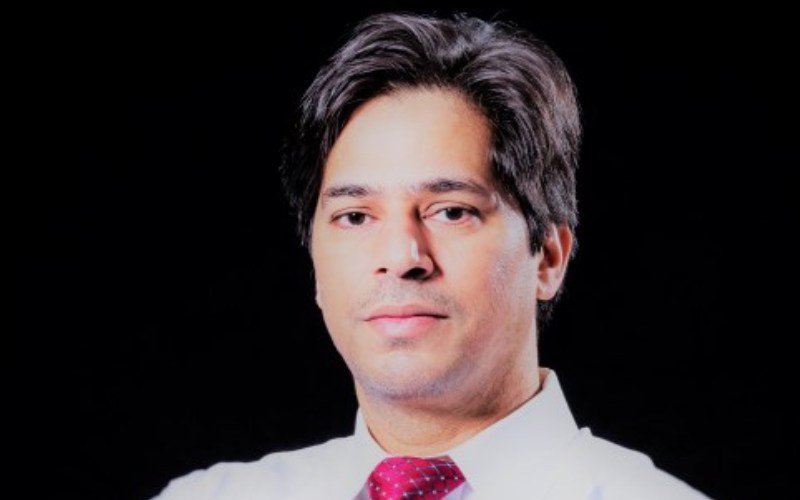
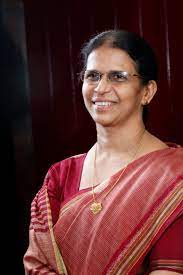
Scientists Yasmin Nazneen and  Baharul Islam
Scientists Yasmin Nazneen and Baharul Islam

Guwahati

 Assam’s Nazneen Yasmin and Dr. Baharul Islam Barbhuyan are among the scientists who contributed to making the ISRO’s Chandrayaan-3 land on the South Pole of the Moon.

Nazneen Yasmin, who is from a middle-class family of central Assam’s Nagaon district joined the ISRO after cracking the toughest selection test two years ago. The young scientist has been involved in radar tracking in the launch department of ISRO for more than a year.

But the journey was not easy for Nazeen Yasmin. While she was on maternity leave for her firstborn about six months ago, she was recalled for crucial operations at least twice and she took her child along.

Despite facing the challenges of married life and the post-pregnancy phase Nazeen was very passionate about the Chandrayyan-3. Many a time, Nazeen worked from home by keeping her baby in her lap.

Naznin Yasmin, daughter of Abul Kalam Azad and Manzila Begum of Maherpar near Juria in the remote Nagaon district received her appointment letter as a scientist at the ISRO headquarters in Swar Sriharikotha, Andhra Pradesh around two years back.

Naznin Yasmin received her primary education at Nuruddin Furkania JB School, Juria in Nagaon district in central Assam. She performed brilliant results in the matriculation or Class X final exam from Kadamani Town High School in 2007. She passed the Class XII exam from Alphabita Science Junior College in 2009 with letter marks in several subjects in the science stream. She later obtained her B.Tech in Electronics from NITS Mirza College, Guwahati in 2013 and her M.Tech in First Division from Tezpur University.

Along with working in various private scientific institutions, Nazneen passed the National Eligibility Examination under the University Grants Commission in 2018 and also qualified for the Junior Research Fellowship of the Government of India.

Nazneen Yasmin, who had dreamed of becoming a scientist since childhood, said she was inspired by the success of India’s first female astronaut Kalpana Chawla. She urges the younger generation not to think of themselves as weak and prepare themselves to get a place in the leading institutions of the country through hard work.

Also, Nazneen was inspired by the life and work of former President Dr. APJ Abbul Kalam, who came from a family with modest means, a family source said.

On the other hand, Dr. Baharul Islam Barbhuiyan of south Assam’s Hailakandi has proved that all dreams come true if a person chases them and works hard.

Baharul, 45 is a resident of Syedband II Khand village situated about 5 km from Hailakandi town. He is the pride of the Hailakandi district.

Baharul Islam’s name came into the spotlight after India’s Chandrayaan-3 spacecraft made history by landing on the south pole of the moon on Wednesday evening. He is a prominent scientist at ISRO. He is one of the scientists who played an important role in the success of Chandrayaan-3

Speaking to Awaz-the Voice Assam from ISRO headquarters in Bangalore, Baharul Islam said he was proud to be involved in a historic work that set a record in the space world. He said students have always been interested in space and after the successful landing of Vikram on the South Pole of the Moon. “Success of Charayaan-3 will result in an increase of interest and curiosity about space science among the younger generation,” he said.

He earned his B.Sc from SS College, a Masters in Mathematics from Aligarh Muslim University, PhD from Gujarat University before joining the ISRO.

Baharul’s parents were teachers and they created an environment of science at their home from the very early stage of their son. His father, Moinul Haque Barbhuiyan, has passed away. Mother Rehana is old yet she is excited about her son’s achievement.

“There are no words to express my joy at the moment. I never thought such a day of success would come. People have been calling us since Wednesday,” said Baharul’s brother Enamul Haque.

source: http://www.awazthevoice.in / Awaz, The Voice/ Home> Story by ATV / posted by Aasha Khosa / August 26th, 2023

Yenepoya Specialty Hospital gets Dakshina Kannada’s first Joint Replacement Robotic Unit

Dakshina Kannada, KARNATAKA:

Yenepoya Specialty Hospital gets Dakshina Kannada’s first Joint Replacement Robotic Unit

Mangaluru: 

Yenepoya Specialty Hospital marked a significant milestone with the launch of its cutting-edge Joint Replacement Robotic Unit. The launch event took place at the Taj Vivanta Hotel in the city on Tuesday. Gracing the occasion, Karnataka Health Minister and Dakshina Kannada In-charge Minister Dinesh Gundurao inaugurated the revolutionary unit, which is a collaborative effort with Meril Life, a global med-tech company.

This pioneering initiative stands as the first-of-its-kind facility not only in Dakshina Kannada but also as the first outside Bengaluru in the state of Karnataka.

Dr. Muhammad Thahir, the Director – Medical at Yenepoya Hospital, extended a warm welcome to the esteemed guests and attendees, setting the tone for the event. Dr. Yenepoya Abdulla Kunhi, Chairman of Yenepoya Group, followed with introductory remarks that shed light on the transformative potential of the newly launched robotic unit in the realm of healthcare. Dr. Kunhi also emphasized the need for adapting to technological advancements for the betterment of humanity and acknowledged the district’s continuous commitment to healthcare excellence.

Suvdeep, representing Meril, provided an insightful overview of the Cuvis Joint Replacement Robotic Unit, now available at Yenepoya Specialty Hospital. Highlighting its uniqueness, Suvdeep explained that it’s the sole fully-automatic robotic joint replacement unit currently accessible. The technology empowers doctors to offer personalized alignments based on a generated 3D model from CT scans, underscoring the critical role of medical expertise in the process.

Dr. Deepak Rai, Consultant Orthopaedic Surgeon at Yenepoya Specialty Hospital, applauded Abdulla Kunhi and Mohammed Farhaad Yenepoya for their visionary efforts in elevating healthcare standards in Dakshina Kannada. Dr. Rai elucidated the profound impact this robotic joint replacement unit is anticipated to bring to the future of healthcare over the next decade.

Explaining the concept of Joint Replacement Robotic Surgery, the Cuvis system was described as a tool that employs accurate CT scans of the knee and meticulous measurements pre-surgery, delivering enhanced precision and benefits in the field of joint replacement.

Minister Dinesh Gundurao commended the new service and urged the public to utilize such advanced offerings in the region. He also stressed the importance of researching why arthritic issues are increasingly affecting the younger generation. Minister Gundurao applauded the healthcare contributions of Yenepoya Group and underscored their resolute commitment to elevating healthcare in the district.

The event concluded with Dhanush Shetty extending a vote of thanks, while Clinical Dietitian Haifa Ansari efficiently compered the proceedings.

Managing Director of Yenepoya Group, Yenepoya Mohammed Kunhi, Director Operations Yenepoya Abdulla Javeed, Pro-Chancellor of Yenepoya Deemed to be University Yenepoya Mohammed Farhaad, Vice-Chancellor Dr. Vijay Kumar, Former Minister Ramanath Rai, Dr. Bhaskar Shetty, Dr. CP Habib Rehman, Dr. Savita Shetty, and others were present during the significant occasion

source: http://www.varthabharati.in / VarthaBharati.in / Home> Karavali / by Vartha Bharati / August 15th, 2023

Solar Bike Creation by Asad Abdullah: A Testament to Innovation

Mubarakpur Lohara, UTTAR PRADESH:

असद सात सीटर बाइक बनाते हुए/ Asad crafting a remarkable bike that merges innovation and style seamlessly.

Asad is a 23-year-old resident of Azamgarh, Uttar Pradesh, who has been innovative since childhood. Recently, he built a seven-seater solar bike. Impressed by his creation, IIT Kanpur has invited him for a discussion. If IIT Kanpur likes Asad’s idea, he may receive financial assistance to improve his product. Asad’s dream is to build a solar plane as well.

Asad Abdullah, hailing from Azamgarh, Uttar Pradesh, has always displayed a flair for innovation. From a young age, he engaged in creating small-scale inventions and sharing his progress through YouTube videos. It was in 2017 that Asad’s work gained recognition and appreciation, motivating him to explore the world of electronics further. Fuelled by his innate curiosity and a desire to make a positive impact, Asad embarked on a remarkable journey of innovation.

When the price of petrol increased, the idea of building a solar-powered bike came to mind

Asad has been innovating since the age of 8. When he was 13, he built a motor using a battery from a remote-controlled car. His dream now is to build a solar energy and battery-powered plane. It will take about a year and a half to build it. How did the idea of building a seven-seater bike come about? In response to this question, Asad says that he got the idea after watching the film ‘Golmaal’ starring Ajay Devgn.

“With the skyrocketing prices of diesel and petrol, it has become difficult for the common man. Seeing people’s difficulties, I thought why not create something that allows people to travel from one place to another at a lower cost? After a lot of thinking, the idea of building this bike came to my mind. I started working on it. It took about a month to build this bike, and it cost around RS 12,000. Once it is built, it can be fully charged at RS 8-10 rupees, and then it can travel up to 150 kilometers.” Asad told TwoCircles.net.

“I recently received a call from IIT Kanpur, inviting me to discuss my project in detail. I am thrilled to visit IIT Kanpur and engage in comprehensive discussions about my creation,” Asad said.

He expressed his desire to construct a solar bike that is robust and cost-effective, ensuring accessibility even for individuals from impoverished and rural regions.

IIT Kanpur invites Asad for assistance in innovation and incubation

The Innovation and Incubation Center at IIT Kanpur helps talented children in the country who think of creating something new and unique. There are 14 programs at IIT Kanpur under which assistance is provided to these talented students. Funding ranging from 3 lakh rupees to 3 crore rupees is provided.

“We have invited Asad to come here to understand the process and present his ideas. We will help him pitch his idea. If the idea is liked, we can provide financial assistance ranging from 300,000 to 700,000 rupees. Asad’s work falls under the prototype category, for which we provide up to 700,000 rupees and a place to work within the campus.” Rishabh Pandey, Assistant Manager (The Innovation and Incubation Center at IIT Kanpur) told TwoCircles.net.

असद और उनके साथी बाइक के साथ सेलिब्रेट करते हुए/ Asad and his friends on the new solar bike

Solar Bikes to Surya-Shakti Empire, Asad Abdullah’s Entrepreneurial Saga

In addition to his achievements thus far, Asad Abdullah has set his sights on even greater goals for the future. Inspired by his success with the seven-seater solar bike, Asad plans to establish his electric vehicle (EV) bike manufacturing company. With his passion for innovation and commitment to sustainable transportation, he aims to contribute to the growing field of electric mobility in India.

Furthermore, Asad dreams of building a solar-powered plane, showcasing his ambition to push the boundaries of renewable energy and aviation technology. He envisions a future where solar energy can power not only ground transportation but also air travel, reducing carbon emissions and dependence on fossil fuels.

Asad’s father hopes that his son will bring honor to the state and the country

“Son has always had a technical mind since childhood. He has been creating new things since childhood. Now he has built a bike that is receiving praise from everywhere. The family and people around are very happy. Everyone says that Asad is progressing. Undoubtedly, in the coming times, my son will bring honor to the state and the country.” Mohammad Abdullah ( Asad’s father) told twocircles.net

Further, He expressed his happiness, saying that Asad receiving a call from institutions like IIT Kanpur is a ‘proud moment’ for all of us. “But we will not pressurize him to go to IIT Kanpur. It will be his decision. Whether he will start up his own unit or accept the invitation of IIT Kanpur. The decision will be purely his”.

Asad is a resident of a small town called Mubarakpur Lohara in Uttar Pradesh. He has studied up to ITI and BCA.

source: http://www.twocircles.net / TwoCircles.net / Home> India News / by Md Zamir Hasan / TwoCircles.net / July 12th, 2023

Dawoodi Bohras launch global program to conserve rainfall water

INDIA:

The rainfall water conservation project

New Delhi :

The Dawoodi Bohra community has launched a global program to conserve water and recharge groundwater through effective rainwater harvesting techniques.

Recognising the global water scarcity issues, the leader of the Dawoodi Bohra community, His Holiness Syedna Mufaddal Saifuddin, in his recent address to community members in Mombasa, Kenya, stressed the importance of preserving and conserving water.

“Following the instructions of Syedna Mufaddal Saifuddin, a team of over 200 community officials were mobilised to visit more than 250 villages, towns and cities in India to study the strain on existing water supplies and provide support for building a more resilient and sustainable water management system”, said Shabbir Najmuddin, Associate Executive Trustee of Burhani Foundation, the community’s 30-year-old environmental body which is leading this initiative in collaboration with other organisations.

The process of water conservation 

“As part of the first phase of the water conservation program, we targeted water-challenged areas in India by guiding them to harvest rainwater in their backyards, wells, ponds and other local catchment areas,” Najmuddin added, awareness programs were also held at educational institutions and community centres to showcase various methods of rainwater harvesting and their benefits in revitalising depleted groundwater levels.

“Various stakeholders in the water management field and municipalities were also consulted and involved in the survey to gauge the local conditions and take their opinions in adopting methods that best suit the region’s topography,” he added.

For the long-term rollout of the program, Burhani Foundation is identifying project coordinators from each area who will be tagged to experts to troubleshoot issues and facilitate the installation of rainwater harvesting systems in their regions. In the coming days, the Foundation is also going to reach out to community representatives from across the globe to harness the power of rainfall in their regions and share best practices for other areas to adopt. Besides that, the Trust is also rejuvenating defunct wells in the identified areas.

During the survey of rainwater harvesting in households 43-year-old Ismail Raja from Shahada, a town in Nandurbar district of Maharashtra, shared, “We installed a rainwater harvesting system in our backyard two years ago to recharge our borewell. Since then we have never faced water shortage as our borewell provides water not just to our families but also at times to our neighbours.”

Another community member, Jaffer Shabbir (36) from Savda village next to Burhanpur in Madhya Pradesh, is using a simple yet effective solution to recharge the nearby well which had run dry in 2017. He says, “By collecting rainwater from the roof of our hall and parking area which we give on rent for weddings and other functions, we’re harnessing the power of rain to replenish the groundwater in the neighbourhood.”

The members checking the progress

Syedna Mufaddal Saifuddin’s unwavering commitment to environmental conservation reflects in his broader vision of leading a harmonious and sustainable life. In his sermons, he continues to counsel the community to protect and preserve nature while inspiring individuals from all walks of life to actively participate in conserving natural resources and embracing practices that promote environmental sustainability.

According to NITI Aayog, nearly 600 million people, which is almost 50% of India’s population, are facing water shortage issues. The country is vulnerable to droughts as well as floods even as climate change is increasing unpredictability in weather patterns and leading to more extreme weather events. Rainwater harvesting, water reservoirs and other methods can help mitigate these extreme events by storing & recharging groundwater and releasing it when needed.

source: http://www.awazthevoice.in / Awaz, The Voice / Home> Story / by Shaista Fatima / July 02nd, 2023

Abaan Habib develops drone to fly between hospitals amidst disaster

Zakura, (Srinagar), JAMMU & KASHMIR:

Abaan Habib with his drone in a location in Himachal Pradesh

New Delhi :

Optimism and hope fills the hearts and minds of today’s Kashmiri youth and they are ready to take off on the fight of their dreams. Abaan Habib is one of them; he has developed an extraordinary drone that can transport blood for medical emergencies from one hospital to another.

After years of hard work, Abaan Habib, a resident of Zakura area of Srinagar, created the flying machine that has the potential to save countless lives and improve access to health care in remote areas and during natural calamities.

Abaan said he was inspired to work out his invention after he saw the devastation and human suffering in the 2014 floods that nearly drowned the city of Srinagar.

Abaan says, “After witnessing the devastating floods of 2014, I wanted to find a solution to transferring blood samples and pouches between hospitals.”

He worked hard on his drone technology for five years. Initial tests conducted in Himachal Pradesh were successful as the drone connected 20-25 hospitals to the central hospital, covering a distance of over 70 km.

He says: My message to the youth is to follow your passion. Only through the persistence and dedication of young minds can a society bring about meaningful change in the world.

Abaan’s drone experiment also extended to inter-state connectivity, connecting hospitals in Shimla with Chandigarh. Aban decided to debut the drone in Himachal Pradesh first, collect data and demonstrate its benefits before expanding its use to the Kashmir Valley.

The geographic conditions of both states present unique challenges in providing timely blood transfusions to patients in need. Aban recognized this and took advantage of this void in the atmosphere. We can take advantage of the atmosphere to help the needy.

Abaan not only worked on the project but also collaborated with corporate entities outside Kashmir. These collaborations have provided additional expertise and resources to further develop and implement its drone technology.

However, to run the drone service on a commercial scale, he says, he needs financial support.

Abaan Habib hopes that with his drone, he will not only be able to save lives but also create business and career opportunities for the youth of the valley.

Abaan’s drone invention holds great promise in revolutionizing healthcare access in remote areas. As Abaan tries to secure funding and navigate regulatory challenges, the potential impact of its technology cannot be overstated.

With every step forward, Abaan brings us closer to a future where life-saving medical equipment can reach even the most inaccessible areas, offering hope and a chance for survival to those in dire need.

This project of his was presented by Habib Abaan last year. At that time he was a 12th standard student at Green Valley Educational Institute in Kashmir. He said, “We have a tinkering lab at school, which helped me a lot in understanding the process and learning the art of making drones.”

My parents gave me freedom and therefore my idea of education is quite different from others. Unlike other parents, my family did not force me to choose a career like a doctor or an engineer. They allowed me to go as I pleased. My inclination was towards drone technology.”

He says, “I have seen many natural calamities in Kashmir since my childhood, one such natural calamity was the flood of 2014 when Kashmir was flooded. People required relief supplies and we saw how the government machinery failed miserably due to lack of infrastructure. They were very disturbing scenes, everyone knows that this effort of dropping aid from helicopters is not enough.”

It was then that I thought of drones and how helpful they could be in such situations. If we build small drones that are autonomous and equipped with artificial intelligence to deliver relief supplies to disaster areas, they can deliver aid without much cost.

Abaan Habib said that JKEDI and JKTPO encouraged him but he is yet to receive any financial support from the government.

Abaan Habib also went to Gujarat to attend an event organized by DRDO where we showed off his drone to the then Army Chief General Makund Major Naravane. “He appreciated my efforts,”

He says young entrepreneurs should be prepared to face rejection or failure; spend their money and not fall for loans and subsidies, for he believes “debts are the root of failures.”

Abaan;s father H U Malik told Rising Kashmir that they are operating at 25 locations in Himachal Pradesh and they want to replicate the same model in Kashmir keeping in view its geographical conditions. 

“Even Abaan is working to link SKIMS Hospital; SMHS with GMC Baramulla and for that fly van has already been designated for the project,” he said.

Malik says it is his son’s dream to see this project working in Kashmir. “We want to connect SKIMS hospital with other tertiary, district hospitals of the valley. We appeal to concerned authorities to help us and we are ready to follow all SOPs in this regard,” he said.

source: http://www.awazthevoice.in / Awaz, The Voice / Home> Story / by Aasha Khosa / July 20th, 2023

APJ Abdul Kalam’s memorial is the new pilgrimage site in Rameshwaram

Rameshwaram, TAMIL NADU / INDIA:

A P J Abdul Kalam with children: an exhibit from the National memorial at Rameshwaram

In mid-December, when Suman and her husband Diwan Arora of Sonepat, Haryana, left for Rameswaram in Tamil Nadu, for performing the pilgrimage to one of the holiest sites of Hindus, little did they know that their journey would also take them to another sacred place – a memorial to the son of the soil Avul Pakir Jainulabdeen Abdul Kalam aka Dr. A P J Abdul Kalam.

“I didn’t feel like leaving the place,” said Suman, a retired central government official of her experience of visiting the National Memorial for the 11th President of India A P J Abdul Kalam, located in his native city of Rameshwaram.

Suman said that the moment she removed her shoe to enter the National Memorial she experienced a surge of positive energy inside her. She and other tourists paid obeisance to the People’s President at his resting place inside the memorial.

 “I was visiting the place after I visited the temple; there I felt I had entered another sacred place,” she told Awaz-the voice.

Suman and Diwan Arora in Rameshwaram

On her maiden journey to South India, Suman said she was as much awestruck by the grandiosity and architecture of temples – Rameshwaram, and Meenakshi at Madurai as with the simplicity and grandeur of the life of the great Indian –  A P J Abdul Kalam.

“Seeing the incredible architecture of the temples was a great experience. Visiting the Museum of President Abdul Kalam was no less. It was also like a pilgrimage.”

Though not hyped as much as many other places, the museum is on the Tourism map of Rameshwaram city. According to Aroras, even the local auto-rickshaw drivers who offer tour packages to visitors, recommend the museum as the first place.

Suman said although their tour was in connection with the seven-day Bhagwad Gita path (Narration of the Bhagwad Gita) and was organized by a religious group, a friend had advised her to visit the museum at any cost. “After visiting the place, I can never thank my South Indian friend enough,” Suman said.

Dr. A P J Abdul Kalam’s memorial, Rameshwaram

Kalam’s grand-nephew APJMJ Sheik Saleem told Awaz-the voice that so far one crore people have visited the museum that was set inaugurated by Prime Minister Narendra Modi on July 27, 2017.

Sheik Saleem who recently joined the BJP runs his business and a Foundation for social work. He says he is privy to people’s devotion and love for his ancestor as they visit his memorial.

“The museum is visited by at least 7,000 visitors per day and so far about one crore have paid their obeisance to the people President,” Saleem told Awaz-the Voice.

“Earlier people came to our city for pilgrimage to the (Rameshwaram) temple but now the pilgrimage is combined with the visit to the national memorial for APJ Abdul Kalam,” he said.

“I have seen people coming to the place and feeling there is something great there. Many visitors do stand silently in front of the memorial, some bow their heads, and others simply go in the prayer mode as if they are seeking His blessings,” the former President’s grand-nephew said.

APJMJ Sheik Saleem with Home Minister Amit Shah

He said it’s touching and a humbling experience to see how much Indians cutting across religions or other barriers loved Dr. Kalam.

Suman, her husband, and many in their group spent nearly two hours inside the memorial. Visitors must enter barefoot and not use cameras or mobiles to click the pictures. All this adds to the sacredness of the space.

Saleem said since the place sees a high footfall, the cameras are forbidden simply because if everyone starts clicking there will be chaos.

Diwan Arora said the pilgrimage jatha comprised 300 people from Punjab and Haryana who visited Rameshwaram for “Bhagwat sapthah’ the weeklong narration of the Bhagwat Gita.

Meenakshi Temple and the Sea at Rameshwaram

Besides the museum, A P J Abdul Kalam’s childhood home has also been converted into a museum that his elder brother maintains. “It’s a smaller collection of photos and family memorabilia. The place is visited by at least 4,000 persons per day,” Sheik Saleem said.

The national museum maintained by the DRDO narrates the story of the life of India’s missile man from a newspaper hawker in the coastal city to India’s missile man and the most popular President. It showcases pictures and models of missiles, rockets, and the Pokhran Nuclear test that Kalam was involved in. His favourite Veena which he played every morning sitting on the bare floor even in Rashtrapati Bhawan is also displayed in the museum.

Dr. A P J Abdul Kalam lived in the Rashtrapati Bhawan from 2002 to 2007. He became the most loved and respected head of the nation to get the sobriquet of People’s President.

 Kalam was a respected scientist specializing in aerospace engineering. His simplicity and dedication to serving the country motivated many youths to follow his path and he became an inspirational figure for the youth of India.

House of Kalam: the private Museum dedicated to the memory of Dr. APJ Kalam inside his ancestral house in Rameshwaram

Inside the memorial, one can see the selected photos, paintings, miniature models of missiles, etc. The memorial is less than 1 km from Rameswaram.

The museum’s exhibits narrate the story of his life and achievements. It’s located on Mosque Street and is open from 8 a.m. to 7 p.m.

 A. P J Abdul Kalam was born and brought up in Rameswaram and became a scientist and worked for DRDO and ISRO before being chosen to become India’s 11th President by the then NDA government headed by Atal Bihari Vajpayee.

He passed away suddenly while attending the IIT Shillong convocation on July 27, 2015, and was laid to rest at Pei Karumbu, Rameswaram on 30 July.

According to the statement of the Museum, Dr. Kalam always reflected the simplicity, depth, and calmness of Rameshwaram throughout his life, and it’s showcased in his memorial. Dr. APJ Abdul Kalam National Memorial was inaugurated by Prime Minister of India Narendra Modi on 27th July 2017.

The memorial is spread over 2.11 acres of land, the memorial is constructed on the gravesite of Dr. Kalam, where his mortal remnants were put to rest on July 27, 2015. To pay tribute to India’s missile man, The Defence Research and Development Organisation (DRDO), with which Dr. Kalam had been associated for several years of his life, came up with an initiative to construct his memorial.

pix07

The memorial was constructed in a record time of nine-month at the cost of Rs 120 crore,

The Museum is also included in the recommended place in Rameshwaram by the Trip Advisor company.

On its website, people who visited the place have rated it very highly. Their comments in the review section show that the People’s President continues to be in the heart of Indians even after his passing away. For example, Saurabh from Patna, Bihar, says:

 ..must visit place for everyone. I’m a huge follower of Bharat Ratna Late APJ Abdul kalam sir. It was inaugurated by Our prime minister in 2017. Here you can learn many things about Bharat Ratna APJ Abdul Kalam sir.

I visited this and will recommend every people to visit this place and should remember the person who shape and sculpt the Indian defense and space research organisation.

A Tourist from Bangladesh wrote in the same section:  “A scientist and leader has been honoured in the best way in his birthplace “

Another tourist to the museum from Hyderabad wrote:

.. A fitting tribute to the great son of India. Amazing that a man with such humble origins and from a very small town rose to the highest office in this country. A must-visit for students and youth who can take inspiration from the great man’s life. Plenty of Photographs, a peek into the life of Dr. A.J.P. Abdul Kalam.

A visitor from the NCT of Delhi wrote on Trip Advisor’s website :

Not only a memorial but a temple or place of worship where you can motivate yourself how an innocent boy who was used to distributing newspapers in a nearby area has become India’s first citizen. The place is full of photographs, a replica of missiles, statues, Samadhi, and many more … a calm environment despite of rush of school children.. A must-visit place at Rameshwaram.

source: http://www.awazthevoice.in / Awaz, The Voice / Home> Story / by Aasha Khosa, New Delhi / July 27th, 2023

The Kerala Story: Sound designer Resul Pookutty and cartoonist EP Unny inspire communal amity

KERALA:

While the response to the film in Kerala and neighbouring Tamil Nadu has been tepid, it seems to have opened the floodgates of abusive comments, both for and against.

A sketch by EP Unny that he tweeted shows a church (extreme right), a mosque and a temple “cuddling into” Palayam in the heart of Thiruvananthapuram, the Kerala capital. The sketch was a part of Spices & Souls: A Doodler’s Journey Through Kerala, published by DC Books, Kottayam, in 2001 /. Sourced by the Telegraph

Academy award-winning sound designer Resul Pookutty and cartoonist E.P. Unny have inspired many tweets highlighting communal harmony in their home state of Kerala, contrasting with the hate being spewed on social media following the release of The Kerala Story.

While the response to the film in Kerala and neighbouring Tamil Nadu has been tepid, it seems to have opened the floodgates of abusive comments, both for and against.

Against this background, Unny, chief political cartoonist at The Indian Express newspaper, has tweeted one of his old sketches that depicted a temple, mosque and a church that stand side by side at Palayam in Thiruvananthapuram as an exemplar of communal amity.

By Sunday evening, Unny’s tweet, dated May 5 and posted under the hashtag #KeralaStory, had been viewed by 2.97 lakh people, shared by 561 and drawn comments from 223.

Pookutty too, on May 5, exhorted people to share stories that would fit two hashtags he had created: “Guys if you have your own story of #brotherhoodinKerala share it here under the #MyKeralaStory.”

Lok Sabha member Shashi Tharoor shared Unny’s tweet and commented: “Proud to represent Thiruvananthapuram constituency. The Palayam example is one I often cite in my speeches. Beautifully drawn by @unnycartoonist.”

The image Unny tweeted was drawn in 2000 for his travel book Spices & Souls, commissioned by DC Books and published in 2001.

“I was not reacting to the film at all because I have not seen the film. If I had seen the film, I might have done a cartoon on it,” Unny told The Telegraph on Sunday.

Unny had already, before the controversy over The Kerala Story broke, been planning to tweet the screen grab of the sketch to commemorate the 150th anniversary of the Palayam church.

“I had a screen grab of this image and thought I would tweet it at some point since I had read sometime in March that this was the 150th year of the Palayam church,” he said.

“This in itself is remarkable with a temple, a church and a mosque adjoining each other in the Thiruvananthapuram landscape.”

Soon after, a storm began brewing over The Kerala Story, which controversially suggests that Malayali women are being lured into conversion and radicalisation by the Islamic State.

“That was when discussions started about this film and highly polarising comments were made around it. That was why I tagged #KeralaStory while tweeting it (the sketch),” he said.

“What I was responding to was the noise made around this film by people, many of whom had not seen it,” Unny said.

Pookutty’s tweet found immediate acceptance, with Carnatic vocalist and activist T.M. Krishna tweeting: “Singing in innumerable temples across the length and breadth of Kerala for over two decades and always having people who belong to diverse faiths sharing in the music. People from whom I learnt a lot! Will be singing Guru in Kollam tomorrow.”

“Guru” is a reference to social reformer Sree Narayana Guru, whose verses Krishna has been singing for several years.

Pookutty’s hashtag #MyKeralaStory has led to several stories about communal amity in Kerala being shared.

Shanmugavel Shankaran, a netizen, tweeted a picture of a Muslim couple who had married off their adopted Hindu daughter to a Hindu man at Kanhangad in Kasargod district.

P. Abdullah and his wife Khadeeja had adopted Rajeshwari after she was orphaned at the age of seven. The couple educated the girl and brought her up as a Hindu.

A man named Zafri tweeted: “Rightly said, Resul. There are so many stories of love to share. Recently attended the Nikah ceremony of my sister in Trivandrum. Our stay, our commuting as well as the marriage reception arrangements taken care of by the groom’s non-Muslim friends. #MyKeralaStory.”

Many tweeted a video clip of a Hindu wedding at a mosque that was recently shared by Academy award-winning composer A.R. Rahman. The video is about how the Cheruvally Muslim Jamaal Mosque in Kayamkulam, Alappuzha district, held a wedding for Anju and Sharath Sasi on January 19, 2020.

The event happened after the bride’s mother, a widow, sought help from the mosque committee for her daughter’s marriage. The committee fully sponsored the Hindu wedding, held on the premises of the mosque.

A man named Raj P. tweeted: “I looked after a child with a severe illness on a ventilator. The family couldn’t meet the expenses. Their church raised some money to help them. The neighbourhood mosque committee heard about this, collected funds from Muslim families, and helped the child. #mykeralastory.”

Many stories have been shared also about how Malayalis had cut across religious communities to help one another during the devastating floods of 2018.

source: http://www.telegraphindia.com / The Telegraph Online / Home> India / by K.M. Rakesh, Bangalore / May 08th, 2023

Ayesha Ahmad, AMU faculty, conferred with FRCS

Aligarh, UTTAR PRADESH:

Aligarh: 

Dr Ayesha Ahmad, Department of Pediatrics, J N Medical College, Aligarh Muslim University received the prestigious Fellowship of The Royal College of Physicians (FRCP), London.


The honour given to her at the fellowship conferment ceremony earlier this year is in addition to her Membership in the Royal College of Pediatrics and Child Health (MRCPCH), for which she qualified in 2015.


According to a press release from the AMU, it may be noted that the Fellows of the RCP are distinguished consultants or SAS doctors and are given the honour of using the FRCP post-nominal.


Dr Ahmad was awarded the European Society for Paediatric Endocrinology Fellowship (ESPE) in 2016 for working in Paediatric Endocrinology in the United Kingdom. Currently, she is involved in developing the Paediatric Endocrinology division in the department, which will address the ever-increasing cases of Type 1 diabetes, thyroid, growth disorders, and other endocrine issues of the paediatric age group. Her main thrust in research and publications covers the fields of Paediatric Endocrinology and General Paediatrics.

source: http://www.siasat.com / The Siasat Daily / Home> News> India / by News Desk / June 15th, 2023

AMU M.Tech student Sami Saud develops portable single lead ECG device

Aligarh, UTTAR PRADESH:

The AMU student, Sami Saud, said that by capturing ECG readings remotely, the device wirelessly transmits the data to a cloud-based platform.

Aligarh: 

In a novel development, Sami Saud, a final-year M.Tech. student at the Department of Computer Engineering, Aligarh Muslim University (AMU) has developed a portable single lead ECG device as a part of his dissertation.

Sami, who is working on his dissertation under the supervision of Prof. M. Sarosh Umar, worked on the device in collaboration with the industry expert, Arif Shouqi from Google.

He said that the device promises to transform the landscape of remote cardiac healthcare with accuracy records, boasting an awe-inspiring 99 per cent precision compared to traditional medical-grade ECG machines.

“The gadget demonstrates the immense potential of computer engineering in tackling real-world challenges and the functionality of this groundbreaking device is both ingenious and straightforward,” he said.

Sami said that by capturing ECG readings remotely, the device wirelessly transmits the data to a cloud-based platform. On this digital frontier, advanced machine learning algorithms work tirelessly to classify heart conditions and predict the likelihood of heart attacks based on the acquired data. Early detection and proactive management of cardiac issues are now within reach.

Sleek, Portable Design

The portable ECG device embodies usability and convenience, and with its sleek and portable design, it adapts seamlessly to any healthcare environment, making it a versatile asset for hospitals and home monitoring. Through the wireless Bluetooth connectivity, users can access their ECG results in real-time on their mobile or laptop devices. Sustainability and cost-effectiveness have been embedded into the very fabric of this groundbreaking invention.

The device’s rechargeable capability eliminates the need for wasteful disposable batteries, while its impressive 9-day battery life ensures extended usage without constant recharging.

This achievement underscores the transformative power of computer engineering in addressing critical challenges in the medical domain.

Sami’s father, Saud Saghir, is also an alumnus of Aligarh Muslim University.

source: http://www.ummid.com / Ummid.com / Home> Science & Technology / by IANS / June 13th, 2023

Small planet named ‘5718 Pattazhy’, after Kerala scientist Dr. Sainudeen Pattazhy

KERALA:

A minor planet in the solar system, which earlier bore just the number 5718 CD4, has now been named after Kollam based scientist, Dr Sainudeen Pattazhy, reports Ramesh Babu.

Pattazhy was surprised when a representative of the Jet Propulsion Laboratory, run by the space agency NASA, telephoned him on Wednesday evening. “I’m not a space scientist and initially thought someone was pulling my leg,” he told Hindustan Times. “But the official explained that my name was chosen after going through my research papers.”

Pattazhy, who teaches zoology at a local college, has carried out pioneering research on many environment related issues such as the phenomenon of ‘red rain’ —which occurred in Kerala in 2001—the control of mosquitoes, the eco biology of ‘sacred groves’, and the health hazards posed by mobile phone towers.

Pattazhy’s suggestions on the health hazards posed by mobile towers are still pending with the Union Ministry of Environment. According to him, the radiation would affect people residing within 300 metres of the towers.

The minor planet — to be henceforth known as ‘5718 Pattazhy’ — was discovered by US-based space scientist Dr R Rajmohan in 1989. There are around 400,000 ‘minor planets’ or asteroids in the solar system, of which 185,685 have well defined orbits and have been allotted numbers by the International Astronomical Union (IAU). Around 14,000 of them have been given names.

“It seems the discoverer of the planet forwarded my name after going through my work,” said Pattazhy, adding that he had no idea why he was chosen.

source: http://www.hindustantimes.com / Hindustan Times / Home> India News / by Ramesh Babu, Thiruvananthapuram (headline edited) / May 02nd, 2008