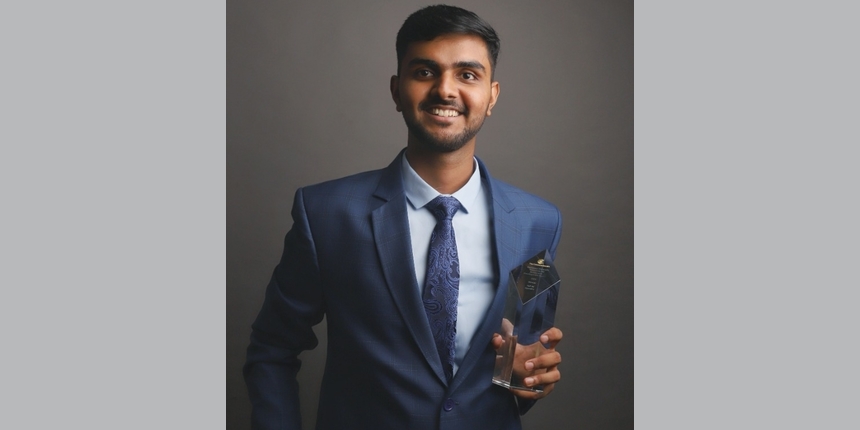
Emerging innovator Kaif Ali, a student of the Faculty of Architecture & Ekistics, Jamia Millia Islamia(JMI) won the prestigious Commonwealth Secretary-General Innovation Award for Sustainable Development-2021.
He is the only Indian amongst 15 awardees from 54 Commonwealth countries to win the prestigious award for his contribution towards Covid19, refugee shelter crisis, and climate change.
Each winner of the award received a trophy, 3,000 pounds (3,00,000 INR approx.) in prize money and the opportunity to scale up their innovations in collaboration with partners and mentors across the Commonwealth.
Kaif has invented low-cost portable housing for Covid-19 quarantine and shelter from extreme weather conditions like earthquakes and flooding.
His design has been recognised by the UN under the top 11 emerging innovation start-ups solving climate challenges.
JMI Vice Chancellor Prof. Najma Akhtar congratulated Kaif for the achievement and said that the university is proud of him. “We expect that it will motivate other students of the university to work hard, think out of the box to get noticed and contribute in nation building”, Prof. Akhtar said.
During the pandemic, Kaif researched how architecture could prevent the spread of disease. He designed a prefabricated sustainable shelter, SpaceEra, that would not only help reduce transmission of the virus but could also house refugees worldwide in the future.
“Winning the Commonwealth Innovation Award lifts my confidence to a greater level and motivates me to work even harder than yesterday and innovate unprecedented solutions toachieve a sustainable future. I pledge to become the voice of the youth transforming the Commonwealth and to Be the Change!”, Kaif said.
source: http://www.jmi.ac.in / Jamia Millia Islamia / Public Relations Office, JMI / September 30th, 2021
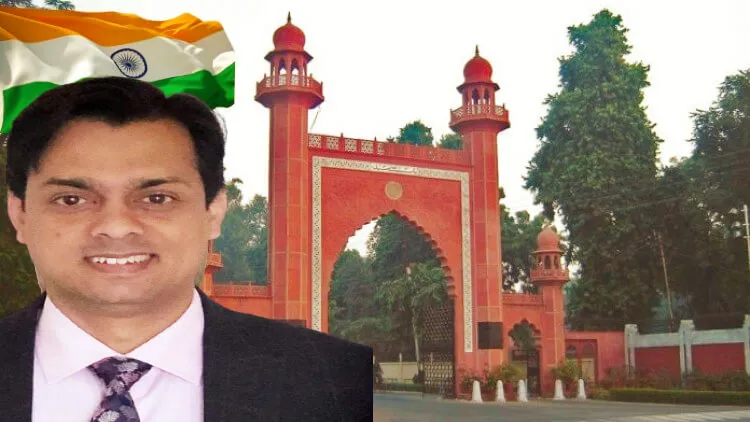
A faculty member of Aligarh Muslim University (AMU), in association with German researchers, has discovered a new protein in plants that will ‘improve the salt stress tolerance of crops.’
This will enable farm land with high salinity soil amenable to cultivation.
Dr Tariq Aftab, assistant Professor, Department of Botany, AMU, together with other collaborators from Germany, have identified a new protein and named it ‘HvHorcH’.
This protein plays an important role in conferring salt stress tolerance in barley plants. Salt stress tolerance of crop plants is a trait with increasing value for future food production.
According to an official release from AMU, the research work has been carried out at Leibniz Institute of Plant Genetics and Crop Plant Research, Gatersleben, Germany during the assignment to Dr Aftab as visiting scientist.
After several years of further studies and repeat trials, the report has been published in the International Journal of Molecular Sciences.
Dr Aftab said that the identification of this protein will open new horizons in developing stress-resilient crop plants. “Global climate change, which is predicted to be accompanied by prolonged and intensified drought periods, is likely to aggravate this situation even further.
Intensified irrigation attempts to combat drought ultimately increase soil salinity and thus eventually impede farmland cultivation when salinity reaches threshold levels that can no longer be tolerated by crop plants.
“It is therefore an eminent goal for a global sustainable food supply to improve the salt stress tolerance of crop plants in order to push these thresholds of soil salinity upwards so that more farmland with high-salinity soil will still be amenable to agriculture,” he explained.
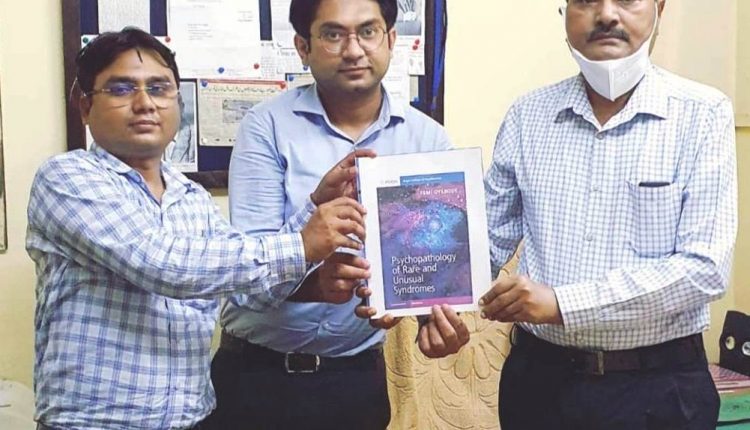
Dr. Faisal Shaan with Prof. S.A. Azmi and Dr. Shravan
Aligarh :
Acknowledging the research credentials and academic potentials of AMU faculty members, a book, “Psychopathology of Rare and Unusual Syndromes”, written by Femi Oyebode and published by Cambridge University Press, UK, has cited two published papers of Dr Faisal Shan, Senior Resident, Department of Psychiatry, JN Medical College, Aligarh Muslim University.
Prof S A Azmi (Chairman, Department of Psychiatry) congratulated Dr Shan for the achievement saying his success is a matter of pride for the department and the university.
source:http://www.indiaeducationdiary.in / IndiaEducationDiary.com / Home> Academics / by India Education Diary / September 23rd, 2021
Jammu & Kashmir, INDIA / London, UNITED KINGDOM (UK):
A Kashmir-born Muslim doctor scrubbed up alongside an Israeli team to help a Jewish family was a reminder of the universal nature of medicine: Dr. Noor Ul Owase Jeelani.
Jerusalem:
A world-renowned Indian-origin pediatric neurosurgeon in the UK has helped a group of Israeli doctors to successfully operate on a pair of twins conjoined at the head, with the babies now likely to lead normal lives, a media report here said.
This is for the first time that Dr. Noor Ul Owase Jeelani, who was born in Kashmir and works at London’s Great Ormond Street Hospital, agreed to carry out such a surgery outside the UK when contacted by doctors at Israel’s Soroka hospital, according to a report in The Times of Israel (TOI).
He and his colleague, Professor David Dunway, are globally seen as experts on such cases.
Jeelani said, “from a doctor’s point of view, we’re all one” and that medicine transcends all divisions.
“He said that the fact that a Kashmir-born Muslim doctor scrubbed up alongside an Israeli team to help a Jewish family was a reminder of the universal nature of medicine,” the report quoted him as saying.
“It was a fantastic family that we helped,” Jeelani said, adding, as I’ve said all my life, all children are the same, whatever colour or religion”.
“The distinctions are man-made. A child is a child. From a doctor’s point of view, we’re all one,” he emphasised.
The doctor found the family’s delight at the success of the operation “deeply moving”.
“There was this very special moment when the parents were just over the moon. I have never in my life seen a person smile, cry, be happy, and be relieved at the same time. The mother simply couldn’t believe it, we had to pull up a chair to help her to calm down,” Jeelani told the news portal.
Jeelani is said to have also worked for months on the surgery of the Israeli twins.
“We’ve been involved right from the start, talking to the team in Israel and planning it with them over a period of six months,” he said.
“This latest surgery fulfills a key objective of our charity, namely, to empower local teams abroad to undertake this complex work, successfully utilising our experience, knowledge, and skills gained over the past 15 years with our previous four sets of twins,” the neurosurgeon stressed.
It is also a major achievement for the medical team at Israel’s Soroka hospital that managed this complex operation despite having never performed such a surgery.
It involved complicated on-the-spot decisions regarding which blood vessel to give to which twin, and assessing in real-time the impact that immediate decisions were having on the functioning of the brains, the report said.
Jeelani has performed four other such surgeries on twins who were conjoined at the head with fused skulls, intertwined brains, and shared blood vessels.
His involvement with conjoined twins started in 2017 when a neurosurgeon from Peshawar, Pakistan, asked him to operate on identical conjoined twins, Safa and Marwa, born three months earlier to a woman from rural northern Pakistan.
He raised the money for the surgery from a Pakistani oil trader called Murtaza Lakhani and, with Dunaway, successfully performed the operation after hundreds of hours of preparation.
Following the success, he went on to establish Gemini Untwined, a nonprofit organisation, to plan and perform such operations, the report said.
source: http://www.freepressjournal.in / The Free Press Journal / Home> World / by PTI / September 13th, 2021
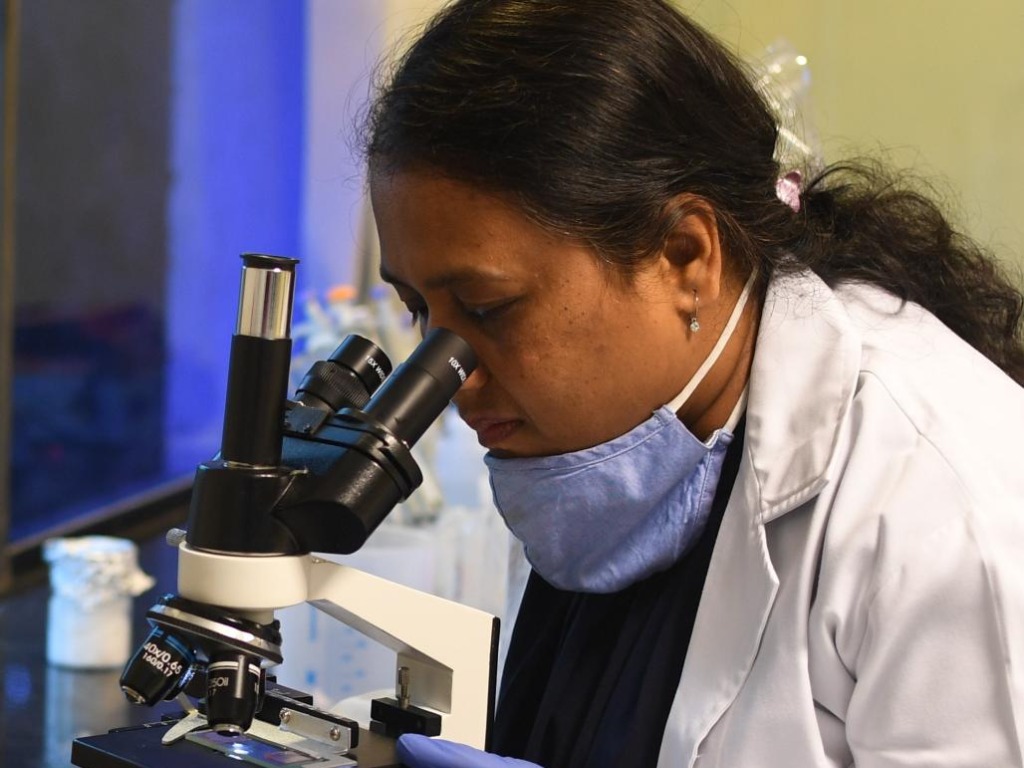
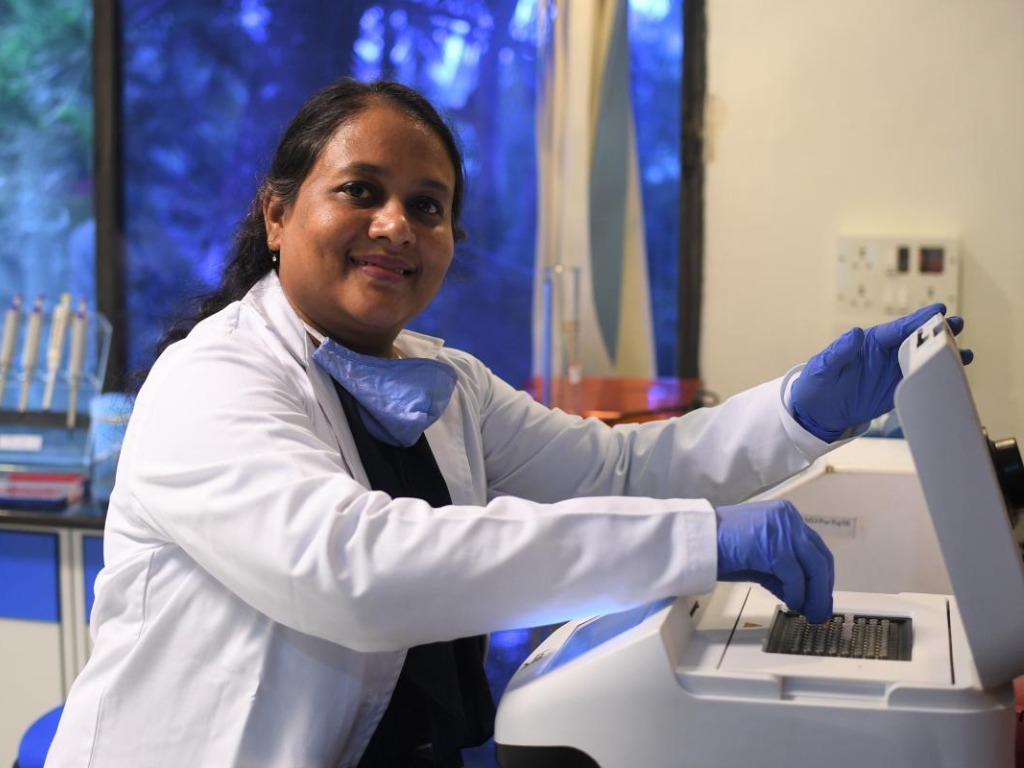
42-year-old Fathima Benazir, a molecular biologist has come up with a new non-toxic used to test for viruses in labs
The new dye, derived from natural ingredients, can be handled without gloves and could revolutionise the field of DNA testing
Dye prices have skyrocketed after the pandemic and a 500 ul vial is enough for 10,000 RT-PCR tests
A new discovery could revolutionise DNA testing, which has become so important after the onset of the Covid-19 pandemic. Even more remarkably, that breakthrough was made in a kitchen by a researcher whose love of science prompted her to tread the unbeaten path.
With the eruption of Covid-19, the number of RT-PCR tests, regarded as the “gold” standard of testing) have skyrocketed. But with the increased demand for such tests there are also increased lab and environment hazards. This is because the fluorescent (or fluorophore) dyes used in the testing of nucleic acids such as DNA and RNA, are often heavily toxic to lab staff and pose a serious problem when it comes to disposal.
A new non-toxic fluorescent dye invented by a Bengaluru-based scientist could potentially revolutionise how this testing is done in the near future.
Fathima Benazir, 42, a molecular biologist by training, always knew that she wanted to be a scientist, but that it was ultimately a failure to get into an MBBS programme (by a 2% margin), which pushed her towards biotechnology.
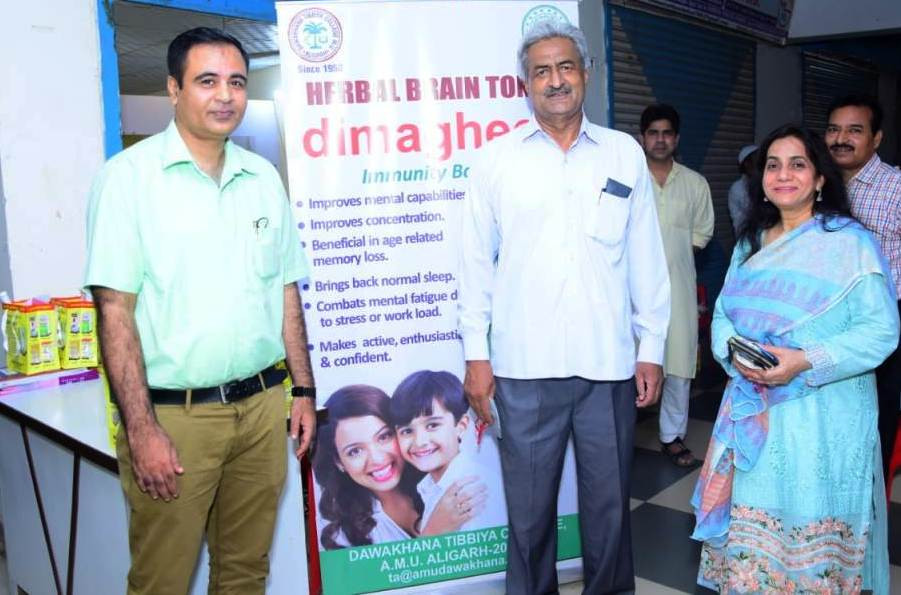
In a patient-friendly move to meet community health needs, free Unani medicines were distributed to patients from the lower economic strata by a team of Dawakhana Tibbiya College (DTC), Aligarh Muslim University (AMU). The free medicines were dispensed during the inaugural of a Unani Medicine Clinic in Jamalpur locality.
“We found that many poor patients were struggling to get medicines. Some of them have been without any income and couldn’t afford the health facilities. It prompted us to distribute free medicines to people in dire need,” said Prof Salma Ahmed (Member-in-Charge, DTC).
She distributed the medicines with the DTC Marketing Team headed by Mr Shariq Azam.
Former Dean, Faculty of Unani Medicine, Prof Abdul Mannan; Prof Shamim Ahmad (Department of Agriculture Management) and Prof Mohd Khalid Azam (Department of Business Administration) stressed that this free medicine campaign in the wake of the pandemic is a big boon for the financially backward patients.
They added that it is our duty to provide the financially weaker sections with free essential health services including medicines.
source: http://www.amu.ac.in / Aligarh Muslim University / Home> AMU News / by Public Relations Office, AMU / August 27th, 2021
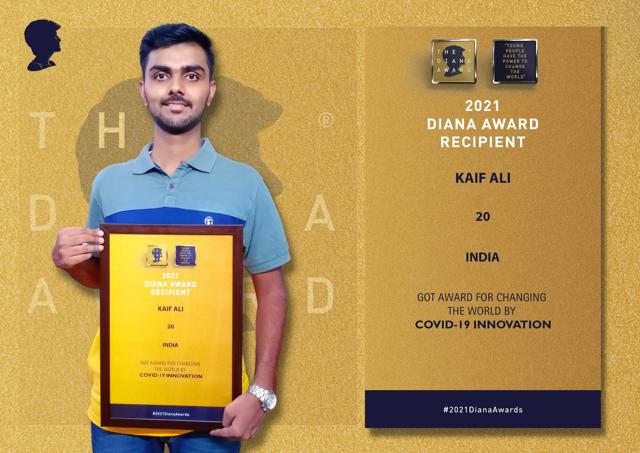
Born and brought up in New Delhi, twenty-year-old Kaif Ali is an architecture student at Faculty of Architecture & Ekistics, Jamia Millia Islamia, New Delhi. Ali was honoured with The Diana Award 2021 for his work on Covid-19 Innovation–Space era recently, which is a module for demountable and portable shelter space for Covid-19 era. This is his story.
New Delhi :
Every child has drawn their family with a house in the background and most probably made sandcastles at beaches too. However, in the grownup’s world, not everyone can have a house built like that. Twenty-year-old Kaif Ali, an undergraduate student of Jamia Millia Islamia, New Delhi after entering the world of architecture found out that homelessness is a major issue in the world and there are many without proper houses.
Born and brought up in New Delhi, twenty-year-old Kaif Ali told TwoCircles.net, “Just 200 meters away from my apartment is a settlement made above the sewage lines. In nights, the people there sleep on footpaths since snakes sneak out of sewage.”
Ali could not help noticing how unjustly the metropolitan city is majorly designed commercially for a few per cent of the population. After witnessing these inequalities, Ali wanted to take up architecture as a profession and develop a sustainable model.
Beyond survival Homeless people are of many types, which include urban poor, migrant labourers and refugees. However, the government made arrangements for these homeless people can barely be called a home. There is no privacy nor any sense of security as sought by a family since most facilities are gender-separated. Open cooking and sanitation, poor waste management, unavailability of electricity and potable water, the list go on.
Ali recollects that it was a documentary called “Cry for Syria” that sensitized him into the refugee crisis. As an attempt to address the issue, Ali went on to design shelter spaces for Syrian refugees, during his early college days.
When asked whether he is concerned about these temporary shelter spaces becoming the permanent settlement of refugees and others, as is the norm, Ali said that his concept of shelter is a home for living and not for mere survival. Therefore, along with houses, Ali also designs schools, gyms, and other recreational spaces using the same modular technology, which facilitates easy assembling and dismantling.
Quoting a few success stories of refugee assimilation with the host country, Ali believes that if refugees are housed holistically, they will not remain on the fringes. “Shelter is the start of all,” he said.
From housing to quarantining For the last two years, Ali has invested himself in designing shelter spaces for the homeless. As the Covid-19 pandemic broke out, Ali witnessed the dire demand for quarantining thousands in cramped up cities.
That is how he began working with his project last March and designed a portable intermediary quarantine facility of 2.5m x 6m, using PUF panels or shipping containers, which can be assembled with ease, have massive room for expansion, with natural ventilation and 6 layers of social distancing.
The facility can also be later used as refugee camps or disaster relief camps.
Kaif Ali was awarded the international Diana Award 2021 for the same. His design follows all Covid-19 protocols and is more efficient than home quarantine or mass quarantining facilities.
Ali’s quests stem from his immediate realities. Even his intermediary quarantine shelter came up observing the spread of the virus in enclosed spaces through the air, even before WHO confirmed the spread through the air. “That is the power of observation and study. I apprehended that Covid-19 would spread through the air from my study and by keeping this in mind, I have designed the quarantine facility,” Ali said.
Thinking architecture ‘out of the box’ Having varied interests, Ali is good at juggling different pursuits. The twenty-year-old has taken home several awards in architecture and photography. It is the introduction to various international competitions that expanded Ali’s network.
Upon winning Climate Innovation Lab conducted by Climate Technology Centre and Network, Ali has been receiving mentorship of Biplab Ketan Paul, IIT Kanpur incubation mentor and social entrepreneur.
Referring to Ali’s Covid-19 relief work, Paul said proudly, “Kaif Ali is a good samaritan.”
Soon, Ali’s design would shelter the people of Lagos in Nigeria. His project has received appreciation across the world from architects of Germany, Iran, South Africa, Turkey, the US, & Brazil. Ali has also featured in the United Nations top 11 emerging innovation start-ups solving climate action.
Twenty-year-old Ali has not shied away from approaching several state governments. After the Karnataka government appreciated him, organizations working with the Maharashtra government are willing to implement his project.
To make his designs financially viable, Ali said he uses his father’s counsel, who is in the construction business. “His advice comes in handy, especially when deciding the materials and other factors. It is the context that is my foremost priority,” Ali said, elaborating that climate and clients’ context guides his design.
Moreover, Ali aspires to make the language of architecture accessible to common people. His drawings are easily readable for policymakers and politicians alike. “Future architectures cannot limit themselves to space and cost crises alone. In times of rising refugees of climate, wars and poverty, expanding socially responsible entrepreneurial perspective in architecture is a must,” concludes Ali.
source: http://www.twocircles.net / TwoCircles.net / Home> Lead Story / by Arfa Backer, TwoCircles.net / July 30th, 2021
A non-resident Indian healthcare entrepreneur based in the United Arab Emirates on Monday announced a Rs one crore cash reward for the Indian men’s hockey team goalkeeper P R Sreejesh
P R Sreejesh, Indian men’s hockey goalkeeper
A non-resident Indian healthcare entrepreneur based in the United Arab Emirates on Monday announced a Rs one crore cash reward for the Indian men’s hockey team goalkeeper P R Sreejesh.
The announcement by Dr. Shamsheer Vayalil comes days after the Indian men’s team won the bronze medal at the recently concluded Tokyo Olympics.
Sreejesh, who belongs to Kerala, pulled off a series of stunning saves to help the country win its first Olympic medal in hockey after 41 years.
“Through his outstanding performance at the Olympics, Sreejesh has brought joy to Indians around the world. As a fellow Malayali, I take tremendous pride in his achievement,” Vayalil, Chairman and Managing Director of VPS Healthcare, was quoted as saying in a media release.
Vayalil also called Sreejesh to congratulate him for his exemplary performance.
Dr. Shamsheer has congratulated the entire team for this great achievement and offered his support to us. The announcement of the Rs. 1 crore reward caught me by surprise. A reward for winning a medal in the Olympics is delightful news and I feel very fortunate to be the recipient, said Sreejesh.
Over the last two decades, Sreejesh has carved a niche for himself in the field of hockey. Entering the junior national hockey team in the early 2000s, Sreejesh worked hard to make his way to the national team.
He also served as the captain of the national team in 2016. His quick reflexes and consistent performance have earned him the moniker The Great Wall of India’.
Sreejesh, who returns to India on Monday after the successful Tokyo campaign, will be presented with the cash prize at a special function in Kochi.
(Only the headline and picture of this report may have been reworked by the Business Standard staff; the rest of the content is auto-generated from a syndicated feed.)
source: http://www.business-standard.com / Business Standard / Home> Sports> Tokyo Olympics 2020> News / by Press Trust of India, Dubai / August 09th, 2021
OT is addition to a Primary care, dental chair, Community ophthalmology, NCD Desk it runs for the weaker sections free of cost.
The minor OT, which formally launched on Saturday in Masjid Omer-al-Shifa, located in Saif colony, Shaheenagar
Hyderabad:
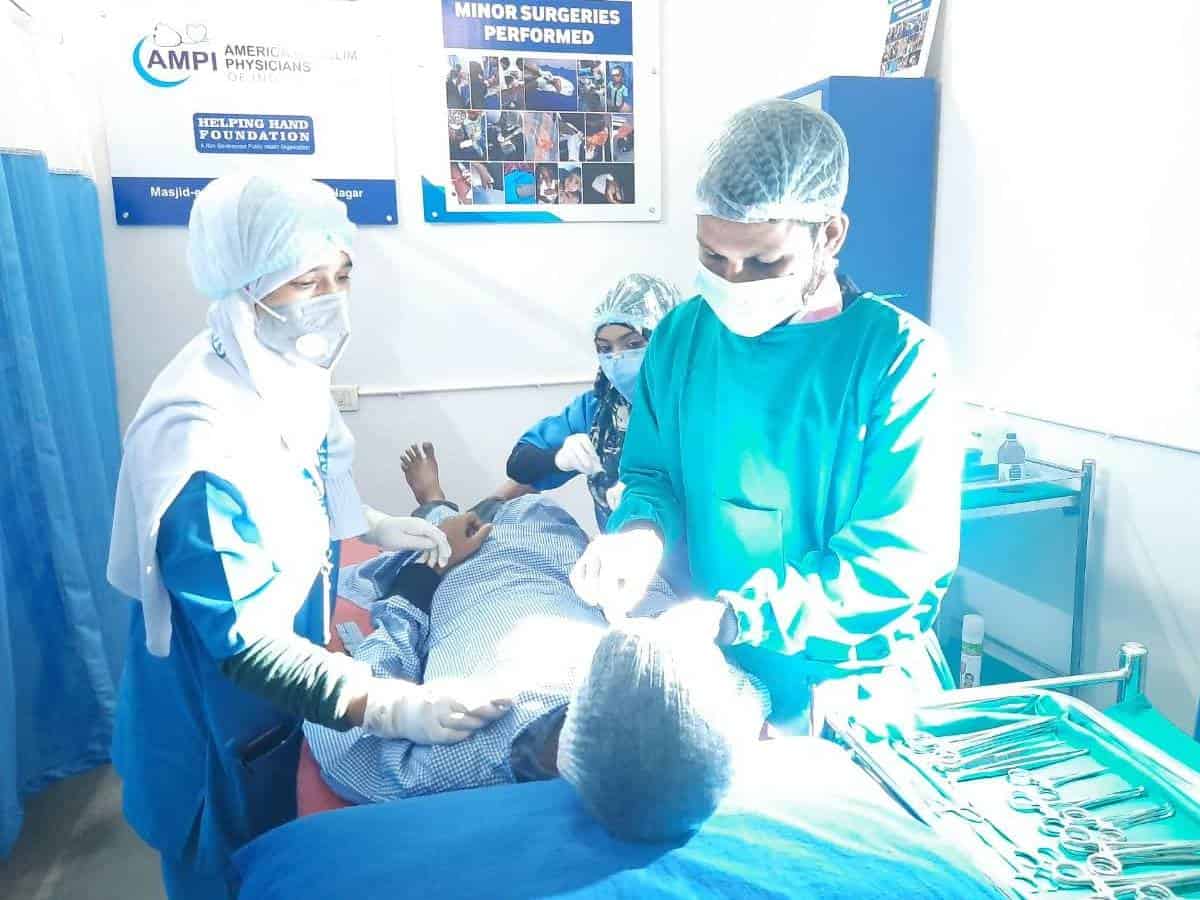
In a first of its kind initiative, a primary health care center run by a non-governmental organization (NGO), in Masjid Omer-al-Shifa, located in Saif colony, Shaheenagar has now set up a full-fledged operation theater (OT) for minor surgeries.
The minor OT, which was formally launched on Saturday will have state of the art equipment like surgery table, OT lights, advanced instrumentation, bio-waste disposal process for keeping good hygiene and sanitation for patient safety.
OT is addition to a primary care, dental chair, community ophthalmology, non-communicable disease desk it runs for the weaker sections free of cost.
The primary health care center run by the NGO Helping Hand Foundation (HHF).
All minor surgeries with pre-surgical profile and post op medicines will be given free of charge by HHF to all patients regardless of their caste or creed.
Most areas surrounding the health center have faced inundation last year October and continue to face problems of overflowing drains, nalas and flooding. Consequently, these slums are endemic to water borne and skin diseases.
The HHF in collaboration with AMPI (american muslim physicians of Indian origin), USA, is catering to the primary health care needs for over 20 urban slums since December, 2020.
With an average foot fall of seven hundred patients per day, it was observed that a significant number of patients suffering from diabetes, hypertension and other chronic diseases are having complications that require surgical procedures, which many cannot afford.
As per the survey done by the NGO, three per cent of the diabetics visiting the center had diabetic foot that very quickly translates into gangrene if untreated.
Cases of patients with Corns, Lipomas, Keloids, in growing nails, benign fibroadenomas, burning wounds, sebaceous cysts, non-healing ulcers are were also commonly seen in the center.
So far, 25 minor surgeries have been performed.
“Due to lack of awareness, poor hygiene and non-compliance to treatment many patients are landing in complications that require surgical intervention,” said Dr Arif Hussain, general surgeon at the clinic.
“Once a patient lands into complication the treatment for such conditions is prolonged and expensive and since majority of the patients are daily wagers with little saving, they tend to neglect resulting in devastating consequences,” said Mujtaba Hasan Askari, Helping Hand Foundation.
source: http://www.siasat.com / The Siasat Daily / Home> News> Hyderabad News / by Sakina Fatima / August 07th, 2021
Serving the people of the UAE as a doctor for the last three decades has been a feeling of unconditional love for Dr Saleema Wani.
The greatest treasure for me as a doctor in the UAE, has been to witness babies born at my hands, go on to become mothers and fathers themselves!
During my three-decade’ plus journey in the UAE, I have been at hand to see generation after generation bring in beautiful children into this world.
I remember holding the hands of a young mother giving birth to her daughter. And then years later, holding the hands of her daughter as she gave birth to her two children.
And to think that when I landed here with my husband on April 15, 1989, I thought I would be spending probably a year or two, before returning to my home country.
The second day after landing in the UAE from Kashmir, I began work as a junior doctor at the Corniche Hospital in Abu Dhabi. Interestingly, when I arrived here, I had still not resigned from my previous role. I had planned on staying here for a few years, before returning to my home country. Little did I know then that those ‘few years’ would extend into a ‘few decades’ — thirty-two years to be precise.
In those years, I have walked in and out of the hospital day in and day out. There were times when I was extremely tired and desolate, as life kept marching ahead, but I could not give up. I was on a mission, with little time to spare!
When I think about leaving the UAE, it is hard to imagine. It is hard to leave a country when it feels like home and you are surrounded by family — not only your own blood, but the many who have become my extended family here — thanks to my profession.
I have served two generations of mothers, and today I am helping those women born through my hands, give birth to new babies! Many of them still call me up and ask for my advice, and treat me as if I were their second mother. How could I possibly leave my children behind?
When I look at these mothers, I see that while so many changes have taken place in the UAE over the last three decades — be it socio-economic change or in other aspects, two things have re mained constant — the values and traditions instilled in Emiratis and expats by the late Sheikh Zayed bin Sultan al Nahyan. The second is the weather! And while not much can be said about the weather, it is fair to say that it was these values and traditions of love and patronage showered by families and elders, that made me feel like I was at home — just like a member of each of their families. It gives me comfort knowing my two sons Mohammed and Ammar are never going to be alone.
Raising two sons whilst working as a doctor, being a wife, and earning qualifications all at once was not easy. But how could I not upskill when the path was paved for me through the pragmatic and visionary leadership of the late Sheikh Zayed bin Sultan Al Nahyan and Our Nation’s Mother Her Highness Sheikha Fatima bint Mubarak, Chairwoman of the General Women’s Union (GWU), President of the Supreme Council for Motherhood and Childhood, and Supreme Chairwoman of the Family Development Foundation (FDF).
Sheikh Zayed once said: “No matter how many buildings, foundations, schools and hospitals we build, or how many bridges we raise, all these are material entities. The real spirit behind the progress is the human spirit, able man with his intellect and capabilities.”
This particular quote resonates deeply with me. It inspired me to work on my growth in order to remain abreast with the latest technological advancements, as well as give back to the community by assuming several teaching and mentoring roles in the education sector.
Erich Fromm once wrote that: “People who manage to learn to love in a mature and conscious way understand that love isn’t possession nor conditions. Love is a caring and firm desire to promote the growth of all those people we love.”
Simply put, serving the people of this country as a doctor for the last three decades has been a feeling of unconditional love for me. As I reflect on my time in this country, and the years to come, I feel that life is not about us doing what we love; rather, we need to love what we do.
source: http://www.khaleejtimes.com / Khaleej Times / Home> Year of the 50th / by Dr Saleema Wani / July 29th, 2021