Category Archives: Science & Technology

This biochemist turns bike into ambulance

Bengaluru, KARNATAKA :

For non-Covid-19 patients

Credit: DH

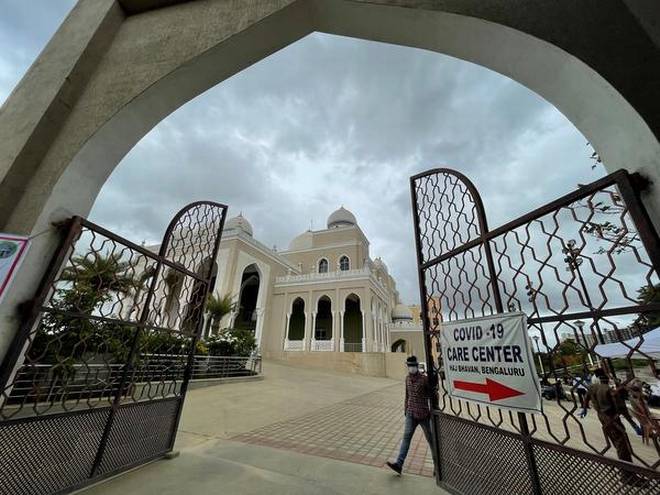
After observing that several non-Covid-19 patients are dying due to delay in accessing medical treatment, a city-based biochemist is helping them in a unique way. 

Dr Syed Moinuddin Shabbir, a clinical biochemist at Santosh Hospital in Fraser Town, has turned a two-wheeler into a bike ambulance to treat needy patients at their home. He also provides medicines to poor patients based on prescriptions from their doctors.

“After the lockdown was imposed, people were facing problems in even buying provisions. Many senior citizens and children were finding it difficult to access hospitals. I started with providing medicine to poor patients,” he said.

The problems were exacerbated in containment zones where people had to struggle for simple check-ups like blood pressure and glucose levels. “I went to containment zones on the bike and did what was needed,” Shabbir said, listing Padarayanapura, Frazer Town, Bharathinagar, Indiranagar, Vijayanagar, and Thanisandra as some of the areas where he has treated people.

In Shivajinagar, 40 people in one building had tested positive for Covid-19. Shabbir could not take his bike there, but he managed to send the necessary medicine to the people.

The demand for his services did not come down with the lifting of the lockdown but has only increased.

“At least 50 people contact me through Facebook or WhatsApp,” he said.

Shabbir said charitable organisations have come forward to fund his work, which has benefited about 5,000 people and cost him Rs 3 lakh. 

source: http://www.deccanherald.com / Deccan Herald / Home> City> Life in Bengaluru / by Manohar M ,DHNS, Bengaluru / September 04th, 2020

AMU Professor Receives Award For Biotechnology Research

Aligarh, UTTAR PRADESH :

The award has been conferred upon noted Indian scientists including APJ Abdul Kalam, MS Swaminathan and KG Menon earlier, and Prof Asad is the first recipient as AMU faculty member.

AMU Professor Receives Award For Biotechnology Research
Prof Asad Ullah Khan, Coordinator, Interdisciplinary Biotechnology Unit, Aligarh Muslim University

Aligarh:

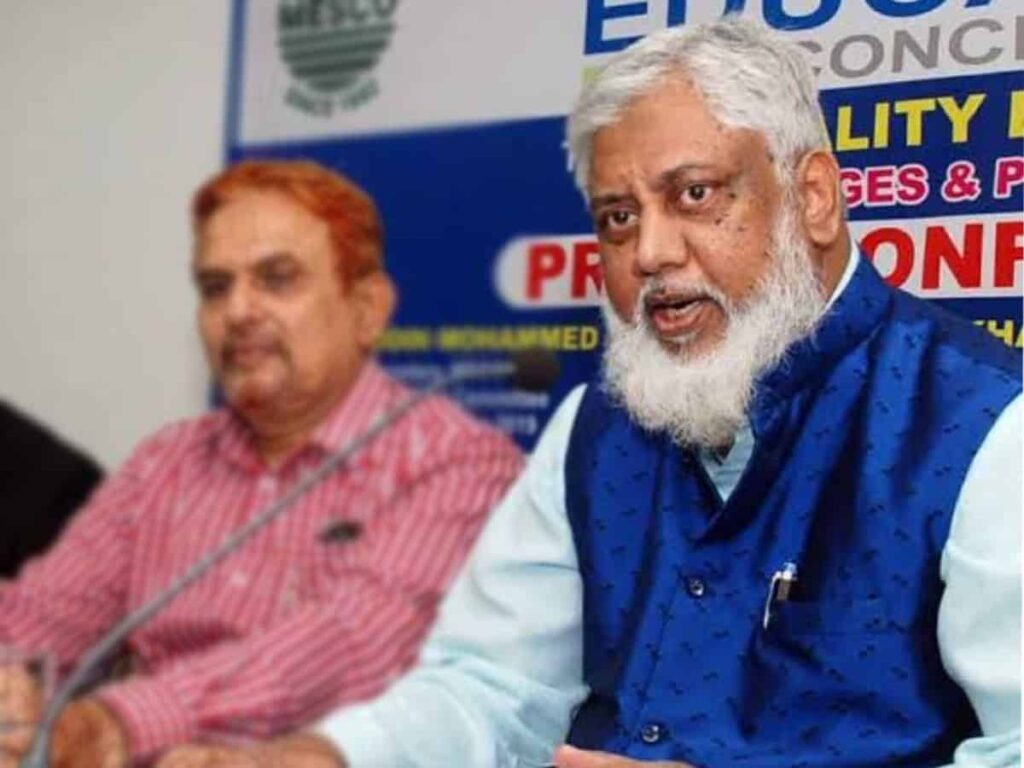
Noted biotechnologist and scholar, Prof Asad Ullah Khan (Coordinator, Interdisciplinary Biotechnology Unit, Aligarh Muslim University ) has been decorated with Sri Om Prakash Bhasin Award-2019 for his trail-blazing research in Biotechnology. 

The award, held in high esteem across the country and is given to eminent scientists in the field of Agricultural Sciences, Biotechnology, Electronics, Engineering and Medical Sciences, carries a cash prize of Rupees one lakh with a citation and plaque.

The award has been conferred upon noted Indian scientists including APJ Abdul Kalam, MS Swaminathan and KG Menon earlier, and Prof Asad is the first recipient as AMU faculty member. 

Prof Obaid Siddiqui, an alumnus of AMU, received this honour in 1993.

The Vice-Chancellor Prof Tariq Mansoor has congratulated Prof Khan on this awe-inspiring academic honour and said ‘it is given on his seminal contribution to study of Antimicrobial resistance and infection biology of bacteria’.

The award will be given during the first week of November 2020, said a statement from AMU.

source: http://www.ndtv.com / NDTV / Home> NDTV Education / by Shihabudeen Kunju C / April 12th, 2020

Koderfin – a ‘couple-venture’ in Coding from Malappuram that does not sell fake dreams

Malappuram, KERALA/ Dubai, UAE :

Aisha Sameeha and Shahid Jabbar

At a time when the world has turned online for education, work, shopping, business and whatnot, here is a couple from Malappuram district in Kerala who has brought out a new online method of learning, integrating computer coding with school subjects for kids. Let’s meet Aisha Sameeha and Shahid Jabbar from Nilambur.

Hailing from the village of Melattur, Aisha Sameeha was just one among the many girls in Malappuram – who studied well, graduated in BTech, got married and settled with her husband in his workplace Dubai.

Soon, they got their first child and Sameeha got busy with her daughter Eshal.

However, sitting idle or being content with the homely chores alone was not her cup of tea. Sameeha tried her hand at different trades such as content writing for technical websites, cooking and baking, stitching and embroidery etc. She also attended and won a few cooking competitions held in Kerala and Dubai.   

Into the field of education

Having born and brought up in Kerala and abroad, Sameeha had got familiarized with different methods of education. And that encouraged her interest in learning and teaching. “Teaching has always been my passion, even when doing BTech. And that is also a reason I didn’t take up the job offers that came my way after the completion of my studies,” said Sameeha. She especially mentioned the methods followed in the PeeVeeS Public School, Nilambur, where she studied from class 1 to 6 and the MES Engineering College. The two institutions taught her the importance of encouragement by teachers and the effectiveness of grouping and sharing to learn better.  

Once her daughter began to attend school, it opened her to another world in the field of education. The kindergarten that Eshal attended in Dubai followed the Reggio Emilia approach, which gave high importance to interaction between parents, teachers and students. Parents were encouraged to come to the school and be a part of various activities. Each class had a library and several other items that caught children’s attention and interest, where they could gain knowledge. “I had thought that I couldn’t manage small kids, but it was proved wrong when I began to go there,” confessed Sameeha. “I used to observe how they were doing things, dealing with the children, the method of teaching etc. That was a sort of experimental and experiential learning. Eshal liked it a lot there.”    

source: http://www.thesite.in / The Site / Home> Empowerment / by Najiya O / December 07th, 2020

NASA scientist Dr Hashima Hasan thanks AMU for helping her materialise her dreams

Lucknow, UTTAR PRADESH / U.S.A :

Noted NASA scientist Dr Hashima Hasan, who is the Program Scientist for NuSTAR, has thanked the Aligarh Muslim University (AMU) helping her materialise her dream. According to an official AMU press statement, she thanked the university during the interview to NASA STEM Stars. 

 “The student life at AMU from 1968 to 1973 and the academic credentials gained there helped me attain a prestigious scholarship to further pursue higher studies in Nuclear Science at the University of Oxford,” Hashima said. 

“I worked hard and gave this land all I had, and this great nation paid me back in spades, but it all started at AMU,” she added.

“I was a little girl back then, but the spectacular satellite launch made me eager to follow every success and failure in the newspaper. I clearly remember the day man landed on the moon,” she said. The work at NASA is dynamic, challenging and energizing and my journey to become a space scientist began after a post-graduate degree in Nuclear Physics at the Aligarh Muslim University, reminisced Dr Hashima.

She attended Tata Institute of Fundamental Research, Mumbai for a postdoc and worked at the Bhabha Atomic Research Centre in Mumbai before reaching the United States on a US Council Fellowship.

“Later in life, I worked at the Space Telescope Science Institute, Baltimore, writing the simulation software for the optics of the Hubble Space Telescope and its science instruments, using it to analyse the optical error of Hubble after launch,” she shared in the interview.

Dr Hashima recalled that as the Optical Telescope Assembly Scientist, it was her job to keep the telescope in the best focus until a fix could be installed.

“Then I was ready to achieve my dream of working directly for NASA. An opportunity arose in 1994 when a job for a Visiting Senior Scientist was advertised. Although it was a two-year job, I found working at NASA Headquarters so exhilarating and rewarding that I stayed on,” she said adding that NASA’s space science program gives her the opportunity to lead cutting edge science, work with world-class scientists and write research papers on astronomy.

source: http://www.thesite.in / The Site / Home> Inspiration / by The Site Reporter / December 12th, 2020

Shamshuddin: a spanner still in the works

Barwad Village, Chikodi Taluk (Belgaum District), KARNATAKA :

Shamshuddin Mulla is known in the villages of Belgaum and Kolhapur district as a master mechanic with over 70 years of experience. Not many after him, he says, will have his passion for this grimy work.

“I will die with a paana [spanner] in each hand,” says Shamshuddin Mulla.  “Death will be my retirement!” 

That may sound dramatic, but Shamshuddin has indeed spent a large portion of more than 70 years wielding a spanner and other tools. Using them to repair all kinds of engines – water pumps, borewell pumps, mini excavators, diesel engines and many others.

His expertise in bringing all this faltering or silent farmland machinery to life is in high demand in the villages of Karnataka’s Belgaum district and Kolhapur district in Maharashtra. “People call me only,” he says, with a hint of pride.

Farmers and other clients come to Shamshuddin seeking his signature technique to diagnose a mechanical problem. “I just ask the operator to rotate the handle and from that I can identify what’s wrong with the engine,” he explains. 

Then the real work starts. It takes him eight hours to repair a troubled engine. “This includes the time from opening to reassembling,” Shamshuddin says. “Today, the [engine] kits come with readymade materials, so it’s become easier to repair them”. 

But countless hours of practice have gone into achieving his eight-hour average. Now 83, Shamshuddin estimates he has repaired more than 5,000 engines in 73 years – engines used for drawing water from the river, for extracting oil from groundnuts and oilseeds, moving stones from construction sites and wells, and for various other purposes. 

Shamshuddin Mulla, 83,  is known in the villages of Belgaum and Kolhapur district for his signature techniques. While working unperturbed in the heat when we meet, he gets several calls from hardware dealers in Kolhapur city, and says, ‘The dealer just has to tell me the name of the client who visited me, and ask for the parts required’ 

It is difficult, he says, for many farmers to find skilled mechanics because the company-appointed technicians don’t usually go to their villages. “It’s expensive too to invite the company’s mechanic,” he adds. “And it takes them time to reach remote villages.” But Shamshuddin can reach the ailing engine much faster. The farmers also consult him when younger technicians are unable to diagnose or repair the machines.

No wonder then that in his village, Barwad in Chikodi taluka of Belgaum district, Shamshuddin is known as Shama mistri, an expert mechanic. It’s to this village that people carry their small silent engines to be brought to life, or from where Shamshuddin travels out to the fields and workshops where broken engines await his expert touch.

The engine-manufacturing companies value Shamshuddin’s skills too. He can repair the machines manufactured by big companies like Kirloskar, Yanmar and Skoda, as well as several local companies. “They consult me on making improvements to the engines, and I always tell give them feedback,” he says. 

For example, engine handles were not sturdy and compact earlier. “People had to rotate the handle [crankshaft] several times, and this would hurt them and cause injuries. I advised some companies to improve the handles. Now many of them provide three gears instead of two,” he says. This improves the balance, timing and movement of the handle.  Some of the companies with branches in Kolhapur district, he adds, invite him to their celebrations on occasions like Independence Day, Republic Day and the company’s anniversary.   

The months of March, April and May are the busiest for Shamshuddin, when he repairs around 10 engines every month – for a fee ranging from Rs. 500 to Rs. 2,000 for each repair job, depending on the complexity of the breakdown. “Before it rains, many farmers get wells drilled on their land, and that’s when a lot of engines need repair,” he explains. During the rest of the year, his repair work continues but the calls are less frequent.

Top row: Shamshuddin says not many in the younger generation are willing to dip their hands in sticky black engines. ‘I’ve never used any gloves, what will I do by using them now?’ he asks. Bottom row: A dismantled engine’s innards  (left) and some of the tools (right) which Shamshuddin has bought over seven decades. He is very particular about the right kind of equipment, and prefers carrying his own set of tools for any repair work

When he isn’t away repairing engines, Shamshuddin looks after his two-acre farm and cultivates sugarcane. He was only about 7 or 8 years old when his father Appalal and mother Jannat, who were farmers, shifted to Barwad from Pattan Kodoli in Kolhapur’s Hatkanangle taluka. To help with the family’s earnings, at the age of around 10, in 1946, Shamshuddin started assisting a mechanic in Barwad. Ten hours of work fetched him Re. 1 every day. The family’s poverty prevented him from studying beyond Class 1. “Had I completed my education, I would have been flying an airplane today,” he says with a laugh. 

Shamshuddin recalls going by bullock cart every fortnight to Hatkanangale village, where freight trains halted – around 30 kilometres from his village – to purchase diesel for engines in the mid-1950s. “Back then, diesel cost one rupee per litre, and I used to buy three barrels [a total of 600 litres] each time.” Shamshuddin was known as ‘Shama driver’ in those days, whose job was to maintain the machines. 

In 1958, a few mechanics from Kolhapur city came to Barwad to install an 18-horsepower engine for drawing water from the nearby Dudhganga river to the fields. Then 22, Shamshuddin carefully observed them at work to try and understand how an engine worked. “It required crude oil worth two rupees every day,” he recalls. The engine malfunctioned the following year after getting submerged in the rising river water. The technicians were called back and Shamshuddin used the opportunity to polish his own skills. When the machine went under water again in 1960 (it was eventually replaced by a newer version), he  repaired the engine on his own. “From that day onward, my name was changed from ‘Shama driver’ to ‘Shama mistri’,” he says, proudly. 

An incident in 1962 convinced Shamshuddin that it was the right time to further explore the world of engines. A farmer from Barwad had commissioned him to buy an engine for his field. “I went all the way to Ghunaki village [around 50 kilometres away] in Hatkanangle taluka to the company warehouse and brought the engine for Rs. 5, 000,” he says. It took him 20 hours over three days to assemble it. “A mechanic from the company inspected it afterwards and said it was done perfectly,” he recalls. 

At their home in Barwad village: Shamshuddin and his wife Gulshan, who says, ‘For me, agriculture is better than repairing machines’

Over time, Shamshuddin’s reputation as a skilled mechanic kept growing. He had by then worked as an apprentice to another mechanic for five years, earning Rs. 2 a day. When he started repairing engines on his own, his income went up to around Rs. 5 a day. He would travel on his bicycle to the nearby villages of Chikodi taluka in Belgaum (now Belagavi). Today, his customers contact him by phone and ferry him in their vehicles.

But the craft of repairing engines also has its risks. “Once [in the 1950s] I got hurt while working. You can still see the wounds on my back. They will never heal,” Shamshuddin says. A few months ago, he went through an angioplasty procedure in a Kolhapur hospital. “The doctors asked him to rest for six months, but there is no one who can repair engines,” says his wife, Gulshan. “Within two months, people started bothering him to come and repair their engines.” 

Gulshan, who is her mid-70s, helps with cultivating sugarcane on the family’s two acres, and they sell the cane in the market. “He asks me to learn how to repair and even teaches it sometimes, but I am not interested in it much. For me, agriculture is better than repairing machines,” she says, laughing. 

Their sons have not taken to Shamshuddin’s craft either. (He and Gulshan don’t have any daughters). The eldest, Maula, 58, has an electric motor shop in Barwad. Isaq, in his mid-50s, helps look after the farm. Their youngest son, Sikandar, died about a decade ago. 

“I went out, observed people and learned this art,” Shamshuddin says with a touch of sadness. “We have the knowledge and resources in our home today, but no one even wants to touch an engine.”

For big and heavy engines, Shamshuddin travels directly to the site. Here, he is at Gajabarwadi village of Belgaum district, repairing a diesel engine used to lift stones during well-digging

The situation is similar outside their house too. “No one wants to get their hands dirty with the kalakutt [black, grimy] engine oil. The younger generation calls it ‘dirty work’. How will you repair an engine if you don’t want to touch the oil?” he asks with a laugh. “Besides, people now have a lot of money, and if an engine doesn’t work, they usually buy a new one.”  

Still, over the years, Shamshuddin has trained about 10 to 12 other mechanics from nearby villages. He is proud that they too can now easily repair engines, though none of them are as skilled as he is and occasionally seek his diagnosis of the problem. 

When asked for advice for the younger generation, Shamshuddin smiles and says, “You should be passionate about something. You have to love what you do. I love engines, and that’s what I spent my entire life on. From my childhood, I wanted to examine and repair engines, and I think I have achieved that dream.”

This is when he  declares – “I will die with a paana (spanner) in each hand” – but then clarifies that those words are borrowed from a mentor mechanic he met when he was a teenager, whose passion for repairing engines Shamshuddin still recalls. “He would travel hundreds of kilometers for this work,” he says.” The mentor [whose name Shamshuddin can’t fully recall] had told him once about dying with a spanner in his hands. “It inspired me, and that’s why I work even at the age of 83. Death will be my retirement!” reiterates Shama mistri.

source: http://www.ruralindiaonline.org / Pari – People’s Archive of Rural India / by Sanket Jain / August 07th, 2019

Airtel to Truecaller: 24-YO Has Safeguarded the Data of 700 Million App Users

Mysuru, KARNATAKA :

At age 24, this college dropout helps companies like Airtel, Truecaller and Justdial protect their users’ personal data. Incredibly, however, he learnt all the necessary skills not through formal courses, but research on Google!

Meet Ehraz Ahmed, a 24-year-old, independent data security researcher from Mysuru, Karnataka, who since last year has protected the data of 700 million users by helping companies like Airtel, Justdial and Truecaller detect major flaws in their data security architecture. Simultaneously, he runs a fintech and a web security company.

What’s particularly remarkable about this first-year engineering college dropout is that he learnt all the necessary skills not through formal courses, but research on Google. A real online prodigy, Ehraz is looking to protect the data of 1 billion users by the end of this year. So, how did this ethical hacker and serial entrepreneur get to where he is today?

Early Days

“I began using computers when I was just 10. I remember accompanying my brother to the local cyber cafe paying Rs 30 an hour and playing games like Counter Strike or browsing the internet. Besides playing games, I was exploring different facets of the online world from social media sites like Orkut to finding ways of building a website because my elder brother was a web developer. I would peek into the source code of the websites he built and try to learn things independently through Google. Whatever I have learnt about computers, web security and the online world is through Google,” Ehraz tells The Better India.

It was while playing Counter Strike with his friends when Ehraz found his first opportunity at entrepreneurship. Understanding the craze for the game amongst his friends, at age 14 Ehraz started a game server hosting venture. However, besides providing online gaming servers for players to connect and play the game for just Rs 200 per player, his venture also began offering web hosting services to different websites.

The reason he ventured into the world of entrepreneurship this early was because of a few tragedies in his life. As an 8th grader, he recalls witnessing his brother meet with a serious road accident. Two years later, his father suffered a heart attack.

“My interest in my venture had dimmed after my father’s heart attack. I lost interest in my studies as well. That’s when I put everything on hold to make a fresh start. I wanted to stand on my own feet by doing something better and more significant than what I was doing. These incidents made me realise the value of time and money. Life is short and there is so much left to do not just for yourself but others as well. Nonetheless, by this time, I had grown into a competent web developer, picked up real-life entrepreneurial skills and began understanding some of the basic nuances of data security,” he recalls.

Meanwhile, by the early 2010s, discussions surrounding data security in the online world had begun to take off in India. One day during high school, he read a post on Facebook by a security researcher who was listed in Google’s Hall of Fame for finding a flaw. This researcher was even paid for it. This inspired him to learn how he could do the same.

That’s when he began targeting companies that offered bug bounties to hackers who would help them find flaws in their data security architecture. By the age of 16, Ehraz got listed in 50 Security Researcher’s Hall of Fame for finding security breaches in companies like Facebook, Microsoft, Apple, Adobe, Blackberry, Soundcloud, and EBay. These Halls of Fame are listings compiled by major tech companies of online security researchers who helped find these flaws.

Besides recognition and a certificate, there was monetary compensation involved which depended on the magnitude of the flaw found. In India, however, he observes that the concept of bug bounties are still very new and not many companies operating here have that facility for freelance security researchers.

His first hall of fame listing was on Facebook, where he discovered a cross-site scripting vulnerability that could have allowed attackers to steal a user’s browser cookies. With this, any hacker could log in to a user’s account without a password and users are vulnerable to extortion and blackmail.

Ehraz Ahmed: The ethical hacker who has helped companies like Airtel address their user data vulnerabilities.

Serial Entrepreneur

“Although I was good at finding security flaws, I was not making enough money from it. Not all companies offer bug bounty programs, while only a few provide monetary rewards. But most of them do acknowledge your efforts in finding that flaw,” he says.

Looking for ways to make money, one day he found someone trading in the financial markets talking about making money in a Facebook post. It piqued his interest and he began exploring this field. Ehraz admits that it took him a while to figure out how it all works because he was sifting through hundreds of blogs.

“It wasn’t the most efficient way of learning, but I wasn’t interested in studying courses. My interest lay in obtaining that raw information about how to navigate this world. In the initial years, I lost a lot of money trading from my brother’s account. Since I was still under 18 during my PUC days, I couldn’t really open my own trading account,” he recalls.

By the time he enrolled into an engineering college at the age of 20, in Mandya, to pursue a course in computer science engineering, he started a fintech company called Voxy Wealth Management that engaged in offering financial advice and analytic services to traders and other consumers who wanted to manage their stock portfolios.

But travelling 80 km up and down from Mysuru to Mandya everyday, attending classes and running a fintech company was becoming very stressful. Although he finished his first semester with good marks, when the time came to enroll for the second semester, he began questioning why he was studying these heavy theoretical courses.

“What am I learning all this for? Completing these courses felt like climbing a mountain, reaching the top and then seeing nothing. I had already begun earning money through my company. Meanwhile, I was already getting job offers because of the work I had done detecting security flaws across different websites. I eventually figured out engineering college wasn’t meant for me and before the second semester in 2017, I decided to drop out to start a web security company as well,” says Ehraz.

After launching Voxy Wealth Management, he started Aspirehive—a web security company that offers solutions for small and medium-sized companies—in December 2017.

Unfortunately, as he was making his way simultaneously in the world of financial markets and web security, another tragedy struck home.

In April 2018, his elder brother met with another road accident. He suffered an injury and upon recovery, his brother expressed a desire to start a company together. Following this conversation, he began work on launching a new company called StackNexo.

The premise for StackNexo is to offer all web services and solutions on a single platform. He describes it like an Amazon for users wanting to start their own website.

“We seek to provide all necessary services for starting your own website on one platform instead of compelling you to visit different websites for domain services, hosting services, etc. This is for entrepreneurs or users looking to start their own website without the necessary IT expertise. I have partnered with 20 companies like Stackpath, Cloudflare and Google to integrate their services on our web platform. I have spent over a year developing this platform and our plan is to launch the company in two months,” he says.

Protecting people’s data

While working on all these companies, Ehraz also began reading news of major data breaches in Indian companies last year. Using his expertise, he decided to help.

His work commenced in August 2019, and by December he had safeguarded user data of over 700 million users. In Airtel, for example, which is India’s second-largest telecom network, Ehraz had found a security flaw that could have allowed hackers to steal sensitive data of 320 million users. By December, he had discovered and reported data breaches to 10 companies, including Truecaller, Justdial and Nykaa.

By the end of this year, his objective is to protect the data security of 1 billion users. His work in this regard hasn’t stopped. Most recently, he detected and reported a major security flaw in a company called Thrillophilia that risked sensitive data of 2 million users.

“We don’t fix data breaches, but find them, report and notify the said company via email. With Airtel, for example, I began scanning their My Airtel app. I found a very simple flaw in the their application programming interface (API), which hackers could exploit to gain access into users’ personal data (address, location, IMEI, sex) through their mobile number. It took me just 15 minutes to find this flaw and access all this confidential data. Honestly, I was shocked to find such a basic flaw. Moreover, I am an Airtel user and it scared me how vulnerable their data was to this breach. With a user’s IMEI number, hackers can organise spear phishing attacks into your system using just a simple SMS,” he says.

With Truecaller, he had found a vulnerability on the app’s backend attached to the user’s profile picture. With this breach, if a user is trying to find out about who’s calling from an unknown number, a hacker could mine their location, figure out their IP address and their identity. As a result of this breach, nearly 150 million users were at risk here. Another major Indian company he assisted was Justdial, which has over 165 million users.

Through the breach he detected, hackers could log into a user’s Justdial account, access their JD pay (their payment gateway) and divert payments away from a particular merchant into another account. He approached the company and got this major flaw fixed.

Most small companies/startups, he believes, don’t focus on data security, and instead look towards getting the venture off the ground and earning all the money back that was invested. But these breaches are not restricted to small startups.

Just a couple of weeks ago, Big Basket suffered a major data breach.

“Government must make data security auditing mandatory. Secondly, we don’t have the legal architecture in place for independent security researchers like me to disclose to companies about major flaws in their data security. Indian companies, particularly the major ones, don’t have a responsible disclosure policy in place. Without such a policy, companies get intimidated when we find flaws and begin questioning us even though our intentions are good. There are no laws to govern and protect security researchers like us. International companies, meanwhile, are a lot more accessible and we can easily help them find flaws without any threat of a blowback. Indian companies have to start promoting bug bounty programs so that independent researchers can help them find flaws,” he says.

After all, there isn’t a bigger commodity out there than user data.

(Edited by Yoshita Rao)

source: http://www.thebetterindia.com / The Better India / Home> The Better Home / by Rinchen Norbu Wangchuk / November 30th, 2020

IIT-M students design device for typing in braille

Chennai, TAMIL NADU :

Aimed at helping the visually impaired, it fits into a smartphone’s port

Four students from the Indian Institute of Technology – Madras have come together to develop a handy device for the visually impaired.

The assistive device fits into the port of a smartphone and helps them to type, learn and read braille content. It also allows them to self-navigate through space and recognise people and objects.

Four students — Sundar Raman P., Adil Mohammed K., Shivam Maheshwari and Andrea Elizabeth Biju — got together to develop the device. While Sundar is a final-year electrical engineering student, Adil and Shivam are pursuing second- and third-year engineering design. Andrea is a second-year student of aerospace engineering.

The students improvised on an existing product that allows the visually impaired to read PDF files on their phone. But it is a cumbersome exercise as the reader must carry a separate device. Sundar said the aim was to leverage the smartphone’s capability, as most people carry one today.

The team came up with Cube, a compact device that fits into the smartphone’s charging port or earphone jack. It has four refreshable braille cells (24 dots) on one side and a camera on the other.

The camera on the device, along with the smartphone’s camera, is used to capture and process (computer vision) a wide field of view to provide the user navigation information through tactile braille cells about the proximity and nature of the obstacles.

The refreshable braille cells project symbols to convey time, proximity to obstacles etc. and help in learning and typing on the smartphone in braille.

Currently, the visually impaired rely on slow audio feedback to type. But Cube intends to change that, said Sundar. The device can be folded to the back of the phone using a flexible connector.

Vishnu Suresh, a fourth-year student of Integrated MA in English Studies, who tried it out, said being able to type on the phone was like typing on a braille typewriter. “It has a keyboard through which we can type the way we type on a braille typewriter. It is perfect,” he said

source: http://www.thehindu.com / The Hindu / Home> News> Cities> Chennai / by R Sujatha / Chennai – November 26th, 2020

Remembering Padma Shri Dr Hassan Nasiem Siddiquie on his 34th death anniversary

Bijnor, UTTAR PRADESH :

A scientist, a visionary, a family man. He was responsible for pioneering research work in the field of Marine Geology.

Dr. Siddiquie was born on 20 July 1934 to M. A. Siddiquie, a civil surgeon, and his homemaker wife Ahmedi Begum in Bijnor, Uttar Pradesh in India. The eldest of 6 sons and two daughters, he completed his intermediate studies from Osmania University (Hyderabad) then went on to acquire BSc and MSc (Geology) degrees from Aligarh Muslim University (Aligarh). He started his career at a young age, as a geologist with Geological Survey of India, Kolkata. After 17 years of service in GSI, he was offered the position of Head of Geological Oceanography Division in CSIR’s National Institute of Oceanography in Goa. Here he served in various capacities and later became Director in 1985.

After an impeccable career and service to the nation, he passed away on 14th November 1986 after a massive heart attack. He is survived by his wife Talat and three children.

Dr. Siddiquie left behind a legacy of extensive research and survey work done in the exploration of petroleum and minerals, infrastructure development, exploration of polymetallic nodules, studies on sediments, studies on Foraminifera, paleoclimatic studies and Antarctica He was associated with several oil projects which included piping, route identification, bathymetric and shallow seismic surveys for ONGC and Oil India. He is also credited with the initiation of managanese nodule program in India and this coordinated program was reported to have earned India a place among the seven registered Pioneer Investors of the International Seabed Authority of the United Nations.

He served as the deputy leader of the first Indian expedition to Antarctica and he coordinated the marine science programs for Dakshin Gangotri, the permanent Indian station in the southernmost continent. He authored several peer-reviewed research papers and articles throughout his career.

For his work and efforts he was awarded the Shanti Swaroop Bhatnagar Prize (1978), the Padma Shri (1983), National Mineral Award and the State Award of the Government of Goa (1986 Posthumously).

H. N. Siddiquie was the member/ fellow of various boards and councils including the elected member of Indian National Science Academy and the National Academy of Sciences, India. Indian Geophysical Union has instituted the Dr. H. N. Siddique Memorial Lecture series in his honor.

A tall, handsome man of friendly demeanor; he had an impressive personality. He was also very religious and adhered to the tenets of Islam. A mentor and inspiration to many; he is still remembered, admired and respected by all who met him.

May Allah bless him with Jannatul Firdous!

— Compiled by Iram Beg for Muslims of India FB page.

source: http://www.milligazette.com / The Milli Gazette / Home> News Community News / by The Milli Gazette Online / Muslims of India FB page

Wipro’s Azim Premji emerges as most generous Indian in FY20

Bengaluru, KARNATAKA :

Premji pipped HCL Technologies’ Shiv Nadar, who had earlier topped the list collated by Hurun Report India and Edelgive Foundation, by a wide margin.

Wipro Chairman Azim Premji (File Photo | PTI)

Mumbai :

IT major Wipro’s Azim Premji donated Rs 22 crore a day or Rs 7,904 crore in a year to emerge as the most generous Indian in FY20 and top a list of philanthropy.

Premji pipped HCL Technologies’ Shiv Nadar, who had earlier topped the list collated by Hurun Report India and Edelgive Foundation, by a wide margin.

Nadar’s donations stood at Rs 795 crore for FY20 as against Rs 826 crore in the year-ago period.

Premji had donated Rs 426 crore in the previous fiscal.

Richest Indian Mukesh Ambani of Reliance Industries retained the third spot among the list of givers by donating Rs 458 crore as against Rs 402 crore a year ago, it said.

The raging pandemic had the corporate honchos repurposing their donations to fight the COVID infections, and the top giver on this turned out to be Tata Sons with a Rs 1,500- crore commitment, followed by Premji at Rs 1,125 crore and Ambani’s Rs 510 crore.

A bulk of the corporate commitments seemed to be given to the PM-CARES Fund, with Reliance Industries committing Rs 500 crore, and Aditya Birla Group donating Rs 400 crore, the report said.

It can be noted that Tatas’ commitment also includes a Rs 500 crore donation to the newly created fund.

Premji’s generosity pulled the total donations up by 175 per cent to Rs 12,050 crore in FY20, the list said.

Azim Premji Endowment Fund owns 13.6 per cent of the promoter’s shareholding in Wipro and has the right to receive all money earned from promoter shares, the report said.

The number of individuals who have donated more than Rs 10 crore increased marginally to 78 from the year-ago period’s 72, the report said.

With a donation of Rs 27 crore, Amit Chandra and Archana Chandra of ATE Chandra foundation are the first and only professional managers to ever enter the list.

The list has three of Infosys’ co-founders with Nandan Nilekani (Rs 159 crore), S Gopalkrishnan (Rs 50 crore) and S D Shibulal (Rs 32 crore).

The list of 109 individuals who have donated over Rs 5 crore has seven women, led by Rohini Nilekani’s Rs 47 crore.

Education is the highest beneficiary sector with 90 philanthropists, led by Premji and Nadar, donating Rs 9,324 crore, the report said, adding healthcare came second with 84 donors and was followed by disaster relief and rehabilitation with 41 donors.

The financial capital led by donor count at 36, followed by New Delhi at 20 and Bengaluru at 10.

E-commerce firm Flipkart’s co-founder Binny Bansal was the youngest donor at 37 with a commitment of Rs 5.3 crore and the average age of the donors on the list was 66 years, it said.

source: http://www.newindianexpress.com / The New Indian Express / Home> Business / by PTI / November 10th, 2020

Jamia Millia’s Prof. Imran Ali adjudged India’s number 1 scientist by University of Stanford

NEW DELHI :

Prof. Imran Ali

Jamia Millia’s Prof. Imran Ali adjudged India’s number 1 scientist by University of Stanford

The list has been published in the globally renowned journal PLOS Biology. Prof. Ali is at 24th rank in the world while number one in the country. PLOS Biology has published the list of 68,80,389 (Sixty Eight Lakh Eighty Thousand Three Hundred Eighty Nine) scientists excelling in different scientific fields in the research paper entitled “Updated science-wide author databases of standardized citation indicators” authored by John P A Ioannidis et al, an India Today report added.

Apart from Prof. Ali many elite researchers from Jamia Millia Islamia secured top 2% position in the list of 60 lakh plus Global Scientists. Prof. Faizan Ahmad, INSA Senior Scientist at the Centre for Interdisciplinary Research in Basic Sciences has been adjudged as 4th top scientist in the country in the field of Biophysics. Other elite scientists from the university who secured their names in the coveted 2% top scientists list are as follows:

Prof. Mohammad Sami, Centre for Theoretical Physics: All India Rank: 10 in Nuclear & Particle Physics

Prof. Anjan Ananda Sen, Centre for Theoretical Physics: All India Rank: 31 in Nuclear & Particle Physics

Prof. Sharif Ahmad, Department of Chemistry: All India Rank: 1048 in Polymers

Prof. Haseeb Ahsan, Faculty of Dentistry, All India Rank: 377 in Biochemistry & Molecular Biology

Prof. Sushant Ghosh, Centre for Theoretical Physics; All India Rank: 782 in Nuclear & Particle Physics

Prof. Tabrez A. Khan, Department of Chemistry; All India Rank: 831 in Environmental Sciences

Dr. Rafiq Ahmad, Ramalingaswami Fellow, Centre for Nanoscience and Nanotechnology; All India Rank: 1182 in Analytical Chemistry

Dr. Atiqur Rahman, Department of Geography, All India Rank: 1219 in Geological & Geomatics Engineering

Dr. Abid Haleem, Department of Mechanical Engineering, All India Rank: 1422 in Business & Management

Dr. Arun Kumar, Department of Physics, All India Rank: 1540 in Energy

Prof. Tokeer Ahmad, Department of Chemistry: All India Rank: 1687 in Materials

Dr. Md. Imtaiyaz Hassan, Centre for Interdisciplinary Research in Basic Sciences; All India Rank: 1746 in Biophysics

Professor Najma Akhtar, Vice-Chancellor, Jamia Millia Islamia expressed her happiness and congratulated all the scientists as they brought laurels to the University exactly when it was celebrating 100th years of its foundation. This array of scientists once again proved that JMI is excelling well in both high-quality research and teaching, she said.

source: http://www.varthabharati.in / Vartha Bharati / Home>India / by Vartha Bharati / November 06th, 2020