Jamia Millia’s Prof. Imran Ali adjudged India’s number 1 scientist by University of Stanford
The list has been published in the globally renowned journal PLOS Biology. Prof. Ali is at 24th rank in the world while number one in the country. PLOS Biology has published the list of 68,80,389 (Sixty Eight Lakh Eighty Thousand Three Hundred Eighty Nine) scientists excelling in different scientific fields in the research paper entitled “Updated science-wide author databases of standardized citation indicators” authored by John P A Ioannidis et al, an India Today report added.
Apart from Prof. Ali many elite researchers from Jamia Millia Islamia secured top 2% position in the list of 60 lakh plus Global Scientists. Prof. Faizan Ahmad, INSA Senior Scientist at the Centre for Interdisciplinary Research in Basic Sciences has been adjudged as 4th top scientist in the country in the field of Biophysics. Other elite scientists from the university who secured their names in the coveted 2% top scientists list are as follows:
Prof. Mohammad Sami, Centre for Theoretical Physics: All India Rank: 10 in Nuclear & Particle Physics
Prof. Anjan Ananda Sen, Centre for Theoretical Physics: All India Rank: 31 in Nuclear & Particle Physics
Prof. Sharif Ahmad, Department of Chemistry: All India Rank: 1048 in Polymers
Prof. Haseeb Ahsan, Faculty of Dentistry, All India Rank: 377 in Biochemistry & Molecular Biology
Prof. Sushant Ghosh, Centre for Theoretical Physics; All India Rank: 782 in Nuclear & Particle Physics
Prof. Tabrez A. Khan, Department of Chemistry; All India Rank: 831 in Environmental Sciences
Dr. Rafiq Ahmad, Ramalingaswami Fellow, Centre for Nanoscience and Nanotechnology; All India Rank: 1182 in Analytical Chemistry
Dr. Atiqur Rahman, Department of Geography, All India Rank: 1219 in Geological & Geomatics Engineering
Dr. Abid Haleem, Department of Mechanical Engineering, All India Rank: 1422 in Business & Management
Dr. Arun Kumar, Department of Physics, All India Rank: 1540 in Energy
Prof. Tokeer Ahmad, Department of Chemistry: All India Rank: 1687 in Materials
Dr. Md. Imtaiyaz Hassan, Centre for Interdisciplinary Research in Basic Sciences; All India Rank: 1746 in Biophysics
Professor Najma Akhtar, Vice-Chancellor, Jamia Millia Islamia expressed her happiness and congratulated all the scientists as they brought laurels to the University exactly when it was celebrating 100th years of its foundation. This array of scientists once again proved that JMI is excelling well in both high-quality research and teaching, she said.
source: http://www.varthabharati.in / Vartha Bharati / Home>India / by Vartha Bharati / November 06th, 2020
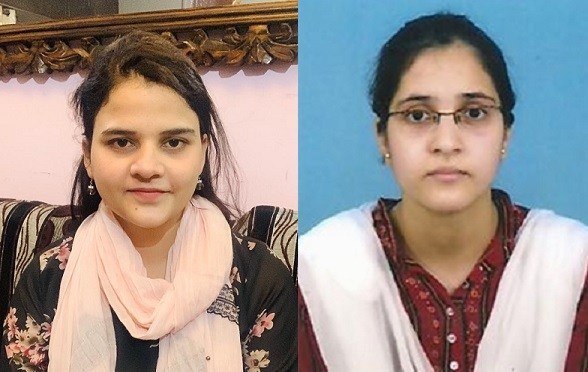
Nanoscience researchers from Jamia Millia Islamia – Marya Khan and Abgeena Shabir – selected for Prime Minister Research Fellowship 2020
New Delhi :
Two research scholars from Jamia Millia Islamia’s Centre for Nanoscience and Nanotechnology – Ms Marya Khan and Ms Abgeena Shabir – have been selected for the coveted Prime Minister Research Fellowship (PMRF) under the Lateral Entry category of the May-2020 drive.
Dr Aurangzeb Khurram Hafiz, Officiating Director of the centre said that as part of the PMRF both researchers would be getting a fellowship of Rs 70, 000 for first two years, Rs 75,000 for 3rd year, Rs.80,000 for the fourth year and Rs.80,000 for the fifth year also. Apart from this, each Fellow would be eligible for a research grant of Rs. 2 Lakhs per year (total of Rs 10 Lakhs for five years).
Jamia Millia’s Vice Chancellor Prof. Najma Akhtar congratulated both researchers and hoped that it will inspire other students of the university to do well in research. Jamia Millia stands for excellence and strive hard to provide its students every possible support to achieve great heights, she added.
“It is a matter of great pride for the Jamia Millia Islamia,” said Ahmad Azeem, PRO-Media Coordinator of the central university.
In a press statement, he said that Ms Marya Khan’s PhD work will be based on “Multifunctional Hybrid Nanomaterial based Biosensors for Health Monitoring”. The overall object is to synthesize multifunctional hybrid nanomaterials and further use them for the development of different biological sensing devices.
Functionalization of active area of biosensors with multifunctional hybrid nanostructures will not only improve the biosensor device stability, but also enhances selectivity, sensitivity and lowers detection limits of the biosensor. Additionally, the aim is to use micro-fabrication techniques to produce highly sensitive biosensors.
The development of multifunctional hybrid nanostructures based biosensors will help to overcome the limitations of sensing performances. Making them disposable and flexible will impact directly on socially and economically crucial arenas such as improved detection of clinically important biomolecules for effective response and treatment as well as an integrated smart sensing device will provide a simple, facile approach capable of selective and simultaneous detection of different biomolecules.
The PhD work of Ms Abgeena Shabir, who is pursuing PhD in nanotechnology under the supervision of Prof. S.S. Islam at Jamia, will be based on “Fabrication of High Performance Anode Materials For Li-Ion Batteries”. Through her research work she seeks to synthesize high specific capacity anode materials using facile and scalable techniques such that high energy demands are met and limitations of conventional batteries are overcome. The main aim of her work would be to synthesise Silicon/Graphene nanocomposite based anode materials with extraordinary properties of high stability, conductivity and coulombic efficiency. Her research work will pave a way for new future of silicon/graphene based batteries which will be cost effective and easy to operate.
The Prime Minister’s Research Fellows (PMRF) Scheme has been designed for improving the quality of research in various higher educational institutions in the country. With attractive fellowships, the scheme seeks to attract the best talent into research thereby realizing the vision of development through innovation. The scheme was announced in the Budget 2018-19.
source: http://www.inclusiveindia.net / Inclusive India / Home> Education / by Editor / November 06th, 2020
Khushboo Mirza was part of the dedicated teams of Chandrayaan 1 and Chandrayaan 2 missions.
Khushboo has reached such heights that schools and colleges in Uttar Pradesh invite her to give talks. Photos: By special arrangement
Chaugori Mohalla is a small Muslim neighbourhood in Uttar Pradesh’s Amroha town, about 200 km from Delhi. To reach the place, one needs to get off NH-24 from Itarsi, about 40 km before Moradabad, and a bumpy 10-km drive on a rough and dusty road would lead to the destination.
The narrow lane has old concrete houses with Urdu nameplates. Men wearing skull caps and women clad in burqas still give the locality a traditional look. Amroha, which is inhabited by both Hindus and Muslims, is called Aman Ki Nagri (town of peace). It has never witnessed a communal riot.
Hailing from this nondescript peaceful town is a young woman, Khushboo Mirza who is locally known as the woman who went to moon. Not for nothing, she has now reached the position of a director-level grade of Scientist F at the Indian Space Research Organisation (ISRO) and was part of the teams of Chandrayaan 1 and Chandrayaan 2 missions.
Khushboo is thrilled over her recent promotion which means she is just two levels below that of the position held by Abdul Kalam and the incumbent ISRO chairperson, Dr K Sivan.
But her life was not without troubles. Born on July 24, 1985, Khushboo lost her father Sikandar Mirza when she was just seven years old. In an unusual move, her mother Farhat broke religious norms to run her husband’s petrol pump to send her children to school. Khushboo studied in a Hindi-medium school till Class 10. She applied for B.Tech at Aligarh Muslim University (AMU) and bagged the seat under the sports quota as she was a volleyball player.
Khushboo at work at an ISRO lab
When Khushboo graduated in 2006, she was offered a software engineer job by American multinational company Adobe. But she applied to ISRO as she wanted to serve “Indian Science”. After joining the space agency, she was first drafted into the dedicated team for the Chandrayaan 1 mission in 2008. Khushboo received the ISRO Team Excellence Award in April 2015. She was also a part of the Chandrayaan 2 mission in 2019.
Even when she was accomplishing achievements in the space, her mother had to face criticism from some of the villagers. But Farhat ignored them and travelled with her daughter to ISRO training programmes across the country.
Khushboo then sought Farhat’s permission to shed the burqa and wear jeans to work. “She wanted to wear jeans, and I allowed her,” Farhat said. “In the absence of her father, and given the fact that she had to travel miles, many people said a lot of unkind things. But I told my daughter to work hard,” added Farhat.
Khushboo maintained the orthodoxy and tradition, and followed religious norms, but they had no impact on her work.
“I do follow our religion and do Namaz five times a day, besides observing fast during the fasting period. But I also wear western clothes. We belong to a progressive family, where modernity can exist along with tradition,” said Khushboo, who once celebrated Eid with her colleagues in an ISRO lab.
She has reached such heights that schools and colleges in Uttar Pradesh invite her to give talks. She keeps telling children, particularly girls, to concentrate on education which alone can provide them with a good future. She has also impressed many Muslim girls to consider education seriously. Khushboo feels that the necessary facilities for primary and high school education in the villages must be stepped up.
Khushboo with her mother Farhat Mirza
Many people in Uttar Pradesh think that she had made a journey to the moon and congratulate her and this why she is called the Moon Girl. Khushboo has emerged as a Muslim icon and a woman icon in Uttar Pradesh. Neither Khushboo nor her family members stereotype women, especially Muslim women. They believe that anyone in the country can fare well if they are provided with a good education.
With education and hard work, success is bound to come. There is no need to bring in religion or orthodoxy here, she said. “Times have changed and the attitude of people towards Muslim girls also needs to change. Our families do educate us.”
The success story of Khushboo Mirza is expected to inspire girls across the country and persuade families to educate their children, raising hopes of a better future not just for these families but the whole country.
source: http://www.thefederal.com / The Federal / Home> Features / by R. Rangaraj / July 19th, 2020
Her research group’s interest in the malaria parasite is driven by the desire to understand (a) the molecular workings and functions of the relict plastid (apicoplast) of Plasmodium, (b) mechanisms of protein translation employed by Plasmodium organelles and (c) human genetic factors and susceptibility to severe P. falciparum malaria in endemic and non-endemic regions of India.
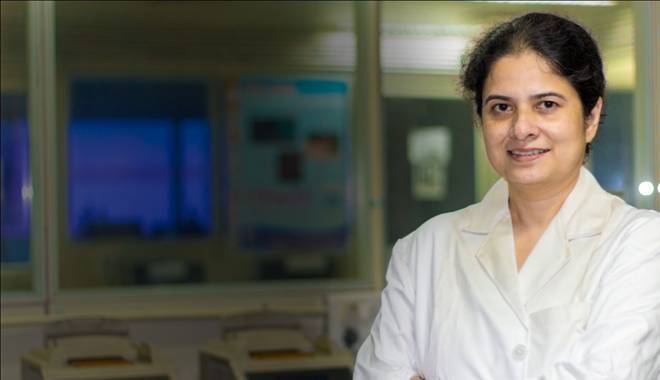
Dr. Saman Habib, Chief Scientist and Professor (AcSIR) in Molecular Biology Division, CSIR-CDRI, Lucknow brought the laurels to the Institute again through her outstanding work for understanding the malaria parasite.
She is elected as fellow of Indian National Science Academy, New Delhi.
Her research group’s interest in the malaria parasite is driven by the desire to understand (a) the molecular workings and functions of the relict plastid (apicoplast) of Plasmodium, (b) mechanisms of protein translation employed by Plasmodium organelles and (c) human genetic factors and susceptibility to severe P. falciparum malaria in endemic and non-endemic regions of India.
Other important honours and awards in her credit:
Fellow of Indian Academy of Sciences, Bangalore (2016)
Fellow of The National Academy of Sciences India, Allahabad (2015)
National Women Bio-scientist Award, Department of Biotechnology, Govt. of India (2012)
Prof. BK Bachhawat Memorial Lecture Award, National Academy of Sciences, India (2008)
CSIR Young Scientist Award, CSIR (2001)
source: http://www.smestreet.com / SME Street / Home> News> Covid-19 / by SME Street Edit Desk / October 22nd, 2020
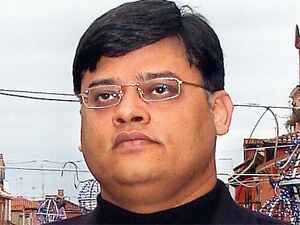
Former Indian Administrative Services officer Sabahat S Azim’s biggest challenge when he launched affordable healthcare chain Glocal Healthcare Systems was to prove that he could make the hospitals profitable.
Former Indian Administrative Services officer Sabahat S Azim’s biggest challenge when he launched affordable healthcare chain Glocal Healthcare Systems was to prove that he could make the hospitals profitable.
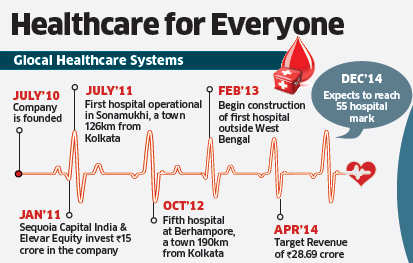
Within six months of launching the first Glocal hospital in July 2011 in Sonamukhi, a town 126km from Kolkata, the hospital had reached break-even. A model that the 37- yearold entrepreneur has now replicated in each of his other four hospitals. “They have proved that social good and profit can go hand in hand,” says Sandeep Farias, Founding Partner of Elevar Equity, which invested Rs 15 crore in the company along with Sequoia Capital India in January 2011. Most other hospitals that also offer affordable healthcare take up to two years to become profitable according to industry estimates.
Glocal is now expanding operations beyond West Bengal with plans to open 50 hospitals in Uttar Pradesh, Bihar, Chhattisgarh, Jharkhand and Orissa by December 2014.
It was the untimely death of his father that led Azim, a trained medical doctor, to launch Glocal in July 2010. “My father died due to unnecessary treatments. I thought, if this can happen to me, a doctor and an IAS officer, what about others?” says Azim, who found an early supporter in M Damodaran, the former Chairman of Securities and Exchange Board of India (Sebi), who became the Chairman of the venture. Azim has known Damodaran since his time as Secretary to the Chief Minister of Tripura, a position he held between 2004 and 2006.
“He is my first sounding board for any idea. When I think of introducing something new, my first thought is ‘how will Mr Damodaran react?’” he says. At Glocal, his team has come up with a protocol-driven model, where the computerised system will help the doctor automate diagnosis of 42 diseases, ranging from ischaemic heart disease to malaria, which they identified as affecting 95% of the patients.
Other affordable ventures are also attempting to cater to the semi-urban and rural market. Like Glocal, eight-yearold Vaatsalya also sets up hospitals (smaller than 100 beds) in small cities and towns with a focus on primary and secondary care. However, Vaatsalya leases out pre-existing hospitals and other buildings and upgrades them to high-quality hospitals. Azim, a fan of Fountainhead—Ayn Rand’s paean to individualism, wanted to design a hospital with just essential infrastructure.
Timely backing from investors helped convert the idea into a business. “I had a 30-minute meeting with Sabahat and he spoke about focusing on a limited set of diseases that constitutes 95% of healthcare issues in the country. I was hooked by this powerful idea,” says Elevar’s Farias.
Sequoia’s Managing Director GV Ravishankar says Glocal fit their requirement of backing good entrepreneurs in large and attractive markets. Glocal charges patients around onefifth of the fees a hospital with similar infrastructure would otherwise charge. It charges Rs 10,000 for a caesarean section, which costs about Rs 50,000 in other private hospitals.
Azim points out that he is able to charge lower fees due to lower cost of infrastructure and by eliminating unnecessary procedures. While a typical 100-bed hospital is about 70,000 square feet in size, Glocal has been able to restrict it to 30,000 square feet thus keeping cost of construction lower. At around Rs 8 crore for a 100-bed hospital, a Glocal hospital is built at about 50% of the cost of a private secondary hospital. The company aims to reach over Rs 28 crore in revenue in fiscal year 2014. As Azim begins Glocal’s expansion beyond West Bengal, he is not resting on his laurels. “It has been exciting so far but there is much more work to do,” he says.
source: http://www.economictimes.indiatimes.com / The Economic Times / Home> Business News> Rise> Entrepreneurship / by Radhika P Nair, ET Bureau / January 25th, 2013
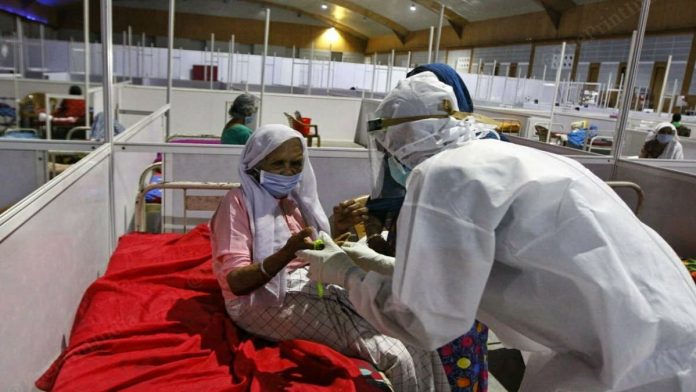
Hundreds of healthcare workers have died while tending to Covid patients around India. But doctors say it’s a risk they can’t avoid on the frontlines of the biggest medical challenge in decades.
Representational image | Praveen Jain | ThePrint
New Delhi:
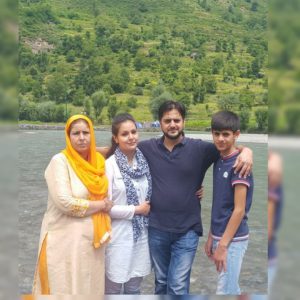
Ayat Mir, 18, of Kashmir remembers feeling uneasy when her father Ashraf Mir, a doctor, continued his practice through the Covid-19 pandemic.
“When the Covid-19 pandemic hit, I told Baba not to go to his private clinic. But he told me he had a duty towards his patients,” said Ayat. “He told me, ‘what answer will I give to Allah when I am asked why I didn’t serve my patients?’,” Ayat said.
Ashraf, 48, is one of the dozens of doctors across India who have died on the frontlines of the battle against Covid-19.
According to government figures, a total of 300 healthcare workers have died of Covid-19, including doctors. However, the Indian Medical Association (IMA) claims doctor fatalities alone stand at 568.
The number is massive but the true tragedy is brought home by the stories behind the statistics.
The deaths include starry-eyed beginners looking to make a difference, and those who refused to retire, reluctant to give up helping patients.
There were the doctors from Andhra Pradesh and Maharashtra who treated their patients for a pittance, and another from West Bengal who left behind a two-year-old son. Yet another doctor from Maharashtra was planning his son’s wedding when he contracted Covid-19 and died, and a Karnataka practitioner got the disease as he visited different districts to spread awareness about precautions.
Dr Ashraf of Pampore was a government doctor but ran a private practice on the side where he treated patients for free.
Their grieving families speak of their struggle to move on — of trying to make peace with the empty chair at the dinner table — but also talk about being inspired by the sacrifice their loved ones made. In the journey ahead, it’s this inspiration that is helping many push through the grief.
Jammu & Kashmir
Dr Ashraf Mir, a senior medical officer at the District Hospital Pulwama, first developed a fever on 16 July. That day, his daughter Ayat said, Ashraf went to the hospital, but isolated himself in the family’s second house upon return.
“Then I also got Covid. Baba used to come to my door and give me medicines even as he was not well himself,” she added
Dr Ashraf Mir, 48, with his wife and children | By special arrangement
Ashraf was finally admitted to hospital on 23 July. He passed away on 9 August at Sher-i-Kashmir Institute of Medical Sciences (SKIMS) in Srinagar, where he was admitted later.
He is survived by his wife, who is a government school teacher, and two children.
Besides his job at the district hospital, Ashraf also had a private practice where he treated patients free of cost, said Ayat.
“My baba’s loss is too big for us but we must get by. He would have wanted that for us. Both my brother and I are inspired by his sacrifice, and we wish to follow in his footsteps,” said the 18-year-old aspiring doctor.
According to Dr Atal Dulloo, financial commissioner at the J&K Health and Medical Education Department, a total of five health workers have died of Covid-19 in the union territory.
West Bengal
Dr Santosh Bhandari, 64, died of Covid-19 in June. A resident of Howrah, the doctor contracted the disease during his daily rounds to nearby villages, where he offered his services during the lockdown.
“It started with a fever,” his widow Manisha Bhandari told ThePrint. “Initially, we could not even manage to get a bed for him. It was all confusion,” she added. “Nobody helped us. We did not get an ambulance for taking him to the hospital. Neighbours blocked our house. We were not getting food initially,” she said, alleging that market runs for drinking water became difficult too.
Bhandari had been the sole earning member of the family, as their son lost his job during the lockdown.
Dr Nitish Kumar, 36, was working at West Bengal’s premier cardiology institute — the Kolkata-based private RN Tagore Institute of Cardiac Sciences (RTICS) — when the pandemic struck. He tested positive for Covid in mid-July.
Nitish had no comorbidities, but his condition deteriorated over the next few days. He passed away on 5 August, leaving behind a homemaker wife and a two-year-old son.
In West Bengal, an estimated 36 doctors have died due to coronavirus since April, according to IMA data.
Maharashtra
Dr Rajani Jagtap, the chief medical officer at Mumbai’s civic agency-run SVD Savarkar Hospital, lost her husband — a doctor who ran a private clinic — to Covid in the first week of July. Dr Shridhar Jagtap, 60, set up his private practice after retiring two years ago from Mumbai’s Shatabdi Hospital.
Many private doctors shut their dispensaries and clinics after the pandemic struck, but Shridhar continued working.
“He wasn’t the kind of person who liked to stay at home. He was happiest when he was with his patients. He was doing a lot of philanthropic work treating HIV positive patients as well,” Rajani told ThePrint. “He was very gentle and loving. I met him 23 years ago while working with the BMC (Brihanmumbai Municipal Corporation),” she said.
Rajani added that she had never once imagined a life without him. Nor had she ever thought that she wouldn’t be with him when he drew his last breath.
“I tested positive on 23 June. I had symptoms like exhaustion and fever. Four days later, my husband tested positive. He had a lot of comorbidities and his condition deteriorated very fast,” Rajani said.
Shridhar, who was originally from Pune, was admitted to the city’s Sassoon Hospital, while Dr Rajani was kept under home quarantine in Mumbai.
Even as Rajani’s condition improved, her husband’s got worse. He died on 7 July.
“My old mother was living with me and there were two helps too, one of whom tested positive. We were isolated and it was very scary. I was absolutely devastated. I had bouts of crying every day. It felt like I had lost a part of my body,” Rajani said. “My heart went out to my kids. Neither of them got to see their dad, although they were constantly in a video chat with him.”
Since her recovery, Rajani has established a support group, Staying Alive, where members help each other come to terms with the death of loved ones taken away by Covid-19.
In another part of the city, doctor-couple Shubhangi Patil and Hemant Patil were picking out a date for their 27-year-old son Saket’s wedding when the pandemic hit.
Hemant Patil, 58, ran a private clinic where he treated patients for Rs 100. He was also a three-time corporator who represented Hitendra Thakur’s Bahujan Vikas Aghadi, a Maharashtra-based party, in the Vasai-Virar Municipal Corporation.
“He did a lot of social work and people really respected him in Vasai. Every year, on 1 May, he would organise a blood donation camp. He also helped the civic body in setting up isolation centres, quarantine centres for Covid,” Shubhangi said.
He had hypertension and diabetes, but insisted on keeping his clinic open throughout the Covid crisis, she added.
In June, Hemant had to resuscitate a 28-year-old patient by administering CPR — which includes artificial ventilation through mouth-to-mouth or rescue breathing. The patient recovered but tested positive for Covid. On 29 June, Hemant isolated himself in his clinic. That was the last time Shubhangi met her husband.
As his condition became critical, the family shifted him to a hospital. He passed away on 11 July.
“The entire family decided not to break the news to me until the next morning. I was Covid positive and admitted to hospital, so I couldn’t even see him,” Shubhangi said. “I am learning to live alone after 39 years of togetherness, first courtship, and then marriage. He was everything for me.”
With her son’s marriage, the family’s finances and her husband’s medical practice to look after, Shubhangi is unsure of what the future holds. And there’s only Covid to blame.
“It is a strange disease. It doesn’t give a person time. Even a cardiac arrest gives the doctor and the patient some time to respond, but the hypoxia that can happen due to Covid just doesn’t. The infection spreads so quickly one doesn’t realise what’s happening,” she said.
IMA numbers suggest 65 doctors have died of Covid-19 in Maharashtra.
Karnataka
Dr Siddana K, 65
Dr Siddanna K, a 65-year-old private practitioner based in Gulbarga city, was a veteran with over three decades in the field. At the time of his death, he was helming his own private clinic after working at Gurmitkal Government Hospital for 31 years.
He died on 26 July. Speaking to ThePrint, his son-in-law said he had “served people for decades”.
Through the pandemic, Dr Manjunath Gowda, a 53-year-old surgeon from Davangere, travelled to different districts in the state to advise people on the precautions to take against Covid-19.
“He wanted to set an example on how we can upgrade facilities and provide safe treatment for patients in Davanagere,” said a relative, Dr Jayachandra, a practising dental surgeon.
Gowda died on 8 September.
According to IMA data, 64 doctors have died of Covid-19 in Karnataka.
Delhi
Joginder Chaudhary, 28, a junior doctor at Dr Baba Saheb Ambedkar Medical Hospital and College, tested positive on 27 June while serving in the Covid ward. Complications caused by the disease killed him on 27 July.
A posthumous profile of the young doctor in the Washington Post features a photograph of him and a colleague volunteering at a medical camp for women. His death in the line of duty came barely a year after he joined the profession.
Joginder was the son of a farmer, who owns two bighas of land in a Madhya Pradesh village and did all he could to put Joginder on the path to a better future. He was reportedly sent to a private school in Rajasthan so he could secure a good education, and his father even sold their family home to fund his medical education.
At the time of his death, Joginder’s income was helping his family get by. His father struggled to pay the bills when Joginder was admitted to Sir Ganga Ram, a private hospital in Delhi, for treatment, but the facility waived his entire fees in recognition of his role as a doctor.
After his death, the Delhi government gave the family Rs 1 crore as compensation.
“We are financially alright for now,” said his father Rajendra. “But we are mentally distraught. We had put in a lot of effort and hard work to help him get to his position.”
While his father is struggling to move on — with a school-going daughter and another son to look after — the death of Joginder was a blow his mother couldn’t recover from. She died a few weeks after him.
Meanwhile, a veteran doctor’s widow is yet learning to navigate her day without her husband. Dr Asheem Gupta, a senior anaesthesiologist at Lok Nayak Jai Prakash (LNJP) Hospital, died in June after serving in the facility’s ICU unit. He was 55.
“Even routine activities like eating food seem dull now,” his wife Dr Nirupama Gupta, a radiologist working in Noida, said.
Their son, who lives in Australia, wants to return to India, but his shaken mother doesn’t want that. “He has been insisting that he will come now but I feel it is safer for him there. I can’t bear the thought of another family member getting Covid-19,” she said.
Dr Gupta was an avid sports fan and the rare anaesthesiologist to share a good rapport with surgeons, a colleague told ThePrint for a profile published after his death. A ward boy at the hospital spoke of his generosity.
“Dr Asheem went out of his way to help people. Be it rich or poor. When many weren’t able to afford ventilators, he had helped them, as he did for two ward boys here,” a ward boy said.
In Delhi, IMA estimates suggest about 14 doctors have died of Covid-19.
Andhra Pradesh
The tag of “Rs 2 doctor” for Dr Ismail Hussain, 76, of Andhra Pradesh’s Kurnool was a testament to a life lived in benevolence. Over his stint as a doctor, Hussain is believed to have treated lakhs of poor patients for negligible rates. He kept a cardboard box at his nursing home and residence, where patients could pay as much as they wanted as fees.
His reputation drew patients not from Andhra alone, but also from the nearby districts of Telangana and Karnataka. He passed away on 14 April, and was tested positive for Covid-19 a day later.
According to Kalkura Chandrashekhar, Ismail’s close friend of 40 years, the doctor continued seeing patients even when most clinics and hospitals shut over Covid-19 concerns. “Ismail’s death is a great loss to the people of Kurnool,” Chandrashekhar said.
He is one of around 65 doctors who have died of Covid-19 in the state.
Telangana
Dr Naresh Kumar was serving as the Deputy Medical & Health Officer (DMHO) of the Bhadradri Kothagudem district, when he contracted the virus and passed away in August. He is survived by his wife and two daughters.
After his death, several doctors’ associations rallied to collect funds for his family and raised over Rs 25 lakh. The Telangana government also announced Rs 25 lakh ex-gratia compensation and a gazetted job for his wife.
State health department data suggests there had been 10 doctor fatalities among the over 2,000 healthcare staff tested positive for Covid-19 until August end. The figure has been contested by doctors’ associations.
In March, the central government announced a Rs 50 lakh insurance cover for families of health workers who die of Covid-19 in the line of duty. State governments, including those in West Bengal, Telangana, and Maharashtra, have since followed suit, while some like Andhra Pradesh are yet to announce such a scheme.
According to a senior officer in the Union Health Ministry, so far, the families of 95 healthcare workers have been compensated under the insurance scheme, while 175 applications are pending and 30 are yet to be sent by various states. The sources said this tally of 300 accounts for all the healthcare workers who have died of Covid-19.
However, the IMA, which has collated data from chapters across the country, pegs the number of doctor fatalities at 568.
ThePrint reached Union Health Ministry spokesperson Manisha Verma to ask about the discrepancy through call, text and email, but the query hasn’t been answered.
However, a senior officer, speaking off the record, questioned the credibility of IMA data. “The IMA cannot tell you 500 have died. Can they tell you that they have all died because of Covid and not died because of natural causes after having caught Covid?” the officer said.
‘It’s our duty’
The Covid-19 pandemic presents one of the biggest challenges the medical community has faced in recent years — highly infectious in nature, the disease puts healthcare staff at immense risk even as they pull long hours on duty to deal with the onslaught of patients.
But doctors tending to Covid patients say the risk is a professional hazard, and they can’t overlook their duty.
“We aren’t superhuman, but we are taking risks and doing our jobs,” said Dr Shahid Bharmare, a consulting physician at Mumbai’s Kohinoor Hospital who has been treating Covid patients since March. “Because there is no escape… It’s not about money. It’s a duty we have to do. If I don’t do it, who else will?”
His family, Bharmare added, was “initially reluctant” when he assumed pandemic duty “but they understood that I have to”.
“Now they’ve gotten used to it. So, I take all precautions. But yes, there are a few things I miss as well. I can’t hug my son anymore. I have to stay away from him,” he said. “That risk is always there in the back of my mind. That is there with every Covid-19 warrior. But it’s my responsibility and I can’t stay away from it.”
According to the doctor, most people will contract Covid-19. “You can’t stay away from it. If you’re anyway going to get infected, why not work and do it?”
Pulmonologist Dr Ravi Dosi of Indore’s Sri Aurobindo Institute of Medical Sciences (SAIMS) said he knew two doctors who lost their lives.
“They made the supreme sacrifice for their passion. Medicine is a passion and these passionate doctors gave up everything they had,” he added.
Dosi has been treating Covid-19 patients since the very start of the pandemic.
“I myself became a victim of the Covid-19 virus but I recovered and had the opportunity to keep serving the patients during that time. But I felt the virus inside me, I felt the potency, and the way that the virus engulfs you in its power,” he said. “Being a doctor, you can understand what it does to your body. This is not a good virus. No one is invincible.”
Inputs from Azaan Javaid, Madhuparna Das, Manasi Phadke, Rohini Swamy, Soniya Agrawal, Aneesha Bedi, Rishika Sadam
source: http://www.theprint.in / The Print / Home> Health / by Angana Chakrabarti / October 18th, 2020
The gate was last opened almost two decades ago, after which it had remained jammed with debris, rocks and plastic.
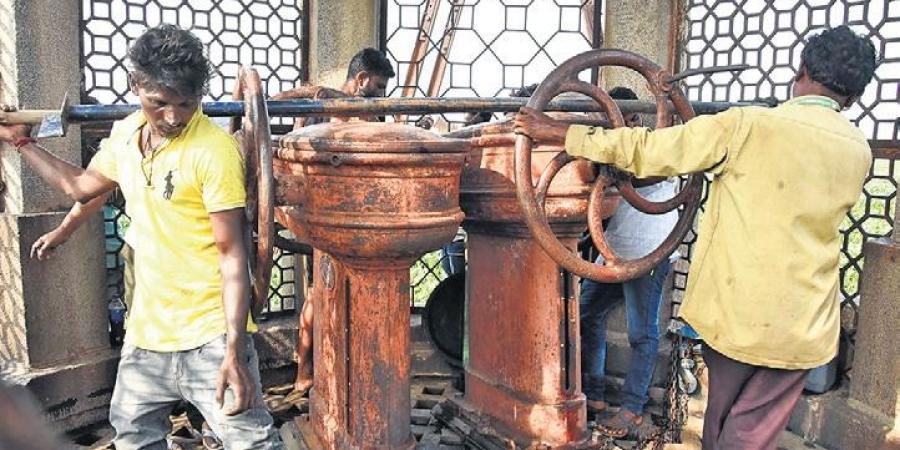
Mechanic Khadeer and his helpers try to open the sluice gates of Fox Sagar lake on Wednesday | rvk rao
Hyderabad :
In a surprising turn of events, the sluice gate of Fox Sagar lake was successfully opened by a local automobile mechanic, Mohammad Khadeer, after engineers and officials in charge were unable to unlock the century-old vents for over a week.
The gate was last opened almost two decades ago, after which it had remained jammed with debris, rocks and plastic.A big rock was stuck exactly where the wheels of the sluice gate were supposed to rotate. After the technical staff failed to remove the rock, Khadeer stepped in on the request of the local councillor.
Speaking to Express, Khadeer said, “We knew that works to open the Fox Sagar sluice gate had begun, as most of the chawls, bastis and residential areas around the lake have been inundated by water. The local councillor called me on Tuesday and asked me to check why the sluice gate was not opening. When I reached there, I was told they had been trying to open it for over eight days. I, with a couple of boys from my shop, tried to understand which part of the gate could or could not be worked around, since it is a very old structure.”
“We soon realised that it was not an engineering issue, rather, debris from the lake had got stuck at multiple levels of the four sluice gates. It took us over four to five hours to cut through layers of tarpaulin, fabric, debris, plastic, loose rocks and boulders,” Khadeer added.
The opening of the sluice gates sparked an outburst of cheers, and the technical team on the spot showered Khadeer with compliments, calling him the ‘man of the hour.’Once the gates are opened, water from the lake flows into the nala underneath the culvert junction, up to Hussainsagar.
source: http://www.newindianexpress.com / The New Indian Express / Home> Cities> Hyderabad / by Oishani Mojumder / Express News Service / October 22nd, 2020
Dr Najma Salim believed she had to tell the truth.
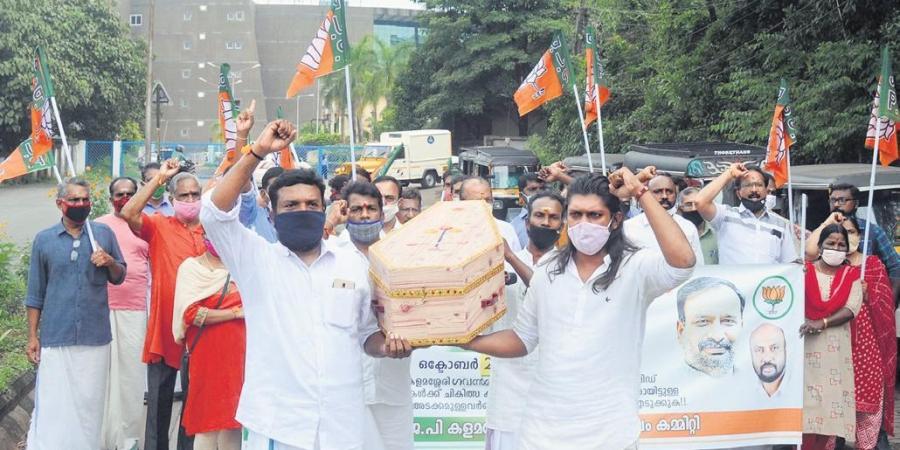
BJP workers stage a protest with coffin in front of Ernakulam MCH on Tuesday against alleged medical negligence at the MCH | A Sanesh
Kochi :
Dr Najma Salim believed she had to tell the truth. The doctor with the Government Medical College Hospital, Ernakulam, who vouched for a nurse’s claim of lapses at the hospital and stood her ground despite coming under pressure, is facing the consequences of taking a bold stance. She has been attacked on social media, with some even questioning her credibility and raising slanderous allegations against her. But her courage to speak out has also won her respect, with many supporting her vociferously.
The voice message of the hospital’s nursing officer, Jalaja Devi, triggered the fire and Dr Najma stood up for truth even when she knew it was against the entire system.“I know my future is at stake. I don’t know what will happen when I go back to duty. But I stand by what I said and these are instances which I witnessed,” she had said.Several trolls questioning her credibility as a doctor are being circulated on the social media.
“There are a thousand examples of Najma that proves her credibility and dedication,” say her colleagues. Dr Jayasoorya K, a friend and her senior at the Ernakulam MCH, said in a Facebook post on Thursday: “One should enquire with the inmates of the Karunya Old Age Home about Najma to clear the air about her selflessness and dedication.
Her efforts to take the drug bank, which is today being relied upon by so many patients, forward is indeed commendable. Please inquire about her work before questioning her competence as a doctor.”
Later, he told TNIE, “Let the truth, whatever it is, come out during the investigation. All of us who hold the medical college close to our hearts want just that.”“Some people called it a political stunt. She never intended any of it. She simply stood for truth,” said another colleague, who did not want to be named.Dr Sanil Kumar, member of the V R Krishna Iyer Movement, said a fair and comprehensive investigation is needed to bring out the truth.
In context The doctor with the Government Medical College Hospital, Ernakulam, who vouched for a nurse’s claim of lapses at the hospital, is facing the consequences of taking a bold stance
source: http://www.newindianexpress.com / The New Indian Express / Home> Cities> Kochi / by Anuja Susan / Express News Service / October 23rd, 2020
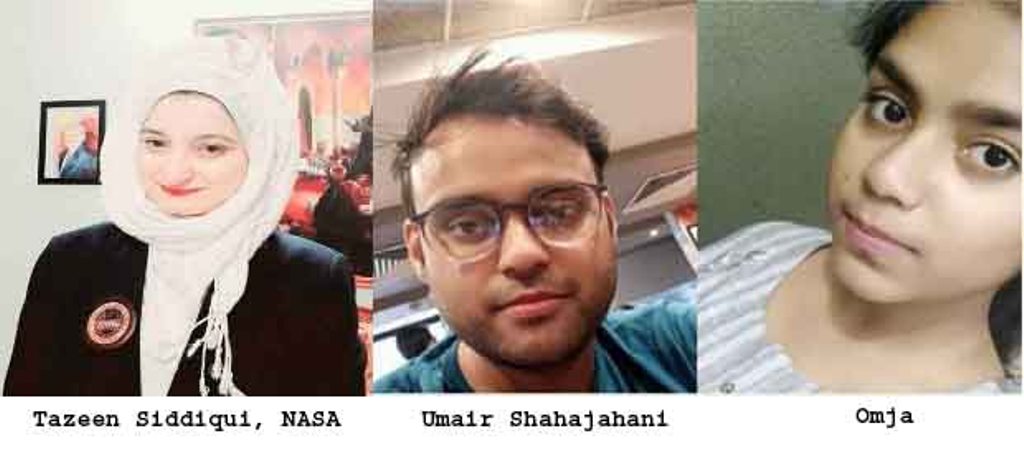
‘Team blaze’ comprising Aligarh Muslim University (AMU) students, Umair Shahajhani (Z H College of Engineering and Technology) and Omja (Senior Secondary school Girls) won the ‘Judges Choice Award’ of the international NASA Space App Challenge 2020.
The AMU team had participated in the global hackathon from their home computers to tackle one of the most pressing worldwide issues: The Covid-19 pandemic, said Tazeen Siddiqui, Lead, NASA space App Challenge. The event was judged by two ISRO scientists, Mr Uzair Mujeeb and Syed Shadab.
The ‘Team blaze’ is one of the two teams from AMU to have won the award. The other team, ALTAIR lead by AMU students Ayesha Samdani (MBBS), Mohd Zakir Husain (MBBS), Aman Ahmad Khan (MBBS), Abdullah Samdani (BA LLB) and Faisal Jamil, a BTech student from the Maulana Azad National Institute of Technology, Bhopal, Madhya Pradesh also won the ‘Judges Choice Award’ for presenting a solution in response to the NASA’s Challenge ‘A One Health Approach’.
ALTAIR members through their presentation shed light on how improved air quality has been an unintended but welcome consequence of the lockdown to contain the coronavirus. They gave an analysis of the air quality of the pre and post lockdown periods in the Indo Gangetic region of Northern India. Their study gave details about how an improvement in the air quality benefited the health of people.
The team members also coded an Air Quality Index (AQI) Calculator to measure AQI of a certain region, which is helpful in giving health and cautionary statements and providing guidance to common people on pollution related health issues.
source: http://www.amu.ac.in / Aligarh Muslim University / Home> AMU News / by Public Relations Office, AMU / October 09th, 2020
Researchers from four universities in West Bengal have been looking for fossils in the sediments of Chotanagpur plateau for almost a year
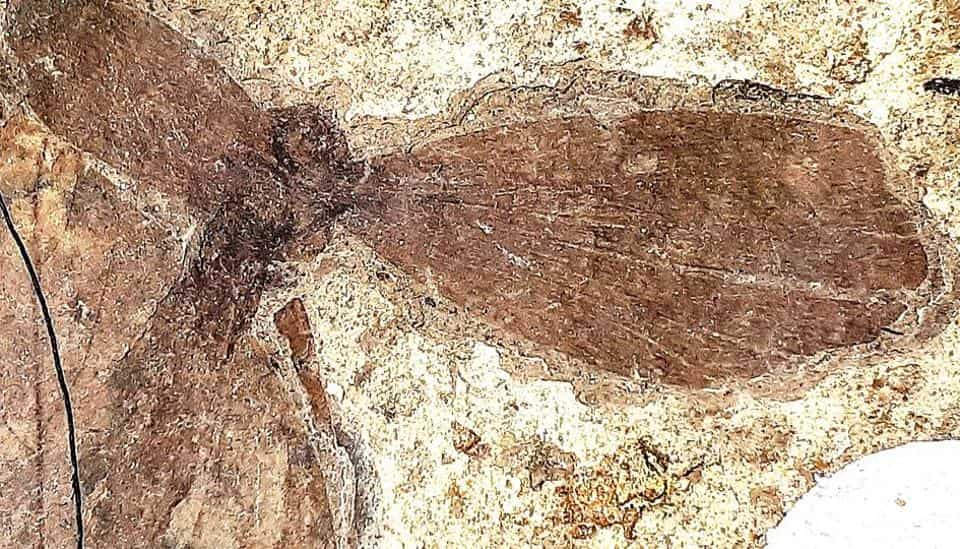
The dragonfly is around 3cm long and has a wingspan of around 2.5cm. This is, however, much smaller than the fossils of giant dragonflies, which have been found elsewhere in the world. (Sourced)
A team of scientists from West Bengal has discovered the first dragonfly fossil in India from Jharkhand’s Latehar district. The fossil is at least 2.5 million years old. A paper on the finding was published in the October 10 edition of Current Science journal.
“This is the first dragonfly fossil from India. It is a well-preserved one. The fossil belongs to the late Neogene period, which dates between 2.5 million and five million years ago,” said Subir Bera, a professor with the Centre for Advanced Study of the Botany department, University of Calcutta.
Researchers from four universities in West Bengal have been looking for fossils in the sediments of Chotanagpur plateau for almost a year. In January 2020, they dug the dragonfly fossil from a depth of around 5m below the soil surface.The team has also found fossils of various insects, fishes and leaves of some flowering plants.
The research was headed by Mahasin Ali Khan, assistant professor of Botany at Sidho-Kanho-Birsha University.
“The nearest living member of the fossil is Libellula depressa, a species of dragonfly that is found in any tropical country, including India,” said Manoshi Hazra, one of the team members and the first author of the research paper, which has been published in Current Science.
As dragonflies spend most of their lives near fresh water bodies, the scientists said that millions of years ago a freshwater body might have existed there, which has now dried up. The other fossils of plants and fishes, which the scientists have found, also support the theory.
“The very fact that the team has found the fossil of an adult dragonfly from the sedimentary bed is very interesting. Usually the prospect of finding an immature dragonfly from the sedimentary bed is huge because dragonfly-larvae live underwater. The prospect of finding insect fossils from sedimentary beds and coal beds is huge, but unfortunately little work has been done in India in this regard,” said TK Pal, a former scientist of the Zoological Survey of India.
source: http://www.hindustantimes.com / Hindustan Times / Home> Kolkata / by Joydeep Thakur / Hindustan Times, Kolkata / October 08th, 2020