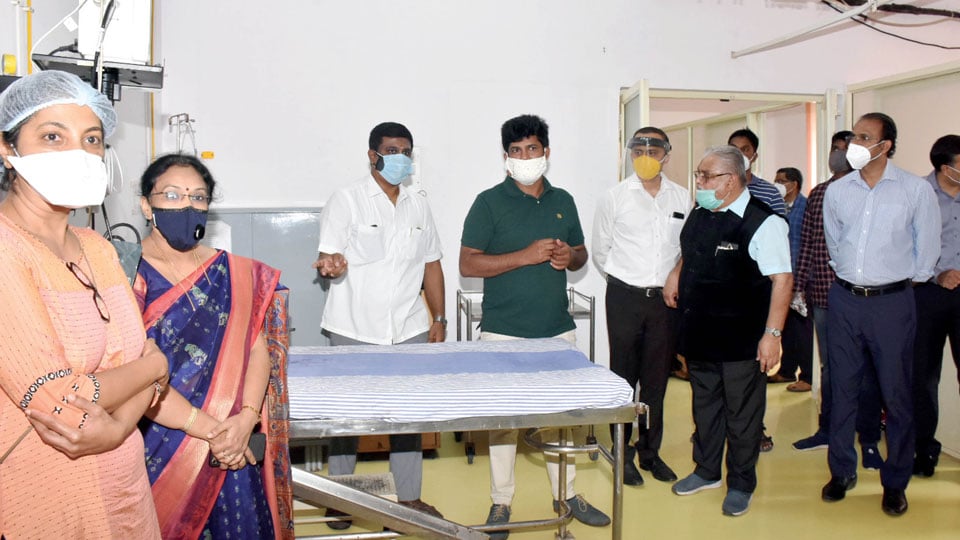
Mysuru-Kodagu MP Pratap Simha, who heads COVID-19 Task Force for Narasimharaja Assembly Constituency, this morning inaugurated the Comprehensive COVID Care facility set up at Bibi Ayesha Milli Hospital (BAMH) on Old Mysuru-Bengaluru Road. The Hospital has been converted into a modern 75-bed hospital and can be extended to 100 beds.
Bibi Ayesha Milli Hospital has tied up with Brindavan Hospital for this initiative and the facility will be entirely managed by Brindavan Hospital. It has facilities including Intensive Care Units, Surgery and Haemodialysis, ventilator support and even can handle child birth cases of COVID-infected pregnant women.
The Brindavan Hospital and the Bibi Ayesha Milli Hospital will be treated as one hospital and as the State Government has mandated all Private Hospitals in the State to hand over their 50 percent of the beds to COVID care, all the beds at Bibi Ayesha Milli Hospital will be reserved for COVID patients and all the non-COVID patients will be treated at Brindavan Hospital.
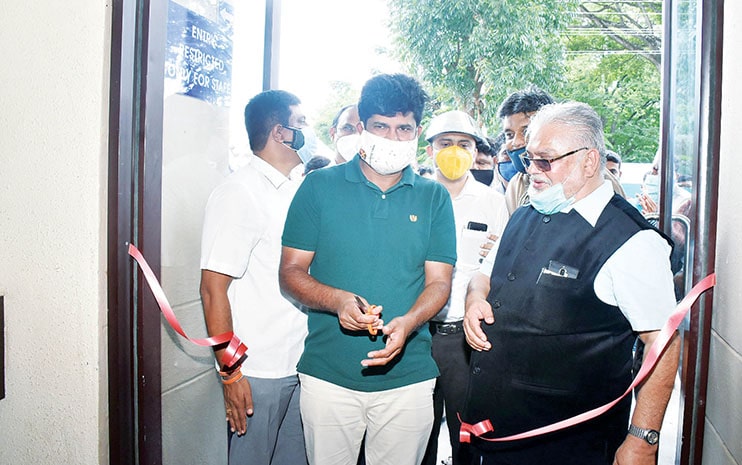
MP Pratap Simha inaugurating the Comprehensive COVID Care facility at the hospital along with Bibi Ayesha Milli Hospital President Iqbal Ahmed.
A team of specialist doctors, technicians and paramedical staff will run the Hospital with utmost precautions to help the District Administration in its efforts to control the pandemic. Bibi Ayesha Milli Hospital President Iqbal Ahmed, Dr. M.R. Aiyappa, General Physician and Diabetologist and Dr. Ravindranath, Orthopaedician at Brindavan Hospital, Dr. K. Javed Nayeem, Dr. Mohan, Dr. Imran and others were present.
Disinfectant tunnel
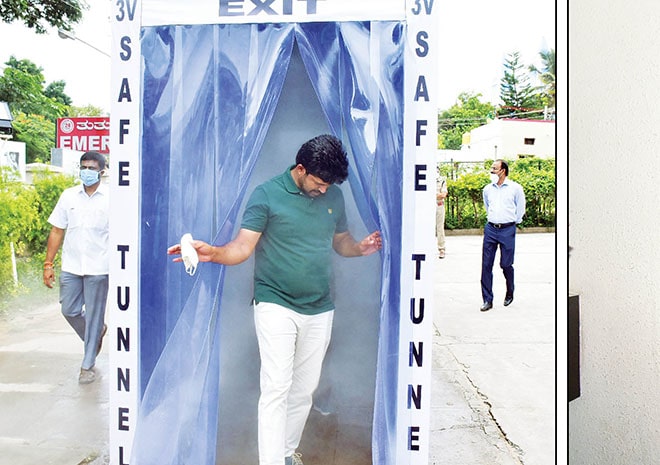
On the occasion, a unique disinfectant tunnel was inaugurated by the MP where liquid is not sprayed on the entrants but are fumigated with thick smoke. The smoke is, however safe to inhale. The tunnel has been installed by S3V Technologies and is called ‘3V Safe Tunnel’. Impressed by the tunnel, MP Pratap Simha asked the company representatives to demonstrate the tunnel to Deputy Commissioner Abhiram G. Sankar so that such facilities can be installed at all the other COVID Care Centres, and hospitals.
MP Pratap Simha seen exiting a unique disinfectant tunnel where people are fumigated at Bibi Ayesha Milli Hospital this morning.
Protest held, withdrawn
A group of five to six people claiming to be members of Waqf Board in Mysuru objected to the conversion of Bibi Ayesha Milli Hospital into a COVID Hospital. Claiming to be the owners of the building and the property where the hospital stands, the members protested. They objected for the commercial use of the Hospital and at the same time said that the hospital is located in a thickly populated area and there is a danger of virus spreading.
Narasimharaja Sub-Division ACP Shivashankar, Inspector Shekhar and Pratap Simha intervened in the protest and asked the Waqf Board members to withdraw the stir. They told the protesters that real estate matters could be sorted out in other platforms later.
The Hospital has been taken over as COVID-19 is a national disaster and people who object to such issued can be booked under National Disaster Management Act, they said. The protest was later withdrawn.
source: http://www.starofmysore.com / Star of Mysore / Home> Covid-19> News / July 24th, 2020
AHMAD ZAIDI, who is originally from Aligarh, Uttar Pradesh, and is a 1985 Electrical Engineering graduate from the Thapar Institute of Technology, Karnal, Haryana, epitomizes a brilliant success story in United States.
Zaidi is currently a vice-President at the world-renowned hi-tech giant, the Intel Corporation in the Silicon Valley in California, US. He is among the very select band of bright young minds who migrated to US from India looking to contribute to the development of high technology and to making America great and India proud.
Zaidi holds nine patents in the field of microprocessor design and architecture. In US he earned a master’s degree in electrical engineering from Virginia Polytechnic Institute and State University, Blacksburg, Virginia, in 1987.
In 2009, Zaidi was presented an award by the Malaysian minister for setting up the Embedded Silicon Design Center in Penang, Malaysia. In addition, he and his teams have been honored with multiple technical awards, including an Intel Software Quality Award in 2011 and an Intel Achievement Award in 2012.
Ahmad Zaidi is vice president of the Platform Engineering Group and general manager of the Embedded Subsystems and Intellectual Property (IP) Blocks Group at Intel Corporation. He is also responsible for Security Silicon Engineering and manages Security CPU and IP engineering for the Intel Security Group. He leads an organisation that spans sites in the United States, Malaysia, Israel, Poland and India, and is responsible for delivering hardware, software, firmware IP subsystems and soft IP blocks for Intel products across all product segments. His group is chartered with delivering IP in areas such as audio, voice, speech, sensors, security, Input/Output (I/O) technologies and software related to storage, communications and manageability.
Since joining Intel in 1987 as an engineer in the microprocessor unit at Cupertino, CA, Zaidi has progressed rapidly and has held a number of senior technical and management positions in microprocessor design, embedded systems and communications. Before assuming his current position, he was the general manager of the Chipset and System-on-Chip (SoC) IP Group where he was responsible for delivering chipset hardware, firmware and software for Intel’s client platforms in addition to leading the development of reusable IP blocks for Intel products across all segments.
Prior to that, Zaidi was the general manager at Intel Corporation of the Embedded and Communications Silicon Engineering Group, where he led a cross-geography team responsible for delivering SoC and chipset products for the embedded and communications market segment. Earlier in his Intel career, Zaidi served as director of the Silicon Engineering, Infrastructure and Network Processor divisions and as engineering manager on the first Intel® Itanium® processor.
Ahmad Zaidi lives in Cupertino, CA with his wife and two children. His father was an engineering manager at the Fertilizer Corporation in Paniput, Haryana. As a young man, Zaidi grew up in Paniput.
source: http://www.clarionindia.net/ Clarion India / Home> Indian Muslims / by Kaleem Kawaja, Clarion India / July 18th, 2020
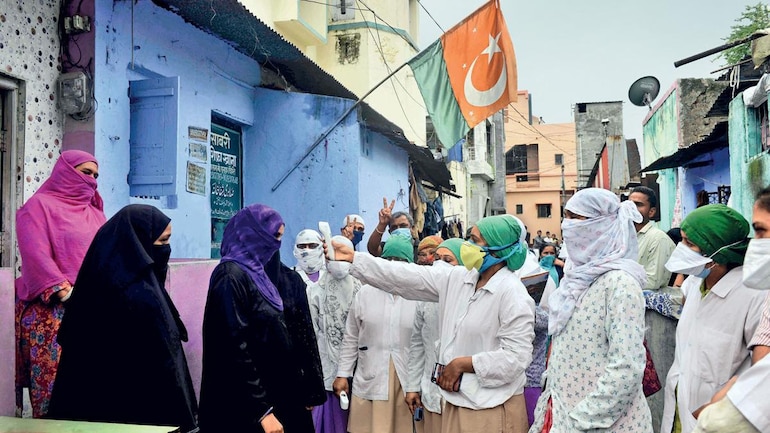
Life in Malegaon appears to have returned to normal, even as Maharashtra struggles to contain the pandemic. As of July 15, the state had 107,963 active cases, with 10,695 deaths.
A new normal: Healthcare workers on a door-to-door Covid-19 test drive in Malegaon, July 14. / Photo by Milind Shelte
The covid-19 battle
On July 14, Malegaon’s Mohammad Ali Road, the city’s main commercial street, was full of shoppers, mirroring the sort of normalcy seen in days before the national lockdown in March, and presenting a stark contrast to the fearful retreat from public spaces seen in many areas of Maharashtra. The shops were open, selling everything from cutlery to electronics, and the restaurants and street food vendors were busy serving crowds of customers. Burqa-clad women thronged the ladies’ market. Life in Malegaon appears to have returned to normal, even as Maharashtra struggles to contain the pandemic. As of July 15, the state had 107,963 active cases, with 10,695 deaths.
Malegaon’s return to normalcy is striking and worthy of note because, till recently, the city was one of the state’s five Covid hotspots, alongside Mumbai, Pune, Nagpur and Aurangabad. Until May, the city had seen a daily average of five deaths due to Covid-19, and reported about 200 fresh cases in the early part of that month. Today, there are just 60 active cases in the city, most of them non-residents of Malegaon, with no coronavirus-linked deaths since May 25. The doubling period has improved from 2.2 days in April to 112 days on July 15, the best in Maharashtra. At 82 per cent, the rate of recovery in Malegaon is also much better than the state average (54 per cent). The turnaround was so hard to miss that, in the first week of July, the Indian Council of Medical Research (ICMR) sent a confidential letter to the state government, asking for permission to study the ‘Malegaon model’.
Malegaon is a Muslim-majority city (80 per cent residents are from the minority community), with a population of 750,000. The city administration’s success in controlling the pandemic is especially laudable given that the average population density here is 19,000 per sq. km, the state’s highest. In areas like Kamanipura, this goes up to 72,000 per sq. km, second only to Mumbai’s Dharavi, where 800,000 live in a 2.1 sq. km area. Maintaining physical distance, the standard-format safety protocol to avoid infection, is then practically impossible. The Malegaon Municipal Corporation (MMC) was also working with severe limitations, it still does not have a single ventilator.
Municipal commissioner Deepak Kasar says the MMC was struggling on two fronts. First, it had to tackle a staff shortage, with many workers refusing to report to work for fear of being infected. This even led to the MMC being unable to make use of the ambulances provided by the Bharatiya Jain Sanghatana, an NGO focused on disaster response. Second, Kasar says convincing people to come forward for screening, testing and quarantine was a Herculean task, especially since a communally sensitive environment had been created in the initial days of the pandemic.
The MMC’s task was made much more complicated by rumours on social media, one of which was that the coronavirus screening efforts were a conspiracy against Muslims. This led to people refusing to be tested and even attacks on MMC health workers who were conducting screening tests. In the last week of April and the first week of May, six ASHA (accredited social health activist) workers suffered burns after being attacked with boiling water. Many residents also reportedly refused to give their real names and symptoms to health workers. Superstition played its part, for instance, many believe the dead will not reach heaven if their eyes are open, leading to people touching infected bodies and increasing the risk of transmission. Another tradition requires women from households in which a death has taken place to isolate themselves for four months and eight days, this complicated contact tracing.
To address these problems, Kasar appealed to community leaders for help, especially the influential Mufti and local MLA Mohammad Ismail. Leaders like Ismail made appeals at mosques for people to stay at home and to cooperate with the MMC health workers. As a result, people increasingly came to see that the administration’s efforts were genuine, leading to more and more coming forward for testing. The success of the appeals to stay home was clearly visible on Eid-ul-Fitr (May 25). Malegaon’s Idgah Maidan was deserted, normally around 300,000 people gather here to offer prayers on the holy day.
Another initiative was to enlist community members for outreach, to spread information about the virus. Kasar roped in students of Ayurvedic and Unani medicine, aware that they were trusted within the communities. A Unani concoction called mansura kadha, with claimed immunity-boosting properties, prepared by the local Mohammadia Tibbia College, also played a bit role; the trust that runs the college has received requests for some 250,000 packets. The MMC also made short informational videos and uploaded them on YouTube, aiming to improve awareness about the coronavirus among Malegaon’s younger residents, especially women. Also important were the MMC’s efforts to give vulnerable households the resources they needed for home isolation. “We provided oxygen cylinders, though the police department was against the move,” says Kasar.
Maulana Imtiaz Ahmed Iqbal Ahmed, secretary of the Jamiat Ulema-e-Hind in Malegaon, says the community “scored over the fear factor…the mohalla clinics were the game-changer”. Kasar also points out that the success did not come at a major financial cost. “We did not send any patients to private hospitals, so the treatment bill was zero. We also spent less than Rs 20 lakh in the past two months on arrangements for quarantine and treatment,” he says. This stands in stark contrast to the efforts of other municipal corporations in the state; Pune has budgeted Rs 294 crore to fight Covid-19 for a population of about 4 million. Kasar says Malegaon has not only shown a decrease in Covid-19 cases but also other diseases, including those affecting the heart, lungs and kidneys. The ICMR study, once completed, will be submitted to a committee headed by Prime Minister Narendra Modi.
The MMC’s efforts have not only improved the health of Malegaon’s citizens, it has also rehabilitated the city’s reputation. Home to a local film industry and a textile cluster with around 125,000 power looms, Malegaon attracted some bad press in the noughties for being communally charged, a riot in 2001 and bomb blasts in 2006 and 2008 seemed to lend credence to its reputation for being volatile. But it has moved on since, and now with the success of the ‘Malegaon model’, it has built a case for an image makeover.
source: http://www.indiatoday.in / India Today / Home> News> Magazine> UP Front / by Kiran D Tare / New Delhi, July 18th, 2020
In India Muslims number about 180 million and are found in good numbers in most regions. After ruling for a period of about 600 years (1200 to 1857), during which beginning from limited footholds in north India they expanded their rule and the followers of their faith through most of the Indian subcontinent, from the Khyber pass in the west to Assam in the east, and from Kashmir in the north to Kerala at the southern tip of the Indian subcontinent. At the end of the British colonial rule in 1947, when the Muslim population formed about one-third of India’s population, the subcontinent was divided between a Muslim majority Pakistan and a Hindu majority India.
Following the partition and the formation of the new India, the situation of the Muslim community, whose population was reduced to about 14 percent, has continued to decline. While discrimination in various walks of life from the government as a reaction to the partition of the country is a major factor for that, the lagging behind in education at all levels and the poor condition and standard of education in the community and the community’s schools has substantially reduced the ability of Muslims to compete with others in various walks of life. The educational backwardness is a lot more pronounced among Muslims in north and west India compared to south and east India
Since 2014 when BJP acquired power in New Delhi, the overall progress of Muslims has declined further due to substantial increase in governmental bias against them. However, every so often one comes across instances of remarkable successes. It is interesting to note that more Muslim young women compared to men are found among the list of high achievers. I recently came across two such instances.
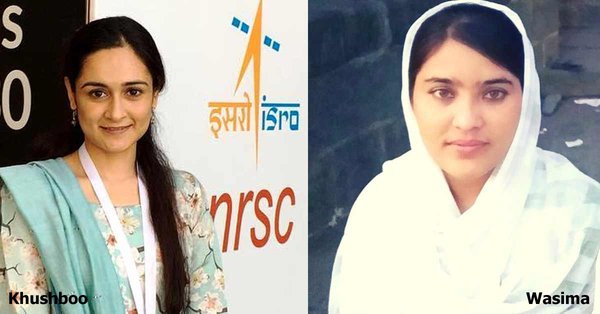
Khushboo Mirza
One such instance is a relatively young Muslim woman by the name Khushboo Mirza from Amroha, a city in western Uttar Pradesh. Khushboo Mirza is an electronics engineer with the Indian Space Research Organization (ISRO) since 2006 when she graduated from the engineering college of the Aligarh Muslim University, Aligarh, U.P. She was a bright student in high school and at the engineering college.
ISRO, headquartered at Bangalore, Karnataka, is one of India’s high performing, high technology organizations. At low budget it has achieved much success in launching several pathbreaking outer space exploration missions and satellites. ISRO launches a variety of communication and weather satellites on contract to various global space organizations like National Aeronautics and Space Administration (NASA) of US, Japanese Exploration Agency, Japan et al. This is in addition to space research satellites that they develop and build themselves. Some of the most notable recent ISRO missions include the Chandrayan 2, 2019, a moon orbiter that circled moon and sent data. And Chandrayan 1, 2008, that sent a satellite to impact the surface of moon.
Khushboo Mirza was a team member on the Chandrayan 1 mission. For that, she received good recognition from ISRO management. Just recently ISRO promoted Khushboo, where she will lead groups in challenging tasks.
In the last few decades several professional women in India have reached leadership positions in private sector companies, banks, Science & Technology organizations, universities and government bodies. But it is extremely rare to find a Muslim woman among them. There are two main reasons for this sad happening. One is the bias of the government authorities against Muslims and the other is the fact that a large number of Muslim families do not encourage their women to seriously focus on attaining leadership roles in their professional careers. Muslim families are happy with women becoming principal of a girl’s school.
Wasima Shaikh
The second instance that warmed my heart recently is the story of the young woman by the name Wasima Shaikh of village, Sanghavi, district Nanded, in Maharashtra. Wasima is among four children of a Muslim farm laborer in the village of Sanghavi. Her mother is also a farm labourer and they live in a small hut in the village. Her father has been sick for a few years and her mother is shouldering the responsibility for the family in these years. Wasima’s village is plagued with the problem of men habitually drinking liquor and indulging in violence. Wasima is a brilliant student who topped the list of successful candidates in in Nanded taluka in the Maharashtra State Secondary School Certificate examination. In 2015 studying on scholarship she obtained the BA degree from the Yashwant Chavan University, Nanded.
Then she sat in the tough competitive examination of the Maharashtra State Public Service Commission for an officer job in the state. To prepare for the competition she needed training from a coaching center and additional books that cost money, that her mother could not afford, especially since her brother was also studying for B.Sc. degree. To help Wasima with the coaching center fees, in her quest, her brother dropped out of college and started driving an auto-rickshaw. Wasima did succeed in the competitive examination but did not achieve a high enough rank. Due to that she was selected as a Class II sales tax officer for the Maharashtra Sales Tax Office in Nagpur.
However, both Wasima and her mother wanted that in view of her brilliant academic record she should get a better Class I Maharashtra State civil service job, like a Deputy Collector. Although her extended family members pushed strongly that she should get married now, her mother encouraged her to try the State Public Service Commission competition one more time. While working as a government Sales Tax officer Wasima prepared for and sat in the competition again in 2019. With her salary she also put her brother back in college to complete B.Sc. degree. This time her perseverance and merit paid off and she achieved third rank from top among all women competitors in Maharashtra. And just last month she has been selected for the position of a Deputy Collector in the state of Maharashtra.
On our part we Indian Muslims must strive to give better high quality educational opportunities to promising young women and men from our community. Women must be encouraged as much as men to try harder and achieve higher levels of success. That is the only way the Indian Muslim community is going to overcome the intense discrimination and injustice and deprivation from economic opportunities that is happening to them in India.
—The writer is the executive director of the Association of Indian Muslims of America, Washington DC.
source: http://www.milligazette.com / The Milli Gazette / Home> News> Education & Careers / by Kaleem Kawaja / June 30th, 2020
The Bengaluru-based Dr. Majeed Foundation, a non-profit institution has contributed ₹10 crore to PM CARES Fund, to help combat the widespread outbreak of COVID-19, according to a press release. The Foundation was set up by Muhammed Majeed, Founder and Chairman of Sami-Sabinsa Group.
It contributed ₹2 crore to the Karnataka State Disaster Management Authority.
The Foundation has been actively supporting people in distress, by ramping up its community outreach programmes to reach out to the poor and vulnerable communities. It helped those who have been most affected by the pandemic in Bengaluru and Hyderabad and provided them with essential food items, protective equipment, hand sanitizers and health supplements.
source: http://www.thehindu.com / The Hindu / Home> News> State> Karnataka / by Special Correspondent / Bengaluru – June 19th, 2020
A 22-year-old Indian Kashmiri has invented a ventilator made only from scrap parts: a soap box, a DVD drive, a bottle cap…
Even though the project is still at the prototype stage, the young inventor hopes his creation can contribute to India’s battle against the coronavirus.
source: http://www.arabnews.com / Arab News / Home / by AFP / June 19th, 2020
Muslim medicos in worst-hit Gujarat have been going an extra mile to fulfil their medical-course pledge for helping and curing run-down patients and have proved that not all white-coats are money-grubbing pill-pushers and bone-benders.
On March 1, the state government asked the medical fraternity to gear up for the pandemic and the medics of the minority community rolled up their sleeves to swing into action for serving the sick-as-a-dog patients of the dreaded coronavirus disease.
Even during the holy month of Ramadan and after, Muslim interns and resident doctors of the overcrowded state-run hospitals or physicians of private clinics not only sacrificed their comforts and academic studies but also risked their own lives to save precious lives with the situation worsening day every passing day – as one infected person expired every hour.
Doctors have to wear suffocating PPE suits for several hours.
Wearing suffocating plastic PPE suits for as long as 12 hours, the dedicated doctors in the frontline of the fight against the mysterious pathogen work in frightful COVID centres near infectious patients. And yet, they offer their services and personalized care gratis to all castes for a noble cause, not to mention the fact that some healers have to work without PPE kits, N-95 masks and proper gloves.
Not surprisingly, in Ahmedabad alone, some 200 doctors have tested positive and at least 11 of them have died with their boots on even as Gujarat registered the highest mortality rate of 6.2 per cent in India on June 15.
Besides creating awareness and sensitizing unlettered patients about the viral infection and dealing with uncooperative relatives, the hard-pressed medicos have had to stay away from their dear one’s back home lest the latter get infected by the coronavirus.
Dr Muhammad Husain
Dr Muhammad Husain of Vadodara has been a great inspiration for doctors of his community. As the corona crisis escalated, the local administration was worried stiff after senior doctors washed their hands off the global pandemic and in turn, the juniors had to meet the challenge of treating the patients in municipal hospitals.
But Dr Husain, who is also the chairperson of the Baroda Muslim Doctors’ Association, decided to pick up the gauntlet and presented proposals to set up four up-to-the-minute COVID care centres in Gujarat’s cultural capital. The beleaguered civic body was too happy to give its go-ahead with the result that hundreds of patients recovered in quick succession in fewer days compared to the discharge rate at other state-run facilities, thanks to round-the-clock monitoring by him.
When blood banks in the city ran dry and patients’ relatives running from pillar to post for the vital fluid, Dr Husain went round Muslim mohallas and sought the help of youngsters who, for the first time, donated blood on the day of Eid al-Fitr at a quickly-organized camp where 300 bottles were collected within just a few hours.
Community leader Zuber Gopalani told TwoCircles.net that, “Dr Husain, along with his bleeding-heart doctor friends, has stood on the road under the scorching sun and distributed immunity-boosting tablets bought from his earnings. All this has made him a real corona warrior.”
Dr Muhammed Dohadwala (right)
In Dahod city in central Gujarat, Dr Mohammed Dohadwala, a diabetologist, and his 67-year-old father Dr Kaizar, a senior consultant physician, kept their clinics open during the lockdown to help their regular patients even though most of the private doctors remained inaccessible, fearing the deadly viral infection.
“We decided that the work must go on and formulated a foolproof strategy for the safety of staff and patients, and even devised a video consultation platform in our centre for outstation patients,” he said.
Conscious of their social responsibility in these tough times, the Dohadwalas, with the help of a local NGO, distributed special kits of daily essentials among migrants, workers and other needy families in the city.
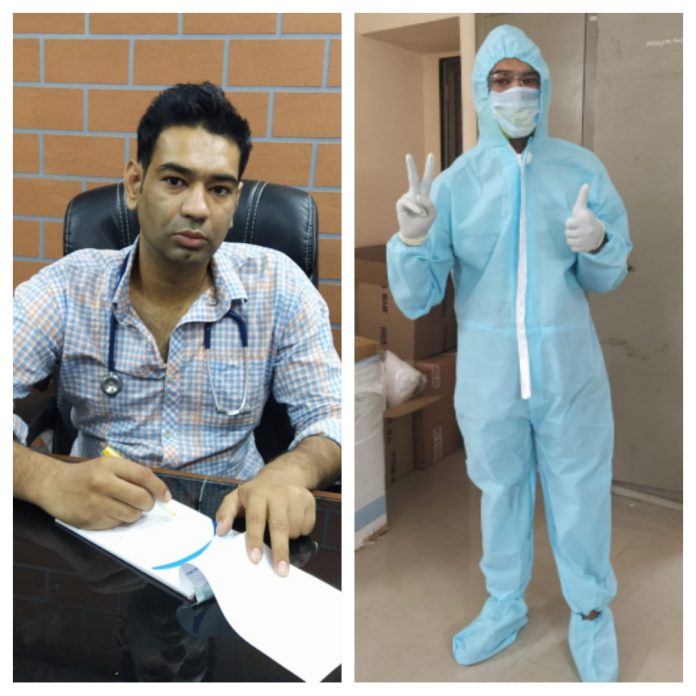
Dr Shakeel Vadaliwala (left) in PPE suit (right)
Ahmedabad-based Dr Shakeel Vadaliwala is a neonatologist specializing in the care of newborns but the dutiful doctor was so busy in serving COVID patients that he could not be near his wife when she delivered a baby girl last month. Even though he was away from home during Ramadan, he observed his fast and performed prayers and made do with simple food but he is happy that as many as 400 of the 800 COVID patients under his care at a government hospital were cured and discharged within a week.
Members of Ittehad Medicos’ Academy have not only kept their clinics open but have also been offering free services to COVID-hit men and women at three hospitals in Ahmedabad.
According to Dr Junaid Shaikh, who has a hectic schedule taking daily rounds at all these three care centres, he had to rent a house for several days to keep his family away from infection.
“I also had to use a PPE suit for three or four days because of shortage,” he told TwoCircles.net.
Mona Desai, president of the Ahmedabad Medical Association, said that Muslim doctors like Dr Didar Kapadia, Dr Murtza and Dr Iftekhar and others are doing a yeoman’s service in these tough times but wondered why cases of assaults on doctors by patients’ relatives were on the rise.
Mujahid Nafees, convener of the Minorities Coordination Committee, Gujarat sums up and says, that, “The sacrifices made by Muslim doctors fighting the pandemic are greater than even those of a soldier battling the enemy troops on the border. A soldier can see the enemies but for doctors, the coronavirus is not visible.”
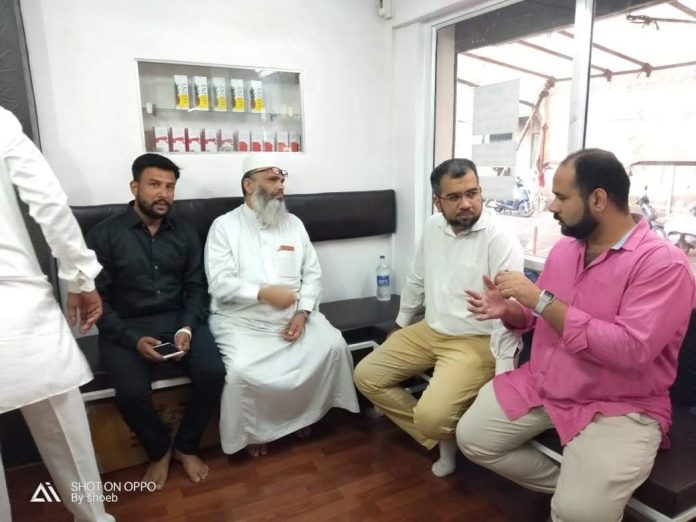
Dr Muhammad Husain (second from right) and Dr Zuber Gopalani (second from left)
source: http://www.twocircles.net / TwoCircles.net / Home> TCN Positive> Indian Muslim> Lead Story> Pandemic / June 15th, 2020
A collaborative study between scientists in India, Saudi Arabia and South Korea aimed at discovering potential drugs to SARS-CoV-2 infection in humans has led to new findings that could pave way for clinical trials to cure the Coronavirus disease.
The recent study is titled ‘Unravelling lead antiviral phytochemicals for the inhibition of SARS-CoV-2 Mpro enzyme through in silico approach. ‘ It has been co-authored by Dr. Arun Bahadur Gurung (North-Eastern Hill University, Shillong), Joongku Lee (Chungnam National University, South Korea) and three others, Dr. M. Ajmal Ali, Dr. Khalid Mashay Al-Anazi along with Dr. Mohammad Abul Farah (King Saud University).
The research has used screening from FDA approved antiviral drugs applying computational approach to embark on a scientific experimentation of vaccine development for the disease.
Dr Mohammad Abul Farah, originally from Ranchi in the Indian state of Jharkhand, spoke with TwoCircles.net about the study that has revealed substances and proteins having high capabilities of being used in treatment of the COVID-19 disease. An alumnus of Aligarh Muslim University, he is currently Professor at Saudi Arabia’s King Saud University and closely associated in the Genetics Laboratory at its College of Science in the Department of Zoology.
Having more than a decade of experience in academics and research in cytogenetics and genotoxicity, he is also working with Proteonik Inc, a South Korea based biotechnology research organization.
He opines that “the discovery of novel drug molecules is crucial and is need of the time” as mortality rate due to Coronavirus is rising exponentially and the speed for finding a vaccine must be accelerated with more variety in clinical lab experiments. He explained that at present there are no approved antiviral drugs or vaccines for the treatment of human CoV infection therefore the scientists in this study were compelled to use computational methods to address the problem and build on effective therapeutics against the current pandemic.
One of the co-authors, Dr M Ajmal Ali
Dr Farah informed that the researchers have proposed “potential lead molecules which can be explored as drug candidates for the treatment of the COVID-19 disease.” He further detailed the findings of the study for TwoCircles.net, beginning with the fact that “SARS-CoV-2 Mpro protease enzyme is a well-characterized drug target.” Through the study’s recent structural elucidation based on X-ray crystallography, it has opened an avenue for structure-based drug design. They have also explored “a small library of phytochemicals with previously reported antiviral properties for the identification of small molecular inhibitors against SARS-CoV-2 Mpro enzyme” leading to identification of three lead molecules which exhibit higher binding affinities as compared to the control.
“The findings are novel and exciting as the lead molecules also demonstrated broad-spectrum antiviral activities against SARS-CoV Mpro and MERS-CoV Mpro,” he informed. He also outlined that the scientists screened small drug-like molecules from a dataset of phytochemicals possessing antiviral activities and this was achieved with the help of drug-like filters and toxicity studies. The selected molecules were evaluated for their binding affinity to SARS-CoV-2 Mpro enzyme using molecular docking, from which a total of 38 phytochemicals belonging to the class of flavonoids, alkaloids, essential oils, organic acids, stilbenes and other phytoconstituents were screened. This led to identification of three lead molecules – Bonducellpin D and Caesalmin B and 5,7-dimethoxyflavanone-4′-O-β-d-glucopyranoside – all three having antiviral activities against parainfluenza virus (PI-3) and bovine (cattle) virus. These three lead phytochemicals, he says, “have potential to be developed as effective antiviral drug specifically against SARS CoV-2.”
When asked whether this identification would accelerate the process of vaccine formation or not, Dr Farah pointed that antiviral drug development takes place via classical mechanisms – usually by targeting important virus enzymes such as polymerases, proteases or neuraminidase; however vaccine against a specific virus is developed by injecting the same virus in inactive form or non-pathogenic form to activate the host immune system to produce specific antibodies against the virus. For that, he said “the current findings need further validations through in vitro and in vivo lab experiments for developing into drug candidate molecules.”
Bonducellpin D is a promising drug candidate against coronavirus, suggest the findings. While the three substances were found to be “significantly inhibiting Mpro enzyme that ultimately block the viral replication,” Bonducellpin D was identified as a unique precursor to a vaccine for coronavirus.
Discussing India’s more than 1 lakh mark of current infection rates coupled with a fourth phase of a nationwide lockdown and massive breakdown of economy unfolding with the migrant crisis, Dr Abul Farah highlighted that all the three lead molecules that need further validations through lab experiments can be obtained through a clinical manufacturing company and in case they are not available commercially, they can easily be purified from the source (plant), or could be synthesized in any chemistry lab equipped for organic synthesis.
“Of course, India can afford all these kind of research,” he said, when inquired about the feasibility of obtaining or manufacturing the same molecular binding in research labs in the country. He assured that India has “many high standard virology and clinical trial labs,” and the substances for clinical experiments can be obtained easily.
“It feels good to have a purpose and be able to contribute to the country during these times. We are lucky we have found our purpose even through this hopeless period,” says Afifa.
Dr Nadeem Rahman and wife Asifa Rahman in the lab
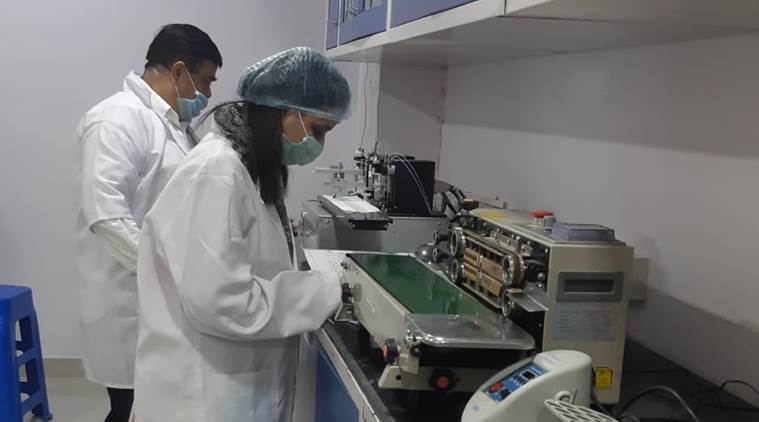
Dr Nadeem Rahman, a bio-chemist at Nu Life consultants and distributors, and his wife Afifa Rahman, a pharmacist at the same company, have spent the past few weeks working through the nights to fulfill their goal of producing 1 lakh rapid anti-body kits per day, meeting the pressing demand for such kits in India. “It feels good to have a purpose and be able to contribute to the country during these times. We are lucky we have found our purpose even through this hopeless period,” says Afifa, who adds that the couple have lost track of the time they spend in their office and laboratory since the company decided to begin manufacturing these kits.
Nu Life is one of the nine Indian companies which has received validation from NIV Pune and has been cleared by the ICMR to begin manufacturing of rapid antibody test kits, which would take less than 15 minutes to show results. There was a brief glitch in their plans due to some defective kits from China but they are back in action. “We received the approval on Monday, but we began working on producing the kits to be verified ever since the lockdown began,” says Afeefa. Without a moment lost, the team of bio-chemists, pharmacists and bio technicians working at the company began manufacturing the kits on April 14th, a day after they received the ICMR approval. Despite their quick action and fervent commitment, the team’s path towards meeting production goals is full of hurdles.
“If all the parameters are in place, which includes all the staff being able to commute to the workplace per usual, and all the raw materials for testing get delivered in time, then we can easily produce one lakh kits per day, but with current lockdown scenario and global shortage of raw materials, we are realistically producing 60,000 to 75,000 kits per day,” says Dr Nadeem, who is a founding member of the company and has driven the logistics and ideation behind their rapid test kit manufacturing project. According to his wife Afifa, even after the couple goes back to their house in Jasola, they spend time ideating on how to optimize their production. “As you can see, there is no escape from COVID 19 for us now,” remarks Afifa with a short laugh.
Before the company received approval from the government to manufacture kits, the couple would spend hours ferrying their staff to and fro between the laboratory and their homes. “Before they all got passes from the government, we had to make sure they reach home. We even worried for the women’s security, who stayed at the laboratory till late at night, finishing work, but now the UP government has provided passes to all our team members,” says Afifa. The company’s staff commutes from different parts of Uttar Pradesh, taking more than an hour to reach the office, so the team has planned to fix accommodation in the office premises soon, so that production deadlines can be met well in time. “It even limits their potential exposure to the disease which they could in turn pass on to their family members,” says Afifa.
Apart from the challenges of bringing the production staff together, Nadeem Rahman states that their biggest hurdle is the prompt delivery of raw materials. “We are getting access to these materials, but to ensure the best quality, you have to wait for the best products. The demand for antigens especially, has increased worldwide, leading to the shortage of its supply,” explains Nadeem. Antigens are the molecular structure that triggers antibody response in the blood sample deposited in the kit. It is this response which indicates the presence of SAR COV 2 infection in the patient tested for the disease.
Explaining how the testing kit is used, Nadeem states that the kit employs the same lateral testing technology which has been used in pregnancy tests. “Instead of urine though, you just place a drop of blood and if two red strips appear, it suggests that you have enough antibody response to indicate the presence of the virus,” he says. The manufacturing cost per kit is placed at Rs 500 to Rs 600, much less expensive than the Rt PCR test for COVID 19. “As we optimize production, hopefully the cost of the kits will remain close to the manufacturing cost. Either way, it should be accessible and affordable to all if goes straight to the market in the future,” says the scientist.
source: http://www.indianexpress.com / The Indian Express / Home> India / by Chahat Rana / Chandigarh, April 30th, 2020
They are meant for people with hearing and speech impairment
Tiruchi :
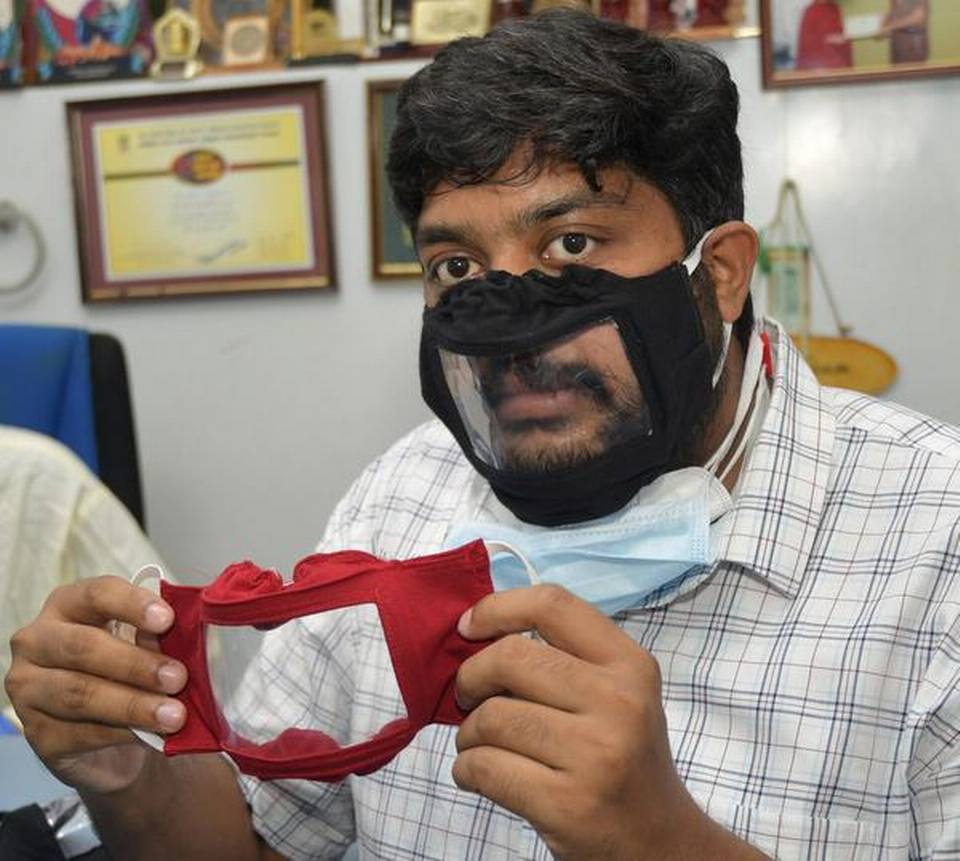
With wearing face masks becoming the “new normal,” concerns have risen about its suitability for persons with hearing impairment who depend on lip-reading and facial expressions to communicate. To provide a possible solution, a young Tiruchi-based doctor has designed a transparent see-through face mask. The prototype has been submitted to the Tamil Nadu government for approval so that it could be mass-produced.
A.Mohamed Hakkim, a 29-year-old emergency physician in the city, thought of the need for such masks as some of his patients struggled to communicate with him. “My mouth was covered by a face mask and because of it, the patients could not read his lips and understand what I was saying,” he said.
Dr. Hakkim drew up a prototype using three layers of thick cloth, which N-95 masks are made of, and a biodegradable non-toxic plastic to make the transparent part.
A key feature of the mask is that it is reusable, and is also fog-resistant as one’s breath could fog up the glass rendering the mask useless, Dr. Hakkim said. The material had to be chosen to ensure the feature.
The cost of each mask will work out to be about ₹10 but Dr. Hakkim is looking to distribute at least 1000 in Tiruchi district for free. One must understand that along with a deaf and mute person, more importantly, their parents, teachers, friends, all those who communicate with them will require the transparent mask, he said.
The shelf life of the mask too is long and can be reused for up to 100 days, Dr. Hakkim said. “We have conducted various real-time tests to ensure its functioning. Many have expressed their need for such a mask,” he said.
The Tamil Nadu government has drawn up a plan to distribute 81,000 masks to 31,000 people through the Commissionerate for the Welfare of Differently Abled. Dr. Hakkim is looking to have the masks distributed through them and various NGOs.
source: http://www.thehindu.com / The Hindu / Home> News> Cities>Tiruchirapalli / by Kathelene Anthony / May 23rd, 2020